Europe Medical Gas and Equipment Market Size, Growth, Share & Trends Analysis

Europe Medical Gas and Equipment Market by Type [Medical Gas (Oxygen, Nitrous Oxide), Medical Gas Equipment (Flowmeter, Others)], Application [Therapeutics, Diagnostics], End User [Hospital, Home Healthcare] - Regional Forecast to 2031




OVERVIEW
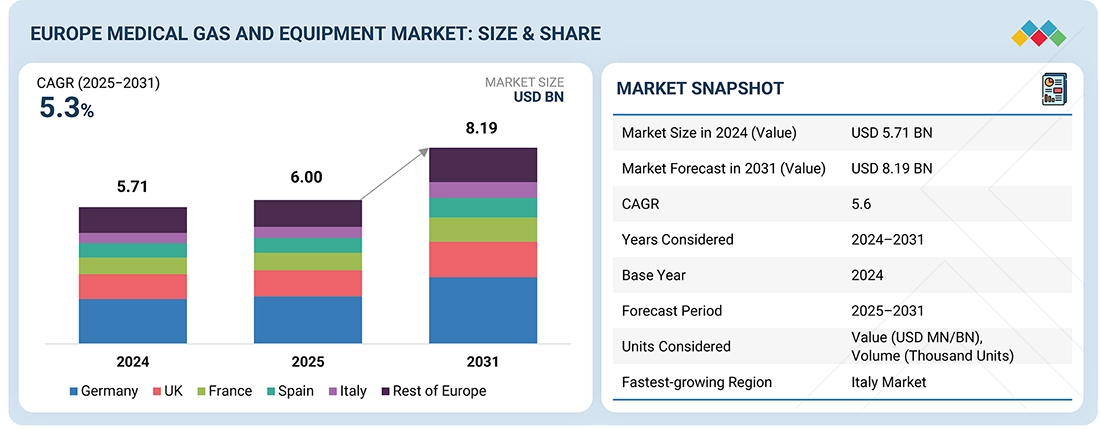
Source: Secondary Research, Interviews with Experts, MarketsandMarkets Analysis
The Europe Medical Gas and Equipment Market, valued at USD 5.71 billion in 2024, stood at USD 6.00 billion in 2025 and is projected to advance at a resilient CAGR of 5.3% from 2025 to 2031, culminating in a forecasted valuation of USD 8.19 billion by the end of the period. The Europe medical gas and equipment market is expanding because of factors such as healthcare demand resulting from an aging population, the prevalence of chronic and respiratory diseases, and higher surgical and ICU volumes.
KEY TAKEAWAYS
-
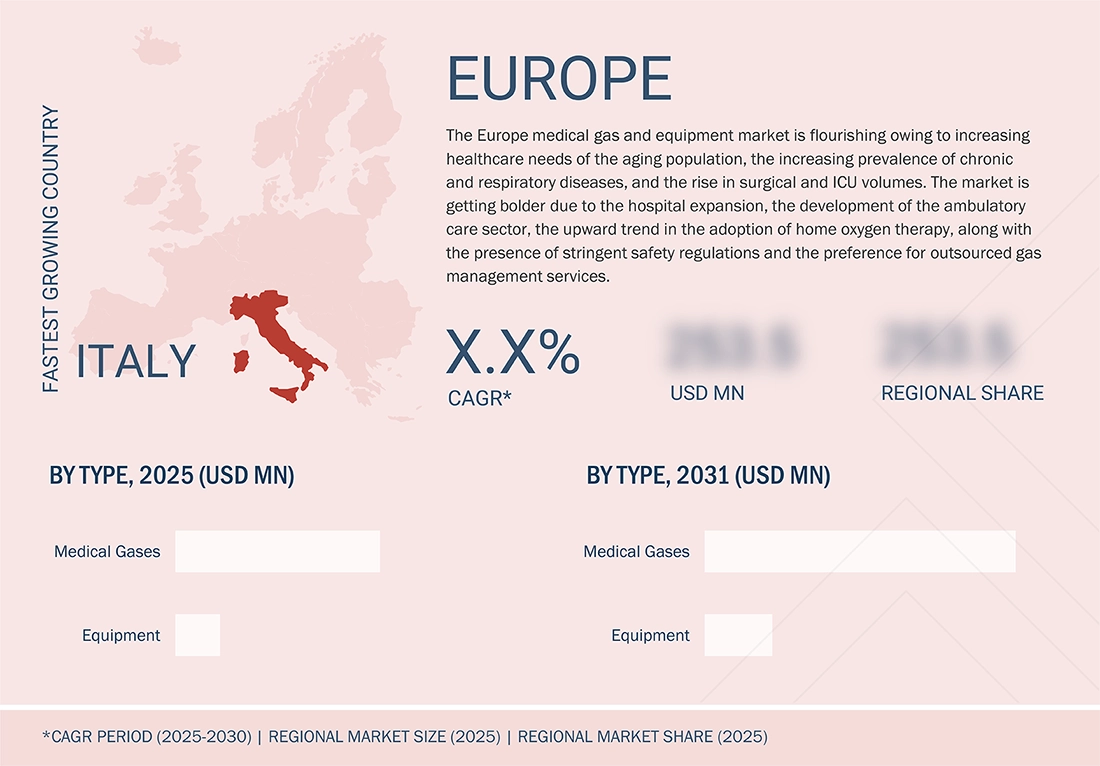
By CountryBy country, in 2024, Germany accounted for the largest share of 32.8% of the Europe medical gas and equipment market.
-
By TypeBy type, the medical gases segment accounted for a larger share of 81.8% of the europe medical gas and equipment market in 2024.
-
By ApplicationBy application, in 2024, the therapeutic applications segment accounted for the largest share of the europe medical gas and equipment market.
-
By End UserBy end user, the hospitals & clinics segment held the largest share of 64.7% in the europe medical gas and equipment market druing the forecast period
-
COMPETITIVE LANDSCAPEAir Liquide and Linde Plc were recognized as star players due to their established strong product portfolio.
-
COMPETITIVE LANDSCAPEGasgon Medical and Oxymat have established themselves as among startups and SMEs due to their strong product portfolio and business strategy.
The medical gas and equipment industry in Europe is undergoing significant change to meet rising demand for healthcare services, driven mainly by demographic shifts (an aging population), the growing prevalence of chronic respiratory and cardiovascular diseases, and the rising number of surgical and critical care procedures. In addition, the upgrading and rebuilding of hospital infrastructure, the development of ICUs and ambulatory surgery centers, and the increased use of home healthcare oxygen therapy are further pushing market growth. Moreover, the enforcement of rigorous patient safety regulations, the requirement for dependable gas supply systems, and the trend toward outsourcing medical gas management and adopting on-site gas generation solutions are also contributing to continued expansion across various regions of Europe.
TRENDS & DISRUPTIONS IMPACTING CUSTOMERS' CUSTOMERS
The Europe medical gas and equipment market is changing significantly, influenced by shifts in healthcare delivery models, new technologies, and rising patient safety and operational efficiency standards. First, trends and disruptions affecting customers' customers, such as hospitals, ambulatory surgery centers, specialty clinics, and research institutions, are reshaping how medical gas providers design, deliver, and manage their offerings. Gradually, the market is shifting away from a traditional product-focused revenue model toward an integrated, service-based, and digitally enabled model, providing solutions to clinical, operational, and regulatory imperatives. These changes are aimed at improving patient outcomes, making healthcare workflows more efficient, and ensuring that healthcare systems, which are increasingly in demand, remain stable and sustainable throughout Europe.
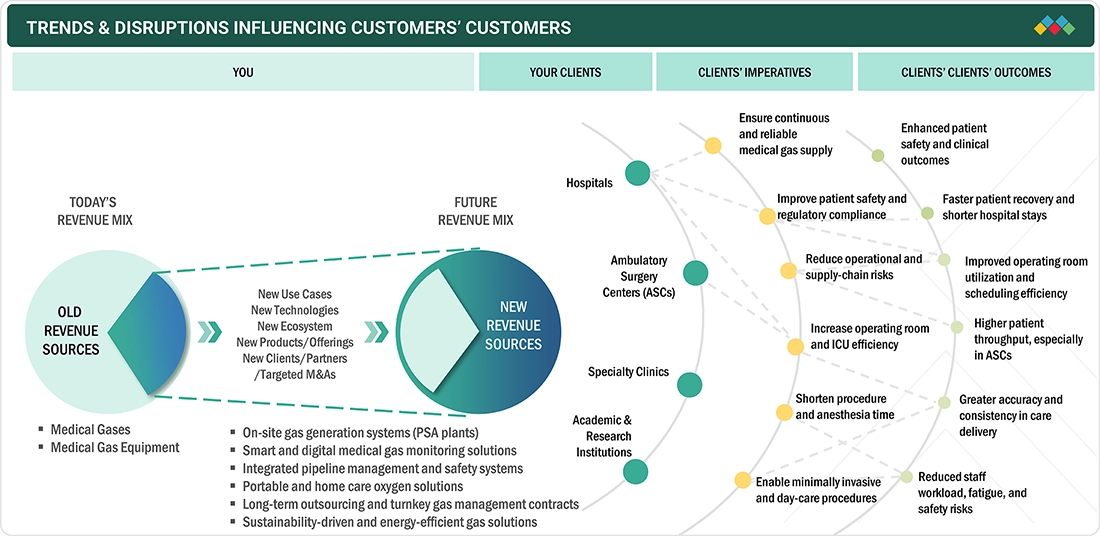
Source: Secondary Research, Interviews with Experts, MarketsandMarkets Analysis
MARKET DYNAMICS

Level
-
Rising prevalence of respiratory and chronic diseases

-
Growing surgical volumes and critical care admissions


Level
-
High capital investment and maintenance costs

-
Strict regulatory and compliance requirements


Level
-
Expansion of healthcare industry

-
Growing advancements in healthcare technologies


Level
-
Workforce shortages and lack of trained technicians

-
High cost of medical gas equipment

Source: Secondary Research, Interviews with Experts, MarketsandMarkets Analysis
Driver: Rising prevalence of respiratory and chronic diseases
The Europe medical gas and equipment market is largely influenced by the rising occurrence of respiratory and chronic diseases. These illnesses are the main drivers of continuous access to medical gases across several care settings. According to available information, changes in population demographics, urbanization, air pollution, and high smoking rates in some areas have led to increases in chronic obstructive pulmonary disease (COPD), asthma, pneumonia, and sleep apnea in Europe. These patients also receive oxygen therapy, non-invasive ventilation, and anesthetic support, creating ongoing demand for medical oxygen, medical air, and the required delivery devices in hospitals, clinics, and home care settings. Moreover, the increasing prevalence of chronic diseases that lead to ICU admissions and long-term respiratory management is a major factor in the growth of the medical gas pipeline system, bulk oxygen storage, and portable oxygen solutions market. As healthcare systems focus on early diagnosis, long-term disease management, and home care, the use of medical gases and related equipment continues to grow at a slow pace across different parts of Europe.
Restraint: High capital investment and maintenance costs
The Europe medical gas and equipment market has been adversely affected by high capital investment and maintenance costs, which have served as a limiting factor, especially in smaller hospitals, ambulatory surgical centers, and long-term care facilities. The installation of medical gas pipeline systems (MGPS), bulk liquid oxygen tanks, cryogenic storage units, compressors, vacuum systems, and alarm and monitoring infrastructure entails considerable upfront expenditure and compliance with stringent European safety and pharmacopeial standards. In addition to the initial installation costs, ongoing expenses include regular inspections, calibration, preventive maintenance, system upgrades, and mandatory certifications, further elevating the total cost of ownership. These financial burdens may delay infrastructure upgrades, impede the adoption of sophisticated systems, and limit purchasing options in publicly funded healthcare systems where capital budgets and reimbursement levels are tightly controlled.
Opportunity: Expansion of healthcare industry
The growing healthcare industry in Europe has been a major driver of the medical gas and equipment market. This growth is evident in the form of healthcare investments, the development of healthcare infrastructure, and rising patient volumes. Across the region, governments and private-sector players are spending on building new hospitals, specialty clinics, diagnostic centers, and ambulatory care facilities, primarily to care for the elderly and address the increasing prevalence of chronic and respiratory diseases. As a result, demand for medical gases such as oxygen, medical air, and nitrous oxide, as well as the equipment required, including gas pipeline systems, compressors, vacuum systems, and bulk storage solutions, is increasing directly. Additionally, the expansion of intensive care units, surgical suites, and emergency departments in these facilities is further increasing gas consumption. As healthcare systems are modernized and capacity expanded, they still require a reliable, compliant, and technologically advanced medical gas infrastructure, which is the reason behind the sustained market growth across Europe.
Challenge: Workforce shortages and lack of trained technicians
Medical gas pipeline systems, compressors, vacuum systems, and cryogenic storage in the Europe medical gas and equipment market require a high level of technical expertise. The absence of a sufficiently skilled labor force and a limited number of well-trained technicians are the two biggest problems the market faces. In addition, installation, inspection, and maintenance are among the operations that require the most advanced technical knowledge. To comply with very strict regulatory standards and safety protocols, regular testing, certification, and preventive maintenance are compulsory. Only qualified personnel can carry out these operations. However, the technical workforce in most European countries is aging, and there are few certified engineers and insufficient training programs for medical gas systems. As a result, the skills gap may cause delays in system installation, extended maintenance downtime, and increased reliance on third-party service providers, thereby affecting hospital operations, compliance timelines, and the ability of healthcare facilities to provide an uninterrupted and safe medical gas supply.
EUROPE MEDICAL GAS AND EQUIPMENT MARKET: COMMERCIAL USE CASES ACROSS INDUSTRIES
| COMPANY | USE CASE DESCRIPTION | BENEFITS |
|---|---|---|
 |
Air?????? Liquide offers high purity medical gases such as oxygen, nitrogen, nitrous oxide, and medical air that are used in hospitals, clinics, and home healthcare facilities. These gases are required for respiratory therapy, anesthesia delivery, intensive care, emergency medicine, and diagnostic procedures. The company also provides support for integrated gas pipeline systems as well as bulk/packaged supply solutions to ensure that there is no interruption in availability. | Pure medical gases are the means to patient safety and clinical effectiveness as they comply with strict pharmacopeial and regulatory standards. A dependable oxygen supply is the basis of both acute and chronic respiratory care, while medical air and nitrogen are used to ensure that medical devices operate safely. Continuity in gas quality and supply alleviate clinical risks, elevate patient outcomes, and increase the hospital's operational ??????efficiency. |
 |
Linde?????? offers medical gas mixtures of speciality like one of the components in the mixture is Helium. This mixture is called Heliox. Respiratory care patients suffering from asthma, COPD, and upper airway obstruction are the main users of Heliox. In ICUs, emergency departments, and neonatal care units, Heliox is used to minimize airway resistance and facilitate breathing. | Heliox has a flow capacity that is better than that of the air or oxygen separately, since it is of a lower density. Consequently, the device can relieve respiratory distress, promote patient comfort, and potentially lessen the necessity for invasive ventilation. Also, its application is instrumental in the rapid stabilization of patients and thus, great productivity in the acute and critical respiratory care settings is ??????achieved. |
 |
Taiyo?????? Nippon Sanso provides medical cryogenic gases including liquid oxygen, liquid nitrogen, and liquid carbon dioxide that are used for bulk hospital storage, cryosurgery, biological sample preservation, and medical research. These cryogens are the main components of large healthcare facilities, blood banks, laboratories, and biopharmaceutical applications. | Cryogenic solutions provide very high-volume, low-cost gas storage with stable purity and temperature that can be controlled. Liquid oxygen is used to ensure the supply is uninterrupted in high-demand hospital environments, and liquid nitrogen is used for long-term storage of biological samples and for advanced medical procedures. Thus hospital reliability is enhanced, research continuity is supported, and the overall care delivery efficiency is ??????improved. |
 |
Air?????? Products provides cryogenic products and storage systems that are specifically designed for healthcare and life sciences applications. This includes liquid oxygen systems for hospitals and cryogenic solutions for pharmaceutical manufacturing and laboratory use. Their equipment is capable of supporting the storage, vaporization, and distribution of medical gases in a safe manner. | Cryogenic systems can ensure the secure handling of gases as well as provide continuous availability of these gases even during times of peak demand. The high degree of system reliability that is available most of the time therefore, contributes to a decrease in the risk of system downtime and in turn, patient safety is promoted in critical care environments. Besides, effective cryogenic healthcare technology can also help to cut operational costs while at the same time making it easier to comply with safety and quality standards in healthcare ??????institutions. |
 |
Atlas???????????? Copco provides medical-grade air and gas compressors, which are the main devices used to deliver medical air and support gas pipeline systems in hospitals and clinics. Such compressors are the most necessary ventilators, anesthesia machines, surgical tools, and other pneumatic medical equipment. | Medical air compressors are the sources of clean, oil-free, and contaminant-free air that complies with healthcare standards. Their reliability ensures the uninterrupted operation of life-supporting devices, thus, maintenance requirements are lowered, and energy-saving is increased. As a result, this contributes to patient safety, makes hospital administration easier and the hospital's operational costs are reduced in the long ????????????run. |
Logos and trademarks shown above are the property of their respective owners. Their use here is for informational and illustrative purposes only.
MARKET ECOSYSTEM
The Europe medical gas and equipment market is an excellent example of a highly regulated and efficiently functioning system that comprises a comprehensive network of global and regional manufacturers, distributors with specialized functions, various end users, and regulatory bodies with stringent requirements. Top-tier manufacturers such as Air Liquide, Linde, Air Products, Messer, Taiyo Nippon Sanso, SOL, Norco, Rotarex, and Atlas Copco provide innovative technology, medical gases, cryogenic reagents, compressors, and gas delivery systems. These commodities are marketed by distributors and system integrators that are well-positioned in the market, for instance, Airgas, BOC Sciences, Messer, and MEDGAS-Technik, which provide security in installation processes, maintenance, and open supply to patients in healthcare facilities. End users, mainly hospitals, university medical centers, and public healthcare systems such as AP-HP, Charité, UZ Leuven, and NHS trusts, account for the most significant demand for medical gases because of their extensive utilization in critical care, surgery, anesthesia, and respiratory therapy. Supervision by regulatory bodies such as the European Medicines Agency (EMA), national agencies (ANSM, BfArM), and the European Commission is ensured through strict adherence to quality, safety, and pharmacopoeial standards, thereby keeping patients' safety at the forefront and maintaining a stable market across Europe.
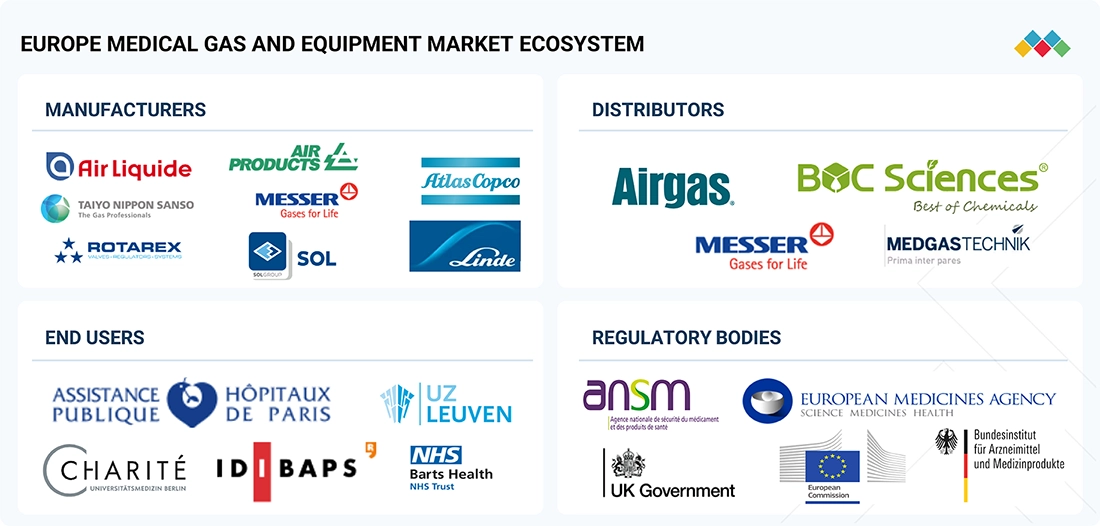
Logos and trademarks shown above are the property of their respective owners. Their use here is for informational and illustrative purposes only.
MARKET SEGMENTS
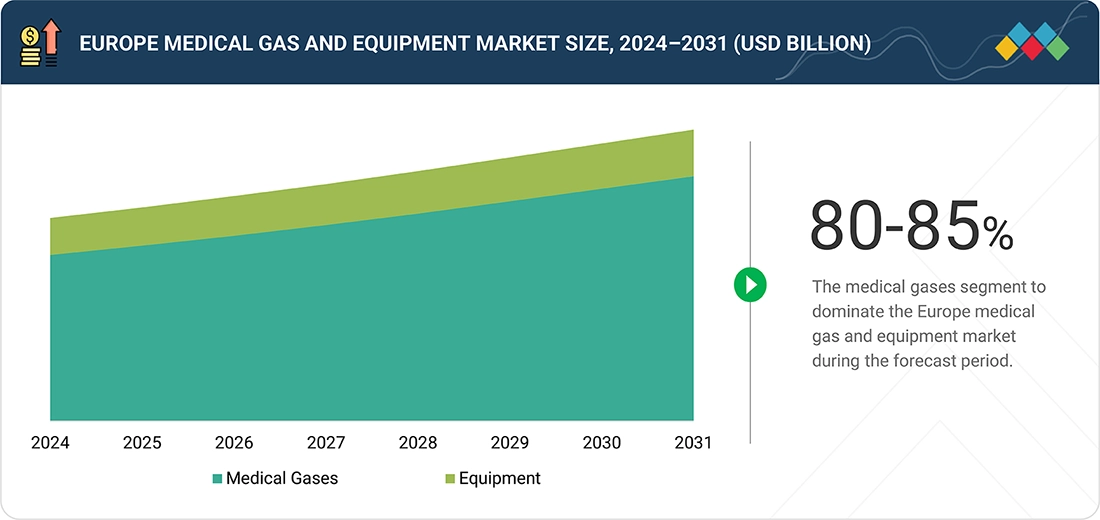
Source: Secondary Research, Interviews with Experts, MarketsandMarkets Analysis
Europe Medical Gas and Equipment Market, By Type
Within the product segment, medical gases are the main contributors to the Europe medical gas and equipment market. Their use is continuous across a very wide range of clinical applications. Gases such as oxygen, medical air, nitrous oxide, nitrogen, and carbon dioxide are essential components of respiratory therapy, anesthesia delivery, surgical procedures, intensive care, and emergency medicine, making them the most essential gases in hospitals and clinics. Rising rates of respiratory disorders, increased surgical volume, and growing ICU admissions throughout Europe keep demand for these gases high. In addition, the widespread installation of medical gas pipeline systems in healthcare facilities ensures uninterrupted supply, while the expansion of home healthcare and long-term oxygen therapy further strengthens market dominance. Medical gases are consumables with recurring demand, unlike equipment, which contributes to their consistently larger market share within the overall European market..
Europe Medical Gas and Equipment Market, By Application
Therapeutic applications account for the leading share of the application segment of the Europe medical gas and equipment market, as medical gases are the most common direct patient treatments in acute, chronic, and emergency care settings. Oxygen therapy is, without a doubt, the #1 therapeutic application used to treat respiratory diseases such as COPD, asthma, pneumonia, and acute respiratory distress, which, by and large, affect the elderly population of Europe. In addition, medical gases are lifelines in intensive care units, the neonatal department, and emergency medicine, where they are used for patient stabilization and to support life-saving interventions. The growing popularity of home oxygen therapy and long-term respiratory care is another major factor contributing to the increasing demand for the therapeutic segment. Therapeutic applications, unlike diagnostic or pharmaceutical manufacturing uses, entail continuous and high-volume gas consumption, which is the main reason for their dominant share in the Europe medical gas and equipment market.
Europe Medical Gas and Equipment Market, By End User
Hospitals and clinics are the primary sources of demand for medical gases and equipment in Europe, as they are the largest consumers of medical gases used across various departments and clinical functions. Medical oxygen, medical air, nitrous oxide, and other gases are essential equipment in these healthcare facilities for critical care, surgical procedures, anesthesia, emergency medicine, and respiratory therapy. The huge and steady demand is further amplified by centralized medical gas pipeline systems, bulk liquid oxygen storage, and sophisticated gas monitoring equipment in hospitals. In addition, the rising number of surgical procedures, increased ICU admissions, and the prevalence of chronic respiratory diseases, mainly in Europe, further reinforce the dominance of hospitals and clinics. Compared to home healthcare or ambulatory settings, hospitals require larger quantities, must follow stricter safety regulations, and have more complex gas infrastructure, making them the major contributors to the market revenue.
REGION
Germany held the largest share in Europe Medical Gas and Equipment market in 2024
Germany has been a major driver of growth in the Europe medical gas and equipment market. The main reasons are Germany's first-class healthcare system, significant healthcare spending, and numerous high-quality medical gas manufacturers and equipment suppliers. Moreover, the presence of global-leading companies such as Linde and Messer, along with the implementation of strict regulatory standards for the quality and safety of medical gases, ensures an uninterrupted supply and a high level of acceptance of advanced medical gas pipeline systems and equipment, thus reinforcing Germany's position as a leader in the European market.
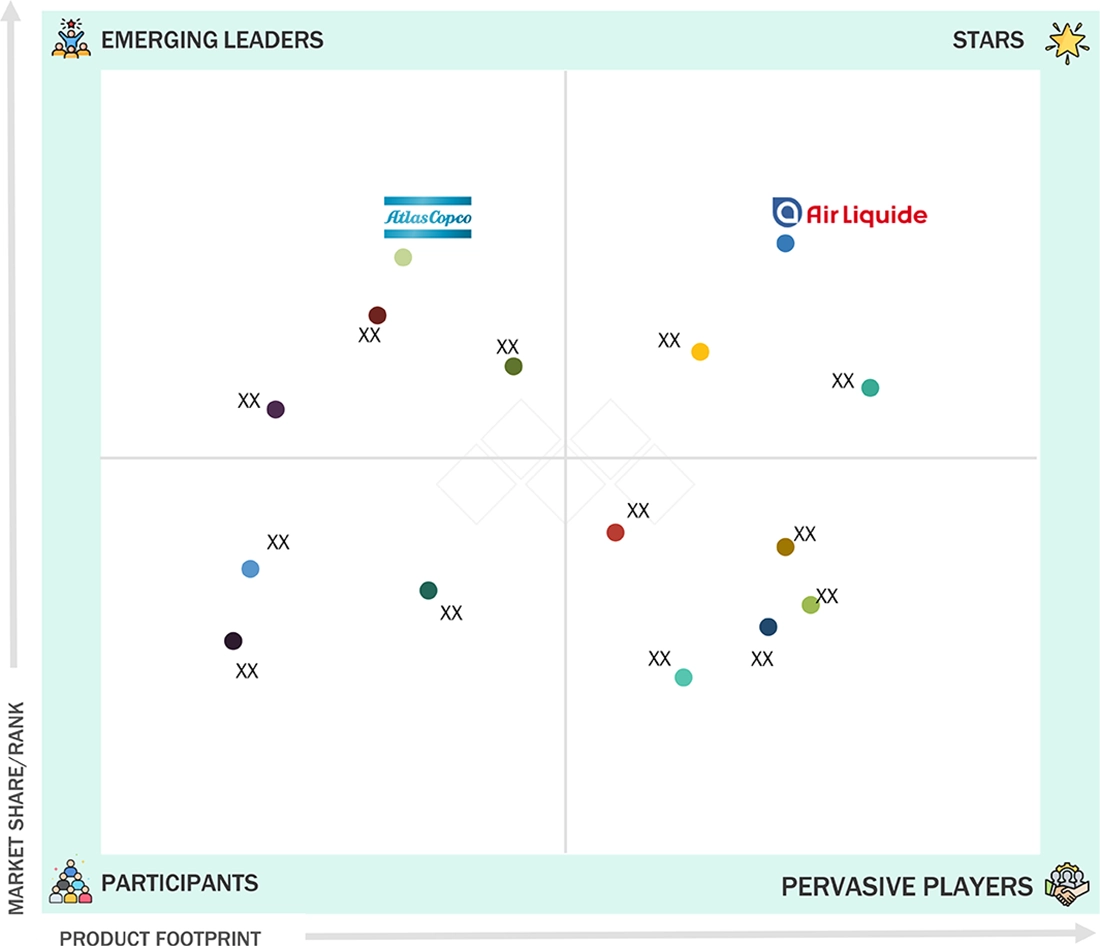
EUROPE MEDICAL GAS AND EQUIPMENT MARKET: COMPANY EVALUATION MATRIX
In the Europe medical gas and equipment market matrix, Air Liquide (France) (Star) and Linde Plc (Germany) (Star) lead with their unmatched global presence, strong brand recognition, and comprehensive portfolios of Medical Gas and Equipment products. Atlas Copco AB (Sweden) (Emerging Leader) is rapidly gaining traction with its versatile products, which offer Medical Gas and Equipment products for various therapeutic and diagnostic applications.
Source: Secondary Research, Interviews with Experts, MarketsandMarkets Analysis
KEY MARKET PLAYERS
- Air Liquide (France)
- Linde Plc (Germany)
- Taiyo Nippon Sanso Corporation (Japan)
- Air Products and Chemicals Inc. (US)
- Atlas Copco AB (Sweden)
- GCE Group (Sweden)
- Messer SE & Co. KGaA (Germany)
- SOL Spa (Italy)
- Rotarex (Europe)
MARKET SCOPE
| REPORT METRIC | DETAILS |
|---|---|
| Market Size Value in 2024 (USD Billion) | 5.71 |
| Revenue Forecast in 2031 (USD Billion) | 8.19 |
| Growth Rate | CAGR of 5.3% from 2025-2031 |
| Actual data | 2024-2031 |
| Base year | 2024 |
| Forecast period | 2025-2031 |
| Units considered | Value (USD Million), Volume (Thousand Units) |
| Report Coverage | Revenue Forecast, Company Ranking, Competitive Landscape, Growth Factors, and Trends |
| Segments Covered |
|
| Regional Scope | Germany, UK, France, Spain, Italy, and rest of Europe |
| Parent & Related Segment Reports |
Medical Gas and Equipment Market US Medical Gas and Equipment Market |
WHAT IS IN IT FOR YOU: EUROPE MEDICAL GAS AND EQUIPMENT MARKET REPORT CONTENT GUIDE
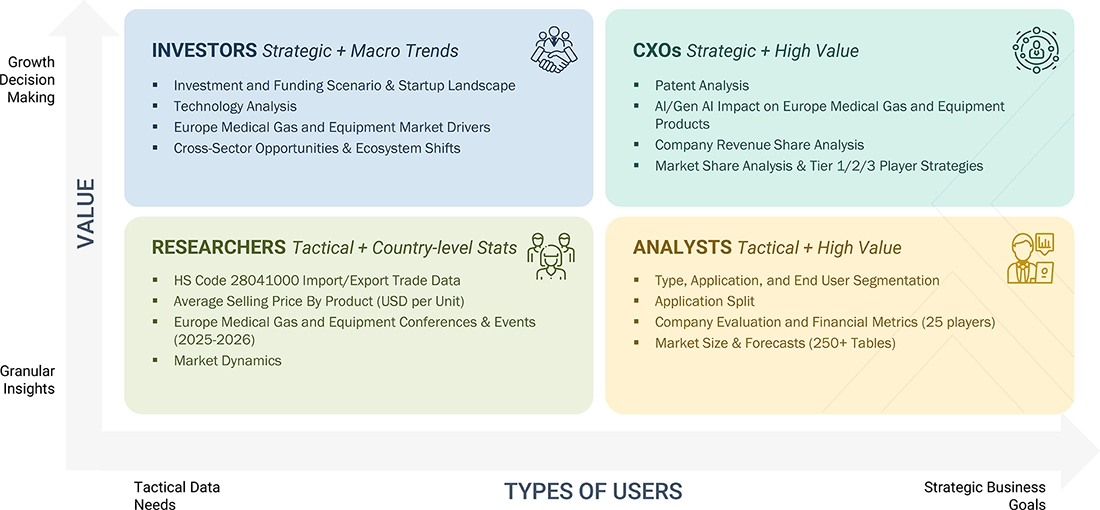
DELIVERED CUSTOMIZATIONS
We have successfully delivered the following deep-dive customizations:
| CLIENT REQUEST | CUSTOMIZATION DELIVERED | VALUE ADDS |
|---|---|---|
| Product Analysis | Further breakdown of other applications in the market | Insights on other applications involved in the market |
| Company Information | Market Share Analysis, By Countries (Germany and UK) & Competitive Leadership Mapping for Established Players in the market | Insights on market share analysis by country |
| Geographic Analysis | Further breakdown of the Rest of Europe medical furniture market into Russia, Switzerland, Denmark, Austria, and others | Country-level demand mapping for new product launches and localization strategy planning |
RECENT DEVELOPMENTS
- June 2025 : ESAB Corporation (GCE) has improved its medical gas equipment portfolio by purchasing Delta P Gas Equipment, a company located in Italy, and by making a decision to buy Aktiv Technologies in India. The acquisitions allow ESAB to provide more complete medical central gas systems solutions, have a better global presence, and be more safety and regulatory compliance oriented in their gas control equipment offering.
- April 2025 : Air Liquide introduced ECO ORIGIN as an environmentally friendly medical and industrial gas solution complementary to client needs. The offer covers essential gases like oxygen, nitrogen, argon, and carbon dioxide, made from pure renewable energy sources and accompanied by an ISO-standardized carbon footprint from production to delivery. After the first launch devoted to health-care customers and then promoted to various industries, ECO ORIGIN has been widely accepted in a very short time. It is evidenced by the signatures of the agreements in more than 20 hospitals and clinics in six countries of Europe where the need for sustainable medical gas solutions in Europe is the strongest.
- January 2025 : The acquisition of Medi-teknique Ltd., a UK-based medical gas service provider specializing in maintenance, servicing, and installation of medical gas pipeline systems, by Atlas Copco Group took place. With this acquisition, Atlas Copco extends its regional coverage in the UK and enhances its aftermarket and installation service capacities in the medical gas equipment market.
Table of Contents
 Exclusive indicates content/data unique to MarketsandMarkets and not available with any competitors.
Methodology
This study involved four major activities in estimating the current Europe medical gas and equipment market size. Exhaustive secondary research was done to collect information on the market, peer market and parent market. The next step was to validate these findings, assumptions, and sizing with industry experts across the value chain through primary research. Both top-down and bottom-up approaches were employed to estimate the complete market size. After that, market breakdown and data triangulation were used to estimate the market size of segments and subsegments.
Secondary Research
The secondary research process involved the widespread use of secondary sources, directories, databases (such as Bloomberg Businessweek, Factiva, and D&B Hoovers), white papers, annual reports, company house documents, investor presentations, and SEC filings of companies. Secondary research was used to identify and collect information useful for the extensive, technical, market-oriented, and commercial study of the prefilled syringes market. It was also used to obtain important information about the key players and market classification and segmentation according to industry trends to the bottom-most level, and key developments related to market and technology perspectives. A database of the key industry leaders was also prepared using secondary research.
Primary Research
In the primary research process, various sources from both the supply and demand sides were interviewed to obtain qualitative and quantitative information for this report. The primary sources from the supply side include industry experts such as CEOs, vice presidents, marketing and sales directors, technology & innovation directors, and related key executives from various key companies and organizations operating in the Europe medical gas and equipment market. The primary sources from the demand side included industry experts, purchase & sales managers, doctors, and personnel from research organizations. Primary research was conducted to validate the market segmentation, identify key players in the market, and gather insights on key industry trends and key market dynamics.
To know about the assumptions considered for the study, download the pdf brochure
The research methodology used to estimate the size of the market includes the following details.
The market sizing of the market was undertaken from the global side.
Country-level Analysis: The size of the Europe medical gas and equipment was obtained from the annual presentations of leading players and secondary data available in the public domain. The share of products and services in the overall Europe medical gas and equipment market was obtained from secondary data and validated by primary participants to arrive at the total Europe medical gas and equipment market. Primary participants further validated the numbers.
Geographic market assessment (by region & country): The geographic assessment was done using the following approaches:
Approach 1: Geographic revenue contributions/splits of leading players in the market (wherever available) and respective growth trends
Approach 2: Geographic adoption trends for individual product segments by Europe medical gas and equipment and growth prospects for each of the segments (assumptions and indicative estimates validated from primary interviews)
At each point, the assumptions and approaches were validated through industry experts contacted during primary research. Considering the limitations of data available from secondary research, revenue estimates for individual companies (for the overall Europe medical gas and equipment and geographic market assessment) were ascertained based on a detailed analysis of their respective product offerings, geographic reach/strength (direct or through distributors or suppliers), and the shares of the leading players in a particular region or country.
Data Triangulation
After arriving at the overall market size—using the market size estimation processes explained above—the market was split into several segments and sub-segments. To complete the overall market engineering process and arrive at the exact statistics of each market segment and subsegment, data triangulation, and market breakdown procedures were employed, wherever applicable. The data was triangulated by studying various factors and trends from both the demand and supply sides.
Market Definition
Medical gases and equipment are significant elements in medical centers (such as acute care, hospitals, surgery centers, and emergency medical services), life sciences (pharmaceutical, biotech, and life science R&D), long-term care (like nursing homes and home healthcare), and laboratories (including analytical, commercial, life sciences, and university laboratories). The market covers medical pure gases, medical gas mixtures, and various equipment used for the storage, transportation, and delivery of medical gases.
Key Stakeholders
- Medical gas manufacturers
- Medical gases equipment manufacturing companies
- Medical gases and equipment distributors
- Healthcare institutions (hospitals, laboratories, medical schools, and outpatient clinics)
- Pharmaceutical and biotechnology companies
- Research institutes and academic centers
- Contract research organizations (CROs)
- Government associations
- Home-healthcare services providers
- Market research and consulting firms
- Venture capitalists and investors
Objectives of the Study
- To describe, analyze, and forecast the Europe medical gas and equipment market by type, application, end user and region
- To provide detailed information regarding the drivers, restraints, opportunities, and challenges influencing the growth of the Europe medical gas and equipment market
- To strategically analyze micromarkets with respect to individual growth trends, prospects, and contributions to the overall market
- To analyze market opportunities for stakeholders and provide details of the competitive landscape for market players
- To profile key players and comprehensively analyze their market shares and core competencies in the Europe medical gas and equipment market
- To analyze competitive developments such as partnerships, collaborations, agreements & acquisitions, product launches, expansions, and R&D activities in the Europe medical gas and equipment market
Available Customizations
With the given market data, MarketsandMarkets offers customizations as per the company’s specific needs. The following customization options are available for the report:
Geographic Analysis
- Further breakdown of the Rest of Europe medical gas and equipment market into Belgium, Russia, the Netherlands, Switzerland, and other countries.
- Further breakdown of the Rest of Asia Pacific medical gas and equipment market into Indonesia, Philippines, Vietnam, Hong Kong, and other countries
- Further breakdown of the Rest of Latin America medical gas and equipment into Colombia, Peru, and other countries.


Personalize This Research
- Triangulate with your Own Data
- Get Data as per your Format and Definition
- Gain a Deeper Dive on a Specific Application, Geography, Customer or Competitor
- Any level of Personalization
Let Us Help You
- What are the Known and Unknown Adjacencies Impacting the Europe Medical Gas and Equipment Market
- What will your New Revenue Sources be?
- Who will be your Top Customer; what will make them switch?
- Defend your Market Share or Win Competitors
- Get a Scorecard for Target Partners

Custom Market Research Services
We Will Customise The Research For You, In Case The Report Listed Above Does Not Meet With Your Requirements
Get 10% Free CustomisationTESTIMONIALS

JAYANT RAJPUROHIT
Director of Market Insights, Data and Analytics
SFI Health,
Leading Pharmaceutical Companywww.sfihealth.com/

We at SFI Health approached MarketsandMarkets for an Opportunity Assessment on "Incidence and Prevalence of Focus Indications" as we wanted to know the most attractive HCPs like Physician, Functional MD, Naturopath and Pharmacist. The project was critical for us to ensure our focus on the right target which would enable sustainable growth and profitability for SFI Health. The business insights provided exceeded our expectations and we were extremely impressed. The team at MarketsandMarkets is highly professional and detail oriented and very well understood our business needs. MarketsandMarkets offers a unique combination of expertise and dedicated engagement model. We identified 2 new products to be launched in coming months, based on the research findings provided by MarketsandMarkets. We are happy with the services and would strongly recommend MarketsandMarkets to my peers in the industry.

BEATRIZ DE LA CALLE
Head of Commercial Analytics
Qualicaps,
Leading Pharmaceutical Companywww.qualicaps.com/

We partnered with MarketsandMarkets for an assessment study on hard empty capsules. The team was extremely professional in understanding our business requirements and we received timely responses to all our queries. The market intelligence and the recommendations has met our business requirements. We were extremely impressed to see the final study results; it really exceeded our expectations. The market intelligence offered by MarketsandMarkets, and clarity on next steps will help us achieve our business objective for the Year 2021. We are happy with the services and would strongly recommend MarketsandMarkets to my peers in the industry.

Bob Williams,
Senior Director Business Development & Innovation
Bracco Diagnostics Inc.,
Italian Multinational in life sciences sector and a World Leader in imaging diagnosticsimaging.bracco.com/us-en
We were pleased with targeted insights that MarketsandMarkets identified from a custom study on the 'Radiation Dose Management Solutions Market'. Your team identified and characterized the market participants as well as underlying trends accurately. This study was useful to Bracco in formulating business strategies for our dose monitoring product lines and we thank MarketsandMarkets for the job well done.
Cody Coonradt,
Market Development and Strategy Manager
3M Health Information Systems,
Leader in Health care Coding, Payment & Analytics Solutions.www.3m.com/3M/en_US/health-information-systems-us
The value for our organization comes from three things: depth of research, specificity of segments and being easy to work with. As important as the first two are, the third can't be underestimated. MarketsandMarkets, maybe more than any other research vendor, wants to know what is top of mind for our team and what big questions we are grappling to answer.
Their customer first approach and high value engagement model, have given us great analysis and excellent value for money






Growth opportunities and latent adjacency in Europe Medical Gas and Equipment Market