Europe Point-of-Use Water Treatment Systems Market

Europe Point-of-Use Water Treatment Systems Market by Device (Countertop Units, Free-Standing Water Purifiers), Technology (Reverse Osmosis Systems, Activated Carbon), Sales Channel, Application (Residential and Non-Residential) - Forecast to 2030




OVERVIEW
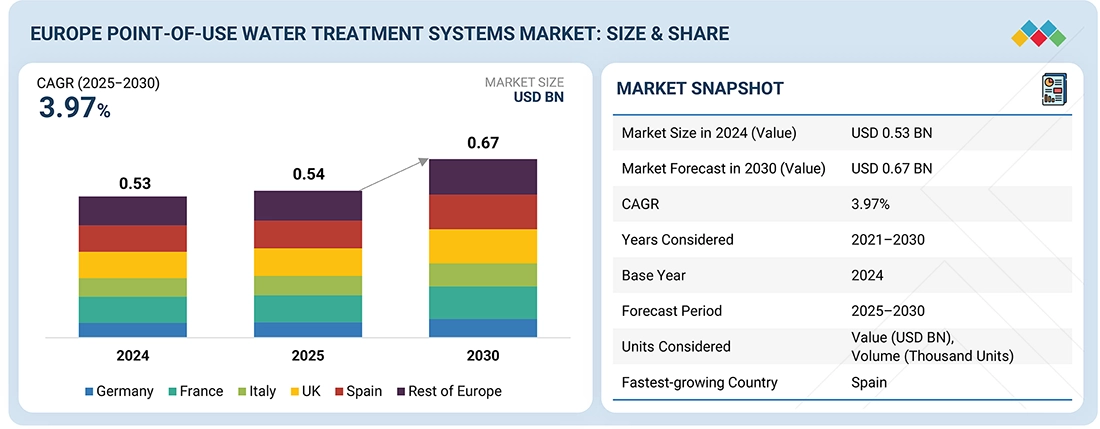
Source: Secondary Research, Interviews with Experts, MarketsandMarkets Analysis
The point-of-use water treatment systems market is projected to reach USD 667.3 billion by 2030 from USD 549.2 billion in 2025, at a CAGR of 3.97% from 2025 to 2030. The point-of-use water treatment systems business is on the rise due to increasing demand of these systems because of the implementation of stronger EU standards, new microplastics monitoring methods, and high-profile contaminants in water, is expanding the need for better purification systems.
KEY TAKEAWAYS
-
By CountrySpain accounted for the largest share of the market in 2024.
-
By DeviceBy device, free-standing water purifiers accounted for the largest market share and are projected to record a CAGR of 4.1% in terms of value.
-
By TechnologyBy technology, the activated carbon segment will grow at the fastest rate between 2025 and 2030.
-
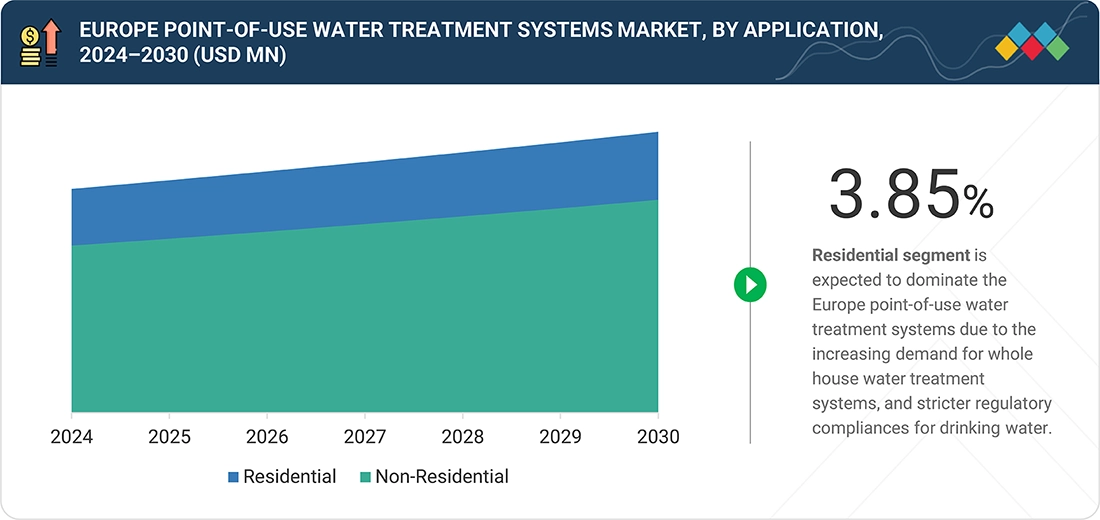
By ApplicationBy application, the residential segment is expected to dominate the market, growing at a CAGR of 3.9%.
-
By Sales ChannelBy sales channel, the distributor segment is expected to account for the largest share and market share in 2024.
-
Competitive Landscape-Key playersPentair, AQUAPHOR, BWT Holding GmbH, Brita GmbH, and Aquafilter were identified as star players in the market, as they have focused on innovation and have broad industry coverage, and strong operational & financial strength.
-
Competitive Landscape-StartupsOptySun, Grünbeck AG, Ecosoft, Euro-clear kft., and Aqualex have distinguished themselves among startups and SMEs due to their strong product portfolio and business strategy.
Point-of-use water treatment systems are increasing in demand. The implementation of stronger EU standards, new methods for monitoring microplastics, and the detection of high-profile contaminants in water are expanding the need for more effective purification systems.
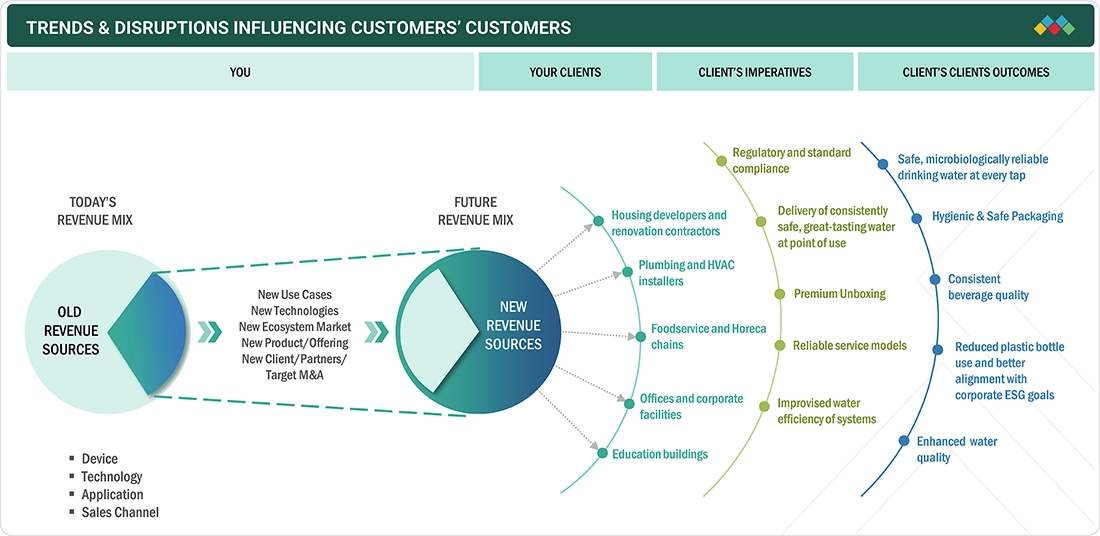
TRENDS & DISRUPTIONS IMPACTING CUSTOMERS' CUSTOMERS
Point-of-use water treatment systems in Europe are trending toward compact, plug-and-play units, activated carbon upgrades, PFAS-focused filtration, smart monitoring, and stylish freestanding purifiers aligned with rising health and environmental awareness.
Source: Secondary Research, Interviews with Experts, MarketsandMarkets Analysis
MARKET DYNAMICS

Level
-
•Stronger EU standards & monitoring

-
•New microplastics monitoring methods


Level
-
•Good access to clean drinking water

-
•Uneven national implementation & infrastructure investment


Level
-
•Product differentiation for emerging contaminants

-
• Growing demand from public-sector/building installations


Level
-
•Regulatory fragmentation & certification burden

-
•RO demineralization effects

Source: Secondary Research, Interviews with Experts, MarketsandMarkets Analysis
Driver: Stronger EU standards & monitoring
The EU Drinking Water Directive 2020/2184 has raised the bar significantly for drinking water across Europe. It updates standards that had not been revised since 1998, reflecting advances in science, environmental pressures, and evolving risks. Under the new rules, EU member states must enforce stricter limits on chemical and microbiological contaminants, including heavy metals and emerging pollutants, and increase the frequency and transparency of monitoring. Utilities must also inform consumers about water quality data, thereby boosting public awareness and expectations regarding water safety. As a result, households, institutions, and building managers increasingly seek point-of-use filtration or purification systems, especially where tap water may still meet minimum standards but fails to address newly regulated contaminants or emerging risks. This regulatory tightening and transparent monitoring create a powerful demand-side driver for POU systems across Europe.
Restraint: Good access to clean water
In many European countries, access to safe and clean tap water remains high, reducing the perceived need for additional filtration at home. The high ranking of many European nations in global clean water and sanitation measures underlines this, making POU systems a “nice-to-have” rather than a necessity for large segments of the population. As a result, companies selling POU devices must overcome a baseline trust in existing water infrastructure and demonstrate clear added value to motivate adoption among consumers who already enjoy good water access.
Opportunity: Product differentiation for emerging contaminants
As regulatory frameworks evolve and raise awareness of emerging pollutants, the demand for water-treatment systems in Europe grows beyond traditional filtration. Recent news about “forever chemicals” and PFAS contamination has made consumers more aware of contaminants that were not previously regulated. POU manufacturers that develop and certify systems capable of removing microplastics, PFAS, heavy metals, and other hard-to-filter compounds have a significant competitive edge. This is especially relevant given that the revised drinking water directive includes a “watch list” of substances of concern and requires member states to monitor emerging pollutants. By repositioning their products as solutions for “next-generation contaminants,” firms can tap into a rising market of consumers — health-conscious households, families with vulnerable members, or institutions like schools and offices — who seek assurance beyond basic microbial safety or chlorine removal. This differentiation could become a key driver for growth in the POU sector across Europe.
Challenge:RO demineralization effects
While reverse-osmosis (RO) is highly effective at removing contaminants, one major downside is that it strips water of naturally occurring minerals such as calcium and magnesium, resulting in demineralized water. Epidemiological evidence cited in European reviews suggests that long-term consumption of very low-mineral water may be associated with elevated risks of cardiovascular issues, bone problems, and other health issues — particularly for vulnerable populations such as children, pregnant women, and older adults. Because of these downsides, some EU regulators and public health advocates caution against using plain RO water as the primary drinking source without remineralization. For manufacturers and sellers of POU systems, this presents a challenge. They must balance high-purity removal of contaminants with maintaining healthy mineral content — often requiring additional filters (remineralizers) or marketing efforts to address health and taste concerns.
EUROPE POINT-OF-USE WATER TREATMENT SYSTEMS MARKET: COMMERCIAL USE CASES ACROSS INDUSTRIES
| COMPANY | USE CASE DESCRIPTION | BENEFITS |
|---|---|---|
 |
Filtered-water dispensing unit installed in BNY Mellon’s San Francisco office to provide staff and guests with convenient, sustainable drinking water and support refillable bottle use. | Trusted Brita-branded filtration for fresher-tasting water and employee confidence. | Encourages reusable bottles, reduces bottled-water waste, and enhances the office’s modern, “cool” image. |
|
|
Bottle-filling stations installed in residence halls at Georgia College to support campus sustainability goals and give students reliable, filtered drinking water. | Decreases single-use plastic bottle consumption and supports visible sustainability initiatives on campus. | Recognizable Brita brand builds student trust and drives steady daily use of the units. |
 |
Compact reverse-osmosis system for foodservice operations, improving water quality for beverages and steam equipment while protecting machinery from scale and contaminants. | Reduces dissolved solids, minerals, and sediments for better-tasting drinks and consistent recipe quality. | Helps extend equipment life and reduce maintenance by limiting scale and corrosion issues. |
Logos and trademarks shown above are the property of their respective owners. Their use here is for informational and illustrative purposes only.
MARKET ECOSYSTEM
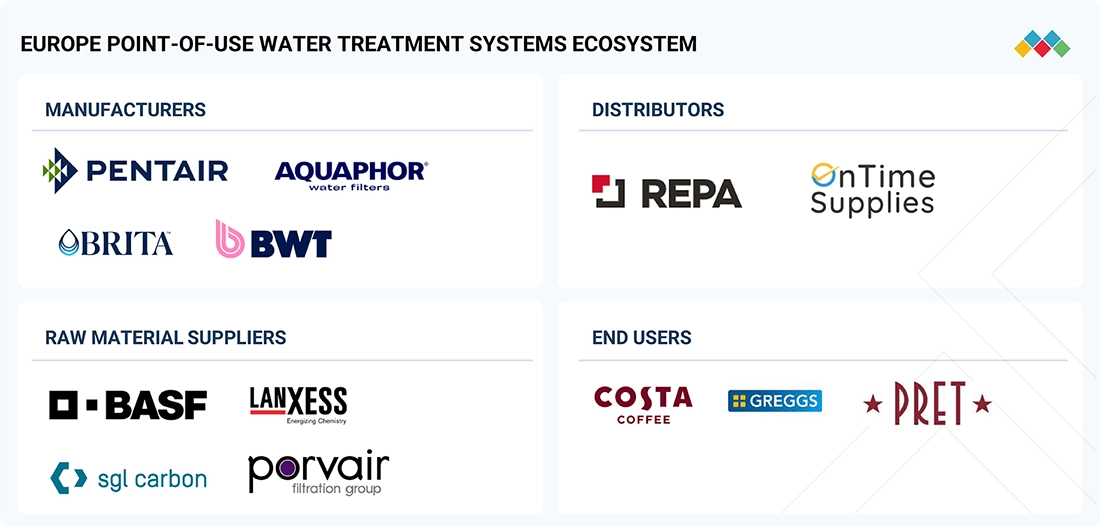
The key stakeholders within the ecosystem include raw material suppliers, point-of-use water treatment system manufacturers, and distributors across sectors and applications such as residential and non-residential.
Logos and trademarks shown above are the property of their respective owners. Their use here is for informational and illustrative purposes only.
MARKET SEGMENTS
Source: Secondary Research, Interviews with Experts, MarketsandMarkets Analysis
Point-of-use water treatment systems market, by device
The freestanding water purifiers are becoming popular in Europe since a number of changes are transforming the way consumers are contemplating drinking water, convenience and beauty.To begin with, the issue of emerging contaminants, particularly, PFAS everlasting chemicals, microplastics, and residues of pharmaceuticals are on the increase throughout the EU. Although the water that is supplied by municipalities is still safe, the regular media reports and regulatory inspections have intensified the urge of the consumers to have additional protection at their homes. Freestanding units provide multi-stage filtration without altering the plumbing and they are an easy precautionary upgrade.Second, the power is convenience and flexibility. The freestanding purifiers need no installation, are renter friendly and can be transported between apartments or houses as they would be ideal in the high-renter, apartment-dominated housing stock of Europe. The addition of some new models with hot cold dispensing, remineralization and smart monitoring makes them more competitive than plain under-sink models. All these factors experienced benevolence, convenience, mobility, and sustainability are contributing to the increase of the freestanding purifiers throughout Europe.
Point-of-use water treatment systems market, by technology
Activated carbon technology is gaining traction in Europe’s point-of-use (POU) water treatment market because it directly addresses the region’s most pressing water quality concerns while aligning with EU sustainability and consumer health trends. Activated carbon is highly efficient in removing pollutants such as taste and odor compounds, chlorine by-products, pesticides, pharmaceutical residues, and, in particular, microplastics and PFAS, which have been extensively reported in EU news and public health updates. As EU regulators expand the range of PFAS limits and monitoring requirements under the Drinking Water Directive, the number of households using carbon-based filters as an additional layer of protection is increasing. The low use of heavy chemical treatment at home is associated with the carbon filtration technology developed in Europe. In that most nations already provide safe tap water, consumers primarily desire polishing filters to enhance flavor and eliminate organic matter, rather than complete purification. The most effective and economical technology in this approach of the final barrier is activated carbon, so it is the most preferable add-on in kitchens and modular POU units. On the whole, tighter regulations, increased focus on the harmful impacts of chemicals, taste-enhancement technologies, and compliance with the sustainability traditions in the EU are contributing to the increased activism in the use of activated carbon in POU systems in Europe.
Point-of-use water treatment systems market, by application
The residential application of point-of-use water treatment systems in Europe is increasing due to consumer demands, regulatory requirements, and shifting household patterns that are prompting households to require additional at-home filtration, despite municipal supplies already being considered sanitary. The main force that causes growth is an increased concern over chemical contaminants. In the revised Drinking Water Directive, EU and national agencies have enhanced monitoring on PFAS, pharmaceuticals, pesticides, and microplastics. The constant news reports and government warnings about forever chemicals and other emerging pollutants have encouraged Europeans to be more cautious, leading them to install countertop filters, faucet filters, or under-sink filters as an additional safety measure. Families are becoming more demanding in terms of taste, smell, and appearance in drinking water. Despite the high-quality water, there is still a presence of chlorine, hardness, and local pipe issues, which affect sensory quality. The increase in rental life, compact houses, and plug-and-play products (compact filters, jug filters, fauch-mounted units) contributes to development since they do not need any change of plumbing system, and suit the contemporary lifestyle.
Point-of-use water treatment systems market, by sales channel
The sale of POU water treatment systems to distributors in Europe has been increasing due to the channel that suits the manner in which the market prefers to purchase technical, home, and kitchen-appliance products. Distributors serve as credibility builders in one of the categories where safety and performance are important. The emergence of new contaminants, the regulatory pressure, and increased awareness of PFAS and microplastics are driving new brands into the market. Recognizing that most new SKUs necessitate the use of distributor networks to secure shelf space, local coverage, and expedited entry into various EU markets, companies rely on these networks to support their entry. Multilingual packaging, CE requirements, and country-level documentation can be simplified through distributors, which simplifies expansion by manufacturers. Moreover, the European market is fragmented, and consumer preferences, plumbing standards, and certification expectations vary across Germany, France, Italy, the Nordics, and Eastern Europe. The distributors are already well aware of local needs and have the ability to customize product mixes, marketing, and pricing. This enables POU brands to expand without developing extensive direct sales businesses in individual countries. All in all, the complexity of the European continent, the willingness to buy products based on trust, and the well-established retail ecosystem of Europe predetermine distributors as the most rapidly growing channel for selling POU systems.
REGION
Asia Pacific to be fastest-growing region in global point-of-use water treatment systems market during forecast period
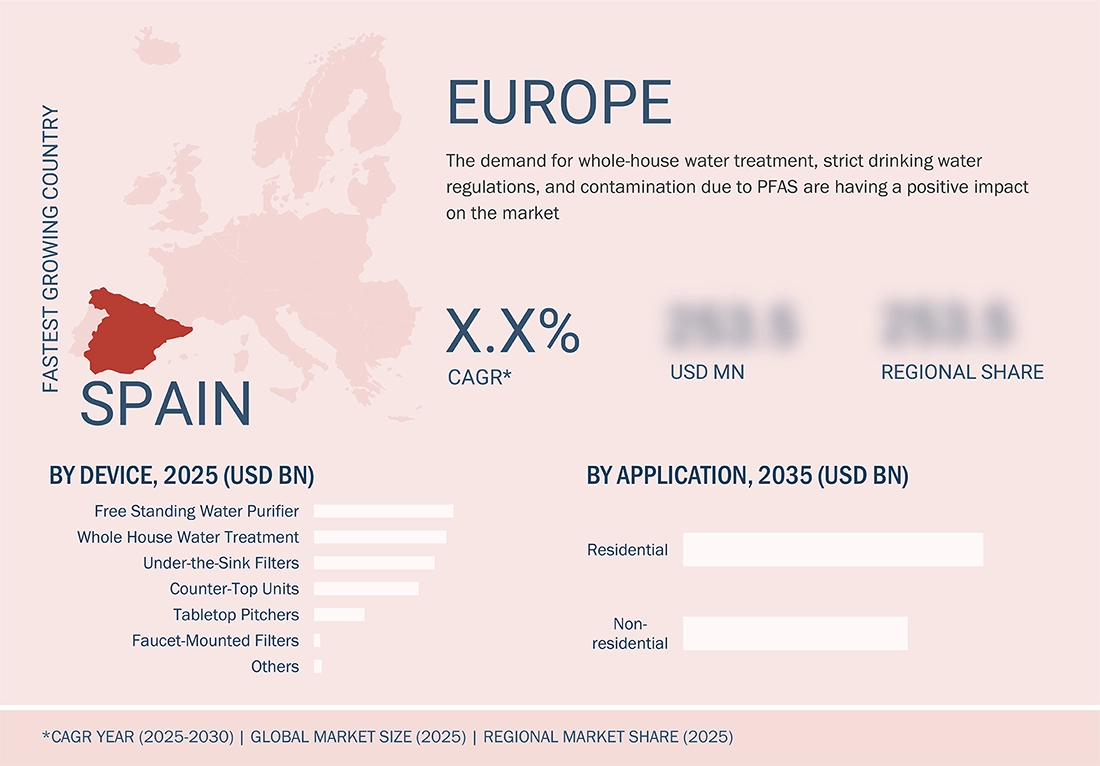
Spain is the fastest-growing market for point-of-use water treatment systems market in Europe, due to a number of factors. According to IDDRI, Spain is one of the European countries worst affected by water scarcity, drought, and water-resource stress driven by climate change, rising irrigation demands, and inefficient water infrastructure. Due to this, water shortages, ecosystem stress, and resource efficiency push households and smaller water users to find POU treatment systems increasingly attractive. Furthermore, Spain’s large tourism and hospitality industry (hotels, restaurants, resorts) fuels demand: such places often install purifiers to meet guest expectations and avoid bottled water.
EUROPE POINT-OF-USE WATER TREATMENT SYSTEMS MARKET: COMPANY EVALUATION MATRIX
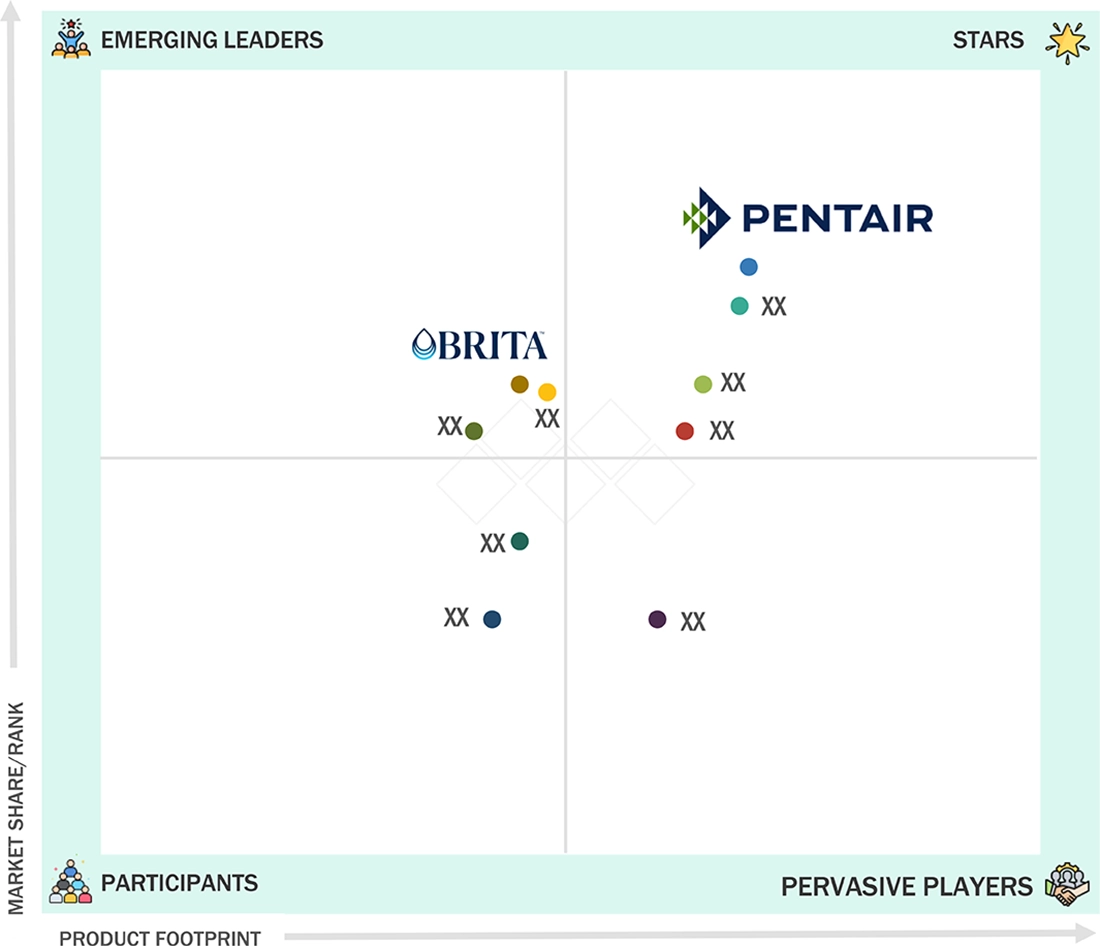
In Europe's point-of-use water treatment systems market matrix, Pentair (Star) leads with a strong market share and extensive product footprint, driven by its advanced products and huge international market presence. Brita GmbH (Emerging Leader) is gaining visibility with its expertise in a wide variety of products. While Pentair dominates through scale and a diverse portfolio, Brita GmbH shows significant potential to move toward the leaders’ quadrant as demand for point-of-use water treatment systems continues to rise.
Source: Secondary Research, Interviews with Experts, MarketsandMarkets Analysis
KEY MARKET PLAYERS
- Pentair (UK)
- Brita GmbH (Germany)
- AQUAPHOR (Estonia)
- BWT Holding GmbH (Austria)
- Ecosoft (Austria)
- Grünbeck AG (Germany)
- Aquafilter (Poland)
- Euro-clear kft. (Hungary)
- Aqualex (Belgium)
- OptySun (Ukraine)
MARKET SCOPE
| REPORT METRIC | DETAILS |
|---|---|
| Market Size in 2024 (Value) | USD 0.53 Billion |
| Market Forecast in 2030 (Value) | USD 0.67 Billion |
| Growth Rate | CAGR of 3.97% from 2025-2030 |
| Years Considered | 2024-2030 |
| Base Year | 2024 |
| Forecast Period | 2025-2030 |
| Units Considered | Value (USD Million/Billion), Volume (Thousand units) |
| Report Coverage | Revenue forecast, company ranking, competitive landscape, growth factors, and trends |
| Segments Covered |
|
| Regions Covered | Germany, France, Italy, UK, Spain, Rest of Europe |
WHAT IS IN IT FOR YOU: EUROPE POINT-OF-USE WATER TREATMENT SYSTEMS MARKET REPORT CONTENT GUIDE
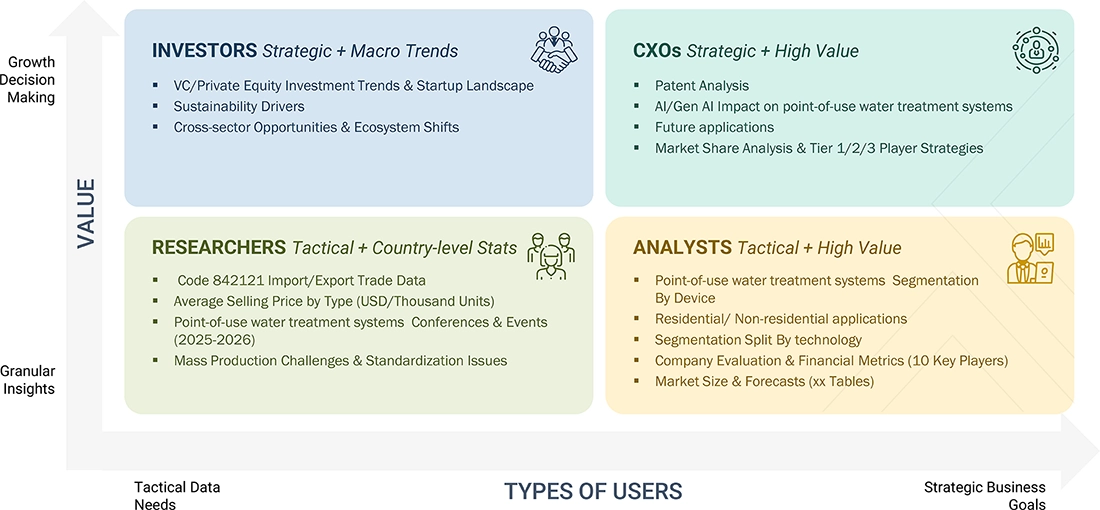
DELIVERED CUSTOMIZATIONS
We have successfully delivered the following deep-dive customizations:
| CLIENT REQUEST | CUSTOMIZATION DELIVERED | VALUE ADDS |
|---|---|---|
| Detailed study on point-of-use water treatment systems from Latin America | Study conducted on Mexico, Brazil, Chile, Argentina, Peru, Colombia, Rest of South America | Identified market opportunities in the region |
RECENT DEVELOPMENTS
- March 2025 : BWT Holding GmbH launched the new BWT MACH Filter, which uses patented DIR “rotary-pulse” backwash technology to quickly and thoroughly clean the filter, giving particle-free drinking water while minimizing water waste and maintenance.
- July 2024 : Pentair and Minneapolis–St. Paul International Airport (MSP), operated by the Metropolitan Airports Commission (MAC), partnered to reduce single-use plastic waste by installing 10 HOPE Hydration HydroStations throughout the airport.
Table of Contents
 Exclusive indicates content/data unique to MarketsandMarkets and not available with any competitors.
Methodology
The study involved four major activities to estimate the current size of the Europe Point-of-Use Water Treatment Systems Market. Exhaustive secondary research was carried out to collect information on the market, the peer product market, and the parent product group market. The next step was to validate these findings, assumptions, and sizes with the industry experts across the value chain of point-of-use water treatment systems through primary research. The top-down and bottom-up approaches were employed to estimate the overall size of the Europe Point-of-Use Water Treatment Systems Market. After that, market breakdown and data triangulation procedures were used to determine the size of different segments of the market.
Secondary Research
The market for the companies offering point-of-use water treatment systems is arrived at by secondary data available through paid and unpaid sources, analyzing the product portfolios of the major companies in the ecosystem, and rating the companies by their performance and quality. Various secondary sources, such as Business Standard, Bloomberg, World Bank, and Factiva, were referred to identify and collect information for this study on the Europe Point-of-Use Water Treatment Systems Market. In the secondary research process, various secondary sources were referred to identify and collect information related to the study. Secondary sources included annual reports, press releases, and investor presentations of point-of-use water treatment systems vendors, forums, certified publications, and white papers. Secondary research was used to obtain critical information on the industry’s value chain, the total pool of key players, market classification, and segmentation from the market and technology-oriented perspectives.
Primary Research
In the primary research process, various primary sources from both, the supply and demand sides were interviewed to obtain qualitative and quantitative information for this report. The primary sources from the supply side included industry experts, such as Chief Executive Officers (CEOs), Vice Presidents (VPs), marketing directors, technology and innovation directors, and related key executives from several key companies and organizations operating in the Europe Point-of-Use Water Treatment Systems Market. After the complete market engineering (calculations for market statistics, market breakdown, market size estimations, market forecasting, and data triangulation), extensive primary research was conducted to gather information and verify and validate the critical numbers arrived at. Primary research was also conducted to identify the segmentation types, industry trends, competitive landscape of point-of-use water treatment systems offered by various market players, and key market dynamics, such as drivers, restraints, opportunities, challenges, industry trends, and key player strategies. In the complete market engineering process, the top-down and bottom-up approaches and several data triangulation methods were extensively used to perform the market estimation and market forecasting for the overall market segments and subsegments listed in this report. Extensive qualitative and quantitative analysis was performed on the complete market engineering process to list the key information/insights throughout the report.
Market Size Estimation
The top-down and bottom-up approaches were used to estimate and validate the size of the Europe Point-of-Use Water Treatment Systems Market. These approaches were also used extensively to estimate the size of various dependent market segments. The research methodology used to estimate the market size included the following:
Data Triangulation
After arriving at the overall market size using the market size estimation processes, the market was split into several segments and subsegments. The data triangulation and market breakup procedures were employed, wherever applicable, to complete the overall market engineering process and arrive at the exact statistics of each market segment and subsegment. The data was triangulated by studying various factors and trends from both, the demand and supply sides.
Market Definition
Point-of-use water treatment systems are devices installed on individual taps or multiple taps to provide high-quality water that is free from contaminants like chlorine, iron, sulfur, and dissolved solids. This purified water is suitable for drinking, cooking, and other uses in both, residential and non-residential settings. These compact filtration or purification devices are placed directly where water is consumed, such as kitchen sinks, faucets, or even portable pitchers, ensuring immediate access to clean and safe water.
Tabletop pitchers, whole-house water treatments, faucet-mounted filters, countertop units, under-the-sink filters, free-standing water purifiers, and other variants are examples of products included in point-of-use water treatment systems. These systems utilize various technologies to enhance effectiveness and user-friendliness, such as reverse osmosis (RO) systems, ultrafiltration systems, and activated carbon filtration.
Stakeholders
- Raw Material Suppliers and Producers
- Regulatory Bodies
- Point-of-use Water Treatment System Distributors/Suppliers
- Environmental Protection Bodies
- Local Governments
- End-use Industries
- Market Research and Consulting Firms
Report Objectives
- To define, describe, and forecast the size of the Europe Point-of-Use Water Treatment Systems Market based on device, technology, sales channel, application, and region in terms of value and volume
- To provide detailed information on the significant drivers, restraints, opportunities, and challenges influencing the market
- To strategically analyze micromarkets concerning individual growth trends, prospects, and their contribution to the market
- To assess the growth opportunities in the market for stakeholders and provide details on the competitive landscape for market leaders
- To strategically profile the key players and comprehensively analyze their market shares and core competencies
- To analyze competitive developments, such as product launches, collaborations, acquisitions, expansions, and partnerships, in the Europe Point-of-Use Water Treatment Systems Market
- To provide the impact of AI on the market


Personalize This Research
- Triangulate with your Own Data
- Get Data as per your Format and Definition
- Gain a Deeper Dive on a Specific Application, Geography, Customer or Competitor
- Any level of Personalization
Let Us Help You
- What are the Known and Unknown Adjacencies Impacting the Europe Point-of-Use Water Treatment Systems Market
- What will your New Revenue Sources be?
- Who will be your Top Customer; what will make them switch?
- Defend your Market Share or Win Competitors
- Get a Scorecard for Target Partners

Custom Market Research Services
We Will Customise The Research For You, In Case The Report Listed Above Does Not Meet With Your Requirements
Get 10% Free CustomisationTESTIMONIALS
We at Nissan Chemicals Corporation have been clients of MarketsandMarkets for more than a year now. We recently consulted MarketsandMarkets for a study, the team at MarketsandMarkets was extremely professional and organized. The business insights were very detailed and aligned well with our expectations that really helped us formulate the Business Plans and device new strategies for development themes. MarketsandMarkets offers a unique combination of expertise and dedicated engagement model. Their research findings have helped us in designing our Pricing Strategy which will make it easier for us to predict the future sales and profits for the next ten years. We look forward to working with MarketsandMarkets in the future.
VP of Strategy & New Business Development
Leading Specialty Chemical Company
The MarketsandMarkets Engagement Model, composed of both the Knowledge Store and advisory custom research, has greatly helped us in understanding our markets and making strategic decisions. The Knowledge Store is a fast way to allow everyone in our organization to understand more about most any market they are interested in. The ability to then get custom research done and get answers to specific strategic questions and market insight has been spectacular. The Markets and Markets team feel more like colleagues than vendors and their services have helped us change our culture where statements of things like growth opportunities and competitive position are always backed by industry research.

Rich Gibson,
Director, Corporate Strategy
Milliken & Company,
Leading Industrial Manufacturer of specialty chemical, floor covering, performance and protective textile materials, and healthcaremilliken.com
MarketsandMarkets is a trusted resource that helps us to better understand markets that are near-adjacencies-whether its technology, value chain or geography. Their Knowledge Store platform provides a dashboard of markets and their characteristics which is easy to use and saves us time.
Adam Shaw,
Market Development and Strategy Manager
AdvanSix Inc. USA,
An American Leader in Chemicalswww.advansix.com
The Knowledge Store from MarketsandMarkets is a valuable tool which has helped my team acquire greater insight in to the end markets that our business serves. This has enabled us to help our company build stronger strategies throughout our planning process.
TOSHIO KINOSHITA
Senior Chif Consultion Research & Consulting Division
Mitsubishi Chemical Research Corporation,
Leading Manufacturer of Chemical Productswww.mitsubishichem-res.co.jp/en/

We recently engaged with MarketsandMarkets for a study, the team not only clearly understood our business objectives but was also extremely professional in the way they handled the entire project. The study was efficiently conducted in a phase-wise manner, and the engagement model furnished us with high-quality business insights that far exceeded our expectations at each phase. We were especially happy that MarketsandMarkets could provide us with both, an English as well as a Japanese version of the study. A special thanks to the Analyst Team and Client Services Team, whose fluency in Japanese enhanced our comfort level, as we could converse with them in our preferred language.
Independent entrepreneurs
Arrow Precision
We approached MarketsandMarkets for study on Proppants Market, and their work exceeded our expectations. The study conducted was comprehensive and enabled us to view the market through the various dimensions. In addition, the team was extraordinarily responsive throughout the process and resolved our queries on time. I strongly recommend MarketsandMarkets and will certainly consider them for additional market assessments we will need in the future.
Global engineering company, Japan
Deputy Manager,
Strategic Planning OfficeThe high-quality insights shared by the MarketsandMarkets team helped us understand the pharmaceutical plant designers in a specific geography. It also captured the risks that we may likely face in communicating with our potential partners. The study would enable us identify partners, which would impact our future growth.






Growth opportunities and latent adjacency in Europe Point-of-Use Water Treatment Systems Market