EV Composites Market

EV Composites Market by Fiber Type (Glass Fiber, Carbon Fiber), Resin Type (Thermoplastics, Thermoset), Type (Ultra-Premium, Premium and Non-Premium), Manufacturing Process, Application, and Region - Global Forecast to 2031




OVERVIEW
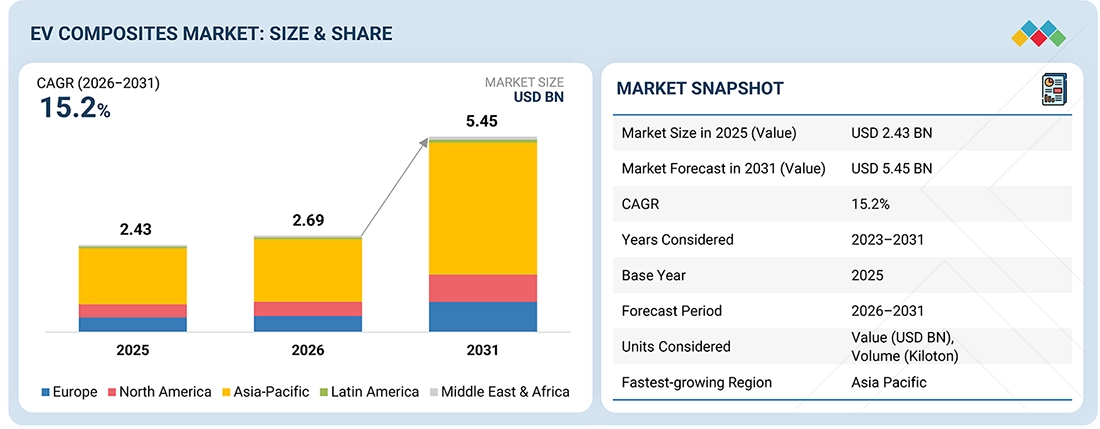
Source: Secondary Research, Interviews with Experts, MarketsandMarkets Analysis
The EV composites market is projected to reach USD 5.45 billion by 2031 from USD 2.69 billion in 2026, at a CAGR of 15.2%. Market growth is primarily driven by the increasing adoption of electric vehicles, rising demand for lightweight materials, and stringent fuel-efficiency and emission regulations worldwide. EV composites are increasingly being used in battery enclosures, body panels, structural components, and interior applications to reduce vehicle weight, improve energy efficiency, and extend EV driving range. Advancements in composite manufacturing technologies, growing use of thermoplastic and carbon fiber composites, and increasing investments in sustainable mobility solutions are further accelerating market growth.
KEY TAKEAWAYS
-
By RegionAsia Pacific projected to grow at the highest CAGR of 16.1% during the forecast period.
-
By Fiber TypeBy fiber type, the carbon fiber segment dominated the EV composites market with a share of 80.4% in terms of value in 2025.
-
By Resin TypeBy resin type, the thermoset segment dominated the EV composites market with a share of 59.8% in terms of value in 2025.
-
By Manufacturing ProcessBy manufacturing process, RTM process segment is expected to register the highest CAGR during the forecast period.
-
By TypeBy vehicle type, the electrical vehicle segment is projected to register the fastest CAGR during the forecast period.
-
By ApplicationBy application, the battery enclosures segment is expected to register the highest CAGR during the forecast period.
-
Competitive Landscape-Key PlayersTeijin Limited, Toray Industries, Inc., Syensqo, Mitsubishi Chemical Group Corporation, Owens Corning, and SGL Carbon.
-
Competitive Landscape- StartupsIDI Composites International, The Gund Company, Envalior, and CIE Automotive India have distinguished themselves among startups and SMEs due to their well-developed marketing channels and extensive funding to build their product portfolios.
The EV composites market is witnessing strong growth due to increasing demand for lightweight, high-strength, and durable materials that help improve vehicle performance, fuel efficiency, and sustainability. Automakers are increasingly adopting composite materials in body panels, battery enclosures, structural components, chassis systems, and interior applications to reduce vehicle weight and comply with stringent emission regulations. Continuous advancements in composite manufacturing technologies, including automated production processes, high-pressure resin transfer molding (HP-RTM), thermoplastic composite processing, and recycling solutions, are improving production efficiency and enabling greater adoption across high-volume vehicle platforms. Market growth is further supported by the rapid expansion of electric vehicle production, growing investments in lightweight vehicle architectures, and increasing demand for extended battery range and energy efficiency. The automotive industry's focus on carbon reduction, vehicle electrification, and sustainable mobility is accelerating the adoption of advanced composite materials. As OEMs continue to invest in next-generation vehicle platforms and recyclable composite solutions, EV composites are expected to play an increasingly important role in the future of transportation.
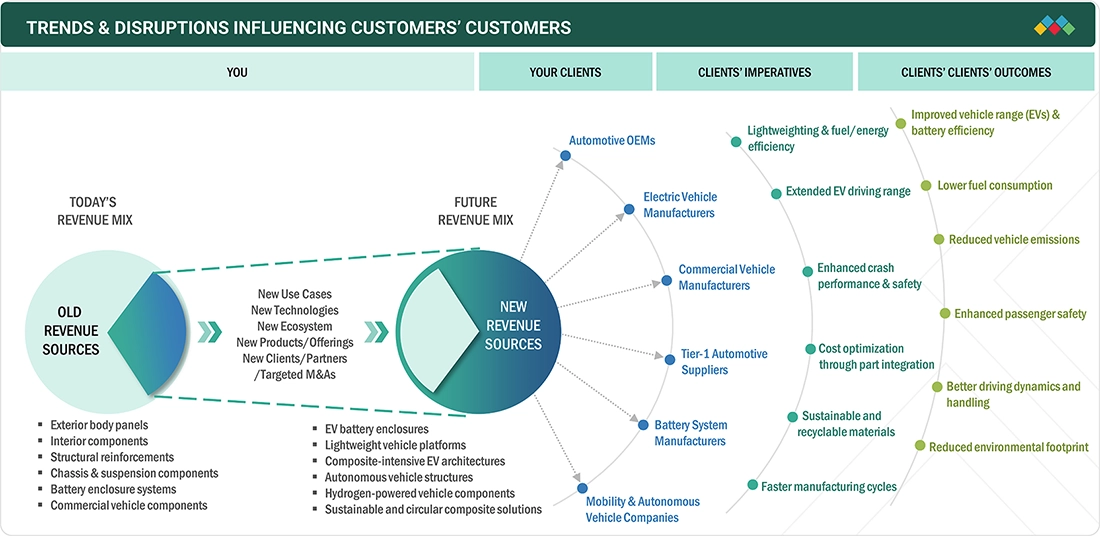
TRENDS & DISRUPTIONS IMPACTING CUSTOMERS' CUSTOMERS
Changes in consumer preferences, regulatory requirements, vehicle production trends, and economic conditions significantly influence the EV composites market. Growing demand for electric vehicles, lightweight vehicles, enhanced fuel efficiency, and sustainable mobility solutions directly impacts the adoption of composite materials across automotive applications. Fluctuations in vehicle production volumes, raw material costs, and OEM investment decisions can affect demand for EV composites, influencing revenues across the entire value chain, including composite material suppliers, component manufacturers, and automotive OEMs. As vehicle electrification and lightweighting strategies continue to evolve, the EV composites market remains closely linked to developments within the global automotive industry.
Source: Secondary Research, Interviews with Experts, MarketsandMarkets Analysis
MARKET DYNAMICS

Level
-
Rapid growth in electric vehicle production and adoption

-
Increasing demand for lightweight, fuel-efficient vehicles


Level
-
High raw material and manufacturing costs

-
Complex processing and recycling challenges


Level
-
Growing demand for battery enclosures and EV structural components

-
Expansion of recyclable thermoplastic and bio-based composites


Level
-
Cost competitiveness versus steel and aluminum

-
Scaling composite production for mass-market vehicles

Source: Secondary Research, Interviews with Experts, MarketsandMarkets Analysis
Driver: Rapid Growth in Electric Vehicle Production and Adoption
Rising EV production is increasing demand for lightweight composite materials in battery enclosures, body panels, and structural components. EV composites help extend driving range, improve energy efficiency, and reduce vehicle emissions.
Restraint: High Raw Material and Manufacturing Costs
EV composites, particularly carbon fiber composites, remain more expensive than conventional materials such as steel and aluminum. High material costs and complex manufacturing processes limit adoption in mass-market vehicles.
Opportunity: Growing Demand for Battery Enclosures and EV Structural Components
The expansion of electric vehicle production is creating significant demand for composite battery enclosures and lightweight structural parts. Composites provide superior strength, thermal management, and weight reduction benefits for next-generation EV platforms.
Challenge: Cost Competitiveness Versus Steel and Aluminum
Despite their performance advantages, EV composites face strong competition from lower-cost materials such as steel and aluminum. Manufacturers must reduce production costs and improve scalability to achieve broader adoption across high-volume vehicle segments.
EV COMPOSITES MARKET: COMMERCIAL USE CASES ACROSS INDUSTRIES
| COMPANY | USE CASE DESCRIPTION | BENEFITS |
|---|---|---|
 |
Utilizes glass fiber and carbon fiber composites in battery enclosures, body structures, underbody shields, and interior components to reduce vehicle weight and improve EV efficiency. | Extends driving range, improves energy efficiency, enhances crash protection, and reduces overall vehicle weight. |
 |
Incorporates carbon fiber-reinforced composites in passenger cells, roof systems, body structures, and lightweight EV platforms. | Improves vehicle performance, crash resistance, battery efficiency, and fuel economy while reducing emissions. |
 |
Uses advanced composites in body panels, structural components, battery housings, and luxury vehicle applications. | Enables lightweighting, enhances structural rigidity, improves safety performance, and supports vehicle electrification. |
 |
Deploys glass fiber and thermoplastic composites in interior components, exterior panels, and lightweight structural applications across passenger and hybrid vehicles. | Reduces vehicle mass, improves fuel efficiency, lowers manufacturing costs, and enhances durability. |
Logos and trademarks shown above are the property of their respective owners. Their use here is for informational and illustrative purposes only.
MARKET ECOSYSTEM
The EV composites market ecosystem comprises raw material suppliers, composite material manufacturers, distributors, component fabricators, and automotive OEMs. Raw material suppliers provide key inputs such as glass fibers, carbon fibers, natural fibers, and thermoset and thermoplastic resins used in composite manufacturing. Major material suppliers and composite manufacturers develop advanced composite solutions tailored for automotive applications, including body panels, battery enclosures, structural components, and interior systems. Distributors and supply chain partners ensure material availability and support regional market operations. Component manufacturers convert composite materials into finished automotive parts for passenger vehicles, commercial vehicles, and electric vehicles. The end-user landscape is dominated by automotive OEMs such as BMW, Toyota, Ford, Mercedes-Benz, Volkswagen, General Motors, Tesla, and other EV manufacturers that increasingly utilize composites to achieve lightweighting, improve fuel efficiency, extend EV range, enhance safety, and meet sustainability objectives.
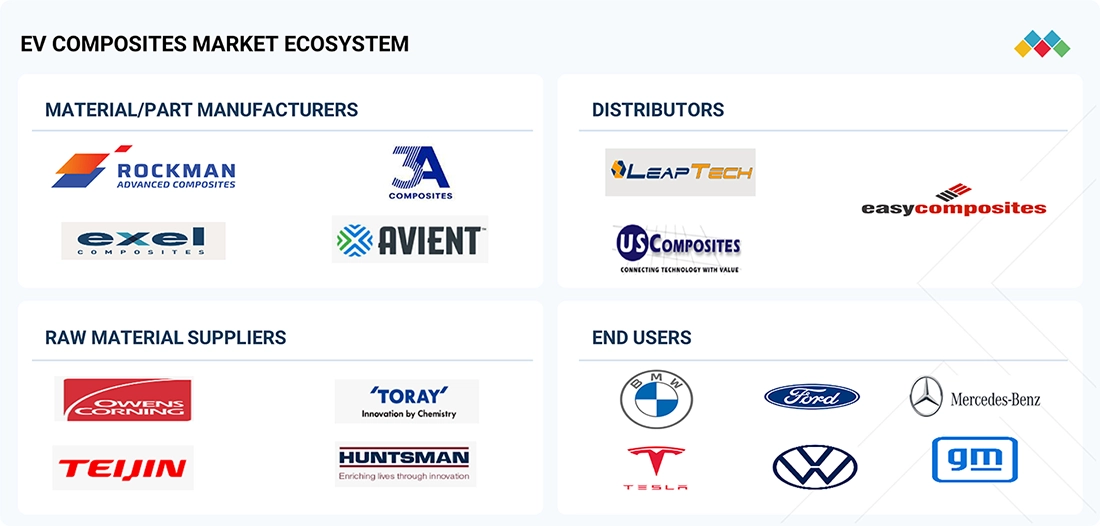
Logos and trademarks shown above are the property of their respective owners. Their use here is for informational and illustrative purposes only.
MARKET SEGMENTS
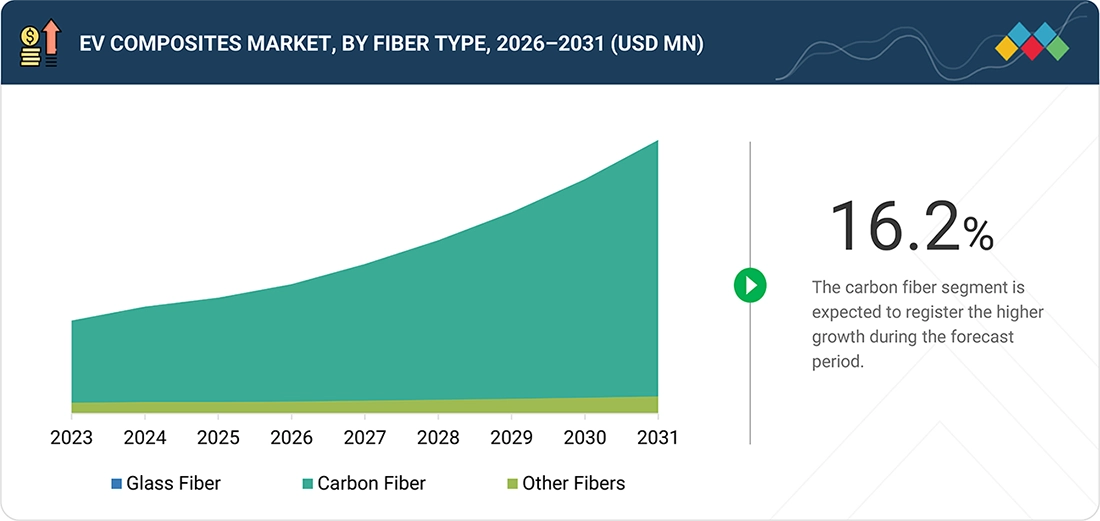
Source: Secondary Research, Interviews with Experts, MarketsandMarkets Analysis
EV composites Market, By Fiber Type
The carbon fiber segment dominated the EV composites market due to its excellent balance of strength, durability, corrosion resistance, and cost-effectiveness. Its widespread use in exterior panels, interior components, and structural applications continues to support its leading position.
EV composites Market, By Resin Type
The thermoset segment dominated the EV composites market owing to its superior mechanical properties, thermal stability, and suitability for high-performance structural applications. Its extensive use in body panels, battery enclosures, and load-bearing components supports its market leadership.
EV composites Market, By Manufacturing Process
The RTM (Resin Transfer Molding) segment is expected to register the highest growth during the forecast period due to its ability to manufacture lightweight and complex components with high precision, excellent surface finish, and improved production efficiency.
EV composites Market, By Type
The Ultra Premium segment is projected to witness the fastest growth as automakers increasingly adopt composite materials to reduce vehicle weight, improve battery efficiency, and extend driving range.
EV composites Market, By Application
The battery enclosures segment is expected to register the highest growth due to rising EV production and increasing demand for lightweight, impact-resistant, and thermally stable materials that enhance battery safety and performance.
REGION
Asia Pacific to be the fastest-growing market for EV composites during the forecast period
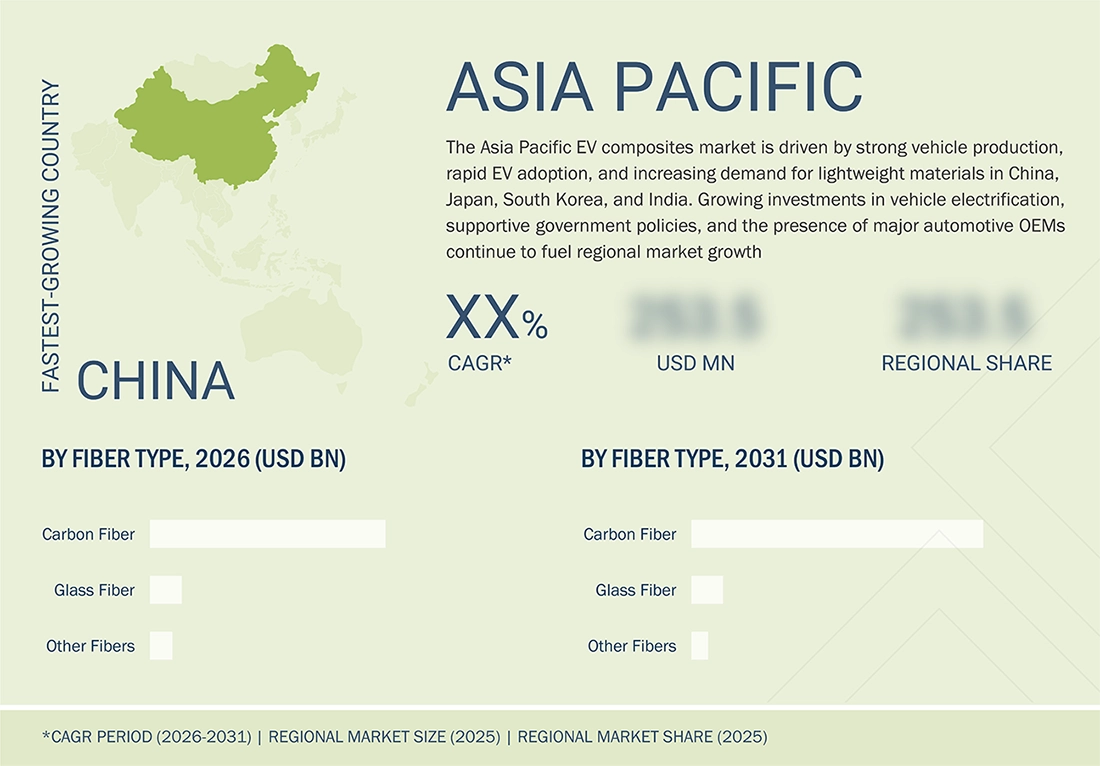
Asia Pacific is projected to register the highest CAGR in the EV composites market during the forecast period. The Asia Pacific EV composites market is driven by strong vehicle production, rapid EV adoption, and increasing demand for lightweight materials in China, Japan, South Korea, and India. Growing investments in vehicle electrification, supportive government policies, and the presence of major automotive OEMs continue to fuel regional market growth.
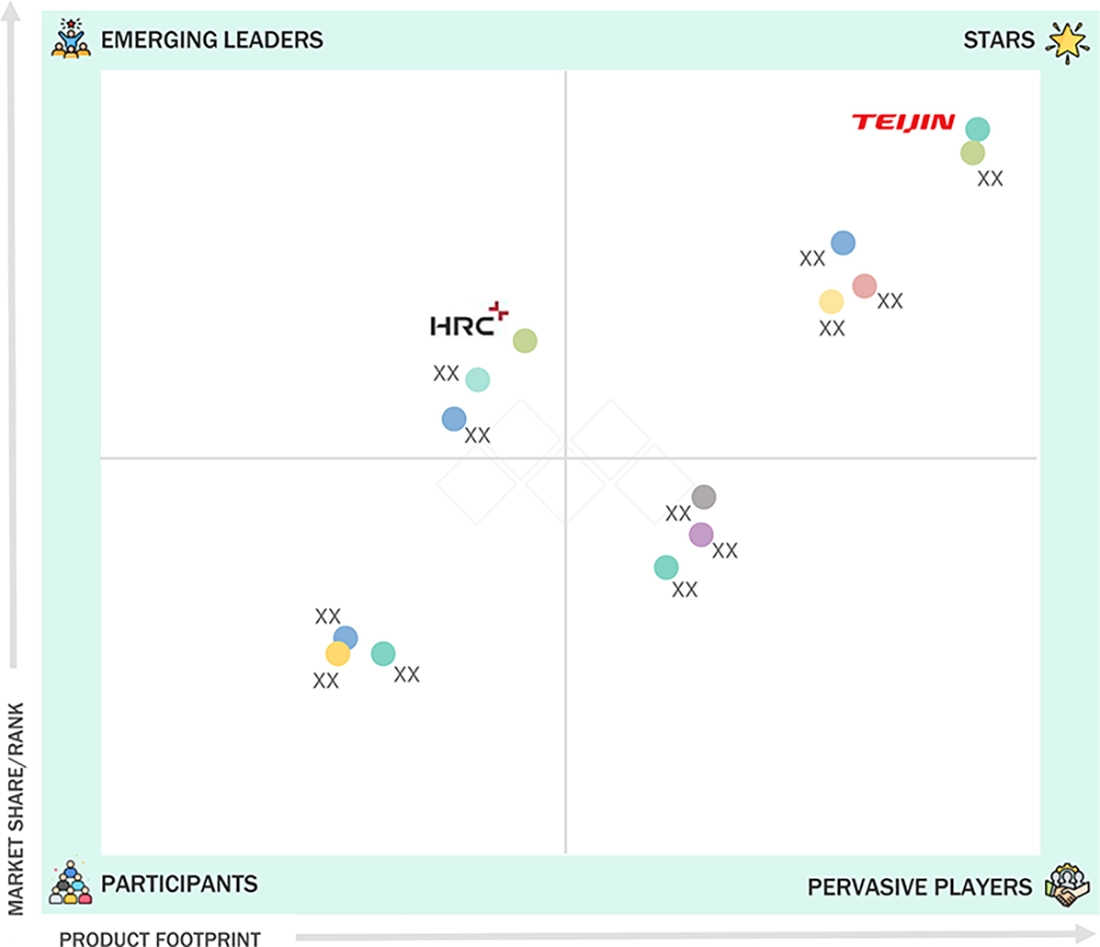
EV COMPOSITES MARKET: COMPANY EVALUATION MATRIX
In the EV composites market, Teijin Limited (Star) leads with a strong market share and extensive product footprint, driven by its vertically integrated operations and strategic partnerships for EV composites porfolio. Hengrui Corporation (HRC) (Emerging Leader) is gaining visibility because of its specialized EV composites portfolio and advanced manufacturing technologies. While Teijin dominates through scale and a diverse portfolio, Hengrui Corporation (HRC) shows significant potential to move toward the leaders’ quadrant as the demand for EV composites, continues to rise.
Source: Secondary Research, Interviews with Experts, MarketsandMarkets Analysis
KEY MARKET PLAYERS
- Toray Industries, Inc. (Japan)
- SGL Carbon (Germany)
- Syensqo (Belgium)
- POLYTEC HOLDING AG (Austria)
- OPmobility (France)
- FORVIA (France)
- ElringKlinger AG (Germany)
- HENGRUI CORPORATION (HRC) (China)
- Exel Composites (Finland)
- Teijin Limited (Japan)
- Mitsubishi Chemical Group Corporation (Japan)
- Owens Corning (US)
- Piran Advanced Composites (UK)
- Mar-Bal, Inc. (US)
- Röchling SE & Co. KG (Germany)
MARKET SCOPE
| REPORT METRIC | DETAILS |
|---|---|
| Market Size in 2025 (Value) | USD 2.43 Billion |
| Market Size in 2026 (Value) | USD 2.69 Billion |
| Market Forecast in 2031 (Value) | USD 5.45 Billion |
| CAGR | 15.2% |
| Years Considered | 2023–2031 |
| Base Year | 2025 |
| Forecast Period | 2026–2031 |
| Units Considered | Value (USD Billion), Volume (Kiloton) |
| Report Coverage | Revenue Forecast, Company Ranking, Competitive Landscape, Growth Factors, and Trends |
| Segments Covered |
|
| Regions Covered | North America, Europe, Asia Pacific, Middle East and Africa, Latin America |
WHAT IS IN IT FOR YOU: EV COMPOSITES MARKET REPORT CONTENT GUIDE
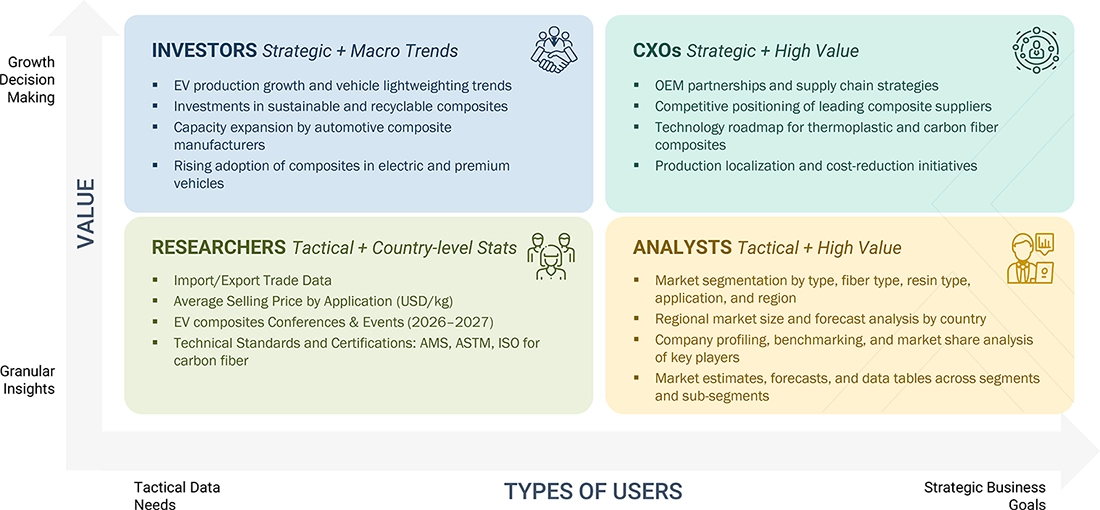
DELIVERED CUSTOMIZATIONS
We have successfully delivered the following deep-dive customizations:
| CLIENT REQUEST | CUSTOMIZATION DELIVERED | VALUE ADDS |
|---|---|---|
| Raw Material Suppliers (Glass Fiber, Carbon Fiber, Thermoset & Thermoplastic Resin Suppliers) |
|
|
| Automotive Composite Manufacturers & Component Suppliers |
|
|
| OEMs & Tier-1 Suppliers (Passenger Vehicles, Commercial Vehicles & EVs) |
|
|
| End-Use Industries (Passenger Cars, Commercial Vehicles, Electric Vehicles & Specialty Vehicles) |
|
|
RECENT DEVELOPMENTS
- May 2025 : SGL Carbon announced a major restructuring of its Carbon Fibers business unit, including the phased closure of unprofitable sites such as Lavradio, Portugal, due to years of losses. This move is part of a broader strategy to reduce global capacity, cut costs, and focus on a profitable core of operations.
- October 2024 : IDI Composites International announced the opening of its new global headquarters and next-generation manufacturing facility in Noblesville, Indiana. This major investment represents the company’s commitment to innovation and excellence in the manufacturing of thermoset composite materials.
- November 2023 : In November 2023, the separation of Syensqo and Solvay S.A. marked one of the pivotal moments in the history of Solvay S.A., where Solvay S.A. completed its spin-off and formed a new company, Syensqo, with 99.53% votes from Solvay Shareholders. Syensqo focuses on green hydrogen and thermoplastic composites, and Solvay focuses on essential chemistry.
Table of Contents
 Exclusive indicates content/data unique to MarketsandMarkets and not available with any competitors.
Methodology
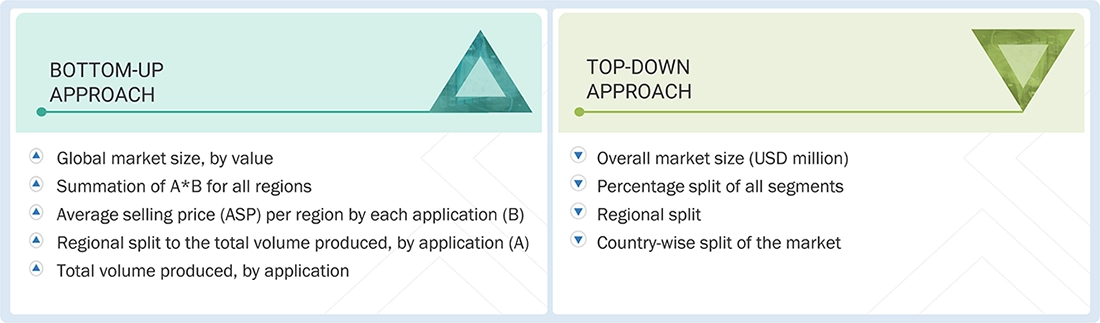
The study involves two major activities in estimating the current market size for the EV Composites market. Exhaustive secondary research was done to collect information on the market, peer market, and parent market. The next step was to validate these findings, assumptions, and sizing with industry experts across the value chain through primary research. Both top-down and bottom-up approaches were employed to estimate the complete market size. After that, market breakdown and data triangulation were used to estimate the market size of segments and subsegments.
Secondary Research
Secondary sources referred to for this research study include financial statements of companies offering EV Composites and information from various trade, business, and professional associations. Secondary research was used to obtain critical information about the industry’s value chain, the total pool of key players, market classification, and segmentation according to industry trends, down to the bottom-most level and regional markets. The secondary data was collected and analyzed to arrive at the overall size of the EV Composites market, which was validated by primary respondents.
Primary Research
Extensive primary research was conducted after obtaining information regarding the EV Composites market scenario through secondary research. Several primary interviews were conducted with market experts from both the demand and supply sides across major countries of North America, Europe, Asia Pacific, the Middle East & Africa, and Latin America. Primary data was collected through questionnaires, emails, and telephonic interviews. The primary sources from the supply side included various industry experts, such as chief experience officers (CXOs), vice presidents (VPs), business development/marketing directors, product development/innovation teams, related key executives from the EV Composites industry, system integrators, component providers, distributors, and key opinion leaders. Primary interviews were conducted to gather insights such as market statistics, revenue data from products and services, market breakdowns, market size estimates, market forecasts, and data triangulation. Primary research helped in understanding the various trends related to fiber type, resin type, manufacturing process, application, vehicle type, and region. Stakeholders from the demand side, such as CIOs, CTOs, CSOs, and installation teams of the customers/end users who are seeking EV Composites services, were interviewed to understand the buyer’s perspective on the suppliers, products, component providers, and their current usage of EV Composites and future outlook of their business, which will affect the overall market.
Breakup of Primary Research:
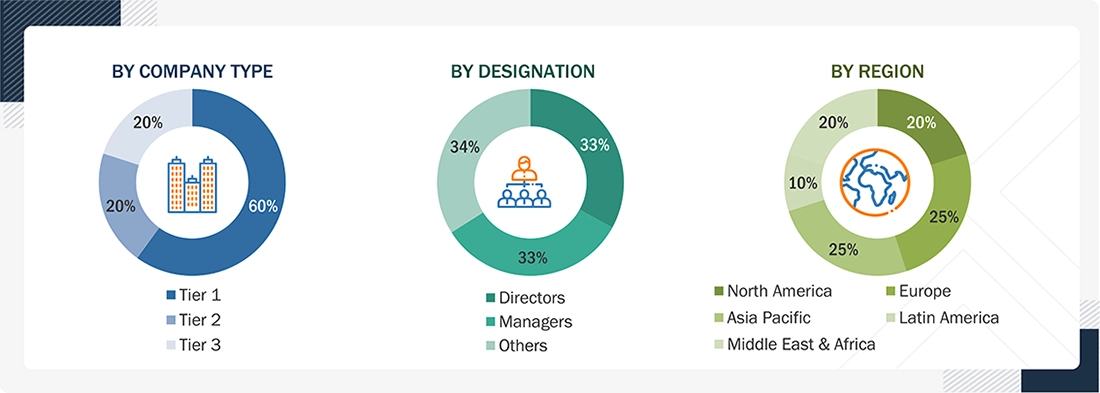
To know about the assumptions considered for the study, download the pdf brochure
Market Size Estimation
The research methodology used to estimate the size of the EV Composites market includes the following details. The market size was undertaken from the demand side. The market was expanded based on demand for EV Composites across different applications at the regional level. Such procurements provide information on the demand aspects of the EV Composites industry for each application. For each application, all possible segments of the EV Composites market were integrated and mapped.
EV Composites Market : Top-Down and Bottom-Up Approach
Data Triangulation
After arriving at the overall size from the market size estimation process explained above, the total market was split into several segments and subsegments. The data triangulation and market breakdown procedures explained below were implemented, wherever applicable, to complete the overall market engineering process and arrive at the exact statistics for various market segments and subsegments. The data was triangulated by studying various factors and trends from the demand and supply sides. In addition, the market size was validated using both the top-down and bottom-up approaches.
Market Definition
EV composites are advanced materials made by combining reinforcing fibers such as glass, carbon, natural, or aramid fibers with thermoset or thermoplastic resins. These materials offer high strength-to-weight ratios, corrosion resistance, and design flexibility, making them ideal for applications such as body panels, battery enclosures, chassis components, and structural reinforcements. By reducing vehicle weight while maintaining performance and safety, EV composites help improve fuel efficiency, extend EV range, and support sustainability goals.
Key Stakeholders
- EV Composites Manufacturers
- EV Composites Distributors and Suppliers
- Universities, Governments, and Research Organizations
- Associations and Industrial Bodies
- R&D Institutes
- Environmental Support Agencies
- Investment Banks and Private Equity Firms
- Research and Consulting Firms
Report Objectives
- To define, describe, and forecast the EV Composites market size in terms of volume and value
- To provide detailed information regarding the key factors, such as drivers, restraints, opportunities, and challenges influencing market growth
- To analyze and project the global EV Composites market by fiber type, resin type, manufacturing process, application, type, and region
- To forecast the market size concerning five main regions (along with country-level data), namely, North America, Europe, Asia Pacific, the Middle East & Africa, and Latin America, and analyze the significant region-specific trends
- To strategically analyze micromarkets with respect to individual growth trends, prospects, and contributions of the submarkets to the overall market
- To analyze the market opportunities and the competitive landscape for stakeholders and market leaders
- To assess recent market developments and competitive strategies, such as agreements, contracts, acquisitions, and product developments/product launches, to draw the competitive landscape
- To strategically profile the key market players and comprehensively analyze their core competencies
Available customizations:
MarketsandMarkets offers the following customizations for this market report:
- Additional country-level analysis of the EV Composites market
Product Analysis
- Product matrix, which provides a detailed comparison of the product portfolio of each company’s market


Personalize This Research
- Triangulate with your Own Data
- Get Data as per your Format and Definition
- Gain a Deeper Dive on a Specific Application, Geography, Customer or Competitor
- Any level of Personalization
Let Us Help You
- What are the Known and Unknown Adjacencies Impacting the EV Composites Market
- What will your New Revenue Sources be?
- Who will be your Top Customer; what will make them switch?
- Defend your Market Share or Win Competitors
- Get a Scorecard for Target Partners

Custom Market Research Services
We Will Customise The Research For You, In Case The Report Listed Above Does Not Meet With Your Requirements
Get 10% Free CustomisationTESTIMONIALS

We at Nissan Chemicals Corporation have been clients of MarketsandMarkets for more than a year now. We recently consulted MarketsandMarkets for a study, the team at MarketsandMarkets was extremely professional and organized. The business insights were very detailed and aligned well with our expectations that really helped us formulate the Business Plans and device new strategies for development themes. MarketsandMarkets offers a unique combination of expertise and dedicated engagement model. Their research findings have helped us in designing our Pricing Strategy which will make it easier for us to predict the future sales and profits for the next ten years. We look forward to working with MarketsandMarkets in the future.
VP of Strategy & New Business Development
Leading Specialty Chemical Company
The MarketsandMarkets Engagement Model, composed of both the Knowledge Store and advisory custom research, has greatly helped us in understanding our markets and making strategic decisions. The Knowledge Store is a fast way to allow everyone in our organization to understand more about most any market they are interested in. The ability to then get custom research done and get answers to specific strategic questions and market insight has been spectacular. The Markets and Markets team feel more like colleagues than vendors and their services have helped us change our culture where statements of things like growth opportunities and competitive position are always backed by industry research.

Rich Gibson,
Director, Corporate Strategy
Milliken & Company,
Leading Industrial Manufacturer of specialty chemical, floor covering, performance and protective textile materials, and healthcaremilliken.com
MarketsandMarkets is a trusted resource that helps us to better understand markets that are near-adjacencies-whether its technology, value chain or geography. Their Knowledge Store platform provides a dashboard of markets and their characteristics which is easy to use and saves us time.
Adam Shaw,
Market Development and Strategy Manager
AdvanSix Inc. USA,
An American Leader in Chemicalswww.advansix.com
The Knowledge Store from MarketsandMarkets is a valuable tool which has helped my team acquire greater insight in to the end markets that our business serves. This has enabled us to help our company build stronger strategies throughout our planning process.
TOSHIO KINOSHITA
Senior Chif Consultion Research & Consulting Division
Mitsubishi Chemical Research Corporation,
Leading Manufacturer of Chemical Productswww.mitsubishichem-res.co.jp/en/

We recently engaged with MarketsandMarkets for a study, the team not only clearly understood our business objectives but was also extremely professional in the way they handled the entire project. The study was efficiently conducted in a phase-wise manner, and the engagement model furnished us with high-quality business insights that far exceeded our expectations at each phase. We were especially happy that MarketsandMarkets could provide us with both, an English as well as a Japanese version of the study. A special thanks to the Analyst Team and Client Services Team, whose fluency in Japanese enhanced our comfort level, as we could converse with them in our preferred language.
Independent entrepreneurs
Arrow Precision
We approached MarketsandMarkets for study on Proppants Market, and their work exceeded our expectations. The study conducted was comprehensive and enabled us to view the market through the various dimensions. In addition, the team was extraordinarily responsive throughout the process and resolved our queries on time. I strongly recommend MarketsandMarkets and will certainly consider them for additional market assessments we will need in the future.
Global engineering company, Japan
Deputy Manager,
Strategic Planning OfficeThe high-quality insights shared by the MarketsandMarkets team helped us understand the pharmaceutical plant designers in a specific geography. It also captured the risks that we may likely face in communicating with our potential partners. The study would enable us identify partners, which would impact our future growth.
- China EV Composites Market
- Japan EV Composites Market
- India EV Composites Market
- South Korea EV Composites Market
- Australia EV Composites Market
- Germany EV Composites Market
- France EV Composites Market
- UK EV Composites Market
- Italy EV Composites Market
- Belgium EV Composites Market
- Spain EV Composites Market
- Russia EV Composites Market
- Canada EV Composites Market
- US EV Composites Market
- Brazil EV Composites Market
- Mexico EV Composites Market
- South Africa EV Composites Market
- Rest Of Europe EV Composites Market
- Rest Of Asia Pacific EV Composites Market
- Rest Of Latin America EV Composites Market
- GCC Countries EV Composites Market
- -Rest Of GCC Countries EV Composites Market






Growth opportunities and latent adjacency in EV Composites Market