EV Connector Market

EV Connector Market by Connector Type (Wire-to-Wire, Wire-to-Board, Board-to-Board, Others), Propulsion (BEV, PHEV, HEV), Application, System, Voltage, Component, and Region - Global Forecast to 2033




OVERVIEW
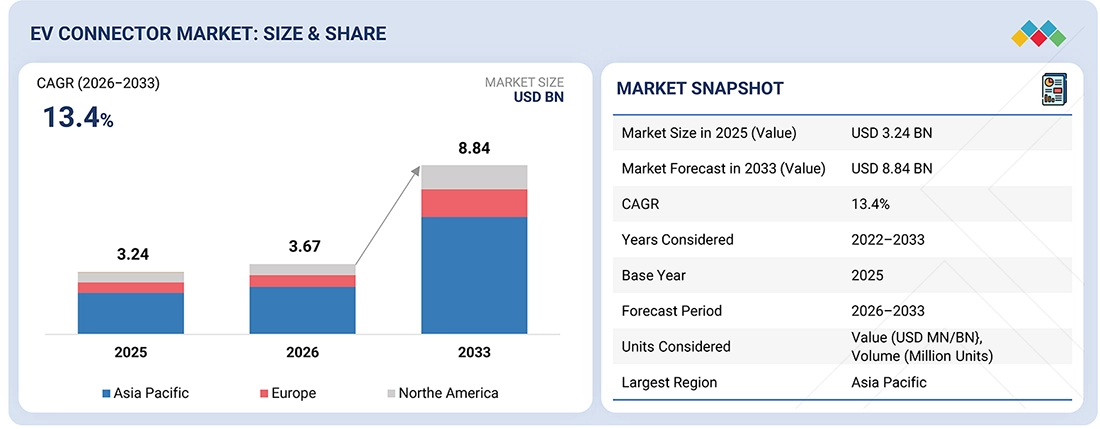
Source: Secondary Research, Interviews with Experts, MarketsandMarkets Analysis
The global EV connector market was valued at USD 3.67 billion in 2026 and is expected to reach USD 8.84 billion by 2033, reflecting a CAGR of 13.4% over the 2026-2033 period. Asia Pacific remains the dominant market for EV connectors. The market is being shaped by rapid EV production growth, increasing adoption of 400 V and 800 V battery platforms, and the shift toward software-defined vehicles and zonal electrical architectures. Additionally, the growing deployment of ADAS, connected vehicle technologies, automotive Ethernet, digital cockpits, and advanced battery management systems is increasing connector content per vehicle.
KEY TAKEAWAYS
-
EV CONNECTOR MARKET, BY REGIONAsia Pacific leads the regional EV connector market, contributing to ~65-70% in 2026.
-
BY CONNECTOR TYPEThe board-to-board connector type segment is expected to register the fastest growth, at a CAGR of 13.9% in the EV connector market during the forecast period.
-
BY APPLICATIONBattery management systems are expected to record the fastest growth of 14.3% during the forecast period, by application.
-
BY PROPULSIONThe BEV segment is likely to hold the largest share, in terms of value, in the EV connector market, by propulsion in 2026.
-
BY VOLTAGEThe high-voltage segment is expected to register the fastest growth in the EV connector market during the forecast period.
-
BY SYSTEMSealed connectors are expected to dominate the market, by system, in 2026.
-
COMPETITIVE LANDSCAPE - KEY PLAYERSMajor market players have adopted both organic and inorganic strategies, including partnerships and investments. Key players include TE Connectivity, Aptiv, Yazaki Corporation, Molex, and Hirose Electric Co., Ltd.
-
COMPETITIVE LANDSCAPE - STARTUPS/SMESStartups in the EV connector market include JST MFG. CO., LTD., Littelfuse Inc., and Shenglan Technology Co., Ltd.; they are expanding their presence through product innovation, portfolio expansion, and investments in EV connectivity solutions.
In the EV connector market, demand is closely tied to electric vehicle production and sales, the growing electrification of vehicles, and the increasing integration of electronic and high-voltage systems across modern EV platforms. Automakers are adopting 800 V architectures, centralized zonal E/E systems, advanced battery management, ADAS, and high-speed communication networks, which increase both the number and technical complexity of connectors required per vehicle. Connector manufacturers are responding with compact, lightweight, high-current, and high-speed connectivity solutions that improve thermal performance, electrical safety, and system reliability under demanding operating conditions. Future growth is expected to be supported by rising global EV adoption, the expansion of software-defined vehicles, the deployment of ultra-fast charging infrastructure, and continued OEM investment in next-generation electric vehicle platforms that require advanced power and data connectivity.
TRENDS & DISRUPTIONS IMPACTING CUSTOMERS' CUSTOMERS
The EV connector market is undergoing a structural transformation as vehicle electrical systems become more intelligent, power-intensive, and software-driven. Connector technologies are evolving from conventional electromechanical components into mission-critical enablers of vehicle electrification, digital communication, and functional safety. At the same time, rising power densities, stricter reliability requirements, and the shift toward modular vehicle platforms are driving greater collaboration across the automotive value chain. This transition is reshaping product development priorities, supplier partnerships, and revenue opportunities, with innovation, system integration, and long-term platform alignment becoming key factors for sustained competitive advantage.
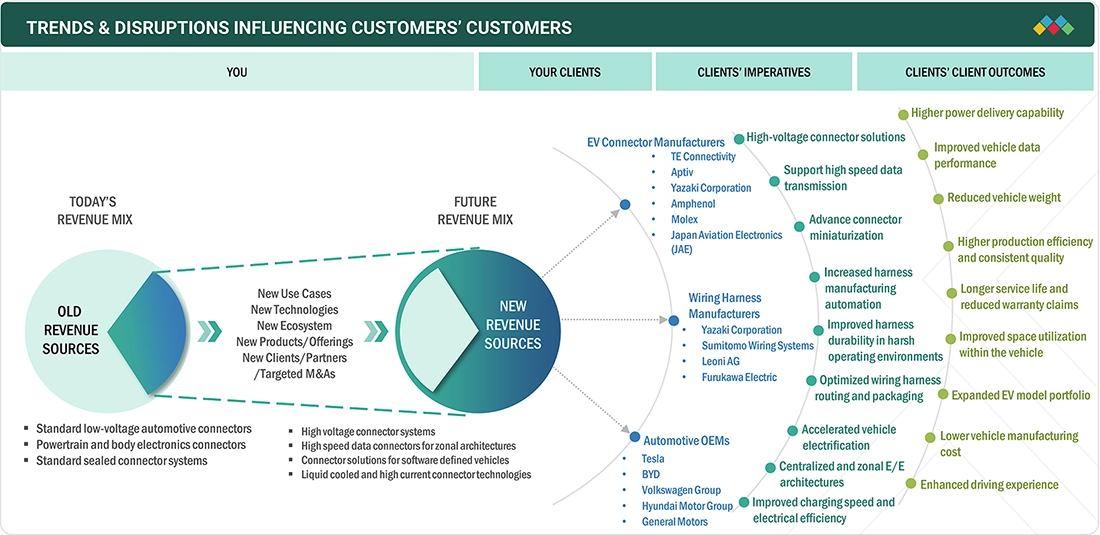
Source: Secondary Research, Interviews with Experts, MarketsandMarkets Analysis
MARKET DYNAMICS

Level
-
Transition to high-voltage EV architectures accelerating demand for high-power connectors

-
Rising vehicle electrification content and distributed E/E architectures increasing connector density


Level
-
Prolonged dependence on hybrid vehicles


Level
-
Megawatt charging system (MCS) commercialization


Level
-
Strict qualification requirements delaying new connector launches

-
High cost of advanced automotive connectors

Source: Secondary Research, Interviews with Experts, MarketsandMarkets Analysis
Driver: Transition to high-voltage EV architectures accelerating demand for high-power connectors
The transition from conventional 400 V battery systems to 800 V platforms, with the industry progressing toward 1,000 V architectures for next-generation passenger and commercial EVs, is increasing demand for advanced high-voltage connectors. Higher-voltage systems enable faster DC charging, improved powertrain efficiency, reduced energy losses, and lighter wiring harnesses by transmitting the same power at lower current. However, these architectures require entirely redesigned connector systems rather than conventional automotive connectors. Connectors used across battery packs, busbars, inverters, onboard chargers, DC-DC converters, electric motors, and charging interfaces must withstand higher voltages, greater thermal loads, and stricter safety requirements, driving demand for high-voltage, high-current connector solutions with enhanced insulation, sealing, electromagnetic shielding, and High Voltage Interlock Loop (HVIL) functionality.
Restraint: Prolonged dependence on hybrid vehicles
Continued reliance on hybrid electric vehicles (HEVs) and plug-in hybrid electric vehicles (PHEVs) across several major automotive markets is moderating demand for advanced high-voltage EV connectors. While hybrids contribute to vehicle electrification, their electrical architectures are considerably less demanding than those of battery electric vehicles (BEVs). HEVs typically operate with smaller battery packs, lower-voltage systems, and lower-power electric drivetrains, resulting in fewer high-voltage subsystems and simpler connector requirements. Although PHEVs generally use higher-voltage batteries than HEVs, they still require fewer high-current, high-power connectors than BEVs because their internal combustion engine shares propulsion duties. Consequently, sustained hybrid production delays the broader transition toward connector-intensive BEV platforms, limiting growth in demand for premium high-voltage connector solutions.
Opportunity: Megawatt charging system (MCS) commercialization
The commercialization of the Megawatt Charging System (MCS) is creating a significant growth opportunity for the EV connector market by establishing a new category of ultra-high-power charging connectors for medium- and heavy-duty electric vehicles. While existing CCS connectors adequately serve passenger EVs, they are not designed to meet the charging requirements of electric trucks, buses, mining vehicles, construction equipment, marine vessels, and other large battery-electric platforms. To address this gap, CharIN, together with OEMs, charging equipment manufacturers, and suppliers, developed MCS as a global charging solution capable of supporting up to 1,250 V DC and 3,000 A, enabling megawatt-level charging. This standard is intended to reduce charging time for large-battery vehicles, improve fleet utilization, and accelerate the electrification of commercial transport.
Challenge: Strict qualification requirements delaying new connector launches
The rapid development of EV architectures is driving faster connector innovation, but bringing new products to market is often delayed by long automotive qualification procedures. As OEMs shift to higher voltage platforms, connector makers need to create products with greater current capacity, better thermal performance, improved sealing, and higher safety standards. However, these connectors must undergo thorough validation according to international standards like USCAR, LV214, and IEC 60512, as well as OEM-specific qualification tests, before production. These rigorous requirements can significantly extend development timelines, postponing product launches even after the technology is ready.
EV CONNECTOR MARKET: COMMERCIAL USE CASES ACROSS INDUSTRIES
| COMPANY | USE CASE DESCRIPTION | BENEFITS |
|---|---|---|
 |
Provides high voltage and signal connectors for battery packs, charging systems, inverters, e motors, onboard chargers, ADAS, zonal architectures, and vehicle Ethernet networks in electric vehicles | Supports high power and high speed data transmission, improves electrical safety, reduces wiring complexity, and enhances connector reliability |
 |
Supplies high voltage connection systems and power distribution solutions for battery packs, charging systems, power electronics, and electric drive systems in battery electric vehicles | Enables efficient power distribution, improves system safety, supports lightweight vehicle architectures, and enhances packaging efficiency |
 |
Manufactures connectors integrated with automotive wiring harnesses for battery systems, charging systems, power distribution, and electronic control units in electric vehicles | Ensures reliable electrical connectivity, supports stable power distribution, and improves durability under automotive operating conditions |
 |
Provides automotive connectors for ADAS, infotainment, vehicle networking, cameras, radar, battery management systems, and high speed in vehicle communication | Enables reliable high speed data transmission, supports connected vehicle functions, and improves signal integrity |
 |
Develops automotive connectors for ADAS cameras, infotainment systems, electronic control units, displays, and in vehicle communication modules | Supports compact electronic designs, reliable signal transmission, and improved assembly efficiency |
Logos and trademarks shown above are the property of their respective owners. Their use here is for informational and illustrative purposes only.
MARKET ECOSYSTEM
The EV connector market operates through a closely integrated value chain that includes material suppliers, component manufacturers, connector providers, electrical system integrators, vehicle OEMs, and testing and standards organizations. Each stakeholder plays a distinct role in ensuring that EV connectors meet the performance, safety, and reliability requirements of increasingly electrified and software-defined vehicles. As the industry transitions toward higher-voltage architectures, advanced electrical systems, and localized supply chains, collaboration across the ecosystem is essential to accelerate innovation, ensure regulatory compliance, and support large-scale EV production.
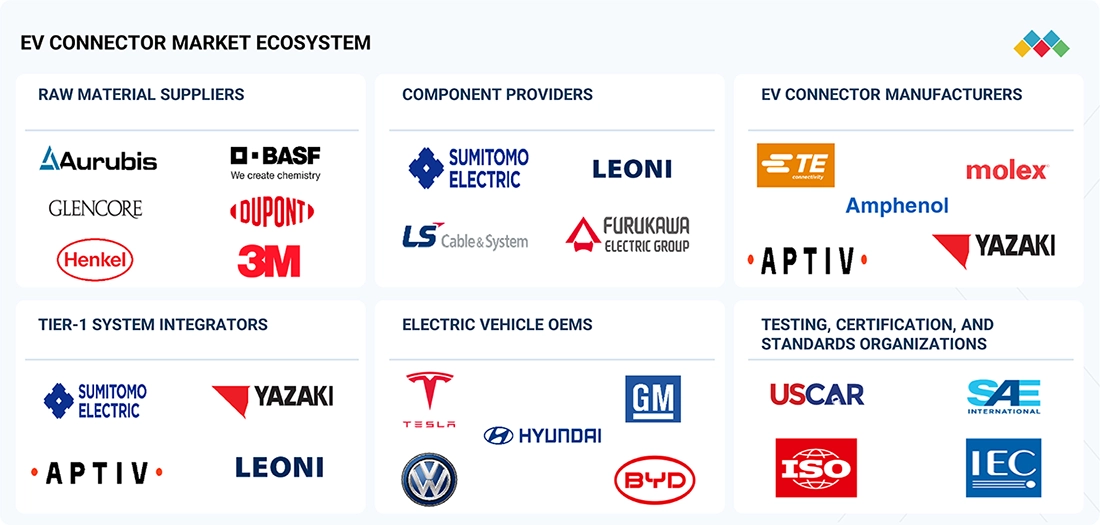
Logos and trademarks shown above are the property of their respective owners. Their use here is for informational and illustrative purposes only.
MARKET SEGMENTS
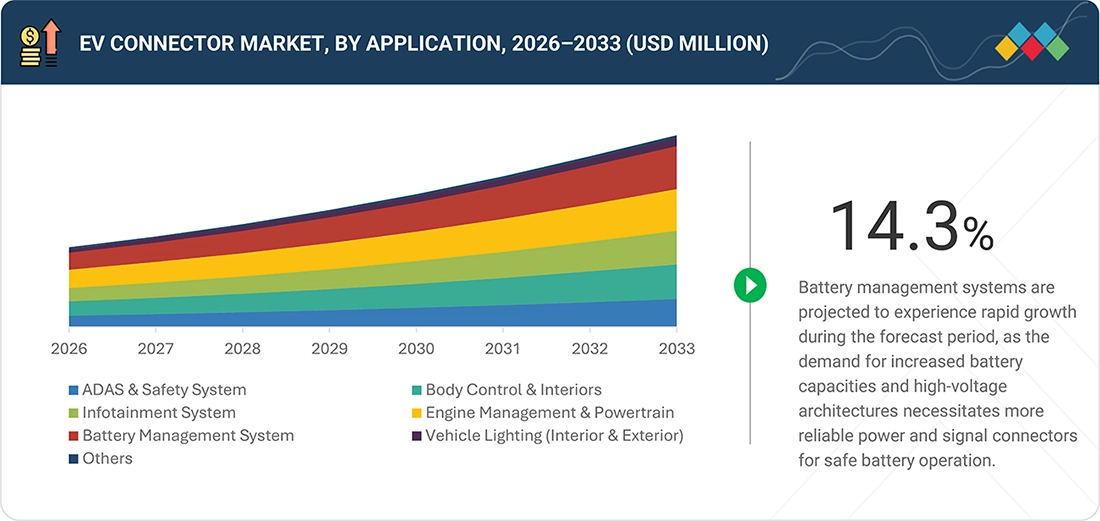
Source: Secondary Research, Interviews with Experts, MarketsandMarkets Analysis
EV CONNECTOR MARKET, BY CONNECTOR TYPE
Board-to-board connectors are expected to see the fastest growth due to the transition toward zonal E/E architectures and software-defined vehicles, which require dense, high-speed PCB interconnections. Their ability to reduce wiring complexity, save space, and support advanced computing systems is accelerating adoption across next-generation EV platforms.
EV CONNECTOR MARKET, BY APPLICATION
ADAS and safety systems are expected to dominate the EV connector market as they integrate multiple cameras, radar, LiDAR, sensors, and ECUs, requiring a high number of reliable power and high-speed data connectors. Growing adoption of advanced driver assistance features and stricter vehicle safety regulations continue to increase connector content in this application.
EV CONNECTOR MARKET, BY PROPULSION
BEVs dominate the EV connector market because they need more connectors for high voltage battery packs, e-motors, inverters, onboard chargers, and battery management systems. Their bigger batteries and fully electric design lead to higher demand for power and high-speed signal connectors than hybrid vehicles.
EV CONNECTOR MARKET, BY VOLTAGE
High-voltage connectors are projected to register the fastest growth as automakers increasingly develop 400V & 800V EV platforms and higher-power charging systems that require connectors capable of safely handling higher current, voltage, and thermal loads.
EV CONNECTOR MARKET, BY SYSTEM
Sealed connectors dominate the EV connector market because they are widely used in battery packs, powertrains, charging systems, and underhood applications where protection against water, dust, vibration, and extreme temperatures is essential.
REGION
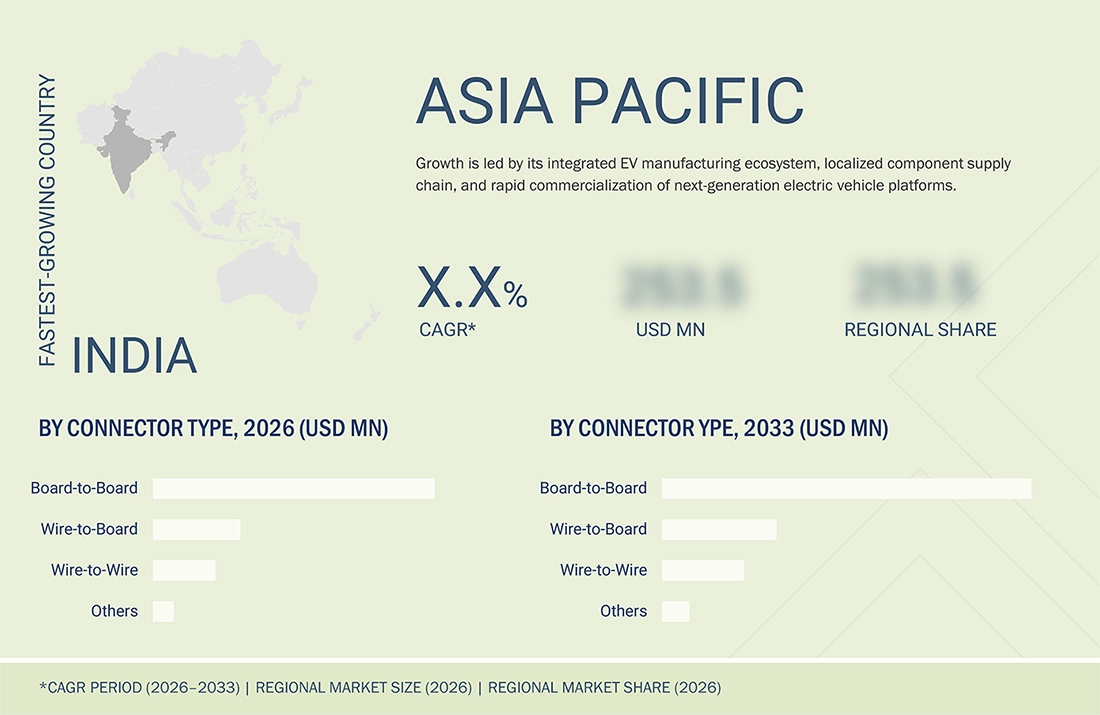
Asia Pacific is the largest regional market for EV connectors in 2026
Asia Pacific leads the EV connector market due to its dominant EV manufacturing ecosystem, vertically integrated automotive value chain, and well established network of component suppliers that enable efficient, large scale production. Close collaboration between automakers and electronics suppliers accelerates the commercialization of next generation EV platforms, while shorter product development cycles and localized sourcing improve manufacturing efficiency.
EV CONNECTOR MARKET: COMPANY EVALUATION MATRIX
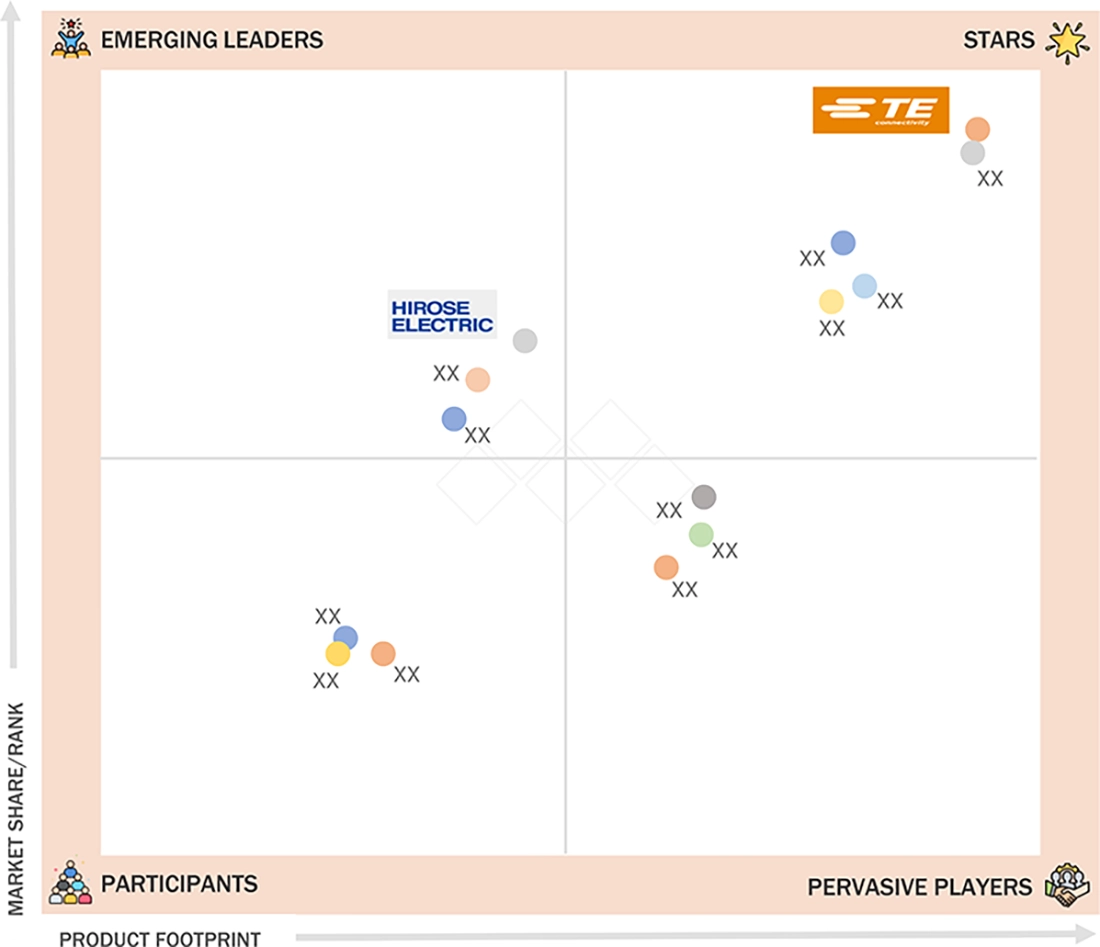
In the EV connector market, TE Connectivity (Star) is strengthening its leadership by expanding its high-voltage and high-speed connector portfolio for next-generation EVs, investing in miniaturized, high-performance connectivity solutions, and collaborating closely with global OEMs. Kyocera (Emerging) is expanding its position in the EV connector market through continuous development of compact automotive connectors, growing adoption across electrified vehicle platforms, increased investments in automotive component manufacturing, and a stronger focus on supporting evolving E/E architectures and advanced mobility applications.
Source: Secondary Research, Interviews with Experts, MarketsandMarkets Analysis
KEY MARKET PLAYERS
- TE Connectivity
- Aptiv
- Yazaki Corporation
- Molex
- Hirose Electric Co., Ltd.
- Amphenol Corporation
- Sumitomo Electric Industries, Ltd.
- Japan Aviation Electronic Industries, Ltd.
- Rosenberger Group
- Kyocera Corporation
- Furukawa Electric Co., Ltd.
- Luxshare Precision Industry Co., Ltd.
MARKET SCOPE
| REPORT METRIC | DETAILS |
|---|---|
| Market Size in 2025 (Value) | USD 3.24 Billion |
| Market Size in 2026 (Value) | USD 3.67 Billion |
| Market Forecast in 2033 (Value) | USD 8.84 Billion |
| Growth Rate | CAGR of 13.4% from 2026-2033 |
| Years Considered | 2022-2033 |
| Base Year | 2025 |
| Forecast Period | 2026-2033 |
| Units Considered | Value (USD Million/Billion), Volume (Million Units) |
| Report Coverage | Revenue forecast, company ranking, competitive landscape, growth factors, and trends |
| Segments Covered |
|
| Regions Covered | Asia Pacific, Europe, North America |
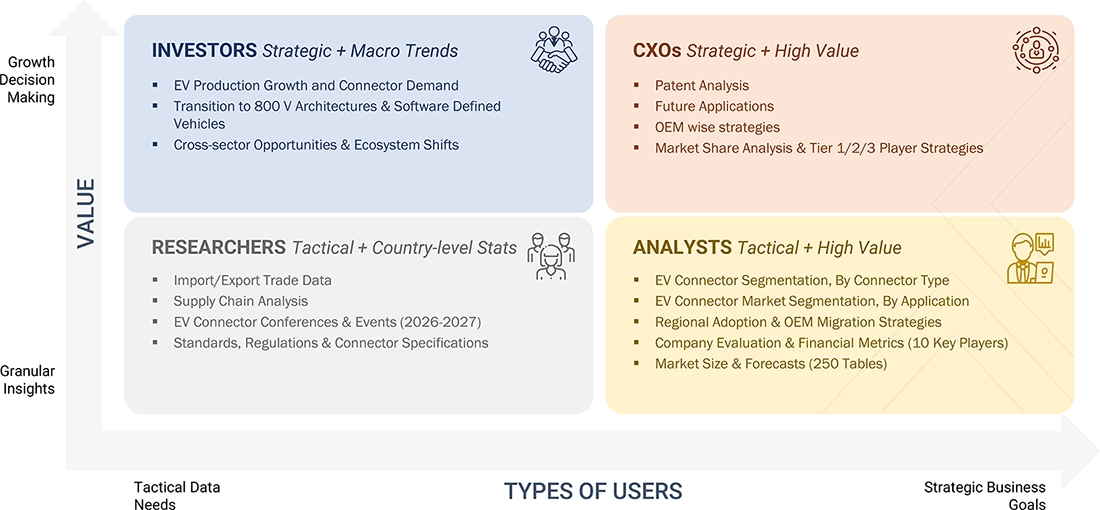
WHAT IS IN IT FOR YOU: EV CONNECTOR MARKET REPORT CONTENT GUIDE
DELIVERED CUSTOMIZATIONS
We have successfully delivered the following deep-dive customizations:
| CLIENT REQUEST | CUSTOMIZATION DELIVERED | VALUE ADDS |
|---|---|---|
| EV Connector Manufacturer | Conducted a competitive benchmarking study of leading EV connector manufacturers and evaluated product portfolios across high voltage, low voltage, wire to wire, wire to board, and board to board connectors | Enables identification of product gaps, supports portfolio expansion, and strengthens competitive positioning |
| Electric Vehicle OEM | Assessed connector demand across battery systems, powertrain, ADAS, body electronics, infotainment, and charging systems, along with technology adoption across vehicle platforms | Supports platform level sourcing decisions and optimizes connector selection for next generation EVs |
| Tier 1 Automotive Supplier | Evaluated demand trends for high voltage connectors, zonal E/E architectures, automotive Ethernet, and software defined vehicle connectivity across major EV markets | Helps prioritize high growth applications and align product development with future OEM requirements |
| Charging Infrastructure Provider | Conducted an assessment of connector requirements for AC charging, DC fast charging, megawatt charging systems, and evolving global charging standards | Supports technology roadmap planning and enables investment decisions aligned with future charging ecosystems |
| Automotive Electronics Supplier | Evaluated regional demand, regulatory standards, OEM technology roadmaps, and supply chain trends influencing EV connector adoption | Supports market entry strategy, regional expansion planning, and long term investment decisions |
RECENT DEVELOPMENTS
- June 2026 : Molex launched the HSAutoLink G connector system, providing multi-gigabit Ethernet connections of up to 25 Gbps in a compact, USCAR-compatible interface, making it suitable for addressing escalating bandwidth demands driven by Advanced Driver-Assistance Systems (ADAS), radar, LiDAR, zonal architecture, immersive displays, and central compute modules.
- June 2026 : Hirose launched the FX36 Series, a board-to-board floating connector designed for automotive and industrial applications. The connector features a floating structure that absorbs assembly misalignment, a compact, low-profile design for space-constrained applications, and robust vibration resistance for reliable operation in harsh environments. It supports simplified assembly, improved connection reliability, and enhanced durability, making it suitable for next-generation automotive electronic control units and other high-reliability electronic systems.
- February 2026 : TE Connectivity acquired Phoenix Contact's EV charging inlet assets to strengthen its electric vehicle charging solutions portfolio and expand its EV charging connectivity capabilities for the global e-mobility market.
- April 2025 : Yazaki Corporation inaugurated an advanced 3.16 lakh sq. ft. wire harness manufacturing plant in Chengalpattu Industrial Park, Chennai. The third collaboration with Horizon Industrial Parks emphasizes sustainability through rooftop solar integration and is expected to employ more than 2,000 people, reinforcing Yazaki’s commitment to green manufacturing and expanding its India operations alongside its NCR and Hosur units.
- January 2025 : Aptiv announced a demerger of its Electrical Distribution Systems (EDS) business, creating two independent entities. EDS will focus on low- and high-voltage electrical architectures for automotive and commercial vehicles. The new Aptiv will target high-growth markets in ADAS, interconnects, and sensor-to-cloud tech solutions across multiple industries.
Table of Contents
 Exclusive indicates content/data unique to MarketsandMarkets and not available with any competitors.
Methodology
The research study relied extensively on secondary sources, including company annual reports and presentations, industry association publications, automotive magazine articles, directories, technical handbooks, the World Economic Outlook, trade websites, technical articles, and databases, to identify and collect information on the EV connector market. Primary interviews were conducted to obtain and verify critical qualitative and quantitative information and to assess the prospects of the industry. Primary sources included experts from core and related industries, suppliers, manufacturers, distributors, service providers, technology developers, and organizations across various segments of the EV connector market value chain. Detailed interviews were conducted with primary respondents, including key industry participants, Subject Matter Experts (SMEs), C-level executives of key market players, and industry consultants.
Secondary Research
Secondary sources for this research study include automotive industry organizations such as the International Energy Agency (IEA), International Organization of Motor Vehicle Manufacturers (OICA), European Automobile Manufacturers' Association (ACEA), International Electrotechnical Commission (IEC), Institute of Electrical and Electronics Engineers (IEEE), Wiring Harness Manufacturers Association (WHMA), Society of Manufacturers of Electric Vehicles (SMEV), and World Electric Vehicle Association (WEVA), among others; corporate filings such as annual reports, investor presentations, and financial statements; and trade, business, and automotive associations. Secondary data has been collected and analyzed to determine the overall market size, which is further validated by primary research.
Primary Research
Extensive primary research was conducted after gaining an understanding of the EV connector market through secondary research. Several primary interviews were conducted with market experts from EV connectors, OEMs, EV connector manufacturers, and wiring harness manufacturers across three major regions, namely North America, Europe, and the Asia Pacific. Approximately 20%, 45%, and 35% of the primary interviews were conducted, respectively. Primary data was collected through questionnaires, emails, and telephone interviews. Various departments within organizations, including sales, operations, and administration, were contacted to provide a holistic viewpoint in the reports while canvassing the primaries. After interacting with industry participants, brief sessions were held with experienced independent consultants to reinforce the findings from the primaries. This, along with the opinions of in-house subject matter experts, led to the findings delineated in the rest of this report.
Primary interviews have been conducted to gather insights, including EV connector market sizing and forecast, future trends, and upcoming technologies in the EV connector market. Data triangulation of these points was performed using information from secondary research and model mapping. Stakeholders from the demand and supply sides have been interviewed to understand their views on these points.
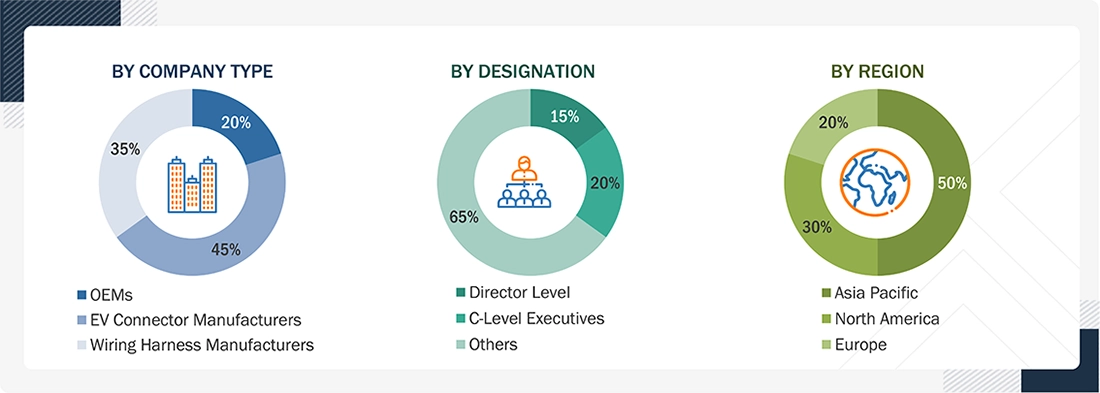
Note: Others include sales, marketing, and product managers.
Company tiers are based on the value chain; revenue of the company is not considered.
To know about the assumptions considered for the study, download the pdf brochure
Market Size Estimation
A detailed market estimation approach was followed to estimate and validate the value and volume of the EV connector market and other dependent submarkets, as mentioned below:
- The bottom-up and top-down approaches were used to estimate and validate the size of the EV connector market. The EV connector market, by application, in terms of value and volume, is derived by identifying the volume of connectors required in each application for all EV types at the country level.
- The market size was derived using parameters such as sales of EVs (BEVs, PHEVs, HEVs) and corresponding penetration of the applications considered under the scope.
- Key players in the EV connector market were identified through secondary research, and their global market rankings were determined through primary and secondary research.
- The research methodology included the study of annual and quarterly financial reports, regulatory filings of major market players, and interviews with industry experts to gain detailed market insights.
- All major penetration rates, percentage shares, splits, and breakdowns for the EV connector market were determined through secondary sources and verified through primary sources.
- All key macroindicators affecting the revenue growth of the market segments and subsegments have been accounted for, viewed in extensive detail, verified through primary research, and analyzed to obtain validated quantitative & qualitative data.
The market data gathered was consolidated, supplemented with detailed inputs, analyzed, and presented in this report.
EV Connector Market : Top-Down and Bottom-Up Approach
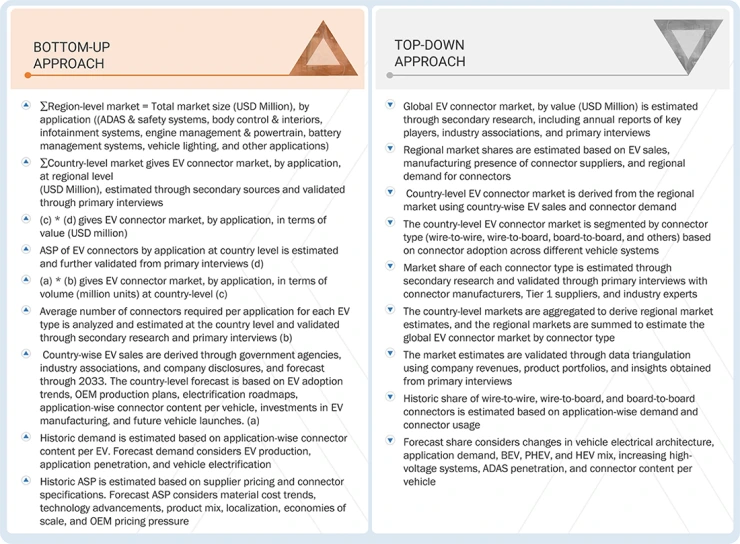
Data Triangulation
All percentage shares, splits, and breakdowns were determined using secondary sources and verified by primary sources. All parameters that are said to affect the markets covered in this research study were accounted for, examined in detail, and analyzed to obtain the final quantitative and qualitative data.
Market Definition
|
APPLICATION |
MARKET DEFINITION |
|
ADAS & Safety Systems |
ADAS and safety systems benefit consumers and protect them from potential hazards. They contribute to improving the overall safety of drivers and passengers. They include the application of communication technology in ADAS features such as adaptive cruise control, blind-spot detection, lane departure warning, automatic emergency braking, and park assist. This also includes basic safety systems such as adaptive cruise control (ACC), anti-lock braking system (ABS), tire pressure monitoring system (TPMS), vehicular communication system, and electronic stability control. In an ADAS system, a series of sensors, processors, and actuators work together to perceive the environment and assist drivers. EV connectors are vital electrical connections that carry data, power, and signals between these components. The connector prevents features such as automatic emergency braking, lane departure warning, and adaptive cruise control from malfunctioning, thereby assisting safety. |
|
Body Control & Interiors |
Body control and interior systems require the most electronics in a vehicle. Body electronics cover various applications inside the passenger compartment, including automatic HVAC control, seat position, automatic wipers, automatic headlamps, dimming mirrors, and antifogging windshield systems. Premium cars are equipped with a range of comfort and convenience sensors. OEMs are introducing enhanced body control and comfort applications with advanced electronic features. |
|
Engine Management & Powertrain |
Engine management and powertrain in an automobile refer to the main components that generate and transmit power to the road surface. This includes the engine, transmission, drive shafts, differentials, and the final drive. The engine management and powertrain control module is a control unit used in motor vehicles. The main priority of OEMs is a powertrain with low emissions to meet market expectations and stringent government regulations. Vehicles require high-performance connectors for engine management, drivability, appropriate performance levels, and high-accuracy data transfer. |
|
Infotainment Systems |
The infotainment system manages multiple audio, video, navigation, voice recognition, and other data streams. Connectors enable high-speed, reliable data transfer between components such as the head unit, speakers, displays, microphones, and external devices. These connections ensure smooth video playback, responsive touchscreens, and clear audio without skipping or lag. Different parts of the infotainment system require varying power levels. Connectors manage this distribution efficiently, supplying sufficient power to screens, amplifiers, processors, and other components. |
|
Battery Management Systems |
A battery management system monitors key operational parameters such as current, voltage, and the battery's internal temperature. It reduces stress on the battery by delivering the right amount of power to the electric vehicle's motor. A BMS needs a reliable network of connectors to gather data and control the battery's functions. |
|
Vehicle Lighting |
Vehicle lighting comprises the various lighting components and systems integrated into a vehicle for both interior and exterior purposes. These lighting elements are essential for visibility, safety, and functionality. Exterior vehicle lighting includes headlights, taillights, turn signals, brake lights, and fog lights. Interior vehicle lighting includes instrument panel lighting, dome lighting, and ambient lighting. EV connectors ensure a secure, reliable connection between the wiring harness and the lighting components, preventing flickering, dimming, or complete failure. Loose connections or exposed wires could cause electrical shorts, fires, and accidents. |
|
Other Applications |
Other connector applications, such as EV connectors in auxiliary systems, are considered. An auxiliary system in an automobile is a collection of electrical components that support the car's main systems and components. |
|
CONNECTION |
MARKET DEFINITION |
|
Wire-to-Wire |
Wire-to-wire connections are a specific type of electrical connection that enables the joining of two separate wires or cables. This is achieved through a connector with two halves, each designed to accommodate and secure the end of a wire. When the two halves of the connector are mated together, the wires within them are brought into contact, establishing an electrical pathway for the flow of current or signals. |
|
Wire-to-Board |
Wire-to-board connectors are a type of connector that joins a group of individual wires to a printed circuit board (PCB). They play a crucial role in establishing electrical connections between external wiring and the components on the PCB, enabling the flow of power, signals, and data. |
|
Board-to-Board |
Board-to-board connectors are specialized electrical connectors that directly link multiple printed circuit boards (PCBs), establishing reliable electrical connections without wires or cables. They enable the transfer of power, signals, and data between boards in a compact, efficient, and organized manner. |
|
Other Connection Types |
Other connector systems, such as busbar-to-busbar, busbar-to-wire, and busbar-to-board connector systems, are considered in this study. A busbar-to-busbar connector system connects two busbars, a busbar-to-wire connector system connects a busbar to a wire, and a busbar-to-board connector system connects a busbar to a board in an electrical system. |
Key Stakeholders
- Automotive Electronics Council (AEC)
- Department of Transportation (DoT)
- Electric Vehicle Association of Asia Pacific (EVAAP)
- Energy Efficiency and Renewable Energy (EERE)
- Environmental Protection Agency (EPA)
- European Automobile Manufacturers' Association (ACEA)
- EV Connector Manufacturers
- International Energy Agency (IEA)
- Institute of Electrical and Electronics Engineers (IEEE)
- International Council on Clean Transportation (ICCT)
- International Electrotechnical Commission (IEC)
- International Organization of Motor Vehicle Manufacturers (OICA)
- Investor Presentations and Annual Reports of Key Players
- National Highway Traffic Safety Administration (NHTSA)
- Other Component Manufacturer Associations
- Society of Manufacturers of Electric Vehicles (SMEV)
- Wiring Harness Manufacturers' Association (WHMA)
- World Electric Vehicle Association (WEVA)
- Other EV connector manufacturers & associations
Report Objectives
-
To define, describe, and forecast the size of the EV connector market in terms of value (USD million) and volume (million units) between 2026 and 2033 based on the following segments:
- By connector type (wire-to-wire, wire-to-board, board-to-board, and other connection types)
- By application (ADAS & safety systems, body control & interiors, infotainment systems, engine management & powertrain, battery management systems, vehicle lighting, and other applications)
- By propulsion (BEV, PHEV, and HEV)
- By system (sealed and unsealed)
- By voltage (low voltage, medium voltage, and high voltage)
- By region (Asia Pacific, Europe, and North America)
- To identify and analyze key drivers, restraints, opportunities, and challenges influencing the market
- To strategically profile key players and analyze their market share and core competencies
- To analyze recent developments, including product launches, deals, and expansions, by key market players
-
To study the following with respect to the market
- Supply Chain Analysis
- Ecosystem Analysis
- Technology Analysis
- Trade Analysis
- Case Study Analysis
- Patent Analysis
- Regulatory Landscape
- Conferences and Events
- Pricing Analysis
- Impact of AI
- Investment and Funding Scenario
- Key Stakeholders and Buying Criteria
- Key Conferences and Events
- Benchmarking of Global EV Charging Standards
- Regional Adoption and OEM Migration Strategies
- High Voltage Architecture Evolution
- Connector Content per Vehicle Analysis
- Connector Adoption Strategies of Leading Automotive OEMs
- Total Cost of Ownership
- Impact of EU FTA Trade Deal Analysis on Automotive & Transportation Industry
- Impact of Israel-Iran War Analysis on Automotive & Transportation Industry
Available customizations:
MarketsandMarkets offers the following customizations for this market report:
-
EV connector market, By connector type, at the country-level
- Wire-to-Wire
- Wire-to-Board
- Board-to-Board
- Other Connector Types
Note: The EV connector market can be offered for connector type at the country level.
- EV connector market, By application, at the country-level
- ADAS & Safety Systems
- Body Control & Interiors
- Infotainment Systems
- Engine Management & Powertrain
- Battery Management Systems
- Vehicle Lighting
- Other Applications
Key Questions Addressed by the Report
What is the current market size of the EV Connector Market, and how is it expected to grow?
The EV Connector Market is projected to grow from USD 2.73 billion in 2025 to USD 8.80 billion by 2032, at a CAGR of 18.2% during the forecast period.
What are the key factors driving the growth of the EV Connector Market?
The market is driven by rising EV production, increasing integration of high-voltage electrical systems, growing adoption of ADAS and battery management systems, and the demand for high-performance connectors.
Which region is expected to dominate the EV Connector Market during the forecast period?
Asia Pacific is expected to dominate the EV Connector Market due to its strong EV manufacturing base, expanding vehicle electronics ecosystem, and rapid adoption of software-defined vehicle architectures.
What are the latest trends shaping the EV Connector Market?
Key trends include the adoption of high-voltage connectors, board-to-board connector architectures, HVIL-enabled safety systems, zonal E/E architectures, and high-speed data transmission technologies.
Who are the leading companies in the EV Connector Market, and what strategies are they adopting?
Leading companies are focusing on advanced connector technologies, product innovation, strategic collaborations, and expanding high-voltage and high-speed connector portfolios to support next-generation electric vehicles.


Personalize This Research
- Triangulate with your Own Data
- Get Data as per your Format and Definition
- Gain a Deeper Dive on a Specific Application, Geography, Customer or Competitor
- Any level of Personalization
Let Us Help You
- What are the Known and Unknown Adjacencies Impacting the EV Connector Market
- What will your New Revenue Sources be?
- Who will be your Top Customer; what will make them switch?
- Defend your Market Share or Win Competitors
- Get a Scorecard for Target Partners

Custom Market Research Services
We Will Customise The Research For You, In Case The Report Listed Above Does Not Meet With Your Requirements
Get 10% Free CustomisationTESTIMONIALS

JIM NAAS
PRODUCT DIRECTOR, WEASLER
Weasler Engineering, a CentroMotion organization
Global Provider of Industrial Actuation & Control Solutionswww.weasler.com
Our organization was interested in learning more about the attractiveness of a particular market space. We contacted MarketsandMarkets to help us based on previous positive experiences we had with them. The results did not disappoint! We discussed our objectives with them, and the team at MarketsandMarkets developed and executed a proposal that met our needs precisely. We were very impressed by their level of expertise, the quality of the analysis and their insightful recommendations. We would not hesitate in working with them again in the future.

Matt Kardel,
Vice President
Aptiv,
A global technology company that develops safer, greener and more connected solutions.www.aptiv.com
We contracted with
MarketsandMarkets to evaluate the value chain and potential go-to-market partners related to our
interest in the Fleet Management space. The team successfully completed the work on time and at the
pricing agreed. MarketsandMarkets listened and understood our objectives and collaborated well with
us to help us get the visibility we needed to make an investment.
We have subsequently used
MarketsandMarkets again related to Smart Cities to good results.
- China EV Connector Market
- India EV Connector Market
- Japan EV Connector Market
- South Korea EV Connector Market
- Germany EV Connector Market
- France EV Connector Market
- UK EV Connector Market
- Netherlands EV Connector Market
- Spain EV Connector Market
- Sweden EV Connector Market
- Norway EV Connector Market
- Switzerland EV Connector Market
- Austria EV Connector Market
- Denmark EV Connector Market
- Canada EV Connector Market
- US EV Connector Market






Growth opportunities and latent adjacency in EV Connector Market