Fire Prevention Materials Market By Type (Mortar, Sealants, Cast-in Devices, Putty & Putty Pads, Collars), Application (Electrical, Mechanical, Plumbing), End-use Industry (Commercial, Industrial, Residential), and Region - Global Forecast to 2031

icon1
USD 2.61 BN
MARKET SIZE, 2031
icon2
CAGR 5.7%
(2026-2031)
icon3
236
REPORT PAGES
icon4
248
MARKET TABLES

OVERVIEW

fire-prevention-materials-market Overview

Source: Secondary Research, Interviews with Experts, MarketsandMarkets Analysis

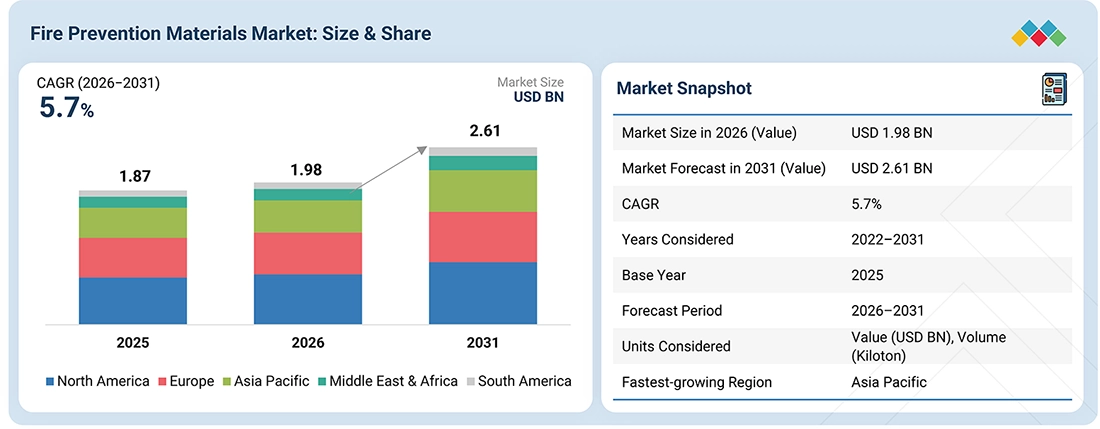
The fire prevention materials market is projected to reach USD 2.61 billion by 2031, up from USD 1.98 billion in 2026, at a CAGR of 5.7%. The growth of the market is driven by rising construction activity, stringent fire safety standards, and increased investment in infrastructure development in the residential, commercial, and industrial sectors. With growing awareness of fire hazards, the market for fire prevention materials, such as firestop sealants, firestop boards, firestop mortars, firestop coatings, and firestop insulation systems, is expanding to ensure safe construction. Increasing demand for these products from data centers, manufacturing facilities, healthcare infrastructure, and transportation and infrastructure projects will also accelerate market growth. In addition, growth in tall buildings and the upgrading of aging infrastructure spur demand for fire prevention materials.

KEY TAKEAWAYS

  • By Region
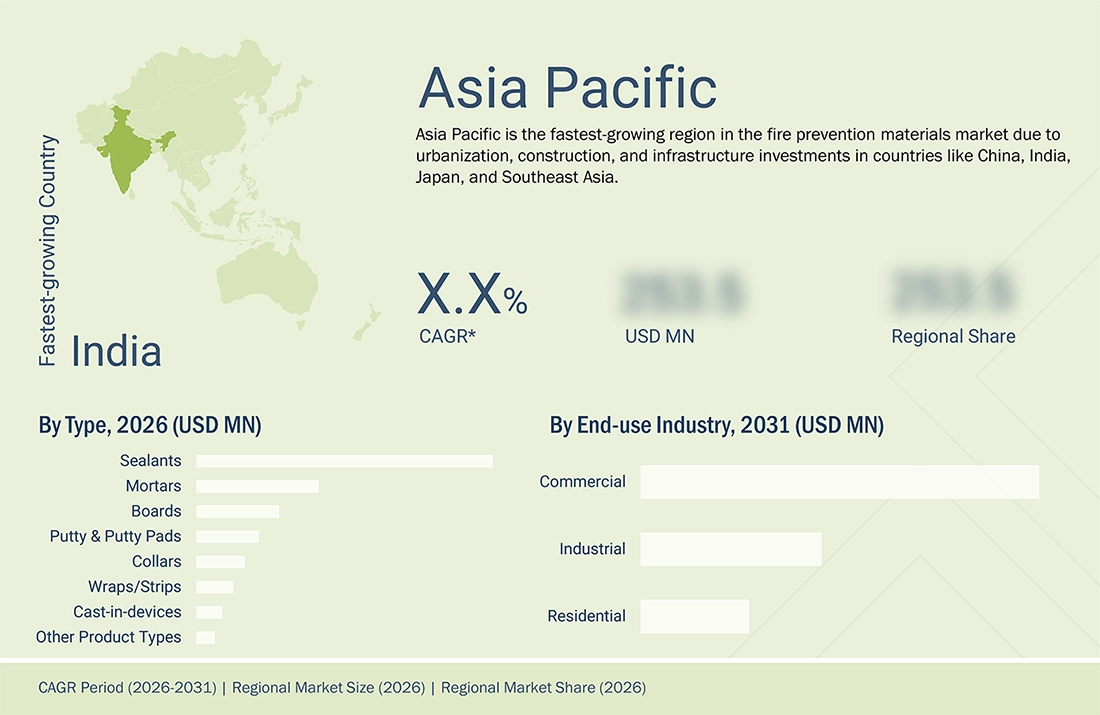
    Asia Pacific accounted for the largest share of the fire prevention materials market with a share of 35.6% in terms of value in 2025.
  • By Type
    The putty & putty pads segment is projected to grow at the highest CAGR of 6.2% during the forecast period.
  • By Application
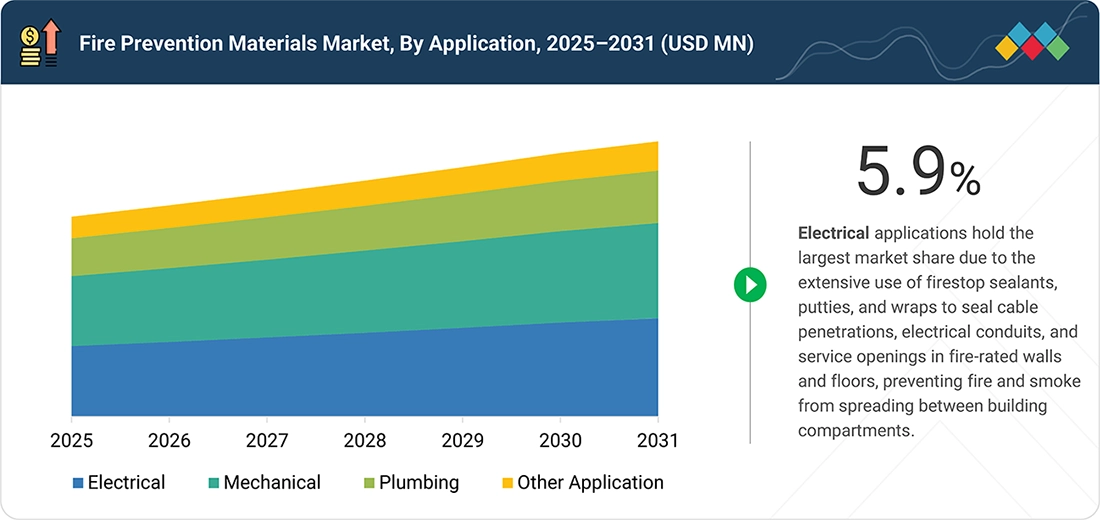
    The electrical segment accounted for the largest share of the fire prevention materials market with a share of 35.3% in terms of value in 2025.
  • By End-use Industry
    The commercial segment held the largest share of the fire prevention materials market.
  • Competitive Landscape - Key Players
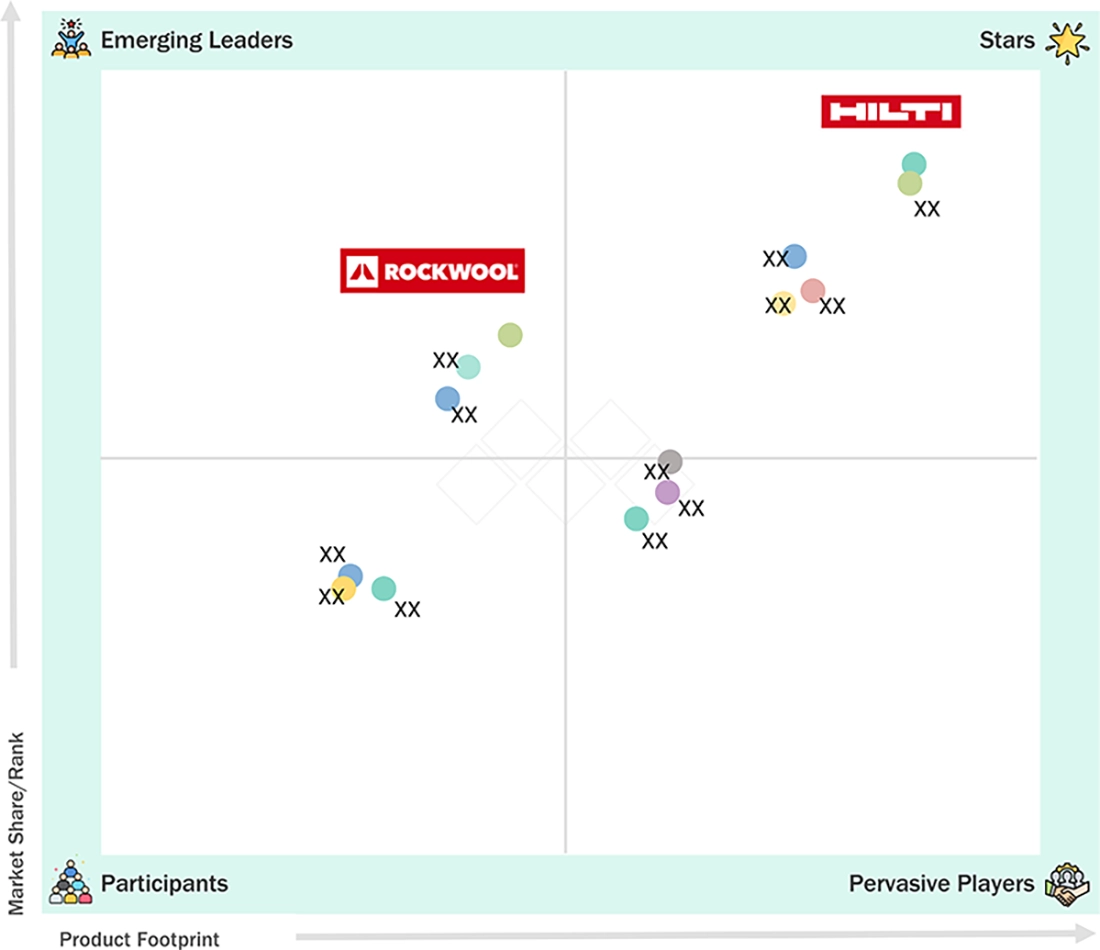
    Hilti Corporation, 3M, Sika AG, Etex Group, and RPM International Inc. are identified as some of the star players in the fire prevention materials market (global), given their strong market share and product footprint.
  • Competitive Landscape - Startups
    Everkem Diversified Products and RWC (Holdrite) have distinguished themselves among startups and SMEs by securing strong footholds in specialized niche areas.

Demand for fire prevention materials is booming due to increased construction activity, stricter fire safety regulations, and investments in roads, bridges, hospitals, and other infrastructure. With the growing awareness of fire hazards, construction companies are increasingly using fire prevention materials, such as firestop sealants, boards, mortar compounds, coatings, and insulation materials.

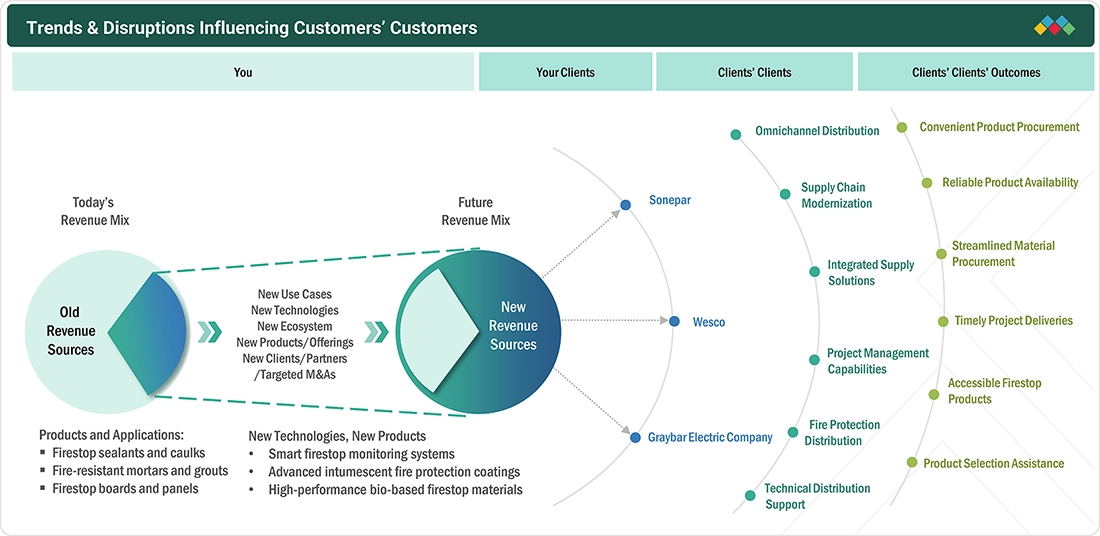
TRENDS & DISRUPTIONS IMPACTING CUSTOMERS' CUSTOMERS

Rising demand for firestop sealing agents, intumescent materials, and penetration protection systems will increase sales to contractors, electrical equipment installers, and infrastructure builders. Distributors can gain advantages by pursuing new supplier partnerships, increasing product availability, and offering combined purchasing and logistics solutions. Furthermore, rising construction, infrastructure modernization, and investment in electricity networks offer opportunities to improve customer relationships and increase revenue from distribution activities.

fire-prevention-materials-market Disruptions

Source: Secondary Research, Interviews with Experts, MarketsandMarkets Analysis

MARKET DYNAMICS

Drivers
Impact
Level
  • Increasing enforcement of stringent fire safety regulations and building codes
  • Rising construction and infrastructure development activities
RESTRAINTS
Impact
Level
  • High initial installation and lifecycle costs
  • Limited availability of skilled installation professionals
OPPORTUNITIES
Impact
Level
  • Rising demand for fire safety upgrades and retrofitting of existing buildings
  • Increasing fire protection requirements in data centers and critical infrastructure
CHALLENGES
Impact
Level
  • Maintaining material properties under prolonged environmental exposure
  • Controlling smoke and toxic gas leakage through firestop assemblies

Source: Secondary Research, Interviews with Experts, MarketsandMarkets Analysis

Driver: Increasing enforcement of stringent fire safety regulations and building codes

Demand for fire prevention materials is growing as strict fire safety rules and building codes are more widely implemented. Governments and regulatory agencies are tightening fire and life safety regulations to protect occupants and reduce the spread of fire and smoke in buildings. For example, the International Building Code (IBC) sets requirements for the fire resistance of floors, walls, joints, and service penetrations, promoting the use of certified firestopping products. Also, India’s National Building Code 2016 has been developed with specific clauses related to fire and life safety. Compliance with these provisions increases demand for fireproof coatings, insulation materials, sealants, and boards in construction projects.

Restraint: High initial installation and lifecycle costs

The costs of installing and maintaining fire prevention systems are high. As a result, many small contractors or construction companies, developers, and organizations working on small projects struggle to afford them. The overall cost of fire protection includes the price of special fireproof seals, options, boards, insulation materials, expert labor, and other aspects of fire prevention work. Fire protection systems can be damaged and may require refurbishment.

Opportunity: Rising demand for fire safety upgrades and retrofitting of existing buildings

The growing need to retrofit old buildings and infrastructure creates opportunities for manufacturers of fire prevention materials. Retrofitting residences, businesses, hospitals, schools, and manufacturing facilities is necessary to keep fire protection systems working, as buildings lose their ability to protect against fire over time and require repairs. Changes to electrical wiring, plumbing systems, air-conditioning, and communication systems may require new openings in fireproof walls or floors and the use of proper fire-stopping material to restore the structure's load-bearing capabilities. Repairs also allow replacement of worn-out fire-safety sealing and coating products with new ones.

Challenge: Maintaining material properties under prolonged environmental exposure

Fire prevention material producers struggle to maintain material properties after extended environmental exposure. Firestopping materials used in construction are exposed to high temperatures and humidity, immersion in water, temperature changes, and weathering conditions during their service life. These environmental factors can change material properties, including weight, volume, thermal conductivity, tensile strength, and elongation. Manufacturers need to produce materials that maintain their physical and chemical properties while meeting fire-resistance performance criteria. ASTM E2785 is a standard for firestop materials that describes testing procedures to check firestop material properties after exposure to environmental conditions.

FIRE PREVENTION MATERIALS MARKET: COMMERCIAL USE CASES ACROSS INDUSTRIES

COMPANY USE CASE DESCRIPTION BENEFITS
company logo
Uses firestop systems to seal cable and pipe penetrations through fire-rated walls and floors Restores fire-rated compartment integrity | Simplifies installation around building services | Provides tested penetration-sealing solutions
company logo
Supplies fire barrier products for sealing complex openings and mixed-service penetrations in commercial buildings Provides flexible sealing configurations | Supports installation across varied penetration types | Reduces firestop installation complexity
company logo
Applies fire-resistant joint sealants and coatings to expansion joints and linear gaps in building structures Maintains protection across moving joints | Supports substrate adhesion | Accommodates structural movement
company logo
Manufactures fire protection boards and dry construction systems for walls, ceilings, and structural enclosures Creates fire-resistant partitions | Protects load-bearing structures | Supports compartmentation in large buildings

Logos and trademarks shown above are the property of their respective owners. Their use here is for informational and illustrative purposes only.

MARKET ECOSYSTEM

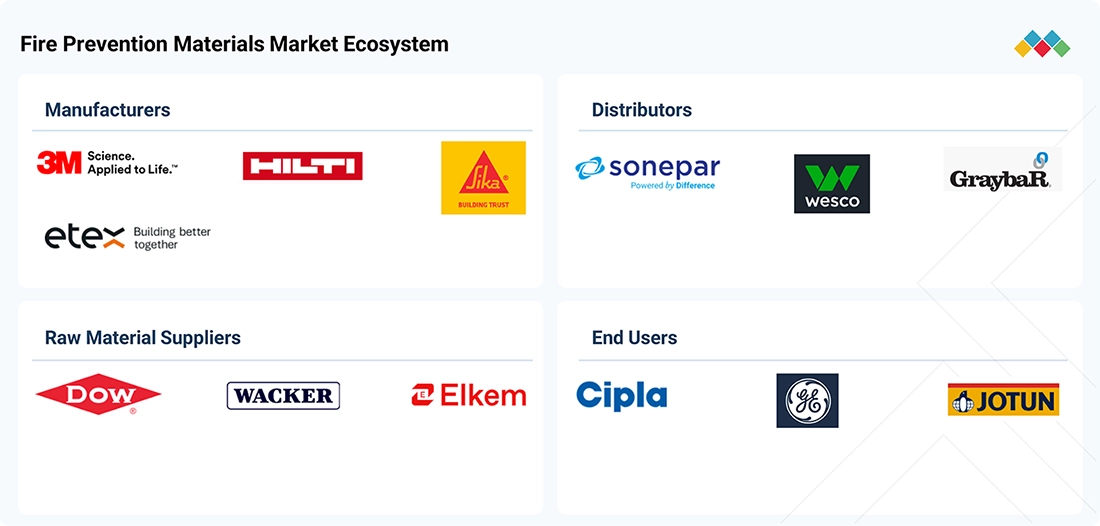
The ecosystem of fire prevention materials consists of the suppliers of raw materials, manufacturers, distributors, and end-users. Some companies, such as Dow, Wacker Chemie AG and Elkem, supply silicone-based polymers and elastomers, which are used in producing fire prevention materials. 3M, Hilti, Epex Group, and Sika provide ready-made fire protection products, fire-stop sealants, intumescent coatings, foams, and an array of penetration sealing systems. Sonepar, Wesco, and Graybar distribute the products through their electrical, construction, and industrial supply networks, enabling manufacturers to reach contractors and infrastructure projects. Finally, companies like Cipla, General Electric, and Jotun operate in industries that use fire-stopping materials, including pharmaceuticals, industrial manufacturing, paints, and chemicals.

fire-prevention-materials-market Ecosystem

Logos and trademarks shown above are the property of their respective owners. Their use here is for informational and illustrative purposes only.

MARKET SEGMENTS

fire-prevention-materials-market Segments

Source: Secondary Research, Interviews with Experts, MarketsandMarkets Analysis

Epoxy Diluents Market, By Type

The sealants hold the largest share in the overall fire prevention materials market due to the high applicability of sealants in both commercial and the residential sectors. Fire stop sealants, in particular, are widely used for closing off the joints and openings made by electric cables, piping systems, HVAC services, and other penetrating services in fire-resistant walls and floor. Also, sealants are effective in preventing fire, gases, and smoke from traveling while demonstrating sufficient flexibility under the movements of the structures. It is worth noting that silicone, acrylic, and intumescent sealants are available, giving them an opportunity to be effective in a wide range of practical applications in the sphere of passive fire protection.

Epoxy Diluents Market, by Application

Electrical applications represent the fastest-growing segment of the fire prevention materials market, driven partly by rising investments in energy facilities, data centers, communication networks, and electric vehicle chargers. This increased electricity use leads to more electrical cable penetrations, wiring systems, panel boxes, and service openings through fire-rated walls and ceilings. This creates the demand for firestop sealants, putties, wraps, and penetration protection systems. The increased use of high-capacity electrical systems and sophisticated wiring networks also increases demand for effective fire compartmentation, allowing the containment of fire and smoke within specific sections of buildings. The increased attention to the issues of fire safety related to electrical equipment and electrical systems provides additional support for the growth in demand for the fire protection materials of specialized nature.

Epoxy Diluents Market, by End-use Industry

The commercial end-use industry dominates the fire prevention materials market because firestopping technologies are used on a large scale in various organizations, such as office buildings, shopping malls, restaurants, medical facilities, and educational institutions. Most buildings include multiple networks, such as electrical, plumbing, HVAC, and communication systems, which create various service penetrations in the structure and require a wide range of firestop sealing materials, such as sealants, boards, wraps, and collars. Furthermore, the high density of people in buildings and large surface areas contribute to the rising demand for passive fire protection within commercial facilities. The ongoing construction of various facilities, such as office buildings and medical and commercial establishments, further supports the increased demand for fire prevention materials in the market.

REGION

Asia Pacific to be fastest-growing region in global fire prevention materials market during forecast period

The Asia Pacific region is experiencing rapid growth in the fire prevention materials market due to urbanization, construction, and infrastructure investments in countries like China, India, Japan, and Southeast Asia. Demand for fireproofing products and materials is growing because of increased construction activity and the development of skyscrapers, commercial buildings, industrial units, transport systems, and information centers. In addition, the imposition of strict fire safety laws is further motivating the region to use certified passive fireproofing products. Rising investments in manufacturing units, the energy sector, and real estate will help support demand in the region. Growth of the construction sector in developing markets is key to this market's growth.

fire-prevention-materials-market Region

FIRE PREVENTION MATERIALS MARKET: COMPANY EVALUATION MATRIX

In the fire prevention materials market, Hilti Corporation (Star) leads with a comprehensive product portfolio, an extensive global footprint, and a strong technical support network. Its market position is supported by a broad range of fire prevention solutions, including sealants, firestop boards, collars, wraps, mortars, and intumescent coatings. ROCKWOOL Group (Emerging Leader) is strengthening its position by leveraging its expertise in non-combustible stone wool insulation and fire-resistant building materials. While Hilti is categorized as a Star player because of its extensive product range, global presence, and established technical ecosystem, ROCKWOOL is an Emerging Leader as it continues to expand its fire prevention solutions portfolio and strengthen its market presence.

fire-prevention-materials-market Evaluation Metrics

Source: Secondary Research, Interviews with Experts, MarketsandMarkets Analysis

KEY MARKET PLAYERS

MARKET SCOPE

REPORT METRIC DETAILS
Market Size in 2025 (Value) USD 1.87 Billion
Market Size in 2026 (Value) USD 1.98 Billion
Market Forecast in 2031 (Value) USD 2.61 Billion
Growth Rate CAGR of 5.7% from 2026–2031
Years Considered 2022–2031
Base Year 2025
Forecast Period 2026–2031
Units Considered Value (USD Billion), Volume (Kiloton)
Report Coverage Revenue Forecast, Company Ranking, Competitive Landscape, Growth Factors, and Trends
Segments Covered
  • By Type:
    • Mortars
    • Sealants
    • Cast-in Devices
    • Boards
    • Putty & Putty Pads
    • Collars
    • Wraps/Strips
    • Other Types
  • By Application:
    • Electrical
    • Mechanical
    • Plumbing
    • Other Applications
  • By End-use Industry:
    • Commercial
    • Industrial
    • Residential
Regions Covered North America, Asia Pacific, Europe, South America, and Middle East & Africa

WHAT IS IN IT FOR YOU: FIRE PREVENTION MATERIALS MARKET REPORT CONTENT GUIDE

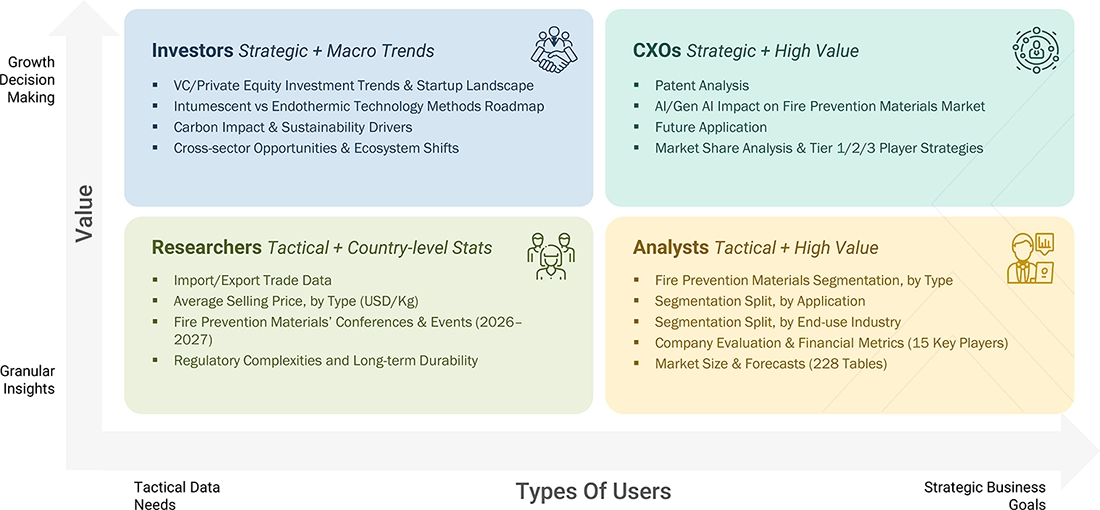
fire-prevention-materials-market Content Guide

DELIVERED CUSTOMIZATIONS

We have successfully delivered the following deep-dive customizations:

CLIENT REQUEST CUSTOMIZATION DELIVERED VALUE ADDS
Raw Material Suppliers (Silicone, Intumescent Chemicals, Graphite, Mineral Wool, Fire-retardant Additives) Supplier profiling, raw material pricing analysis, and supply chain assessment Identify alternative suppliers, reduce sourcing costs, and assess supply risks
Fire Prevention Material Manufacturers (Mortars, Sealants, Cast-in Devices, Boards, Putty, Collars, Wraps/Strips) Competitive benchmarking, product portfolio analysis, and fire-rating assessment Highlights product gaps, strengthens market positioning, and guides product innovation
OEMs, Contractors & Construction Service Providers (EPCs, MEP Contractors, Installers) Analysis of material selection, installation requirements, and contractor preferences Facilitates strategic partnerships, improves product adoption, and supports retrofit business development
End-use Industries (Commercial, Industrial & Residential) Demand assessment across building types, applications, and fire safety requirements Enables growth segment prioritization, regulatory planning, and informed market expansion

RECENT DEVELOPMENTS

  • February 2026 : Sika agreed to acquire Akkim to boost its adhesives and sealants division, supporting its fire protection product range with greater capacity, more product options, and better distribution. The acquisition could also strengthen the company’s presence in Eastern Europe, Central Asia, the Middle East, and North Africa. The deal is expected to be finalized in Q3 2026 after the necessary approvals have been granted.
  • December 2025 : Etex Group strengthened its passive fire protection portfolio in 2025 by acquiring Drumarkon, a Netherlands-based specialist in fire protection panels for shipbuilding and yacht construction. The acquisition expanded Etex's Promat portfolio with advanced marine fire protection panels offering fire resistance, acoustic insulation, and thermal performance, strengthening its product capabilities and presence in the marine fire safety market.
  • October 2025 : Sika acquired Marlon Tørmørtel A/S to expand its mortar business and strengthen its presence in Denmark and the Nordic region. The acquisition enhances Sika's production capacity and distribution network, supporting the expansion of its mortar and construction materials portfolio, including products used in fire protection applications. It also creates opportunities for cross-selling and improved customer access across regional construction markets.

Table of Contents

checkmarkExclusive indicates content/data unique to MarketsandMarkets and not available with any competitors.

TITLE
PAGE NO
1
INTRODUCTION


15
2
EXECUTIVE SUMMARY


3
PREMIUM INSIGHTS


4
MARKET OVERVIEW
Captures industry movement, adoption patterns, and strategic signals across key end-use segments and regions.


4.1
INTRODUCTION


4.2
MARKET DYNAMICS


4.2.1
DRIVERS


4.2.2
RESTRAINTS


4.2.3
OPPORTUNITIES


4.2.4
CHALLENGES


4.3
UNMET NEEDS AND WHITE SPACES


4.4
INTERCONNECTED MARKETS AND CROSS-SECTOR OPPORTUNITIES


4.5
STRATEGIC MOVES BY TIER-1/2/3 PLAYERS


5
INDUSTRY TRENDS
Maps the market evolution with focus on trend catalysts, risk factors, and growth opportunities across segments.


5.1
PORTER’S FIVE FORCES ANALYSIS


5.2
MACROECONOMIC OUTLOOK


5.2.1
INTRODUCTION


5.2.2
GDP TRENDS AND FORECAST


5.2.3
TRENDS IN MINING INDUSTRY


5.2.4
TRENDS IN CONSTRUCTION INDUSTRY


5.3
VALUE CHAIN ANALYSIS


5.4
ECOSYSTEM ANALYSIS


5.5
PRICING ANALYSIS


5.5.1
AVERAGE SELLING PRICE TREND, BY END-USE INDUSTRY (2023–2025)


5.5.2
AVERAGE SELLING PRICE TREND OF FIRE PREVENTION MATERIALS, BY TYPE (2023-2025)


5.5.3
AVERAGE SELLING PRICE TREND, BY REGION (2023–2025)


5.6
TRADE ANALYSIS


5.6.1
IMPORT SCENARIO


5.6.2
EXPORT SCENARIO


5.7
KEY CONFERENCES AND EVENTS, 2026–2027


5.8
TRENDS/DISRUPTIONS IMPACTING CUSTOMER BUSINESS


5.9
INVESTMENT AND FUNDING SCENARIO


5.10
CASE STUDY ANALYSIS


5.11
IMPACT OF 2025 US TARIFF - FIRE PREVENTION MATERIALS MARKET


5.11.1
INTRODUCTION


5.11.2
KEY TARIFF RATES


5.11.3
PRICE IMPACT ANALYSIS


5.11.4
IMPACT ON COUNTRIES/REGIONS


5.11.4.1
US


5.11.4.2
EUROPE


5.11.4.3
ASIA PACIFIC


5.11.5
IMPACT ON END-USE INDUSTRY


6
TECHNOLOGICAL ADVANCEMENTS, AI-DRIVEN IMPACT, PATENTS, INNOVATIONS, AND FUTURE APPLICATIONS


6.1
KEY EMERGING TECHNOLOGIES


6.2
COMPLEMENTARY TECHNOLOGIES


6.3
ADJACENT TECHNOLOGIES


6.4
TECHNOLOGY/PRODUCT ROADMAP


6.5
PATENT ANALYSIS


6.6
FUTURE APPLICATIONS


6.7
IMPACT OF AI/GEN AI ON FIRE PREVENTION MATERIALS MARKET


6.6.1
TOP USE CASES AND MARKET POTENTIAL


6.6.2
BEST PRACTICES OF FIRE PREVENTION MATERIAL MANUFACTURERS


6.6.3
CASE STUDIES OF AI IMPLEMENTATION IN FIRE PREVENTION MATERIALS MARKET


6.6.4
INTERCONNECTED ECOSYSTEM AND IMPACT ON MARKET PLAYERS


6.6.5
CLIENTS’ READINESS TO ADOPT AI IN FIRE PREVENTION MATERIALS MARKET


7
REGULATORY LANDSCAPE AND SUSTAINABILITY INITIATIVES


7.1
REGIONAL REGULATIONS AND COMPLIANCE


7.1.1
REGULATORY BODIES, GOVERNMENT AGENCIES, AND OTHER ORGANIZATIONS


7.1.2
INDUSTRY STANDARDS


7.2
SUSTAINABILITY INITIATIVES


7.3
IMPACT OF REGULATORY POLICIES ON SUSTAINABILITY INITIATIVES


8
CUSTOMER LANDSCAPE & BUYER BEHAVIOR


8.1
INTRODUCTION


8.2
DECISION-MAKING PROCESS


8.3
KEY STAKEHOLDERS INVOLVED IN BUYING PROCESS AND THEIR EVALUATION CRITERIA


8.3.1
KEY STAKEHOLDERS IN BUYING PROCESS


8.3.2
BUYING CRITERIA


8.4
ADOPTION BARRIERS & INTERNAL CHALLENGES


8.5
UNMET NEEDS FROM VARIOUS APPLICATIONS


8.6
MARKET PROFITABILITY


9
FIRE PREVENTION MATERIALS MARKET, BY TYPE [MARKET SIZE & FORECAST TO 2031 – IN VALUE (USD MILLION)]


COMPARATIVE ASSESSMENT OF KEY TYPES, THEIR MARKET POTENTIAL, AND DEMAND PATTERNS


9.1
INTRODUCTION


9.2
MORTAR


9.3
SEALANTS


9.4
CAST-IN DEVICES


9.5
BOARDS


9.6
PUTTY & PUTTY PADS


9.7
COLLARS


9.8
WRAPS/STRIPS


9.9
OTHER TYPES


10
FIRE PREVENTION MATERIALS MARKET, BY APPLICATION [MARKET SIZE & FORECAST TO 2031 – IN VALUE (USD MILLION)]


DEMAND POTENTIAL AND GROWTH PATHWAYS SHAPING FIRE PREVENTION MATERIALS ADOPTION IN VARIOUS APPLICATIONS


10.1
INTRODUCTION


10.2
ELECTRICAL


10.3
MECHANICAL


10.4
PLUMBING


10.5
OTHER APPLICATIONS


11
FIRE PREVENTION MATERIALS MARKET, BY END-USE INDUSTRY [MARKET SIZE & FORECAST TO 2031 – IN VALUE (USD MILLION) & VOLUME (KILOTON)]


COMPARATIVE ANALYSIS OF FIRE PREVENTION MATERIALS DEMAND ACROSS END-USE INDUSTRIES


11.1
INTRODUCTION


11.2
COMMERCIAL


11.3
INDUSTRIAL


11.4
RESIDENTIAL


12
FIRE PREVENTION MATERIALS MARKET, BY REGION [MARKET SIZE & FORECAST TO 2031 – IN VALUE (USD MILLION) & VOLUME (KILOTON)]


ASSESSING GROWTH PATTERNS, INDUSTRY FORCES, REGULATORY LANDSCAPE, AND MARKET POTENTIAL ACROSS KEY GEOGRAPHIES AND COUNTRIES


12.1
INTRODUCTION


12.2
ASIA PACIFIC


12.2.1
CHINA


12.2.2
JAPAN


12.2.3
INDIA


12.2.4
SOUTH KOREA


12.2.5
REST OF ASIA PACIFIC


12.3
NORTH AMERICA


12.3.1
US


12.3.2
CANADA


12.3.3
MEXICO


12.4
EUROPE


12.4.1
GERMANY


12.4.2
FRANCE


12.4.3
UK


12.4.4
ITALY


12.4.5
SPAIN


12.4.6
REST OF EUROPE


12.5
SOUTH AMERICA


12.5.1
BRAZIL


12.5.2
ARGENTINA


12.5.3
REST OF SOUTH AMERICA


12.6
MIDDLE EAST & AFRICA


12.6.1
GCC COUNTRIES


12.6.1.1
SAUDI ARABIA


12.6.1.2
UAE


12.6.1.2
OTHER GCC COUNTRIES


12.6.2
SOUTH AFRICA


12.6.3
REST OF MIDDLE EAST & AFRICA


13
COMPETITIVE LANDSCAPE


STRATEGIC ASSESSMENT OF LEADING PLAYERS, MARKET SHARE, REVENUE ANALYSIS, COMPANY POSITIONING, AND COMPETITIVE BENCHMARKS INFLUENCING MARKET POTENTIAL


13.1
OVERVIEW


13.2
KEY PLAYERS’ COMPETITIVE STRATEGIES/RIGHT TO WIN (2022–2026)


13.3
REVENUE ANALYSIS (2023–2025)


13.4
MARKET SHARE ANALYSIS (2025)


13.5
PRODUCT COMPARISON


13.6
COMPANY EVALUATION MATRIX: KEY PLAYERS,


13.6.1
STARS


13.6.2
EMERGING LEADERS


13.6.3
PERVASIVE PLAYERS


13.6.4
PARTICIPANTS


13.6.5
COMPANY FOOTPRINT: KEY PLAYERS,


13.6.5.1
COMPANY FOOTPRINT


13.6.5.2
REGION FOOTPRINT


13.6.5.3
TYPE FOOTPRINT


13.6.5.4
APPLICATION FOOTPRINT


13.6.5.6
END-USE INDUSTRY FOOTPRINT


13.7
COMPANY EVALUATION MATRIX: STARTUPS/SMES,


13.7.1
PROGRESSIVE COMPANIES


13.7.2
RESPONSIVE COMPANIES


13.7.3
DYNAMIC COMPANIES


13.7.4
STARTING BLOCKS


13.7.5
COMPETITIVE BENCHMARKING: STARTUPS/SMES,


13.7.5.1
DETAILED LIST OF KEY STARTUPS/SMES


13.7.5.2
COMPETITIVE BENCHMARKING OF KEY STARTUPS/SMES


13.8
COMPANY VALUATION AND FINANCIAL METRICS


13.9
COMPETITIVE SCENARIO


13.9.1
PRODUCT LAUNCHES


13.9.2
DEALS


13.9.3
EXPANSIONS


14
COMPANY PROFILES


IN-DEPTH REVIEW OF COMPANIES, PRODUCTS, SERVICES, RECENT INITIATIVES, AND POSITIONING STRATEGIES IN FIRE PREVENTION MATERIALS MARKET LANDSCAPE


14.1
KEY PLAYERS


14.1.1
HILTI


14.1.1.1
BUSINESS OVERVIEW


14.1.1.2
PRODUCTS/SOLUTIONS/SERVICES OFFERED


14.1.1.3
MNM VIEW


14.1.1.3.1
RIGHT TO WIN


14.1.1.3.2
STRATEGIC CHOICES


14.1.1.3.3
WEAKNESSES AND COMPETITIVE THREATS


14.1.2
3M


14.1.2.1
BUSINESS OVERVIEW


14.1.2.2
PRODUCTS/SOLUTIONS/SERVICES OFFERED


14.1.2.3
MNM VIEW


14.1.2.3.1
RIGHT TO WIN


14.1.2.3.2
STRATEGIC CHOICES


14.1.2.3.3
WEAKNESSES AND COMPETITIVE THREATS


14.1.3
SIKA


14.1.3.1
BUSINESS OVERVIEW


14.1.3.2
PRODUCTS/SOLUTIONS/SERVICES OFFERED


14.1.3.3
MNM VIEW


14.1.3.3.1
RIGHT TO WIN


14.1.3.3.2
STRATEGIC CHOICES


14.1.3.3.3
WEAKNESSES AND COMPETITIVE THREATS


14.1.4
RPM INTERNATIONAL INC.


14.1.4.1
BUSINESS OVERVIEW


14.1.4.2
PRODUCTS/SOLUTIONS/SERVICES OFFERED


14.1.4.3
MNM VIEW


14.1.4.3.1
RIGHT TO WIN


14.1.4.3.2
STRATEGIC CHOICES


14.1.4.3.3
WEAKNESSES AND COMPETITIVE THREATS


14.1.5
ETEX GROUP


14.1.5.1
BUSINESS OVERVIEW


14.1.5.2
PRODUCTS/SOLUTIONS/SERVICES OFFERED


14.1.5.3
MNM VIEW


14.1.5.3.1
RIGHT TO WIN


14.1.5.3.2
STRATEGIC CHOICES


14.1.5.3.3
WEAKNESSES AND COMPETITIVE THREATS


14.1.6
ARMACELL


14.1.7
SPECIFIED TECHNOLOGIES INC.


14.1.8
QUELFIRE


14.1.9
F.E.R. FISCHER EDELSTAHLROHRE GMBH


14.1.10
ROCKWOOL A/S


14.1.11
OWENS CORNING


14.1.12
ROCKWOOL A/S


14.1.13
ZAPP-ZIMMERMANN GMBH


14.1.14
TGROUP


14.1.15
BOSS PASSIVE FIRE


14.2
OTHER PLAYERS


15
RESEARCH METHODOLOGY


15.1
RESEARCH DATA


15.1.1
SECONDARY DATA


15.1.1.1
KEY DATA FROM SECONDARY SOURCES


15.1.1.2
LIST OF KEY SECONDARY SOURCES


15.1.2
PRIMARY DATA


15.1.2.1
KEY DATA FROM PRIMARY SOURCES


15.1.2.2
KEY PRIMARY PARTICIPANTS


15.1.2.3
BREAKDOWN OF PRIMARY INTERVIEWS


15.1.2.4
KEY INDUSTRY INSIGHTS


15.2
MARKET SIZE ESTIMATION


15.2.1
BOTTOM-UP APPROACH


15.2.2
TOP-DOWN APPROACH


15.2.3
MARKET SIZE CALCULATION FOR BASE YEAR


15.3
MARKET FORECAST APPROACH


15.3.1
SUPPLY SIDE


15.3.2
DEMAND SIDE


15.4
DATA TRIANGULATION


15.5
FACTOR ANALYSIS


15.6
RESEARCH ASSUMPTIONS AND LIMITATIONS


15.7
RISK ASSESSMENT


16
APPENDIX


16.1
DISCUSSION GUIDE


16.2
KNOWLEDGESTORE: MARKETSANDMARKETS’ SUBSCRIPTION PORTAL


16.3
CUSTOMIZATION OPTIONS



16.4
RELATED REPORTS


16.5
AUTHOR DETAILS


Methodology

The study involved four major activities to estimate the current size of the global fire prevention materials market. Exhaustive secondary research was conducted to collect information on the fire prevention materials market, the peer product market, and the parent product group market. The next step was to validate these findings, assumptions, and sizes with industry experts across the fire prevention materials value chain through primary research. Both the top-down and bottom-up approaches were employed to estimate the overall size of the fire prevention materials market. After that, market breakdown and data triangulation were used to determine the sizes of different market segments and subsegments.

Secondary Research

For the secondary research, sources such as Factiva, Bloomberg BusinessWeek, and Dun & Bradstreet were used to identify and collect information for this study of the fire prevention materials market. These sources included annual reports, press releases, and investor presentations from companies; white papers; certified publications; databases; articles by recognized authors; regulatory bodies; and trade directories.

Primary Research

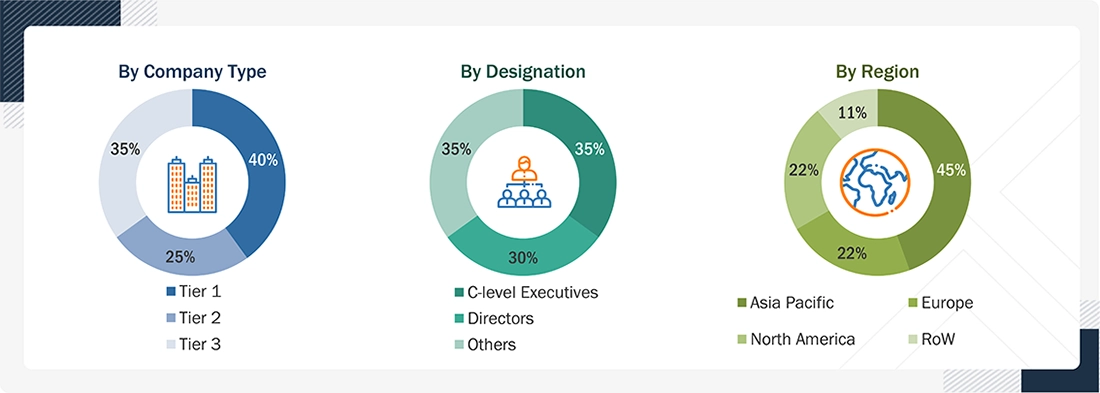
The fire prevention materials market involves various stakeholders along the supply chain, such as raw material suppliers, distributors, end-product manufacturers, buyers, and regulatory bodies. Both qualitative and quantitative data have been collected through interviews with primary sources from both the supply and demand sides. On the demand side, key participants include opinion leaders, company executives, vice presidents, and CEOs in the market. On the supply side, primary sources consist of associations, institutions, influential opinion leaders, and processing companies involved in the market.

Fire Prevention Materials Market 
 Size, and Share

To know about the assumptions considered for the study, download the pdf brochure

Market Size Estimation

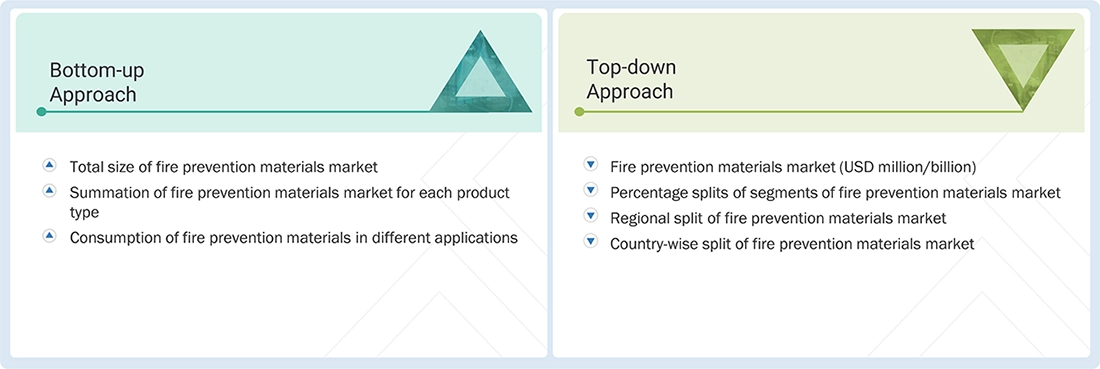
The bottom-up and top-down approaches were used to estimate the fire prevention materials market by type, application, end-use industry, and region. The research methodology used to calculate the market size includes the following steps:

  • The key players in the market were identified through extensive secondary research.
  • In terms of value, the industry’s supply chain and market size were determined through primary and secondary research processes.
  • All percentage shares, splits, and breakdowns were determined using secondary sources and verified through primary sources.
  • All parameters that affect the markets covered in this research study were accounted for, examined in detail, verified through primary research, and analyzed to obtain the final quantitative and qualitative data.
  • The research included reviewing reports, reviews, and newsletters from top market players, as well as extensive interviews with leaders, such as directors and marketing executives, to gather opinions.

Fire Prevention Materials Market Top Down and Bottom Up Approach

Data Triangulation

After estimating the total size of the fire prevention materials market, the market was divided into multiple segments and subsegments. Data triangulation and breakdown methods were used, where relevant, to refine the overall market analysis and determine precise statistics for all segments. The data were cross-checked by examining factors and trends from both demand and supply perspectives. Additionally, market size validation was performed using top-down and bottom-up approaches.

Market Definition

Fire prevention materials are specialized fire-resistant materials that prevent the spread of flames, smoke, and heat in buildings. They are used primarily to seal walls, floors, ceilings, joints and penetrations caused by electrical wires, mechanical ducts, and plumbing pipes to maintain fire-rated barriers and compartmentation. These materials are used in electrical work, HVAC systems, plumbing systems, and other penetrations in buildings. Some of the common fire prevention materials include firestopping mortar, firestop sealants, cast-in devices, firestop boards, and putty and putty pads. They are extensively used in residential, commercial and industrial buildings, including offices, hospitals, hotels, data centers, factories, and infrastructure projects.

Key Stakeholders

  • Fire prevention material manufacturers
  • Raw material suppliers
  • Regulatory bodies and government agencies
  • Distributors and suppliers
  • End-use industries
  • Associations and industrial bodies
  • Market research and consulting firms

Report Objectives

  • To define, describe, and forecast the size of the fire prevention materials market in terms of value and volume
  • To provide detailed information regarding the key factors influencing the growth of the market (drivers, restraints, opportunities, and challenges)
  • To forecast the market size based on type, application, end-use industry, and region
  • To study the market qualitatively based on manufacturing process
  • To forecast the market size for the five main regions – North America, Europe, Asia Pacific, South America, and Middle East & Africa – along with their key countries
  • To strategically analyze micromarkets with respect to individual growth trends, prospects, and contributions to the total market
  • To analyze opportunities in the market for stakeholders and provide details of the competitive landscape for market leaders
  • To strategically profile leading players and comprehensively analyze their key developments, such as product launches, expansions, and deals in the fire prevention materials market
  • To comprehensively analyze the market share and core competencies of key players
  • To study the impact of AI/gen AI on the market under study, along with the macroeconomic outlook

Available customizations:

With the given market data, MarketsandMarkets offers customizations per the specific needs of companies.

The following customization options are available for the report:

PRODUCT ANALYSIS

  • Product matrix, which provides a detailed comparison of the market for different sources of fire prevention materials

REGIONAL ANALYSIS

  • Further breakdown of a country with respect to the fire prevention materials market

COMPANY INFORMATION

  • Detailed analysis and profiling of additional market players


Personalize This Research

  • Triangulate with your Own Data
  • Get Data as per your Format and Definition
  • Gain a Deeper Dive on a Specific Application, Geography, Customer or Competitor
  • Any level of Personalization
Request A Free Customisation

Let Us Help You

  • What are the Known and Unknown Adjacencies Impacting the Fire Prevention Materials Market
  • What will your New Revenue Sources be?
  • Who will be your Top Customer; what will make them switch?
  • Defend your Market Share or Win Competitors
  • Get a Scorecard for Target Partners
Customized Workshop Request

Custom Market Research Services

We Will Customise The Research For You, In Case The Report Listed Above Does Not Meet With Your Requirements

Get 10% Free Customisation

TESTIMONIALS

Growth opportunities and latent adjacency in Fire Prevention Materials Market

THIS REPORT TELLS YOU

How big the Fire Prevention Materials market is, and who leads it.

GROWTHIQ TELLS YOU NEW

Where your company should play next, and who is taking your share.

Get your company's view of this market. Free snapshot.

DMCA.com Protection Status
popup img