Food Pathogen Testing Market

Food Pathogen Testing Market by Pathogen Type, Food Tested (Meat & Poultry, Fish & Seafood, Processed Food, Fruits & Vegetables, Dairy Products, Cereals & Grains, Other Food Products), Technology, End User, Region - Global Forecast To 2031




OVERVIEW
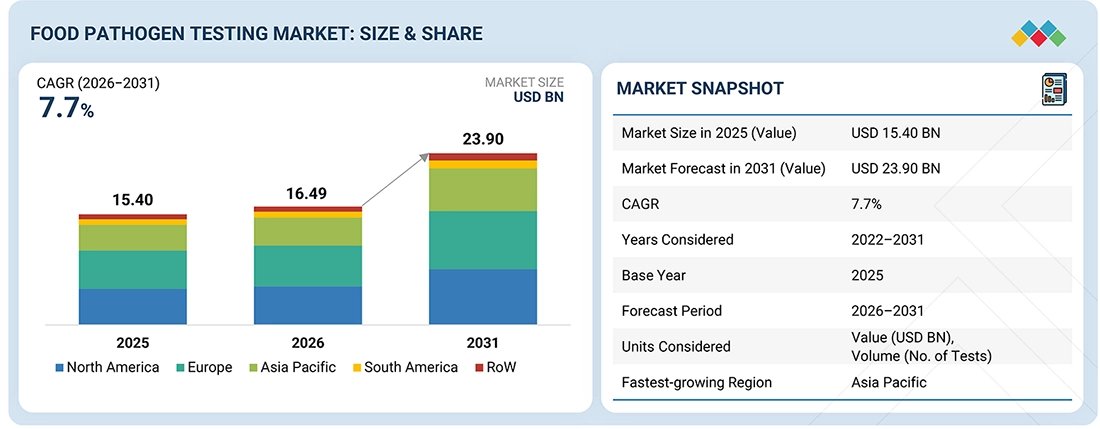
Source: Secondary Research, Interviews with Experts, MarketsandMarkets Analysis
The food pathogen testing market is projected to reach USD 23.90 billion by 2031 from USD 16.49 billion in 2026, at a CAGR of 7.7% from 2026 to 2031. The growth of this market is driven by the growing demand for seafood and increasing aquaculture production.
Market Size and Forecast:
- Market Size Value in 2025: USD 15.40 Billion
- Market Size Value in 2026: USD 16.49 Billion
- Revenue Forecast in 2031: USD 23.90 Billion
- Growth Rate: CAGR of 7.7% from 2026 to 2031
- Base year: 2025
- Forecast period: 2026–2031
- The Asia Pacific is the fastest-growing region in the food pathogen testing market, with an estimated CAGR of 8.9% during the forecast period
- The rapid segment is projected to witness a higher CAGR of 9.2% from 2026 to 2031.
- The meat & poultry segment is expected to hold a dominant market share with 32.3% in 2026.
Key Market Trends and Insights
- By Technology Type: Rising adoption of rapid testing methods, PCR-based diagnostics, and automated pathogen detection systems is driving strong growth in the food pathogen testing market.
- Operational Advantages: Food pathogen testing solutions improve food safety compliance, reduce contamination risks, enhance product quality assurance, and support faster detection of harmful microorganisms across the food supply chain.
- Industry Development Trends: Food manufacturers are increasingly investing in automated testing platforms, real-time monitoring technologies, and stringent food safety protocols to meet evolving regulatory and consumer safety requirements.
- Expansion Opportunities: Growing global food trade, increasing outbreaks of foodborne illnesses, and rising demand for packaged & processed foods are creating significant market growth opportunities for testing solution providers.
KEY TAKEAWAYS
-
BY REGIONThe Asia Pacific is the fastest-growing region in the food pathogen testing market, with an estimated CAGR of 8.9% during the forecast period.
-
BY PATHOGEN TYPESalmonella is estimated to dominate the market with a share of 31.7% in 2026.
-
BY TECHNOLOGYThe rapid segment is projected to witness a higher CAGR of 9.2% from 2026 to 2031.
-
BY FOOD TYPEThe meat & poultry segment is expected to hold a dominant market share with 32.3% in 2026.
-
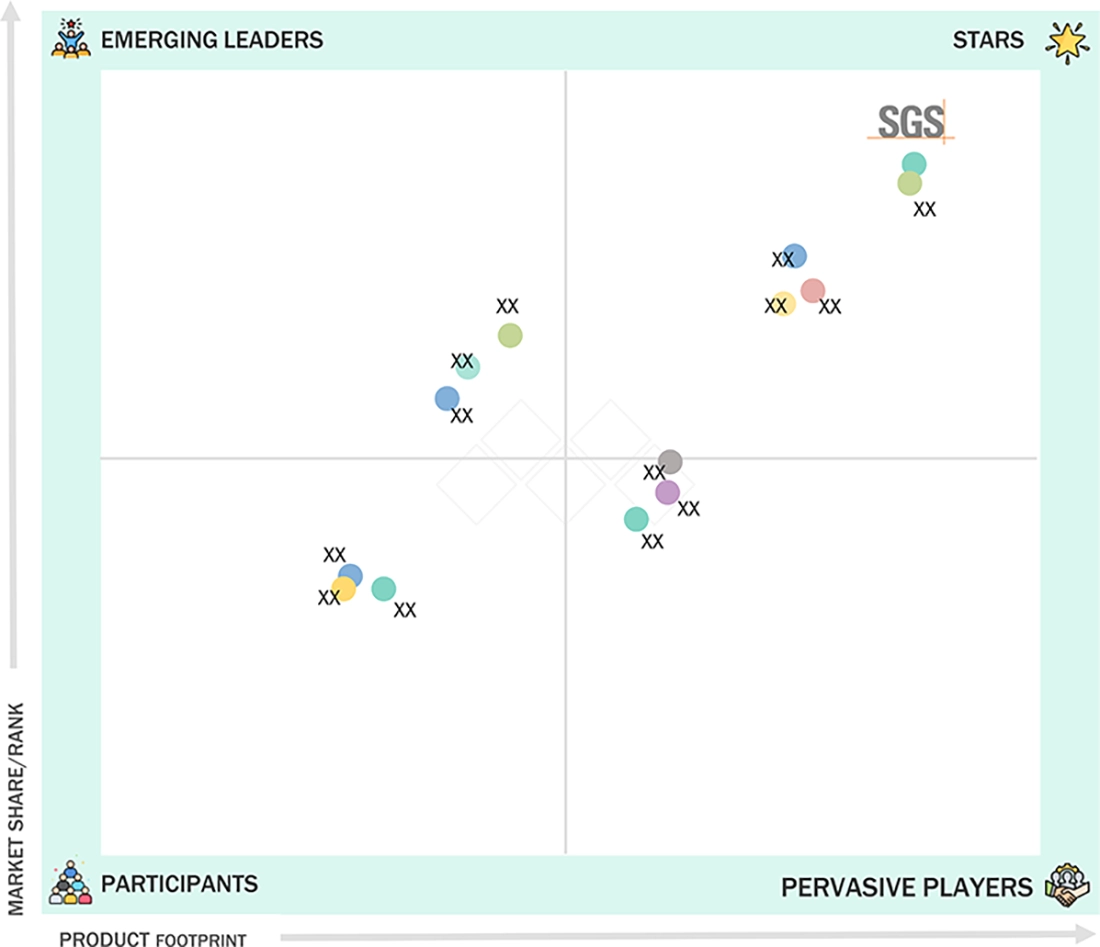
COMPETITIVE LANDSCAPE - KEY PLAYERSSGS SA, Eurofins Scientific, and UL LLC were some of the star players identified in the food pathogen testing market, given their global presence and strong product footprint.
-
COMPETITIVE LANDSCAPE - STARTUPSQ Laboratories, Twin Arbor Labs, and IEH Inc., among others, have distinguished themselves among startups and SMEs by securing strong footholds in specialized niche areas, underscoring their potential as emerging market leaders.
The food pathogen testing market is expected to grow at a steady rate due to the increase in foodborne illnesses and a growing awareness for food testing amongst consumers and regulatory authorities.
TRENDS & DISRUPTIONS IMPACTING CUSTOMERS' CUSTOMERS
Trends in the food pathogen testing market are increasingly driven by the adoption of rapid diagnostic technologies and advanced molecular testing methods. Food companies are shifting toward PCR-based testing, immunoassays, and automated laboratory workflows to achieve faster and more accurate pathogen detection. These services enable early identification of contaminants such as Salmonella, Listeria, and E. coli, helping reduce recall risks and improve overall food safety outcomes. Businesses are focused on minimizing turnaround time, improving traceability, and ensuring consistent compliance across complex supply chains. As a result, they are increasingly relying on specialized testing service providers that offer high-throughput, reliable, and scalable solutions. This shift is supporting a more proactive and preventive approach to food safety, making testing services more integrated, efficient, and critical to global food supply systems.
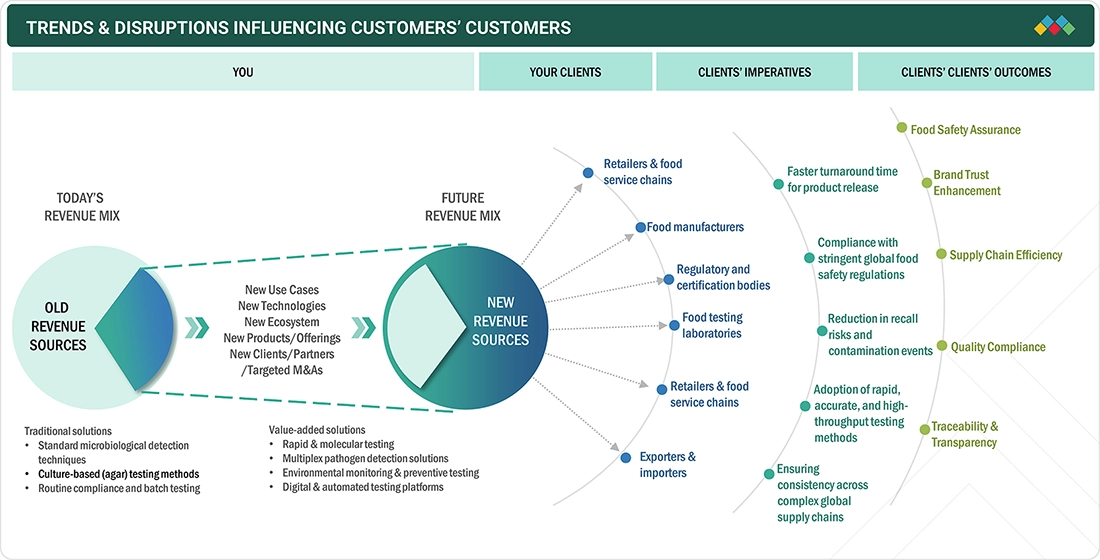
Source: Secondary Research, Interviews with Experts, MarketsandMarkets Analysis
MARKET DYNAMICS

Level
-
Increasing Incidence of Foodborne Illnesses & Outbreaks

-
Stringent Food Safety Regulations & Compliance Requirements


Level
-
High Cost of Advanced Testing Technologies

-
Limited Infrastructure in Developing Regions


Level
-
Adoption of Rapid & Molecular Testing Methods

-
Expansion of Global Food Trade & Export Testing Needs


Level
-
Complexity in Detecting Multiple Pathogens Across Diverse Food Matrices

-
Variability in Global Regulatory Standards

Source: Secondary Research, Interviews with Experts, MarketsandMarkets Analysis
Driver: Increasing Incidence of Foodborne Illnesses & Outbreaks
Higher outbreak frequency is driving demand for routine and rapid pathogen testing.
Restraint: High Cost of Advanced Testing Technologies
Expensive equipment and molecular methods limit adoption, especially in smaller labs.
Opportunity: Adoption of Rapid & Molecular Testing Methods
Faster, high-throughput technologies are enabling quicker detection and decision-making.
Challenge: Complexity in Detecting Multiple Pathogens Across Diverse Food Matrices
Different food types require varied testing approaches, making detection more complex and resource-intensive.
FOOD PATHOGEN TESTING MARKET: COMMERCIAL USE CASES ACROSS INDUSTRIES
| COMPANY | USE CASE DESCRIPTION | BENEFITS |
|---|---|---|
 |
SGS SA announced the acquisition of Murray-Brown Laboratories in the United States to strengthen its food, nutraceutical, and microbial testing capabilities. The acquisition enhances SGS’s analytical chemistry and pathogen testing services while expanding its laboratory network across North America. | The acquisition strengthens regional laboratory presence and expands advanced testing capabilities, enabling faster turnaround times and improved support for food manufacturers and retailers in ensuring safety and regulatory compliance. |
 |
Eurofins Scientific launched Enteric Pathogen Risk Indicator (EPRI) testing through its microbiology laboratory network to identify potential foodborne pathogen risks without confirming their direct presence. | This solution enables proactive risk assessment and early-stage screening, helping clients enhance preventive food safety measures and optimize testing efficiency across production and supply chains. |
 |
ALS Limited acquired Wessling Group to expand its food, environmental, and pharmaceutical testing capabilities across Europe. | The acquisition enhances geographic reach and service portfolio, enabling integrated testing solutions and improved access to advanced analytical services for clients across multiple industries. |
Logos and trademarks shown above are the property of their respective owners. Their use here is for informational and illustrative purposes only.
MARKET ECOSYSTEM
The food pathogen testing ecosystem is categorized into manufacturers, regulatory bodies, and ingredient suppliers. The market is dynamic and is characterized by diverse stakeholders and innovative products. Established companies and agile startups are central to this market, and they develop aquafeed products.
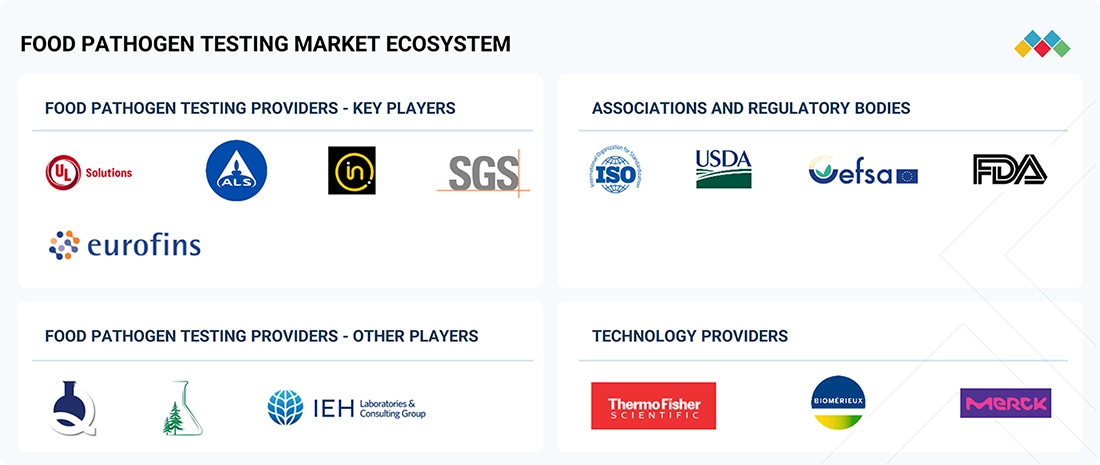
Logos and trademarks shown above are the property of their respective owners. Their use here is for informational and illustrative purposes only.
MARKET SEGMENTS
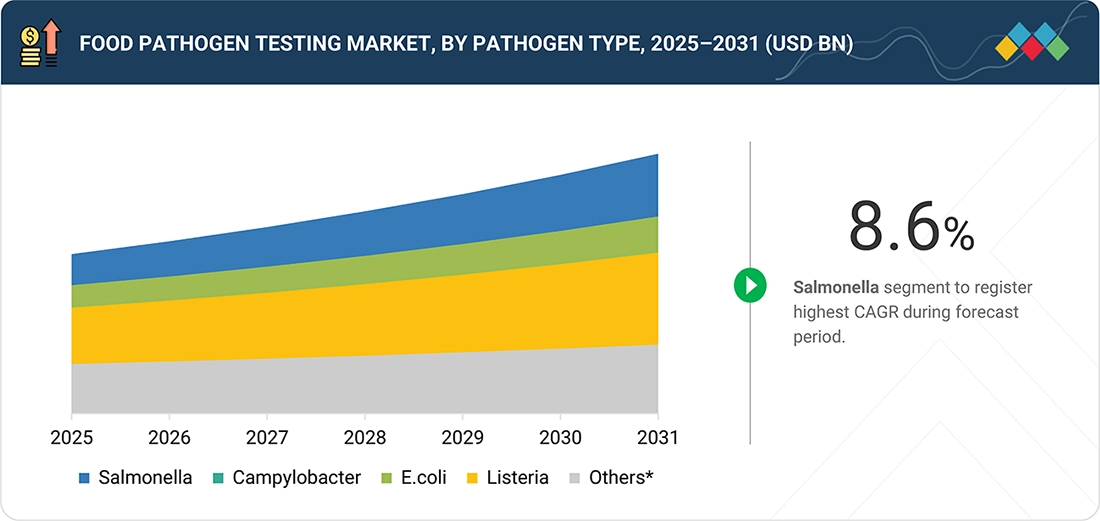
Source: Secondary Research, Interviews with Experts, MarketsandMarkets Analysis
Food Pathogen Testing Market, By Pathogen Type
Salmonella testing plays a critical role in ensuring food safety due to its high prevalence across poultry, meat, and processed food products, driving routine and regulatory testing demand.
Food Pathogen Testing Market, By Technology
Rapid testing enables faster detection of pathogens, reducing turnaround time and supporting quick decision-making across high-volume and time-sensitive food supply chains.
Food Pathogen Testing Market, By Food Tested
Testing in meat & poultry ensures safety against high contamination risks, supporting compliance, export requirements, and quality assurance across processing and distribution stages.
REGION
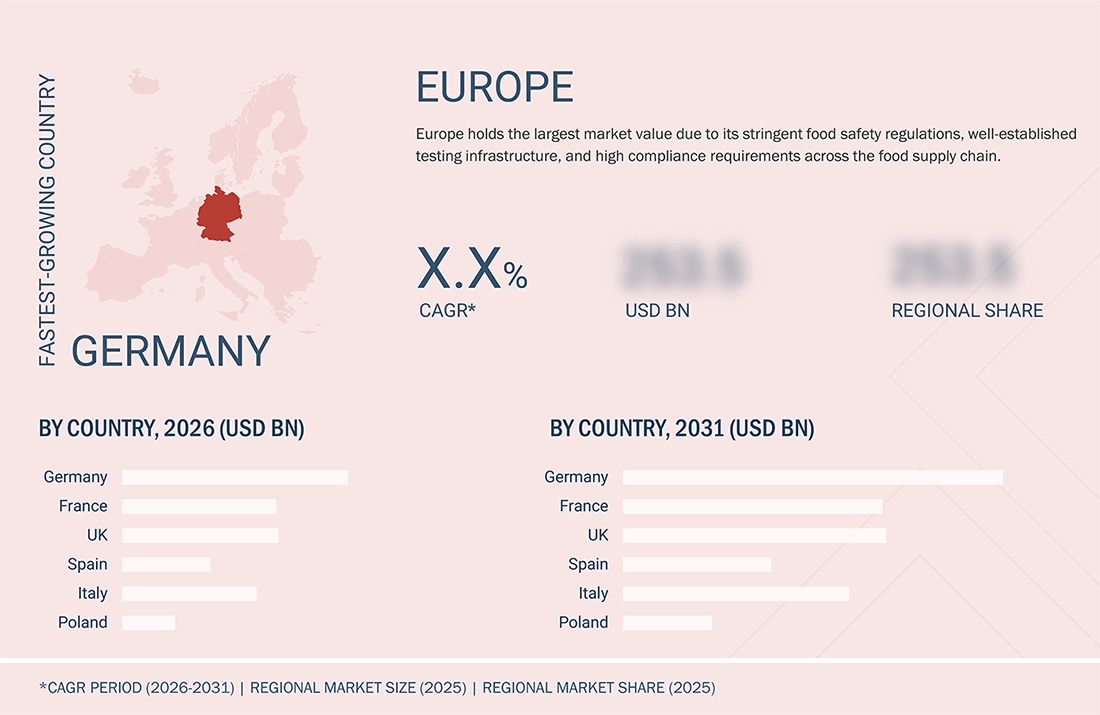
Europe to dominate food pathogen testing market
Europe is estimated to dominate the food pathogen testing market in 2026. The strict regulatory policies and customer awareness in the region are driving this growth.
FOOD PATHOGEN TESTING MARKET: COMPANY EVALUATION MATRIX
In the food pathogen testing market matrix, SGS S.A., Eurofins Scientific, UL LLC, TÜV SÜD, Intertek Group, ALS, and Mérieux Nutrisciences (Star) lead with a moderate market share and extensive product footprint for food pathogen testing products, driven by their strong geographical presence, significant technology and testing capabilities, and certifications from the regulation boards. Q Laboratories, Twin Arbor Labs, and IEH Inc. are gaining visibility with their specialized food pathogen testing offerings, strengthening their position through strong product offerings.
Source: Secondary Research, Interviews with Experts, MarketsandMarkets Analysis
KEY MARKET PLAYERS
- SGS SA (Switzerland)
- Eurofins Scientific (Luxembourg)
- UL LLC (US)
- Intertek Group Plc. (UK)
- ALS (Australia)
- TÜV SÜD (Germany)
- Mérieux Nutrisciences (US)
- Tentamus (Germany)
- Certified Group (US)
- Microbac Laboratories, Inc. (US)
- AsureQuality (New Zealand)
- Hill Laboratories (New Zealand)
- EMSL Analytical, Inc. (US)
- Symbio Laboratories (Australia)
- Element Materials Technology (UK)
MARKET SCOPE
| REPORT METRIC | DETAILS |
|---|---|
| Market Size in 2026 (Value) | USD 16.49 Billion |
| Market Forecast in 2031 (Value) | USD 23.90 Billion |
| Growth Rate | CAGR of 7.7% from 2026 to 2031 |
| Years Considered | 2022–2031 |
| Base Year | 2025 |
| Forecast Period | 2026–2031 |
| Units Considered | Value (USD Billion), Volume (No. of Tests) |
| Report Coverage | Revenue Forecast, Company Ranking, Competitive Landscape, Growth Factors, and Trends |
| Segments Covered |
|
| Regions Covered | North America, Asia Pacific, Europe, South America, and RoW |
WHAT IS IN IT FOR YOU: FOOD PATHOGEN TESTING MARKET REPORT CONTENT GUIDE
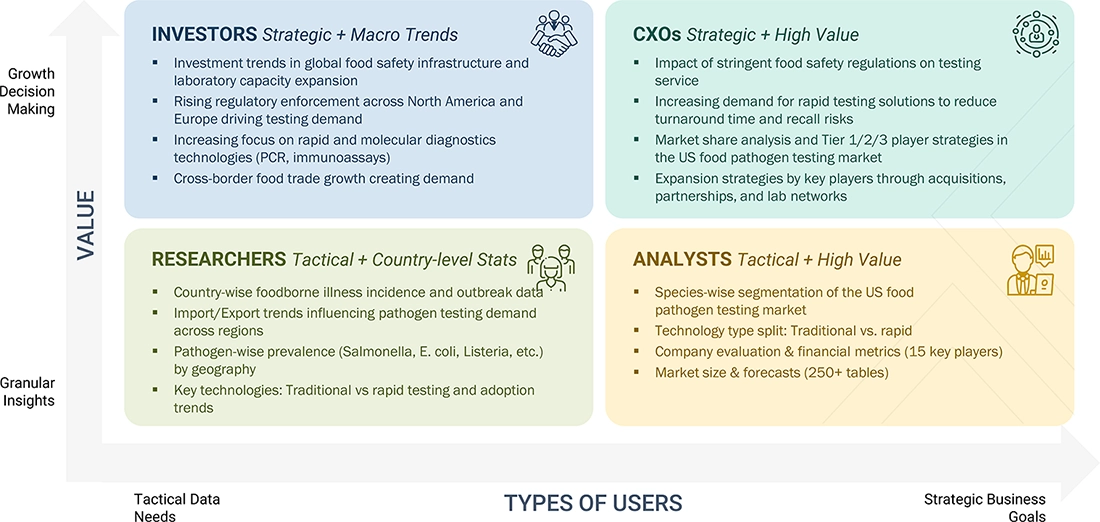
DELIVERED CUSTOMIZATIONS
We have successfully delivered the following deep-dive customizations:
| CLIENT REQUEST | CUSTOMIZATION DELIVERED | VALUE ADDS |
|---|---|---|
| US-based Aquafeed Manufacturers |
|
|
| Food Pathogen Testing, Species Segment Assessment |
|
|
RECENT DEVELOPMENTS
- September 2025 : ADM and Alltech signed an agreement to create a joint animal feed venture in North America. They have combined their long experience, teams, and many feed mills to offer stronger products and services for customers. The new company will be mainly owned by Alltech and is planned to launch in the first quarter of 2026.
- September 2024 : Novus International partnered with Ginkgo Bioworks. This will help to develop new, advanced feed additives using Ginkgo’s enzyme technology. This move will help to create more efficient and cost-effective enzymes. The goal is to help livestock producers improve animal health and performance,especially during times of rising feed costs and industry challenges.
- October 2025 : Skretting launched Necto, which is a new plant-based functional fish feed. It is made with special plant-based PhytoComplexes to help improve fish health, resilience, and survival. The feed will be available from late 2025.
Table of Contents
 Exclusive indicates content/data unique to MarketsandMarkets and not available with any competitors.
Methodology
This study employed two primary approaches to estimate the current size of the food pathogen testing market. Exhaustive secondary research was carried out to collect information on the pathogens, technology, and food types tested in the market. The next step involved validating these findings, assumptions, and sizing with industry experts across the value chain through primary research. The top-down and bottom-up approaches were employed to estimate the complete market size. Thereafter, data triangulation was used to estimate the market size of segments and subsegments.
Secondary Research
This research study used extensive secondary sources—directories and databases such as Bloomberg Businessweek and Factiva—to identify and collect information for a technical, market-oriented, and commercial market study. In the secondary research process, sources such as annual reports, press releases & investor presentations of companies, white papers, microbiological testing and food pathogen -related journals, certified publications, articles from recognized authors, directories, and databases were referred to identify and collect information. Secondary research was mainly used to obtain key information about the industry’s supply chain, the pool of key players, and market classification and segmentation based on the industry trends to the bottom-most level, regional markets, and key developments from market- and technology-oriented perspectives.
Primary Research
Extensive primary research was conducted after obtaining information regarding the food pathogen testing market scenario through secondary research. Several primary interviews were conducted with market experts from the demand and supply sides across all the regions. Primary data was collected through questionnaires, emails, and telephonic interviews. The primary sources from the supply side included various industry experts, such as chief experience officers (CXOs), vice presidents (VPs), directors from business development, marketing, research, and development teams, and related key executives from distributors and key opinion leaders.
Primary interviews were conducted to gather insights, including market statistics, revenue data from services, market breakdowns, market size estimations, market forecasting, and data triangulation. Primary research also helped to understand the various trends related to pathogens, technology, application, and region. Stakeholders from the demand side were interviewed to understand the buyers’ perspective on suppliers, products, and the outlook for their business, which will impact the overall market.
Breakdown of Primary Interviews
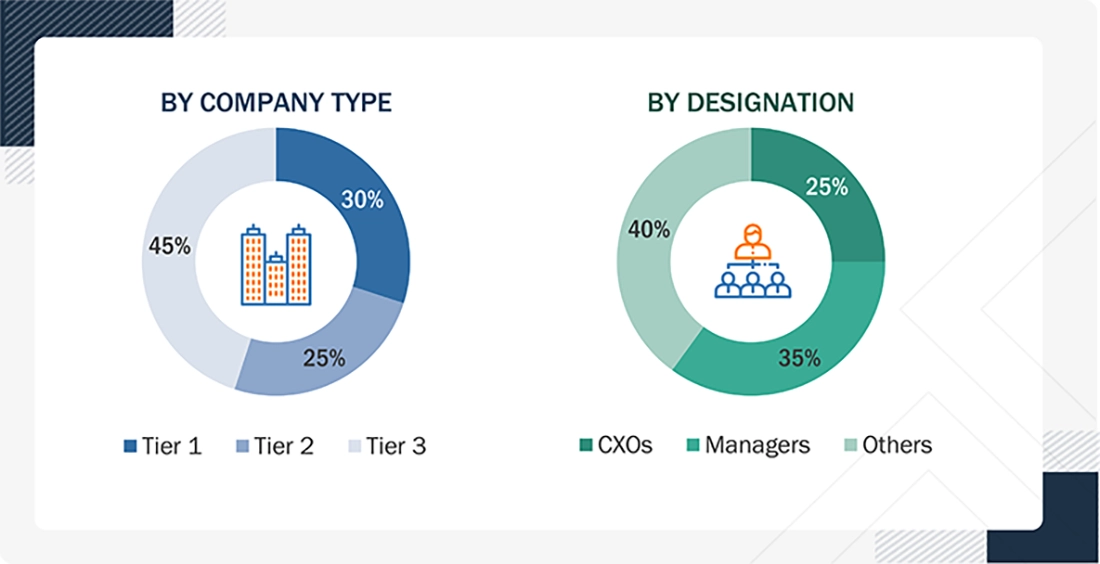
Note: The three tiers of the companies are defined based on their total revenues in 2023 or 2024, based on the availability of financial data: Tier 1: Revenue > USD 1 billion; Tier 2: USD 100 million ≤ revenue ≤ USD 1 billion; Tier 3: Revenue < USD 100 million.
|
COMPANY |
DESIGNATION |
|
SGS S.A. (Switzerland) |
Regional Sales Manager |
|
Eurofins Scientific (Luxembourg) |
Marketing Manager |
|
UL LLC (US) |
General Manager |
|
Intertek Group Plc. (UK) |
Sales Manager |
|
ALS (Australia) |
Sales Manager |
|
AsureQuality (New Zealand) |
Sales Executive |
To know about the assumptions considered for the study, download the pdf brochure
Market Size Estimation
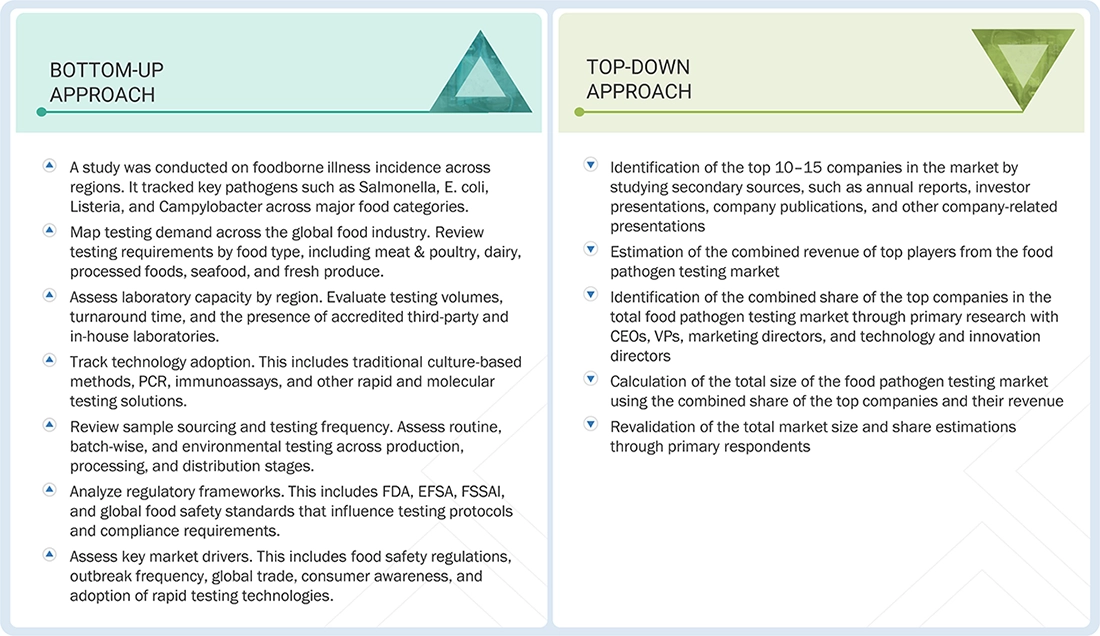
The top-down and bottom-up approaches were used to estimate and validate the total size of the food pathogen testing market. These approaches were also used extensively to determine the size of various subsegments in the market. The research methodology used to estimate the market size includes the following details:
- The key players in the industry and the overall markets were identified through extensive secondary research.
- All shares, splits, and breakdowns were determined using secondary sources and verified through primary sources.
- All possible parameters that affect the market covered in this research study were accounted for, viewed in extensive detail, verified through primary research, and analyzed to obtain final quantitative and qualitative data.
- The research included the study of reports, reviews, and newsletters of top market players, along with extensive interviews for opinions from leaders, such as CEOs, directors, and marketing executives.
Food Pathogen Testing Market: Bottom-up and Top-down Approaches
Data Triangulation
After determining the overall market size from the estimation process explained above, the total market was split into several segments and subsegments. The data triangulation procedure was employed, wherever applicable, to estimate the overall food pathogen testing market and obtain precise statistics for all segments and subsegments. The data was triangulated by studying various factors and trends from the demand and supply sides. The market size was also validated using the top-down and bottom-up approaches.
Market Definition
The food pathogen testing market includes providing testing services for food pathogens globally. It tests pathogen types such as Salmonella, Campylobacter, E. coli, Listeria, and other pathogen types across commercial laboratories.
Food pathogen testing services use advanced laboratory methodologies, including convenience-based analysis, hybridization-based analysis, and immunoassays, to detect harmful pathogens such as Salmonella, Listeria, E. coli, and Campylobacter in food products. These services are applied across multiple food categories, including meat & poultry, dairy products, processed foods, seafood, fruits & vegetables, and cereals & grains, at various stages such as raw material testing, in-process monitoring, environmental testing, and finished product validation. Testing services are delivered through accredited laboratories using standardized protocols to ensure accuracy, reliability, and regulatory compliance. This market plays a critical role in ensuring food safety, supporting global trade, maintaining product quality, and protecting public health, while adhering to food safety regulations established by national and international authorities.
Key Stakeholders
- Supply-side: Food pathogen testing service providers, independent laboratory networks, contract research organizations (CROs)
- Technology providers: Developers of diagnostic platforms, including PCR-based systems, immunoassays, and rapid testing solutions, along with laboratory automation and digital workflow solution providers
- Demand-side: Food manufacturers, distributors, suppliers, retailers, food service chains, and food co-packers
- Regulatory side: Government food safety authorities, public health agencies, regulatory bodies, and research & development (R&D) institutions involved in food safety monitoring and standardization
- Associations and industry bodies:
- Food and Agriculture Organization
- World Health Organization (WHO)
- European Food Safety Authority (EFSA)
- Centers for Disease Control and Prevention
- US Food and Drug Administration
Report Objectives
- To determine and project the size of the food pathogen testing market based on pathogen type, technology, food tested, end user, service provider, and region, over five years, ranging from 2026 to 2031
- To identify the attractive opportunities in the market by determining the largest and fastest-growing segments across regions
- To provide detailed information about the key factors influencing market growth (drivers, restraints, opportunities, and challenges)
- To analyze the opportunities in the market for stakeholders and provide details of the competitive landscape for market leaders
- To analyze the micromarkets with respect to individual growth trends, prospects, and their contribution to the total market
- To identify and profile the key players in the market
- To understand the competitive landscape and identify the major growth strategies adopted by players across the key regions.
Available customizations:
With the given market data, MarketsandMarkets offers customizations according to company-specific scientific needs. The following customization options are available for the report:
PRODUCT ANALYSIS
- Product matrix, which gives a detailed comparison of the product portfolio of each company.
Segmental ANALYSIS
With the given market data, MarketsandMarkets offers customizations according to company-specific scientific needs.
- Further breakdown of other pathogen types in the food pathogen testing market
- Further breakdown of the technologies of the food pathogen testing market
COMPANY INFORMATION
- Detailed analyses and profiling of additional market players (up to five)
Key Questions Addressed by the Report
What is the projected size of the global food pathogen testing market?
The global food pathogen testing market is projected to grow from USD 16.49 billion in 2026 to USD 23.90 billion by 2031, at a CAGR of 7.7% during the forecast period. Growth is driven by increasing food safety regulations, rising incidences of foodborne illnesses, and expanding global food trade.
Which segment holds the largest share of the food pathogen testing market?
The meat & poultry segment holds the largest share of the food pathogen testing market, accounting for 32.3% in 2026. High contamination risks, stringent regulatory requirements, and the need for quality assurance continue to drive testing demand in this segment.
What are the key trends driving the food pathogen testing market?
Key trends include the increasing adoption of rapid testing technologies, PCR-based diagnostics, automated pathogen detection systems, real-time food safety monitoring, and greater investment in food quality assurance across the supply chain.
Which region holds the largest share of the food pathogen testing market?
Europe holds the largest share of the food pathogen testing market, supported by stringent food safety regulations, high consumer awareness, and well-established food quality standards. Meanwhile, Asia Pacific is projected to register the fastest growth during the forecast period.
Who are the key players in the food pathogen testing market?
Key companies operating in the food pathogen testing market include SGS SA (Switzerland), Eurofins Scientific (Luxembourg), UL LLC (US), Intertek Group Plc. (UK), ALS (Australia), TÜV SÜD (Germany), Mérieux Nutrisciences (US), Tentamus (Germany), Certified Group (US), and Microbac Laboratories, Inc. (US).


Personalize This Research
- Triangulate with your Own Data
- Get Data as per your Format and Definition
- Gain a Deeper Dive on a Specific Application, Geography, Customer or Competitor
- Any level of Personalization
Let Us Help You
- What are the Known and Unknown Adjacencies Impacting the Food Pathogen Testing Market
- What will your New Revenue Sources be?
- Who will be your Top Customer; what will make them switch?
- Defend your Market Share or Win Competitors
- Get a Scorecard for Target Partners

Custom Market Research Services
We Will Customise The Research For You, In Case The Report Listed Above Does Not Meet With Your Requirements
Get 10% Free CustomisationTESTIMONIALS

Business Innovation Director
US Based Leading Agribusiness,
Food and Ingredients ManufacturerI highly appreciate the team's efficiency for a well conducted study that helped us clarify some blind spots in food and agricultural niche markets. Although compiling information for B2B markets is very difficult, the MnM team pulled out the task successfully. The quality of research, level of insights, and responsiveness of team were commendable.
- US Food Pathogen Testing Market
- Canada Food Pathogen Testing Market
- Mexico Food Pathogen Testing Market
- Germany Food Pathogen Testing Market
- France Food Pathogen Testing Market
- UK Food Pathogen Testing Market
- Italy Food Pathogen Testing Market
- Spain Food Pathogen Testing Market
- Poland Food Pathogen Testing Market
- China Food Pathogen Testing Market
- India Food Pathogen Testing Market
- Japan Food Pathogen Testing Market
- Brazil Food Pathogen Testing Market
- Argentina Food Pathogen Testing Market
- Rest Of Europe Food Pathogen Testing Market
- Rest Of Asia Pacific Food Pathogen Testing Market
- Southeast Asia Food Pathogen Testing Market
- Rest Of South America Food Pathogen Testing Market
Growth opportunities and latent adjacency in Food Pathogen Testing Market






Samuel
Sep, 2020
I am interested in the Food Pathogen Testing Market. I would like to know if your report contains testing for both outsourced and insourced testing, i.e., does it include what is sent to contract labs only? Or does it include testing that food manufacturers do in their own labs?.
Miranda
Sep, 2020
I am interested in the Food Pathogen Testing Market. I would like to know if your report contains testing for both outsourced and insourced testing, i.e., does it include what is sent to contract labs only? Or does it include testing that food manufacturers do in their own labs?.