
South America EPR Cable Market (2025-2030)

The South America EPR Cable Market was valued at $110.8 Million in 2025 and projected to reach to $188.5 Million by 2030, representing a compound annual growth rate of 7.9%. South America's EPR cable market is positioned for sustained growth through 2030, driven by accelerating infrastructure investments and the region's transition toward renewable energy sources.


| Market Size in | USD 26.32 MN |
| Market Forecast in | |
| CAGR | |
| Forecast Period | |
| Units Considered | Value (USD MN) |
South America EPR Cable Market Trends and Insights
- South America's EPR cable sector is driven by increasing infrastructure development, renewable energy adoption, and industrial modernization across the region.
- The 7.9% compound annual growth rate reflects South America's rising demand for reliable electrical connectivity in both urban and emerging markets. South America's EPR cable market benefits from expanding telecommunications networks, automotive electrification, and power distribution upgrades.
- Key markets within South America are investing heavily in grid modernization and sustainable energy infrastructure.
- By 2030, South America is expected to solidify its position as a significant contributor to the broader Latin American electrical materials sector, supported by regulatory frameworks promoting energy efficiency and industrial competitiveness..
Key Market Statistics
- CAGR (2025-2030) 7.9% CAGR
- Market Size, 2025 ~USD 110.8 Million
- Forecast, 2030 ~USD 188.5 Million
- Geography South America
South America EPR Cable Market Overview
Strong Regional Growth Trajectory :
South America's EPR cable market is expanding at 7.9% CAGR, growing from USD 110.8 million in 2025 to USD 188.5 million by 2030, demonstrating robust demand across the region's industrial and infrastructure sectors.
Infrastructure & Renewable Energy Drivers :
Increasing infrastructure development and renewable energy adoption across South America are primary catalysts for EPR cable demand, as countries modernize electrical grids and expand clean energy capacity.
Brazil's Market Leadership :
Brazil dominates South America's EPR cable market with USD 71.9 million in market size, leveraging its large industrial base, hydroelectric infrastructure, and ongoing energy sector modernization initiatives.
Industrial Modernization Momentum :
South American industrial sectors are undergoing significant modernization, requiring reliable and durable EPR cables for manufacturing, mining, and energy applications, supporting sustained market expansion.
South America EPR Cable Market Dynamics
- Brazil and Argentina lead market expansion, supported by government initiatives promoting grid modernization and industrial competitiveness.
- The 7.9% CAGR reflects growing demand from utilities, manufacturing facilities, and renewable energy projects requiring high-performance cable solutions. Looking ahead, South America's EPR cable market will benefit from increased foreign direct investment in energy infrastructure, rising electrification rates in emerging areas, and stricter safety standards requiring premium cable products.
- Regional economic recovery and commodity-driven growth will further stimulate demand across industrial and utility segments, positioning South America as a key growth market within the global EPR cable landscape..
Market Ecosystem

EPR CABLE MARKET: COMMERCIAL USE CASES ACROSS INDUSTRIES
| COMPANY | USE CASE DESCRIPTION | BENEFITS |
|---|---|---|
 |
Uses EPR insulated trailing and power cables in mining equipment, conveyors, and underground operations | High flexibility under movement, abrasion resistance, and reliable performance in harsh mining environments |
 |
Deploys EPR power and control cables across offshore platforms, refineries, and petrochemical facilities | Excellent chemical resistance, thermal stability, and safety in hazardous zones |
 |
Integrates EPR cables in industrial automation systems, motors, and heavy machinery installations | Superior dielectric strength, durability under heat, and long operational life |
 |
Uses EPR-insulated cables in offshore wind farms and marine power distribution networks | Moisture resistance, weatherability, and dependable performance in marine environments |
Logos and trademarks shown above are the property of their respective owners. Their use here is for informational and illustrative purposes only.
Related Ecosystem
Speciality Chemicals
- Corrosion Inhibitors
- Polyetheretherketone (PEEK)
- Acrylonitrile Butadiene Styrene (ABS)
- Epoxy Resin
- Polycarbonate
- Basf se
- DOW CHEMICAL COMPANY
- Evonik industries ag
- Clariant ag.
- Solvay sa
Key Takeaways
- South America's EPR Cable Market is valued at USD 110.8 million in 2025 and will reach USD 188.5 million by 2030, representing a 7.9% CAGR.
- South America is experiencing accelerated demand driven by renewable energy projects, grid modernization, and industrial infrastructure expansion.
- South America's market growth is supported by increasing investments in telecommunications and automotive electrification sectors.
- South America's regulatory environment and energy transition initiatives are key catalysts for sustained EPR cable market expansion through 2030.
EPR Cable Market Report Scope
| Report Metric | Details |
|---|---|
| Base Year | 2025 |
| Fastest Growing Segment | SUB-SEA APPLICATIONS (End-Use Industry) |
| Forecast Period | 2025–2030 |
| Growth Rate | CAGR of 9% from 2025 to 2030 |
| Largest Segment | COPPER (Conductor Material) |
| Market Size Base Year (Billions) | ~USD 3.26 (2025) |
| Revenue Forecast (Billions) | ~USD 5.02 (2030) |
| Segments Covered | Voltage Type, Product Type, Conductor Material, Application, End-Use Industry, Plants |
South America EPR Cable Market Report Segmentation
6 segment dimensions are covered across the global market.
By Voltage Type
- High Voltage (>36Kv)
- Low Voltage (< 1Kv)
- Low Voltage (<1Kv)
- Medium Voltage
- Medium Voltage (1Kv-36Kv)
By Product Type
- Multicore
- Singlecore
By Conductor Material
- Aluminum
- Copper
By Application
- Communication & Specialty Cable
- Control & Instrumentation Cable
- Power Cable
By End-Use Industry
- Industrial Plants
- Marine
- Mining
- Oil & Gas
- Other End-Use Industries
- Railways
- Renewable
- Renewable Energy
- Sub-Sea Applications
- Utilities
By Plants
- Cement
- Chemical
- Other Plants
- Steel
Target Audience
- Cable Manufacturers & Suppliers : Manufacturers need South America-specific market data to identify expansion opportunities, assess competitive positioning, and develop localized product strategies for Brazil and Argentina.
- Infrastructure & Utility Companies : Utilities and infrastructure operators require market insights to plan grid modernization projects, forecast cable demand, and evaluate supply chain partnerships across South American regions.
- Renewable Energy Developers : Solar, wind, and hydroelectric project developers need regional market intelligence to estimate cable requirements, budget capital expenditures, and identify qualified local suppliers.
- Investment & Private Equity Firms : Investors evaluating South American energy and industrial sectors require market forecasts and growth drivers to assess investment returns and identify acquisition targets in the EPR cable space.
- Industrial & Manufacturing Operators : Industrial facilities planning modernization initiatives need regional market data to understand cable availability, pricing trends, and supplier capabilities for equipment upgrades and expansions.
Key Companies in the South America EPR Cable Market
| Company | HQ | Ownership | Strongest segments |
|---|---|---|---|
| PRYSMIAN | Italy | Public Company | Medium-voltage EPR power cables,High-voltage EPR and specialty EPR cables,Low-voltage EPR cables, |
| NEXANS | United States | Public Company | Medium-voltage EPR power cables,High-voltage EPR and subsea EPR cables,Low-voltage EPR cables for buildings and equipment, |
| LS CABLE & SYSTEM | South Korea | Private Company | Medium-voltage EPR power cables (utilities and industrial plants),High- and extra-high-voltage EPR cables (onshore and subsea),EPR cables for marine, railways, and subsea applications, |
| SUMITOMO ELECTRIC INDUSTRIES, LTD. | Japan | Public Company | Medium- and High-Voltage EPR Power Cables,Low-Voltage and Control EPR Cables,Sub-sea and Marine EPR Cables, |
| NKT A/S | Denmark | Public Company | Medium-voltage EPR power cables,High-voltage EPR and EPR-hybrid offshore/onshore cables,Low-voltage EPR-based building and control cables, |
| HELLENIC CABLES | Greece | Private Company | Medium Voltage EPR Power Cables,High and Extra-High Voltage EPR Power & Submarine Cables,Low Voltage & Control EPR Cables, |
| APAR INDUSTRIES LTD. | India | Public Company | Medium-voltage EPR power cables,Low-voltage EPR and elastomeric control cables,Railway and rolling stock EPR cables, |
| KEI INDUSTRIES LIMITED | India | Public Company | Elastomeric / Rubber Power and Control Cables,Submersible, Marine and Offshore EPR Cables,ESP and Oil & Gas Application Cables, |
| FURUKAWA ELECTRIC CO., LTD. | Japan | Public Company | Medium-voltage EPR power cables,High-voltage and subsea EPR cables,Low-voltage EPR cables and wiring materials, |
| POLYCAB INDIA LIMITED | India | Public Company | LV EPR Power & Control Cables,MV EPR Power Cables,Marine & Offshore EPR Cables, |
PRYSMIAN
Prysmian is an Italian public company founded in 1879 that employs 33,824 people. The company operates as a major player in its industry with a long-established presence spanning over 140 years.
NEXANS
Nexans is a United States-based public company founded in 1994 with 25,700 employees. The company has established itself as a significant operator in its sector since its founding.
LS CABLE & SYSTEM
LS Cable & System is a South Korean private company founded in 1962 with 2,002 employees. The company has maintained operations for over 60 years in its industry.
SUMITOMO ELECTRIC INDUSTRIES, LTD.
Sumitomo Electric Industries, Ltd. is a Japanese public company founded in 1897 with 302,972 employees. As one of the largest companies by headcount, it has maintained a major industrial presence for over 125 years.
NKT A/S
NKT A/S is a Danish public company founded in 1891 with 6,554 employees. The company has maintained operations for over 130 years as a publicly traded entity.
HELLENIC CABLES
Hellenic Cables is a Greek private company founded in 1950 with 1,265 employees. The company has operated for over 70 years as a private enterprise in its industry.
APAR INDUSTRIES LTD.
APAR Industries Ltd. is an Indian public company founded in 1958 with 2,155 employees. The company has been publicly traded for over 65 years.
KEI INDUSTRIES LIMITED
KEI Industries Limited is an Indian public company founded in 1968 with 2,050 employees. The company has maintained public company status for over 55 years.
FURUKAWA ELECTRIC CO., LTD.
Furukawa Electric Co., Ltd. is a Japanese public company founded in 1884 with 49,112 employees. The company is one of the larger publicly traded entities with operations spanning over 135 years.
POLYCAB INDIA LIMITED
Polycab India Limited is an Indian public company founded in 1964 with 4,843 employees. The company has been publicly traded for nearly 60 years.
Countries within South America - compare and drill down
| Country | 2025 size (native) |
|---|---|
| Brazil | USD 71.9 Million |
| Argentina | USD 46.9 Million |
| Rest Of South America | USD 69.7 Million |
Country market size visualization
Reasons to Buy this Report
- Country-Level Market Insights : Access detailed market data for Brazil and Argentina, the two largest EPR cable markets in South America, enabling targeted business strategies and investment decisions in high-growth segments.
- Growth Opportunity Identification : Identify emerging opportunities across South America's infrastructure and renewable energy sectors, with 7.9% CAGR providing clear visibility into market expansion potential through 2030.
- Competitive Landscape Analysis : Understand regional competitive dynamics, market consolidation trends, and key player strategies specific to South America's unique regulatory and economic environment.
- Investment & Expansion Planning : Support capital allocation decisions and market entry strategies with comprehensive forecasts, regional demand drivers, and sector-specific growth projections for South American operations.
- Supply Chain Optimization : Optimize sourcing and distribution strategies by understanding country-specific demand patterns, infrastructure development timelines, and industrial modernization initiatives across South America.
Frequently asked questions
What is the current size of the EPR Cable Market in South America?
The South America EPR Cable Market is valued at USD 110.8 million in 2025 and is projected to grow to USD 188.5 million by 2030.
What is the growth rate of the EPR Cable Market in South America?
South America's EPR Cable Market is growing at a compound annual growth rate (CAGR) of 7.9% from 2025 to 2030.
What are the main drivers of EPR cable demand in South America?
South America's EPR cable demand is driven by renewable energy infrastructure development, power grid modernization, telecommunications expansion, and automotive electrification initiatives.
Which sectors are the largest consumers of EPR cables in South America?
In South America, the primary sectors consuming EPR cables include power distribution, renewable energy, telecommunications, automotive, and industrial manufacturing.
What is the forecast for the South America EPR Cable Market by 2030?
South America's EPR Cable Market is forecasted to reach USD 188.5 million by 2030, representing a 70% increase from the 2025 baseline of USD 110.8 million.
RESEARCH METHODOLOGY
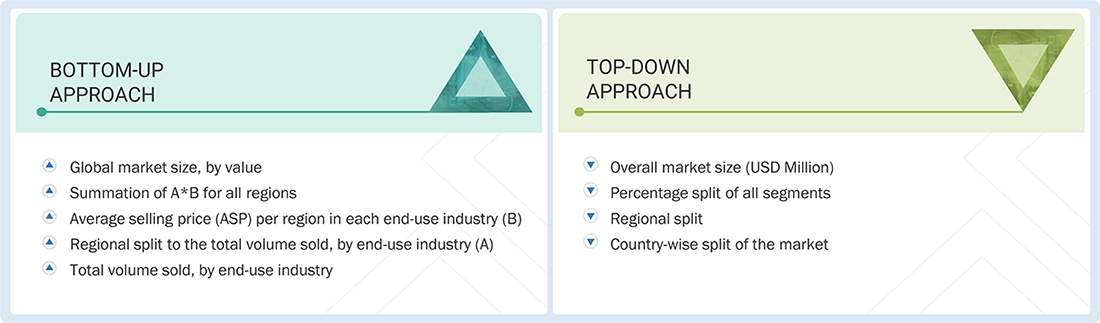
The study involves two major activities in estimating the current size of the EPR cable market. Exhaustive secondary research was done to collect information on the market, peer market, and parent market. The next step was to validate these findings, assumptions, and sizing with industry experts across the value chain through primary research. Both top-down and bottom-up approaches were employed to estimate the complete market size. After that, market breakdown and data triangulation were used to estimate the market size of segments and subsegments.
Secondary Research
Secondary sources referred to for this research study include financial statements of companies offering EPR cable and information from various trade, business, and professional associations. Secondary research has been used to obtain critical information about the industry’s value chain, the total pool of key players, market classification, and segmentation according to industry trends to the bottom-most level and regional markets. Secondary data was collected and analyzed to arrive at the overall size of the EPR cable market, which was validated by primary respondents.
Primary Research
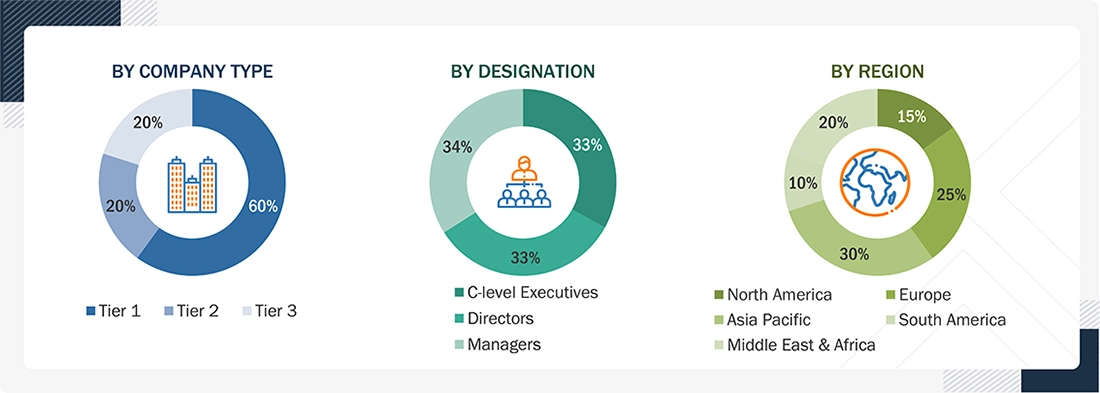
Extensive primary research was conducted after obtaining information regarding the EPR cable market scenario through secondary research. Several primary interviews were conducted with market experts from both the demand and supply sides across major countries of North America, Europe, Asia Pacific, the Middle East & Africa, and South America. Primary data was collected through questionnaires, emails, and telephonic interviews. The primary sources from the supply side included various industry experts, such as Chief X Officers (CXOs), Vice Presidents (VPs), Directors from business development, marketing, product development/innovation teams, and related key executives from EPR cable industry vendors; system integrators; component providers; distributors; and key opinion leaders. Primary interviews were conducted to gather insights such as market statistics, data on revenue collected from the products and services, market breakdowns, market size estimations, market forecasting, and data triangulation. Primary research also helped in understanding the various trends related to product type, conductor material, voltage type, application, end-use industry, and region. Stakeholders from the demand side, such as CIOs, CTOs, CSOs, and installation teams of the customer/end users who are using EPR cable, were interviewed to understand the buyer’s perspective on the suppliers, products, component providers, and their current usage of EPR cable and future outlook of their business, which will affect the overall market.
Breakup of Primary Research:
To know about the assumptions considered for the study, download the pdf brochure
Market Size Estimation
The research methodology used to estimate the size of the EPR cable market includes the following details. The market sizing of the market was undertaken from the demand side. The market was upsized based on procurements and modernizations in EPR cable in different end-use industries at a regional level. Such procurements provide information on the demand aspects of the EPR cable industry for each application. For each end-use industry, all possible segments of the EPR cable market were integrated and mapped.
Data Triangulation
After arriving at the overall size from the market size estimation process explained above, the total market was split into several segments and subsegments. The data triangulation and market breakdown procedures explained below were implemented, wherever applicable, to complete the overall market engineering process and arrive at the exact statistics for various market segments and subsegments. The data was triangulated by studying various factors and trends from the demand and supply sides. Along with this, the market size was validated using both the top-down and bottom-up approaches.
Market Definition
EPR cables are cables insulated with ethylene propylene rubber (EPR), a synthetic elastomer known for its excellent flexibility, thermal stability, and resistance to moisture, chemicals, and mechanical stress. They are primarily deployed in low, medium, and high-voltage applications, serving industries like utilities, marine, mining, oil & gas, railways, sub-sea, and industrial plants where durability under harsh conditions is critical. The global EPR cable market spans singlecore and multicore designs with aluminum or copper conductors, driven by demand for reliable energy transmission in infrastructure and renewables.
Stakeholders
- EPR cable manufacturers
- Raw material manufacturers
- Government and research organizations
- R&D institutions
- National and local government organizations
- Institutional investors
- EPR cable suppliers
- End users
Report Objectives
- To define, describe, and forecast the EPR cable market size in terms of volume and value
- To provide detailed information regarding the key factors, such as drivers, restraints, opportunities, and challenges influencing market growth
- To analyze and project the global EPR cable market by product type, conductor material, voltage type, application, end-use industry, and region
- To forecast the market size concerning five main regions (along with country-level data), namely, North America, Europe, Asia Pacific, the Middle East & Africa, and South America, and analyze the significant region-specific trends
- To strategically analyze micromarkets with respect to individual growth trends, prospects, and contributions of the submarkets to the overall market
- To analyze the market opportunities and the competitive landscape for stakeholders and market leaders
- To assess recent market developments and competitive strategies, such as agreements, contracts, acquisitions, and product developments/product launches, to draw the competitive landscape
- To strategically profile the key market players and comprehensively analyze their core competencies
Get the Full EPR Cable Market Report
Full forecast, segment splits, and company analysis for all EPR Cable Market.
- US EPR Cable Market
- Canada EPR Cable Market
- Mexico EPR Cable Market
- Germany EPR Cable Market
- France EPR Cable Market
- UK EPR Cable Market
- Italy EPR Cable Market
- Spain EPR Cable Market
- Russia EPR Cable Market
- China EPR Cable Market
- Japan EPR Cable Market
- India EPR Cable Market
- South Korea EPR Cable Market
- Australia EPR Cable Market
- South Africa EPR Cable Market
- Brazil EPR Cable Market
- Argentina EPR Cable Market
- Rest Of Europe EPR Cable Market
- Rest Of Asia Pacific EPR Cable Market
- GCC Countries EPR Cable Market
- –Other GCC Countries EPR Cable Market
- Rest Of South America EPR Cable Market
Need a Tailored Report?
Customize this report to your needs
Get 10% FREE Customization
Customize This Report
