
Saudi Arabia N-Butanol Market (2026-2031)

The Saudi Arabia N-Butanol Market was valued at $39 Million in 2026 and projected to reach to $49.1 Million by 2031, representing a compound annual growth rate of 4.7%. Saudi Arabia's N-Butanol market is poised for steady expansion through 2031, driven by the kingdom's robust petrochemical sector and increasing investments in downstream chemical manufacturing.


| Market Size in | USD 26.32 MN |
| Market Forecast in | |
| CAGR | |
| Forecast Period | |
| Units Considered | Value (USD MN) |
Saudi Arabia N-Butanol Market Trends and Insights
- This steady growth reflects South Africa's increasing demand for N-Butanol across key end-use industries, including coatings, plasticizers, and chemical synthesis.
- South Africa's position within the Middle East Africa region positions it as a significant market for specialty chemicals and industrial solvents. The N-Butanol market in South Africa is driven by rising industrial activity, infrastructure development, and growing adoption in manufacturing sectors.
- South Africa's chemical industry continues to leverage N-Butanol for applications in paint and coating formulations, as well as in the production of downstream chemicals.
- Between 2026 and 2031, South Africa is expected to experience moderate but consistent market expansion, supported by regional trade dynamics and domestic industrial demand. South Africa's market trajectory reflects broader trends in the African chemicals sector, where demand for versatile industrial solvents remains resilient.
- South Africa's strategic location and established chemical infrastructure position the country to capture growing opportunities in the N-Butanol market through 2031..
Key Market Statistics
- CAGR (2026-2031) 4.7% CAGR
- Market Size, 2026 ~USD 39 Million
- Forecast, 2031 ~USD 49.1 Million
- Country Saudi Arabia
Saudi Arabia N-Butanol Market Overview
Market Size & Growth :
Saudi Arabia's N-Butanol market is valued at USD 39.0 million in 2026 and is projected to reach USD 49.1 million by 2031, representing a CAGR of 4.7%, outpacing global average growth rates.
Key End-Use Industries :
Demand is driven by Saudi Arabia's expanding coatings, plasticizers, and chemical synthesis sectors, supported by the nation's petrochemical infrastructure and downstream manufacturing capabilities.
Regional Strategic Position :
As a major petrochemical hub in the Middle East, Saudi Arabia benefits from integrated production facilities and proximity to key markets, enhancing N-Butanol supply chain efficiency and competitiveness.
Industrial Diversification :
Vision 2030 initiatives are driving diversification into specialty chemicals and advanced manufacturing, creating new demand vectors for N-Butanol applications beyond traditional sectors.
Saudi Arabia N-Butanol Market Dynamics
- The 4.7% CAGR reflects growing demand from coatings producers, plasticizer manufacturers, and chemical synthesis operations that leverage Saudi Arabia's cost-competitive production base and strategic geographic location. Government initiatives under Vision 2030 are accelerating industrial diversification and specialty chemical development, creating emerging opportunities for N-Butanol applications.
- Enhanced domestic consumption, coupled with export potential to regional markets, positions Saudi Arabia as a key growth driver within the Middle East N-Butanol landscape through the forecast period..
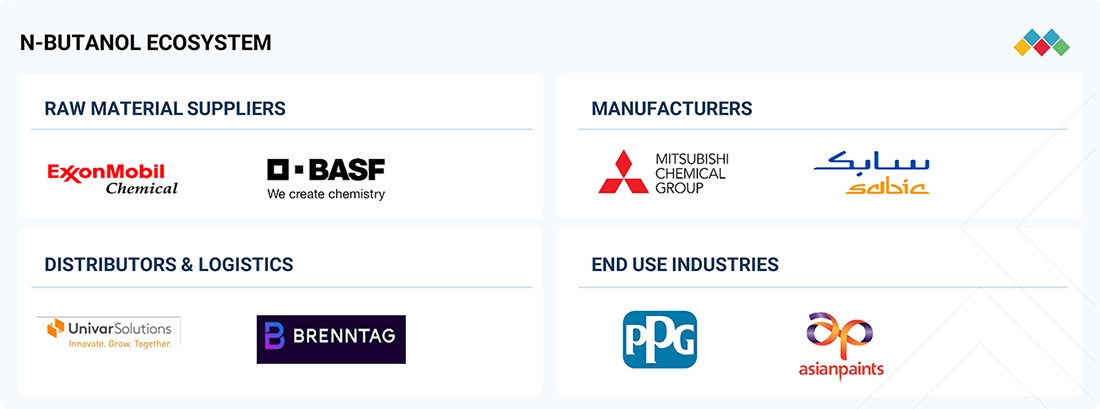
Market Ecosystem
N-BUTANOL MARKET: COMMERCIAL USE CASES ACROSS INDUSTRIES
| COMPANY | USE CASE DESCRIPTION | BENEFITS |
|---|---|---|
 |
N-Butanol used as a key intermediate in producing butyl acrylate, butyl acetate, and glycol ethers for paints & coatings, adhesives & sealants, and construction applications | Improves coating flow and leveling, enhances drying time, provides better surface finish, and supports high-performance formulations |
 |
N-Butanol used in coatings, adhesives, and plasticizers for automotive, construction, and industrial manufacturing sectors | Enhances durability, improves gloss and consistency, provides solvent efficiency, and ensures better adhesion properties |
 |
N-Butanol applied in chemical intermediates, specialty solvents, and formulations for electronics, coatings, and industrial chemicals | Offers high solvency power, supports formulation stability, enables efficient processing, and improves product performance |
 |
N-Butanol used in downstream derivatives for coatings, plasticizers, and chemical manufacturing in construction and industrial sectors | Provides versatility as a chemical building block, supports large-scale production, improves formulation efficiency, and ensures cost-effective performance |
Logos and trademarks shown above are the property of their respective owners. Their use here is for informational and illustrative purposes only.
Related Ecosystem
Automotive Advance Technologies
- Battery Electric Vehicle (BEV)
- Light Commercial Vehicles (LCVs)
- Fuel Cell Electric Vehicle (FCEV)
- Hybrid Electric Vehicle (HEV)
- Internal Combustion Engine (ICE)
- BOSCH LIMITED
- Continental ag
- Visteon Corporation
- DENSO Corporation
- ZF FRIEDRICHSHAFEN AG
Speciality Chemicals
- Corrosion Inhibitors
- Polyetheretherketone (PEEK)
- Acrylonitrile Butadiene Styrene (ABS)
- Epoxy Resin
- Polycarbonate
- Basf se
- DOW CHEMICAL COMPANY
- Evonik industries ag
- Clariant ag.
- Solvay sa
Flavors Colors And Fragrances
- Dairy Products
- Anthocyanins
- Butyl Acetate
- Butyl Acrylate
- Glycol Ethers
- AZELIS HOLDINGS SA
- DUAS RODAS INDUSTRIAL LTDA.
- Amway
- Givaudan
- BELL FLAVORS & FRAGRANCES
Key Takeaways
- South Africa's N-Butanol market is valued at USD 39.0 million in 2026 and will reach USD 49.1 million by 2031.
- South Africa is experiencing a 4.7% CAGR, reflecting steady demand from coatings, plasticizers, and chemical manufacturing sectors.
- South Africa's industrial base and regional trade position support consistent market growth through the forecast period.
- South Africa's N-Butanol market benefits from infrastructure development and increased adoption in manufacturing applications.
N-Butanol Market Report Scope
| Report Metric | Details |
|---|---|
| Base Year | 2026 |
| Fastest Growing Segment | SPECIALTY CHEMICALS (Application) |
| Forecast Period | 2026–2031 |
| Growth Rate | CAGR of 5.2% from 2026 to 2031 |
| Largest Segment | INDUSTRIAL (Grade) |
| Market Size Base Year (Billions) | ~USD 6.81 (2026) |
| Revenue Forecast (Billions) | ~USD 8.77 (2031) |
| Segments Covered | Application, Grade, End-Use Industry |
Saudi Arabia N-Butanol Market Report Segmentation
3 segment dimensions are covered across the global market.
By Application
- Butyl Carboxylate
- Direct Solvents
- Other Applications
- Rubber & Plasticizers
- Specialty Chemicals
- –Butyl Acetate
- –Butyl Acrylate
- –Glycol Ethers
- –Other Butyl Carboxylates
By Grade
- Industrial
- Other Grades
- Pharmaceutical
By End-Use Industry
- Adhesives & Sealants
- Agriculture
- Building & Construction
- Chemical
- Other End-Use Industries
- Paints & Coatings
- Personal Care
- Pharmaceutical
Target Audience
- Chemical Manufacturers & Producers : Producers need Saudi Arabia-specific demand forecasts and end-use industry insights to optimize production capacity, plan expansions, and identify growth opportunities in coatings and plasticizers.
- Petrochemical Companies : Integrated petrochemical operators require detailed market sizing and competitive analysis to evaluate N-Butanol production viability and downstream integration strategies within Saudi Arabia.
- Distributors & Traders : Supply chain intermediaries need market projections, demand trends, and regional customer mapping specific to Saudi Arabia to optimize inventory, pricing, and distribution networks.
- Investment & Strategy Teams : Corporate strategists and investors require comprehensive Saudi Arabia market data to assess M&A opportunities, joint ventures, and capital allocation decisions in the N-Butanol sector.
- End-Use Industry Buyers : Coatings, plasticizer, and chemical synthesis companies need Saudi Arabia supply availability and pricing forecasts to secure feedstock, plan production, and manage procurement strategies.
Key Companies in the Saudi Arabia N-Butanol Market
| Company | HQ | Ownership | Strongest segments |
|---|---|---|---|
| FORMOSA PLASTICS CORPORATION | Taiwan | Public Company | PVC and vinyl chain (polyvinyl chloride, vinyl chloride, dichloroethane),Polyolefins and polypropylene (HDPE, LLDPE, EVA, PP, polyethylene wax),Chemical intermediates and chlor-alkali (liquid/solid alkali, chlorine, acrylonitrile, MMA, MTBE, acrylates, n-butanol), |
| PERSTORP HOLDING AB | Sweden | Private Company | Resins & Coatings Intermediates,Engineered Fluids & Lubricants,Plasticizers, Polymer Additives & Heat-Resistant Plastics, |
| PETRONAS | Malaysia | Private Company | Crude oil and refined petroleum products,LNG and pipeline gas,Petrochemicals (olefins, polymers, methanol, fertilizers, derivatives), |
| SOLVAY SA | Belgium | Public Company | Soda ash and derivatives (glass, detergents, batteries),Sodium bicarbonate (food, feed, flue gas, healthcare),Hydrogen peroxide and derivatives, |
| BASF | Germany | Public Company | Chemicals (Petrochemicals & Intermediates),Materials (Isocyanates, Polyamides, Inorganics, Specialties),Industrial Solutions (Dispersions, Resins, Additives, Catalysts, Electronic Materials), |
| INEOS | Luxembourg | Private Company | Olefins and cracker products (ethylene, propylene, butadiene, mixed butenes, crude benzene),Base chemicals and intermediates (acetic acid, nitriles, oxides, oligomers, phenol, solvents, PTA, isophthalic and other anhydrides),Chlor-alkali, pigments, and other specialties (caustic soda, chlorine, pigments, styrenics, fertilizers), |
| MITSUBISHI CHEMICAL GROUP CORPORATION | Japan | Public Company | Basic Materials & Polymers,Specialty Materials,MMA & Derivatives, |
| SABIC | Saudi Arabia | Public Company | Basic petrochemicals (olefins, methanol, aromatics, glycols, MTBE, CO2),Polyolefins (PE and PP, including compounds),Specialties and engineering plastics, |
| DOW | United States | Public Company | Packaging & Specialty Plastics,Industrial Intermediates & Infrastructure,Performance Materials & Coatings, |
| EASTMAN CHEMICAL COMPANY | United States | Public Company | Additives & Functional Products,Advanced Materials,Chemical Intermediates, |
| SASOL LIMITED | South Africa | Public Company | Transport fuels (petrol, diesel, jet fuels, burner fuels, illuminating paraffin),Gas (methane rich gas and natural gas),Base chemicals and feedstocks (naphtha, solvents, chemical feedstocks, process solvents), |
| PETROCHINA COMPANY LIMITED | China | Public Company | Oil, Gas and New Energy Resource,Refining, Chemicals and New Materials,Sales (refined products and non-oil), |
| PETRONAS CHEMICALS GROUP BERHAD | Malaysia | Public Company | Olefins & Derivatives (ethylene, propylene, PE, glycols, solvents),Fertilisers & Methanol (ammonia, urea, methanol),Specialties (polyols, organic acids, additives, niche derivatives), |
| GRUPA AZOTY | Poland | Public Company | Agro (fertilizers, foliar, fertigation, SRF/CRF, NPK, DAP/PK, nitrogen and phosphate fertilizers),Plastics (caprolactam, PA6, modified PA6, PA66, PP, PBT, plastic products),Chemistry (melamine, OXO alcohols, plasticizers, sulfur, titanium white, iron sulfate, urea/ammonia solutions), |
| WANHUA | China | Public Company | Polyurethane (isocyanates, polyether polyols, PU systems),Petrochemicals (olefin derivatives, ethylene, chlorine chain),Fine Chemicals & New Materials (TPU, POE, PMMA, membranes, SAP, nylon elastomers, cable materials), |
| THE ANDHRA PETROCHEMICALS LIMITED | India | Public Company | 2-Ethyl Hexanol (2-EH),Normal Butanol (N-Butanol),Iso Butanol (IBA), |
| LG CHEM LTD. | South Korea | Public Company | Ethylene-based synthetic resins (EVA, HDPE, LDPE, LLDPE, POE, metallocene PE, UNIQABLE),Styrene-based resins (ABS, ASA, EPS, PS, SAN),Polycarbonate and high-performance plastics (KEYFLEX, LUCEL, LUCON, LUMID/LUXY, LUMILOY, LUMIPLAS, LUPOL, LUPOS, LUPOX/LUMAX, LUPOY, LUSEP), |
FORMOSA PLASTICS CORPORATION
Formosa Plastics Corporation is a Taiwanese public company founded in 1954 that operates as a major petrochemical and plastics manufacturer. The company is involved in the production of various plastic materials and chemical products serving global markets.
PERSTORP HOLDING AB
Perstorp Holding AB is a Swedish private company established in 1881 with 1,506 employees, specializing in specialty chemicals and materials. The company serves diverse industries including coatings, adhesives, and polyols.
PETRONAS
PETRONAS is a Malaysian national oil and gas company founded in 1974 with 49,000 employees, operating as a private entity. The company is involved in upstream and downstream petroleum operations, including exploration, production, refining, and marketing.
SOLVAY SA
Solvay SA is a Belgian public company founded in 1863 with 8,400 employees, operating as a global chemical and advanced materials manufacturer. The company produces specialty chemicals, polymers, and solutions for various industrial applications.
BASF
BASF is a German public company founded in 1865 with 106,428 employees, operating as one of the world's largest chemical manufacturers. The company produces a wide range of chemicals, plastics, performance products, and agricultural solutions.
INEOS
INEOS is a Luxembourg-based private company founded in 2011 with 9,003 employees, operating as a major petrochemical manufacturer. The company produces chemicals, polymers, and fuels serving global industrial markets.
MITSUBISHI CHEMICAL GROUP CORPORATION
Mitsubishi Chemical Group Corporation is a Japanese public company founded in 1933 with 56,678 employees, operating as a diversified chemical manufacturer. The company produces chemicals, plastics, fibers, and specialty materials for various industries.
SABIC
SABIC is a Saudi Arabian public company founded in 1976 with 35,000 employees, operating as a major petrochemical manufacturer. The company produces chemicals, polymers, and fertilizers serving global markets.
DOW
Dow is a United States-based public company founded in 1897 with 34,600 employees, operating as a global materials science company. The company manufactures chemicals, plastics, and agricultural products for diverse industrial applications.
EASTMAN CHEMICAL COMPANY
Eastman Chemical Company is a United States-based public company founded in 1920 with 13,000 employees, specializing in specialty chemicals and advanced materials. The company serves industries including coatings, adhesives, textiles, and plastics.
SASOL LIMITED
Sasol Limited is a South African public company founded in 1950 with 27,107 employees, operating as an integrated energy and chemical company. The company is involved in coal-to-liquids conversion, gas processing, and chemical manufacturing.
PETROCHINA COMPANY LIMITED
PetroChina Company Limited is a Chinese public company founded in 1999 with 367,173 employees, operating as a major integrated oil and gas company. The company engages in exploration, production, refining, marketing, and petrochemical operations.
PETRONAS CHEMICALS GROUP BERHAD
PETRONAS Chemicals Group Berhad is a Malaysian public company founded in 1985 with 4,500 employees, operating as a petrochemical manufacturer. The company produces olefins, polyolefins, and specialty chemicals for global markets.
GRUPA AZOTY
Grupa Azoty is a Polish public company founded in 2001 with 12,747 employees, operating as a major chemical manufacturer. The company produces fertilizers, chemicals, and plastics serving agricultural and industrial sectors.
WANHUA
Wanhua is a Chinese public company founded in 1978 with 30,772 employees, specializing in polyurethane and chemical manufacturing. The company produces polyols, isocyanates, and related products for various industrial applications.
THE ANDHRA PETROCHEMICALS LIMITED
The Andhra Petrochemicals Limited is an Indian public company founded in 1984 with 317 employees, operating as a petrochemical manufacturer. The company produces specialty chemicals and petrochemical products.
LG CHEM LTD.
LG Chem Ltd. is a South Korean public company founded in 1947 with 14,019 employees, operating as a diversified chemical and materials manufacturer. The company produces chemicals, polymers, batteries, and advanced materials for global markets.
Reasons to Buy this Report
- Market-Specific Sizing & Forecasts : Access precise valuation data for Saudi Arabia's N-Butanol market with detailed 2026-2031 projections, enabling accurate budgeting and investment planning tailored to regional market dynamics.
- End-Use Industry Breakdown : Understand demand distribution across coatings, plasticizers, and chemical synthesis sectors specific to Saudi Arabia, identifying high-growth application areas and customer segments.
- Competitive & Supply Chain Intelligence : Gain insights into Saudi Arabia's petrochemical infrastructure advantages, local production capacity, and regional supply chain positioning to inform sourcing and partnership strategies.
- Vision 2030 Growth Drivers : Analyze how government diversification initiatives and industrial expansion plans are creating new N-Butanol demand opportunities unique to Saudi Arabia's economic transformation.
- Regional Market Context : Benchmark Saudi Arabia's 4.7% CAGR against global 5.2% growth and understand regional competitive positioning, market entry strategies, and localization requirements for success.
Frequently asked questions
What is the current size of South Africa's N-Butanol market?
South Africa's N-Butanol market is estimated at USD 39.0 million in 2026.
What is the projected market size for South Africa's N-Butanol market by 2031?
South Africa's N-Butanol market is projected to reach USD 49.1 million by 2031.
What is the CAGR for South Africa's N-Butanol market?
South Africa's N-Butanol market is growing at a CAGR of 4.7% from 2026 to 2031.
What are the primary end-use applications driving South Africa's N-Butanol demand?
South Africa's N-Butanol demand is primarily driven by coatings, plasticizers, chemical synthesis, and paint formulations in the manufacturing sector.
How does South Africa's N-Butanol market compare to the global market?
South Africa's N-Butanol market grows at 4.7% CAGR, slightly below the global CAGR of 5.2%, reflecting regional industrial dynamics and market maturity.
RESEARCH METHODOLOGY
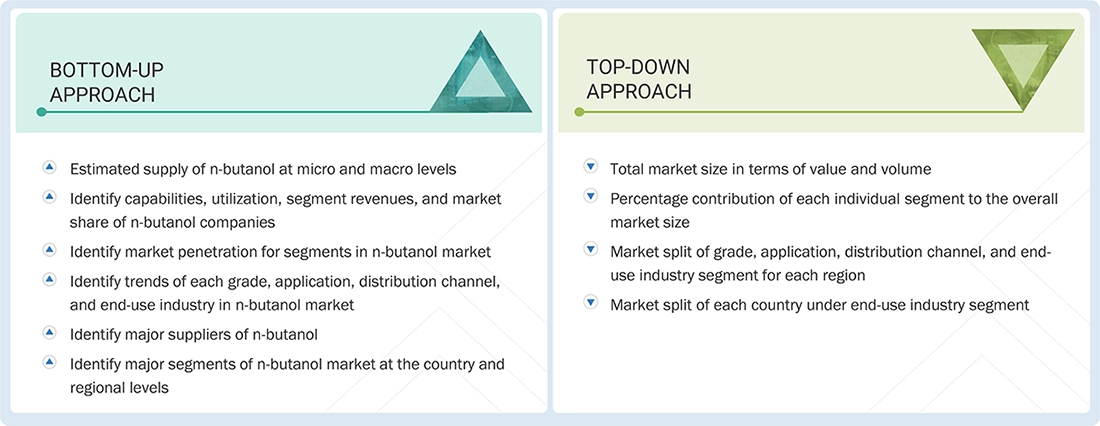
The study involved four major activities in estimating the size of the n-butanol market. Exhaustive secondary research was done to collect information on the market, the peer market, and the parent market. The next step was to validate these findings, assumptions, and sizing with industry experts across the value chain through primary research. Both top-down and bottom-up approaches were employed to estimate the complete market size. Thereafter, the market breakdown and data triangulation procedures were used to estimate the market size of the segments and subsegments.
Secondary Research
In the secondary research process, various secondary sources have been referred to for identifying and collecting information for this study. These secondary sources include annual reports, press releases, investor presentations of companies, white papers, certified publications, trade directories, articles from recognized authors, gold standard and silver standard websites, and databases.
Secondary research has been used to obtain key information about the value chain of the industry, monetary chain of the market, the total pool of key n-butanol players, market classification and segmentation according to industry trends to the bottom-most level, and regional markets. It was also used to obtain information about the key developments from a market-oriented perspective.
Primary Research
The n-butanol market comprises several stakeholders in the value chain, which include raw material suppliers, manufacturers, distributors, and end users. Various primary sources from the supply and demand sides of the n-butanol market have been interviewed to obtain qualitative and quantitative information. The primary interviewees from the demand side include key opinion leaders in end-use sectors. The primary sources from the supply side include manufacturers, associations, and institutions involved in the n-butanol industry.
Primary interviews were conducted to gather insights such as market statistics, data on revenue collected from the products and services, market breakdowns, market size estimations, market forecasting, and data triangulation. Primary research also helped in understanding the various trends related to grade, application, end-use industry, distribution channel, and region. Stakeholders from the demand side, such as CIOs, CTOs, and CSOs, were interviewed to understand the buyer’s perspective on the suppliers, products, component providers, and their current usage of n-butanol and future outlook of their business, which will affect the overall market.
The breakdown of profiles of the primary interviewees is illustrated in the figure below:
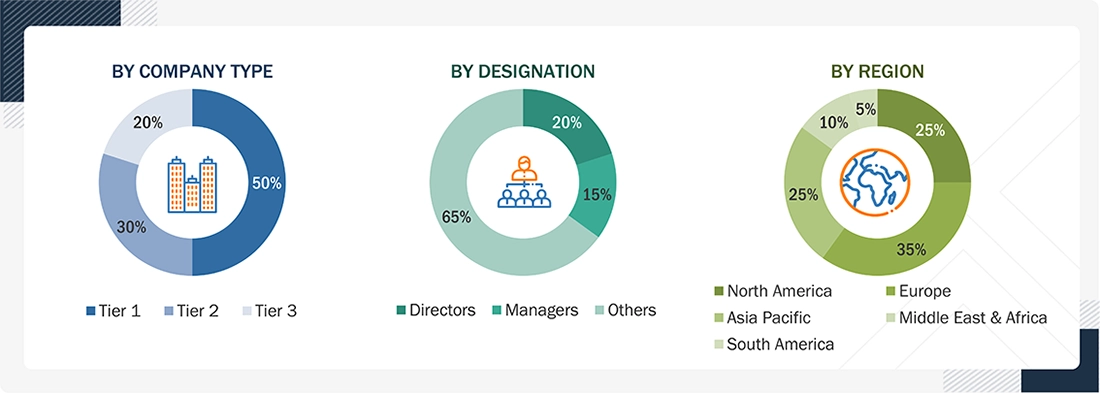
Note: Tier 1, Tier 2, and Tier 3 companies are classified based on their market revenue in 2025 available in the public domain, product portfolios, and geographical presence.
Other designations include sales representatives, production heads, and technicians.
To know about the assumptions considered for the study, download the pdf brochure
Market Size Estimation
- The top-down approach was used to estimate and validate the size of various submarkets for n-butanol for each region. The research methodology used to estimate the market size included the following steps:
- The key players in the industry have been identified through extensive secondary research.
- The supply chain of the industry has been determined through primary and secondary research.
- The global market was then segmented into five major regions and validated by industry experts.
- All percentage shares, splits, and breakdowns based on grade, application, end-use industry, distribution channel, and regions were determined using secondary sources and verified through primary sources.
- All possible parameters that affect the markets covered in this research study were accounted for, viewed in extensive detail, verified through primary research, and analyzed to get the final quantitative and qualitative data. This data was consolidated and added with detailed inputs and analysis and presented in this report.
N-Butanol Market : Top-Down and Bottom-Up Approach
Data Triangulation
After arriving at the total market size from the estimation process explained above, the overall market has been split into several segments and sub-segments. To complete the overall market engineering process and arrive at the exact statistics for all the segments and sub-segments, the data triangulation and market breakdown procedures have been employed, wherever applicable. The data has been triangulated by studying various factors and trends from both the demand and supply sides. Along with this, the market size has been validated by using both the top-down and bottom-up approaches and primary interviews. Hence, for every data segment, there have been three sources—top-down approach, bottom-up approach, and expert interviews. The data was assumed correct when the values arrived from the three sources matched.
Market Definition
The n-butanol market refers to the global production, distribution, and consumption of n-butanol (normal butanol), a four-carbon linear alcohol primarily manufactured through the oxo (hydroformylation) process using propylene as a feedstock. It encompasses all commercial activities related to its use as both a chemical intermediate and solvent across multiple industries. From a scope perspective, the market includes different grades (industrial, pharmaceutical, and specialty/bio-based), as well as its consumption across key applications such as butyl acrylate, butyl acetate, glycol ethers, direct solvents, plasticizers, and specialty chemicals. These applications further translate into demand from end-use industries such as paints & coatings, adhesives & sealants, construction, chemicals, pharmaceuticals, personal care, and agriculture. Geographically, the market spans major regions, including Asia Pacific, North America, Europe, the Middle East & Africa, and South America, each characterized by varying levels of production integration, regulatory frameworks, and demand drivers. The market also captures trade flows, as n-butanol is widely exported from feedstock-advantaged regions to import-dependent markets.
Key Stakeholders
- N-butanol manufacturers
- N-butanol traders, distributors, and suppliers
- Raw material suppliers
- Government and private research organizations
- Associations and industrial bodies
- R&D institutions
- Environmental support agencies
Report Objectives
- To define, describe, and forecast the size of the n-butanol market, in terms of value and volume
- To provide detailed information regarding the major factors (drivers, opportunities, restraints, and challenges) influencing the growth of the market
- To estimate and forecast the market size based on grade, application, distribution channel, end-use industry, and region
- To forecast the size of the market with respect to major regions, namely, Europe, North America, Asia Pacific, the Middle East & Africa, and South America, along with their key countries
- To strategically analyze micromarkets with respect to individual growth trends, prospects, and their contribution to the overall market
- To analyze opportunities in the market for stakeholders and provide a competitive landscape of market leaders
- To track and analyze recent developments such as product launch, collaboration, contract, acquisition, and expansion in the market
- To strategically profile key market players and comprehensively analyze their core competencies
Available Customizations
Along with the given market data, MarketsandMarkets offers customizations according to the company’s specific needs. The following customization options are available for the report:
Regional Analysis
- Further breakdown of a region with respect to a particular country or additional end-use industry
Regional Analysis
- Further breakdown of a region with respect to a particular country or additional end-use industry
Regional Analysis
- Further breakdown of a region with respect to a particular country or additional end-use industry
Get the Full N-Butanol Market Report
Full forecast, segment splits, and company analysis for all N-Butanol Market.
- China N-Butanol Market
- Japan N-Butanol Market
- India N-Butanol Market
- South Korea N-Butanol Market
- Canada N-Butanol Market
- Mexico N-Butanol Market
- US N-Butanol Market
- Germany N-Butanol Market
- Italy N-Butanol Market
- France N-Butanol Market
- UK N-Butanol Market
- Spain N-Butanol Market
- UAE N-Butanol Market
- South Africa N-Butanol Market
- Argentina N-Butanol Market
- Brazil N-Butanol Market
- South America N-Butanol Market
- Rest Of Europe N-Butanol Market
- Rest Of Asia Pacific N-Butanol Market
- GCC Countries N-Butanol Market
- –Rest Of GCC Countries N-Butanol Market
- Rest Of South America N-Butanol Market
Need a Tailored Report?
Customize this report to your needs
Get 10% FREE Customization
Customize This Report
