
Rest Of Asia Pacific Serverless Computing Market (2024-2029)

The Rest Of Asia Pacific Serverless Computing Market was valued at $801.5 Million in 2024 and projected to reach to $2764.8 Million by 2029, representing a compound annual growth rate of 28.1%. Rest Of Asia Pacific is poised for exceptional serverless computing market growth, driven by rapid digital transformation across emerging economies and increasing enterprise cloud adoption.


| Market Size in | USD 26.32 MN |
| Market Forecast in | |
| CAGR | |
| Forecast Period | |
| Units Considered | Value (USD MN) |
Rest Of Asia Pacific Serverless Computing Market Trends and Insights
- The serverless computing market in Rest Of Asia Pacific is projected to grow substantially to USD 2,764.8 million by 2029, driven by increasing cloud adoption and digital transformation initiatives across emerging economies.
- Rest Of Asia Pacific's 28.1% compound annual growth rate significantly outpaces global trends, reflecting strong demand for scalable, cost-efficient computing solutions among enterprises and startups. Rest Of Asia Pacific's serverless market growth is fueled by rising investments in cloud infrastructure, expanding fintech and e-commerce sectors, and growing developer communities adopting Function-as-a-Service (FaaS) platforms.
- Rest Of Asia Pacific benefits from lower operational costs and improved agility that serverless architectures provide, making the region an attractive hub for cloud-native application development.
- The forecast period through 2029 positions Rest Of Asia Pacific as a critical growth engine within the broader Asia Pacific serverless computing landscape..
Key Market Statistics
- CAGR (2024-2029) 28.1% CAGR
- Market Size, 2024 ~USD 801.5 Million
- Forecast, 2029 ~USD 2764.8 Million
- Country Rest Of Asia Pacific
Rest Of Asia Pacific Serverless Computing Market Overview
Exceptional Growth Trajectory :
Rest Of Asia Pacific's serverless computing market is expanding at 28.1% CAGR, significantly outpacing the global average of 15.3%, reflecting the region's accelerated digital transformation and cloud-native adoption.
Market Valuation Expansion :
The market is projected to grow from USD 801.5 million in 2024 to USD 2,764.8 million by 2029, representing a 245% increase over five years driven by emerging economies' cloud infrastructure investments.
Emerging Economy Drivers :
Rising digital transformation initiatives across Southeast Asia, South Asia, and Oceania are fueling serverless adoption as organizations seek cost-efficient, scalable cloud solutions without infrastructure management overhead.
Regional Cloud Adoption Surge :
Increasing enterprise migration to cloud-native architectures, coupled with growing startup ecosystems and government digitalization programs, positions Rest Of Asia Pacific as a high-growth serverless computing hub.
Rest Of Asia Pacific Serverless Computing Market Dynamics
- The region's 28.1% CAGR significantly exceeds global benchmarks, reflecting strong demand from startups, SMEs, and enterprises seeking scalable, cost-effective cloud solutions.
- Government digitalization initiatives and expanding fintech, e-commerce, and IoT sectors are accelerating serverless platform adoption. By 2029, the market's expansion to USD 2,764.8 million will be supported by improved cloud infrastructure, competitive pricing models, and growing developer expertise in serverless technologies.
- Regional cloud providers and international platforms are increasing localized offerings, enhancing accessibility.
- Organizations across Rest Of Asia Pacific are prioritizing operational efficiency and rapid application deployment, making serverless computing a strategic priority for competitive advantage in emerging digital economies..
Market Ecosystem
Related Ecosystem
Cloud Computing
- Software as A Service (SaaS)
- Natural Language Processing (NLP)
- Platform as A Service (PaaS)
- Machine Learning
- Supply Chain Management
- International Business Machines Corporation
- MICROSOFT CORPORATION
- Oracle Corporation
- Amazon.com, Inc.
Software And Services
- Natural Language Processing (NLP)
- Machine Learning
- Supply Chain Management
- Predictive Analytics
- Image Sensors
- International Business Machines Corporation
- MICROSOFT CORPORATION
- Oracle Corporation
- SAP SE
- Amazon.com, Inc.
Digitalization And Iot
- Sensors
- Remote Monitoring
- Supply Chain Management
- Passenger Information System (PIS)
- Platform as A Service (PaaS)
- International Business Machines Corporation
- Cisco Systems, Inc.
- MICROSOFT CORPORATION
- Oracle Corporation
- HUAWEI TECHNOLOGIES CO LTD
Key Takeaways
- Rest Of Asia Pacific's serverless computing market is valued at USD 801.5 million in 2024 and is forecast to reach USD 2,764.8 million by 2029.
- Rest Of Asia Pacific demonstrates a 28.1% CAGR, substantially exceeding the global average of 15.3%, indicating accelerated regional adoption.
- Rest Of Asia Pacific's growth is driven by digital transformation, cloud migration, and expanding fintech and e-commerce ecosystems.
- Rest Of Asia Pacific is emerging as a key growth hub for serverless technologies, attracting enterprise and startup investments through 2029.
Serverless Computing Market Report Scope
| Report Metric | Details |
|---|---|
| Base Year | 2024 |
| Fastest Growing Segment | APPLICATION INTEGRATION (Service Type) |
| Forecast Period | 2024-2029 |
| Growth Rate | CAGR of 15.3% from 2024 to 2029 |
| Largest Segment | PUBLIC CLOUD (Deployment Model) |
| Market Size Base Year (Billions) | ~USD 21.94 (2024) |
| Revenue Forecast (Billions) | ~USD 44.7 (2029) |
| Segments Covered | Service Type, Service Model, Deployment Model, Organization Size, Vertical |
Rest Of Asia Pacific Serverless Computing Market Report Segmentation
5 segment dimensions are covered across the global market.
By Service Type
- Analytics
- Api Management
- Application Integration
- Automation & Integration
- Cloud Storage & Backup
- Compute
- Database Management
- Design & Consulting
- Monitoring
- Monitoring & Security
- Other Service Types
- Push Notification
- Security
- Serverless Database
- Serverless Storage
- User Authentication & Authorization
By Service Model
- Baas
- Faas
By Deployment Model
- Hybrid Cloud
- Private Cloud
- Public Cloud
By Organization Size
- Large Enterprises
- Medium Enterprises
- Small Enterprises
By Vertical
- Bfsi
- Government & Defense
- Government & Public Sector
- Healthcare & Life Sciences
- It & Ites
- It & Telecom
- Manufacturing
- Media & Entertainment
- Other Verticals
- Retail & Consumer Goods
- Retail & Ecommerce
- Telecommunications
- Telecommunications & It
- Transportation & Logistics
Target Audience
- Cloud Platform Providers : Evaluate market expansion opportunities in Rest Of Asia Pacific's high-growth serverless segment, assess competitive positioning, and develop localized service offerings for emerging economy customers.
- Enterprise Technology Leaders : Understand regional cloud adoption trends, serverless implementation patterns, and digital transformation benchmarks to guide infrastructure modernization strategies across Rest Of Asia Pacific operations.
- Investment & Venture Capital Firms : Assess market growth potential, identify emerging serverless startups and technology vendors in Rest Of Asia Pacific, and evaluate investment opportunities in high-growth regional cloud ecosystems.
- Systems Integrators & Consultants : Gain insights into regional customer needs, implementation trends, and service demand drivers to develop serverless consulting offerings and solution architectures tailored to Rest Of Asia Pacific markets.
- Government & Policy Makers : Understand digital transformation trends, cloud infrastructure development, and technology adoption patterns in Rest Of Asia Pacific to inform digitalization policies and technology investment strategies.
Reasons to Buy this Report
- Regional Growth Opportunity Assessment : Identify high-potential markets within Rest Of Asia Pacific experiencing 28.1% CAGR growth, enabling strategic market entry and expansion planning in the fastest-growing serverless region globally.
- Competitive Positioning Intelligence : Understand regional market dynamics, emerging competitors, and localized adoption patterns to develop targeted go-to-market strategies and competitive advantages in Rest Of Asia Pacific's serverless ecosystem.
- Investment Decision Support : Leverage comprehensive market sizing (USD 801.5M to USD 2,764.8M) and growth projections to justify investments, secure funding, and allocate resources effectively across Rest Of Asia Pacific markets.
- Customer Segmentation Insights : Analyze emerging economy adoption patterns, industry verticals, and enterprise segments driving serverless adoption in Rest Of Asia Pacific to refine customer targeting and messaging strategies.
- Strategic Partnership Identification : Discover regional growth drivers, infrastructure gaps, and ecosystem opportunities to identify strategic partners, resellers, and integration opportunities within Rest Of Asia Pacific's expanding serverless market.
Frequently asked questions
What is the current market size of serverless computing in Rest Of Asia Pacific?
Rest Of Asia Pacific's serverless computing market was valued at USD 801.5 million in 2024.
What is the projected market size for Rest Of Asia Pacific by 2029?
Rest Of Asia Pacific's serverless computing market is forecast to reach USD 2,764.8 million by 2029.
What is the CAGR for serverless computing in Rest Of Asia Pacific?
Rest Of Asia Pacific's serverless computing market is expected to grow at a CAGR of 28.1% from 2024 to 2029.
Why is Rest Of Asia Pacific's growth rate higher than the global average?
Rest Of Asia Pacific's 28.1% CAGR exceeds the global 15.3% rate due to rapid digital transformation, emerging fintech sectors, and increasing cloud adoption among enterprises and startups in the region.
What are the primary drivers of serverless computing adoption in Rest Of Asia Pacific?
Rest Of Asia Pacific's serverless growth is driven by cloud migration initiatives, expanding e-commerce and fintech industries, cost efficiency benefits, and growing developer communities adopting FaaS platforms.
RESEARCH METHODOLOGY
The study involved four major activities in estimating the serverless computing market. We conducted secondary research to gather information on the market, competitors, and parent market. The next stage was to validate these findings and assumptions and size them with industry professionals across the value chain using primary research. Top-down and bottom-up methodologies were used to determine the total market size. We used the market breakup and data triangulation techniques to estimate the market size of the different segments in the market.
Secondary Research
Several sources were used to locate and collect information for this study during the secondary research process. Secondary sources included company annual reports, press announcements, investor presentations, white papers, journals, certified publications, and articles from well-known writers, directories, and databases. Data was also gathered from other secondary sources, such as journals, government websites, blogs, and vendor websites.
Primary Research
Primary sources included industry experts from the core and associated industries, preferred software suppliers, hardware manufacturers, distributors, service providers, technology developers, alliances, and organizations representing all parts of the industry's value chain. In-depth interviews were conducted with primary respondents, including major industry participants, subject-matter experts, C-level executives of important market companies, and industry consultants, to acquire and verify critical qualitative and quantitative data and analyze the market's potential.
We performed primary interviews to gain insights such as market statistics, the current trends disrupting the industry, new use cases applied, revenue data collected from products and services, market breakdowns, market size projections, market predictions, and data triangulation. Primary research also helped me grasp different technology trends, segmentation types, industry trends, and geographies. Demand-side stakeholders, such as Chief Information Officers (CIOs), Chief Technology Officers (CTOs), and Chief Security Officers (CSOs); installation teams of governments/end users using serverless computing solutions and services; and digital initiatives project teams, were interviewed to understand the buyer's perspective on suppliers, products, service providers, and their current use of services, which will affect the overall serverless computing market.
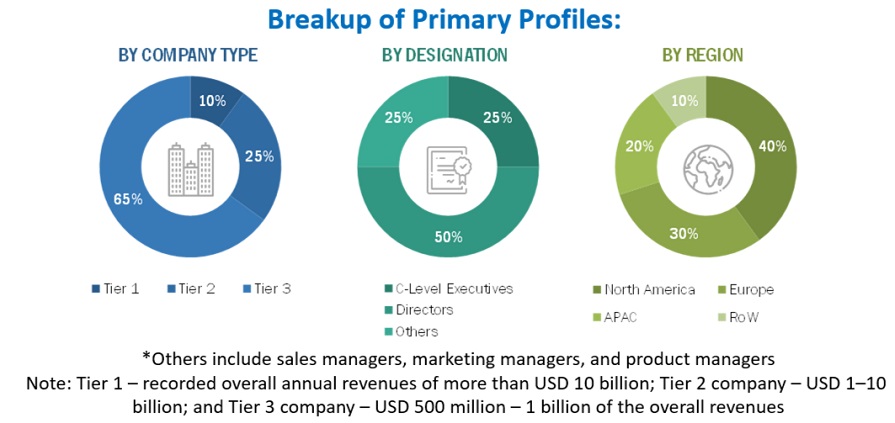
To know about the assumptions considered for the study, download the pdf brochure
Market Size Estimation
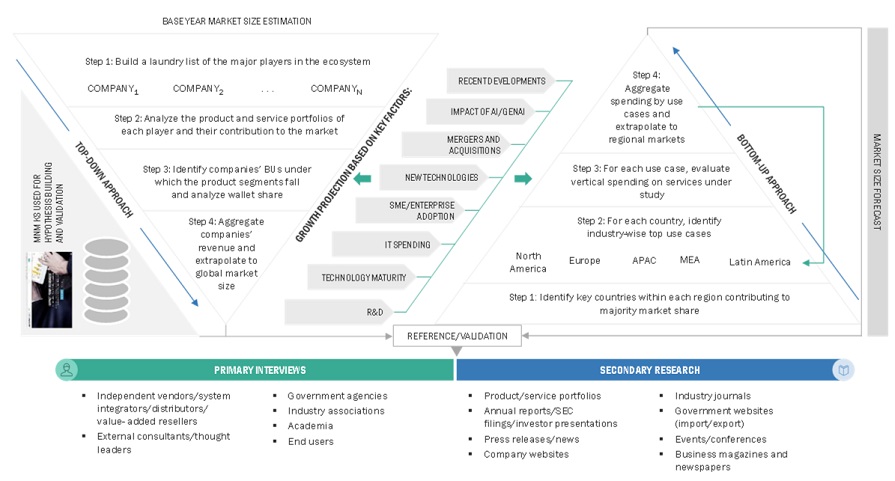
We estimated and forecasted Serverless Computing and other related submarkets using top-down and bottom-up methodologies. We used a bottom-up approach to calculate the overall market size by analyzing the revenues and offerings of significant market players. This study used data triangulation methods and validation through primary interviews to determine and confirm the precise worth of the whole parent market. We used the overall market size in the top-down process to estimate the size of other particular markets using percentage splits of market segments.
We used top-down and bottom-up approaches to estimate and validate the Serverless Computing market and other dependent subsegments.
The research methodology used to estimate the market size included the following details:
- We identified key players in the market through secondary research. We then determined their revenue contributions in the respective countries through primary and secondary research.
- This procedure included studying top market player’s annual and financial reports and extensive interviews for key insights from industry leaders, such as Chief Executive Officers (CEOs), VPs, directors, and marketing executives.
- All percentage splits and breakups were determined using secondary sources and verified through primary sources.
We estimated and forecasted the Serverless Computing market and related submarkets using top-down and bottom-up methodologies. We used a bottom-up approach to calculate the overall market size by analyzing the revenues and offerings of significant market players. This study used data triangulation methods and validation through primary interviews to determine and confirm the precise worth of the whole parent market. We used the overall market size in the top-down process to estimate the size of other particular markets using percentage splits of market segments.
Serverless Computing Market: Top-down and Bottom-up approaches
To know about the assumptions considered for the study, Request for Free Sample Report
Data Triangulation
After determining the overall market size, the market was divided into segments and subsegments using the previously described market size estimating techniques. Where applicable, data triangulation and market breakup methods were used to complete the whole market engineering process and ascertain the exact numbers for each market segment and subsegment. The data was triangulated by evaluating many elements and trends on the demand and supply sides of the Serverless Computing market.
Market Definition
MarketsandMarkets defines Serverless Computing as “a cloud computing model that allows developers to build and run applications without managing infrastructure. The cloud provider takes care of the provisioning, scaling, and management, and the developers only need to focus on writing code. The market primarily consists of Function as a Service (FaaS), which performs isolated functions in response to events, and Backend as a Service (BaaS), which provides backend services like databases and authentication.
Source: Secondary Research and MarketsandMarkets Analysis
Key Stakeholders
- Function as a Service (FaaS) Providers
- Backend as a Service (BaaS) Providers
- Cloud Service Providers (CSPs)
- Developers and IT Teams
- Independent Software Vendors (ISVs)
- Managed Service Providers (MSPs)
- Consulting and Advisory Firms
- API Management Providers
- Open-Source Communities
- Regulatory Bodies
Report Objectives
- To define, describe, and forecast the global Serverless Computing market based on service type, service model, deployment model, organization size, vertical, and region
- To forecast the market size of the five major regional segments: North America, Europe, Asia Pacific, Middle East & Africa, and Latin America
- To strategically analyze the market subsegments concerning individual growth trends, prospects, and contributions to the total market
- To provide detailed information related to the significant factors influencing the growth of the market (drivers, restraints, opportunities, and challenges)
- To strategically analyze macro and micro markets for growth trends, prospects, and their contributions to the overall market
- To analyze industry trends, patents and innovations, and pricing data related to the Serverless Computing market
- To analyze the opportunities in the market for stakeholders and provide details of the competitive landscape for major players.
- To profile key players in the market and comprehensively analyze their market share/ranking and core competencies.
- To track and analyze competitive developments, such as mergers & acquisitions, product developments, and partnerships & collaborations in the market.
Available Customizations
With the given market data, MarketsandMarkets offers customizations per the company's specific needs. The following customization options are available for the report:
Product Analysis
- The product matrix provides a detailed comparison of each company's product portfolio.
Geographic Analysis
- Further breakup of the Asia Pacific market into countries contributing 75% to the regional market size
- Further breakup of the North American market into countries contributing 75% to the regional market size
- Further breakup of the Latin American market into countries contributing 75% to the regional market size
- Further breakup of the Middle Eastern & African market into countries contributing 75% to the regional market size
- Further breakup of the European market into countries contributing 75% to the regional market size
Company Information
- Detailed analysis and profiling of additional market players (up to 5)
Get the Full Serverless Computing Market Report
Full forecast, segment splits, and company analysis for all Serverless Computing Market.
- Canada Serverless Computing Market
- US Serverless Computing Market
- UK Serverless Computing Market
- Germany Serverless Computing Market
- France Serverless Computing Market
- Italy Serverless Computing Market
- China Serverless Computing Market
- India Serverless Computing Market
- Japan Serverless Computing Market
- South Africa Serverless Computing Market
- Brazil Serverless Computing Market
- Mexico Serverless Computing Market
- Rest Of Europe Serverless Computing Market
- Rest Of Latin America Serverless Computing Market
- GCC Serverless Computing Market
- Rest Of GCC Serverless Computing Market
- Saudi Arabia Serverless Computing Market
- UAE Serverless Computing Market
Need a Tailored Report?
Customize this report to your needs
Get 10% FREE Customization
Customize This Report
