Germany Ammunition Market

Germany Ammunition Market by Rifle (5.56 MM, 7.62 MM), Handgun (9X19 MM, 5.7X28 MM), Autocannon (20 MM, 35 MM), Artillery (130 MM, 155 MM), Tank (105 MM, 120 MM), Mortar (81 MM, 120 MM), Naval (57 MM, 76 MM), Rocket (70 MM, 122 MM) - Global Forecast to 2031




OVERVIEW
Source: Secondary Research, Interviews with Experts, MarketsandMarkets Analysis
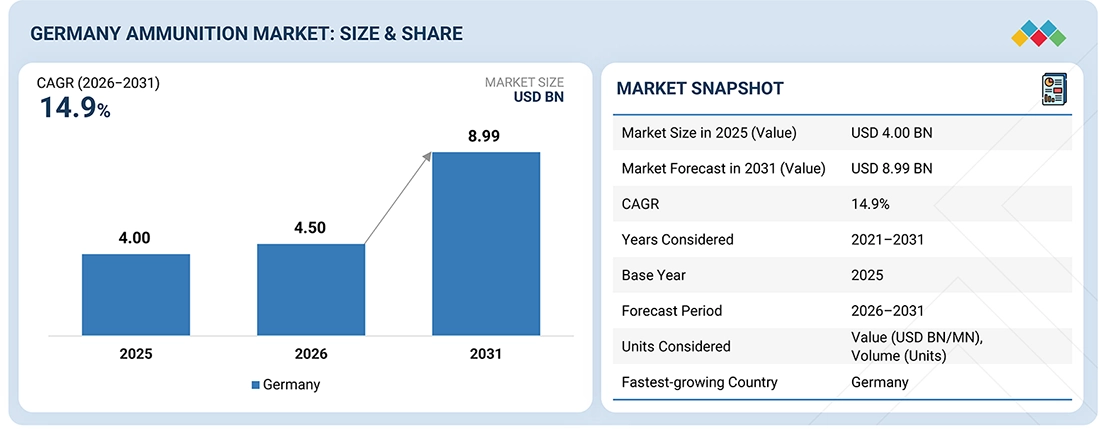
The Germany Ammunition Market is expected to reach USD 8.99 billion by 2031, from USD 4.50 billion in 2026, with a CAGR of 14.9%. Increasing security concerns in Europe are maintaining steady ammunition demand in Germany. The country is strengthening its defense cooperation and enhancing operational readiness to fulfill alliance commitments. Upgrades to artillery and armored vehicles are raising the need for compatible ammunition types. Authorities are also trying to boost local production to reduce reliance on imports.
Market Size & Forecast
• 2025 Market Size (Value): USD 4.00 BN
• 2031 Market Forecast (Value): USD 8.99 BN
• CAGR: 14.9%
• Military Segment: CAGR of 14.9%
• Projectiles & Warheads: Highest Market Share in 2025
KEY TAKEAWAYS
-
By CaliberLarge caliber ammunition is expected to be the largest segment during the forecast period.
-
By ComponentsProjectiles & warheads captured the highest market share in 2025.
-
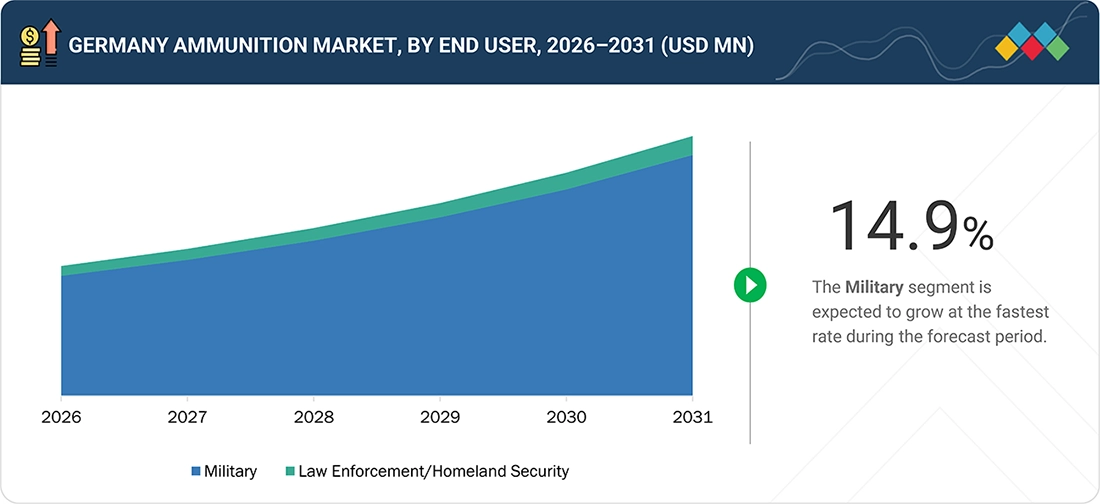
By End UseThe military segment is projected to record the highest CAGR of 14.9% during the forecast period.
-
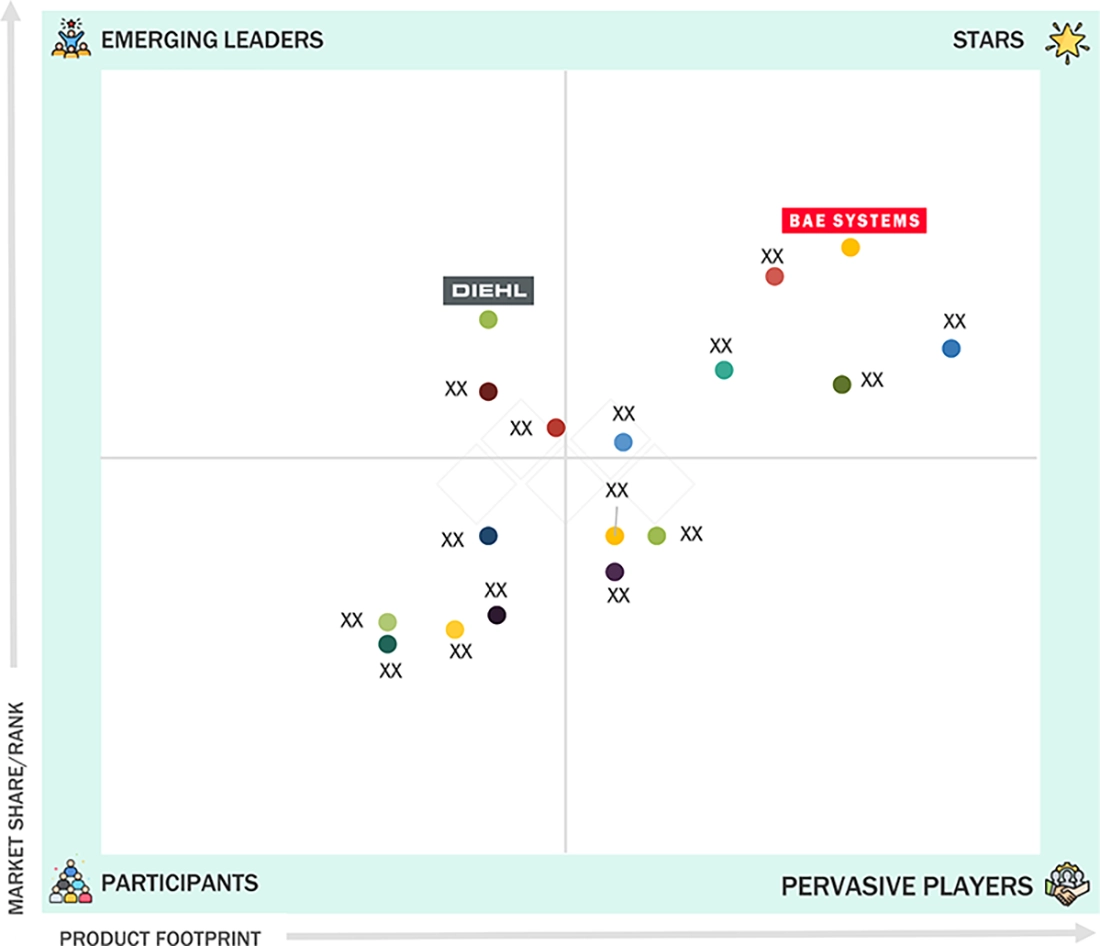
Competitive Landscape-Key PlayersBAE Systems, Nammo AS, and Beretta Holding S.A.were identified as the star players in the Germany ammunition market, given their strong market share and product footprint.
-
Competitive Landscape-StartupsDonaustahl GmbH, Hagedorn-NC, and RWS GmbH are emerging SMEs strengthening the Germany ammunition market through localized manufacturing and energetic materials production. Their focus on expanding output and explosive supply supports regional self-reliance and defense preparedness.
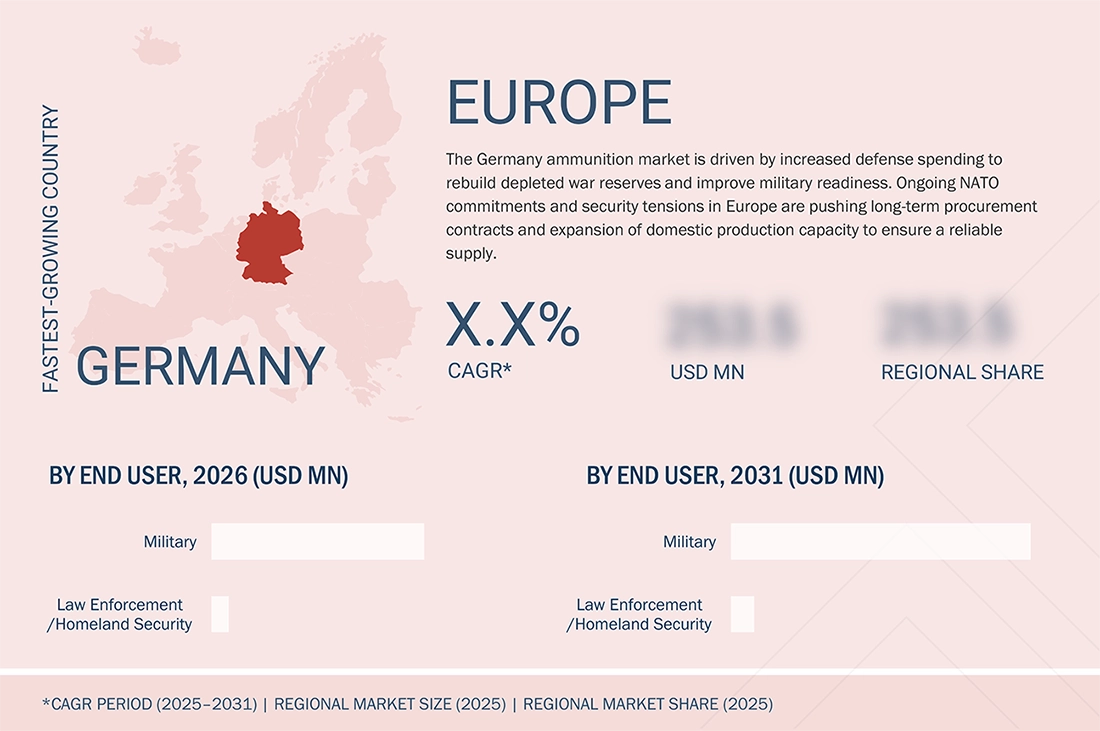
The growth of the Germany Ammunition Industry is driven by the increased defense spending to rebuild military readiness and refill used ammunition stocks. The government is purchasing larger volumes to support regular military training and meet alliance obligations. Security tensions in Europe are also pushing the country to strengthen local production and reduce dependence on foreign suppliers.
TRENDS & DISRUPTIONS IMPACTING CUSTOMERS' CUSTOMERS
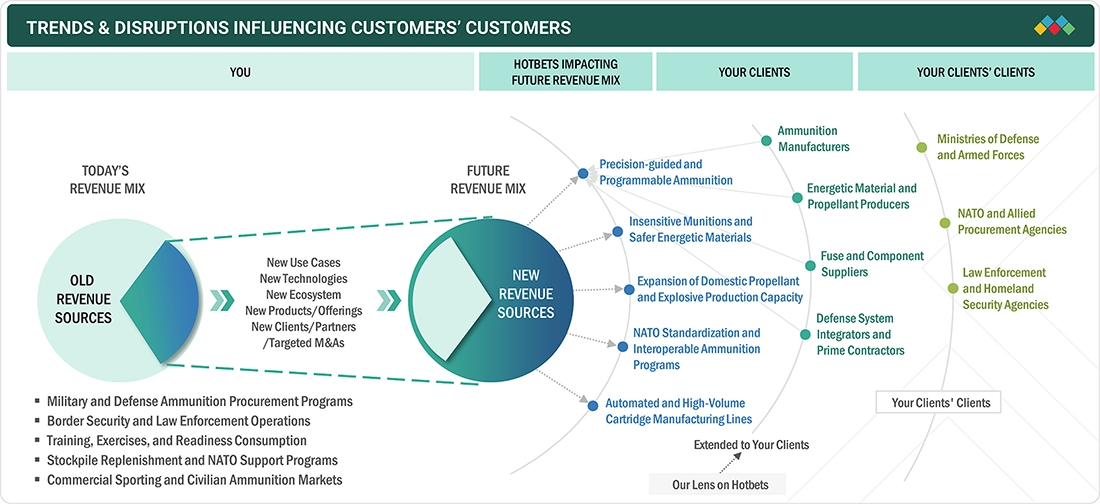
The Germany ammunition market is moving away from occasional buying toward steady high-volume production as the country rebuilds stocks and follows NATO standard programs. Use of programmable and safer insensitive munitions, along with automated cartridge lines, is changing both the product mix and how factories operate. At the same time, expansion of local propellant and explosive material capacity is lowering import dependence and slowly changing supplier relations across the defense ecosystem.
Source: Secondary Research, Interviews with Experts, MarketsandMarkets Analysis
MARKET DYNAMICS

Level
-
Rebuilding Bundeswehr war reserves and high defense spending

-
Surge in training activity and platform modernization


Level
-
Limited availability of energetic materials and propellants

-
Long timelines and high capital requirements for scaling capacity


Level
-
Expansion of domestic production supported by government funding

-
Localization of supply chains to reduce import dependence


Level
-
Strict safety and environmental regulations in explosives production

-
Export approval procedures within defense procurement

Source: Secondary Research, Interviews with Experts, MarketsandMarkets Analysis
Driver: Rebuilding Bundeswehr war reserves and high defense spending
Germany is increasing defense spending to restore depleted Bundeswehr ammunition stocks and enhance operational readiness. Multi-year procurement programs are giving manufacturers clearer demand visibility, encouraging capacity expansion and stable long-term production planning within the country.
Restraint: Limited availability of energetic materials and propellants
Limited availability of energetic materials and propellants in Europe is constraining output despite rising demand. Dependence on a small supplier base creates production bottlenecks and long lead times, making rapid scaling difficult for German producers.
Opportunity: Expansion of domestic ammunition production supported by government funding
Germany is supporting domestic ammunition manufacturing to reduce import dependence and strengthen strategic autonomy. Government funding and industrial partnerships are enabling new production lines and modernization of existing facilities, creating growth potential for local suppliers and component manufacturers.
Challenge: Strict safety, environmental, and handling regulations in explosives manufacturing
Ammunition production in Germany must comply with strict safety and environmental regulations. Lengthy certification and approval processes increase costs and slow capacity expansion, making it challenging for companies to quickly respond to urgent military demand.
GERMANY AMMUNITION MARKET: COMMERCIAL USE CASES ACROSS INDUSTRIES
| COMPANY | USE CASE DESCRIPTION | BENEFITS |
|---|---|---|
 |
Supplies medium- and large-caliber ammunition and artillery rounds used by the Bundeswehr and NATO forces for training, readiness, and operational deployment. | Ensures reliable large-scale supply, supports sustained training cycles, and maintains interoperability across allied forces. |
 |
Provides small-caliber and specialty ammunition, including insensitive munitions for German military training and tactical operations. | Improves handling safety, maintains consistent ballistic performance, and reduces storage and transport risks. |
 |
Delivers shoulder-launched weapon ammunition such as Carl-Gustaf rounds used by German ground forces for combat training and operational support. | Enables accurate engagements, supports frequent training, and maintains soldier readiness with cost-efficient ammunition use. |
 |
Manufactures tanks, artillery, and programmable ammunition integrated with German armored and fire-support platforms. | Enhances combat effectiveness, improves precision engagement capability, and supports modern digital battlefield operations. |
Logos and trademarks shown above are the property of their respective owners. Their use here is for informational and illustrative purposes only.
MARKET ECOSYSTEM
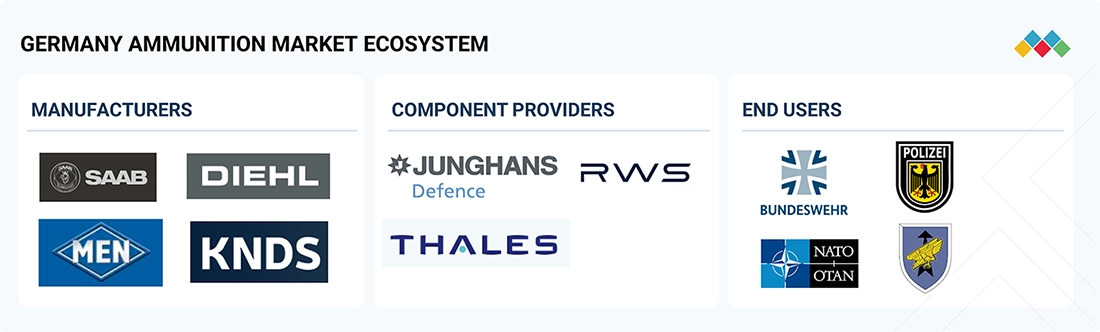
The Germany ammunition ecosystem is mainly built around local manufacturers like Rheinmetall, Diehl, MEN, and KNDS, which produce a wide range of calibers and components. International partners such as Thales, Saab, Nammo, and BAE Systems support the market by offering specialized munitions, technology integration, and supply chain assistance. Most of the demand comes from the Bundeswehr, German military authorities, and NATO allied forces, creating a structured purchasing system focused on readiness and long-term supply security.
Logos and trademarks shown above are the property of their respective owners. Their use here is for informational and illustrative purposes only.
MARKET SEGMENTS
Source: Secondary Research, Interviews with Experts, MarketsandMarkets Analysis
Germany Ammunition Market, By Caliber
The large caliber ammunition segment leads the market due to rising demand for artillery and tank rounds driven by reserve rebuilding and NATO readiness requirements. Increased live-fire training and modernization of armored and artillery platforms are boosting the consumption of heavy munitions. Long-term procurement contracts and growth in domestic production further support ongoing demand for large caliber ammunition.
Germany Ammunition Market, By Guidance
The non-guided segment holds a larger market share due to high volume consumption in routine training, readiness exercises, and rapid stockpile rebuilding programs across the Bundeswehr. Conventional rounds are more affordable and easier to produce at scale, making them suitable for ongoing firing activities. Continuous procurement contracts and domestic manufacturing capacity also support steady demand for non-guided ammunition in Germany.
Germany Ammunition Market, By Component
Projectiles and warheads outperform other segments due to ongoing use of artillery, mortar, and tank ammunition during training and stockpile replenishment programs in Germany. Modernization of armored and indirect fire systems is boosting the demand for compatible projectile types. Long-term procurement contracts and increased domestic production further support consistent demand for these components.
Germany Ammunition Market, By End User
The military segment remains dominant due to heightened operational readiness initiatives, regular live-fire exercises, and the rebuilding of Bundeswehr ammunition reserves. Upgrades to combat platforms and NATO commitments are increasing procurement volumes across various calibers. Long-term supply contracts and expanded domestic production also support ongoing demand from the armed forces.
REGION
GERMANY AMMUNITION MARKET: COMPANY EVALUATION MATRIX
In the Germany ammunition market, BAE Systems (Star) remains one of the key suppliers as it operates large production lines and provides munition technology used across several defense programs in the country. Diehl Group (Emerging Leader) is still expanding and investing in new ammunition facilities while increasing output levels. If demand in Germany stays strong, the company can gradually improve its market position over time.
Source: Secondary Research, Interviews with Experts, MarketsandMarkets Analysis
KEY MARKET PLAYERS
List of Top Germany Ammunition Market Companies
- BAE Systems
- Nammo AS
- Beretta Holding S.A.
- Rheinmetall AG
- SaaB AB
- Chemring Group PLC
- KNDS
- STV Group A.S
- Diehl Group
- Prvi Partizan A.D.
- FN HERSTAL
- Polska Grupa Zbrojeniowa (PGZ)
- CSG
- Thales
MARKET SCOPE
| REPORT METRIC | DETAILS |
|---|---|
| Market Size in 2025 (Value) | USD 4.00 BN |
| Market Forecast in 2031 (value) | USD 8.99 BN |
| Growth Rate | 14.9% |
| Years Considered | 2021–2031 |
| Base Year | 2025 |
| Forecast Period | 2026–2031 |
| Units Considered | Value (USD MN/BN), Volume (Units) |
| Report Coverage | Revenue forecast, company ranking, competitive landscape, growth factors, and trends |
| Segments Covered |
|
| Contries Covered | Germany |
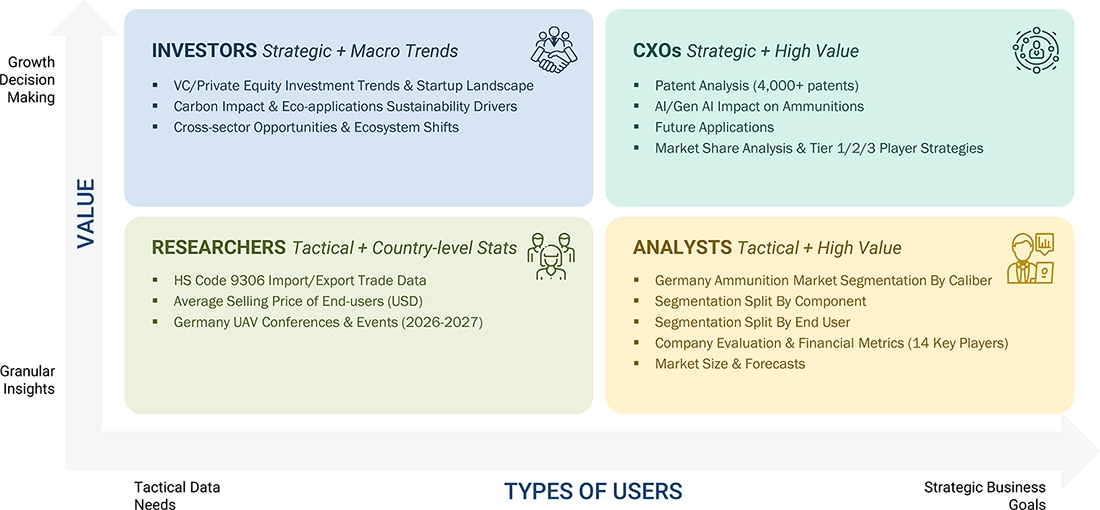
WHAT IS IN IT FOR YOU: GERMANY AMMUNITION MARKET REPORT CONTENT GUIDE
DELIVERED CUSTOMIZATIONS
We have successfully delivered the following deep-dive customizations:
| CLIENT REQUEST | CUSTOMIZATION DELIVERED | VALUE ADDS |
|---|---|---|
| Leading Manufacturer | Additional segment breakdown for countries | Additional country-level market sizing tables for segments/sub-segments covered at regional/global level to gain understanding of market potential by each country |
| Emerging Leader | Additional company profiles | Competitive information on targeted players to gain granular insights on direct competition |
| Regional Market Leader | Additional country market estimates | Additional country-level deep dive for more targeted understanding of total addressable market |
RECENT DEVELOPMENTS
- September 2025 : Rheinmetall AG advanced the expansion of its artillery ammunition manufacturing facilities in Germany by adding automated filling, assembly, and inspection lines. The investment is aimed at supporting Bundeswehr reserve rebuilding and sustained NATO demand, while improving production efficiency and shortening delivery lead times through localized high-volume output.
- July 2025 : Diehl Defence increased investment in energetic material processing and fuze manufacturing capacity to secure critical component availability for medium- and large-caliber ammunition. The upgrades strengthen supply continuity, enhance handling safety standards, and reduce reliance on external suppliers across the European supply chain.
- May 2025 : Nammo AS deepened cooperation with German industrial partners to supply propellants and large-caliber ammunition components for national defense programs. The collaboration supports stable production planning, improves material availability, and enables consistent output for training and operational readiness requirements.
- March 2025 : The German Federal Ministry of Defence placed additional multi-year framework orders for artillery and tank ammunition with domestic manufacturers. The contracts provide long-term demand visibility, allow manufacturers to plan workforce and capacity expansion, and accelerate replenishment of national stockpiles.
- January 2025 : Rheinmetall AG coordinated with European subsidiaries and partner suppliers to strengthen component sourcing and cross-border production integration, supporting German ammunition lines. The initiative improves supply security, balances production loads across facilities, and enhances the resilience of the national ammunition manufacturing network.
Table of Contents
 Exclusive indicates content/data unique to MarketsandMarkets and not available with any competitors.
Methodology
This research study conducted on the Germany Ammunition Market involved extensive use of secondary sources, directories, and databases such as D&B Hoovers, the Global Firepower, the Small Arms Survey, UN COMTRADE, and Factiva to identify and collect information relevant to the Germany Ammunition Market. Details regarding the procurement and consumption patterns of military and law enforcement applications in terms of contracts, supply agreements, and joint ventures, among others, were also available only for a limited set of countries.
Thus, manufacturer websites and annual reports, published news articles, defense blogs, government publications of different countries, and documents published by RAND Corporation (US), among others, were also referred to and used as a part of secondary research during the course of the study.
Primary sources considered included industry experts from the concerned market as well as preferred suppliers, manufacturers, solution providers, technology developers, alliances, and organizations related to all segments of the value chain of this industry. Ammunition is a sensitive topic, and therefore, several challenges were faced while conducting primary research.
Secondary Research
The share of companies in the Germany Ammunition Market was determined using secondary data made available through paid and unpaid sources and by analyzing product portfolios of major companies operating in the market. These companies were rated based on the performance and quality of their products. These data points were further validated by primary sources.
Secondary sources that were referred to for this research study on the Germany Ammunition Market included government sources such as the US Department of Defense (DoD); defense budgets; military modernization program documents; corporate filings such as annual reports, investor presentations, and financial statements; and trade, business, and professional associations. The secondary data was collected and analyzed to arrive at the overall size of the Germany Ammunition Market, which was further validated by primary respondents.
Primary Research
Extensive primary research was conducted after obtaining information about the current scenario of the Germany Ammunition Market through secondary research. Several primary interviews were conducted with market experts from both demand and supply sides across major countries of North America, Europe, Asia Pacific, the Middle East, Latin America, and Africa. This primary data was collected through questionnaires, emails, and telephonic interviews.
Market Size Estimation
Both top-down and bottom-up approaches were used to estimate and validate the size of the Germany Ammunition Market. The following figure offers a representation of the overall market size estimation process employed for the purpose of this study on the Germany Ammunition Market.
Data Triangulation
After arriving at the overall size of the Germany Ammunition Market from the market size estimation process explained above, the total market was split into several segments and subsegments. The data triangulation and market breakdown procedures explained below were implemented wherever applicable to complete the overall market engineering process and arrive at the exact statistics for various market segments and subsegments.
The data was triangulated by studying various factors and trends from both the demand and supply sides. Along with this, the market size was validated using both top-down and bottom-up approaches. The following figure indicates the market breakdown structure and data triangulation procedure that was implemented in the market engineering process to make this report on the Germany Ammunition Market.
Market Definition
Ammunition is fired, scattered, or dropped from a weapon or a weapon system. It can be broadly classified into four categories: Small-Caliber ammunition, Medium-Caliber ammunition, Large-Caliber ammunition, and others. Ammunition is mainly procured by military and law enforcement agencies such as state police and federal police. Small-caliber ammunition is used by civilians in hunting, sports activities, and self-defense applications.
The small-caliber ammunition category includes rounds that are 5.56 mm, 7.62 mm, 12.7 mm, and 14.5 mm in size, while the Medium-Caliber ammunition includes rounds that are 20 mm, 25 mm, 30 mm, and 40 mm in size. The large-caliber ammunition category includes mortar shells, tank ammunition, and artillery shells of size 60 mm, 81 mm, 120 mm, 122 mm, and 155 mm. Illumination rounds, hand grenades, and rubber bullets are being considered under other categories. Illumination rounds and hand grenades are not launched as weapons in the air but are thrown or manually lit at targets.
Stakeholders
Various stakeholders of the market are listed below:
- Armed Forces
- Defense Regulatory Bodies
- Law Enforcement Agencies
- Home Ministries/Ministries of Interior
- Ammunition Manufacturers
- Component Manufacturers
- Distributors and Suppliers
- Research Organizations, Forums, Alliances, and Associations
- Sporting and Hunting Associations
Report Objectives
- To define, describe, segment, and forecast the size of the Germany Ammunition Market in terms of value based on application, caliber, guidance mechanism, product, component, lethality, and region from 2023 to 2028
- To identify and analyze key drivers, restraints, opportunities, and challenges influencing the growth of the Germany Ammunition Market
- To forecast the size of various segments of the Germany Ammunition Market with respect to six major regions: North America, Europe, Asia Pacific, the Middle East, Latin America, and Africa
- To identify the opportunities for stakeholders in the market by identifying key market and technology trends
- To analyze competitive developments such as contracts, agreements, acquisitions & partnerships, product launches & developments, and research & development (R&D) activities in the Germany Ammunition Market
- To anticipate the status of the ammunition procurements by different countries, the number of their military personnel, their defense spending; technological advancements in ammunition; and joint developments undertaken by leading players to analyze the degree of competition in the market.
- To provide a comprehensive competitive landscape of the Germany Ammunition Market, along with an overview of the different strategies adopted by the key market players to strengthen their position in the market.


Personalize This Research
- Triangulate with your Own Data
- Get Data as per your Format and Definition
- Gain a Deeper Dive on a Specific Application, Geography, Customer or Competitor
- Any level of Personalization
Let Us Help You
- What are the Known and Unknown Adjacencies Impacting the Germany Ammunition Market
- What will your New Revenue Sources be?
- Who will be your Top Customer; what will make them switch?
- Defend your Market Share or Win Competitors
- Get a Scorecard for Target Partners

Custom Market Research Services
We Will Customise The Research For You, In Case The Report Listed Above Does Not Meet With Your Requirements
Get 10% Free CustomisationTESTIMONIALS






Growth opportunities and latent adjacency in Germany Ammunition Market