Germany Cybersecurity Market

Germany Cybersecurity Market by Security Type (Network Security, Endpoint Security, Cloud Security, Application Security), Deployment Mode (On-Premises, Cloud, Hybrid), Organization Size (Large Enterprises, SMEs) - Forecast to 2030




OVERVIEW
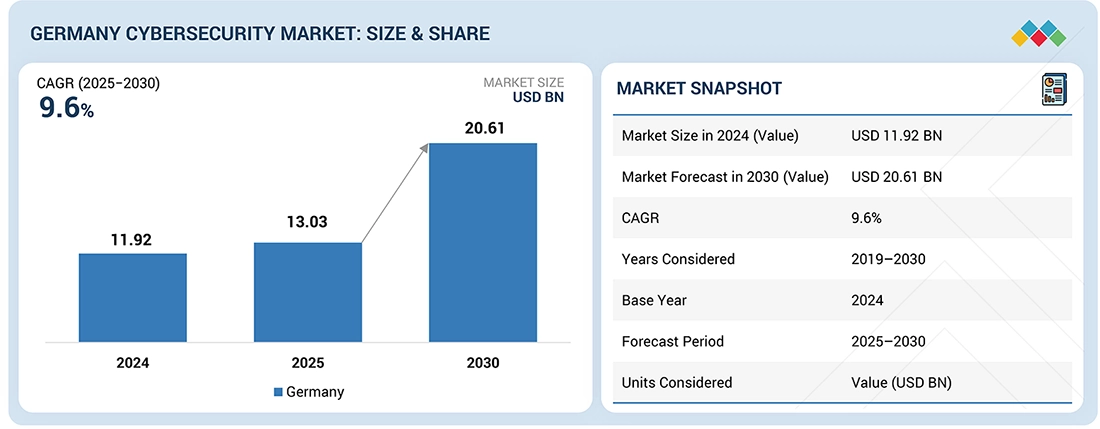
Source: Secondary Research, Interviews with Experts, MarketsandMarkets Analysis
The Germany cybersecurity market is projected to grow from USD 13.03 billion in 2025 to USD 20.61 billion by 2030, representing a Compound Annual Growth Rate (CAGR) of 9.6% during this period. Cybersecurity refers to technologies, processes, and practices that are aimed at safeguarding networks, devices, programs, and data against attack, damage, or unauthorized access. The solutions are aimed at protecting digital infrastructure and may be applied to different purposes, including network protection, endpoint security, cloud security, identity management, and threat intelligence.
KEY TAKEAWAYS
-
By OfferingBy offering, the solutions segment is expected to dominate the Germany market in terms of market share in the forecast period.
-
By Solution TypeBy solution type, the log management & SIEM segment is projected to grow at the highest CAGR of 11.1% during the forecast period.
-
By Security TypeBy security type, the network security segment is estimated to account for a share of 36.2% in 2025.
-
By Organization SizeBy organization size, the SMEs segment is expected to grow at a higher CAGR than the large enterprises segment during the forecast period.
-
By Deployment TypeBy deployment type, the cloud segment is expected to grow at a higher rate than the on-premises segment during the forecast period.
-
By VerticalBy vertical, the healthcare & life sciences segment is expected to grow at the highest rate during the forecast period.
-
Competitive Landscape - Key PlayersSecunet Security Networks AG, Rohde & Schwarz, G DATA CyberDefense AG, and Avira Operations lead Germany’s cybersecurity market with strong capabilities across encryption, endpoint security, secure communications, and critical infrastructure protection. Their established enterprise presence, comprehensive product portfolios, and strong government and industry partnerships position them as preferred providers for large-scale national and enterprise security programs.
-
Competitive Landscape - Startups/SMEsUnosecur, Cure53, SAMA PARTNERS, Infraforce, ditis systems, SerNet, 8com, Helmich IT-Security, Cyber Samurai, Trovent Security, and Securepoint focus on specialized areas such as application security, managed detection and response, identity security, and compliance services. Their niche expertise and agile delivery models make them competitive providers for mid-sized enterprises and organizations seeking tailored cybersecurity solutions.
In the Germany cybersecurity market, the accelerating digital transformation, Industry 4.0 implementation, and rising cloud migration are pushing organizations to enhance data security, operational resilience and real-time threat detection in manufacturing, automotive, BFSI, healthcare and public sector organizations. Strict regulatory measures like GDPR, NIS2 Directive, and BSI IT-Grundschutz standards are strengthening compliance-based security investments, and businesses are focusing on zero-trust architectures, OT security, and secure cloud environments to protect interconnected IT and industrial systems. This regulatory strictness, high levels of industrial digitization, and increasing the level of cyber threat sophistication is increasing national cyber resilience and continuing to drive long-term demand in integrated cybersecurity solutions and managed security services.
TRENDS & DISRUPTIONS IMPACTING CUSTOMERS' CUSTOMERS
The Germany cybersecurity market is witnessing a consistent growth owing to the digital transformation and high regulatory demands. Companies in manufacturing, BFSI, IT and telecommunications, retail, and government are moving away from conventional security devices and adopting new technologies like security analytics, automation, encryption, next-generation firewall, IAM, zero-trust, and SIEM and cloud compliance. Enterprises are investing more in endpoint security, managed security services, and anti-ransomware tools due to the influence of AI-based threat detection and cloud adoption. These technologies can improve the visibility of threats, reduce the response time, increase regulatory compliance (including GDPR), and promote the secure digital transformation throughout Germany.
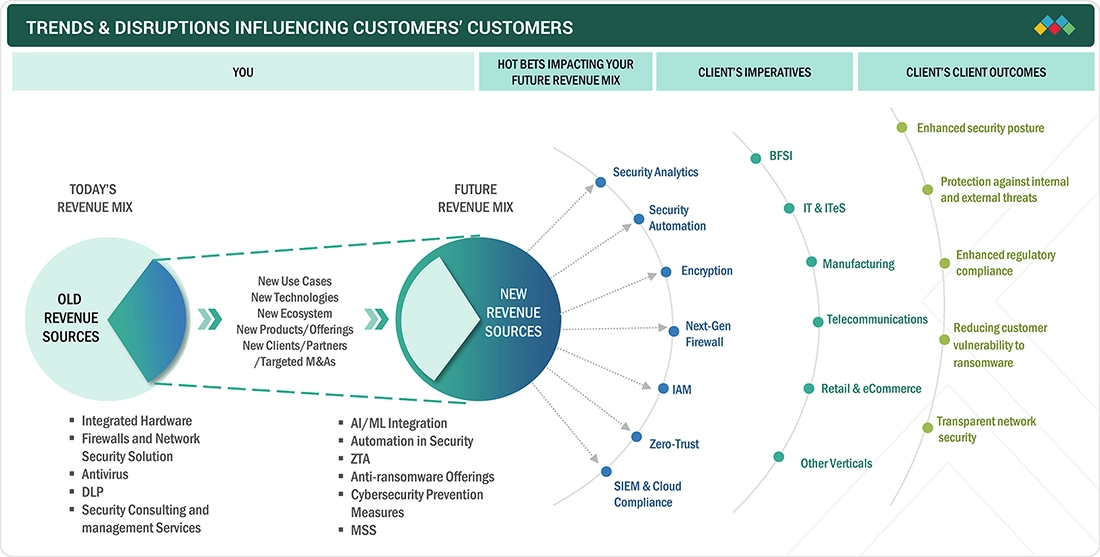
Source: Secondary Research, Interviews with Experts, MarketsandMarkets Analysis
MARKET DYNAMICS

Level
-
Robust technological landscape and increasing sophistication of cyber threats

-
Growing integration of digital and connected technologies across industries


Level
-
High costs associated with deploying comprehensive cybersecurity measures

-
Shortage of skilled cybersecurity professionals across SMEs and critical infrastructure sectors


Level
-
Increased digitalization driven by the German government's Digital Strategy initiatives

-
Rising adoption of Industry 4.0, IoT, and OT security in manufacturing and automotive sectors


Level
-
Keeping up with rapidly evolving cyber threat vectors and attack methodologies

-
Integration complexities between legacy IT systems and modern security architectures.

Source: Secondary Research, Interviews with Experts, MarketsandMarkets Analysis
Driver: Robust technological landscape and increasing sophistication of cyber threats
The well-developed industrial base, the adoption of Industry 4.0, and robust digital ecosystem in Germany are increasing the cyber attack surface in the manufacturing, automotive, BFSI, and public infrastructure. With more advanced ransomware, supply chain, and state-sponsored attacks, organizations are investing in more advanced threat detection, zero-trust, OT security, and AI-based cybersecurity solutions to enhance their operational resilience.
Restraint: High costs associated with deploying comprehensive cybersecurity measures
To achieve end-to-end cybersecurity systems in line with the GDPR, NIS2 and BSI requirements, it would be costly in terms of financial and operational resources. The adoption is hindered by high prices associated with sophisticated security solutions, compliance audits, acquisition of skilled workforce, and constant monitoring especially to the SMEs and Mittelstand enterprises.
Opportunity: Increased digitalization driven by the German government's Digital Strategy initiatives
The Digital Strategy of Germany, smart city programs and modernization of the critical infrastructure are hastening the adoption of cloud, deployment of secure digital identities and e-government services. This online growth is creating a high demand on secure cloud environment, identity and access management, managed security services and compliance based cybersecurity solutions.
Challenge: Keeping up with rapidly evolving cyber threat vectors and attack methodologies
German enterprises are facing more complex attacks by cyber adversaries who are exploiting AI-based attacks, zero-day vulnerabilities, and supply chain infiltration methods. To effectively cope with the emerging and ongoing cyber threats, organizations need to keep on updating their security architectures, integrating old IT with new platforms, and dealing with skills gaps.
GERMANY CYBERSECURITY MARKET: COMMERCIAL USE CASES ACROSS INDUSTRIES
| COMPANY | USE CASE DESCRIPTION | BENEFITS |
|---|---|---|
 |
Provides digital identity verification, PKI solutions, secure authentication | Trusts services supporting eIDAS-compliant digital transactions across government and enterprises in Germany and Europe | Strengthened digital trust | Secured remote authentication and regulatory compliance (eIDAS) | Reduced identity fraud risks |
 |
Delivers high-assurance IT security solutions, including encryption, secure networks, border control systems, and SINA-based secure communication platforms for government and critical infrastructure. | Enhanced national security compliance (BSI standards) | Secured data transmission | Protection of classified information, and resilient critical infrastructure operations |
 |
Offers endpoint protection, EDR, MDR, and anti-malware solutions tailored for SMEs and enterprises, with a strong focus on German data protection requirements. | Advanced threat detection, ransomware protection, centralized endpoint management, and GDPR-aligned data security for enterprises and Mittelstand firms |
Logos and trademarks shown above are the property of their respective owners. Their use here is for informational and illustrative purposes only.
MARKET ECOSYSTEM
Germany cybersecurity market is a cooperative ecosystem in which technology providers, security service companies, system integrators, research organizations, and end-user organizations collaborate to create and deploy cybersecurity solutions in sectors. The country has companies that provide various security technologies such as software platforms, hardware appliances, managed services and consulting expertise. The development of security standards, threat intelligence sharing, and workforce development initiatives is supported by research institutions, industry associations, and government agencies. Finally, the solutions are used by organizations in manufacturing, finance, healthcare, government, and other industries and have the advantage of supportive regulatory frameworks and industry collaboration programs.
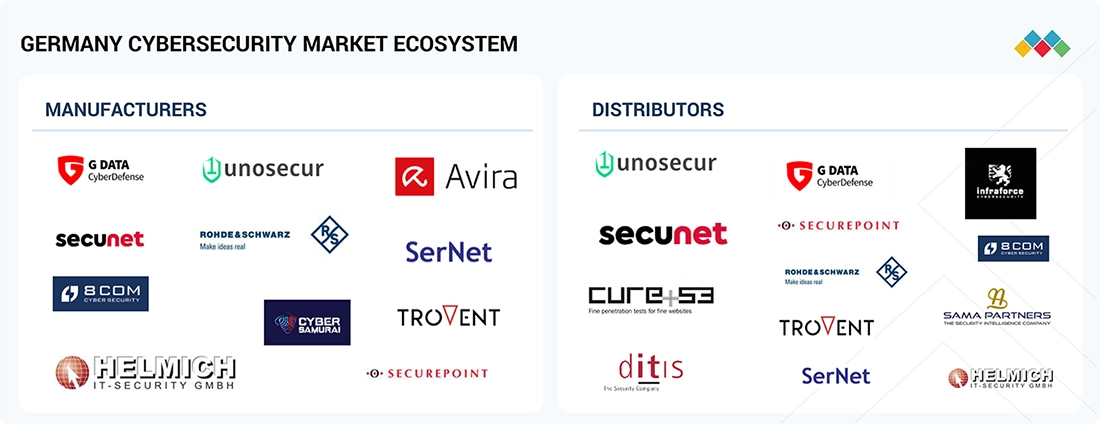
Logos and trademarks shown above are the property of their respective owners. Their use here is for informational and illustrative purposes only.
MARKET SEGMENTS
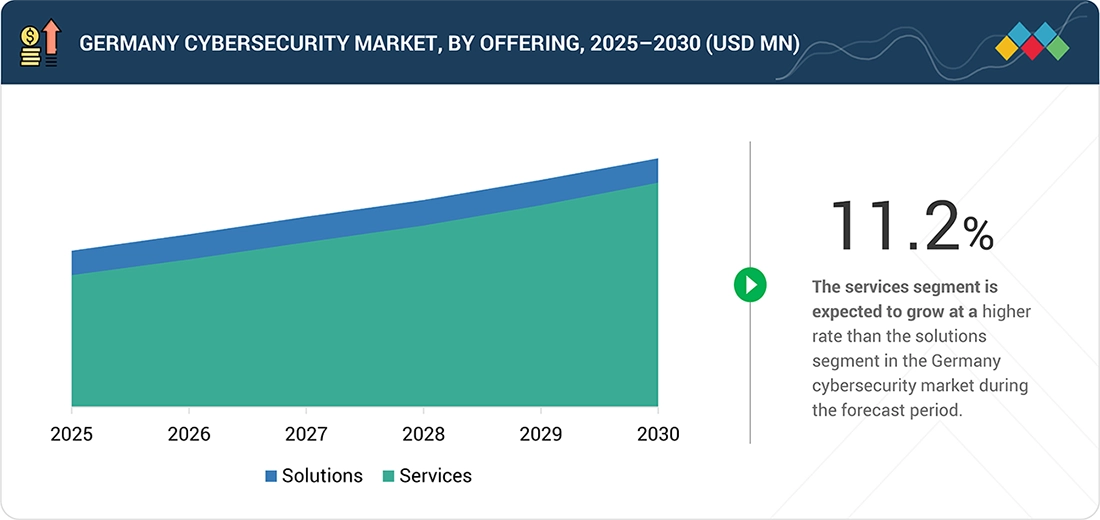
Source: Secondary Research, Interviews with Experts, MarketsandMarkets Analysis
Germany Cybersecurity Market, By Offering
Solutions occupy a large portion of the Germany cybersecurity market that is led by high demand of network security, cloud protection, endpoint security, IAM, and data protection platforms. Companies in manufacturing, automotive, BFSI, and government are focusing on integrated security architectures to meet the requirements of GDPR, NIS2 and BSI. The growing number of ransomware attacks and supply chain risks only intensifies the deployment of advanced security solutions.
Germany Cybersecurity Market, By Solution Type
Log Management and SIEM have a large portion of the market since organizations need to have centralized visibility, real-time threat detection, and quicker incident response in hybrid IT and OT systems. The rise in cloud usage and Industry 4.0 implementations demand AI-based analytics, threat intelligence unification, and automated security orchestration.
Germany Cybersecurity Market, By Security Type
Network security takes a considerable portion since there are large enterprise networks, remote work arrangements, and integrated industrial systems. High attention to zero-trust architecture, secure access service edge (SASE), firewalls, intrusion prevention systems, and OT security enhances the need to protect the perimeter and internal network on an advanced level.
Germany Cybersecurity Market, By Deployment Mode
On-premises deployment has a large portion, especially in the government, defense, and critical infrastructure, since data sovereignty and compliance needs are highly strict. Nevertheless, cloud-based implementation is swiftly expanding with the modernization of IT environments and the introduction of secure cloud and hybrid infrastructure designs by businesses.
Germany Cybersecurity Market, By Organization Size
Large companies take up a major portion of the market because they have sophisticated digital environments and invest a lot of funds in sophisticated cybersecurity solutions. In the meantime, SMEs and Mittelstand firms are turning to managed security services in an effort to deal with the increasing cyber threats and compliance requirements.
Germany Cybersecurity Market, By Vertical
The BFSI industry has a large portion of the Germany cybersecurity market because of the rigid regulations and large amounts of digital financial transactions. The increased use of open banking and cloud-based services is driving the increased investment in advanced threat detection, fraud prevention, and identity security solutions.
GERMANY CYBERSECURITY MARKET: COMPANY EVALUATION MATRIX
The German cybersecurity market is characterized by a combination of established national security leaders and innovative high-growth companies. Secunet (Star), a prominent player in the field, excels in high-assurance encryption and secure government communications through its SINA platform. The company has a strong presence across federal agencies and critical infrastructure sectors, thus reinforcing Germany's sovereign cybersecurity framework. On the other hand, 8com (Emerging Player) is rapidly expanding its services. It specializes in managed detection and response (MDR), provides 24/7 Security Operations Center (SOC) services, and offers expertise in incident response. This helps enhance proactive threat monitoring and resilience for enterprises and mid-sized organizations.
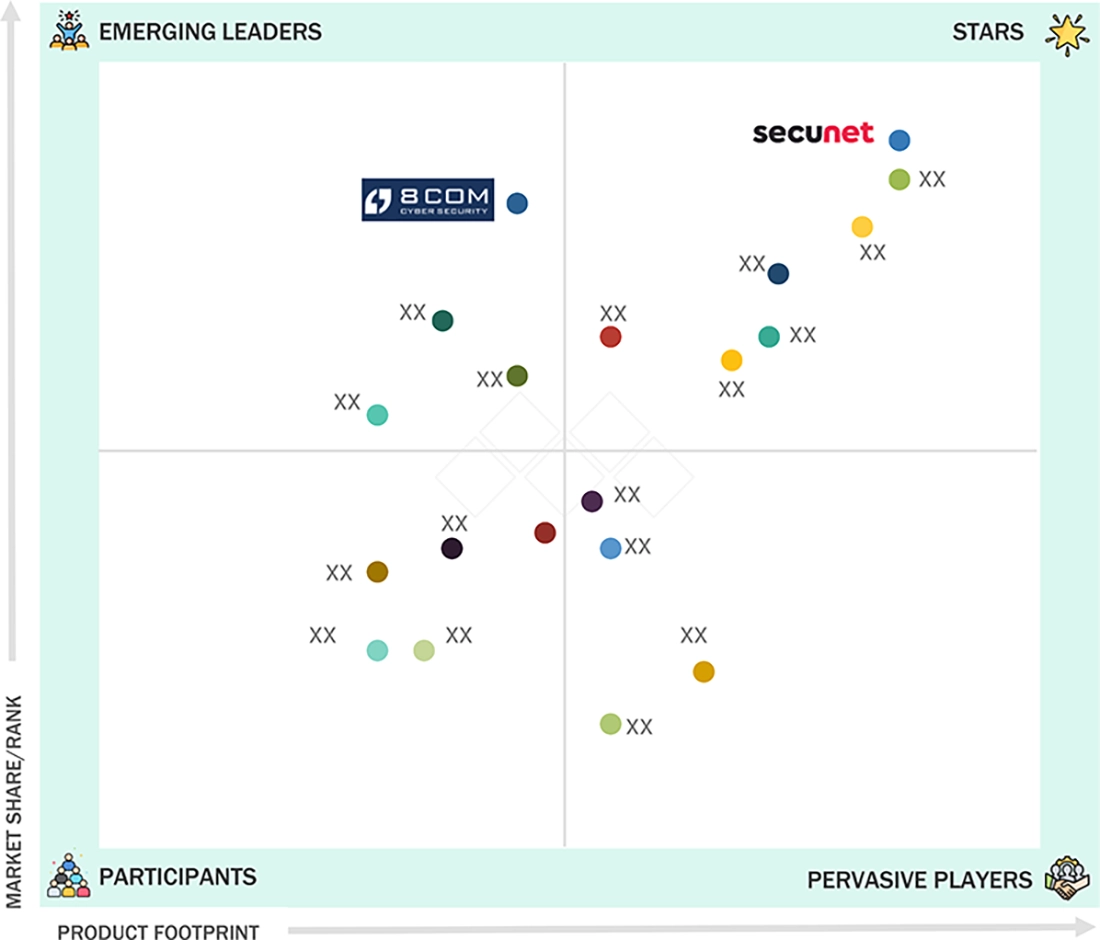
Source: Secondary Research, Interviews with Experts, MarketsandMarkets Analysis
KEY MARKET PLAYERS
- Unosecur (Germany)
- Secunet Security Networks AG (Germany)
- G DATA CyberDefense AG (Germany)
- Rohde & Schwarz (Germany)
- Avira Operations (Germany)
- Cure53 (Germany)
- SAMA PARTNERS (Germany)
- Infraforce (Germany)
- ditis systems (Germany)
- SerNet (Germany)
- 8com (Germany)
- Helmich IT-Security (Germany)
- Cyber Samurai (Germany)
- Trovent Security (Germany)
- Securepoint (Germany)
MARKET SCOPE
| REPORT METRIC | DETAILS |
|---|---|
| Market Size in 2024 (Value) | USD 11.92 Billion |
| Market Forecast in 2030 (Value) | USD 20.61 Billion |
| Growth Rate | CAGR of 9.6% from 2025–2030 |
| Years Considered | 2019–2030 |
| Base Year | 2024 |
| Forecast Period | 2025–2030 |
| Units Considered | Value (USD Billion) |
| Report Coverage | Revenue Forecast, Company Ranking, Competitive Landscape, Growth Factors, and Trends |
| Segments Covered |
|
WHAT IS IN IT FOR YOU: GERMANY CYBERSECURITY MARKET REPORT CONTENT GUIDE
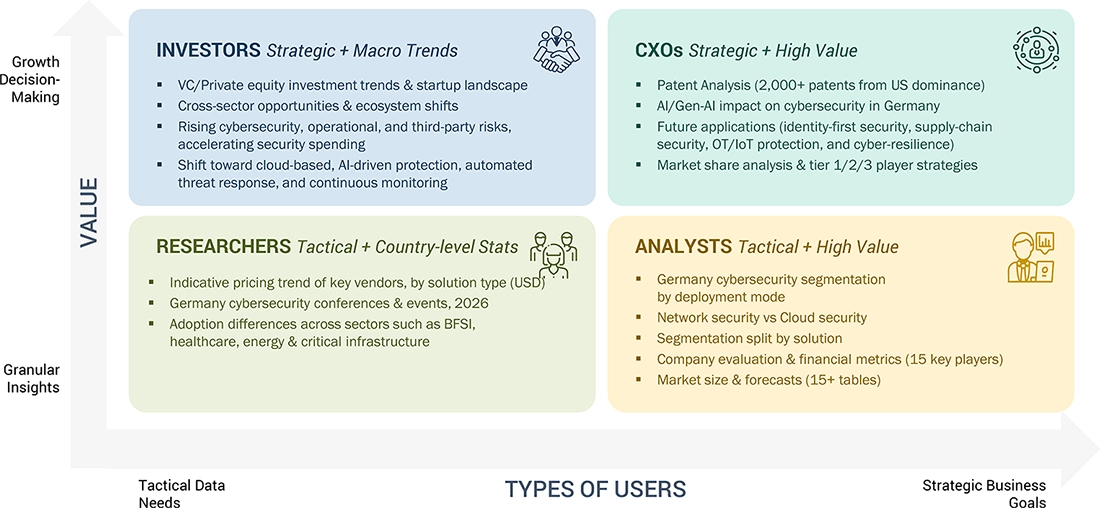
DELIVERED CUSTOMIZATIONS
We have successfully delivered the following deep-dive customizations:
| CLIENT REQUEST | CUSTOMIZATION DELIVERED | VALUE ADDS |
|---|---|---|
| Leading Solution Provider (Germany) | Solution Benchmarking: Comparison of major German cybersecurity vendors across network security, cloud security, IAM, SIEM, endpoint, zero trust, and OT security aligned with GDPR, NIS2, and BSI standards | Identify competitive positioning, compliance readiness, and differentiation strategies to support market expansion in regulated sectors |
| Leading Service Provider (Germany) | Company Profiles: Profiling of key cybersecurity service providers covering MSSP, SOC, incident response, consulting, compliance, cloud security, and system integration | Highlight partnership opportunities, capability gaps, and go-to-market strategies across finance, manufacturing, public sector, and energy industries |
RECENT DEVELOPMENTS
- February 2026 : G DATA CyberDefense AG expanded its Security Awareness Training portfolio with four new modules covering AI-generated images, vishing, captchas, and MFA-fatigue to improve employee defensive awareness.
- November 2025 : Rohde & Schwarz partnered with Broadcom to validate its CMP180 tester for Wi-Fi 8 chipsets, enabling faster time-to-market and reliable, end-to-end device testing.
- May 2025 : Unosecur launched a native GitHub integration offering continuous visibility, least-privilege enforcement, and real-time identity threat detection. The agentless solution identifies access sprawl and privilege risks without disrupting workflows, extending its CIEM platform to enable unified cloud-to-code security monitoring.
Table of Contents
 Exclusive indicates content/data unique to MarketsandMarkets and not available with any competitors.
Methodology
Secondary research was conducted to collect information useful for this technical, market-oriented, and commercial study of the Germany cybersecurity market. The next step was to validate these findings, assumptions, and sizing with industry experts across the value chain using primary research. Different approaches, such as top-down and bottom-up, were employed to estimate the total market size. After that, the market breakup and data triangulation procedures were used to estimate the market size of the segments and subsegments of the Germany cybersecurity market.
Secondary Research
In the secondary research process, various secondary sources were referred to for identifying and collecting information regarding the study. The secondary sources included annual reports, press releases, investor presentations of cybersecurity solution and service vendors, forums, certified publications, and whitepapers. The secondary research was mainly used to obtain key information about the industry’s supply chain, the total pool of key players, market classification and segmentation according to industry trends to the bottom-most level, regional markets, and key developments from both market- and technology-oriented perspectives, all of which were further validated by primary sources.
Primary Research
In the primary research process, various primary sources from both the supply and demand sides were interviewed to obtain qualitative and quantitative information for this report. The primary sources from the supply side included various industry experts, including Chief Executive Officers (CEOs), Vice Presidents (VPs), marketing directors, technology and innovation directors, and related key executives from various key companies and organizations operating in the Germany cybersecurity market.
In the market engineering process, top-down and bottom-up approaches were extensively used, along with several data triangulation methods, to perform the market estimation and market forecasting for the overall market segments and subsegments listed in this report. Extensive qualitative and quantitative analysis was performed on the complete market engineering process to list key information/insights throughout the report.
After the complete market engineering process (including calculations for market statistics, market breakups, market size estimations, market forecasts, and data triangulation), extensive primary research was conducted to gather information and verify & validate the critical numbers arrived at. The primary research was also conducted to identify the segmentation, industry trends, competitive landscape of Germany cybersecurity market players, and key market dynamics, such as drivers, restraints, opportunities, challenges, industry trends, and key strategies.
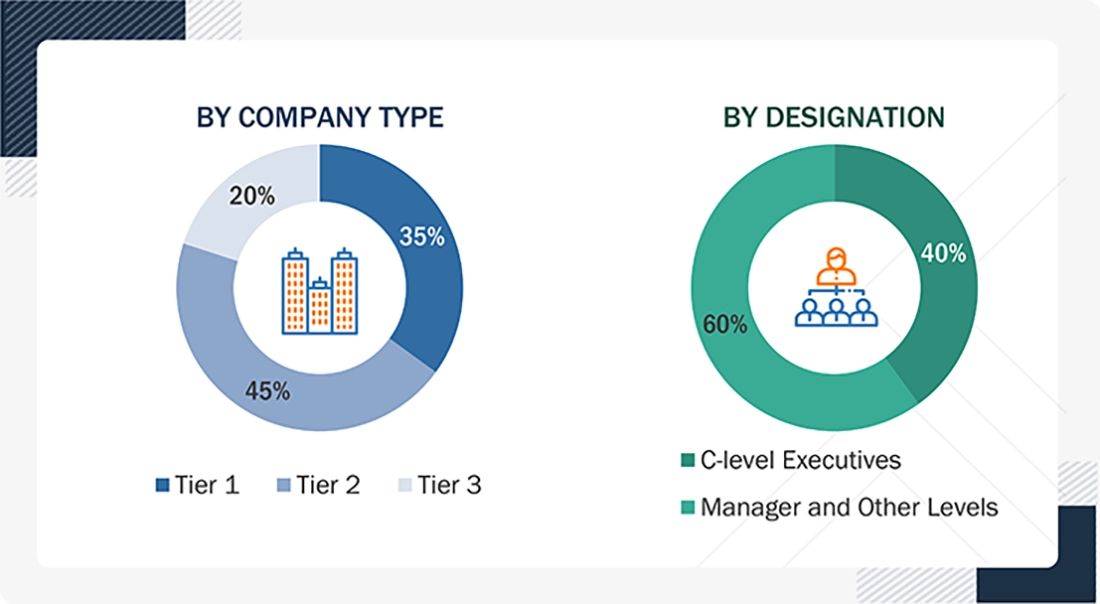
To know about the assumptions considered for the study, download the pdf brochure
Market Size Estimation
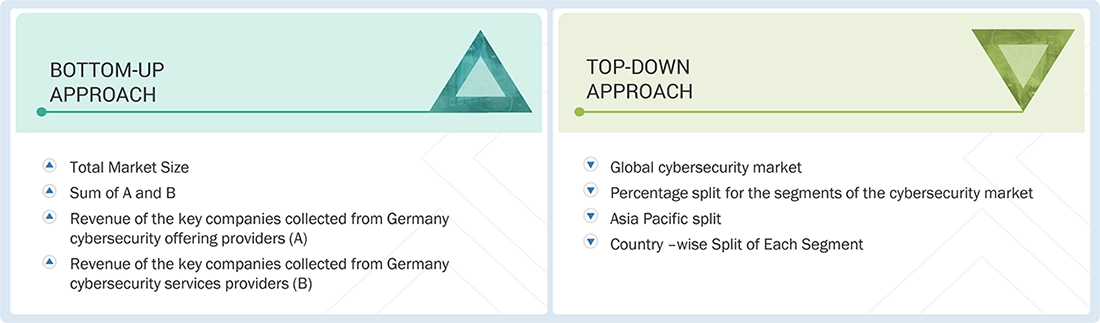
Top-down and bottom-up approaches were used to estimate and validate the size of the Germany cybersecurity market and the size of various dependent sub-segments in the overall Germany cybersecurity market. The research methodology used to estimate the market size includes the following details: critical players in the market were identified through secondary research, and their market shares in the respective regions were determined through primary and secondary research. This entire procedure included the study of the annual and financial reports of the top market players, and extensive interviews were conducted for key insights from the industry leaders, such as CEOs, VPs, directors, and marketing executives.
All percentage splits and breakdowns were determined using secondary sources and verified through primary sources. All possible parameters that affect the market covered in this research study have been accounted for, viewed in extensive detail, verified through primary research, and analyzed to get the final quantitative and qualitative data. This data is consolidated and added to detailed input and analysis from MarketsandMarkets.
Germany Cybersecurity Market : Top-Down and Bottom-Up Approach
Data Triangulation
The market was split into several segments and subsegments after arriving at the overall market size using the market size estimation processes explained above. The data triangulation and market breakup procedures were employed, wherever applicable, to complete the overall market engineering process and arrive at the exact statistics of each market segment and subsegment. The data was triangulated by studying various factors and trends from both the demand and supply sides.
Market Definition
According to MarketsandMarkets, cybersecurity is a set of technologies, processes, and practices to fortify critical systems, such as networks, physical devices, programs, and information, from unauthorized access, insider threats, and malicious attacks. These cyberattacks can affect data transmission across the networks, cause operational disruptions, and result in money extortion/ransomware. Cybersecurity, or information security, can be provided through hardware, software, and services.
Stakeholders
- Chief Technology and Data Officers
- Consulting Service Providers
- Managed Security Services Professionals
- Business Analysts
- Information Technology (IT) Professionals
- Government Agencies
- Investors and Venture Capitalists
- Small and Medium-sized Enterprises (SMEs) and Large Enterprises
- Third-party Providers
- Consultants/Consultancies/Advisory Firms
- Managed and Professional Service Providers
Report Objectives
- To describe and forecast the global Germany cybersecurity market by offering, solution type, security type, deployment mode, organization size, vertical, and region from 2025 to 2030, and analyze the various macroeconomic and microeconomic factors that affect Germany cybersecurity market growth
- To forecast the market size of five main regions: North America, Europe, Asia Pacific, the Middle East & Africa, and Latin America
- To analyze the subsegments of the market with respect to individual growth trends, prospects, and contributions to the overall market
- To provide detailed information regarding major factors (drivers, restraints, opportunities, and challenges) influencing the growth of the market
- To analyze opportunities in the market for stakeholders and provide details of the competitive landscape of major players
- To profile key market players; provide a comparative analysis based on the business overviews, regional presence, product offerings, business strategies, and key financials; and illustrate the competitive landscape of the marketTo analyze competitive developments, such as mergers & acquisitions, product developments, partnerships and collaborations, and research & development (R&D) activities, in the market
Available Customizations
With the given market data, MarketsandMarkets offers customizations based on company-specific needs. The following customization options are available for the report:
Geographic Analysis as per Feasibility
- Further breakup of the Asia Pacific Germany cybersecurity market into countries contributes to the rest of the regional market size
- Further breakup of the North American Germany cybersecurity market into countries contributes to the rest of the regional market size
- Further breakup of the Latin American Germany cybersecurity market into countries contributing to the rest of the regional market size
- Further breakup of the Middle East & African Germany cybersecurity market into countries contributing to the rest of the regional market size
- Further breakup of the European Germany cybersecurity market into countries contributes to the rest of the regional market size
Company Information
- Detailed analysis and profiling of additional market players (up to 5)


Personalize This Research
- Triangulate with your Own Data
- Get Data as per your Format and Definition
- Gain a Deeper Dive on a Specific Application, Geography, Customer or Competitor
- Any level of Personalization
Let Us Help You
- What are the Known and Unknown Adjacencies Impacting the Germany Cybersecurity Market
- What will your New Revenue Sources be?
- Who will be your Top Customer; what will make them switch?
- Defend your Market Share or Win Competitors
- Get a Scorecard for Target Partners

Custom Market Research Services
We Will Customise The Research For You, In Case The Report Listed Above Does Not Meet With Your Requirements
Get 10% Free CustomisationTESTIMONIALS






Growth opportunities and latent adjacency in Germany Cybersecurity Market