Germany Quantum Computing Market

Germany Quantum Computing Market by Market by Offering (Services, System, Application Software), Deployment (On-Premises and Cloud-based), Technology (Trapped lons, Quantum Annealing, Superconducting Qubits) - Forecast to 2030




OVERVIEW
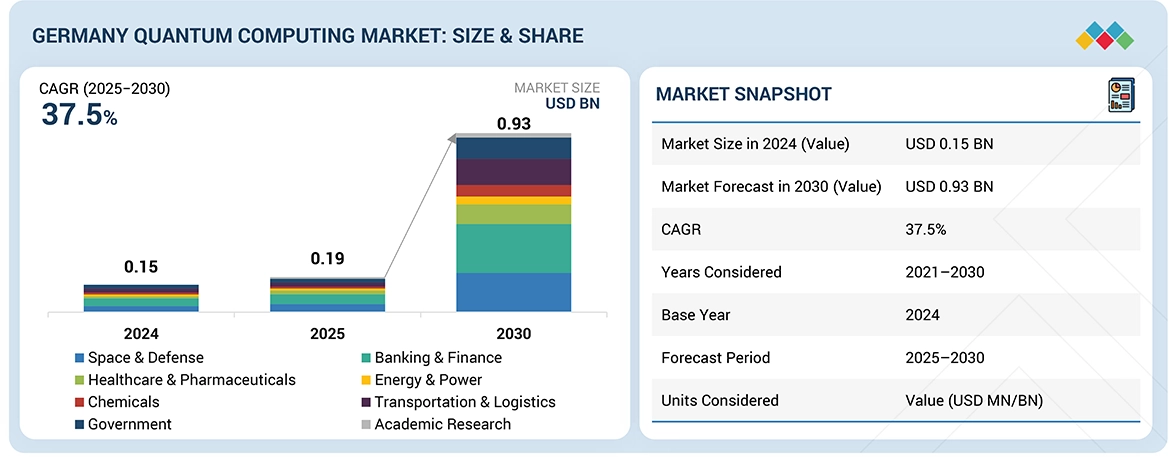
Source: Secondary Research, Interviews with Experts, MarketsandMarkets Analysis
The Germany quantum computing market is projected to reach USD 0.93 million by 2030 from USD million in 2025, at a CAGR of 37.5% from 2025 to 2030. Quantum computing represents a revolutionary approach to computation that leverages quantum mechanical phenomena to solve complex problems beyond the reach of classical computers. These systems utilize quantum bits or qubits that can exist in multiple states simultaneously, enabling unprecedented processing capabilities for optimization, simulation, and machine learning applications across various industries including automotive, pharmaceuticals, and finance.
KEY TAKEAWAYS
-
By TypeThe services segment is set to dominate the market due to growing investments by startups in research and development.
-
By ApplicationMachine learning applications are poised to experience the highest growth rate as quantum computing capabilities expand to address complex computational challenges in AI and data analytics.
-
By End-use IndustryThe energy & power segment is expected to grow at a high CAGR of 41.9% during the forecast period.
-
Competitive Landscape - Star PlayersIBM, Microsoft, and Amazon Web Services were identified as leading players in the Germany quantum computing market, given their strategic collaborations, technological innovations, and extensive cloud-based quantum computing platforms.
-
Competitive Landscape - StartupsFujitsu and Quantinuum have distinguished themselves among emerging companies by securing strong positions in specialized quantum computing technologies and expanding their market reach through partnerships and technological advancements.
The Germany quantum computing market is experiencing significant growth driven by substantial government investments and strong industrial adoption across key sectors.
TRENDS & DISRUPTIONS IMPACTING CUSTOMERS' CUSTOMERS
The Germany quantum computing market is currently experiencing a phase of rapid innovation and industrial integration. Major corporations in the automotive, pharmaceuticals, and finance sectors are witnessing significant advancements in quantum computing development and practical applications. This progress aligns with emerging trends in optimization, simulation, and machine learning capabilities. In Germany, the adoption of quantum technologies is increasing among research institutions, industrial partners, and technology companies. These organizations are leveraging quantum computing platforms to address complex computational challenges, accelerate drug discovery processes, optimize supply chain operations, and enhance financial modeling capabilities.
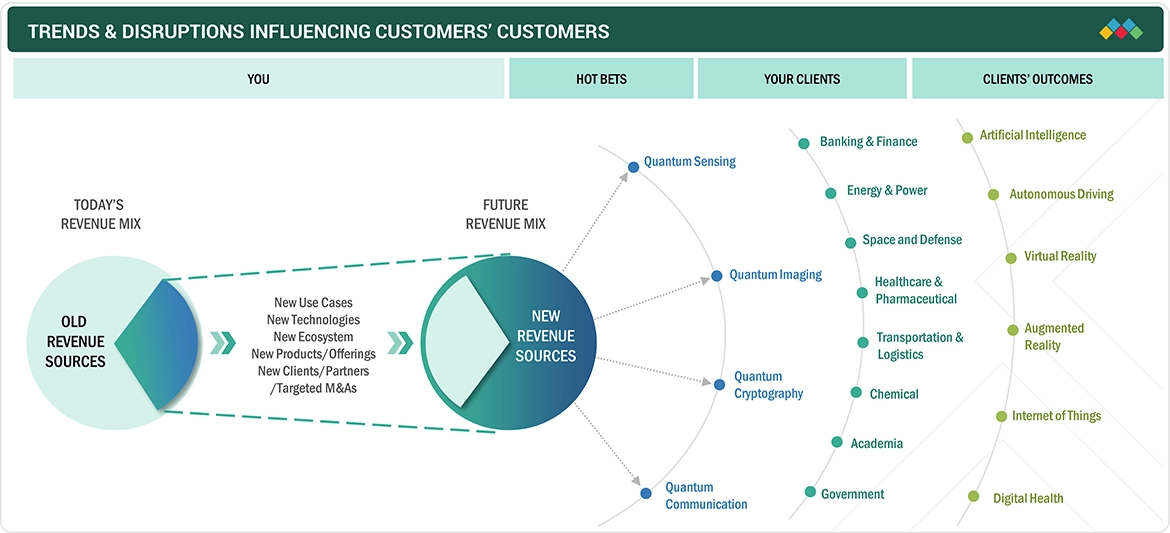
Source: Secondary Research, Interviews with Experts, MarketsandMarkets Analysis
MARKET DYNAMICS

Level
-
Increasing adoption of quantum computing in banking and finance for complex optimization problems

-
Rising investments in quantum technologies from industrial and governmental bodies


Level
-
High costs of quantum systems and development challenges


Level
-
Expansion of quantum applications in drug discovery offering precise and personalized solutions


Level
-
Technical hurdles including error correction, system stability, and shortage of skilled professionals

Source: Secondary Research, Interviews with Experts, MarketsandMarkets Analysis
Driver: Increasing adoption of quantum computing in banking and finance for complex optimization problems
The growing adoption of quantum computing in the banking and finance sector is driving market expansion in Germany. Financial institutions are increasingly recognizing the potential of quantum computing to solve complex optimization problems, enhance risk analysis, improve portfolio management, and accelerate computations beyond the capabilities of classical systems. This adoption is supported by the availability of cloud-based quantum computing platforms that enable financial organizations to experiment with and integrate quantum capabilities into their existing infrastructure.
Restraint: High costs of quantum systems and development challenges
The substantial costs associated with quantum computing systems and their development represent a significant restraint on market growth. The expenses related to building, maintaining, and operating quantum computers, including specialized cooling systems, error correction mechanisms, and supporting infrastructure, create barriers to widespread adoption. Additionally, the integration of quantum computing with existing traditional computing systems presents technical and financial challenges that organizations must address.
Opportunity: Expansion of quantum applications in drug discovery offering precise and personalized solutions
The expanding application of quantum computing in drug discovery presents significant growth opportunities in the German market. Quantum computing capabilities enable pharmaceutical companies and research institutions to perform complex molecular simulations, accelerate the identification of drug candidates, and develop more precise and personalized medical solutions. This application aligns well with Germany's strong pharmaceutical industry and research infrastructure, creating opportunities for collaboration between quantum technology providers and life sciences organizations.
Challenge: Technical hurdles including error correction, system stability, and shortage of skilled professionals
Ensuring reliable quantum computing operations remains a key challenge due to technical hurdles such as error correction, system stability, and qubit coherence. The quantum computing industry faces ongoing difficulties in maintaining stable quantum states, reducing error rates, and scaling systems to practical sizes. Additionally, the shortage of skilled professionals with expertise in quantum physics, quantum algorithms, and quantum hardware development constrains the pace of innovation and commercial deployment across the German market.
GERMANY QUANTUM COMPUTING MARKET: COMMERCIAL USE CASES ACROSS INDUSTRIES
| COMPANY | USE CASE DESCRIPTION | BENEFITS |
|---|---|---|
 |
Provides cloud-based quantum computing services and platforms that enable German industrial partners, research institutions, and enterprises to access quantum computing capabilities for optimization, simulation, and machine learning applications across automotive, finance, and pharmaceutical sectors. | Enables organizations to experiment with quantum algorithms without significant capital investment, accelerates research and development timelines, and supports the integration of quantum computing capabilities with existing classical computing infrastructure. |
 |
Offers the Azure Quantum platform and tools, such as the Azure Quantum Resource Estimator, to support algorithm developers, researchers, and enterprises in Germany exploring quantum computing applications for complex computational challenges in materials science, cryptography, and optimization. | Provides accessible quantum computing resources through cloud infrastructure, supports algorithm development and testing, enables hybrid classical-quantum workflows, and reduces barriers to entry for organizations beginning quantum computing initiatives. |
Logos and trademarks shown above are the property of their respective owners. Their use here is for informational and illustrative purposes only.
MARKET ECOSYSTEM
The Germany quantum computing market is a collaborative ecosystem where technology companies, research institutions, industrial partners, government agencies, and service providers work together to develop and implement quantum computing solutions across various sectors. Leading technology companies provide quantum computing hardware, software platforms, and cloud-based services utilizing various quantum technologies, including superconducting qubits, trapped ions, and quantum annealing systems. Research institutions and universities in Germany support fundamental research, algorithm development, and workforce training initiatives that advance quantum computing capabilities. Industrial partners in automotive, pharmaceuticals, finance, and other sectors collaborate on practical applications and use case development. Government agencies provide funding, strategic direction, and policy support through substantial investments and national quantum computing initiatives. Ultimately, enterprises and organizations across Germany leverage quantum computing capabilities to address complex computational challenges, benefiting from a collaborative ecosystem and a supportive investment environment.
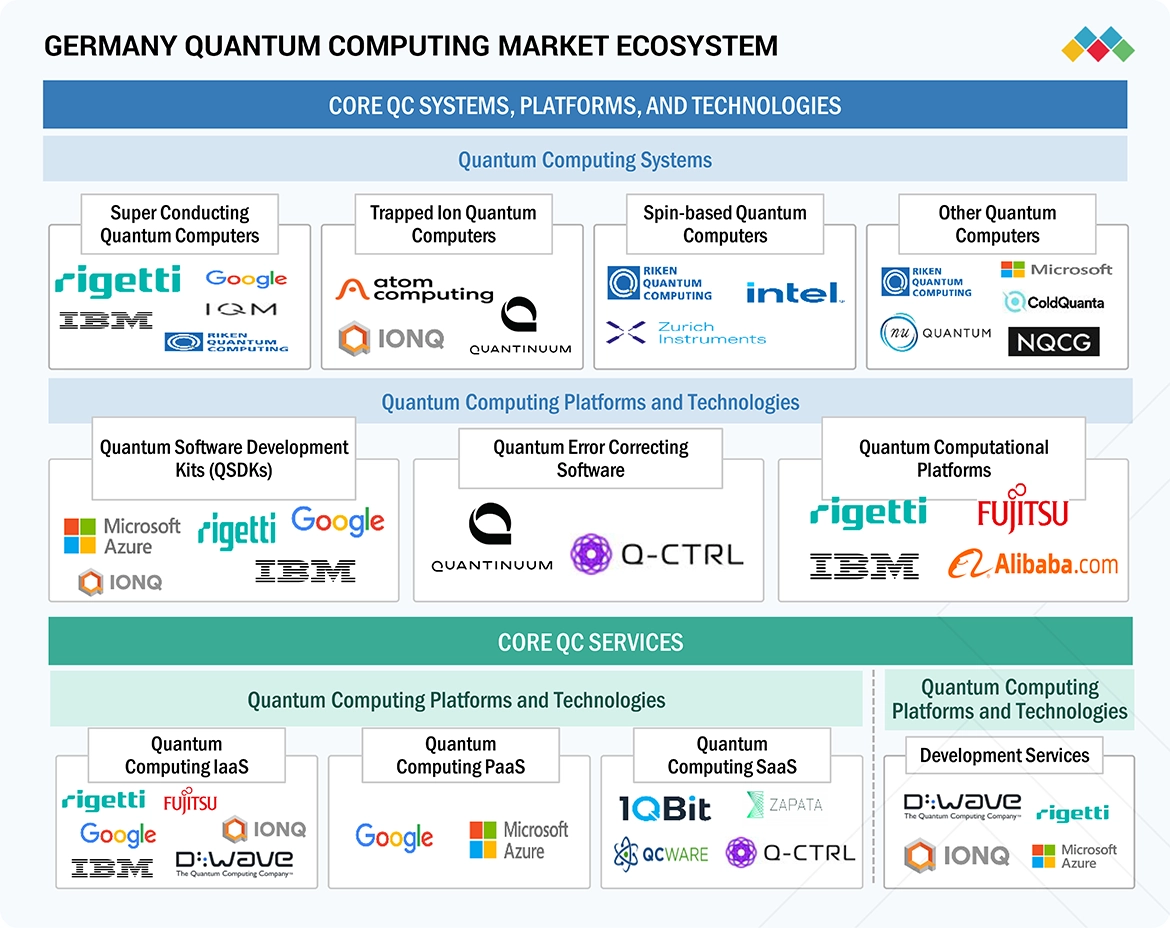
Logos and trademarks shown above are the property of their respective owners. Their use here is for informational and illustrative purposes only.
MARKET SEGMENTS
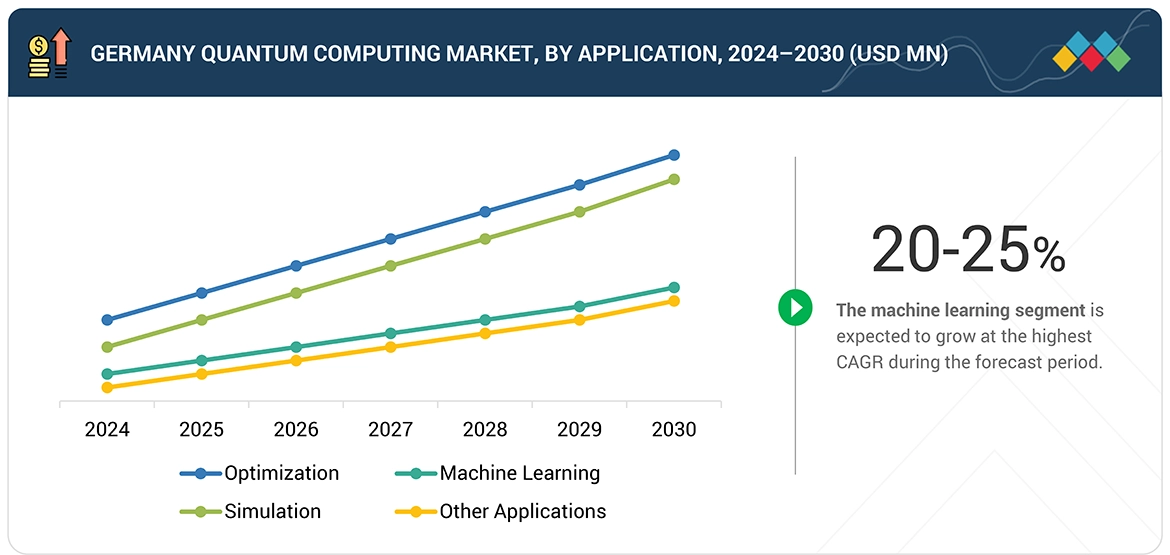
Source: Secondary Research, Interviews with Experts, MarketsandMarkets Analysis
Germany Quantum Computing Market, by Application
Machine learning represented the fastest-growing application segment of the Germany quantum computing market. The increasing complexity of artificial intelligence and data analytics challenges has positioned quantum-enhanced machine learning at the forefront of quantum computing applications in the region. Factors such as the need to process vast datasets, develop more sophisticated AI models, and solve optimization problems in pattern recognition and predictive analytics are driving demand for quantum computing capabilities in machine learning applications across research institutions and industrial organizations.
REGION
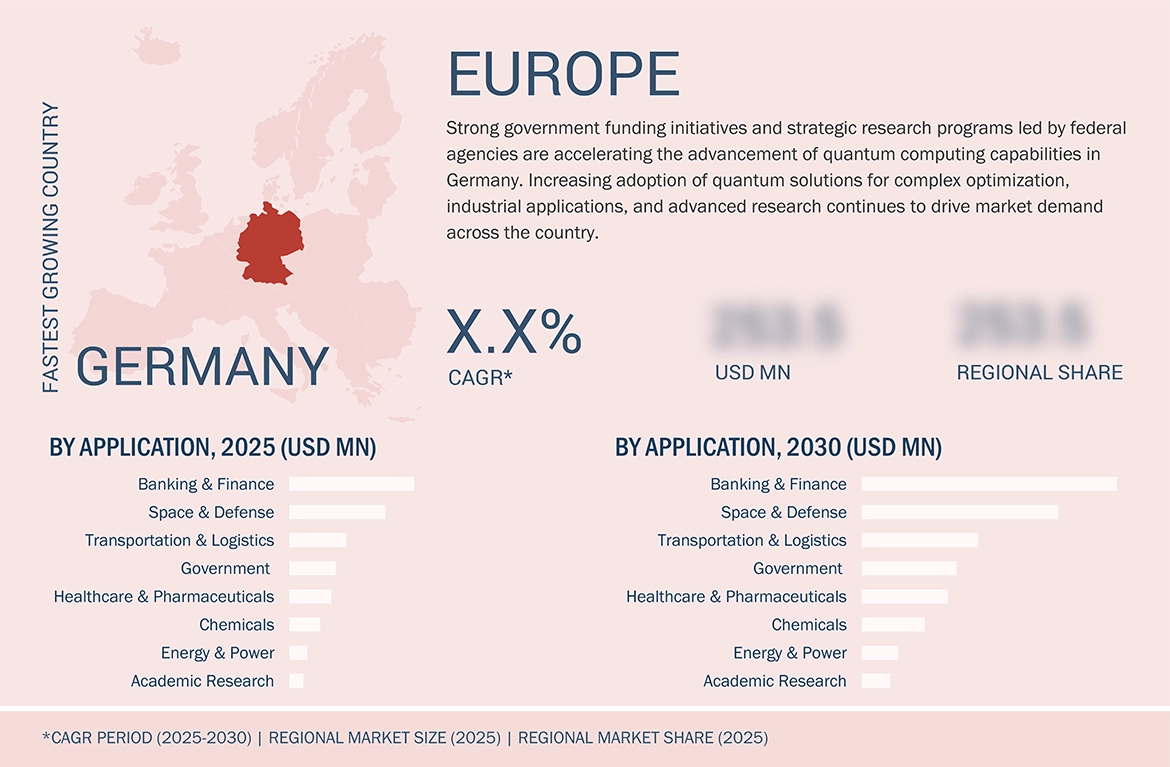
Germany as a leading quantum computing market in Europe during forecast period
Germany represents a leading quantum computing market in Europe, driven by its robust research and development infrastructure, substantial government support, and strong industrial base. The German government plans to invest USD 2.4 billion over four years to support quantum computing, aiming to develop the first national quantum computer and accelerate the integration of quantum technologies across various industries. The demand for quantum computing applications in the automotive, pharmaceutical, and financial sectors is increasing, supported by collaborations between major industrial firms, such as BMW and Airbus, and quantum technology providers. Additionally, significant investment in research institutions, combined with a focus on workforce development and practical application development, is facilitating the swift transition of quantum computing from research laboratories to commercial deployment across German industries.
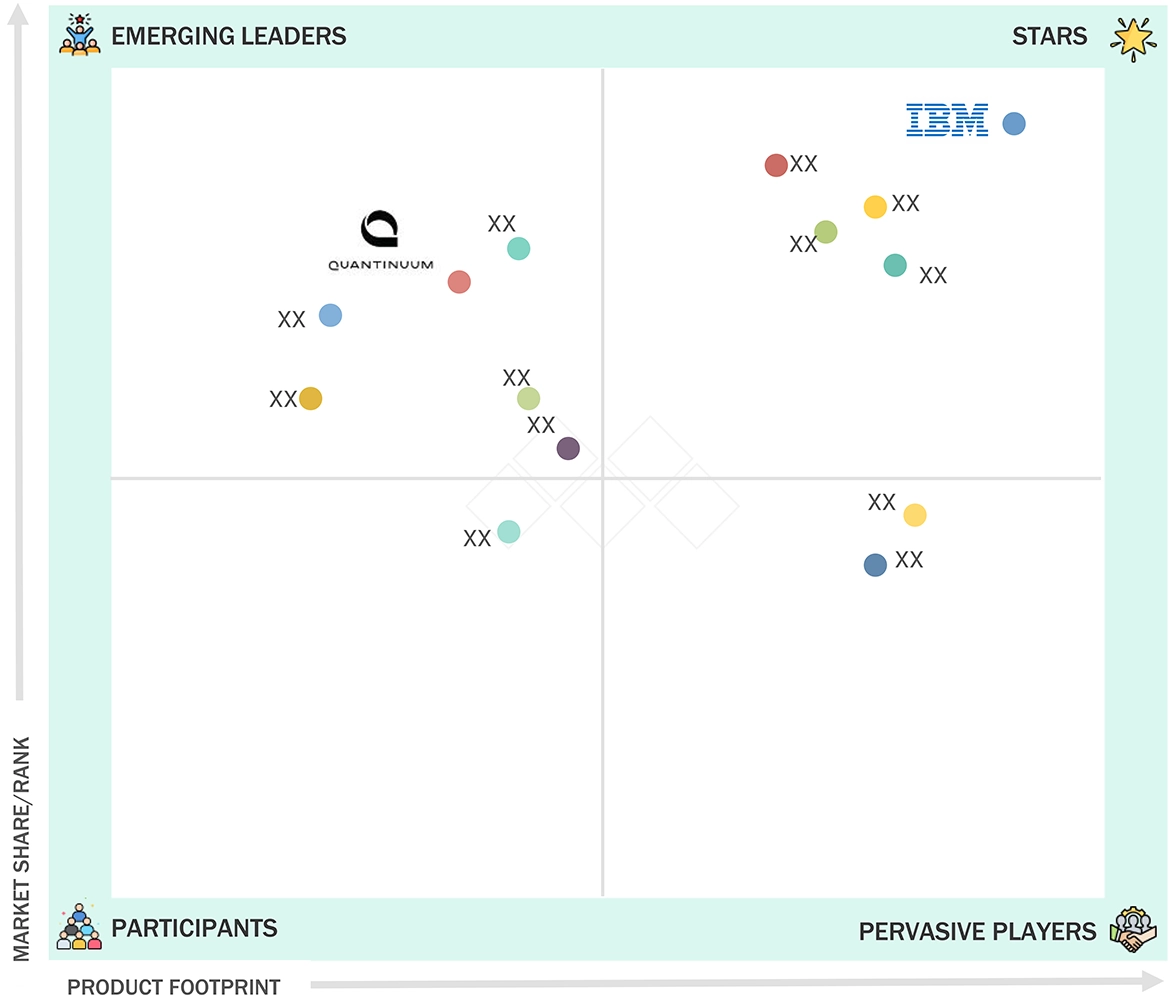
GERMANY QUANTUM COMPUTING MARKET: COMPANY EVALUATION MATRIX
IBM, recognized as a leading player in the Germany quantum computing market, offers a comprehensive portfolio that includes quantum computing hardware, cloud-based quantum computing platforms, and quantum algorithm development tools. The company maintains strong partnerships with German research institutions and industrial organizations, providing access to quantum computing capabilities through its IBM Quantum Network. Another significant player in the German market is Microsoft, identified as a key technology provider. The company is strengthening its position by offering the Azure Quantum platform, quantum development tools such as the Azure Quantum Resource Estimator, and hybrid classical-quantum computing solutions designed for enterprises exploring quantum applications in optimization, simulation, and machine learning.
Source: Secondary Research, Interviews with Experts, MarketsandMarkets Analysis
KEY MARKET PLAYERS
MARKET SCOPE
| REPORT METRIC | DETAILS |
|---|---|
| Market Size in 2024 (Value) | USD 0.15 Billion |
| Market Forecast in 2030 (Value) | USD 0.93 Billion |
| Growth Rate | CAGR of 37.5% from 2025-2030 |
| Years Considered | 2025-2030 |
| Base Year | 2024 |
| Forecast Period | 2025-2030 |
| Units Considered | Value (USD Million/Billion) |
| Report Coverage | Revenue Forecast, Company Ranking, Competitive Landscape, Growth Factors, and Trends |
| Segments Covered |
|
| Regions Covered | Germany |
WHAT IS IN IT FOR YOU: GERMANY QUANTUM COMPUTING MARKET REPORT CONTENT GUIDE
DELIVERED CUSTOMIZATIONS
We have successfully delivered the following deep-dive customizations:
| CLIENT REQUEST | CUSTOMIZATION DELIVERED | VALUE ADDS |
|---|---|---|
| Understanding adoption patterns for quantum computing across German industrial sectors | Assessed quantum computing usage trends across key German industries, including automotive, pharmaceuticals, finance, and manufacturing, highlighting differences in application focus areas such as optimization, simulation, and machine learning across various organizational types and maturity levels | Helps clients align technology development and service offerings with industry-specific requirements, investment priorities, and application readiness levels |
| Identifying collaboration and partnership opportunities in the German quantum ecosystem | Mapped regional quantum computing providers, research institutions, industrial partners, and government initiatives across Germany, with insights into technology platforms, research focus areas, funding programs, and collaborative frameworks supporting quantum computing development and commercialization | Supports partnership strategies, identifies collaboration opportunities, facilitates access to funding programs, and improves understanding of the competitive and collaborative landscape |
RECENT DEVELOPMENTS
- 2023 : BMW announced a collaboration with Quantinuum and Airbus to advance research into fuel cell catalysts using quantum computing technologies. This partnership demonstrates the practical application of quantum computing in automotive innovation and sustainable technology development, leveraging quantum simulation capabilities to accelerate materials research and optimize catalyst performance for next-generation fuel cell systems.
- 2023 : D-Wave Quantum Inc. completed a merger with DPCM Capital to expand its market reach and strengthen its position in the quantum computing industry. This strategic combination provides additional resources for technology development, market expansion, and commercialization of quantum annealing systems and hybrid quantum-classical computing solutions.
- 2023 : Microsoft introduced the Azure Quantum Resource Estimator to support algorithm developers in evaluating quantum computing resource requirements and optimizing quantum algorithm designs. This tool enables researchers and developers to assess the feasibility of quantum algorithms, estimate computational resources needed, and plan quantum computing implementations more effectively.
Table of Contents
 Exclusive indicates content/data unique to MarketsandMarkets and not available with any competitors.
Methodology
The study involved four major activities in estimating the size of the Germany Quantum Computing Market. Exhaustive secondary research has been done to collect information on the market, peer, and parent markets. The next steps are to validate these findings, assumptions, and size with industry experts across the value chain through primary research. Both top-down and bottom-up approaches have been employed to estimate the global market size. After that, market breakdown and data triangulation have been used to estimate the market sizes of segments and subsegments.
Secondary Research
Secondary sources for this research study include corporate filings (such as annual reports, investor presentations, and financial statements), trade, business, and professional associations, white papers, certified publications, articles from recognized authors, directories, and databases. Secondary data was collected and analysed to determine the overall market size, further validated by primary research.
Primary Research
Extensive primary research was conducted after understanding and analysing the Germany Quantum Computing Market scenario through the secondary research process. Several primary interviews were conducted with key opinion leaders from the demand- and supply-side vendors across four major regions—North America, Asia Pacific, Europe, and RoW (including the Middle East, Africa, and South America). After interacting with industry experts, brief sessions were conducted with highly experienced independent consultants to reinforce the findings from our primary research. This and the in-house subject matter experts’ opinions have led us to the findings described in the remainder of this report.
To know about the assumptions considered for the study, download the pdf brochure
Market Size Estimation
Both top-down and bottom-up approaches have been used to estimate and validate the total size of the Germany Quantum Computing Market. These methods have also been extensively used to estimate the sizes of various market subsegments. The research methodology used to estimate the market sizes includes the following:
- Identifying various applications that use or are expected to use the Germany Quantum Computing Market.
- Analyzing historical and current data pertaining to the size of the Germany Quantum Computing Market for each application
- Analyzing the average selling prices of quantum computing based on different technologies
- Studying various paid and unpaid sources, such as annual reports, press releases, white papers, and databases
- Identifying leading providers of quantum computing, studying their portfolios, and understanding features of their products and their underlying technologies, as well as the types of quantum computing products offered
- Tracking ongoing and identifying upcoming developments in the market through investments, research and development activities, product launches, expansions, and partnerships, and forecasting the market size based on these developments and other critical parameters
- Carrying out multiple discussions with key opinion leaders to understand the technologies used in quantum computing, and products wherein they are deployed, and analyzing the breakdown of the scope of work carried out by key manufacturers of quantum computing providers
- Verifying and cross-checking estimates at every level through discussions with key opinion leaders, such as CXOs, directors, and operations managers, and finally with domain experts at MarketsandMarkets
Data Triangulation
The market has been split into several segments and subsegments after arriving at the overall market size, using the market size estimation processes explained above. Data triangulation and market breakdown procedures have been employed to complete the overall market engineering process and arrive at the exact statistics of each market segment and subsegment, wherever applicable. The data has been triangulated by studying various factors and trends from both the demand and supply sides.
Market Definition
Quantum computing involves phenomena such as quantum entanglement and quantum mechanics superposition that quantum computers use for their enhanced computing power. The improved computing power of quantum computers can be attributed to how data is represented. Conventional computers use bits that can either be 1s or 0s, while quantum computers use qubits (quantum bits), which can be both 0s and 1s simultaneously due to superposition. Quantum computing devices or quantum computers operate with nanoscale components at low temperatures, and they have the potential to address some of the most challenging computational problems.
Key Stakeholders
- Research organizations and universities
- Original equipment manufacturers (OEMs)
- Technology standard organizations, forums, alliances, and associations
- Analysts and strategic business planners
- Government bodies, venture capitalists, and private equity firms
- End users
Report Objectives
- To define, describe, segment, and forecast the Germany Quantum Computing Market in terms of value based on offering, deployment, technology, application, end-user, and region.
- To estimate the size of the market and its segments concerning four main regions, namely, North America, Europe, Asia Pacific, and the Rest of the World (RoW), along with their key countries.
- To provide detailed information regarding the key factors influencing market growth, such as drivers, restraints, opportunities, and challenges
- To offer a detailed analysis of the quantum computing value chain
- To analyze the opportunities in the market for stakeholders and provide a detailed competitive landscape of the market leaders
- To strategically profile the key players and comprehensively analyze their market ranking and core competencies
- To analyze key growth strategies such as expansions, contracts, joint ventures, acquisitions, product launches and developments, and research and development activities undertaken by players operating in the Germany Quantum Computing Market.
Available Customizations
With the given market data, MarketsandMarkets offers customizations according to the specific requirements of companies. The following customization options are available for the report:
Company Information:
- Detailed analysis and profiling of 34 market players


Personalize This Research
- Triangulate with your Own Data
- Get Data as per your Format and Definition
- Gain a Deeper Dive on a Specific Application, Geography, Customer or Competitor
- Any level of Personalization
Let Us Help You
- What are the Known and Unknown Adjacencies Impacting the Germany Quantum Computing Market
- What will your New Revenue Sources be?
- Who will be your Top Customer; what will make them switch?
- Defend your Market Share or Win Competitors
- Get a Scorecard for Target Partners

Custom Market Research Services
We Will Customise The Research For You, In Case The Report Listed Above Does Not Meet With Your Requirements
Get 10% Free CustomisationTESTIMONIALS

Tetsuya Ohhira
Business Development Manager-Technology Business
Nikon Corporation,
Leading Japanese MNC specializing in optics and imaging productswww.nikon.com
MarketsandMarkets™ response
is quick. Their attitude is flexible and positive. Analyst Insights are globally considered and
significant. Client Services quickly respond to our inquiry and demand. Their wide range of global
surveys help us make our strategic plan.
We hope Knowledge Store will be easier to search
for a report.
VP - Marketing & Business Development
Leading Provider of Process Control Solutions
We engaged with MarketsandMarkets on a study to perform an analysis and recommend a Go-To-Market strategy for metrology and process control in the semiconductor market. The study was tailored to our targets and needs with well-defined milestones. Our overall experience with the MarketsandMarkets team was very good throughout the project in all aspects including the analysis methodologies used, the quality and depth of primary and secondary data sets, the professionalism and flexibility of the team and the ability to meet the target schedule and milestones. We want to thank MarketsandMarkets team for a job well done.






Growth opportunities and latent adjacency in Germany Quantum Computing Market