High-performance Plastic Compounds Market

High-performance Plastic Compounds Market by Plastic Type (PEEK, PPS, PEI, PSU/PPSU/PESU, Fluoropolymer Compounds, PAI, Others), Additive Type (Glass Fiber, Carbon Fiber, Mineral Filled, Color Compouded, UV Stabilized, Flame Retardant, Others), End-use Industry (Automotive, Aerospace Medical, Industrial, Electrical & Electronics, Others), and Region - Global Forecast to 2030




OVERVIEW

Source: Secondary Research, Interviews with Experts, MarketsandMarkets Analysis
The high-performance plastic compounds market is projected to grow from USD 9.59 billion in 2025 to USD 14.01 billion by 2030, at a CAGR of 7.9% during the forecast period. The increasing demand for high-performance materials can be attributed to several key factors, including the growing need for strong, lightweight materials across industries. Urban development and infrastructure projects are driving increased demand for high-performance plastic compounds used in both residential and commercial buildings. Additionally, the aerospace industry, which is the fastest-growing segment, has a significant need for these compounds, requiring materials that are light, strong, and heat-resistant. Carbon fiber is a major additive in high-performance plastic compounds, while PEEK is the most popular high-performance plastic due to its excellent thermal, mechanical, and chemical properties. These materials are increasingly being utilized in industries such as automotive and electronics. Furthermore, rapid industrialization in developing regions, particularly in the Asia Pacific, is driving a continuous increase in production capacity. Lastly, rising interest in sustainable, low-emission materials is driving demand for recyclable high-performance plastic compounds.
KEY TAKEAWAYS
-
BY REGIONAsia Pacific is the largest and fastest-growing market for high-performance plastic compounds, with a CAGR of 8.1% during the forecast period.
-
BY ADDITIVE TYPEThe glass fiber segment holds the largest share of the additive types, with a 7.2% CAGR anticipated between 2025 and 2030.
-
BY END-USE INDUSTRYAerospace is the fastest-growing end-use industry for high-performance plastic compounds, with a 9.0% CAGR during the forecast period.
-
BY PLASTIC TYPEPEEK is the fastest-growing plastic type segment in the high-performance plastic compounds market, growing at a CAGR of 11.3 % during the forecast period.
-
COMPETITIVE LANDSCAPEThe high-performance plastic compounds market is driven by product innovation, capacity expansions, and strategic collaborations among global leaders, such as Syensqo (Belgium), SABIC (Saudi Arabia), and BASF (Germany). These companies are focusing on capacity expansions and product launches to sustain their market positions.
-
COMPETITIVE LANDSCAPETosoh Corporation (Japan), Lon So Plastics (China), and Arkem Kimya San. Tic. A. S. (Turkey) are the emerging players in the high-performance plastic compounds market.
The market for high-performance plastic compounds is primarily driven by the growing demand for advanced materials across key industrial sectors. Main factors contributing to this market include industrialization and infrastructure development, as the need for strong, heat-resistant plastic compounds is on the rise. Additionally, the growth of the automobile industry, particularly with the rise of electric vehicles, significantly influences the demand for high-performance plastic compounds. Moreover, the steady expansion of the electronics industry and the rapid industrialization in the Asia Pacific region also support this market's growth. Other factors contributing to the sustained growth include ongoing technological advancements, capacity-building projects initiated by manufacturers of plastic compounds, a shift toward recyclable products, and continuous technological improvements.
TRENDS & DISRUPTIONS IMPACTING CUSTOMERS' CUSTOMERS
The high-performance plastic compounds market is witnessing significant trends and disruptions due to sustainability, regulations, and changes in end-use requirements. A notable trend is the emphasis placed on recyclable, bio-based, and low-emission plastic compounds due to an increase in environmental regulations by governments. This is prompting manufacturers to develop new technologies to enhance the recyclability of plastic compounds. Capacity expansions are also being witnessed across the Asia Pacific region. These capacity expansions are affecting the supply chain of the plastic compounds industry. In addition, price volatility of raw materials is affecting the cost structure of the industry. The electric vehicle segment is growing rapidly. Digitalization of the supply chain is being witnessed across the plastic compounds industry. Partnerships are being developed between plastic compound manufacturers and end-use industries. However, regulations are being enforced across Europe and North America. These regulations are affecting the plastic compounds industry due to the emphasis placed on performance and safety standards.

Source: Secondary Research, Interviews with Experts, MarketsandMarkets Analysis
MARKET DYNAMICS

Level
-
Increasing demand for lightweight and high-strength materials in automotive and transportation

-
Growing use in medical & healthcare devices requiring sterilization-resistant and biocompatible materials


Level
-
High raw material and specialty resin costs

-
Complex processing and capital-intensive manufacturing


Level
-
Expansion in renewable energy, 5G infrastructure, and smart electronics

-
Increasing industrialization and advanced manufacturing in emerging economies


Level
-
Stringent environmental and chemical regulations

-
Intense competition and continuous innovation pressure

Source: Secondary Research, Interviews with Experts, MarketsandMarkets Analysis
Driver: Increasing demand for lightweight and high-strength materials in automotive and transportation
The primary driver of the market is the increasing demand for lightweight, high-strength materials in the automotive and transportation sectors. These materials help reduce vehicle weight, thereby enhancing fuel efficiency. The aerospace industry, along with the electronics sector, is increasingly using high-performance plastic compounds due to their ability to withstand extreme conditions. This shift from metal to plastic is driving steady market growth.
Restraint: High raw material and specialty resin costs
The high cost of raw materials is a significant barrier to the market. High-performance resins, such as PEEK and PPS, require complex production processes, making them expensive. This situation is unfavorable for market growth, as small and medium-sized enterprises may struggle to afford these costly materials for their production needs. Additionally, the high cost of specialized tools required for processing these resins further complicates the situation.
Opportunity: Expansion in renewable energy, 5G infrastructure, and smart electronics
There are significant opportunities for growth in renewable energy, 5G infrastructure, and smart electronics. End users are increasingly adopting high-performance plastic compounds in wind turbines, solar panels, and energy storage devices due to their strength and longer lifespan in harsh weather conditions. As investment in clean and renewable energy continues to grow, the demand for these materials will increase as well. Additionally, the development of 5G infrastructure is creating a market for materials that can withstand heat and support high-performance electronic devices. The rise of smart devices and the Internet of Things (IoT) is further creating a demand for such materials. Various industries are also seeking to replace metals with lighter materials that offer similar strength. All these factors are contributing to steady growth opportunities in the market.
Challenge: Stringent environmental and chemical regulations
Strict environmental regulations and restrictions on chemicals pose significant challenges for the market. Governments are implementing stricter standards for companies regarding emissions, recycling, and the use of safe chemicals, which must be followed. This requires increased investment in clean production technologies and a strong focus on sustainable materials. At the same time, companies must balance these requirements with the need for performance, quality, and competitive pricing. Additionally, fluctuations in raw-material prices must be taken into account.
HIGH-PERFORMANCE PLASTIC COMPOUNDS MARKET: COMMERCIAL USE CASES ACROSS INDUSTRIES
| COMPANY | USE CASE DESCRIPTION | BENEFITS |
|---|---|---|
 |
Engineering plastics such as polyamides (PA), polybutylene terephthalate (PBT), and polyarylsulfones used in automotive lightweighting, electrical/electronic components, and industrial applications | High thermal stability, excellent mechanical strength, electrical insulation, dimensional stability, and lightweighting for improved energy efficiency |
 |
High-performance thermoplastics, including polycarbonate (PC), polyetherimide (PEI), and long fiber-reinforced thermoplastics used in automotive, electronics, and construction | High impact resistance, heat resistance, design flexibility, improved safety, lightweight structures, recyclability, and sustainability benefits |
 |
Advanced polymers such as polyether ether ketone (PEEK), polyphenylene sulfide (PPS), and polysulfones used in aerospace, energy, medical, and automotive applications | Exceptional thermal and chemical resistance, high strength retention at elevated temperatures, durability in harsh environments, and longer service life |
 |
High-performance polymers, including polyether ether ketone (PEEK) and polyaryletherketone (PAEK), used in aerospace, automotive, electronics, and medical implants | Outstanding heat resistance, excellent wear and chemical resistance, high fatigue strength, lightweight metal replacement, and improved efficiency and lifecycle performance |
Logos and trademarks shown above are the property of their respective owners. Their use here is for informational and illustrative purposes only.
MARKET ECOSYSTEM
The high-performance plastic compounds market ecosystem involves identifying the interconnected relationships among key stakeholders in the supply chain. The key stakeholders in the high-performance plastic compounds ecosystem are raw material suppliers from the petrochemical and specialty chemical industries, polymer manufacturers, compounders/formulators, distributors/logistics players, and end-use industries. The petrochemical and specialty chemical industries are the suppliers of the key raw materials used to manufacture high-performance plastic compounds like PEEK, PPS, PEI, fluoropolymers, high-performance polyamides, etc., by employing advanced technology for polymerization and synthesis reactions. Polymer manufacturers obtain raw materials from the petrochemical and specialty chemical industries and transform them into basic resins with superior thermal, mechanical, and chemical properties. Compounders and formulators then obtain these basic resins and incorporate various fillers, fibers, and additives to create compounds that are suitable for specific end-use industries. Distributors and logistics providers connect the manufacturers of high-performance plastic compounds with industries such as automotive, aerospace, electrical and electronics, medical devices, industrial machinery, and the energy sector.

Logos and trademarks shown above are the property of their respective owners. Their use here is for informational and illustrative purposes only.
MARKET SEGMENTS

Source: Secondary Research, Interviews with Experts, MarketsandMarkets Analysis
High-performance Plastic Compounds Market, by Plastic Type
PEEK is the largest segment of the high-performance plastic compounds market. This is primarily due to the compound's balanced properties. PEEK has a wide range of applications across industries such as aerospace, automotive, and electronics, where components must withstand extreme temperatures. Its use in medical applications further contributes to its market share. Additionally, PEEK is utilized in various sectors, including industrial machinery, oil and gas, and electrical insulation, demonstrating its versatility. Compared to other high-performance plastic compounds, PEEK offers superior resistance, stability, and a longer service life, which is why it is one of the most widely used compounds. The increasing demand for lightweight, high-performance plastic materials also enhances PEEK's market share.
High-performance Plastic Compounds Market, by Additive Type
Glass fiber is the most commonly used additive in the high-performance plastic compounds market. This is primarily because it significantly enhances the mechanical strength and stiffness of plastics. Glass fiber-reinforced plastic compounds are widely used in sectors such as automotive, electrical and electronics, construction, and industrial applications. These compounds offer an effective balance between strength and cost-effectiveness. The advantages of glass fiber additives include increased stiffness and resistance to heat and creep. They are typically employed in the production of structural and semi-structural parts. In the automotive industry, glass-filled plastic compounds are used to manufacture housing components, enclosures, and various under-the-hood parts. The versatility of glass-filled plastic compounds makes them suitable for a broad range of end-use applications. They offer an excellent balance of strength and cost-effectiveness compared to other high-performance plastic fillers, making them an ideal choice for producing plastic parts that demand enhanced performance without compromising cost. The growing demand for durable and cost-effective materials is driving the increased use of glass fiber-reinforced plastic compounds.
High-performance Plastic Compounds Market, by End-use Industry
The automotive industry is a key sector for the high-performance plastic compounds market, which uses these materials to design lightweight, strong, and efficient parts. High-performance plastics such as PEEK, PPS, and PEI are commonly used to manufacture components for engine hoods, electrical systems, fuel systems, and other structural parts of vehicles. These materials help reduce the overall weight of automobiles, thereby improving fuel efficiency and contributing to lower emissions. Moreover, the rising prevalence of electric vehicles is driving an increased demand for lightweight materials in automotive manufacturing. As manufacturers continuously innovate and enhance vehicle safety, the demand for high-performance plastic compounds in the automotive sector continues to grow.
REGION
Asia Pacific to be fastest-growing region in global high-performance plastic compounds market during forecast period
The Asia Pacific region accounts for the largest share of the high-performance plastic compounds market, which is experiencing rapid growth driven by increased industrialization and enhanced manufacturing capabilities. There is a significant demand for advanced polymer materials, such as PEEK, PPS, and polyimides. This market is primarily dominated by countries like China, India, Japan, and various Southeast Asian nations. China plays a major role in this market, contributing a substantial portion due to its strong production capabilities and investments in high-performance materials. Factors such as urbanization, rising disposable incomes, and increasing demand for lightweight materials are driving this market's growth. Additionally, supportive government policies, technological advancements, and the expansion of both regional and international players have further strengthened the market's position.

HIGH-PERFORMANCE PLASTIC COMPOUNDS MARKET: COMPANY EVALUATION MATRIX
In the high-performance plastic compounds market, Syensqo (Star) holds a dominant market share and has a strong presence in various regions. The company is supported by a comprehensive portfolio of high-performance plastic compounds used in industries such as automotive, electrical and electronics, industrial, aerospace, and medical. Evonik Industries AG, recognized as an emerging leader, capitalizes on its deep expertise in specialty chemicals and advanced polymer science, along with a diverse portfolio of high-value materials.

Source: Secondary Research, Interviews with Experts, MarketsandMarkets Analysis
KEY MARKET PLAYERS
- Victrex plc (UK)
- Syensqo (Belgium)
- SABIC (Saudi Arabia)
- BASF (Germany)
- Celanese Corporation (US)
- DAIKIN INDUSTRIES, Ltd. (Japan)
- RTP Company (US)
- MITSUBISHI CHEMICAL GROUP CORPORATION (Japan)
- Evonik Industries AG (Germany)
- Ensinger (Germany)
MARKET SCOPE
| REPORT METRIC | DETAILS |
|---|---|
| Market Size in 2024 (Value) | USD 8.88 Billion |
| Market Size in 2025 (Value) | USD 9.59 Billion |
| Market Forecast in 2030 (Value) | USD 14.01 Billion |
| CAGR | 7.9% |
| Years Considered | 2021–2030 |
| Base Year | 2024 |
| Forecast Period | 2025–2030 |
| Units Considered | Value (USD Million/Billion), Volume (Ton) |
| Report Coverage | Revenue forecast, company ranking, competitive landscape, growth factors, and trends |
| Segments Covered |
|
| Regions Covered | Asia Pacific, Europe, North America, Middle East & Africa, and South America |
WHAT IS IN IT FOR YOU: HIGH-PERFORMANCE PLASTIC COMPOUNDS MARKET REPORT CONTENT GUIDE

DELIVERED CUSTOMIZATIONS
We have successfully delivered the following deep-dive customizations:
| CLIENT REQUEST | CUSTOMIZATION DELIVERED | VALUE ADDS |
|---|---|---|
| Country-level Breakdown |
|
Helps stakeholders identify high-growth national markets, understand supply–demand dynamics, assess regulatory impact, and forecast country-level demand for high-performance plastic compounds with greater accuracy |
| Application-specific Deep Dive |
|
Enables clients to prioritize high-growth and high-value applications, align product portfolios with advanced material trends, and optimize R&D and commercialization strategies across industries |
| Material & Processing Segmentation |
|
Supports manufacturers and investors in evaluating cost-performance trade-offs, material selection strategies, innovation opportunities, and long-term sustainability of high-performance polymer value chains |
| Competitive Benchmarking |
|
Provides a clear competitive landscape, helping identify market leaders, innovation trends, strategic partnerships, pricing power, and differentiation strategies in the global high-performance plastic compounds market |
RECENT DEVELOPMENTS
- June 2025 : BASF has inaugurated its fifth Creation Center in South Korea, which is aimed at enhancing BASF's innovation infrastructure in the Asia Pacific. According to BASF, "Creation centers are a key element in the BASF strategy to collaborate with customers and partners to develop new solutions with our advanced materials, which include high-performance plastics, engineering plastics, and composite materials, to address specific industry challenges." The Korea Creation Center aims to enhance BASF's local capabilities for prototyping, testing, and developing formulations, particularly in the electronics, automotive, and industrial sectors. The move is aimed at enhancing BASF's strategy to focus on innovation, particularly in Asia.
- May 2025 : Syensqo has increased its specialty polymers compounding capacity at its Changshu, China, facility to accommodate the growing demand for high-performance plastic compounds in Asia. The increased facility includes new compounding equipment for high-performance materials like Amodel PPA, Ryton PPS, Kalix HPPA, Omnix HPPA, and Ixef PARA, which are popular materials for electric vehicles, smart devices, semiconductors, and healthcare equipment. The enhanced facility has the capacity for both small-batch customized production and large-scale production, thus strengthening Syensqo’s supply chain and its capability to support regional customers in high-growth markets like EV mobility solutions and electronics.
Table of Contents
 Exclusive indicates content/data unique to MarketsandMarkets and not available with any competitors.
Methodology
The study involved four major activities in estimating the size of the high-performance plastic compounds market. Exhaustive secondary research was done to collect information on the market, the peer market, and the parent market. The next step was to validate these findings, assumptions, and sizing with industry experts across the value chain through primary research. Both top-down and bottom-up approaches were employed to estimate the complete market size. Thereafter, the market breakdown and data triangulation procedures were used to estimate the market size of the segments and subsegments.
Secondary Research
In the secondary research process, various secondary sources have been referred to for identifying and collecting information for this study. These secondary sources include annual reports, press releases, investor presentations of companies, white papers, certified publications, trade directories, certified publications, articles from recognized authors, gold standard and silver standard websites, and databases.
Secondary research has been used to obtain key information about the value chain of the industry, monetary chain of the market, the total pool of key high-performance plastic compounds players, market classification and segmentation according to industry trends to the bottom-most level, and regional markets. It was also used to obtain information about the key developments from a market-oriented perspective.
Primary Research
The high-performance plastic compounds market comprises several stakeholders in the value chain, which include raw material suppliers, manufacturers, distributors, and end users. Various primary sources from the supply and demand sides of the high-performance plastic compounds market have been interviewed to obtain qualitative and quantitative information. The primary interviewees from the demand side include key opinion leaders in end-use sectors. The primary sources from the supply side include manufacturers, associations, and institutions involved in the high-performance plastic compounds industry.
Primary interviews were conducted to gather insights such as market statistics, data of revenue collected from the products and services, market breakdowns, market size estimations, market forecasting, and data triangulation. Primary research also helped in understanding the various trends related to plastic type, additive type, end-use industry, and region. Stakeholders from the demand side, such as CIOs, CTOs, and CSOs, were interviewed to understand the buyer’s perspective on suppliers, products, component providers, and their current use of high-performance plastic compounds and their future business outlook, which will affect the overall market.
The breakdown of profiles of the primary interviewees is illustrated in the figure below:
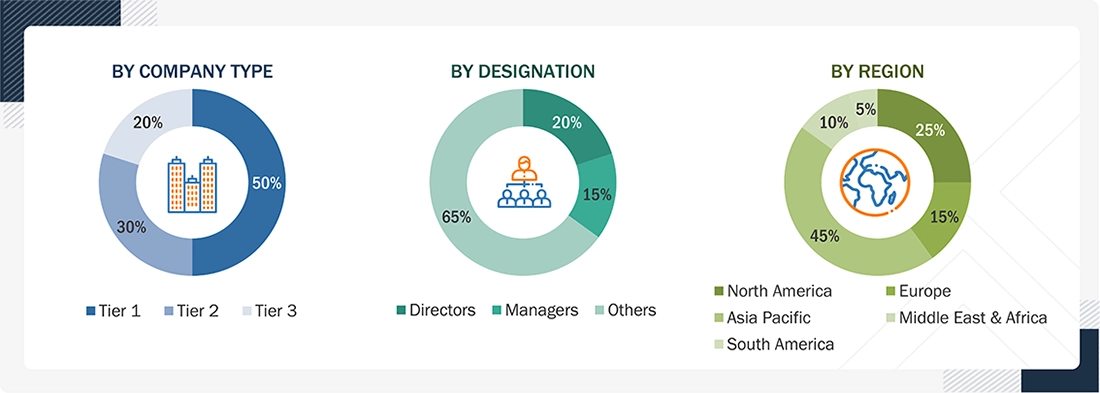
Note: Tier 1, Tier 2, and Tier 3 companies are classified based on their market revenue in 2024, available in the public domain, product portfolios, and geographical presence.
Other designations include sales representatives, production heads, and technicians.
To know about the assumptions considered for the study, download the pdf brochure
Market Size Estimation
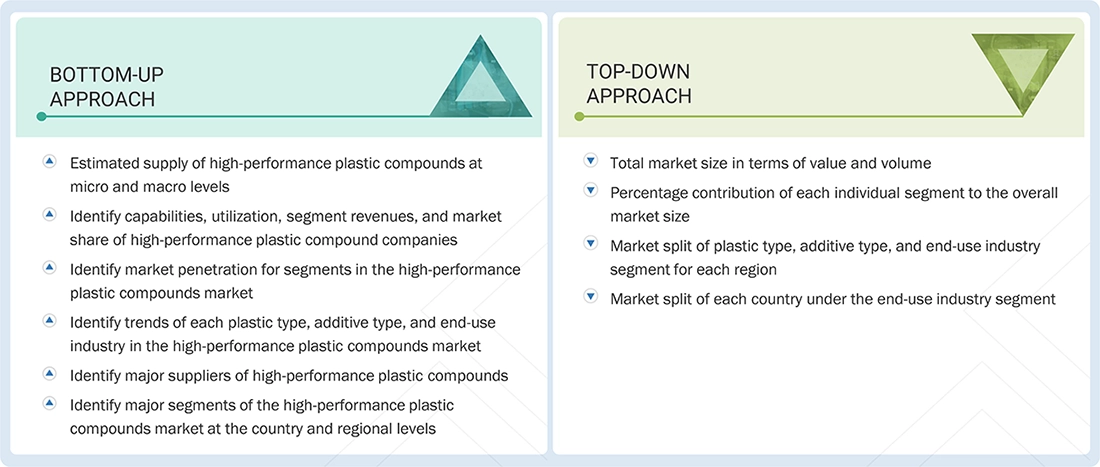
A top-down approach was used to estimate and validate the sizes of various submarkets for high-performance plastic compounds in each region. The research methodology used to estimate the market size included the following steps:
- The key players in the industry have been identified through extensive secondary research
- The supply chain of the industry has been determined through primary and secondary research
- The global market was then segmented into five major regions and validated by industry experts
- All percentage shares, splits, and breakdowns based on plastic type, additive type, end-use industry, and region were determined using secondary sources and verified through primary sources
- All possible parameters that affect the markets covered in this research study were accounted for, viewed in extensive detail, verified through primary research, and analyzed to get the final quantitative and qualitative data. This data was consolidated and added with detailed inputs and analysis, and presented in this report.
HIGH-PERFORMANCE PLASTIC COMPOUNDS MARKET: BOTTUM-UP APPROACH AND TOP-DOWN APPROACH
Data Triangulation
After arriving at the total market size from the estimation process for high-performance plastic compounds above, the overall market has been split into several segments and sub-segments. To complete the overall market engineering process and obtain exact statistics for all segments and subsegments, data triangulation and market breakdown procedures have been employed, where applicable. The data has been triangulated by studying various factors and trends from both the demand and supply sides. Additionally, the market size has been validated using both top-down and bottom-up approaches, as well as primary interviews. Hence, for every data segment, there have been three sources: the top-down approach, the bottom-up approach, and expert interviews. The data was assumed correct when the values arrived from the three sources matched.
Market Definition
The high-performance plastic compounds market refers to the global production, modification, and consumption of advanced polymer compounds with superior properties. These materials offer high strength, thermal stability, and chemical resistance compared to conventional plastics. They are typically based on polymers such as polyamide (PA), polybutylene terephthalate (PBT), polycarbonate (PC), polyphenylene sulfide (PPS), and polyether ether ketone (PEEK). These compounds are often enhanced using fillers, reinforcements, and additives. Key applications include automotive parts, electrical and electronic components, industrial equipment, medical devices, aerospace, and consumer goods. The market includes raw material suppliers, compound manufacturers, distributors, and end-use industries. Demand is driven by trends such as lightweighting, electrification, and miniaturization. Regulatory standards and sustainability requirements also influence growth. Technological advancements further support market expansion globally.
Stakeholders
- High-performance Plastic Compound Manufacturers
- High-performance Plastic Compounds Traders, Distributors, and Suppliers
- Raw Material Suppliers
- Government and Private Research Organizations
- Associations and Industrial Bodies
- R&D Institutions
- Environmental Support Agencies
Report Objectives
- To define, describe, and forecast the size of the high-performance plastic compounds market, in terms of value and volume
- To provide detailed information regarding the major factors (drivers, opportunities, restraints, and challenges) influencing the growth of the market
- To estimate and forecast the market size based on plastic type, end-use industry, additive type, and region
- To forecast the size of the market with respect to major regions, namely, Europe, North America, Asia Pacific, Middle East & Africa, and South America, along with their key countries
- To strategically analyze micromarkets with respect to individual growth trends, prospects, and their contribution to the overall market
- To analyze opportunities in the market for stakeholders and provide a competitive landscape of market leaders
- To track and analyze recent developments such as product launches, collaborations, contracts, acquisitions, and expansions in the market
- To strategically profile the key market players and comprehensively analyze their core competencies


Personalize This Research
- Triangulate with your Own Data
- Get Data as per your Format and Definition
- Gain a Deeper Dive on a Specific Application, Geography, Customer or Competitor
- Any level of Personalization
Let Us Help You
- What are the Known and Unknown Adjacencies Impacting the High-performance Plastic Compounds Market
- What will your New Revenue Sources be?
- Who will be your Top Customer; what will make them switch?
- Defend your Market Share or Win Competitors
- Get a Scorecard for Target Partners

Custom Market Research Services
We Will Customise The Research For You, In Case The Report Listed Above Does Not Meet With Your Requirements
Get 10% Free CustomisationTESTIMONIALS

We at Nissan Chemicals Corporation have been clients of MarketsandMarkets for more than a year now. We recently consulted MarketsandMarkets for a study, the team at MarketsandMarkets was extremely professional and organized. The business insights were very detailed and aligned well with our expectations that really helped us formulate the Business Plans and device new strategies for development themes. MarketsandMarkets offers a unique combination of expertise and dedicated engagement model. Their research findings have helped us in designing our Pricing Strategy which will make it easier for us to predict the future sales and profits for the next ten years. We look forward to working with MarketsandMarkets in the future.
VP of Strategy & New Business Development
Leading Specialty Chemical Company
The MarketsandMarkets Engagement Model, composed of both the Knowledge Store and advisory custom research, has greatly helped us in understanding our markets and making strategic decisions. The Knowledge Store is a fast way to allow everyone in our organization to understand more about most any market they are interested in. The ability to then get custom research done and get answers to specific strategic questions and market insight has been spectacular. The Markets and Markets team feel more like colleagues than vendors and their services have helped us change our culture where statements of things like growth opportunities and competitive position are always backed by industry research.

Rich Gibson,
Director, Corporate Strategy
Milliken & Company,
Leading Industrial Manufacturer of specialty chemical, floor covering, performance and protective textile materials, and healthcaremilliken.com
MarketsandMarkets is a trusted resource that helps us to better understand markets that are near-adjacencies-whether its technology, value chain or geography. Their Knowledge Store platform provides a dashboard of markets and their characteristics which is easy to use and saves us time.
Adam Shaw,
Market Development and Strategy Manager
AdvanSix Inc. USA,
An American Leader in Chemicalswww.advansix.com
The Knowledge Store from MarketsandMarkets is a valuable tool which has helped my team acquire greater insight in to the end markets that our business serves. This has enabled us to help our company build stronger strategies throughout our planning process.
TOSHIO KINOSHITA
Senior Chif Consultion Research & Consulting Division
Mitsubishi Chemical Research Corporation,
Leading Manufacturer of Chemical Productswww.mitsubishichem-res.co.jp/en/

We recently engaged with MarketsandMarkets for a study, the team not only clearly understood our business objectives but was also extremely professional in the way they handled the entire project. The study was efficiently conducted in a phase-wise manner, and the engagement model furnished us with high-quality business insights that far exceeded our expectations at each phase. We were especially happy that MarketsandMarkets could provide us with both, an English as well as a Japanese version of the study. A special thanks to the Analyst Team and Client Services Team, whose fluency in Japanese enhanced our comfort level, as we could converse with them in our preferred language.
Independent entrepreneurs
Arrow Precision
We approached MarketsandMarkets for study on Proppants Market, and their work exceeded our expectations. The study conducted was comprehensive and enabled us to view the market through the various dimensions. In addition, the team was extraordinarily responsive throughout the process and resolved our queries on time. I strongly recommend MarketsandMarkets and will certainly consider them for additional market assessments we will need in the future.
Global engineering company, Japan
Deputy Manager,
Strategic Planning OfficeThe high-quality insights shared by the MarketsandMarkets team helped us understand the pharmaceutical plant designers in a specific geography. It also captured the risks that we may likely face in communicating with our potential partners. The study would enable us identify partners, which would impact our future growth.
- China High-performance Plastic Compounds Market
- Japan High-performance Plastic Compounds Market
- India High-performance Plastic Compounds Market
- South Korea High-performance Plastic Compounds Market
- Canada High-performance Plastic Compounds Market
- Mexico High-performance Plastic Compounds Market
- US High-performance Plastic Compounds Market
- Germany High-performance Plastic Compounds Market
- Italy High-performance Plastic Compounds Market
- France High-performance Plastic Compounds Market
- UK High-performance Plastic Compounds Market
- Spain High-performance Plastic Compounds Market
- South Africa High-performance Plastic Compounds Market
- Argentina High-performance Plastic Compounds Market
- Brazil High-performance Plastic Compounds Market
- Rest Of Europe High-performance Plastic Compounds Market
- Rest Of Asia Pacific High-performance Plastic Compounds Market
- GCC Countries High-performance Plastic Compounds Market
- –Rest Of GCC Countries High-performance Plastic Compounds Market
- Rest Of South America High-performance Plastic Compounds Market






Growth opportunities and latent adjacency in High-performance Plastic Compounds Market