Insulated Metal Panels Market

Insulated Metal Panels Market by Metal Type (Steel, Aluminum, Others), Insulation Material (PIR/PUR, Polystyrene, Mineral Wool), by Application (Exterior Wall, Others), By End-use (Residential, Non-residential), and Region - Global Forecast to 2030




OVERVIEW
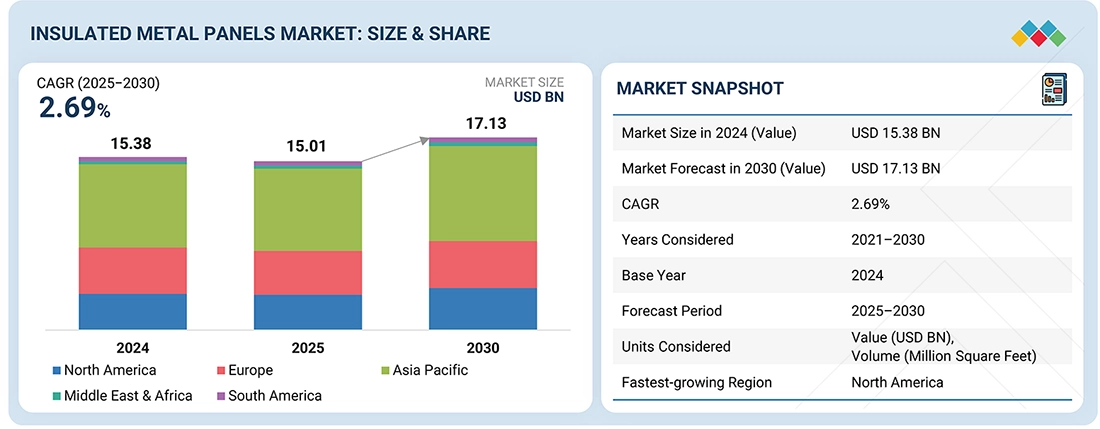
Source: Secondary Research, Interviews with Experts, MarketsandMarkets Analysis
The insulated metal panels market is projected to reach USD 17.13 billion by 2030, up from USD 15.01 billion in 2025, at a CAGR of 2.69% from 2025 to 2030. The market's growth is driven by rising demand for energy-efficient and sustainable buildings, compelling developers to adopt high-performance building envelope solutions. Tighter building energy standards and fire-safety regulations are promoting the use of advanced insulation systems. Demand is increasing amid rapid industrialization, urbanization, and infrastructure development, particularly in the Asia-Pacific region. Expansion of warehouses, cold storage, and data centers, along with logistics, is also contributing to the growth of the market.
KEY TAKEAWAYS
-
BY REGIONAsia Pacific dominated the insulated metal panels market, with a share of 48.0% in 2024.
-
BY METAL TYPEBy metal type, the aluminum segment is expected to register the highest CAGR of 3.22% during the forecast period in terms of value.
-
BY INSULATION MATERIALBy insulation material, the mineral wool segment is projected to grow at the fastest rate from 2025 to 2030.
-
BY APPLICATIONBy application, exterior walls accounted for the largest market share, in terms of value.
-
BY END-USEBy end-use, the non-residential segment is projected to grow at the fastest rate from 2025 to 2030.
-
COMPETITIVE LANDSCAPE - KEY PLAYERSKingspan Group, Nucor Corporation, ArcelorMittal, Recticel NV/SA, and Tata Steel are identified as star players in this market.
-
Competitive Landscape-StartupsStructall Building Systems, Inc., Green Span Profiles, Structural Panels Inc., Brdeco Group, and FALK Bouwsystemen B.V., among others, are focusing on cost-competitive offerings and regional supply chains.
The growing adoption of prefabricated and modular construction is boosting the use of panels, with installation occurring at an expedited pace. Aging buildings are creating new opportunities in retrofit and renovation work. There are also government incentives and green building programs that continue to fuel long-term market growth.
TRENDS & DISRUPTIONS IMPACTING CUSTOMERS' CUSTOMERS
The major trends in the market for insulated metal panels include a growing emphasis on energy-efficient and sustainable construction, as well as the rising popularity of prefabricated and modular construction. Key disruptive factors include stricter fire safety and building codes, improvements in insulation core processes, and volatile raw material prices, all of which are reshaping product development and supply chains.
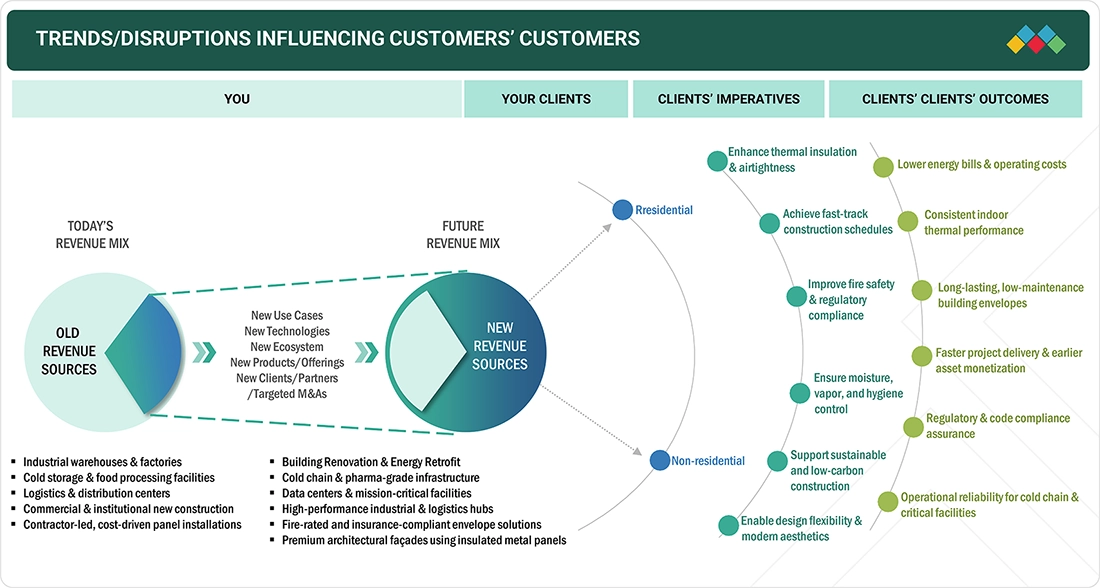
Source: Secondary Research, Interviews with Experts, MarketsandMarkets Analysis
MARKET DYNAMICS

Level
-
Global Construction Scale, Urbanization, and Sustainability Mandates

-
GHGs Reduction & Sustainability Initiatives


Level
-
High Upfront Costs Limit Adoption Despite Long-Term Benefits

-
Awareness Gaps and Misconceptions


Level
-
Expanding Renovation and Retrofit Activities


Level
-
Intense Competition from Alternative Wall Systems

Source: Secondary Research, Interviews with Experts, MarketsandMarkets Analysis
Driver: GHGs Reduction & Sustainability Initiatives
The growing global focus on GHG emission reduction and sustainability is a major driver of the insulated metal panels market, with governments, architects, and developers directing their energy conservation efforts toward the construction industry. Insulated metal panels help achieve this by reducing carbon emissions from heating and cooling energy use, thanks to their high levels of insulation and airtightness, thereby lowering a building's operational carbon emissions over its life cycle. In Europe, adoption is high as a result of stringent energy policies, whereas in North America, incentives for net-zero buildings are in place. Asia Pacific and emerging markets also experience high growth, driven by urbanization, sustainability policies, and increased environmental awareness.
Restraint: High Upfront Costs Limit Adoption of Insulated Metal Panels Despite Long-Term Benefits
The initial high cost of insulated metal panels is also a major restraint, as the cost of panels is not the only factor to consider; installation, transportation, and handling also require specialized expertise. These tasks demand high-level engineering and labor, which can be problematic for small and mid-size contractors. This cost difference is more pronounced in large projects, such as warehouses, cold warehouses, and industrial projects, where the volume of material used is high. Other logistics, storage, and importation expenses also increase start-up investment, particularly where few local production options exist. Short-term budget constraints tend to discourage adoption of long-term benefits, such as energy savings, because those benefits are realized over time.
Opportunity: Expanding Renovation and Retrofit Activities
Intensive urbanization and aging buildings are driving strong demand for renovation and retrofitting, with a strong emphasis on improving energy efficiency and meeting more stringent environmental standards. Insulated metal panels are well suited to retrofit projects because of their thermal performance, lightweight construction, and rapid installation, enabling upgrades without major structural changes. They can be used in commercial and industrial buildings, where they allow quick replacement of outdated cladding, resulting in less downtime and lower labor costs. Home retrofits offer enhanced comfort, lower energy costs, and improved aesthetics. Net-zero targets, government incentives, and green building codes also contribute to the use of insulated metal panels in retrofit projects.
Challenge: Intense Competition from Alternative Wall Systems
Insulated metal panels offer strong performance advantages, but they face competition from conventional building materials such as concrete, brick, masonry, SIPs, and prefabricated composite walls. These materials are well established, widely known, and often perceived as more affordable, particularly in cost-sensitive markets. Resistance to insulated metal panels as a new solution stems from familiarity among architects and contractors. Moreover, developed supply chains and the easy availability of skilled labor still favor traditional construction materials.
INSULATED METAL PANELS MARKET: COMMERCIAL USE CASES ACROSS INDUSTRIES
| COMPANY | USE CASE DESCRIPTION | BENEFITS |
|---|---|---|
 |
Metl-Span supplied insulated metal panels for Hello Fresh’s 210,000 sq. ft. distribution center in Newnan, Georgia, the company’s first facility in the Southeast. The project required a cold-storage-ready building envelope that could maintain consistent internal temperatures while meeting an aggressive three-month construction timeline. To support the interior box-in-box construction within an existing shell, the project team selected 4” CF Mesa insulated metal panels in Polar White, enabling rapid installation and on-time delivery. Over 150,000 sq. ft. of panels were installed within ten weeks, supporting Hello Fresh’s fast regional expansion. | Enabled quick and simple installation, meeting tight project schedules | Provided reliable thermal performance for cold storage and cold dock areas | Supported both interior and exterior cladding with design flexibility |Delivered a clean, durable, and easily washable surface with concealed fasteners |
Logos and trademarks shown above are the property of their respective owners. Their use here is for informational and illustrative purposes only.
MARKET ECOSYSTEM
Raw material suppliers, panel manufacturers, and distributors/contractors involved in installing insulated metal panels are the components of the insulated metal panels market ecosystem. The ecosystem is supported by architects, EPC companies, and government agencies that can encourage its implementation through energy-efficiency rules and renewable building standards. Industrial, commercial, and cold storage end users ultimately determine demand throughout the value chain.
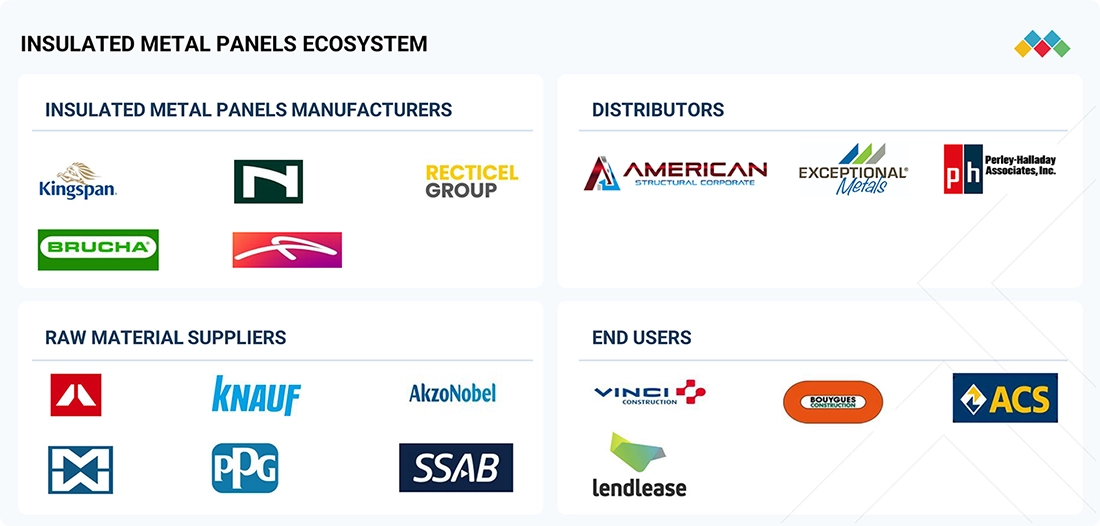
Logos and trademarks shown above are the property of their respective owners. Their use here is for informational and illustrative purposes only.
MARKET SEGMENTS
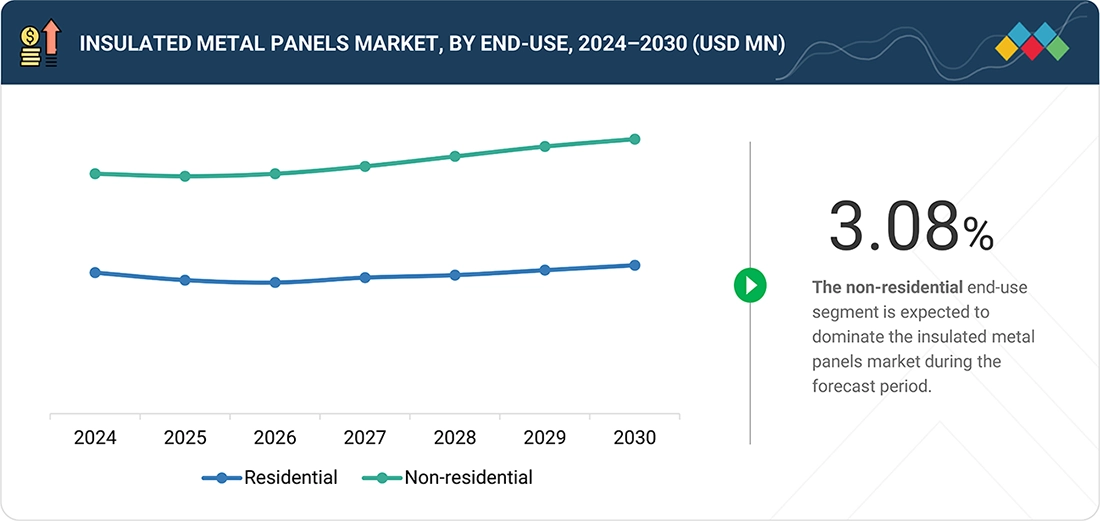
Source: Secondary Research, Interviews with Experts, MarketsandMarkets Analysis
Insulated Metal Panels Market, By Metal Type
The fastest-growing meal type in the insulated metal panels market is aluminum, as it is lightweight, reducing structural load and installation time. It has excellent corrosion resistance, making it suitable for humid and coastal climates. The aluminum panels are also recyclable, aligning with sustainability objectives.
Insulated Metal Panels Market, By Insulation Material
PIR/PUR insulation material is the leading segment because it offers superior thermal insulation and thinner panel thickness. It helps buildings meet stringent energy-efficiency standards while reducing operating costs. Its popularity in industrial and cold storage facilities, as well as in business premises, further propels its popularity.
Insulated Metal Panels Market, By Application
The most rapidly growing applications are roofs, driven by rising demand for energy-saving roofing solutions. Insulated metal panel roofs help reduce heat gain and cooling costs, particularly in hot environments. Expansion in logistics hubs, warehouses, and factories further increases demand.
Insulated Metal Panels Market, By End-use
Non-residential end-use is the leading segment, as it is widely used in industrial, commercial, and institutional buildings. Other industries that rely on insulated metal panels include manufacturing, cold storage, data storage, and logistics. The dominance of this segment is also enhanced by large-scale project sizes.
REGION
Asia Pacific to be leading region in global insulated metal panels market
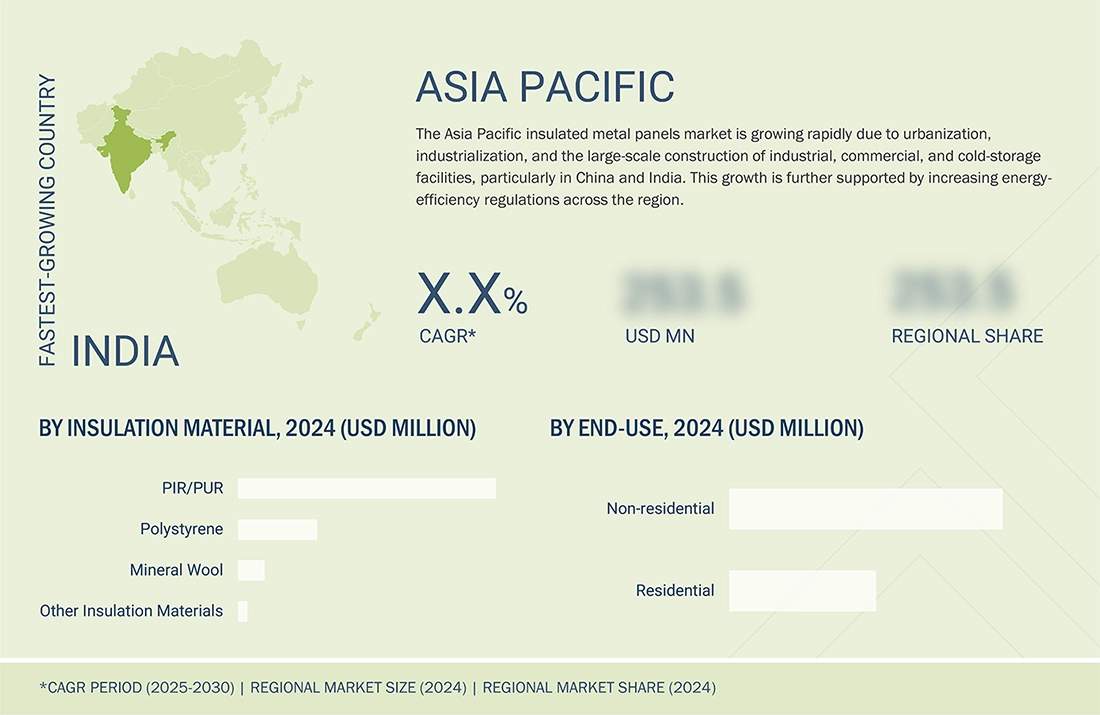
By region, Asia Pacific is the leading region in the insulated metal panels market because of high urbanization and extensive infrastructure development in China, India, and Southeast Asia. The thriving industrial and logistics sectors in the region, such as cold storage and warehousing, are strong drivers of demand for energy-efficient building materials. Government green building and energy efficiency programs further facilitate market expansion. Additionally, manufacturing and raw material availability are cost-effective in the Asia Pacific region, making it a critical production and consumption center.
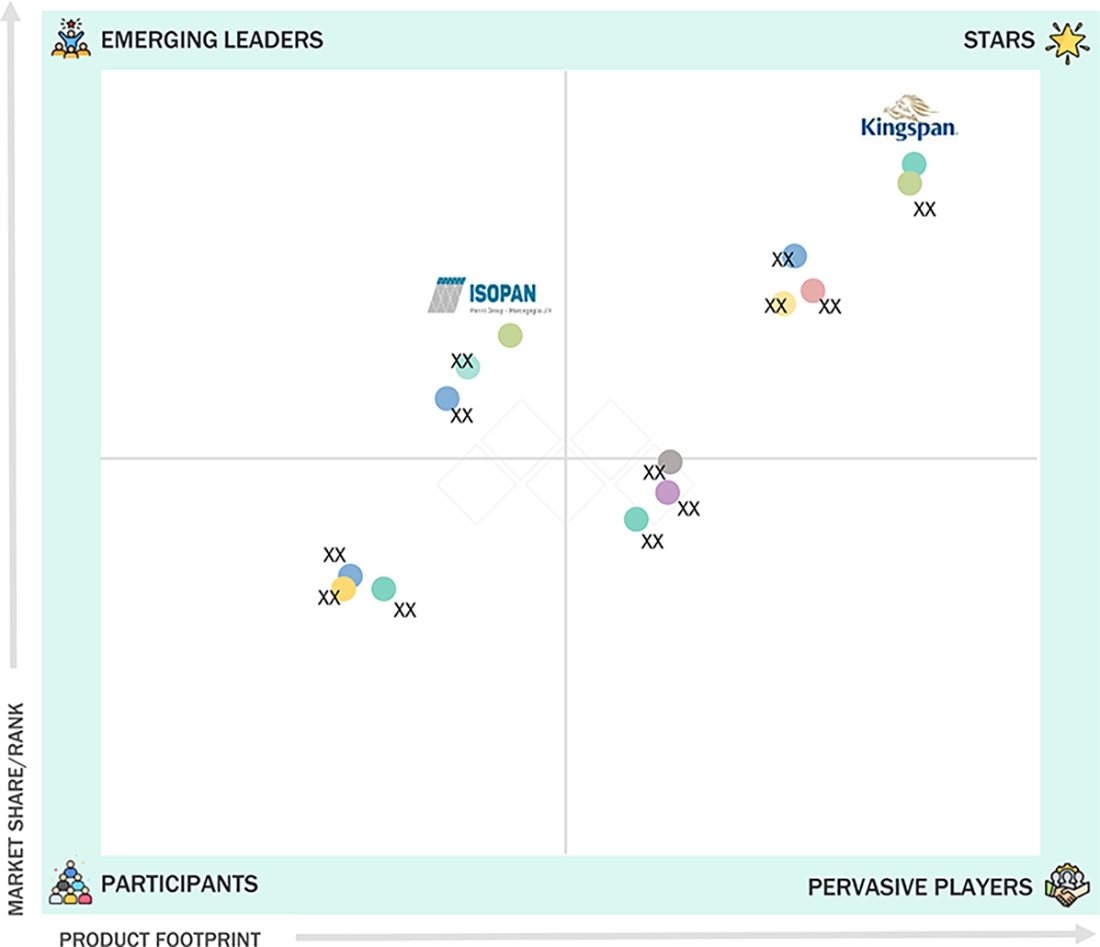
INSULATED METAL PANELS MARKET: COMPANY EVALUATION MATRIX
In the insulated metal panels market matrix, Kingspan Group (Star) leads with a comprehensive product portfolio and a focus on innovation. Isopan S.P.A (Emerging Leader) is gaining visibility through strong technological expertise.
Source: Secondary Research, Interviews with Experts, MarketsandMarkets Analysis
KEY MARKET PLAYERS
- Kingspan Group (Ireland)
- Nucor Corporation (US)
- ArcelorMittal (Luxembourg)
- Recticel NV/SA (Belgium)
- Tata Steel (India)
- Isopan S.P.A (Italy)
- KPS Global LLC (US)
- WGI Westman Group Inc. (WGI)(Canada)
- BRUCHA GmbH (Austria)
- Assan Panel A.S. (Turkey)
- Norbec Inc. (Canada)
- Zamil Steel Holding Company Ltd. (Saudi Arabia)
- PermaTherm (US)
- FALK Bouwsystemen B.V. (The Netherlands)
- ATAS International, Inc. (US)
MARKET SCOPE
| REPORT METRIC | DETAILS |
|---|---|
| Market Size in 2024 (Value) | USD 15.38 Billion |
| Market Forecast in 2030 (Value) | USD 17.13 Billion |
| Growth Rate | CAGR of 2.69% from 2025-2030 |
| Years Considered | 2021-2030 |
| Base Year | 2024 |
| Forecast Period | 2025-2030 |
| Units Considered | Value (USD Million/Billion), Volume (Million Square Feet) |
| Report Coverage | Revenue forecast, company ranking, competitive landscape, growth factors, and trends |
| Segments Covered |
|
| Regions Covered | North America, Asia Pacific, Europe, South America, Middle East & Africa |
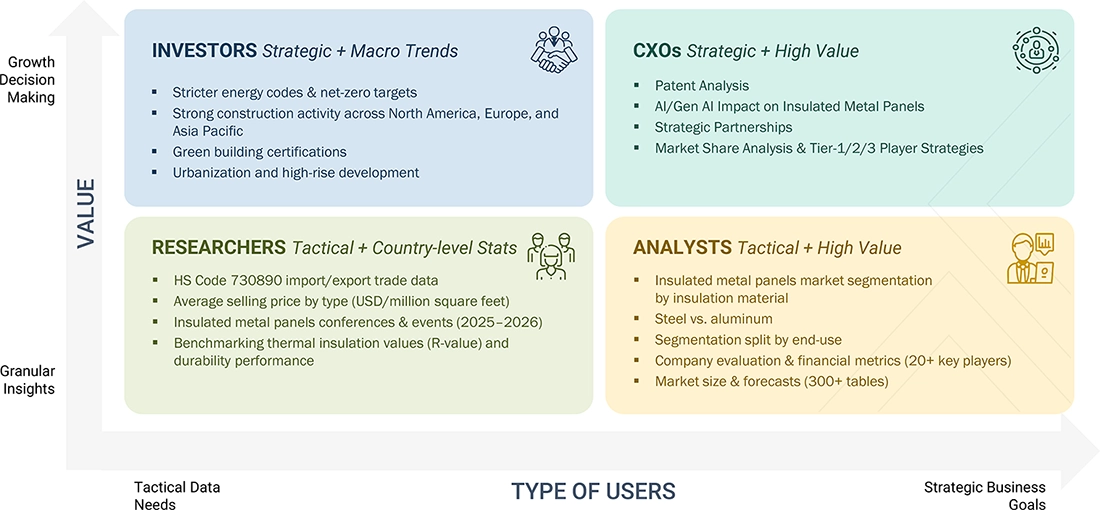
WHAT IS IN IT FOR YOU: INSULATED METAL PANELS MARKET REPORT CONTENT GUIDE
DELIVERED CUSTOMIZATIONS
We have successfully delivered the following deep-dive customizations:
| CLIENT REQUEST | CUSTOMIZATION DELIVERED | VALUE ADDS |
|---|---|---|
| Europe-based Insulated Metal Panels Market | Detailed company profiles of insulated metal panels market competitors (financials, product portfolio, production capacity), metal type (steel, aluminum, others), insulation material (PIR/PUR, polystyrene, mineral wool, others) |
|
RECENT DEVELOPMENTS
- November 2024 : Kingspan Group acquired a 51% ownership stake in Villalba, a Santiago, Chile–based manufacturer of insulated metal panels and related products.
- May 2024 : ArcelorMittal Construction completed the acquisition of Italpannelli SRL and Italpannelli Iberica. Italpannelli produces lightweight insulated panels for roofs and façades. The company operates two manufacturing plants in Zaragoza (Spain) and Abruzzo (Italy). These facilities include seven production lines with a total capacity of 13 million m² of sandwich panels per year, primarily supplying markets in central and eastern Europe, France, Germany, Italy, and Spain.
- January 2024 : Recticel completed the acquisition of REX Panels & Profiles SA. This transaction marks the second major step in implementing Recticel’s strategy to become a pan-European leader in the insulated panels market. The acquisition of REX reinforces Recticel’s mission to drive high-end, sustainable construction through innovative insulation solutions. REX specializes in producing PIR and mineral wool insulated panels for the construction industry and is strategically located in Belgium to serve customers across Western Europe.
- August 2021 : Nucor Corporation acquired Cornerstone Building Brands’ insulated metal panels (IMP) business for approximately USD 1 billion in cash, subject to standard closing adjustments. Nucor’s management team is now in place, and the CENTRIA and Metl-Span brands obtained through the acquisition have been integrated into the newly formed Insulated Panel Group, which also includes the company’s existing IMP operations under the TrueCore brand.
Table of Contents
 Exclusive indicates content/data unique to MarketsandMarkets and not available with any competitors.
Methodology
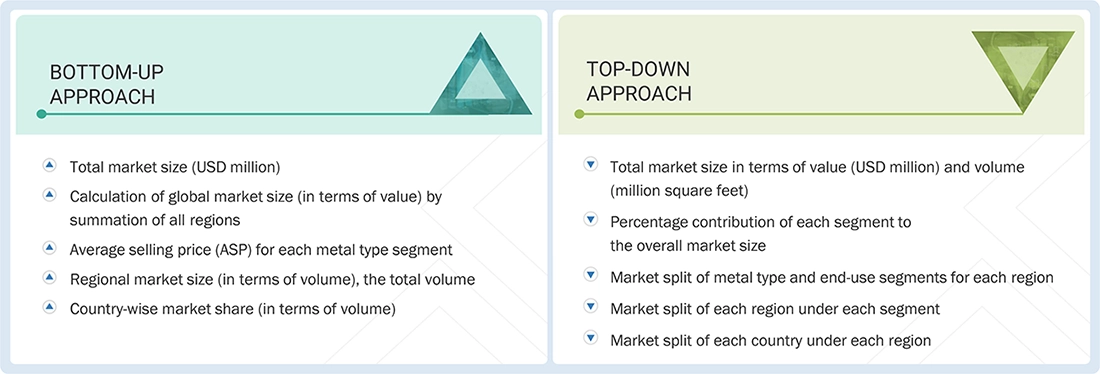
The study involved four major activities to estimate the current size of the global insulated metal panels market. Exhaustive secondary research was conducted to collect information on the insulated metal panels market, the peer product market, and the parent product group market. The next step was to validate these findings, assumptions, and size estimates with industry experts across the insulated metal panels value chain through primary research. The top-down and bottom-up approaches were employed to estimate the overall size of the insulated metal panels market. After that, market breakdown and data triangulation procedures were used to determine the size of different segments of the market.
Secondary Research
The market for companies offering insulated metal panels was analyzed using secondary data from paid and unpaid sources, by examining the product portfolios of major companies in the ecosystem, and by rating companies based on performance and quality. For this study, secondary sources such as Business Standard, Bloomberg, the World Bank, and Factiva were consulted to identify and collect information on the insulated metal panels market. Secondary sources included annual reports, press releases, and investor presentations from insulated metal panels vendors, forums, certified publications, and white papers. The secondary research provided critical information on the industry’s value chain, the total pool of key players, market classification, and segmentation from both market- and technology-oriented perspectives.
Primary Research
In the primary research process, interviews with various supply- and demand-side sources were conducted to obtain qualitative and quantitative information for this report. The supply-side sources included industry experts, such as chief executive officers (CEOs), vice presidents (VPs), marketing directors, technology and innovation directors, and related key executives from several key companies and organizations operating in the insulated metal panels market. After completing the market engineering (calculations for market statistics, market breakdown, market size estimates, market forecasting, and data triangulation), extensive primary research was conducted to gather information and verify and validate the critical numbers arrived at. Primary research was also conducted to identify segmentation types, industry trends, the competitive landscape of insulated metal panels offered by various market players, and key market dynamics, including drivers, restraints, opportunities, challenges, trends, and key player strategies. In the complete market engineering process, the top-down and bottom-up approaches, along with several data triangulation methods, were extensively used to perform market estimation and forecasting for the overall market segments and subsegments listed in this report. Extensive qualitative and quantitative analysis was performed throughout the complete market engineering process to present key information and insights throughout the report.
The following is the breakdown of primary respondents:
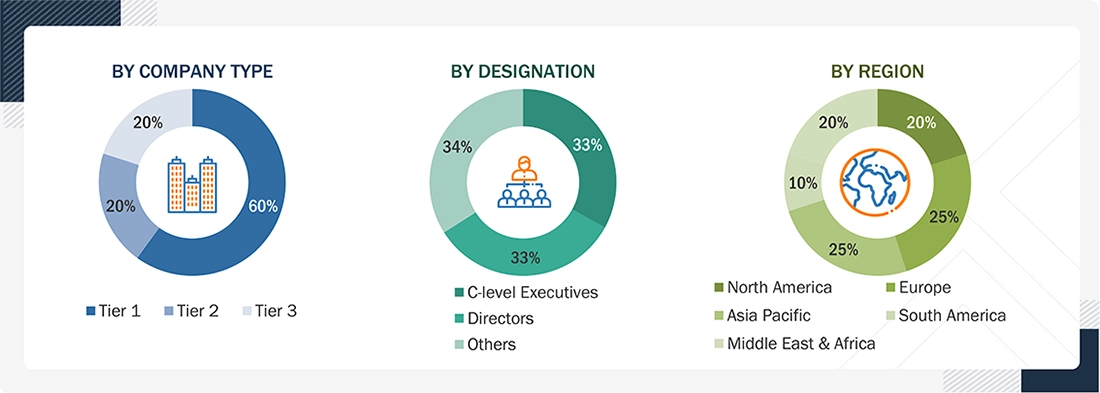
Notes: Other designations include sales, marketing, and product managers.
Tier 1: >USD 1 Billion; Tier 2: USD 500 million–1 Billion; and Tier 3: <USD 500 million
To know about the assumptions considered for the study, download the pdf brochure
Market Size Estimation
The top-down and bottom-up approaches were used to estimate and validate the size of the global insulated metal panels market. These approaches were also widely used to estimate the sizes of various dependent market segments. The research methodology used to estimate the market size included the following:
Insulated Metal Panels Market Market : Top-Down and Bottom-Up Approach
Data Triangulation
After determining the overall market size using market size estimation processes, the market was divided into several segments and subsegments. Data triangulation and market breakup procedures were employed, wherever applicable, to complete the overall market engineering process and arrive at the exact statistics for each market segment and subsegment. The data was triangulated by analyzing various factors and trends from both the demand and supply sides.
Market Definition
Insulated metal panels are building components for walls and roofs that integrate structure, insulation, and exterior protection into a single product. They consist of a three-layer sandwich construction: an outer metal sheet, an insulating core, and an inner metal sheet. These layers are permanently bonded under controlled factory conditions to create a strong, rigid, lightweight panel. The metal facings are typically steel or aluminum and are coated with protective finishes such as polyester, PVDF, galvanized, or Galvalume to provide corrosion resistance, weather durability, and aesthetic appeal. The insulating core, the most critical component of an IMP, is made from high-performance materials such as Polyurethane (PUR), Polyisocyanurate (PIR), Polystyrene (PS), or Mineral Wool. This core provides excellent thermal insulation, reducing heat transfer and improving energy efficiency in buildings. By integrating exterior cladding, insulation, and a vapor barrier into one system, insulated metal panels eliminate the need for separate on-site insulation installation. This results in faster construction, improved building performance, high R-values, and long-term durability, making insulated metal panels a versatile and cost-effective solution for industrial, commercial, and cold-storage applications.
Key Stakeholders
- Raw Material Suppliers
- Insulated Metal Panel Manufacturers
- Machinery and Equipment Suppliers
- Distributors and Dealers
- Contractors and Installers
- End Users
- Regulatory and Standards Bodies
- Project Developers and Builders
- Logistics and Supply Chain Partners
- Investors & Financial Institutions
Report Objectives
- To define, describe, and forecast the size of the global insulated metal panels market, by metal type, insulation material, application, and end-use, in terms of value and volume
- To forecast the market size for North America, Europe, Asia Pacific, South America, and the Middle East & Africa, along with their respective countries, in terms of value and volume
- To provide detailed information on the significant drivers, restraints, opportunities, and challenges influencing the market
- To strategically analyze micromarkets concerning individual growth trends, prospects, and their contribution to the market
- To assess growth opportunities in the market for stakeholders and provide details on the competitive landscape for market leaders
- To strategically profile key players and comprehensively analyze their market share and core competencies
- To analyze competitive developments, such as expansions, acquisitions, product launches, partnerships, agreements, and contracts in the insulated metal panels market
- To provide the impact of AI/Gen AI on the market
- To provide the macroeconomic outlook for each region covered under the study, and the impact of the 2025 US tariff on the market
Available customizations:
With the given market data, MarketsandMarkets offers customizations according to client-specific needs.
The following customization options are available for the insulated metal panels report:
Product Analysis
- A product matrix that gives a detailed comparison of the product portfolio of each company
Regional Analysis
- A further breakdown of the insulated metal panels market for additional countries
Company Information
- Detailed analysis and profiling of additional market players (up to five)
Key Questions Addressed by the Report
How is the construction and industrial sector driving demand for insulated metal panels market?
Growth in commercial, industrial, and cold storage facilities fuels demand for energy-efficient and durable wall and roofing solutions.
Which innovations are enhancing the Insulated Metal Panels Market?
Advances include high-performance cores, fire-resistant panels, pre-finished coatings, and modular designs for faster installation.
How do environmental regulations affect the Insulated Metal Panels Market?
Energy efficiency and green building standards push adoption of insulated metal panels to reduce heating and cooling loads.
Which regions are leading the Insulated Metal Panels Market?
North America and Europe focus on sustainable construction and advanced panel technologies, while Asia-Pacific sees strong demand from industrial growth.
What role does sustainability play in the adoption of Insulated Metal Panels Market?
Recyclable materials, long lifespan, and energy savings contribute to lower carbon footprint and support green building initiatives.


Personalize This Research
- Triangulate with your Own Data
- Get Data as per your Format and Definition
- Gain a Deeper Dive on a Specific Application, Geography, Customer or Competitor
- Any level of Personalization
Let Us Help You
- What are the Known and Unknown Adjacencies Impacting the Insulated Metal Panels Market
- What will your New Revenue Sources be?
- Who will be your Top Customer; what will make them switch?
- Defend your Market Share or Win Competitors
- Get a Scorecard for Target Partners

Custom Market Research Services
We Will Customise The Research For You, In Case The Report Listed Above Does Not Meet With Your Requirements
Get 10% Free CustomisationTESTIMONIALS
We at Nissan Chemicals Corporation have been clients of MarketsandMarkets for more than a year now. We recently consulted MarketsandMarkets for a study, the team at MarketsandMarkets was extremely professional and organized. The business insights were very detailed and aligned well with our expectations that really helped us formulate the Business Plans and device new strategies for development themes. MarketsandMarkets offers a unique combination of expertise and dedicated engagement model. Their research findings have helped us in designing our Pricing Strategy which will make it easier for us to predict the future sales and profits for the next ten years. We look forward to working with MarketsandMarkets in the future.
VP of Strategy & New Business Development
Leading Specialty Chemical Company
The MarketsandMarkets Engagement Model, composed of both the Knowledge Store and advisory custom research, has greatly helped us in understanding our markets and making strategic decisions. The Knowledge Store is a fast way to allow everyone in our organization to understand more about most any market they are interested in. The ability to then get custom research done and get answers to specific strategic questions and market insight has been spectacular. The Markets and Markets team feel more like colleagues than vendors and their services have helped us change our culture where statements of things like growth opportunities and competitive position are always backed by industry research.

Rich Gibson,
Director, Corporate Strategy
Milliken & Company,
Leading Industrial Manufacturer of specialty chemical, floor covering, performance and protective textile materials, and healthcaremilliken.com
MarketsandMarkets is a trusted resource that helps us to better understand markets that are near-adjacencies-whether its technology, value chain or geography. Their Knowledge Store platform provides a dashboard of markets and their characteristics which is easy to use and saves us time.
Adam Shaw,
Market Development and Strategy Manager
AdvanSix Inc. USA,
An American Leader in Chemicalswww.advansix.com
The Knowledge Store from MarketsandMarkets is a valuable tool which has helped my team acquire greater insight in to the end markets that our business serves. This has enabled us to help our company build stronger strategies throughout our planning process.
TOSHIO KINOSHITA
Senior Chif Consultion Research & Consulting Division
Mitsubishi Chemical Research Corporation,
Leading Manufacturer of Chemical Productswww.mitsubishichem-res.co.jp/en/

We recently engaged with MarketsandMarkets for a study, the team not only clearly understood our business objectives but was also extremely professional in the way they handled the entire project. The study was efficiently conducted in a phase-wise manner, and the engagement model furnished us with high-quality business insights that far exceeded our expectations at each phase. We were especially happy that MarketsandMarkets could provide us with both, an English as well as a Japanese version of the study. A special thanks to the Analyst Team and Client Services Team, whose fluency in Japanese enhanced our comfort level, as we could converse with them in our preferred language.
Independent entrepreneurs
Arrow Precision
We approached MarketsandMarkets for study on Proppants Market, and their work exceeded our expectations. The study conducted was comprehensive and enabled us to view the market through the various dimensions. In addition, the team was extraordinarily responsive throughout the process and resolved our queries on time. I strongly recommend MarketsandMarkets and will certainly consider them for additional market assessments we will need in the future.
Global engineering company, Japan
Deputy Manager,
Strategic Planning OfficeThe high-quality insights shared by the MarketsandMarkets team helped us understand the pharmaceutical plant designers in a specific geography. It also captured the risks that we may likely face in communicating with our potential partners. The study would enable us identify partners, which would impact our future growth.
- China Insulated Metal Panels Market
- Japan Insulated Metal Panels Market
- India Insulated Metal Panels Market
- South Korea Insulated Metal Panels Market
- Australia Insulated Metal Panels Market
- UK Insulated Metal Panels Market
- Germany Insulated Metal Panels Market
- France Insulated Metal Panels Market
- Italy Insulated Metal Panels Market
- Spain Insulated Metal Panels Market
- Canada Insulated Metal Panels Market
- Mexico Insulated Metal Panels Market
- Brazil Insulated Metal Panels Market
- Argentina Insulated Metal Panels Market
- South Africa Insulated Metal Panels Market
- US Insulated Metal Panels Market
- Rest Of Europe Insulated Metal Panels Market
- Rest Of Asia Pacific Insulated Metal Panels Market






Growth opportunities and latent adjacency in Insulated Metal Panels Market