This research study extensively used secondary sources, directories, and databases to identify and collect valuable information to analyze the global ligase enzymes market. In-depth interviews were conducted with various primary respondents, including key industry participants, subject-matter experts (SMEs), C-level executives of key market players, and industry consultants, to obtain and verify critical qualitative and quantitative information and assess the market's growth prospects. The global market size estimated through secondary research was then triangulated with inputs from primary research to arrive at the final market size.
Secondary Research
Secondary research was used mainly to identify and collect information for the extensive, technical, market-oriented, and commercial study of the ligase enzyme market. The secondary sources used for this study The secondary sources used for this study include the International Union of Biochemistry and Molecular Biology (IUBMB), National Institutes of Health (NIH), National Human Genome Research Institute (NHGRI), American Society for Biochemistry and Molecular Biology (ASBMB), Canadian Society for Molecular Biosciences (CSMB), Genome Canada; Corporate & Regulatory Filings, Annual Reports, SEC Filings, Investor Presentations, and Financial Statements; Business Magazines & Research Journals; Press Releases, MarketsandMarkets Analysis. These sources also obtained key information about major players, market classification, and segmentation according to industry trends, regional/country-level markets, market developments, and technology perspectives.
Primary Research
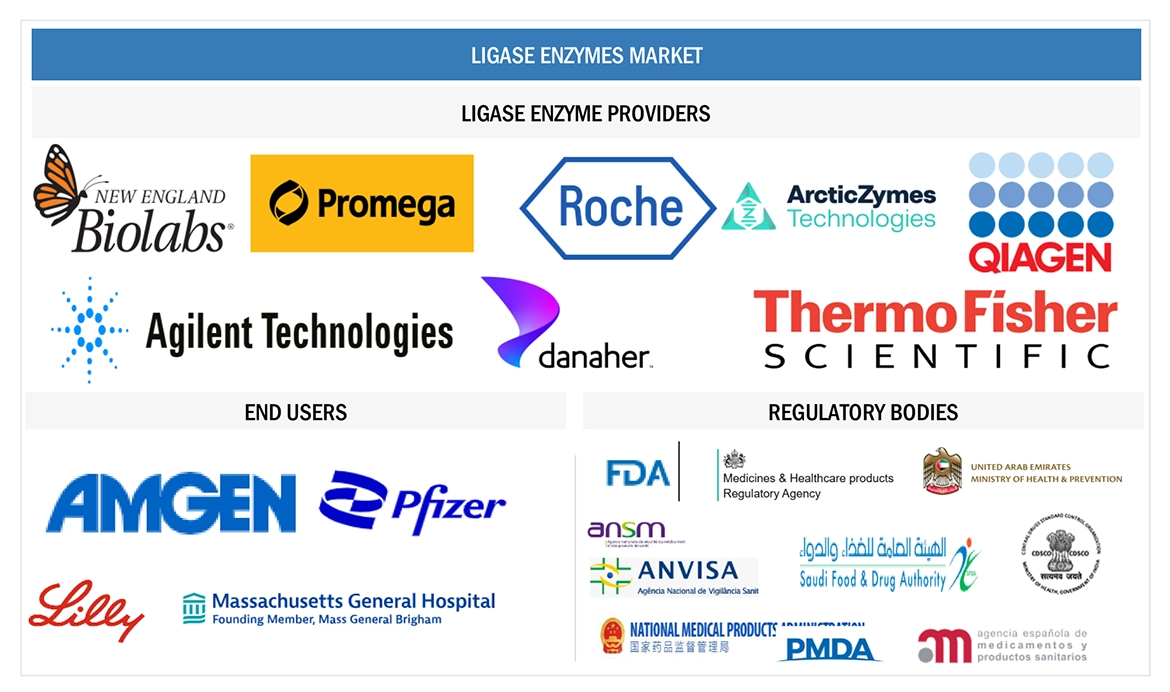
Extensive primary research was conducted after acquiring basic knowledge about the global ligase enzyme market scenario through secondary research. Several primary interviews were conducted with market experts from both the demand side (personnel from, pharmaceutical & and biotechnology companies, hospitals & diagnostic laboratories, academic & research institutes, and medical device companies) and supply side (C-level and D-level executives, product managers, and marketing and sales managers of key manufacturers, distributors, and channel partners, among others, across six regions—North America, Europe, the Asia Pacific, Latin America, Middle East, and Africa. Approximately 70% of primary interviews were conducted with supply-side representatives, while demand-side participants accounted for the remaining share. This preliminary data was collected through questionnaires, e-mails, online surveys, personal interviews, and telephonic interviews.
The following is a breakdown of the primary respondents:
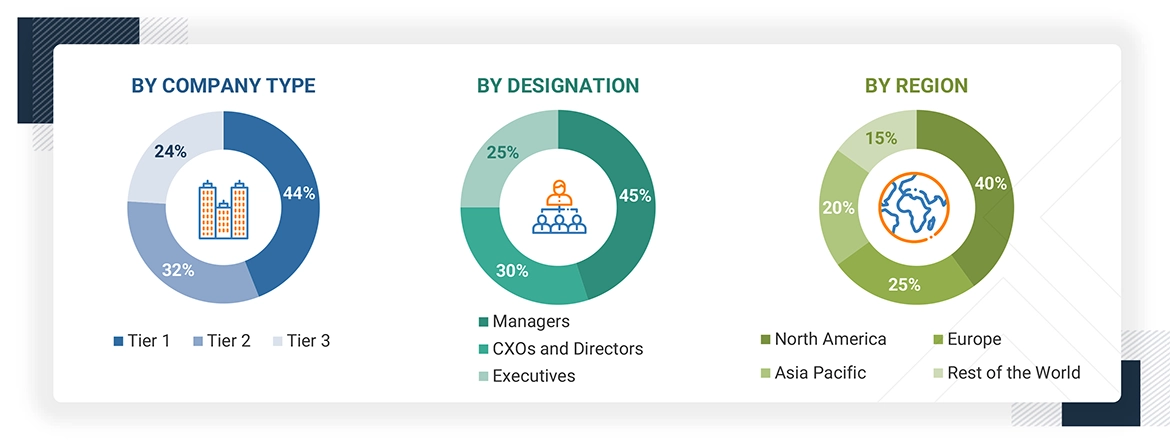
To know about the assumptions considered for the study, download the pdf brochure
Market Size Estimation
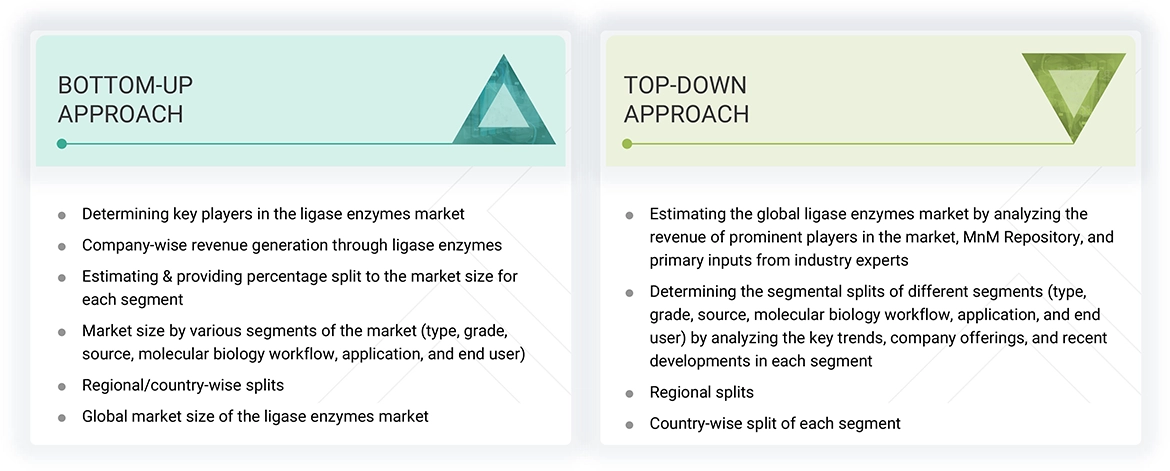
Both top-down and bottom-up approaches were used to estimate and validate the total size of the ligase enzyme market. These methods were also used extensively to estimate the size of various subsegments in the market. The research methodology used to estimate the market size includes the following:
Data Triangulation
After arriving at the overall market size from the market size estimation process explained above, the total market was divided into several segments and subsegments. To complete the overall market engineering process and arrive at the exact statistics for all segments and subsegments, data triangulation and market breakdown procedures were employed, wherever applicable.
Market Definition
Ligase enzymes are specialized biomolecules that catalyze the joining of nucleic acids by forming phosphodiester bonds, a reaction fundamental to processes such as DNA cloning, repair, sequencing, library preparation, and RNA modification. The scope of the ligase enzymes market studied in this report includes DNA, RNA, and other ligase enzymes derived from various sources, including viral, bacterial, arachnid, and eukaryotic sources, divided into RUO, GMP, and diagnostic grade ligases used in research, diagnostic, and therapeutic applications.
Stakeholders
-
Academic & Research Institutes
-
Ligase Enzyme Manufacturers
-
Contract Research Organizations (CROs)
-
Diagnostics Companies
-
Market Research & Consulting Firms
-
Pharmaceutical & Biotechnology Companies
-
Regulatory Agencies
-
Venture Capitalists
-
Government Organizations
-
Contract Development & Manufacturing Organizations (CDMOs)
-
Hospitals & Diagnostic Laboratories
Report Objectives
-
To define, describe, and forecast the global ligase enzyme market based on type, grade, source, molecular biology workflow, application, end user, and region
-
To provide detailed information regarding the major factors influencing the market growth (such as drivers, restraints, opportunities, and challenges)
-
To strategically analyze micro-markets with respect to individual growth trends, prospects, and contributions to the overall market
-
To analyze the opportunities in the market for stakeholders and provide details of the competitive landscape for market leaders
-
To forecast the size of the market segments with respect to six regions, namely, North America, Europe, the Asia Pacific, Latin America, the Middle East, and Africa
-
To profile the key players in the global ligase enzyme market and comprehensively analyze their core competencies and market shares
-
To track and analyze competitive developments such as product launches, expansions, agreements, partnerships, and collaborations in the ligase enzymes market
-
To benchmark players in the ligase enzymes market using the “Company Evaluation Matrix” framework, which analyzes market players based on various parameters, including product portfolio, geographic reach, and market share


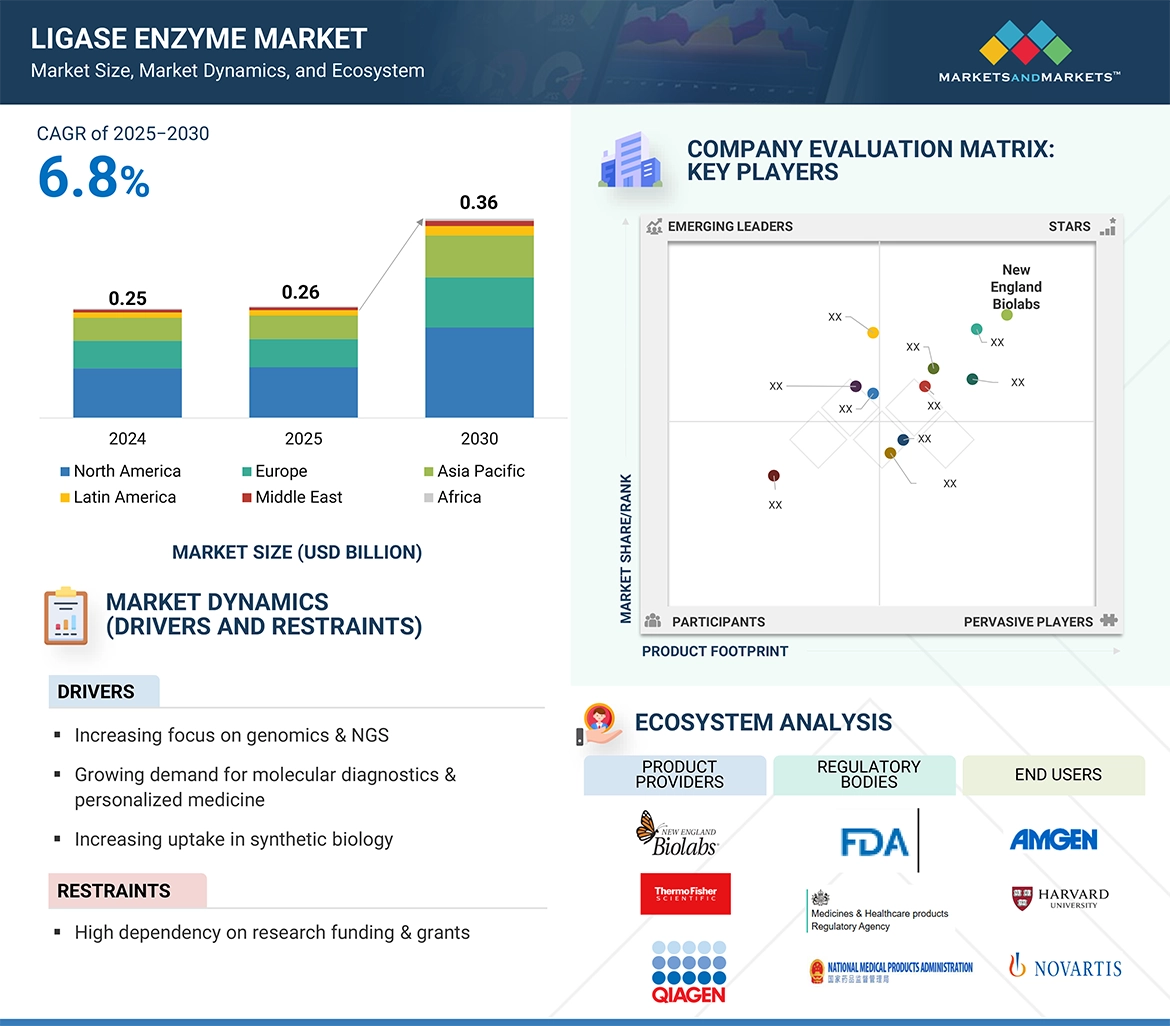


 HIGHEST CAGR MARKET IN 2025–2030
 US: FASTEST-GROWING MARKET IN THE REGION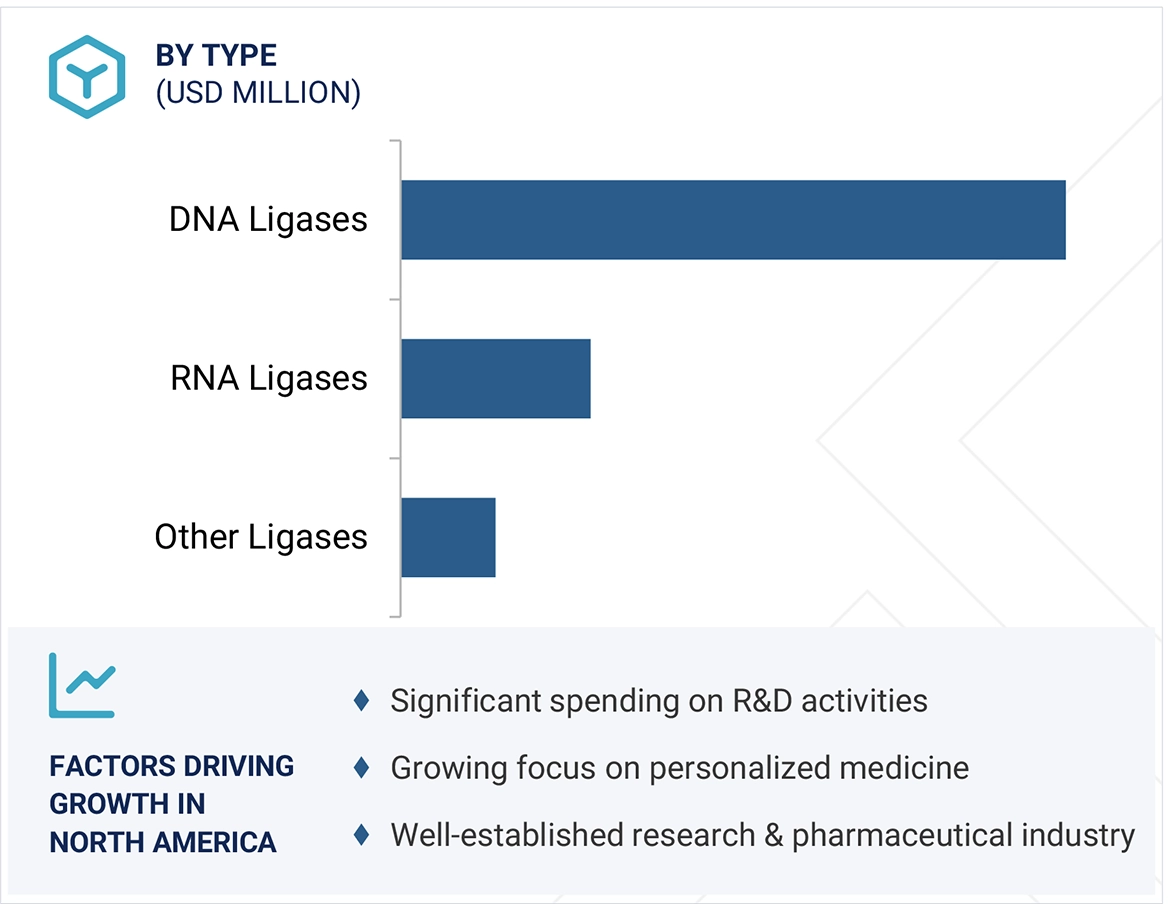














Growth opportunities and latent adjacency in Ligase Enzymes Market