Marine Vessels Market Size, Share & Trends

Marine Vessels Market Size, Share and Trends By Ship Type (Destroyer, Frigate, Corvette, Patrol Vessels, Passenger Vessels, Container Vessels, Tanker), Tonnage (100 - 500 DWT, 500 - 5,000 DWT, 5,000 - 15,000 DWT, >15,000 DWT), Operation, and Region - Global Forecast To 2030




MARINE VESSELS MARKET SIZE, SHARE & TRENDS
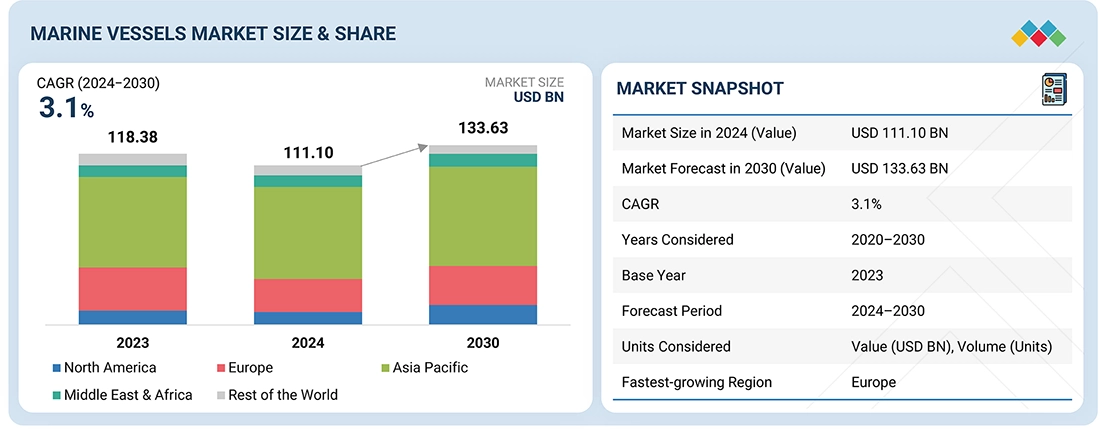
According to Marketsandmarkets, The global Marine Vessels Market size was valued at USD 111.10 billion in 2024 and is projected to reach USD 133.63 billion by 2030, growing at a CAGR of 3.1% from 2024 to 2030. In terms of volume, the active fleet is expected to grow from 61,671 units in 2024 to 70,237 units by 2030.The marine vessels market is growing due to rising global trade, tourism, and fleet modernization across commercial and defense sectors. Military upgrades and fleet renewal initiatives are further accelerating market expansion.
REPORT SCOPE
| REPORT METRIC | DETAILS |
|---|---|
| Market Size in 2024 (Value) | USD 111.10 Billion |
| Market Forecast in 2030 (Value) | USD 133.63 Billion |
| Growth Rate | CAGR of 3.1% from 2024-2030 |
| Years Considered | 2020-2030 |
| Base Year | 2023 |
| Forecast Period | 2024-2030 |
| Units Considered | Value (USD Million/Billion), Volume (Unit) |
| Report Coverage | Revenue forecast, company ranking, competitive landscape, growth factors, and trends |
| Segments Covered |
|
| Regions Covered | North America, Europe, Asia Pacific, Middle East , Latin America, Africa. |
KEY TAKEAWAYS
-
By RegionThe Asia Pacific region dominated Marine Vessels market, with a share of 57.3% in 2024.
-
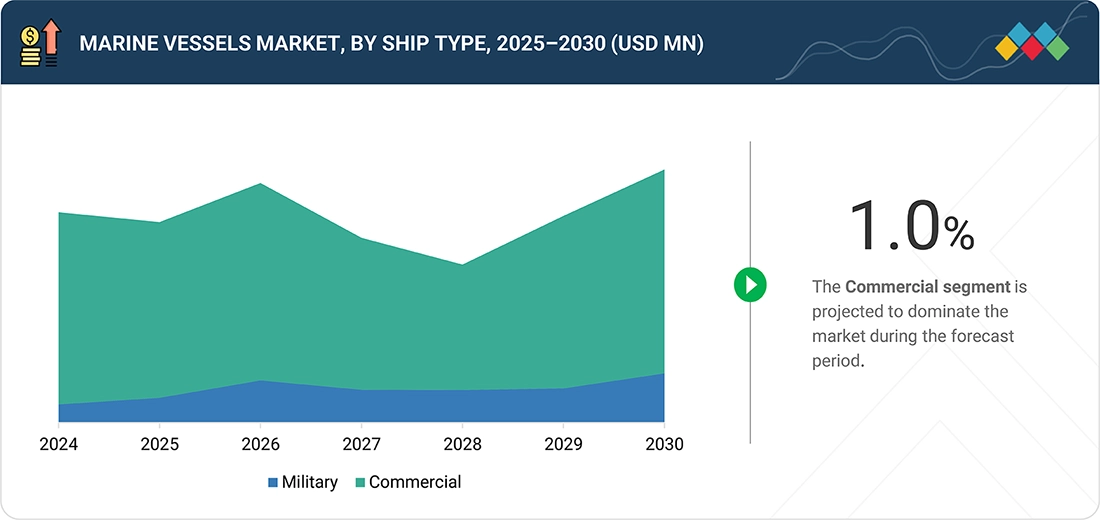
By Ship TypeBy Ship Type , the Military segment is expected to register the highest CAGR of 17.9%.
-
By TonnageBy Tonnage, the 100 DWT - 500 DWT segment is projected to grow at the fastest rate from 2025 to 2030.
-
By OperationBy Operation, the Seafaring segment is expected to dominate the market.
-
Competitive LandscapeHD Hyundai Heavy Industries Co., Ltd. , China State Shipbuilding Corporation, and Hanwha Ocean Co., Ltd. were identified as some of the star players in the Marine Vessels market (global), given their strong product portfolios, extensive global footprint, robust business strategies, and significant market share supported by wide application of their solutions.
-
Competitive LandscapeCandela,X shore and Silent Yachts, among others, have distinguished themselves among startups and SMEs due to strong product innovation, focus on sustainable marine technologies, and ability to address emerging demand for electric and eco-efficient vessels in the Marine Vessels Market.
The Marine Vessels Industry is witnessing significant growth, propelled mainly by the rising demand for commercial shipping driven by expanding global trade, the ongoing modernization and expansion of naval fleets across major economies, increasing passenger and tourism-related maritime activities, and continuous advancements in vessel design, propulsion systems, and fuel-efficient technologies.
Source: Secondary Research, Interviews with Experts, MarketsandMarkets Analysis
TRENDS & DISRUPTIONS IMPACTING CUSTOMERS' CUSTOMERS
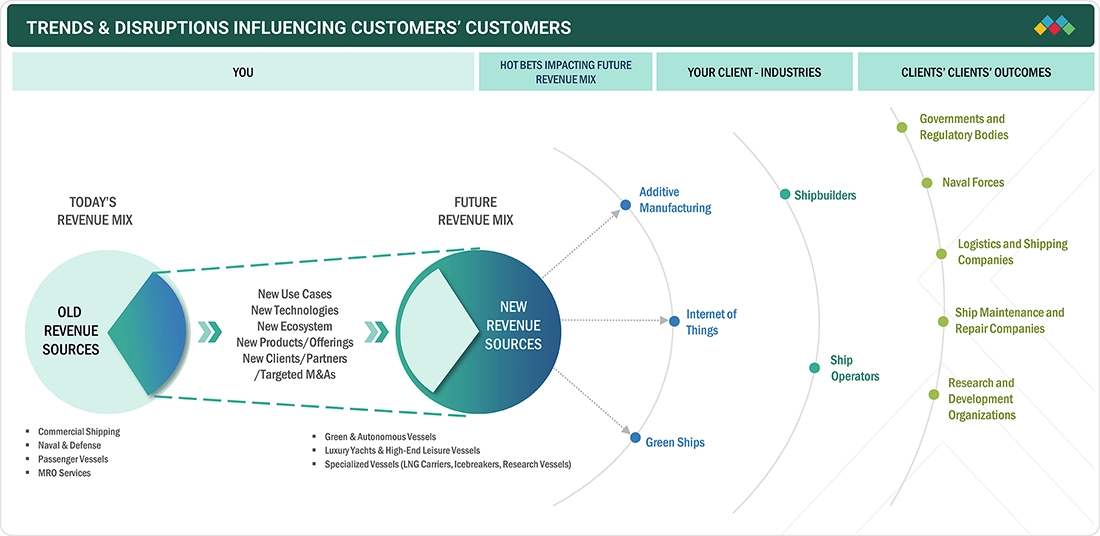
The impact on customers' business in the Marine Vessels Market stems from evolving vessel requirements and industry disruptions. Governments, naval forces, logistics companies, and ship operators are increasingly prioritizing green ships, autonomous vessels, and digital technologies such as Internet of Things (IoT) and additive manufacturing to enhance safety, efficiency, and sustainability. The shift toward smart, eco-efficient, and specialized vessels directly influences fleet modernization strategies and operational performance, driving demand for innovative maritime solutions and shaping the market’s growth trajectory.
Source: Secondary Research, Interviews with Experts, MarketsandMarkets Analysis
MARKET DYNAMICS

Level
-
The marine vessels market is driven by expanding global trade

-
Passenger and tourism demand surge, which accelerated growth of marine vessels market


Level
-
Stringent regulatory and safety standards

-
High Capital Cost.


Level
-
Technology advancement in propulsion system

-
Transition of trading and logistics companies' preference from traditional shipping to environmentally sustainable shipping.


Level
-
Supply chain disruptions in marine industry

-
Tackling aging fleet management

Source: Secondary Research, Interviews with Experts, MarketsandMarkets Analysis
Driver:The marine vessels market is driven by expanding global trade.
Expanding global trade is significantly boosting marine vessel demand, as over 80% of global trade volume is transported by sea. The need for specialized and high-capacity vessels is increasing to efficiently handle diverse cargo types and optimize operational costs. A large and strategically deployed global fleet is critical to address trade imbalances, support supply chain reliability, and capitalize on emerging growth opportunities in the maritime sector.
Restraint: Stringent regulatory and safety standards.
Stringent regulatory and safety standards impose operational and financial challenges on the Marine Vessels Market, requiring compliance with diverse maritime regulations across regions. Operators must invest heavily in safety equipment, certifications, inspections, crew training, and eco-friendly technologies to meet environmental and safety requirements. While essential for safety and reputation, these compliance efforts are resource-intensive and increase operational complexity and costs.
Opportunity: Technology advancement in propulsion system.
Technology advancements in propulsion systems, particularly dual-fuel methanol engines, are driving the shift toward decarbonization and regulatory compliance in the maritime industry. These engines enable vessels to operate efficiently using both conventional and green methanol fuels, reducing GHG, SOx, and NOx emissions while enhancing fuel flexibility. Innovations in engine design improve operational efficiency and sustainability, supporting fleet modernization. Leading providers like Wärtsilä and MAN Energy Solutions are at the forefront of these developments, promoting cleaner and more adaptable marine propulsion solutions.
Challenge:Supply chain disruptions in marine industry.
Supply chain disruptions in the marine industry are delaying vessel construction, maintenance, and service upgrades due to shortages of essential materials and components, resulting in higher costs and reduced profitability. Operational delays in obtaining spare parts and integrating advanced technologies impact reliability, customer satisfaction, and technological progress. These challenges also hinder investment in new vessels and infrastructure, increasing market volatility. Companies are focusing on strategic supply chain management, supplier diversification, and stockpiling to mitigate future disruptions.
MARINE VESSELS MARKET SIZE, SHARE & ANALYSIS: COMMERCIAL USE CASES ACROSS INDUSTRIES
| COMPANY | USE CASE DESCRIPTION | BENEFITS |
|---|---|---|
 |
Digital shipyard transformation using Siemens PLM to manage design and operations | Improved productivity, reduced errors, enhanced design data management |
 |
Energy transition with LNG, hydrogen, digital twins, and eco-design principles | Improved efficiency, lower emissions, enhanced sustainability |
 |
PLM-based turbocharger lifecycle optimization and production efficiency | Reduced design time, better aftermarket support, improved efficiency |
 |
Adopted best practices from commercial shipbuilding to enhance shipbuilding efficiency | Shorter delivery timelines, cost reduction, improved operational readiness |
 |
Used mixed reality and digital twin for ferry design and collaboration | Increased design accuracy, reduced iterations, enhanced stakeholder collaboration |
Logos and trademarks shown above are the property of their respective owners. Their use here is for informational and illustrative purposes only.
MARKET ECOSYSTEM
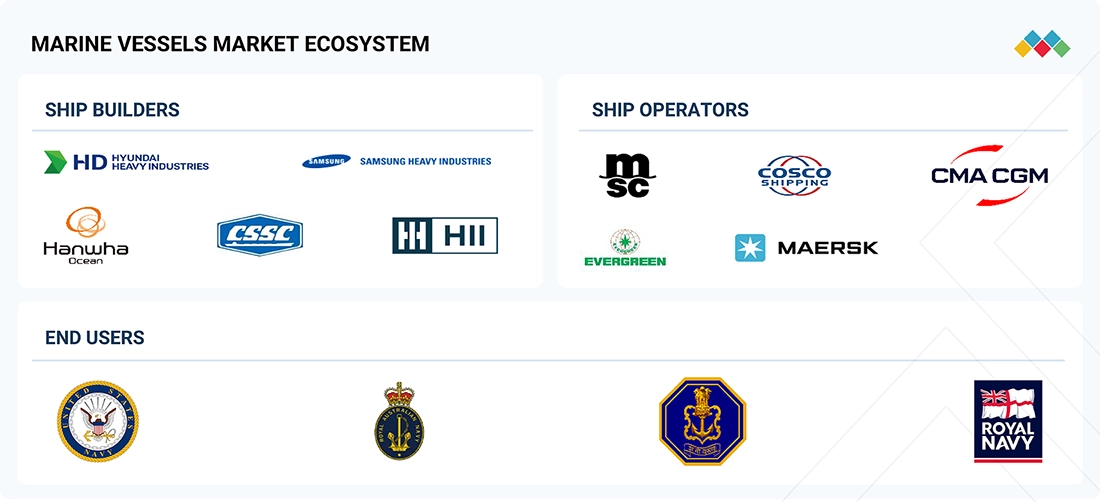
The Marine Vessels Market ecosystem consists of shipbuilders (CSSC, Mitsubishi Heavy Industries, Hyundai Heavy Industries, Samsung Heavy Industries), ship operators (Maersk, Evergreen, CMA CGM, COSCO Shipping, MSC), and end users (Royal Navy, Indian Navy, US Navy). Shipbuilders design and construct advanced commercial, defense, and specialized vessels, while ship operators manage large fleets for global trade, logistics, and cargo movement. End users, including naval forces and maritime authorities, drive demand for technologically advanced, secure, and efficient vessels. Collaboration across the ecosystem supports innovation, fleet modernization, and operational efficiency, shaping the market's growth.
Logos and trademarks shown above are the property of their respective owners. Their use here is for informational and illustrative purposes only.
MARKET SEGMENTS
Source: Secondary Research, Interviews with Experts, MarketsandMarkets Analysis
Marine Vessels Market, By Ship Type
Commercial vessels dominate the Marine Vessels Market due to the rapid expansion of global trade, rising demand for cargo transportation, and increasing reliance on cost-efficient maritime logistics. Their large-scale deployment across container shipping, bulk carriers, and tankers strengthens their market share and drives sustained investment in modern, high-capacity fleets.
Marine Vessels Market, By Tonnage
Vessels with over 15,000 Deadweight Tonnage (DWT) lead the market as they enable efficient long-haul transportation of large cargo volumes, reducing per-unit shipping costs and improving profitability. Their suitability for international trade routes and high-capacity freight operations makes them the preferred choice for global shipping companies.
Marine Vessels Market, By Operations
Seafaring vessels dominate due to increasing demand for regional trade, passenger transport, and cost-effective cargo movement across rivers and canals. They offer lower fuel consumption, easier regulatory compliance, and strong government support for inland waterway development, making them a strategic segment for sustainable maritime logistics.
REGION
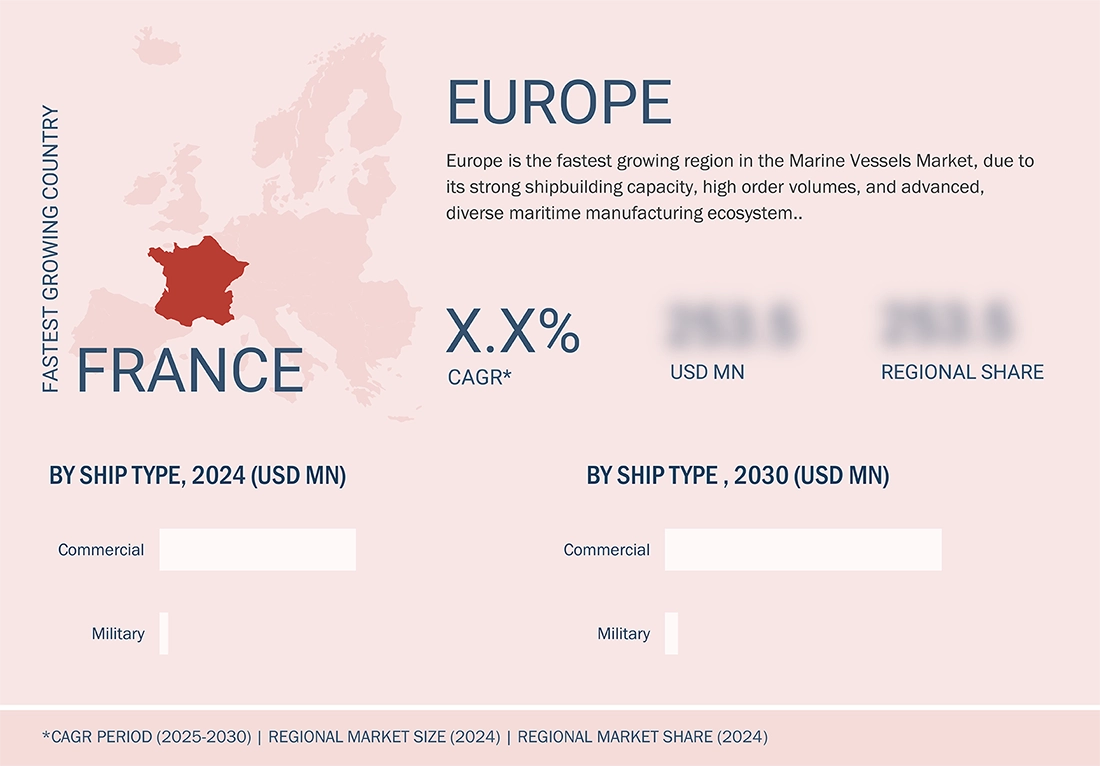
Europe to be fastest-growing region in global marine vessels market during forecast period
The European marine vessels market is expected to register the highest CAGR during the forecast period, driven by strong emphasis on green maritime initiatives, strict environmental regulations, and accelerated adoption of LNG, hydrogen, and electric-powered vessels. The region’s advanced shipbuilding capabilities, supported by digitalization, automation, and smart port infrastructure, are driving demand for next-generation vessels. Additionally, increasing investments in naval modernization, offshore energy projects, and maritime logistics strengthen Europe’s position as a high-growth market.
MARINE VESSELS MARKET SIZE, SHARE & ANALYSIS: COMPANY EVALUATION MATRIX
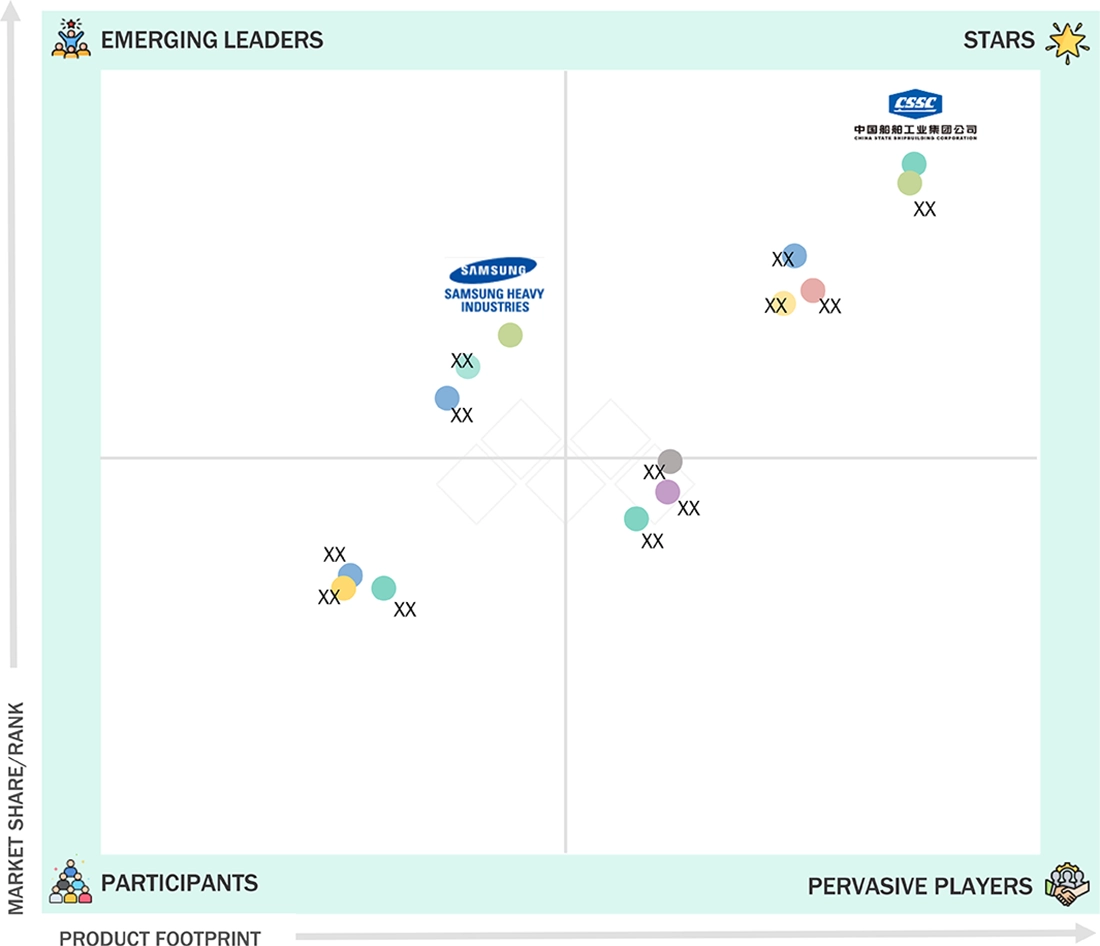
In the marine vessels market matrix, China State Shipbuilding Corporation (Star) leads with a strong market share and extensive product footprint, driven by its large-scale production capabilities, advanced technologies, and strong presence in commercial and naval vessel programs. Samsung Heavy Industries Co., Ltd (Emerging Leader) is emerging as a leader driven by its focus on high-value vessel segments such as LNG carriers and offshore vessels, supported by strong technological innovation and digital shipbuilding capabilities. Its emphasis on eco-efficient designs and automation enhances its competitive edge in the global market.
Source: Secondary Research, Interviews with Experts, MarketsandMarkets Analysis
KEY MARKET PLAYERS
List of Top Marine Vessels Companies
- China State Shipbuilding Corporation (China)
- FINCANTIERI S.p.A. (Italy)
- Huntington Ingalls Industries (US)
- HD Hyundai Heavy Industries Co., Ltd. (South Korea)
- Hanwha Ocean Co., Ltd. (South Korea)
- Samsung Heavy Industries Co., Ltd. (South Korea)
- IMABARI SHIPBUILDING CO., LTD. (Japan)
- Japan Marine United Corporation (Japan)
- Mitsubishi Heavy Industries, Ltd. (Japan)
- Sumitomo Heavy Industries, Ltd. (Japan)
- Chantiers de l’Atlantique (France)
- MEYER WERFT GmbH & Co. KG (Germany)
- Damen Shipyards Group (Netherlands)
- Navantia (Spain)
- Seatrium (Singapore)
- Mazagon Dock Shipbuilders Limited (India)
- Cochin Shipyard Limited (India)
- Austal (Australia)
- Naval Group (France)
- ThyssenKrupp AG (Germany)
- Harland & Wolff (UK)
- BRODOSPLIT JSC (Croatia)
- COSCO SHIPPING Heavy Industry Co., Ltd. (China)
- Yangzijiang Shipbuilding (China)
- Kawasaki Heavy Industries, Ltd. (Japan)
WHAT IS IN IT FOR YOU: MARINE VESSELS MARKET SIZE, SHARE & ANALYSIS REPORT CONTENT GUIDE
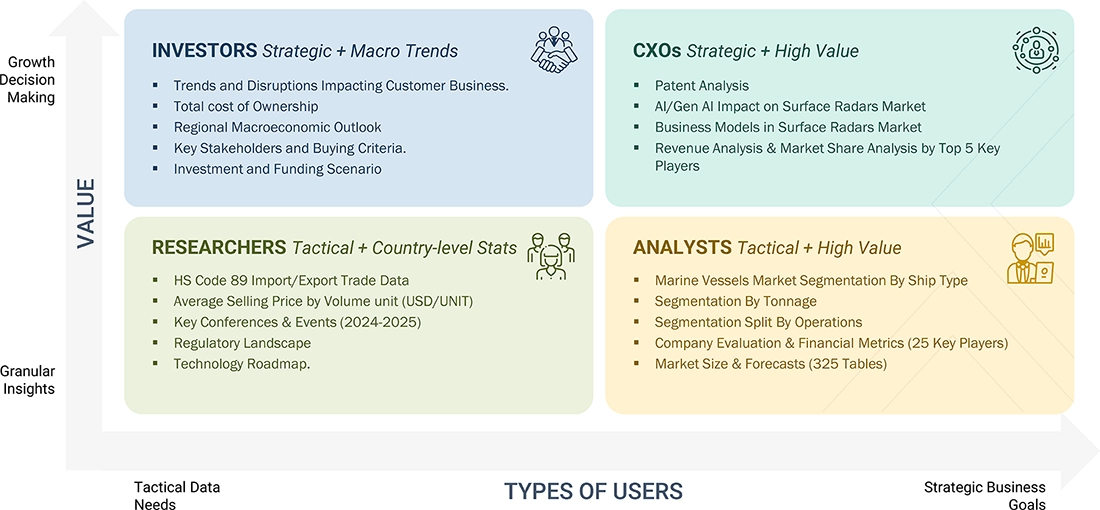
DELIVERED CUSTOMIZATIONS
We have successfully delivered the following deep-dive customizations:
| CLIENT REQUEST | CUSTOMIZATION DELIVERED | VALUE ADDS |
|---|---|---|
| Leading Manufacturer | Additional segment breakdown for countries | Additional country-level market sizing tables for segments/sub-segments covered at the regional/global level to gain an understanding of market potential by each country |
| Emerging Leader | Additional company profiles | Competitive information on targeted players to gain granular insights on direct competition |
| Regional Market Leader | Additional country market estimates | Additional country-level deep dive for a more targeted understanding of the total addressable market |
RECENT DEVELOPMENTS
- September 2024 : Huntington Ingalls Industries’s (US) Ingalls Shipbuilding division received a USD 9.6 billion contract to construct three San Antonio-class amphibious ships and modify the next America-class ship
- August 2024 : MEYER WERFT GmbH & Co. KG (Germany) secured a contract with Disney Cruise Line to build four new cruise ships, with deliveries planned between 2027 and 2031.
- August 2024 : Austal USA was awarded a contract modification worth approximately USD 55 million to construct two additional US Navy Landing Craft Utility (LCU) 1700-class vessels.
- June 2024 : Hanwha Systems and Hanwha Ocean (South Korea) acquired Philly Shipyard (US) for USD 100 million.
- June 2024 : FINCANTIERI S.p.A. (Italy) and Crystal (US) signed a Memorandum of Agreement to construct two high-end cruise ships, with an option for a third. The first vessel is scheduled for delivery in spring 2028
Table of Contents
 Exclusive indicates content/data unique to MarketsandMarkets and not available with any competitors.
Methodology
The research study conducted on the Marine vessels market involved extensive use of secondary sources, including directories, databases of articles, journals on marine vessels, company newsletters, and information portals such as International Maritime Organization (IMO), Bloomberg, and Factiva to identify and collect information useful for this extensive, technical, market-oriented, and commercial study of the marine vessels market. Primary sources are several industry experts from the core and related industries, alliances, organizations, Original Equipment Manufacturers (OEMs), vendors, suppliers, and technology developers. These sources relate to all segments of the value chain of the marine vessels industry. In-depth interviews were conducted with various primary respondents, including key industry participants, subject-matter experts, C-level executives of key market players, and industry consultants, among others, to obtain and verify critical qualitative and quantitative information and to assess future prospects of the market.
Secondary Research
In the secondary research process, various secondary sources were referred to identify and collect information for this study on the marine vessels market. Secondary sources included annual reports, press releases, and investor presentations of companies; white papers and certified publications; articles from recognized authors; manufacturer's associations; directories; and databases. Secondary research was mainly used to obtain key information about the supply chain of the marine vessels industry, the monetary chain of the market, the total pool of key players, market classification and segmentation according to the industry trends to the bottom-most level, regional markets, and key developments from both market- and technology-oriented perspectives.
Primary Research
Extensive primary research has been conducted after obtaining information regarding the marine vessels market scenario through secondary research. Several primary interviews have been conducted with market experts from both the demand and supply sides across major countries of North America, Europe, Asia Pacific, the Middle East, and Rest of the world. Primary data has been collected through questionnaires, emails, and telephonic interviews. These interviews have been conducted to gather insights such as market statistics, data on revenue collected from the products and services, market breakdowns, market size estimations, market size forecasting, and data triangulation. It has also helped analyze the ship type, tonnage, and operation segments of the market for five key regions.
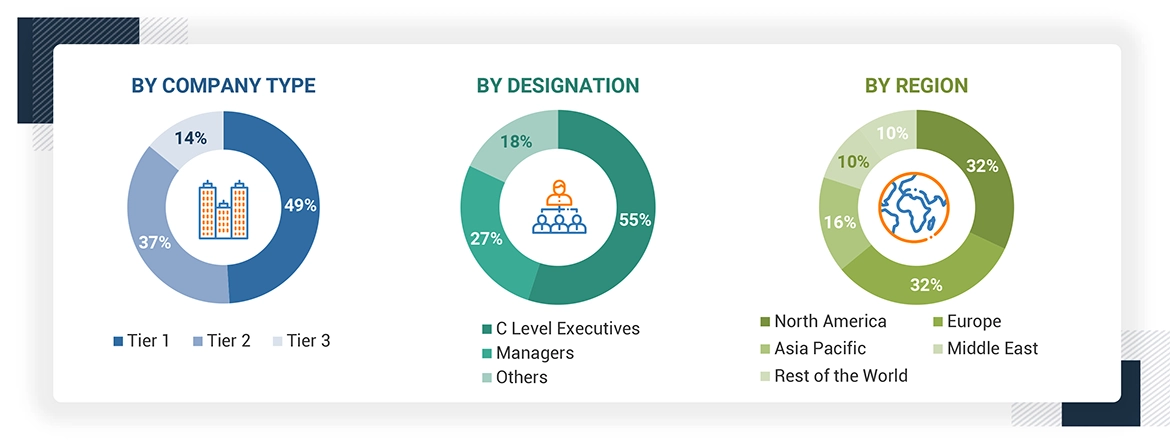
Note: Others include Sales Managers, Marketing Managers, Product Managers, production managers, engineers, and installation teams. Tiers of companies are based on their revenue in 2023. Tier 1: company revenue greater than USD 1 billion; tier 2: company revenue between USD 100 million and USD 1 billion; and tier 3: company revenue less than USD 100 million.
About the assumptions considered for the study, To know download the pdf brochure
Market Size Estimation
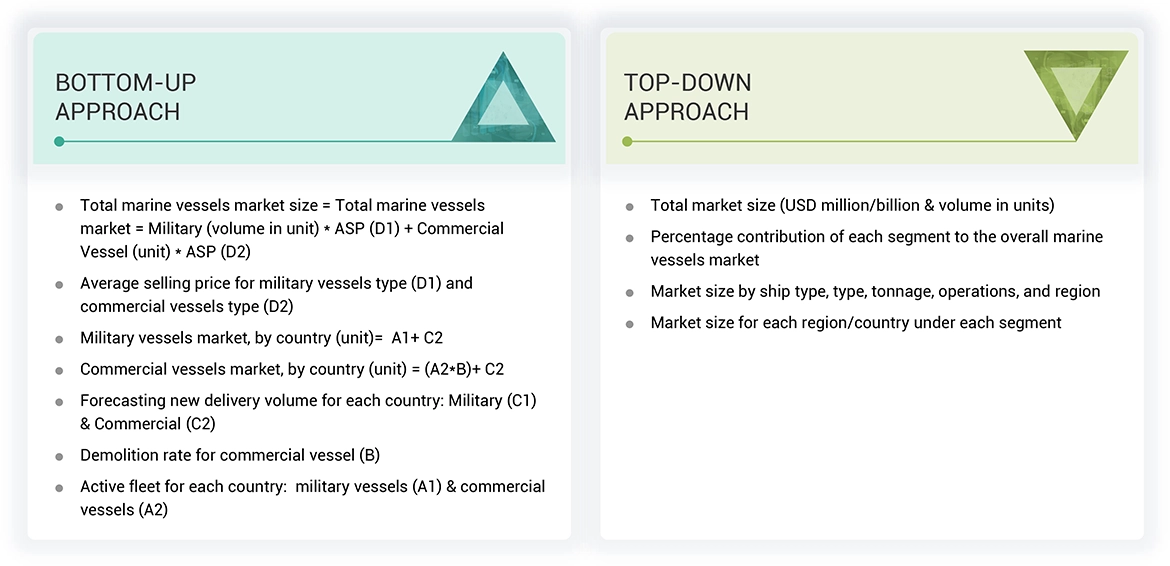
Both top-down and bottom-up approaches were used to estimate and validate the size of the marine vessel market. The research methodology used to estimate the market size includes the following details:
- Key players were identified through secondary research, and their market ranking was determined through primary and secondary research. This included a study of annual and financial reports of the top market players and extensive interviews of leaders, including CEOs, directors, and marketing executives.
- All percentage shares, splits, and breakdowns were determined using secondary sources and verified through primary sources. All possible parameters that affect the markets covered in this research study were accounted for, viewed in extensive detail, verified through primary research, and analyzed to obtain the final quantitative and qualitative data. This data was consolidated, enhanced with detailed inputs, analyzed by MarketsandMarkets, and presented in this report.
Marine Vessels Market : Top-Down and Bottom-Up Approach
Data Triangulation
After arriving at the overall size of the marine vessels market from the market size estimation process explained above, the total market was split into several segments and subsegments. To complete the overall market engineering process and arrive at the exact statistics for various market segments and subsegments, the data triangulation and market breakdown procedures explained below were implemented, wherever applicable. The data was triangulated by studying various factors and trends from both the demand and supply sides. The market size was also validated using both the top-down and bottom-up approaches.
Market Definition
The marine vessels market encompasses the industry involved in designing, constructing, selling, and maintaining various types of ships and boats used for commercial, military, and recreational purposes. This market includes a wide range of vessels, from small leisure boats to large cargo ships and advanced naval warships.
Key Stakeholders
- Shipbuilders
- Shipowners/Operators
- Governments and Regulatory Bodies
- Port Authorities
- Suppliers
- Ship Maintenance and Repair Companies
- Logistics and Shipping Companies
- Research and Development Organizations
Report Objectives
- To define, describe, and forecast the marine vessels market in terms of volume based on ship type, tonnage, and operations from 2024 to 2030
- To identify and analyze key drivers, restraints, opportunities, and challenges influencing the growth of the market
- To forecast the size of various segments of the market with respect to major regions: North America, Europe, Asia Pacific, the Middle East, and the Rest of the World.
- To strategically analyze micromarkets with respect to individual growth trends, prospects, and their contribution to the market
- To analyze opportunities for stakeholders in the market by identifying key market trends
- To analyze competitive developments, such as contracts, acquisitions, agreements, and product launches in the market
- To provide a detailed competitive landscape of the market, in addition to an analysis of business and corporate strategies adopted by leading market players
- To strategically profile key market players and comprehensively analyze their core competencies
Available Customizations
Along with the market data, MarketsandMarkets offers customizations as per the specific needs of companies. The following customization options are available for the report:
Product Analysis
- Product matrix, which gives a detailed comparison of the product portfolio of each company
Regional Analysis
- Further breakdown of the market segments at country-level
Company Information
- Detailed analysis and profiling of additional market players (up to 5)
Key Questions Addressed by the Report
- Technological developments are transforming the marine vessels market. Connected ships use advanced technology to improve communication. They send real-time data to land-based systems, which helps with route planning, maintenance scheduling, and monitoring onboard systems.
- Another important advancement is digital twin technology. This technology creates virtual copies of ships. Operators can check how the ships are performing. They can also predict when maintenance is needed. This helps improve efficiency and reduce downtime.
- Autonomous marine vessels operate with little human assistance. They use sensors and artificial intelligence for navigation and tasks. This reduces the need for crew members and increases operational efficiency.
- Green ships are built to reduce environmental impact. They use eco-friendly technologies and fuels like liquefied natural gas (LNG) and batteries. These advancements lower emissions and meet environmental regulations, making the marine vessels market more sustainable.
- Expanding global trade: Catalyst for marine vessel demand
- Military navy expansion and modernization
- Passenger and tourism demand surge which accelerated the growth of the marine vessels market
- Strategic fleet renewal


Personalize This Research
- Triangulate with your Own Data
- Get Data as per your Format and Definition
- Gain a Deeper Dive on a Specific Application, Geography, Customer or Competitor
- Any level of Personalization
Let Us Help You
- What are the Known and Unknown Adjacencies Impacting the Marine Vessels Market
- What will your New Revenue Sources be?
- Who will be your Top Customer; what will make them switch?
- Defend your Market Share or Win Competitors
- Get a Scorecard for Target Partners

Custom Market Research Services
We Will Customise The Research For You, In Case The Report Listed Above Does Not Meet With Your Requirements
Get 10% Free CustomisationTESTIMONIALS
- Canada Marine Vessels Market
- US Marine Vessels Market
- UK Marine Vessels Market
- Germany Marine Vessels Market
- France Marine Vessels Market
- Italy Marine Vessels Market
- Norway Marine Vessels Market
- China Marine Vessels Market
- India Marine Vessels Market
- Japan Marine Vessels Market
- Australia Marine Vessels Market
- South Korea Marine Vessels Market
- Singapore Marine Vessels Market
- UAE Marine Vessels Market
- Saudi Arabia Marine Vessels Market
- Israel Marine Vessels Market
- Turkey Marine Vessels Market
- Rest Of Europe Marine Vessels Market
- Rest Of Asia Pacific Marine Vessels Market






Growth opportunities and latent adjacency in Marine Vessels Market