Medical Plastics Tubing Market

Medical Plastics Tubing Market by Material (PVC, PE, PP, PA, PTFE, PEEK, TPE), Structure (Single-Lumen, Multi-Lumen, Co-Extruded, Tapered Tubing, Braided Tubing), Application (Bulk Disposable Tubing, Drug Delivery Systems) - Global Forecast To 2031




OVERVIEW
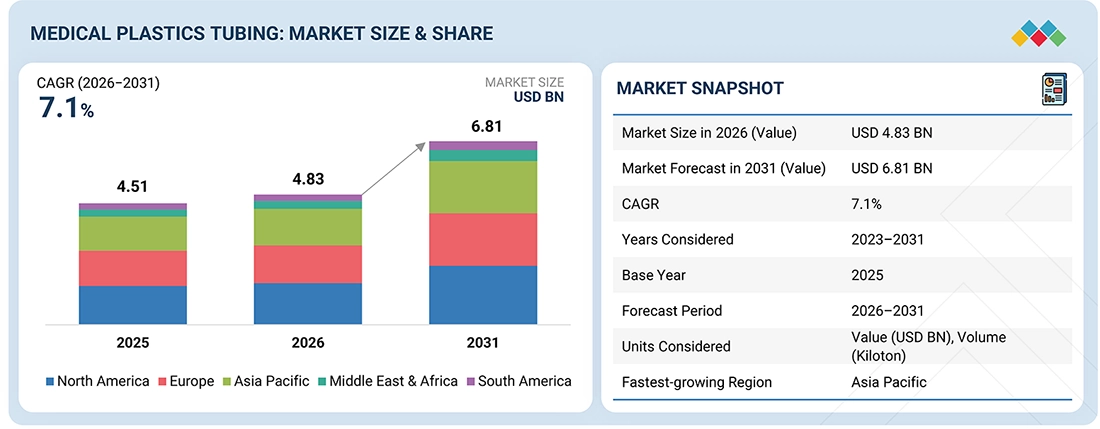
Source: Secondary Research, Interviews with Experts, MarketsandMarkets Analysis
The medical plastics tubing market is projected to reach USD 6.81 billion by 2031 from USD 4.83 billion in 2026, at a CAGR of 7.1%. The market is experiencing strong growth, driven by the rising demand for advanced medical devices, increasing adoption of minimally invasive procedures, growing preference for single-use and disposable medical products, and expanding pharmaceutical and biotechnology industries. Rising healthcare expenditure, continuous advancements in medical-grade polymer technologies, and increasing investments in healthcare infrastructure across both developed and emerging economies are further supporting market growth worldwide.
KEY TAKEAWAYS
-
By RegionThe North American medical plastics tubing market is estimated to account for 32% of revenue in 2026, driven by advanced healthcare infrastructure, high healthcare spending, and the strong presence of leading medical device manufacturers across the region.
-
By MaterialBy material, the PVC segment is estimated to account for 15.1% of revenue in 2026, owing to its excellent flexibility, biocompatibility, cost-effectiveness, and extensive use in a wide range of medical tubing applications.
-
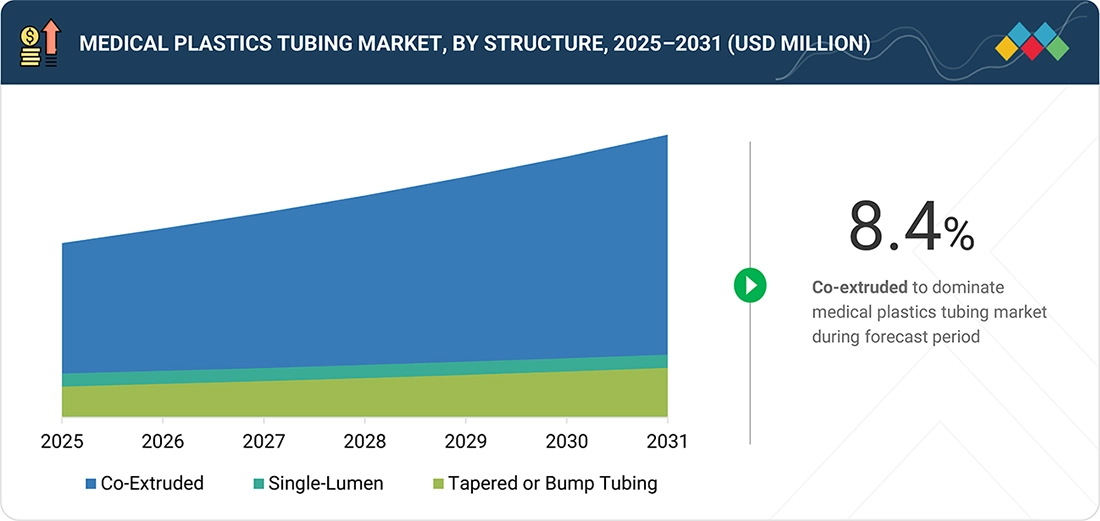
By StructureBy structure, the co-extruded segment is estimated to account for 42.5% of revenue in 2026, owing to its superior mechanical strength, enhanced barrier properties, multi-material functionality, and increasing adoption in advanced medical devices.
-
By ApplicationBy application, the catheters & cannulas segment is estimated to account for 35.2% of the market in 2026, driven by the rising number of minimally invasive procedures, increasing prevalence of chronic diseases, and growing demand for precision fluid management devices.
-
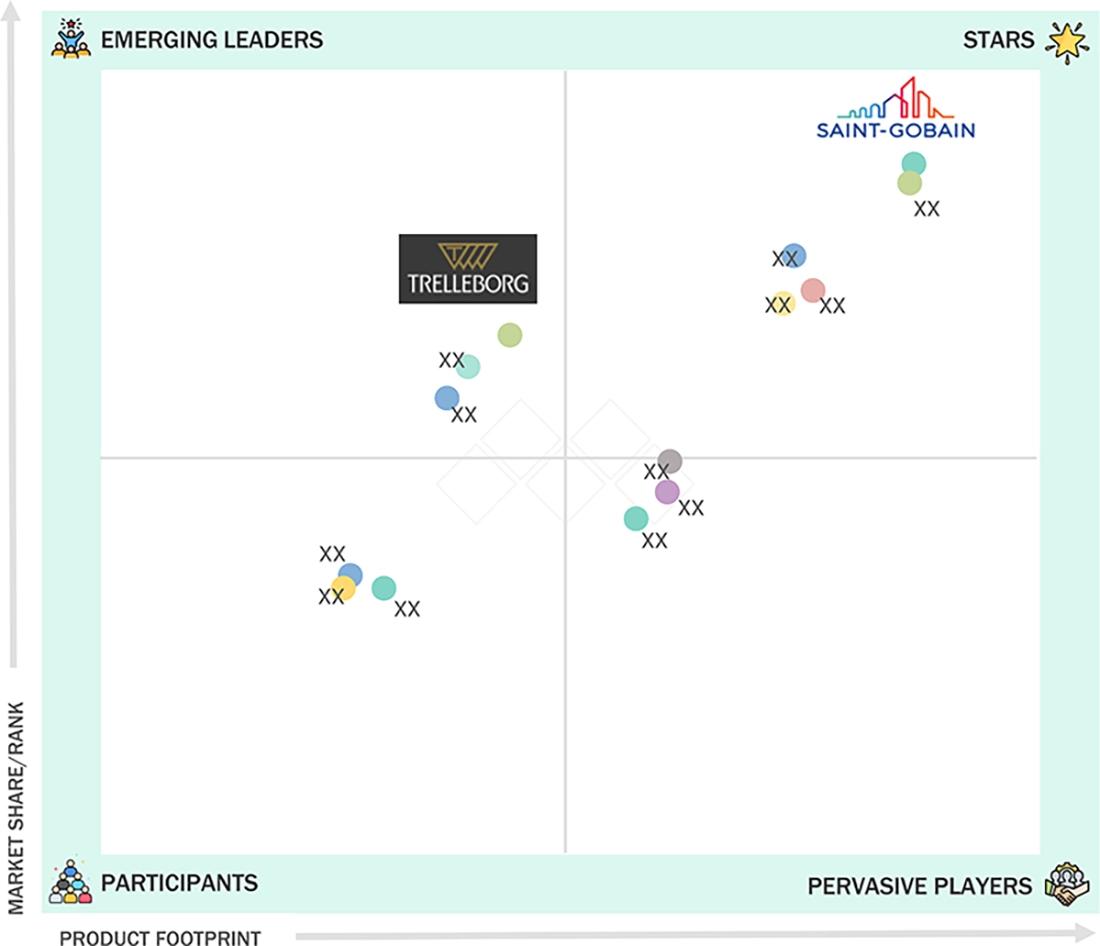
Competitive Landscape - Key PlayersSaint-Gobain, Lubrizol, Nordson Corporation, and Freudenberg Medical were identified as some of the star players in the medical plastics tubing market (global), given their strong market share and product footprint.
-
Competitive Landscape - Startups/SMEsFBK Medical Tubing, NewAge Industries, MicroLumen Inc., and MDC Industries , among others, have distinguished themselves among startups and SMEs by securing strong footholds in specialized niche areas, underscoring their potential as emerging market leaders.
The global medical plastics tubing market is growing, driven by expanding healthcare infrastructure and rising demand for advanced medical devices. North America is seeing strong demand, fueled by high healthcare expenditure, a well-established medical device manufacturing industry, and increasing adoption of minimally invasive procedures. Europe is supported by stringent regulatory standards, growing demand for high-quality medical devices, and rising investments in healthcare modernization. Asia Pacific is the fastest-growing market, driven by expanding healthcare infrastructure, increasing medical device manufacturing, rising healthcare expenditure, and rapid growth across China, India, Japan, South Korea, and Southeast Asia. Meanwhile, South America and the Middle East & Africa are seeing gradual growth, supported by improving healthcare infrastructure, increasing government healthcare investments, and expanding access to advanced medical technologies.
TRENDS & DISRUPTIONS IMPACTING CUSTOMERS' CUSTOMERS
Technological advancements and evolving healthcare demands are driving major disruptions across the medical device, pharmaceutical, and biotechnology sectors. A growing focus on minimally invasive procedures, patient safety, precision drug delivery, and next-generation medical devices is accelerating innovation and creating growth opportunities across the value chain. The shift from conventional polymer tubing to multi-layer co-extruded, braided, and high-performance specialty polymer tubing, along with the development of smart tubing technologies, antimicrobial materials, and advanced biocompatible polymers, is reshaping the competitive landscape.
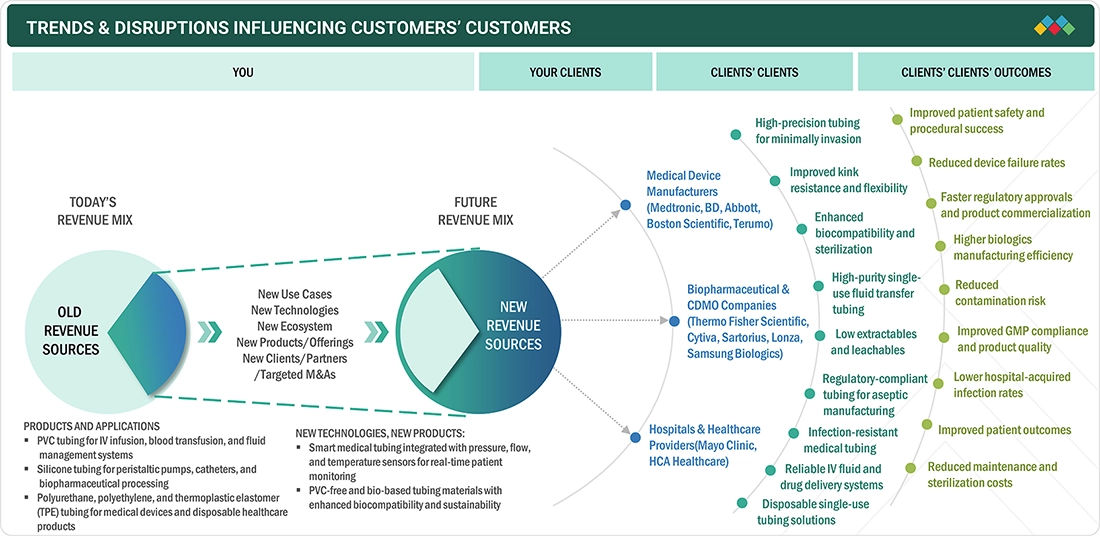
Source: Secondary Research, Interviews with Experts, MarketsandMarkets Analysis
MARKET DYNAMICS

Level
-
Accelerating Global Aging Population and Rising Chronic Disease Burden

-
Expanding Adoption of Minimally Invasive Surgery and Catheter-Based Procedures


Level
-
Escalating Regulatory Compliance Burden Across Jurisdictions

-
Health and Environmental Concerns Over PVC and Phthalate Plasticizers


Level
-
Advancements In Biocompatible and Smart Materials

-
Increasing Governmental Expenditure for Upgrading and Developing Healthcare Infrastructure


Level
-
Navigating Increasingly Complex and Divergent Global Regulatory Environment

-
Chemical Safety Concerns and DEHP/PVC Substitution Imperative

Source: Secondary Research, Interviews with Experts, MarketsandMarkets Analysis
Driver: Accelerating Global Aging Population and Rising Chronic Disease Burden
The medical plastics tubing market is growing steadily because of a rising aging population and increasing prevalence of chronic diseases worldwide. As healthcare demand increases, hospitals and medical facilities are expanding their capacity and adopting advanced medical devices. These systems require reliable tubing solutions for safe fluid transfer, drug delivery, and patient care applications. Medical plastics tubing is widely preferred due to its biocompatibility, flexibility, and safe performance in critical healthcare environments. As healthcare systems continue to expand globally, the strong demand for advanced tubing solutions continues to grow.
Restraint: Escalating Regulatory Compliance Burden Across Jurisdictions
Despite strong growth potential, the medical plastics tubing market is restrained by stringent regulatory compliance requirements and complex approval procedures across different regions. Manufacturers must meet strict safety, quality, and biocompatibility standards, which often extend product development timelines. Furthermore, growing concerns regarding the environmental impact of certain polymers, particularly PVC-based materials, along with rising raw material and production costs, are creating additional pressure on market players. These factors collectively limit faster adoption in cost-sensitive regions.
Opportunity: Advancements In Biocompatible and Smart Materials
Significant growth opportunities in the medical plastics tubing market are emerging due to rapid advancements in biocompatible materials and next-generation polymer technologies. Increasing investments in healthcare infrastructure, particularly in emerging economies, are supporting the adoption of advanced medical devices. The expansion of pharmaceutical and biotechnology industries is further driving demand for high-performance tubing solutions. In addition, rising adoption of drug delivery systems, wearable medical devices, and minimally invasive procedures is opening new avenues for innovation and product differentiation.
Challenge: Navigating Increasingly Complex and Divergent Global Regulatory Environment
The medical plastics tubing market faces ongoing challenges related to complex manufacturing processes and increasingly strict product performance requirements. Producing tubing with high precision, consistent quality, and compliance with global medical standards requires advanced extrusion technologies and specialized expertise. In addition, supply chain disruptions, raw material price volatility, and dependency on petrochemical-based inputs create operational uncertainty for manufacturers. These challenges can limit production scalability and increase overall development costs.
MEDICAL PLASTICS TUBING MARKET: COMMERCIAL USE CASES ACROSS INDUSTRIES
| COMPANY | USE CASE DESCRIPTION | BENEFITS |
|---|---|---|
 |
Saint-Gobain manufactures a broad portfolio of medical-grade plastic tubing including thermoplastic elastomer (TPE), PVC, and silicone tubing used in IV infusion sets, peristaltic pump lines, and surgical drainage systems. | Their medical plastic tubing offers excellent chemical compatibility with common drug formulations, low extractables, and leachables profiles, consistent dimensional tolerances for leak-free connections, and kink resistance critical for uninterrupted fluid delivery in clinical settings. |
 |
Freudenberg Medical specializes in extruded plastic and PEEK-based tubing for high-pressure fluid transfer applications, including contrast media delivery, balloon catheter inflation lumens, and implantable drug infusion systems. | Their plastic tubing solutions withstand high burst pressures without deformation, maintain dimensional stability across sterilization cycles including EtO and gamma irradiation, exhibit low protein adsorption for drug-contact lumens, and offer custom multi-lumen configurations that reduce device assembly complexity. |
 |
Lubrizol provides engineered thermoplastic polyurethane (TPU) and Tecoflex-grade plastic tubing compounds specifically formulated for catheter tubing, hemodialysis blood lines, and minimally invasive surgical tubing. | Lubrizol's plastic tubing materials are inherently biocompatible and hemocompatible for blood-contacting applications, resistant to kinking and permanent deformation, bondable with standard medical adhesives, sterilization-compatible, and capable of being co-extruded with radiopaque fillers or drug-eluting compounds for advanced catheter functionality. |
 |
W. L. Gore & Associates manufactures ePTFE and fluoropolymer-based plastic tubing used in bioprocessing fluid transfer lines, minimally invasive surgical tubing, and high-purity pharmaceutical fluid pathways. | Gore's plastic tubing provides exceptional resistance to a wide range of aggressive pharmaceutical solvents and sterilants, ultra-smooth inner bore surfaces that minimize particulate shedding and bacterial adhesion, stable flow performance under pressure fluctuations, and compliance with FDA 21 CFR and USP standards for use in drug manufacturing and delivery environments. |
Logos and trademarks shown above are the property of their respective owners. Their use here is for informational and illustrative purposes only.
MARKET ECOSYSTEM
The medical plastics tubing ecosystem analysis identifies and evaluates the interconnected relationships among key stakeholders, including raw material suppliers, tubing manufacturers, OEMs, distributors, healthcare providers, and end users. Raw material suppliers provide essential inputs such as PVC, polyethylene (PE), polypropylene (PP), polyamide (PA), thermoplastic elastomers (TPE), polyether ether ketone (PEEK), and specialty medical-grade polymers. Medical device manufacturers and OEMs convert these materials into high-performance tubing solutions used in catheters, IV systems, drug delivery devices, dialysis equipment, and respiratory care systems. Regulatory bodies and standards organizations define compliance requirements through stringent safety, biocompatibility, and quality regulations, influencing product design and material selection. Distributors and healthcare supply chains play a critical role in ensuring efficient availability of tubing products across hospitals, clinics, and pharmaceutical facilities. End users across hospitals, ambulatory surgical centers, diagnostic laboratories, pharmaceutical companies, and biotechnology firms drive demand for safe, precise, and reliable fluid management solutions.
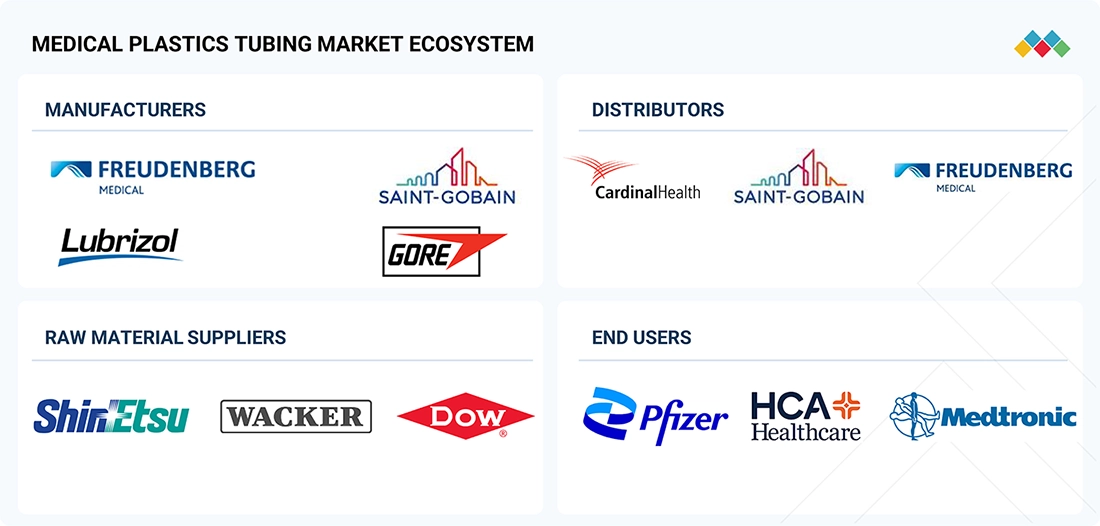
Logos and trademarks shown above are the property of their respective owners. Their use here is for informational and illustrative purposes only.
MARKET SEGMENTS
Source: Secondary Research, Interviews with Experts, MarketsandMarkets Analysis
Medical Plastics Tubing Market, By Material
Polyether Ether Ketone (PEEK) is the fastest-growing medical plastics tubing material segment. Its rising adoption is driven by exceptional mechanical strength, high thermal stability, superior chemical resistance, and excellent biocompatibility. PEEK-based tubing delivers reliable performance under high-pressure and high-temperature medical conditions while maintaining long-term structural integrity and dimensional accuracy. Its ability to withstand repeated sterilization cycles and harsh clinical environments makes it highly suitable for advanced applications such as minimally invasive surgical devices, catheter systems, drug delivery devices, and implantable medical components. Increasing demand for high-performance specialty polymers and expanding use in next-generation medical devices are further accelerating the growth of PEEK in the global medical plastics tubing market.
Medical Plastics Tubing Market, By Structure
Co-extruded tubing is the largest medical plastics tubing structure segment. Its dominance is driven by the ability to combine multiple polymer layers into a single tubing system, enabling superior mechanical strength, enhanced barrier properties, and improved flexibility. This multi-layer construction allows optimization of performance characteristics such as chemical resistance, kink resistance, and controlled fluid transfer, making it highly suitable for complex medical applications. Co-extruded tubing is widely used in critical healthcare areas such as IV systems, catheter assemblies, drug delivery devices, and advanced surgical procedures where precision and reliability are essential. Its strong compatibility with medical-grade polymers and ability to meet stringent performance and regulatory requirements further support its widespread adoption. Due to increasing demand for high-performance, multi-functional tubing solutions in modern medical devices, co-extruded tubing continues to hold the largest share in the global medical plastics tubing market.
Medical Plastics Tubing Market, By Application
Catheters & cannulas are the largest medical plastics tubing application segment. Its dominance is driven by the widespread use of these devices in critical and routine healthcare procedures requiring precise fluid and gas delivery. Medical plastics tubing plays a vital role in ensuring safe insertion, controlled flow, and reliable performance in these applications, making it essential for patient care. The increasing prevalence of chronic diseases, growing number of surgical and diagnostic procedures, and rising adoption of minimally invasive treatments are further accelerating demand. Catheters and cannulas are extensively used in hospitals, ambulatory surgical centers, and emergency care settings, where sterility, biocompatibility, and performance reliability are critical. As a result, this segment continues to hold the largest share in the global medical plastics tubing market.
REGION
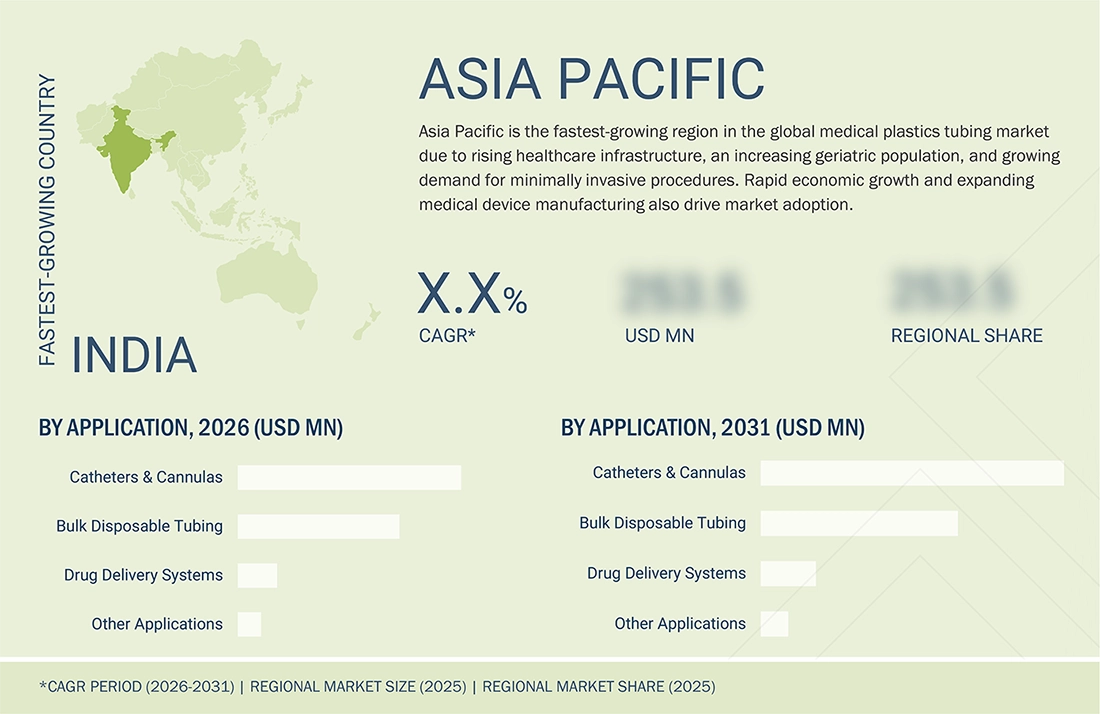
Asia Pacific is the fastest-growing market for medical plastics tubing market.
Asia Pacific is the fastest-growing region in the global medical plastics tubing market due to expanding healthcare infrastructure, an aging population, and rising demand for minimally invasive procedures. Rapid economic growth and the expansion of medical device manufacturing also drive market adoption.
MEDICAL PLASTICS TUBING MARKET: COMPANY EVALUATION MATRIX
In the medical plastics tubing market matrix, Saint-Gobain (Star), a France-based company, leads the market through its high-performance medical tubing solutions, including thermoplastic and specialty polymer-based systems, which find extensive applications across fluid management, biopharmaceutical processing, laboratory systems, and drug delivery applications. Trelleborg AB (Emerging Leader) is gaining traction with its advanced polymer engineering capabilities and precision medical tubing solutions used in fluid transfer, catheter-based systems, and other critical healthcare applications, supported by continuous innovation in high-performance medical materials and manufacturing technologies.
Source: Secondary Research, Interviews with Experts, MarketsandMarkets Analysis
KEY MARKET PLAYERS
- Saint-Gobain (France)
- Nordson Corporation (US)
- Freudenberg Medical (US)
- Trelleborg AB (Sweden)
- Lubrizol (US)
- W. L. Gore & Associates, Inc. (US)
- Biomerics (US)
- RAUMEDIC AG (Germany)
- Zeus Company LLC (US)
- Optinova (Finland)
MARKET SCOPE
| REPORT METRIC | DETAILS |
|---|---|
| Market Size in 2026 (Value) | USD 4.83 Billion |
| Market Forecast in 2031 (Value) | USD 6.81 Billion |
| Growth Rate | CAGR of 7.1% from 2026-2031 |
| Years Considered | 2023-2031 |
| Base Year | 2025 |
| Forecast Period | 2026-2031 |
| Units Considered | Value (USD Million/Billion), Volume (Kiloton) |
| Report Coverage | Revenue forecast, company ranking, competitive landscape, growth factors, and trends |
| Segments Covered |
|
| Regions Covered | North America, Asia Pacific, Europe, South America, Middle East & Africa |
WHAT IS IN IT FOR YOU: MEDICAL PLASTICS TUBING MARKET REPORT CONTENT GUIDE
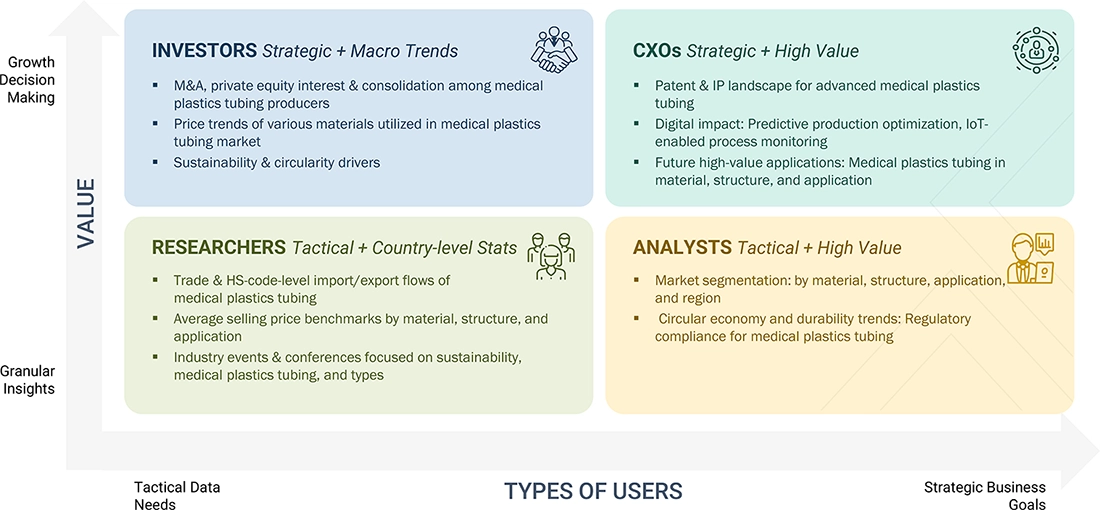
DELIVERED CUSTOMIZATIONS
We have successfully delivered the following deep-dive customizations:
| CLIENT REQUEST | CUSTOMIZATION DELIVERED | VALUE ADDS |
|---|---|---|
| Leading Medical Plastics Tubing Supplier |
|
Supported go-to-market strategy and positioning vs. competitors |
| Country-level insights for high-growth regions | Provided detailed market sizing and forecasts for the Asia Pacific and North American markets | Helped the client identify region-specific growth hotspots and investment opportunities |
| Identify emerging waterproofing technologies | Conducted technology scouting and feasibility analysis for self-healing membranes and IoT-enabled monitoring systems | Supported investment decisions and innovation roadmap for clients |
| Evaluate regulatory compliance for new market entry | Compiled local VOC emission, building code, and green certification standards per country | Ensured smooth market entry and minimized legal risks |
RECENT DEVELOPMENTS
- July 2025 : Saint-Gobain expanded its partnership with Qosina, a major global supplier of medical device components. The partnership added multiple new Saint-Gobain tubing SKUs (including bioprocessing and medical-grade tubing) to Qosina’s distribution portfolio. This enables broader availability of Saint-Gobain’s medical tubing products across OEM and biopharma supply chains, as well as improved access to technical documentation, specifications, and ordering channels.
- June 2025 : Lubrizol expanded its collaboration with IMCD to strengthen the distribution of medical-grade thermoplastic polyurethane (TPU) solutions across North America. The collaboration extends their existing partnership in Europe to the US and Canada, enabling improved market penetration, inventory management, and customer access to Lubrizol’s medical TPU portfolio for medical device applications.
- August 2024 : Nordson Corporation acquired Atrion Corporation, a leader in medical infusion and cardiovascular solutions, to expand its medical portfolio into new markets. This strategic move aligns with long-term growth trends and enhances Nordson’s precision technology capabilities. Atrion’s expertise complements Nordson’s offerings and strengthens its position in the medical industry.
- November 2024 : Freudenberg Medical expanded its new manufacturing facility in Carrick-on-Shannon, Co. Leitrim, Ireland. The 16,500 sq. ft. addition has increased the site's total footprint to 157,000 sq. ft. and strengthened its capacity and capabilities to manufacture advanced catheters used in electrophysiology, structural heart, and peripheral vascular therapies.
- February 2024 : Trelleborg AB established a new business segment, Trelleborg Medical Solutions. This business segment helped the company offer a wide range of medical solutions such as medical tubing, seal & bearings, medical devices, advanced composites, and precision LSR tooling.
Table of Contents
 Exclusive indicates content/data unique to MarketsandMarkets and not available with any competitors.
Methodology
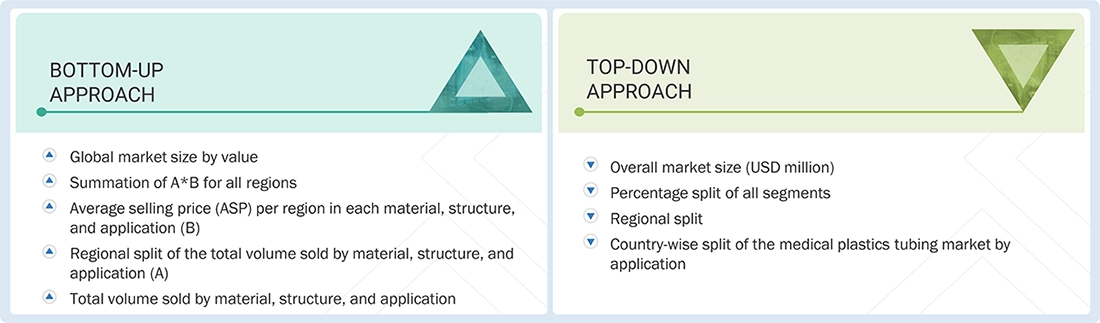
The study involved four major activities to estimate the current size of the global medical plastics tubing market. Exhaustive secondary research was carried out to collect information on the market, the peer product market, and the parent product group market. The next step was to validate these findings, assumptions, and sizes with the industry experts across the value chain of medical plastics tubing through primary research. The top-down and bottom-up approaches were employed to estimate the overall size of the medical plastics tubing market. After that, market breakdown and data triangulation procedures were used to determine the size of different segments and sub-segments of the market.
Secondary Research
The market for companies offering medical plastics tubing was derived from secondary data available through paid and unpaid sources, by analyzing the product portfolios of the major companies in the ecosystem, and by rating the companies based on their performance and quality. Various secondary sources, such as Business Standard, Bloomberg, World Bank, and Factiva, were referred to identify and collect information for this study on the medical plastics tubing market. In the secondary research process, various secondary sources were referred to identify and collect information related to the study. Secondary sources included annual reports, press releases, and investor presentations of door vendors, forums, certified publications, and whitepapers. The secondary research was used to obtain critical information on the industry’s value chain, the total pool of key players, market classification, and segmentation from the market and technology-oriented perspectives.
Primary Research
In the primary research process, various primary sources from both the supply and demand sides were interviewed to obtain qualitative and quantitative information for this report. The primary sources from the supply side included industry experts, such as Chief Executive Officers (CEOs), Vice Presidents (VPs), marketing directors, technology and innovation directors, and related key executives from several key companies and organizations operating in the medical plastics tubing market. After the complete market engineering (calculations for market statistics, market breakdown, market size estimations, market forecasting, and data triangulation), extensive primary research was conducted to gather information and verify and validate the critical numbers arrived at. Primary research was also conducted to identify the segmentation, industry trends, competitive landscape of medical plastics tubing offered by various market players, and key market dynamics, such as drivers, restraints, opportunities, challenges, industry trends, and key player strategies. In the complete market engineering process, the top-down and bottom-up approaches and several data triangulation methods were extensively used to perform the market estimation and market forecasting for the overall market segments and subsegments listed in this report. Extensive qualitative and quantitative analysis was performed on the complete market engineering process to list the key information/insights throughout the report.
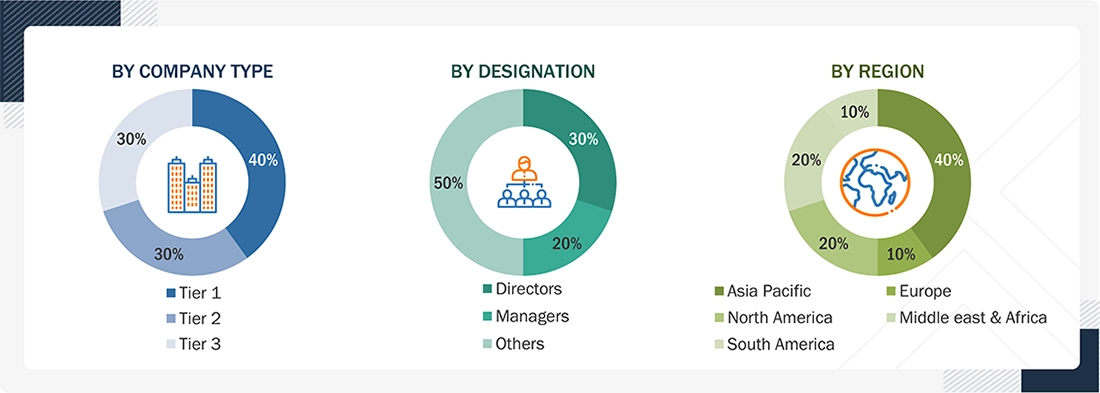
Notes: Other designations include sales, marketing, and product managers.
To know about the assumptions considered for the study, download the pdf brochure
Market Size Estimation
The top-down and bottom-up approaches were used to estimate and validate the size of the global medical plastics tubing market. These approaches were also used extensively to estimate the size of various dependent market segments. The research methodology used to estimate the market size included the following:
Data Triangulation
After arriving at the overall market size using the market size estimation processes, the market was split into several segments and subsegments. The data triangulation and market breakup procedures were employed, wherever applicable, to complete the overall market engineering process and arrive at the exact statistics of each market segment and subsegment. The data was triangulated by studying various factors and trends from both the demand and supply sides.
Market Definition
Medical plastics tubing refers to high-performance polymer tubes primarily used in medical devices and healthcare systems to transfer fluids, gases, or pharmaceutical products safely. To achieve optimal biological compatibility, flexibility, chemical resistance, and sterilizability, medical-grade polymers are used. The production techniques include accurate extrusion, co-extrusion, braiding, tapering, and other quality-controlled processes to produce tubing with very consistent dimensions and superior mechanical properties.
Key Stakeholders
- Medical plastics tubing manufacturers
- Medical-grade polymer and resin suppliers
- Medical device manufacturers
- Pharmaceutical and biotechnology companies
- Healthcare providers (hospitals, clinics, and ambulatory surgical centers)
- Regulatory bodies and industry associations
- Research institutes and diagnostic laboratories
Report Objectives
- To define, describe, and forecast the size of the global medical plastics tubing market, based on material, structure, application, and region
- To provide detailed information on the significant drivers, restraints, opportunities, and challenges influencing the market
- To strategically analyze micro-markets concerning individual growth trends, prospects, and their contribution to the market
- To assess the growth opportunities in the market for stakeholders and provide details on the competitive landscape for market leaders
- To forecast the market size of segments and subsegments for North America, Europe, Asia Pacific, South America, and the Middle East & Africa
- To strategically profile key players and comprehensively analyze their market shares and core competencies
- To analyze competitive developments such as product launches, acquisitions, expansions, partnerships, and agreements in the market
- To analyze the impact of AI/GenAI on the market
Available customizations:
With the given market data, MarketsandMarkets offers customizations according to client-specific needs.
The following customization options are available for the medical plastics tubing market report:
Product Analysis
- A product matrix that gives a detailed comparison of the product portfolio of each company
Regional Analysis
- A further breakdown of the medical plastics tubing market for additional countries
Company Information
- Detailed analysis and profiling of additional market players (up to five)


Personalize This Research
- Triangulate with your Own Data
- Get Data as per your Format and Definition
- Gain a Deeper Dive on a Specific Application, Geography, Customer or Competitor
- Any level of Personalization
Let Us Help You
- What are the Known and Unknown Adjacencies Impacting the Medical Plastics Tubing Market
- What will your New Revenue Sources be?
- Who will be your Top Customer; what will make them switch?
- Defend your Market Share or Win Competitors
- Get a Scorecard for Target Partners

Custom Market Research Services
We Will Customise The Research For You, In Case The Report Listed Above Does Not Meet With Your Requirements
Get 10% Free CustomisationTESTIMONIALS
We at Nissan Chemicals Corporation have been clients of MarketsandMarkets for more than a year now. We recently consulted MarketsandMarkets for a study, the team at MarketsandMarkets was extremely professional and organized. The business insights were very detailed and aligned well with our expectations that really helped us formulate the Business Plans and device new strategies for development themes. MarketsandMarkets offers a unique combination of expertise and dedicated engagement model. Their research findings have helped us in designing our Pricing Strategy which will make it easier for us to predict the future sales and profits for the next ten years. We look forward to working with MarketsandMarkets in the future.
VP of Strategy & New Business Development
Leading Specialty Chemical Company
The MarketsandMarkets Engagement Model, composed of both the Knowledge Store and advisory custom research, has greatly helped us in understanding our markets and making strategic decisions. The Knowledge Store is a fast way to allow everyone in our organization to understand more about most any market they are interested in. The ability to then get custom research done and get answers to specific strategic questions and market insight has been spectacular. The Markets and Markets team feel more like colleagues than vendors and their services have helped us change our culture where statements of things like growth opportunities and competitive position are always backed by industry research.

Rich Gibson,
Director, Corporate Strategy
Milliken & Company,
Leading Industrial Manufacturer of specialty chemical, floor covering, performance and protective textile materials, and healthcaremilliken.com
MarketsandMarkets is a trusted resource that helps us to better understand markets that are near-adjacencies-whether its technology, value chain or geography. Their Knowledge Store platform provides a dashboard of markets and their characteristics which is easy to use and saves us time.
Adam Shaw,
Market Development and Strategy Manager
AdvanSix Inc. USA,
An American Leader in Chemicalswww.advansix.com
The Knowledge Store from MarketsandMarkets is a valuable tool which has helped my team acquire greater insight in to the end markets that our business serves. This has enabled us to help our company build stronger strategies throughout our planning process.
TOSHIO KINOSHITA
Senior Chif Consultion Research & Consulting Division
Mitsubishi Chemical Research Corporation,
Leading Manufacturer of Chemical Productswww.mitsubishichem-res.co.jp/en/

We recently engaged with MarketsandMarkets for a study, the team not only clearly understood our business objectives but was also extremely professional in the way they handled the entire project. The study was efficiently conducted in a phase-wise manner, and the engagement model furnished us with high-quality business insights that far exceeded our expectations at each phase. We were especially happy that MarketsandMarkets could provide us with both, an English as well as a Japanese version of the study. A special thanks to the Analyst Team and Client Services Team, whose fluency in Japanese enhanced our comfort level, as we could converse with them in our preferred language.
Independent entrepreneurs
Arrow Precision
We approached MarketsandMarkets for study on Proppants Market, and their work exceeded our expectations. The study conducted was comprehensive and enabled us to view the market through the various dimensions. In addition, the team was extraordinarily responsive throughout the process and resolved our queries on time. I strongly recommend MarketsandMarkets and will certainly consider them for additional market assessments we will need in the future.
Global engineering company, Japan
Deputy Manager,
Strategic Planning OfficeThe high-quality insights shared by the MarketsandMarkets team helped us understand the pharmaceutical plant designers in a specific geography. It also captured the risks that we may likely face in communicating with our potential partners. The study would enable us identify partners, which would impact our future growth.
- US Medical Plastics Tubing Market
- Canada Medical Plastics Tubing Market
- Mexico Medical Plastics Tubing Market
- Germany Medical Plastics Tubing Market
- France Medical Plastics Tubing Market
- Spain Medical Plastics Tubing Market
- UK Medical Plastics Tubing Market
- Italy Medical Plastics Tubing Market
- China Medical Plastics Tubing Market
- Japan Medical Plastics Tubing Market
- India Medical Plastics Tubing Market
- South Korea Medical Plastics Tubing Market
- South Africa Medical Plastics Tubing Market
- Brazil Medical Plastics Tubing Market
- Argentina Medical Plastics Tubing Market
- Rest Of Europe Medical Plastics Tubing Market
- Rest Of Asia Pacific Medical Plastics Tubing Market
- GCC Medical Plastics Tubing Market
- -Rest Of GCC Medical Plastics Tubing Market
- Rest Of South America Medical Plastics Tubing Market






Growth opportunities and latent adjacency in Medical Plastics Tubing Market