Membrane Chromatography Market: Growth, Size, Share, and Trends

Membrane Chromatography Market by Product (Capsules, Cassettes, Cartridges, Syringe Filters, Spin Column), Technique (Ion Exchange, Affinity), Operation Mode (Flow Through, Bind Elute), Material (PES, Cellulose), End User, Region - Global Forecast to 2031


OVERVIEW
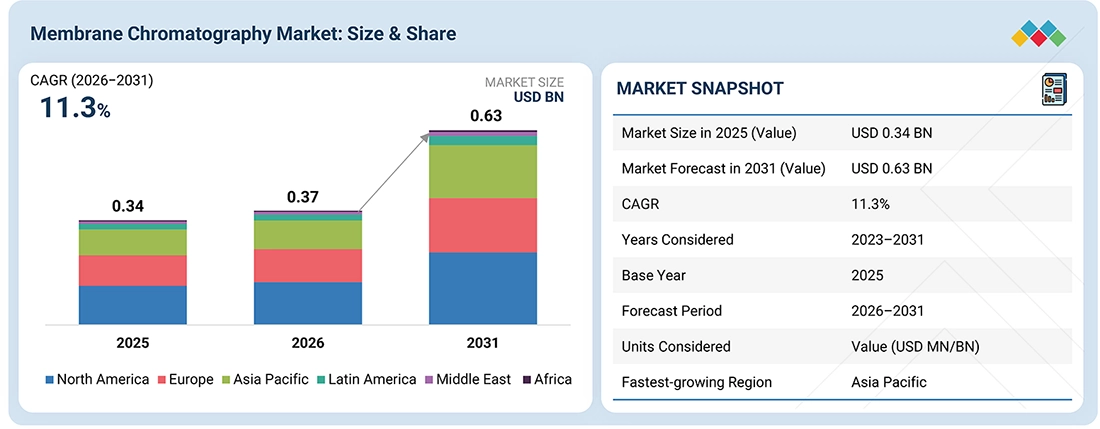
Source: Secondary Research, Interviews with Experts, MarketsandMarkets Analysis
The global membrane chromatography market is expected to grow from USD 0.37 billion in 2026 to USD 0.63 billion by 2031, at a CAGR of 11.3% over the forecast period. Growth in the membrane chromatography market is driven by increasing biopharmaceutical production, rising R&D activity, growing adoption of single-use downstream processing technologies, and expanding applications across monoclonal antibodies, vaccines, viral vectors, plasmid DNA, mRNA, and other advanced therapeutics. The market is further supported by increasing demand for high-throughput purification, growing use of flow-through and affinity membrane chromatography, advances in membrane materials and surface functionalization, and the need for faster, scalable, and flexible downstream processing workflows.
KEY TAKEAWAYS
-
BY REGIONBy region, North America accounted for the largest share of ~37.4% of the market in 2025.
-
BY PRODUCTBy product, the capsules, cassettes, and cartridges segment is projected to register the highest CAGR of 12.0% in the membrane chromatography market during the forecast period.
-
BY TECHNIQUEBy technique, the ion exchange membrane chromatography segment accounted for the largest share of 58.1% of the membrane chromatography market in 2025.
-
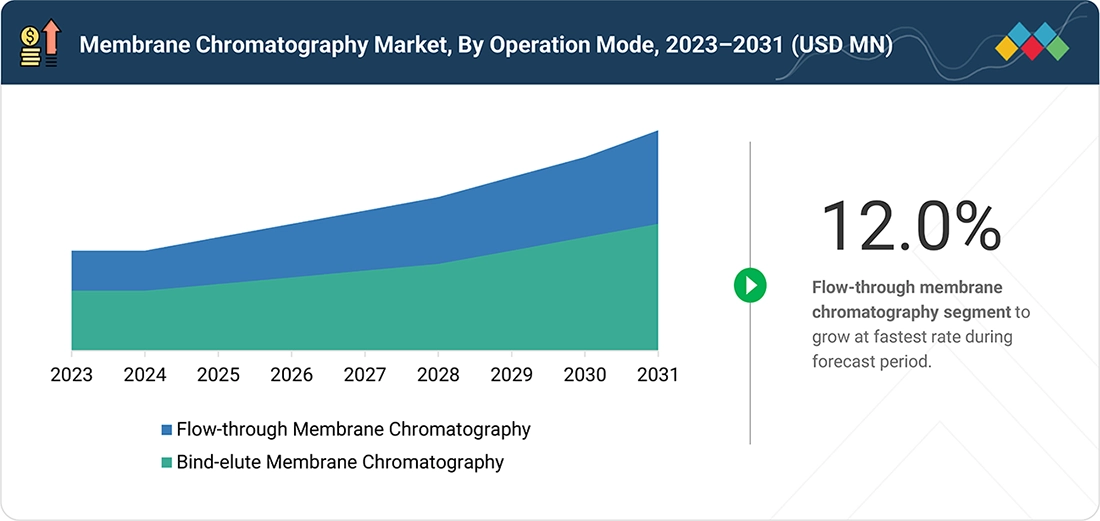
BY OPERATION MODEBy operation mode, flow-through membrane chromatography is projected to register the highest CAGR in the membrane chromatography market during the forecast period.
-
BY MEMBRANE MATERIALBy membrane material, polyethersulfone (PES) accounted for the largest share of the membrane chromatography market in 2025.
-
BY END USERBy end user, pharmaceutical & biopharmaceutical companies accounted for the largest share of the membrane chromatography market in 2025.
-
COMPETITIVE LANDSCAPE - KEY PLAYERSCompanies such as Danaher Corporation, Sartorius AG, Merck KGaA, and Thermo Fisher Scientific Inc. are among the leading players, supported by their strong market presence, broad membrane chromatography and downstream purification portfolios, established customer base, technological capabilities, and extensive geographic reach.
-
COMPETITIVE LANDSCAPE - STARTUPS/SMESCompanies such as Astrea Bioseparations, Porvair Sciences Ltd., GL Sciences Inc., and Membrane Solutions have distinguished themselves amongst startups and SMEs through specialized membrane chromatography offerings, application-specific membrane solutions, advanced separation products, and niche membrane technologies, underscoring their potential as emerging market leaders.
The membrane chromatography market is expected to grow steadily over the forecast period, supported by rising biopharmaceutical production, growing biopharmaceutical R&D, and increasing adoption of single-use downstream processing technologies. Growth is further driven by expanding applications in monoclonal antibodies, vaccines, recombinant proteins, viral vectors, plasmid DNA, mRNA, and other advanced therapeutics, along with increasing outsourcing to CROs & CDMOs. Advances in affinity and ion exchange membrane chromatography, flow-through processing, high-capacity membrane formats, advanced membrane materials, and surface functionalization are further strengthening demand across pharmaceutical & biopharmaceutical companies, CROs & CDMOs, and academic & research institutes.
TRENDS & DISRUPTIONS IMPACTING CUSTOMERS' CUSTOMERS
Customer-side business trends in the membrane chromatography market are driven by expanding biologics and advanced therapy pipelines, rising adoption of single-use downstream processing, and increasing outsourcing of biopharmaceutical manufacturing. Key trends include wider use of high-throughput and flow-through purification, growing demand for affinity membrane chromatography, and greater focus on rapid processing and process consistency. Advanced membrane materials, automated downstream workflows, continuous bioprocessing, and evolving sustainability requirements are also influencing purchasing decisions and supplier selection.
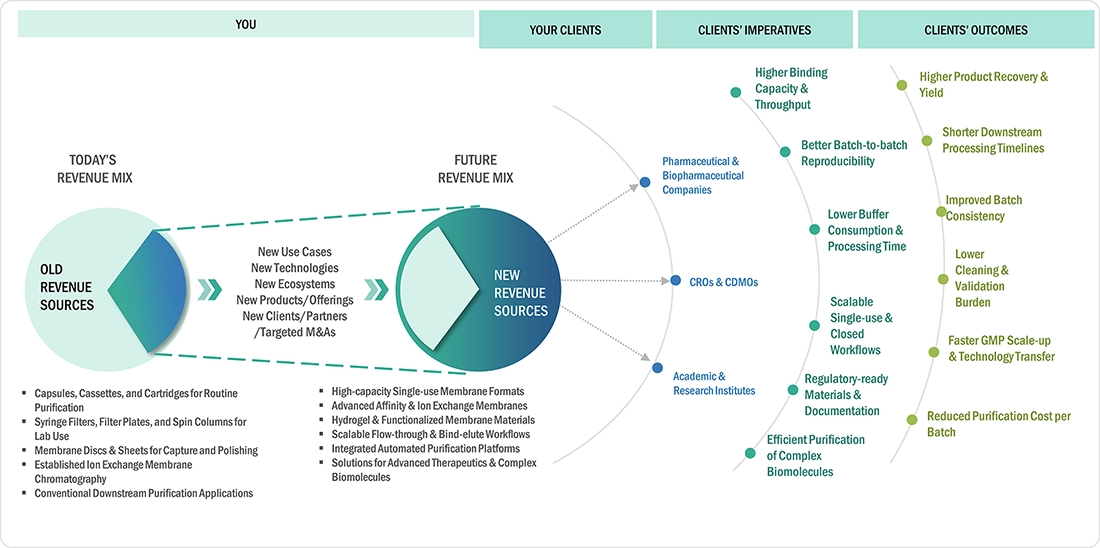
Source: Secondary Research, Interviews with Experts, MarketsandMarkets Analysis
MARKET DYNAMICS

Level
-
Benefits offered by membrane chromatography over conventional chromatography techniques

-
Increasing biopharmaceutical R&D


Level
-
Limited use of membrane chromatography products in large-scale manufacturing

-
Restrictions on use of fluorinated substances


Level
-
Emerging markets

-
Integration with continuous bioprocessing


Level
-
Presence of alternative techniques to chromatography

-
Technical limitations associated with membrane chromatography

Source: Secondary Research, Interviews with Experts, MarketsandMarkets Analysis
Driver: Increasing biopharmaceutical R&D
Increasing biopharmaceutical R&D is driving demand for membrane chromatography across monoclonal antibodies, recombinant proteins, vaccines, viral vectors, mRNA, plasmid DNA, and other advanced therapeutics. These programs require efficient downstream purification during research, process development, scale-up, and manufacturing. Membrane chromatography offers high flow rates, short residence times, and compatibility with single-use workflows, supporting faster screening, process optimization, and scale-up. The impact is particularly strong in antibody and gene therapy R&D, where flexible purification platforms are needed for sensitive and complex biomolecules. As biopharmaceutical pipelines expand, demand for scalable membrane adsorbers, affinity membranes, ion-exchange membranes, and other application-specific chromatography formats is expected to increase.
Restraint: Limited use of membrane chromatography products in large-scale manufacturing
Although membrane chromatography offers high flow rates, short residence times, and single-use operation, adoption in large-scale manufacturing remains limited for certain purification steps. Conventional packed-bed chromatography is well established in commercial biopharmaceutical production, with high binding capacity, proven scalability, and extensive validation history. As a result, manufacturers may be reluctant to replace established resin-based processes, particularly for high-volume capture applications. Membrane chromatography is still used mainly for polishing and impurity removal, but limitations in binding capacity, pressure handling, device size, and process economics can limit broader commercial-scale use. In addition, replacing validated chromatography steps requires process redevelopment, comparability studies, and regulatory documentation. These factors continue to restrain adoption of membrane chromatography in certain large-scale applications.
Opportunity: Integration with continuous bioprocessing
The growing adoption of intensified, continuous bioprocessing is creating opportunities for membrane chromatography because of its high flow rates, short residence times, low media volumes, and compatibility with rapid cycling and connected downstream workflows. Membrane adsorbers can be integrated with automated chromatography systems and other single-use operations to support continuous capture, polishing, and impurity removal while reducing buffer consumption, equipment footprint, and processing time. Technologies such as Sartobind Rapid A have demonstrated the potential of membrane-based capture in intensified monoclonal antibody purification workflows. As biopharmaceutical manufacturers seek greater facility utilization and better alignment between upstream and downstream capacity, membrane chromatography is expected to play an increasing role in integrated and continuous purification processes.
Challenge: Technical limitations associated with membrane chromatography
Technical limitations remain a key challenge for membrane chromatography, particularly in applications requiring high binding capacity, precise selectivity, and large-scale processing. Performance varies with membrane chemistry, pore structure, ligand density, feed composition, and target molecule characteristics, and lower binding capacity than conventional resin-based chromatography, membrane fouling, pressure limitations, and complex feed streams can reduce purification efficiency and product recovery. In addition, maintaining consistent flow distribution, binding performance, and product quality during scale-up can be challenging, and the limited availability of application-specific affinity membranes may increase development and validation requirements. These technical constraints can limit adoption of membrane chromatography in certain large-scale and complex purification applications.
MEMBRANE CHROMATOGRAPHY MARKET: GROWTH, SIZE, SHARE, AND TRENDS: COMMERCIAL USE CASES ACROSS INDUSTRIES
| COMPANY | USE CASE DESCRIPTION | BENEFITS |
|---|---|---|
 |
Altruist Biologics, a biologics CDMO, evaluated Sartobind Rapid A Protein A membrane chromatography for monoclonal antibody capture to address bottlenecks associated with conventional packed-bed Protein A chromatography | The use case focused on improving capture-stage efficiency within biologics downstream processing. | Supported faster mAb capture and offered a potential route to reduce downstream processing time and cost | The membrane format also supports scalable, single-use purification workflows suitable for clinical and commercial biologics manufacturing. |
 |
Researchers at Nanjing Chia-Tai Tianqing developed a rapid monoclonal antibody purification platform integrating Protein A membrane chromatography with sequential ion-exchange purification, including Natrix Q Micro membrane chromatography. | Protein A membrane chromatography reduced processing time by 96% versus conventional Protein A column chromatography | The integrated platform also achieved >90% recovery, substantially reduced high-molecular-weight impurities and host-cell proteins, and lowered medium costs by 11.8%. |
Logos and trademarks shown above are the property of their respective owners. Their use here is for informational and illustrative purposes only.
MARKET ECOSYSTEM
The ecosystem comprises pharmaceutical & biopharmaceutical companies, CROs & CDMOs, and academic & research institutes as primary end users. Key suppliers include manufacturers of membrane chromatography capsules, cassettes & cartridges, syringe filters, filter plates, spin columns, membrane discs & sheets, membrane adsorbers, ligands, and other purification consumables. Raw material suppliers, distributors, membrane material and surface-functionalization providers, bioprocess equipment manufacturers, engineering firms, regulatory authorities, and research organizations support product development, process optimization, quality control, and technology adoption. These stakeholders collaborate to advance single-use downstream processing, high-throughput purification, affinity and ion exchange membrane chromatography, and continuous bioprocessing, while improving binding capacity, selectivity, scalability, process consistency, and overall downstream purification efficiency.
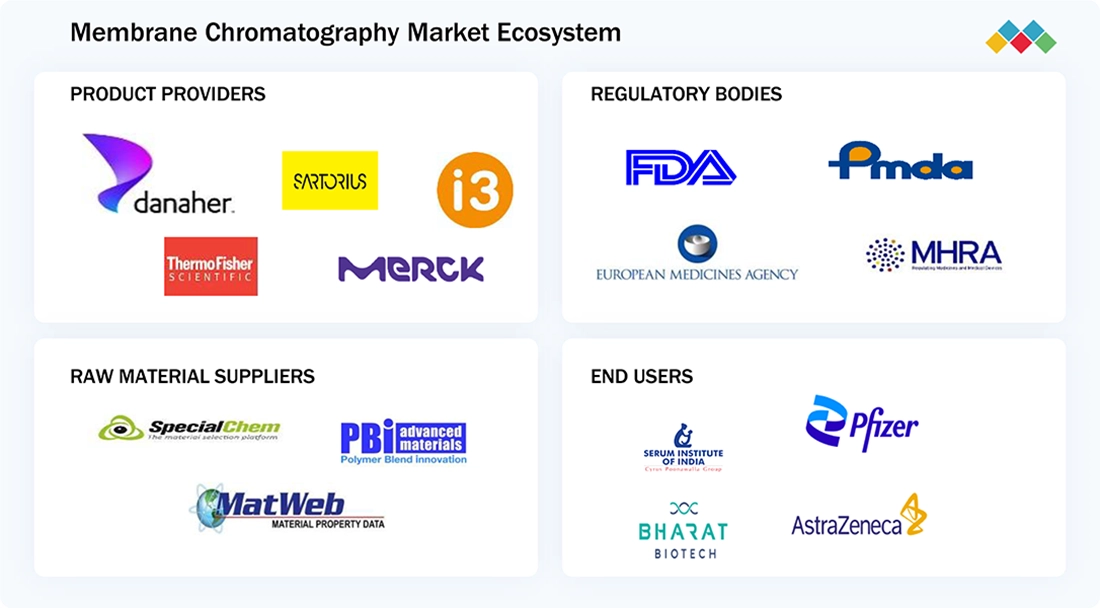
Logos and trademarks shown above are the property of their respective owners. Their use here is for informational and illustrative purposes only.
MARKET SEGMENTS
Source: Secondary Research, Interviews with Experts, MarketsandMarkets Analysis
Membrane Chromatography Market, by Product
In 2025, the capsules, cassettes, and cartridges segment held the largest market share, driven by extensive use across process development, clinical manufacturing, and commercial-scale downstream purification workflows. Their ready-to-use, single-use formats reduce column-packing requirements, cleaning needs, and changeover time while supporting rapid scale-up. Demand is further supported by the growing adoption of membrane chromatography for capture, polishing, and impurity removal across pharmaceutical & biopharmaceutical companies, as well as CROs & CDMOs. Recurring membrane device replacements and the growing use of flexible downstream purification workflows continue to support the segment’s dominant position.
Membrane Chromatography Market, by Technique
In 2025, ion exchange membrane chromatography accounted for the largest share of the membrane chromatography market by technique because of its extensive use in downstream purification and polishing applications. Anion-exchange and cation-exchange membranes are widely used to remove host cell proteins, DNA, viruses, endotoxins, and other process-related impurities. Their high flow rates, rapid mass transfer, scalability, and compatibility with single-use processing support broad adoption across biologics manufacturing workflows. The established use of ion exchange chemistries across monoclonal antibodies, recombinant proteins, vaccines, viral vectors, and other biologics continues to support the segment’s leading position.
Membrane Chromatography Market, by Operation Mode
In 2025, flow-through membrane chromatography accounted for the largest share of the market by operating mode, driven by its widespread use in high-throughput impurity removal and polishing. The approach enables rapid processing, high flow rates, low pressure drop, and efficient removal of host cell proteins, DNA, viruses, endotoxins, and other impurities while allowing the target biomolecule to pass through. Demand is further supported by increasing adoption of single-use and intensified downstream processing workflows across pharmaceutical & biopharmaceutical companies and CROs & CDMOs. Its suitability for process intensification and continuous bioprocessing continues to support the segment’s dominant position.
Membrane Chromatography Market, by Membrane Material
In 2025, polyethersulfone (PES) accounted for the largest share of the membrane chromatography market by membrane material, driven by its chemical resistance, mechanical strength, permeability, and suitability for a broad range of bioprocessing conditions. PES-based membranes are widely used in membrane-based separation and purification workflows owing to their process stability and compatibility with high-throughput applications. Demand is further supported by increasing adoption of single-use downstream processing and membrane-based purification technologies. The material’s established use in filtration and purification, along with its compatibility with diverse operating conditions, continues to support the segment’s leading position.
Membrane Chromatography Market, by End User
In 2025, pharmaceutical & biopharmaceutical companies accounted for the largest share of the membrane chromatography market by end user, supported by extensive use of membrane-based purification technologies in biologics development and manufacturing. These companies increasingly use membrane chromatography for capture, polishing, impurity removal, and purification of monoclonal antibodies, recombinant proteins, vaccines, viral vectors, plasmid DNA, mRNA, and other advanced therapeutics. Demand is further supported by expanding biologics pipelines, increasing commercial manufacturing activity, and growing adoption of single-use downstream processing. Continued investment in biopharmaceutical production capacity and advanced purification technologies supports the segment’s dominant position.
REGION
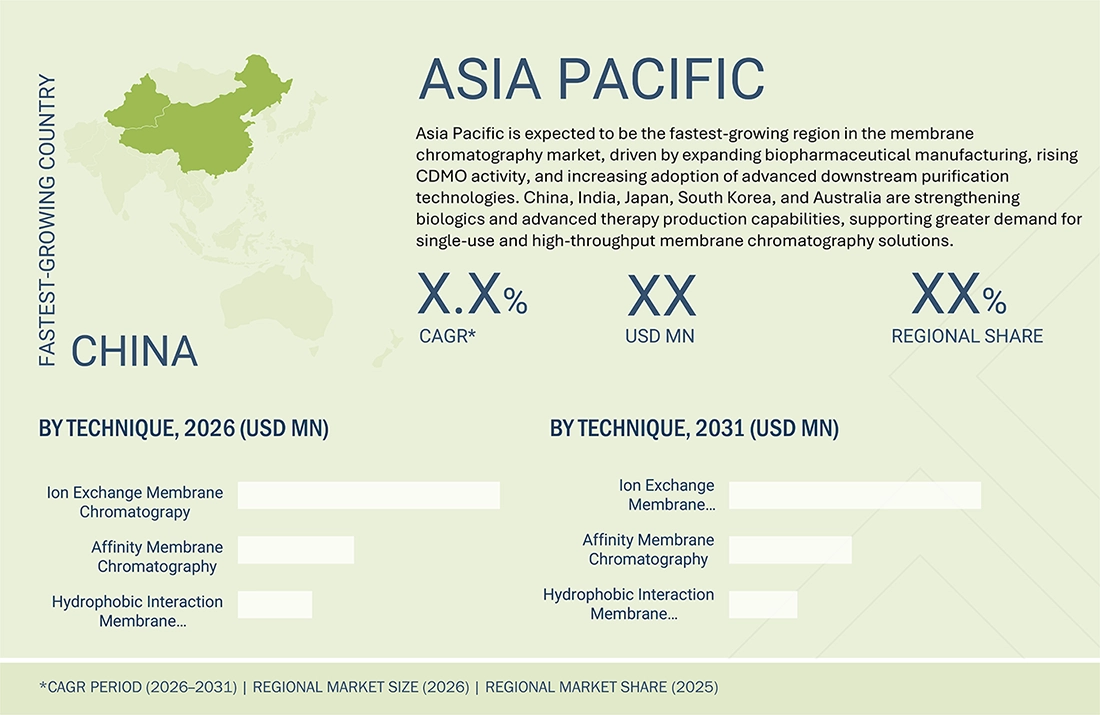
Asia Pacific to be fastest-growing region in global membrane chromatography market during forecast period
The Asia Pacific region is expected to register the fastest growth in the membrane chromatography market during the forecast period. Expanding biopharmaceutical manufacturing, increasing biotechnology R&D, rising CDMO activity, and growing investments in biologics and advanced therapy production across China, India, Japan, South Korea, and Australia support this growth. The region also benefits from strengthening bioprocessing infrastructure, increasing adoption of single-use downstream processing, and growing demand for high-throughput purification technologies. Rising production of monoclonal antibodies, vaccines, recombinant proteins, viral vectors, plasmid DNA, mRNA, and other advanced therapeutics is further increasing demand for membrane chromatography solutions. Growing adoption of affinity and ion exchange membrane chromatography, flow-through processing, and advanced membrane materials is expected to further support regional market growth.
MEMBRANE CHROMATOGRAPHY MARKET: GROWTH, SIZE, SHARE, AND TRENDS: COMPANY EVALUATION MATRIX
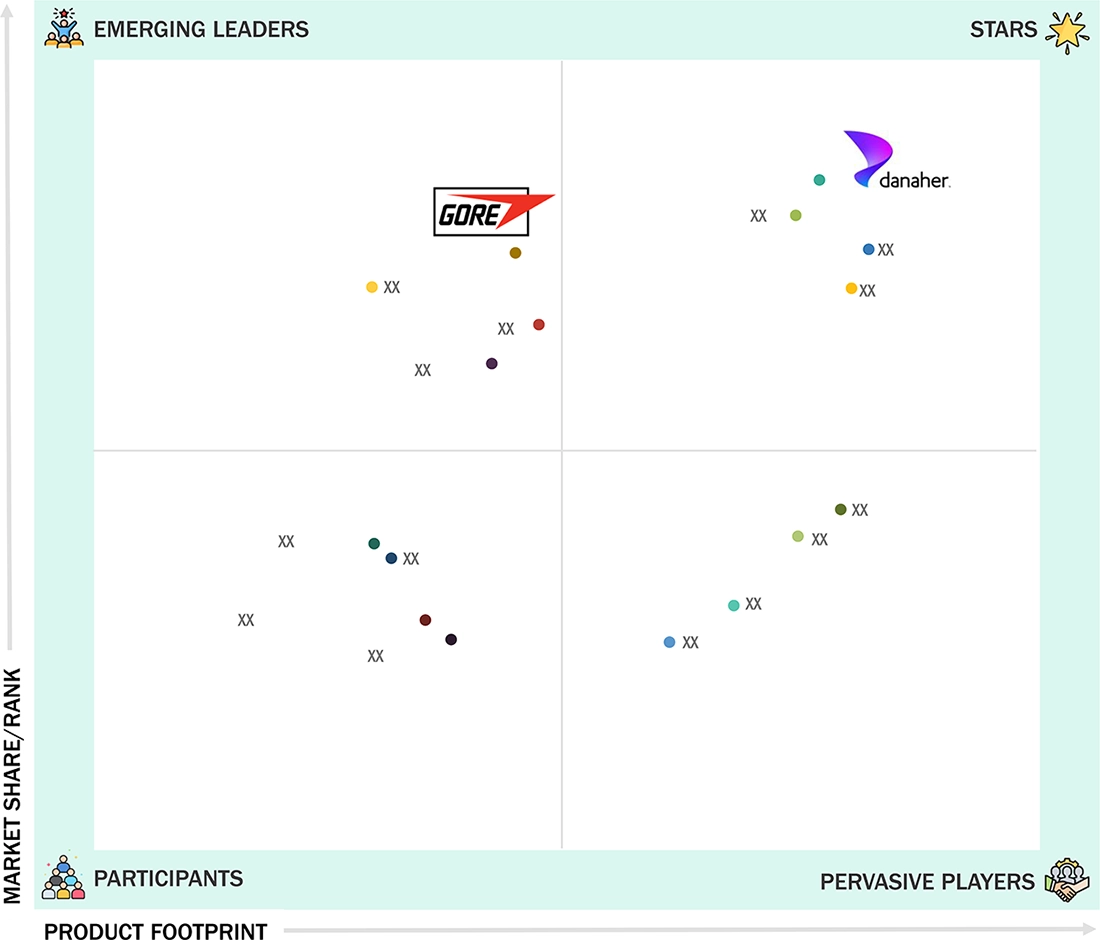
The company evaluation matrix provides information on the top 25 players offering membrane chromatography products and solutions and outlines each vendor’s performance. The analysis includes 13 key companies and 12 other players/startups & SMEs. In the membrane chromatography market, Danaher Corporation (US) leads with a broad product footprint spanning membrane adsorbers, chromatography capsules, filtration technologies, and integrated downstream bioprocessing solutions. W. L. Gore & Associates, Inc. (US) (Emerging Leader) is gaining traction through its Protein Capture Device with Protein A and membrane-based affinity chromatography solutions, supported by strong membrane technology expertise and growing adoption in intensified antibody purification and downstream bioprocessing workflows. Other companies evaluated include Cobetter, Porvair Sciences Ltd., Nupore Filtration Systems, Sterlitech Corporation, Microlab Scientific Co., Ltd., Nantong FilterBio Membrane Co., Ltd., Hahnemühle FineArt GmbH, Biocomma Limited, Astrea Bioseparations, Bio-Rad Laboratories, Inc., Membrane Solutions, and GL Sciences Inc.
Source: Secondary Research, Interviews with Experts, MarketsandMarkets Analysis
KEY MARKET PLAYERS
- Danaher Corporation
- Sartorius AG
- Merck KGaA
- Thermo Fisher Scientific Inc.
- i3 Membrane GmbH
- Agilent Technologies, Inc.
- Donaldson Company, Inc.
- GVS S.p.A.
- Restek Corporation
- Shimadzu Corporation
- W. L. Gore & Associates, Inc.
- MACHEREY-NAGEL GmbH & Co. KG
- MICROSOLV
MARKET SCOPE
| REPORT METRIC | DETAILS |
|---|---|
| Market Size in 2025 (Value) | USD 0.34 Billion |
| Market Forecast in 2026 (Value) | USD 0.37 Billion |
| Market Forecast in 2031 (Value) | USD 0.63 Billion |
| Growth Rate | CAGR of 11.3% from 2026–2031 |
| Years Considered | 2023–2031 |
| Base Year | 2025 |
| Forecast Period | 2026–2031 |
| Units Considered | Value (USD Million/Billion) |
| Report Coverage | Revenue Forecast, Company Ranking, Competitive Landscape, Growth Factors, Trends |
| Segments Covered |
|
| Regions Covered | North America, Europe, Asia Pacific, Latin America, Middle East, Africa |
WHAT IS IN IT FOR YOU: MEMBRANE CHROMATOGRAPHY MARKET: GROWTH, SIZE, SHARE, AND TRENDS REPORT CONTENT GUIDE
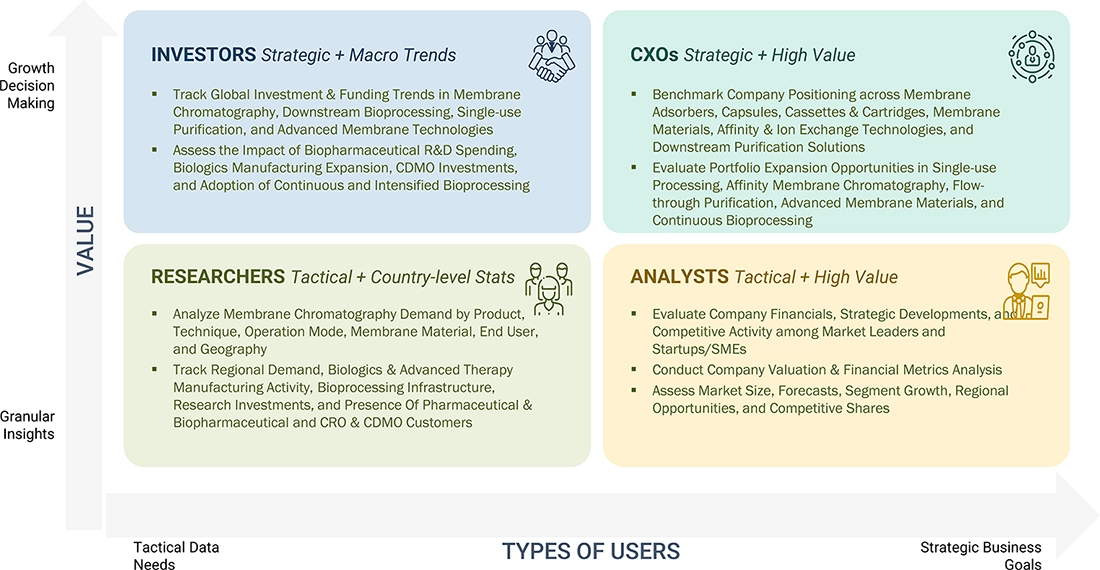
DELIVERED CUSTOMIZATIONS
We have successfully delivered the following deep-dive customizations:
| CLIENT REQUEST | CUSTOMIZATION DELIVERED | VALUE ADDS |
|---|---|---|
| Membrane Chromatography Opportunity Assessment |
|
|
| Advanced Biologics Purification Demand Analysis |
|
|
RECENT DEVELOPMENTS
- September 2026 : i3 Membrane GmbH (Germany) launched the i3 DMC PrA 1.0 mL membrane adsorber, expanding its Digital Membrane Chromatography platform. The ready-to-use Protein A membrane adsorber is designed to purify IgG, monoclonal antibodies, and other Fc-containing molecules, combining affinity capture with electrically driven elution to support rapid, scalable downstream purification workflows.
- September 2025 : Merck KGaA (Germany) launched the Natrix CH family of chromatography membrane devices, a scalable cation-exchange membrane chromatography solution for purifying traditional and novel therapeutic modalities.
- July 2025 : Donaldson Company, Inc./Purilogics (US) introduced the Purexa NAEX Prep membrane chromatography technology, a weak anion exchange membrane solution developed for purification of supercoiled plasmid DNA and scalable bioprocessing workflows.
Table of Contents
 Exclusive indicates content/data unique to MarketsandMarkets and not available with any competitors.
Methodology
This study relied heavily on secondary sources, directories, and databases to identify and collect information for analyzing the global membrane chromatography market. The study conducted in-depth interviews with primary respondents, including key industry participants, subject-matter experts (SMEs), C-level executives at major market players, and industry consultants, to gather and validate critical qualitative and quantitative information and assess the market's growth prospects. The global market size estimated through secondary research was then triangulated with primary research inputs to arrive at the final market size.
Secondary Research
Secondary research was used mainly to identify and collect information for the extensive, technical, market-oriented, and commercial study of the membrane chromatography market. The secondary sources used for this study include the World Health Organization (WHO), United States Food and Drug Administration (FDA), Chinese American Chromatography Association, Chromatography Institute of America, International Separation Science Society, National Institutes of Health (NIH), Pharmaceutical Research and Manufacturers of America (PhRMA), Organisation for Economic Co-operation and Development (OECD), European Federation of Pharmaceutical Industries and Associations, National Center for Biotechnology Information (NCBI), Eurostat, Factiva; corporate & regulatory filings such as annual reports, SEC filings, investor presentations, and financial statements; press releases; and trade, business, and professional associations, among others. These sources were also used to obtain key information on major players, market classification and segmentation aligned with industry trends, regional/country-level markets, market developments, downstream purification practices, biopharmaceutical manufacturing trends, and technological perspectives.
Primary Research
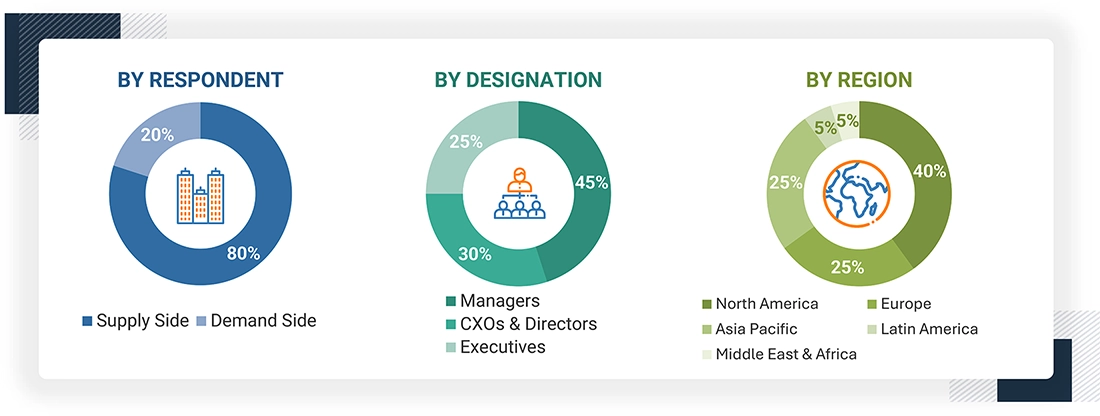
We conducted in-depth interviews with primary respondents, including key industry participants, subject-matter experts (SMEs), C-level executives at key market players, and industry consultants, among others, to gather and validate critical qualitative and quantitative information and assess the market's prospects. We interviewed various primary sources from both the supply and demand sides of the market to gather qualitative and quantitative information. The following is a breakdown of the primary respondents:
To know about the assumptions considered for the study, download the pdf brochure
Market Size Estimation
Both top-down and bottom-up approaches were used to estimate and validate the total size of the membrane chromatography market. These methods were also used extensively to estimate the size of various market subsegments. The research methodology used to estimate the market size includes the following:
Membrane Chromatography Market: Top-Down and Bottom-Up Approach

Data Triangulation
After estimating the market size as described above, the total market was divided into several segments and subsegments. To complete the overall market engineering process and obtain accurate statistics for all segments and subsegments, we employed data triangulation and market breakdown procedures where applicable. We triangulated the data by examining factors and trends from both the demand and supply sides.
Market Definition
Membrane chromatography refers to a separation and purification technique in which functionalized membranes serve as the stationary phase for chromatographic separation. It separates target molecules based on interactions such as ion exchange, affinity, and hydrophobic interactions. The technology enables convective mass transfer, supporting high flow rates, short processing times, and efficient purification across biopharmaceutical downstream workflows.
This report covers membrane chromatography products used for separation and purification. These include capsules, cassettes & cartridges, syringe filters, filter plates, spin columns, membrane discs & sheets, and other consumables used across research, process development, and biopharmaceutical manufacturing.
Key Stakeholders
- Membrane chromatography product manufacturers, vendors, and distributors
- Academic research institutes
- Pharmaceutical & biotechnology companies
- Life science companies
- Venture capitalists and investors
- Government organizations
- Private research firms
- Contract research organizations (CROs)
- Contract development and manufacturing organizations (CDMOs)
Report Objectives
- To define, describe, and forecast the membrane chromatography market based on product, technique, operation mode, membrane material, end user, and region
- To provide detailed information regarding the factors influencing market growth, such as drivers, opportunities, restraints, and challenges
- To strategically analyze micromarkets with respect to individual growth trends, prospects, and contributions to the overall membrane chromatography market
- To analyze key market opportunities for stakeholders and provide details of the competitive landscape for key players
- To profile the key players in the global membrane chromatography market, as well as comprehensively analyze their core competencies and market rankings
- To forecast the size of the market segments for six regions: North America (US and Canada), Europe (Germany, France, UK, Italy, Spain, and the Rest of Europe), Asia Pacific (Japan, China, India, Australia, South Korea, and the Rest of Asia Pacific), Latin America (Brazil, Mexico, and the Rest of Latin America), Middle East (GCC Countries and the Rest of Middle East), and Africa
- To track and analyze competitive developments, such as product launches, expansions, acquisitions, partnerships, collaborations, and agreements in the membrane chromatography market
- To benchmark players within the market using the proprietary “Company Evaluation Matrix” framework, which analyzes market players on various parameters within the broad categories of business and product excellence strategies
Customization Options
Based on the market data provided, MarketsandMarkets offers customization to meet the company’s specific needs. The following customization options are available for this report:
Portfolio Assessment
- Product Matrix, which gives a detailed comparison of the product portfolios of the top four companies.
Company Information
- Detailed analysis and profiling of additional market players (up to five).
Geographical Analysis
- A further breakdown of the Rest of Europe membrane chromatography market, by country
- A further breakdown of the Rest of Asia Pacific membrane chromatography market, by country
- A further breakdown of the Rest of Latin America membrane chromatography market, by country


Personalize This Research
- Triangulate with your Own Data
- Get Data as per your Format and Definition
- Gain a Deeper Dive on a Specific Application, Geography, Customer or Competitor
- Any level of Personalization
Let Us Help You
- What are the Known and Unknown Adjacencies Impacting the Membrane Chromatography Market
- What will your New Revenue Sources be?
- Who will be your Top Customer; what will make them switch?
- Defend your Market Share or Win Competitors
- Get a Scorecard for Target Partners

Custom Market Research Services
We Will Customise The Research For You, In Case The Report Listed Above Does Not Meet With Your Requirements
Get 10% Free CustomisationTESTIMONIALS

JAYANT RAJPUROHIT
Director of Market Insights, Data and Analytics
SFI Health,
Leading Pharmaceutical Companywww.sfihealth.com/

We at SFI Health approached MarketsandMarkets for an Opportunity Assessment on "Incidence and Prevalence of Focus Indications" as we wanted to know the most attractive HCPs like Physician, Functional MD, Naturopath and Pharmacist. The project was critical for us to ensure our focus on the right target which would enable sustainable growth and profitability for SFI Health. The business insights provided exceeded our expectations and we were extremely impressed. The team at MarketsandMarkets is highly professional and detail oriented and very well understood our business needs. MarketsandMarkets offers a unique combination of expertise and dedicated engagement model. We identified 2 new products to be launched in coming months, based on the research findings provided by MarketsandMarkets. We are happy with the services and would strongly recommend MarketsandMarkets to my peers in the industry.

BEATRIZ DE LA CALLE
Head of Commercial Analytics
Qualicaps,
Leading Pharmaceutical Companywww.qualicaps.com/

We partnered with MarketsandMarkets for an assessment study on hard empty capsules. The team was extremely professional in understanding our business requirements and we received timely responses to all our queries. The market intelligence and the recommendations has met our business requirements. We were extremely impressed to see the final study results; it really exceeded our expectations. The market intelligence offered by MarketsandMarkets, and clarity on next steps will help us achieve our business objective for the Year 2021. We are happy with the services and would strongly recommend MarketsandMarkets to my peers in the industry.

Bob Williams,
Senior Director Business Development & Innovation
Bracco Diagnostics Inc.,
Italian Multinational in life sciences sector and a World Leader in imaging diagnosticsimaging.bracco.com/us-en
We were pleased with targeted insights that MarketsandMarkets identified from a custom study on the 'Radiation Dose Management Solutions Market'. Your team identified and characterized the market participants as well as underlying trends accurately. This study was useful to Bracco in formulating business strategies for our dose monitoring product lines and we thank MarketsandMarkets for the job well done.
Cody Coonradt,
Market Development and Strategy Manager
3M Health Information Systems,
Leader in Health care Coding, Payment & Analytics Solutions.www.3m.com/3M/en_US/health-information-systems-us
The value for our organization comes from three things: depth of research, specificity of segments and being easy to work with. As important as the first two are, the third can't be underestimated. MarketsandMarkets, maybe more than any other research vendor, wants to know what is top of mind for our team and what big questions we are grappling to answer.
Their customer first approach and high value engagement model, have given us great analysis and excellent value for money
- US Membrane Chromatography Market
- Canada Membrane Chromatography Market
- Germany Membrane Chromatography Market
- UK Membrane Chromatography Market
- France Membrane Chromatography Market
- Italy Membrane Chromatography Market
- Spain Membrane Chromatography Market
- China Membrane Chromatography Market
- Japan Membrane Chromatography Market
- India Membrane Chromatography Market
- South Korea Membrane Chromatography Market
- Australia Membrane Chromatography Market
- Brazil Membrane Chromatography Market
- Mexico Membrane Chromatography Market
- Saudi Arabia Membrane Chromatography Market
- Rest Of Europe Membrane Chromatography Market
- Rest Of Asia Pacific Membrane Chromatography Market
- Rest Of Latin America Membrane Chromatography Market
- GCC Countries Membrane Chromatography Market
- Rest Of Middle East Membrane Chromatography Market
- Rest Of GCC Countries Membrane Chromatography Market
- UAE Membrane Chromatography Market



Growth opportunities and latent adjacency in Membrane Chromatography Market