Methyl Cellulose Market

Methyl Cellulose Market by Application (Construction, Pharmaceutical, Personal Care, Food & Beverage, Others) and Region - Global Forecast to 2030




OVERVIEW
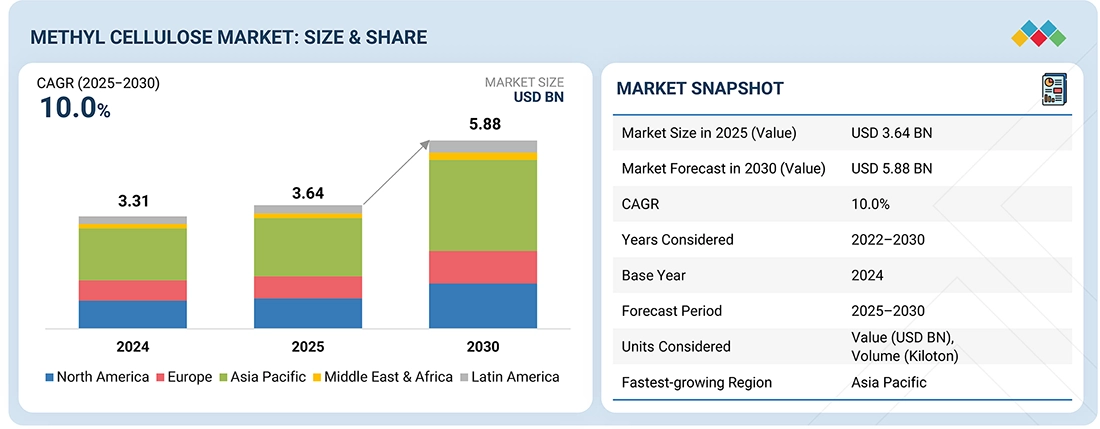
Source: Secondary Research, Interviews with Experts, MarketsandMarkets Analysis
The methyl cellulose market size is valued at approximately USD 3.64 billion in 2025 and is expected to reach USD 5.88 billion by 2030, at a CAGR of 10.0% during the forecast period. The market growth is driven by its versatility as a plant-derived, biodegradable thickener and stabilizer across various sectors. The demand from the construction sector is increasing due to its capacity to improve water retention, adhesion, and workability in mortars, tile adhesives, and plasters. The food industry drives growth by utilizing it as an emulsifier and texture modifier in gluten-free, low-fat, and plant-based products, as customer preferences shift toward clean-label ingredients. The pharmaceutical and personal care industries drive acceptance by utilizing it as a safe excipient for controlled-release medications, suspensions, and cosmetic rheology control, which aligns with health trends and sustainability objectives.
KEY TAKEAWAYS
-
By ApplicationBy application, the pharmaceutical application is projected to register the highest CAGR of 11.9% in the methyl cellulose market during the forecast period.
-
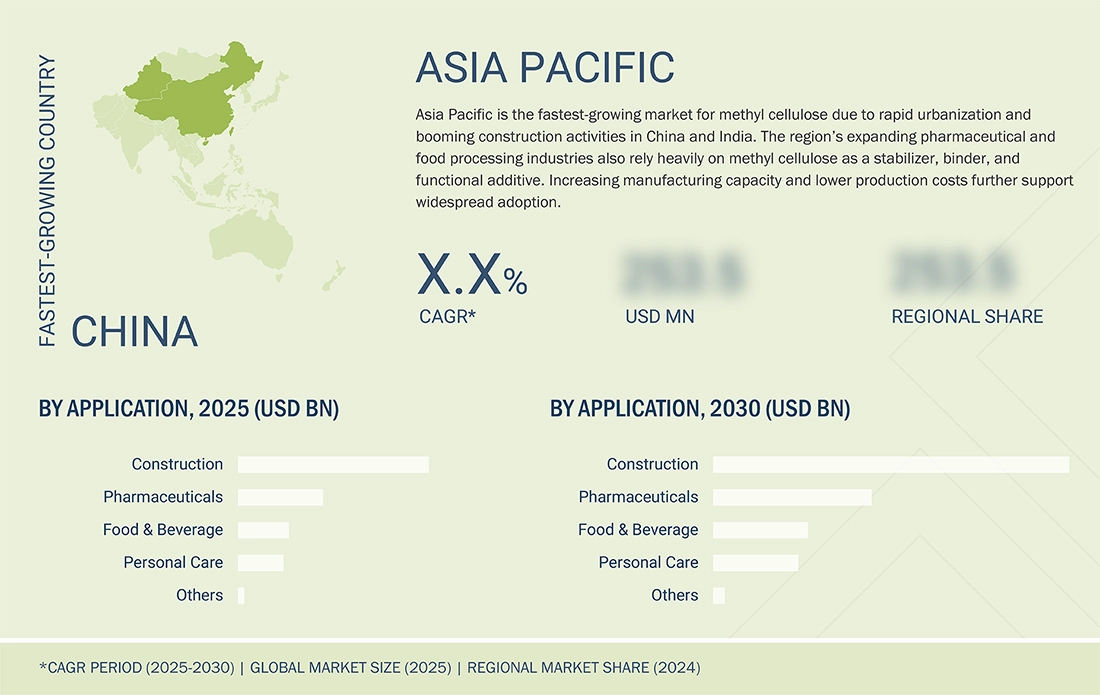
By RegionBy region, Asia Pacific is projected to have the fastest CAGR of 11.9% in the global methyl cellulose market during the forecast period.
-
Competitive Landscape-Key PlayersThe Dow Chemical Company (US), Shin-Etsu Chemical Co., Ltd. (Japan), Ashland Global Holdings, Inc. (US), Nouryon Chemicals Holding B.V. (Netherlands), Shandong Head Co., Ltd. (China), and Hubei Jiahua Cellulose Co., Ltd. (China) are star players in the methyl cellulose market, given their broad industry coverage and strong operational & financial strength.
-
Competitive Landscape- StartupsTaian Ruitai Cellulose Co., Ltd., Henan Botai Chemical Building Material Co., Ltd., Celotech Chemical Co., Ltd., Zhejiang Kehong Chemical Co., Ltd., and Pioma Chemicals have distinguished themselves among startups and SMEs due to their well-developed marketing channels and extensive funding to build their product portfolios.
Methyl cellulose promotes growth by expanding its use in oil drilling, paints, textiles, and developing high-tech industries. In oil and gas exploration, it acts as a viscosifier and fluid loss reduction in drilling muds, improving stability and efficiency during extraction operations as global energy demand rises. Paints and coatings benefit from its thickening, binding, and film-forming capabilities, which enhance application consistency, adhesion, and durability in water-based emulsions and industrial formulas. Textile processing uses it as a size agent, printing thickener, and finishing aid, increasing yarn strength, flexibility, and dye uptake while facilitating desizing. Other uses of Methyl cellulose include adhesives, inks, detergents, and new biomedical applications such as 3D bioprinting scaffolds and wound healing due to its biocompatibility and biodegradability.
TRENDS & DISRUPTIONS IMPACTING CUSTOMERS' CUSTOMERS
Changes in customer trends or disruptions affect consumers' businesses. These shifts influence the revenues of end users. As a result, the revenue changes for end users are likely to impact the revenues of methyl cellulose suppliers, which, in turn, affect the revenues of cellulose ether & derivative manufacturers.
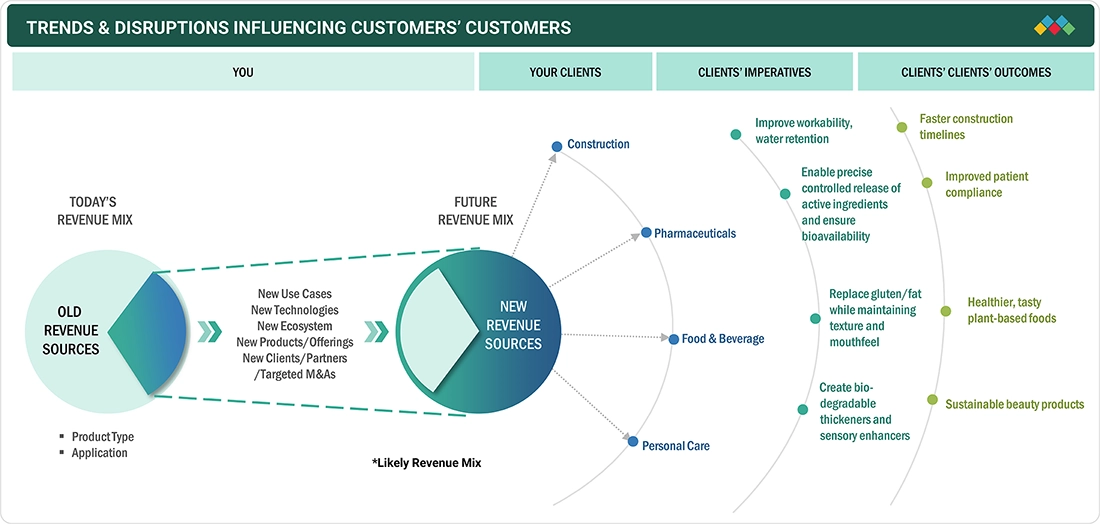
Source: Secondary Research, Interviews with Experts, MarketsandMarkets Analysis
MARKET DYNAMICS

Level
-
Rising demand from pharmaceutical applications

-
Shift toward environmentally friendly additives


Level
-
High production and raw material costs

-
Price sensitivity in developing regions


Level
-
Expanding infrastructure projects in emerging economies

-
Rising personal care and cosmetic innovations


Level
-
Competition from lower-cost alternatives

-
Regulatory compliance for food and pharma grades

Source: Secondary Research, Interviews with Experts, MarketsandMarkets Analysis
Driver: Rising demand from pharmaceutical applications
The pharmaceutical industry is a significant growth driver for the methyl cellulose market due to its widespread use as a safe, high-purity excipient in oral and topical preparations. Methyl cellulose serves as a tablet binder, a coating agent for easier swallowing and protection, and an important polymer in controlled-release medication delivery systems. Its non-toxic, non-irritating, and inert properties make it ideal for regulated pharmaceutical environments, while its consistency and stability promote efficient manufacture. As global demand for medications increases due to aging populations, chronic diseases, and expanded healthcare access, pharmaceutical companies are utilizing more methyl cellulose to meet their production and formulation needs.
Restraint: High production and raw material costs
One of the primary restraints to the growth of the methyl cellulose market is its relatively high production cost. Methyl cellulose production necessitates chemically treated cellulose, energy-intensive equipment, and careful quality control, particularly for medical and food products. Furthermore, raw resources like wood pulp can change in price due to supply constraints or worldwide market instability. These issues increase overall production costs and frequently result in higher pricing for end consumers, thereby limiting adoption in cost-sensitive industries where lower-cost substitutes are preferred.
Opportunity: Expanding infrastructure projects in emerging economies
Rapid growth in emerging economies throughout Asia Pacific, the Middle East, and Africa is presenting significant prospects for the methyl cellulose industry. These regions are making significant investments in housing, transportation, commercial buildings, and industrial expansion, all of which require high-performance construction chemicals, such as dry-mix mortars, tile adhesives, plasters, and gypsum products. Methyl cellulose is an essential ingredient in these polymers, enhancing water retention, workability, and application quality. As governments push for large-scale infrastructure upgrading and private investment increases, demand for long-lasting and efficient building materials grows, offering emerging nations a significant opportunity for methyl cellulose suppliers.
Challenge: Competition from lower-cost alternatives
Meeting regulatory criteria for food and medical uses presents a major challenge for methyl cellulose manufacturers. High-purity methyl cellulose utilized in tablets, eye drops, or food products must meet stringent quality, safety, and performance criteria established by regulatory bodies such as the FDA, EMA, and worldwide pharmacopeias. Ensuring consistent purity, adequate paperwork, and compliance with these rules increases production complexity and cost. This raises entrance hurdles for new firms and necessitates ongoing investment in innovative manufacturing technologies and quality control systems.
METHYL CELLULOSE MARKET: COMMERCIAL USE CASES ACROSS INDUSTRIES
| COMPANY | USE CASE DESCRIPTION | BENEFITS |
|---|---|---|
 |
Uses methyl cellulose as a key additive in dry-mix mortars, tile adhesives, and plasters to enhance workability and performance | Better mortar consistency, improved adhesion, superior water retention, and smoother application on job sites |
 |
Incorporates methyl cellulose in tablet formulations for binding, film coating, and controlled-release drug delivery systems | Improved tablet stability, reliable drug release profiles, enhanced processing efficiency, and formulation consistency |
 |
Utilizes methyl cellulose in skincare, haircare, gels, and cosmetic creams for thickening and texture enhancement | Smooth product feel, better viscosity control, stable emulsions, and improved formulation performance |
 |
Applies methyl cellulose in personal care and household products as a stabilizer, thickener, and performance additive | Enhanced product stability, controlled thickness, improved sensory feel, and better formulation uniformity |
Logos and trademarks shown above are the property of their respective owners. Their use here is for informational and illustrative purposes only.
MARKET ECOSYSTEM
This ecosystem illustrates the complete value chain of the methyl cellulose market, beginning with raw material suppliers such as WestRock, Daicel, Kemira, and Sappi, which provide the cellulose required for production. Manufacturers such as Dow, Shin-Etsu, and Ashland convert these materials into methyl cellulose, which is used across various industries. Distributors, including DKSH, Redox, and Megachem, ensure the product reaches global markets. The end users, such as Dr. Reddy’s, L’Oréal, Saint-Gobain, Bayer, Nestlé, and Unilever, apply methyl cellulose in pharmaceuticals, cosmetics, construction, food, and household products, demonstrating its wide industrial relevance.
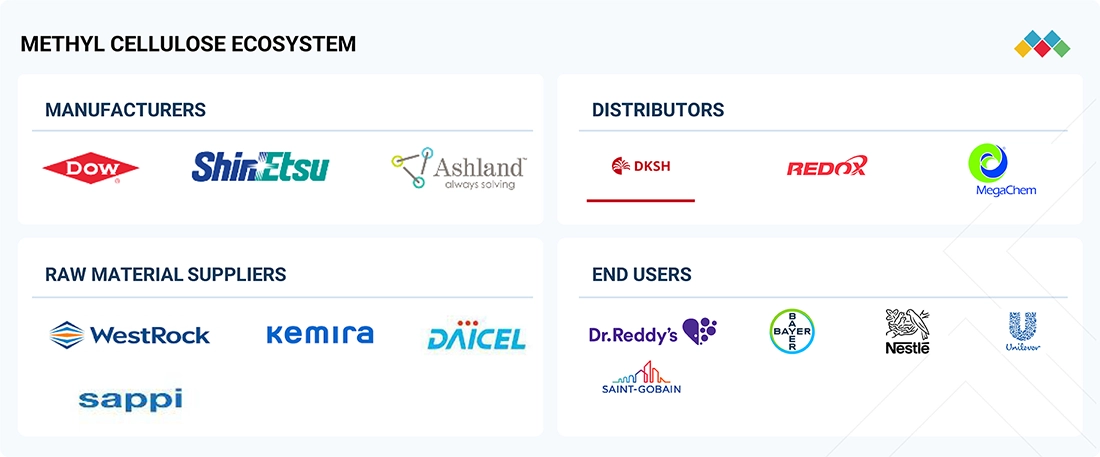
Logos and trademarks shown above are the property of their respective owners. Their use here is for informational and illustrative purposes only.
MARKET SEGMENTS
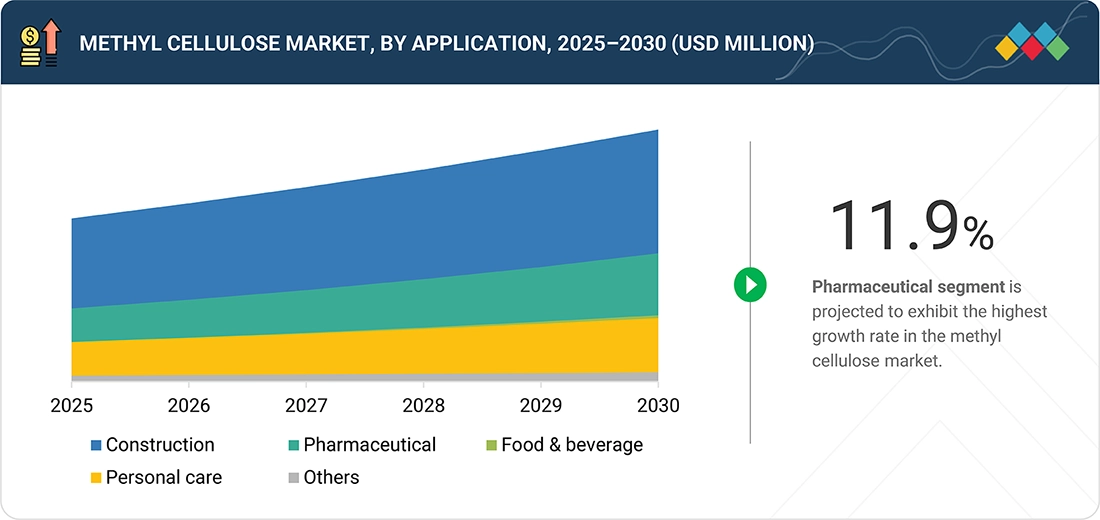
Source: Secondary Research, Interviews with Experts, MarketsandMarkets Analysis
Methyl Cellulose Market, By Application
The pharmaceutical segment is predicted to grow the fastest in the methyl cellulose market due to its importance as a high-purity, multifunctional excipient in current medicine formulations. Methyl cellulose is commonly used as a binder, disintegrant, film former, and controlled-release polymer in tablets, capsules, and ophthalmic solutions due to its outstanding safety profile, chemical stability, and compatibility with active ingredients. As global healthcare demand increases due to aging populations, the prevalence of chronic diseases, and expanded access to medications in emerging nations, the demand for dependable, high-quality excipients rises.
REGION
Asia Pacific to be fastest-growing region in methyl cellulose market during forecast period
Asia Pacific is the fastest-growing market for methyl cellulose. This is owed to increasing construction activity fueled by rapid urbanization and significant infrastructure investments in countries such as China, India, Vietnam, and Bangladesh. Governments in the region are implementing policies such as India's National Infrastructure Pipeline and housing efforts, as well as China's large-scale road, bridge, and urban construction projects, which increase demand for methyl cellulose in mortars, adhesives, and plasters. Abundant raw material availability, low labor costs, increased purchasing power, and favorable laws all contribute to cost-effective production and expanded uses in pharmaceuticals, food processing, and manufacturing. Emerging industrial bases in Southeast Asia are amplifying this trend, with growing demands for environmentally acceptable chemicals in paints, textiles, and personal care products.
METHYL CELLULOSE MARKET: COMPANY EVALUATION MATRIX
In the methyl cellulose market matrix, The Dow Chemical Company (Star) leads with a strong market share and an extensive product footprint, which is widely adopted in the construction, pharmaceutical, personal care, and food & beverage industries. Hebei Jiahua Cellulose Co., Ltd. (Emerging Leader) is gaining visibility as it focuses on innovation and backs this with high-performance cellulose for tile adhesives, drymix mortars, coatings, and food applications. While The Dow Chemical Company dominates through scale and a diverse portfolio, Hebei Jiahua Cellulose Co., Ltd. shows significant potential to move toward the leaders’ quadrant as demand for methyl cellulose continues to rise.
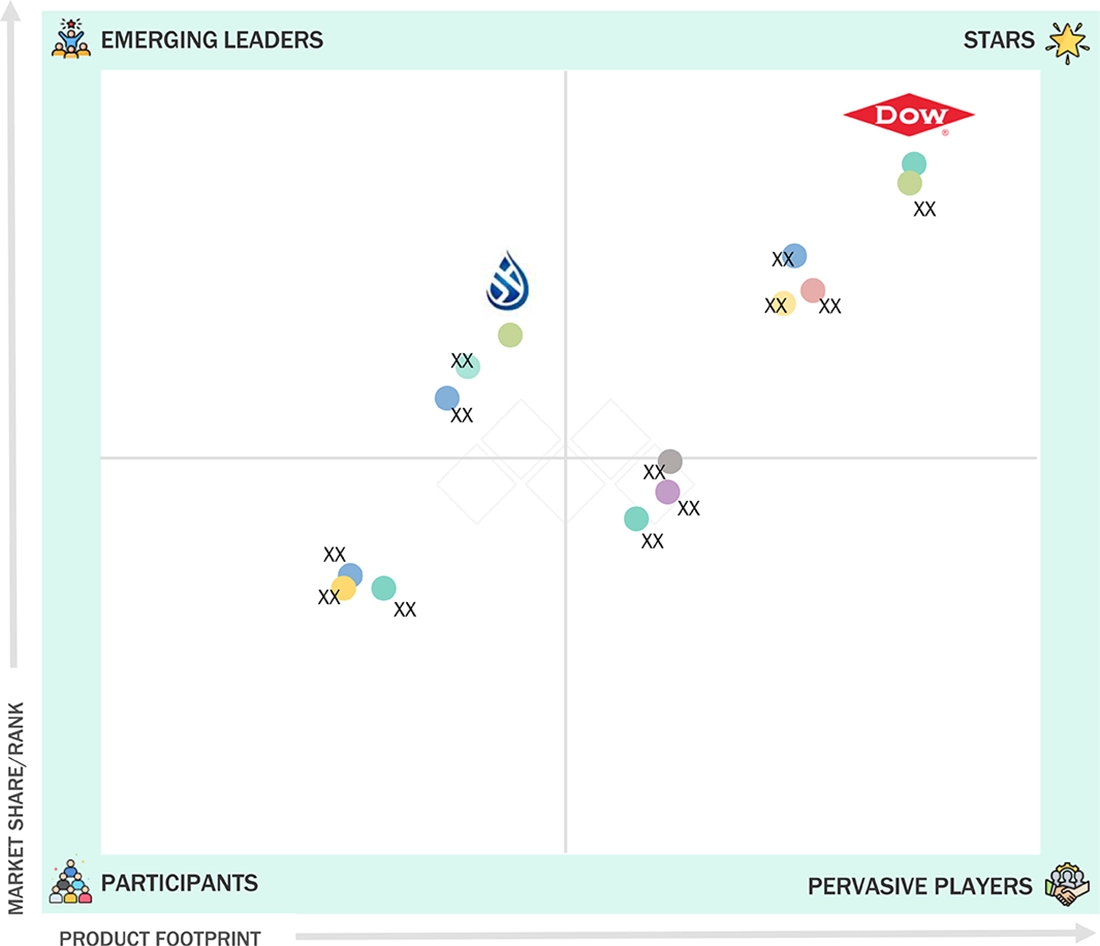
Source: Secondary Research, Interviews with Experts, MarketsandMarkets Analysis
KEY MARKET PLAYERS
- The Dow Chemical Company
- Shin-Etsu Chemical Co., Ltd.
- Ashland Global Holdings, Inc.
- LOTTE Fine Chemicals
- Rayonier Advanced Materials
- Shandong Head Co., Ltd.
- Nouryon Chemicals Holding B.V.
- UL LLC
- KIMA CHEMICAL CO., LTD.
- J. RETTENMAIER & SÖHNE GmbH + Co KG
- YuCMC Co., Ltd.
- Hubei Jiahua Cellulose Co., Ltd.
- DuPont
- LOTTE Fine Chemical
- Zibo Hailan Chemical Co., Ltd.
MARKET SCOPE
| REPORT METRIC | DETAILS |
|---|---|
| Market Size in 2025 (Value) | USD 3.64 Billion |
| Market Forecast in 2030 (Value) | USD 5.88 Billion |
| Growth Rate | CAGR of 10.0% from 2025 to 2030 |
| Years Considered | 2022-2030 |
| Base Year | 2024 |
| Forecast Period | 2025-2030 |
| Units Considered | Value (USD Billion), Volume (Kiloton) |
| Report Coverage | Revenue forecast, company ranking, competitive landscape, growth factors, and trends |
| Segments Covered | Application: Construction, Pharmaceutical, Personal care, Food & Beverage, Others |
| Regions Covered | North America, Europe, Asia Pacific, Middle East & Africa, and Latin America |
WHAT IS IN IT FOR YOU: METHYL CELLULOSE MARKET REPORT CONTENT GUIDE
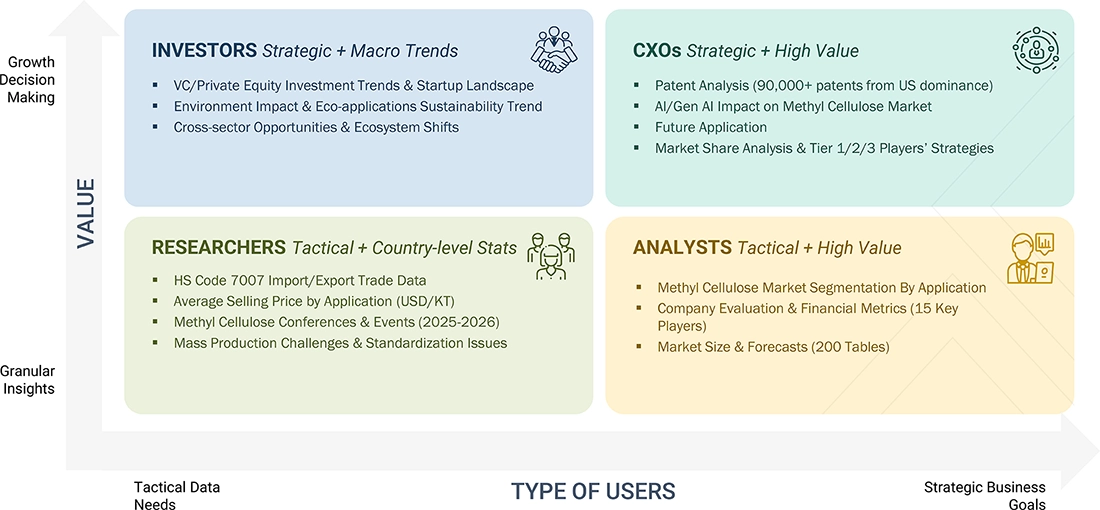
DELIVERED CUSTOMIZATIONS
We have successfully delivered the following deep-dive customizations:
| CLIENT REQUEST | CUSTOMIZATION DELIVERED | VALUE ADDS |
|---|---|---|
| Methyl Cellulose Manufacturer (Construction, Pharma & Food Grades) |
|
|
| Methyl Cellulose Formulator / Compounder (Construction & Consumer Goods) |
|
|
| Raw Material Supplier (Wood Pulp / Cotton Linter / Chemical Intermediates for Methyl Cellulose) |
|
|
| Construction Chemicals Manufacturer Using Methyl Cellulose in Dry-Mix Systems |
|
|
RECENT DEVELOPMENTS
- December 2018 : The Dow Chemical Company announced the expansion of the production capacity of methyl cellulose at its manufacturing facilities in Bomlitz and Bitterfeld, Germany. The increased capacity was intended to help construction dry mix customers secure a reliable supply of key additives.
- November 2017 : Shin-Etsu Chemical Co., Ltd. invested USD 176.33 million in strengthening its cellulose derivatives business. The new investments were to be implemented at two of Shin-Etsu's cellulose manufacturing bases: Shin-Etsu Chemical's Naoetsu Plant in Joetsu City, Niigata Prefecture, Japan, and SE Tylose GmbH & Co. KG in Wiesbaden, Germany, a 100%-owned subsidiary of Shin-Etsu Chemical.
Table of Contents
 Exclusive indicates content/data unique to MarketsandMarkets and not available with any competitors.
Methodology
The study involved four major activities in estimating the current market size of nanocellulose. Exhaustive secondary research was done to collect information on the market, peer, and parent markets. The next step was to validate these findings, assumptions, and sizes with industry experts across the value chain of nanocellulose through primary research. Both top-down and bottom-up approaches were employed to estimate the complete market size. After that, market breakdown and data triangulation were used to estimate the size of the market's segments and sub-segments.
Secondary Research
The research methodology used to estimate and forecast the access control market begins with capturing data on the revenues of key vendors in the market through secondary research. In the secondary research process, various secondary sources, such as Hoovers, Bloomberg BusinessWeek, Factiva, World Bank, and Industry Journals, were referred to for identifying and collecting information for this study. These secondary sources included annual reports, press releases & investor presentations of companies, white papers, certified publications, articles by recognized authors, notifications by regulatory bodies, trade directories, and databases. Vendor offerings have also been taken into consideration to determine market segmentation.
Primary Research
The nanocellulose market comprises several stakeholders, such as raw material suppliers, processors, end-product manufacturers, and regulatory organizations, in the supply chain. The demand side of this market is characterized by the development of pulp & paper, composites, biomedical & pharmaceutical, paints & Coatings, electronics & sensors, and other applications. Advancements in technology characterize the supply side. Various primary sources from the supply and demand sides of the market were interviewed to obtain qualitative and quantitative information. Following is the breakdown of the primary respondents:
Market Size Estimation
The top-down and bottom-up approaches were used to estimate and validate the total size of the nanocellulose market. These methods were also used extensively to determine the size of various sub-segments in the market. The research methodology used to estimate the market size included the following:
- The key players were identified through extensive primary and secondary research.
- The value chain and market size of the industrial evaporators market, in terms of value, were determined through primary and secondary research.
- All percentage shares, splits, and breakdowns were determined using secondary sources and verified through primary sources.
- All possible parameters that affect the market covered in this research study were accounted for, viewed in extensive detail, verified through primary research, and analyzed to obtain the final quantitative and qualitative data.
- The research included the study of reports, reviews, and newsletters of top market players, along with extensive interviews for opinions from key leaders, such as CEOs, directors, and marketing executives.
Data Triangulation
The market was split into several segments and sub-segments after arriving at the overall market size using the market size estimation processes as explained above. Data triangulation and market breakdown procedures were employed to complete the overall market engineering process and arrive at the exact statistics of each market segment and subsegment. The data was triangulated by studying various factors and trends from both the demand and supply sides in the pulp & paper, composites, paints & coatings, biomedical & pharmaceuticals, electronic & sensors, and other industries.
Market Definition
Nanocellulose is a bio-based nanomaterial also called nanostructured cellulose. This pseudoplastic material acts like certain gels or fluids thick or viscous in normal conditions but thin out or flow over time. The main types of nanocellulose include microfibrillated cellulose (MFC), nanofibrillated cellulose (NFC), and crystalline nanocellulose or nanocrystalline cellulose (CNC/NCC). Other types of nanocellulose include bacterial nanocellulose and cellulose filaments. Nanocellulose has the potential to take the place of or add to plastic and parts of oil and fracking drilling fluids and emulsifiers.
Key Stakeholder
- Manufacturers of dimethyl carbonate
- Traders, distributors, and suppliers of nanocellulose
- Government and research organizations
- Associations and industrial bodies
- Research and consulting firms
- R&D institutions
- Environment support agencies
- Investment banks and private equity firms
Report Objectives:
- To analyze and forecast the nanocellulose market by type, raw material, and application in terms of value and volume.
- To forecast the market size for various segments concerning four main regions: Asia Pacific, Europe, North America, Rest of the World, along with their key countries
- To provide detailed information regarding drivers, restraints, opportunities, and challenges influencing market growth
- To analyze the opportunities in the market for stakeholders by identifying the high-growth segments of the nanocellulose market
- To strategically analyze the micromarkets1 concerning individual growth trends, growth prospects, and their contribution to the overall market
- To benchmark players within the market using competitive leadership mapping, which analyses market players on various parameters within the broad categories of business and product strategies.
- To map the competitive intelligence based on company profiles, key player strategies, and game-changing developments, such as product launches and developments, expansions, mergers and acquisitions, and contracts and agreements
- To strategically profile the key players and analyze their market shares and core competencies2.
Available Customizations:
With the given market data, MarketsandMarkets offers customizations according to client-specific needs. The following customization options are available for the report:
- Additional country-level analysis of the dimethyl carbonate market
- Profiling of additional market players (up to 5)
- Product matrix, which gives a detailed comparison of the product portfolio of each company.


Personalize This Research
- Triangulate with your Own Data
- Get Data as per your Format and Definition
- Gain a Deeper Dive on a Specific Application, Geography, Customer or Competitor
- Any level of Personalization
Let Us Help You
- What are the Known and Unknown Adjacencies Impacting the Methyl Cellulose Market
- What will your New Revenue Sources be?
- Who will be your Top Customer; what will make them switch?
- Defend your Market Share or Win Competitors
- Get a Scorecard for Target Partners

Custom Market Research Services
We Will Customise The Research For You, In Case The Report Listed Above Does Not Meet With Your Requirements
Get 10% Free CustomisationTESTIMONIALS
We at Nissan Chemicals Corporation have been clients of MarketsandMarkets for more than a year now. We recently consulted MarketsandMarkets for a study, the team at MarketsandMarkets was extremely professional and organized. The business insights were very detailed and aligned well with our expectations that really helped us formulate the Business Plans and device new strategies for development themes. MarketsandMarkets offers a unique combination of expertise and dedicated engagement model. Their research findings have helped us in designing our Pricing Strategy which will make it easier for us to predict the future sales and profits for the next ten years. We look forward to working with MarketsandMarkets in the future.
VP of Strategy & New Business Development
Leading Specialty Chemical Company
The MarketsandMarkets Engagement Model, composed of both the Knowledge Store and advisory custom research, has greatly helped us in understanding our markets and making strategic decisions. The Knowledge Store is a fast way to allow everyone in our organization to understand more about most any market they are interested in. The ability to then get custom research done and get answers to specific strategic questions and market insight has been spectacular. The Markets and Markets team feel more like colleagues than vendors and their services have helped us change our culture where statements of things like growth opportunities and competitive position are always backed by industry research.

Rich Gibson,
Director, Corporate Strategy
Milliken & Company,
Leading Industrial Manufacturer of specialty chemical, floor covering, performance and protective textile materials, and healthcaremilliken.com
MarketsandMarkets is a trusted resource that helps us to better understand markets that are near-adjacencies-whether its technology, value chain or geography. Their Knowledge Store platform provides a dashboard of markets and their characteristics which is easy to use and saves us time.
Adam Shaw,
Market Development and Strategy Manager
AdvanSix Inc. USA,
An American Leader in Chemicalswww.advansix.com
The Knowledge Store from MarketsandMarkets is a valuable tool which has helped my team acquire greater insight in to the end markets that our business serves. This has enabled us to help our company build stronger strategies throughout our planning process.
TOSHIO KINOSHITA
Senior Chif Consultion Research & Consulting Division
Mitsubishi Chemical Research Corporation,
Leading Manufacturer of Chemical Productswww.mitsubishichem-res.co.jp/en/

We recently engaged with MarketsandMarkets for a study, the team not only clearly understood our business objectives but was also extremely professional in the way they handled the entire project. The study was efficiently conducted in a phase-wise manner, and the engagement model furnished us with high-quality business insights that far exceeded our expectations at each phase. We were especially happy that MarketsandMarkets could provide us with both, an English as well as a Japanese version of the study. A special thanks to the Analyst Team and Client Services Team, whose fluency in Japanese enhanced our comfort level, as we could converse with them in our preferred language.
Independent entrepreneurs
Arrow Precision
We approached MarketsandMarkets for study on Proppants Market, and their work exceeded our expectations. The study conducted was comprehensive and enabled us to view the market through the various dimensions. In addition, the team was extraordinarily responsive throughout the process and resolved our queries on time. I strongly recommend MarketsandMarkets and will certainly consider them for additional market assessments we will need in the future.
Global engineering company, Japan
Deputy Manager,
Strategic Planning OfficeThe high-quality insights shared by the MarketsandMarkets team helped us understand the pharmaceutical plant designers in a specific geography. It also captured the risks that we may likely face in communicating with our potential partners. The study would enable us identify partners, which would impact our future growth.






Growth opportunities and latent adjacency in Methyl Cellulose Market