Nickel Market

Nickel Market by Form (Nickel Pig Iron (NPI), Ferronickel), Grade (Class 2, Class 1), Application (Stainless Steel Production), End-use Industry (Building & Construction, Energy & Power), and Region - Global Forecast To 2031


OVERVIEW
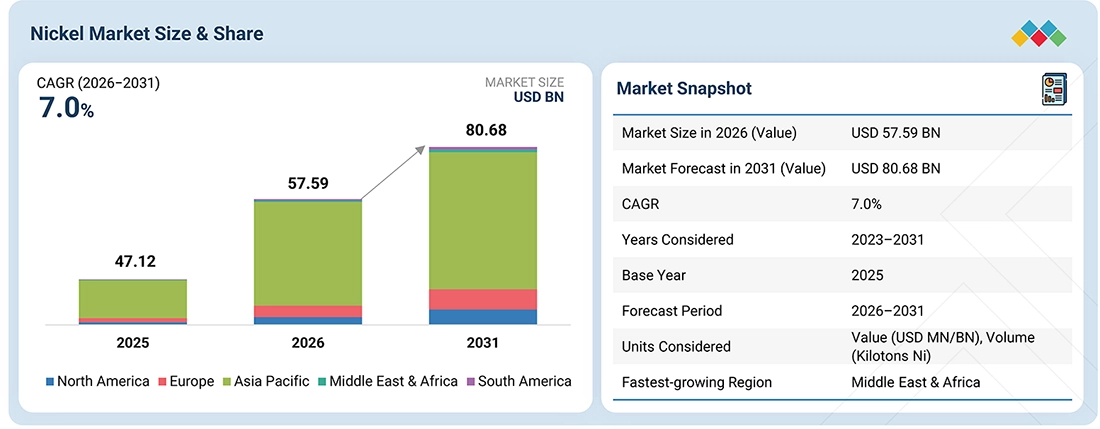
Source: Secondary Research, Interviews with Experts, MarketsandMarkets Analysis
The nickel market is estimated to reach USD 80.68 billion by 2031 from USD 57.59 billion in 2026, registering a CAGR of 7.0% during the forecast period. The nickel market is expected to grow during the forecast period, driven by increasing demand for nickel across stainless steel production, electric vehicle batteries, alloys, and other industrial applications. Several factors drive market growth, including industrial expansion, infrastructure development, electrification, and advances in battery technology. A key driver is rising demand for nickel in stainless steel manufacturing, which accounts for a significant share of global nickel consumption. In addition, demand for nickel-containing battery materials used in electric vehicles is supporting market growth, particularly for high-nickel cathode chemistries. Growing investments in stainless steel production, nickel mining, refining, and processing capacity are further supporting market expansion. Furthermore, infrastructure development, expanding manufacturing activities, and demand for corrosion-resistant alloys in aerospace, chemicals, and energy applications are creating opportunities for nickel producers. Indonesia is expected to remain a key growth center for nickel supply, supported by investments in mining, smelting, and downstream processing capacity.
KEY TAKEAWAYS
-
By RegionBy region, Asia Pacific accounted for 85.7% of the nickel market in 2025, supported by large-scale stainless steel production, extensive nickel refining and smelting capacity, and growing demand for nickel-containing battery materials across China, Indonesia, Japan, South Korea, and India. Indonesia's expanding nickel mining, smelting, and downstream processing industries, alongside China's strong stainless steel manufacturing base, further strengthen the region's market position.
-
By FormBy form, the nickel sulphate (battery grade) segment is estimated to grow at a CAGR of 11.5% between 2026 and 2031, supported by increasing demand for high-purity nickel compounds used in lithium-ion battery cathode manufacturing. Growing electric vehicle production, expanding battery manufacturing capacity, and increasing demand for nickel-rich cathode chemistries, particularly nickel-manganese-cobalt (NMC) and nickel-cobalt-aluminium (NCA), are contributing to the segment's growth.
-
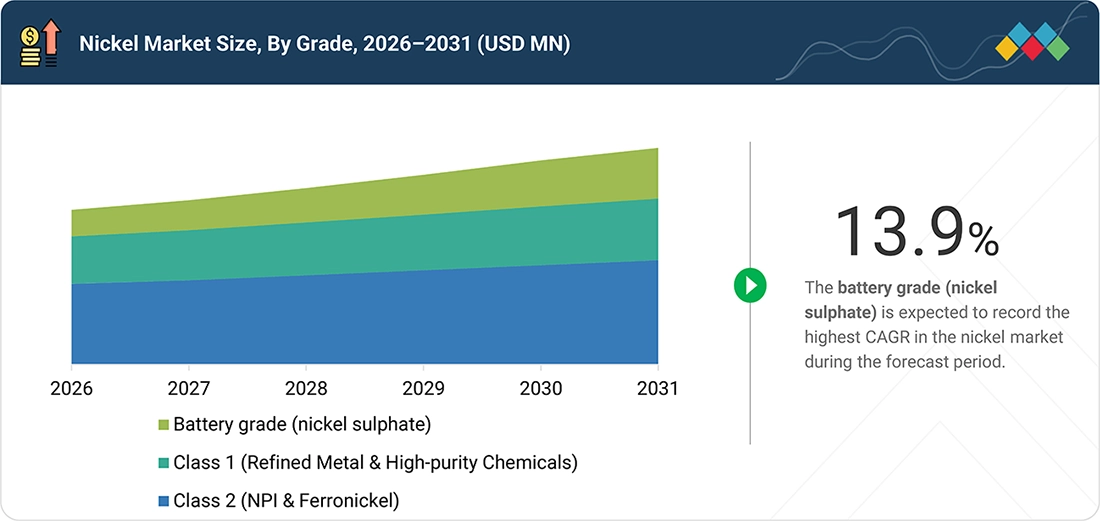
By GradeBy grade, the battery grade (nickel sulphate) segment is estimated to grow at a CAGR of 13.9% between 2026 and 2031, driven by its use in the production of high-purity nickel chemicals and cathode active materials for lithium-ion batteries. Increasing demand for nickel-rich batteries used in electric vehicles, investments in battery-material processing facilities, and efforts to establish integrated nickel supply chains are expected to support the market growth.
-
By ApplicationBy application, the rechargeable battery cathodes (NMC/NCA) segment is anticipated to record a CAGR of 13.7% during the forecast period, driven by increasing demand for nickel-containing cathode materials used in electric vehicle batteries and selected energy storage applications. Expanding electric vehicle adoption, advances in high-nickel cathode technologies, and investments in battery manufacturing are supporting demand. However, the growing adoption of lithium iron phosphate (LFP) batteries, which do not contain nickel, may moderate nickel demand growth in certain electric vehicle segments.
-
By End-use IndustryBy end-use industry, the automotive & e-mobility segment is anticipated to record a CAGR of 11.6% during the forecast period, driven by increasing electric vehicle production and rising demand for nickel-containing battery cathodes. Nickel is a key raw material in nickel-manganese-cobalt (NMC) and nickel-cobalt-aluminium (NCA) batteries, which are used in various electric vehicle applications. Growing EV adoption, investments in battery manufacturing, and advancements in high-nickel cathode chemistries are supporting segment growth. Furthermore, automakers' efforts to improve battery energy density and driving range, alongside investments in nickel refining and battery-material production, are expected to strengthen demand for nickel in the automotive and e-mobility sector.
-
Competitive Landscape - Key PlayersTSINGSHAN HOLDING GROUP, Jinchuan Group Co., Ltd., and Norilsk Nickel were identified as key players in the nickel market, given their strong market share and product footprint.
-
Competitive Landscape - Startups/SMEsPT Vale Indonesia (INCO), PT Merdeka Battery Materials, and Harita Nickel, among others, have distinguished themselves among startups and SMEs by securing strong footholds in specialized niche areas, underscoring their potential as emerging market leaders.
The global nickel market is growing due to increasing demand for stainless steel, nickel-based alloys, electric vehicle batteries, and other industrial applications. The market in Asia Pacific is supported by large-scale stainless steel production, expanding industrial activity, strong nickel refining capabilities, and investments in battery manufacturing across China, Indonesia, Japan, South Korea, and India. In Europe, the market is supported by demand for stainless steel and specialty alloys, investments in electric vehicle battery manufacturing, and efforts to strengthen domestic battery-material supply chains. North America is witnessing growth, supported by investments in electric vehicle batteries, demand for high-performance alloys in aerospace and energy applications, and initiatives to strengthen critical mineral supply chains. Meanwhile, South America benefits from nickel resources and mining activities, particularly in Brazil, alongside investments in mineral extraction and processing. The Middle East & Africa region is supported by nickel mining and processing activities, particularly in countries such as South Africa and Madagascar, as well as investments in mineral development and industrial infrastructure. Regional market growth will continue to depend on stainless steel demand, battery chemistry trends, nickel prices, and the expansion of mining and refining capacity.
TRENDS & DISRUPTIONS IMPACTING CUSTOMERS' CUSTOMERS
Growing demand for stainless steel, electric vehicles, nickel-containing lithium-ion batteries, and high-performance alloys is driving advancements in nickel mining, extraction, refining, and processing technologies across automotive, construction, energy, aerospace, and industrial applications. Greater emphasis is being placed on high-purity nickel products, production efficiency, resource recovery, supply-chain security, and environmental performance. The transition toward advanced hydrometallurgical processing, high-pressure acid leaching (HPAL), and more efficient refining technologies is influencing the competitive landscape. Increasing demand for nickel sulphate and other battery-grade nickel compounds is encouraging manufacturers to invest in production capacity expansion, refining infrastructure, technological innovation, and application-specific nickel products. In parallel, growing interest in nickel recycling from end-of-life batteries and stainless steel scrap, alongside diversified sourcing strategies, is creating opportunities to improve resource utilization and strengthen long-term supply-chain resilience.
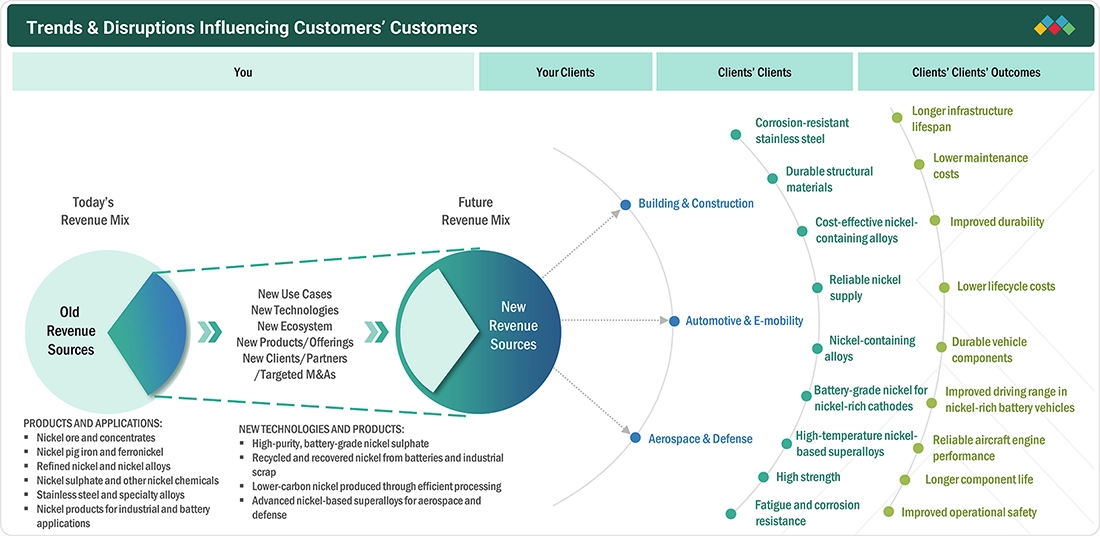
Source: Secondary Research, Interviews with Experts, MarketsandMarkets Analysis
MARKET DYNAMICS

Level
-
Stainless steel output growth in China, Indonesia, and India

-
Nickel-bearing EV batteries in long-range and heavy-duty vehicles


Level
-
LFP and lower-nickel chemistries

-
Surplus and inventory overhang


Level
-
Qualified, low-carbon and traceable supply

-
Battery recycling and recycled content


Level
-
Indonesian policy volatility

-
Sulphur and sulphuric acid

Source: Secondary Research, Interviews with Experts, MarketsandMarkets Analysis
Driver: Stainless steel output growth in China, Indonesia and India
World stainless steel melt-shop production reached 64.2 million tonnes in 2025, up 2.1%, after a 7.0% rise in 2024 (World Stainless). Growth is Asian: China produced 40.9 Mt in 2025 (+3.6%), while EU output fell 1.9% to 5.7 Mt. The first half of 2026 was stronger again, with world output up 5.0% and China up 7.1%. The INSG expects stainless output to expand further in the second half of 2026 and through 2027. Because the integrated NPI-to-stainless route in China and Indonesia runs mostly on primary nickel, Asian stainless growth translates almost one-for-one into primary nickel demand.
Restraint: LFP and lower-nickel chemistries
LFP (including LMFP) rose from nearly 50% of EV batteries in 2024 to more than 55% in 2025 (IEA), with LFP packs more than 40% cheaper than NMC per kWh. The INSG noted in April and October 2026 that nickel's role in EV batteries had grown more slowly than expected. Every percentage point of share that LFP gains removes about 12 GWh of nickel-bearing deployment at 2025 volumes - roughly 11 kt of nickel demand at the effective intensity used in this study.
Opportunity: Qualified, low-carbon and traceable supply
Regulation is creating a premium segment within an oversupplied market. The EU Critical Raw Materials Act lists battery-grade nickel as a strategic raw material, with benchmarks of 10% EU extraction, 40% EU processing, and 25% recycling and a 65% cap on reliance on any single third country by 2030. The US foreign-entity-of-concern rules, the LME's ban on new Russian metal, and the LME's responsible-sourcing requirements all reward supply that can prove its origin and carbon footprint.
Challenge: Indonesian policy volatility
Indonesia changed the rules of its nickel industry several times in 2025–2026; royalties moved from a flat 10% to a price-linked 14–19% in April 2025. The 2026 ore quota (RKAB) was set at 260–270 million wet tonnes against about 320 million tonnes produced in 2025. The HPM benchmark formula was revised in April 2026 to add cobalt, iron, and chromium, and again in September 2026 to lower limonite prices. Each change moves the cost curve and the price.
NICKEL MARKET: COMMERCIAL USE CASES ACROSS INDUSTRIES
| COMPANY | USE CASE DESCRIPTION | BENEFITS |
|---|---|---|
 |
Large-scale nickel supply | Stainless steel production support | Battery material supply | Integrated processing capabilities | Cost-efficient production | Tsingshan Holding Group produces nickel products, including nickel pig iron, ferronickel, stainless steel, and nickel intermediates used in industrial and battery-related applications. Its products support stainless steel manufacturing, nickel alloy production, and the supply chains for electric vehicle batteries and energy storage systems. |
 |
Integrated nickel production | Battery-grade nickel materials | Diverse nickel product portfolio | Metallurgical expertise | Supply-chain integration | Jinchuan Group develops nickel resources and produces refined nickel, nickel salts, nickel-containing intermediates, and other non-ferrous metal products. Its nickel materials serve stainless steel manufacturing, nickel alloy production, electroplating, and lithium-ion battery supply chains, including applications requiring nickel-rich cathode materials. |
 |
High-quality refined nickel supply | Battery material production | Alloy performance enhancement | Broad industrial applications | Integrated mining and refining | Norilsk Nickel produces refined nickel and other nickel products for stainless steel, specialty alloys, electroplating, and battery material applications. Its nickel products support the manufacture of nickel-rich battery cathodes for electric vehicles and energy storage systems, and serve aerospace, chemical processing, and other industrial applications that require corrosion resistance and high-temperature performance. |
 |
High-purity nickel supply | Battery-grade material production | Low-carbon production initiatives | Resource integration | Support for electrification | Vale Base Metals produces nickel products from its mining and processing operations, supplying stainless steel manufacturers, alloy producers, and battery material manufacturers. Its nickel supports the production of nickel-rich cathode materials for electric vehicle batteries and energy storage systems, with an emphasis on product quality, responsible sourcing, and reducing the carbon footprint of nickel production. |
Logos and trademarks shown above are the property of their respective owners. Their use here is for informational and illustrative purposes only.
MARKET ECOSYSTEM
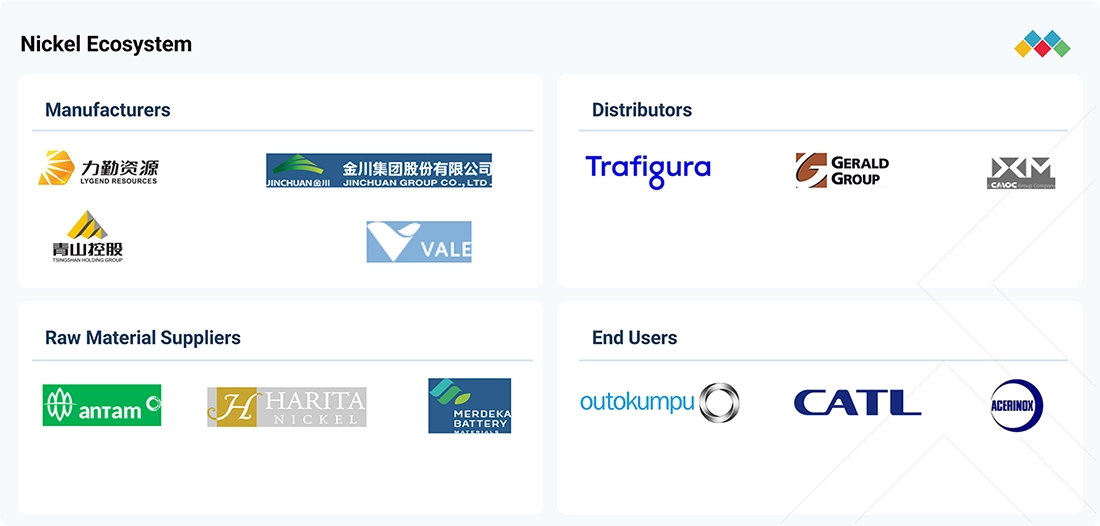
The nickel market ecosystem comprises upstream nickel miners, smelters and refiners, nickel chemical producers, stainless steel and alloy manufacturers, battery material and precursor manufacturers, recyclers, and end users. Upstream producers extract nickel from sulfide and laterite deposits, supplying nickel-bearing ores and concentrates for further processing. Smelters and refiners process these materials into refined nickel, ferronickel, nickel pig iron, and other intermediate products for industrial and manufacturing applications. Nickel chemical producers convert suitable nickel intermediates into products such as nickel sulfate, an essential input for nickel-rich cathode materials used in lithium-ion batteries. Stainless steel and alloy manufacturers use nickel to improve corrosion resistance, strength, and heat resistance in products for construction, transportation, industrial equipment, and chemical processing. Battery material and precursor manufacturers use nickel chemicals to produce cathode active materials for electric vehicle batteries and energy storage systems. Recyclers recover nickel from manufacturing scrap, spent batteries, and end-of-life products, supporting resource efficiency and reducing reliance on primary extraction. End users, including automotive OEMs, battery manufacturers, stainless steel producers, aerospace companies, and industrial equipment manufacturers, drive nickel demand across transportation, energy storage, infrastructure, and industrial applications. The ecosystem therefore spans nickel mining and refining, chemical production, stainless steel and battery material manufacturing, recycling, and final applications across industrial and electrification value chains.
Logos and trademarks shown above are the property of their respective owners. Their use here is for informational and illustrative purposes only.
MARKET SEGMENTS
Source: Secondary Research, Interviews with Experts, MarketsandMarkets Analysis
Nickel Market, By Form
Nickel sulphate (Battery Grade) is projected to be the fastest-growing form segment in the nickel market, driven by increasing demand for high-purity nickel sulphate used in lithium-ion battery manufacturing. Nickel sulphate is a key raw material for producing nickel-rich cathode materials used in electric vehicle batteries and energy storage systems. Growing investments in electric vehicle production, battery manufacturing facilities, and nickel-based cathode supply chains are accelerating demand for battery-grade nickel sulphate. In addition, the expansion of battery material processing capacity and the increasing adoption of nickel-rich battery chemistries will support the growth of this segment.
Nickel Market, By Grade
By grade, battery grade (Nickel Sulphate) is projected to be the fastest-growing segment in the nickel market, driven by increasing demand for high-purity nickel compounds used in lithium-ion battery cathode production. Battery-grade nickel sulphate requires controlled impurity levels and consistent chemical composition to meet the quality requirements of cathode manufacturers. The growing adoption of nickel-rich NMC and NCA battery chemistries, alongside investments in electric vehicle manufacturing and battery supply chains, is expected to accelerate demand. Furthermore, the expansion of domestic battery material production and the need for reliable, specification-compliant raw materials will support the segment's growth.
Nickel Market, By Application
The rechargeable battery cathodes (NMC/NCA) segment is projected to be the fastest-growing application in the nickel market, driven by rising demand for nickel-containing cathode materials used in lithium-ion batteries. Nickel plays a critical role in increasing energy density and supporting the driving range requirements of electric vehicles using nickel-rich nickel manganese cobalt (NMC) and nickel cobalt aluminum (NCA) chemistries. Growing electric vehicle adoption, advancements in battery technology, and investments in battery gigafactories are expected to increase nickel consumption in cathode manufacturing. In addition, demand for high-performance batteries offering improved energy density and efficiency will support the growth of this segment.
Nickel Market, By End-use Industry
The automotive and E-mobility segment is projected to be the fastest-growing end-use industry in the nickel market, driven by the increasing adoption of electric vehicles and the expansion of battery manufacturing capacity. Nickel is a key raw material for nickel-rich lithium-ion battery cathodes, particularly in electric vehicles that require high energy density and extended driving range. Growing investments in electric vehicle production, battery supply chains, and charging infrastructure are expected to accelerate demand for nickel-based battery materials. Furthermore, advancements in battery technology and the expansion of electric mobility across passenger vehicles, commercial vehicles, and other transportation applications will support the growth of this segment.
REGION
Middle East & Africa to be fastest-growing region in nickel market during forecast period
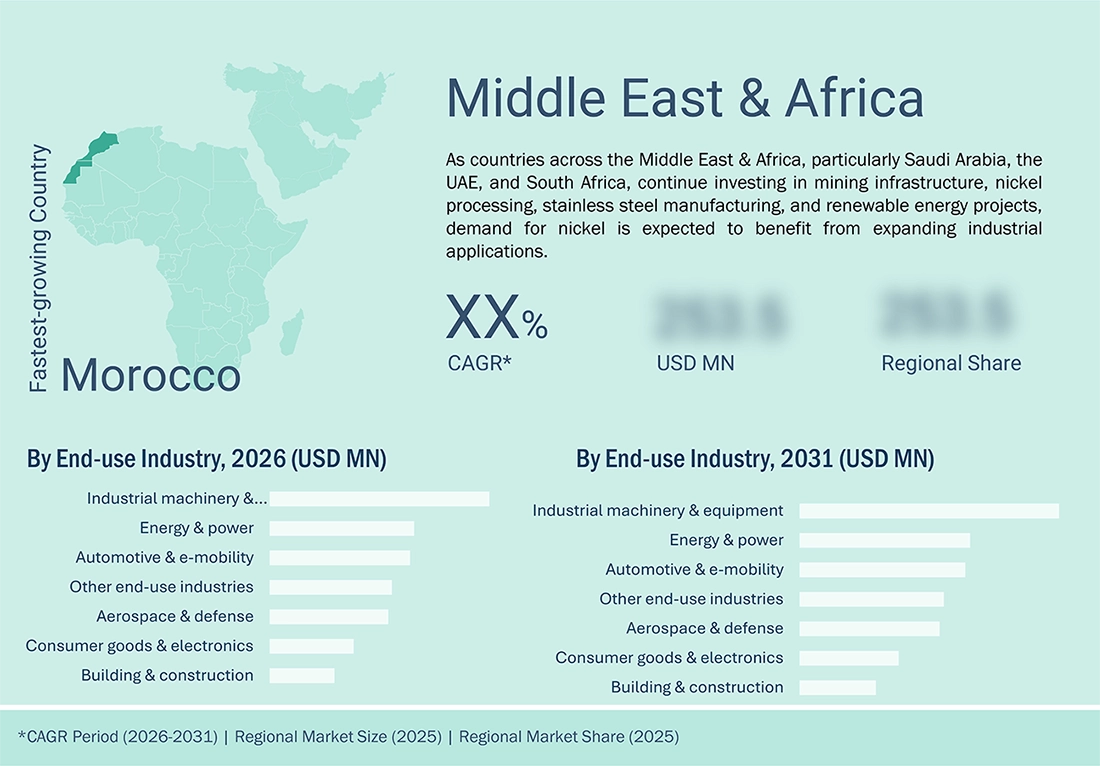
The Middle East & Africa is projected to be the fastest-growing region in the global nickel market during the forecast period, driven by increasing investments in mining, mineral processing, stainless steel manufacturing, and renewable energy infrastructure. Countries such as South Africa, Madagascar, and Tanzania contribute to the region’s nickel mining and production activities, while growing industrialization and infrastructure development create opportunities for nickel-containing stainless steel and alloys. In addition, expanding renewable energy projects, electric mobility initiatives, and emerging battery supply-chain investments are expected to support demand for nickel-based materials. Government efforts to strengthen mineral value addition, attract foreign investment, and develop local processing capabilities will further contribute to regional market growth.
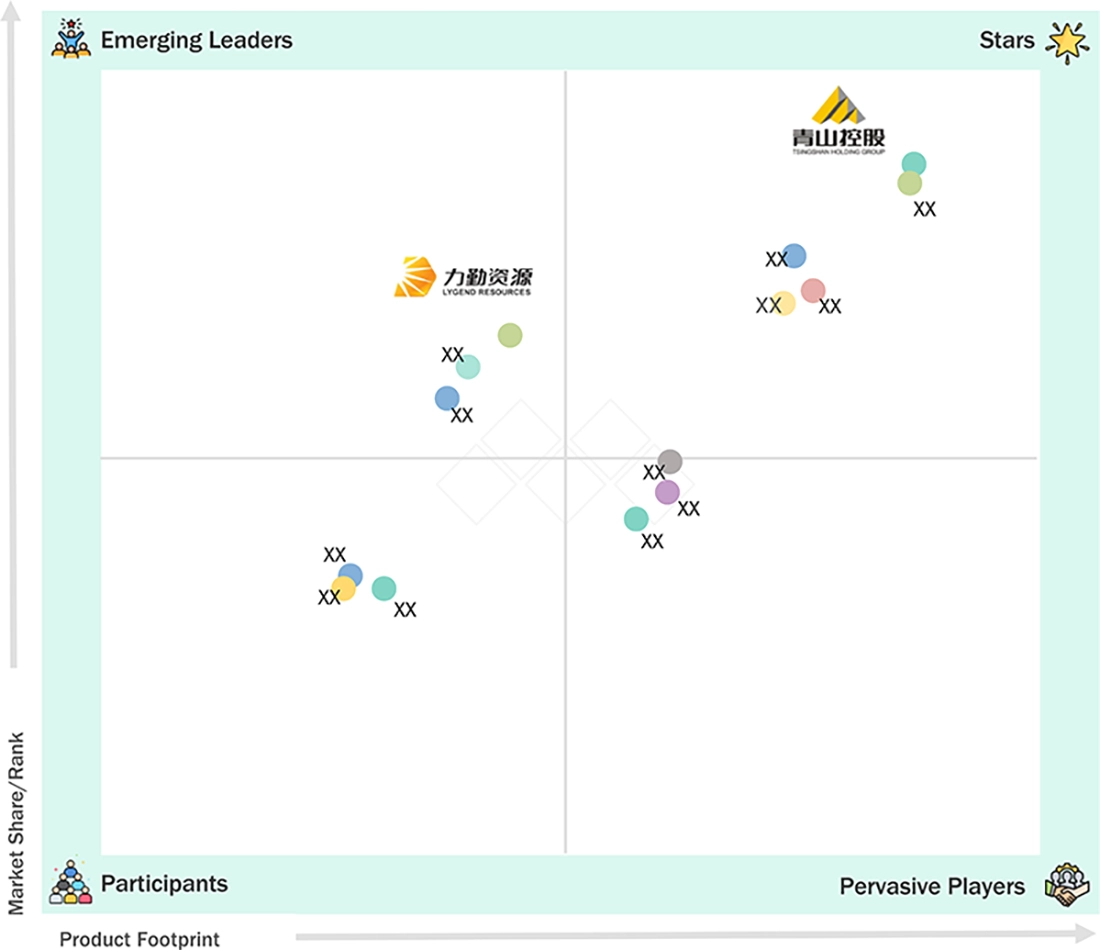
NICKEL MARKET: COMPANY EVALUATION MATRIX
Tsingshan Holding Group (Star), a China-based company in the nickel market, has established a strong market position through its large-scale nickel production capabilities and integrated operations spanning nickel processing, stainless steel manufacturing, and battery material supply chains. The company produces nickel pig iron, ferronickel, and nickel intermediates used in stainless steel and other industrial applications, while its investments in nickel processing support the production of materials for electric vehicle battery supply chains. Its extensive production capacity, integrated business model, and significant presence in Indonesia strengthen its competitiveness in the global nickel market. Lygend Resources & Technology Co., Ltd. (Emerging Leader), a China-based company in the nickel market matrix, has strengthened its market position through its integrated nickel business, spanning laterite nickel ore trading, mining investments, and hydrometallurgical processing in Indonesia. The company focuses on producing nickel intermediates, including mixed hydroxide precipitate (MHP), which serves as a raw material for battery-grade nickel chemicals used in lithium-ion battery cathodes. Its investments in Indonesian high-pressure acid leach (HPAL) projects, strategic partnerships, and downstream processing capabilities support its participation in both stainless steel and electric vehicle battery supply chains. These capabilities provide opportunities to expand its nickel product portfolio and strengthen its position in the global nickel market.
Source: Secondary Research, Interviews with Experts, MarketsandMarkets Analysis
KEY MARKET PLAYERS
- Tsingshan Holding Group (China)
- Jinchuan Group Co., Ltd. (China)
- Norilsk Nickel (Russia)
- Vale Base Metals (Canada)
- Huayou Cobalt Co., Ltd. (China)
- GEM Co., Ltd. (China)
- Nickel Industries Limited (Australia)
- Lygend Resources & Technology Co., Ltd. (China)
- Glencore (Switzerland)
- Sumitomo Metal Mining Co., Ltd. (Japan)
MARKET SCOPE
| REPORT METRIC | DETAILS |
|---|---|
| Market Size in 2025 (Value) | USD 47.12 Billion |
| Market Size in 2026 (Value) | USD 57.59 Billion |
| Market Forecast in 2031 (Value) | USD 80.68 Billion |
| Growth Rate | CAGR of 7.0% from 2026-2031 |
| Years Considered | 2023-2031 |
| Base Year | 2025 |
| Forecast Period | 2026-2031 |
| Units Considered | Value (USD Million), Volume (Kilotons) |
| Report Coverage | Revenue forecast, company ranking, competitive landscape, growth factors, and trends |
| Segments Covered |
|
| Regions Covered | North America, Asia Pacific, Europe, South America, and Middle East & Africa |
WHAT IS IN IT FOR YOU: NICKEL MARKET REPORT CONTENT GUIDE
DELIVERED CUSTOMIZATIONS
We have successfully delivered the following deep-dive customizations:
| CLIENT REQUEST | CUSTOMIZATION DELIVERED | VALUE ADDS |
|---|---|---|
| Leading Nickel Supplier Profiling | Conducted competitive profiling of leading nickel producers, including Tsingshan Holding Group, Jinchuan Group, Norilsk Nickel, Vale Base Metals, and Nickel Industries Limited, covering product portfolios, production capabilities, processing assets, geographical presence, and strategic developments | Supported competitive positioning and go-to-market strategy against key nickel suppliers |
| Country-Level Insights for High-Growth Regions | Provided detailed market sizing, forecasts, and country-level analysis across Asia Pacific, North America, Europe, South America, and the Middle East & Africa, identifying nickel demand drivers, production hubs, downstream processing opportunities, and investment trends | Helped the client identify regional growth hotspots and prioritize expansion and investment opportunities |
| Emerging Nickel Technologies | Conducted technology assessments covering nickel extraction, laterite and sulfide ore processing, high-pressure acid leaching (HPAL), nickel refining, battery-grade nickel sulphate production, and nickel recovery from recycled batteries, evaluating technological advancements and commercial opportunities | Supported technology selection and investment decisions for efficient, cost-effective, and sustainable nickel production |
| Regulatory Requirements for New Markets | Assessed mining licenses, environmental regulations, carbon-emission requirements, tailings management, export restrictions, local processing mandates, and government policies affecting nickel mining, refining, and battery material supply chains in target markets | Enabled smoother market entry, improved regulatory preparedness, and reduced potential operational and legal risks |
RECENT DEVELOPMENTS
- October 2026 : Nickel Industries Limited established financing for its Excelsior Nickel Cobalt (ENC) high-pressure acid leach (HPAL) project, as announced on October 21, 2026. The financing milestone supports the development and ramp-up of the Indonesian project, which is designed to produce mixed hydroxide precipitate (MHP), nickel sulphate, and nickel cathode for battery applications.
- September 2026 : Glencore announced key milestones at its Onaping Depth nickel-copper project in Sudbury, Canada, including completion of the mine shaft and first access to the ore body. The project represents a major investment in high-grade underground mining, with completion expected in 2027, supporting the long-term supply of nickel and copper.
- August 2026 : Nickel Industries Limited achieved maiden nickel cathode production at its ENC HPAL project in Indonesia, following its earlier achievement of first MHP production in July 2026. The milestone demonstrates the project's ability to produce a further Class 1 nickel product for battery and industrial applications.
- July 2025 : GEM Co., Ltd. commenced mass production and delivery of the world's first industrialized ultra-high-nickel 9-series quaternary core-shell precursor at its Jingmen Industrial Park in China. The development advances high-energy-density battery materials technology and strengthens GEM's position in the nickel-rich cathode precursor supply chain.
- April 2024 : Vale completed the sale of a 10% stake in Vale Base Metals to Manara Minerals for approximately USD 2.5 billion. The strategic investment supports Vale Base Metals' growth plans across Brazil, Canada, and Indonesia, including its objective of increasing nickel production from approximately 175,000 tonnes per year to more than 300,000 tonnes per year over the following decade.
Table of Contents
 Exclusive indicates content/data unique to MarketsandMarkets and not available with any competitors.
Methodology
The study involved four major activities to estimate the current size of the global nickel market. Exhaustive secondary research was carried out to collect information on the market, the peer product market, and the parent product group market. The next step was to validate these findings, assumptions, and sizes with industry experts across the value chain of nickel through primary research. The top-down and bottom-up approaches were employed to estimate the overall size of the market. After that, market breakdown and data triangulation procedures were used to determine the size of different segments and sub-segments of the market.
Secondary Research
The market for companies offering nickel was derived from secondary data available through paid and unpaid sources, by analyzing the product portfolios of the major companies in the ecosystem, and by rating the companies based on their performance and quality. Various secondary sources, such as Business Standard, Bloomberg, World Bank, and Factiva, were referred to for identifying and collecting information for this study on the nickel market. In the secondary research process, various secondary sources were referred to for identifying and collecting information related to the study. Secondary sources included annual reports, press releases, and investor presentations of door vendors, forums, certified publications, and whitepapers. Secondary research was used to obtain critical information on the industry's value chain, the total pool of key players, market classification, and segmentation from the market and technology-oriented perspectives.
Primary Research
In the primary research process, various primary sources from the supply and demand sides were interviewed to obtain qualitative and quantitative information for this report. The primary sources from the supply side included industry experts, such as Chief Executive Officers (CEOs), Vice Presidents (VPs), marketing directors, technology and innovation directors, and related key executives from several key companies and organizations operating in the nickel market. After the complete market engineering (calculations for market statistics, market breakdown, market size estimations, market forecasting, and data triangulation), extensive primary research was conducted to gather information and verify and validate the critical numbers arrived at.
Primary research was also conducted to identify the segmentation, industry trends, competitive landscape of nickel offered by various market players, and key market dynamics, such as drivers, restraints, opportunities, challenges, trends, and key players' strategies. In the complete market engineering process, the top-down and bottom-up approaches and several data triangulation methods were extensively used to perform the market estimation and market forecasting for the overall market segments and subsegments listed in this report. Extensive qualitative and quantitative analysis was performed on the complete market engineering process to list the key information/insights throughout the report.
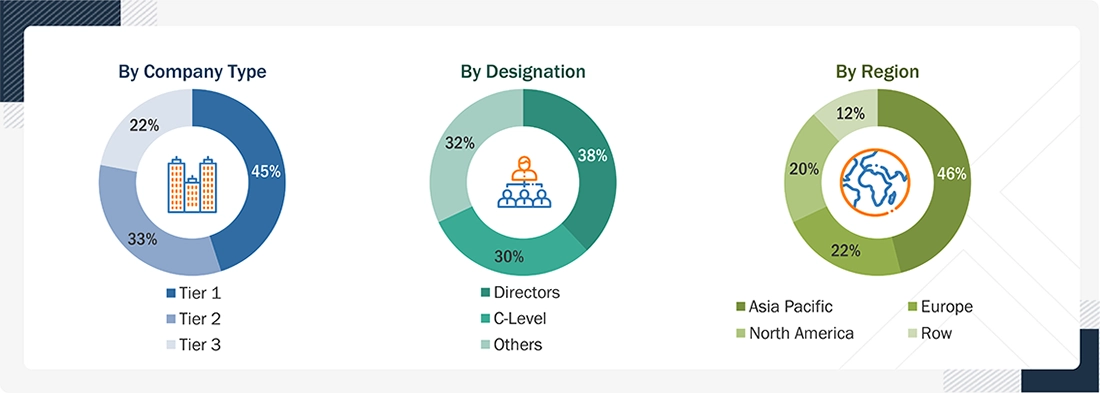
Notes: Other designations include sales, marketing, and product managers.
Tier 1: >USD 1 Billion; Tier 2: USD 500 million–1 Billion; and Tier 3: <USD 500 million.
To know about the assumptions considered for the study, download the pdf brochure
Market Size Estimation
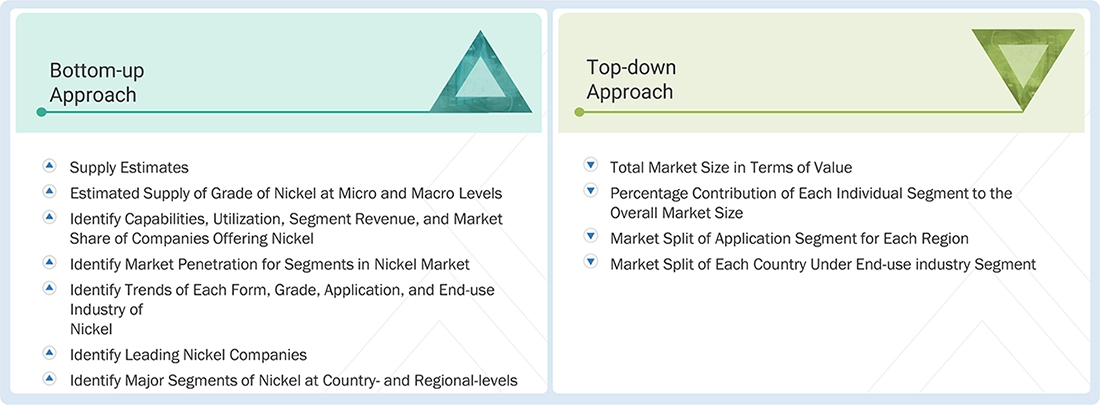
The top-down and bottom-up approaches were used to estimate and validate the size of the global nickel market. These approaches were also used extensively to estimate the size of various dependent market segments. The research methodology used to estimate the market size included the following:
Data Triangulation
After arriving at the overall market size using the market size estimation processes, the market was split into several segments and subsegments. The data triangulation and market breakup procedures were employed, wherever applicable, to complete the overall market engineering process and arrive at the exact statistics of each market segment and subsegment. The data were triangulated by studying various factors and trends from the demand and supply sides.
Market Definition
The nickel market in this study is the market for primary nickel at its point of first use - the moment nickel units are consumed to make stainless steel, battery precursors and cathodes, nickel-based and other non-ferrous alloys, plated surfaces, catalysts and chemicals. This is the basis on which the International Nickel Study Group (INSG) reports world 'primary nickel usage', and it is the basis on which every volume in this report is stated. Five product forms make up the market: nickel pig iron (NPI), ferronickel, Class 1 refined nickel (cathode, briquettes, rounds, pellets and powders of at least 99.8% nickel), battery-grade nickel sulphate, and nickel oxide, salts and other chemicals. Volumes are stated in kilotons of contained nickel; values are stated at realised first-use prices, built from the London Metal Exchange (LME) reference price and the discount or premium at which each product form actually trades.
Key Stakeholders
- Nickel manufacturers
- Industrial end users
- Environmental technology and emission-control companies
- Regulatory bodies and environmental agencies
- Research institutes and industry associations
Report Objectives
- To describe and forecast the size of the global nickel market, by grade, form, application, and end-use industry, in terms of value and volume
- To forecast the market size of segments and subsegments for five regions: North America, Europe, Asia Pacific, South America, and the Middle East & Africa, in terms of value
- To provide detailed information on the significant drivers, restraints, opportunities, and challenges influencing the market
- To strategically analyze micro-markets concerning individual growth trends, prospects, and their contribution to the market
- To assess the growth opportunities in the market for stakeholders and provide details on the competitive landscape for market leaders
- To strategically profile key players and comprehensively analyze their market shares and core competencies
- To analyze competitive developments such as product launches, acquisitions, expansions, partnerships, and agreements in the market
- To analyze the impact of AI on the market
Available customizations:
With the given market data, MarketsandMarkets offers customizations according to client-specific needs.
The following customization options are available for the nickel market report:
Product Analysis
- A product matrix that gives a detailed comparison of the product portfolio of each company
Regional Analysis
- A further breakdown of the nickel market for additional countries
Company Information
- Detailed analysis and profiling of additional market players (up to five)


Personalize This Research
- Triangulate with your Own Data
- Get Data as per your Format and Definition
- Gain a Deeper Dive on a Specific Application, Geography, Customer or Competitor
- Any level of Personalization
Let Us Help You
- What are the Known and Unknown Adjacencies Impacting the Nickel Market
- What will your New Revenue Sources be?
- Who will be your Top Customer; what will make them switch?
- Defend your Market Share or Win Competitors
- Get a Scorecard for Target Partners

Custom Market Research Services
We Will Customise The Research For You, In Case The Report Listed Above Does Not Meet With Your Requirements
Get 10% Free CustomisationTESTIMONIALS
We at Nissan Chemicals Corporation have been clients of MarketsandMarkets for more than a year now. We recently consulted MarketsandMarkets for a study, the team at MarketsandMarkets was extremely professional and organized. The business insights were very detailed and aligned well with our expectations that really helped us formulate the Business Plans and device new strategies for development themes. MarketsandMarkets offers a unique combination of expertise and dedicated engagement model. Their research findings have helped us in designing our Pricing Strategy which will make it easier for us to predict the future sales and profits for the next ten years. We look forward to working with MarketsandMarkets in the future.
VP of Strategy & New Business Development
Leading Specialty Chemical Company
The MarketsandMarkets Engagement Model, composed of both the Knowledge Store and advisory custom research, has greatly helped us in understanding our markets and making strategic decisions. The Knowledge Store is a fast way to allow everyone in our organization to understand more about most any market they are interested in. The ability to then get custom research done and get answers to specific strategic questions and market insight has been spectacular. The Markets and Markets team feel more like colleagues than vendors and their services have helped us change our culture where statements of things like growth opportunities and competitive position are always backed by industry research.

Rich Gibson,
Director, Corporate Strategy
Milliken & Company,
Leading Industrial Manufacturer of specialty chemical, floor covering, performance and protective textile materials, and healthcaremilliken.com
MarketsandMarkets is a trusted resource that helps us to better understand markets that are near-adjacencies-whether its technology, value chain or geography. Their Knowledge Store platform provides a dashboard of markets and their characteristics which is easy to use and saves us time.
Adam Shaw,
Market Development and Strategy Manager
AdvanSix Inc. USA,
An American Leader in Chemicalswww.advansix.com
The Knowledge Store from MarketsandMarkets is a valuable tool which has helped my team acquire greater insight in to the end markets that our business serves. This has enabled us to help our company build stronger strategies throughout our planning process.
TOSHIO KINOSHITA
Senior Chif Consultion Research & Consulting Division
Mitsubishi Chemical Research Corporation,
Leading Manufacturer of Chemical Productswww.mitsubishichem-res.co.jp/en/

We recently engaged with MarketsandMarkets for a study, the team not only clearly understood our business objectives but was also extremely professional in the way they handled the entire project. The study was efficiently conducted in a phase-wise manner, and the engagement model furnished us with high-quality business insights that far exceeded our expectations at each phase. We were especially happy that MarketsandMarkets could provide us with both, an English as well as a Japanese version of the study. A special thanks to the Analyst Team and Client Services Team, whose fluency in Japanese enhanced our comfort level, as we could converse with them in our preferred language.
Independent entrepreneurs
Arrow Precision
We approached MarketsandMarkets for study on Proppants Market, and their work exceeded our expectations. The study conducted was comprehensive and enabled us to view the market through the various dimensions. In addition, the team was extraordinarily responsive throughout the process and resolved our queries on time. I strongly recommend MarketsandMarkets and will certainly consider them for additional market assessments we will need in the future.
Global engineering company, Japan
Deputy Manager,
Strategic Planning OfficeThe high-quality insights shared by the MarketsandMarkets team helped us understand the pharmaceutical plant designers in a specific geography. It also captured the risks that we may likely face in communicating with our potential partners. The study would enable us identify partners, which would impact our future growth.



Growth opportunities and latent adjacency in Nickel Market