North America Biostimulants Market

North America Biostimulants Market by Active Ingredient (Humic Substances, Seaweed Extracts, Amino Acids, Minerals & Vitamins), Crop Type, Mode of Application (Foliar Treatment, Soil Treatment, Biostimulants), Form, and Country - Forecast to 2030




OVERVIEW
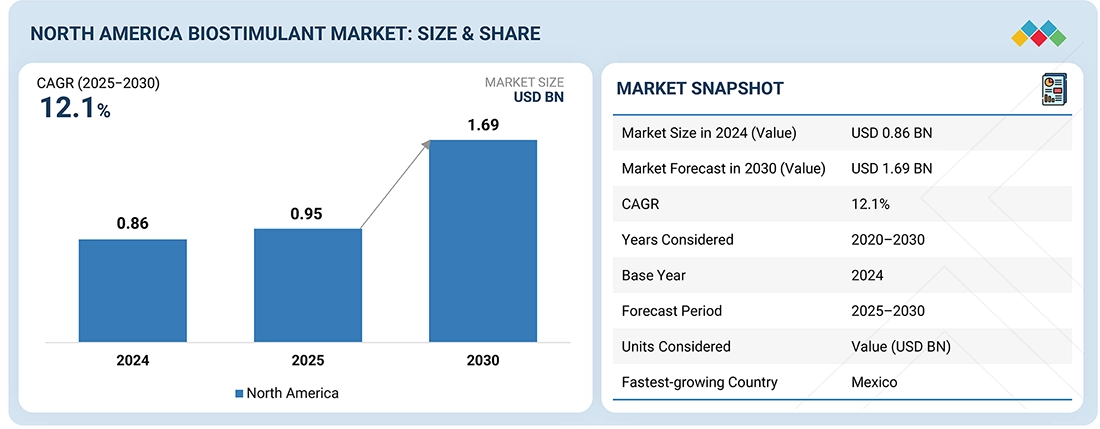
Source: Secondary Research, Interviews with Experts, MarketsandMarkets Analysis
The North America biostimulant market is projected to reach USD 1.69 billion by 2030 from USD 0.95 billion in 2025, at a CAGR of 12.1% from 2025 to 2030. The North America biostimulant market is experiencing steady growth due to several key factors. There is an increasing demand for sustainable agricultural inputs as farmers strive to maintain soil health and ensure continuous crop productivity. Today's farmers use biostimulants to enhance nutrient efficiency and establish plants that can withstand stress, ultimately leading to stable crop production across their fields. The adoption of biostimulants in both commercial and specialty crop systems is further supported by favorable regulatory frameworks, the expansion of organic farming, advancements in biological formulations, and improvements in precision agriculture technology.
KEY TAKEAWAYS
-
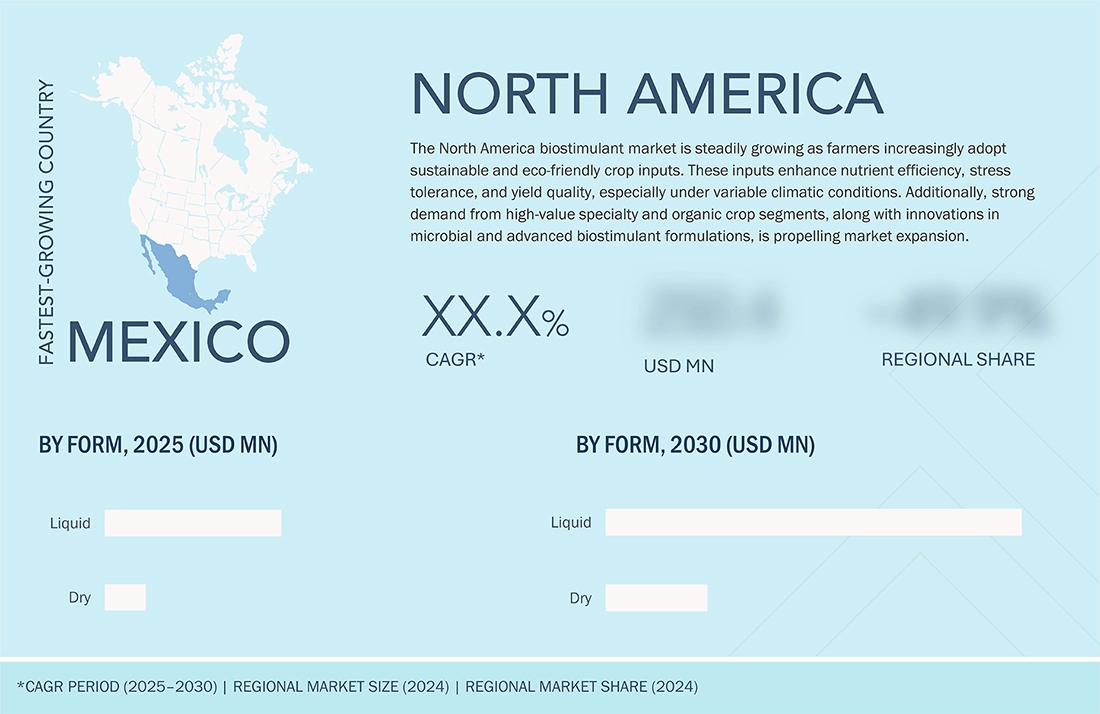
BY COUNTRYMexico is expected to register the highest CAGR of 12.6% in the North America biostimulant market from 2025 to 2030.
-
BY ACTIVE INGREDIENTBy active ingredient, the seaweed extracts segment is expected to dominate the North America biostimulant market, accounting for around one-third of market demand.
-
BY CROP TYPEBy crop type, the fruits & vegetables segment is expected to register a CAGR of 12.4% from 2025 to 2030.
-
BY MODE OF APPLICATIONBy mode of application, the foliar treatment segment holds the largest market share of 45% in 2025.
-
BY FORMBy form, the liquid segment is projected to grow at a CAGR of 11.9% during the forecast period.
-
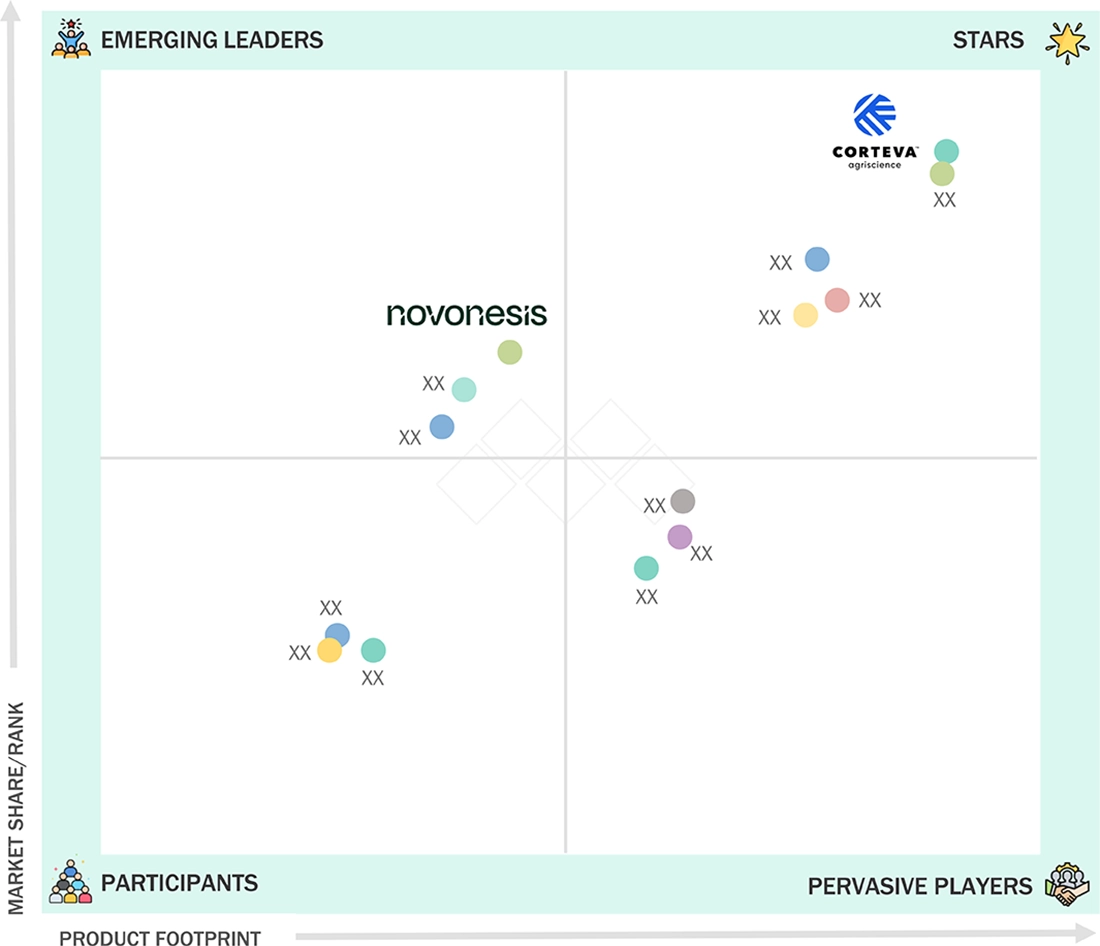
COMPETITIVE LANDSCAPECompanies such as Syngenta Group, FMC Corporation, and Corteva Agriscience were identified as some of the star players in the North America biostimulant market, given their strong market share and product footprint.
The North America biostimulant market is experiencing growth as farmers seek sustainable and eco-friendly crop inputs that enhance productivity while minimizing environmental damage. This market expansion is driven by three key factors: farmers' adoption of regenerative and organic farming methods, increased research on soil health, and the growing need for improved nutrient efficiency across diverse climate conditions. As a result, both farmers and agribusinesses are increasingly integrating biostimulants into traditional crop management programs.
TRENDS & DISRUPTIONS IMPACTING CUSTOMERS' CUSTOMERS
A key disruptive trend in the North America biostimulant market is the integration of biostimulants with precision agriculture and digital farming methods. Biostimulant products are increasingly being developed and applied alongside data-driven agronomy, soil analytics, and variable-rate application technologies. This combination allows growers to achieve more consistent performance and higher returns on investment when using microbial, seaweed, and amino-acid-based solutions. Biostimulant manufacturers, agritech platforms, and input distributors are forming partnerships, creating new models for reaching customers. As a result of this collaboration, the biostimulant industry is witnessing increased adoption, leading to greater transparency in product efficacy. This shift positions biostimulants as essential performance inputs rather than secondary crop additives.
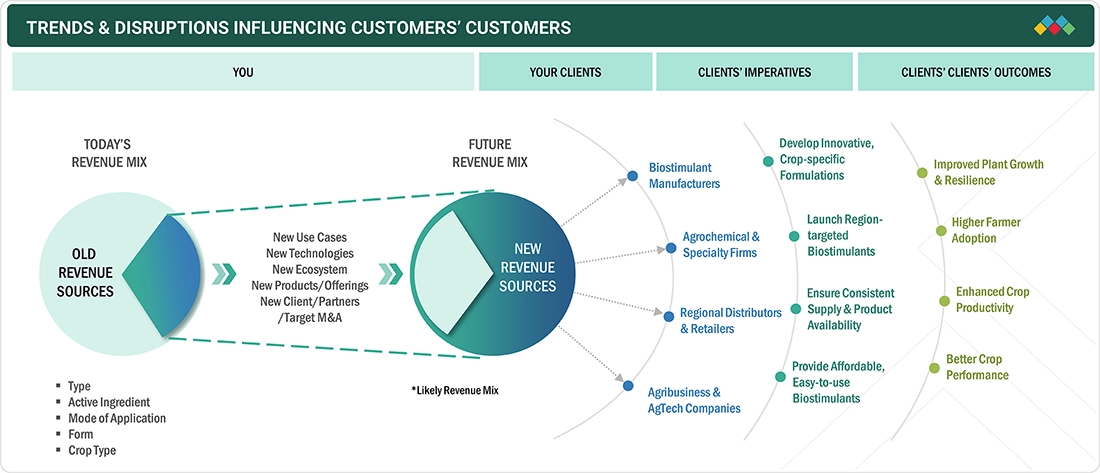
Source: Secondary Research, Interviews with Experts, MarketsandMarkets Analysis
MARKET DYNAMICS

Level
-
Increasing need for climate-resilient agriculture

-
Strong demand for sustainable and organic farming practices


Level
-
Limited shelf life and storage stability of certain biostimulant formulations

-
Regulatory complexity and inconsistent guidelines across jurisdictions


Level
-
Expansion of microbial and next-generation formulation portfolios

-
Rising integration of biostimulants with fertilizers and seed treatments


Level
-
Limited awareness and technical knowledge among segments of farming community

-
Variable field performance and inconsistent outcomes

Source: Secondary Research, Interviews with Experts, MarketsandMarkets Analysis
Driver: Increasing need for climate-resilient agriculture
The North America biostimulant market is expanding because farmers require agricultural methods that can withstand climate change impacts. Farmers deal with growing climate changes which include droughts and heat stress and irregular rainfall patterns and soil deterioration that endanger their crop production and farm income. Biostimulants improve plant capacity to withstand non-living environmental challenges by boosting their root growth and nutrient absorption and physiological stress resistance. Farmers now use biostimulants as essential components of their climate-adaptive crop management methods to counter unpredictable environmental conditions which affect their farming systems through North America.
Restraint: Limited shelf life and storage stability of certain biostimulant formulations
The North America biostimulant market faces a significant challenge due to the limited storage time and stability of certain products. Microbial and biologically based biostimulants are particularly sensitive to changes in temperature and humidity, leading to a decline in their effectiveness over extended storage periods. The distribution process and on-farm storage can create logistical issues, especially for large-scale operations and those located in remote areas. Farmers find it challenging to adopt these products because their confidence in their reliability decreases when handling procedures and performance vary. This inconsistency makes it difficult to compare biostimulants to conventional agricultural inputs.
Opportunity: Expansion of microbial and next-generation formulation portfolios
The North America biostimulant market is poised for significant growth due to the expansion of microbial and next-generation formulation portfolios. Advances in operational technologies, including enhanced microbial strain selection and improved fermentation and formulation methods, are enabling the development of biostimulant products with stable performance and tailored effectiveness for specific crops. These technological developments improve nutrient use efficiency, boost stress resistance, and enhance consistency in field performance. The biological solutions market is expanding as companies increase investment in biological research and development, supported by new regulations that favor these solutions. This approach enables agricultural systems to achieve sustainable development and implement regenerative farming practices while addressing diverse farming needs.
Challenge: Limited awareness and technical knowledge among segments of farming community
The North America biostimulant market faces a significant challenge due to a lack of understanding among some farming groups. While larger commercial farms are aware of the advantages of biostimulants, small and medium-sized farmers often do not grasp how these products work or which crops benefit from them. This lack of knowledge can lead to improper usage, resulting in poor outcomes and discouraging farmers from trying new biological products. To address this issue, the region needs to implement educational programs, alongside field demonstrations and advisory services, to help farmers better understand biostimulants. By doing so, farmers will be able to make more effective use of these products.
NORTH AMERICA BIOSTIMULANT MARKET: COMMERCIAL USE CASES ACROSS INDUSTRIES
| COMPANY | USE CASE DESCRIPTION | BENEFITS |
|---|---|---|
 |
Provides seaweed- and amino-acid-based biostimulants for row crops, fruits, and vegetables to improve physiological efficiency | Enhances nutrient uptake, stress tolerance, and yield consistency |
 |
Develops microbial biostimulants that improve nutrient availability and root–soil interactions in corn and soybean systems | Improves nutrient use efficiency and soil health |
 |
Offers microbial biostimulants and biofertility solutions for large-scale row crops and specialty crops | Enhances root development and soil microbial activity |
 |
Integrates biostimulants into crop nutrition programs for large commercial farms across North America | Optimizes nutrient management and improves yield predictability |
Logos and trademarks shown above are the property of their respective owners. Their use here is for informational and illustrative purposes only.
MARKET ECOSYSTEM
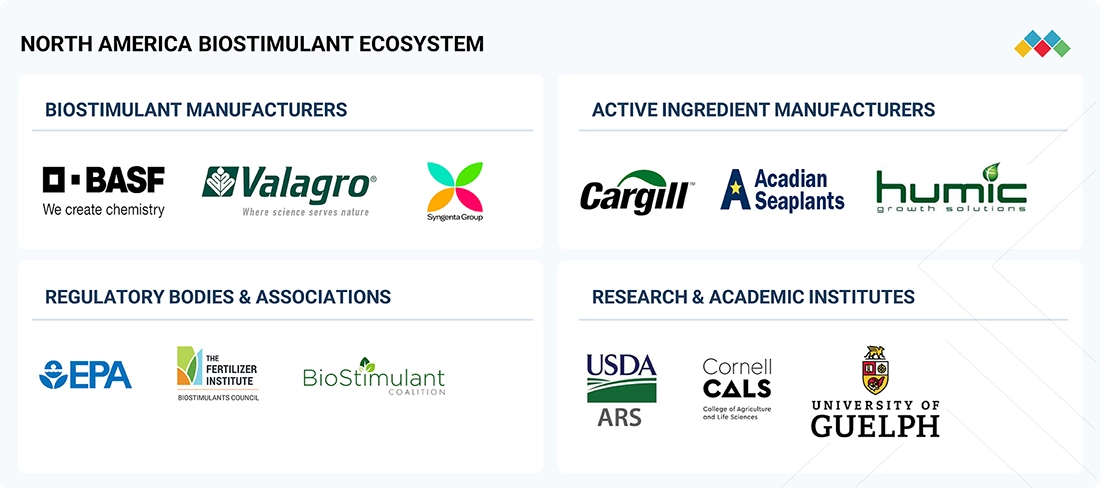
Some of the prominent companies in this market include well-established and financially sound manufacturers of biostimulants. These companies have been operational in the market for more than a decade and have diversified portfolios, the latest technologies, and excellent global sales and marketing networks. Some of the prominent companies in this market include Novonesis A/S (Denmark), FMC Corporation (US), Syngenta Group (Switzerland), and Corteva (US).
Logos and trademarks shown above are the property of their respective owners. Their use here is for informational and illustrative purposes only.
MARKET SEGMENTS
Source: Secondary Research, Interviews with Experts, MarketsandMarkets Analysis
North America Biostimulant Market, by Active Ingredient
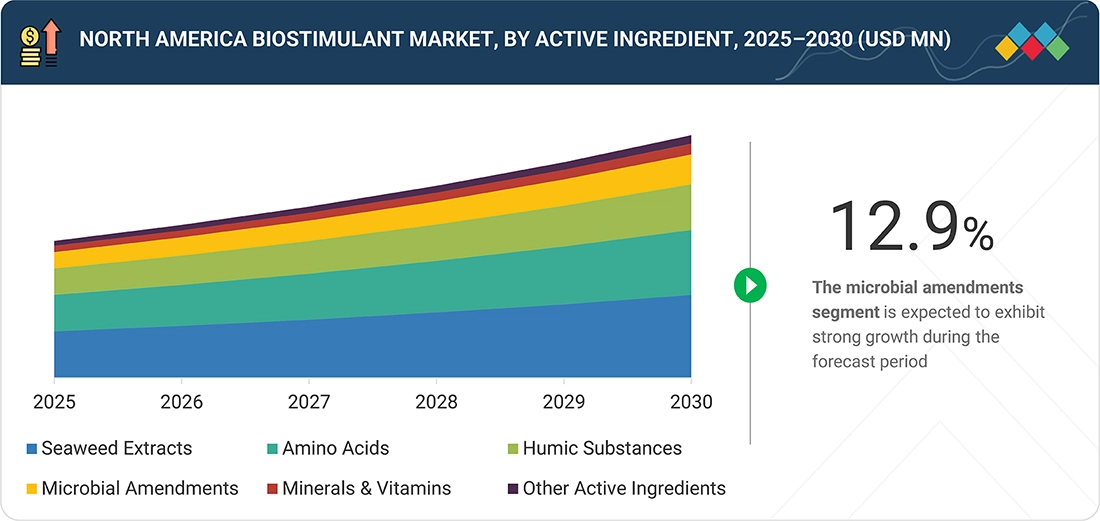
Active ingredients in biostimulants include humic substances, seaweed extracts, amino acids, microbial amendments, minerals, vitamins, and other beneficial substances. In the North America biostimulant market, seaweed extracts are the most prominent product, demonstrating their highest value. These extracts are effective biostimulants due to their rich content of plant hormones, vitamins, and minerals. Seaweed extracts enhance plant growth by improving nutrient uptake, increasing stress tolerance, and boosting crop quality. Additionally, they contain trace amounts of inorganic nutrients that further promote plant health. Their growing popularity can be attributed to the multiple ways in which they can be applied to harness their beneficial properties.
North America Biostimulant Market, by Form
Liquid biostimulants account for the largest segment of the North America biostimulant market due to their convenience for farmers. These products dissolve easily and can be applied through irrigation or foliar spraying, ensuring uniform coverage across crops. The preference for liquid biostimulants stems from their rapid absorption by plants, which facilitates quicker responses and more efficient nutrient utilization compared to dry formulations. Farmers can effectively use liquid biostimulants through fertigation or foliar spraying to meet varying requirements at different growth stages.
North America Biostimulant Market, by Mode of Application
The mode of application segment includes foliar, soil, and seed treatments. In the North America biostimulant market, foliar treatment holds the largest market share. This method allows for direct leaf absorption, eliminating the need for soil application. As a result, plants respond quickly through rapid nutrient uptake, promoting rapid growth and numerous benefits. This system ensures the precise delivery of nutrients and bioactive compounds to plant tissues, enabling plants to utilize these resources effectively for their essential growth and development.
North America Biostimulant Market, by Crop Type
The crop type segment encompasses cereals and grains, oilseeds and pulses, fruits and vegetables, flowers and ornamentals, and other crop types. Within this segment, fruits and vegetables hold the largest market share. Biostimulants enhance the efficiency of nutrient absorption, improving the uptake of essential nutrients from the soil. Proper nutrition is crucial for the growth of fruits and vegetables, making this aspect vital for their development. Additionally, biostimulants help plants cope with various environmental stresses, such as drought, salinity, and temperature fluctuations that crops often face. By promoting plant resilience, biostimulants help reduce yield losses in fruits and vegetables.
REGION
Mexico to be fastest-growing country in North America biostimulant market during forecast period
Mexico is expected to be the fastest-growing market in North America during the forecast period, driven by the increasing adoption of sustainable and biological crop inputs. Agricultural stakeholders in Mexico are progressively using biostimulants to enhance nutrient efficiency, improve stress tolerance, and boost yields in high-value horticulture, fruits, vegetables, and staple crops. Growing awareness of soil health, along with supportive agricultural initiatives and an expanding distribution network for biological products, is facilitating market growth. Furthermore, the rising demand for eco-friendly solutions aligned with global sustainability goals, combined with investments in farmer education and the integration of technology into agriculture, positions Mexico for significant growth in the biostimulant sector.
NORTH AMERICA BIOSTIMULANT MARKET: COMPANY EVALUATION MATRIX
In the North America biostimulant market matrix, Corteva Agriscience (Star) leads the market with its comprehensive portfolio of plant health solutions, including seaweed extracts, microbial biostimulants, and nutrient-enhancing products that enable growers to improve crop resilience, yield, and sustainability outcomes. Tradecorp International S.A. (Emerging Leader) is emerging as a strong player by expanding its range of biostimulant solutions, focusing on innovative formulations, precision application technologies, and environmental sustainability, positioning itself as a key innovator in modern crop management practices.
Source: Secondary Research, Interviews with Experts, MarketsandMarkets Analysis
KEY MARKET PLAYERS
- Nutrien Ltd (Canada)
- Syngenta AG (Switzerland)
- BASF SE (Germany)
- Bayer AG (Germany)
- Corteva Agriscience (US)
- Lallemand Plant Care (Canada)
- Acadian Seaplants Limited (Canada)
- Koppert Biological Systems B.V. (Netherlands)
- Seipasa S.A. (Spain)
- Tradecorp International S.A. (Spain)
- Novonesis A/S (Denmark)
- Koppert Biological Systems B.V. (Netherlands)
- Brandt Consolidated, Inc. (US)
- Valagro S.p.A. (Italy)
- FMC Corporation (US)
MARKET SCOPE
| REPORT METRIC | DETAILS |
|---|---|
| Market Size in 2025 (Value) | USD 0.95 Billion |
| Market Forecast in 2030 (Value) | USD 1.69 Billion |
| Growth Rate | CAGR of 12.1% during 2025–2030 |
| Years Considered | 2020–2030 |
| Base Year | 2024 |
| Forecast Period | 2025–2030 |
| Units Considered | Value (USD Million/Billion) |
| Report Coverage | Revenue Forecast, Company Ranking, Competitive Landscape, Growth Factors, and Trends |
| Segments Covered |
|
| Countries Covered | US, Canada, Mexico |
WHAT IS IN IT FOR YOU: NORTH AMERICA BIOSTIMULANT MARKET REPORT CONTENT GUIDE
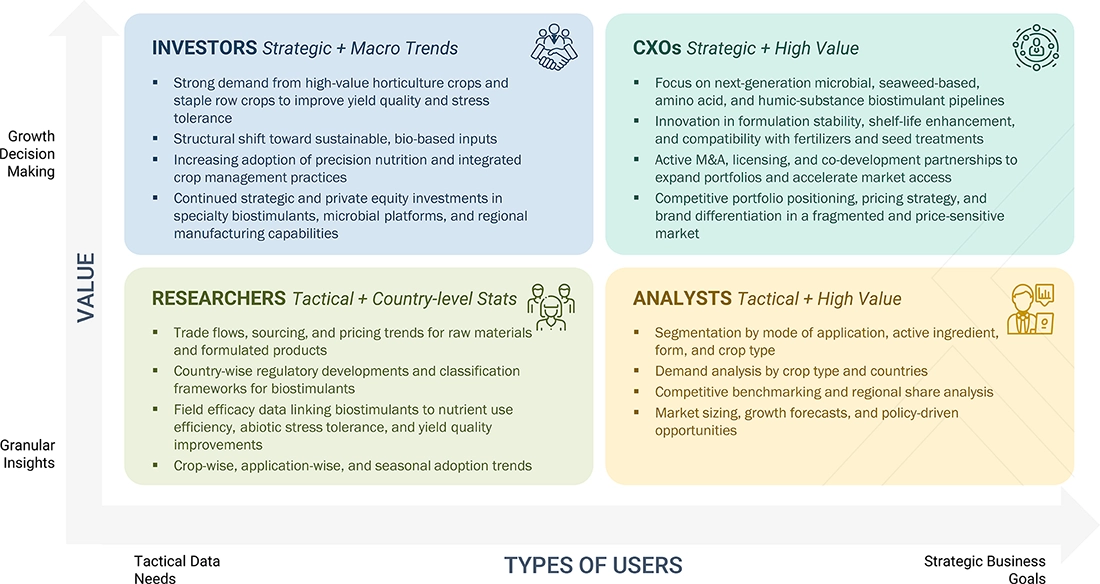
DELIVERED CUSTOMIZATIONS
We have successfully delivered the following deep-dive customizations:
| CLIENT REQUEST | CUSTOMIZATION DELIVERED | VALUE ADDS |
|---|---|---|
| North America–based Biostimulant Manufacturer |
|
|
| Global Agrochemical Multinational |
|
|
| North America Agribusiness/Agritech Firm |
|
|
| Regional Distributor/Formulator |
|
|
| Investor/Private Equity Firm |
|
|
RECENT DEVELOPMENTS
- May 2025 : Mosaic launched Neptunion, a water-soluble biostimulant targeted at improving crop resilience against drought, salinity, and heat stress in key North America agricultural markets. The product enhances plant vigor, metabolic activity, and nutrient efficiency, helping farmers maintain productivity under increasingly variable climatic conditions.
- April 2025 : Bayer AG launched An Hai Long in China, a high-activity seaweed extract biostimulant designed to improve root development, nutrient uptake, and stress tolerance in rice and wheat crops. The product supports early crop establishment and yield stability under heat and water stress conditions, aligning with China’s focus on sustainable and high-efficiency cereal production.
- August 2024 : Syngenta Biologicals presented MEGAFOL, a plant-extract-based biostimulant designed to help crops recover from climatic stress and promote balanced vegetative development and productivity. MEGAFOL contains a blend of vitamins, amino acids, proteins and betaines that support growth under stress conditions.
- June 2024 : Corteva further expanded its biological and biostimulant portfolio with the rollout of Kinsidro Grow+, a plant growth stimulant designed to enhance early root and shoot development. The product supports improved nutrient uptake and stress tolerance and reflects Corteva’s strategy to integrate biostimulants into holistic crop performance programs across North America, aligned with regenerative agriculture and sustainability goals.
Table of Contents
 Exclusive indicates content/data unique to MarketsandMarkets and not available with any competitors.
Methodology
The study involved two major approaches in estimating the current size of the North America Biostimulants market . Exhaustive secondary research was done to collect information on the market, peer, and parent markets. The next step was to validate these findings, assumptions, and sizing with industry experts across the value chain through primary research. Both top-down and bottom-up approaches were employed to estimate the complete market size. After that, market breakdown and data triangulation were used to estimate the market size of segments and subsegments.
Secondary Research
This research study involved the extensive use of secondary sources—directories and databases such as Bloomberg Businessweek and Factiva—to identify and collect information useful for a technical, market-oriented, and commercial study of the market.
In the secondary research process, various sources such as annual reports, press releases & investor presentations of companies, white papers, food journals, certified publications, articles from recognized authors, directories, and databases were referred to identify and collect information.
Secondary research was mainly used to obtain key information about the industry’s supply chain, the total pool of key players, and market classification and segmentation as per the industry trends to the bottom-most level, regional markets, and key developments from both market- and technology-oriented perspectives.
Primary Research
Extensive primary research was conducted after obtaining information regarding the North America Biostimulants Market scenario through secondary research. Several primary interviews were conducted with market experts from both the demand and supply sides across major countries of North America, Europe, Asia Pacific, South America, and the Rest of the World. Primary data was collected through questionnaires, emails, and telephonic interviews. The primary sources from the supply side included various industry experts, such as Chief X Officers (CXOs), Vice Presidents (VPs), Directors from business development, marketing, research, and development teams, and related key executives from distributors and key opinion leaders. Primary interviews were conducted to gather insights such as market statistics, data on revenue collected from the products and services, market breakdowns, market size estimations, market forecasting, and data triangulation. Primary research also helped in understanding the various trends related to biostimulants' active ingredients, form, crop type, mode of application, and region. Stakeholders from the demand side, such as research institutions and universities, agrochemical distributors and retailers, and food processing companies, were interviewed to understand the buyer’s perspective on the suppliers, products, and their current usage of biostimulants and the outlook of their business, which will affect the overall market.
To know about the assumptions considered for the study, download the pdf brochure
|
COMPANY NAME |
DESIGNATION |
|
UPL (India) |
General Manager |
|
Acadian Plant Health (Canada) |
Sales Manager |
|
Syngenta Group (Switzerland) |
Manager |
|
Sumitomo Chemical Co., Ltd. (Japan) |
Sales Manager |
|
PI Industries (India) |
Marketing Manager |
Market Size Estimation
Both the top-down and bottom-up approaches were used to estimate and validate the total size of the North America Biostimulants Market . These approaches were also used extensively to determine the size of various subsegments in the market. The research methodology used to estimate the market size includes the following details:
- The key players in the industry and the overall markets were identified through extensive secondary research.
- All shares, splits, and breakdowns were determined using secondary sources and verified through primary sources.
- All possible parameters that affect the market covered in this research study were accounted for, viewed in extensive detail, verified through primary research, and analyzed to obtain final quantitative and qualitative data.
- The research included the study of reports, reviews, and newsletters of top market players, along with extensive interviews for opinions from leaders, such as CEOs, directors, and marketing executives.
Data Triangulation
After arriving at the overall market size from the estimation process explained above, the total market was split into several segments and subsegments. The data triangulation and market breakdown procedures were employed, wherever applicable, to estimate the overall North America Biostimulants Market and arrive at the exact statistics for all segments and subsegments. The data was triangulated by studying various factors and trends from the demand and supply sides. The market size was also validated using both the top-down and bottom-up approaches.
Market Definition
According to the European Biostimulants Industry Council (EBIC), “Plant biostimulants contain substance(s) and/or microorganisms whose function, when applied to plants or the rhizosphere, is to stimulate natural processes to enhance/benefit nutrient uptake, nutrient efficiency, tolerance to abiotic stress, and crop quality.”
According to the Agriculture and Horticulture Development Board (AHDB), a plant biostimulant contains substances and/or microorganisms that stimulate natural processes. The effect will be independent of its nutrient content and will improve one or more of the following characteristics of the plant or the plant rhizosphere:
- Nutrient-use efficiency
- Tolerance to environmental stress
- Quality traits
- Availability of nutrients in the soil or rhizosphere
Stakeholders
- Manufacturers, dealers, and suppliers of biostimulants
- Government bodies and research organizations
- Intermediate suppliers, such as retailers, wholesalers, and distributors
- Agriculture and Horticulture Development Board (AHDB)
- European Biostimulants Industry Council (EBIC)
- Biological Products Industry Alliance (BPIA)
- Regulatory bodies and institutions
- Canadian Food Inspection Agency (CFIA)
- US Food and Drug Administration (FDA)
- US Environmental Protection Agency (US EPA)
Report Objectives
- To determine and project the size of the North America Biostimulants Market with respect to the active ingredient, form, mode of application, crop type, and regions in terms of value over five years, ranging from 2025 to 2030
- To identify the attractive opportunities in the market by determining the largest and fastest-growing segments in the North America Biostimulants Market
- To provide detailed information about the key factors influencing market growth (drivers, restraints, opportunities, and challenges) in the North America Biostimulants Market
- To analyze the opportunities in the in the North America Biostimulants market for stakeholders and provide details of the competitive landscape for market leaders
- To analyze the micro-markets with respect to individual growth trends, prospects, and their contribution to the total in the North America Biostimulants Market market
- To identify and profile the key players in the North America Biostimulants Market
- To understand the competitive landscape and identify the major growth strategies adopted by players across the in the North America Biostimulants Market
Available Customizations
With the given market data, MarketsandMarkets offers customizations according to company-specific scientific needs.
The following customization options are available for the report:
Product Analysis
- Product Matrix, which gives a detailed comparison of the product portfolio of each company.
Geographic Analysis as per Feasibility
With the given market data, MarketsandMarkets offers customizations according to company-specific scientific needs.
- Further breakdown of the North America Biostimulants Market into key countries.
Company Information
- Detailed analyses and profiling of additional market players (up to five)


Personalize This Research
- Triangulate with your Own Data
- Get Data as per your Format and Definition
- Gain a Deeper Dive on a Specific Application, Geography, Customer or Competitor
- Any level of Personalization
Let Us Help You
- What are the Known and Unknown Adjacencies Impacting the North America Biostimulants Market
- What will your New Revenue Sources be?
- Who will be your Top Customer; what will make them switch?
- Defend your Market Share or Win Competitors
- Get a Scorecard for Target Partners

Custom Market Research Services
We Will Customise The Research For You, In Case The Report Listed Above Does Not Meet With Your Requirements
Get 10% Free CustomisationTESTIMONIALS

Business Innovation Director
US Based Leading Agribusiness,
Food and Ingredients ManufacturerI highly appreciate the team's efficiency for a well conducted study that helped us clarify some blind spots in food and agricultural niche markets. Although compiling information for B2B markets is very difficult, the MnM team pulled out the task successfully. The quality of research, level of insights, and responsiveness of team were commendable.






Growth opportunities and latent adjacency in North America Biostimulants Market