North America Management System Certification Market

North America Management System Certification Market by Quality Management System, Occupational Health and Safety, Information Security, IT & Telecom, Data Centers, Food Safety, Environmental Management - Forecast to 2030




OVERVIEW
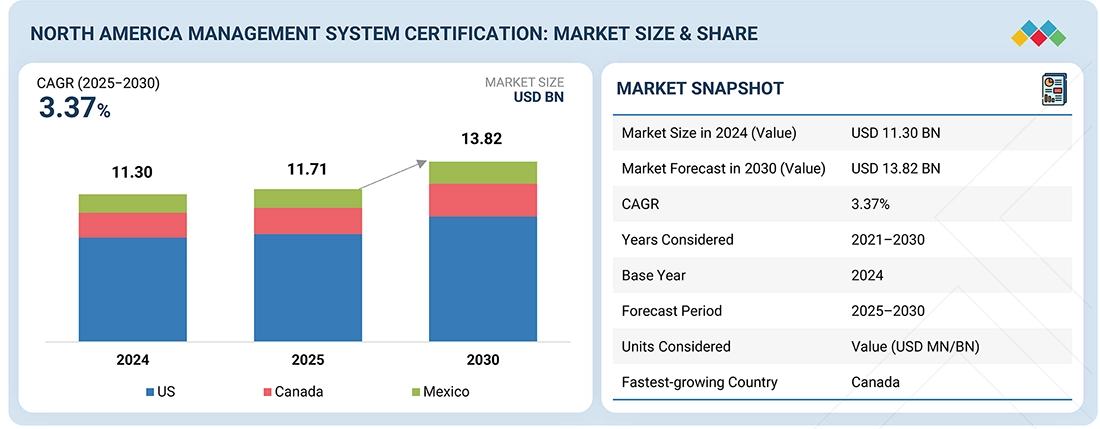
Source: Secondary Research, Interviews with Experts, MarketsandMarkets Analysis
The North America management system certification market is projected to grow from USD 11.71 billion in 2025 to USD 13.82 billion by 2030, at a CAGR of 3.37%. One of the major growth drivers of the management system certification market in North America is the tightening regulatory landscape across environmental, safety, and data security domains. As federal, state, and provincial authorities strengthen compliance requirements, organizations increasingly adopt standards such as ISO 9001, ISO 14001, ISO 45001, and ISO/IEC 27001 to demonstrate adherence, mitigate legal and operational risks, and maintain eligibility for customer and government contracts. This surge in regulatory scrutiny, combined with rising expectations for transparency, ESG accountability, and supply-chain assurance, is accelerating the demand for third-party certification across multiple industries in the region.
Market Size & Forecast
KEY TAKEAWAYS
-
By CountryThe US management system certification market accounted for a 70.7% revenue share in 2024.
-
By Certification TypeBy certification type, the management system certification segment is expected to register the highest CAGR of 5.02%.
-
By VerticalBy vertical, the healthcare and life science segment is projected to grow at the highest CAGR during the forecast period.
-
By ApplicationBy application, the quality management system segment holds the largest market share in 2024.
-
Competitive LandscapeTÜV SÜD, SGS SA, and TÜV Rheinland are among the leading players in the North America management system certification market, due to their strong market share and extensive product footprint.
-
Competitive LandscapeStartups such as A-LIGN, BARR Certifications, and Qualio, among others, have distinguished themselves among startups and SMEs by securing strong footholds in specialized niche areas, underscoring their potential as emerging market leaders.
The North America management system certification market is experiencing steady growth, driven by the increasing emphasis on supply chain and customer requirements. OEMs, large enterprises, and public sector buyers increasingly require suppliers to hold recognized certifications as a condition for contracts and procurement. This ensures consistency, quality, and compliance across complex supply chains while mitigating operational and reputational risks. As a result, businesses are increasingly adopting certification to strengthen supplier credibility and maintain access to critical market opportunities.
TRENDS & DISRUPTIONS IMPACTING CUSTOMERS' CUSTOMERS
The Management System Certification Market is evolving rapidly, driven by digital transformation and emerging technologies such as IoT, AI, blockchain, and remote inspection tools. These advancements are reshaping how organizations manage compliance, security, and quality systems. Customers increasingly demand data-driven, transparent, and remote auditing processes to ensure operational efficiency and sustainability. The growing emphasis on cybersecurity, interoperability, and ESG standards is creating new certification needs across industries such as healthcare, consumer goods, and manufacturing, enabling companies to build trust, resilience, and regulatory alignment in a highly digitalized business environment.
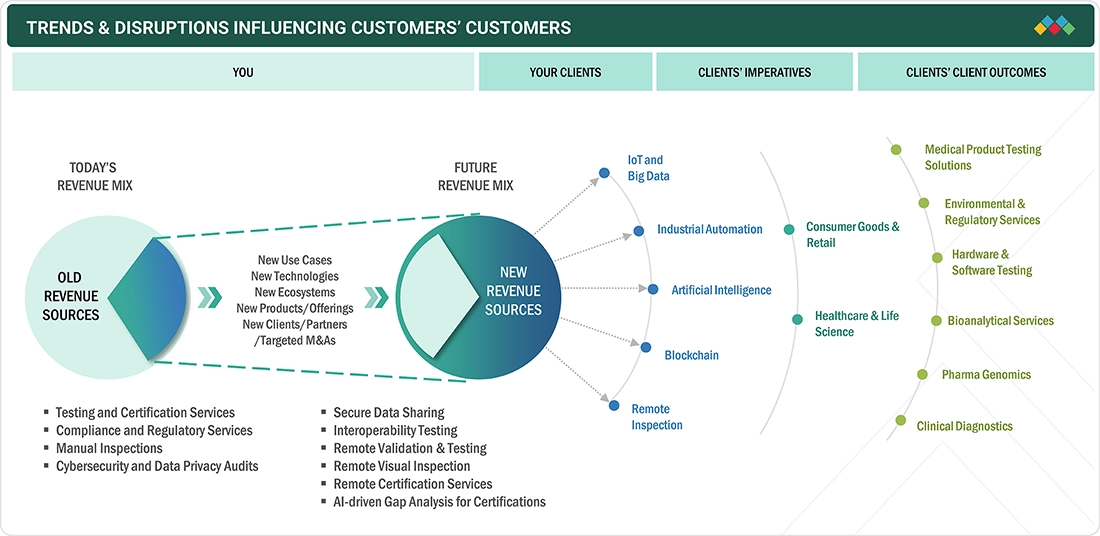
Source: Secondary Research, Interviews with Experts, MarketsandMarkets Analysis
MARKET DYNAMICS

Level
-
Proliferation of global trade and need for harmonized standards

-
Enforcement of stringent global regulatory and compliance standards across multiple industries


Level
-
High cost of certification and compliance

-
Complex and fragmented regulatory landscape


Level
-
Expansion of certification service providers into ESG and non-financial reporting assurance

-
Digital transformation of certification services


Level
-
Disrupted supply chains due to geopolitical tensions

Source: Secondary Research, Interviews with Experts, MarketsandMarkets Analysis
Driver: Proliferation of global trade and need for harmonized standards
The expansion of global trade and cross-border manufacturing has intensified the need for uniform management system standards to ensure product quality, safety, and regulatory compliance. Organizations are increasingly adopting international certifications such as ISO 9001, ISO 14001, and ISO/IEC 27001 to meet diverse market requirements. This harmonization of standards enhances supply chain reliability and fosters global competitiveness among businesses.
Restraint: High cost of certification and compliance
Obtaining and maintaining management system certifications involves significant financial investment, especially for small and medium-sized enterprises. Costs related to audits, documentation, training, and periodic renewals can act as a deterrent. Additionally, adapting to evolving regulatory frameworks and sustainability standards requires continuous process upgrades, making compliance both time-intensive and resource-demanding. This financial burden often limits participation from emerging or cost-sensitive industries.
Opportunity: Expansion of certification service providers into ESG and non-financial reporting assurance
The growing emphasis on environmental, social, and governance (ESG) reporting has opened new avenues for certification service providers. Companies are increasingly seeking independent verification of non-financial disclosures, such as sustainability, diversity, and ethical governance metrics. This trend allows certification firms to expand their portfolios, offering ESG assurance, carbon footprint verification, and social impact assessments, aligning with global corporate responsibility goals and investor transparency requirements.
Challenge: Disrupted supply chains due to geopolitical tensions
Ongoing geopolitical conflicts, trade restrictions, and supply chain disruptions are creating operational uncertainties for both certification bodies and their clients. These disruptions affect the scheduling of audits, on-site inspections, and certification renewals, particularly in high-risk regions. Moreover, shifting trade policies and localization mandates compel certification providers to continuously adapt to new regional compliance frameworks, impacting consistency in certification delivery.
NORTH AMERICA MANAGEMENT SYSTEM CERTIFICATION MARKET: COMMERCIAL USE CASES ACROSS INDUSTRIES
| COMPANY | USE CASE DESCRIPTION | BENEFITS |
|---|---|---|
 |
TÜV SÜD supports organizations with end-to-end management system certification programs across various standards, including quality (ISO 9001), environmental (ISO 14001), safety (ISO 45001), information security (ISO/IEC 27001), and automotive/industrial standards. The company leverages digital audit tools, remote assessment technologies, and sector-specific auditors to ensure consistent evaluation across global sites. Its advisory-linked pre-audit assessments help organizations benchmark and close compliance gaps efficiently. | Stronger global compliance alignment, accelerated audit cycles, reduced non-conformities, and improved operational resilience. Organizations gain higher credibility with customers and regulators while streamlining certification readiness through digital audit workflows. |
 |
SGS delivers management system certification for sustainability, occupational safety, quality, food safety, and supply chain integrity. Its auditors combine data-driven risk assessment with performance benchmarking and supply-chain traceability tools. SGS also enables hybrid audits (on-site plus remote) and provides integrated certification packages for multi-standard environments. | Enhanced transparency across operations and supply chains, reduced compliance risk, quicker certification turnaround, and improved stakeholder trust. SGS helps companies lower audit costs while maintaining robust oversight across geographically distributed facilities. |
 |
TÜV Rheinland provides certification services for quality, cybersecurity, safety, and sustainability management systems. It uses advanced audit management platforms, cyber-secure remote audit capabilities, and industry-specialized experts (e.g., automotive, industrial, healthcare). Pre-certification gap analyses and training modules support continuous improvement before formal audits. | Higher audit accuracy, improved cybersecurity posture for remote assessments, and strengthened process standardization across global operations. Clients benefit from reduced regulatory exposure, quicker certification renewal cycles, and clear pathways for maintaining multi-standard compliance. |
 |
Bureau Veritas certifies management systems for quality, environmental responsibility, energy efficiency, health & safety, and corporate sustainability. Its methodology integrates digital compliance dashboards, data collection tools, and KPIs for continuous monitoring. BV also offers sector-specific certification frameworks for the maritime, construction, manufacturing, and consumer goods sectors. | Improved governance and ESG performance tracking, reduced operational risk, and higher customer and investor confidence. Digital dashboards enable companies to track non-conformities and corrective actions, thereby improving long-term certification maintenance and audit readiness. |
 |
Intertek provides management system certifications across quality, food safety, environmental, information security, and energy management standards. It employs its proprietary auditing platform (such as Intertek’s digital assurance tools) to conduct remote, blended, and continuous assessments. Intertek also supports supplier audits and capability assessments for global sourcing networks. | Greater audit efficiency, more consistent supplier compliance, faster remediation of process gaps, and stronger brand assurance. Organizations gain improved risk visibility and smoother certification lifecycle management through Intertek’s digital and scalable assurance model. |
Logos and trademarks shown above are the property of their respective owners. Their use here is for informational and illustrative purposes only.
MARKET ECOSYSTEM
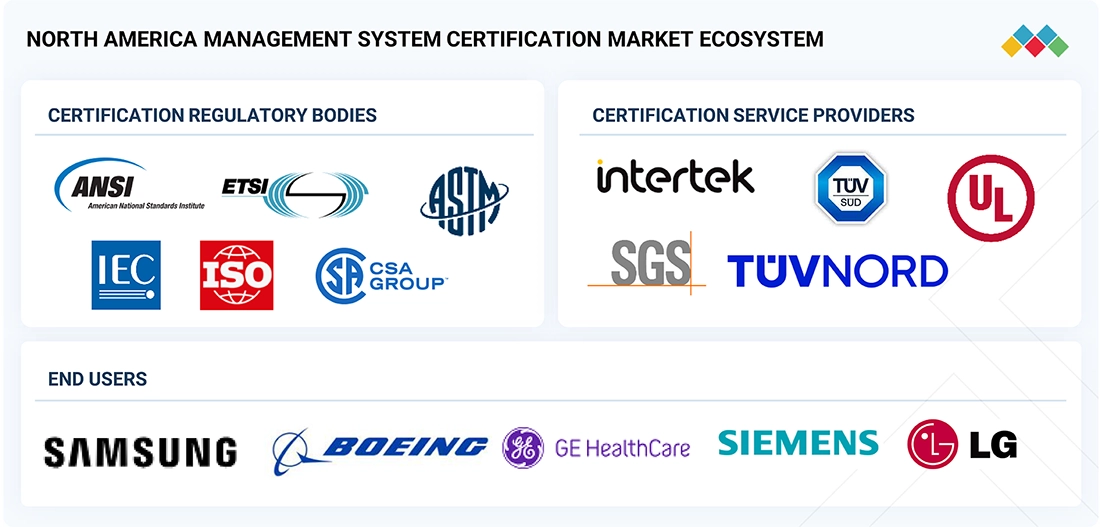
The North America Management System Certification Market ecosystem comprises regulatory bodies, certification service providers, and end users. Key standard-setting organizations such as ISO, IEC, ANSI, and ASTM define global frameworks for quality, safety, and sustainability. Certification providers, including SGS, TÜV SÜD, Intertek, TÜV NORD, and UL, ensure compliance through audits and verification services. End-users, such as Samsung, Boeing, Siemens, LG, and GE Healthcare, adopt certifications to enhance credibility, streamline operations, and meet industry-specific regulatory and customer requirements across global markets.
Logos and trademarks shown above are the property of their respective owners. Their use here is for informational and illustrative purposes only.
MARKET SEGMENTS
Source: Secondary Research, Interviews with Experts, MarketsandMarkets Analysis
North America Management System Certification Market, By Certification Type
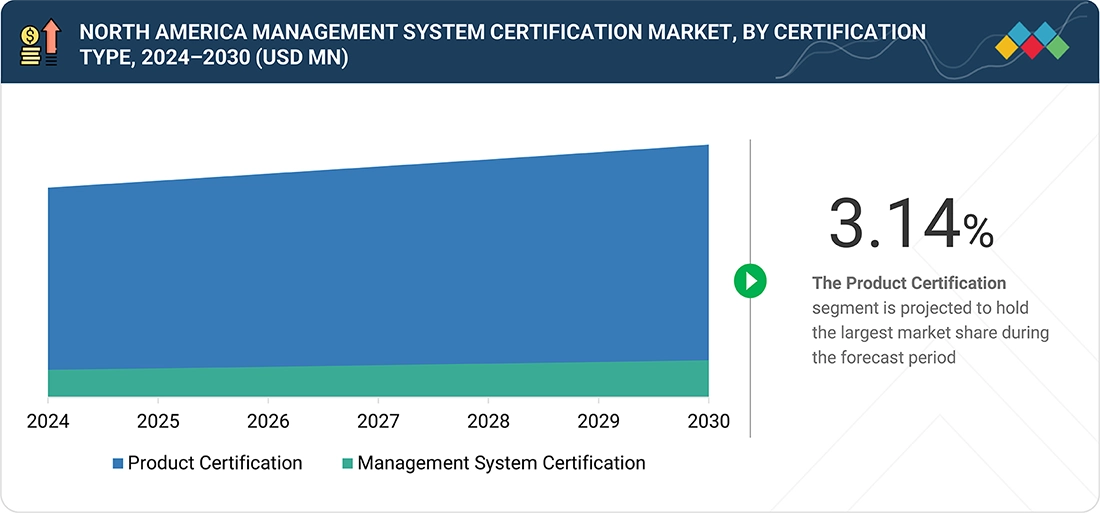
In the North America management system certification market, the product certification segment by certification type holds the largest share. This is driven by increasing regulatory requirements, customer demand for verified product quality and safety, and the need for companies to demonstrate compliance with international and industry-specific standards. Product certifications enable organizations to build trust, ensure market access, and maintain a competitive edge, making this segment a significant contributor to the overall certification market in the region.
North America Management System Certification Market, By Application
In the North America management system certification market, the Quality Management System (QMS) segment by application holds the largest market share. This is primarily driven by organizations’ focus on enhancing operational efficiency, ensuring product and service quality, and meeting customer and regulatory expectations. The adoption of QMS standards, such as ISO 9001, enables companies across various industries to streamline processes, reduce errors, and strengthen customer trust, making it the most widely implemented and impactful application segment in the region.
North America Management System Certification Market, By Vertical
In the North America management system certification market, the healthcare & life sciences segment by vertical holds the second-largest market share. This growth is driven by the stringent regulatory requirements, patient safety standards, and quality compliance mandates in the region. Organizations in this sector are increasingly adopting certified management systems to ensure operational excellence, maintain regulatory compliance, enhance trust among patients and stakeholders, and mitigate risks, making them a significant contributor to the overall certification market.
REGION
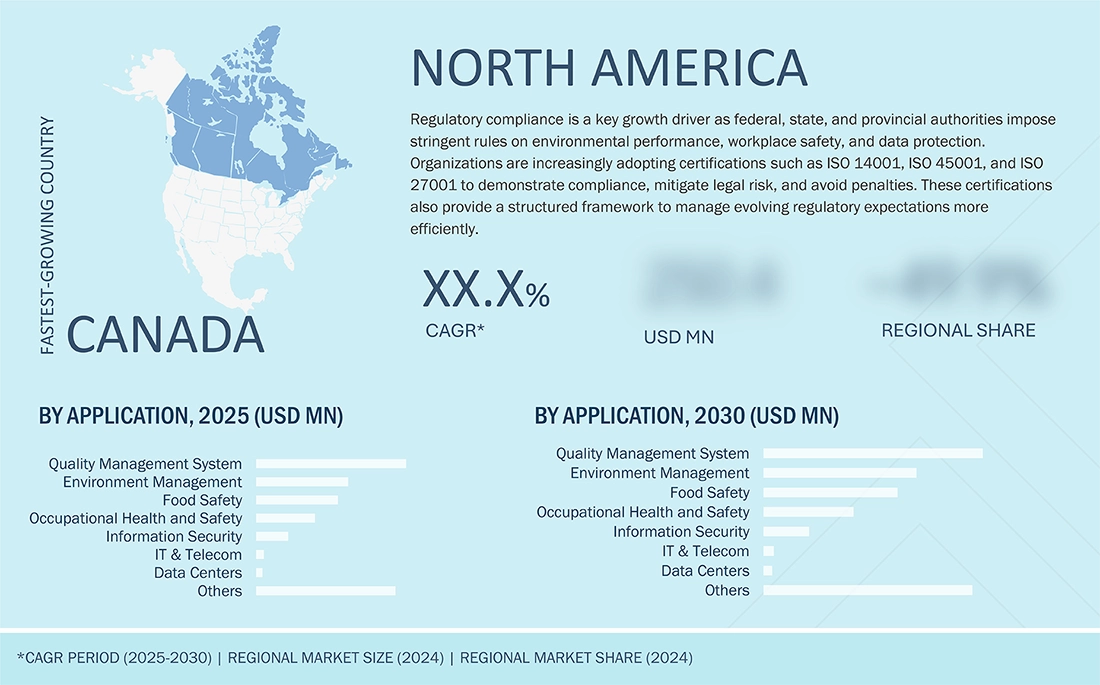
The US accounts for the largest market share in the North America management system certification market during forecast period
North America holds the second-largest share of the global management system certification market due to its robust industrial base, stringent regulatory standards, and increasing emphasis on quality, safety, and sustainability across key sectors, including manufacturing, healthcare, and IT. Within the region, the US leads the market, driven by its diversified industrial ecosystem, advanced manufacturing and healthcare sectors, stringent compliance requirements, and widespread adoption of ISO and other management system certifications by enterprises and government agencies.
NORTH AMERICA MANAGEMENT SYSTEM CERTIFICATION MARKET: COMPANY EVALUATION MATRIX
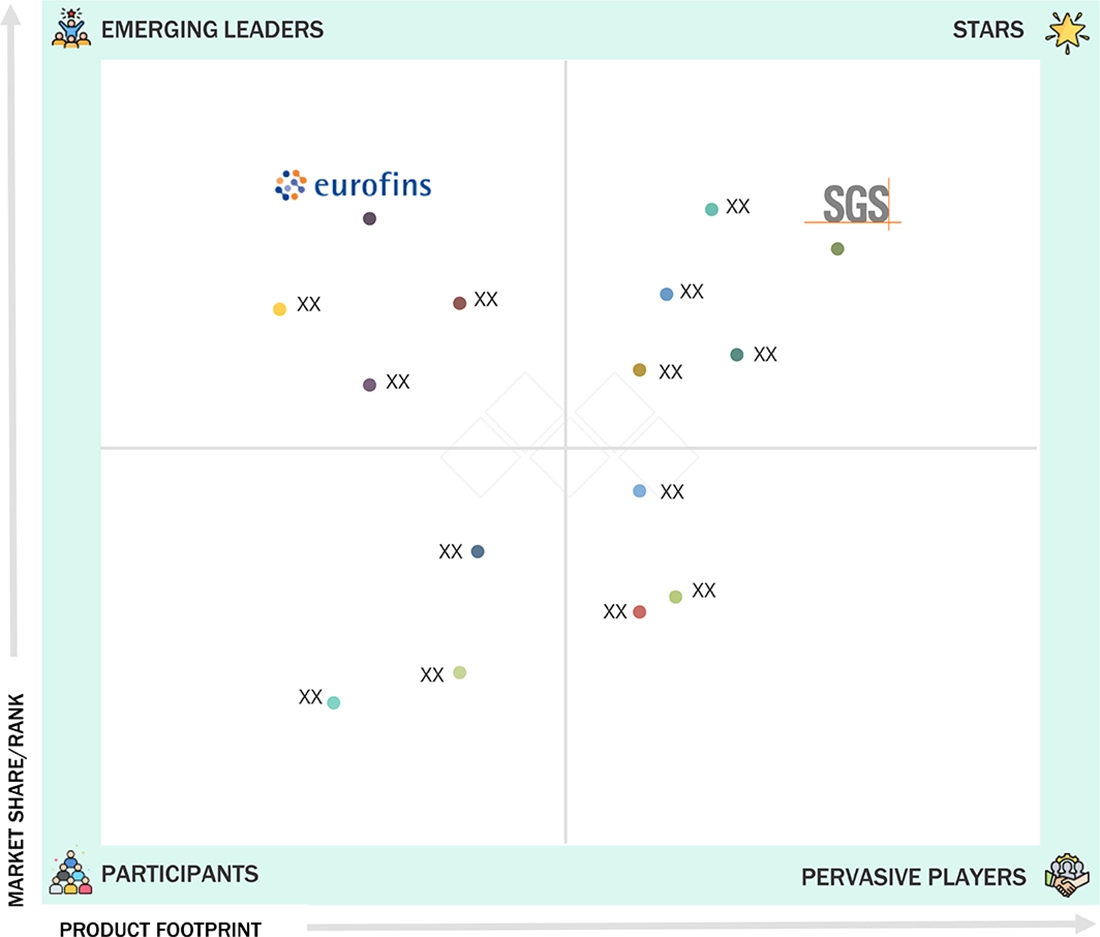
The company evaluation matrix for the North America management system certification market highlights a competitive landscape shaped by diverse service portfolios and global reach. SGS stands out in the Stars quadrant, boasting a strong market presence, an extensive service footprint, and leadership in sustainability and digital certification solutions. Eurofins, positioned among Emerging Leaders, is expanding its capabilities through specialized certifications and regional diversification. Other players are expanding their footprint through technological integration, partnerships, and sector-specific certifications, reflecting an industry that is evolving toward innovation, automation, and compliance-driven differentiation.
Source: Secondary Research, Interviews with Experts, MarketsandMarkets Analysis
KEY MARKET PLAYERS
- SGS SA (Switzerland)
- Bureau Veritas (France)
- Intertek Group plc (UK)
- TÜV SÜD (Germany)
- TÜV Rheinland (Germany)
- DNV GL (Norway)
- UL LLC (US)
- Applus+ (Spain)
- CSA Group Testing & Certification Inc. (Canada)
- Eurofins Scientific (Luxembourg)
- TÜV Nord Group (Germany)
- ALS (Australia)
- Socotec (France)
- Kiwa (Netherland)
- RINA S.p.A (Italy)
MARKET SCOPE
| REPORT METRIC | DETAILS |
|---|---|
| Market Size in 2025 (Value) | USD 11.71 Billion |
| Market Forecast in 2030 (Value) | USD 13.82 Billion |
| Growth Rate | CAGR of 3.37% from 2025-2030 |
| Years Considered | 2021-2030 |
| Base Year | 2024 |
| Forecast Period | 2025-2030 |
| Units Considered | Value (USD Million/Billion) |
| Report Coverage | Revenue forecast, company ranking, competitive landscape, growth factors, and trends |
| Segments Covered |
|
| Countries Covered | US, Canada, Mexico |
WHAT IS IN IT FOR YOU: NORTH AMERICA MANAGEMENT SYSTEM CERTIFICATION MARKET REPORT CONTENT GUIDE
DELIVERED CUSTOMIZATIONS
We have successfully delivered the following deep-dive customizations:
| CLIENT REQUEST | CUSTOMIZATION DELIVERED | VALUE ADDS |
|---|---|---|
| Certification Body / Audit Firm |
|
|
| Industrial & Manufacturing Enterprise |
|
|
| Technology & IT Service Provider |
|
|
| Government / Regulatory Bodies |
|
|
| Healthcare & Life Sciences Companies |
|
|
RECENT DEVELOPMENTS
- January 2025 : SGS SA signed an agreement to acquire RTI Laboratories, a Detroit-based provider of environmental and materials testing services. This acquisition strengthens SGS’s North America presence and expands its capabilities in commercial and federal certification standards, adding 30 employees to its team.
- January 2025 : RTI Laboratories in Detroit partnered with SGS SA through a purchasing agreement, which brought the TIC services company under SGS SA's ownership. The acquisition enables SGS to expand its North America operations and certification services for commercial and federal standards, while also bringing on thirty new team members.
- December 2024 : Luxury Brand Services became part of Bureau Veritas after its acquisition for quality assurance and control services in the luxury market. The acquisition aligns with LEAP | 28 to expand its presence in the luxury and fashion business sector, while reinforcing logistics solutions throughout Italy.
- November 2024 : SGS SA launched the IMPACT NOW sustainability suite, integrating its testing, inspection, and certification expertise with ESG solutions. This initiative helps organizations strengthen ESG strategies, enhance transparency, and adapt to evolving environmental and social expectations.
Table of Contents
 Exclusive indicates content/data unique to MarketsandMarkets and not available with any competitors.
Methodology
The study involved four major activities in estimating the current size of the North America Management System Certification Market. Exhaustive secondary research has been done to collect information on the market, peer market, and parent market. The next step has been to validate these findings and assumptions and size them with industry experts across the supply chain through primary research. Both top-down and bottom-up approaches have been employed to estimate the complete market size. After that, market breakdown and data triangulation methods have been used to estimate the market size of segments and subsegments. Secondary and primary sources have been used to identify and collect information for an extensive technical and commercial study of the North America Management System Certification Market.
Secondary Research
Various secondary sources have been referred to in the secondary research process to identify and collect information important for this study. The secondary sources include annual reports, press releases, and investor presentations of companies; white papers; journals and certified publications; and articles from recognized authors, websites, directories, and databases. Secondary research has been conducted to obtain key information about the industry’s supply chain, the market’s value chain, the total pool of key players, market segmentation according to the industry trends (to the bottom-most level), regional markets, and key developments from market- and technology-oriented perspectives. The secondary data has been collected and analyzed to determine the overall market size, further validated by primary research.
Primary Research
Extensive primary research was conducted after gaining knowledge about the current scenario of the North America Management System Certification Market through secondary research. Several primary interviews were conducted with experts from the demand and supply sides across North America. This primary data was collected through questionnaires, emails, and telephonic interviews.
Market Size Estimation
The bottom-up procedure has been employed to arrive at the overall size of the North America Management System Certification Market.
- Identified major companies that provide management system certification services. This included analyzing company portfolios, service offerings, and presence across the region.
- Their segment-specific revenues, particularly those related to certification services, were determined.
- These individual revenue figures were compiled to determine the total revenue generated across the identified companies within the sector.
- Using this consolidated data, the market size for management system certification was obtained.
The top-down approach has been used to estimate and validate the total size of the North America Management System Certification Market.
- Estimated the total market size for management system certification, outlining the overall scope and growth potential of the market
- Analyzed the regional market distribution, with further estimation of individual country shares within the region to identify localized trends and differences
- Estimated the percentage split of the market segment based on certification type, service type, and vertical at regional and country levels
- Estimated the percentage split of the market segment based on application at regional levels
- Determine the market size by certification type, service type, vertical, and application; and further, break down application segment into sub-applications to understand specific contributions and trends
Data Triangulation
After arriving at the overall market size—using the market size estimation processes as explained above—the market has been split into several segments and subsegments. Data triangulation and market breakdown procedures have been employed to complete the entire market engineering process and arrive at the exact statistics of each market segment and subsegment. The data has been triangulated by studying various factors and trends from the demand and supply sides in the North America Management System Certification Market.
Market Definition
Management System Certification encompasses a range of services provided by accredited bodies to assess and certify that an organization’s management systems comply with recognized international, national, or sector-specific standards. These certifications, covering standards, such as ISO 9001 (Quality Management Systems), ISO 14001 (Environmental Management Systems), ISO 45001 (Occupational Health and Safety Management Systems), ISO 27001 (Information Security Management), and ISO 50001 (Energy Management Systems), validate an organization’s commitment to operational excellence, regulatory compliance, risk management, sustainability, and continual improvement. Certification services include auditing, gap assessments, consulting, training, and recertification processes, often supported by digital platforms and remote auditing technologies.
Key Stakeholders
- Raw material and testing equipment suppliers
- Research organizations
- Original equipment manufacturers (OEMs)
- Technology standards organizations, forums, alliances, and associations
- Technology investors
- Analysts and strategic business planners
- Government bodies, venture capitalists, and private equity firms
- End users
Report Objectives
- To define, describe, and forecast the size of the North America Management System Certification Market by certification type, management system certification service type, application, and vertical in terms of value
- To provide detailed information regarding the key factors, such as drivers, restraints, opportunities, and challenges, influencing the growth of the market
- To understand and analyze the impact of evolving technologies on the overall value chain of the market and upcoming trends in the ecosystem
- To offer macroeconomic outlook with respect to North America
- To give a detailed overview of the North America Management System Certification Market industry trends, technology trends, use cases, regulatory landscape, and Porter’s five forces
- To strategically analyze micromarkets for individual growth trends, prospects, and contributions to the total market
- To provide ecosystem analysis, trends/disruptions impacting customer business, technology analysis, pricing analysis, key stakeholders & buying criteria, case study analysis, patent analysis, key conferences & events, Gen AI/ AI impact, Trump Tariff impact, and regulations related to the North America Management System Certification Market
- To analyze the opportunities in the market for stakeholders by identifying high-growth segments and detailing the competitive landscape for market players
- To strategically profile key players and comprehensively analyze their market rankings, core competencies, company valuation and financial metrics, and product/brand comparison, along with detailing the competitive landscape for the market leaders
- To analyze the competitive developments, such as acquisitions, service launches, expansions, agreements, partnerships, accreditations, and collaborations, carried out by market players
- To benchmark players within the market using the proprietary company evaluation matrix framework, which analyzes market players on various parameters within the broad categories of business strategy excellence and strength of service portfolio
Available Customizations
With the given market data, MarketsandMarkets offers customizations according to the company‘s specific needs. The following customization options are available for the report.
Company Information
- Detailed analysis and profiling of additional market players (up to five)
Key Questions Addressed by the Report
What is the projected size of the North America management system certification market?
The market is projected to reach USD 13.82 billion by 2030, growing from USD 11.71 billion in 2025.
What are the key drivers of the market?
Stringent regulatory requirements, increasing focus on ESG compliance, and demand for standardized certifications across industries are major growth drivers.
Which certification segment holds the largest share?
The quality management system (QMS) segment holds the largest share due to its widespread adoption for improving operational efficiency and product quality
Which industries are driving demand for certification services?
Industries such as healthcare, manufacturing, IT & telecom, and data centers are key contributors due to strict compliance and safety requirements.
What are the major trends in the market?
Adoption of digital auditing, AI, IoT, and remote inspection tools is transforming certification processes and improving efficiency.


Personalize This Research
- Triangulate with your Own Data
- Get Data as per your Format and Definition
- Gain a Deeper Dive on a Specific Application, Geography, Customer or Competitor
- Any level of Personalization
Let Us Help You
- What are the Known and Unknown Adjacencies Impacting the North America Management System Certification Market
- What will your New Revenue Sources be?
- Who will be your Top Customer; what will make them switch?
- Defend your Market Share or Win Competitors
- Get a Scorecard for Target Partners

Custom Market Research Services
We Will Customise The Research For You, In Case The Report Listed Above Does Not Meet With Your Requirements
Get 10% Free CustomisationTESTIMONIALS

Tetsuya Ohhira
Business Development Manager-Technology Business
Nikon Corporation,
Leading Japanese MNC specializing in optics and imaging productswww.nikon.com
MarketsandMarkets™ response
is quick. Their attitude is flexible and positive. Analyst Insights are globally considered and
significant. Client Services quickly respond to our inquiry and demand. Their wide range of global
surveys help us make our strategic plan.
We hope Knowledge Store will be easier to search
for a report.
VP - Marketing & Business Development
Leading Provider of Process Control Solutions
We engaged with MarketsandMarkets on a study to perform an analysis and recommend a Go-To-Market strategy for metrology and process control in the semiconductor market. The study was tailored to our targets and needs with well-defined milestones. Our overall experience with the MarketsandMarkets team was very good throughout the project in all aspects including the analysis methodologies used, the quality and depth of primary and secondary data sets, the professionalism and flexibility of the team and the ability to meet the target schedule and milestones. We want to thank MarketsandMarkets team for a job well done.






Growth opportunities and latent adjacency in North America Management System Certification Market