North America Point-of-use Water Treatment Systems Market

North America Point-of-use Water Treatment Systems Market by Device (Counter-Top Units, Free-Standing Water Purifier), Technology (Reverse Osmosis Systems, Activated Carbon), Sales Channel (Direct Sales and Distributors), Application (Residential and Non-Residential) & Region – Forecast to 2030




NORTH AMERICA POINT-OF-USE WATER TREATMENT SYSTEMS MARKET SHARE
Source: Secondary Research, Interviews with Experts, MarketsandMarkets Analysis | Updated on : April 28, 2026
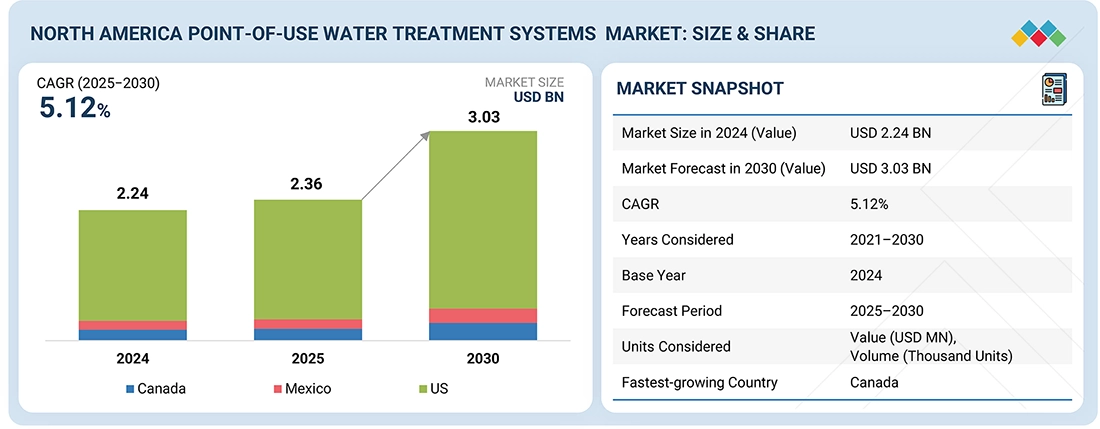
The point-of-use water treatment systems market in North America is expected to expand from USD 2.36 billion in 2025 to USD 3.03 billion in 2030, with a CAGR of 5.12% from 2025 to 2030. The market is experiencing rapid growth due to growing awareness of tap-water contamination, aging municipal infrastructure, and an increased reliance on home-level purification to protect one's health. A US Geological Survey study found PFAS in about 45% of US tap-water samples, while the Environmental Working Group identified 324 contaminants across 50,000 public water systems, with over 143 million Americans potentially exposed to unsafe levels of PFAS. According to the US EPA, in 2023, 28% of the public water systems violated at least one federal drinking-water standard, which shows treatment and monitoring gaps. These challenges are driving households to consider using reliable POU technologies such as RO, UV, and activated carbon to remove contaminants that may be missed by municipal systems. Added to this is consumers' increased interest in healthy lifestyles, coupled with the increased visibility of incidents that demonstrate water contamination and increasing acceptance of in-home filtration as a basic utility rather than a luxury. The region continues to see rising adoption of point-of-use water treatment solutions.
KEY TAKEAWAYS
-
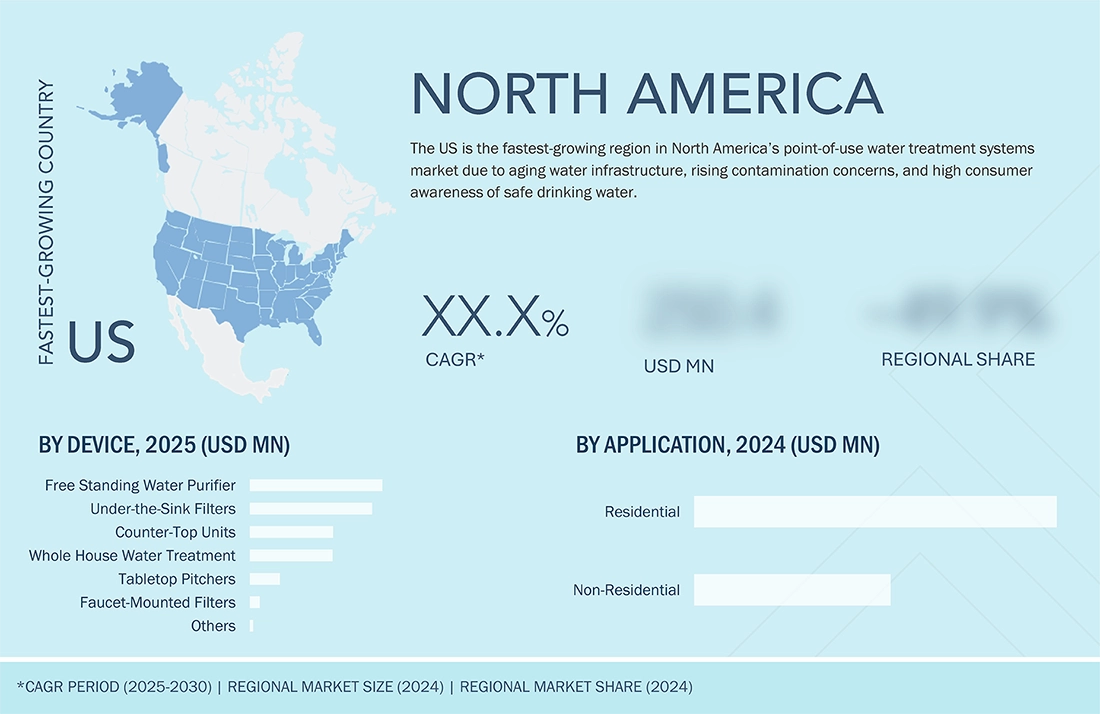
By CountryThe US dominated the point-of-use water treatment systems market in North America, with an 89.5% share in 2024.
-
By DeviceBy device, the whole house water treatment segment is expected to register the highest CAGR (6.4%) from 2025 to 2030, in terms of value.
-
By Sales ChannelBy sales channel, the direct sales segment is expected to register the highest CAGR (5.8%) from 2025 to 2030, in terms of value.
-
By TechnologyBy technology, the reverse osmosis systems segment is expected to record the highest CAGR (5.7%).
-
By ApplicationBy application, the non-residential segment is projected to grow at the fastest rate from 2025 to 2030.
-
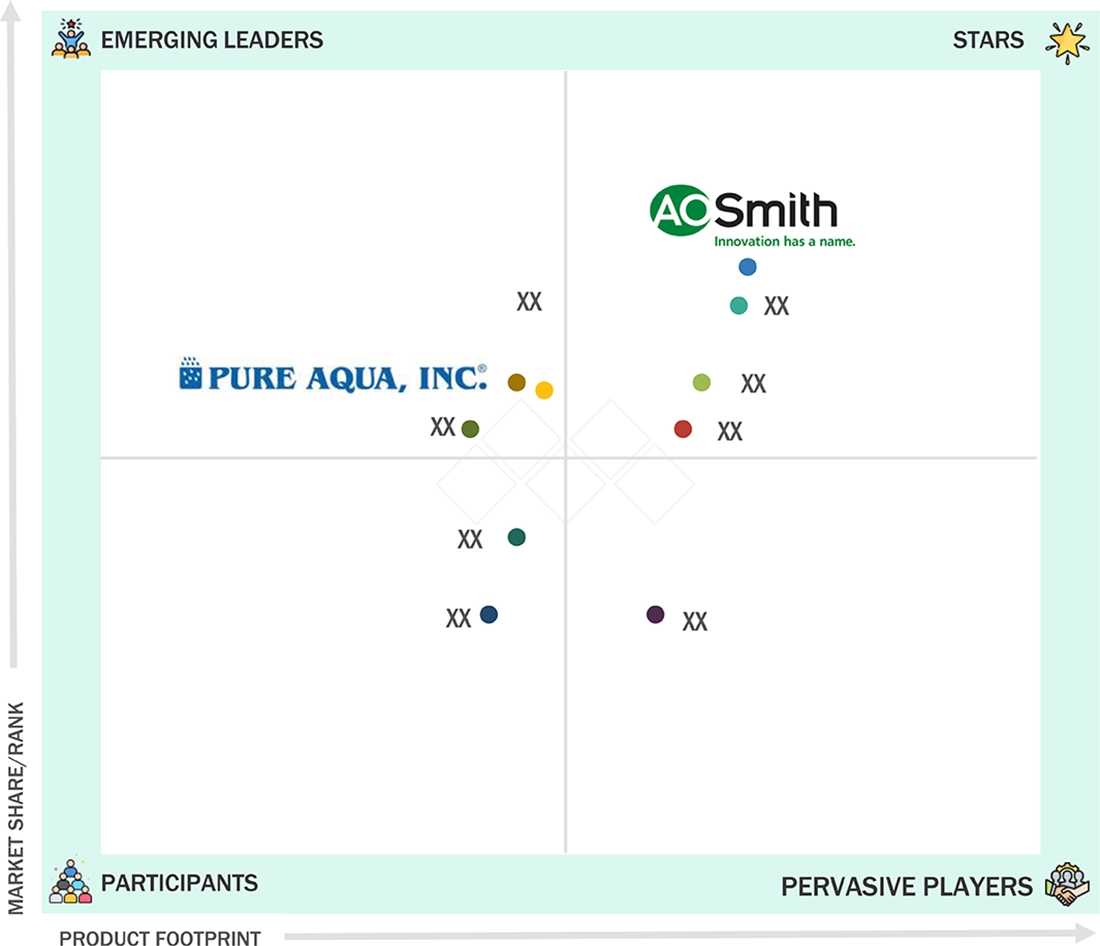
Competitive Landscape - Key PlayersA.O. Smith (US), Whirlpool Corporation (US), Grupo Rotoplas, S.A.B. de C.V. (Mexico), Culligan Water (US), and 3M (US) were identified as star players in the point-of-use water treatment systems market, as they have focused on innovation and have broad industry coverage, and strong operational & financial strength.
-
Competitive Landscape- StartupsWater Technologies de México, S.A. de C.V. (Mexico), Alxedo (Mexico), Cyclopure (US), and Pure Aqua, Inc. (US) have distinguished themselves among SMEs due to their strong product portfolio and business strategy.
North America's point-of-use water treatment systems market is on the rise as consumers respond to increasing evidence of contaminants in municipal and well water, documented by government and nonprofit sources rather than market reports. In 2023, the USGS found that nearly 45% of US tap water samples contained one or more PFAS chemicals, which has prompted households to adopt in-home filtration. The EPA also tightened drinking-water rules, issuing the first national PFAS Maximum Contaminant Levels in 2024, raising awareness and pushing many homeowners toward interim POU installations. In Canada, Health Canada reports that about 14% of households depend on private wells, which are more susceptible to bacteria, nitrates, and metals, further entrenching demand for at-home purification. Thus, the increasing detection of emerging contaminants, stricter regulatory monitoring, and growing consumer risk perception will continue to drive steady growth in the North American point-of-use water treatment market.
TRENDS & DISRUPTIONS IMPACTING CUSTOMERS' CUSTOMERS
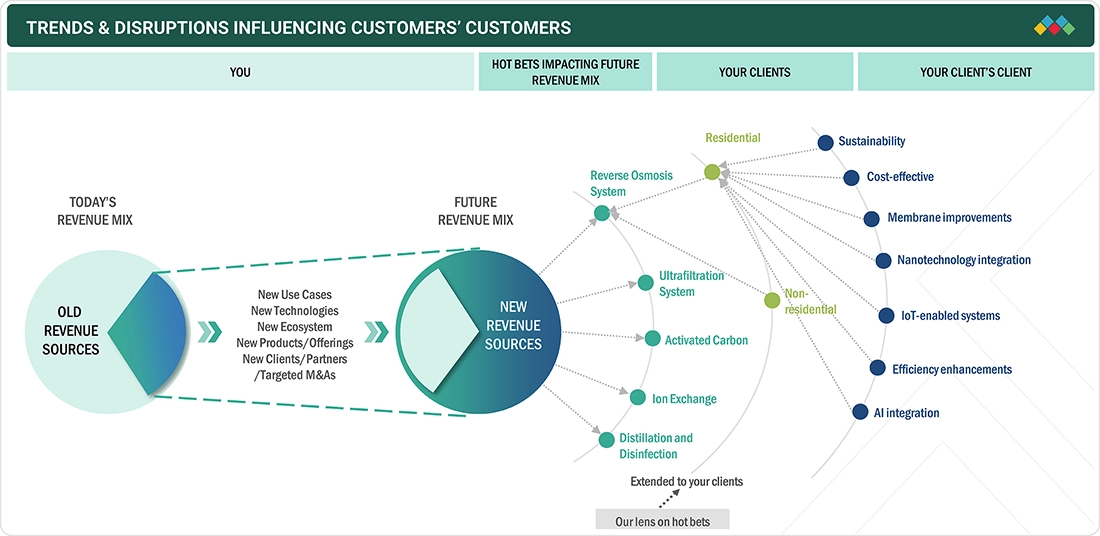
In North America, the point-of-use water treatment systems market is experiencing strong growth due to rising concerns about the safety and purity of tap water, driven by increased public awareness of contaminants such as PFAS, heavy metals, nitrates, and disinfection byproducts found across many municipal and private water supplies. This has accelerated the adoption of advanced filtration technologies, such as reverse osmosis, activated carbon, ion exchange, and UV systems, which offer broader contaminant removal and higher purification assurance. Consumers are also shifting toward smart and connected POU devices equipped with real-time quality monitoring, filter-change alerts, and digital performance tracking, reflecting the region’s growing adoption of smart homes. Additionally, sustainability considerations are shaping buying behavior as households move away from single-use bottled water and opt for energy-efficient and eco-friendly purification systems. At the same time, online retail, direct-to-consumer brands, and subscription-based filter replacement services are expanding access and convenience, making point-of-use solutions more widely available and easier to maintain across North American households.
Source: Secondary Research, Interviews with Experts, MarketsandMarkets Analysis
MARKET DYNAMICS

Level
-
Aging water infrastructure leading to trust issues in municipal supply

-
High awareness driven by contamination incidents including flint, PFAS, lead, and microplastics


Level
-
High penetration of bottled water reducing urgency to adopt systems

-
Uneven water quality standards across states and municipalities


Level
-
Demand for PFAS-specific and advanced contaminant filtration technologies

-
Growth potential in small businesses, foodservice outlets, and office hydration systems


Level
-
High cost of filter replacements and maintenance affecting long-term adoption

-
Intense competition from low-cost imports and uncertified products

Source: Secondary Research, Interviews with Experts, MarketsandMarkets Analysis
Driver: Aging water infrastructure leading to trust issues in municipal supply
A significant portion of the water distribution networks in both the US and Canada is between 50 and 100 years old, and many systems are operating far beyond their intended lifespan. Aging pipelines, outdated treatment assets, and insufficient capital investment have led to an increase in corrosion, metal leaching, and inconsistent water pressure across several states and provinces. Households are increasingly exposed to boil water notices, localized supply disruptions, and pipeline bursts, all of which erode consumer confidence in municipal tap water quality. As a result, families are proactively choosing point-of-use filtration systems to ensure a consistent level of safety and performance that public utilities struggle to guarantee.
Restraint: High penetration of bottled water reducing urgency to adopt systems
The US is among the world leaders in per-person bottled water consumption, and this long-standing habit directly reduces the immediacy with which households consider installing point-of-use systems. For many consumers, bottled water is perceived as a convenient, low-commitment alternative that requires no installation, maintenance, or upfront investment. This convenience, combined with the strong brand trust built by major beverage companies, leads households to view bottled water as a simple solution for their drinking needs. As a result, consumers often delay or completely avoid the transition to home purification systems, especially when their primary concern is only drinking water rather than whole-home usage. Additionally, aggressive retail promotions, wide availability in supermarkets and convenience stores, and the expansion of premium bottled water categories such as alkaline and mineral-enriched varieties reinforce this behavioral preference. This entrenched reliance on bottled water slows the overall adoption of point-of-use devices in the US and tempers market growth despite rising awareness of tap water quality issues.
Opportunity: Growing demand for PFAS-specific and advanced contaminant filtration technologies
Upcoming federal and state PFAS regulations in the US, including the EPA’s new limits on these chemicals, present a significant growth opportunity for point-of-use water treatment providers. Households and businesses are increasingly seeking filtration solutions that can reliably remove PFAS and other emerging contaminants, creating strong demand for advanced technologies such as high-performance activated carbon, reverse osmosis, and specialized membrane systems. Providers that offer certified, high-efficacy devices can capture a premium segment of the market, particularly in regions with strict regulatory oversight or reported contamination. This regulatory-driven need for advanced purification positions the market for accelerated adoption of point-of-use systems.
Challenge: High cost of filter replacements and maintenance affecting long-term adoption
A key barrier to sustained adoption of point-of-use water treatment systems in North America is the recurring cost of filter replacements and ongoing maintenance. Many households are hesitant to invest in systems when replacement cartridges, membranes, or other consumables carry significant annual costs. Additionally, inconsistent or delayed maintenance can compromise system performance, resulting in reduced contaminant removal efficiency and diminished consumer trust. This combination of financial and operational challenges often discourages long-term use, resulting in lower device turnover, limited upgrades to newer models, and slower overall market growth. Manufacturers and service providers face the opportunity to address these concerns through subscription models, longer-lasting filters, or maintenance-free solutions that improve convenience and affordability.
NORTH AMERICA POINT-OF-USE WATER TREATMENT SYSTEMS MARKET: COMMERCIAL USE CASES ACROSS INDUSTRIES
| COMPANY | USE CASE DESCRIPTION | BENEFITS |
|---|---|---|
 |
Deployment of advanced under-sink RO and carbon-block filtration units for homes in regions with aging water pipelines and recurring lead/PFAS advisories, particularly in the Midwest and Northeast. | Ensures the removal of lead, PFAS, and microcontaminants commonly found in older US water systems. Enhances household trust in tap water quality without requiring a switch to bottled water. Long-life filters reduce the frequency of replacement in high-consumption households. |
 |
Smart pitcher and faucet-mount systems equipped with filter-change indicators, TDS monitoring, and digital tracking for households seeking convenience and everyday filtration. | Encourages consistent filter replacement via app-linked reminders. Reduces chlorine taste and odor Affordable point-of-use option for renters and multi-family homes where plumbing modifications are not allowed. |
Logos and trademarks shown above are the property of their respective owners. Their use here is for informational and illustrative purposes only.
MARKET ECOSYSTEM
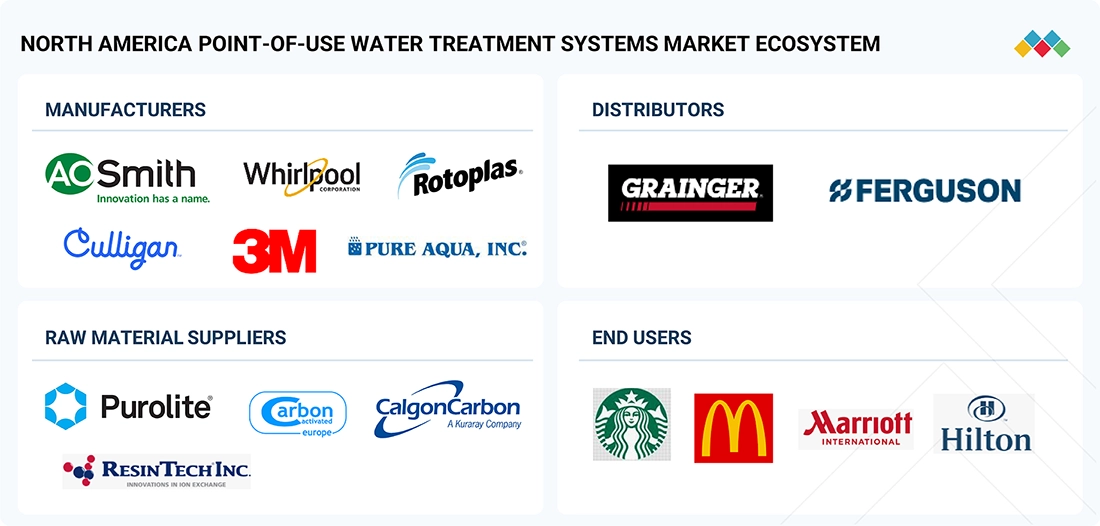
An ecosystem map for the point-of-use water treatment systems market in North America illustrates a well-connected value chain that ensures access to safe and reliable drinking water across the region. It starts with suppliers of key filtration media, including activated carbon, ion-exchange resins, advanced membranes, and UV purification components, which are then integrated into reverse osmosis systems, UV systems, gravity filters, and multi-stage treatment units by manufacturers. This network is supported by distributors, retailers, and service providers responsible for installation, maintenance, and cartridge replacement. The ecosystem spans diverse end-use segments, including households, apartments and multi-family units, hotels, healthcare facilities, schools, commercial establishments, and rural communities that often rely on self-supplied or inconsistent water sources.
Logos and trademarks shown above are the property of their respective owners. Their use here is for informational and illustrative purposes only.
MARKET SEGMENTS
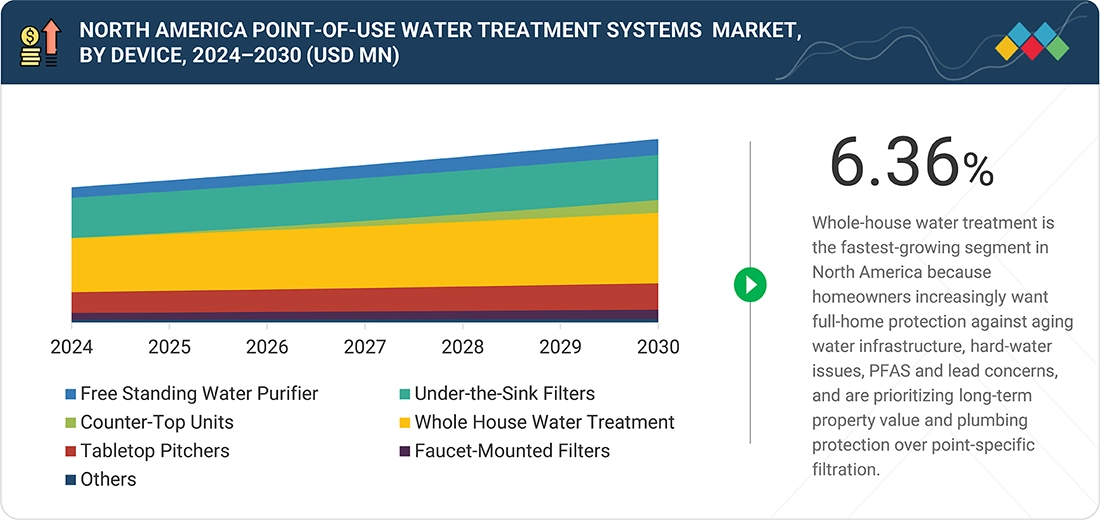
Source: Secondary Research, Interviews with Experts, MarketsandMarkets Analysis
North America Point-of-use Water Treatment Systems Market, By Sales Channel
In 2024, distributors accounted for the largest share in the North American point-of-use water treatment systems market, driven by their extensive reach, established regional networks, and ability to address diverse customer needs across urban and rural areas. Their collaborations with leading brands facilitated rapid product penetration, streamlined inventory management, and enhanced after-sales support. Third-party retail chains, multi-brand stores, and specialized water treatment retailers further strengthened distributor-led sales. Meanwhile, online sales channels gained traction due to growing e-commerce adoption and the convenience of home delivery, particularly for replacement cartridges and compact under-sink systems. Overall, distributors remained the preferred channel for both premium and mass-market POU systems, while direct-to-consumer and online platforms are steadily increasing their influence.
North America Point-of-use Water Treatment Systems Market, By Device
Free-standing water purifiers captured a significant portion of the market in 2024, driven by consumer demand for compact, plug-and-play solutions suitable for households with limited plumbing modifications. These units combine RO, UV, UF, and activated carbon technologies into a single device, providing comprehensive removal of contaminants. Under-sink and countertop systems also experienced strong adoption, particularly among renters, multi-family units, and small commercial establishments, due to their discreet installation and convenience. Faucet-mounted and portable purifiers have grown steadily in niche segments, especially in areas where urban apartments or temporary living arrangements limit space. Factors such as ease of installation, digital indicators, larger storage capacities, and the ability to integrate multiple filtration technologies have been key drivers for device-level adoption in North America.
North America Point-of-use Water Treatment Systems Market, By Technology
Reverse Osmosis is the dominant technology in North America’s point-of-use water treatment market due to its proven effectiveness in removing a wide range of contaminants, including lead, PFAS, nitrates, and microplastics, as well as growing consumer preference for high-purity drinking water.
North America Point-of-use Water Treatment Systems Market, By Application
The residential segment is the dominant application for point-of-use water treatment systems in North America, driven by increasing household awareness of water quality issues, aging municipal infrastructure, and the widespread adoption of under-sink, countertop, and pitcher-based filtration devices.
REGION
US to be the fastest-growing country in the North America point-of-use water treatment systems market during the forecast period
The US is the fastest-growing market for point-of-use water treatment systems in North America, primarily driven by increasing health and safety concerns. Increasing awareness of contaminants in tap water, such as PFAS, heavy metals, nitrates, and disinfection by-products, has made consumers more conscious about the quality of their drinking water. This heightened concern is further supported by regulatory guidelines from agencies such as the EPA and widespread media coverage of water quality incidents, which together have amplified demand for reliable treatment solutions. Another key factor contributing to growth is the widespread adoption of advanced filtration technologies. Reverse osmosis, activated carbon, ion exchange, and UV-based systems are increasingly preferred due to their ability to remove a broad spectrum of contaminants, ensuring safe and clean water at home. Additionally, U.S. households generally have higher disposable incomes and are willing to invest in residential water treatment solutions, making the market more receptive to premium devices and innovative technologies.
NORTH AMERICA POINT-OF-USE WATER TREATMENT SYSTEMS MARKET: COMPANY EVALUATION MATRIX
A. O. Smith holds a strong leadership position in the North American point-of-use water treatment systems market, leveraging its extensive product portfolio, established brand reputation, and widespread distribution network. The company is recognized for offering technologically advanced solutions, particularly in reverse osmosis and whole-house filtration systems, which cater to the growing consumer demand for safe and high-quality drinking water. In contrast, Pure Aqua Inc. is emerging as a notable player in the region, gaining traction through its focus on customized, cost-effective, and efficient POU water treatment solutions. By targeting niche residential and small commercial segments and emphasizing innovation and flexible system designs, Pure Aqua is steadily building its presence and challenging established players in the North American market.
Source: Secondary Research, Interviews with Experts, MarketsandMarkets Analysis
KEY MARKET PLAYERS
- A. O. Smith Corporation
- Whirlpool Corporation
- Culligan water
- Grupo Rotoplas, S.A.B. de C.V.
- Pure Aqua, Inc.
- Alxedo
- 3M
- Cyclopure, Inc.
- Water Technologies de México, S.A. de C.V.
- Xylem Inc.
MARKET SCOPE
| REPORT METRIC | DETAILS |
|---|---|
| Market Size in 2024 (Value) | USD 2.24 BN |
| Market Size in 2030 (Value) | USD 3.03 BN |
| CAGR | 5.12% |
| Years Considered | 2021–2030 |
| Base Year | 2024 |
| Forecast Period | 2025–2030 |
| Units Considered | Value (USD MN) Volume (Thousand Units) |
| Report Coverage | Revenue forecast, company ranking, competitive landscape, growth factors, and trends |
| Segments Covered |
|
| Countries Covered | US, Canada, Mexico |
WHAT IS IN IT FOR YOU: NORTH AMERICA POINT-OF-USE WATER TREATMENT SYSTEMS MARKET REPORT CONTENT GUIDE
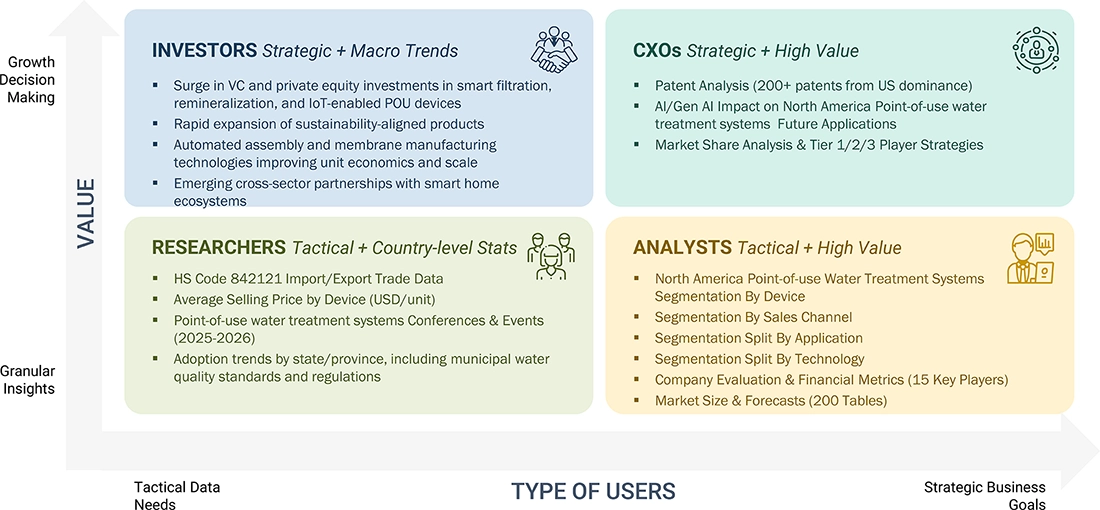
DELIVERED CUSTOMIZATIONS
We have successfully delivered the following deep-dive customizations:
| CLIENT REQUEST | CUSTOMIZATION DELIVERED | VALUE ADDS |
|---|---|---|
| North America POU water treatment systems market | Comprehensive analysis of North American POU ecosystem (RO, UF, activated carbon, UV, pitcher and faucet filters) | Identified regulatory landscape (NSF/ANSI, state-level water safety initiatives, lead and PFAS regulations) and market adoption patterns; assessed regional distribution channels (retail, e-commerce, subscription models); mapped consumer preferences by household income and urban/rural segmentation; competitive benchmarking of domestic and international brands; evaluation of innovation in IoT-enabled filters, smart monitoring, and low-maintenance devices |
| Reverse osmosis (RO)-based POU water treatment system manufacturers | Benchmarking of leading North American RO manufacturers (membrane efficiency, flow rates, water recovery, energy efficiency) | Assessed low-pressure RO, anti-fouling membranes, and tankless systems; pricing and adoption trends across residential, small commercial, and multi-family applications; evaluation of compliance with NSF/ANSI and local regulations; mapping of supply chain dependencies (membranes, pumps, housings, valves) |
| Activated carbon-based POU water treatment system manufacturers | Global and North American benchmarking of activated carbon filter manufacturers (GAC, PAC, carbon block) | Comparative analysis of adsorption performance, VOC removal, and flow efficiency; mapping of material sourcing trends (coconut shell, wood-based carbons); review of certifications (NSF 42/53) and innovation (silver-impregnated, reactivated carbons) |
RECENT DEVELOPMENTS
- July 2024 : A.O. Smith completed its acquisition of Pureit, a water purification business previously owned by Unilever PLC, primarily operating in India.
- September 2023 : A.O. Smith acquired Water Tec of Tucson, a family-owned water treatment company that specializes in manufacturing and distributing water treatment equipment for residential, commercial, institutional, and industrial applications.
- November 2022 : Whirlpool Corporation completed the acquisition of InSinkErator, the world’s leading manufacturer of food waste disposers and instant hot water dispensers.
- June 2022 : A.O. Smith acquired Atlantic Filter Corporation, which specializes in manufacturing and distributing water treatment equipment for residential, commercial, institutional, and industrial applications.
- July 2021 : A. O. Smith Corporation announced the acquisition of Master Water Conditioning Corporation, a Pennsylvania-based, family-owned water treatment company, that specializes in manufacturing and distributing water treatment equipment.
Table of Contents
 Exclusive indicates content/data unique to MarketsandMarkets and not available with any competitors.
Methodology
The study involved four major activities to estimate the current size of the North America Point-of-use Water Treatment Systems Market. Exhaustive secondary research was carried out to collect information on the market, the peer product market, and the parent product group market. The next step was to validate these findings, assumptions, and sizes with the industry experts across the value chain of point-of-use water treatment systems through primary research. The top-down and bottom-up approaches were employed to estimate the overall size of the North America Point-of-use Water Treatment Systems Market. After that, market breakdown and data triangulation procedures were used to determine the size of different segments of the market.
Secondary Research
The market for the companies offering point-of-use water treatment systems in North America is arrived at by secondary data available through paid and unpaid sources, analyzing the product portfolios of the major companies in the ecosystem, and rating the companies by their performance and quality. Various secondary sources, such as Business Standard, Bloomberg, World Bank, and Factiva, were referred to identify and collect information for this study on the North America Point-of-use Water Treatment Systems Market. In the secondary research process, various secondary sources were referred to identify and collect information related to the study. Secondary sources included annual reports, press releases, and investor presentations of point-of-use water treatment systems vendors, forums, certified publications, and white papers. Secondary research was used to obtain critical information on the industry’s value chain, the total pool of key players, market classification, and segmentation from the market and technology-oriented perspectives.
Primary Research
In the primary research process, various primary sources from both, the supply and demand sides were interviewed to obtain qualitative and quantitative information for this report. The primary sources from the supply side included industry experts, such as Chief Executive Officers (CEOs), Vice Presidents (VPs), marketing directors, technology and innovation directors, and related key executives from several key companies and organizations operating in the North America Point-of-use Water Treatment Systems Market. After the complete market engineering (calculations for market statistics, market breakdown, market size estimations, market forecasting, and data triangulation), extensive primary research was conducted to gather information and verify and validate the critical numbers arrived at. Primary research was also conducted to identify the segmentation types, industry trends, competitive landscape of point-of-use water treatment systems offered by various market players, and key market dynamics, such as drivers, restraints, opportunities, challenges, industry trends, and key player strategies. In the complete market engineering process, the top-down and bottom-up approaches and several data triangulation methods were extensively used to perform the market estimation and market forecasting for the overall market segments and subsegments listed in this report. Extensive qualitative and quantitative analysis was performed on the complete market engineering process to list the key information/insights throughout the report.
Market Size Estimation
The top-down and bottom-up approaches were used to estimate and validate the size of the North America Point-of-use Water Treatment Systems Market. These approaches were also used extensively to estimate the size of various dependent market segments. The research methodology used to estimate the market size included the following:
Data Triangulation
After arriving at the overall market size using the market size estimation processes, the market was split into several segments and subsegments. The data triangulation and market breakup procedures were employed, wherever applicable, to complete the overall market engineering process and arrive at the exact statistics of each market segment and subsegment. The data was triangulated by studying various factors and trends from both, the demand and supply sides.
Market Definition
Point-of-use water treatment systems are devices installed on individual taps or multiple taps to provide high-quality water that is free from contaminants like chlorine, iron, sulfur, and dissolved solids. This purified water is suitable for drinking, cooking, and other uses in both, residential and non-residential settings. These compact filtration or purification devices are placed directly where water is consumed, such as kitchen sinks, faucets, or even portable pitchers, ensuring immediate access to clean and safe water.
Tabletop pitchers, whole-house water treatments, faucet-mounted filters, countertop units, under-the-sink filters, free-standing water purifiers, and other variants are examples of products included in point-of-use water treatment systems. These systems utilize various technologies to enhance effectiveness and user-friendliness, such as reverse osmosis (RO) systems, ultrafiltration systems, and activated carbon filtration.
Stakeholders
- Raw Material Suppliers and Producers
- Regulatory Bodies
- Point-of-use Water Treatment System Distributors/Suppliers
- Environmental Protection Bodies
- Local Governments
- End-use Industries
- Market Research and Consulting Firms
Report Objectives
- To define, describe, and forecast the size of the North America Point-of-use Water Treatment Systems Market based on device, technology, sales channel, application, and region in terms of value and volume
- To provide detailed information on the significant drivers, restraints, opportunities, and challenges influencing the market
- To strategically analyze micromarkets concerning individual growth trends, prospects, and their contribution to the market
- To assess the growth opportunities in the market for stakeholders and provide details on the competitive landscape for market leaders In the North America Point-of-use Water Treatment Systems Market
- To strategically profile the key players and comprehensively analyze their market shares and core competencies
- To analyze competitive developments, such as product launches, collaborations, acquisitions, expansions, and partnerships, in the North America Point-of-use Water Treatment Systems Market
- To provide the impact of AI on the North America Point-of-use Water Treatment Systems market


Personalize This Research
- Triangulate with your Own Data
- Get Data as per your Format and Definition
- Gain a Deeper Dive on a Specific Application, Geography, Customer or Competitor
- Any level of Personalization
Let Us Help You
- What are the Known and Unknown Adjacencies Impacting the North America Point-of-use Water Treatment Systems Market
- What will your New Revenue Sources be?
- Who will be your Top Customer; what will make them switch?
- Defend your Market Share or Win Competitors
- Get a Scorecard for Target Partners

Custom Market Research Services
We Will Customise The Research For You, In Case The Report Listed Above Does Not Meet With Your Requirements
Get 10% Free CustomisationTESTIMONIALS
We at Nissan Chemicals Corporation have been clients of MarketsandMarkets for more than a year now. We recently consulted MarketsandMarkets for a study, the team at MarketsandMarkets was extremely professional and organized. The business insights were very detailed and aligned well with our expectations that really helped us formulate the Business Plans and device new strategies for development themes. MarketsandMarkets offers a unique combination of expertise and dedicated engagement model. Their research findings have helped us in designing our Pricing Strategy which will make it easier for us to predict the future sales and profits for the next ten years. We look forward to working with MarketsandMarkets in the future.
VP of Strategy & New Business Development
Leading Specialty Chemical Company
The MarketsandMarkets Engagement Model, composed of both the Knowledge Store and advisory custom research, has greatly helped us in understanding our markets and making strategic decisions. The Knowledge Store is a fast way to allow everyone in our organization to understand more about most any market they are interested in. The ability to then get custom research done and get answers to specific strategic questions and market insight has been spectacular. The Markets and Markets team feel more like colleagues than vendors and their services have helped us change our culture where statements of things like growth opportunities and competitive position are always backed by industry research.

Rich Gibson,
Director, Corporate Strategy
Milliken & Company,
Leading Industrial Manufacturer of specialty chemical, floor covering, performance and protective textile materials, and healthcaremilliken.com
MarketsandMarkets is a trusted resource that helps us to better understand markets that are near-adjacencies-whether its technology, value chain or geography. Their Knowledge Store platform provides a dashboard of markets and their characteristics which is easy to use and saves us time.
Adam Shaw,
Market Development and Strategy Manager
AdvanSix Inc. USA,
An American Leader in Chemicalswww.advansix.com
The Knowledge Store from MarketsandMarkets is a valuable tool which has helped my team acquire greater insight in to the end markets that our business serves. This has enabled us to help our company build stronger strategies throughout our planning process.
TOSHIO KINOSHITA
Senior Chif Consultion Research & Consulting Division
Mitsubishi Chemical Research Corporation,
Leading Manufacturer of Chemical Productswww.mitsubishichem-res.co.jp/en/

We recently engaged with MarketsandMarkets for a study, the team not only clearly understood our business objectives but was also extremely professional in the way they handled the entire project. The study was efficiently conducted in a phase-wise manner, and the engagement model furnished us with high-quality business insights that far exceeded our expectations at each phase. We were especially happy that MarketsandMarkets could provide us with both, an English as well as a Japanese version of the study. A special thanks to the Analyst Team and Client Services Team, whose fluency in Japanese enhanced our comfort level, as we could converse with them in our preferred language.
Independent entrepreneurs
Arrow Precision
We approached MarketsandMarkets for study on Proppants Market, and their work exceeded our expectations. The study conducted was comprehensive and enabled us to view the market through the various dimensions. In addition, the team was extraordinarily responsive throughout the process and resolved our queries on time. I strongly recommend MarketsandMarkets and will certainly consider them for additional market assessments we will need in the future.
Global engineering company, Japan
Deputy Manager,
Strategic Planning OfficeThe high-quality insights shared by the MarketsandMarkets team helped us understand the pharmaceutical plant designers in a specific geography. It also captured the risks that we may likely face in communicating with our potential partners. The study would enable us identify partners, which would impact our future growth.






Growth opportunities and latent adjacency in North America Point-of-use Water Treatment Systems Market