North America Rodenticides Market

North America Rodenticides Market, By Type (Chemical, Mechanical, Biological, Software & Services), Mode of Application (Pellets, Spray, Powder), End Use (Agriculture, Warehouses, Urban Centers), and Rodent Type - Forecast to 2030




OVERVIEW
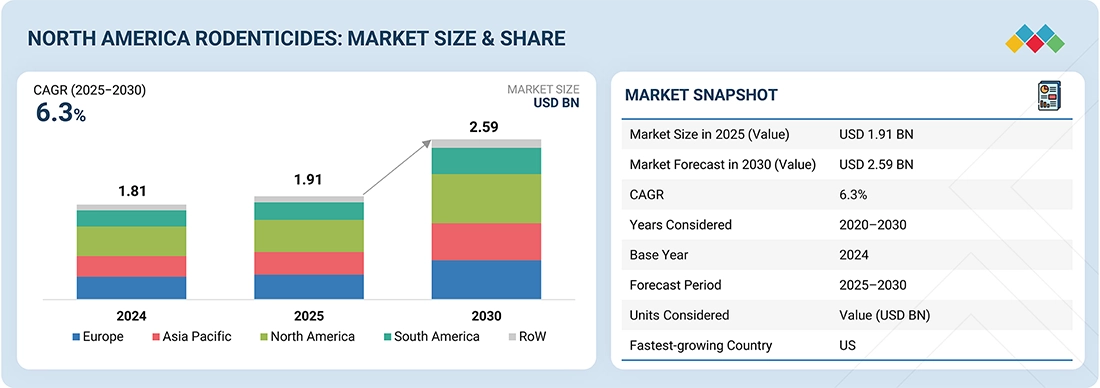
Source: Secondary Research, Interviews with Experts, MarketsandMarkets Analysis
The North America Rodenticide Market is projected to reach USD 2.60 billion by 2030 from USD 1.92 billion in 2025, at a CAGR of 6.3% from 2025 to 2030. The North American rodenticide market is influenced by rising urbanization, commercial and agricultural activity, and rodent infestation in warehouses and farms. Recent developments in regulatory oversight and increased awareness of health and economic hazards are shaping this market. The need for safe, effective, and resource-conserving pesticide technologies has further added to the dynamics involved in market trends and growth.
KEY TAKEAWAYS
-
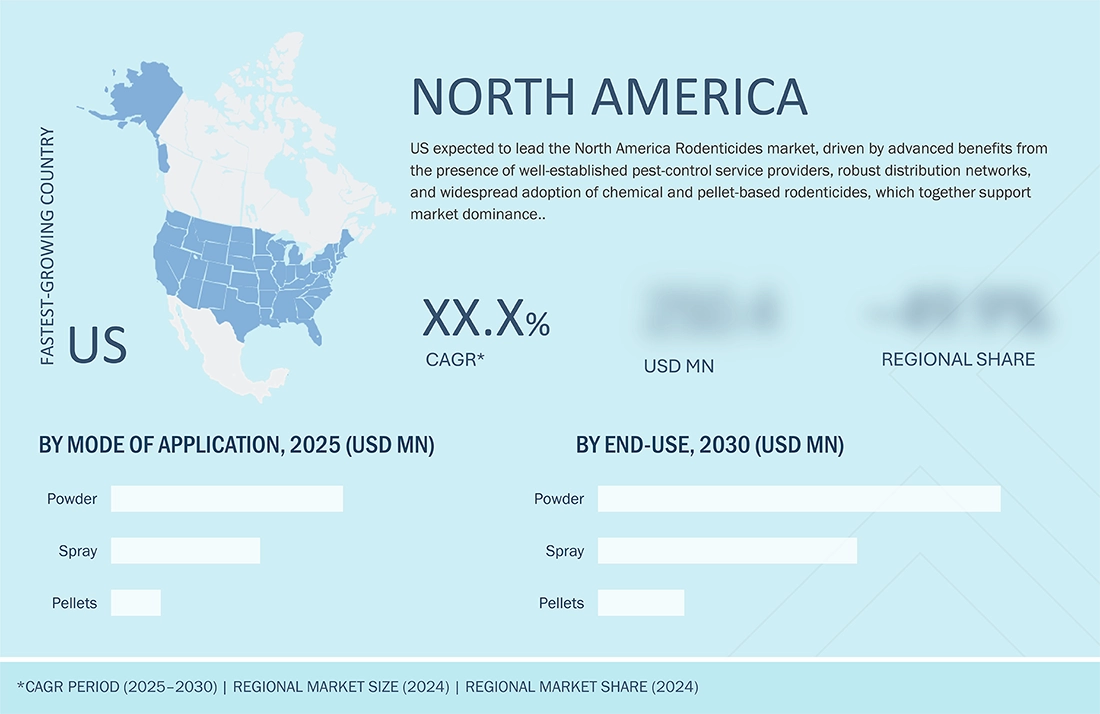
BY COUNTRYThe US rodenticides market accounted for a higest share of around 70% in 2024.
-
BY TYPEBy type, the software & services segment is expected to register the highest CAGR of 6.8% from 2025 to 2030.
-
BY MODE OF APPLICATIONBy mode of application type, the Pellets segment is expected to register the highest market share.
-
BY TARGET RODENT TYPEBy target rodent type, the mice segment is projected to grow at the fastest rate of 6.6% from 2025 to 2030.
-
BY END-USEBy end-use segment, the urban centers segment is expected to dominate the market.
-
COMPETITIVE LANDSCAPECompany Syngenta, UPL, and Pelgar Internantional were identified as some of the star players in the North Amrica rodenticide market, given their strong market share and product footprint.
The North American rodenticide market is experiencing strong growth due to increasing urbanization, commercial and agricultural activities, and rising rodent infestations in warehouses, farms, and residential areas. Other forces shaping the dynamics and growth of this market include regulations, increasing awareness of health and economic risks, and the need for safe, effective, and sustainable pest control solutions.
TRENDS & DISRUPTIONS IMPACTING CUSTOMERS' CUSTOMERS
A key trend revolves around increased focus on sustainable and technology-oriented solutions, which pave the way for eco-friendly formulations, non-anticoagulant baits, and enhanced monitoring systems aimed at optimizing bait placement and chemical input. Meanwhile, the mounting regulatory scrutiny, the increasing rodent resistance, and the implementation of digital platforms for pest management are disruptive factors for the market. Companies, in return, innovate with precision delivery systems, AI-enabled infestation monitoring, and integrated pest-management solutions in which efficacy is balanced with safety and environmental compliance. The parallel movement of sustainability and technology adoption coupled with regulatory pressure is now shifting the market dynamics and driving transformation across the industry.
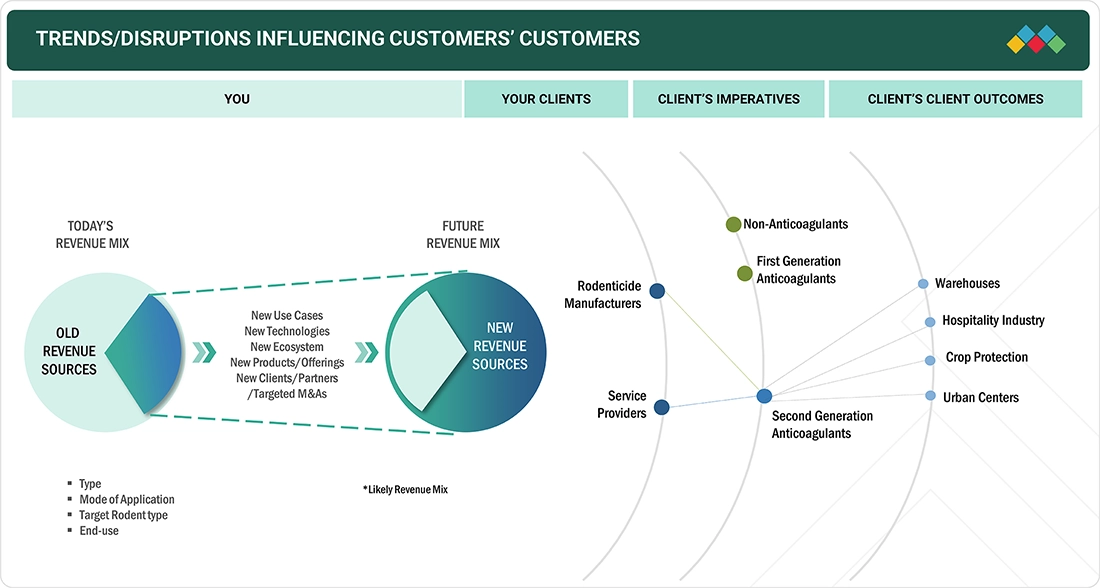
Source: Secondary Research, Interviews with Experts, MarketsandMarkets Analysis
MARKET DYNAMICS

Level
-
Rising urban rodent activity increasing demand for rodenticide products.

-
Stricter food-safety and public-health requirements driving consistent rodent-control practices.


Level
-
Tight EPA and state regulations limiting the use of several rodenticide chemistries.

-
Growing rodent resistance reducing the effectiveness of older formulations


Level
-
Increasing demand for low-toxicity and environmentally compliant rodenticide solutions.

-
Expansion of IPM programs supporting integrated use of rodenticides with monitoring systems.


Level
-
Need to balance efficacy with reduced risks to pets, wildlife, and non-target species.

-
Higher cost and slower adoption of advanced rodenticide technologies.

Source: Secondary Research, Interviews with Experts, MarketsandMarkets Analysis
Driver: Rising urban rodent activity increasing demand for rodenticide products.
The North American rodenticide market is heavily driven by the growing rat and mouse populations in urban areas. Rising cities, commercial complexes, and residential areas are increasingly at risk of property damage, food contamination, and public health issues due to growing infestations of rats and mice. The increasing threats have led to a heightened demand for effective and reliable solutions for rodent control, accompanied by an increase in the use of advanced formulations, baiting systems, and integrated pest-management strategies to manage infestations.
Restraint: Tight EPA and state regulations limiting the use of several rodenticide chemistries.
The stringent regulations put upon rodenticides by the EPA and several states are key restraints in the North American rodenticide market as the regulations limit the number of available rodenticide chemistries because of environmental concern and safety for non-target species. Regulatory authorities enforce stringent guidelines regarding active ingredients, application methodologies, and restrictions on usage, particularly for anticoagulant rodenticides, with the aim of minimizing ecological impact and protecting wildlife. Such compliance requirements are adding layers of operational complexities and costs for manufacturers and pest management professionals, and restricting the use of some highly efficacious formulations. Hence, the regulatory pressure slows down market growth and promotes a transition into safer, lower-toxicity, and eco-friendly alternatives.
Opportunity: Increasing demand for low-toxicity and environmentally compliant rodenticide solutions.
Increasing demand for low-toxicity and environmentally compliant rodenticide solutions presents a significant opportunity in the North American market. Non-anticoagulant baits, designed to target fertility, and biodegradable products are facing increasing adoption as the public becomes aware of their ecological impacts, safety to non-target species, and tougher regulations. Such a trend would be best exploited by manufacturers of next-generation, sustainable rodenticides, which will also be as effective yet have a lower environmental cost. These solutions could also be further enhanced by smart monitoring and precision application technologies, breaking open new avenues for development in commercial, residential, and agricultural pest-management sectors.
Challenge: Need to balance efficacy with reduced risks to pets, wildlife, and non-target species.
A key challenge in the North American rodenticide market is balancing the concerted efficacy with the need to ensure safety to pets, wildlife, and non-target species. It becomes clear that there is little doubt that highly effective rodenticide products are essential for managing resistant rodent populations. However, excessive toxicity can harm domestic animals and wildlife. Therefore, manufacturers must innovate formulations and deliver systems that enable effective rodent control with minimized collateral risks, while meeting stringent regulatory standards and the increasing demand for safer and eco-friendly products from consumers. This balance is paramount to the sustainable growth of the market and broader acceptance of rodenticide solutions.
NORTH AMERICA RODENTICIDES MARKET: COMMERCIAL USE CASES ACROSS INDUSTRIES
| COMPANY | USE CASE DESCRIPTION | BENEFITS |
|---|---|---|
 |
Rodent control in food-processing facilities | Reduces contamination risk, ensures compliance with food-safety standards |
 |
Rodent management in warehouses and storage units | Prevents inventory damage, minimizes economic losses |
 |
Pest control in agricultural farms | Protects crops and stored grains, improves yield and operational efficiency |
 |
Commercial building pest management (offices, restaurants) | Maintains hygiene, reduces property damage, ensures public health safety |
Logos and trademarks shown above are the property of their respective owners. Their use here is for informational and illustrative purposes only.
MARKET ECOSYSTEM
Some of the prominent companies in this market include well-established and financially sound manufacturers of rodneticide products. These companies have been operational in the market for over a decade and have diversified portfolios, latest technologies, and excellent global sales and marketing networks. The North America rodenticide market ecosystem includes manufacturers, distributors, regulatory bodies, and end users, with top players like Neogen, Liphatech, Bell Laboratories, Syngenta, and PelGar International driving innovation, compliance, and market growth.
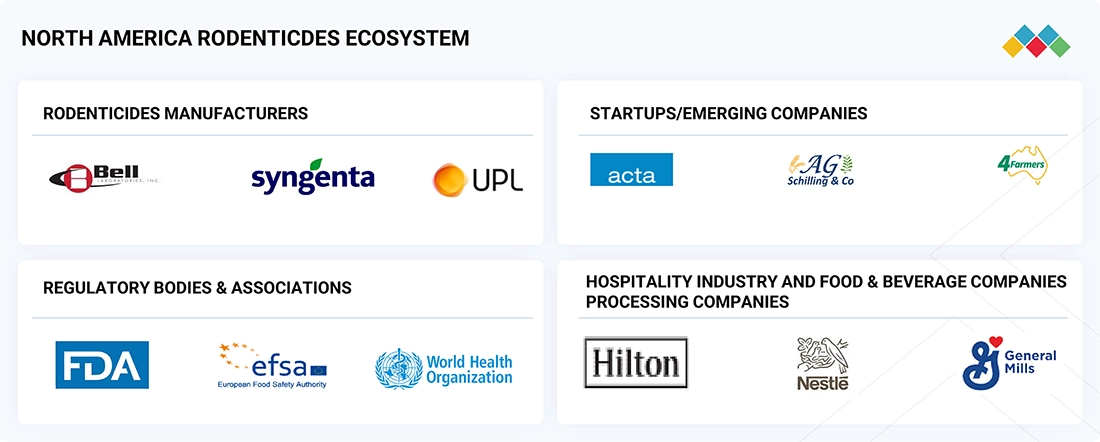
Logos and trademarks shown above are the property of their respective owners. Their use here is for informational and illustrative purposes only.
MARKET SEGMENTS
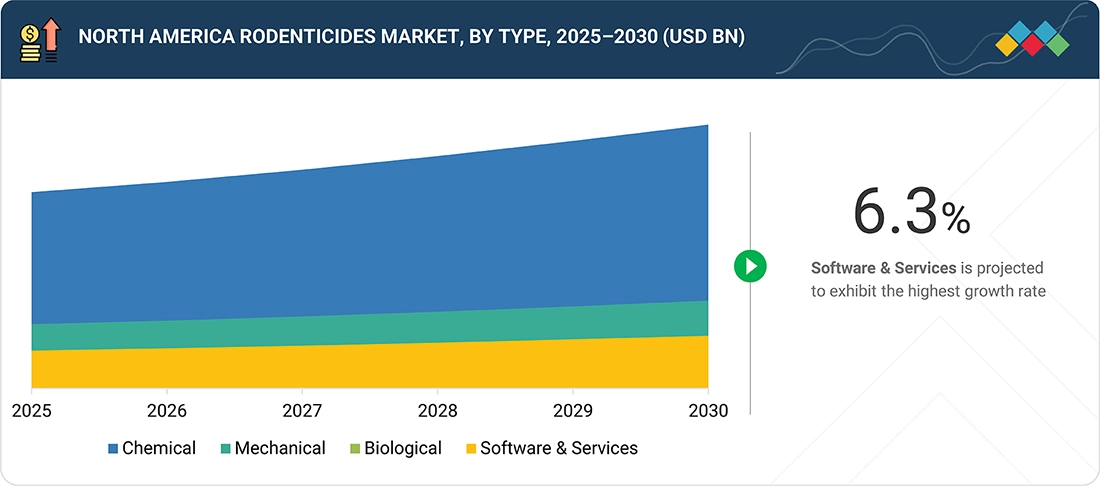
Source: Secondary Research, Interviews with Experts, MarketsandMarkets Analysis
North America Rodenticide Market, By Type
In the North American rodenticide market, the chemical type segment holds the largest share. Among all the chemicals available in rodenticides, anticoagulants such as brodifacoum, bromadiolone, and difethialone are most suitable for commercial, residential, or agricultural settings, demonstrating effectiveness against rats and mice. These formulations yield reliable results even against resistant rodent populations and are available in various delivery formats, including pellets, blocks, and soft baits. Chemical rodenticides are preferred because they are versatile, effective, and can be used in conjunction with integrated pest-management programs; hence, chemical rodenticides are a well-positioned, dominant type in the North American market segment.
North America Rodenticide Market, By Mode of Application
In the North American rodenticide market, pellets account for the highest share in terms of mode of application. Pelleted rodenticides' ease of usage, accurate dosing, and efficacy in controlling rats and mice in commercial, residential, and agricultural environments are some of the preferred reasons for the adoption. This includes both anticoagulant and non-anticoagulant formulations. Deployments can be made through bait stations built along rodent runways or installed in high-risk areas for targeted application and efficient infestation control. This makes pellets the most widely used application mode in the North American rodenticide market, as they offer the convenience of operation, a long shelf life, and compatibility with integrated pest management programs.
North America Rodenticide Market, By Target Rodent Type
In the North American rodenticide market, mice have the biggest share in the target rodent type segment. House mice (Mus musculus) have high populations in urban, commercial, and agricultural areas, posing severe threats to food safety, property, and public health. Their small size, rapid reproductive life cycle, and adaptability pose long-term health risks, driving consistent demand for effective rodent-control solutions. Anticoagulant and non-anticoagulant rodenticides are used as bait in the form of pellets, blocks, or soft foods, allowing for efficient and targeted control. These factors keep mice high up in the target species list in North American market.
North America Rodenticide Market, By End-Use
In the North American rodenticide market, urban centers constitute the largest market share in end-use segment due to rising rodent population densities, decaying infrastructure, and growing public health risks traversing the densely populated cities. Municipalities, commercial buildings, transport systems, and residential blocks rely heavily on rodent control solutions for property damage prevention, disease transmission, and food contamination.
REGION
US to be the fastest-growing country in the North America Rodenticide market during the forecast period
The US is the fastest-growing country in the North American rodenticide market, driven by rising urbanization, expanding commercial and agricultural activities, and increasing awareness of the health and economic risks posed by rodent infestations. Frequent occurrences of rodents in warehouses, food-processing facilities, farms, restaurants, and residential areas are fueling strong demand for effective and reliable rodent-control solutions. Advanced pest-management infrastructure, coupled with stringent regulatory oversight from the US Environmental Protection Agency (EPA), supports the adoption of high-performance and sustainable rodenticides. Continuous innovation, eco-friendly formulations, and integrated pest-management practices further accelerate market growth in the country.
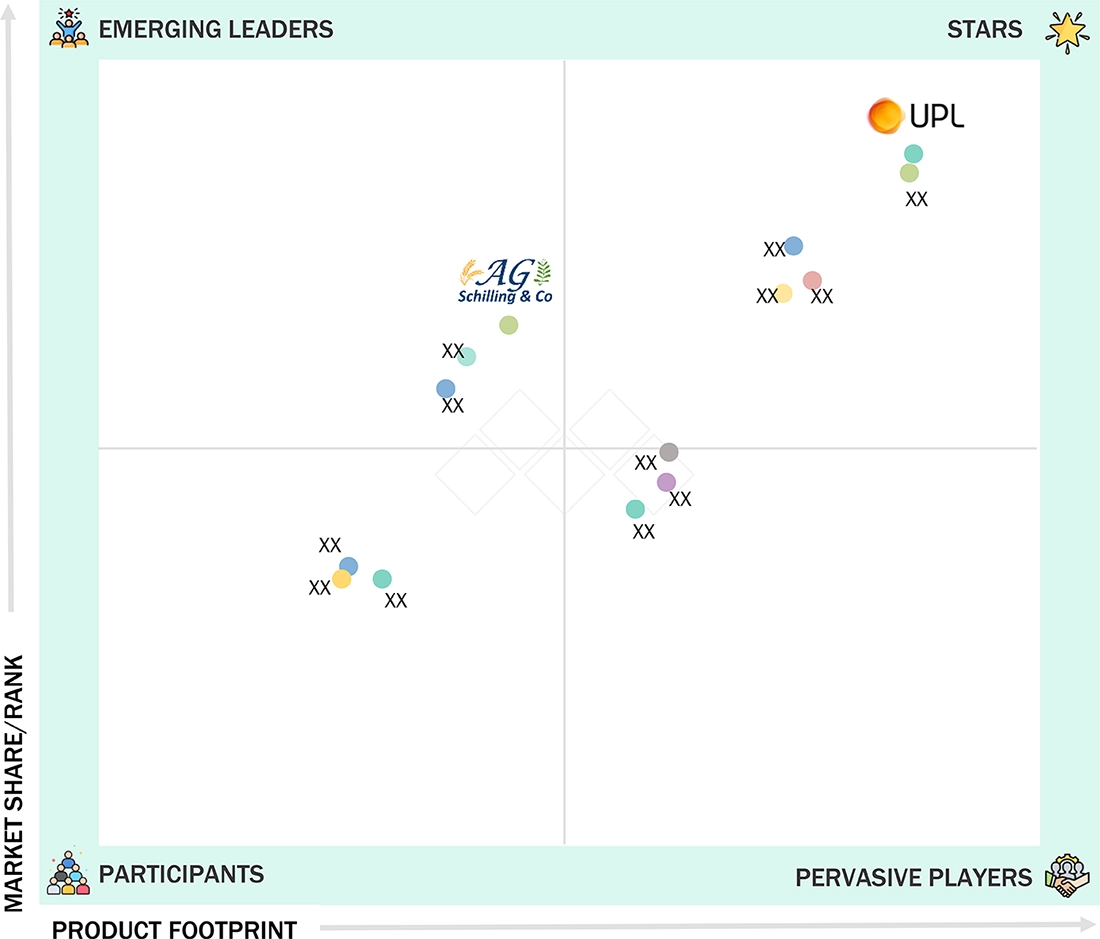
NORTH AMERICA RODENTICIDES MARKET: COMPANY EVALUATION MATRIX
Star companies such as Neogen Corporation, Bell Laboratories, Inc., Anticimex Group, Liphatech, Inc., Rentokil Initial plc, along with leading regional rodenticides manufacturers, possess broad and diversified portfolios, strong brand visibility, and significant market influence. Emerging Leaders, such as SenesTech, Inc., Abell Pest Contro, and others are expanding rapidly in North America through innovative, eco-friendly rodenticides and integrated pest management solutions. Participants maintain steady operations, while pervasive players hold a moderate but growing market presence.
Source: Secondary Research, Interviews with Experts, MarketsandMarkets Analysis
KEY MARKET PLAYERS
- Syngenta (Switzerland)
- SUMITOMO CHEMICAL CO., LTD (Japan)
- UPL (India)
- Bell Laboratories (US)
- Anticimex Group (Sweden)
- Neogen Corporation (US)
- Liphatech, Inc. (US)
- Bell Laboratories, Inc. (US)
- JT Eaton & Co., Inc. (US)
- PelGar International (US)
- EcoClear Products, Inc. (US)
- SenesTech, Inc. (US)
- Rentokil Initial plc (US)
- Abell Pest Control (Canada)
- Ecolab Inc. (US)
MARKET SCOPE
| REPORT METRIC | DETAILS |
|---|---|
| Market Size in 2025 (Value) | USD 1.92 Billion |
| Market Forecast in 2030 (value) | USD 2.60 Billion |
| Growth Rate | CAGR of 6.3% during 2025-2030 |
| Years Considered | 2020-2030 |
| Base Year | 2024 |
| Forecast Period | 2025-2030 |
| Units Considered | Value (USD Million/Billion) |
| Report Coverage | Revenue forecast, company ranking, competitive landscape, growth factors, and trends. |
| Segments Covered |
|
| Countries Covered | US, Mexico, Canada |
WHAT IS IN IT FOR YOU: NORTH AMERICA RODENTICIDES MARKET REPORT CONTENT GUIDE
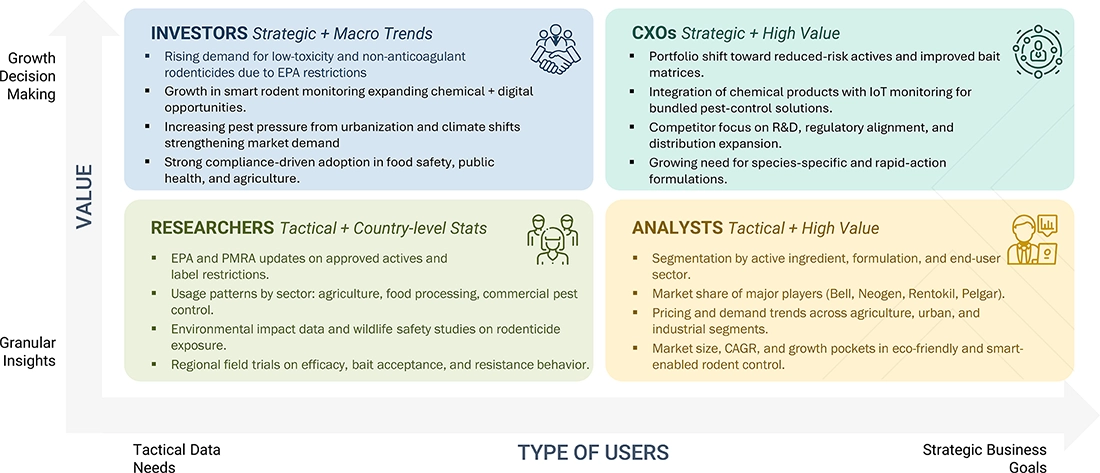
DELIVERED CUSTOMIZATIONS
We have successfully delivered the following deep-dive customizations:
| CLIENT REQUEST | CUSTOMIZATION DELIVERED | VALUE ADDS |
|---|---|---|
| US-based Pest Control Product Manufacturer |
|
|
| Canadian Biosecurity Solutions Provider |
|
|
| Global Pest-Control Distributor |
|
|
| Private Equity / Investor Group |
|
|
RECENT DEVELOPMENTS
- May?2025 : Liphatech introduced Resolv Mini Block, a compact bromadiolone-based rodenticide designed to effectively control resistant rat and mouse populations across indoor and outdoor settings
- May?2025 : Syngenta entered a licensing and supply agreement with Neogen, granting Neogen exclusive rights to distribute Talon-G and Talon Weatherblok XT in the United States and Canada, strengthening market reach and commercial capabilities
- June?2024 : Liphatech expanded its Flatline Soft Bait offering with larger packaging to improve convenience and efficiency for pest-management professionals
- March 2024 : Bell Laboratories launched Fastrac Soft Bait in Canada, an oil-based bromethalin formulation engineered for rapid, single-night knockdown of heavy infestations
Table of Contents
 Exclusive indicates content/data unique to MarketsandMarkets and not available with any competitors.
Methodology
The study involved four major activities in estimating the current size of the North America Rodenticides Market . Exhaustive secondary research was done to collect information on the market, peer market, and parent market. The next step was to validate these findings, assumptions, and sizing with industry experts across the value chain through primary research. Both top-down and bottom-up approaches were employed to estimate the complete market size. After that, market breakdown and data triangulation were used to estimate the market size of segments and subsegments.
Secondary Research
This research study involved the extensive use of secondary sources—directories and databases such as Bloomberg Businessweek and Factiva—to identify and collect information useful for a technical, market-oriented, and commercial study of the North America Rodenticides Market .
In the secondary research process, various sources such as annual reports, press releases & investor presentations of companies, white papers, certified publications, articles from recognized authors, gold & silver standard websites, directories, and databases, were referred to identify and collect information. This research study involved the extensive use of secondary sources—directories and databases such as Bloomberg Businessweek and Factiva—to identify and collect information useful for a technical, market-oriented, and commercial study of the North America Rodenticides Market .
Secondary research was mainly used to obtain key information about the industry’s supply chain, the total pool of key players, and market classification and segmentation as per the industry trends to the bottom-most level, regional markets, and key developments from both market- and technology-oriented perspectives.
Primary Research
Extensive primary research was conducted after obtaining information regarding the North America Rodenticides Market scenario through secondary research. Several primary interviews were conducted with market experts from both the demand and supply sides across major countries of North America, Europe, Asia Pacific, the Middle East & Africa, and South America. Primary data was collected through questionnaires, emails, and telephonic interviews. The primary sources from the supply side included various industry experts, such as Chief X Officers (CXOs), Vice Presidents (VPs), Directors, from business development, marketing, research, and development teams, and related key executives from distributors, and key opinion leaders. Primary interviews were conducted to gather insights such as market statistics, data on revenue collected from the products and services, market breakdowns, market size estimations, market forecasting, and data triangulation. Primary research also helped in understanding the various trends related to type, mode of application, end use, rodent types, and region.
Market Size Estimation
Both the top-down and bottom-up approaches were used to estimate and validate the total size of the North America Rodenticides Market . These approaches were also used extensively to estimate the size of various dependent submarkets. The research methodology used to estimate the market size includes the following:
- Key players were identified through extensive secondary research.
- The industry’s value chain and market size were determined through primary and secondary research.
- All percentage share splits and breakdowns were determined using secondary sources and verified through primary sources.
- All the possible parameters that affect the markets covered in this research study were accounted for, viewed in extensive detail, verified through primary research, and analyzed to obtain the final quantitative and qualitative data.
- The following figure provides an illustrative representation of the complete market size estimation process implemented in this research study for an overall estimation of the North America Rodenticides Market in a consolidated format.
The following sections (bottom-up & top-down) depict the overall market size estimation process employed for the purpose of this study.
Data Triangulation
After arriving at the overall market size from the estimation process explained above, the total market was split into several segments and subsegments. To estimate the overall North America Rodenticides Market and arrive at the exact statistics for all segments and subsegments, the data triangulation and market breakdown procedures were employed, wherever applicable. The data was triangulated by studying various factors and trends from the demand and supply sides. Along with this, the market size was validated using both the top-down and bottom-up approaches.
Market Definition
According to the National Pesticide Information Center (US), ‘Rodenticides are pesticides that kill mice and rats.’ Even though rodents play an important role in nature, they are increasingly required to be controlled, as they damage crops, transmit diseases, and in some cases, cause ecological damage. Rodenticides are formulated as baits, which are designed to attract rodents.
Key Stakeholders
- Rodenticide manufacturers and suppliers
- Traders, distributors, and retailers of pest control products
- Farmers, warehouse owners, and logistics providers
- Government and private research organizations
- Public hygiene organizations, government regulatory institutions, and food safety agencies
- Pest control companies and users of pest control services
-
Associations and industry bodies:
- Food and Agriculture Organization (FAO)
- European Food Safety Authority (EFSA)
- British Pest Control Association
- National Pest Management Association (NPMA)
- National Pest Technicians Association
- Confederation of Europe Pest Management Association (CEPA)
-
Venture capitalists and investors
- Organization for Economic Co-operation and Development (OECD)
Report Objectives
Market Intelligence
- Determining and projecting the size of the North America Rodenticides Market with respect to type, mode of application, end use, rodent types, and region.
- Identifying the attractive opportunities in the market by determining the largest and fastest-growing segments
- Providing detailed information about the key factors influencing the market growth (drivers, restraints, opportunities, and industry-specific challenges)
- Providing the regulatory framework and market entry process related to the rodenticides market
- Analyzing the micro markets with respect to individual growth trends, prospects, and their contribution to the total market
Competitive Intelligence
- Identifying and profiling the key players in the rodenticides market
-
Providing a comparative analysis of market leaders based on the following:
- Product offerings
- Business strategies
- Strengths and weaknesses
- Key financials
- Understanding the competitive landscape and identifying the major growth strategies adopted by players across the country
- Providing insights on key product innovations and investments in the rodenticides market
Available Customizations:
With the given market data, MarketsandMarkets offers customizations according to company-specific scientific needs.
The following customization options are available for the report:
Product Analysis
- Product Matrix, which gives a detailed comparison of the product portfolio of each company.
Geographic Analysis
With the given market data, MarketsandMarkets offers customizations according to company-specific scientific needs.
- Further breakdown of the Rest of Europe into Greece and Ukraine.
- Further breakdown of the Rest of Asia Pacific into New Zealand and Vietnam.
- Further breakdown of the Rest of South America into Argentina, Paraguay, and Peru.
Company Information
- Detailed analyses and profiling of additional market players (up to five)


Personalize This Research
- Triangulate with your Own Data
- Get Data as per your Format and Definition
- Gain a Deeper Dive on a Specific Application, Geography, Customer or Competitor
- Any level of Personalization
Let Us Help You
- What are the Known and Unknown Adjacencies Impacting the North America Rodent
- What will your New Revenue Sources be?
- Who will be your Top Customer; what will make them switch?
- Defend your Market Share or Win Competitors
- Get a Scorecard for Target Partners

Custom Market Research Services
We Will Customise The Research For You, In Case The Report Listed Above Does Not Meet With Your Requirements
Get 10% Free CustomisationTESTIMONIALS

Business Innovation Director
US Based Leading Agribusiness,
Food and Ingredients ManufacturerI highly appreciate the team's efficiency for a well conducted study that helped us clarify some blind spots in food and agricultural niche markets. Although compiling information for B2B markets is very difficult, the MnM team pulled out the task successfully. The quality of research, level of insights, and responsiveness of team were commendable.






Growth opportunities and latent adjacency in North America Rodent