Outdoor Circuit Breaker Market

Outdoor Circuit Breaker Market by Insulation Type, Voltage (High, Medium, Low), End User (T&D Utilities, Industrial, Factory Automation, Commercial & Residential, Renewables, Railways, EV Charging, Data Centers, Others), Region - Forecast to 2030




OVERVIEW
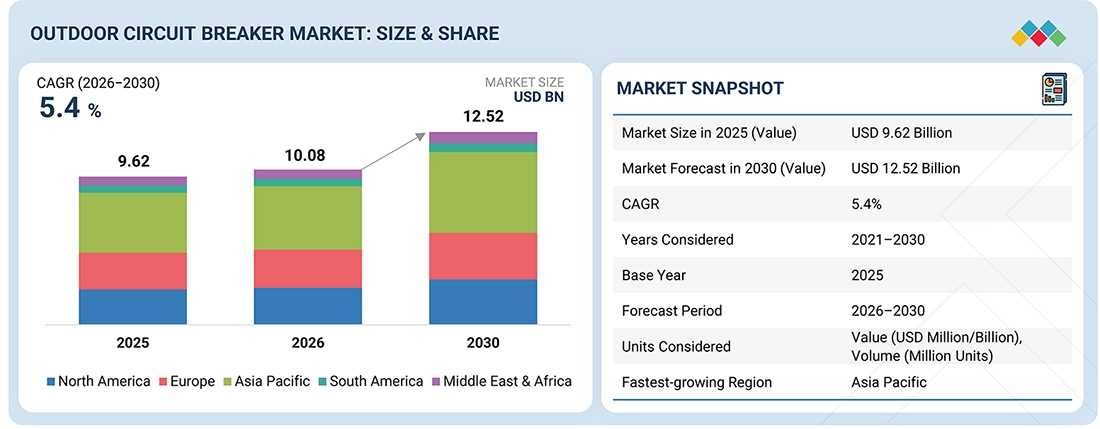
Source: Secondary Research, Interviews with Experts, MarketsandMarkets Analysis
The outdoor circuit breaker market is projected to reach USD 12.52 billion by 2030 from USD 9.62 billion in 2025, at a CAGR of 5.4%. Circuit breakers are critical electrical protection devices designed to automatically interrupt current flow when faults or overloads are detected. Outdoor circuit breakers are specifically engineered to withstand harsh environmental conditions and are deployed in substations, transmission networks, and renewable energy installations. These devices play an essential role in ensuring the safety and reliability of electrical power systems by preventing equipment damage and maintaining grid stability across diverse climatic and operational environments.
KEY TAKEAWAYS
-
By RegionAsia Pacific is estimated to be the largest and fastest-growing market, supported by rapid renewable energy installations and industrial expansions throughout the forecast period.
-
By Insulation TypeGas-insulated circuit breakers hold the largest share of the outdoor circuit breaker market due to their superior dielectric performance, compact design, and reliable operation in harsh outdoor environments.
-
By VoltageHigh-voltage circuit breakers dominate the outdoor circuit breaker market, driven by their extensive use in transmission networks, utility substations, and renewable energy interconnection projects.
-
By End UserThe demand for outdoor breakers is predominantly driven by the increase in transmission and distribution lines, substations, and renewable energy infrastructure.
-
Competitive Landscape - Star PlayersEaton, Schneider Electric, Siemens, ABB, and Mitsubishi Electric Corporation were identified as leading players in the outdoor circuit breaker market, given their strong market position, technological innovation, and extensive regional presence.
-
Competitive Landscape - StartupsEmerging companies and specialized manufacturers have distinguished themselves by securing strong footholds in niche areas such as digital monitoring systems and eco-friendly circuit breaker technologies, underscoring their potential as future market leaders.
The outdoor circuit breaker market is expanding rapidly, driven by the ongoing transformation of power systems to include substantial renewable energy capacities, particularly in large-scale solar and wind farms. The modernization of aging grid infrastructure, investments in cross-country interconnections, and national grid enhancement programs in regions like the Middle East & Africa and Asia Pacific are further accelerating demand for durable, high-capacity outdoor protection equipment across the global energy landscape.
TRENDS & DISRUPTIONS IMPACTING CUSTOMERS' CUSTOMERS
The outdoor circuit breaker market is currently experiencing a phase of technological innovation and rapid adoption. Power utilities and grid operators in Asia Pacific, North America, Europe, and emerging markets are witnessing advancements in circuit breaker technology and digital integration. This progress aligns with emerging trends in renewable energy integration, smart grid development, and enhanced power system reliability. Across global markets, the use of advanced outdoor circuit breakers with digital monitoring capabilities, remote operation features, and improved environmental resistance is increasing among utilities, substations, and renewable energy project developers. These technologies facilitate better fault detection, faster response times, reduced maintenance requirements, and alignment with grid modernization and decarbonization strategies. Governments and regulatory bodies are encouraging local manufacturing, the development of eco-friendly circuit breaker solutions, and public-private infrastructure development programs. These initiatives help accelerate deployment timelines and promote the adoption of technologically advanced, environmentally sustainable circuit breaker platforms tailored to the needs of modern power systems and renewable energy integration requirements.
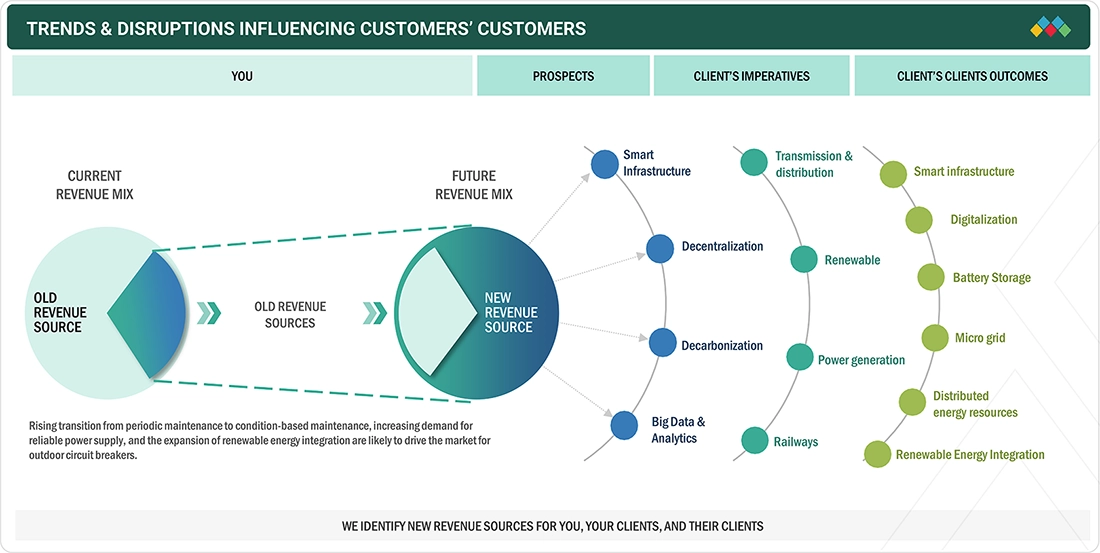
Source: Secondary Research, Interviews with Experts, MarketsandMarkets Analysis
MARKET DYNAMICS

Level
-
Ongoing transformation of power systems to include substantial renewable energy capacities

-
Modernization of old grid infrastructure and expansion of transmission and distribution networks


Level
-
High initial investment costs and complexity of integrating new systems with existing infrastructure


Level
-
Technological advancements in circuit breakers including digital monitoring systems that improve grid reliability


Level
-
Regulatory compliance requirements and environmental impact concerns of certain circuit breaker components

Source: Secondary Research, Interviews with Experts, MarketsandMarkets Analysis
Driver: Ongoing transformation of power systems to include substantial renewable energy capacities
The ongoing transformation of power systems to accommodate substantial renewable energy capacities is a primary driver for the outdoor circuit breaker market. The expansion of large-scale solar and wind farms requires robust, high-capacity outdoor protection equipment capable of managing variable power flows and ensuring grid stability. Utilities and renewable energy developers are investing heavily in advanced circuit breaker technologies to support the safe and efficient integration of renewable energy sources into existing transmission and distribution networks, driving sustained market growth.
Restraint: High initial investment costs and complexity of integrating new systems with existing infrastructure
High initial investment costs and the complexity of integrating new circuit breaker systems with existing infrastructure present significant restraints to market growth. Utilities and grid operators face substantial capital expenditure requirements when upgrading or replacing aging circuit breaker installations. Additionally, the technical challenges associated with ensuring compatibility between new advanced circuit breakers and legacy grid infrastructure, along with the need for specialized installation and commissioning expertise, create barriers to rapid adoption in cost-sensitive markets.
Opportunity: Technological advancements in circuit breakers including digital monitoring systems that improve grid reliability
Technological advancements in circuit breakers, particularly the integration of digital monitoring systems, present significant growth opportunities in the outdoor circuit breaker market. These innovations enable real-time condition monitoring, predictive maintenance, remote diagnostics, and enhanced operational visibility, improving overall grid reliability and reducing downtime. The adoption of smart circuit breakers with advanced communication capabilities aligns well with the broader trend toward digitalization of power systems and the development of intelligent grid infrastructure, creating new value propositions for utilities and industrial customers.
Challenge: Regulatory compliance requirements and environmental impact concerns of certain circuit breaker components
Ensuring regulatory compliance and addressing environmental impact concerns remain key challenges for the outdoor circuit breaker market. Different regions maintain varying technical standards, safety requirements, and environmental regulations governing circuit breaker design, manufacturing, and disposal. Particular attention is being directed toward the environmental impact of certain insulating materials and arc-quenching media used in traditional circuit breaker designs. Manufacturers must invest in research and development, compliance management, and sustainable product design to meet evolving regulatory requirements while maintaining product performance and cost competitiveness across diverse global markets.
OUTDOOR CIRCUIT BREAKER MARKET: COMMERCIAL USE CASES ACROSS INDUSTRIES
| COMPANY | USE CASE DESCRIPTION | BENEFITS |
|---|---|---|
 |
Outdoor circuit breakers are crucial in supporting renewable energy system integration, enabling safe and efficient energy distribution across solar and wind farms in regions exhibiting rapid growth. | Ensures reliable power management, protects equipment from faults and overloads, supports grid stability during variable renewable energy generation, and enables efficient energy transmission from remote generation sites |
 |
Circuit breakers support data center expansions, particularly in regions like India and China, providing high-availability and reliable power management for mission-critical facilities. | Delivers continuous power protection, minimizes downtime risks, ensures operational reliability for critical computing infrastructure, and supports rapid scaling of data center capacity in high-growth markets |
Logos and trademarks shown above are the property of their respective owners. Their use here is for informational and illustrative purposes only.
MARKET ECOSYSTEM
The outdoor circuit breaker market is a collaborative ecosystem where equipment manufacturers, utilities, engineering firms, renewable energy developers, and grid operators work together to develop and deploy circuit breaker solutions in the power sector. Companies in the market supply a variety of circuit breaker technologies, including air-insulated, gas-insulated, and vacuum circuit breakers designed for outdoor applications. Engineering, procurement, and construction firms, along with specialized installation contractors in regions such as Asia Pacific, North America, Europe, and the Middle East & Africa, support the design, integration, and commissioning stages of circuit breaker deployment. Ultimately, power utilities, transmission system operators, renewable energy project developers, and industrial facilities utilize outdoor circuit breakers, benefiting from supportive regulatory frameworks, grid modernization programs, and renewable energy incentive schemes.
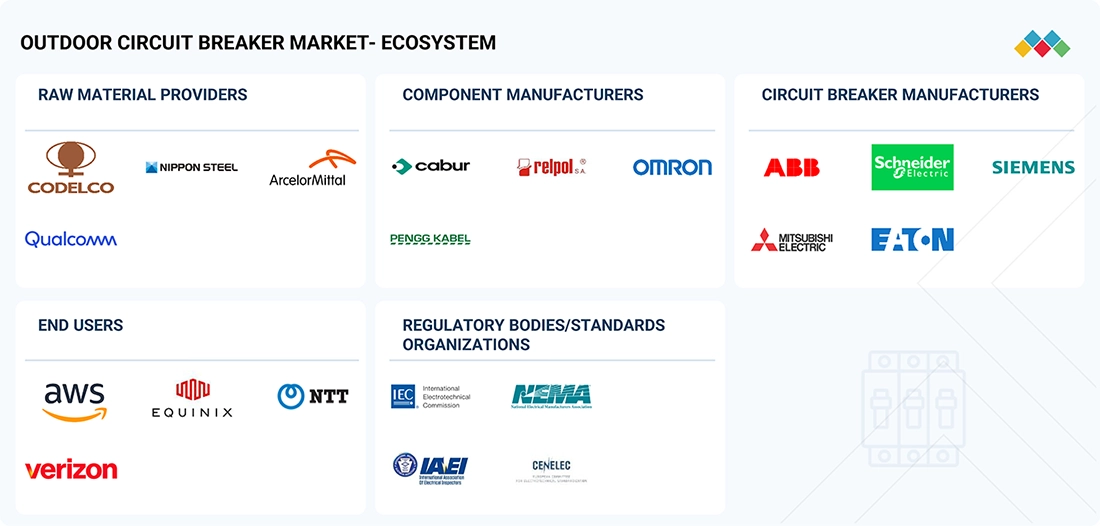
Logos and trademarks shown above are the property of their respective owners. Their use here is for informational and illustrative purposes only.
MARKET SEGMENTS
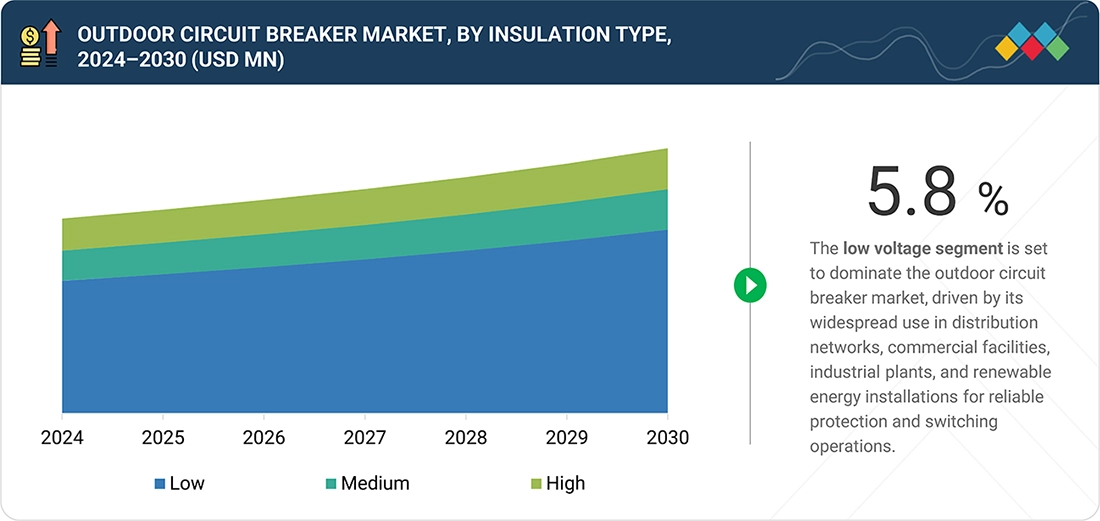
Source: Secondary Research, Interviews with Experts, MarketsandMarkets Analysis
Outdoor Circuit Breaker Market, by End User
Transmission and distribution applications represented the largest segment of the outdoor circuit breaker market. The increasing expansion of transmission and distribution lines has propelled this segment to the forefront globally. Factors such as grid modernization initiatives, growing electricity demand, renewable energy integration requirements, and the need to replace aging infrastructure are driving the demand for outdoor circuit breakers in substations, switching stations, and transmission line protection applications.
Outdoor Circuit Breaker Market, by Insulation Type
Gas-insulated circuit breakers lead the outdoor circuit breaker market due to their superior dielectric performance, compact design, and reliability in harsh conditions. Their excellent insulation minimizes electrical failures, while their space-saving design is ideal for limited installations. Built to endure extreme weather, GIBs are the preferred choice for diverse outdoor applications.
Outdoor Circuit Breaker Market, by Voltage
High-voltage circuit breakers are vital to the outdoor circuit breaker market, playing a key role in transmission networks and utility substations. They ensure reliability and safety by quickly interrupting electrical currents, protecting infrastructure from overloads and faults. With the rise of renewable energy, HVCBs are increasingly important for integrating solar and wind projects into power grids. Technological advancements have enhanced their efficiency and reliability, making them essential for modern power system operations.
REGION
Asia Pacific to be fastest-growing region in market during forecast period
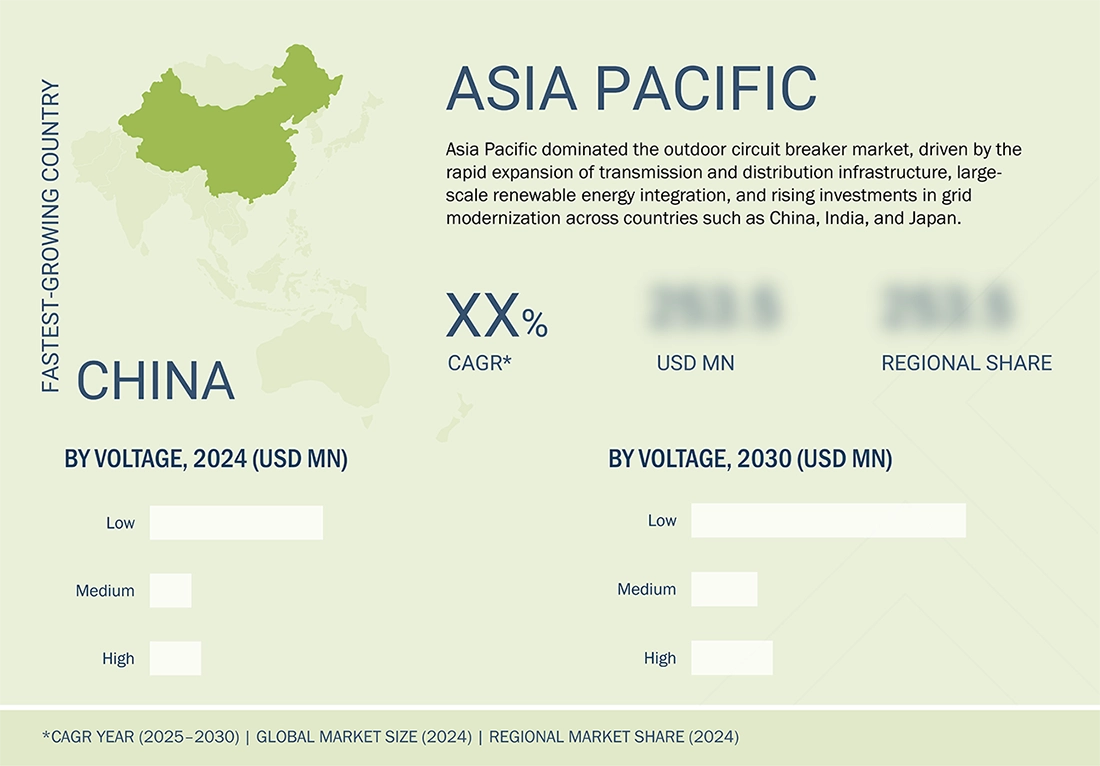
Asia Pacific is projected to be the fastest-growing region in the outdoor circuit breaker market, driven by rapid renewable energy installations, expanding transmission and distribution networks, and strong government support for power infrastructure development. The demand for outdoor circuit breakers is increasing across utility substations, renewable energy projects, and industrial facilities throughout the region. Heavy investments in solar and wind energy projects, combined with grid modernization programs in countries like China, India, Japan, and Southeast Asian nations, are facilitating the swift adoption of advanced outdoor circuit breaker technologies. Additionally, industrial expansion and urbanization are creating sustained demand for reliable power protection equipment across the Asia Pacific region.
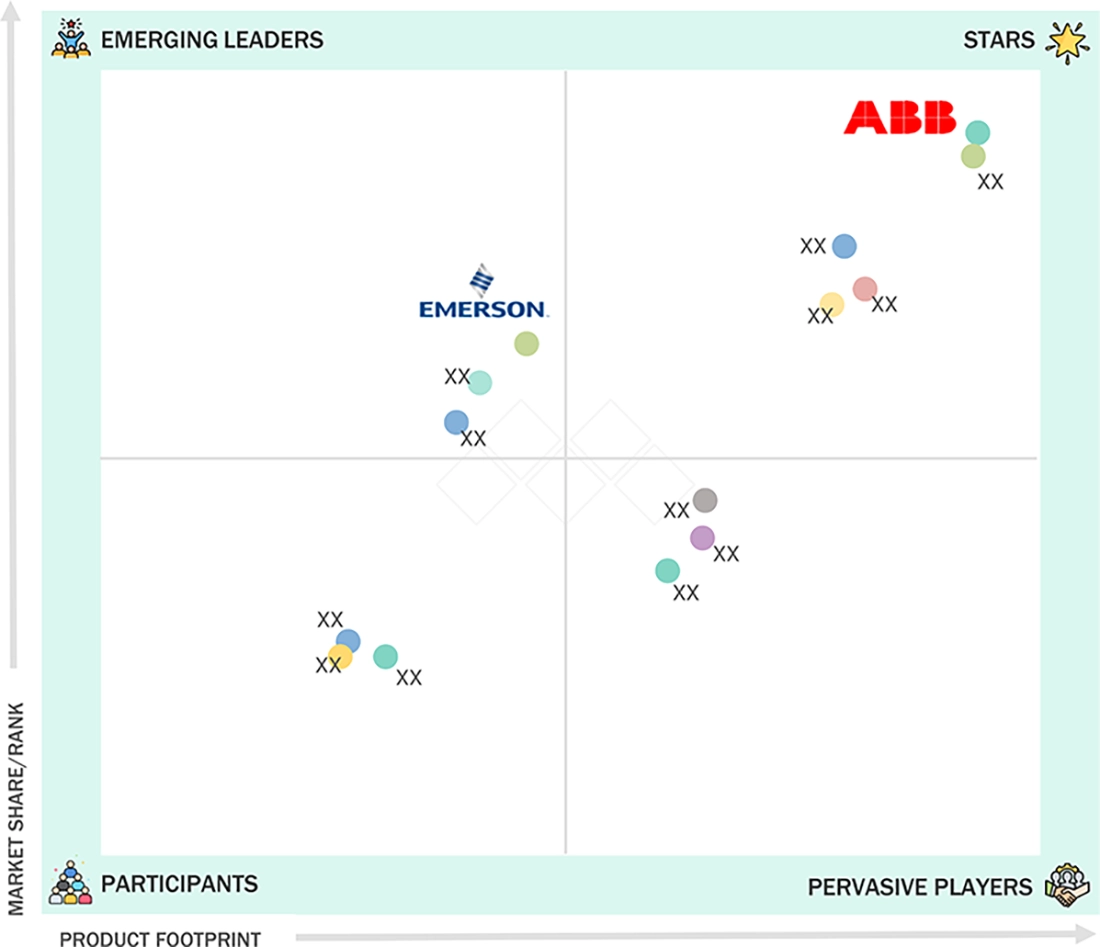
OUTDOOR CIRCUIT BREAKER MARKET: COMPANY EVALUATION MATRIX
ABB, recognized as a leading player in the outdoor circuit breaker market, offers a diverse portfolio that includes medium-voltage and high-voltage circuit breakers, switchgear solutions, and power management systems for utility and industrial applications. The company boasts a strong global presence and collaborates with utilities, renewable energy developers, and industrial customers across multiple regions. Another significant player in the market is Emerson, identified as a technology leader. The company is strengthening its position by introducing advanced circuit breaker technologies, digital monitoring solutions, and integrated switchgear systems designed for use in transmission networks, substations, and renewable energy installations.
Source: Secondary Research, Interviews with Experts, MarketsandMarkets Analysis
KEY MARKET PLAYERS
- Eaton (Ireland)
- Schneider Electric (France)
- Siemens (Germany)
- ABB (Switzerland)
- Mitsubishi Electric Corporation (Japan)
- General Electric (US)
- Alstom (France)
- Toshiba (Japan)
- Hitachi (Japan)
- Larsen & Toubro (India)
MARKET SCOPE
| REPORT METRIC | DETAILS |
|---|---|
| Market Size, 2024 (Value) | USD 9.19 Billion |
| Market Forecast, 2030 (Value) | USD 12.52 Billion |
| Growth Rate | CAGR of 5.4% from 2025–2030 |
| Years Considered | 2023–2030 |
| Base Year | 2024 |
| Forecast Period | 2025–2030 |
| Units Considered | Value (USD Million) |
| Report Coverage | Revenue Forecast, Company Ranking, Competitive Landscape, Growth Factors, and Trends |
| Segments Covered |
|
| Regions Covered | Asia Pacific, North America, Europe, Middle East & Africa, South America |
WHAT IS IN IT FOR YOU: OUTDOOR CIRCUIT BREAKER MARKET REPORT CONTENT GUIDE
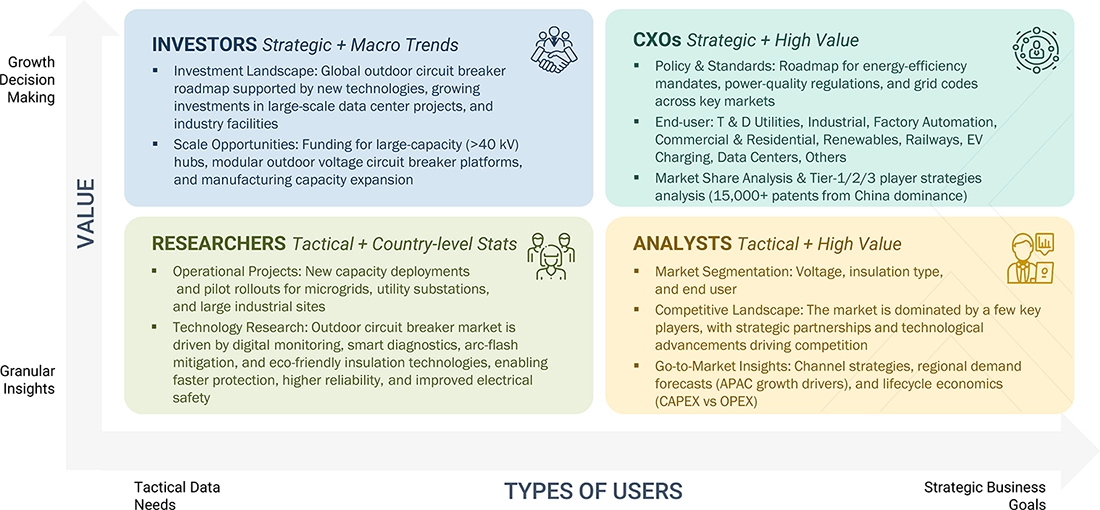
DELIVERED CUSTOMIZATIONS
We have successfully delivered the following deep-dive customizations:
| CLIENT REQUEST | CUSTOMIZATION DELIVERED | VALUE ADDS |
|---|---|---|
| Understanding demand patterns for outdoor circuit breakers across global power systems | Assessed outdoor circuit breaker usage trends across key regions, including Asia Pacific, North America, Europe, and emerging markets, highlighting differences in the adoption of various circuit breaker technologies across transmission, distribution, renewable energy, and industrial applications | Helps clients align product portfolios with region-specific demand drivers, grid modernization priorities, renewable energy deployment rates, and infrastructure investment patterns |
| Identifying local manufacturing and sourcing opportunities | Mapped regional circuit breaker manufacturers, component suppliers, and engineering service providers across Asia Pacific, North America, and Europe, with insights into switchgear assembly, component manufacturing, testing facilities, and technical service capabilities | Supports localization strategies, reduces supply-chain risk, lowers production and logistics costs, improves speed-to-market, and enhances after-sales service capabilities |
RECENT DEVELOPMENTS
- September 2024 : Schneider Electric introduced a microgrid technology solution, enhancing their sustainable power management offerings and demonstrating advanced capabilities for integrating renewable energy sources with reliable circuit protection systems.
- June 2024 : Eaton rolled out an expansion strategy targeting the Asia Pacific market, focusing on strengthening manufacturing capabilities and distribution networks to support growing demand for outdoor circuit breakers in renewable energy and grid modernization projects.
- May 2024 : ABB unveiled a new line of eco-friendly circuit breakers, addressing environmental concerns associated with traditional insulating materials and demonstrating a commitment to sustainable product development for utility and industrial applications.
- March 2024 : Mitsubishi Electric Corporation signed a major maintenance contract for a utility provider, expanding its service footprint and demonstrating the growing importance of long-term maintenance and support services in the outdoor circuit breaker market.
- January 2024 : Siemens announced a strategic partnership with a renewable energy firm, strengthening its position in the rapidly growing renewable energy segment and enhancing its capabilities in providing integrated circuit breaker solutions for solar and wind power installations.
Table of Contents
 Exclusive indicates content/data unique to MarketsandMarkets and not available with any competitors.
Methodology
To determine the current market size for Outdoor circuit breakers market several key activities were undertaken. Extensive secondary research was conducted to gather information on the market and related industries. These findings were then validated through primary research, which involved discussions with industry experts across the entire value chain. Both top-down and bottom-up approaches were employed to estimate the overall market size. Additionally, market breakdown and data triangulation techniques were utilized to calculate the market size of specific segments and subsegments.
Secondary Research
This research study utilized a wide range of secondary sources, including directories, databases, and reputable sources such as Hoover's, Bloomberg BusinessWeek, Factiva, World Bank, US DOE, and IEA. These sources were instrumental in gathering valuable information for a comprehensive analysis of the global Outdoor Circuit Breaker Market from technical, market-oriented, and commercial perspectives. Additional secondary sources included annual reports, press releases, investor presentations, white papers, certified publications, articles by recognized authors, manufacturer associations, trade directories, and databases.
Primary Research
The Outdoor Circuit Breaker Market encompasses a diverse range of stakeholders, including public and private electric utilities, distribution companies, circuit breaker manufacturers, dealers, suppliers, circuit breaker component manufacturers, energy and power sector consulting firms, and other relevant entities. To understand the market dynamics, primary sources were interviewed from both the supply and demand sides. These sources provided qualitative and quantitative insights into the market. The breakdown of primary respondents is as follows—

To know about the assumptions considered for the study, download the pdf brochure
Market Size Estimation
Both top-down and bottom-up approaches have been employed to estimate and validate the size of the Outdoor Circuit Breaker Market, as well as its dependent submarkets. These methods were also used extensively to estimate the size of various market segments. The research methodology used to estimate the market size includes the following:
- The key players in the industry and market have been identified through extensive secondary research, and their market shares in the respective regions have been determined through both primary and secondary research.
- The industry’s supply chain and market size, in terms of value, have been determined through primary and secondary research processes.
- All percentage shares, splits, and breakdowns have been determined using secondary sources and verified through primary sources.
Outdoor Circuit Breaker Market : Top-Down and Bottom-Up Approach

Data Triangulation
After determining the overall market size using the market size estimation processes explained above, the market was segmented into subsegments. To complete the overall market engineering process and determine the exact statistics for each market segment and subsegment, data triangulation and market breakdown procedures were employed, where applicable. The data was triangulated by studying various factors and trends from both the demand and supply sides.
Market Definition
A circuit breaker is a crucial component in an electric circuit that safeguards equipment from potential damage resulting from excessive current flow, which can occur due to overload or short-circuit situations. It functions as an automated switch that can both open and close circuits. Circuit breakers can be manually operated for maintenance purposes or automatically trip to interrupt the circuit in the event of a short circuit occurrence. These devices come in two main types: AC circuit breakers, which handle alternating current, and DC circuit breakers, which are designed for direct current applications.
The Outdoor Circuit Breaker Market refers to the global market for devices designed to protect electrical circuits from excessive current flows and short circuits. Circuit breakers are automatic switches that can interrupt electrical currents when they exceed safe levels, thereby preventing damage to equipment, electrical systems, and potentially hazardous situations, such as fires. The Outdoor Circuit Breaker Market is expected to witness growth during the forecast period, driven by the expanding capacity additions and improvements in transmission and distribution (T&D) networks across key regions, including North America, South America, Europe, Asia Pacific, and the Middle East & Africa. This growth is driven by the need to meet the increasing electricity demand and maintain a reliable power supply across these regions. Investments in enhancing T&D networks will facilitate the efficient transmission and distribution of electricity, creating opportunities for the Outdoor Circuit Breaker Market to expand.
Key Stakeholders
- Government utility providers
- Independent power producers
- Circuit breaker manufacturers
- Power equipment and garden tool manufacturers
- Consulting companies in the energy & power sector
- Distribution utilities
- Government and research organizations
- Organizations, forums, and associations
- Raw material suppliers
- State and national regulatory authorities
- Switchgear manufacturers, distributors, and suppliers
- Switchgear and circuit breaker original equipment manufacturers (OEMs)
Report Objectives
- To define, describe, Outdoor Circuit Breaker Market, based on insulation type, voltage, installation, and end user
- To provide detailed information on the major factors influencing the growth of the Outdoor Circuit Breaker Market (drivers, restraints, opportunities, and industry-specific challenges)
- To strategically analyze the Outdoor Circuit Breaker Market with respect to individual growth trends, prospects, and the contribution of each segment to the market
- To analyze market opportunities for stakeholders and the details of a competitive landscape for market leaders
- To forecast the growth of the Outdoor Circuit Breaker Market with respect to the major regions (Asia Pacific, Europe, North America, South America, the Middle East, & Africa)
- To strategically profile key players and comprehensively analyze their market share and core competencies
- To analyze competitive developments, such as product launches, contracts and agreements, investments and expansions, and mergers and acquisitions, in the Outdoor Circuit Breaker Market
Available Customizations:
With the given market data, MarketsandMarkets offers customizations as per the client’s specific needs. The following customization options are available for this report:
Regional Analysis
- Further breakdown of region or country-specific analysis
Company Information
- Detailed analyses and profiling of additional market players (up to 5)


Personalize This Research
- Triangulate with your Own Data
- Get Data as per your Format and Definition
- Gain a Deeper Dive on a Specific Application, Geography, Customer or Competitor
- Any level of Personalization
Let Us Help You
- What are the Known and Unknown Adjacencies Impacting the Outdoor Circuit Breaker Market
- What will your New Revenue Sources be?
- Who will be your Top Customer; what will make them switch?
- Defend your Market Share or Win Competitors
- Get a Scorecard for Target Partners

Custom Market Research Services
We Will Customise The Research For You, In Case The Report Listed Above Does Not Meet With Your Requirements
Get 10% Free CustomisationTESTIMONIALS

Kimberly Murphy
GLOBAL MARKETING DIRECTOR
Bently Nevada,
Leading Condition Monitoring & Asset Protectionwww.bakerhughesds.com/bently-nevada

MarketsandMarkets™ showed consistent rigor for success and relentlessly worked with Bently Nevada stakeholders to positively impact go-to-market strategy. Their proactiveness and flexibility has been instrumental in achieving the objectives to grow our sales pipeline in key industrial markets.

DARRICK HUEBER
Business Development Leader
Nexus Controls LLC,
Leading Manufacturer of Automation System & Electrical Panelswww.bakerhughesds.com/nexus-controls

We partnered with MarketsandMarkets to expand our business further by tapping into new industrial segments. It was critical for us to gather crucial business insights about specific markets to achieve this goal. MarketsandMarkets engagement model and client services helped us provide those insights, it was really impressive and valuable for my business. The team was extremely flexible and helpful.

Mike Schoff
Global Industrial Commercial Strategy Leader
Nexus Controls LLC
Leading Manufacturer of Automation System & Electrical Panelswww.bakerhughesds.com/nexus-controls
We consulted MarketsandMarkets for potential Partner Identification. Overall, it was a good experience. The insights provided through interviews conducted by the team helped us put together the questionnaire required for discussion with the selected partners. Their ability to provide insights through interviews with customers in a timely manner was quite impressive.






Growth opportunities and latent adjacency in Outdoor Circuit Breaker Market