Personal Care & Cosmetics Flexible Plastic Packaging Market

Personal Care & Cosmetics Flexible Plastic Packaging Market by Packaging Type (Pouch, Rollstock, Bag, Films & Wraps), Material (Plastics, Aluminium), Printing Technology (Flexography, Rotogravure, Digital Printing), and Region - Global Forecast to 2030




OVERVIEW
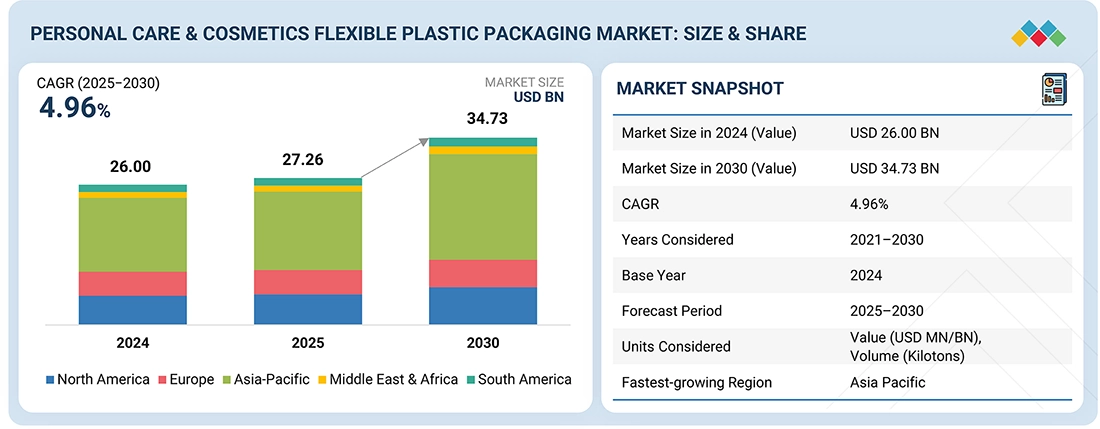
Source: Secondary Research, Interviews with Experts, MarketsandMarkets Analysis
The personal care & cosmetics flexible plastic packaging market is projected to grow from USD 27.26 billion in 2025 to USD 34.73 billion by 2030, at a CAGR of 4.96% during the forecast period. The personal care and cosmetics flexible plastic packaging market is growing due to rising consumer demand for convenient, lightweight, and visually appealing packaging formats that enhance product usability and shelf impact. Brands are increasingly shifting toward flexible solutions, which support premium aesthetics, portability, and improved functionality, such as resealability and portion control. In addition, the expansion of e-commerce has accelerated the need for durable, protective, and cost-efficient packaging that can withstand handling and shipping. Sustainability pressures are also driving innovation, with companies adopting recyclable mono-material structures and bio-based films, which further elevate demand for advanced flexible plastic packaging. Overall, this growth reflects a broader industry push toward packaging that balances consumer experience, brand differentiation, and environmental responsibility.
KEY TAKEAWAYS
-
By RegionThe Asia Pacific region dominates the market, accounting for a 53.3% share in 2024.
-
By Packaging TypeBy packaging type, the bags segment is expected to register the highest CAGR of 5.48% from 2025 to 2030, in terms of value.
-
By Printing TechnologyBy printing technology, the digital printing segment is expected to have the highest growth in the market, growing at the highest CAGR of 7.50%.
-
By MaterialBy material, the plastic segment is projected to grow at the fastest rate from 2025 to 2030.
-
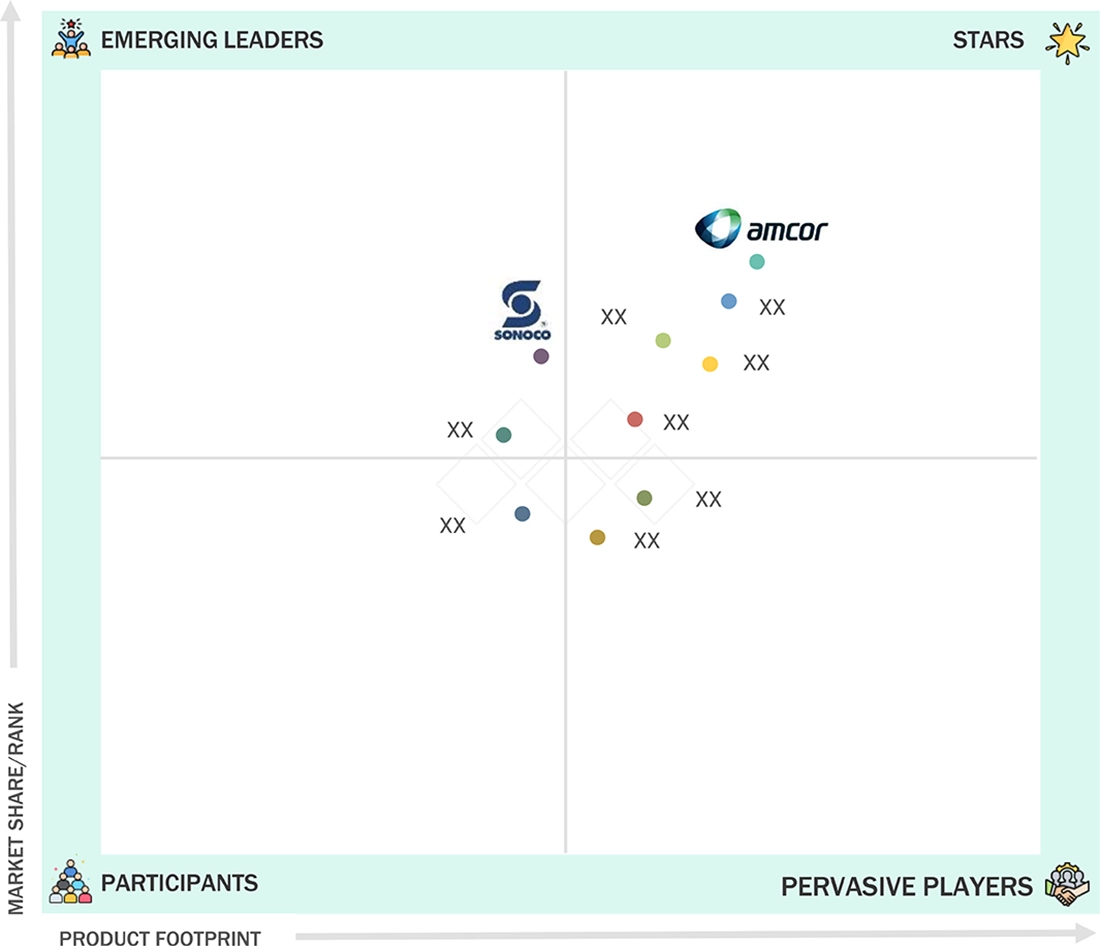
Competitive Landscape - Key PlayersAmcor plc (Australia), Berry Global Inc. (US), Sonoco Products Company (US), Constantia Flexibles (Austria), Huhtamaki Oyj (Finland), Mondi (UK), Sealed Air (US), and Transcontinental Inc. (Canada) were identified as Star players in the personal care & cosmetics flexible plastic packaging market, as they have focused on innovation and have broad industry coverage, and strong operational & financial strength.
-
Competitive Landscape- StartupsSulapac, Eco Vision, Ionkraft, and Mujo, among others, have distinguished themselves among startups/ SMEs due to their strong product portfolio and business strategy.
The personal care & cosmetics flexible plastic packaging market is expanding steadily as brands respond to rising consumer demand for lightweight, hygienic, and travel-friendly packaging formats. According to U.S. FDA and EU regulatory updates in 2023 and 2024, stricter requirements for product safety, tamper-evidence, and contamination prevention have accelerated the industry’s shift toward high-barrier flexible films that protect formulations, such as serums, creams, and cleansers, from oxidation and microbial exposure. Global e-commerce sales of beauty and personal care products grew significantly in 2023, with platforms like Amazon Beauty, Walmart, and specialty online retailers reporting double-digit growth. This increase in adoption has led to the use of flexible stand-up pouches, single-use sachets, and sample-sized tubes, which reduce shipping weight and minimize damage. In Asia, rising skincare consumption in markets such as South Korea, Japan, and India has driven demand for refill pouches and lightweight, flexible laminates as brands strive to reduce plastic usage in line with emerging sustainability guidelines. At the same time, large manufacturers are investing in mono-material recyclable solutions to meet upcoming extended producer responsibility rules in the EU and Canada. As a result, growing hygiene awareness, e-commerce penetration, and sustainability pressure are expected to sustain strong momentum in the personal care and cosmetics flexible plastic packaging market over the next few years.
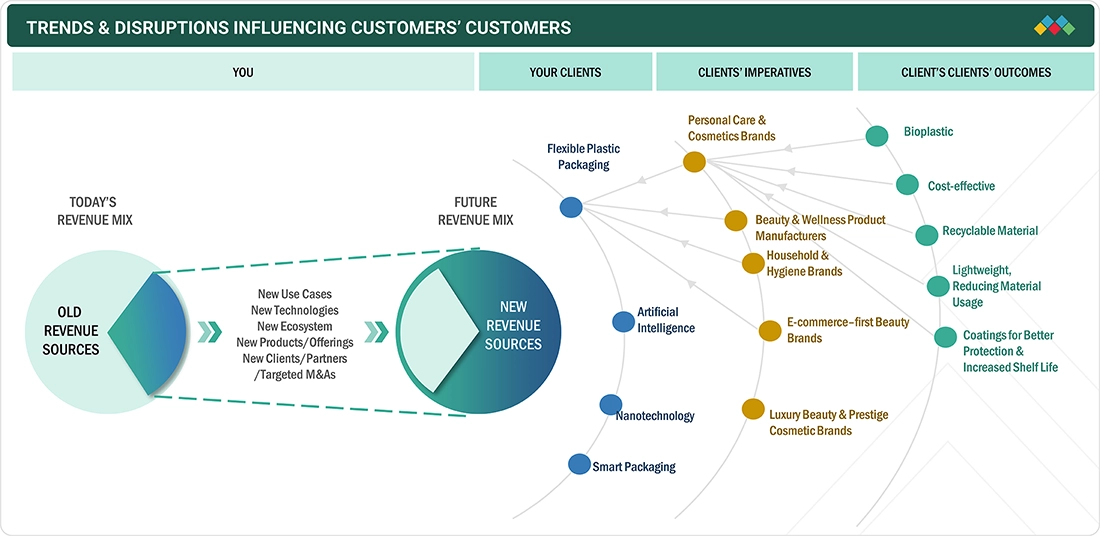
TRENDS & DISRUPTIONS IMPACTING CUSTOMERS' CUSTOMERS
The market for flexible plastic packaging in personal care & cosmetics is seeing a strong trend of shifting towards lightweight, mono-material, and recyclable formats as brands respond to increasing consumer demands for sustainability and cleaner formulations. Globally refill-ready pouches, recyclable PE tubes, and bio-based flexible laminates are gaining popularity rapidly as beauty companies commit to reducing their plastic footprints and transitioning to circular models. Luxury is also influencing packaging decisions, with matte finishes, tactile films, and high-barrier laminates becoming increasingly popular for skincare and derma beauty products that are tightly wrapped to protect against oxygen, UV, and moisture. In addition to that, the growth of e-commerce is creating a need for collapsible, leak-proof, travel-friendly, flexible packs that can be comfortably parcel-processed and still remain in perfect condition after delivery. Indie and D2C beauty brands are benefiting greatly from the ongoing developments in digital printing and short-run customization, which they use to initiate rapidly, test new product lines, and get ahead with unique, vibrant, personalized ??????packaging.
Source: Secondary Research, Interviews with Experts, MarketsandMarkets Analysis
MARKET DYNAMICS

Level
-
Cost-effectiveness and increased product shelf-life

-
Rising demand from end-use industries and increasing e-commerce sales


Level
-
Stringent regulations related to flexible plastic packaging and high cost of raw biodegradable materials

-
Rising raw material prices


Level
-
Implementation of sustainable packaging solutions

-
Better substitute for traditional packaging materials


Level
-
Recyclability of plastics

-
Constant pressure of innovation and improvement in flexible plastic packaging technology to meet ever-changing customer demands

Source: Secondary Research, Interviews with Experts, MarketsandMarkets Analysis
Driver: Cost effectiveness and increased product shelf life
Flexible plastic packaging is gaining strong traction in the personal care & cosmetics industry because it offers a highly cost-efficient solution without compromising product protection. These formats use less material than rigid packaging, which reduces production, transportation, and storage costs for manufacturers. At the same time, multi-layer barrier films help maintain the integrity of lotions, creams, serums, and wipes by protecting them from moisture, oxygen, and contamination. This extended shelf life lowers product spoilage and enhances customer satisfaction, making flexible packaging a preferred choice for high-volume personal care brands.
Restraint: Stringent regulations related to flexible plastic packaging
The market faces significant pressure from tightening government regulations on single-use plastics and the rising cost of biodegradable raw materials. Many countries are enforcing strict rules on material composition, recyclability, labeling, and waste management, which increases compliance burdens for manufacturers. Additionally, bio-based or compostable materials that meet regulatory expectations are considerably more expensive and not always available at scale. This combination of legal complexity and high input costs makes it challenging for packaging producers to transition quickly to fully sustainable alternatives.
Opportunity: Implementation of sustainable packaging solutions
Growing consumer awareness of environmental impact has opened up a major opportunity for companies to innovate with sustainable, flexible packaging formats. Personal care and cosmetics brands are increasingly adopting recyclable mono-material films, biodegradable plastics, refill pouches, and lightweight flexible formats to reduce carbon footprint and meet green certification requirements. This shift not only helps companies address regulatory expectations but also strengthens brand loyalty, as customers prefer products packaged in eco-friendly materials. Companies that invest in scalable, sustainable packaging technologies are likely to gain a competitive edge in the future.
Challenge: Recyclability of plastics
Achieving true recyclability remains one of the hardest challenges for the flexible plastic packaging sector. Many personal care and cosmetics packages use multi-layer structures that combine plastics, foils, adhesives, and coatings, which are difficult to separate in conventional recycling systems. As a result, even packaging labeled as recyclable often fails to be processed in real-world waste streams. The lack of uniform recycling infrastructure across regions, combined with technical limitations in sorting and processing flexible films, continues to hinder large scale circularity in the market. Companies must innovate simpler material structures while supporting improvements in recycling ecosystems to overcome this challenge.
PERSONAL CARE & COSMETICS FLEXIBLE PLASTIC PACKAGING MARKET: COMMERCIAL USE CASES ACROSS INDUSTRIES
| COMPANY | USE CASE DESCRIPTION | BENEFITS |
|---|---|---|
 |
Developed high-barrier flexible tubes and refill pouches for skincare, lotions, and haircare products to improve product protection and shelf life | Protects formulas from oxygen, UV, and moisture exposure | Enables lightweight, lower-carbon packaging formats | Supports refillable and recyclable beauty packaging models |
 |
Produced mono-material flexible packaging solutions for creams and serums, enabling brands to transition from rigid plastic containers to lighter laminates | Reduces plastic usage by up to 70% compared to rigid formats | Enhances print quality for premium branding | Improves convenience and durability for travel and e-commerce |
 |
Supplied flexible sachets, sample packs, and laminated pouches for moisturizers, anti-aging creams, and hair treatment products. | Ideal for sampling, trial packs, and subscription beauty kits | Ensures hygienic, single-use dosing | Supports premium aesthetics with metallic and matte finishes |
Logos and trademarks shown above are the property of their respective owners. Their use here is for informational and illustrative purposes only.
MARKET ECOSYSTEM
The personal care & cosmetics flexible plastic packaging market ecosystem is maintained by a closely knit network of material suppliers, packaging converters, brand owners, manufacturers, distributors, and retailers. The raw material suppliers/players provide resins, additives, films, and laminates that not only give the product a protective barrier but also an attractive look. Manufacturers/Converters take these raw materials and make them into pouches, tubes, sachets, and flexible wraps suitable for product formulations. After that, beauty and personal care brands collaborate with packagers to decide the best way of filling, sealing, and branding. Distributors and logistics partners facilitate the movement of finished packs both locally and across borders, enabling both offline retail chains and rapidly growing e-commerce platforms to replenish their stocks quickly. The ecosystem is being increasingly influenced by sustainability laws, recycling programs, and consumers' eco-friendly solution preferences, compelling all stakeholders to move towards mono-material designs, lighter plastic weights, and recyclable or bio-based packaging formats.
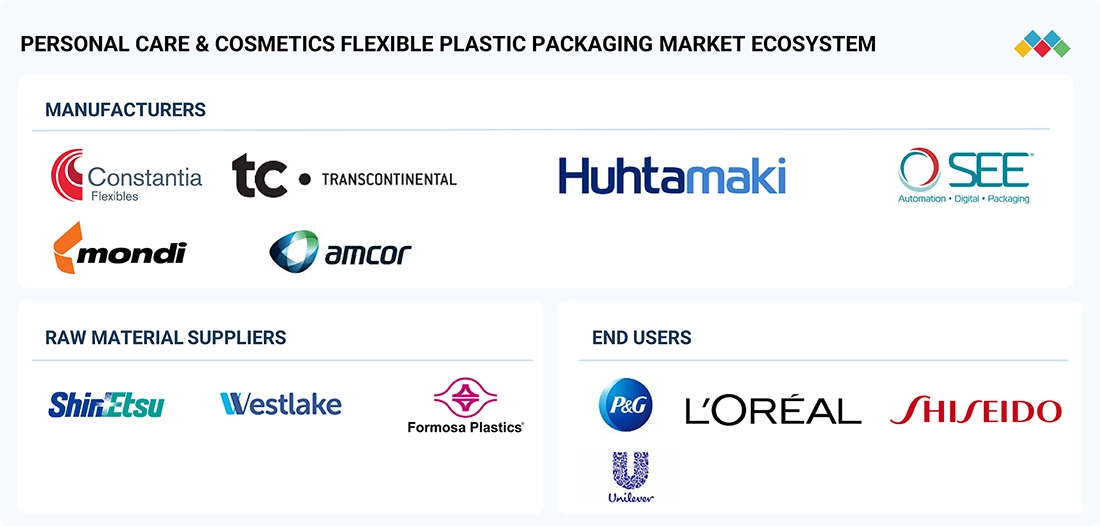
Logos and trademarks shown above are the property of their respective owners. Their use here is for informational and illustrative purposes only.
MARKET SEGMENTS
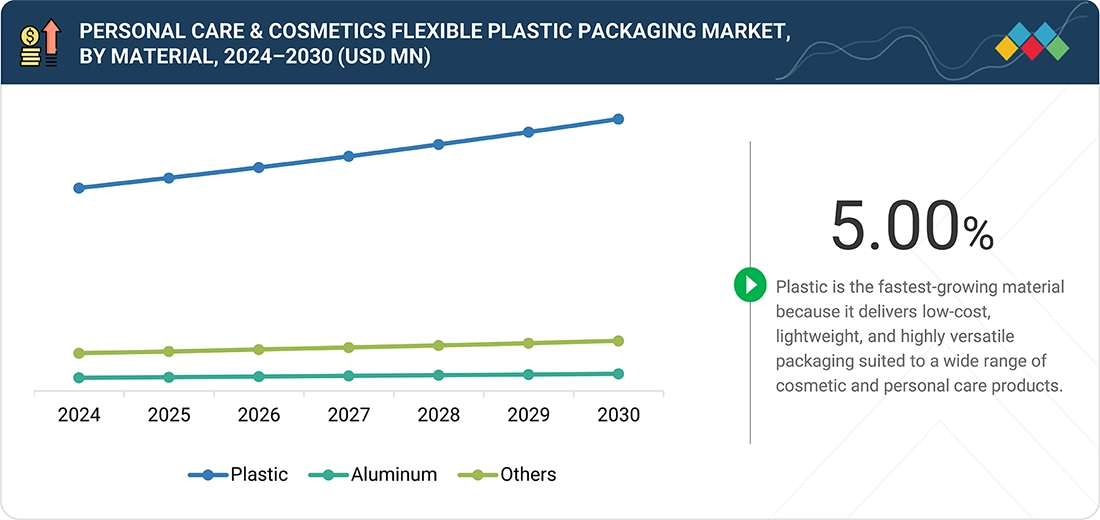
Source: Secondary Research, Interviews with Experts, MarketsandMarkets Analysis
Personal care & cosmetics flexible plastic packaging market, by packaging type
Bags are the fastest-growing segment, as they provide convenience, are lightweight, and easy to carry beauty and personal care products. In general, wipes, bath salts, sample products, and travel-sized items, which are gaining popularity among consumers, are packed in bags. Brands choose bags because they facilitate appealing printing, stand-up features, and resealability, making them perfect for both retail and e-commerce use. Besides, the low price of bags and their capability to protect products from moisture and contamination are some of the reasons why their usage is increasing ??????further.
Personal care & cosmetics flexible plastic packaging market, by material
Plastic?????? is the main material segment by far, mainly because it is very versatile, inexpensive, and can effectively protect even the most sensitive cosmetic & personal care formulations. Plastic films, for example, are very strong barriers against moisture, oxygen, and light, and thus, they keep product stability and fragrance. The material can accommodate various formats, including tubes, pouches, sachets, and laminates, which are very popular in the beauty industry. Additionally, its lightweight nature helps reduce shipping costs, and its advanced printing-friendly properties make it the most attractive option for brand-focused packaging.
Personal care & cosmetics flexible plastic packaging market, by printing technology
Digital?????? printing is projected to grow at the fastest rate, mainly because it enables very fast changes in the designs, and there is no need for printing plates. The beauty industry is filled with brands that frequently release limited editions and seasonal collections, and digital printing is the tool that enables these brands to respond quickly. It is compatible with variable data printing, which means that every pack can have different codes, colors, or promotional texts. This, in turn, makes the products more traceable and the customers more engaged with the brand. The use of this technology also reduces waste production and shortens production cycles, making it an ideal solution for the luxury and personalized segments in the cosmetics industry.
REGION
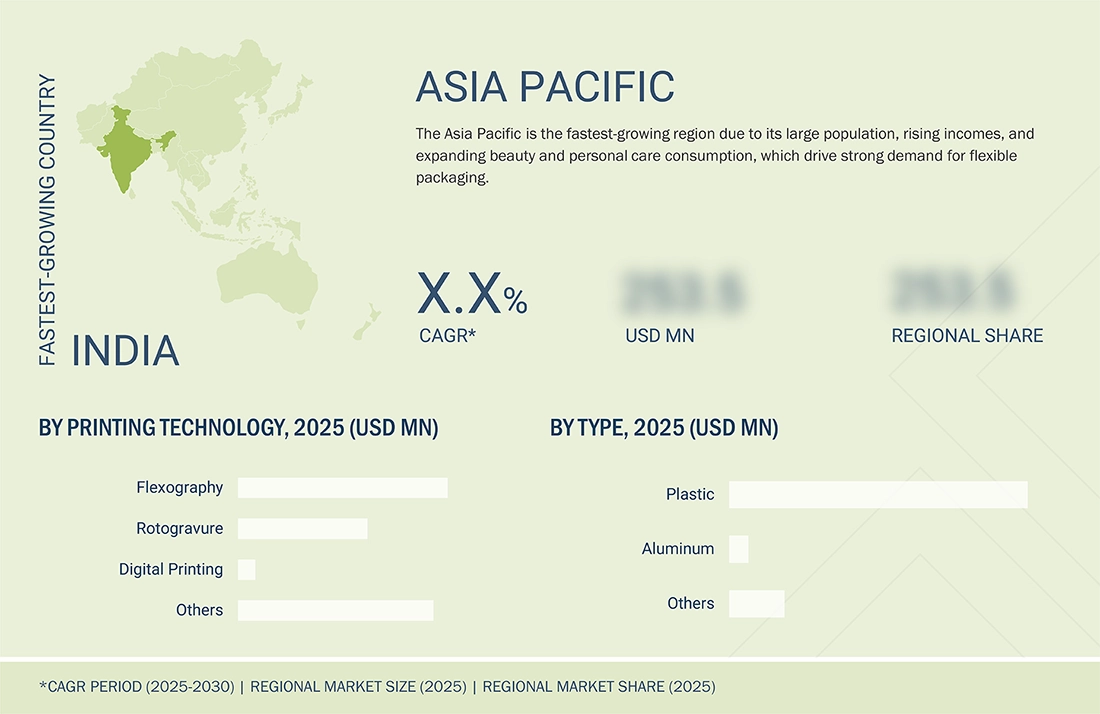
Asia Pacific is projected to be the fastest-growing region in the personal care & cosmetics flexible plastic packaging market during the forecast period
Due?????? to the increasing consumption of beauty and skincare products by a young and urban population, the Asia Pacific region is the leading contributor to global growth in these sectors. Throughout the continent, trends in personal grooming, premium skincare, and hygiene products are driving market growth at a rapid pace. Factors such as robust local production, borderless e-commerce, and extensive contract packaging facilities not only contribute to but also double the pace of growth in the region. The improvement in living standards and the introduction of more international and regional cosmetic brands in the market are the main factors behind the positive market ??????trend.
PERSONAL CARE & COSMETICS FLEXIBLE PLASTIC PACKAGING MARKET: COMPANY EVALUATION MATRIX
Amcor plc is a major player in the personal care & cosmetics flexible plastic packaging market due to its wide global presence and strong portfolio of high-barrier, lightweight, and premium flexible packaging solutions. Sonoco Products Company is emerging as a leading player in this market as it expands its flexible packaging capabilities and focuses on innovative, sustainable formats tailored for beauty and personal care brands.
Source: Secondary Research, Interviews with Experts, MarketsandMarkets Analysis
KEY MARKET PLAYERS
MARKET SCOPE
| REPORT METRIC | DETAILS |
|---|---|
| Market Size in 2024 (Value) | USD 26.00 BN |
| Market Size in 2030 (Value) | USD 34.73 BN |
| CAGR | 4.96% |
| Years Considered | 2021–2030 |
| Base Year | 2024 |
| Forecast Period | 2025–2030 |
| Units Considered | Value (USD MN/BN) Volume (Kilotons) |
| Report Coverage | Revenue forecast, company ranking, competitive landscape, growth factors, and trends |
| Segments Covered |
|
| Regions Covered | Asia Pacific, Europe, Middle East & Africa, North America, South America |
WHAT IS IN IT FOR YOU: PERSONAL CARE & COSMETICS FLEXIBLE PLASTIC PACKAGING MARKET REPORT CONTENT GUIDE
DELIVERED CUSTOMIZATIONS
We have successfully delivered the following deep-dive customizations:
| CLIENT REQUEST | CUSTOMIZATION DELIVERED | VALUE ADDS |
|---|---|---|
| Asia Pacific personal care & cosmetics flexible plastic packaging demand assessment |
|
|
| North America packaging material and format evaluation |
|
|
| Competitive benchmarking of major packaging suppliers |
|
|
RECENT DEVELOPMENTS
- June 2024 : Albéa and L’Oréal partnered to co-develop recyclable cosmetic tubes and advance sustainable flexible packaging solutions for beauty and personal care products.
- August 2024 : Berry Global opened a new personal care flexible packaging facility in India to support rising regional demand and strengthen local production capabilities.
- January 2025 : Berry Global introduced a new line of compact refill sticks and flexible packaging formats for cosmetics and personal care products to expand recyclable offerings.
- March 2025 : Procter & Gamble and Lindner jointly launched the Flexloop recycling technology to produce high-purity recycled plastic suitable for personal care & cosmetics flexible packaging.
- May 2025 : Major personal care brands and packaging suppliers showcased advanced sustainable formats, including PCR-based flexible pouches and recyclable tubes, at leading global packaging events.
Table of Contents
 Exclusive indicates content/data unique to MarketsandMarkets and not available with any competitors.
Methodology
The study involved four major activities for estimating the current size of the global Personal Care & Cosmetics Flexible Plastic Packaging Market. Exhaustive secondary research was conducted to collect information on the market, the peer product market, and the parent product group market. The next step was to validate these findings, assumptions, and sizes with the industry experts across the value chain of flexible plastic packaging through primary research. Both the top-down and bottom-up approaches were employed to estimate the overall size of the Personal Care & Cosmetics Flexible Plastic Packaging Market. After that, market breakdown and data triangulation procedures were used to determine the size of different segments and sub-segments of the market.
Secondary Research
In the secondary research process, various secondary sources such as Hoovers, Factiva, Bloomberg BusinessWeek, and Dun & Bradstreet were referred, to identify and collect information for this study on the Personal Care & Cosmetics Flexible Plastic Packaging Market. These secondary sources included annual reports, press releases & investor presentations of companies; white papers; certified publications; articles by recognized authors; regulatory bodies, trade directories, and databases.
Primary Research
The Personal Care & Cosmetics Flexible Plastic Packaging Market comprises several stakeholders in the supply chain, which include raw material suppliers, processors, end-product manufacturers, buyers, and regulatory organizations. Various primary sources from the supply and demand sides of the markets have been interviewed to obtain qualitative and quantitative information. The primary participants from the demand side include key opinion leaders, executives, vice presidents, and CEOs of companies in the Personal Care & Cosmetics Flexible Plastic Packaging Market. Primary sources from the supply side include associations and institutions involved in the flexible plastic packaging industry, key opinion leaders, and processing players.
Market Size Estimation
The bottom-up and top-down approaches have been used to estimate the Personal Care & Cosmetics Flexible Plastic Packaging Market by packaging type, material, application, printing technology, and region. The research methodology used to calculate the market size includes the following steps:
- The key players in the industry and markets were identified through extensive secondary research.
- In terms of value, the industry’s supply chain and market size were determined through primary and secondary research processes.
- All percentage shares, splits, and breakdowns were determined using secondary sources and verified through primary sources.
- All possible parameters that affect the markets covered in this research study were accounted for, viewed in extensive detail, verified through primary research, and analyzed to obtain the final quantitative and qualitative data.
- The research included studying reports, reviews, and newsletters of top market players and extensive interviews with leaders such as directors and marketing executives to obtain opinions.
Data Triangulation
After arriving at the overall size of the Personal Care & Cosmetics Flexible Plastic Packaging Market from the estimation process explained above, the total market was split into several segments and sub-segments. The data triangulation and market breakdown procedures were employed, wherever applicable, to complete the overall market engineering process and arrive at the exact statistics for all segments and subsegments. The data was triangulated by studying various factors and trends from both the demand and supply sides. Along with this, the market size was validated using both the top-down and bottom-up approaches.
Market Definition
Flexible plastic packaging refers to any packaging or any constituent part of packaging made from a thin, flexible plastic film or sheet. These can be molded into an infinite amount of shapes, including a pouch, bag, wrapper, shrink film, tube, or liner with the ability to hold all kinds of products. Its adaptability makes way for effective, space-efficient designs and can bend to various sizes and shapes. It is highly utilized in a wide array of industries for functional as well as aesthetic packaging solutions. Flexible packaging is a dynamic approach in packaging wherein products are packed in non-rigid materials to provide economical as well as customized solutions. Probably, flexible plastic packaging is among the most versatile, lightweight, and rigid packing options in use today. This innovative solution gives good barrier properties, shielding the products from moisture, oxygen, light, and any other environmental factors that can contribute to degradation and shortening of shelf life. The flexible plastic packaging is mostly used in food and beverages, pharmaceutical, and personal care industries. It ensures the protection of a product, reduces waste, and facilitates ease in terms of portability for consumers.
Stakeholders
- Flexible plastic packaging manufacturers
- Raw Material Suppliers
- Regulatory Bodies and Government agencies
- Flexible Packaging Traders, Distributors, and Suppliers
- Flexible Packaging End-use Industries
- Associations and Industrial Bodies
- Market Research and Consulting Firms
Report Objectives
- To define, describe, and forecast the size of the Personal Care & Cosmetics Flexible Plastic Packaging Market in terms of value and volume.
- To provide detailed information regarding the key factors influencing the growth of the market (drivers, restraints, opportunities, and challenges).
- To forecast the market size based on material, packaging type, application, printing technology, and region.
- To forecast the market size for the five main regions—North America, Europe, Asia Pacific (APAC), the Middle East & Africa (MEA), and South America—along with their key countries.
- To strategically analyze micro markets with respect to individual growth trends, prospects, and contributions to the total market.
- To analyze the opportunities in the market for stakeholders and provide details of the competitive landscape for the market leaders.
- To strategically profile leading players and comprehensively analyze their key developments such as new product launches, expansions, and acquisitions in the Personal Care & Cosmetics Flexible Plastic Packaging Market.
- To strategically profile key players and comprehensively analyze their market shares and core competencies2
- To study the impact of AI/Gen AI on the market under study, along with the macroeconomic outlook.


Personalize This Research
- Triangulate with your Own Data
- Get Data as per your Format and Definition
- Gain a Deeper Dive on a Specific Application, Geography, Customer or Competitor
- Any level of Personalization
Let Us Help You
- What are the Known and Unknown Adjacencies Impacting the Personal Care & Cosmetics Flexible Plastic Packaging Market
- What will your New Revenue Sources be?
- Who will be your Top Customer; what will make them switch?
- Defend your Market Share or Win Competitors
- Get a Scorecard for Target Partners

Custom Market Research Services
We Will Customise The Research For You, In Case The Report Listed Above Does Not Meet With Your Requirements
Get 10% Free CustomisationTESTIMONIALS

We at Nissan Chemicals Corporation have been clients of MarketsandMarkets for more than a year now. We recently consulted MarketsandMarkets for a study, the team at MarketsandMarkets was extremely professional and organized. The business insights were very detailed and aligned well with our expectations that really helped us formulate the Business Plans and device new strategies for development themes. MarketsandMarkets offers a unique combination of expertise and dedicated engagement model. Their research findings have helped us in designing our Pricing Strategy which will make it easier for us to predict the future sales and profits for the next ten years. We look forward to working with MarketsandMarkets in the future.
VP of Strategy & New Business Development
Leading Specialty Chemical Company
The MarketsandMarkets Engagement Model, composed of both the Knowledge Store and advisory custom research, has greatly helped us in understanding our markets and making strategic decisions. The Knowledge Store is a fast way to allow everyone in our organization to understand more about most any market they are interested in. The ability to then get custom research done and get answers to specific strategic questions and market insight has been spectacular. The Markets and Markets team feel more like colleagues than vendors and their services have helped us change our culture where statements of things like growth opportunities and competitive position are always backed by industry research.

Rich Gibson,
Director, Corporate Strategy
Milliken & Company,
Leading Industrial Manufacturer of specialty chemical, floor covering, performance and protective textile materials, and healthcaremilliken.com
MarketsandMarkets is a trusted resource that helps us to better understand markets that are near-adjacencies-whether its technology, value chain or geography. Their Knowledge Store platform provides a dashboard of markets and their characteristics which is easy to use and saves us time.
Adam Shaw,
Market Development and Strategy Manager
AdvanSix Inc. USA,
An American Leader in Chemicalswww.advansix.com
The Knowledge Store from MarketsandMarkets is a valuable tool which has helped my team acquire greater insight in to the end markets that our business serves. This has enabled us to help our company build stronger strategies throughout our planning process.
TOSHIO KINOSHITA
Senior Chif Consultion Research & Consulting Division
Mitsubishi Chemical Research Corporation,
Leading Manufacturer of Chemical Productswww.mitsubishichem-res.co.jp/en/

We recently engaged with MarketsandMarkets for a study, the team not only clearly understood our business objectives but was also extremely professional in the way they handled the entire project. The study was efficiently conducted in a phase-wise manner, and the engagement model furnished us with high-quality business insights that far exceeded our expectations at each phase. We were especially happy that MarketsandMarkets could provide us with both, an English as well as a Japanese version of the study. A special thanks to the Analyst Team and Client Services Team, whose fluency in Japanese enhanced our comfort level, as we could converse with them in our preferred language.
Independent entrepreneurs
Arrow Precision
We approached MarketsandMarkets for study on Proppants Market, and their work exceeded our expectations. The study conducted was comprehensive and enabled us to view the market through the various dimensions. In addition, the team was extraordinarily responsive throughout the process and resolved our queries on time. I strongly recommend MarketsandMarkets and will certainly consider them for additional market assessments we will need in the future.
Global engineering company, Japan
Deputy Manager,
Strategic Planning OfficeThe high-quality insights shared by the MarketsandMarkets team helped us understand the pharmaceutical plant designers in a specific geography. It also captured the risks that we may likely face in communicating with our potential partners. The study would enable us identify partners, which would impact our future growth.






Growth opportunities and latent adjacency in Personal Care & Cosmetics Flexible Plastic Packaging Market