Pharmaceutical & Cosmetics Anti-counterfeit Packaging Market

Pharmaceutical & Cosmetics Anti-counterfeit Packaging Market by Technology (Mass Encoding, RFID, Tamper Evidence, and Hologram) & Region (North America, Europe, Asia Pacific, Middle East & Africa, South America) - Global Forecast to 2030




OVERVIEW
Source: Secondary Research, Interviews with Experts, MarketsandMarkets Analysis
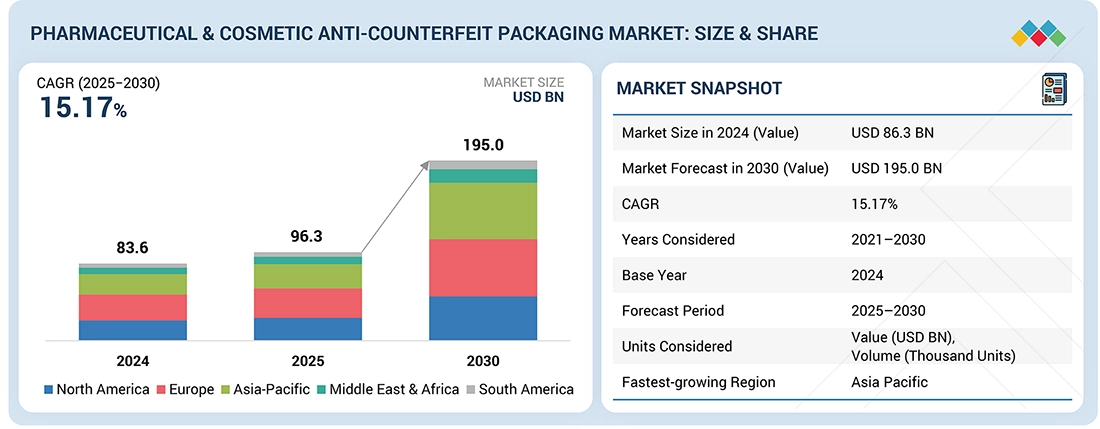
The pharmaceutical & cosmetics anti-counterfeit packaging market is projected to reach USD 195.0 billion by 2030 from USD 96.3 billion in 2025, at a CAGR of 15.17% from 2025 to 2030. The pharmaceutical & cosmetics anti-counterfeit packaging business is on the rise due to a rise in pharmaceutical crime incidents and strong regulation & serialization requirements.
KEY TAKEAWAYS
-
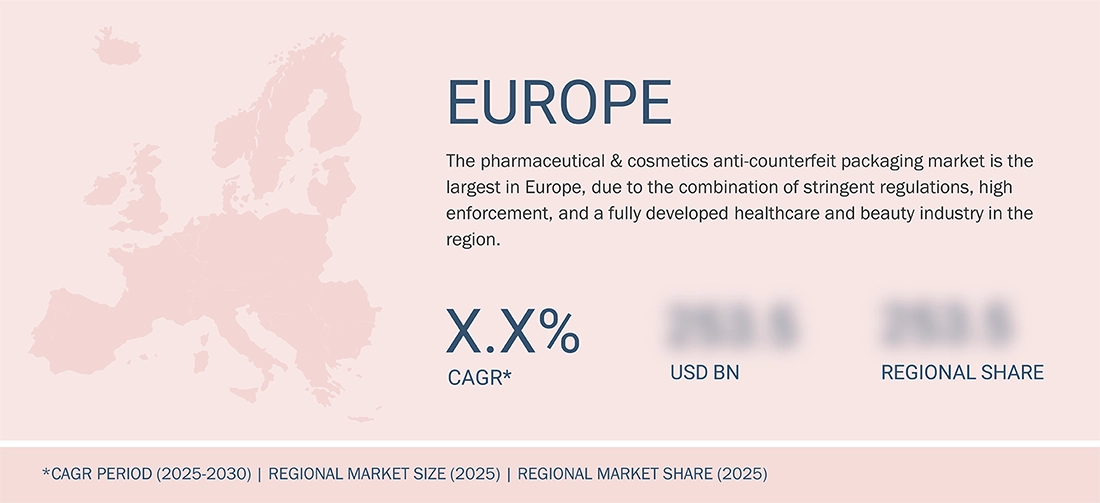
By RegionEurope is the largest market for pharmaceutical & cosmetics anti-counterfeit packaging, having a share of 33.7% in 2024.
-
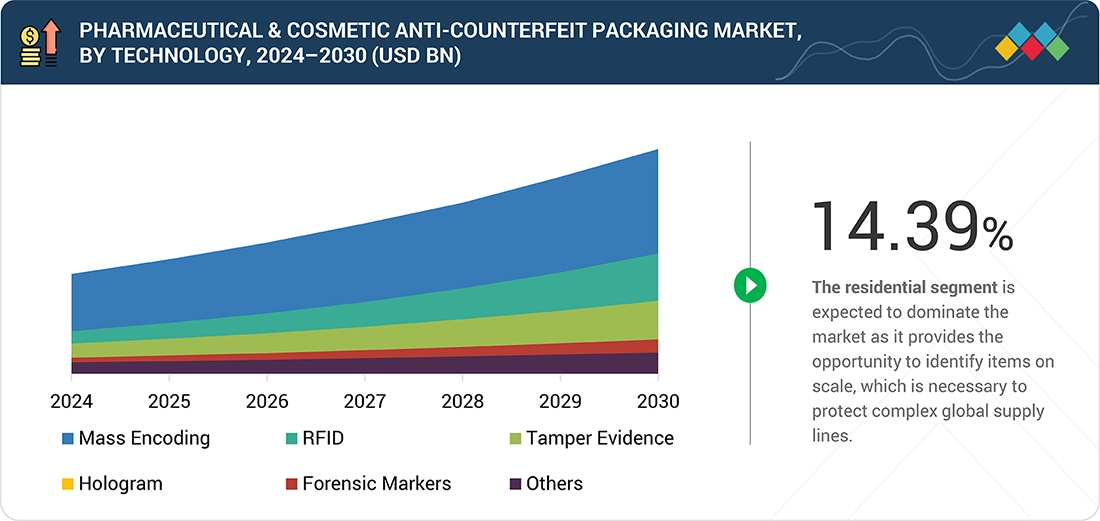
By TechnologyBy technology, RFID technology segment will grow at the fastest rate between 2025 and 2030, at a CAGR of 18.67%.
-
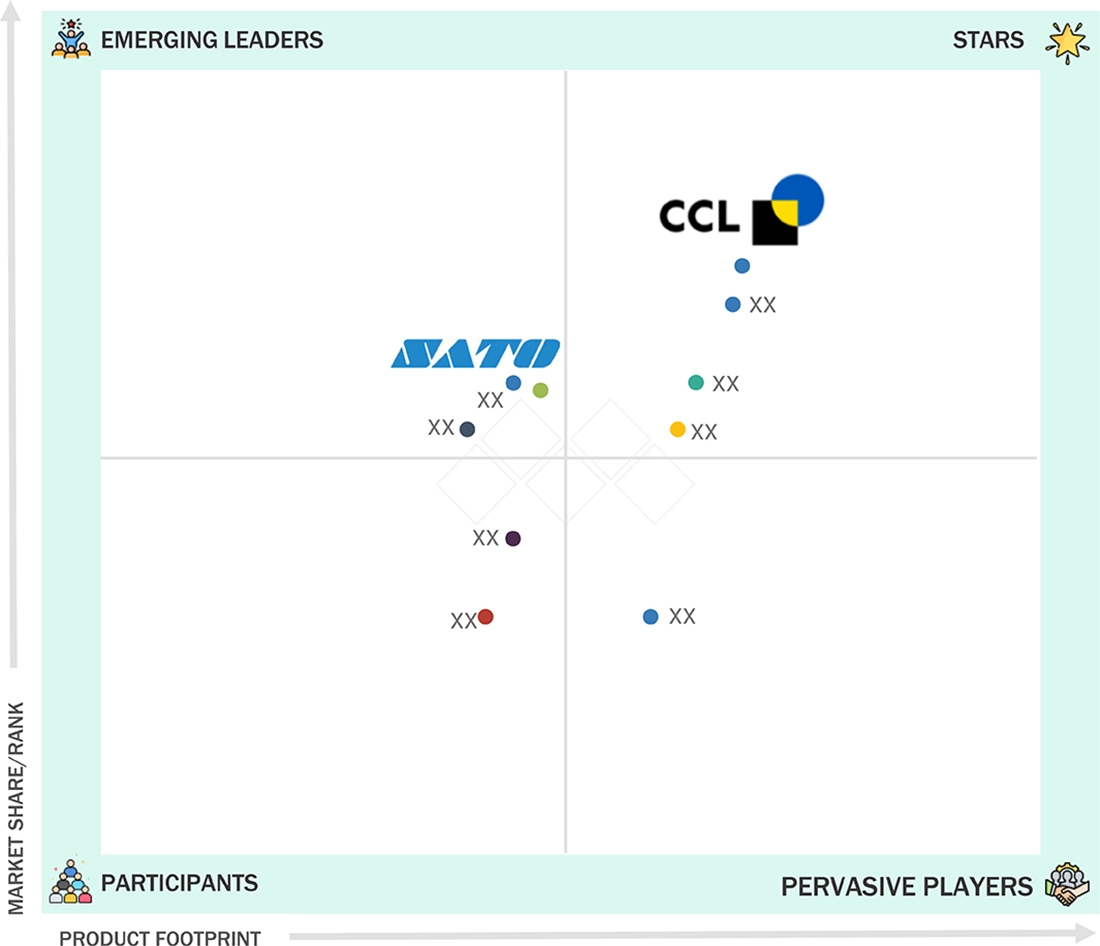
Competitive Landscape-Key playersCCL Industries Inc., SML Group, SICPA Holding SA, Dover Corporation, and AlpVision SA were identified as Star players in the market, as they have focused on innovation and have broad industry coverage, and strong operational & financial strength.
-
Competitive Landscape-Startups3D AG, Impinj, Inc., Prooftag, Scantrust SA, and Eluceda Ltd, among others have distinguished themselves among startups and SMEs due to their strong product portfolio and business strategy.
pharmaceutical & cosmetics anti-counterfeit packaging market is on the rise due to a high number of pharmaceutical crimes taking place globally. Furthermore, strong regulations and serialization requirements for pharma as well as cosmetic products is helping to drive the market.
TRENDS & DISRUPTIONS IMPACTING CUSTOMERS' CUSTOMERS
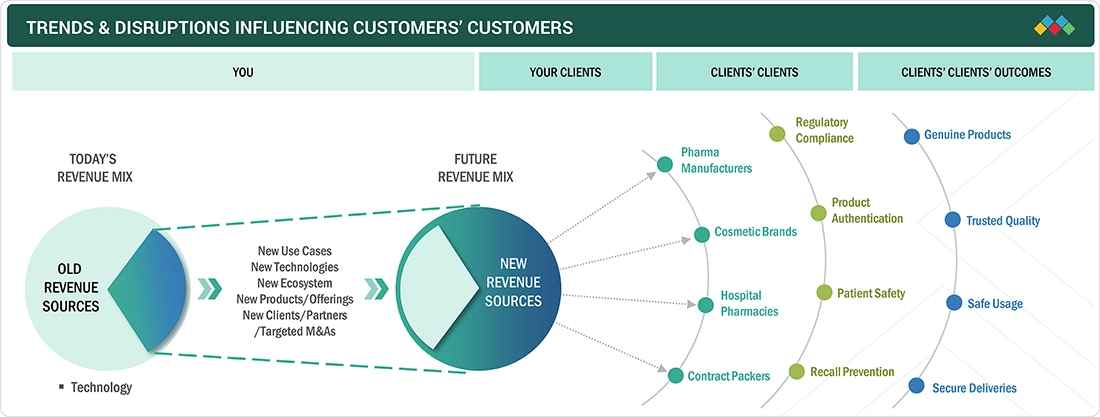
Pharmaceutical and cosmetic brands are rapidly adopting digital authentication tools such as serialization, QR-based verification, and blockchain-linked traceability to combat rising global counterfeiting. At the same time, stricter regulatory enforcement is pushing companies toward smarter, tamper-evident, and highly customized anti-counterfeit packaging solutions.
Source: Secondary Research, Interviews with Experts, MarketsandMarkets Analysis
MARKET DYNAMICS

Level
-
•Rise in pharmaceutical crime incidents

-
•Strong regulation & serialization requirements


Level
-
•Cost & complexity for manufacturers

-
•Consumer & supply-chain fragmentation


Level
-
•Customized packaging solutions

-
•Rising demand from cosmetics industry


Level
-
High R&D investment

Source: Secondary Research, Interviews with Experts, MarketsandMarkets Analysis
Driver: Rise in pharmaceutical crime incidents
The Pharmaceutical Security Institute (PSI) indicates that the number of pharmaceutical crime incidents has been increasing consistently in recent years. Their “Incident Trends” statistics reveal a rise in thefts, diversions, counterfeits, and unauthorized supply-chain breaches. This upward trend significantly drives the demand for anti-counterfeit packaging, as heightened public exposure to these incidents pressures regulators, manufacturers, and consumers to strengthen supply chains. Pharmaceutical companies, recognizing that any security lapse can harm their reputation and lead to regulatory consequences, are more inclined to implement tamper-evident labels, serialization, track-and-trace systems, and secure packaging to safeguard their products. Additionally, as awareness grows among distributors and consumers, there is a rising demand for packaging that is visibly secure and easily verifiable—resulting in a surge of investment in anti-counterfeit measures. In summary, the increasing prevalence of pharmaceutical crime incidents positions anti-counterfeit and secure packaging as not merely a compliance or branding strategy, but rather a vital risk management approach for the sector.
Restraint:Cost & complexity for manufacturers
While technologies designed for anti-counterfeiting packaging (such as serialization, tamper-evident seals, secure printing, RFID/NFC tags, or QR-code verification) provide substantial protection, their adoption is frequently limited by financial costs and operational difficulties. Upgrading packaging lines to accommodate new materials, secure-label printing, serialization data management, and supply chain tracking infrastructure necessitates considerable capital outlay. Smaller or mid-sized firms in the pharmaceutical or cosmetics sectors might find the initial investment too steep and could lack in-house IT or quality assurance resources to handle serialization databases or verification systems. Furthermore, incorporating these technologies can hinder high-speed production or complicate packaging processes, particularly for companies with various product types or regular package modifications. This burden of cost and complexity acts as a barrier to widespread adoption, delaying execution and lowering the overall growth rate of the anti-counterfeit packaging market, even amid rising demand.
Opportunity: Customized packaging solutions
There is an increasing chance to provide tailored anti-counterfeit packaging solutions specifically designed for pharmaceutical and cosmetics companies. Each product range, dosage form, and geographical market may have unique regulatory and consumer-safety stipulations, enabling packaging suppliers to create custom solutions for instance, tamper-evident seals for creams, serialized blister packs for tablets, QR/NFC-enabled authenticity checks for over-the-counter cosmetics, humidity-resistant labels for tropical regions, or integrated track-and-trace systems for worldwide supply chains. This level of customization allows brands to offer greater value: enhanced consumer trust, adherence to local regulations, and stronger defenses against counterfeiting. In particular, cosmetics brands which heavily rely on online sales and social media marketing can stand out by providing verifiable authenticity, thus improving brand reputation and minimizing returns or complaints. With the rising demand for such differentiated and secure packaging, specialized packaging suppliers and technology firms have a significant opportunity to enter this niche market merging packaging, digital verification, and supply-chain transparency into cohesive offerings.
Challenge:High R&D investment
Even companies that are prepared to implement anti-counterfeit packaging face significant challenges due to the substantial expenses associated with research and development (R&D) and implementation. Creating secure, tamper-evident packaging for sensitive items (such as pharmaceuticals or dermatological creams) requires extensive testing encompassing assessments of physical strength, chemical compatibility, adherence to regulations, and integration within the supply chain. Additionally, incorporating advanced features (like serialized codes, RFID/NFC tags, embedded security printing, and moisture-resistant labels) often necessitates the use of custom materials, specialized printing technology, software, and the continuous management of verification databases. For international brands operating in various jurisdictions, different packaging variants may be necessary to comply with diverse regulatory requirements increasing design and validation expenses. These significant initial and recurring costs can discourage widespread adoption, particularly among smaller manufacturers or those in price-sensitive markets. To ensure the anti-counterfeit packaging market flourishes, providers must demonstrate a clear return on investment and potentially offer scalable, modular solutions that distribute costs across multiple clients.
PHARMACEUTICAL & COSMETICS ANTI-COUNTERFEIT PACKAGING MARKET: COMMERCIAL USE CASES ACROSS INDUSTRIES
| COMPANY | USE CASE DESCRIPTION | BENEFITS |
|---|---|---|
 |
Implemented customized Dry-Peel Tamper Evident labels on pharmaceutical packs to meet anti-counterfeiting needs and future compliance with the Falsified Medicines Directive (FMD), for for MSN Laboratories. | Provides clear visual tamper evidence for end-users, ensuring authenticity. Enhances product safety and reduces risk of counterfeiting. |
 |
Implementation of secure QR codes printed on tamper-evident security labels affixed to each pack of Duesberg medical gloves, enabling traceability, authentication, and quality assurance. Packaging links to online landing pages; supply-chain and lot data (SKU, batch, QA certificate) are integrated; system tracks end-user data (usage region, preferences, etc.). | Allowed customers worldwide to verify the authenticity and quality of gloves easily. Provided supply-chain traceability and brand protection against counterfeit PPE, especially critical during COVID-19, when counterfeit gloves flooded the market. |
 |
Client’s patented scar-reduction cream faced widespread counterfeiting across e-commerce and social platforms. Authentix deployed a full Online Brand Protection program, monitoring 500+ marketplaces, conducting targeted test-purchases, issuing takedowns, and working with law enforcement to investigate and raid illicit manufacturers. | Removed over 22,000 suspicious listings from more than 8,000 sellers in a 12-month period (estimated stock value USD 12.8 million). Counterfeit activity reduced by 95%; grey-market activity reduced by 65% over the same period. |
Logos and trademarks shown above are the property of their respective owners. Their use here is for informational and illustrative purposes only.
MARKET ECOSYSTEM
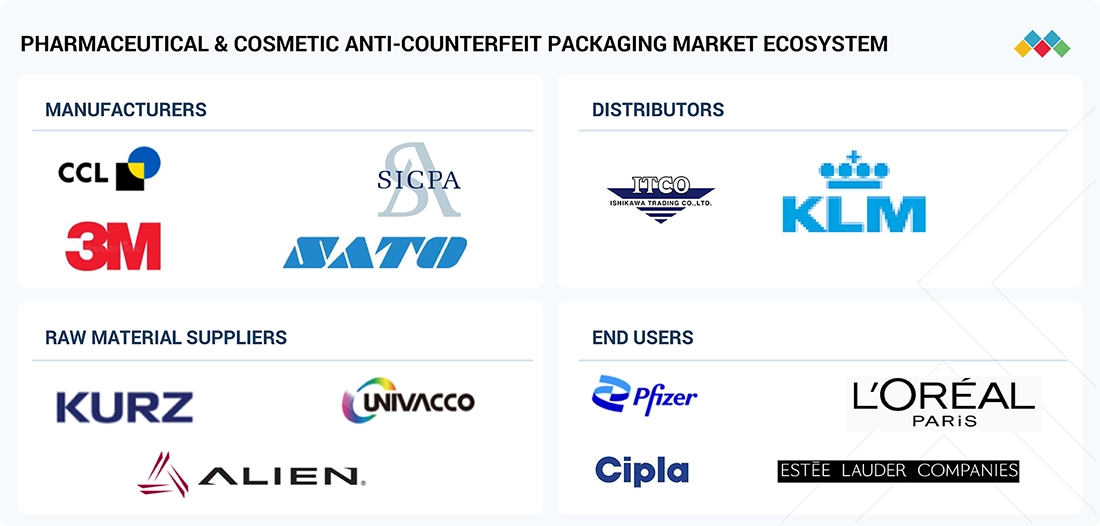
The key stakeholders within the ecosystem include raw material suppliers, pharmaceutical & cosmetics anti-counterfeit packaging manufacturers, and end-user companies.
Logos and trademarks shown above are the property of their respective owners. Their use here is for informational and illustrative purposes only.
MARKET SEGMENTS
Source: Secondary Research, Interviews with Experts, MarketsandMarkets Analysis
Pharmaceutical & cosmetics anti-counterfeit packaging Market, By Technology
Mass encoding technology is on the rise in the pharmaceutical and cosmetic anti-counterfeit packaging industry as it provides the opportunity of identifying items on scale, which is necessary to protect complex global supply lines. With increasing cases of counterfeiting, particularly of high value skin care, fragrances, specialty medicines and biologics, the brands require a mechanism of verifying every unit of their products without reducing the rate of production. Mass encoding enables a special digital code to be printed or encoded on every package so that they can be easily verified using smartphones or scanners along every distribution channel. This enhances traceability, regulatory needs such as serialization needs, and recall controls. In the case of cosmetics, mass encoding has the added benefit of boosting consumer interest through coding products with product information, counterfeit or authenticity measures along with loyalty schemes. Due to its ease of integration with the current printing processes and the ability to perform large-scale batch coding at a relatively low incremental cost, the technology is considered by companies as an upgradable, scaled, upgrade that protects brand image, at the same time enhancing transparency in both regulated pharma and competitive beauty markets.
REGION
Europe to be largest in global pharmaceutical & cosmetics anti-counterfeit packaging market during forecast period
The pharmaceutical and cosmetic anti-counterfeit packaging market is largest in Europe due to the combination of stringent regulations, high enforcement, and fully developed healthcare industry and beauty industry in Europe. The pharmaceutical industry in the region needs to adhere to the EU Falsified Medicines Directive (FMD) that requires serialization, tamper-evident seals, and verification systems on all prescription products. This compulsory measure makes it urgently adopt the use of advanced technologies in counteracting counterfeit. Large cosmetic and luxury beauty brands are also found in Europe and they are the ones that have high risks of counterfeiting and thus they would have to spend much on high quality packaging protection like holography, digital watermarks, and mass encoding. High levels of consumer sensitivity on product safety, authenticity and sustainability are also another boost to the uptake of traceable and secure packaging solutions. The fast and efficient implementation of converters is more affordable and structured into well-developed supply chains through the support of digital infrastructure put forward by the government. All of this makes Europe the most advanced and fastest expenditure region in terms of anti-counterfeit packaging, both in the pharma and cosmetics industry.
PHARMACEUTICAL & COSMETICS ANTI-COUNTERFEIT PACKAGING MARKET: COMPANY EVALUATION MATRIX
In the pharmaceutical & cosmetics anti-counterfeit packaging market matrix, CCL Industries Inc. (Star) leads with a strong market share and extensive product footprint, driven by its advanced products and huge international market presence. SATO Holdings Corporation (Emerging Leader) is gaining visibility with its expertise product innovations, and expansion. While CCL Industries Inc. dominates through scale and a diverse portfolio, SATO Holdings Corporation shows significant potential to move toward the leaders’ quadrant as demand for pharmaceutical & cosmetics anti-counterfeit packaging continues to rise.
Source: Secondary Research, Interviews with Experts, MarketsandMarkets Analysis
KEY MARKET PLAYERS
- CCL Industries Inc. (Canada)
- SML Group (China)
- SICPA Holding SA (Switzerland)
- Dover Corporation (US)
- AlpVision SA (Switzerland)
- Authentix Inc. (US)
- SATO Holdings Corporation (Japan)
- 3M (US)
- Zebra Technologies Corporation (US)
- Intelligent Label Solutions (US)
MARKET SCOPE
| REPORT METRIC | DETAILS |
|---|---|
| Market Size in 2024 (Value) | USD 83.6 Billion |
| Market Forecast in 2030 (Value) | USD 195.0 Billion |
| Growth Rate | CAGR of 15.17% from 2025-2030 |
| Years Considered | 2021-2030 |
| Base Year | 2024 |
| Forecast Period | 2025-2030 |
| Units Considered | Value (USD Million/Billion), Volume (Thousand units) |
| Report Coverage | Revenue forecast, company ranking, competitive landscape, growth factors, and trends |
| Segments Covered | By Technology: Mass Encoding, RFID, Tamper Evidence, Hologram, Forensic Markers, Other Technologies |
| Regions Covered | North America, Europe, Asia Pacific, Middle East & Africa, South America |
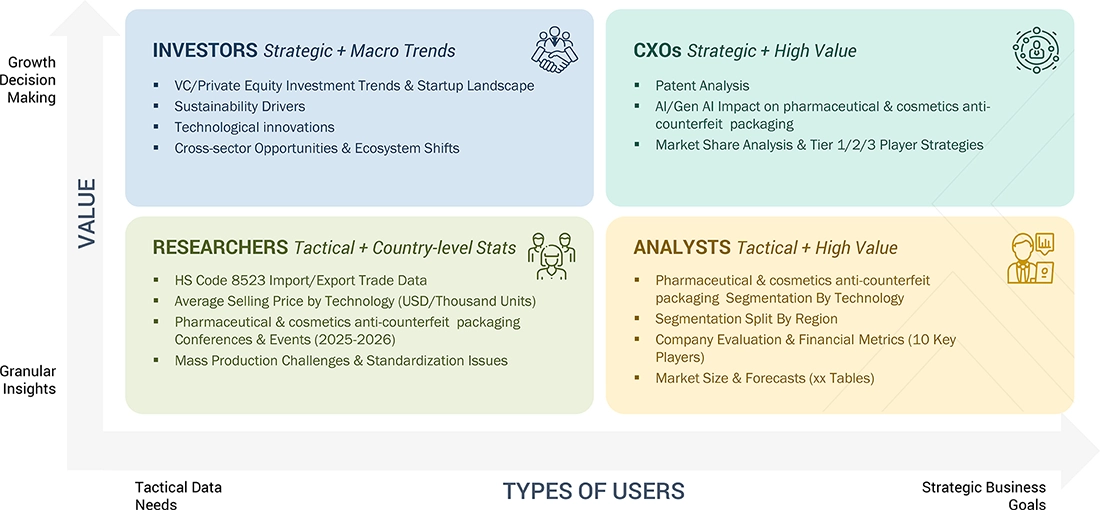
WHAT IS IN IT FOR YOU: PHARMACEUTICAL & COSMETICS ANTI-COUNTERFEIT PACKAGING MARKET REPORT CONTENT GUIDE
DELIVERED CUSTOMIZATIONS
We have successfully delivered the following deep-dive customizations:
| CLIENT REQUEST | CUSTOMIZATION DELIVERED | VALUE ADDS |
|---|---|---|
| Detailed study on anti-counterfeit packaging for food & beverage, and electronics & electrical | Study conducted the use of anti-counterfeit packaging for food & beverage products, and electronic products. | Identified market opportunities in the food & beverage, and electronics & electrical industries. |
RECENT DEVELOPMENTS
- March 2024 : Systech International acquired Pharmacontrol Electronic GmbH (“PCE”), a prominent European pharmaceutical track-and-trace solutions provider
- September 2021 : SATO Holdings Corporation announced the launch of new UHF RFID direct thermal wristband for identification, verification and tracking of patients in hospitals. SATO designed this wristband for comfort and optimal reads within hospital location systems.
- February 2021 : SATO Holdings developed a comprehensive supply chain solution for LimaCorporate, an Italian orthopedic implant manufacturer.
Table of Contents
 Exclusive indicates content/data unique to MarketsandMarkets and not available with any competitors.
Methodology
The study involved four major activities for estimating the current global size of the Pharmaceutical & Cosmetics Anti-counterfeit Packaging Market. Exhaustive secondary research was conducted to gather information on the market, the peer market, and the parent market. The next step was to validate these findings, assumptions, and sizes with the industry experts across the value chain of anti-counterfeit packaging through primary research. Both the top-down and bottom-up approaches were employed to estimate the overall size of the Pharmaceutical & Cosmetics Anti-counterfeit Packaging Market. After that, market breakdown and data triangulation procedures were used to determine the size of different segments and sub-segments of the market.
Secondary Research
In the secondary research process, various secondary sources such as Hoovers, Factiva, Bloomberg BusinessWeek, and Dun & Bradstreet were referred to, to identify and collect information for this study on the Pharmaceutical & Cosmetics Anti-counterfeit Packaging Market. These secondary sources included annual reports, press releases & investor presentations of companies, white papers, certified publications, articles by recognized authors, regulatory bodies, trade directories, and databases.
Primary Research
Various primary sources from both the supply and demand sides of the Pharmaceutical & Cosmetics Anti-counterfeit Packaging Market were interviewed to obtain qualitative and quantitative information. The primary sources from the supply-side included industry experts, such as Chief Executive Officers (CEOs), vice presidents, marketing directors, sales professionals, and related key executives from various leading companies and organizations operating in the anti-counterfeit packaging industry. The breakdown of the profiles of primary respondents is as follows:
Market Size Estimation
Both the top-down and bottom-up approaches were used to estimate and validate the global size of the Pharmaceutical & Cosmetics Anti-counterfeit Packaging Market. These approaches were also used extensively to estimate the size of various dependent segments of the market. The research methodology used to estimate the market size included the following details:
- The key players were identified through extensive secondary research.
- The industry’s supply chain and market size, in terms of value, were determined through primary and secondary research processes.
- All percentage shares, split, and breakdowns were determined using secondary sources and verified through primary sources.
- All possible parameters that affect the markets covered in this research study were accounted for, viewed in extensive detail, verified through primary research, and analyzed to obtain the final quantitative and qualitative data.
- The research includes the study of reports, reviews, and newsletters of key industry players, along with extensive interviews with key officials, such as directors and marketing executives.
Data Triangulation
After arriving at the overall market size from the estimation process explained above, the total market was split into several segments and sub-segments. The data triangulation and market breakdown procedures were employed, wherever applicable, to complete the overall market engineering process and arrive at the exact statistics for all segments and sub-segments of the Pharmaceutical & Cosmetics Anti-counterfeit Packaging Market. The data was triangulated by studying various factors and trends from both the demand- and supply-side.
In addition, the market size was validated by using both the top-down and bottom-up approaches. Then, it was verified through primary interviews. Hence, for every data segment, there are three sources—top-down approach, bottom-up approach, and expert interviews. The data were assumed to be correct when the values arrived at from the three sources matched.
Market Definition
Anti-counterfeiting involves various methods and techniques to protect products from being illegally duplicated, distributed, or sold. Anti-counterfeit packaging encompasses any packaging that integrates features or technologies designed to prevent unauthorized parties from copying, tampering with, or diverting the product. These features can be visible, hidden, or forensic, based on the required level of security and verification. The technologies used in anti-counterfeit packaging are mass encoding, RFID, holograms, forensic markers, and others. These technologies can be utilized in various types of packaging, such as bottles, cartons, and bags. They can either be integrated into the packaging materials themselves or added as separate components. The anti-counterfeit packaging solution is widely used in the end-use industries such as pharmaceutical, personal care, and food & beverage.
Key Stakeholders
- Raw material suppliers
- Packaging manufacturers & suppliers
- Logistics & shipment companies
- Technology companies
- Traders & distributors of anti-counterfeit and authentication packaging
- Commercial R&D institutions
- Industry associations and regulatory bodies
- Retailers
- End users
Research Objectives
- To estimate and forecast the Pharmaceutical & Cosmetics Anti-counterfeit Packaging Market, in terms of value and volume
- To provide detailed information about the major factors (drivers, restraints, opportunities, and challenges) influencing the market growth
- To define, describe, and forecast the market size, based on technology, end-use industry and region
- To forecast the market size along with segments and submarkets, in key regions: North America, Europe, Asia Pacific (APAC), Middle East & Africa (MEA), and South America along with their key countries
- To strategically analyze micro markets, with respect to individual growth trends, prospects, and their contribution to the total market
- To analyze growth opportunities in the market for stakeholders and provide details on the competitive landscape for market leaders
- To strategically profile key players and comprehensively analyze their market shares and core competencies
- To analyze competitive developments, such as acquisition, expansion, and new product development in the Pharmaceutical & Cosmetics Anti-counterfeit Packaging Market
Available Customizations
With the given market data, MarketsandMarkets offers customizations according to client-specific needs.
The following customization options are available for the anti-counterfeit packaging report:
Product Analysis
- Product matrix, which offers a detailed comparison of the product portfolio of companies
Regional Analysis
- Further analysis of the Pharmaceutical & Cosmetics Anti-counterfeit Packaging Market for additional countries
Company Information
- Detailed analysis and profiling of additional market players (up to five)
Key Questions Addressed by the Report
What are the key applications of the Pharmaceutical & Cosmetics Anti-counterfeit Packaging Market?
The Pharmaceutical & Cosmetics Anti-counterfeit Packaging Market is widely used across industries such as automotive, construction, electronics, packaging, and industrial manufacturing where high-performance materials and components are essential.
What factors are driving the growth of the Pharmaceutical & Cosmetics Anti-counterfeit Packaging Market?
The growth of the Pharmaceutical & Cosmetics Anti-counterfeit Packaging Market is driven by rising industrial demand, expanding end-use industries, technological advancements, and increasing global manufacturing activities.
Which regions dominate the Pharmaceutical & Cosmetics Anti-counterfeit Packaging Market?
Asia-Pacific, North America, and Europe are major regions in the Pharmaceutical & Cosmetics Anti-counterfeit Packaging Market due to strong manufacturing bases, growing industrial infrastructure, and increasing investments in advanced materials.
Who are the major end-users in the Pharmaceutical & Cosmetics Anti-counterfeit Packaging Market?
Key end-users in the Pharmaceutical & Cosmetics Anti-counterfeit Packaging Market include automotive, aerospace, construction, electronics, consumer goods, and energy industries that require reliable and high-quality materials.
What challenges are affecting the Pharmaceutical & Cosmetics Anti-counterfeit Packaging Market?
Major challenges in the Pharmaceutical & Cosmetics Anti-counterfeit Packaging Market include fluctuating raw material prices, environmental regulations, supply chain disruptions, and the need for continuous innovation to stay competitive.


Personalize This Research
- Triangulate with your Own Data
- Get Data as per your Format and Definition
- Gain a Deeper Dive on a Specific Application, Geography, Customer or Competitor
- Any level of Personalization
Let Us Help You
- What are the Known and Unknown Adjacencies Impacting the Pharmaceutical & Cosmetics Anti-counterfeit Packaging Market
- What will your New Revenue Sources be?
- Who will be your Top Customer; what will make them switch?
- Defend your Market Share or Win Competitors
- Get a Scorecard for Target Partners

Custom Market Research Services
We Will Customise The Research For You, In Case The Report Listed Above Does Not Meet With Your Requirements
Get 10% Free CustomisationTESTIMONIALS
We at Nissan Chemicals Corporation have been clients of MarketsandMarkets for more than a year now. We recently consulted MarketsandMarkets for a study, the team at MarketsandMarkets was extremely professional and organized. The business insights were very detailed and aligned well with our expectations that really helped us formulate the Business Plans and device new strategies for development themes. MarketsandMarkets offers a unique combination of expertise and dedicated engagement model. Their research findings have helped us in designing our Pricing Strategy which will make it easier for us to predict the future sales and profits for the next ten years. We look forward to working with MarketsandMarkets in the future.
VP of Strategy & New Business Development
Leading Specialty Chemical Company
The MarketsandMarkets Engagement Model, composed of both the Knowledge Store and advisory custom research, has greatly helped us in understanding our markets and making strategic decisions. The Knowledge Store is a fast way to allow everyone in our organization to understand more about most any market they are interested in. The ability to then get custom research done and get answers to specific strategic questions and market insight has been spectacular. The Markets and Markets team feel more like colleagues than vendors and their services have helped us change our culture where statements of things like growth opportunities and competitive position are always backed by industry research.

Rich Gibson,
Director, Corporate Strategy
Milliken & Company,
Leading Industrial Manufacturer of specialty chemical, floor covering, performance and protective textile materials, and healthcaremilliken.com
MarketsandMarkets is a trusted resource that helps us to better understand markets that are near-adjacencies-whether its technology, value chain or geography. Their Knowledge Store platform provides a dashboard of markets and their characteristics which is easy to use and saves us time.
Adam Shaw,
Market Development and Strategy Manager
AdvanSix Inc. USA,
An American Leader in Chemicalswww.advansix.com
The Knowledge Store from MarketsandMarkets is a valuable tool which has helped my team acquire greater insight in to the end markets that our business serves. This has enabled us to help our company build stronger strategies throughout our planning process.
TOSHIO KINOSHITA
Senior Chif Consultion Research & Consulting Division
Mitsubishi Chemical Research Corporation,
Leading Manufacturer of Chemical Productswww.mitsubishichem-res.co.jp/en/

We recently engaged with MarketsandMarkets for a study, the team not only clearly understood our business objectives but was also extremely professional in the way they handled the entire project. The study was efficiently conducted in a phase-wise manner, and the engagement model furnished us with high-quality business insights that far exceeded our expectations at each phase. We were especially happy that MarketsandMarkets could provide us with both, an English as well as a Japanese version of the study. A special thanks to the Analyst Team and Client Services Team, whose fluency in Japanese enhanced our comfort level, as we could converse with them in our preferred language.
Independent entrepreneurs
Arrow Precision
We approached MarketsandMarkets for study on Proppants Market, and their work exceeded our expectations. The study conducted was comprehensive and enabled us to view the market through the various dimensions. In addition, the team was extraordinarily responsive throughout the process and resolved our queries on time. I strongly recommend MarketsandMarkets and will certainly consider them for additional market assessments we will need in the future.
Global engineering company, Japan
Deputy Manager,
Strategic Planning OfficeThe high-quality insights shared by the MarketsandMarkets team helped us understand the pharmaceutical plant designers in a specific geography. It also captured the risks that we may likely face in communicating with our potential partners. The study would enable us identify partners, which would impact our future growth.






Growth opportunities and latent adjacency in Pharmaceutical & Cosmetics Anti-counterfeit Packaging Market