Physical AI Market Size, Share, Technology & Trends

Physical AI Market Size, Share, Growth & Trends by Offering (GPU, SoC, Memory, Sensors, Actuators, Software, Services), Robot Type (Industrial Robots, Professional Service Robots, Personal & Household Service Robots), Level of Autonomy, Vertical, and Region - Global Forecast to 2032




PHYSICAL AI MARKET SIZE, SHARE & TRENDS
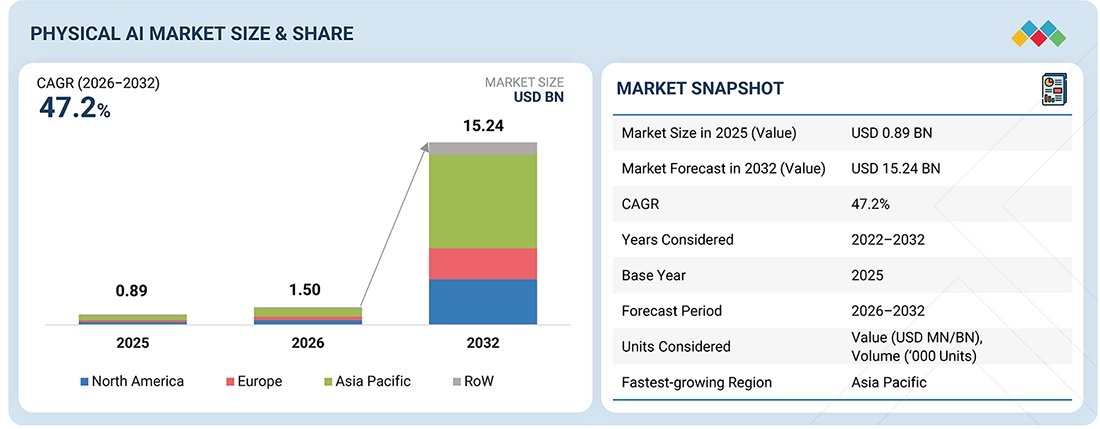
The physical AI market size was USD 0.89 billion in 2025 and is expected to reach USD 15.24 billion by 2032, growing at a CAGR of 47.2% during the forecast period 2026 to 2032 The growth rate of physical AI market is in the research report. The market is driven by fast development of edge AI computing, multi-modal perception and real-time decision-making capability in robots. Investment in humanoid robotics, AI-enabled autonomy, and simulation platforms enables scalable deployment. In addition, soaring demand for automation in industries and rising labour shortages are helping accelerate adoption.
PHYSICAL AI MARKET SNAPSHOP TABLE
| REPORT METRIC | DETAILS |
|---|---|
| Market Size in 2025 (Value) | USD 0.89 Billion |
| Market Forecast in 2032 (Value) | USD 15.24 Billion |
| Growth Rate | CAGR of 47.2% from 2026-2032 |
| Years Considered | 2022-2032 |
| Base Year | 2025 |
| Forecast Period | 2026-2032 |
| Units Considered | Value (USD Million/Billion), Volume (Thousand Units) |
| Report Coverage | Revenue forecast, company ranking, competitive landscape, growth factors, and trends |
| Driver Growth |
|
| Top Companies |
|
| Segments Covered |
|
| Regions Covered | North America, Asia Pacific, Europe, RoW |
WHAT IS PHYSICAL AI?
Physical AI is the embedment of artificial intelligence into physical systems such as robots, autonomous vehicles, drones, industrial machines, and smart devices that can sense, process and interact with the physical environment. Unlike traditional AI software that operates solely in the digital realm, Physical AI combines artificial intelligence algorithms with sensors, actuators, computer vision, edge computing and robotics to allow machines to make decisions in real-time and take autonomous actions. Technology is transforming manufacturing, healthcare, logistics, automotive, defence, smart infrastructure and other industries, enhancing automation, operational efficiency, safety and human-machine collaboration. Developments in generative AI, IoT, robotics and edge AI are also driving Physical AI solutions’ worldwide adoption.
In terms of trends, the market for physical AI is growing, as generative AI, robotics, IoT and digital twin technologies converge to transform industrial automation, logistics, healthcare and mobility. Physical AI market trends include the rise of humanoid robots and AI-powered autonomous systems, predictive maintenance and collaborative robots (cobots) that work alongside humans. Investment is growing from governments and tech firms and demand is rising for intelligent automation to improve efficiency and reduce reliance on labour, driving faster adoption worldwide. Physical AI is becoming a core technology that is shaping the future of intelligent machines and next-generation industrial ecosystems as industries move toward smart factories and autonomous operations. This rapid growth is enabled by advances in edge AI computing, sensor fusion and real-time decision making technologies that enable machines to perceive, learn and act autonomously in dynamic environments. Looking at physical AI market size by component, hardware, including sensors, actuators, GPUs, and robotics systems, currently commands the largest share, as they are crucial for physical interaction and automation.
Source: Secondary Research, Interviews with Experts, MarketsandMarkets Analysis
PHYSICAL AI MARKET KEY TAKEAWAYS
-
BY REGIONAsia Pacific is expected to dominate the physical AI market with a 50.4% share in 2026.
-
BY OFFERINGBy offering, the hardware segment held largest market share in 2025.
-
BY ROBOT TYPEBy robot type, the industrial robots segment is expected to grow at a CAGR of 56.7% in the physical AI market from 2026 to 2032.
-
BY LEVEL OF AUTONOMYBy level of autonomy, the level 3: advanced segment is likely to record a CAGR of 60.8% during the forecast period.
-
BY VERTICALBy vertical, the logistics & supply chain segment is anticipated to hold the largest market share in 2026.
-
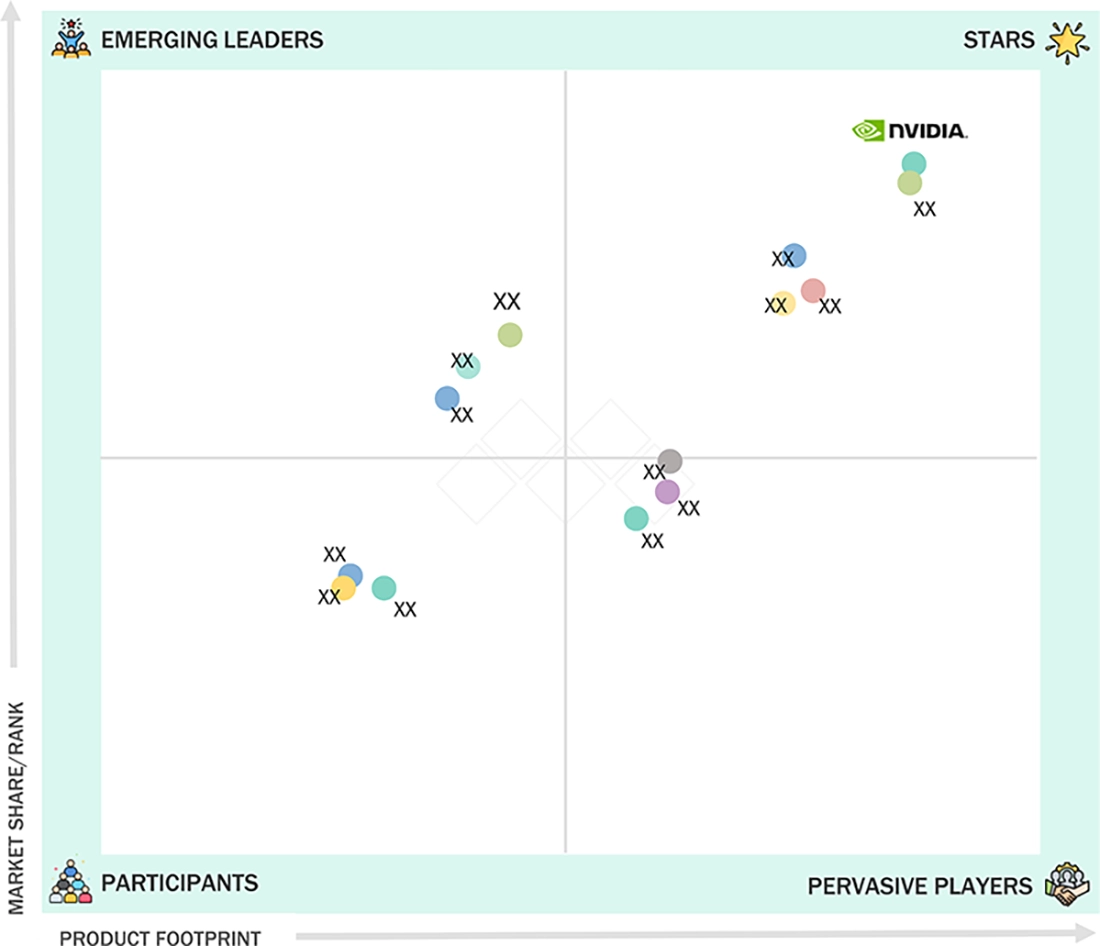
Competitive Landscape - KEY PLAYERSNVIDIA Corporation, ABB, and Qualcomm Technologies, Inc. were identified as some of the star players in the physical AI market, given their strong market share and product footprint.
-
Competitive Landscape - STARTUPS/SMESFigure AI, Agility Robotics, and Physical Intelligence, among others, have distinguished themselves among startups and SMEs by securing strong footholds in specialized niche areas, underscoring their potential as emerging market leaders.
Advanced AI models and robotics that allow for real-time perception, learning and autonomous decision-making are driving the rise of physical AI. Faster adoption is being driven by growing demand for automation in manufacturing, logistics and healthcare and rising shortages of labour. Ongoing improvements in sensors, processors and energy efficient systems are improving performance and cost effectiveness. Additionally, increased investments in humanoid robotics, AI-driven autonomy and simulation technologies are leading to scalable deployment, while improved safety and human-robot collaboration are expanding applications across a wide range of environments.
Physical AI is being led by the likes of NVIDIA Corporation, ABB, and Qualcomm Technologies, Inc. These companies have a large market share and product footprint and are star players in the field. Other emerging leaders include Figure AI, Agility Robotics, and Physical Intelligence, which have carved out strong niches for themselves. Physical AI market trends indicate a strong movement toward higher levels of autonomy, real-time AI inference and collaborative human-machine interaction. Companies are increasingly combining multimodal AI models, computer vision, LiDAR, and edge processing to enable robots and autonomous systems to function efficiently in complex real-world environments. With increasing warehouse automation and autonomous material handling, the logistics & supply chain sector is expected to remain a key revenue contributor. The adoption in the healthcare, retail, agriculture, and mobility sectors is also rising at a rapid pace. North America currently dominates the market with strong AI infrastructure and robotics innovation, while Asia Pacific is expected to grow at the highest rate owing to the growth of manufacturing in China, Japan and South Korea. The growing convergence of AI, IoT, digital twins and advanced robotics is set to change industrial productivity and operational efficiency in the next decade. The Physical AI industry’s long-term outlook thru 2032 is also fuelled by increasing investments by major technology companies and robotics startups in humanoid robotics, autonomous vehicles, and intelligent machines.
TRENDS & DISRUPTIONS IMPACTING CUSTOMERS' CUSTOMERS
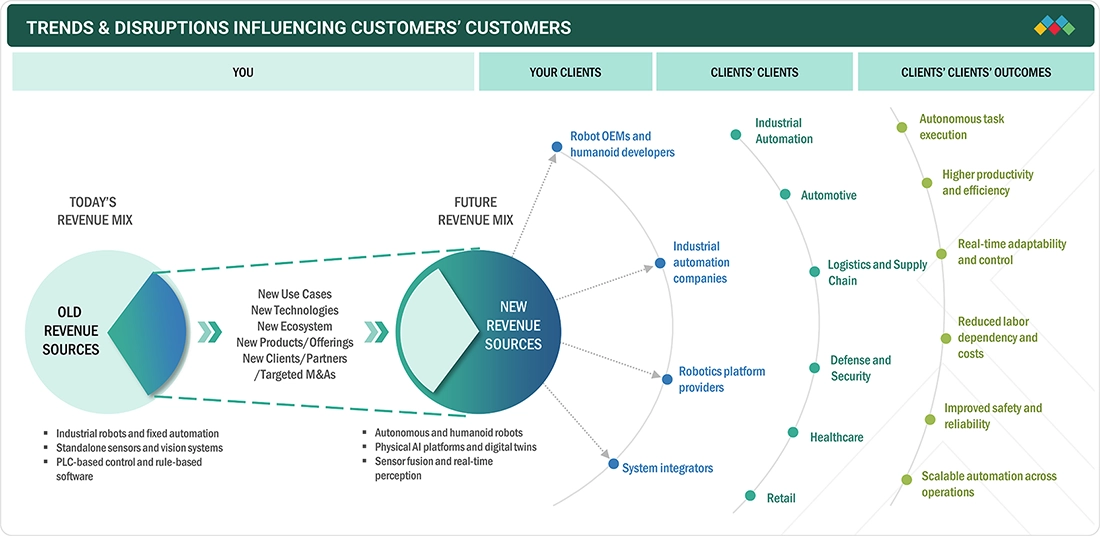
Physical AI market trends indicate a transition from traditional automation to intelligent, autonomous systems fuelled by advancements in AI, sensor fusion and real-time perception. Emerging technologies such as humanoid robots, digital twins and AI platforms are opening up new use cases and sources of income. This transformation is transforming customer ecosystems, where robot OEMs and integrators operate in a variety of industries including manufacturing, logistics and healthcare. This way, end users get higher productivity, better safety, less dependence on labour and scalable, adaptable operations in more complex environments.
Expectations for speed and personalisation are increasing, AI-driven experiences are becoming more common and the rapid rate of digital transformation is increasingly driving the trends and disruptions that impact customers’ customers. End users now expect frictionless, real-time interactions, hyper-personalized products and greater transparency across the value chain forcing businesses to rethink how to design, deliver and support offerings. Companies are being pushed to be more agile and resilient by automation, data-driven decision-making, supply chain volatility and sustainability requirements. Hence, organisations should not only focus on the demands of their existing customers but also predict the changing needs of the end user by making use of technologies such as AI, IoT, and predictive analytics that help improve customer experience, reduce operational costs, and stay ahead of the competition in a fast-changing market scenario.
Source: Secondary Research, Interviews with Experts, MarketsandMarkets Analysis
PHYSICAL AI MARKET DYNAMICS

Level
-
Rising adoption of autonomous robotics across industrial and logistics sectors

-
Advancements in edge AI compute, sensor fusion, and real-time processing capabilities


Level
-
High upfront investment requirements and extended hardware replacement cycles

-
Complex and unpredictable real-world environments


Level
-
Integration of physical AI into defense modernization and autonomous security infrastructure

-
Expansion of physical AI robotics in healthcare and medical assistance


Level
-
Lack of interoperability and standardization across multi-vendor robotics ecosystems

-
Complexity in real-time multimodal perception and decision-making

Source: Secondary Research, Interviews with Experts, MarketsandMarkets Analysis
Driver: Rising adoption of autonomous robotics across industrial and logistics sectors
The physical AI market is propelled by the accelerated adoption of autonomous robotics to enhance operational efficiency and throughput. Enterprises across manufacturing and logistics are leveraging AI-enabled robots to address labor gaps and optimize end-to-end workflows. Advancements in perception, navigation, and real-time decision-making are further enabling scalable and reliable deployments.
Restraint: High upfront investment requirements and extended hardware replacement cycles
Significant capital expenditure associated with advanced robotic systems and AI infrastructure continues to constrain market adoption. Organizations often face extended ROI timelines, impacting investment decisions. Moreover, long hardware replacement cycles reduce the pace of technology upgrades and limit agility in adopting next-generation solutions.
Opportunity: Integration of physical AI into defense modernization and autonomous security infrastructure
Rising investments in defense modernization are creating substantial opportunities for physical AI-enabled systems. Governments are increasingly deploying autonomous platforms for surveillance, reconnaissance, and mission-critical operations. The shift toward intelligent and unmanned security infrastructure is expected to unlock sustained growth potential.
Challenge: Lack of interoperability and standardization across multi-vendor robotics ecosystems
Fragmented standards across robotics hardware and software ecosystems present a critical challenge for seamless integration. Enterprises operating in multi-vendor environments face compatibility and data exchange limitations. This lack of standardization increases system complexity and hinders large-scale, interoperable deployments.
PHYSICAL AI MARKET SIZE, SHARE, GROWTH, REPORT 2025 TO 2032: COMMERCIAL USE CASES ACROSS INDUSTRIES
| COMPANY | USE CASE DESCRIPTION | BENEFITS |
|---|---|---|
 |
Deployment of Figure 02 humanoid robots for sheet-metal handling in BMW’s Spartanburg plant, performing precision pick-and-place tasks within automotive assembly lines; the robots operated in real production environments, integrating with existing workflows and industrial systems while meeting strict cycle time and accuracy requirements. | Validated humanoid deployment in high-volume manufacturing, contributing to production of 30,000+ vehicles | Achieved high precision within tight tolerances and sustained daily operations with minimal intervention | Demonstrated scalability and reliability of humanoid automation in complex industrial settings |
 |
Deployment of Digit humanoid robots in logistics facilities for autonomous tote handling, including picking, transferring, and stacking across workflows; the robots operate in human-centric environments and integrate with existing warehouse infrastructure without requiring major modifications | Handled over 100,000 totes, demonstrating high-throughput and operational reliability | Enabled workforce optimization by shifting human labor to higher-value tasks | Established clear ROI potential through scalable, multi-task automation in dynamic logistics environments |
 |
Deployment of Moxi humanoid robots in hospitals to autonomously transport medical supplies, lab samples, and medications across departments; the robots integrate into existing hospital workflows and utilize AI-driven navigation, task management, and real-time coordination | Completed over 1 million deliveries, significantly improving operational efficiency | Reduced workload on clinical staff, saving over 575,000 hours and enabling greater focus on patient care | Enhanced hospital productivity and streamlined internal logistics |
 |
Deployment of Spot quadruped robots for autonomous inspection, monitoring, and safety operations across industrial sites, energy facilities, and defense applications; the robots use AI-enabled sensing and mobility to operate in hazardous and complex environments | Improved safety by reducing human exposure to dangerous conditions | Enabled predictive maintenance and minimized downtime through continuous monitoring | Delivered operational efficiency and ROI across multiple industries and global deployments |
Logos and trademarks shown above are the property of their respective owners. Their use here is for informational and illustrative purposes only.
PHYSICAL AI MARKET ECOSYSTEM
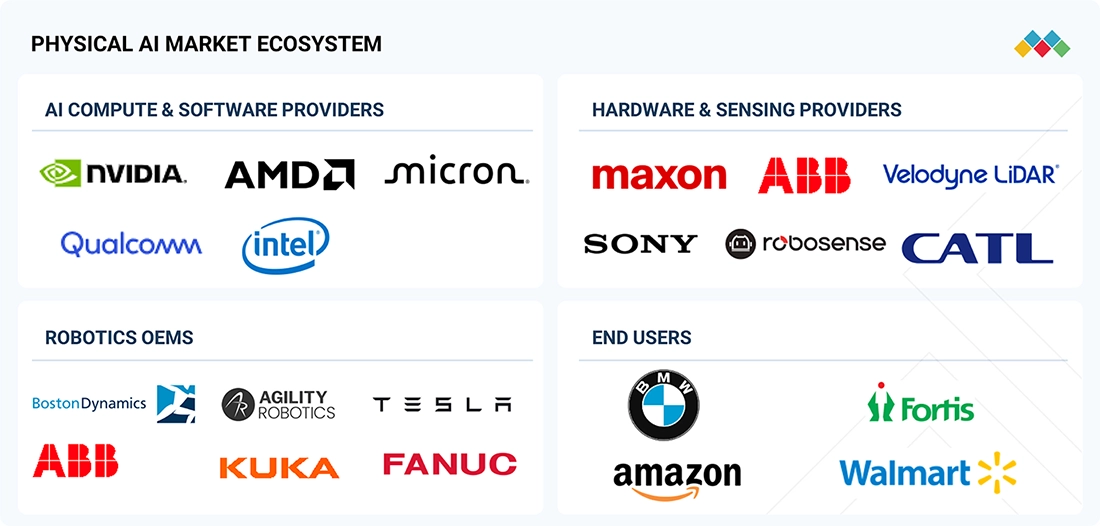
The physical AI companies ecosystem is made up of interconnected layers that cover intelligent compute, sensing hardware, robotics manufacturing and end-user industries. AI compute & software enable perception, decision-making and control in real-time, while hardware & sensing provide critical components such as actuators, sensors, and power systems. These technologies are incorporated by robotics OEMs into autonomous and humanoid systems. These solutions are deployed to end users such as manufacturing, logistics, retail and healthcare enabling improved productivity, operational efficiency and scalable automation.
This physical AI market research report describes the industry as a multi-tiered network of hardware vendors, software developers, system integrators, and end-use industries working together to enable intelligent machines that work in the physical world. At the bottom are component makers providing sensors, GPUs, processors, actuators and connectivity modules that allow machines to sense and interact with their environment. On top of this hardware layer are AI software vendors that deliver machine learning algorithms, computer vision systems and autonomous control platforms that drive real-time decision making. These elements are combined into deployable solutions such as industrial robots, autonomous vehicles, drones and humanoid systems by system integrators and robotics companies. Cloud and edge computing providers also support data processing, simulation and digital twin environments, with adoption key in manufacturing, logistics, healthcare, automotive and defence industries. This interconnected ecosystem is continually evolving and improving with the introduction of AI, IoT, and automation, offering a collaborative environment that enhances the speed of innovation and scalability in the physical AI market.
Logos and trademarks shown above are the property of their respective owners. Their use here is for informational and illustrative purposes only.
PHYSICAL AI MARKET SEGMENTS
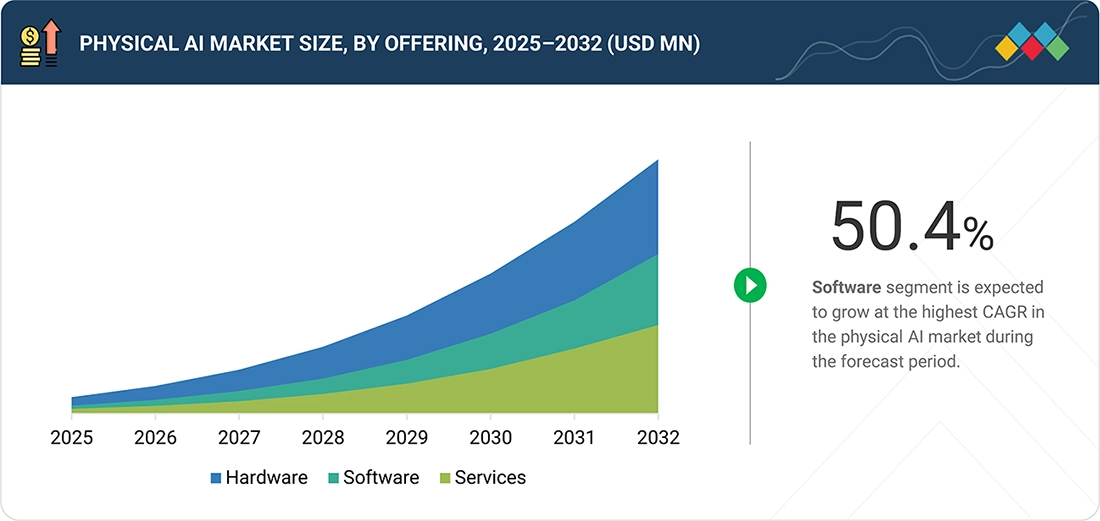
The physical AI market is segmented by offering, type of robot, level of autonomy, and vertical, reflecting the diverse technologies and applications that are driving intelligent automation. Offerings: The market is characterised by hardware, software, and services. The software segment is expected to witness the highest growth owing to rise in adoption of AI-enabled perception, digital twins, simulation platforms, and robot orchestration solutions. Based on robot types, the market is segmented into industrial robots, professional service robots, collaborative robots (cobots), autonomous mobile robots (AMRs) and humanoid robots. Professional service robots are the most adopted ones in healthcare, logistics, retail and hospitality. The market by level of autonomy ranges from assisted automation to fully autonomous systems. Level 3 advanced autonomy is likely to record the highest CAGR, with developments in AI, sensor fusion, edge computing, and real-time decision-making. The physical AI market is divided by vertical into segments such as manufacturing, logistics and supply chain, healthcare, retail, agriculture, automotive, construction, aerospace and defence, among others. Logistics and supply chain is expected to have the largest market share due to rapid warehouse automation, e-commerce growth, and the increasing demand for intelligent, scalable operations.
Source: Secondary Research, Interviews with Experts, MarketsandMarkets Analysis
Physical AI Market, By Offering
The software segment is expected to witness the highest CAGR due to increasing demand for AI-driven perception, decision-making, and orchestration platforms. Growing adoption of digital twins, simulation environments, and real-time analytics is accelerating software integration across robotics systems. Additionally, the shift toward platform-based and Robotics-as-a-Service models is further driving software-led value creation.
Physical AI Market, By Robot Type
Professional service robots are expected to dominate in 2026, driven by increasing adoption across healthcare, logistics, retail, and hospitality sectors. These robots are widely used for tasks such as delivery, inspection, cleaning, and customer assistance, improving efficiency and reducing labor dependency. Advancements in AI, mobility, and human-robot interaction are further enabling their deployment in dynamic, real-world environments.
Physical AI Market, By Level of Autonomy
Level 3: advanced autonomy is expected to grow at the highest CAGR during the forecast period, driven by the increasing demand for adaptive and intelligent robotic systems. These robots leverage AI for real-time decision-making, dynamic task execution, and minimal human intervention. Advancements in sensor fusion, edge computing, and machine learning are accelerating the transition toward higher autonomy levels.
Physical AI Market, By Vertical
The logistics and supply chain segment is expected to hold largest market share in 2032 due to the rising demand for automation in warehousing and fulfillment operations. Growth in e-commerce and the need for faster, more efficient delivery systems are driving the adoption of AI-enabled robots. Additionally, labor shortages and the need for scalable operations are further strengthening demand in this vertical.
PHYSICAL AI MARKET REGION
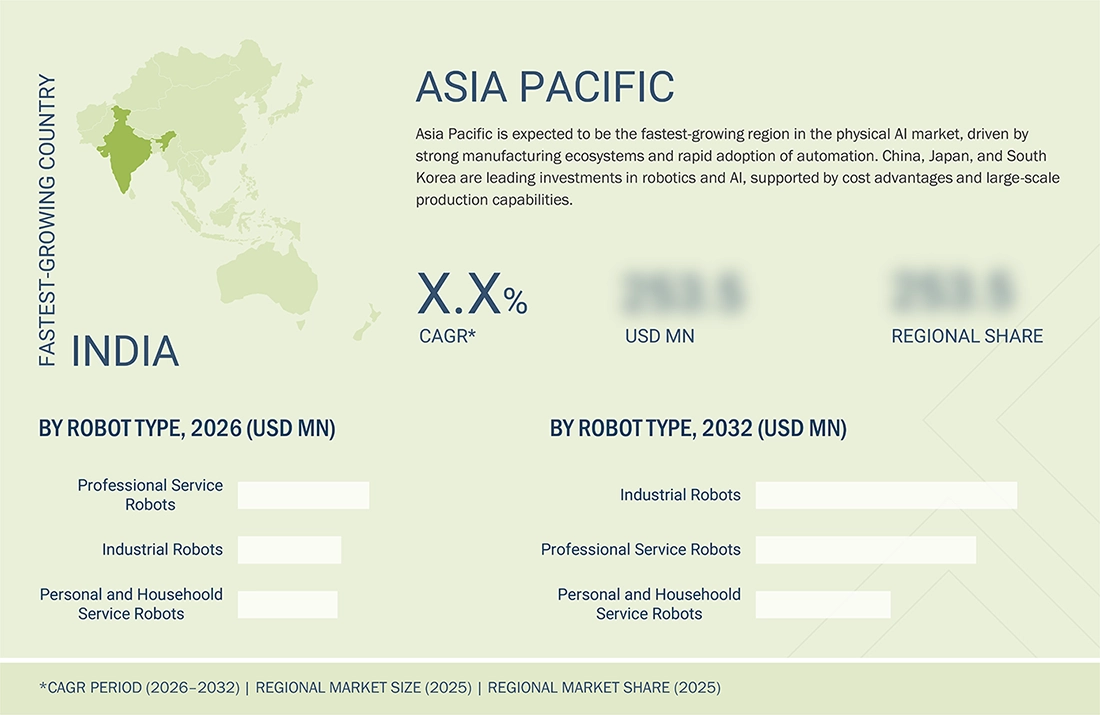
Asia Pacific to be fastest-growing region in global physical AI market during forecast period
Asia Pacific is expected to be the fastest-growing region in the physical AI market size, driven by strong manufacturing ecosystems and rapid industrial automation. China, Japan, and South Korea are leading investments in robotics, AI hardware, and humanoid development. The region benefits from cost advantages, large-scale production capabilities, and a robust electronics supply chain. Additionally, supportive government initiatives and rising demand across logistics, healthcare, and industrial sectors are accelerating market growth.
PHYSICAL AI MARKET SIZE, SHARE, GROWTH, REPORT 2025 TO 2032: COMPANY EVALUATION MATRIX
In the physical AI market share matrix, NVIDIA Corporation emerges as the Star player, supported by its dominant market presence and comprehensive, vertically integrated AI hardware and software ecosystem. NVIDIA leads with its full-stack physical AI platform, spanning high-performance GPUs, CUDA frameworks, and robotics-focused platforms, such as Isaac and Omniverse. This enables seamless development, simulation, and deployment of intelligent autonomous systems. Its solutions empower enterprises to build highly capable physical AI robots with real-time perception, advanced decision-making, and scalable deployment across industrial automation, logistics, healthcare, and humanoid robotics applications.
Source: Secondary Research, Interviews with Experts, MarketsandMarkets Analysis
PHYSICAL AI MARKET KEY PLAYERS
- NVIDIA Corporation (US)
- ABB (Switzerland)
- Qualcomm Technologies, Inc. (US)
- Moog (US)
- Festo (Germany)
- Advanced Micro Devices, Inc. (US)
- STMicroelectronics (Switzerland)
- Texas Instruments Incorporated (US)
- SK HYNIX INC. (South Korea)
- Infineon Technologies AG
- Bosch Sensortec GmbH (Germany)
WHAT IS IN IT FOR YOU: PHYSICAL AI MARKET SIZE, SHARE, GROWTH, REPORT 2025 TO 2032 REPORT CONTENT GUIDE
DELIVERED CUSTOMIZATIONS
We have successfully delivered the following deep-dive customizations:
| CLIENT REQUEST | CUSTOMIZATION DELIVERED | VALUE ADDS |
|---|---|---|
| Comprehensive Ecosystem Mapping of Physical AI | Conducted detailed mapping of the Physical AI ecosystem covering AI compute providers, sensor manufacturers, actuator suppliers, robotics OEMs, software platforms, and system integrators across key industries | Provides end-to-end visibility into ecosystem structure, value chain dynamics, and key stakeholders, enabling informed partnership, investment, and market entry strategies |
| Competitive Benchmarking of Physical AI Solution Providers | Evaluated leading robotics and Physical AI vendors based on product portfolio, autonomy capabilities, AI integration, scalability, deployment models, and industry focus | Enables strategic vendor comparison, strengthens competitive intelligence, and supports partnership, investment, and acquisition decision-making |
| Application-Level and Industry-Specific Opportunity Assessment | Analyzed high-impact use cases across manufacturing, logistics, healthcare, retail, and defense, including automation, inspection, material handling, and service robotics | Identifies high-growth revenue pockets, prioritizes key applications and industries, and sharpens go-to-market strategies |
| Technology Roadmap and Innovation Assessment | Assessed evolution of key technologies including AI processors, sensor fusion, humanoid robotics, edge AI, and digital twin platforms across development stages | Supports long-term technology investment planning and aligns Physical AI strategies with future innovation and automation trends |
| Cost Structure, Pricing, and Deployment Analysis | Evaluated cost components including hardware (sensors, processors, actuators), software platforms, integration costs, and deployment models such as Robotics-as-a-Service | Enables optimized pricing strategies, improved cost planning, and better understanding of ROI and scalability for Physical AI deployments |
RECENT DEVELOPMENTS
- August 2026 : Hyundai Motor Group partnered with the Republic of Korea Army to test physical AI robots for military logistics and transport. The initiative will explore autonomous robots for material movement, perimeter security, and hazardous missions. Physical AI will enable robots to operate in complex environments with greater autonomy and adaptability. The collaboration aims to improve operational efficiency while reducing risks to personnel. The program strengthens Hyundai Motor Group’s role in next-generation military robotics and AI-driven defense solutions.
- March 2026 : Universal Robots advanced Physical AI with the UR AI Trainer, developed with Scale AI to accelerate robot learning from human demonstrations. The platform captures synchronized motion, force, and vision data to train AI models for real-world robotic tasks. UR AI Trainer bridges simulation and factory deployment, enabling faster development of adaptive automation. The technology supports complex manipulation tasks while reducing the gap between AI research and production. The solution positions Universal Robots to deliver more flexible, intelligent, and scalable industrial automation.
- August 2026 : AIxC Holdings shifted its strategic focus to Physical AI and robotic operations, moving away from its digital-asset strategy. Its RoboShare platform completed its first paid commercial order, marking the start of revenue-generating operations. The deployment featured six robots across three product types at a Malibu event. RoboShare is targeting a ten-city rollout, connecting robot owners with customers through sharing and rental services. The move positions AIxC Holdings to build a scalable robotics commercialization platform focused on real-world robot utilization.
- August 2026 : GMEX Robotics highlighted the shift of Physical AI from experimental robotics to production-ready deployment. Its Terminal + Brain platform combines autonomous hardware with AI-driven intelligence for real-world industrial operations. The company emphasizes interoperability, reliability, and access to real-world data as key requirements for scaling robotic systems. Physical AI is increasingly targeting logistics, manufacturing, and other demanding environments where robots must operate reliably alongside existing infrastructure. The transition is positioning production-grade robotics as a scalable automation platform rather than a laboratory technology.
- August 2026 : Korea Institute of Machinery and Materials (KIMM) will host the Global Forum on Mechanical Engineering 2026 to spotlight Physical AI and next-generation robotics. The forum will showcase KAIROS, KIMM’s AI humanoid robot designed for autonomous mobility, manipulation, and interaction. Demonstrations will also feature autonomous delivery, agricultural, last-mile, and robotic prosthetic technologies. The event will highlight applications across manufacturing, logistics, healthcare, agriculture, safety, and defense. The initiative aims to accelerate Physical AI commercialization and strengthen Korea’s robotics and mechanical-engineering ecosystem.
Table of Contents
 Exclusive indicates content/data unique to MarketsandMarkets and not available with any competitors.
Methodology
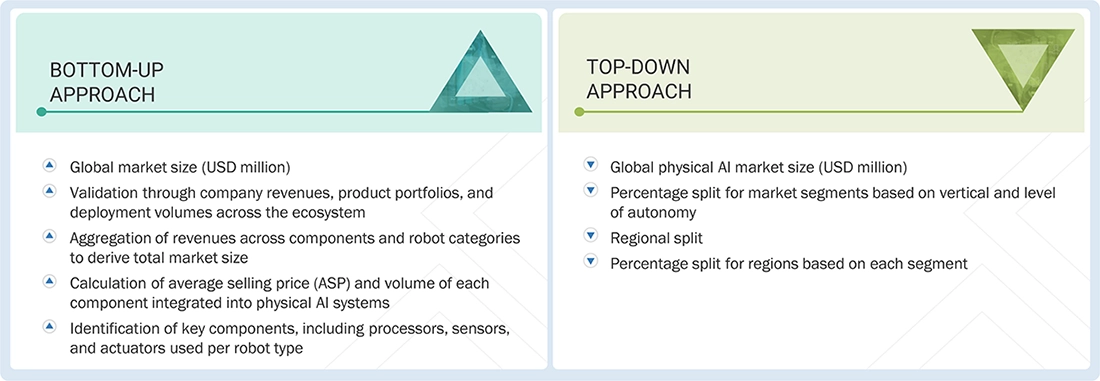
The study involved four major activities in estimating the current size of the physical AI market. Exhaustive secondary research collected information on the market, peer, and parent markets. The next step was to validate these findings, assumptions, and sizing with industry experts across the value chain through primary research. Both top-down and bottom-up approaches were employed to estimate the complete market size. After that, market breakdown and data triangulation techniques were used to estimate the market size of segments and subsegments.
Secondary Research
The secondary research process has referred to various secondary sources to identify and collect necessary information for this study. The secondary sources include annual reports, press releases, and investor presentations of companies; white papers; journals and certified publications; and articles from recognized authors, websites, directories, and databases. Secondary research was mainly used to obtain key information about the supply chain of the industry, the total pool of market players, classification of the market according to industry trends to the bottom-most level, regional markets, and key developments from the market and technology-oriented perspectives. Secondary data was collected and analyzed to determine the overall market size, which was further validated through primary research.
Primary Research
Extensive primary research has been conducted after obtaining information about the current scenario of the small satellite market through secondary research. Several primary interviews have been conducted with market experts from the demand and supply sides across North America, Europe, Asia Pacific, the Middle East, and the Rest of the World. This primary data has been collected through questionnaires, emails, and telephonic interviews.
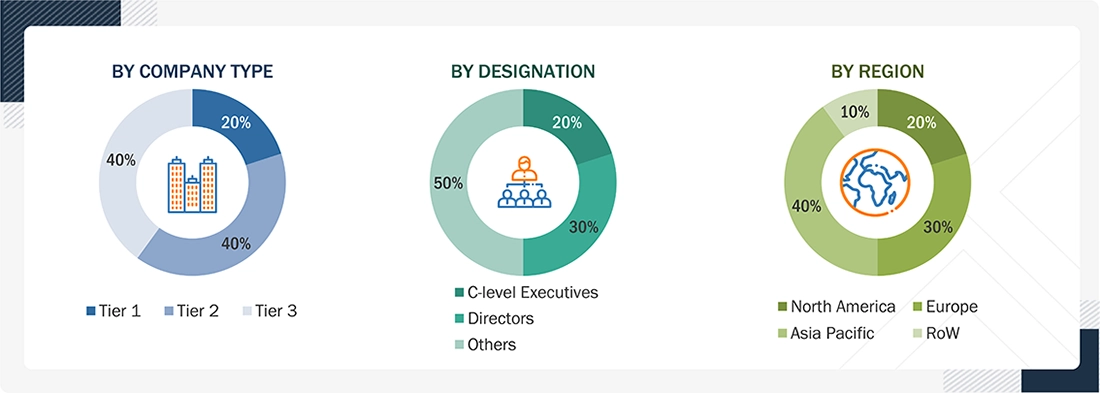
Notes: Other designations include technology heads, media analysts, sales managers, marketing managers, and product managers.
The three tiers of the companies are based on their total revenues as of 2024; Tier 1: >USD 1 billion, Tier 2: USD 500 million–1 billion, and Tier 3: <USD 500 million.
To know about the assumptions considered for the study, download the pdf brochure
Market Size Estimation
In the complete market engineering process, top-down and bottom-up approaches and several data triangulation methods were used to estimate and forecast the overall market segments and subsegments listed in this report. Key players in the market were identified through secondary research, and their market shares in the respective regions were determined through primary and secondary research. This entire procedure includes the study of annual and financial reports of the top market players and extensive interviews for key insights (quantitative and qualitative) with industry experts (CEOs, VPs, directors, and marketing executives).
All percentage shares, splits, and breakdowns were determined using secondary sources and verified through primary sources. All the parameters affecting the markets covered in this research study were accounted for, viewed in detail, verified through primary research, and analyzed to obtain the final quantitative and qualitative data. This data was consolidated and supplemented with detailed inputs and analysis from MarketsandMarkets and presented in this report.
Physical AI Market : Top-Down and Bottom-Up Approach
Data Triangulation
After arriving at the overall market size, the market was split into several segments and subsegments using the market size estimation processes explained above. Data triangulation and market breakdown procedures were employed to complete the entire market engineering process and determine the exact statistics of each market segment and subsegment. The data was triangulated by studying various factors and trends from the demand and supply sides in the physical AI market.
Market Definition
Physical AI refers to artificial intelligence embedded within robots and autonomous machines that enables them to perceive, interpret, and interact with the physical world through real-time on-device processing. These systems integrate hardware components, such as edge AI processors, sensors, and actuation systems, with intelligent software platforms that enable perception, navigation, manipulation, and decision making. Physical AI systems operate across different levels of autonomy, ranging from reactive automation to advanced reasoning capabilities. They are implemented in robotic platforms, including industrial robots, professional service robots, and personal and household robots, supporting applications across sectors such as healthcare, industrial automation, automotive, logistics and supply chain, defense and security, retail, and education.
Key Stakeholders
- Government bodies and policymakers
- Robotics and AI industry associations
- Robotics manufacturers
- Semiconductor and AI chip companies
- Sensor technology providers
- Actuator and motor manufacturers
- Robotics software platform providers
- Edge computing providers
- Original equipment manufacturers (OEMs)
- System integrators
- Technology and solution providers
- Simulation and digital twin providers
- Research institutes and universities
- Defense and security organizations
- Enterprise end users
- Venture capital and technology investors
- Intellectual property providers
- Market research and consulting firms
- Industry analysts and strategists
- Forums, alliances, and associations
Report Objectives
- To define, describe, and forecast the size of the physical AI market, by offering, robot type, level of autonomy, and vertical, in terms of value
- To forecast the size of market segments with respect to four regions, namely North America, Europe, Asia Pacific, and RoW, in terms of value
- To identify and analyze key drivers, restraints, opportunities, and challenges influencing the growth of the market
- To offer an ecosystem analysis, value chain analysis, case study analysis, patent analysis, technology analysis, pricing analysis, Porter’s five forces analysis, and regulations pertaining to the market
- To strategically analyze micromarkets with respect to individual growth trends, prospects, and contributions to the total market
- To strategically profile key players and comprehensively analyze their market shares and core competencies
- To analyze the opportunities in the market for stakeholders and describe the competitive landscape of the market
- To study competitive developments, such as collaborations, partnerships, product launches/developments, and acquisitions, in the market
Available customizations:
With the given market data, MarketsandMarkets offers customizations according to the specific requirements of companies. The following customization options are available for the report:
Regional Analysis
- Additional country-wise breakdown for North America, Europe, the Asia Pacific, and the Rest of the World
Company Information
- Detailed analysis and profiling of additional market players (up to five)
Key Questions Addressed by the Report
What is the estimated size of the Physical AI Market?
The Physical AI Market size was USD 0.89 billion in 2025 and is expected to reach USD 15.24 billion by 2032, reflecting strong growth driven by increasing adoption of AI-powered robots, autonomous systems, and intelligent machines.
What is the projected growth rate of the Physical AI Market?
The Physical AI Market is projected to grow at a CAGR of 47.2% during the forecast period from 2026 to 2032. This rapid growth is supported by advances in artificial intelligence, robotics, computer vision, sensors, and autonomous decision-making technologies.
What is driving growth in Physical AI?
Growth is primarily driven by the rising adoption of AI-powered robotics, autonomous machines, intelligent manufacturing systems, and embodied AI. Increasing demand for automation, labor shortages, advances in generative and multimodal AI, and growing investments in smart factories are also accelerating market growth.
Is there a good market research report on Physical AI?
Yes. A comprehensive Physical AI Market research report can provide insights into market size, share, growth trends, forecasts, technology developments, applications, regional markets, and the competitive landscape. Such reports can help businesses and investors understand market opportunities and emerging trends.
What is the Physical AI Market forecast for the United States?
The United States is expected to be a major market for Physical AI during the forecast period, supported by significant investments in AI and robotics, advanced manufacturing infrastructure, autonomous systems, and research and development. Increasing adoption across manufacturing, logistics, healthcare, and other industries is expected to create significant growth opportunities.
What industries are adopting Physical AI?
Physical AI is being increasingly adopted across manufacturing, automotive, logistics, healthcare, retail, agriculture, aerospace, and defense. These industries use Physical AI to enable autonomous robots, intelligent machines, automated material handling, predictive operations, and real-time decision-making.
What technologies are used in Physical AI?
Physical AI combines technologies such as artificial intelligence, machine learning, computer vision, robotics, sensors, edge computing, digital twins, and generative AI. Together, these technologies enable machines to perceive their surroundings, make decisions, learn from interactions, and perform physical tasks.
What are the major applications of Physical AI?
Major applications include industrial robotics, autonomous mobile robots, collaborative robots, autonomous vehicles, warehouse automation, smart manufacturing, healthcare robots, and intelligent inspection systems. The growing need for autonomous and adaptive machines is expanding the application scope of Physical AI.
Why is Physical AI important for smart manufacturing?
Physical AI enables machines and robots to interact intelligently with their physical environment and respond to changing conditions. In smart manufacturing, it can improve automation, production efficiency, quality inspection, predictive maintenance, worker safety, and operational decision-making, helping manufacturers build more flexible and autonomous production environments.
What are the key opportunities in the Physical AI Market?
Key opportunities include the development of autonomous robots, humanoid robots, AI-enabled industrial equipment, intelligent logistics systems, autonomous vehicles, and AI-powered smart factories. Increasing investment in embodied AI and the integration of advanced AI models with physical machines are expected to create new opportunities through 2032.


Personalize This Research
- Triangulate with your Own Data
- Get Data as per your Format and Definition
- Gain a Deeper Dive on a Specific Application, Geography, Customer or Competitor
- Any level of Personalization
Let Us Help You
- What are the Known and Unknown Adjacencies Impacting the Physical AI Market
- What will your New Revenue Sources be?
- Who will be your Top Customer; what will make them switch?
- Defend your Market Share or Win Competitors
- Get a Scorecard for Target Partners

Custom Market Research Services
We Will Customise The Research For You, In Case The Report Listed Above Does Not Meet With Your Requirements
Get 10% Free CustomisationTESTIMONIALS

Tetsuya Ohhira
Business Development Manager-Technology Business
Nikon Corporation,
Leading Japanese MNC specializing in optics and imaging productswww.nikon.com
MarketsandMarkets™ response
is quick. Their attitude is flexible and positive. Analyst Insights are globally considered and
significant. Client Services quickly respond to our inquiry and demand. Their wide range of global
surveys help us make our strategic plan.
We hope Knowledge Store will be easier to search
for a report.
VP - Marketing & Business Development
Leading Provider of Process Control Solutions
We engaged with MarketsandMarkets on a study to perform an analysis and recommend a Go-To-Market strategy for metrology and process control in the semiconductor market. The study was tailored to our targets and needs with well-defined milestones. Our overall experience with the MarketsandMarkets team was very good throughout the project in all aspects including the analysis methodologies used, the quality and depth of primary and secondary data sets, the professionalism and flexibility of the team and the ability to meet the target schedule and milestones. We want to thank MarketsandMarkets team for a job well done.
- US Physical AI Market
- Canada Physical AI Market
- Mexico Physical AI Market
- Germany Physical AI Market
- UK Physical AI Market
- France Physical AI Market
- Italy Physical AI Market
- Rest Of Europe Physical AI Market
- China Physical AI Market
- Japan Physical AI Market
- South Korea Physical AI Market
- India Physical AI Market
- Rest Of Asia Pacific Physical AI Market
- GCC Countries Physical AI Market
Growth opportunities and latent adjacency in Physical AI Market






Mark
Apr, 2026
Hardware currently dominates the market but as AI evolves, do you see software and intelligence layers overtaking hardware in long-term value creation?.