Piezoelectric Ceramics Market

Piezoelectric Ceramics Market by Type (Barium Titanate, Potassium Niobate, Lead Zirconate Titanate), End-use Industry (Consumer Electronics, Aerospace & Defense, Industrial & Manufacturing, Automotive, Medical), and Region - Global Forecast To 2031




OVERVIEW
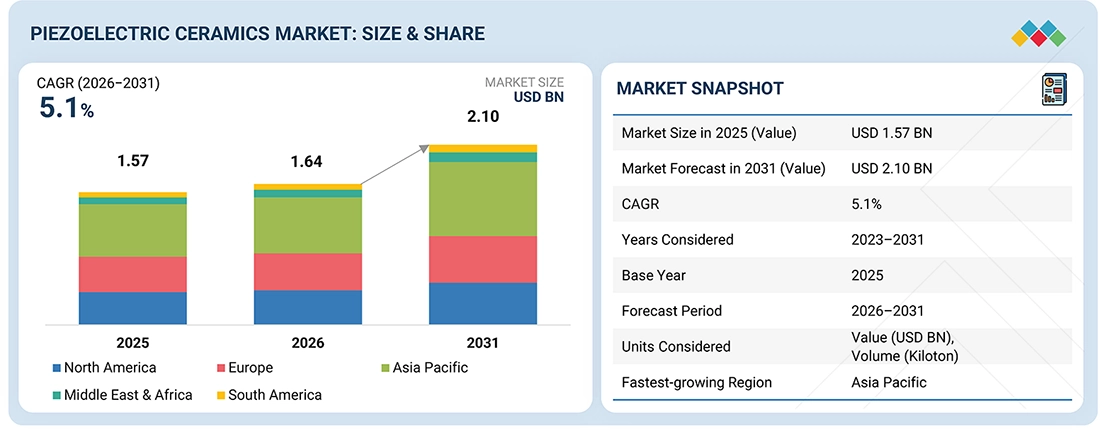
Source: Secondary Research, Interviews with Experts, MarketsandMarkets Analysis
The piezoelectric ceramics market is projected to reach USD 2.10 billion by 2031, up from USD 1.64 billion in 2026, at a CAGR of 5.1%. The global piezoelectric ceramics market is experiencing strong growth due to factors such as the rapid expansion of the consumer electronics sector, significant investment in the industrial and manufacturing sectors, rising demand from the medical industry, and a strong focus on vehicle electrification.
Market Size and Forecast:
- Market Size Value in 2026: USD 1.64 Billion
- Revenue Forecast in 2031: USD 2.10 Billion
- Growth Rate: CAGR of 5.1% from 2026 to 2031
- Data available from 2023 to 2031
Key Market Trends and Insights
- Segment Acceleration: The lead zirconate titanate (PZT) segment is the fastest-accelerating and dominant category, accounting for 46% of total market share in 2025, while the industrial & manufacturing segment leads end-use demand with 38% share, reflecting rapid scaling of automation and precision applications.
-
Growth Opportunities: The market is projected to grow at a CAGR of 5.1%, with strong opportunities concentrated in Asia Pacific (holding 39% share in 2025) driven by expanding semiconductor manufacturing, EV adoption, and 5G infrastructure investments.
- Growth Drivers: Growth is primarily driven by increasing demand from consumer electronics, rising investments in aerospace & defense and industrial sectors, alongside growing applications in medical devices and vehicle electrification.
- Market Share Analysis: The market is moderately consolidated, with leading players such as TDK Corporation, Murata, and Kyocera holding significant shares, while regional dominance remains with Asia Pacific and niche players continue gaining traction in specialized applications.
KEY TAKEAWAYS
-
By RegionThe Asia Pacific piezoelectric ceramics market accounted for a ~39% revenue share in 2025.
-
By TypeBy type, the lead zirconater titanate segment accounted for a ~46% revenue share in 2025.
-
By End-use IndustryBy end-use industry, the industrial & manufacturing segment is accounted for a ~38% share in 2025.
-
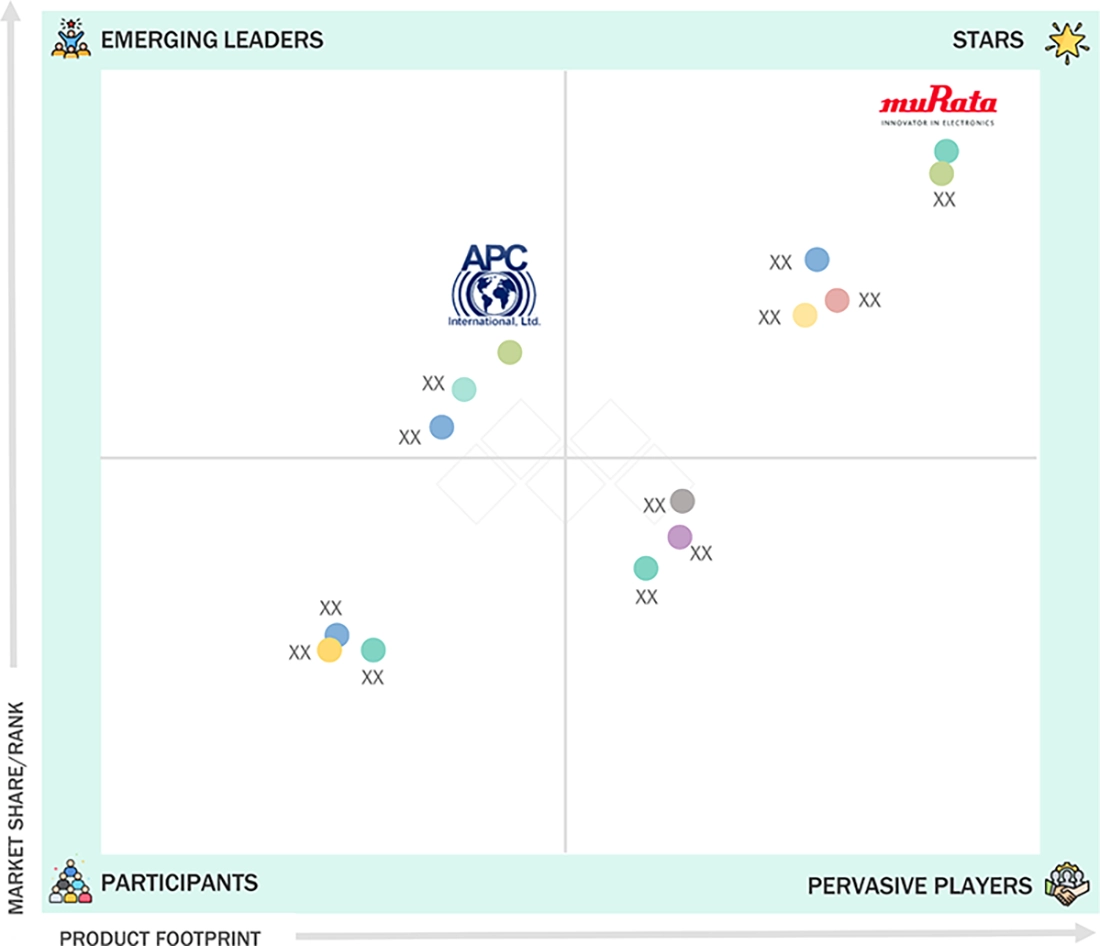
Competitive Landscape - Key PlayersTDK Corporation, Murata, and Kyocera were identified as some of the star players in the piezoelectric ceramics market (global), given their strong market share and product footprint.
-
Competitive Landscape - Startups/SMEsPiezo Direct, PZT Electronic, and EBL Products, among others, have distinguished themselves among startups and SMEs by securing strong footholds in specialized niche areas, underscoring their potential as emerging market leaders.
The global piezoelectric ceramics market is seeing regional growth, driven by expanding end-use industries and technological advancements. North America is experiencing strong demand, fueled by increased investments in defense, aerospace, medical devices, and industrial automation. Europe is supported by rising adoption of EVs, industrial automation systems, and sustainable electronic technologies. Asia Pacific remains the largest and fastest-growing market, driven by large-scale electronics manufacturing, semiconductor production, EV expansion, 5G infrastructure development, and growing defense modernization activities across China, Japan, South Korea, and India. Meanwhile, South America and the Middle East & Africa are seeing gradual growth, supported by industrialization, healthcare expansion, infrastructure development, and increasing adoption of advanced sensing and automation technologies.
TRENDS & DISRUPTIONS IMPACTING CUSTOMERS' CUSTOMERS
Technological advancements and evolving customer demands are driving major disruptions across industrial, automotive, healthcare, and consumer electronics sectors. Increasing focus on miniaturization, precision sensing, energy efficiency, and smart connectivity is accelerating innovation and creating new growth opportunities across the value chain.
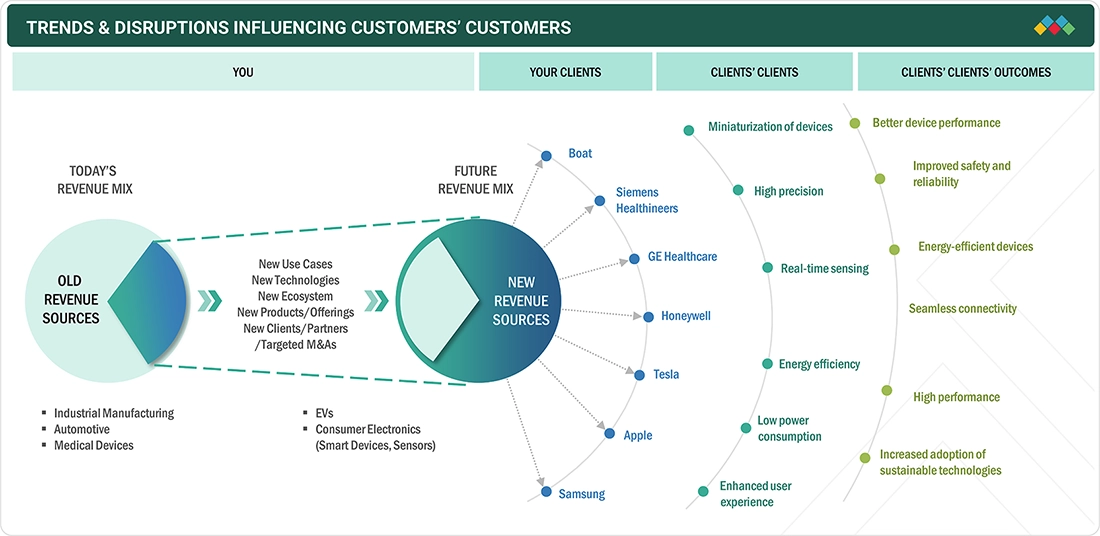
Source: Secondary Research, Interviews with Experts, MarketsandMarkets Analysis
MARKET DYNAMICS

Level
-
Rapid expansion of consumer electronics sector

-
Rising global defense budget and modernization programs


Level
-
Environmental and regulatory concerns associated with lead based materials


Level
-
Rapid expansion of IoT

-
Development and commercialization of lead-free piezoelectric materials and textured ceramics


Level
-
Complexity of manufacturing and material processing

-
Material stability and performance issues

Source: Secondary Research, Interviews with Experts, MarketsandMarkets Analysis
Driver: Rapid expansion of consumer electronics sector
Rapid expansion of the consumer electronics segment is driving demand for piezoelectric ceramics. It is due to the increasing integration of actuators, sensors, speakers, haptic feedback systems, microphones, and MEMS devices in smartphones, wearables, tablets, laptops, and smart home devices. The Asia Pacific region is the global hub of the electronics sector. India is projected to become the fourth-largest consumer of durables by FY2027. This growth is strongly supported by favorable Indian government initiatives, including the PLI scheme, 100% foreign direct investment in electronics manufacturing, electronics manufacturing clusters, and others. Globally, there is growing adoption of consumer electronics such as wearables, smartphones, and AI-enabled applications. South Korea and Japan continue to play a critical role in advanced manufacturing, advanced electronic devices, and related sectors, further increasing the adoption of piezoelectric ceramic-based sensors and other technologies.
Restraint: Environmental and regulatory concerns associated with lead based materials
Environmental and regulatory concerns associated with lead-based materials, particularly lead zirconate titanate (PZT), are acting as a restraint for the piezoelectric ceramics market. Lead is a toxic substance that poses a very high risk to human health, including developmental disorders, neurological disorders, and others. Increasing environmental policies and regulations, such as Restriction of Hazardous Substances, REACH, and other global standards, are really pushing manufacturers to cut down, or outright remove, lead-containing materials from electronic components as well as from industrial products. For instance, under the Clean Water Act, the discharge of lead into water bodies is strictly regulated through systems such as the National Pollutant Discharge Elimination System (NPDES), which strictly imposes limits and monitoring requirements to prevent environmental pollution. Additionally, growing consumer preference for environmentally sustainable electronics and increasing regulatory scrutiny across Europe, North America, and the Asia Pacific are accelerating the shift toward lead-free piezoelectric alternatives such as barium titanate, potassium sodium niobate (KNN), and others.
Opportunity: Rapid expansion of IoT
The rapid expansion of the Internet of Things (IoT) ecosystem is creating significant growth opportunities for the piezoelectric ceramics market, driven by rising demand for compact, energy-efficient, and high-performance sensing technologies. Piezoelectric ceramics are widely used in IoT-enabled sensors, MEMS devices, vibration monitoring systems, acoustic sensors, wearable electronics, and smart home applications because they convert mechanical energy into electrical signals with high precision and low power consumption. The growing adoption of connected devices across industrial automation, smart cities, healthcare monitoring, consumer electronics, and automotive applications is further accelerating demand for miniaturized piezoelectric components. Additionally, the increasing deployment of 5G infrastructure, wireless communication systems, and AI-enabled smart devices is expected to create long-term opportunities for advanced piezoelectric ceramic materials and sensing technologies.
Challenge:Complexity of manufacturing and material processing
The complexity of manufacturing and material processing poses a major challenge for the piezoelectric ceramics market. Producing advanced piezoelectric ceramics requires complex, tightly controlled processes, including powder preparation, material formulation, calcination, milling, pressing, tape casting, sintering, polarization, metallization, and precision finishing. Maintaining consistent material properties, dielectric performance, dimensional accuracy, and other characteristics at scale remains technically demanding and very cost-intensive. Additionally, producing advanced multilayer piezoelectric ceramics requires precise control of internal electrode structures, crack prevention, thermal stability, and material compatibility, further increasing production complexity. Fluctuations in raw material quality, high sintering temperatures, and stringent performance requirements for mobility, consumer electronics, medical, aerospace, food & beverage, precision farming, and defense applications also create operational and quality control challenges for manufacturers.
PIEZOELECTRIC CERAMICS MARKET: COMMERCIAL USE CASES ACROSS INDUSTRIES
| COMPANY | USE CASE DESCRIPTION | BENEFITS |
|---|---|---|
 |
Utilizes piezoelectric ceramic-based acoustic components, haptic feedback systems, and MEMS sensors in smartphones and wearable devices to enable precise touch response, miniaturization, and enhanced user experience | Supports compact device design, low power consumption, and high-precision sensing capabilities |
 |
Uses piezoelectric ceramic transducers in ultrasound imaging systems for medical diagnostics and real-time imaging applications | Enables high-resolution imaging, improved diagnostic accuracy, and efficient energy conversion in ultrasound devices |
 |
Integrates piezoelectric ceramic technologies into sonar systems, vibration monitoring devices, and advanced aerospace sensing platforms for defense and surveillance applications | Supports high-frequency sensing, enhanced situational awareness, and improved operational reliability in defense systems |
Logos and trademarks shown above are the property of their respective owners. Their use here is for informational and illustrative purposes only.
MARKET ECOSYSTEM
The piezoelectric ceramics ecosystem analysis identifies and evaluates the interconnected relationships among key stakeholders, including raw material suppliers, equipment suppliers, manufacturers, distributors, and end users. Raw material suppliers provide essential inputs such as lead oxide, zirconium oxide, titanium oxide, and other materials to piezoelectric ceramics manufacturers. Distributors and suppliers play a critical role in connecting manufacturers with end-use industries, helping to streamline the supply chain and improve operational efficiency and profitability.
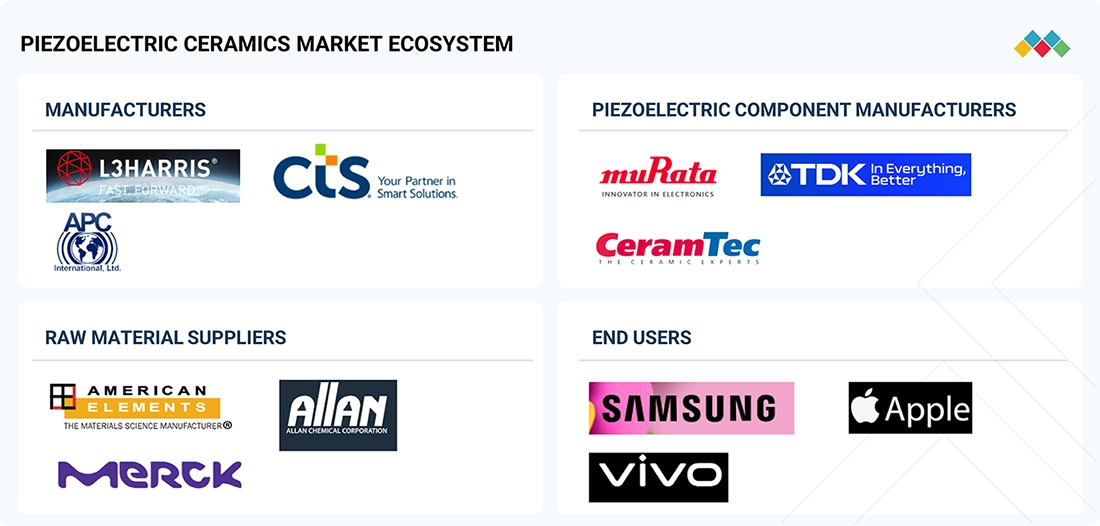
Logos and trademarks shown above are the property of their respective owners. Their use here is for informational and illustrative purposes only.
MARKET SEGMENTS
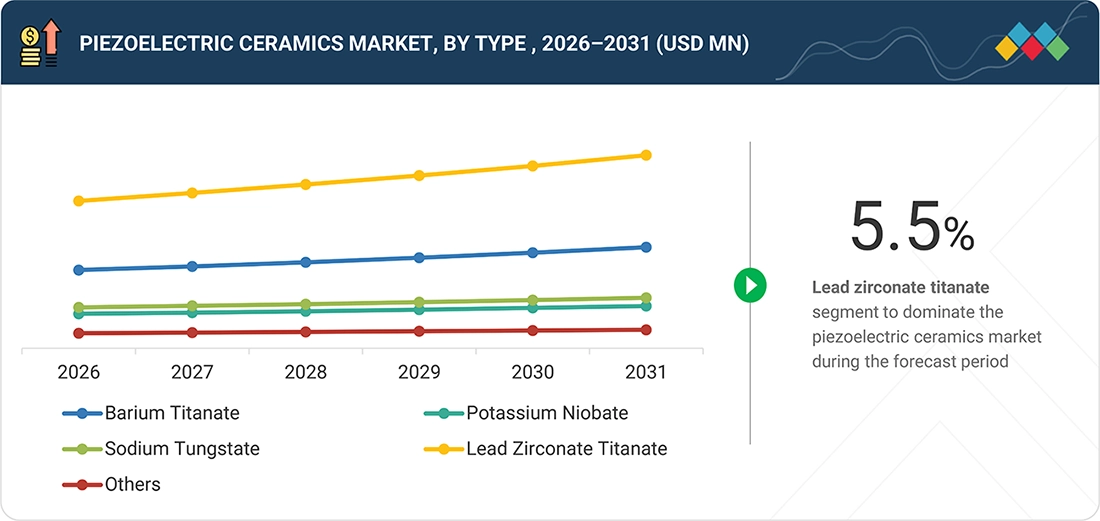
Source: Secondary Research, Interviews with Experts, MarketsandMarkets Analysis
Piezoelectric Ceramics Market, By Type
Lead zirconate titanate (PZT) is the largest material segment in the global piezoelectric ceramics market. This dominance stems from its superior piezoelectric performance, high electromechanical coupling efficiency, and broad application versatility. PZT is a ferroelectric ceramic primarily composed of lead oxide, zirconium oxide, and titanium dioxide. Its structure can be tailored by adjusting the zirconium-to-titanium ratio, allowing producers to optimize electrical, dielectric, mechanical, and other properties for specific end-use applications. PZT ceramics exhibit excellent piezoelectric coefficients, high dielectric constants, strong polarization characteristics, rapid response times, and stable performance across a wide range of frequencies and environmental conditions. These properties make PZT the preferred material for applications requiring high sensitivity, precision sensing, energy conversion efficiency, and reliable actuation. Thanks to its mature manufacturing ecosystem and strong commercial reliability, PZT continues to dominate the global piezoelectric ceramics market across a wide range of end-use applications.
Piezoelectric Ceramics Market, By End-use Industry
The defense segment is projected to be the fastest-growing end-use industry in the global piezoelectric ceramics market. This growth is driven by rising defense budgets, expanding military modernization programs, intensifying geopolitical tensions, and increased investment in advanced sensing and acoustic technologies. Piezoelectric ceramics are widely used in defense applications such as aerospace sensing, underwater acoustics, missile guidance systems, sonar systems, smart munitions, vibration monitoring, military communication technologies, and more, owing to their high sensitivity, durability, and reliable performance in harsh environments. Countries such as the US, China, India, Germany, Italy, Poland, and several European nations are significantly increasing defense spending and investing in next-generation naval systems, hypersonic weapons, unmanned platforms, surveillance systems, and advanced aerospace technologies, further propelling demand for high-performance piezoelectric ceramic components. Additionally, the growing deployment of autonomous underwater vehicles (AUVs), drone systems, and precision-guided defense systems is creating strong growth opportunities for piezoelectric sensors, actuators, and transducers in military applications.
REGION
Asia Pacific is the largest market for piezoelectric ceramics during forecast period
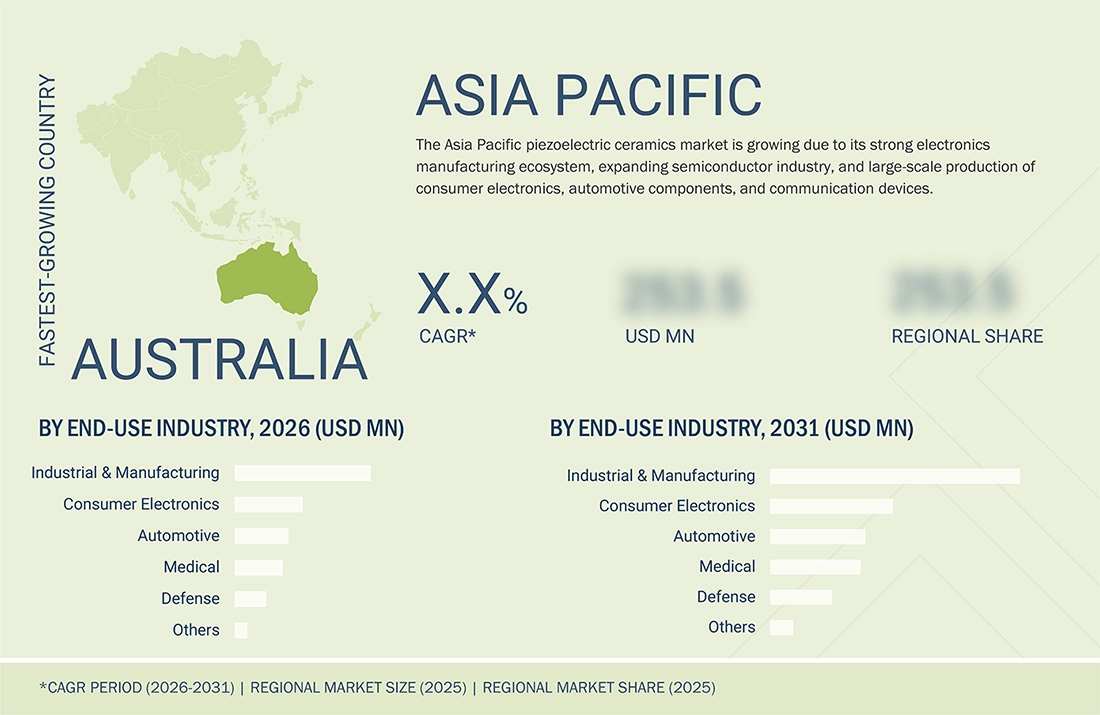
The piezoelectric ceramics market in the Asia Pacific region is experiencing significant growth driven by strong industrial expansion, a growing population, rapid growth in the consumer electronics sector, increasing demand from the medical industry, expanding defense budgets, and the thriving automotive industry and vehicle electrification. China, India, South Korea, and Japan serve as the manufacturing and technology centers in Asia Pacific. China's market strength comes from easy access to raw materials, large-scale production of semiconductors, EVs, telecommunication equipment, and consumer electronics. Japan maintains a leading position through advanced ceramic technologies, high-end electronic component manufacturing, automotive electronics, and the presence of major companies like Murata Manufacturing Co., Ltd., TDK Corporation, and Kyocera Corporation. South Korea's demand is driven by its semiconductor and consumer electronics sectors, supported by global companies such as Samsung Electronics and LG Electronics. India is emerging as a high-growth market thanks to rapid domestic electronics manufacturing expansion, significant investments in industry and manufacturing, and a growing healthcare sector. Overall, robust manufacturing capabilities, technological advancements, increased electronics production, and investments in EVs, semiconductors, telecommunications, and defense systems solidify Asia Pacific’s position as a leading growth hub for the global piezoelectric ceramics market.
PIEZOELECTRIC CERAMICS MARKET: COMPANY EVALUATION MATRIX
In the piezoelectric ceramics market matrix, Murata (Star), a Japan-based company, leads the market with its high-quality piezoelectric ceramics, which find extensive applications across end-use industries such as industrial and consumer electronics. APC International (Emerging Leader) is gaining traction with its technological advancements in piezoelectric ceramics.
Source: Secondary Research, Interviews with Experts, MarketsandMarkets Analysis
KEY MARKET PLAYERS
- Murata Manufacturing (Japan)
- TDK Corporation (Japan)
- KYOCERA Corporation (Japan)
- CTS Corporation (US)
- Physik Instrumente (PI) GmbH & Co. (Germany)
- CeramTec GmbH (Germany)
- APC International, Ltd. (US)
- L3Harris Technologies, Inc. (US)
- Meggitt PLC (UK)
- Piezo Technologies (US)
- Tayca Corporation (Japan)
MARKET SCOPE
| REPORT METRIC | DETAILS |
|---|---|
| Market Size in 2025 (Value) | USD 1.57 Billion |
| Market Forecast in 2031 (Value) | USD 2.10 Billion |
| Growth Rate | CAGR of 5.1% from 2026-2031 |
| Years Considered | 2023-2031 |
| Base Year | 2025 |
| Forecast Period | 2026-2031 |
| Units Considered | Value (USD Million/Billion), Volume (Kiloton) |
| Report Coverage | Revenue forecast, company ranking, competitive landscape, growth factors, and trends |
| Segments Covered |
|
| Regions Covered | North America, Asia Pacific, Europe, South America, Middle East & Africa |
WHAT IS IN IT FOR YOU: PIEZOELECTRIC CERAMICS MARKET REPORT CONTENT GUIDE
DELIVERED CUSTOMIZATIONS
We have successfully delivered the following deep-dive customizations:
| CLIENT REQUEST | CUSTOMIZATION DELIVERED | VALUE ADDS |
|---|---|---|
| Leading Piezoelectric Ceramics Supplier |
|
Supported go-to-market strategy and positioning vs competitors |
| Country-level insights for high-growth regions | Provided detailed market sizing and forecasts for theNorth America , Asia Pacific market | Helped the client identify region-specific growth hotspots and investment opportunities |
| Identify emerging technologies | Conducted technology scouting and feasibility analysis | Supported investment decisions and innovation roadmap for clients |
| Evaluate regulatory compliance for new market entry | Compiled local emission, safety & efficiency standards per country | Ensured smooth market entry and minimized legal risks |
RECENT DEVELOPMENTS
- March 2026 : Murata Manufacturing announced an absorption-type merger, effective April 1, 2026, under which Toyama Murata Manufacturing will integrate Himi Murata Manufacturing, with Himi continuing operations as a plant under Toyama. Both entities bring complementary strengths in piezoelectric ceramic-based products—ranging from multilayer components to ceramic oscillators and filters—making the integration strategically significant. This move aims to enhance operational efficiency, improve flexibility in optimizing production capabilities, and strengthen internal collaboration through greater workforce integration, ultimately supporting the company's long-term growth and competitiveness in advanced ceramic technologies.
- March 2026 : TDK Corporation announced plans to begin manufacturing advanced sensors for various Apple products in the United States. This initiative will enable both companies to strengthen their advanced sensor manufacturing capabilities through Japan–US collaboration and support a more reliable and resilient sensor supply chain through localized US production. Under Apple’s American Manufacturing Program, this marks the first time a Japanese company has produced components for Apple in the United States. TDK has also collaborated with Apple on the development of next-generation sensors, electronic components, and rechargeable batteries to enhance mobile device functionality.
- August 2024 : Kyocera Corporation announced plans to build a new production facility at the Minami Isahaya Industrial Park in Nagasaki. The expansion is driven by growing demand for advanced electronic components, supported by key industry trends such as miniaturization, increased functionality of semiconductor equipment, and the rapid adoption of communication technologies, including smartphones, 5G infrastructure, and generative AI data centers.
- July 2024 : CTS Corporation introduced a new lead-free piezoceramic material series (LF Series) based on the KNN (potassium sodium niobate) system, expanding its portfolio of environmentally compliant solutions. The LF Series is designed to deliver a balanced combination of high piezoelectric performance, tunable mechanical properties, and low dielectric losses, making it suitable for a wide range of applications, including sensing, actuation, and high-power ultrasonic systems.
- August 2023 : In August 2023, Kyocera Corporation announced plans to establish a new Development Center at its Shiga Yasu Campus in Japan, where it would consolidate its production engineering and development functions. The initiative was intended to strengthen manufacturing capabilities through enhanced collaboration across its business divisions and to foster the development of future engineering leaders.
Table of Contents
 Exclusive indicates content/data unique to MarketsandMarkets and not available with any competitors.
Methodology
The study involves two major activities to estimate the current market size for piezoelectric ceramics. Exhaustive secondary research was conducted to gather information on the market, peer market, and parent market. The next step was to validate these findings, assumptions, and sizing with industry experts across the value chain through primary research. Both top-down and bottom-up approaches were used to estimate the total market size. Following this, market breakdown and data triangulation were used to determine the market size of segments and subsegments.
Secondary Research
Secondary sources for this research study include financial statements of companies offering piezoelectric ceramics and information from various trade, business, and professional associations. Secondary research was used to obtain critical information about the industry's value chain, the total pool of key players, market classification, and segmentation by industry trends down to the most granular level and by regional markets. Secondary data were collected and analyzed to determine the overall size of the piezoelectric ceramics market, and this estimate was validated by primary respondents.
Primary Research
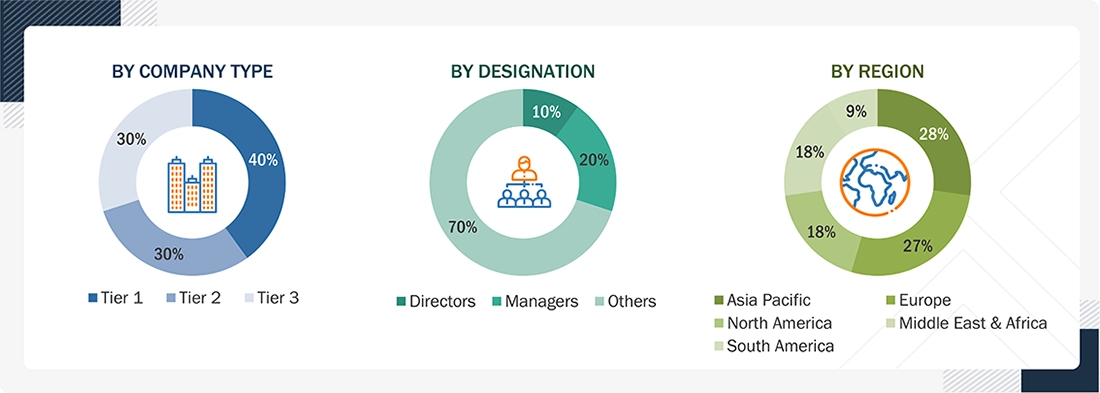
Extensive primary research was conducted after gathering information on the piezoelectric ceramics market through secondary research. Several primary interviews were conducted with market experts from both the demand and supply sides across major countries in North America, Europe, Asia Pacific, the Middle East & Africa, and South America. Primary data was collected through questionnaires, emails, and telephone interviews. Primary sources from the supply side included industry experts such as Chief X Officers (CXOs), Vice Presidents (VPs), Directors from business development, marketing, and product development/innovation teams, and related key executives from piezoelectric ceramics industry vendors, material providers, distributors, and key opinion leaders. Primary interviews were conducted to gather insights, including market statistics, revenue data for products and services, market breakdowns, market size estimates, market forecasts, and data triangulation. Primary research also helped in understanding trends related to materials, sources, manufacturing processes, end-use industries, and regions. Stakeholders from the demand side, such as CIOs, CTOs, CSOs, and installation teams of customers/end users seeking piezoelectric ceramics, were interviewed to understand the buyer's perspective on suppliers, products, component providers, current usage of piezoelectric ceramics, and the future outlook of their business, which will affect the overall market.
BREAKDOWN OF PRIMARY INTERVIEW PARTICIPANTS
To know about the assumptions considered for the study, download the pdf brochure
Market Size Estimation
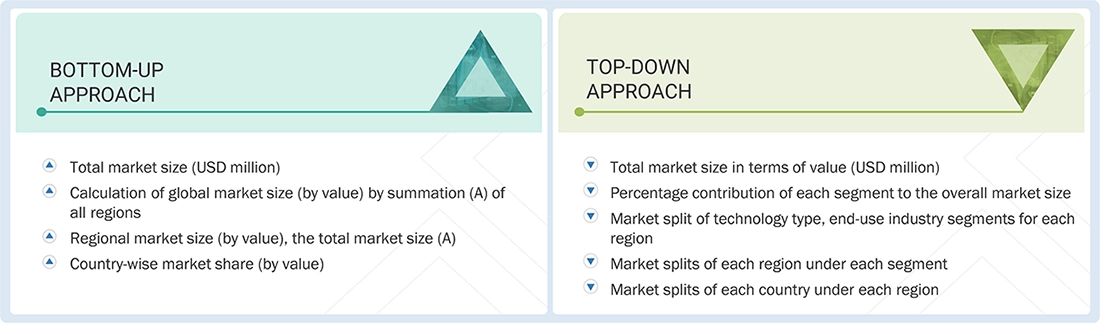
The research methodology used to estimate the size of the piezoelectric ceramics market includes the following details. Market sizing was undertaken from the demand side. The market was upsized based on demand for piezoelectric ceramics across different end-use applications at the regional level. These procurement data provide information on demand for piezoelectric ceramics in each end-use industry. For each end-use industry, all possible segments of the piezoelectric ceramics market were integrated and mapped.
Data Triangulation
After determining the overall market size through the market size estimation process described above, the total market was segmented into several segments and subsegments. The data triangulation and market breakdown procedures described below were implemented, wherever applicable, to complete the overall market engineering process and arrive at the exact statistics for various market segments and subsegments. The data was triangulated by analyzing factors and trends from both the demand and supply sides. In addition, the market size was validated using both the top-down and bottom-up approaches.
Market Definition
Piezoelectric ceramics are smart, anisotropic materials that generate an electric charge under mechanical stress and deform when exposed to an electric field. This behavior, known as the piezoelectric effect, is quantified by parameters such as piezoelectric charge and voltage coefficients and coupling factors, which define electromechanical efficiency. Common materials include lead zirconate titanate (PZT), barium titanate (BT), and potassium niobate. Owing to their precise, rapid response, piezoelectric ceramics are widely used in sensors, actuators, ultrasonic transducers, and other applications.
Key Stakeholders
- Piezoelectric Ceramics Manufacturers
- Piezoelectric Ceramics Distributors and Suppliers
- Universities, Governments, and Research Organizations
- Associations and Industrial Bodies
- R&D Institutes
- Environmental Support Agencies
- Investment Banks and Private Equity Firms
- Research and Consulting Firms
Report Objectives
- To define, describe, and forecast the piezoelectric ceramics market size in terms of value
- To provide detailed information regarding the key factors, such as drivers, restraints, opportunities, and challenges influencing market growth
- To analyze and project the global piezoelectric ceramics market by type, by end-use industry, and region
- To forecast the market size concerning five main regions (along with country-level data), namely, North America, Europe, Asia Pacific, Middle East & Africa, and South America, and analyze the significant region-specific trends
- To strategically analyze micromarkets with respect to individual growth trends, prospects, and contributions of the submarkets to the overall market
- To analyze the market opportunities and the competitive landscape for stakeholders and market leaders
- To assess recent market developments and competitive strategies, such as agreements, contracts, acquisitions, partnerships & collaboration, and new product developments/new product launches, to draw the competitive landscape
- To strategically profile the key market players and comprehensively analyze their core competencies
Available customizations:
MarketsandMarkets offers the following customizations for this market report:
- Additional country-level analysis of the piezoelectric ceramics market
Product Analysis
- Product matrix, which provides a detailed comparison of the product portfolio of each company's market


Personalize This Research
- Triangulate with your Own Data
- Get Data as per your Format and Definition
- Gain a Deeper Dive on a Specific Application, Geography, Customer or Competitor
- Any level of Personalization
Let Us Help You
- What are the Known and Unknown Adjacencies Impacting the Piezoelectric Ceramics Market
- What will your New Revenue Sources be?
- Who will be your Top Customer; what will make them switch?
- Defend your Market Share or Win Competitors
- Get a Scorecard for Target Partners

Custom Market Research Services
We Will Customise The Research For You, In Case The Report Listed Above Does Not Meet With Your Requirements
Get 10% Free CustomisationTESTIMONIALS

We at Nissan Chemicals Corporation have been clients of MarketsandMarkets for more than a year now. We recently consulted MarketsandMarkets for a study, the team at MarketsandMarkets was extremely professional and organized. The business insights were very detailed and aligned well with our expectations that really helped us formulate the Business Plans and device new strategies for development themes. MarketsandMarkets offers a unique combination of expertise and dedicated engagement model. Their research findings have helped us in designing our Pricing Strategy which will make it easier for us to predict the future sales and profits for the next ten years. We look forward to working with MarketsandMarkets in the future.
VP of Strategy & New Business Development
Leading Specialty Chemical Company
The MarketsandMarkets Engagement Model, composed of both the Knowledge Store and advisory custom research, has greatly helped us in understanding our markets and making strategic decisions. The Knowledge Store is a fast way to allow everyone in our organization to understand more about most any market they are interested in. The ability to then get custom research done and get answers to specific strategic questions and market insight has been spectacular. The Markets and Markets team feel more like colleagues than vendors and their services have helped us change our culture where statements of things like growth opportunities and competitive position are always backed by industry research.

Rich Gibson,
Director, Corporate Strategy
Milliken & Company,
Leading Industrial Manufacturer of specialty chemical, floor covering, performance and protective textile materials, and healthcaremilliken.com
MarketsandMarkets is a trusted resource that helps us to better understand markets that are near-adjacencies-whether its technology, value chain or geography. Their Knowledge Store platform provides a dashboard of markets and their characteristics which is easy to use and saves us time.
Adam Shaw,
Market Development and Strategy Manager
AdvanSix Inc. USA,
An American Leader in Chemicalswww.advansix.com
The Knowledge Store from MarketsandMarkets is a valuable tool which has helped my team acquire greater insight in to the end markets that our business serves. This has enabled us to help our company build stronger strategies throughout our planning process.
TOSHIO KINOSHITA
Senior Chif Consultion Research & Consulting Division
Mitsubishi Chemical Research Corporation,
Leading Manufacturer of Chemical Productswww.mitsubishichem-res.co.jp/en/

We recently engaged with MarketsandMarkets for a study, the team not only clearly understood our business objectives but was also extremely professional in the way they handled the entire project. The study was efficiently conducted in a phase-wise manner, and the engagement model furnished us with high-quality business insights that far exceeded our expectations at each phase. We were especially happy that MarketsandMarkets could provide us with both, an English as well as a Japanese version of the study. A special thanks to the Analyst Team and Client Services Team, whose fluency in Japanese enhanced our comfort level, as we could converse with them in our preferred language.
Independent entrepreneurs
Arrow Precision
We approached MarketsandMarkets for study on Proppants Market, and their work exceeded our expectations. The study conducted was comprehensive and enabled us to view the market through the various dimensions. In addition, the team was extraordinarily responsive throughout the process and resolved our queries on time. I strongly recommend MarketsandMarkets and will certainly consider them for additional market assessments we will need in the future.
Global engineering company, Japan
Deputy Manager,
Strategic Planning OfficeThe high-quality insights shared by the MarketsandMarkets team helped us understand the pharmaceutical plant designers in a specific geography. It also captured the risks that we may likely face in communicating with our potential partners. The study would enable us identify partners, which would impact our future growth.
- US Piezoelectric Ceramics Market
- Canada Piezoelectric Ceramics Market
- Mexico Piezoelectric Ceramics Market
- Germany Piezoelectric Ceramics Market
- UK Piezoelectric Ceramics Market
- France Piezoelectric Ceramics Market
- Italy Piezoelectric Ceramics Market
- Spain Piezoelectric Ceramics Market
- China Piezoelectric Ceramics Market
- Japan Piezoelectric Ceramics Market
- India Piezoelectric Ceramics Market
- South Korea Piezoelectric Ceramics Market
- Australia Piezoelectric Ceramics Market
- Saudi Arabia Piezoelectric Ceramics Market
- South Africa Piezoelectric Ceramics Market
- Brazil Piezoelectric Ceramics Market
- Argentina Piezoelectric Ceramics Market
- Rest Of Europe Piezoelectric Ceramics Market
- Rest Of Asia Pacific Piezoelectric Ceramics Market
- Rest Of South America Piezoelectric Ceramics Market




Growth opportunities and latent adjacency in Piezoelectric Ceramics Market