Polyglycerol Fatty Acid Ester (PGFE) Market

Polyglycerol Fatty Acid Ester Market By Type (Monoglycerol Esters, Diglycerol Esters, Triglycerol Esters, Higher Polyglycerol Esters), Functionality, End-use Industry (Food & Beverages, Personal Care & Cosmetics, Pharmaceuticals, Industrial), Source (Vegetable Oil-based, Animal Fat-based, Synthetic-based), Form (Liquid Solutions, Powder/Solid, Formulated Blends), Polyglycerol Degree, and Region - Global Forecast to 2031




OVERVIEW
Source: Secondary Research, Interviews with Experts, MarketsandMarkets Analysis
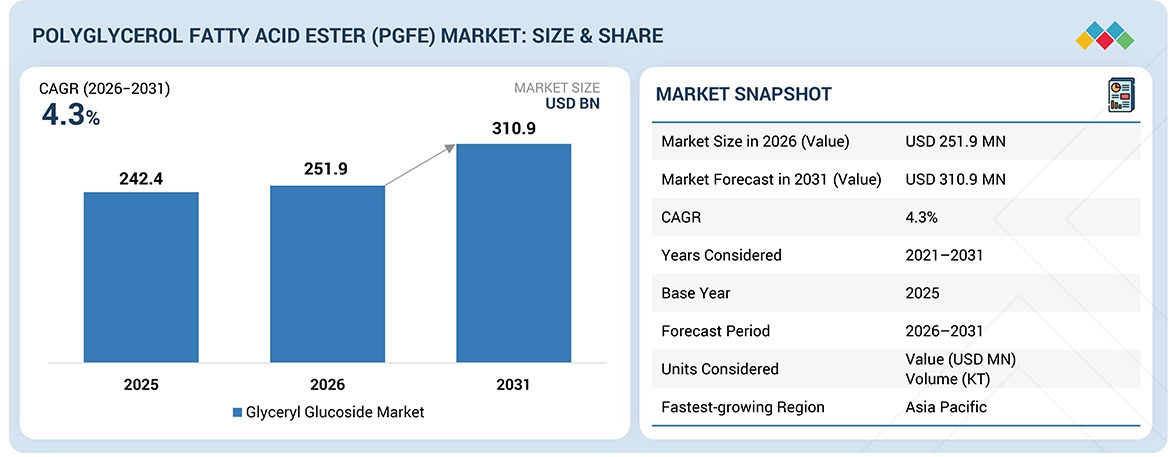
The polyglycerol fatty acid ester (PGFE) market is projected to reach USD 310.9 million by 2031 from USD 251.9 million in 2026, at a CAGR of 4.3% from 2026 to 2031. The global polyglycerol fatty acid ester (PGFE) market is witnessing a key trend driven by the increasing focus on high-performance formulations and functional ingredient optimization across food, personal care, and pharmaceutical sectors. The demand for improved product stability, texture, and efficiency, along with the shift toward clean-label and sustainable ingredients, is encouraging manufacturers to adopt advanced emulsification technologies. The development of multifunctional, bio-based emulsifiers has enabled better dispersion, enhanced compatibility, and superior product performance. PGFE plays a critical role by improving emulsification, extending shelf life, and supporting fat reduction in food products, while also enhancing consistency and sensory properties in personal care formulations. When combined with other functional ingredients, it contributes to improved formulation efficiency and overall product quality..
KEY TAKEAWAYS
-
BY REGIONAsia Pacific accounted for the largest share of 32.3% in 2026.
-
BY TYPEBy type, the mono-glyceryl glucoside segment is expected to register the highest CAGR of 39.6% in 2026-2031.
-
BY FUNCTIONALITYBy functionality, the emulsifiers & stabilizers segment is expected to register the highest CAGR.
-
BY FORMBy form, the liquid solutions segment is expected to dominate the market.
-
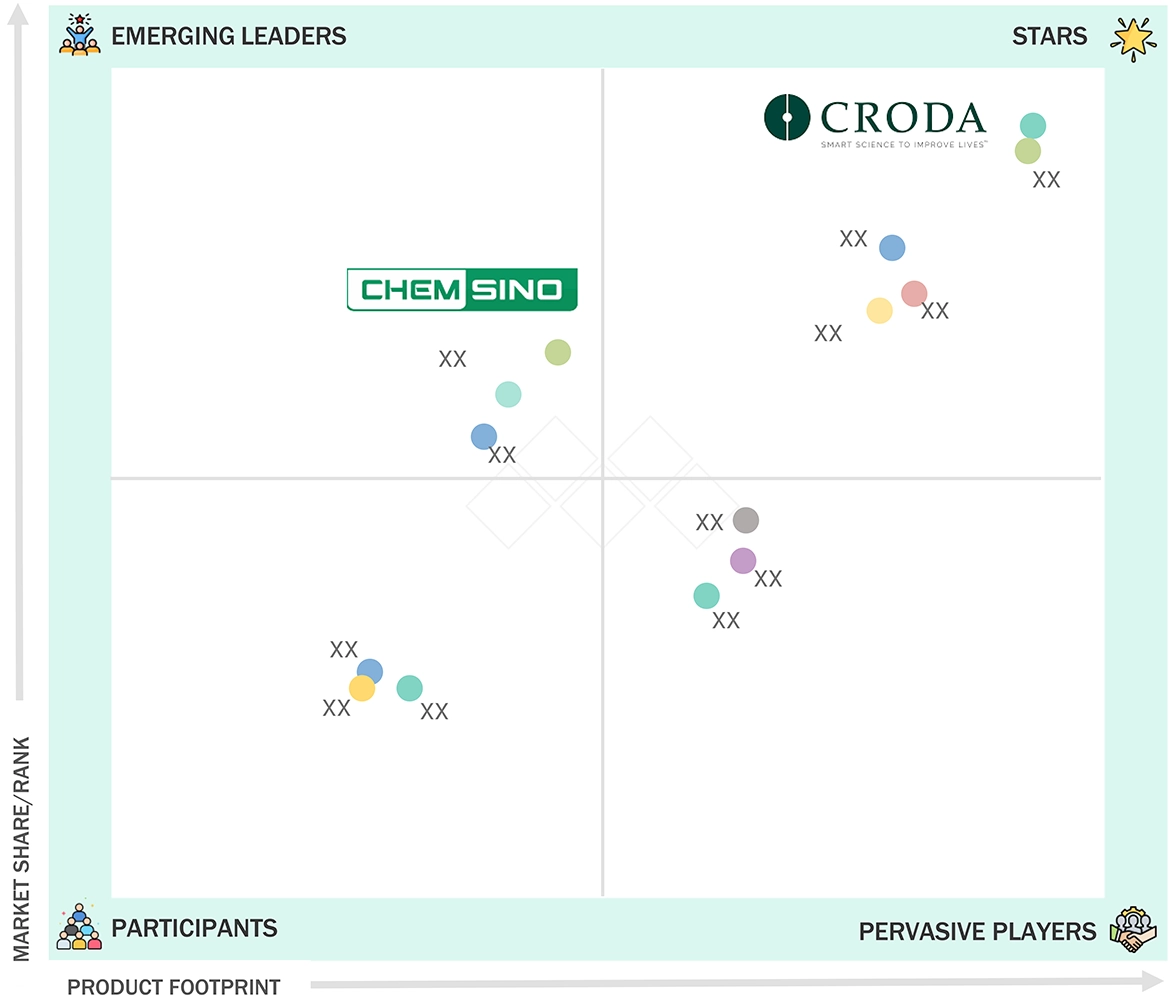
COMPETITIVE LANDSCAPE - KEY PLAYERSKey companies operating in the polyglycerol fatty acid ester (PGFE) market, including Croda International Plc (UK), Clariant AG (Switzerland), Lonza Group AG (Switzerland), and Riken Vitamin Co., Ltd. (Japan), were identified as some of the star players, given their strong market share and product footprint.
-
COMPETITIVE LANDSCAPE - STARTUPS/SMEsCompanies such as Spiga Nord S.p.A., Kasco Chemtech Pvt. Ltd., Mohini Organics Pvt. Ltd., have distinguished themselves among startups and SMEs by securing strong footholds in specialized niche areas, underscoring their potential as emerging market leaders.
The polyglycerol fatty acid ester (PGFE) market is projected to reach USD 310.9 million by 2031 from USD 251.9 million in 2026, at a CAGR of 4.3% from 2026 to 2031.. The polyglycerol fatty acid ester (PGFE) market is witnessing consistent growth, supported by its increasing use as an effective emulsifying agent across food, cosmetics, and pharmaceutical products. It helps enhance product consistency, shelf life, and formulation efficiency, while aligning with the rising demand for natural and eco-friendly ingredients.
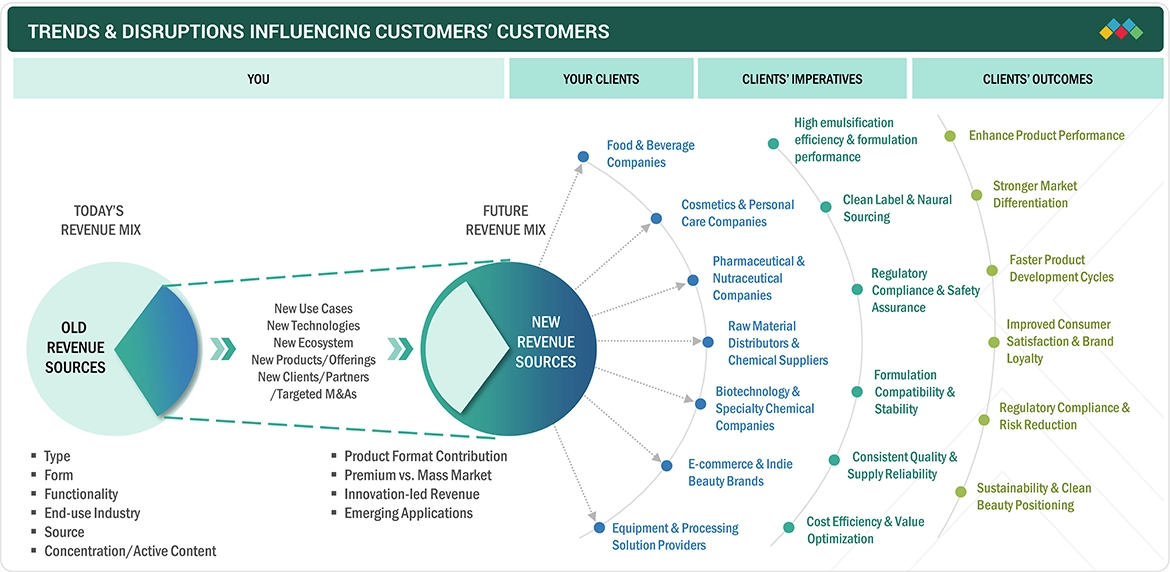
TRENDS & DISRUPTIONS IMPACTING CUSTOMERS' CUSTOMERS
The global polyglycerol fatty acid ester (PGFE) market is witnessing a key trend driven by the increasing focus on high-performance formulations and functional ingredient optimization across food, personal care, and pharmaceutical sectors. The demand for improved product stability, texture, and efficiency, along with the shift toward clean-label and sustainable ingredients, is encouraging manufacturers to adopt advanced emulsification technologies. The development of multifunctional, bio-based emulsifiers has enabled better dispersion, enhanced compatibility, and superior product performance. PGFE plays a critical role by improving emulsification, extending shelf life, and supporting fat reduction in food products, while also enhancing consistency and sensory properties in personal care formulations. When combined with other functional ingredients, it contributes to improved formulation efficiency and overall product quality.
Source: Secondary Research, Interviews with Experts, MarketsandMarkets Analysis
MARKET DYNAMICS

Level
-
Rising demand for food emulsifiers

-
Fast expansion of pharmaceutical industry


Level
-
????High production and formulation costs

-
Limited awareness among small and mid-scale manufacturers


Level
-
Shift toward sustainable and natural ingredients

-
Innovation in multifunctional emulsifier systems


Level
-
Strong competition from alternative emulsifiers

-
Stringent regulatory requirements across regions

Source: Secondary Research, Interviews with Experts, MarketsandMarkets Analysis
Driver: Rising demand for food emulsifiers
The demand for food emulsifiers such as polyglycerol fatty acid esters (PGFE) is increasing steadily due to the rapid growth of processed and convenience food consumption worldwide. As urbanization accelerates and lifestyles become more time-constrained, consumers are relying more on ready-to-eat meals, bakery products, dairy items, and confectionery, all of which require efficient emulsification for texture, stability, and extended shelf life. PGFE plays a crucial role in improving product consistency, aeration, and fat distribution, making it highly valuable in modern food processing. Additionally, the rising focus on low-fat and reformulated food products has further strengthened demand, as PGFE helps maintain desirable mouthfeel even with reduced fat content. Manufacturers are also leveraging emulsifiers to enhance product quality while optimizing production efficiency. This growing reliance on functional ingredients is expected to sustain long-term demand for PGFE in the global food industry.
Restraint: High production and formulation costs
High production and formulation costs remain a significant challenge for the PGFE market, primarily due to the dependence on raw materials such as vegetable oils and glycerol, which are subject to price fluctuations. The manufacturing process of PGFE involves complex esterification and purification steps, requiring advanced technology, skilled labor, and stringent quality control, all of which contribute to increased operational costs. Additionally, the need to meet regulatory standards across the food, pharmaceutical, and personal care industries further raises compliance expenses. For manufacturers, balancing cost efficiency with product performance and sustainability requirements can be challenging, particularly in price-sensitive markets. Smaller players may face difficulties in scaling production due to high capital investment requirements. These cost-related pressures can limit market penetration and affect profit margins, especially when competing against lower-cost alternative emulsifiers.
Opportunity: Shift toward sustainable and natural ingredients
The growing shift toward sustainable and natural ingredients is significantly influencing the PGFE market, as consumers and manufacturers increasingly prioritize environmentally friendly and clean-label products. PGFE, being derived from vegetable oils and glycerol, aligns well with this trend, particularly when sourced from certified sustainable feedstocks. Food and personal care brands are actively reformulating products to replace synthetic additives with bio-based alternatives that offer both functionality and environmental benefits. Regulatory bodies and industry standards are also encouraging the adoption of sustainable practices, including responsible sourcing and reduced carbon footprints. As a result, manufacturers are investing in green chemistry, renewable raw materials, and transparent supply chains to meet evolving consumer expectations.
Challenge: Strong competition from alternative emulsifiers
The PGFE market faces strong competition from a wide range of alternative emulsifiers, including mono- and diglycerides, lecithin, and sorbitan esters, which are widely used across food and personal care applications. These alternatives often offer comparable functionality at lower costs or with more established supply chains, making them attractive to manufacturers. In certain applications, traditional emulsifiers may already have strong regulatory acceptance and consumer familiarity, creating barriers for PGFE adoption. Additionally, some alternatives are perceived as more natural or simpler in composition, which can influence clean-label positioning. To remain competitive, PGFE manufacturers must continuously innovate and highlight the unique benefits of their products, such as superior emulsification performance, versatility, and compatibility with modern formulations.
POLYGLYCEROL FATTY ACID ESTER (PGFE) MARKET: COMMERCIAL USE CASES ACROSS INDUSTRIES
| COMPANY | USE CASE DESCRIPTION | BENEFITS |
|---|---|---|
 |
Utilizes PGFE in personal care formulations (creams, lotions, sunscreens) and food emulsifiers for bakery and dairy products | Enhances emulsion stability, improves skin feel and texture, offers biodegradable and sustainable ingredient solutions aligned with clean-label trends |
 |
Uses PGFE in pharmaceutical drug delivery systems and nutraceutical formulations for solubilization and stabilization | Enhances bioavailability of active ingredients, ensures formulation stability, supports high-purity, and pharmaceutical-grade applications |
 |
Supplies glyceryl glucoside as a cost-effective functional ingredient to small and mid-sized cosmetic brands and contract manufacturers | Offers competitive pricing, flexible MOQ, easy formulation compatibility, and improves accessibility for emerging and indie brands |
Logos and trademarks shown above are the property of their respective owners. Their use here is for informational and illustrative purposes only.
MARKET ECOSYSTEM
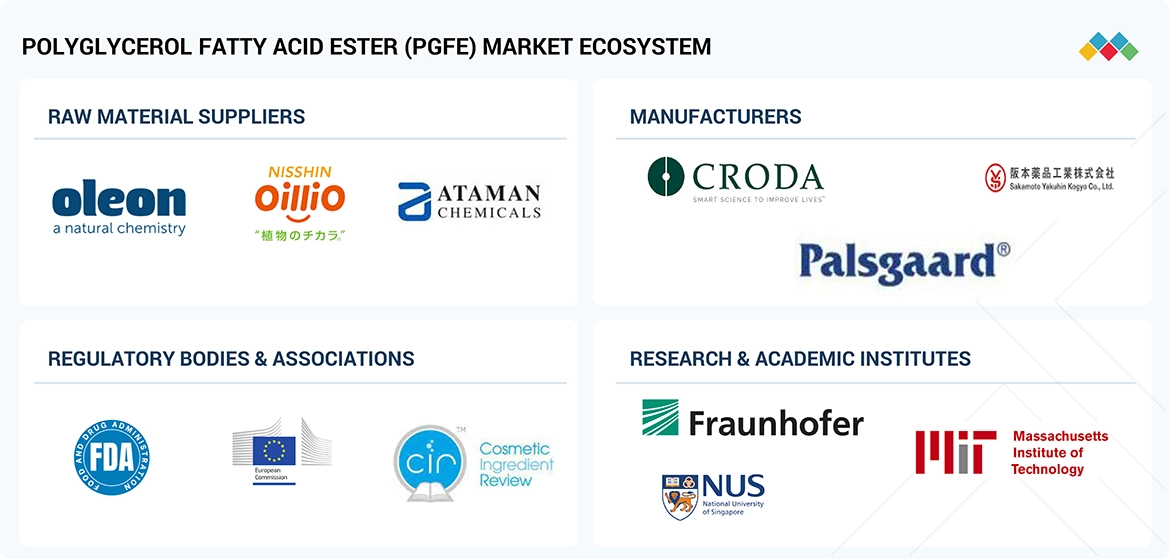
The polyglycerol fatty acid ester (PGFE) market is supported by a well-structured ecosystem involving raw material suppliers, manufacturers, regulatory bodies, and research institutions. Key raw material suppliers such as Oleon NV, Nisshin Oilio Group Ltd., and Ataman Kimya A.S. ensure the steady availability of essential inputs like vegetable oils and glycerol. Leading manufacturers, including Croda International Plc, Palsgaard A/S, and Sakamoto Yakuhin Kogyo Co., Ltd., drive innovation and production of high-performance emulsifiers. Regulatory oversight is provided by organizations such as U.S. Food and Drug Administration, European Food Safety Authority, and Food Safety and Standards Authority of India, ensuring product safety and compliance. Additionally, research institutions like Fraunhofer Society, Wageningen University & Research, and National University of Singapore contribute to technological advancements and innovation in the market.
Logos and trademarks shown above are the property of their respective owners. Their use here is for informational and illustrative purposes only.
MARKET SEGMENTS
Source: Secondary Research, Interviews with Experts, MarketsandMarkets Analysis
Polyglycerol Fatty Acid Ester (PGFE) Market, By Type
The polyglycerol fatty acid ester (PGFE) market is categorized by the type of glycerol polymerization, which directly affects emulsification strength, hydrophilic-lipophilic balance (HLB), and suitability for various applications. Monoglycerol esters provide mild emulsification and are commonly found in food and personal care products that require gentle stabilization. Diglycerol and triglycerol esters enhance emulsifying efficiency and are frequently used in processed foods, bakery items, and cosmetic creams. Higher polyglycerol esters exhibit stronger surface activity, improved stability, and superior dispersion properties, making them ideal for complex formulations, such as pharmaceuticals and industrial emulsions. The choice of PGFE type depends on end-use requirements, including texture, stability, solubility, and compatibility with other formulation ingredients across diverse applications. Monoglycerol esters are produced by the esterification of a single glycerol unit with fatty acids. They are widely recognized for their effective emulsification properties, particularly in low to moderate polarity systems. Their relatively small molecular structure allows for better dispersion in both aqueous and oil phases, making them well-suited for bakery, dairy, and confectionery applications. Additionally, monoglycerol esters improve texture, aeration, and shelf-life stability in food formulations. They are also valued in personal care products for their mildness and compatibility with skin. Their cost-effectiveness and functional versatility make them a foundational segment within the PGFE market.
Polyglycerol Fatty Acid Ester (PGFE) Market, By Functionality
Based on functionality, PGFEs serve multiple roles driven by their amphiphilic structure, enabling interaction between oil and water phases. As emulsifiers and stabilizers, they ensure uniform dispersion and prevent phase separation in food, cosmetics, and pharmaceutical products. Their surfactant properties enhance wetting, spreading, and cleansing performance, particularly in personal care formulations. PGFEs also function as dispersing agents and solubilizers, improving ingredient compatibility and bioavailability. In food applications, they act as fat replacers and texture modifiers, supporting low-fat formulations while maintaining mouthfeel. Additionally, their foam control and processing aid capabilities optimize manufacturing efficiency in industrial systems. This multifunctionality makes PGFEs highly versatile ingredients across sectors requiring performance-driven formulation stability.
Polyglycerol Fatty Acid Ester (PGFE) Market, By End-use Industry
The PGFE market by end-use industry spans food & beverages, personal care & cosmetics, pharmaceuticals, and industrial applications, reflecting broad applicability. In the food sector, PGFEs are widely used as emulsifiers in bakery, confectionery, and dairy products to improve texture, shelf life, and consistency. The personal care and cosmetics industry utilizes PGFEs for their mildness, skin compatibility, and emulsifying properties in creams, lotions, and cleansers. In pharmaceuticals, they function as solubilizers and stabilizers in drug delivery systems, enhancing formulation performance. Industrial applications include lubricants, coatings, and agrochemicals, where dispersion and surface activity are critical. Demand across these industries is driven by the need for multifunctional, stable, and often bio-based ingredients. personal care and cosmetics, followed by pharmaceuticals, food & beverages, and industrial applications. In personal care, glyceryl glucoside is extensively used in moisturizers, serums, and haircare products due to its hydration and skin barrier support properties. The pharmaceutical sector utilizes it in topical formulations for its biocompatibility and moisture-enhancing characteristics. In food and beverages, its use remains limited but growing, particularly as a stabilizer or functional additive in specialized applications. Industrial uses include formulations requiring biodegradable and eco-friendly ingredients. Overall, demand is largely driven by the cosmetics sector, while emerging applications in pharmaceuticals and niche industries are expected to create additional growth opportunities.
Polyglycerol Fatty Acid Ester (PGFE) Market, By Form
By form, PGFEs are available as liquid solutions, powders/solids, and formulated blends, each tailored to specific application and processing requirements. Liquid PGFEs offer ease of handling, faster dispersion, and are preferred in continuous processing systems such as beverages and liquid formulations. Powder or solid forms provide improved shelf stability, ease of transportation, and are commonly used in dry mixes, bakery premixes, and instant food products. Formulated blends combine PGFEs with other functional ingredients to enhance performance, simplify formulation processes, and meet specific end-use requirements. The selection of form depends on factors such as processing conditions, storage stability, and compatibility with other ingredients, making it a critical consideration for manufacturers. and formulated blends. Liquid glyceryl glucoside is the most commonly used form due to its ease of incorporation into cosmetic and pharmaceutical formulations, offering better solubility and uniform distribution. Powder forms are preferred in applications requiring longer shelf life, easier transportation, and controlled formulation processes. Formulated blends, which combine glyceryl glucoside with other active or supportive ingredients, are gaining traction as they simplify product development and enhance performance characteristics. The choice of form depends on factors such as application requirements, processing conditions, and cost efficiency. Increasing demand for ready-to-use and stable formulations is expected to drive the growth of liquid and blended forms in particular.
Polyglycerol Fatty Acid Ester (PGFE) Market, By Source
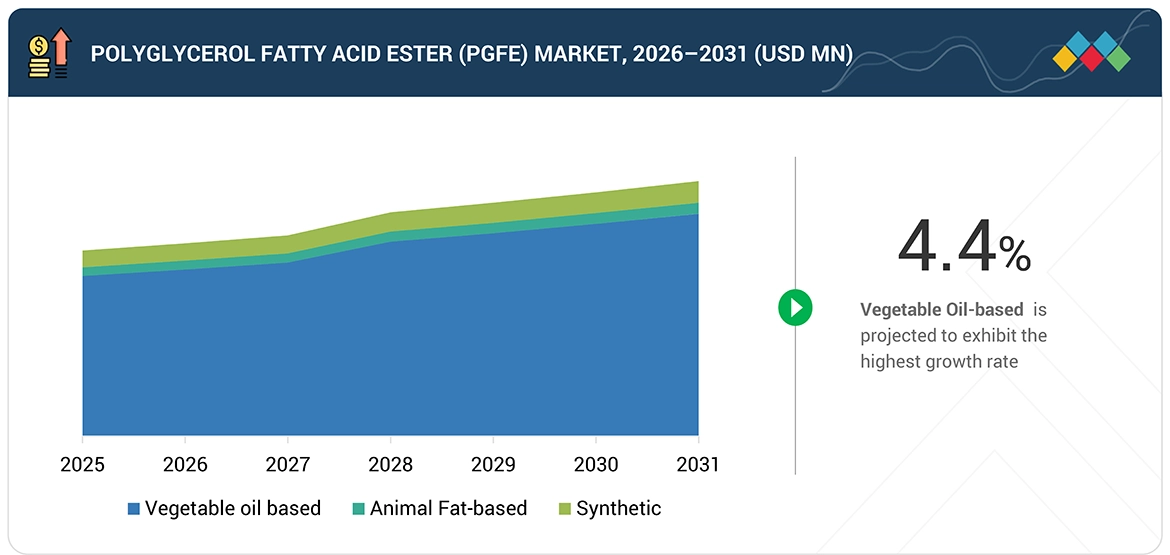
PGFEs are categorized by source into vegetable oil-based, animal fat-based, and synthetic-based variants, depending on the origin of fatty acids and glycerol. Vegetable oil-based PGFEs, derived from sources such as palm, soybean, or coconut oil, dominate the market due to their renewable nature, regulatory acceptance, and alignment with clean-label trends. Animal fat-based variants are less common and face limitations in certain regions due to dietary restrictions and regulatory considerations. Synthetic-based PGFEs are produced through controlled chemical processes to achieve specific functional properties and consistency. The choice of source influences product positioning, cost structure, and application scope, particularly in food, cosmetics, and pharmaceutical sectors where sustainability and regulatory compliance are increasingly important. synthetic variants. Natural glyceryl glucoside, derived from plant-based sources such as corn or sugar, is witnessing strong demand due to the growing consumer preference for clean-label, sustainable, and eco-friendly products. It aligns well with the rising trend of green cosmetics and natural formulations. Synthetic variants, on the other hand, offer consistent quality, scalability, and cost advantages, making them suitable for large-scale industrial applications. While synthetic products still hold a significant share, the shift toward sustainability and regulatory support for bio-based ingredients is accelerating the adoption of natural sources. Manufacturers are increasingly focusing on developing efficient extraction and production methods to meet this evolving demand.
Polyglycerol Fatty Acid Ester (PGFE) Market, By Concentration/Active Content
The segmentation of PGFEs by polyglycerol degree reflects the number of glycerol units in the molecule, which determines functionality and application performance. Low PG esters (PG-3 to PG-5) exhibit moderate emulsifying properties and are widely used in standard food and cosmetic applications. Medium PG esters (PG-6 to PG-8) provide a balanced hydrophilic-lipophilic profile, making them suitable for more complex emulsions requiring enhanced stability and texture control. High PG esters (PG-9 and above) offer strong emulsification, superior dispersion, and high thermal stability, supporting demanding applications in pharmaceuticals and industrial formulations. This classification enables manufacturers to select appropriate PGFE grades based on specific formulation requirements and desired performance outcomes. ranging from low (≤45%) to high (65–85%+). Low-concentration grades are typically used in mild formulations where gentle hydration is required, such as daily skincare products. Mid-low and mid-high concentration grades provide a balance between performance and formulation stability, making them suitable for a wide range of cosmetic and pharmaceutical applications. High-concentration glyceryl glucoside offers superior efficacy, delivering intense hydration and enhanced functional benefits, often used in premium and specialized products. The choice of concentration depends on formulation goals, cost considerations, and desired product performance. Increasing demand for high-performance skincare is expected to drive growth in mid- to high-concentration segments.
REGION
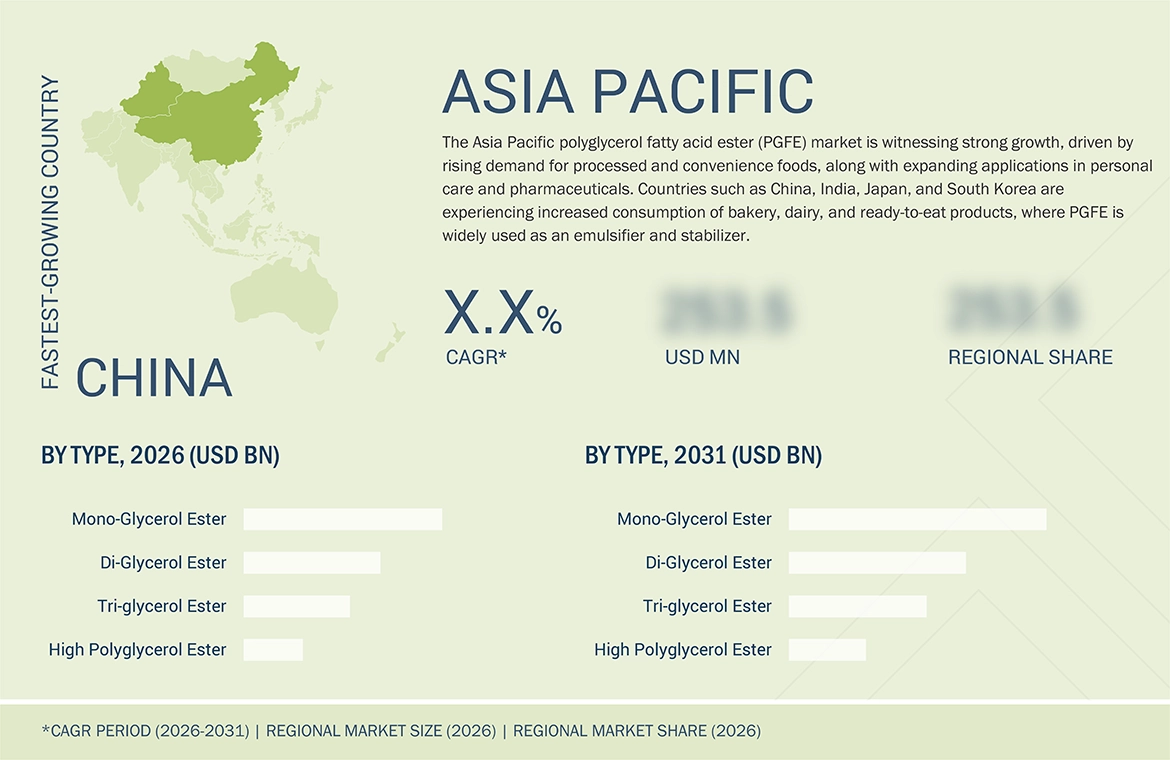
Asia Pacific to be the fastest-growing region in the polyglycerol fatty acid ester (PGFE) market during the forecast period
Asia Pacific is emerging as a high-growth region in the polyglycerol fatty acid ester (PGFE) market, driven by rapid industrialization, expanding food processing sectors, and rising demand for multifunctional ingredients across key economies such as China, India, Japan, and Southeast Asia. The region’s strong growth in bakery, confectionery, and convenience foods is significantly increasing the consumption of emulsifiers like PGFEs. Additionally, the booming personal care and cosmetics industry, supported by rising disposable incomes and urbanization, is further accelerating demand. Local manufacturing capabilities and the availability of raw materials such as palm and coconut oil also enhance regional production competitiveness. Regulatory shifts toward safer, bio-based additives and increasing export-oriented production further position Asia Pacific as a strategic growth hub in the global PGFE market.
POLYGLYCEROL FATTY ACID ESTER (PGFE) MARKET: COMPANY EVALUATION MATRIX
The polyglycerol fatty acid ester (PGFE) market features a mix of established “star” companies and emerging players shaping its competitive landscape. Leading firms such as Croda International Plc dominate through strong R&D capabilities, global distribution networks, and advanced formulation technologies. These companies focus on high-purity, sustainable, and multifunctional ingredients to meet evolving consumer demand. Meanwhile, emerging players like Henan Chemsino Industry are gaining traction by offering cost-effective solutions, customization, and niche innovations. Together, both groups are driving competition, innovation, and market expansion.
Source: Secondary Research, Interviews with Experts, MarketsandMarkets Analysis
KEY MARKET PLAYERS
- Croda International Plc (UK)
- Clariant AG (Switzerland)
- Lonza Group AG (Switzerland)
- Sakamoto Yakuhin Kogyo Co., Ltd. (Japan)
- Taiyo Kagaku Co., Ltd. (Japan)
- Riken Vitamin Co., Ltd. (Japan)
- Palsgaard A/S (Denmark)
- Nisshin Oillio Group Ltd. (Japan)
- Gattefossé (France)
- Stéarinerie Dubois (France)
- Oleon NV (Belgium)
- Ataman Kimya A.S. (Turkey)
- Foodchem International Corporation (China)
- Guangzhou Cardlo Biotechnology Co., Ltd. (China)
- Henan Chemsino Industry Co., Ltd. (China)
MARKET SCOPE
| REPORT METRIC | DETAILS |
|---|---|
| Market Size in 2026 (Value) | USD 251.9 Million |
| Market Forecast in 2031 (value) | USD 310.9 Million |
| Growth Rate | CAGR of 4.3% during 2026-2031 |
| Years Considered | 2021-2031 |
| Base Year | 2025 |
| Forecast Period | 2026-2031 |
| Units Considered | Value (USD Million/Billion) |
| Report Coverage | Revenue forecast, company ranking, competitive landscape, growth factors, and trends |
| Segments Covered |
|
| Countries Covered | North America, South America, Europe, Asia Pacific, RoW |
WHAT IS IN IT FOR YOU: POLYGLYCEROL FATTY ACID ESTER (PGFE) MARKET REPORT CONTENT GUIDE
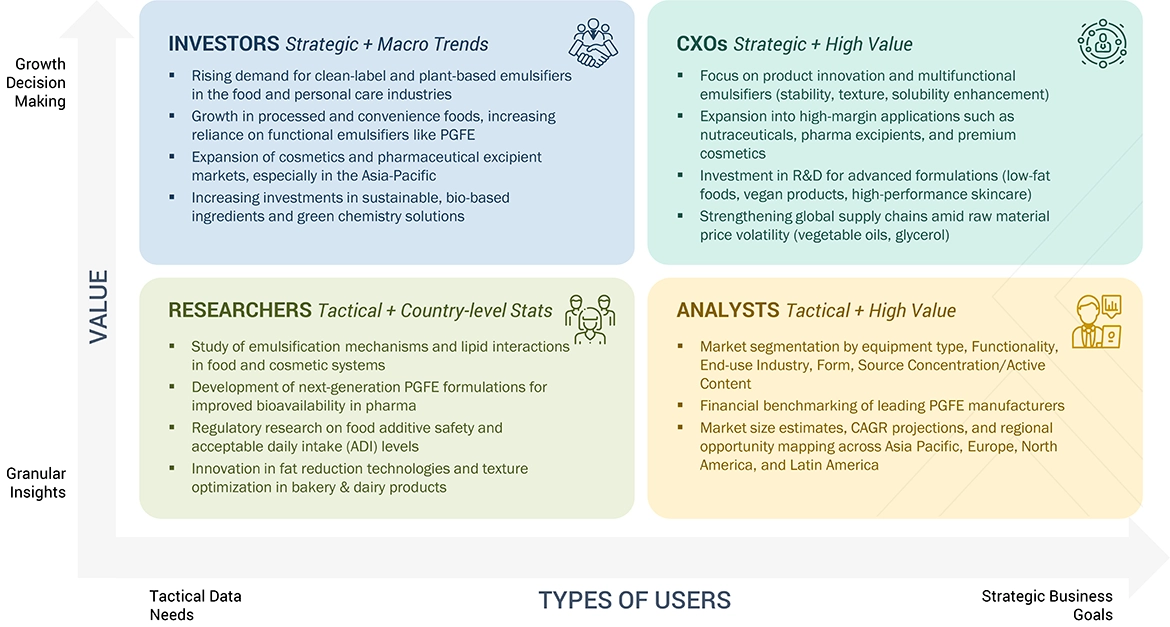
DELIVERED CUSTOMIZATIONS
We have successfully delivered the following deep-dive customizations:
| CLIENT REQUEST | CUSTOMIZATION DELIVERED | VALUE ADDS |
|---|---|---|
| Food Ingredient Manufacturer |
|
|
| Global Food & FMCG Company |
|
|
| Specialty Chemical/Ingredient Company |
|
|
| Investor/Private Equity Firm |
|
|
RECENT DEVELOPMENTS
- December 2025 : Croda strengthened its biopharma portfolio through a strategic supply partnership with Amino GmbH, aimed at enhancing access to pharmaceutical-grade amino acids and reinforcing its position in high-value life sciences applications.
- September 2024 : Clariant inaugurated a new production facility in China dedicated to high-performance specialty chemicals, strengthening its presence in the Asia Pacific region and supporting local demand growth. automatic adjustment of planting depth based on soil conditions, improving emergence uniformity and optimizing seed placement in variable field environments.
- December 2023 : Lonza announced the acquisition of Roche’s large-scale biologics manufacturing facility in Vacaville, US, strengthening its global CDMO capacity and expanding large-scale mammalian manufacturing capabilities.
- May 2023 : Sakamoto Yakuhin Kogyo Co., Ltd entered into a partnership with Unilever to develop sustainable surfactants, reinforcing its commitment to green chemistry and eco-friendly personal care ingredients. Central Fill system, improving seed logistics, reducing refill time, and enabling continuous high-speed planting with maintained precision at speeds up to 15–17 km/h
Table of Contents
 Exclusive indicates content/data unique to MarketsandMarkets and not available with any competitors.
Methodology
The study involved four major activities to estimate the current size of the polyglycerol fatty acid ester (PGFE) market. Exhaustive secondary research was conducted to collect information on the market, peer market, and parent market. The next step was to validate these findings, assumptions, and sizing with industry experts across the value chain through primary research. Both top-down and bottom-up approaches were employed to estimate the total market size. After that, market breakdown and data triangulation were used to estimate the market size of segments and subsegments.
Secondary Research
This research study relied extensively on secondary sources, directories, and databases, including Bloomberg Businessweek and Factiva, to identify and collect information useful for a technical, market-oriented, and commercial study of the polyglycerol fatty acid ester (PGFE) market.
Secondary research drew on a range of sources, including company annual reports, press releases, and investor presentations; white papers; certified publications; articles by recognized authors; gold- and silver-standard websites; directories; and databases to identify and collect information. This study relied extensively on secondary sources, directories, and databases such as Bloomberg Businessweek and Factiva to gather information useful for a technical, market-oriented, and commercial study of the polyglycerol fatty acid ester (PGFE) market.
Secondary research was primarily used to obtain key information about the industry’s supply chain, the total pool of key players, market classification and segmentation by industry trends down to the most granular level, regional markets, and key developments from both market- and technology-oriented perspectives.
Primary Research
Extensive primary research was conducted after gathering information on the Polyglycerol fatty acid ester (PGFE) market through secondary research. Several primary interviews were conducted with market experts from both the demand and supply sides across major countries in North America, Europe, Asia Pacific, South America, and RoW. Primary data was collected through questionnaires, emails, and telephone interviews. Primary sources from the supply side included industry experts such as Chief X Officers (CXOs), Vice Presidents (VPs), and Directors from business development, marketing, and research and development teams, as well as key opinion leaders. Primary interviews were conducted to gather insights such as market statistics, revenue data for products and services, market breakdowns, market size estimates, market forecasts, and data triangulation. Primary research also helped in understanding trends related to polyglycerol fatty acid ester (PGFE), core material, shell material, method, technology, and application. Stakeholders from the demand side, such as research institutions and universities, and third-party vendors, were interviewed to understand the buyer’s perspective on the service, their current use of encapsulation, and their business outlook, which will affect the overall market.
Breakdown of Primary Interviews

Note: The three tiers of the companies are defined based on their total revenues in 2023 or 2024, as per the availability of financial data: Tier 1: Revenue >USD 1 billion; Tier 2: USD 100 million ≤ Revenue ≤ USD 1 billion; Tier 3: Revenue <USD 100 million.
To know about the assumptions considered for the study, download the pdf brochure
|
COMPANY NAME |
DESIGNATION |
|
Croda International Plc (UK) |
R&D Expert |
|
Clariant AG (Switzerland) |
Sales Manager |
|
Lonza Group AG (Switzerland) |
Manager |
|
Sakamoto Yakuhin Kogyo Co., Ltd. (Japan) |
Sales Manager |
|
Taiyo Kagaku Co., Ltd. (Japan) |
Marketing Manager |
Market Size Estimation
Both the top-down and bottom-up approaches were used to estimate and validate the total size of the Polyglycerol fatty acid ester (PGFE) market. These approaches were also used extensively to determine the size of various subsegments in the market. The research methodology used to estimate the market size includes the following details:
- The key players in the industry and the overall markets were identified through extensive secondary research.
- All shares, splits, and breakdowns were determined using secondary sources and verified through primary sources.
- All possible parameters that affect the market covered in this research study were accounted for, viewed in extensive detail, verified through primary research, and analyzed to obtain final quantitative and qualitative data.
- The research included the study of reports, reviews, and newsletters of top market players, along with extensive interviews for opinions from leaders, such as CEOs, directors, and marketing executives.
Polyglycerol Fatty Acid Ester (PGFE) Market: Top-Down and Bottom-Up Approach

Data Triangulation
After determining the overall market size through the estimation process described above, the total market was segmented into several segments and subsegments. Data triangulation and market breakdown procedures were employed, wherever applicable, to estimate the overall Polyglycerol fatty acid ester (PGFE) market and arrive at precise statistics for all segments and subsegments. The data was triangulated by analyzing various factors and trends from both the demand and supply sides. In addition, the market size was validated using both the top-down and bottom-up approaches.
Market Definition
The polyglycerol fatty acid ester (PGFE) market comprises the global industry involved in the production, formulation, and commercialization of polyglycerol esters produced by esterifying polyglycerols with fatty acids, primarily sourced from vegetable oils or animal fats. These compounds serve as multifunctional additives—mainly emulsifiers, stabilizers, and surfactants—widely used across food & beverages, personal care & cosmetics, pharmaceuticals, and industrial applications. The market includes raw material suppliers, manufacturers, formulators, and end-use industries, driven by demand for clean-label, non-ionic, and biodegradable emulsifying agents with enhanced stability and performance.
Key Stakeholders
- Raw material suppliers and manufacturers
- Key manufacturers of the polyglycerol fatty acid ester (PGFE)
- Distributors, traders, and suppliers of cosmetic ingredients across global and regional markets
- Importers and exporters
- Regulatory bodies:
- The United States Department of Agriculture (USDA)
- Food and Agriculture Organization (FAO)
- European Commission (EC)
- Commercial research & development (R&D) institutions and financial institutions
- Contract manufacturers and formulation laboratories supporting product development and testing
- Financial institutions and investors supporting expansion, innovation, and production capacity in the personal care ingredients sector
- Associations:
- US Food and Drug Administration (FDA)
- Society of Cosmetic Chemists
- Organisation for Economic Co-operation and Development (OECD)
Report Objectives
- Determining and projecting the size of the Polyglycerol fatty acid ester (PGFE) market with respect to type, functionality, end-use industry, form, source, concentration/active content
- Identifying the attractive opportunities in the market by determining the largest and fastest-growing segments
- Providing detailed information about the key factors influencing market growth (drivers, restraints, opportunities, and industry-specific challenges)
- Providing the regulatory framework and market entry process related to the polyglycerol fatty acid ester (PGFE) market
- Analyzing the micro markets with respect to individual growth trends, prospects, and their contribution to the total market
Available customizations:
With the given market data, MarketsandMarkets offers customizations according to company-specific scientific needs.
The following customization options are available for the report:
Product Analysis
-
Products Matrix, which gives a detailed comparison of the service portfolio of each company.
Regional Analysis
-
With the given market data, MarketsandMarkets offers customizations according to company-specific scientific needs.
- Further breakdown of the Rest of European polyglycerol fatty acid ester (PGFE) market into key countries.
- Further breakdown of the Rest of Asia Pacific polyglycerol fatty acid ester (PGFE) market into key countries.
- Further breakdown of the Rest of South American polyglycerol fatty acid ester (PGFE) market into key countries.
Company Information
- Detailed analyses and profiling of additional market players (up to five)
Key Questions Addressed by the Report
What is the current size of the polyglycerol fatty acid ester market?
The global polyglycerol fatty acid ester market is valued at approximately USD 251.9 million in 2026 and is projected to reach USD 310.9 million by 2031, reflecting steady demand across food, personal care, pharmaceutical, and industrial applications.
What is the expected CAGR of the Polyglycerol Fatty Acid Ester market?
The polyglycerol fatty acid ester market is expected to grow at a CAGR of 4.3% between 2026 and 2031, supported by rising adoption of multifunctional emulsifiers and increasing preference for sustainable ingredients.
What factors are driving the growth of the polyglycerol fatty acid ester market?
The polyglycerol fatty acid ester market growth is driven by increasing demand for clean-label food ingredients, improved product stability, expansion of the cosmetics industry, growing pharmaceutical applications, and the shift toward bio-based emulsifiers.
What are the latest trends in the polyglycerol fatty acid ester market?
Major trends include the development of bio-based emulsifiers, multifunctional ingredient formulations, clean-label product innovation, fat-reduction solutions in food products, and advanced emulsification technologies.
What opportunities exist in the polyglycerol fatty acid ester market?
The polyglycerol fatty acid ester market growth opportunities are emerging from expanding demand in processed foods, premium cosmetics, pharmaceutical formulations, sustainable manufacturing practices, and innovation in plant-derived emulsifiers.


Personalize This Research
- Triangulate with your Own Data
- Get Data as per your Format and Definition
- Gain a Deeper Dive on a Specific Application, Geography, Customer or Competitor
- Any level of Personalization
Let Us Help You
- What are the Known and Unknown Adjacencies Impacting the Polyglycerol Fatty Acid Ester Market
- What will your New Revenue Sources be?
- Who will be your Top Customer; what will make them switch?
- Defend your Market Share or Win Competitors
- Get a Scorecard for Target Partners

Custom Market Research Services
We Will Customise The Research For You, In Case The Report Listed Above Does Not Meet With Your Requirements
Get 10% Free CustomisationTESTIMONIALS

Business Innovation Director
US Based Leading Agribusiness,
Food and Ingredients ManufacturerI highly appreciate the team's efficiency for a well conducted study that helped us clarify some blind spots in food and agricultural niche markets. Although compiling information for B2B markets is very difficult, the MnM team pulled out the task successfully. The quality of research, level of insights, and responsiveness of team were commendable.
- US Polyglycerol Fatty Acid Ester Market
- Canada Polyglycerol Fatty Acid Ester Market
- Mexico Polyglycerol Fatty Acid Ester Market
- Germany Polyglycerol Fatty Acid Ester Market
- France Polyglycerol Fatty Acid Ester Market
- UK Polyglycerol Fatty Acid Ester Market
- Italy Polyglycerol Fatty Acid Ester Market
- Spain Polyglycerol Fatty Acid Ester Market
- China Polyglycerol Fatty Acid Ester Market
- India Polyglycerol Fatty Acid Ester Market
- Japan Polyglycerol Fatty Acid Ester Market
- South Korea Polyglycerol Fatty Acid Ester Market
- Indonesia Polyglycerol Fatty Acid Ester Market
- Thailand Polyglycerol Fatty Acid Ester Market
- Malaysia Polyglycerol Fatty Acid Ester Market
- Vietnam Polyglycerol Fatty Acid Ester Market
- Philippines Polyglycerol Fatty Acid Ester Market
- Singapore Polyglycerol Fatty Acid Ester Market
- Brazil Polyglycerol Fatty Acid Ester Market
- Argentina Polyglycerol Fatty Acid Ester Market
- Rest Of Europe Polyglycerol Fatty Acid Ester Market






Growth opportunities and latent adjacency in Polyglycerol Fatty Acid Ester Market