Power Generator Rental Market

Power Generator Rental Market by Application, Fuel Type, Power Rating, Rental Type, End User, and Region - Forecast to 2030




OVERVIEW
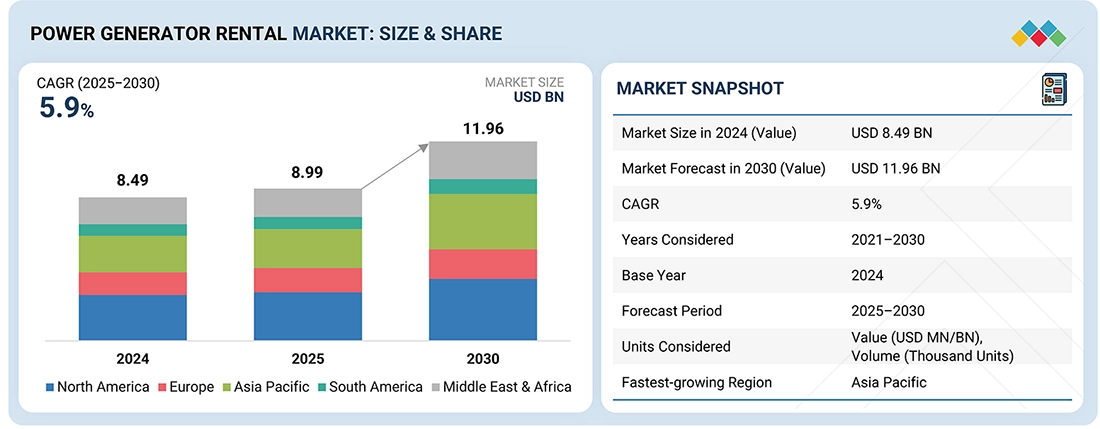
Source: Secondary Research, Interviews with Experts, MarketsandMarkets Analysis
The power generator rental market is projected to reach USD 11.96 billion by 2030 from an estimated USD 8.99 billion in 2025, at a CAGR of 5.9% during the forecast period. The power generator rental market is growing steadily due to the increasing demand for reliable and continuous power supply across industries. Frequent power outages, aging electrical infrastructure, and the use of renewable energy sources have propelled the need for power rental.
KEY TAKEAWAYS
-
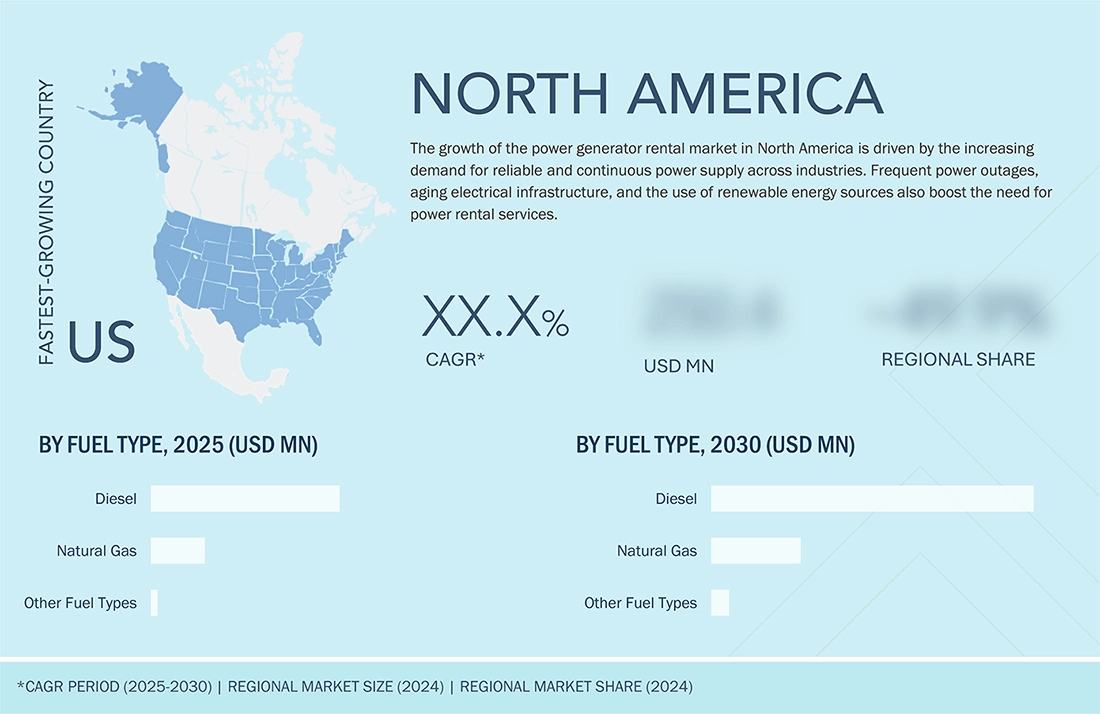
BY REGIONNorth America is expected to account for the largest share of 32% of the power generator rental market in 2025.
-
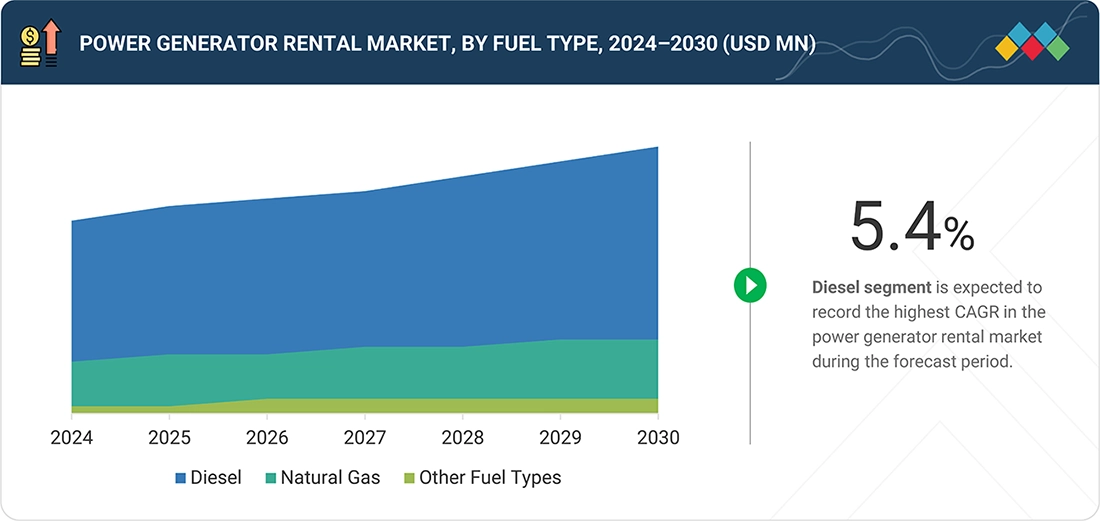
BY FUEL TYPEBy fuel type, the diesel segment held the largest market share of 77.5% in 2024.
-
BY POWER RATINGBy power rating, the 501-2,500 KW segment is projected to register the fastest growth during the forecast period.
-
BY APPLICATIONBy application, the peak shaving segment is estimated to register the highest growth during the forecast period.
-
BY END USERBy end user, the utilities segment is estimated to register the highest CAGR of 4.5% during the forecast period.
-
BY RENTAL TYPEBy rental type, the retail segment held the largest share of the power generator rental market in 2024.
-
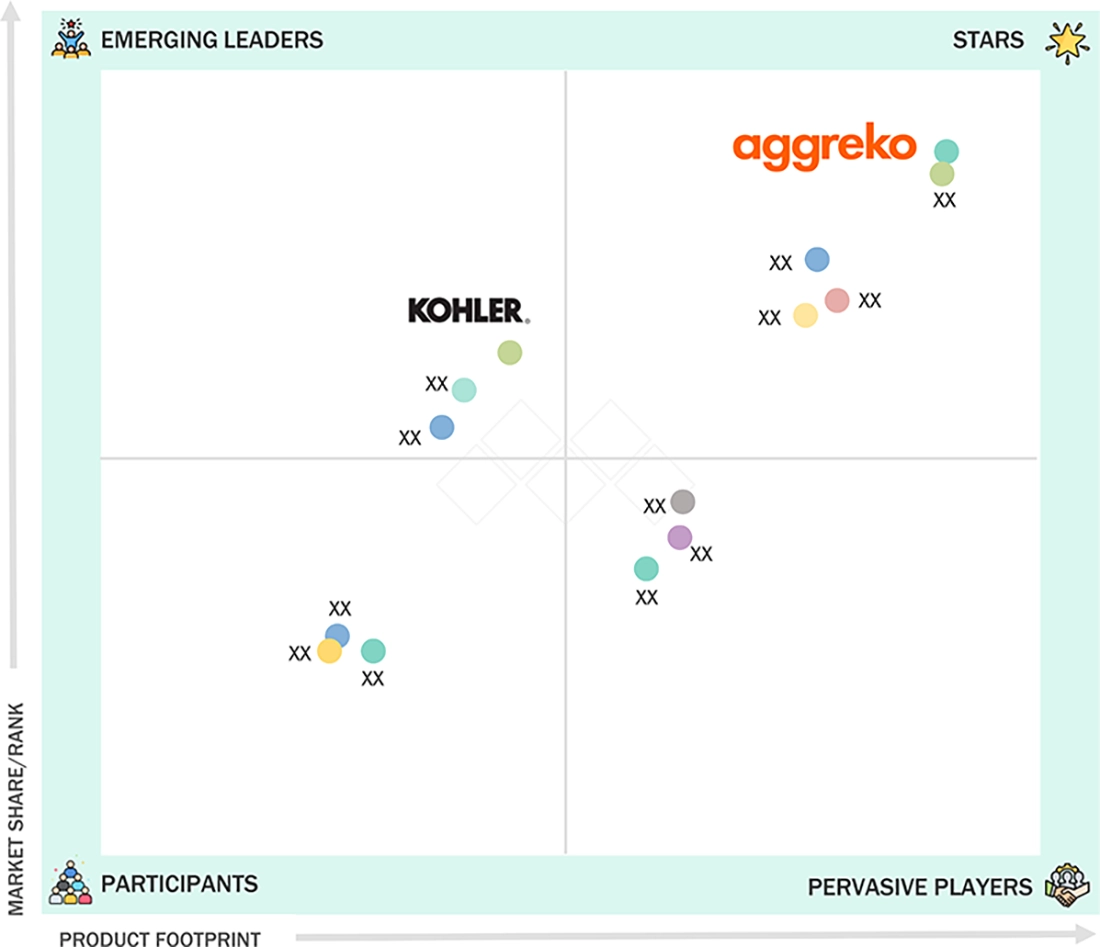
COMPETITIVE LANDSCAPECompanies such as Aggreko (UK), Ashtead Group plc (UK), United Rentals, Inc. (US), Caterpillar (US), and Cummins Inc. (US) were identified as some of the star players in the power generator rental market.
-
COMPETITIVE LANDSCAPEGenerator Power Systems, Inc. (US) and JC Davis Power (US) have distinguished themselves among SMEs and startups due to their strong product portfolio and sound business strategy.
The power generator rental market is experiencing steady growth due to the increased demand for reliable and flexible power solutions in industrial and commercial sectors. Frequent fluctuations in energy supply and the increasing need for temporary or backup power are driving businesses to opt for rental solutions over traditional systems. The adaptability of generator fleets is crucial, enabling companies to respond quickly to changing operational requirements and project timelines. Moreover, ongoing industrial expansion, rapid infrastructure development, and the growing emphasis on uninterrupted power supply for data centers, manufacturing, and oil & gas operations are further accelerating market growth in the region. Sustainability goals are also influencing this shift, with a rising demand for integrating renewable and cleaner fuels. Overall, the region's focus on energy resilience, flexible power delivery, and advanced fleet technologies is shaping the future of the power generator rental market.
TRENDS & DISRUPTIONS IMPACTING CUSTOMERS' CUSTOMERS
The power generator rental market is estimated to record moderate to high growth during the forecast period. This growth can be attributed to the digitalization of utilities and increased investments in the renewable and clean energy sectors. The growth of big data analytics enables efficient processing, predictive maintenance, and advanced analysis of large datasets, enhancing reliability and efficiency in power grids and increasing investments in the offshore wind farms sector, which are likely to create lucrative opportunities for market players.
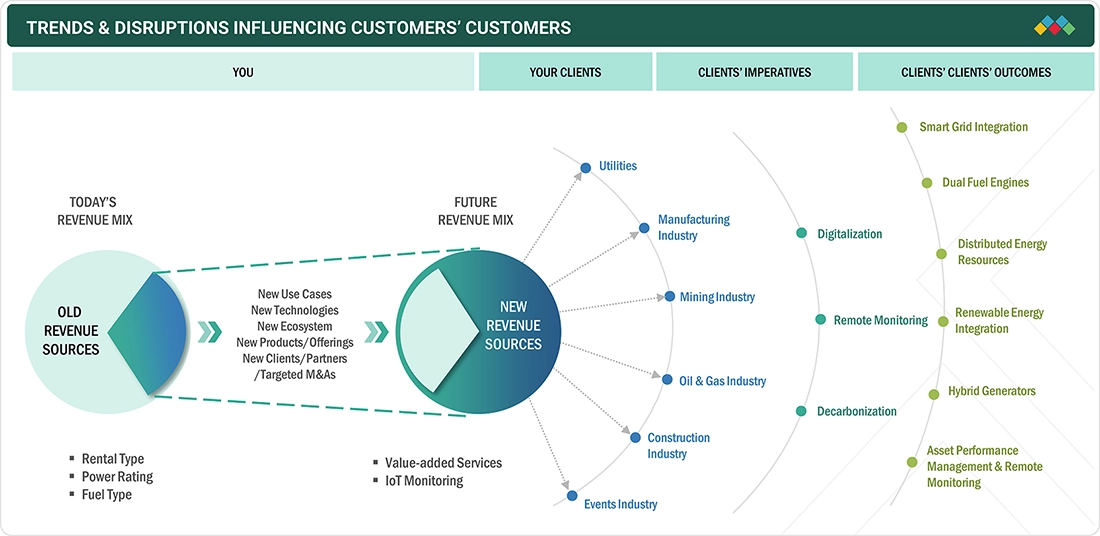
Source: Secondary Research, Interviews with Experts, MarketsandMarkets Analysis
MARKET DYNAMICS

Level
-
Surging demand for uninterrupted and reliable power supply

-
Rapid industrialization in developing economies of Asia Pacific


Level
-
Growing adoption of renewable energy sources and energy storage technologies

-
Stringent government regulations associated with generators


Level
-
Technological advancements in power rental equipment for operations enhancement

-
Integration of power rental generators with renewable energy sources


Level
-
Increased operating expenditure of diesel generators due to high fuel prices

-
Raw material and component shortage and sudden fluctuation in demand for power rental equipment

Source: Secondary Research, Interviews with Experts, MarketsandMarkets Analysis
Driver: Surging demand for uninterrupted and reliable power supply
Surging demand for uninterrupted and reliable power supply is a key driver for the power generator rental market, as frequent weather-related disruptions, grid congestion, and aging transmission infrastructure increasingly threaten business continuity across the region. Enterprises in sectors such as data centers, healthcare, manufacturing, oil & gas, and construction are prioritizing contingency solutions that can instantly bridge grid failures or planned outages, leading to higher adoption of temporary generators and hybrid rental power systems. At the same time, stricter uptime requirements, especially for mission-critical facilities and remote industrial sites, are prompting companies to supplement their permanent installations with flexible rental capacity that can be deployed quickly, scaled according to project needs, and financed on an operating-expense basis rather than a capital-expenditure basis. This combination of reliability concerns, operational risk mitigation, and financial flexibility is steadily reinforcing the role of rental power as an essential buffer against grid instability.
Restraint: Growing adoption of renewable energy sources and energy storage technologies
Growing adoption of renewable energy sources and advanced energy storage technologies is emerging as a structural restraint for the power generator rental market. As utilities, commercial facilities, and large industrial users increasingly invest in grid-connected solar and wind projects paired with battery storage, their dependence on temporary diesel- and gas-fired rental generators for peak shaving and backup power is gradually declining. In addition, the falling levelized costs of renewables and storage, coupled with tax incentives and decarbonization targets, make permanent clean-energy installations more attractive than short-term rental contracts over the project's life cycle. This shift reduces the frequency and duration of rental deployments, intensifying regulatory and stakeholder pressure on high-emission rental fleets. As a result, power rental providers are forced to reconfigure their offerings and accept margin pressures in traditionally high-demand segments.
Opportunity: Technological advancements in power rental equipment for operations enhancement
Technological advancements, such as IoT-enabled telematics, AI-driven predictive maintenance, and hybrid generator–battery systems, are creating a significant opportunity for the power generator rental market by enhancing operational efficiency and service quality. Remote monitoring platforms enable rental providers to track fuel consumption, load profiles, and equipment health in real-time, allowing for proactive fault detection, optimized dispatch, and reduced on-site staffing needs for construction, data centers, utilities, and event customers. At the same time, integrating mobile battery energy storage and smart energy management systems with Tier 4-compliant diesel and gas sets reduces fuel use, emissions, and noise, helping customers meet stringent environmental regulations and corporate sustainability targets while lowering the total cost of ownership for temporary power. Providers that aggressively digitize their fleets and offer technology-rich solutions, such as hybrid microgrids, remote performance dashboards, and data-backed performance guarantees, can differentiate themselves in a competitive market and capture long-term contracts from customers seeking reliable, low-carbon, and intelligently managed rental power solutions.
Challenge: Increased operating expenditure of diesel generators due to high fuel prices
Rising diesel prices have become a significant challenge for the power generator rental market, as they directly inflate the operating expenditure of rental generator fleets and erode customer willingness to commit to long-term contracts. The fuel component often accounts for the largest share of total lifecycle cost for rented gensets, so sustained increases in diesel prices sharply raise per-kWh power costs, compressing margins for rental providers unless tariffs are frequently adjusted. At the same time, price-sensitive users in construction, oil & gas, events, and small industrial sites are increasingly reconsidering diesel-based rental solutions, delaying projects, downsizing rental capacities, or seeking alternatives such as gas, hybrid, or grid-based backup where available. This cost pressure complicates demand forecasting, contract structuring, and fleet optimization for rental companies, and forces them to invest in more fuel-efficient sets, remote monitoring, and hybrid solutions to remain competitive while managing profitability in a volatile fuel-price environment.
POWER GENERATOR RENTAL MARKET: COMMERCIAL USE CASES ACROSS INDUSTRIES
| COMPANY | USE CASE DESCRIPTION | BENEFITS |
|---|---|---|
 |
The NHS Nightingale Hospital in London was the first of seven NHS Nightingale Hospitals set up in the UK in 2020. These temporary large-scale critical care hospitals were set up to provide cover for the projected increase in patients requiring critical treatment. One of the main challenges for the NHS was that of utilities, particularly electricity, with considerable requirements for additional duty and standby power without leaving the hospital at risk during an outage. | Rapid deployment of temporary rental power by MEMS, supplying 21,850 kVA with generators, cables, and distribution equipment, enabled the NHS Nightingale Hospital to operate with reliable electricity for critical care without risking outages. |
 |
The old La Parrilla tungsten mine, located in the heart of Extremaduran pastureland, was active for several decades of the twentieth century, positioning Spain as one of the world’s largest producers. The subsequent fall in the price of tungsten caused the mine to close in the mid-1980s. Thirty years later, the price of tungsten began to rise, and W-RESOURCES Plc decided to reactivate this historic mine. However, they needed a stable and guaranteed power source in a remote environment without a connection to the grid. | Aggreko’s off-grid gas-generator power plant provided a stable, long-term and environmentally cost-effective power supply, enabling continuous mining operations at the remote La Parrilla tungsten mine. |
Logos and trademarks shown above are the property of their respective owners. Their use here is for informational and illustrative purposes only.
MARKET ECOSYSTEM
The power generator rental ecosystem connects generator manufacturers, component suppliers, and rental power companies with a wide spectrum of end users that depend on temporary or backup electricity. These users include utilities seeking grid support, oil and gas operators in remote fields, mining projects, construction sites, and large commercial or industrial facilities. Data centers, telecom networks, and event organizers also rely on rented power solutions to ensure uninterrupted operations during outages, peak demand, commissioning, or short-term projects.
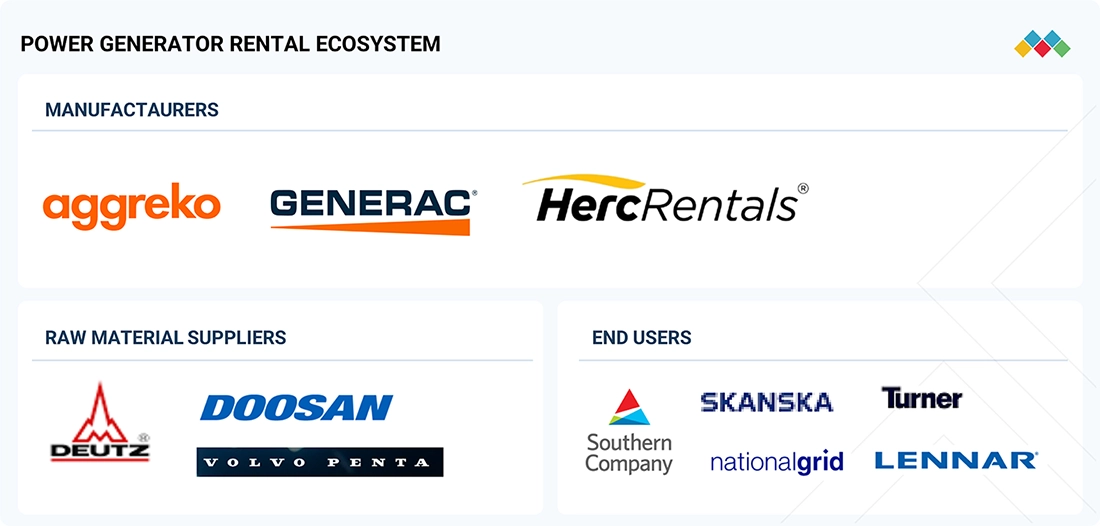
Logos and trademarks shown above are the property of their respective owners. Their use here is for informational and illustrative purposes only.
MARKET SEGMENTS
Source: Secondary Research, Interviews with Experts, MarketsandMarkets Analysis
Power Generator Rental Market, by Fuel Type
The power generator rental market is categorized based on fuel type into diesel, natural gas, and other fuel types, including gasoline, hybrid, and heavy fuel oil (HFO). Diesel generators dominate the market due to their high reliability, easy availability, and suitability for heavy-duty applications. Natural gas-powered units are gaining popularity as cleaner and more cost-effective alternatives, driven by increasing environmental regulations and the growing availability of gas infrastructure. Other fuel types, such as gasoline, hybrid systems, and HFO-based units, serve specific niche applications where flexibility, mobility, or localized fuel availability are key factors influencing equipment selection.
Power Generator Rental Market, by Power Rating
The power generator rental market, by power rating, has been segmented into up to 50 kW, 51–500 kW, 501–2,500 kW, and above 2,500 kW. Diesel- and natural gas-fired power rental solutions make up for the largest share of the market. Various sectors, including mining, oil and gas, and construction, utilize power rental solutions of different capacities based on the type or nature of the job.
Power Generator Rental Market, by Application
The power generator rental market, by application, has been segmented into peak shaving, base load/continuous power, and standby power. Rental generators can sometimes be used during peak hours to accommodate the extra demand, ensuring grid stability. Since these generators share the peak load, the application is referred to as peak shaving. Furthermore, power rental units used to meet the base load/continuous power requirements within various industries are essentially referred to as base load/continuous power generators. These generators and related equipment are primarily used during mining operations at remote places where supply from the grid is unavailable. Standby load generators find applications during contingencies or planned outages by utilities or during emergencies where critical operations such as telecom and data centers require backup power.
Power Generator Rental Market, by End User
Based on end user, the power generator rental market is segmented into utilities, oil & gas, metals & mining, construction, manufacturing, events, corporate & retail, IT & data centers, and others. The oil & gas, mining, and construction sectors represent key demand drivers, as they rely heavily on reliable and flexible power solutions to maintain continuous operations in remote or off-grid areas. Growing power demand from IT and data centers further fuels market growth, while utilities increasingly depend on rental power to manage peak loads, grid maintenance, and emergency backup requirements across diverse industrial applications.
Power Generator Rental Market, by Rental Type
Based on rental type, the power generator rental market has been classified into retail rental and project rental. Since rental power solutions and equipment offer flexibility in operation, they can be utilized for various applications, including peak shaving, base load/continuous power, and standby. Moreover, due to this operational flexibility, various end-user industries can use these solutions without any alteration. In line with that, retail users can use this equipment for shorter turnaround times, whereas project rental users can cater to the electrical needs of an entire project for longer durations with this equipment.
REGION
North America is the largest region in power generator rental market during forecast period
North America is the largest region in the power generator rental market. North America boasts a mature and well-established economy, characterized by high levels of industrialization, urbanization, and infrastructure development. This drives demand for temporary power solutions in various sectors, including construction, manufacturing, oil and gas, utilities, events, and entertainment. As a result, the region has a large and diverse customer base for power rental services, contributing to market growth. Moreover, North America has a robust regulatory framework and reliable power infrastructure, which makes it conducive to the adoption of power generator rental solutions.
POWER GENERATOR RENTAL MARKET: COMPANY EVALUATION MATRIX
Aggreko is a star player in the power generator rental market matrix, reflecting clear leadership in both market share and service breadth. The company differentiates itself through an extensive fleet portfolio, integrated digital and monitoring platforms, and a strong reach across various industries, including manufacturing, oil and gas, and utilities. Kohler Co. (Emerging Leader) is steadily becoming a go-to power rental brand. Its rental power generators are compact, energy-efficient, and easy to deploy, giving OEMs and users a practical alternative to traditional giants, especially in everyday applications like temporary HVAC systems, pumps, fans, and small industrial machines.
Source: Secondary Research, Interviews with Experts, MarketsandMarkets Analysis
KEY MARKET PLAYERS
- Aggreko (UK)
- Ashtead Group plc (UK)
- United Rentals, Inc. (US)
- Herc Rentals Inc. (US)
- Generac Power Systems, Inc. (US)
- Caterpillar Inc. (US)
- Cummins Inc (US)
- Ashtead Group plc (UK)
- Kohler Co. (US)
- Trinity Power Rentals (US)
- Clifford Power Systems (US)
MARKET SCOPE
| REPORT METRIC | DETAILS |
|---|---|
| Market Size in 2024 (Value) | USD 8.49 Billion |
| Market Forecast in 2030 (Value) | USD 11.96 Billion |
| Growth Rate | 5.9% |
| Years Considered | 2021–2030 |
| Base Year | 2024 |
| Forecast Period | 2025–2030 |
| Units Considered | Value (USD Million/Billion), Volume (Thousand Units) |
| Report Coverage | Revenue Forecast, Company Ranking, Competitive Landscape, Growth factors, and Trends |
| Segments Covered |
|
| Region Covered | North America, Europe, Asia Pacific, South America, Middle East & Africa |
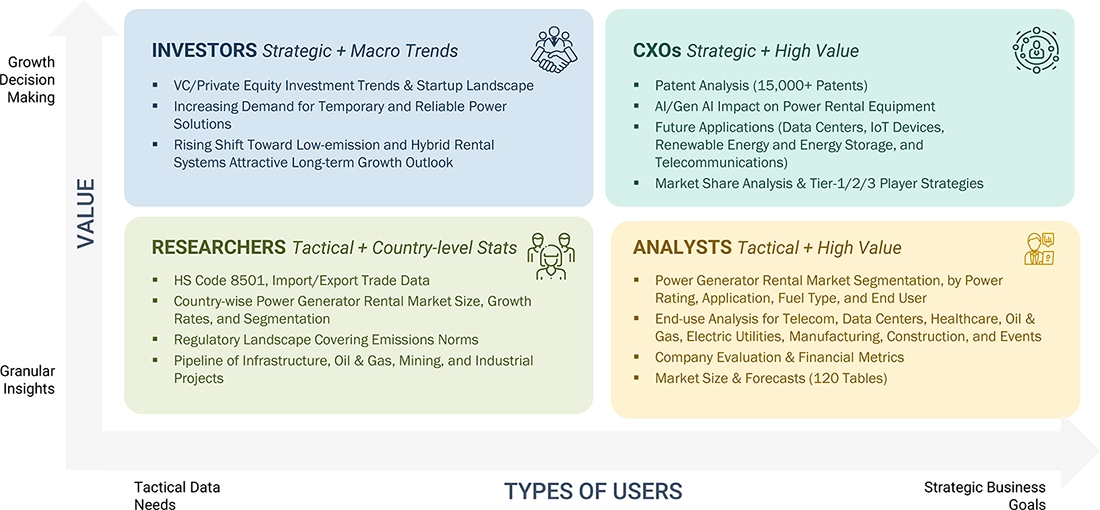
WHAT IS IN IT FOR YOU: POWER GENERATOR RENTAL MARKET REPORT CONTENT GUIDE
DELIVERED CUSTOMIZATIONS
We have successfully delivered the following deep-dive customizations:
| CLIENT REQUEST | CUSTOMIZATION DELIVERED | VALUE ADDS |
|---|---|---|
| Major Industrial EPC/Utility |
|
|
| Oil & Gas/Mining Operator |
|
|
| Building/HVAC System Integrator |
|
|
RECENT DEVELOPMENTS
- August 2022 : Caterpillar signed a strategic partnership with Aggreko, a global leader in temporary power and utilities rental, for joint marketing and technology collaboration. This partnership is significant in the power rental industry, which is projected to grow to USD 26.9 billion worldwide by 2027. The partnership is part of Caterpillar’s efforts to strengthen its position in the market and enhance its offerings through collaborative innovation and marketing efforts.
- July 2021 : Aggreko partnered with R&A to deliver a renewable power solution at the 149th Open Championship at Royal St George’s Golf Club in Sandwich, England, conducted between July 15 and 18. Aggreko delivered two renewable microgrids that supplied 100% reliable power without connection to the grid. The system has already generated approximately 21,000 kWh of solar power and saved 25 tons CO2 before the event since the solution was installed in March 2021 for the event.
- May 2021 : United Rentals completed the previously announced acquisition of General Finance Corporation. This is an acquisition with strong strategic and financial merits, timed to serve the increasing demand in end markets. It expands the company’s capacity for growth due to the addition of leading mobile storage and modular office solutions, including over 900 employees with complementary expertise.
- December 2020 : Aggreko launched the Stage V 600 kVA canopy generator, which utilizes a variety of advanced exhaust treatment processes to remove the most harmful pollutants. Aggreko has specifically designed the generator, which offers a 98% reduction in the volume of particulates and expels 96% NOx gases to comply with the stringent emission regulations in both the US and Europe.
Table of Contents
 Exclusive indicates content/data unique to MarketsandMarkets and not available with any competitors.
Methodology
The study involved major activities in estimating the current size of the power rental market. Exhaustive secondary research was done to collect information on the peer and parent markets. The next step was to validate these findings, assumptions, and sizing with industry experts across the value chain through primary research. Both top-down and bottom-up approaches were employed to estimate the complete market size. Thereafter, market breakdown and data triangulation were used to estimate the market size of the segments and subsegments.
Secondary Research
This research study on the market involved the use of extensive secondary sources, directories, and databases, such as Hoovers, Bloomberg, Businessweek, Factiva, International Energy Agency, and United States Energy Association, to identify and collect information useful for a technical, market-oriented, and commercial study of the global power rental market. The other secondary sources included annual reports of the companies involved in the market, press releases & investor presentations of companies, white papers, certified publications, articles by recognized authors, manufacturer associations, trade directories, and databases.
Primary Research
The power rental market comprises power rental providers, manufacturers of subcomponents of power plant, manufacturing technology providers, and technology support providers in the supply chain. The demand side of this market is characterized by the rising demand for clean energy and energy efficiency. The supply side industry experts such as vice presidents, CEOs, marketing directors, technology directors, and related key executives from various companies and organizations operating in the market. Various primary sources from both the supply and demand sides of the market were interviewed to obtain qualitative and quantitative information.
Following is the breakdown of primary respondents:
To know about the assumptions considered for the study, download the pdf brochure
Power Rental Market Size Estimation
Both supply side and demand side analysis were used to estimate and validate the total size of the market. These methods were also used extensively to estimate the size of various subsegments in the market. The research methodology used to estimate the market size includes the following:
- Identification of major players in the market across countries. Key players in the power rental market include Aggreko, United Rentals, Ashtead Group, Herc Rentals, Caterpillar, Atlas Copco, and Cummins.
- Determining the revenues and business strategy specifics, such as the inorganic and organic growth strategy details, of major power rental equipment providers.
- The market share of individual power rental segments, namely, equipment, fuel type, application, power rating, rental type, and end user, are determined by consolidating and evaluating the product offerings of major companies.
- In addition, country-level demand for power rental equipment from end users, such as utilities, oil & gas, mining & metals, manufacturing, construction, and IT & data centers, and supportive policy developments across regions during the forecast period has been analyzed. The analysed data then verified through primaries to determine the country-wise and regional landscape.
Data Triangulation
After arriving at the overall market size from the estimation process explained above, the total market has been split into several segments and subsegments. The complete market engineering process is done to arrive at the exact statistics for all the segments and subsegments, also data triangulation and market breakdown processes have been employed, wherever applicable. The data has been triangulated by examining various factors and trends from both the demand- and supply sides. Along with this, the market has been validated through both the top-down and bottom-up approaches.
Market Definition
The power rental market is defined as the revenue generated either through providing equipment on rent such as load banks, generators, fuel tanks, cables, transformers, and power accessories or by renting temporary power plants. Power rental equipment majorly operates on diesel, gas, and other fuels such as gasoline, hybrid fuel, and heavy fuel oil (HFO). This equipment is used for peak shaving, standby power, and base load/continuous load applications by the utilities, oil & gas, events, construction, mining & metals, manufacturing, IT & data centers, corporate & retail, and other end users. Other industries include shipping, agriculture, aerospace and defense, wherein this equipment is majorly used for the generation of backup power.
Key Stakeholders
- Consulting companies in the energy and power sector
- Consulting companies in the oil & gas sector
- Generator raw materials and component manufacturers
- Engine/generator manufacturers, dealers, and suppliers
- Governments and research organizations
- Investment banks
- Petroleum companies (diesel and natural gas suppliers)
- Construction and infrastructure development companies
- Power grid infrastructure companies
- Power plant project developers
- Power rental companies
- Shareholders or investors
Objectives of the Study
- To forecast the market size for five key regions: North America, South America, Europe, Asia Pacific, and Middle East & Africa, along with their key countries.
- To define, describe, analyze, and forecast the size of the global power rental market based on fuel type, power rating, application, equipment, end user, rental type, and region.
- To provide detailed information about key factors such as drivers, restraints, opportunities, and challenges influencing the growth of the market.
- To strategically analyze the subsegments with respect to individual growth trends, prospects, and contributions of each segment to the overall market size
- To strategically analyze the market with respect to individual growth trends, future expansions, and contributions to the market.
- To analyze market opportunities for stakeholders in the market and draw a competitive landscape for market players.
- To analyze competitive developments such as sales contracts, agreements, investments, expansions, new product launches, mergers, partnerships, joint ventures, collaborations, and acquisitions in the market.
- To compare key market players with respect to the market share, product specifications, and applications.
Available Customizations:
With the given market data, MarketsandMarkets offers customizations as per the client’s specific needs. The following customization options are available for this report:
Geographic Analysis
- Further breakdown of region or country-specific analysis
Company Information
- Detailed analyses and profiling of additional market players (up to 5)


Personalize This Research
- Triangulate with your Own Data
- Get Data as per your Format and Definition
- Gain a Deeper Dive on a Specific Application, Geography, Customer or Competitor
- Any level of Personalization
Let Us Help You
- What are the Known and Unknown Adjacencies Impacting the Power Generator Rental Market
- What will your New Revenue Sources be?
- Who will be your Top Customer; what will make them switch?
- Defend your Market Share or Win Competitors
- Get a Scorecard for Target Partners

Custom Market Research Services
We Will Customise The Research For You, In Case The Report Listed Above Does Not Meet With Your Requirements
Get 10% Free CustomisationTESTIMONIALS

Kimberly Murphy
GLOBAL MARKETING DIRECTOR
Bently Nevada,
Leading Condition Monitoring & Asset Protectionwww.bakerhughesds.com/bently-nevada

MarketsandMarkets™ showed consistent rigor for success and relentlessly worked with Bently Nevada stakeholders to positively impact go-to-market strategy. Their proactiveness and flexibility has been instrumental in achieving the objectives to grow our sales pipeline in key industrial markets.

DARRICK HUEBER
Business Development Leader
Nexus Controls LLC,
Leading Manufacturer of Automation System & Electrical Panelswww.bakerhughesds.com/nexus-controls

We partnered with MarketsandMarkets to expand our business further by tapping into new industrial segments. It was critical for us to gather crucial business insights about specific markets to achieve this goal. MarketsandMarkets engagement model and client services helped us provide those insights, it was really impressive and valuable for my business. The team was extremely flexible and helpful.

Mike Schoff
Global Industrial Commercial Strategy Leader
Nexus Controls LLC
Leading Manufacturer of Automation System & Electrical Panelswww.bakerhughesds.com/nexus-controls
We consulted MarketsandMarkets for potential Partner Identification. Overall, it was a good experience. The insights provided through interviews conducted by the team helped us put together the questionnaire required for discussion with the selected partners. Their ability to provide insights through interviews with customers in a timely manner was quite impressive.






Growth opportunities and latent adjacency in Power Generator Rental Market