Radioligand Therapy (RLT) Market Size, Growth, Share & Trends Analysis

Radioligand Therapy (RLT) Market by Product (Lutetium-177 Vipivotide Tetraxetan, (Lu-177)- PNT2002, Radium-223 dichloride), Target (PSMA, SSTR, Bone Metastases), Indication (Prostate Cancer, Neuroendocrine Tumors (NETS), SCLC) - Global Forecast to 2035




OVERVIEW
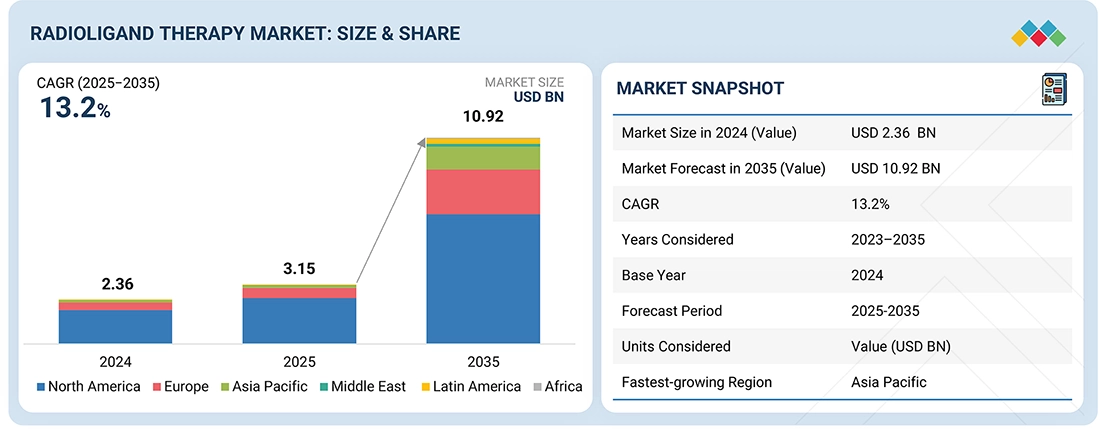
Source: Secondary Research, Interviews with Experts, MarketsandMarkets Analysis
The global radioligand therapy market is estimated to be USD 3.15 billion in 2025 and reach USD 10.92 billion by 2035, with a CAGR of 13.2% during the forecast period. The radioligand therapy market is expected to accelerate due to the increasing prevalence of cancer and a robust pipeline of radioligand therapeutics.
KEY TAKEAWAYS
-
By RegionThe North America peptide synthesis market accounted for a 75.8% revenue share in 2024.
-
By ProductBy Product, the Lutetium-177 vipivotide tetraxetan (Pluvicto) segment is expected to register the highest CAGR of 5%.
-
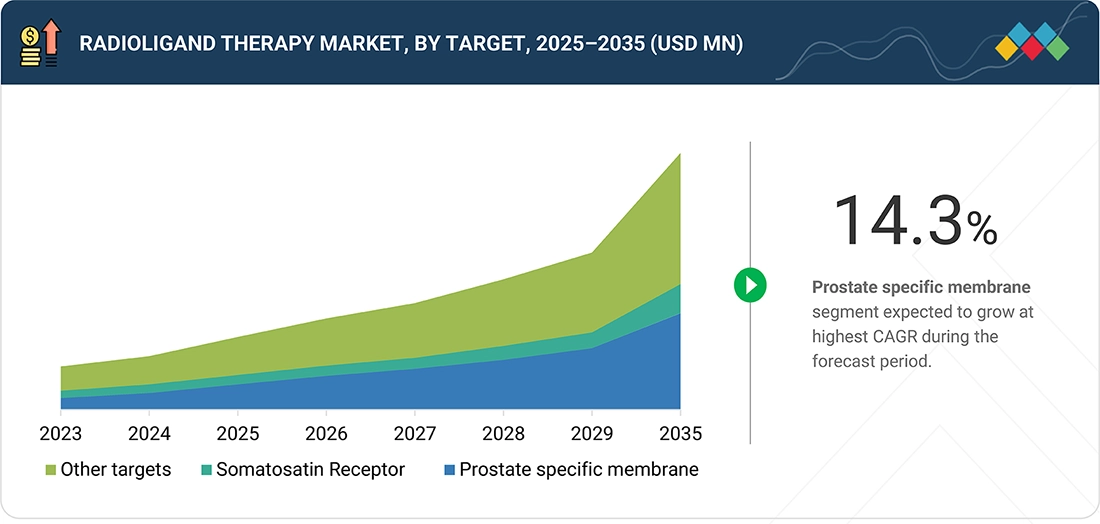
By TargetBy Target, the Prostate-Specific Membrane Antigen segment will grow the fastest during the forecast period.
-
By IndicationBy indication, the prostate cancer segment is expected to dominate the market, growing at the highest CAGR of 13.7%.
-
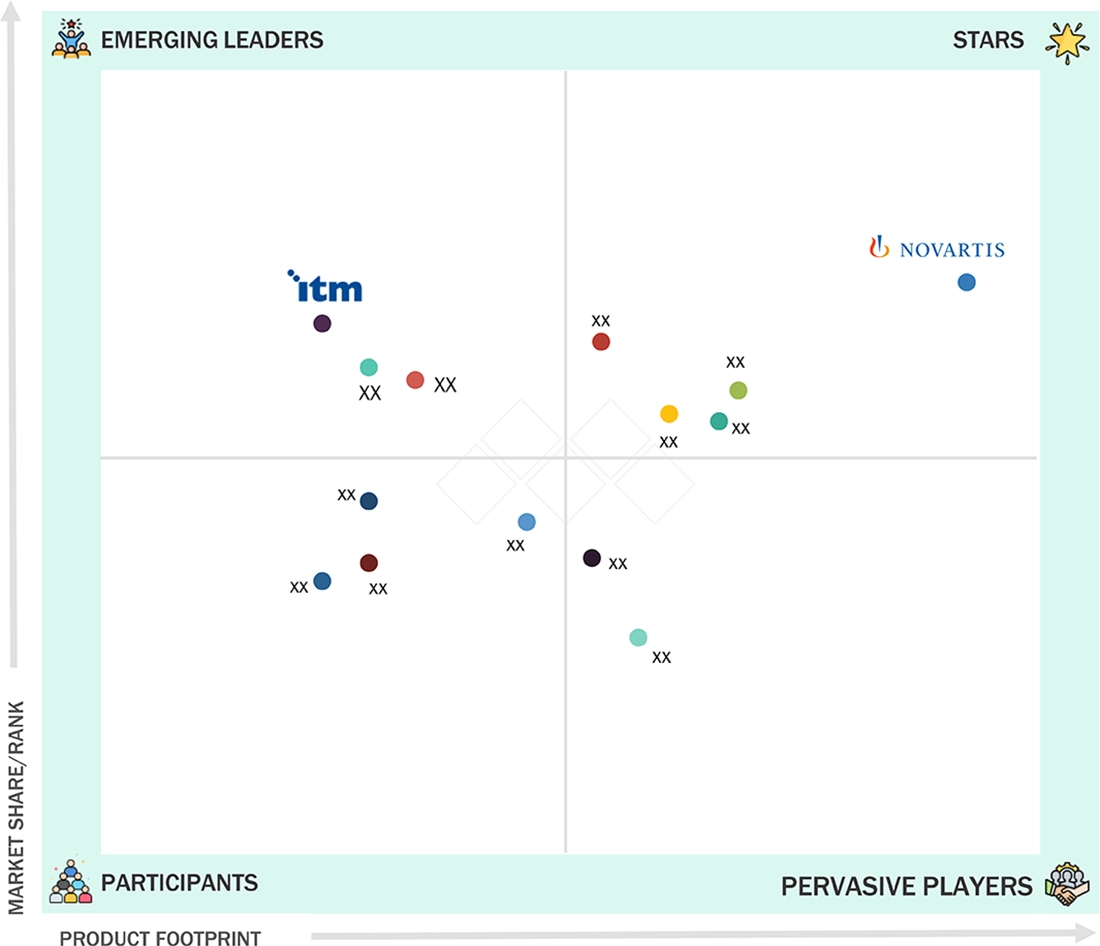
competitive landscapeNovartis , Bayer AG and Eli Lilly & Co. were identified as some of the star players in the cell counting market (global), given their strong market share and product footprint.
The radioligand therapy (RLT) market is undergoing rapid transformation driven by technological advancements, regulatory progress, and evolving business models. A significant shift toward alpha-emitting therapies such as actinium-225 and lead-212, which deliver highly potent and localized radiation, offering greater efficacy with reduced toxicity compared to traditional beta emitters. Companies invest in next-generation ligand design to improve tumor specificity, enhance stability, and enable combination therapies with immuno-oncology agents
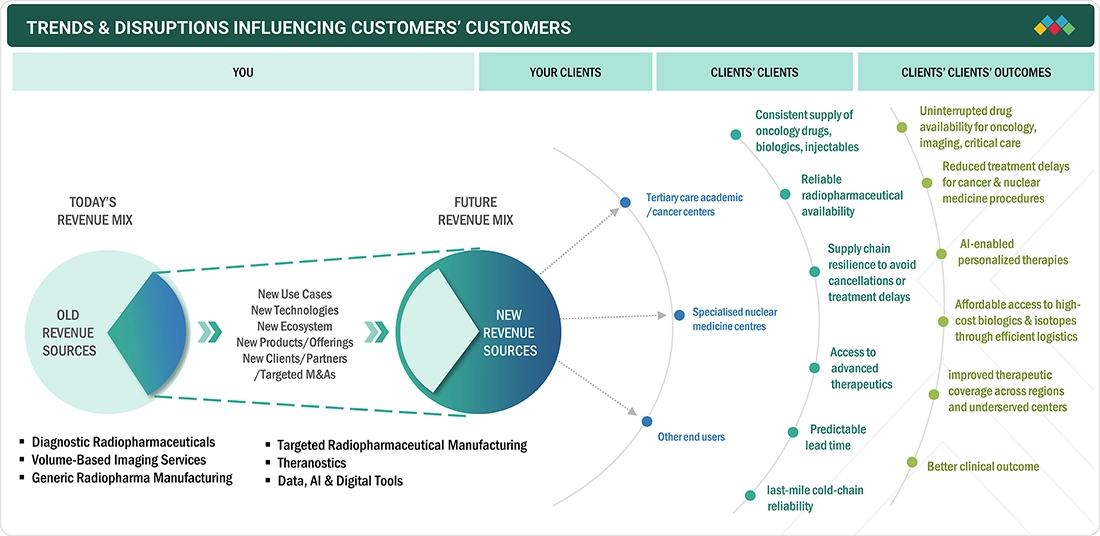
TRENDS & DISRUPTIONS IMPACTING CUSTOMERS' CUSTOMERS
The radioligand therapy (RLT) market is undergoing significant transformation driven by the rapid expansion of targeted radionuclide therapies and growing adoption of theranostic approaches. Rising complexity in isotope supply, increasing demand for precision oncology, and the need for GMP-compliant radiopharmaceutical manufacturing are accelerating the shift toward specialized radioligand production partners. At the same time, evolving regulatory expectations for nuclear safety, radiation handling, and cross-border isotope logistics are reshaping operational frameworks for suppliers and treatment centers. Technology disruptions such as automated radiochemistry modules, advanced isotope purification, decentralized manufacturing models, and AI-enhanced imaging are enabling faster synthesis, higher product reliability, and reduced radiation exposure risk. These developments are pushing oncology networks and pharma companies toward integrated RLT manufacturing ecosystems, driving demand for next-generation radioligand production, quality, and supply-chain capabilities.
Source: Secondary Research, Interviews with Experts, MarketsandMarkets Analysis
MARKET DYNAMICS

Level
-
Increasing approvals and label expansion of RLT products

-
Manufacturing scale-up of Lu-177


Level
-
Isotope supply scarcity

-
Stringent regulatory requirements


Level
-
Advancements in alpha therapies

-
Expansion of radioligand therapy into earlier-line and adjuvant settings


Level
-
Reactor outages and geopolitical risks

-
Growing competition from alternative modalities

Source: Secondary Research, Interviews with Experts, MarketsandMarkets Analysis
Driver:Increasing approvals and label expansion of RLT products
Increasing approvals and label expansions of radioligand therapy (RLT) products are accelerating market growth by validating clinical efficacy across new cancer types and expanding eligible patient populations. As leading therapies gain broader indications, demand rises for isotope supply, GMP radiopharmaceutical production, and specialized treatment infrastructure, strengthening commercial adoption.
Restraint: Isotope supply scarcity
Isotope supply scarcity is a significant restraint for the radioligand therapy (RLT) market. Limited global production of critical isotopes such as Lu-177 and Ac-225, dependence on a small number of reactors, and complex logistics create supply bottlenecks. These constraints hinder manufacturing scalability, delay treatment availability, and increase production costs, slowing broader market adoption.
Opportunity: Advancements in alpha therapies
Advancements in alpha therapies present a major opportunity for the radioligand therapy market. Highly potent alpha-emitting isotopes such as Ac-225 and Pb-212 offer superior tumor-killing efficiency with minimal off-target toxicity. Growing R&D investment, improved production methods, and expanding clinical pipelines position alpha therapies to drive next-generation RLT innovation and market expansion.
Challenge: Reactor outages and geopolitical risks
Reactor outages and geopolitical risks pose a significant challenge to the radioligand therapy market. Unplanned shutdowns of nuclear reactors, export restrictions, and reliance on a limited number of isotope-producing countries disrupt the supply of critical medical isotopes such as Lu-177 and Ac-225. These vulnerabilities create supply instability, increase production costs, and delay treatment availability for patients.
radioligand-therapy-rlt-market: COMMERCIAL USE CASES ACROSS INDUSTRIES
| COMPANY | USE CASE DESCRIPTION | BENEFITS |
|---|---|---|
 |
Novartis partners with ITM Isotope Technologies Munich for large-scale supply of Lutetium-177 (Lu-177) used in Pluvicto (PSMA-targeted therapy) and Lutathera (NET therapy).. | Ensures uninterrupted isotope availability for global RLT rollout; strengthens long-term supply chain resilience for high-demand oncology therapies |
 |
Bayer collaborates with Eckert & Ziegler to secure Actinium-225 and Gallium-68 supply for expanding its alpha-emitter RLT pipeline targeting prostate and lung cancers.. | Access to scalable alpha therapy isotope supply and accelerated development of next-generation RLT candidates.. |
 |
Telix partners with Cardinal Health for US nationwide radiopharmacy manufacturing and distribution of Illuccix (Ga-68 PSMA imaging agent) used prior to Lu-177 PSMA therapy. | Rapid same-day PET agent delivery; expanded reach to thousands of imaging sites, improving treatment eligibility and patient throughput. |
Logos and trademarks shown above are the property of their respective owners. Their use here is for informational and illustrative purposes only.
MARKET ECOSYSTEM
The radioligand therapy (RLT) market ecosystem consists of isotope producers (ITM, Eckert & Ziegler), radiopharmaceutical manufacturers (Novartis, Curium), and specialized CDMOs offering radionuclide production, conjugation, aseptic filling, and final dose manufacturing. These players support oncology drug developers, hospitals, nuclear medicine centers, and academic institutions with end-to-end services ranging from isotope supply to GMP radioligand production. Market demand is driven by the expanding pipeline of beta and alpha emitters, rising clinical adoption in prostate and neuroendocrine tumors, and growing interest from biotech companies entering targeted radiotherapeutics. Collaboration across isotope suppliers, radiopharm CDMOs, cyclotron operators, and therapy providers enables advancements in generator technology, automated synthesis modules, cold-chain logistics, and regulatory compliance. This integration supports the market’s evolution toward scalable, reliable, and high-precision radioligand manufacturing solutions.
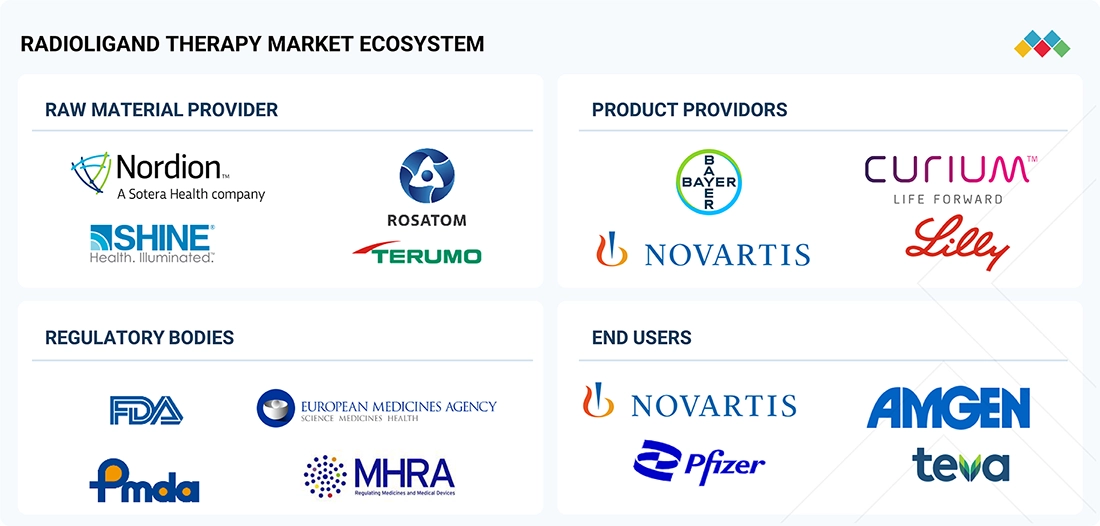
Logos and trademarks shown above are the property of their respective owners. Their use here is for informational and illustrative purposes only.
MARKET SEGMENTS
Source: Secondary Research, Interviews with Experts, MarketsandMarkets Analysis
Radioligand Therapy Market, By Product
As of 2024, Lutetium-177 vipivotide tetraxetan (Pluvicto) accounts for the largest share of the radioligand therapy market and is expected to maintain its lead through 2025. Its dominance is driven by strong clinical efficacy in metastatic castration-resistant prostate cancer, rapid global uptake, and expanding commercial availability. Unlike pipeline RLTs, Pluvicto benefits from established manufacturing, regulatory approvals, and growing physician adoption, creating sustained demand. Ongoing clinical trials exploring earlier-line use and label expansion further reinforce Pluvicto as the primary revenue-generating product in the radioligand therapy market
Radioligand Therapy Market, By Target
As of 2024, prostate-specific membrane antigen (PSMA)–targeted radioligand therapies hold the largest share of the radioligand therapy market and are expected to maintain this lead through 2025. This dominance is driven by the high prevalence of advanced prostate cancer, strong clinical outcomes of PSMA-directed agents, and expanding global adoption. With validated biomarkers, established diagnostic–therapeutic pairing, and multiple late-stage pipeline candidates, PSMA remains the most commercially mature and widely utilized target, reinforcing its position as the highest-revenue segment in the radioligand therapy market.
Radioligand Therapy Market, By Indication
Prostate cancer represents the largest share of the radioligand therapy market. This is driven by the high global burden of advanced prostate cancer, strong clinical success of PSMA-targeted therapies, and rapid adoption of treatments such as Lu-177 Pluvicto. With expanding diagnostic screening, increasing use in metastatic and earlier-line settings, and a robust pipeline of next-generation prostate cancer radioligands, this indication continues to generate the highest demand and commercial revenue in the RLT market.
Radioligand Therapy Market, By End user
As of 2024, tertiary care academic and comprehensive cancer centers account for the largest share of the radioligand therapy market by end user and are expected to maintain this lead through 2025. Their dominance is driven by advanced nuclear medicine infrastructure, multidisciplinary oncology teams, and the capacity to manage complex RLT workflows. These centers are also primary sites for clinical trials, early adoption of novel radiopharmaceuticals, and high-volume treatment of metastatic cancers, reinforcing their position as the highest-utilizing end-user segment in the radioligand therapy market.
REGION
Asia Pacific to be fastest-growing region in global pharmaceutical contract manufacturing market during forecast period
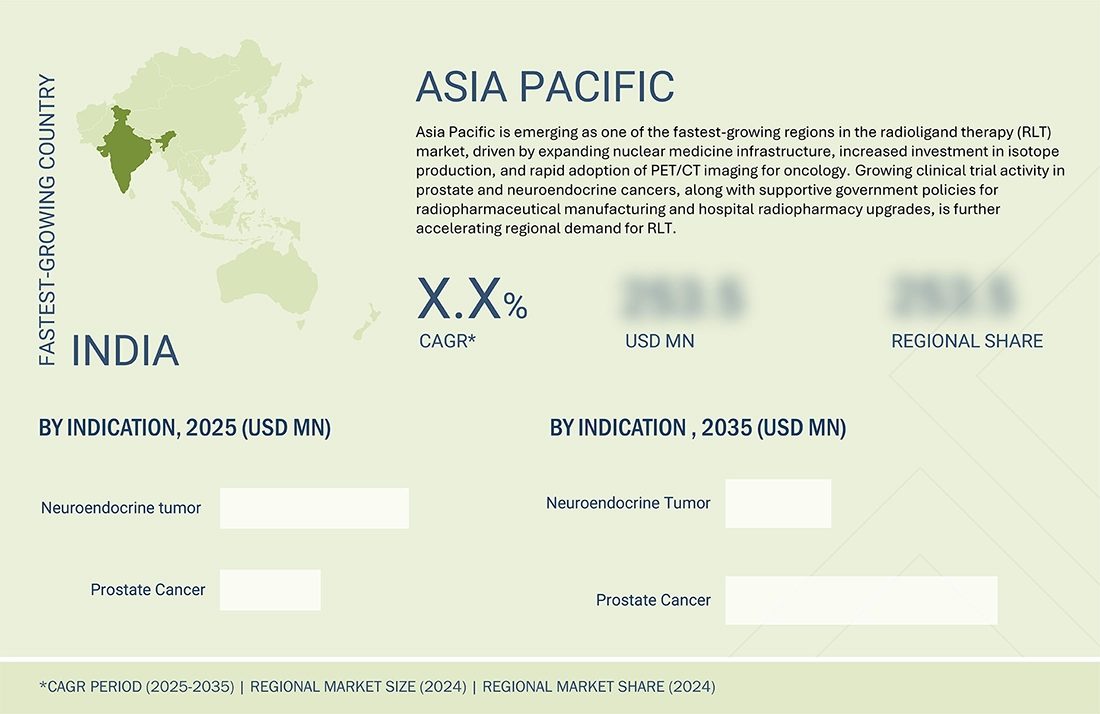
he Asia Pacific radioligand therapy (RLT) market is projected to grow at the fastest rate during the forecast period, driven by rising adoption of nuclear medicine, expanding theranostics programs, and increasing availability of PET/CT and SPECT imaging infrastructure. Countries such as China, Japan, South Korea, India, and Australia are investing in isotope production, cyclotrons, and GMP radiopharmaceutical facilities to support both clinical use and RLT manufacturing. Growing prostate and neuroendocrine cancer incidence, strong government backing for precision oncology, and the expansion of specialized cancer centers are accelerating regional demand. These factors collectively position Asia Pacific as the fastest-growing region in the global RLT marke
radioligand-therapy-rlt-market: COMPANY EVALUATION MATRIX
In the radioligand therapy market matrix, Novartis (Star) leads with the strongest market share, driven by its approved products Pluvicto and Lutathera, global manufacturing network, and established theranostics model. ITM Isotope Technologies (Emerging Leader) is gaining momentum through expanded Lutetium-177 and Actinium-225 production and increasing partnerships with RLT developers. While Novartis dominates through scale and commercialization strength, ITM shows clear potential to advance toward the leaders quadrant as isotope demand and radioligand pipelines grow.
Source: Secondary Research, Interviews with Experts, MarketsandMarkets Analysis
KEY MARKET PLAYERS
- Novartis (Switzerland)
- Bayer (Germany)
- Curium (France)
- Eli Lilly (US)
- AstraZeneca (UK)
- Progenics Pharmaceuticals (US)
- Ariceum Therapeutics (Germany)
- Telix Pharmaceuticals (Australia)
- ITM Isotope Technologies Munich SE (Germany)
- Convergent Radiopharma (US)
- Orano SA (France)
- Actinium Pharmaceuticals (US)
- Perspective Therapeutics (US)
- Clarity Pharmaceuticals (Australia)
MARKET SCOPE
| REPORT METRIC | DETAILS |
|---|---|
| Market Size in 2024 (Value) | USD 2.36 Billion |
| Market Forecast in 2035 (Value) | USD 10.92 Billion |
| Growth Rate | CAGR of 13.2% from 2025-2035 |
| Years Considered | 2023-2035 |
| Base Year | 2024 |
| Forecast Period | 2025-2035 |
| Units Considered | Value (USD Billion) |
| Report Coverage | Revenue forecast, company ranking, competitive landscape, growth factors, and trends |
| Segments Covered |
|
| Regions Covered | North America, Asia Pacific, Europe, South America, Middle East and Africa |
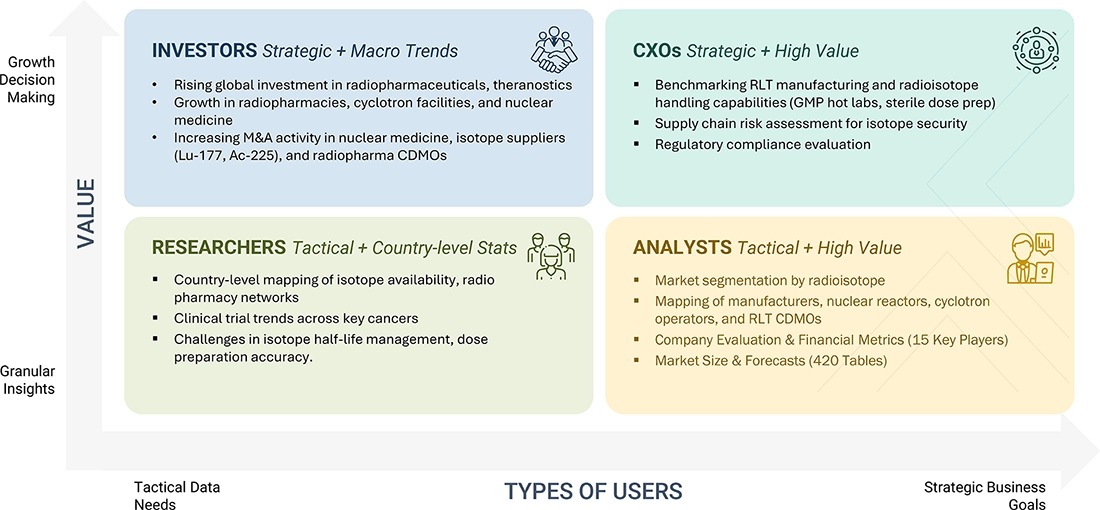
WHAT IS IN IT FOR YOU: radioligand-therapy-rlt-market REPORT CONTENT GUIDE
DELIVERED CUSTOMIZATIONS
We have successfully delivered the following deep-dive customizations:
| CLIENT REQUEST | CUSTOMIZATION DELIVERED | VALUE ADDS |
|---|---|---|
| Inclusion of novel targets | Addition of emerging targets beyond PSMA and SSTR | Highlights innovation opportunities and early-mover advantages |
| Regulatory & reimbursement insights | Addition of approval timelines, pricing, and reimbursement status | Strengthens business continuity planning |
RECENT DEVELOPMENTS
- MArch 2025 : Novartis AG received FDA approval for Pluvicto, indicated for the treatment of patients with prostate-specific membrane antigen (PSMA)-positive metastatic castration-resistant prostate cancer (mCRPC) who have been treated with an androgen receptor pathway inhibitor (ARPI) therapy.
- April 2024 : Novartis AG received FDA approval for Lutathera as the first medicine specifically for pediatric patients with gastroenteropancreatic neuroendocrine tumors.
- March 2024 : Bayer AG and PanThera entered into an agreement to supply starting material for next-gen radiopharmaceuticals.
Table of Contents
 Exclusive indicates content/data unique to MarketsandMarkets and not available with any competitors.
Methodology
This research study extensively used secondary sources, directories, and databases to identify and collect valuable information to analyze the global radioligand therapy market. In-depth interviews were conducted with various primary respondents, including key industry participants, subject-matter experts, C-level executives of key market players, and industry consultants, to obtain and verify critical qualitative and quantitative information and assess the growth prospects of the market. The global market size estimated through secondary research was then triangulated with inputs from primary research to arrive at the final market size.
Secondary Research
Secondary research was used mainly to identify and collect information for the extensive, technical, market-oriented, and commercial study of the radioligand therapy market. The secondary sources used for this study include World Health Organization (WHO), National Institutes of Health (NIH), National Cancer Institute (NCI), US Food and Drug Administration (FDA), European Medicines Agency (EMA), and Centers for Drug Evaluation and Research (CDER), International Society for Pharmaceutical Engineering (ISPE), Innovative Medicines Initiative (IMI), Society of Nuclear Medicine and Molecular Imaging (SNMMI), European Association of Nuclear Medicine (EANM), PubMed, National Center for Biotechnology Information (NCBI), International Trade Centre (ITC), Press Releases, Company Websites, and Magazines & Proprietary Databases. Secondary sources include corporate and regulatory filings, such as annual reports, SEC filings, investor presentations, and financial statements; business magazines & research journals; press releases; trade, business, and professional associations; and MarketsandMarkets Analysis.
Primary Research
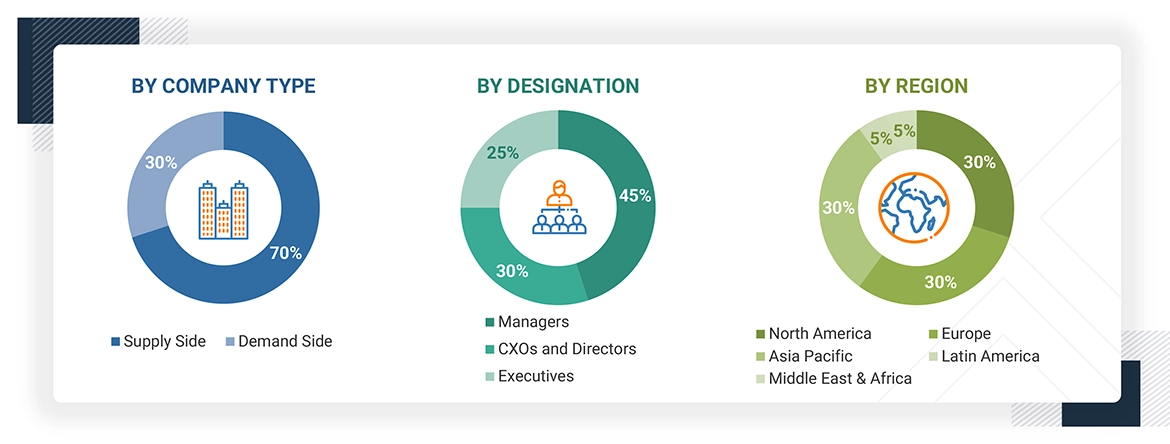
A comprehensive primary research was undertaken following an initial assessment of the global radioligand therapy market landscape through secondary research. This involved conducting in-depth interviews with market experts from the demand side, including stakeholders from pharmaceutical and biotechnology firms, CROs, CMOs, and academic and research institutions. Additionally, interviews were held with key supply-side participants, such as C-suite and senior executives, product managers, and marketing and sales leaders from prominent manufacturers, distributors, and channel partners. The research covered six major geographical regions: North America, Europe, Asia Pacific, Latin America, the Middle East, and Africa. Approximately 70% of the primary interviews were conducted with supply-side participants, while 30% involved demand-side experts. Data collection methods included structured questionnaires, email correspondence, online surveys, personal interviews, and telephonic discussions to understand the market dynamics comprehensively.
The following is a breakdown of the primary respondents:
To know about the assumptions considered for the study, download the pdf brochure
Market Size Estimation
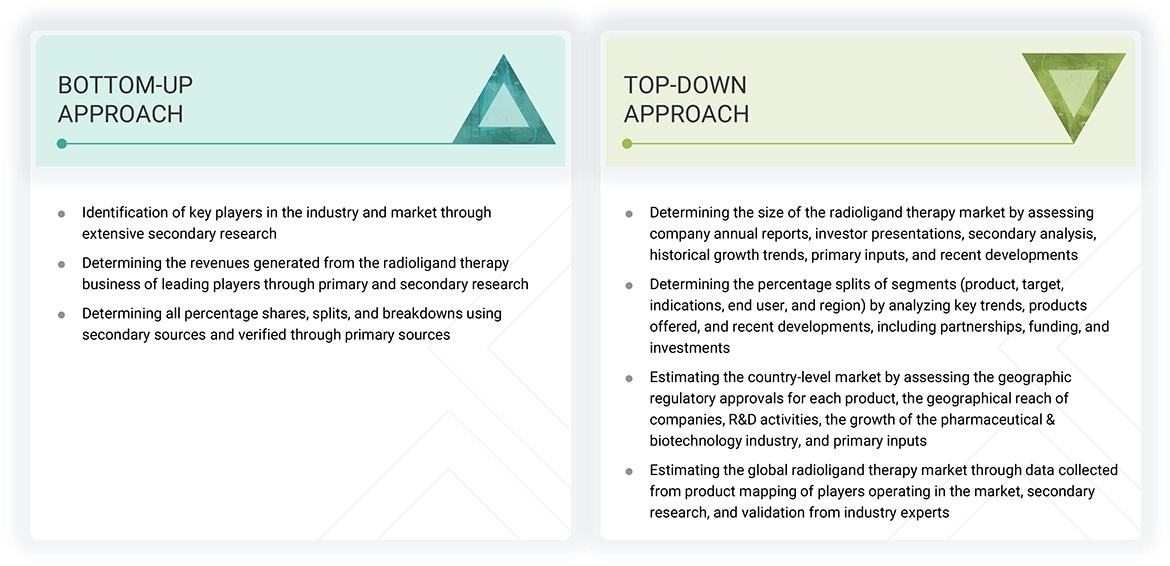
Both bottom-up and top-down approaches were used to estimate and validate the total size of the radioligand therapy market. These methods were also used extensively to estimate the size of various subsegments in the market. The research methodology used to estimate the market size includes the following:
- A list of the major global players operating in the radioligand therapy market was generated.
- The revenues generated from their radioligand therapy product have been determined through annual reports and secondary sources (including paid databases)
- The products were mapped according to the segments of the market. Percentage shares and splits were determined based on the revenue contributed to each segment. This was verified using secondary sources and by industry experts.
- All assumptions, approaches, and individual shares/revenue estimates were validated through expert interviews.
Radioligand Therapy Market : Top-Down and Bottom-Up Approach
Data Triangulation
After arriving at the market size from the estimation process explained above, the total market was divided into several segments and subsegments. To complete the overall market engineering process and arrive at the exact statistics for all segments and subsegments, data triangulation and market breakdown procedures were employed, wherever applicable. The data was triangulated by studying various factors and trends from both the demand and supply sides.
Market Definition
Radioligand therapy (RLT) is a form of precision oncology that delivers targeted radiation to cancer cells while minimizing damage to healthy cells. Once administered, the ligand guides the radioactive payload directly to cancer cells, allowing for precise radiation delivery while minimizing damage to surrounding healthy tissues.
Stakeholders
- Pharmaceutical Companies
- National and Regional Research Boards & Organizations
- Research & Development Companies
- Contract Research Organizations (CROs)
- Contract Manufacturing Organizations (CMOs)
- Contract Research Development & Manufacturing Organizations (CRDMOs)
- Medical Device Companies
- Biotechnology Companies
- Research Laboratories & Academic Institutes
- Market Research & Consulting Firms
- Regulatory Bodies
Report Objectives
- To define, describe, and forecast the radioligand therapy market based on product, target, indication, end user, and region
- To provide detailed information on the significant factors influencing market growth (such as drivers, restraints, opportunities, and challenges)
- To strategically analyze micromarkets concerning individual growth trends, prospects, and contributions to the radioligand therapy market
- To analyze the opportunities in the market for stakeholders and provide details of the competitive landscape for market leaders
- To forecast the size of the market segments concerning six regions—North America, Europe, the Asia Pacific, Latin America, the Middle East, and Africa
- To profile the key players in the global radioligand therapy market and comprehensively analyze their product portfolios, market positions, and core competencies
- To track and analyze competitive developments such as product approvals & launches, expansions, agreements, and collaborations in the radioligand therapy market
- To benchmark players within the radioligand therapy market using the company evaluation matrix framework, which analyzes market players based on various parameters within the broad categories of business and service strategy


Personalize This Research
- Triangulate with your Own Data
- Get Data as per your Format and Definition
- Gain a Deeper Dive on a Specific Application, Geography, Customer or Competitor
- Any level of Personalization
Let Us Help You
- What are the Known and Unknown Adjacencies Impacting the Radioligand Therapy (RLT) Market
- What will your New Revenue Sources be?
- Who will be your Top Customer; what will make them switch?
- Defend your Market Share or Win Competitors
- Get a Scorecard for Target Partners

Custom Market Research Services
We Will Customise The Research For You, In Case The Report Listed Above Does Not Meet With Your Requirements
Get 10% Free CustomisationTESTIMONIALS

JAYANT RAJPUROHIT
Director of Market Insights, Data and Analytics
SFI Health,
Leading Pharmaceutical Companywww.sfihealth.com/
We at SFI Health approached MarketsandMarkets for an Opportunity Assessment on "Incidence and Prevalence of Focus Indications" as we wanted to know the most attractive HCPs like Physician, Functional MD, Naturopath and Pharmacist. The project was critical for us to ensure our focus on the right target which would enable sustainable growth and profitability for SFI Health. The business insights provided exceeded our expectations and we were extremely impressed. The team at MarketsandMarkets is highly professional and detail oriented and very well understood our business needs. MarketsandMarkets offers a unique combination of expertise and dedicated engagement model. We identified 2 new products to be launched in coming months, based on the research findings provided by MarketsandMarkets. We are happy with the services and would strongly recommend MarketsandMarkets to my peers in the industry.

BEATRIZ DE LA CALLE
Head of Commercial Analytics
Qualicaps,
Leading Pharmaceutical Companywww.qualicaps.com/

We partnered with MarketsandMarkets for an assessment study on hard empty capsules. The team was extremely professional in understanding our business requirements and we received timely responses to all our queries. The market intelligence and the recommendations has met our business requirements. We were extremely impressed to see the final study results; it really exceeded our expectations. The market intelligence offered by MarketsandMarkets, and clarity on next steps will help us achieve our business objective for the Year 2021. We are happy with the services and would strongly recommend MarketsandMarkets to my peers in the industry.

Bob Williams,
Senior Director Business Development & Innovation
Bracco Diagnostics Inc.,
Italian Multinational in life sciences sector and a World Leader in imaging diagnosticsimaging.bracco.com/us-en
We were pleased with targeted insights that MarketsandMarkets identified from a custom study on the 'Radiation Dose Management Solutions Market'. Your team identified and characterized the market participants as well as underlying trends accurately. This study was useful to Bracco in formulating business strategies for our dose monitoring product lines and we thank MarketsandMarkets for the job well done.
Cody Coonradt,
Market Development and Strategy Manager
3M Health Information Systems,
Leader in Health care Coding, Payment & Analytics Solutions.www.3m.com/3M/en_US/health-information-systems-us
The value for our organization comes from three things: depth of research, specificity of segments and being easy to work with. As important as the first two are, the third can't be underestimated. MarketsandMarkets, maybe more than any other research vendor, wants to know what is top of mind for our team and what big questions we are grappling to answer.
Their customer first approach and high value engagement model, have given us great analysis and excellent value for money
- US Radioligand Therapy (RLT) Market
- Canada Radioligand Therapy (RLT) Market
- Germany Radioligand Therapy (RLT) Market
- UK Radioligand Therapy (RLT) Market
- France Radioligand Therapy (RLT) Market
- Italy Radioligand Therapy (RLT) Market
- Spain Radioligand Therapy (RLT) Market
- China Radioligand Therapy (RLT) Market
- Japan Radioligand Therapy (RLT) Market
- India Radioligand Therapy (RLT) Market
- South Korea Radioligand Therapy (RLT) Market
- Australia Radioligand Therapy (RLT) Market
- Brazil Radioligand Therapy (RLT) Market
- Mexico Radioligand Therapy (RLT) Market
- Rest Of Europe Radioligand Therapy (RLT) Market
- Rest Of Asia Pacific Radioligand Therapy (RLT) Market
- Rest Of Latin America Radioligand Therapy (RLT) Market
- Kingdom Of Saudi Arabia (Ksa) Radioligand Therapy (RLT) Market
- Rest Of GCC Countries Radioligand Therapy (RLT) Market
- United Arab Emirates Radioligand Therapy (RLT) Market






Growth opportunities and latent adjacency in Radioligand Therapy (RLT) Market