Relay Market

Relay Market by Type (Electromechanical, Thermal, Reed, Time, Solid State), Voltage (Low, Medium, High), Application (Protection, Monitor, Control), Vertical (Residential & Commercial, Industrial, Energy), Mounting Type, & Region - Global Forecast to 2031




OVERVIEW
Source: Secondary Research, Interviews with Experts, MarketsandMarkets Analysis
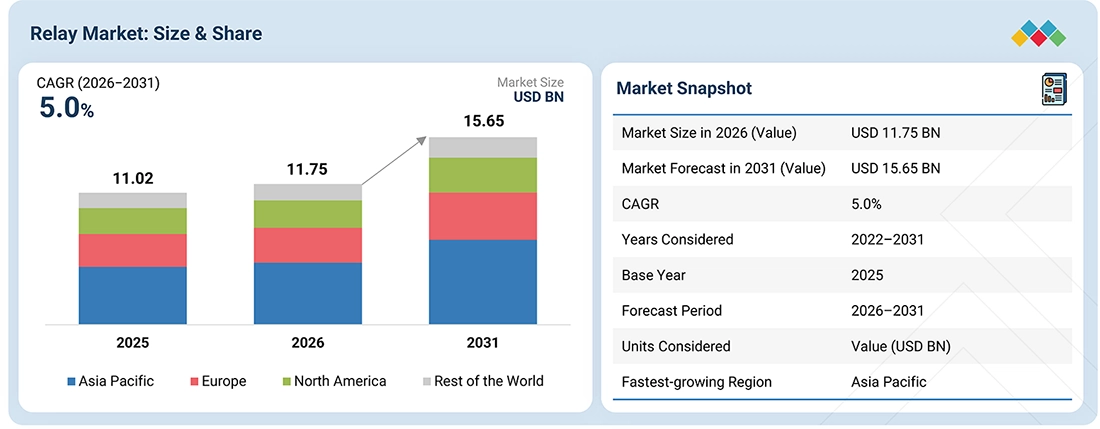
The relay market is projected to grow from USD 11.75 billion in 2026 to USD 15.65 billion by 2031, at a CAGR of 5.0%. The market is being driven by increasing investments in industrial automation, power transmission and distribution infrastructure, grid modernization, renewable energy integration, and electrification. Growing deployment of EVs, battery energy storage systems, data centers, and automated manufacturing equipment is supporting demand for relays across power, automotive, industrial, and electronic applications. Furthermore, advancements in high-voltage, solid-state, reed, and application-specific relays are expanding opportunities by enabling improved switching performance, reliability, miniaturization, and protection across modern electrical systems.
KEY TAKEAWAYS
-
BY REGIONAsia Pacific is expected to register the highest CAGR of 6.5% in the relay market during the forecast period.
-
BY TYPEBy type, reed relay is expected to register the highest CAGR of 12.6% during the forecast period.
-
BY VOLTAGEBy voltage, low voltage is expected to account for the largest share of the relay market in 2026.
-
BY MOUNTING TYPEBy mounting type, panel mount is expected to account for the largest share of the relay market during the forecast period.
-
BY APPLICATIONBy application, monitoring is expected to register the highest CAGR of 9.1% during the forecast period.
-
BY END USERBy end user, energy infrastructure is expected to register the highest CAGR during the forecast period.
-
COMPETITIVE LANDSCAPEHONGFA (China), OMRON Corporation (Japan), TE Connectivity (Switzerland), Panasonic Holdings Corporation (Japan), and GE Vernova Inc. (US) have been identified as leading players in the global relay market. These companies are strengthening their market positions through broad product portfolios, technological innovation, high-voltage and advanced relay solutions, manufacturing capabilities, and strategic expansion across key regional markets.
-
COMPETITIVE LANDSCAPERefurvo LLC (US), Jiangxi Weiqi Electric Co., Ltd. (China), Circuit Interruption Technology, Inc. (US), Shenzhen Jiaxinda Technology Co., Ltd. (China), and WM Systems LLC (Hungary) are emerging/specialized players in the relay market, focusing on reed, electromechanical, automotive, latching, semiconductor, and smart relay solutions. Their offerings address applications across semiconductor testing, automotive and EVs, industrial automation, telecommunications, smart metering, and grid/load management. These companies are expanding their market presence through specialized product development, application-specific solutions, and technologies supporting electrification, smart grids, and connected electrical infrastructure.
Growth in the relay market is driven by the expansion of power transmission and distribution infrastructure, industrial automation, electrification, renewable energy integration, and EV adoption. Growing deployment of relays across power, automotive, industrial, commercial, and electronic applications is supporting market demand. Furthermore, advancements in high-voltage, solid-state, and reed relay technologies are expanding application opportunities by enabling improved switching performance, reliability, miniaturization, and protection across modern electrical systems.
TRENDS & DISRUPTIONS IMPACTING CUSTOMERS' CUSTOMERS
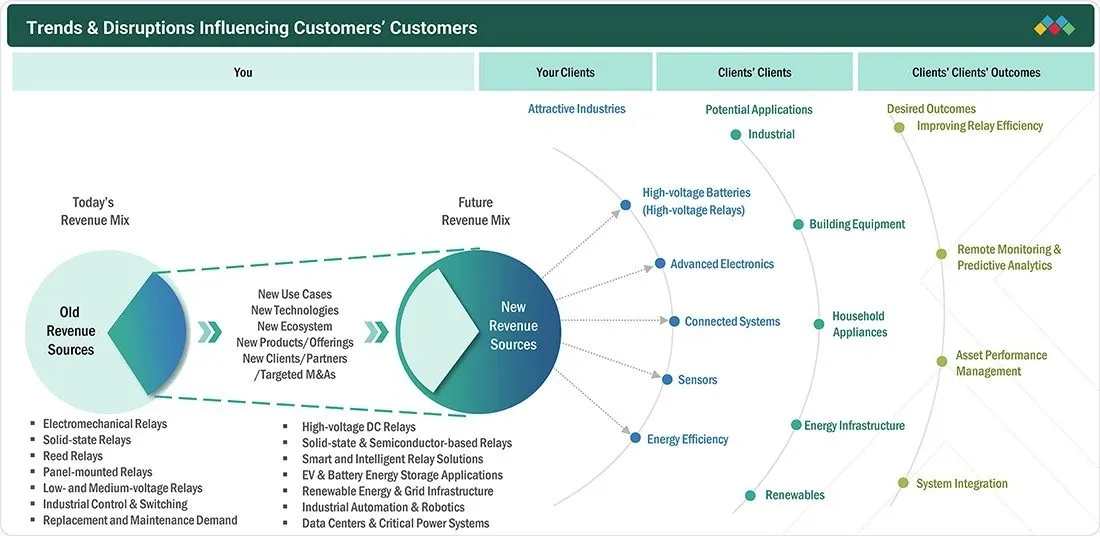
The relay market is estimated to register a CAGR of 5.0% during the forecast period, with Panasonic Holdings Corporation, HONGFA, OMRON Corporation, TE Connectivity, GE Vernova, Panasonic Holdings, and Fuji Electric strengthening their portfolios across automotive, industrial automation, energy, and power infrastructure applications. Leading players are increasingly focusing on high-voltage, solid-state, reed, and application-specific relay solutions, supported by product innovation, miniaturization, strategic partnerships, and expansion into EVs, renewable energy, battery storage, smart grids, and advanced industrial systems.
Source: Secondary Research, Interviews with Experts, MarketsandMarkets Analysis
MARKET DYNAMICS

Level
-
Increasing use of renewable energy

-
Growing investment in infrastructure


Level
-
Volatility in raw material prices

-
Competition from alternative technologies


Level
-
Increasing power demand and investment in smart grid infrastructure

-
5G network expansion


Level
-
Lack of standardized cybersecurity measures

Source: Secondary Research, Interviews with Experts, MarketsandMarkets Analysis
Driver: Increasing use of renewable energy
The global relay market is experiencing strong growth, largely driven by the expanding use of renewable energy and the electrification of transportation. The integration of renewables such as solar, wind, and hydropower into power grids presents technical challenges like voltage fluctuations and intermittent energy supply. Relays are essential in maintaining grid stability and ensuring continuous power delivery by detecting and addressing electrical faults, helping prevent equipment damage. As countries like Germany and China boost their renewable energy capacities, the need for advanced relay systems becomes critical to managing distributed energy resources (DERs) and microgrids, facilitating smooth transitions and managing bidirectional power flows.
Restraint: Volatility in raw material prices
Volatility in raw material prices is a critical constraint for the relay market, largely due to its dependence on metals like copper, silver, and steel. Price fluctuations in these essential materials can be triggered by various global factors, such as geopolitical tensions, natural disasters, and economic instability. This uncertainty complicates the ability of relay manufacturers to maintain consistent production costs and stable pricing strategies, impacting long-term growth plans and profitability.
Opportunity: Increasing power demand and investment in smart grid infrastructure
Global electricity demand is projected to double by 2030. The International Energy Agency (IEA) estimates that electricity generation will grow at an annual rate of 2.4% through 2040, necessitating an investment of around USD 10 trillion to meet this demand. Significant investments are currently being made, particularly in the Middle East, Asia Pacific, and Africa, to enhance power generation capacities. This includes conventional energy projects in Egypt and Oman, as well as renewable energy initiatives in China, India, and South Africa.
Challenge: Lack of standardized cybersecurity measures
Cybersecurity in the relay market is increasingly critical as digital relays become more integrated into smart grids and communication networks. These systems are vulnerable to cyberattacks, leading to serious consequences, such as the misoperation of protective relays, causing unnecessary tripping or failure to trip during real faults. These disruptions threaten the stability and reliability of power grids, potentially leading to blackouts or damage to infrastructure. The widespread use of legacy systems without modern security protocols further increases the risk of cyberattacks, making it difficult to ensure grid safety.
RELAY MARKET: COMMERCIAL USE CASES ACROSS INDUSTRIES
| COMPANY | USE CASE DESCRIPTION | BENEFITS |
|---|---|---|
 |
The water department of a large city, which is responsible for delivering nearly 1 billion gallons of drinking water daily to the city and its suburbs, operates multiple pumping stations and two purification plants. However, the protection and control systems at these facilities have not seen major updates since the early to mid-2000s. In April 2019, a city engineer reported that they were experiencing issues with their aging Multilin 469 motor protection relays. In light of these challenges, GE and the water department agreed that updating these outdated protection relays was essential to maintain operational efficiency and ensure the reliability of the water supply infrastructure. | Upgrading from Multilin 469 to Multilin 869 relays significantly improved operational reliability, system visibility, and motor protection across pumping stations and purification plants. The new relays reduced the risk of unexpected equipment failures and water supply disruptions by providing advanced diagnostics, faster fault detection, and improved communication capabilities. The retrofit process required minimal panel modifications, lowering installation time and costs. Configuration migration support from GE minimized errors and downtime. Overall, the upgrade enhanced asset protection, extended equipment life, and strengthened the reliability of critical water infrastructure operations. |
 |
Neutral Earthing Resistors (NERs) were installed at the Dugald River Zinc Mine in Australia. Annual periodic maintenance checks were made to verify the resistance and integrity of the NERs during shutdowns. However, this type of testing only ensures NER integrity at the time of the check, and a failure could occur at any time between checks, without the team being aware of it. This was a concern for the electrical engineers, and the Fuse co team was consulted for advice. | The installation of the SE-330AU relay enabled continuous, real-time monitoring of Neutral Earthing Resistor health, eliminating reliance on periodic manual inspections alone. This significantly reduced the risk of undetected NER failures that could compromise system safety and protection integrity. Immediate fault detection and alerting improved response times and prevented operation under hazardous floating conditions. Enhanced visibility into neutral-to-earth parameters strengthened fault current control and system stability. Overall, the solution increased operational safety, reduced unplanned downtime, minimized maintenance uncertainties, and ensured greater reliability of the mine’s electrical infrastructure. |
Logos and trademarks shown above are the property of their respective owners. Their use here is for informational and illustrative purposes only.
MARKET ECOSYSTEM
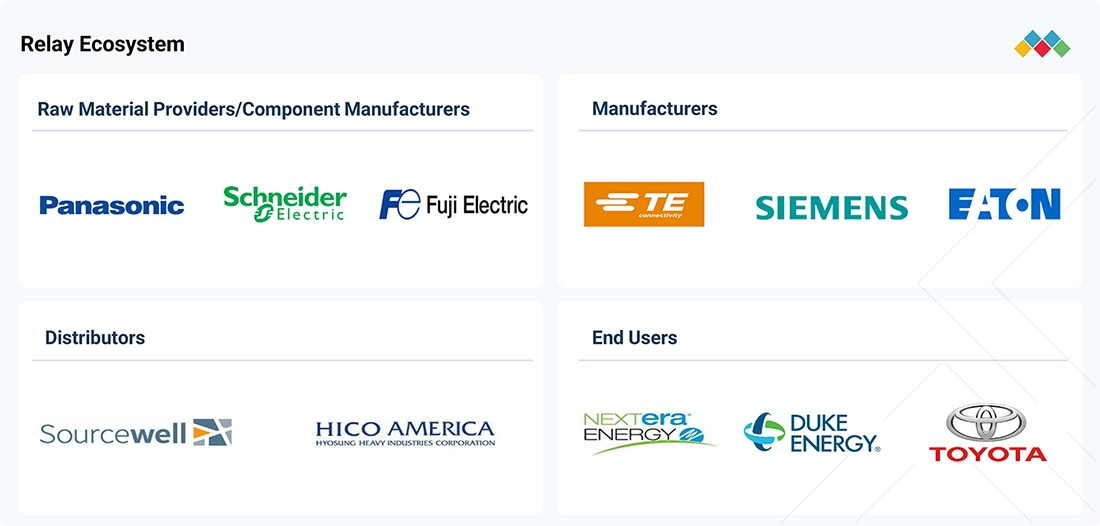
The market map shows the interconnections/adjacencies that affect the relay market by showcasing MnM coverage of the market under study. The relay market ecosystem involves key players operating across different levels. Companies like Panasonic, Fuji Electric, Schneider Electric, and Ashida serve as leading suppliers of raw materials and manufacturers, providing critical components for relay production. Major manufacturers such as TE Connectivity, Siemens, Eaton, and ABB produce relays for a range of industrial and energy-related applications. Distributors, including Sourcewell, KDM Steel, and HICO America, play a vital role in supplying these components to various industries. End users like SNCF (railway), Duke Energy (power grids), and Toyota (automotive) rely on relays for automation, safety, and energy management in their operations. This interconnected network drives innovation and growth within the relay market.
Logos and trademarks shown above are the property of their respective owners. Their use here is for informational and illustrative purposes only.
MARKET SEGMENTS
Source: Secondary Research, Interviews with Experts, MarketsandMarkets Analysis
Relay Market, by Type
The electromechanical segment dominated the relay market in 2025. Electromechanical relays are switches that control high-power electrical devices by using a small amount of power. They can be operated by both AC and DC; a magnetic force is generated when power is supplied, controlling the mechanism in the switch. These relays, known for their fast response times and high reliability, are becoming integral in applications such as renewable energy systems and electric vehicles.
Relay Market, by Voltage
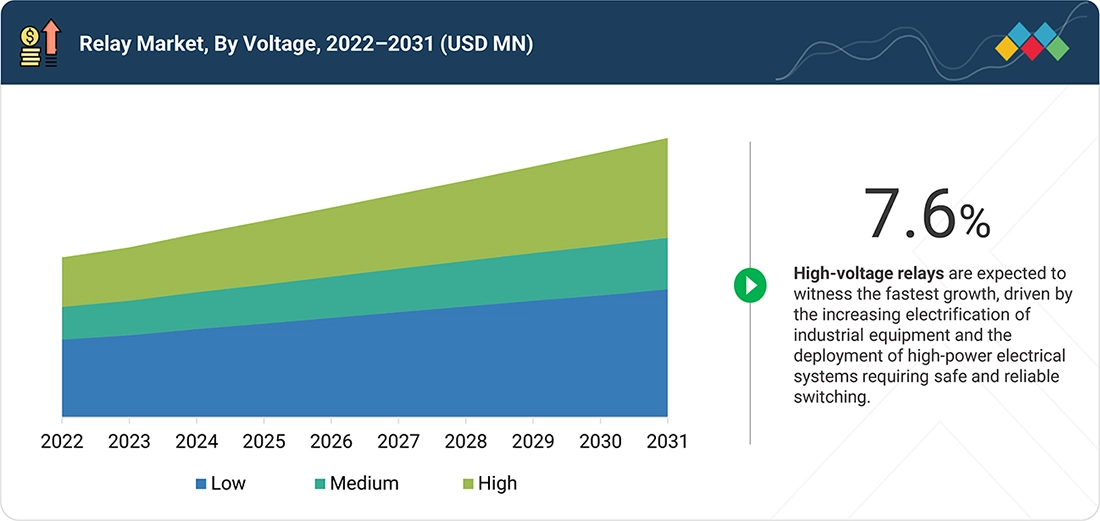
The high-voltage segment is expected to register the highest growth in the relay market. The segment is expected to grow in the Asia Pacific region, especially in India, where new transmission lines are being erected as a part of the Electricity for All Scheme. Market growth in North America and Europe is driven by the upgrades of existing transmission infrastructure to accommodate future hikes in renewable energy in the grid.
Relay Market, by Mounting
The panel segment leads the relay market due to rising industrial automation, increasing demand for control panels, easy integration, enhanced safety features, and widespread use in power distribution and manufacturing systems globally.
Relay Market, by Application
The monitoring segment s expected to register the highest CAGR in the relay market. Monitoring relays are essential devices used to oversee critical electrical and physical parameters in various systems. They serve to enhance safety, reliability, and efficiency by detecting abnormalities and providing alerts or control actions when certain thresholds are exceeded.
Relay Market, by Vertical
The industrial segment is expected to register the highest share in the relay market, driven by rising automation across manufacturing plants, increasing deployment of heavy machinery, and the need to prevent costly equipment failures. Stricter safety regulations, expanding smart factory initiatives, and higher investment in infrastructure upgrades further accelerate adoption.
REGION
Asia Pacific is expected to account for the largest market share during the forecast period
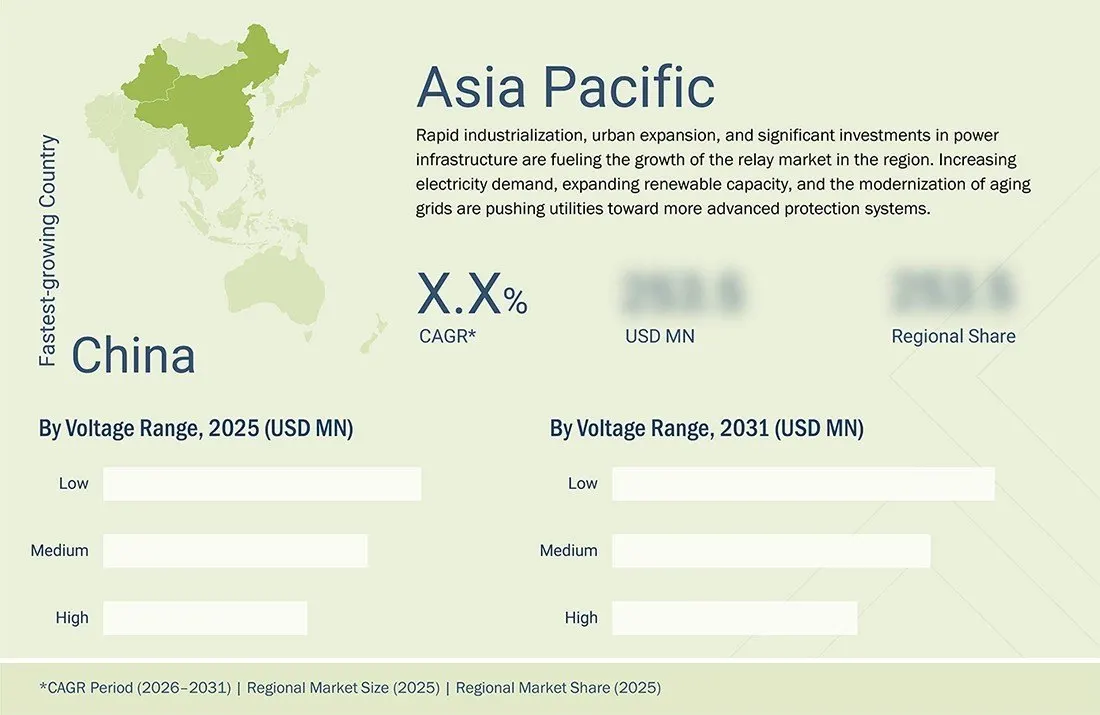
The Asia Pacific relay market is estimated to register a CAGR of 6.5% during the forecast period, driven by rapid industrial automation, electrification, renewable energy integration, and expansion of power transmission and distribution infrastructure across China, India, Japan, South Korea, and Southeast Asia. Increasing adoption of EVs, battery energy storage systems, smart grids, and automated manufacturing is creating new demand for electromechanical, reed, solid-state, and high-voltage relays. Leading regional and global players are strengthening their presence through product innovation, localized manufacturing, capacity expansion, and strategic partnerships to capitalize on the region's growing electrification and automation requirements.
RELAY MARKET: COMPANY EVALUATION MATRIX
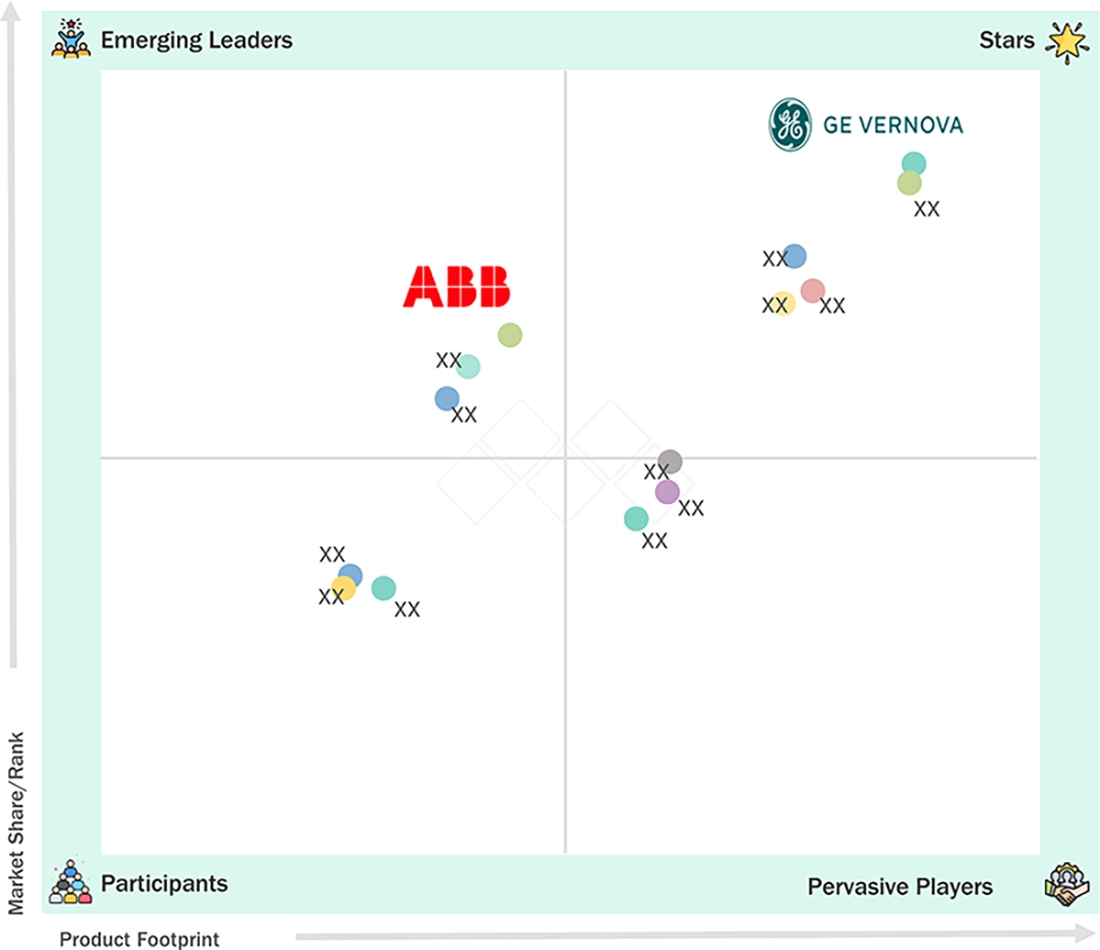
GE is classified under the Stars category based on its presence in the relay market, supported by its technology capabilities, product development, and focus on innovation, while ABB is classified under the Emerging Leaders category due to its strong product portfolio, established technology capabilities, broad industrial applications, continued innovation, and global market presence.
Source: Secondary Research, Interviews with Experts, MarketsandMarkets Analysis
KEY MARKET PLAYERS
- Panasonic Holdings Corporation (Japan)
- HONGFA (China)
- TE Connectivity (Switzerland)
- OMRON Corporation (Japan)
- GE Vernova Inc. (US)
- Eaton (Ireland)
- Standex Electronics, Inc. (US)
- Mitsubishi Electric Corporation (Japan)
- ABB (Switzerland)
- Rockwell Automation (US)
- Siemens (Germany)
- Littlefuse, Inc. (US)
- Fuji Electric Co., Ltd. (Japan)
- Sensata Technologies, Inc. (US)
- FCL COMPONENTS LIMITED (Japan)
- WAGO (Germany)
- Comus International (US)
- celduc relais (France)
- Zettler Group (US)
- RELPOL S.A. (Poland)
- Carlo Gavazzi (Switzerland)
- Coto Technology (US)
- Circuit Interruption Technology, Inc. (US)
- Teledyne Technologies Incorporated (US)
- Refurvo LLC (US)
- Jiangxi Weiqi Electric Co., Ltd. (China)
- WM Systems LLC (Hungary)
- Shenzhen Jiaxinda Technology Co., Ltd. (China)
MARKET SCOPE
| REPORT METRIC | DETAILS |
|---|---|
| Market Size in 2025 (Value) | USD 11.02 Billion |
| Market Size in 2026 (Value) | USD 11.75 Billion |
| Market Forecast in 2031 (Value) | USD 15.65 Billion |
| Growth Rate | CAGR of 5.0% from 2026-2031 |
| Years Considered | 2022–2031 |
| Base Year | 2025 |
| Forecast Period | 2026–2031 |
| Units Considered | Value (USD Billion) |
| Report Coverage | Revenue Forecast, Company Ranking, Competitive Landscape, Growth Factors, and Trends |
| Segments Covered |
|
| Regions Covered | North America, Europe, Asia Pacific, Rest of the World |
WHAT IS IN IT FOR YOU: RELAY MARKET REPORT CONTENT GUIDE
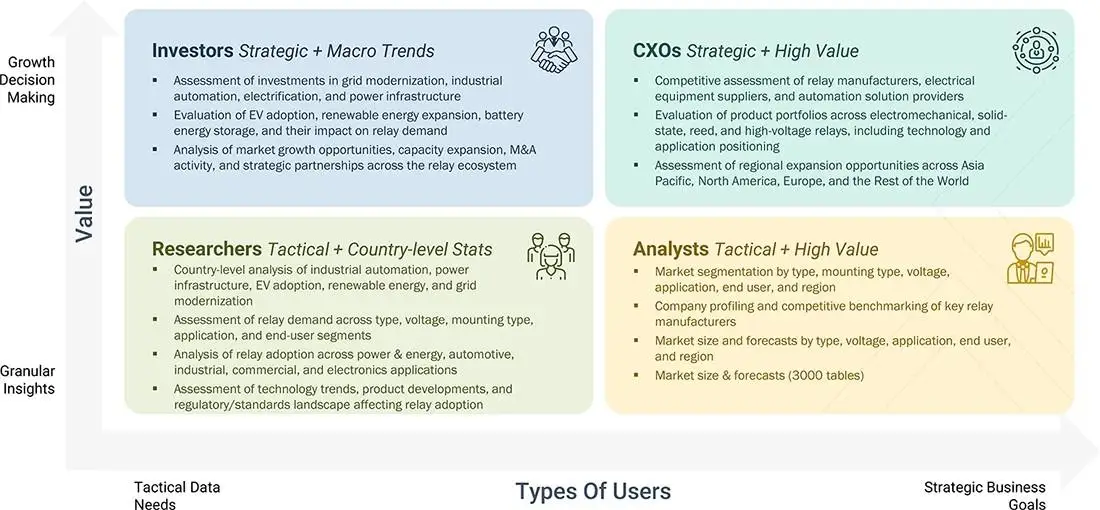
DELIVERED CUSTOMIZATIONS
We have successfully delivered the following deep-dive customizations:
| CLIENT REQUEST | CUSTOMIZATION DELIVERED | VALUE ADDS |
|---|---|---|
| Telecom and Aerospace & Defense End-user Market Estimation | Market size and forecast for the telecom and aerospace & defense end users were provided, with analysis of relay demand across key applications and regional markets. The customization evaluates the adoption of electromechanical, solid-state, reed, and high-voltage relays across these end-use industries. | Provides end-user-specific market sizing and growth insights, enabling assessment of demand opportunities in telecom infrastructure and aerospace & defense applications. The analysis also helps identify high-growth relay technologies, application areas, and regional opportunities within these specialized end-user segments. |
RECENT DEVELOPMENTS
- September 2026 : Panasonic Industry launched its TF automotive relays for onboard chargers (OBCs), featuring 40 A current-carrying capacity. The new relays strengthen Panasonic’s portfolio for EV charging and automotive electrification applications, supporting the growing demand for reliable switching components in electric vehicles.
- September 2026 : OMRON added the G3VM-61KR MOSFET relay to its product portfolio, expanding its solid-state relay offering for applications requiring compact, high-performance switching. The development supports OMRON’s focus on advanced electronic components and relay solutions for industrial and electronic applications.
- June 2026 : OMRON introduced the G3VH SiC MOSFET relay and G6K(-T1) signal relay, expanding its relay portfolio for high-performance switching and signal applications. OMRON also announced the relocation of its Malaysian factory, with a 1.5× increase in production capacity, supporting growing demand across Asia Pacific.
- December 2025 : HONGFA advanced its manufacturing footprint by breaking ground on its Indonesia Industrial Park and completing the topping-out of its Haicang Lingang automotive electronics plant. These investments are expected to strengthen regional production capacity for relay and automotive electronics products, particularly for new-energy vehicle applications.
Table of Contents
 Exclusive indicates content/data unique to MarketsandMarkets and not available with any competitors.
Methodology
The research process for this technical, market-oriented, and commercial study of the relay market involved systematic collection, validation, and analysis of information related to relay technologies, product types, mounting types, voltage ratings, applications, end users, and industry developments. Extensive secondary research was conducted using annual reports, investor presentations, technical papers, regulatory publications, industry databases, company websites, product catalogs, and financial reports to identify key market participants, technology trends, market developments, and competitive strategies. The findings were further validated through primary interviews with executives from relay manufacturers, electrical equipment manufacturers, automotive OEMs, industrial automation companies, utilities, distributors, and industry experts to assess market estimates, product adoption, pricing trends, customer requirements, and competitive positioning. Key market players and their market positions were established through a combination of secondary research and primary research involving senior executives, business development managers, product specialists, and technical experts across the relay ecosystem.
Secondary Research
In the secondary research process, various sources were referred to for identifying and collecting information relevant to the study. Secondary sources included annual reports, investor presentations, press releases, company websites, technical papers, industry journals, regulatory publications, product catalogs, and recognized market databases. Publications and datasets from organizations such as the International Energy Agency (IEA), International Electrotechnical Commission (IEC), IEEE, CIGRE, and national energy and electricity regulatory authorities were reviewed to understand developments in power transmission and distribution, grid modernization, renewable energy integration, industrial automation, electrification, and relay standards and regulations. Secondary research was primarily conducted to obtain information on the relay value chain, key market participants, product developments, technology trends, application and end-user demand, manufacturing capabilities, distribution networks, pricing trends, and regional market developments.
Primary Research
During the primary research phase, relay manufacturers, electrical equipment manufacturers, utilities, distributors, industrial automation companies, automotive OEMs, and industry experts were interviewed to obtain qualitative and quantitative insights into the relay market. Interviews were conducted to validate market estimates, product adoption, pricing trends, regional demand, competitive positioning, customer requirements, and technology developments. Primary interviews also helped assess demand across electromechanical, solid-state, reed, and other relay types; adoption of different mounting configurations; demand for low-, medium-, and high-voltage relays; application trends across industrial, automotive, power, commercial, and other sectors; and emerging opportunities associated with electrification, automation, renewable energy, and grid modernization. The findings were validated against company disclosures, industry statistics, regulatory publications, technical sources, and market data to refine market estimates, segment shares, regional forecasts, and competitive assessments.
Breakdown of Primary Profiles
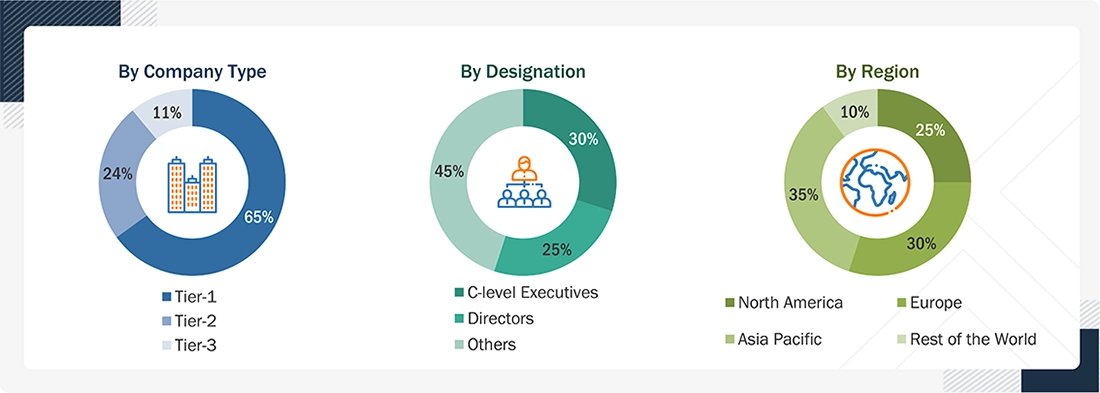
Note: Others include sales managers, engineers, and regional managers.
Tier 1 Company: Revenue > USD 5 billion, Tier 2 Company: Revenue between USD 1 and USD 5 billion, and Tier 3 Company: Revenue < USD 1 billion.
To know about the assumptions considered for the study, download the pdf brochure
Market Size Estimation
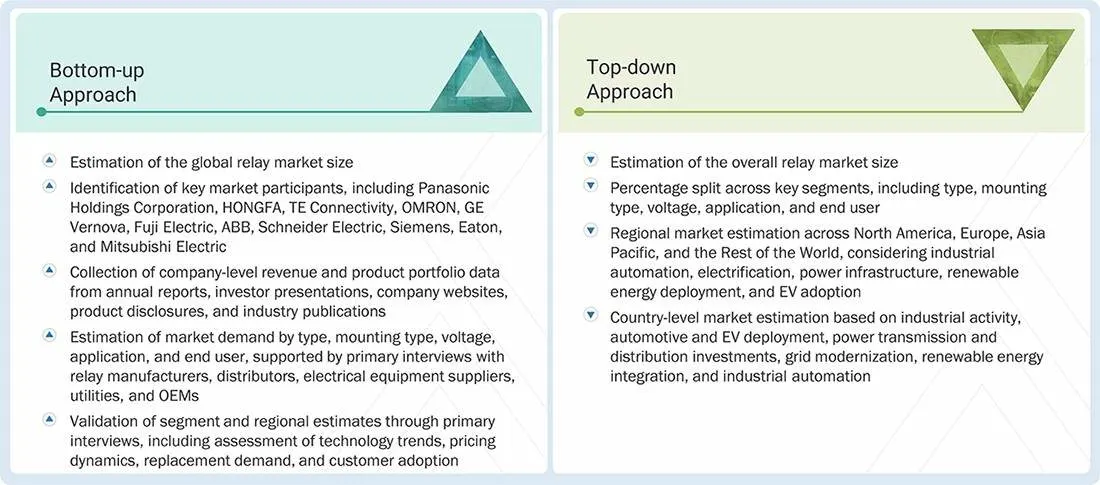
Both top-down and bottom-up approaches have been used to estimate and validate the size of the relay market and its dependent submarkets. The key players in the market have been identified through secondary research, and their market shares in the respective segments have been obtained through both primary and secondary research. The research methodology includes the study of annual and financial reports of top market players and interviews with industry experts, such as chief executive officers, vice presidents, directors, sales managers, product managers, and marketing executives, for key quantitative and qualitative insights related to the relay market.
Bottom-up Approach
- Market size is estimated based on the total demand and sales of relays across key countries and end-use industries.
- The number of relevant relay units deployed across applications such as industrial automation, automotive, power transmission & distribution, renewable energy, electronics, commercial equipment, and other applications is identified using secondary research and industry data.
- The number of relay units is multiplied by the average selling price (ASP) of relays by type, voltage rating, application, and region to estimate the total market value.
- Estimated market revenues are further segmented by relay type, mounting type, voltage, application, end user, and region based on company-level and industry-level data.
- The country-level estimates are aggregated to determine regional and global relay market size.
- Key assumptions, including average selling prices, unit deployment, replacement rates, and adoption of different relay technologies, are validated through primary interviews with relay manufacturers, distributors, OEMs, utilities, and industry experts.
- The resulting market size is further cross-checked and validated through secondary research and data triangulation.
Top-down Approach
- Estimating the overall global relay market by analyzing industrial automation investments, automotive production, EV adoption, power transmission and distribution investments, renewable energy capacity additions, grid modernization, and electrical equipment demand.
- Allocating the market across relay types, mounting types, voltage ratings, applications, and end users based on adoption patterns, relay consumption, product preferences, industry trends, and company-level data.
- Distributing market estimates across North America, Europe, Asia Pacific, and the Rest of the World based on industrial activity, automotive production, electrification investments, renewable energy capacity additions, power infrastructure development, and regional market dynamics.
- Further splitting regional markets into country-level markets based on industrial production, automotive and EV deployment, power infrastructure investments, manufacturing activity, and market penetration of different relay technologies.
- Validating the final market estimates through primary interviews with relay manufacturers, electrical equipment OEMs, utilities, distributors, and industry experts to validate regional demand trends, product adoption, pricing, and end-user requirements, followed by data triangulation to ensure consistency and accuracy.
Global Relay Market Size: Bottom-up Approach and Top-down Approach
Data Triangulation
The process of determining the overall market size involved the methodologies described earlier, followed by segmenting the market into multiple segments and subsegments. To finalize the comprehensive market analysis and obtain precise statistics for each market segment and subsegment, data triangulation and market breakdown procedures were applied wherever appropriate. Data triangulation was accomplished by examining factors and trends from both the demand and supply sides of the relay ecosystem, including relay production and sales, unit shipments, industrial automation investments, automotive and EV production, power transmission and distribution investments, renewable energy capacity additions, grid modernization, product adoption, pricing trends, replacement demand, and regional market dynamics.
Market Definition
A relay is an electrically operated switching device used to control, switch, isolate, or protect electrical circuits by opening or closing contacts in response to an electrical input signal. Relays are widely used across power systems, industrial automation, automotive, telecommunications, electronics, renewable energy, and commercial applications. Depending on the operating principle and construction, relays include electromechanical, solid-state, reed, and other specialized types. Relays can also be differentiated by mounting configuration, voltage rating, contact arrangement, switching capacity, and application.
The relay market encompasses the total revenue generated globally from the sale of relays across different types, including electromechanical, solid-state, reed, and other relay types. The market covers applications such as industrial automation, automotive, power transmission & distribution, renewable energy, electronics, commercial equipment, and other applications. The study includes relays across different mounting types, including panel mount and other mounting configurations, and voltage categories, including low-, medium-, and high-voltage relays. The market covers North America, Europe, Asia Pacific, and the Rest of the World.
Key Stakeholders
- Energy utilities
- Automotive relay manufacturers
- State and national regulatory authorities
- Organizations, forums, alliances, and associations
- Investors/Shareholders
- Manufacturers’ associations
- Relay raw material and component manufacturers
- Relay manufacturers, dealers, and suppliers
- Electrical equipment manufacturers’ associations and groups
- Power utilities and other end-user companies
- Consulting companies in the energy and power domain
- EV relay manufacturers
Report Objectives
- To define, describe, segment, and forecast the relay market, in terms of value, by type, application, voltage range, mounting type, vertical, and region
- To forecast the market sizes for four major regions-North America, Europe, Asia Pacific, and the Rest of the World-along with their key countries
- To forecast the relay market, by region, in terms of volume
- To provide detailed information regarding key drivers, restraints, opportunities, and challenges influencing the growth of the market
- To strategically analyze the micromarkets with respect to individual growth trends, prospects, and contributions to the overall market size
- To provide the supply chain analysis, trends/disruptions impacting customer business, market map, ecosystem analysis, tariffs and regulations, pricing analysis, patent analysis, case study analysis, technology analysis, key conferences and events, trade analysis, Porter’s Five Forces analysis, key stakeholders and buying criteria, and regulatory analysis of the relay market
- To analyze opportunities for stakeholders in the relay market and present a competitive landscape of the market
- To benchmark market players using the company evaluation matrix, which analyzes market players based on business and product strategies adopted by them
- To compare key market players in terms of market share, product specifications, and applications
- To strategically profile key players and comprehensively analyze their market ranking and core competencies
- To analyze competitive developments in the relay market, such as contracts & agreements, investments & expansions, mergers & acquisitions, product launches, partnerships, joint ventures, and collaborations
- To study the impact of AI/Gen AI on the market under study, along with the macroeconomic outlook for each region
Available customizations:
With the given market data, MarketsandMarkets offers customizations based on the company’s specific needs. The following customization options are available for the report:
PRODUCT ANALYSIS
- Product Matrix, which provides a detailed comparison of the product portfolio of each company
COMPANY INFORMATION
- Detailed analyses and profiling of additional market players (up to 5)
Key Questions Addressed by the Report
What is the current market size of the Relay Market, and how is it expected to grow?
The market is projected to grow from USD 11.75 billion in 2026 to USD 15.65 billion by 2031, at a CAGR of 5.0%. (MarketsandMarkets)
What are the key factors driving the Relay Market?
Growth is driven by increasing industrial automation, power infrastructure investments, renewable energy integration, and electrification. (MarketsandMarkets)
Which segment holds the largest share of the Relay Market?
The electromechanical segment dominated the market in 2025, while low-voltage relays are expected to hold the largest share in 2026. (MarketsandMarkets)
Which region dominates the Relay Market?
Asia Pacific is expected to account for the largest market share, with the region projected to grow at a CAGR of 6.5% during the forecast period. (MarketsandMarkets)
Who are the key players in the Relay Market?
Leading companies include HONGFA, OMRON Corporation, TE Connectivity, Panasonic Holdings Corporation, and GE Vernova. (MarketsandMarkets)


Personalize This Research
- Triangulate with your Own Data
- Get Data as per your Format and Definition
- Gain a Deeper Dive on a Specific Application, Geography, Customer or Competitor
- Any level of Personalization
Let Us Help You
- What are the Known and Unknown Adjacencies Impacting the Relay Market
- What will your New Revenue Sources be?
- Who will be your Top Customer; what will make them switch?
- Defend your Market Share or Win Competitors
- Get a Scorecard for Target Partners

Custom Market Research Services
We Will Customise The Research For You, In Case The Report Listed Above Does Not Meet With Your Requirements
Get 10% Free CustomisationTESTIMONIALS

Kimberly Murphy
GLOBAL MARKETING DIRECTOR
Bently Nevada,
Leading Condition Monitoring & Asset Protectionwww.bakerhughesds.com/bently-nevada

MarketsandMarkets™ showed consistent rigor for success and relentlessly worked with Bently Nevada stakeholders to positively impact go-to-market strategy. Their proactiveness and flexibility has been instrumental in achieving the objectives to grow our sales pipeline in key industrial markets.

DARRICK HUEBER
Business Development Leader
Nexus Controls LLC,
Leading Manufacturer of Automation System & Electrical Panelswww.bakerhughesds.com/nexus-controls

We partnered with MarketsandMarkets to expand our business further by tapping into new industrial segments. It was critical for us to gather crucial business insights about specific markets to achieve this goal. MarketsandMarkets engagement model and client services helped us provide those insights, it was really impressive and valuable for my business. The team was extremely flexible and helpful.

Mike Schoff
Global Industrial Commercial Strategy Leader
Nexus Controls LLC
Leading Manufacturer of Automation System & Electrical Panelswww.bakerhughesds.com/nexus-controls
We consulted MarketsandMarkets for potential Partner Identification. Overall, it was a good experience. The insights provided through interviews conducted by the team helped us put together the questionnaire required for discussion with the selected partners. Their ability to provide insights through interviews with customers in a timely manner was quite impressive.






Growth opportunities and latent adjacency in Relay Market