Retrieval-augmented Generation (RAG) Market Size & Share

Retrieval-augmented Generation (RAG) Market by Application (Enterprise Search, Domain-Specific Data Synthesis, Content Summarization and Generation), Type (Foundational & Enhanced, Agentic & Adaptive) - Global Forecast to 2030




OVERVIEW
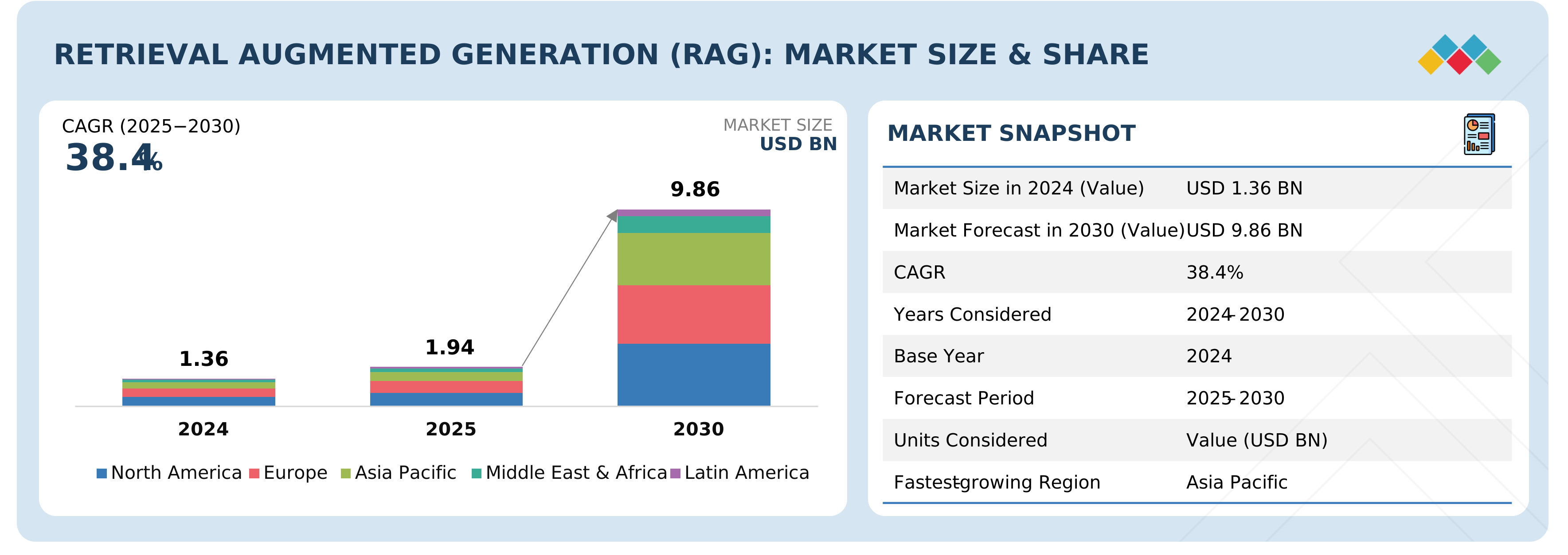
Source: Secondary Research, Interviews with Experts, MarketsandMarkets Analysis
The retrieval-augmented generation (RAG) market is projected to expand from USD 1.94 billion in 2025 to USD 9.86 billion by 2030, at a CAGR of 38.4% during the forecast period. RAG refers to the ecosystem of technologies, services, and solutions that enhance the capabilities of large language models (LLMs) by integrating external knowledge retrieval to improve the accuracy, relevance, and context-awareness of generated outputs. This market encompasses a range of offerings, including vector databases, cloud-based RAG platforms, and enterprise AI tools that support applications such as chatbots, semantic search engines, and knowledge management systems. The RAG market growth is primarily driven by the rapid digital transformation of enterprise AI systems globally, as organizations across various industries increasingly adopt these technologies to create context-aware, reliable AI applications.
Market Size and Forecast:
- Market Size Value in 2024: USD 1.36 Billion
- Market Size Value in 2025: USD 1.94 Billion
- Revenue Forecast in 2030: USD 9.86 Billion
- Growth Rate: CAGR of 38.4% from 2025 to 2030
- Data available from 2015 to 2030
- Base year: 2024
- Forecast period: 2025-2030
- Largest Growing Region: North America
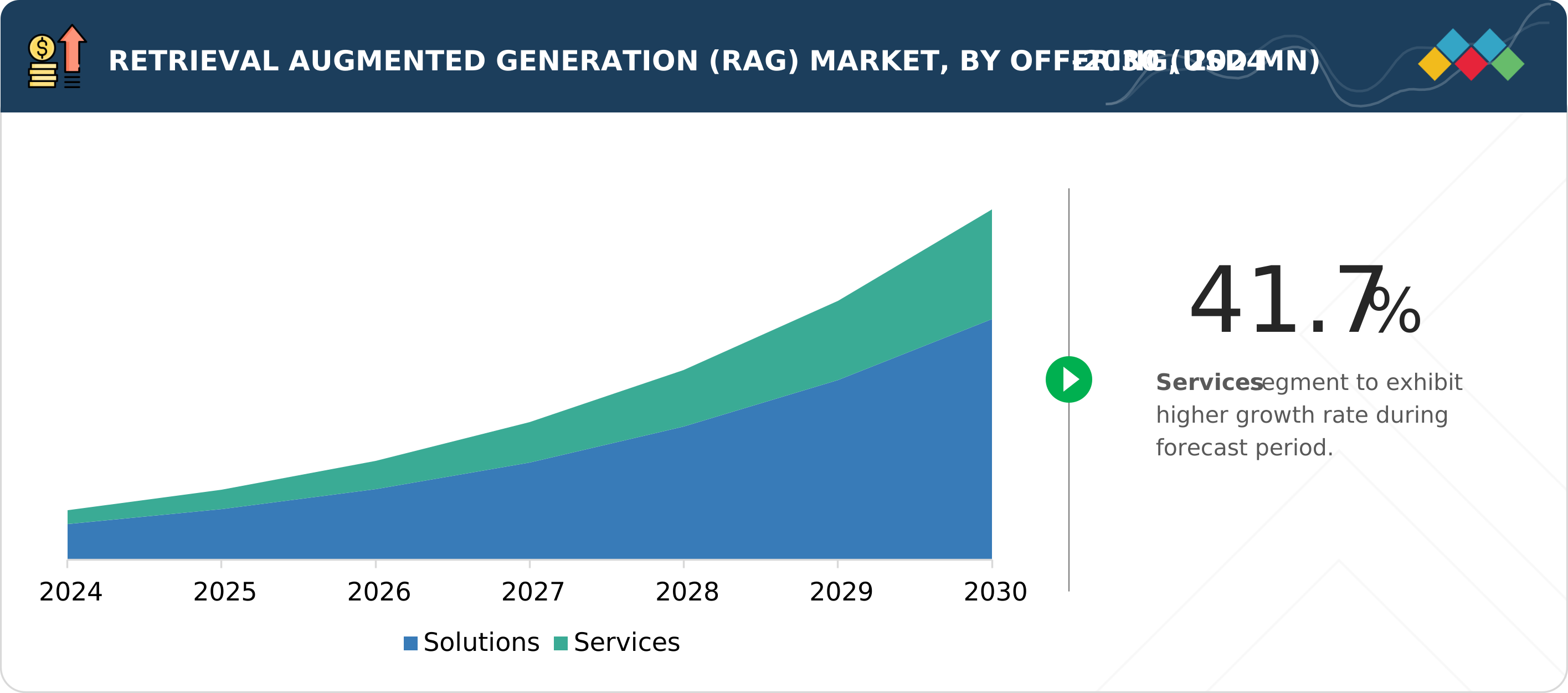
- The Retrieval-augmented Generation (RAG) services growing at a CAGR of 41.7 %
Key Market Trends and Insights
- By Application type: the BFSI and Healthcare sectors are leading the rapid enterprise adoption of Retrieval-Augmented Generation (RAG) solutions to eliminate AI hallucinations, unlock unstructured data silos, and automate high-stakes compliance auditing."
-
Key Advantages: RAG solutions accelerate AI deployment timelines, eliminate data inaccuracies, and optimize business intelligence by turning static company data into agile, accurate AI search tools.
- Growing Trends: Driven by urgent data accuracy demands and generative AI adoption, global enterprises swiftly shift their IT investments toward RAG pipelines, vector data management, and secure domain-specific intelligence.
- Growth Opportunities: Rapid proliferation of vector databases, advanced embedding models, and open-source LLM frameworks creates massive growth opportunities for enterprises aiming to capture market share.
KEY TAKEAWAYS
-
BY OFFERINGThe RAG market has been broadly categorized into solutions and services based on the offering. Services include managed and professional services.
-
BY TYPEAmong the different types of RAG, foundational & enhanced RAG is estimated to have the largest market size in 2025. This type encompasses the most mature and widely deployed architectures, offering robust retrieval-augmented capabilities that meet the immediate needs of enterprises for search, content generation, and knowledge management.
-
BY APPLICATIONEnterprise search is estimated to account for the largest market share in 2025, owing to its foundational role in helping organizations quickly retrieve and leverage information from vast data repositories.
-
BY DEPLOYMENT TYPEThe cloud segment is projected to dominate due to its scalability, flexibility, and lower upfront costs compared to on-premises solutions. Cloud-based RAG platforms allow enterprises to deploy AI-powered retrieval and generative models without significant infrastructure investments, driving faster adoption.
-
BY END USERFinancial service providers are early adopters of RAG solutions, accounting for the largest market share in 2025, while healthcare & life sciences will witness the highest CAGR due to AI-driven diagnostics, data synthesis, and patient-centric applications.
-
BY REGIONAsia Pacific is expected to register the highest CAGR of 42.0%, fueled by some of the world's fastest-growing economies, including China, Japan, and India, investing heavily in AI infrastructure and partnerships, driving accelerated RAG deployment in diverse industries.
-
COMPETITIVE LANDSCAPEThe major market players have adopted both organic and inorganic strategies, including partnerships, collaborations, and investments. For instance, in July 2025, AWS announced Amazon Bedrock AgentCore, a comprehensive platform that enables the secure and scalable deployment and operation of AI agents, featuring seven core services.
The growing demand for accurate, context-aware AI applications that address the limitations of traditional large language models (LLMs), such as hallucinations and outdated knowledge is driving the RAG market. This transition is propelled by the rapid digital transformation of enterprises worldwide, where industries like healthcare, finance, and e-commerce are increasingly integrating RAG solutions, such as combining vector databases, LLMs, and generative AI to power advanced use cases such as real-time chatbots, semantic search engines, and personalized knowledge retrieval systems. Additionally, this shift is accelerated by significant government initiatives and funding programs aimed at strengthening AI infrastructure, particularly in regulated sectors requiring robust data governance and compliance.
TRENDS & DISRUPTIONS IMPACTING CUSTOMERS' CUSTOMERS
The impact on consumers’ business emerges from customer trends or disruptions. Hot belts are the clients of retrieval-augmented generation (RAG) solution providers, and target applications are the clients of RAG solution providers. Shifts, which are changing trends or disruptions, will impact the revenues of end users. The revenue impact on end users will affect the revenue of hotbeds, which will further affect the revenues of RAG solution providers.
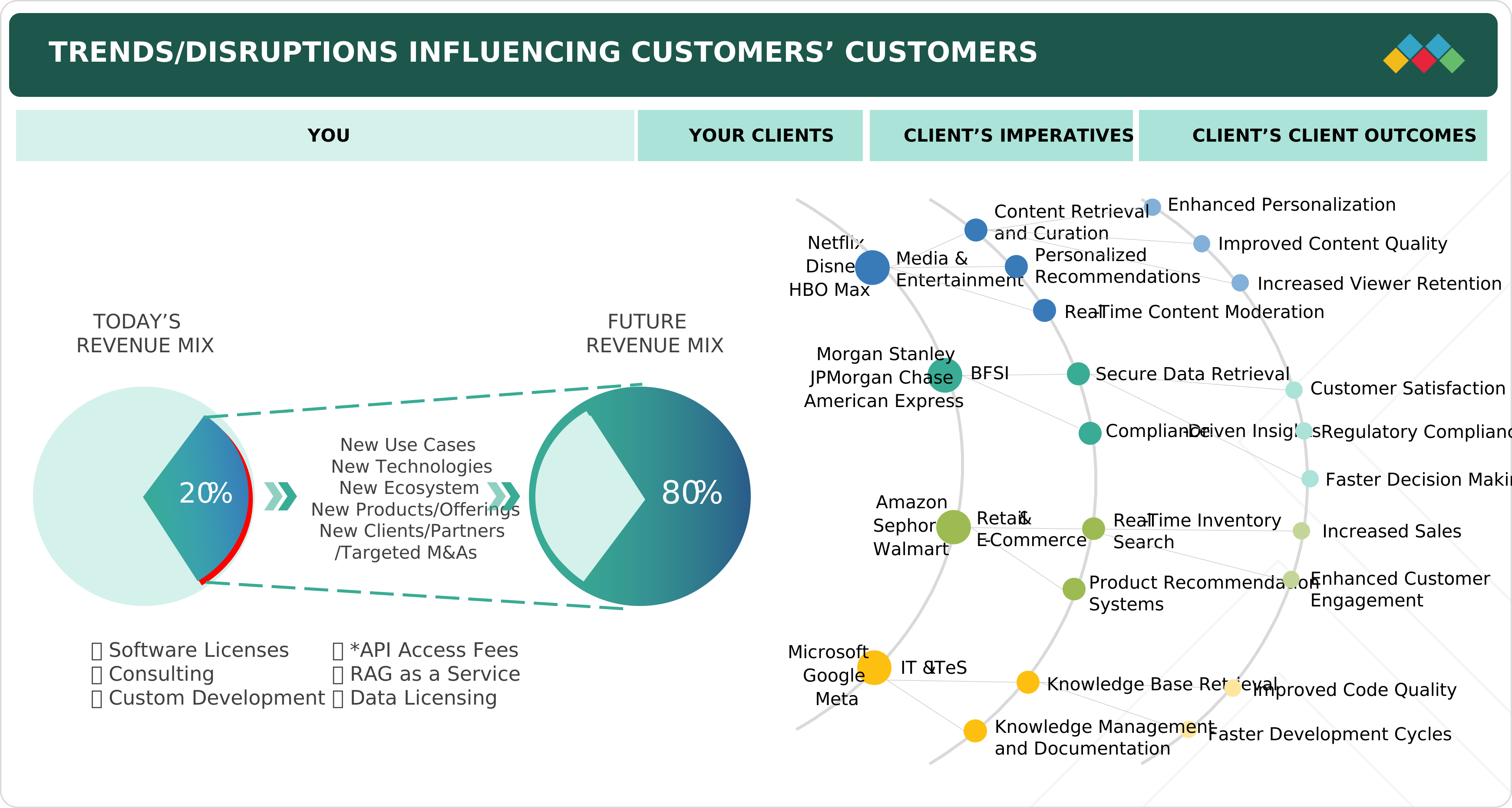
Source: Secondary Research, Interviews with Experts, MarketsandMarkets Analysis
MARKET DYNAMICS

Level
-
Enhancing Accuracy with Context-aware AI Responses

-
Accelerating Enterprise Digitization


Level
-
Managing High Infrastructure Costs

-
Ensuring Data Privacy and Protection


Level
-
Integrating RAG with Domain-specific Applications

-
Expanding Multilingual Support


Level
-
Managing Vendor Fragmentation

-
Mitigating Risks of AI Hallucinations

Source: Secondary Research, Interviews with Experts, MarketsandMarkets Analysis
Driver: Enhancing Accuracy with Context-aware AI Responses
The growing demand for accurate and context-aware AI responses is a major driver for the RAG market. Traditional language models often generate responses that are plausible but may lack factual grounding, posing risks in enterprise applications where precision is critical. RAG systems mitigate this by retrieving relevant information from trusted sources and combining it with generative capabilities to produce reliable outputs. Industries such as healthcare, finance, legal, and customer service increasingly rely on RAG to automate knowledge-intensive tasks, reducing errors and improving decision-making. For example, enterprises can generate policy summaries, customer support responses, or research insights that are not only syntactically coherent but also contextually valid. The push for automation in knowledge-intensive workflows, coupled with the need to handle complex queries efficiently, accelerates RAG adoption. Furthermore, AI’s ability to provide contextualized responses enhances user trust, encourages broader enterprise integration, and opens opportunities for specialized applications across sectors. As businesses strive to offer personalized experiences while maintaining accuracy, RAG solutions become indispensable in bridging the gap between information retrieval and generative AI.
Restraint: Ensuring Data Privacy and Protection
Data privacy and proprietary information concerns significantly restrain RAG adoption. Enterprises need to ensure that sensitive or regulated data, such as customer records or intellectual property, is securely processed during retrieval and generative operations. Integration of LLMs with organizational databases raises risks of data leakage, exposure, or misuse. Regulatory compliance frameworks, including GDPR, HIPAA, and other local privacy laws, impose strict requirements on data handling, storage, and usage, adding complexity to RAG deployment. Additionally, organizations must establish robust access controls, encryption standards, and audit mechanisms to protect confidential information. These challenges increase implementation costs, slow adoption, and demand specialized expertise, particularly for highly regulated industries like finance, healthcare, and government. Addressing privacy concerns is therefore critical for vendors to gain enterprise trust and facilitate broader RAG market growth
Opportunity: Integrating RAG with Domain-specific Applications
Integrating RAG systems with domain-specific applications presents a significant market opportunity. Tailored implementations allow enterprises to apply retrieval-augmented generative AI to industry-specific knowledge bases, workflows, and decision-making processes. For example, healthcare providers can integrate RAG into clinical decision support systems, legal firms into contract analysis tools, and financial institutions into fraud detection platforms. Such customization enhances relevance, accuracy, and usability, allowing organizations to extract maximum value from their data. Moreover, domain-specific integration drives higher adoption by addressing unique operational challenges, providing actionable insights, and supporting compliance requirements. As industries increasingly demand AI solutions that align with their workflows and knowledge domains, RAG vendors can leverage this opportunity to develop specialized offerings that differentiate them from generic solutions.
Challenge:Managing Vendor Fragmentation
The RAG market faces the challenge of vendor fragmentation, with a mix of hyperscalers, startups, and open-source communities offering diverse solutions. Enterprises often struggle to select the right platform due to varying capabilities, compatibility issues, and performance differences. Fragmentation slows adoption and complicates procurement, as organizations must evaluate multiple offerings to identify solutions that meet their requirements for accuracy, speed, and security. Vendors face pressure to continuously innovate and differentiate their products to maintain relevance. Managing this fragmentation requires standardization, ecosystem partnerships, and effective solution evaluation frameworks to ensure enterprises can navigate the market efficiently and implement RAG systems effectively.
Retrieval Augmented Generation Market: COMMERCIAL USE CASES ACROSS INDUSTRIES
| COMPANY | USE CASE DESCRIPTION | BENEFITS |
|---|---|---|
 |
Filevine and Zilliz Cloud implemented a vector database for legal case management, enabling semantic search and AI-powered information retrieval across millions of legal documents. | Attorneys save 60–80% of time on data search, improve decision-making, ensure complete case context, and maintain enterprise-grade security and compliance. |
 |
Weaviate implemented a vector database for Neople Assistants to power real-time AI-driven customer service, managing company-specific knowledge and supporting hybrid search and reranking capabilities. | Faster and more accurate responses to customer queries, reduced developer overhead, and improved user experience with scalable and reliable AI infrastructure. |
 |
Qdrant enabled Dust to deploy context-aware AI assistants for employees using RAG over company data, integrating multiple internal data sources like Notion, Google Drive, and Slack. | Improved employee productivity through low-latency, scalable AI responses, reduced memory footprint, and cost savings while maintaining high accuracy and performance. |
Logos and trademarks shown above are the property of their respective owners. Their use here is for informational and illustrative purposes only.
MARKET ECOSYSTEM
Prominent players in this market include well-established, financially stable retrieval-augmented generation (RAG) solution and service providers, as well as regulatory bodies. The vendors are involved in various partnerships and collaborations to develop comprehensive solutions that address a wide range of requirements.
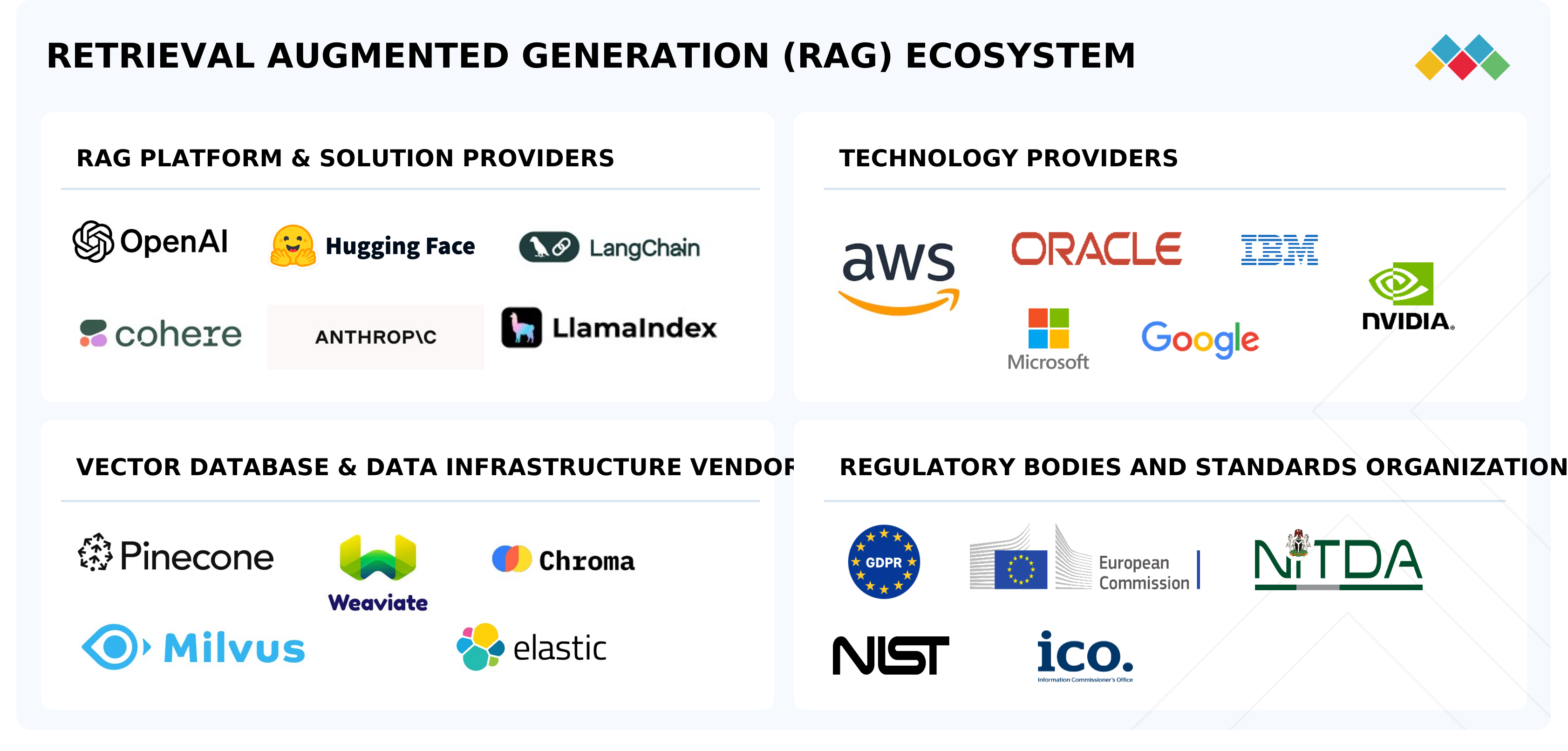
Logos and trademarks shown above are the property of their respective owners. Their use here is for informational and illustrative purposes only.
MARKET SEGMENTS
Source: Secondary Research, Interviews with Experts, MarketsandMarkets Analysis
Retrieval-Augmented Generation (RAG) Market, By Offering
The solutions segment is estimated to account for the largest market share in 2025. The growing adoption of end-to-end RAG solutions by enterprises seeking to enhance information retrieval and knowledge generation capabilities drives the RAG market. Solutions such as RAG-enabled platforms, data management and indexing layers, and retrieval & search models enable organizations to seamlessly combine retrieval mechanisms with generative AI, improving efficiency, accuracy, and decision-making across functions. Additionally, the increasing deployment of RAG solutions in sectors like BFSI, healthcare, retail, and IT & ITeS, coupled with the rising demand for personalized, real-time insights, has further accelerated solutions adoption.
REGION
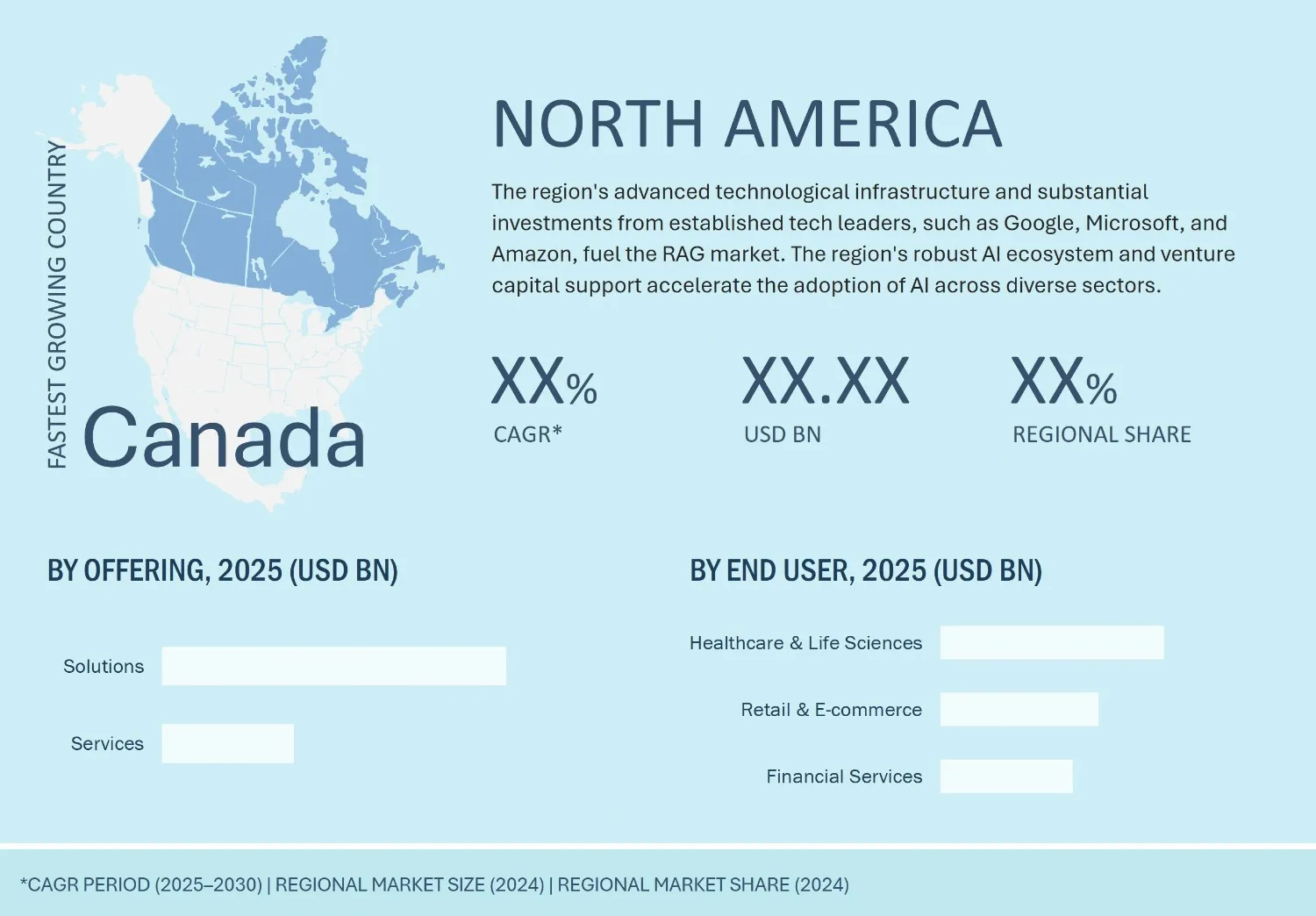
North America to account for largest market share during forecast period
In North America , the RAG market is growing rapidly as enterprises transition from standard LLM outputs to more accurate, explainable, and business-ready AI solutions. The expansion is driven by increasing demand for knowledge management and enterprise search systems, where RAG plays a key role in boosting productivity. Industries such as BFSI, healthcare, retail, and government are adopting RAG to achieve real-time, contextually accurate insights. Additionally, a wave of AI-focused mergers and acquisitions is accelerating innovation, with leading tech companies partnering with or acquiring startups specialising in vector databases and semantic search.
Retrieval Augmented Generation Market: COMPANY EVALUATION MATRIX
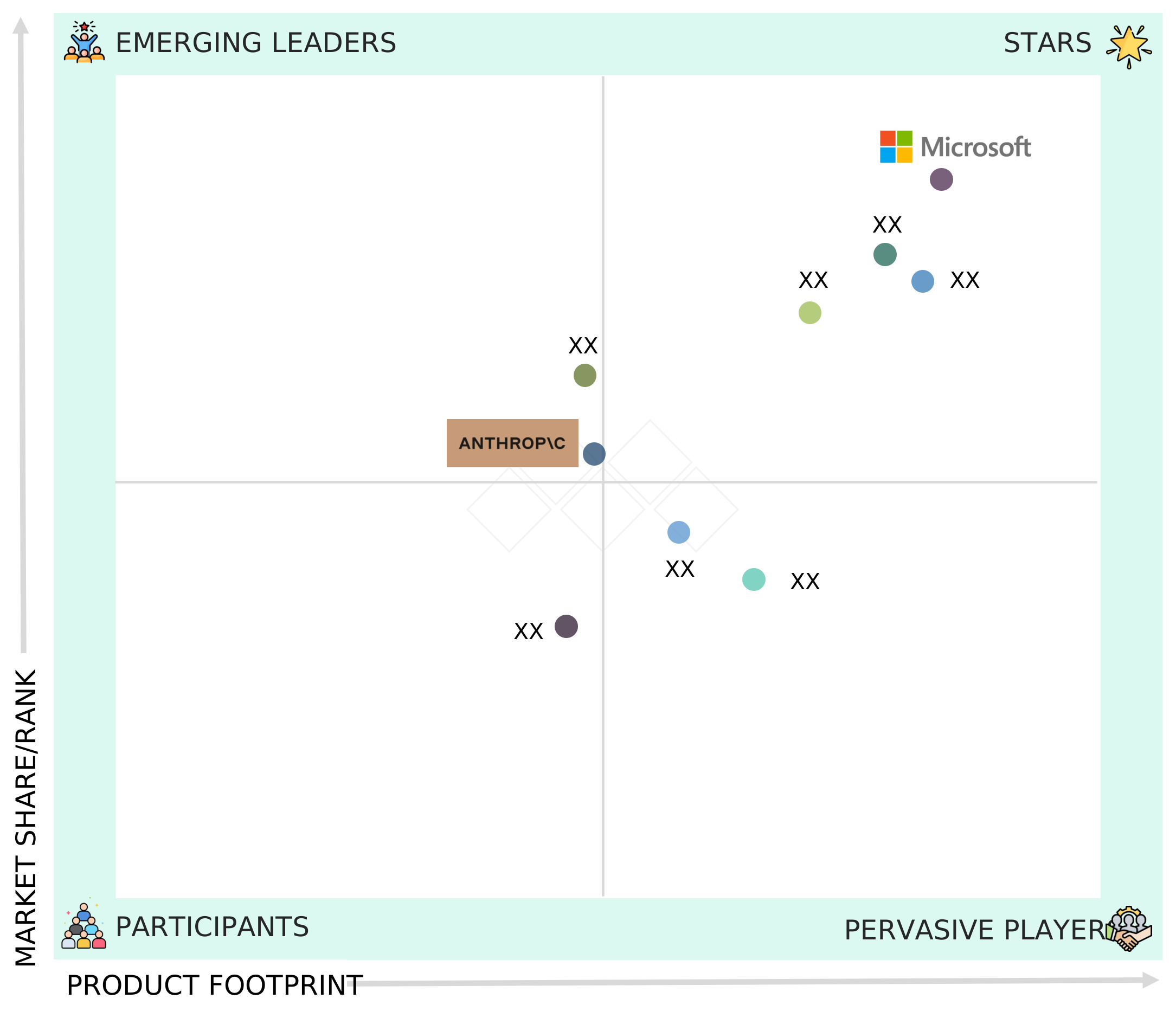
In the retrieval-augmented generation (RAG) market matrix, Microsoft (Star) leads with a strong market presence and a comprehensive RAG ecosystem, integrating advanced AI capabilities across its Azure platform, driving scalable, secure, and enterprise-grade RAG solutions. Anthropic (Emerging Leader) is known for its focus on safe, explainable AI and advanced agentic models that enhance contextual retrieval and adaptive generative capabilities in enterprise applications. While Microsoft dominates with scale and ecosystem integration, Anthropic shows strong growth potential to advance toward the leaders’ quadrant with its expanding enterprise security portfolio.
Source: Secondary Research, Interviews with Experts, MarketsandMarkets Analysis
KEY MARKET PLAYERS
MARKET SCOPE
| REPORT METRIC | DETAILS |
|---|---|
| Market Size in 2024 (Value) | USD 1.36 Billion |
| Market Forecast in 2030 (Value) | USD 9.86 Billion |
| Growth Rate | CAGR of 38.4% from 2025-2030 |
| Years Considered | 2024–2030 |
| Base Year | 2024 |
| Forecast Period | 2025–2030 |
| Units Considered | Value (USD) Million/Billion |
| Report Coverage | Revenue forecast, company ranking, competitive landscape, growth factors, and trends |
| Segments Covered |
|
| Regional Scope | North America, Europe, Asia Pacific, Middle East & Africa, and Latin America |
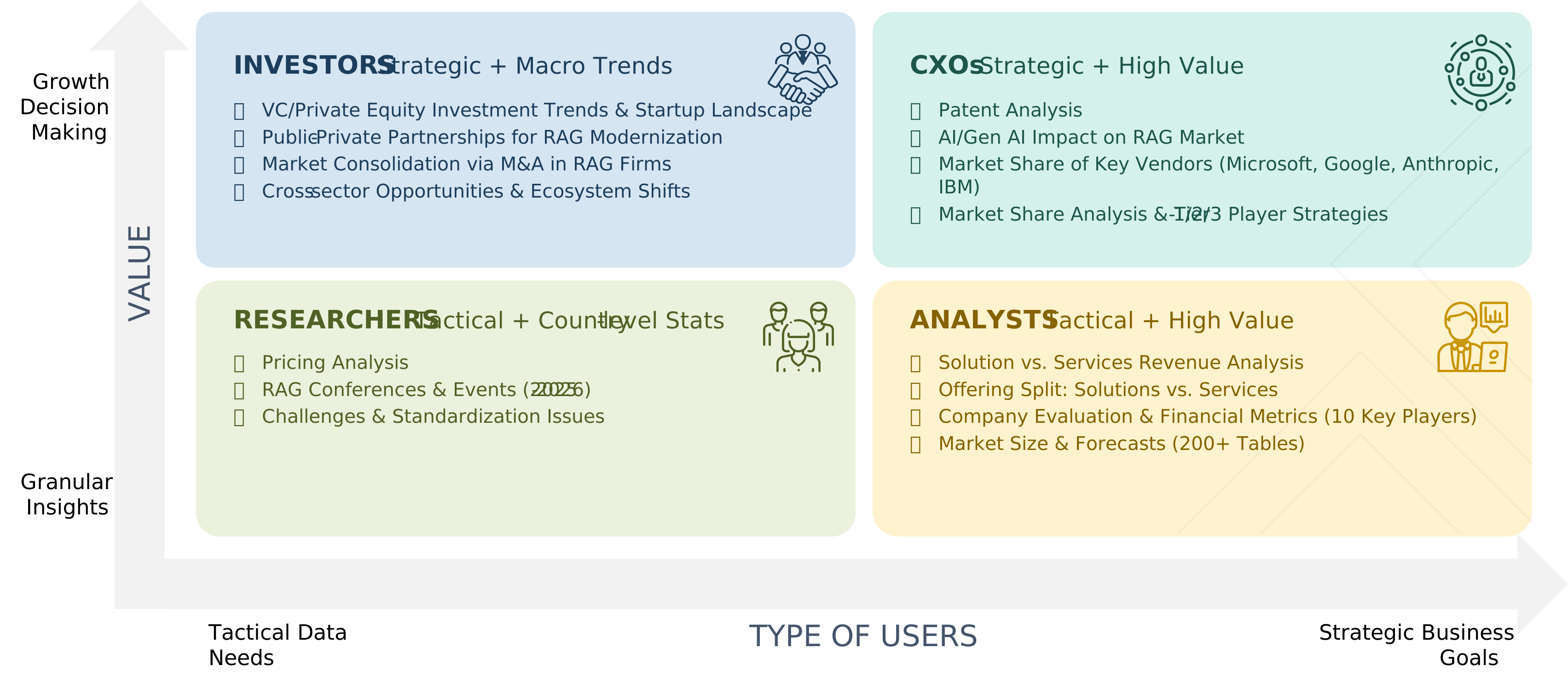
WHAT IS IN IT FOR YOU: Retrieval-augmented Generation (RAG) Market REPORT CONTENT GUIDE
DELIVERED CUSTOMIZATIONS
We have successfully delivered the following deep-dive customizations:
| CLIENT REQUEST | CUSTOMIZATION DELIVERED | VALUE ADDS |
|---|---|---|
| Leading Service Provider (US) |
Regional Analysis:
|
|
| Company Information | Detailed analysis and profiling of additional market players (up to 5) |
|
RECENT DEVELOPMENTS
- March 2025 : Databricks and Anthropic announced a five-year strategic partnership to bring Anthropic’s Claude models to the Databricks Data Intelligence Platform. The collaboration enables over 10,000 enterprises to securely build and deploy RAG-powered AI agents on their proprietary data with integrated governance, advanced reasoning, and domain-specific customization.
- September 2024 : Cohere and Nomura Research Institute (NRI) announced the launch of the NRI Financial AI Platform, powered by Cohere’s enterprise-grade LLMs. The platform leverages Command R+ and Embed models via Oracle Cloud to enhance productivity, operational efficiency, and secure RAG-based AI applications for global financial institutions.
- July 2024 : Fujitsu and Cohere announced a strategic partnership to develop Takane (tentative name), an advanced Japanese LLM for enterprise use in private cloud environments. The model, leveraging Cohere’s Command R+ LLM and Fujitsu’s expertise in Japanese language and RAG technologies, aims to enhance enterprise productivity while ensuring high security and compliance.
- May 2024 : Red Hat and Elastic announced an expanded collaboration to enhance RAG-based search experiences using Elasticsearch on Red Hat OpenShift AI. The partnership enables enterprises to integrate LLMs with private data securely, leveraging vector databases and MLOps infrastructure for scalable, secure, and efficient AI-driven search applications.
- April 2024 : Vectara and Datavolo announced a strategic partnership aimed at accelerating the development of enterprise applications utilizing Retrieval Augmented Generation (RAG). This collaboration integrates Datavolo's data pipeline capabilities, powered by Apache NiFi, with Vectara's GenAI Platform, enabling businesses to efficiently process and analyze unstructured data from various sources.
Table of Contents
 Exclusive indicates content/data unique to MarketsandMarkets and not available with any competitors.
Methodology
This research study involved the extensive use of secondary sources, directories, and databases, such as Dun & Bradstreet (D&B) Hoovers and Bloomberg BusinessWeek, to identify and collect information useful for a technical, market-oriented, and commercial study of the retrieval-augmented generation (RAG) market. The primary sources have been mainly industry experts from the core and related industries and preferred suppliers, manufacturers, distributors, service providers, technology developers, alliances, and organizations related to all segments of the value chain of this market. In-depth interviews have been conducted with various primary respondents, including key industry participants, subject matter experts, C-level executives of key market players, and industry consultants, to obtain and verify critical qualitative and quantitative information.
Secondary Research
The market size of companies offering retrieval-augmented generation (RAG) worldwide was arrived at based on secondary data available through paid and unpaid sources. It was also arrived at by analyzing the product portfolio of major companies and rating them based on their performance and quality. In the secondary research process, various secondary sources were referred to identify and collect information for the study. The secondary sources included annual reports, press releases, and investor presentations of companies; white papers, journals, and certified publications; and articles from recognized authors, directories, and databases.
Secondary research was mainly used to obtain key information about the industry’s value chain and supply chain and to identify key players through various solutions and services, market classification and segmentation according to offerings of major players, industry trends related to technologies, applications, and regions, and key developments from both market-oriented and technology-oriented perspectives.
Primary Research
In the primary research process, various primary sources from the supply and demand sides were interviewed to obtain qualitative and quantitative information on the market. The primary sources from the supply side included various industry experts, including Chief Experience Officers (CXOs); Vice Presidents (VPs); directors from business development, marketing, and product development/innovation teams; related key executives from RAG solution vendors, professional service providers, and industry associations; and key opinion leaders.
Primary interviews were conducted to gather insights, such as market statistics, revenue data collected from solutions and services, market breakups, market size estimations, market forecasts, and data triangulation. Primary research also helped in understanding various trends related to technologies, applications, deployments, and regions. Stakeholders from the demand side, such as Chief Information Officers (CIOs), Chief Technology Officers (CTOs), Chief Strategy Officers (CSOs), and end users using RAG solutions, were interviewed to understand the buyer’s perspective on suppliers, products, service providers, and their current usage of RAG solutions, which would impact the overall retrieval-augmented generation (RAG) market.
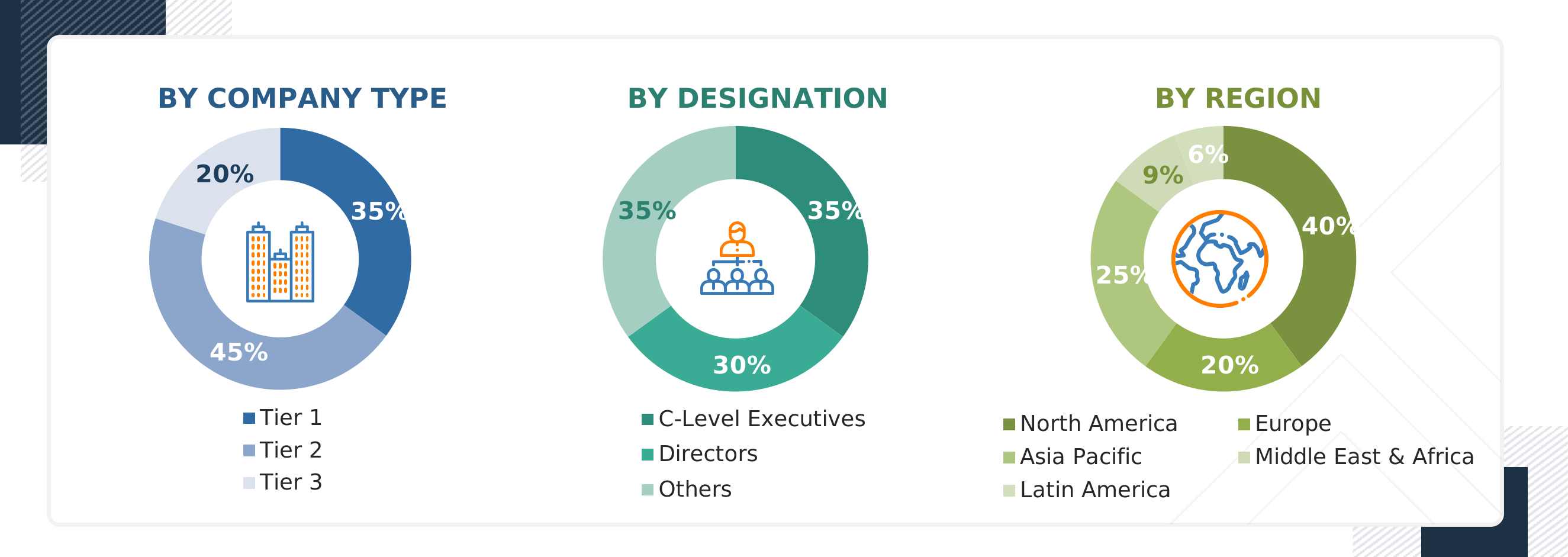
Note: Tier 1 companies’ revenue is more than USD 1 billion; Tier 2 companies’ revenue ranges between USD 500 million
and USD 1 billion; and Tier 3 companies’ revenue ranges between USD 100 million and USD 500 million. Other designations include sales
managers, marketing managers, and product managers
To know about the assumptions considered for the study, download the pdf brochure
Market Size Estimation
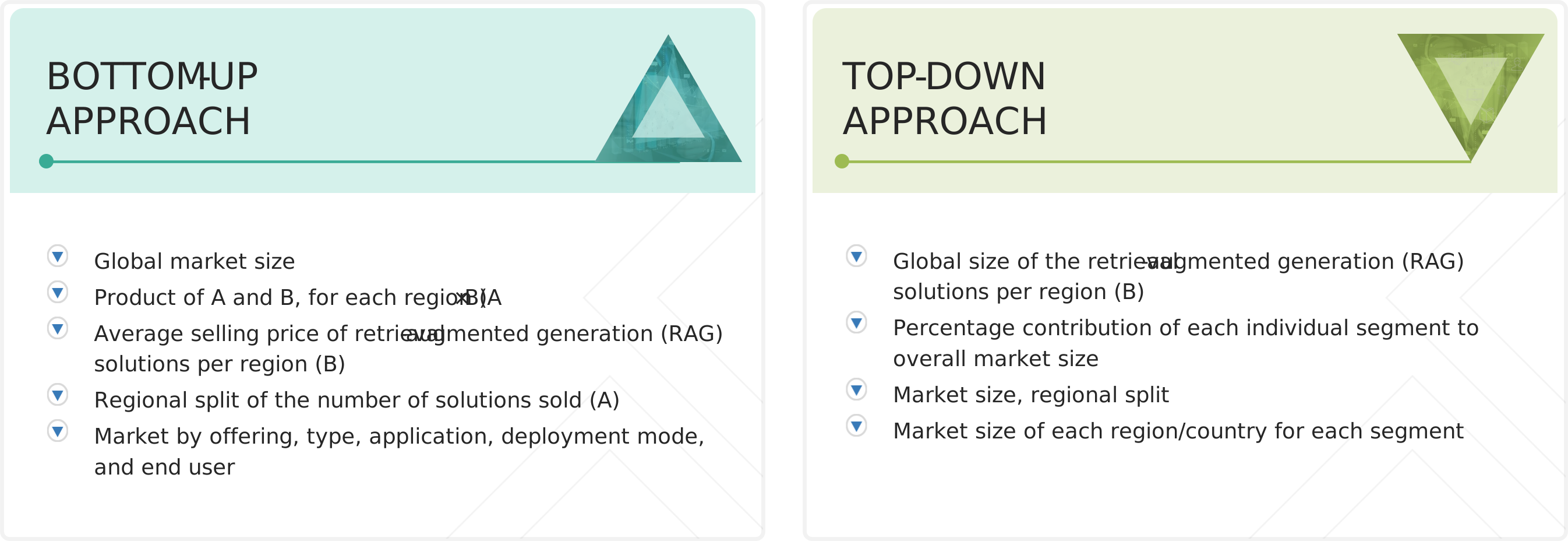
Multiple approaches were adopted to estimate and forecast the size of the retrieval-augmented generation (RAG) market. The first approach involves estimating market size by summing up the revenue generated by companies through the sale of RAG solutions. Top-down and bottom-up approaches were used to estimate and validate the total size of the retrieval-augmented generation (RAG) market. These methods were also extensively used to estimate the size of various market segments. The research methodology used to evaluate the market size is listed below.
- Key players in the market were identified through extensive secondary research.
- In terms of value, the industry’s supply chain and market size were determined through primary and secondary research processes.
- All percentage shares, splits, and breakups were determined using secondary sources and verified through primary sources.
Retrieval-augmented Generation (RAG) Market : Top-Down and Bottom-Up Approach
Data Triangulation
After determining the overall market size, the retrieval-augmented generation (RAG) market was divided into several segments and subsegments. A data triangulation procedure was used to complete the overall market engineering process and arrive at the exact statistics for all segments and subsegments, wherever applicable. The data was triangulated by studying various factors and trends from the demand and supply sides. Along with data triangulation and market breakdown, the market size was validated by the top-down and bottom-up approaches.
Market Definition
Retrieval-augmented generation (RAG) is an AI approach that combines generative models, such as large language models (LLMs), with external knowledge retrieval mechanisms to produce contextually accurate, relevant, and up-to-date outputs. Unlike traditional generative models that rely solely on pre-trained data, RAG systems dynamically fetch information from structured or unstructured sources—such as databases, documents, or knowledge bases—before generating responses, ensuring both factual correctness and human-like language generation.
Stakeholders
- Retrieval-augmented Generation (RAG) Solution and Service Providers
- Government Organizations, Forums, Alliances, and Associations
- Consulting Service Providers
- End Users
- System Integrators
- Research Organizations
- Consulting Companies
- Infrastructure Providers
- Open-source Communities
Report Objectives
- To determine and forecast the global retrieval-augmented generation (RAG) market by offering, type, application, end user, deployment type, and region
- To forecast the size of the market segments for North America, Europe, Asia Pacific, Latin America, and the Middle East & Africa
- To provide detailed information about the major factors (drivers, restraints, opportunities, and challenges) influencing the growth of the market
- To analyze each submarket concerning individual growth trends, prospects, and contributions to the overall market
- To analyze the opportunities in the market for stakeholders by identifying the high-growth segments of the market
- To profile the key market players; provide a comparative analysis based on business overviews, regional presence, product offerings, business strategies, and key financials; and illustrate the market’s competitive landscape
- To track and analyze competitive developments in the market, such as mergers and acquisitions, product development, partnerships and collaborations, and research and development (R&D) activities
Available Customizations
With the given market data, MarketsandMarkets offers customizations to meet the company’s specific needs. The following customization options are available for the report:
Geographic Analysis as per Feasibility
- Analysis for additional countries (up to five)
Company Information
- Detailed analysis and profiling of additional market players (up to 5)
Key Questions Addressed by the Report
What is retrieval-augmented generation (RAG)?
Retrieval-Augmented Generation (RAG) is an AI framework that improves the accuracy and relevance of generative AI models by combining information retrieval with large language models (LLMs). It retrieves relevant data from external sources such as databases, documents, or knowledge bases in real time and uses that information to generate more accurate, context-aware, and up-to-date responses. RAG is widely used in enterprise AI applications, customer support systems, search assistants, and knowledge management platforms.
What is the current size of the global Retrieval-Augmented Generation market?
The global Retrieval Augmented Generation (RAG) market is estimated to be valued at approximately USD 1.94 billion in 2025 and is projected to reach USD 9.86 billion by 2030, growing at a CAGR of 38.4% during the forecast period.
What are the latest trends in the Retrieval-Augmented Generation (RAG) market?
Key trends in the Retrieval-Augmented Generation (RAG) market include the rise of agentic AI systems, hybrid and multimodal retrieval technologies, growing adoption of vector databases, and increasing demand for real-time, context-aware AI responses. Enterprises are also using RAG to reduce AI hallucinations, improve data accuracy, and support industry-specific applications across healthcare, finance, cybersecurity, and customer support.
What are the key growth drivers in the Retrieval-Augmented Generation (RAG) market?
The growth of the Retrieval-Augmented Generation (RAG) market is driven by increasing enterprise adoption of generative AI, rising demand for accurate and context-aware AI responses, and the need to reduce AI hallucinations. Growth is also supported by advancements in large language models (LLMs), expanding use of vector databases, and growing demand for real-time access to enterprise knowledge across industries such as healthcare, finance, retail, and customer support.
Which industries are adopting Retrieval-Augmented Generation (RAG) market solutions fastest?
Industries adopting Retrieval-Augmented Generation (RAG) solutions the fastest include healthcare, banking and financial services, retail and eCommerce, IT and telecommunications, and customer support. These sectors are using RAG to improve enterprise search, automate customer interactions, enhance decision-making, reduce AI hallucinations, and deliver more accurate, real-time responses from large volumes of structured and unstructured data.


Personalize This Research
- Triangulate with your Own Data
- Get Data as per your Format and Definition
- Gain a Deeper Dive on a Specific Application, Geography, Customer or Competitor
- Any level of Personalization
Let Us Help You
- What are the Known and Unknown Adjacencies Impacting the Retrieval-augmented Generation (RAG) Market
- What will your New Revenue Sources be?
- Who will be your Top Customer; what will make them switch?
- Defend your Market Share or Win Competitors
- Get a Scorecard for Target Partners

Custom Market Research Services
We Will Customise The Research For You, In Case The Report Listed Above Does Not Meet With Your Requirements
Get 10% Free CustomisationTESTIMONIALS
- Rest Of Mea Retrieval-augmented Generation (RAG) Market
- US Retrieval-augmented Generation (RAG) Market
- Canada Retrieval-augmented Generation (RAG) Market
- UK Retrieval-augmented Generation (RAG) Market
- Germany Retrieval-augmented Generation (RAG) Market
- France Retrieval-augmented Generation (RAG) Market
- Italy Retrieval-augmented Generation (RAG) Market
- China Retrieval-augmented Generation (RAG) Market
- India Retrieval-augmented Generation (RAG) Market
- Japan Retrieval-augmented Generation (RAG) Market
- South Korea Retrieval-augmented Generation (RAG) Market
- Brazil Retrieval-augmented Generation (RAG) Market
- Mexico Retrieval-augmented Generation (RAG) Market
- UAE Retrieval-augmented Generation (RAG) Market
- South Africa Retrieval-augmented Generation (RAG) Market
- Rest Of Europe Retrieval-augmented Generation (RAG) Market
- Anz Retrieval-augmented Generation (RAG) Market
- Rest Of Asia Pacific Retrieval-augmented Generation (RAG) Market
- Rest Of Latin America Retrieval-augmented Generation (RAG) Market
- Kas Retrieval-augmented Generation (RAG) Market






Growth opportunities and latent adjacency in Retrieval-augmented Generation (RAG) Market