Reverse Osmosis Point-of-use Water Treatment Systems Market

Reverse Osmosis Point-of-use Water Treatment Systems Market by Device (Under-the-sink RO systems, Free-standing RO purifiers), Technology (Thin-Film Composite (TFC) RO Membranes, Cellulose Triacetate (CTA) RO Membranes, RO + Activated Carbon Hybrid), Application (Residential, Non-residential), and Region – Global Forecast to 2030




OVERVIEW
Source: Secondary Research, Interviews with Experts, MarketsandMarkets Analysis
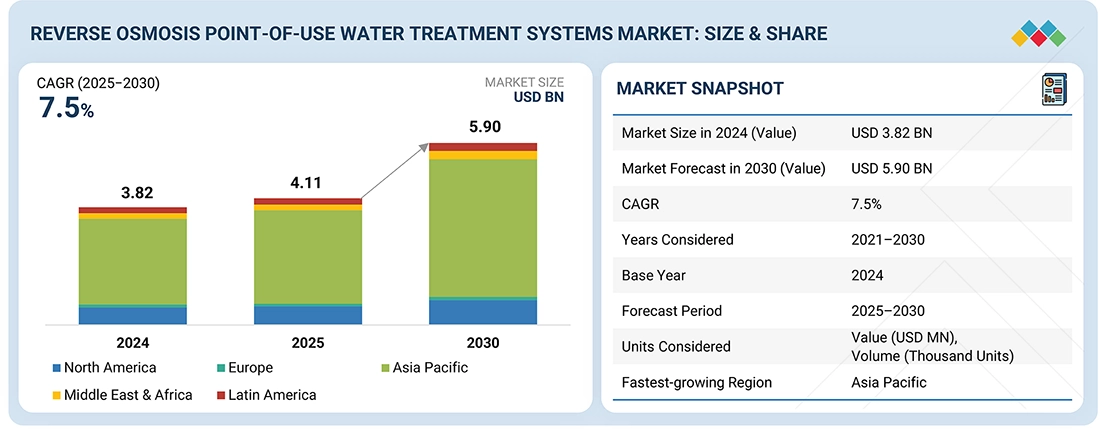
The reverse osmosis point-of-use water treatment systems market is projected to reach USD 5.90 billion by 2030 from USD 4.11 billion in 2025, at a CAGR of 7.5% from 2025 to 2030. The growth of the reverse osmosis point-of-use water treatment systems market is driven by the increasing worldwide worries about tap-water pollution, such as PFAS, microplastics, heavy metals, and chemical contaminants, leading to the use of reverse osmosis systems by households and businesses as a safer source of drinking water. The purification of point-of-use is on the rise due to rapid urbanisation and inadequate infrastructure in the emerging economies.
KEY TAKEAWAYS
-
BY GRADEBy device, the under-the-sink reverse osmosis systems segment is expected to register the highest CAGR during the forecast period in terms of value.
-
BY TECHNOLOGYBy technology, the RO + UV Hybrid segment is projected to grow at the fastest rate from 2025 to 2030.
-
BY APPLICATIONBy application, the residential segment is projected to be the leading segment in the forecast period.
-
BY REGIONAsia Pacific dominated the reverse osmosis point-of-use water treatment systems market, with a share of 73.1% in 2024.
-
COMPETITIVE LANDSCAPEThe market is driven by strategic deals and expansions from leading players such as Coway (South Korea), Kent RO Systems (India), Eureka Forbes (India), A. O. Smith (US), and LG Electronics (South Korea). These companies are focusing on innovative product launches, and expansion into high growth regional markets.
Market expansion is also supported by the rising awareness of waterborne diseases and the escalating commercial demand due to hospitality, health care, and food service. Positive policies that encourage the water quality and safety will also increase the adoption of reverse osmosis point-of-use water treatment systems.
TRENDS & DISRUPTIONS IMPACTING CUSTOMERS' CUSTOMERS
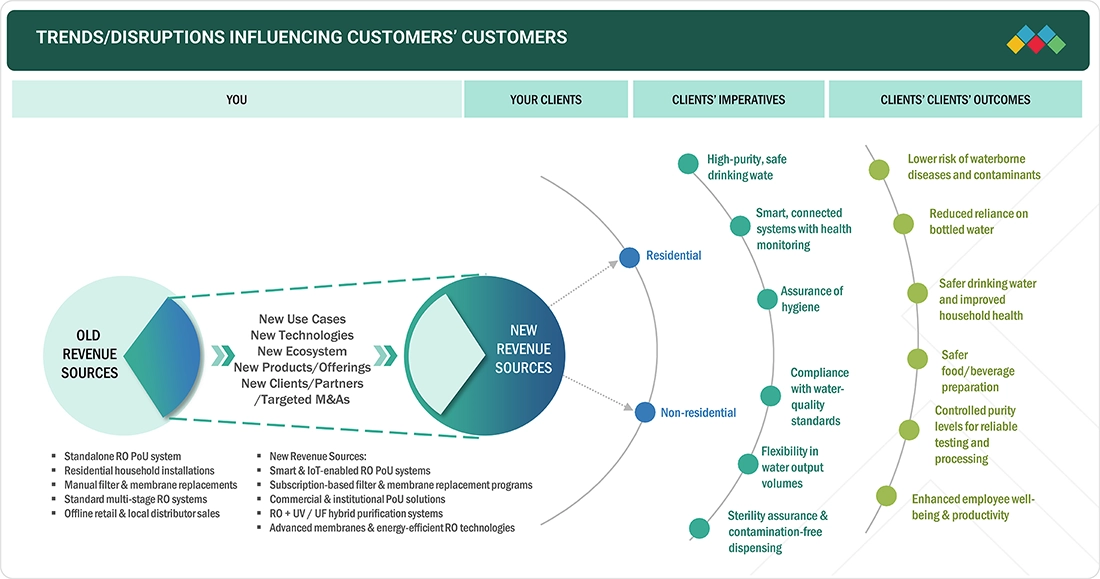
The trends in the reverse osmosis point-of-use water treatment systems market include the growing interest in injectable drugs, biologics, and dialysis therapy, as well as the increasing use of more sophisticated purification technologies, including MVR and AI-enabled process control. The disruptions, such as global supply-chain limitations, regulatory restraints, and sustainability demands, are motivating manufacturers to localize production, electronic quality administration, and long-term strategic connections in order to deliver dependable and high-quality supply.
Source: Secondary Research, Interviews with Experts, MarketsandMarkets Analysis
MARKET DYNAMICS

Level
-
Increasing concerns over drinking-water safety

-
Growing adoption of household RO systems in urban and semi-urban regions


Level
-
Higher initial installation and maintenance cost than basic filtration systems

-
Dependence on consistent electricity and water pressure, limiting adoption in some developing regions


Level
-
Expansion in emerging markets driven by poor municipal water quality and rising middle-class spending

-
Growth of smart and connected reverse osmosis systems


Level
-
Presence of low-cost, unregulated regional competitors affecting price stability

-
Compliance with varying water-quality standards across countries and industries

Source: Secondary Research, Interviews with Experts, MarketsandMarkets Analysis
Driver: Increasing concerns over drinking-water safety
The increasing worries related to the pollution of drinking water are greatly increasing the demand for reverse osmosis point-of-use water treatment systems. The increasing urbanisation and the decreasing level of quality of municipal water in most developing areas further drive households and companies to the safe purification options. Adoption is also enhanced by growing consumer consciousness on health, wellness and waterborne diseases. Also, modern homes are more applicable to compact systems that are designed aesthetically. The growing adoption of smart appliances is establishing further momentum of reverse osmosis systems that use IoT and monitoring functions.
Restraint: Higher initial installation and maintenance cost than basic filtration systems
High initial installations required and the recurring costs involved in replacing the filters and membranes are some of the obstacles to the market that make reverse osmosis less cheap than simple filtration systems. Another consequence of reverse osmosis systems is the generation of wastewater, and the areas where strict water-efficiency norms are enforced might experience slower adoption. The complexity of technology needs regular maintenance and this may be difficult in places where there is poor service infrastructure. Irregular electricity and water pressure in the rural markets also reduce the performance of the under-the-sink reverse osmosis systems.
Opportunity: Expansion in emerging markets driven by poor municipal water quality and rising middle-class spending
Emerging markets are offering great growth opportunities because population growth and urbanization are putting a strain on current water systems, and thus, there is a high demand to purify point-of-use water. Technological advancements, such as low-waste reverse osmosis, tankless water heaters, remineralization, and AI-based performance tracking, are introducing new categories of products. Filter replacement based on subscription provides manufacturers with recurring revenue and customer retention. Other commercial demand areas, including hospitality, healthcare, and food service, are also expanding further.
Challenge: Presence of low-cost, unregulated regional competitors affecting price stability
Locally produced products that are not regulated and provide lower prices pose a high level of price competition and market fragmentation. Constant investment in R&D is necessary to ensure that its product performance and compliance in a varying water environment, including high hardness to contaminants used in industries. There are also stricter regulations in some of these markets because of RO efficiency standards, wastewater limits and sustainability issues, which are challenging the conventional product design. It is important and challenging to keep strong channels of distribution and post sale services in remote or emerging areas.
REVERSE OSMOSIS POINT-OF-USE WATER TREATMENT SYSTEMS MARKET: COMMERCIAL USE CASES ACROSS INDUSTRIES
| COMPANY | USE CASE DESCRIPTION | BENEFITS |
|---|---|---|
 |
Rowater Australia designed, built, and installed a reverse osmosis water treatment system for Elementa Whitsundays, a luxury accommodation venue that also houses an onsite gin and vodka distillery. Initial water-quality testing revealed high calcium levels in the town water supply, which caused both environmental challenges, such as reduced plant photosynthesis due to calcium residue, and mechanical issues including clogged taps and shower heads. Although the RO system was originally intended solely for distilling operations, the project team (led by Flying Foam in 2023) expanded its scope after reviewing Rowater’s water-quality assessment. The final system was configured to supply high-purity water to multiple areas including the distillery, kitchen, guest accommodation, and function facilities. | Improved distilling operations through consistent, high-purity water | Enhanced guest health and experience across all hospitality areas | Reduced mechanical wear by preventing calcium-related clogging of fixtures | Lower environmental impact by reducing calcium residue affecting vegetation | Delivered a unified, high-quality water solution supporting the entire venue | |
Logos and trademarks shown above are the property of their respective owners. Their use here is for informational and illustrative purposes only.
MARKET ECOSYSTEM
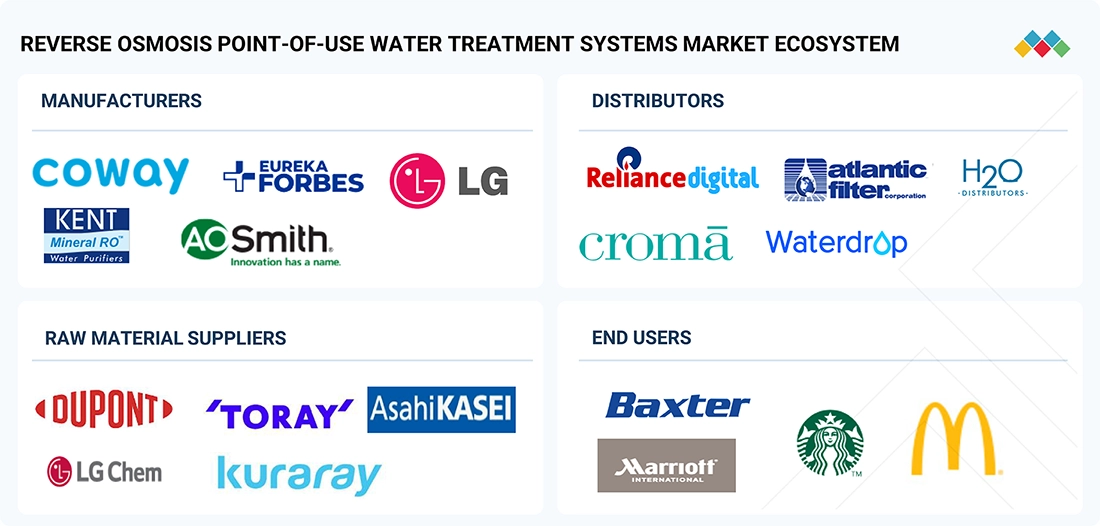
The reverse osmosis point-of-use water treatment systems ecosystem is a system linking membrane and filter suppliers, system manufacturers, distributors, installers and service providers all collaboratively to provide safe drinking water. The regulatory bodies, technology partners and sources of replacement consumables are also very critical in ensuring performance and compliance.
Logos and trademarks shown above are the property of their respective owners. Their use here is for informational and illustrative purposes only.
MARKET SEGMENTS
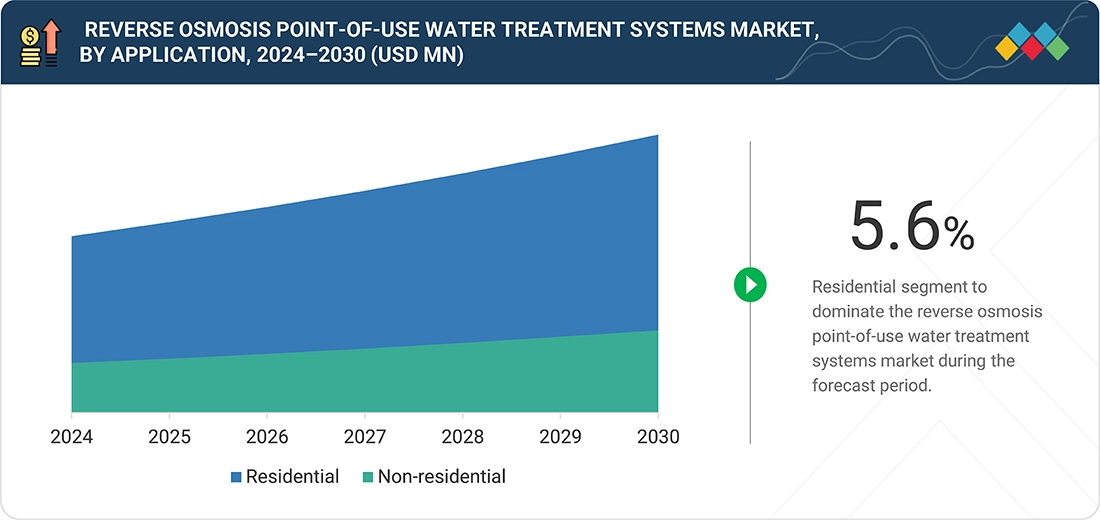
Source: Secondary Research, Interviews with Experts, MarketsandMarkets Analysis
Reverse osmosis point-of-use water treatment systems market, by device
The under-the-sink reverse osmosis systems are leading as they provide high purification rates at the expense of countertop space, which is conducive to the home of today. They are able to combine various filtration levels, accommodate higher flow rates, and give a constant supply of purified water, hence they are more convenient and effective.
Reverse osmosis point-of-use water treatment systems market, by technology
Thin-film composite reverse osmosis membranes are leading because of their better salt rejection, durability, and suitability with a broad spectrum of water conditions. They are more efficient and have a longer life span than Cellulose Triacetate (CTA) membranes, and so they are the most generally used membrane in residential and commercial RO setups.
Reverse osmosis point-of-use water treatment systems market, by application
The residential segment is leading since more households are turning to the use of RO systems in order to deal with contaminated tap-water, poor taste, and health issues. Increasing disposable income, small RO designs and easy replacement also contribute to increased uptake at home as opposed to commercial environments.
REGION
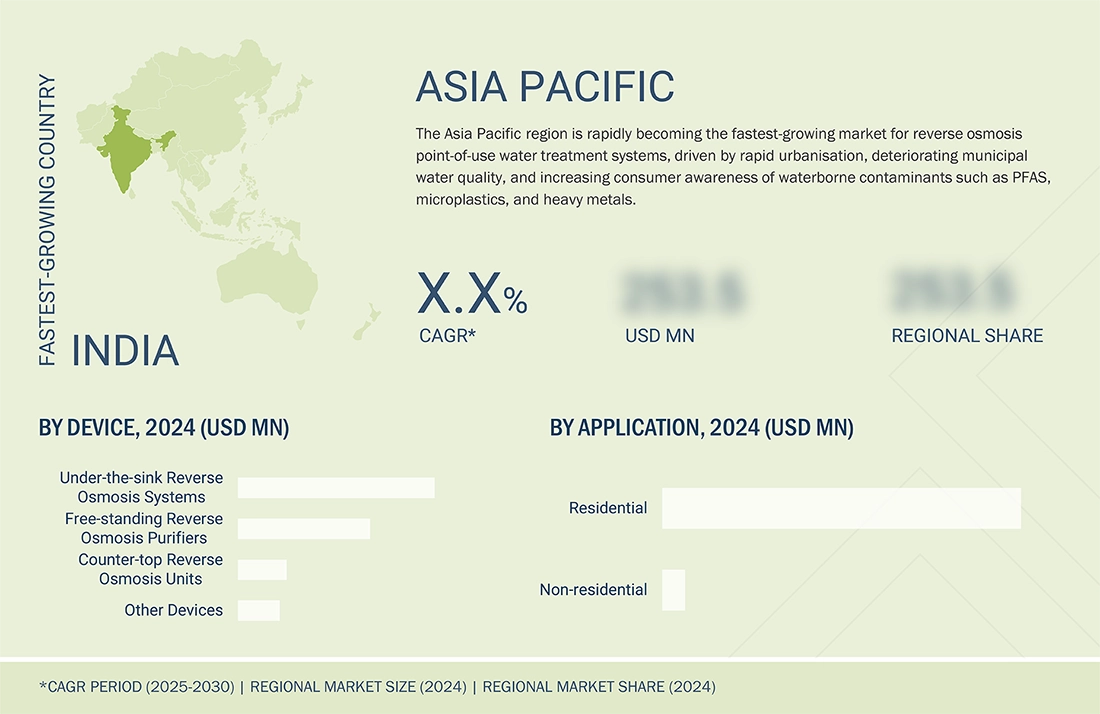
Asia Pacific to be fastest-growing region in global reverse osmosis point-of-use water treatment systems market during forecast period
Asia Pacific is the fastest-growing market in the reverse osmosis point-of-use water treatment systems market due to rapid urbanization, declining municipal water quality, and increasing consumer awareness of contaminants such as PFAS and microplastics. The increasing middle-class population, residential construction, and the robust use of smart home appliances further promote reverse osmosis installations. Efforts by governments to enhance safe drinking water also increase regional demand.
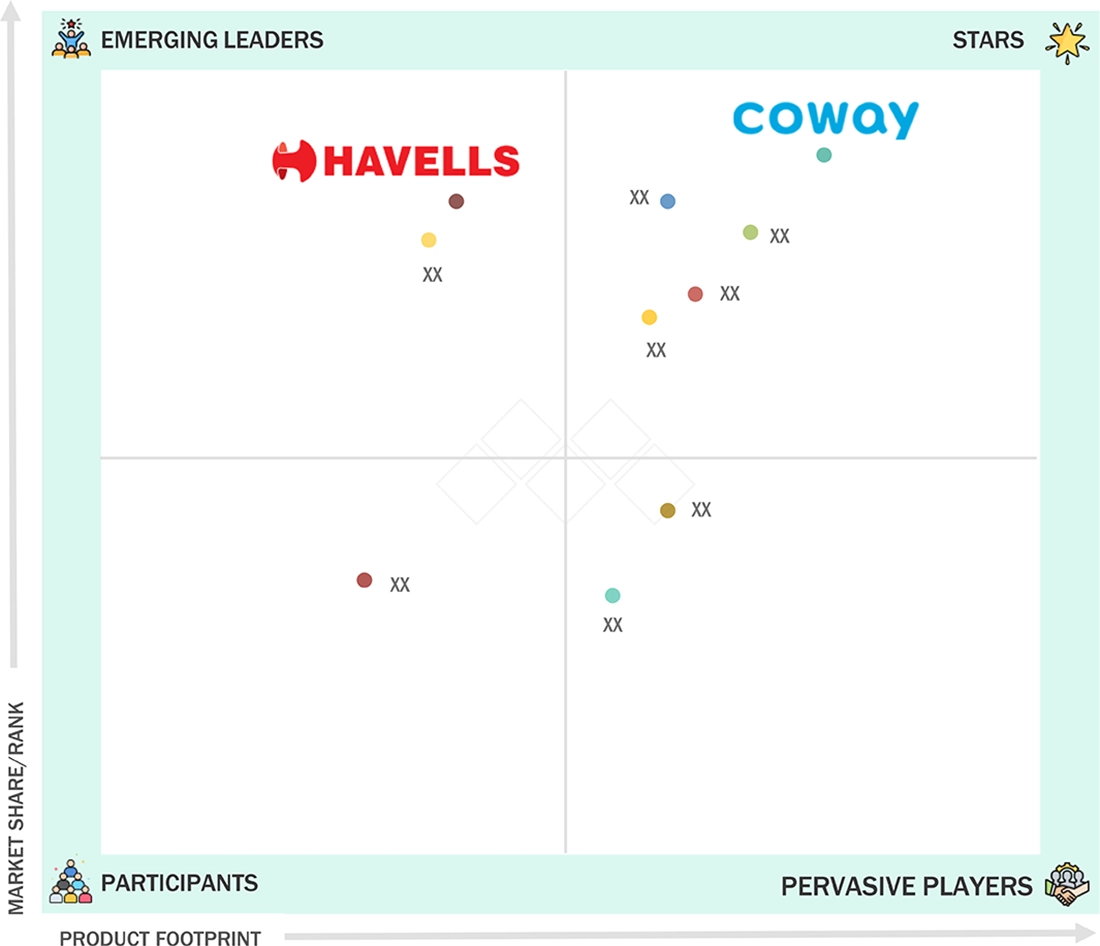
REVERSE OSMOSIS POINT-OF-USE WATER TREATMENT SYSTEMS MARKET: COMPANY EVALUATION MATRIX
In the reverse osmosis point-of-use water treatment systems market matrix, Coway (Star) holds the leading position, being the No. 1 global player in premium reverse osmosis systems. It has a strong presence in South Korea and is experiencing booming growth in the Asia Pacific, the Middle East, and the US. Havells (Emerging Leader) is acquiring good visibility with innovative RO technologies.
Source: Secondary Research, Interviews with Experts, MarketsandMarkets Analysis
KEY MARKET PLAYERS
- Coway (South Korea)
- Kent RO Systems (India)
- Eureka Forbes (India)
- A. O. Smith (US)
- LG Electronics (South Korea)
- Pentair (UK)
- Panasonic Holdings Corporation (Japan)
- Toray Industries, Inc. (Japan)
- Whirlpool Corporation (US)
- Havells India Limited (India)
- Culligan International (US)
- Brita GmbH (Germany)
- EcoWater Systems LLC (US)
- 3M (US)
- Grupo Rotoplas, S.A.B. de C.V. (Mexico)
MARKET SCOPE
| REPORT METRIC | DETAILS |
|---|---|
| Market Size in 2024 (Value) | USD 3.82 Billion |
| Market Forecast in 2030 (Value) | USD 5.90 Billion |
| Growth Rate | CAGR of 7.48% from 2025-2030 |
| Years Considered | 2021-2030 |
| Base Year | 2024 |
| Forecast Period | 2025-2030 |
| Units Considered | Value (USD Million), Volume (Thousand Units) |
| Report Coverage | Revenue forecast, company ranking, competitive landscape, growth factors, and trends |
| Segments Covered |
|
| Regions Covered | North America, Asia Pacific, Europe, South America, Middle East & Africa |
WHAT IS IN IT FOR YOU: REVERSE OSMOSIS POINT-OF-USE WATER TREATMENT SYSTEMS MARKET REPORT CONTENT GUIDE
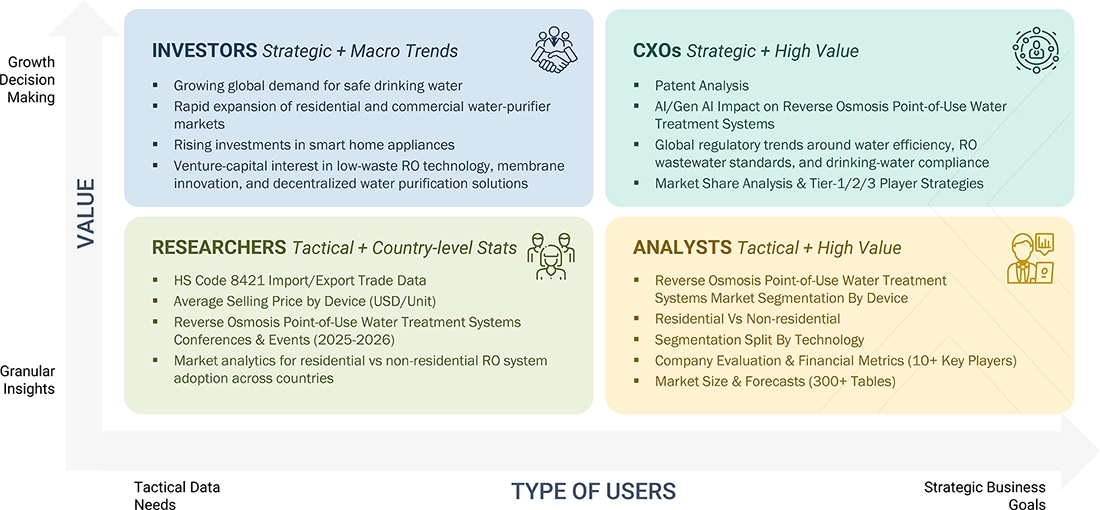
DELIVERED CUSTOMIZATIONS
We have successfully delivered the following deep-dive customizations:
| CLIENT REQUEST | CUSTOMIZATION DELIVERED | VALUE ADDS |
|---|---|---|
| APAC-Reverse Osmosis Point-of-use Water Treatment Systems Market | Detailed company profiles of reverse osmosis point-of-use water treatment systems competitors (financials, product portfolio) I Applications mapping (residential, non-residential), device (under-the-sink reverse osmosis systems, free-standing reverse osmosis purifiers, and others) | Identified & profiled 20+ reverse osmosis point-of-use water treatment systems producers across APAC I Mapped demand trends across high-growth segments- applications mapping (residential, non-residential), device (under-the-sink reverse osmosis systems, free-standing reverse osmosis purifiers, and others) |
RECENT DEVELOPMENTS
- September 2023 : In September 2023, LG Chem expanded its business by increasing production capacity at its Cheongju plant, a key manufacturing site for reverse osmosis membranes. The planned addition of 400,000 RO membranes will enable the desalination of 1.57 billion tons of water annually, equivalent to 4.32 million tons per day. This volume of water could supply roughly 16 million people, representing about one-third of South Korea’s total population.
Table of Contents
 Exclusive indicates content/data unique to MarketsandMarkets and not available with any competitors.
Methodology
The study involved four major activities to estimate the current size of the global Reverse Osmosis Point-of-use Water Treatment Systems Market. Exhaustive secondary research was carried out to collect information on the market, the peer product market, and the parent product group market. The next step was to validate these findings, assumptions, and sizes with the industry experts across the value chain of point-of-use water treatment systems through primary research. The top-down and bottom-up approaches were employed to estimate the overall size of the Reverse Osmosis Point-of-use Water Treatment Systems Market. After that, market breakdown and data triangulation procedures were used to determine the size of different segments of the market.
Secondary Research
The market for the companies offering point-of-use water treatment systems is arrived at by secondary data available through paid and unpaid sources, analyzing the product portfolios of the major companies in the ecosystem, and rating the companies by their performance and quality. Various secondary sources, such as Business Standard, Bloomberg, World Bank, and Factiva, were referred to identify and collect information for this study on the Reverse Osmosis Point-of-use Water Treatment Systems Market. In the secondary research process, various secondary sources were referred to identify and collect information related to the study. Secondary sources included annual reports, press releases, and investor presentations of point-of-use water treatment systems vendors, forums, certified publications, and white papers. Secondary research was used to obtain critical information on the industry’s value chain, the total pool of key players, market classification, and segmentation from the market and technology-oriented perspectives.
Primary Research
In the primary research process, various primary sources from both, the supply and demand sides were interviewed to obtain qualitative and quantitative information for this report. The primary sources from the supply side included industry experts, such as Chief Executive Officers (CEOs), Vice Presidents (VPs), marketing directors, technology and innovation directors, and related key executives from several key companies and organizations operating in the Reverse Osmosis Point-of-use Water Treatment Systems Market. After the complete market engineering (calculations for market statistics, market breakdown, market size estimations, market forecasting, and data triangulation), extensive primary research was conducted to gather information and verify and validate the critical numbers arrived at. Primary research was also conducted to identify the segmentation types, industry trends, competitive landscape of point-of-use water treatment systems offered by various market players, and key market dynamics, such as drivers, restraints, opportunities, challenges, industry trends, and key player strategies. In the complete market engineering process, the top-down and bottom-up approaches and several data triangulation methods were extensively used to perform the market estimation and market forecasting for the overall market segments and subsegments listed in this report. Extensive qualitative and quantitative analysis was performed on the complete market engineering process to list the key information/insights throughout the report.
Market Size Estimation
The top-down and bottom-up approaches were used to estimate and validate the size of the global Reverse Osmosis Point-of-use Water Treatment Systems Market. These approaches were also used extensively to estimate the size of various dependent market segments. The research methodology used to estimate the market size included the following:
Data Triangulation
After arriving at the overall market size using the market size estimation processes, the market was split into several segments and subsegments. The data triangulation and market breakup procedures were employed, wherever applicable, to complete the overall market engineering process and arrive at the exact statistics of each market segment and subsegment. The data was triangulated by studying various factors and trends from both, the demand and supply sides.
Market Definition
Point-of-use water treatment systems are devices installed on individual taps or multiple taps to provide high-quality water that is free from contaminants like chlorine, iron, sulfur, and dissolved solids. This purified water is suitable for drinking, cooking, and other uses in both, residential and non-residential settings. These compact filtration or purification devices are placed directly where water is consumed, such as kitchen sinks, faucets, or even portable pitchers, ensuring immediate access to clean and safe water.
Tabletop pitchers, whole-house water treatments, faucet-mounted filters, countertop units, under-the-sink filters, free-standing water purifiers, and other variants are examples of products included in point-of-use water treatment systems. These systems utilize various technologies to enhance effectiveness and user-friendliness, such as reverse osmosis (RO) systems, ultrafiltration systems, and activated carbon filtration.
Stakeholders
- Raw Material Suppliers and Producers
- Regulatory Bodies
- Point-of-use Water Treatment System Distributors/Suppliers
- Environmental Protection Bodies
- Local Governments
- End-use Industries
- Market Research and Consulting Firms
Report Objectives
- To define, describe, and forecast the size of the global Reverse Osmosis Point-of-use Water Treatment Systems Market based on device, technology, sales channel, application, and region in terms of value and volume
- To provide detailed information on the significant drivers, restraints, opportunities, and challenges influencing the market
- To strategically analyze micromarkets concerning individual growth trends, prospects, and their contribution to the market
- To assess the growth opportunities in the market for stakeholders and provide details on the competitive landscape for market leaders
- To forecast the market size of segments for North America, Europe, Asia Pacific, South America, and the Middle East & Africa
- To strategically profile the key players and comprehensively analyze their market shares and core competencies
- To analyze competitive developments, such as product launches, collaborations, acquisitions, expansions, and partnerships, in the Reverse Osmosis Point-of-use Water Treatment Systems Market
- To provide the impact of AI on the market


Personalize This Research
- Triangulate with your Own Data
- Get Data as per your Format and Definition
- Gain a Deeper Dive on a Specific Application, Geography, Customer or Competitor
- Any level of Personalization
Let Us Help You
- What are the Known and Unknown Adjacencies Impacting the Reverse Osmosis Point-of-use Water Treatment Systems Market
- What will your New Revenue Sources be?
- Who will be your Top Customer; what will make them switch?
- Defend your Market Share or Win Competitors
- Get a Scorecard for Target Partners

Custom Market Research Services
We Will Customise The Research For You, In Case The Report Listed Above Does Not Meet With Your Requirements
Get 10% Free CustomisationTESTIMONIALS
We at Nissan Chemicals Corporation have been clients of MarketsandMarkets for more than a year now. We recently consulted MarketsandMarkets for a study, the team at MarketsandMarkets was extremely professional and organized. The business insights were very detailed and aligned well with our expectations that really helped us formulate the Business Plans and device new strategies for development themes. MarketsandMarkets offers a unique combination of expertise and dedicated engagement model. Their research findings have helped us in designing our Pricing Strategy which will make it easier for us to predict the future sales and profits for the next ten years. We look forward to working with MarketsandMarkets in the future.
VP of Strategy & New Business Development
Leading Specialty Chemical Company
The MarketsandMarkets Engagement Model, composed of both the Knowledge Store and advisory custom research, has greatly helped us in understanding our markets and making strategic decisions. The Knowledge Store is a fast way to allow everyone in our organization to understand more about most any market they are interested in. The ability to then get custom research done and get answers to specific strategic questions and market insight has been spectacular. The Markets and Markets team feel more like colleagues than vendors and their services have helped us change our culture where statements of things like growth opportunities and competitive position are always backed by industry research.

Rich Gibson,
Director, Corporate Strategy
Milliken & Company,
Leading Industrial Manufacturer of specialty chemical, floor covering, performance and protective textile materials, and healthcaremilliken.com
MarketsandMarkets is a trusted resource that helps us to better understand markets that are near-adjacencies-whether its technology, value chain or geography. Their Knowledge Store platform provides a dashboard of markets and their characteristics which is easy to use and saves us time.
Adam Shaw,
Market Development and Strategy Manager
AdvanSix Inc. USA,
An American Leader in Chemicalswww.advansix.com
The Knowledge Store from MarketsandMarkets is a valuable tool which has helped my team acquire greater insight in to the end markets that our business serves. This has enabled us to help our company build stronger strategies throughout our planning process.
TOSHIO KINOSHITA
Senior Chif Consultion Research & Consulting Division
Mitsubishi Chemical Research Corporation,
Leading Manufacturer of Chemical Productswww.mitsubishichem-res.co.jp/en/

We recently engaged with MarketsandMarkets for a study, the team not only clearly understood our business objectives but was also extremely professional in the way they handled the entire project. The study was efficiently conducted in a phase-wise manner, and the engagement model furnished us with high-quality business insights that far exceeded our expectations at each phase. We were especially happy that MarketsandMarkets could provide us with both, an English as well as a Japanese version of the study. A special thanks to the Analyst Team and Client Services Team, whose fluency in Japanese enhanced our comfort level, as we could converse with them in our preferred language.
Independent entrepreneurs
Arrow Precision
We approached MarketsandMarkets for study on Proppants Market, and their work exceeded our expectations. The study conducted was comprehensive and enabled us to view the market through the various dimensions. In addition, the team was extraordinarily responsive throughout the process and resolved our queries on time. I strongly recommend MarketsandMarkets and will certainly consider them for additional market assessments we will need in the future.
Global engineering company, Japan
Deputy Manager,
Strategic Planning OfficeThe high-quality insights shared by the MarketsandMarkets team helped us understand the pharmaceutical plant designers in a specific geography. It also captured the risks that we may likely face in communicating with our potential partners. The study would enable us identify partners, which would impact our future growth.






Growth opportunities and latent adjacency in Reverse Osmosis Point-of-use Water Treatment Systems Market