SaaS Management Market Size, Share, Growth Opportunities & Latest Trends

SaaS Management Market by Platform (SaaS Spend Management, SaaS Security, SaaS Governance, SaaS Discovery, SaaS Inventory Management, SaaS Renewal Management, SaaS License Management, SaaS Automation, SaaS Analytics) - Global Forecast to 2030




OVERVIEW
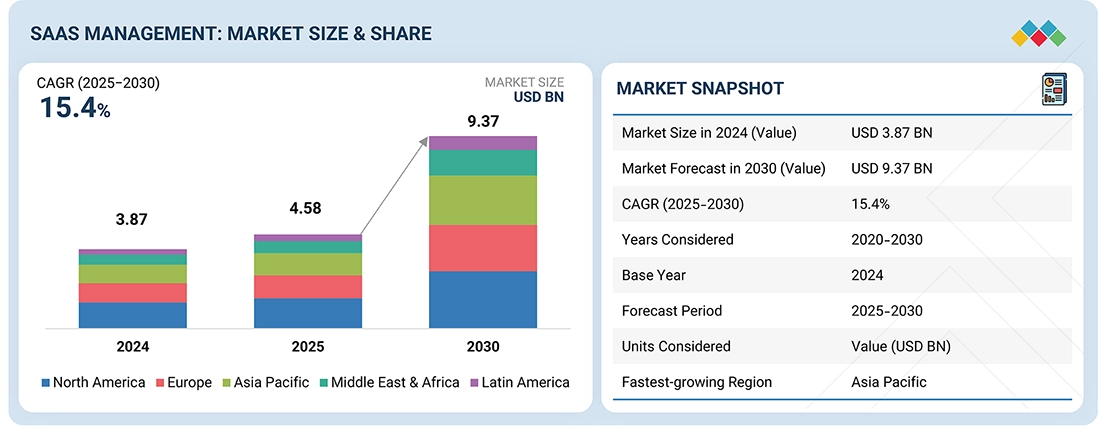
Source: Secondary Research, Interviews with Experts, MarketsandMarkets Analysis
The SaaS management market is experiencing rapid growth, projected to increase from USD 4.58 billion in 2025 to USD 9.37 billion by 2030, at a CAGR of 15.4%. This expansion is driven by enterprises seeking greater visibility, cost control, security governance, and license optimization within their expanding SaaS portfolios. The rise of SaaS sprawl, Shadow IT, and compliance risks has heightened the demand for SaaS spend management, application discovery, and automated access governance. Vendors are reporting strong adoption of tools for real-time usage analytics, contract intelligence, and renewal optimization, which allow organizations to transition from reactive tracking to proactive SaaS lifecycle management. This growth underscores the importance of SaaS as a strategic priority for both financial and security considerations, leading to increased investment in SaaS cost reduction, license reclamation, and vendor consolidation platforms.
Market Size and Forecast:
- 2024 Market Size: USD 3.87 Billion
- 2025 Projected Market Size: USD 4.58 Billion
- 2030 Forecasted Market Size: USD 9.37 Billion
- Growth Rate (2025-2030): CAGR of 15.4%
- SaaS Security & Governance segment is register the highest CAGR of 18.3%
- Forecast period: 2025–2030
Key Market Trends and Insights
- Fastest Growing Region: Asia Pacific
-
Growth Drivers: AI license optimization, shadow IT mitigation, and complex pricing models.
- Latest Trends: AI-driven spend optimization, identity automation, and FinOps dashboards.
- Emerging Opportunities: FinOps dashboarding, predictive AI renewals, and industrial IoT.
KEY TAKEAWAYS
-
BY REGIONNorth America dominates the SaaS management market with a share of 32.3% in 2025.
-
BY OFFERINGBy offering, the SaaS security & governance segment is expected to register the fastest growth, with a CAGR of 24.6% during the forecast period.
-
BY DEPLOYMENT MODEBy deployment mode, the cloud segment is expected to dominate the market, accounting for a 73.1% share in 2025.
-
BY BUSINESS FUNCTIONBy business function, the legal & procurement segment is projected to be the fastest-growing segment during the forecast period.
-
BY VERTICALBy vertical, the technology & software segment is expected to dominate the market during the forecast period.
-
BY COMPETITIVE LANDSCAPE- KEY PLAYERSIBM, ServiceNow, and Flexera are recognized as star players in the SaaS management market due to their strong market share and extensive product footprints.
-
BY COMPETITIVE LANDSCAPE - STARTUPSZluri, Torii, and Productiv have distinguished themselves among startups and SMEs by securing strong footholds in specialized niche areas, underscoring their potential as emerging leaders.
The SaaS management market is growing rapidly as businesses aim to better manage their subscription expenses, minimize application redundancy, and enhance governance within their distributed software ecosystems. Organizations are focusing on automated SaaS discovery, contract intelligence, spend optimization, identity-driven automation, and security posture management. Vendors are experiencing increased demand for real-time visibility, Shadow IT mitigation, centralized renewal processes, and AI-powered usage analytics. This demand is driving a transition from basic monitoring solutions to comprehensive enterprise-grade SaaS management and orchestration platforms.
TRENDS & DISRUPTIONS IMPACTING CUSTOMERS' CUSTOMERS
The SaaS management market is rapidly evolving as enterprises seek to gain better control over SaaS sprawl, subscription costs, and decentralized application usage. Vendors are transitioning from basic tracking to automated SaaS discovery, providing cross-functional visibility and intelligent renewal management. There is an increasing demand for AI-driven optimization, contract intelligence, real-time risk detection, identity-based automation, and mitigation of Shadow IT. These advancements are transforming SaaS operations into a strategic control layer, enabling secure, compliant, and cost-effective SaaS environments.
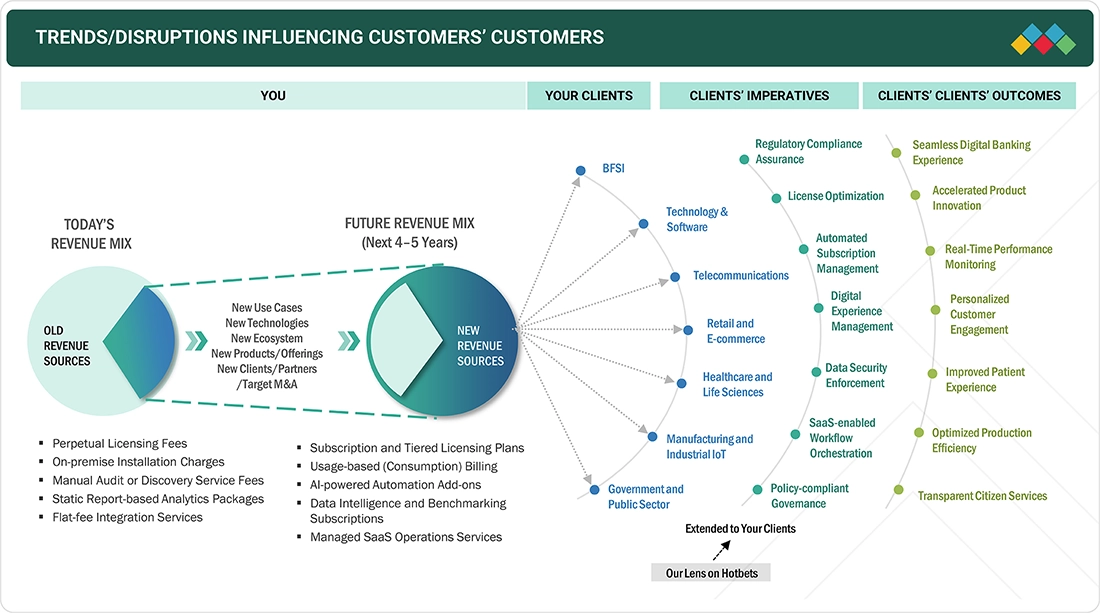
Source: Secondary Research, Interviews with Experts, MarketsandMarkets Analysis
MARKET DYNAMICS

Level
-
AI-powered Telemetry Enhances SaaS License Optimization and Spend Efficiency

-
Evolving SaaS Pricing Models Accelerate Adoption of Intelligent Monitoring Systems


Level
-
Performance Bottlenecks in Distributed SaaS Data Streams Constrain Analytics Capabilities


Level
-
Leveraging Analytics for Real-time FinOps Dashboarding and Cross-tool Optimization

-
Predictive AI Models Advance Renewal Planning and Anomaly Detection Across SaaS Portfolio


Level
-
Shadow SaaS Usage Creates Gaps in Compliance and Lifecycle Transparency

Source: Secondary Research, Interviews with Experts, MarketsandMarkets Analysis
Driver: AI-powered Telemetry Enhances SaaS License Optimization and Spend Efficiency
AI- and ML-driven telemetry is transforming SaaS license optimization by providing enterprises with continuous, granular visibility into user activity, feature adoption, and license utilization across complex SaaS portfolios. These insights enable IT and procurement teams to identify redundant applications, reclaim idle licenses, and align renewals with verified consumption metrics. Predictive models forecast future needs, supporting precise rightsizing and long-term budget control. Vendors such as Zylo, Productiv, and CloudEagle.ai integrate AI-based analytics to automate optimization workflows and enhance financial accountability. As cost containment and spend governance become strategic priorities, AI-enabled telemetry is emerging as a critical driver of efficient, data-driven SaaS management.
Restraint: Fragmented Hybrid Environments and Legacy Integration Silos
Fragmented hybrid environments and legacy system dependencies continue to be major barriers to achieving unified SaaS lifecycle management. Many enterprises operate a mix of aging ERP, CRM, and HR platforms that rely on outdated integration protocols, limiting real-time data synchronization with modern SaaS management tools. This restricts visibility into license usage, delays deprovisioning, and hinders workflow automation, resulting in operational inefficiencies. Integrating platforms such as BetterCloud or Zylo with legacy systems like SAP ECC or Oracle E-Business Suite often requires extensive customization, lengthening deployment cycles. As hybrid and legacy environments persist, these integration silos continue to limit the scalability of automation and the achievement of full governance maturity across the SaaS lifecycle.
Opportunity: Real-Time FinOps Dashboarding and Cross-Tool Optimization
Real-time FinOps dashboarding represents a high-value opportunity as enterprises seek unified financial intelligence across increasingly distributed SaaS ecosystems. Advanced analytics consolidate cost, usage, and performance data to provide clear visibility into spending efficiency, enabling proactive anomaly detection and more accurate forecasting. These dashboards enhance collaboration between IT, procurement, and finance by translating complex usage telemetry into business-aligned metrics. When combined with cross-tool optimization, platforms can identify redundant applications, overlapping licenses, and low-value subscriptions. Vendors such as Cloudability, CloudZero, and Productiv already demonstrate strong differentiation through intelligent spend insights. Adaptive analytics engines and predictive optimization workflows strengthen the strategic role of SaaS management in enterprise FinOps.
Challenge: Shadow SaaS Usage Creates Gaps in Compliance and Lifecycle Transparency
Shadow SaaS continues to create substantial challenges for enterprises by obscuring visibility into spend, compliance, and user access across their software ecosystems. Decentralized procurement and departmental purchases often bypass IT oversight, resulting in undocumented applications and fragmented lifecycle governance. Traditional discovery methods based on SSO data, expense logs, or basic API integrations frequently miss unsanctioned tools, enabling redundant licenses, uncontrolled data flows, and heightened compliance risks. Vendors such as Torii and Zylo are enhancing visibility with behavioral analytics, network telemetry, and financial system correlations, though accuracy still depends on strong internal data governance. As SaaS environments grow, achieving end-to-end transparency across sanctioned and unsanctioned tools remains an enduring operational challenge.
saas-management-market: COMMERCIAL USE CASES ACROSS INDUSTRIES
| COMPANY | USE CASE DESCRIPTION | BENEFITS |
|---|---|---|
 |
U, Inc. used Applogie to discover, monitor, and optimize its SaaS subscriptions, gaining real-time visibility into usage, costs, duplicate licenses, and renewal cycles across its fragmented SaaS landscape. | Reduced SaaS spend by over USD 15,000, eliminated unused and duplicate subscriptions, strengthened renewal governance with automated alerts, and improved overall visibility and control of its SaaS portfolio. |
 |
Pie Insurance used BetterCloud to automate user onboarding and offboarding, gain centralized visibility of its SaaS environment, and streamline access and license management across dozens of cloud applications. | Achieved 600+ hours in annual time savings, reduced onboarding/offboarding time to ~20 minutes, improved IT support ratios, minimized security risks, and freed IT teams to focus on strategic initiatives. |
 |
Jiminny used Cledara to centralize visibility of its 65+ SaaS applications, detect untracked subscriptions, assign tool ownership, and streamline invoice and spend management across departments. | Unified SaaS visibility, discovered ~15% hidden subscriptions, improved financial control through centralized spend tracking, eliminated redundant tools, and strengthened governance with clear ownership. |
 |
Instructure used Zylo to consolidate SaaS applications into a single platform, monitor spend and license utilization in real time, optimize renewals, and enhance access governance through Okta integration. | Centralized SaaS oversight, improved cost efficiency by removing redundant tools, optimized license usage, strengthened governance and compliance, and enhanced access control via Okta integration. |
Logos and trademarks shown above are the property of their respective owners. Their use here is for informational and illustrative purposes only.
MARKET ECOSYSTEM
The SaaS management market ecosystem comprises a diverse network of providers delivering capabilities for end-to-end control, optimization, and governance of SaaS environments. Vendors offer platforms across SaaS discovery and inventory, license management, renewal and spend optimization, security and governance, and SaaS automation & analytics for anomaly detection. Service partners support implementation, workflow automation, policy configuration, and integration with IAM and ITSM systems. Enterprises across sectors leverage these capabilities to reduce SaaS sprawl, strengthen compliance, optimize costs, and ensure secure, efficient, and data-driven SaaS operations at scale.
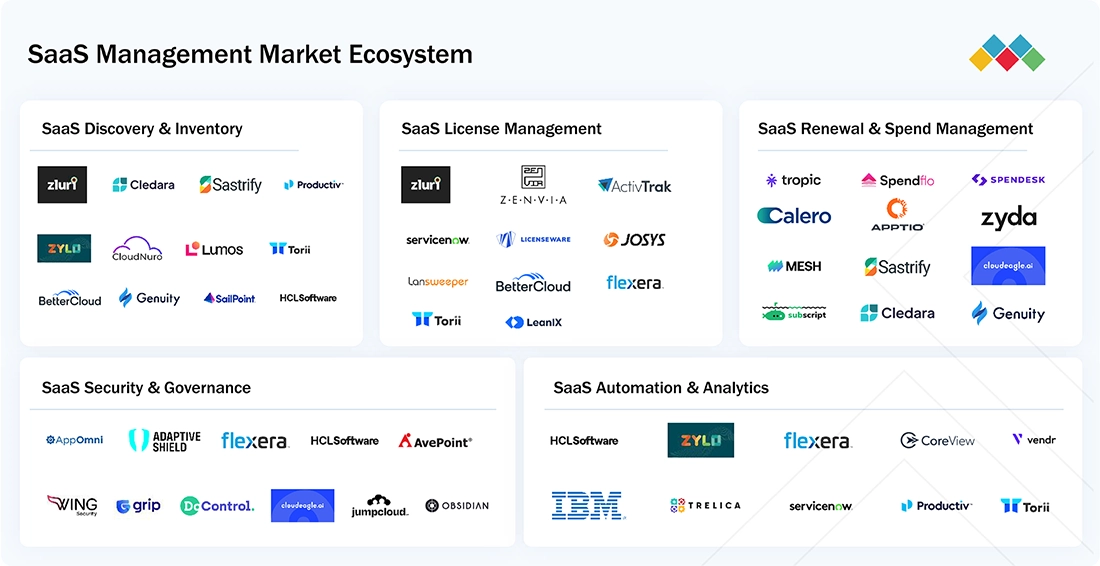
Logos and trademarks shown above are the property of their respective owners. Their use here is for informational and illustrative purposes only.
MARKET SEGMENTS
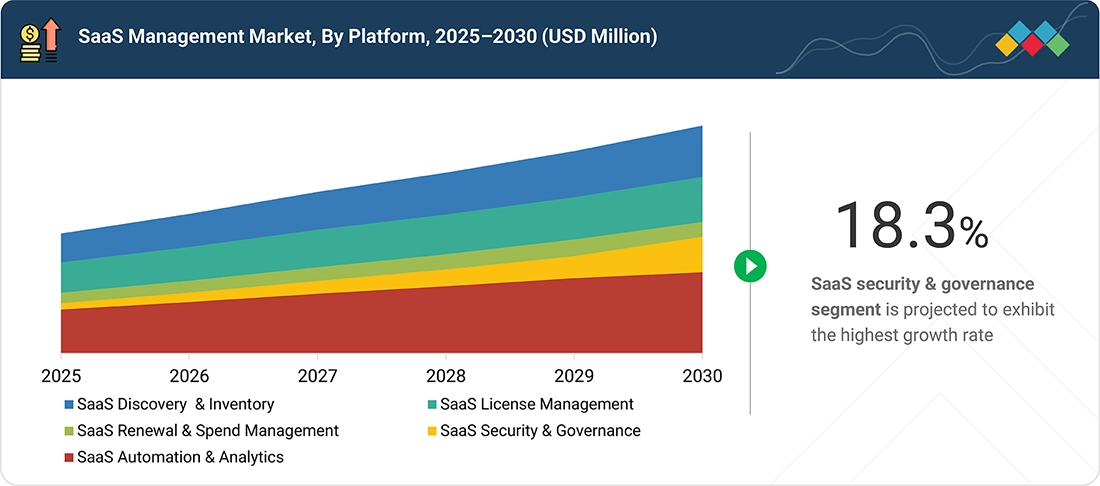
Source: Secondary Research, Interviews with Experts, MarketsandMarkets Analysis
SaaS Management Market, by Offering
SaaS discovery and inventory solutions hold the largest market share as enterprises prioritize complete visibility into their expanding and decentralized SaaS ecosystems. With the proliferation of unsanctioned applications, increasing shadow-IT risks, and the complexity of multi-vendor environments, organizations require automated tools that detect, classify, and track every subscription in use. These solutions provide the foundational layer for cost optimization, license rationalization, renewal governance, and risk mitigation. Their ability to deliver real-time insights into usage patterns, contract details, and application sprawl makes them indispensable within modern SaaS management architectures, driving their dominant market share.
SaaS Management Market, by Deployment Mode
The cloud deployment mode is experiencing the fastest growth rate due to the increasing adoption of cloud-native SaaS management platforms, which offer scalable, flexible, and low-maintenance operations. Organizations across the Asia Pacific, North America, and Europe are increasingly opting for cloud deployment to support real-time discovery, automated workflows, and API-driven integrations across diverse SaaS applications. As hybrid and multi-cloud ecosystems expand, cloud-based deployments provide superior agility, faster implementation, and seamless updates compared to on-premises models. Strong demand for remote accessibility, continuous compliance monitoring, and automated license optimization further accelerates cloud adoption, solidifying it as the fastest-growing deployment segment in the SaaS management market.
SaaS Management Market, by Business Function
IT asset management (ITAM) accounts for the largest market share as enterprises increasingly rely on SaaS applications as a core component of their digital infrastructure. The shift from traditional software licensing to subscription-based models has elevated the need for robust ITAM capabilities that track usage, ownership, spending, and contractual obligations across hundreds of cloud applications. ITAM teams are taking the lead in governance, renewal management, and optimization initiatives, driving strong demand for centralized SaaS asset tracking and compliance reporting. The function’s critical role in cost control, security posture management, and lifecycle automation underpins its dominant market position.
SaaS Management Market, by Vertical
The manufacturing and industrial IoT vertical is recording the fastest growth rate as factories modernize operations, expand connected ecosystems, and deploy SaaS-based tools to manage engineering, supply chain, and production workflows. The increasing integration of IoT platforms, digital twins, and cloud-based automation tools has intensified the need for centralized oversight of SaaS usage, access rights, and subscription costs. Manufacturers are embracing SaaS management solutions to secure distributed operational environments, streamline application governance across plants, and optimize spend in highly cost-sensitive settings. Rapid Digital Transformation and complex multi-application landscapes make this vertical a key high-growth segment within the market.
REGION
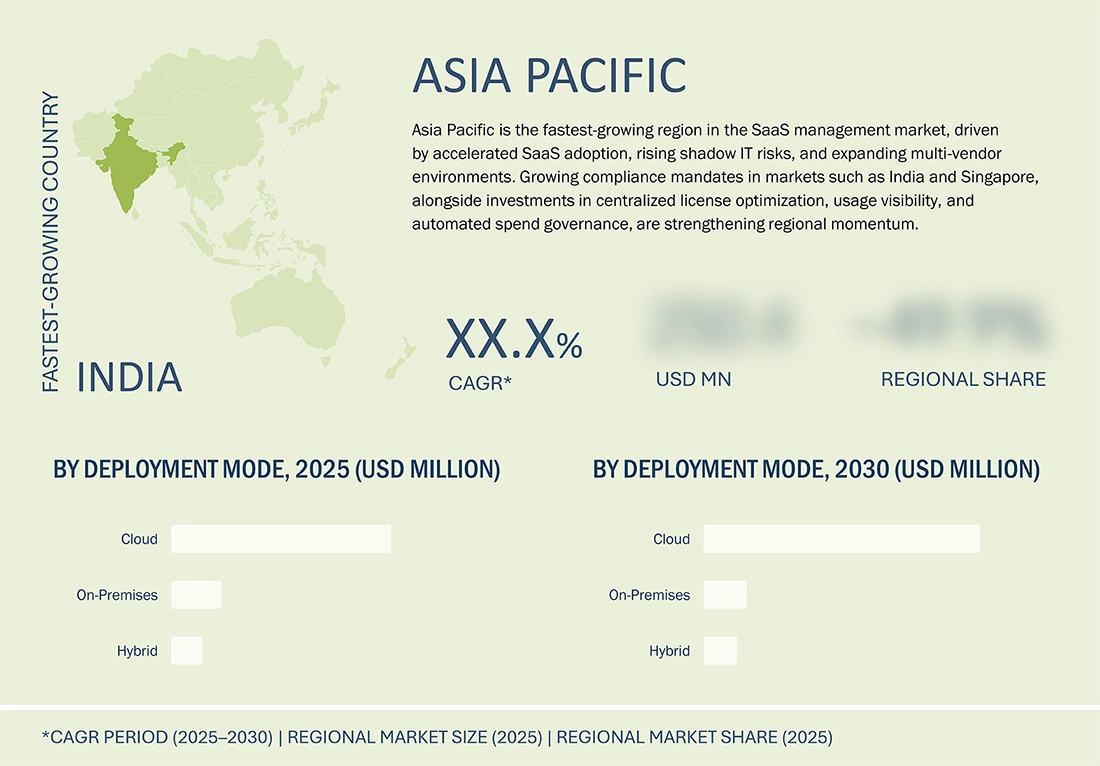
Asia Pacific to be the fastest-growing region in the SaaS Management market during the forecast period
The SaaS management market in the Asia Pacific is expanding rapidly as organizations scale up SaaS adoption, enforce tighter compliance, and address rising security and shadow IT risks across increasingly distributed environments. Countries such as Singapore and Australia are leading deployments of unified SaaS visibility, automated access governance, and centralized license optimization to manage fast-growing application ecosystems. Regional growth is further supported by stricter data-sovereignty mandates, rapid expansion into multi-cloud environments, and an increased focus on renewal automation and spend intelligence. Vendors such as IBM and BetterCloud are gaining traction as enterprises prioritize robust, scalable platforms to control SaaS sprawl and improve operational efficiency.
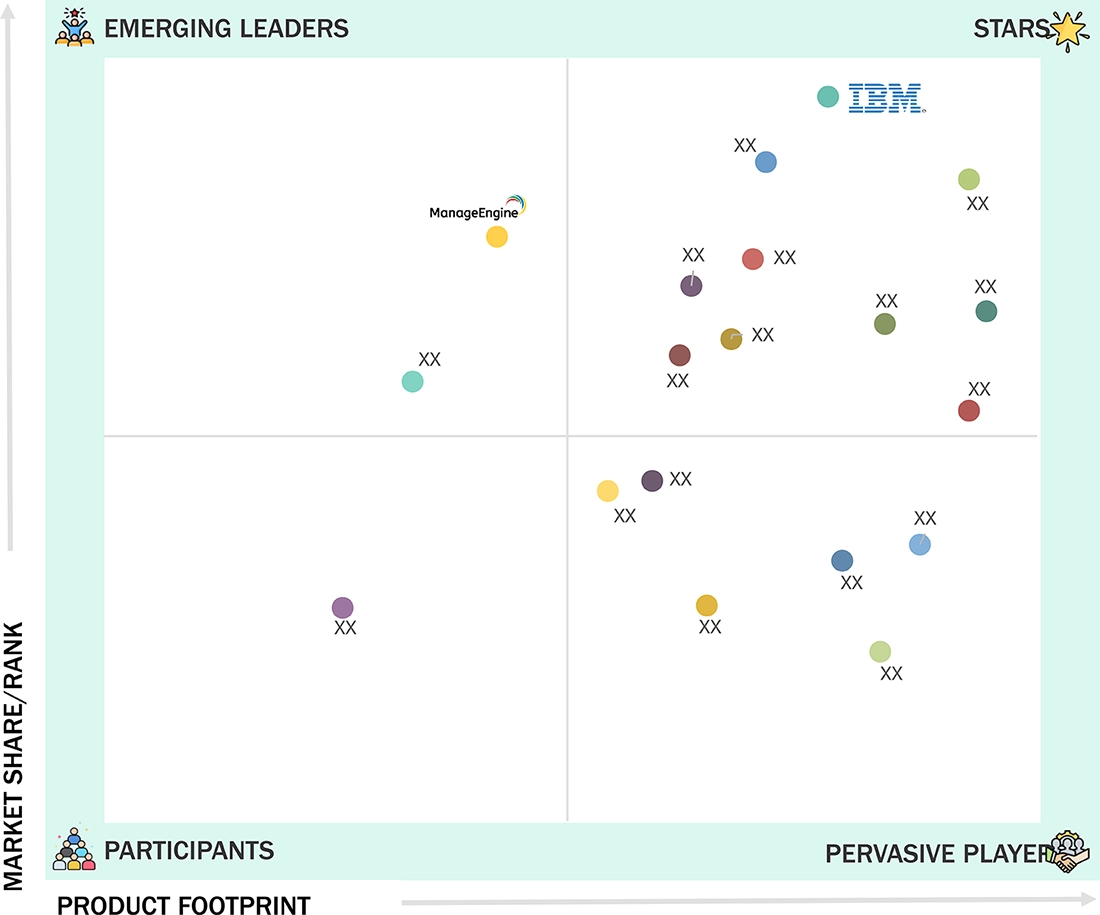
saas-management-market: COMPANY EVALUATION MATRIX
In the SaaS management market matrix, IBM (Star) leads with enterprise-grade platforms that deliver comprehensive SaaS discovery, automated license optimization, and policy-driven governance, enabling unified visibility and secure lifecycle automation across hybrid and multi-cloud environments. ManageEngine (Emerging Leader) is gaining momentum with expanding SaaS operations management, cost-control capabilities, and streamlined access governance. Its rising adoption across mid-market and enterprise segments positions the company for accelerated growth within the evolving SaaS management ecosystem.
Source: Secondary Research, Interviews with Experts, MarketsandMarkets Analysis
KEY MARKET PLAYERS
- IBM (US)
- Check Point Software (Israel)
- AvePoint (US)
- Flexera (US)
- Quest Software (US)
- SailPoint Technologies (US)
- HCLSoftware (India)
- ServiceNow (US)
- Freshworks (US)
- Microsoft (US)
- Google (US)
- Calero (US)
- ManageEngine (Zoho) (US)
- USU Solutions (Germany)
- Ramp (US)
MARKET SCOPE
| REPORT METRIC | DETAILS |
|---|---|
| Market Size in 2024 (Value) | USD 3.87 Billion |
| Market Forecast in 2030 (Value) | USD 9.37 Billion |
| Growth Rate | CAGR of 15.4% during 2025 to 2030 |
| Years Considered | 2020–2030 |
| Base Year | 2024 |
| Forecast Period | 2025–2030 |
| Units Considered | Value (USD Billion) |
| Report Coverage | Revenue Forecast, Company Ranking, Competitive Landscape, Growth Factors, and Trends |
| Segments Covered |
|
| Regions Covered | North America, Asia Pacific, Europe, the Middle East & Africa, and Latin America |
WHAT IS IN IT FOR YOU: saas-management-market REPORT CONTENT GUIDE
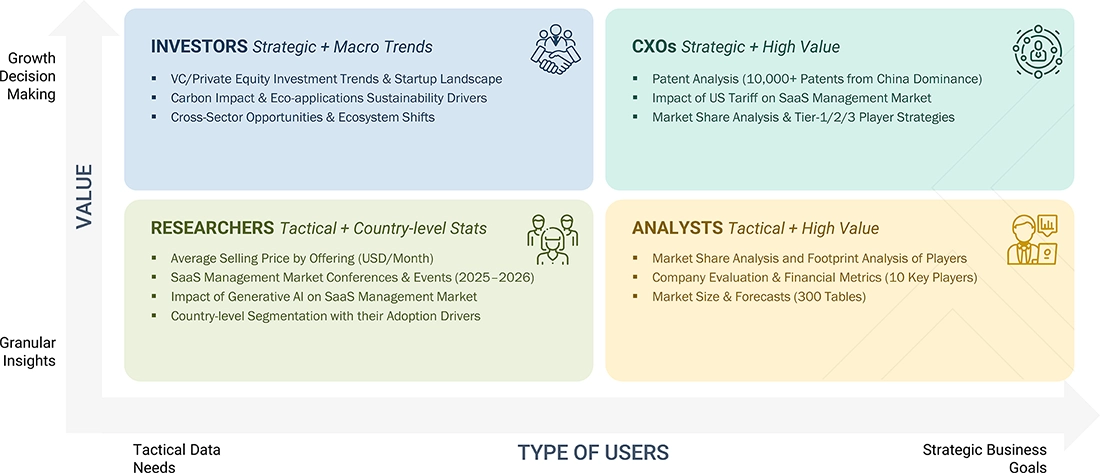
DELIVERED CUSTOMIZATIONS
We have successfully delivered the following deep-dive customizations:
| CLIENT REQUEST | CUSTOMIZATION DELIVERED | VALUE ADDS |
|---|---|---|
| Leading Solution Provider (US) | Delivered competitive profiling of additional vendors, brand comparative analysis, and a drill-down of country-level segmentation across key markets. | Enabled competitive positioning insights, product differentiation clarity, and multi-country market intelligence, supporting go-to-market strategy refinement and stakeholder alignment. |
| Leading Solution Provider (Europe) | Provided competitive profiling, brand benchmarking, and segmentation analysis across additional geographies. | Delivered in-depth market insights, comparative brand positioning, and segment-level intelligence, empowering strategic decision-making, and regional growth planning. |
RECENT DEVELOPMENTS
- September 2025 : Check Point Software Technologies Ltd. entered a strategic partnership with Wiz to deliver an integrated cloud-security solution combining Check?Point’s cloud network security capabilities with Wiz’s Cloud-Native Application Protection Platform (CNAPP). The collaboration provides real-time visibility, AI-powered threat prevention, and automated remediation across hybrid and cloud-native environments, enabling organizations to shift from remediation to prevention and consolidate security operations across the cloud perimeter.
- October 2025 : AvePoint, Inc. announced a global partnership with the International Association of Microsoft Channel Partners (IAMCP) that enables IAMCP members to scale their services business using the AvePoint Elements platform. The collaboration provides access to enhanced channel enablement, marketplace integrations, and recurring revenue-driven solutions across SaaS, cloud, and hybrid environments.
- October 2025 : SHI International Corp. and Flexera have forged a strategic alliance aimed at delivering unified IT asset management (ITAM) and FinOps services to more than 17,000 SHI customers worldwide. The partnership merges SHI’s managed-services expertise with Flexera’s award-winning platform, enabling organizations to optimize technology spend across software, cloud, SaaS and AI, strengthen compliance and risk posture, and accelerate digital and AI-driven transformation initiatives.
- April 2025 : Climb Channel Solutions Ireland, a specialist technology distributor, has entered into a partnership with Quest Software to deliver Quest’s suite of security, data-empowerment, and AI solutions to Irish resellers. The collaboration will enhance cyber-resilience and data governance for enterprises in Ireland by combining Quest’s portfolio of SaaS, cloud, platforms, and identity recovery solutions with Climb’s distribution and channel-enablement capabilities.
- September 2025 : SailPoint announced a strategic partnership with HCL Technologies (HCLTech) to deliver identity-security solutions built for large, AI-powered enterprise environments. The collaboration combines SailPoint’s Identity Security Cloud (Atlas) with HCLTech’s global services and identity-management expertise, enabling lifecycle access controls, continuous risk monitoring, and governance across hybrid, multicloud, and AI ecosystems.
Table of Contents
 Exclusive indicates content/data unique to MarketsandMarkets and not available with any competitors.
Methodology
The research methodology for the global SaaS management market report involved the use of extensive secondary sources and directories, as well as various reputed open-source databases, to identify and collect useful information for this technical and market-oriented study. In-depth interviews were conducted with various primary respondents, including SaaS discovery & inventory providers, SaaS license management providers, SaaS renewal & spend management providers, SaaS security and governance providers, SaaS automation & analytics providers, enterprise end users, high-level executives of multiple companies offering SaaS management solutions & services, and industry consultants to obtain and verify critical qualitative and quantitative information and assess the market prospects and industry trends.
Secondary Research
During the secondary research process, various secondary sources were consulted to identify and collect information for the study. The secondary sources included annual reports, press releases, and investor presentations of companies, white papers, certified publications such as Journal on Managing Software-as-a-Service: Pricing and operations, and articles from recognized associations and government publishing sources, including but not limited to Global TECHSPO Series Event, Adobe Summit 2026, CyberTech Global Tel Aviv (Expo Tel Aviv), and ARRtist summit.
The secondary research was utilized to gather key information about the industry’s value chain, the market’s monetary chain, the overall pool of key players, market classification and segmentation based on industry trends, and regional markets, as well as key developments from both market- and technology-oriented perspectives.
Primary Research
In the primary research process, a diverse range of stakeholders from both the supply and demand sides of the SaaS management ecosystem were interviewed to gather qualitative and quantitative insights specific to this market. From the supply side, key industry experts, such as chief executive officers (CEOs), vice presidents (VPs), marketing directors, technology & innovation directors, as well as technical leads from vendors offering SaaS management solutions & services, were consulted. Additionally, system integrators, service providers, and IT service firms that implement and support the SaaS management solutions were included in the study. On the demand side, input from IT decision-makers, infrastructure managers, and business heads of prominent enterprise end users was collected to understand the user perspectives and adoption challenges within targeted industries.
The primary research ensured that all crucial parameters affecting the SaaS management market, including technological advancements, evolving use cases, and regulatory and compliance needs, were considered. Each factor was thoroughly analyzed, verified through primary research, and evaluated to obtain precise quantitative and qualitative data for this market.
Once the initial phase of market engineering was completed, including detailed calculations for market statistics, segment-specific growth forecasts, and data triangulation, a second round of primary research was conducted. This step was crucial for refining and validating critical data points, such as SaaS management offerings (platform & services), industry adoption trends, the competitive landscape, and key market dynamics like demand drivers (AI-powered telemetry enhances SaaS license optimization and spend efficiency, evolving SaaS pricing models accelerate adoption of intelligent monitoring systems, and cross-cloud complexity accelerates adoption of centralized SaaS management), challenges (shadow SaaS usage creates gaps in compliance and lifecycle transparency and fragmented policies and limited automation scalability undermine governance consistency), opportunities (leveraging analytics for real-time FinOps dashboarding and cross-tool optimization, no-code workflow automation strengthens enterprise adoption and operational flexibility, and predictive AI models advance renewal planning and anomaly detection across SaaS portfolios), and restraints (fragmented hybrid environments and legacy integration silos hindering unified SaaS lifecycle control and performance bottlenecks in distributed SaaS data streams constrain analytics capabilities).
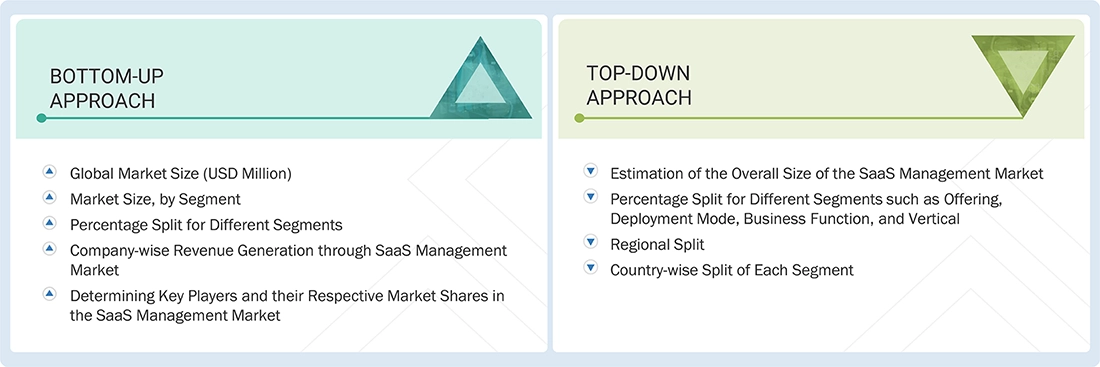
In the comprehensive market engineering process, the top-down and bottom-up approaches, along with several data triangulation methods, were extensively employed to perform market estimation and forecasting for the overall market segments and subsegments listed in this report. Extensive qualitative and quantitative analysis was performed on the complete market engineering process to record the critical information/insights throughout the report.
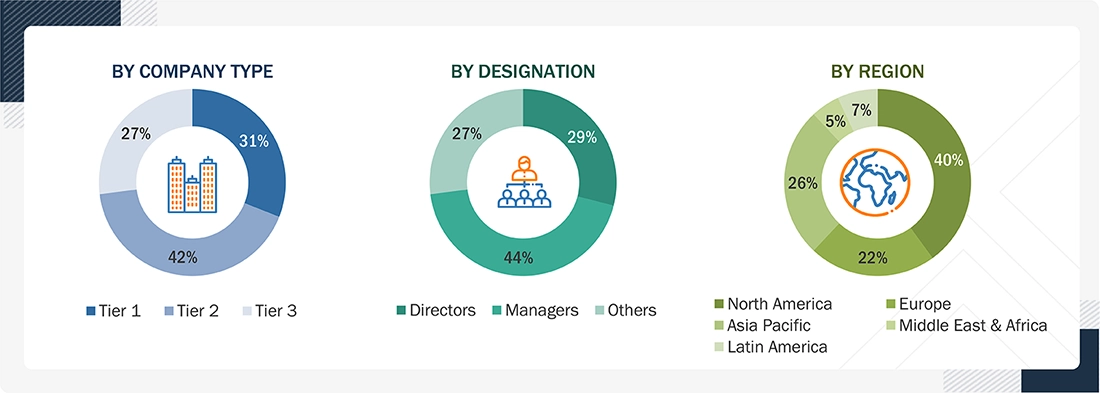
Note: Three tiers of companies are defined based on their total revenue as of 2024; tier 1 = revenue more than USD 500 million, tier 2 = revenue between USD 500 million and 100 million, tier 3 = revenue less than USD 100 million
Source: MarketsandMarkets Analysis
To know about the assumptions considered for the study, download the pdf brochure
Market Size Estimation
The top-down and bottom-up approaches were employed to estimate and forecast the SaaS Management market, as well as its dependent submarkets. This multi-layered analysis was further reinforced through data triangulation, which incorporated primary and secondary research inputs. The market figures were also validated against the existing MarketsandMarkets repository for accuracy.
SaaS Management Market : Top-Down and Bottom-Up Approach
Data Triangulation
The market was divided into several segments and subsegments after determining the overall market size using the market size estimation processes described above. To complete the overall market engineering process and determine the exact statistics for each market segment and subsegment, data triangulation and market segmentation procedures were employed, wherever applicable. The overall market size was then used in the top-down approach to estimate the size of other individual markets by applying percentage splits to the market segmentation.
Market Definition
Zylo defines SaaS management as a strategic approach to controlling and optimizing the growing ecosystem of cloud-based applications within an organization. The practice focuses on continuous visibility into SaaS usage, licensing, and expenditure, enabling enterprises to identify redundancies, reduce waste, and strengthen governance. By consolidating insights across departments, SaaS management supports data-driven decision-making and ensures that technology investments are aligned with operational efficiency and business goals.
Key Stakeholders
- SaaS management solution providers
- SaaS management service providers
- SaaS license management providers
- SaaS governance vendors
- Cloud service providers
- Enterprise end users
- Government agencies
- Distributors and value-added resellers (VARs)
- Government agencies
- Independent software vendors (ISVs)
- Managed service providers
- Support & maintenance service providers
- System integrators (SIs)/Migration service providers
- Technology providers
Report Objectives
- To define, describe, and forecast the SaaS management market, by offering, deployment mode, business function, and vertical
- To provide detailed information related to the major factors (drivers, restraints, opportunities, and challenges) influencing market growth
- To analyze the micromarkets with respect to individual growth trends, prospects, and their contribution to the total market
- To analyze the opportunities in the market for stakeholders by identifying the high-growth segments of the SaaS management market
- To analyze the opportunities in the market and provide details of the competitive landscape for stakeholders and market leaders
- To forecast the market size of segments for the five main regions: North America, Europe, Asia Pacific, the Middle East & Africa, and Latin America
- To profile the key players and comprehensively analyze their market ranking and core competencies
- To analyze the competitive developments, such as partnerships, product launches, and mergers & acquisitions, in the SaaS management market
- To analyze the impact of macroeconomic factors on the SaaS management market across all regions
Customization Options
With the given market data, MarketsandMarkets offers customizations based on the company’s specific needs. The following customization options are available for the report.
Product analysis
- Product comparative analysis, which gives a detailed comparison of innovative products being offered by prominent vendors
Geographic analysis
- Further breakup of additional European countries by offering, deployment mode, business function, and vertical
- Further breakup of additional Asia Pacific countries by offering, deployment mode, business function, and vertical
- Further breakup of additional Middle East & African countries by offering, deployment mode, business function, and vertical
- Further breakup of additional Latin American countries by offering, deployment mode, business function, and vertical
Company information
- Detailed analysis and profiling of additional market players (up to five)
Key Questions Addressed by the Report
What is the current size of the SaaS Management Market?
The global SaaS Management Market is estimated at USD 4.58 billion in 2025 and is projected to reach USD 9.37 billion by 2030, growing at a CAGR of 15.4% during the forecast period. Growth is driven by rising SaaS sprawl, shadow IT, and increasing demand for cost optimization and governance.
What factors are driving investment in the SaaS Management Market?
Key investment drivers include increasing SaaS adoption across enterprises, the need for subscription cost control, license optimization, compliance management, and enhanced visibility into decentralized software usage. Enterprises are increasingly prioritizing SaaS lifecycle governance.
Which SaaS management segment offers the highest growth opportunity?
The SaaS Security & Governance segment is expected to register the highest CAGR due to growing concerns around access control, compliance risks, and shadow SaaS usage. Organizations are investing heavily in governance-first SaaS management tools.
Which deployment model is growing fastest in the SaaS Management Market?
The cloud deployment model is witnessing the fastest growth due to scalability, faster implementation, API-based integrations, and easier automation. Cloud-native SaaS management tools are increasingly preferred for multi-cloud and hybrid environments.
Which region is expected to grow the fastest in the forecast period?
The Asia Pacific region is projected to witness the fastest growth, driven by rapid cloud transformation, startup ecosystem expansion, and increasing enterprise SaaS adoption across countries like India, China, and Southeast Asia.
Who are the major players in the SaaS Management Market?
Leading companies include IBM, ServiceNow, and Flexera. Emerging vendors such as Zluri, Torii, and Productiv are also gaining traction.
What are the biggest opportunities for investors in the SaaS Management Market?
High-growth opportunities lie in AI-powered SaaS analytics, automated compliance monitoring, license reclamation tools, renewal intelligence platforms, and multi-cloud SaaS governance—as enterprises consolidate software portfolios, vendors focused on cost efficiency and governance automation are poised to attract significant investment.


Personalize This Research
- Triangulate with your Own Data
- Get Data as per your Format and Definition
- Gain a Deeper Dive on a Specific Application, Geography, Customer or Competitor
- Any level of Personalization
Let Us Help You
- What are the Known and Unknown Adjacencies Impacting the SaaS Management Market
- What will your New Revenue Sources be?
- Who will be your Top Customer; what will make them switch?
- Defend your Market Share or Win Competitors
- Get a Scorecard for Target Partners

Custom Market Research Services
We Will Customise The Research For You, In Case The Report Listed Above Does Not Meet With Your Requirements
Get 10% Free CustomisationTESTIMONIALS
- Japan SaaS Management Market
- South Korea SaaS Management Market
- Brazil SaaS Management Market
- Mexico SaaS Management Market
- Saudi Arabia SaaS Management Market
- UAE SaaS Management Market
- South Africa SaaS Management Market
- Qatar SaaS Management Market
- Rest Of Europe SaaS Management Market
- US SaaS Management Market
- Canada SaaS Management Market
- UK SaaS Management Market
- Germany SaaS Management Market
- France SaaS Management Market
- Italy SaaS Management Market
- China SaaS Management Market
- India SaaS Management Market






Growth opportunities and latent adjacency in SaaS Management Market