Satellite Propulsion Market Size, Share and Trends, 2025 To 2031

Satellite Propulsion Market Size, Share and Trends by Platform (1-1200, 1201-2000, >2000 kg), System (Hall-Effect Thrusters, Propellant Feed System, Power Processing Unit), Propulsion Technology (Chemical, Electric, Cold Gas), End User, and Region - Global Forecast to 2031




SATELLITE PROPULSION MARKET SIZE, SHARE & TRENDS
According to Marketsandmarkets, The satellite propulsion market size was valued at USD 2.07 billion in 2026 and is projected to reach USD 4.66 billion in 2031, growing at a CAGR of 17.6% from 2026 to 2031. The market is growing as more operators seek ways to extend satellite life and use in-orbit servicing. Satellites are expensive and critical, so replacing them quickly is not always practical. Instead, companies aim to keep them running longer. This trend is creating demand for propulsion systems that support docking, satellite maneuvering, refueling, and maintaining their position in orbit.
MARKET SNAPSHOT TABLE
| REPORT METRIC | DETAILS |
|---|---|
| Market Size in 2025 | USD 1.80 Billion |
| Market Forecast in 2031 | USD 4.66 Billion |
| CAGR | 17.6% |
| Years Considered | 2021–2031 |
| Base Year | 2025 |
| Forecast Period | 2026–2031 |
| Units Considered | Value (USD BN/MN) |
| Report Coverage | Revenue forecast, company ranking, competitive landscape, growth factors, and trends |
| Top Companies |
|
| Growth Driver |
|
| Segments Covered |
|
| Regions Covered | North America, Asia Pacific, Europe, Middle East, Rest of the World |
KEY TAKEAWAYS
-
By RegionThe US satellite propulsion market is estimated to account for a 84.6% share in 2026.
-
By Propulsion TechnologyThe electric segment is expected to record the highest CAGR of 18.1% between 2026 and 2031.
-
By End userThe commercial segment is expected to be dominant during the forecast period.
-
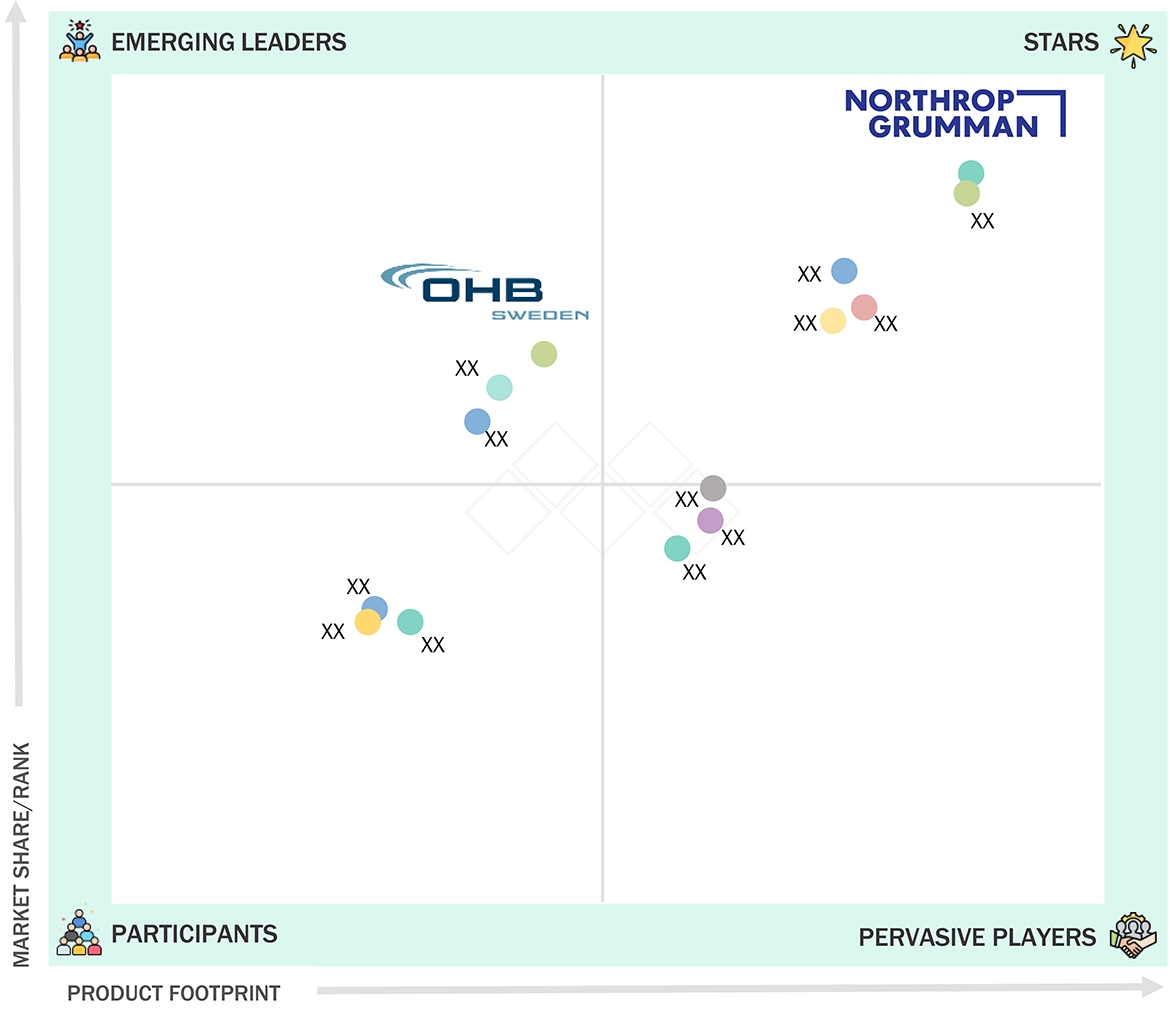
Competitive LandscapeNorthrop Grumman, Safran, and Thales Alenia Space were identified as star players in the satellite propulsion market, given their strong market share and product footprint.
The satellite propulsion industry is growing as satellites are used for more complex, longer missions across communication, earth observation, navigation, and defense. As operators expand constellations and launch higher-value satellites, propulsion systems are becoming more important for orbit control, mission management, and safe end-of-life disposal. This trend is pushing satellite manufacturers and propulsion suppliers to develop lighter, more efficient, and reliable systems. The focus is on helping satellites operate smoothly, reduce launch weight, and improve overall mission cost over time.
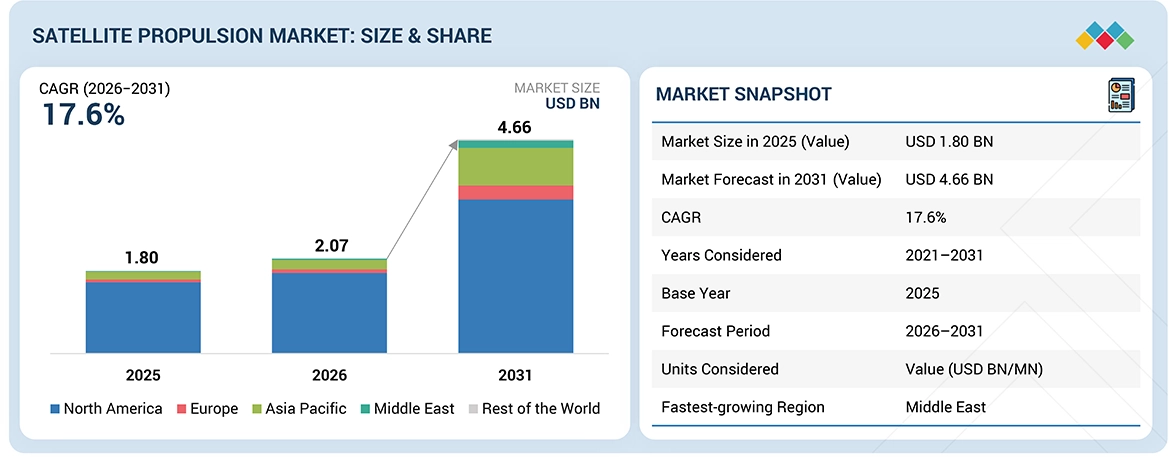
Source: Secondary Research, Interviews with Experts, MarketsandMarkets Analysis
TRENDS & DISRUPTIONS IMPACTING CUSTOMERS' CUSTOMERS
The impact on customers’ customers in the satellite propulsion market stems largely from the growing need for satellites that enable reliable operations, longer mission life, and better in-orbit control. As satellite launches increase and LEO constellations expand, satellite manufacturers, operators, and government users are becoming more dependent on efficient propulsion systems. At the same time, advances such as electric propulsion, green propulsion, micro-propulsion for small satellites, and integrated propulsion modules are reshaping satellite design and operation. As a result, demand for scalable, efficient propulsion solutions is rising. End users are also seeking satellite systems that support orbit raising, station keeping, collision avoidance, deorbiting, and flexible mission operations.
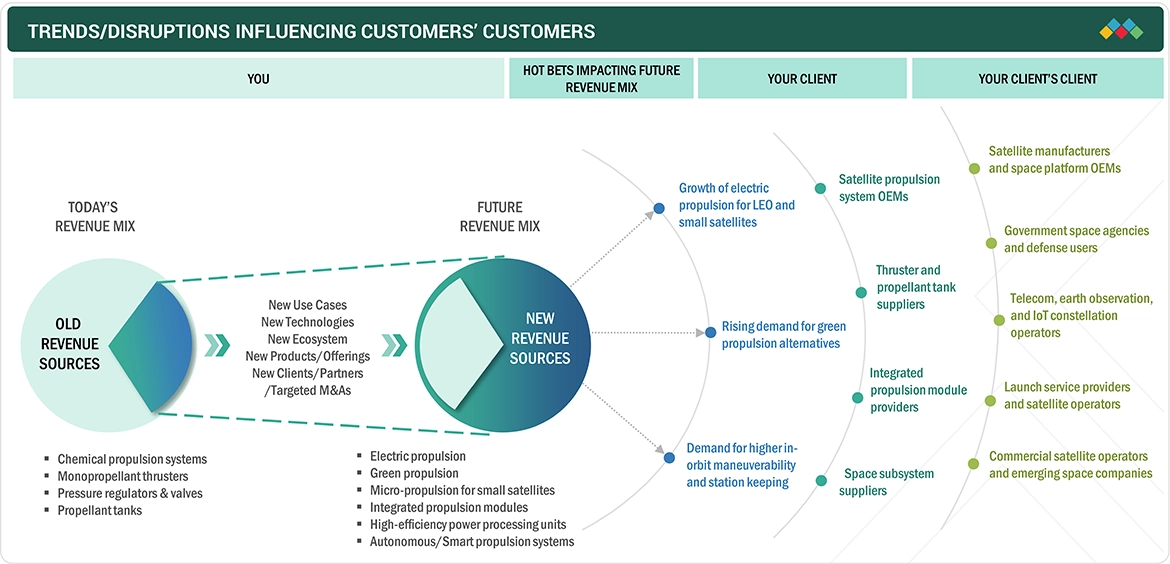
Source: Secondary Research, Interviews with Experts, MarketsandMarkets Analysis
MARKET DYNAMICS

Level
-
Rapid growth in LEO constellations and small satellite deployments

-
Growing shift toward electric propulsion for mass and lifetime efficiency


Level
-
High cost and system complexity of advanced propulsion technologies

-
Power availability limitations on small satellite platforms


Level
-
Transition toward advanced and flexible propulsion architectures

-
Development of advanced thruster technologies


Level
-
Balancing efficiency with operational responsiveness

-
Ensuring long-term reliability, safety, and qualification across propulsion technologies

Source: Secondary Research, Interviews with Experts, MarketsandMarkets Analysis
Driver: Rapid growth in LEO constellations and small satellite deployments
The number of small satellites being launched is growing rapidly, primarily for communication, earth observation, and IoT use cases. Most of these satellites operate in LEO and require propulsion systems for orbit raising, station keeping, and collision avoidance. As constellations grow larger, operators also need propulsion solutions that are compact and cost-efficient. This directly supports higher demand for propulsion systems across different satellite platforms.
Restraint: High cost and system complexity of advanced propulsion technologies
Advanced propulsion systems, such as electric and green propulsion, require careful design, integration, and testing. This increases overall system costs and makes it harder for smaller satellite makers to adopt them easily. Space missions also require rigorous qualification and reliability checks, which adds further complexity. As a result, adoption can be slower, especially in cost-sensitive commercial programs.
Opportunity: Transition toward advanced and flexible propulsion architectures
Satellite missions are becoming more dynamic, so propulsion systems now need to handle multiple tasks, such as orbit transfer, repositioning, and deorbiting. This trend is creating opportunities for modular and integrated propulsion systems that can accommodate different satellite sizes and mission needs. Companies offering flexible, scalable solutions can serve both commercial constellations and government programs. This shift is also opening new revenue opportunities for propulsion system providers.
Challenge: Balancing efficiency with operational responsiveness
Propulsion systems need to be fuel-efficient so satellites can remain operational longer, but they also need to respond quickly for maneuvering and collision avoidance. Electric propulsion offers high efficiency, but it provides lower thrust, which can limit rapid response in some cases. Satellite operators need to balance these trade-offs based on mission needs. This makes system design and technology selection more challenging for manufacturers.
SATELLITE PROPULSION MARKET SIZE, SHARE AND TRENDS, 2025 TO 2030: COMMERCIAL USE CASES ACROSS INDUSTRIES
| COMPANY | USE CASE DESCRIPTION | BENEFITS |
|---|---|---|
 |
Supplied the NEXT-C ion propulsion system for NASA’s Lunar Gateway Power and Propulsion Element. The system supports spacecraft maneuvering, orbital control, and long-duration deep-space operations with higher efficiency than conventional chemical propulsion. | Supports sustained lunar infrastructure operations, reduces propellant needs, and improves mission life for deep-space platforms. |
 |
Integrated electric propulsion systems into Eurostar Neo satellite platforms and other constellation-class spacecraft. The system enables orbit raising, station keeping, and controlled de-orbiting for high-volume satellite deployments. | Improves satellite mass efficiency, supports lower-cost constellation operations, and helps meet end-of-life debris mitigation requirements. |
 |
Deployed iodine-based electric propulsion systems on operational small satellites for orbit control and maneuvering. The system uses iodine as an alternative propellant to reduce storage and handling complexity compared with xenon-based systems. | Enables compact and lower-complexity propulsion for CubeSats and small satellites, supporting wider adoption of propulsion in smaller spacecraft. |
Logos and trademarks shown above are the property of their respective owners. Their use here is for informational and illustrative purposes only.
MARKET ECOSYSTEM
The satellite propulsion market comprises prominent space system companies, propulsion technology suppliers, private and small enterprises, and end users. Companies such as Northrop Grumman, Safran, Thales Alenia Space, L3Harris, and Lockheed Martin support satellite propulsion with thrusters, propulsion subsystems, valves, control units, and spacecraft integration capabilities. Private and small enterprises such as Enpulsion, Phase Four, ThrustMe, and VACCO are also playing an important role by developing compact electric and micro-propulsion and related components for small satellites and constellation platforms. End users such as ESA, NASA, and government space agencies drive demand through civil, defense, exploration, and satellite infrastructure programs. This ecosystem helps improve propulsion availability, technology adoption, and the broader use of advanced propulsion systems across satellite missions.
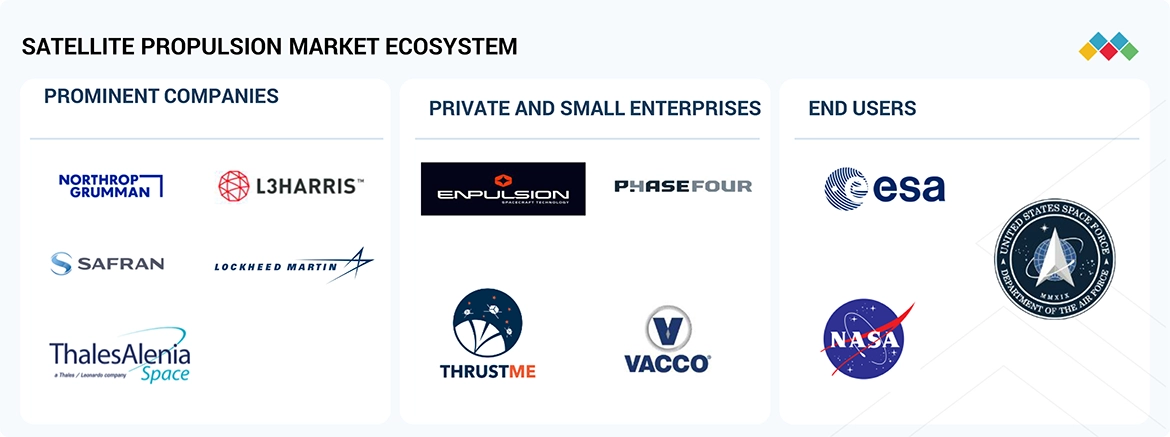
Logos and trademarks shown above are the property of their respective owners. Their use here is for informational and illustrative purposes only.
MARKET SEGMENTS
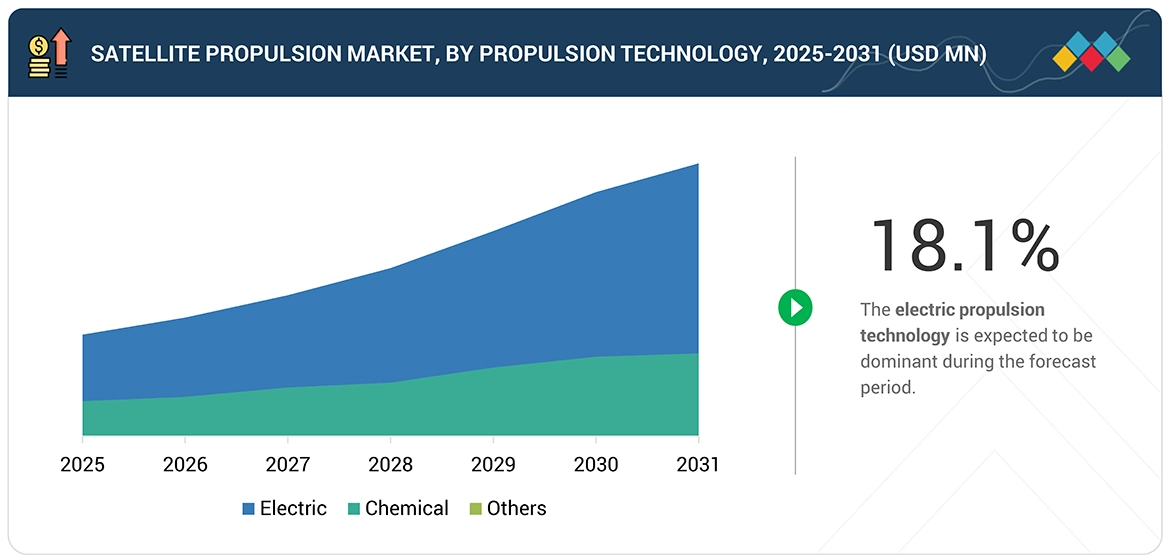
Source: Secondary Research, Interviews with Experts, MarketsandMarkets Analysis
Satellite Propulsion Market, By Platform
The small segment is expected to hold the largest share because small satellites are being launched in large numbers for communication, earth observation, IoT, and defense missions. These satellites require compact propulsion systems for station-keeping, orbit correction, collision avoidance, and end-of-life deorbiting. The growing deployment of LEO constellations is further increasing demand in this segment.
Satellite Propulsion Market, By Propulsion Technology
The electric segment is expected to be the largest because it helps reduce satellite mass and lowers propellant requirements. This makes it suitable for long-duration missions, station keeping, orbit raising, and satellite constellations. Its higher fuel efficiency is making it a preferred option for both commercial and government satellite programs.
Satellite Propulsion Market, By System
The power processing units (PPUs) segment is expected to hold the largest share because electric propulsion systems require reliable power conversion and control hardware to operate efficiently. As electric propulsion adoption increases, demand for PPUs will also rise. These units are critical for managing power flow between the satellite bus and the propulsion system.
Satellite Propulsion Market, By End User
The commercial segment is expected to hold the largest share as private satellite operators launch more satellites for broadband, communications, earth observation, and IoT services. Commercial constellations require propulsion for orbit raising, station keeping, repositioning, and deorbiting. This makes commercial operators a major source of demand for satellite propulsion systems.
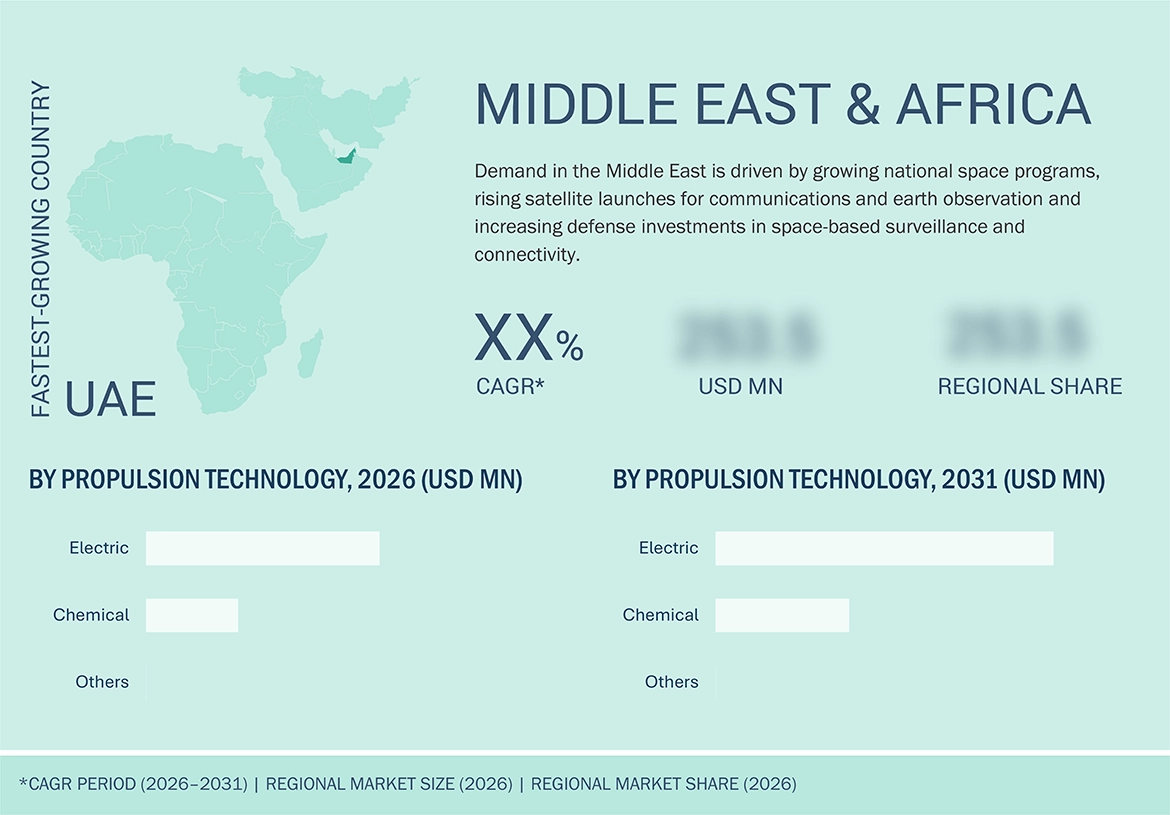
REGION
North America to hold largest share in satellite propulsion market during forecast period
North America's satellite propulsion market is expected to hold the largest share over the forecast period. The market is driven by robust satellite manufacturing activity, substantial civil and defense space investments, and the presence of leading propulsion and spacecraft companies in the US. Growing demand from LEO constellations, national security satellites, commercial communication platforms, and deep-space missions is driving broader adoption of advanced satellite propulsion systems across the region.
SATELLITE PROPULSION MARKET SIZE, SHARE AND TRENDS, 2025 TO 2030: COMPANY EVALUATION MATRIX
In the satellite propulsion market, Northrop Grumman (Star) leads with a strong market presence and advanced propulsion capabilities, largely due to its involvement in major government space programs, deep-space missions, and long-standing relationships with key space agencies. OHB (Emerging Leader) is steadily building its position through greater participation in satellite programs and expanding capabilities in spacecraft integration and propulsion-related subsystems.
Source: Secondary Research, Interviews with Experts, MarketsandMarkets Analysis
KEY MARKET PLAYERS - SATELLITE PROPULSION COMPANIES
- Northrop Grumman (US)
- Safran SA (France)
- Thales Alenia Space (France)
- ArianeGroup GmbH (Germany)
- Space Technologies, Inc. (US)
- Lockheed Martin Corporation (US)
- L3Harris Technologies, Inc. (US)
- Airbus (Netherlands)
- The Boeing Company (US)
- Moog Inc. (US)
- IHI Corporation (Japan)
- OHB SE (Germany)
- Busek, Co. Inc. (US)
- Dawn Aerospace (New Zealand)
- Rafael Advanced Defense Systems (Israel)
- CU Aerospace (US)
- Exotrail (France)
WHAT IS IN IT FOR YOU: SATELLITE PROPULSION MARKET SIZE, SHARE AND TRENDS, 2025 TO 2030 REPORT CONTENT GUIDE
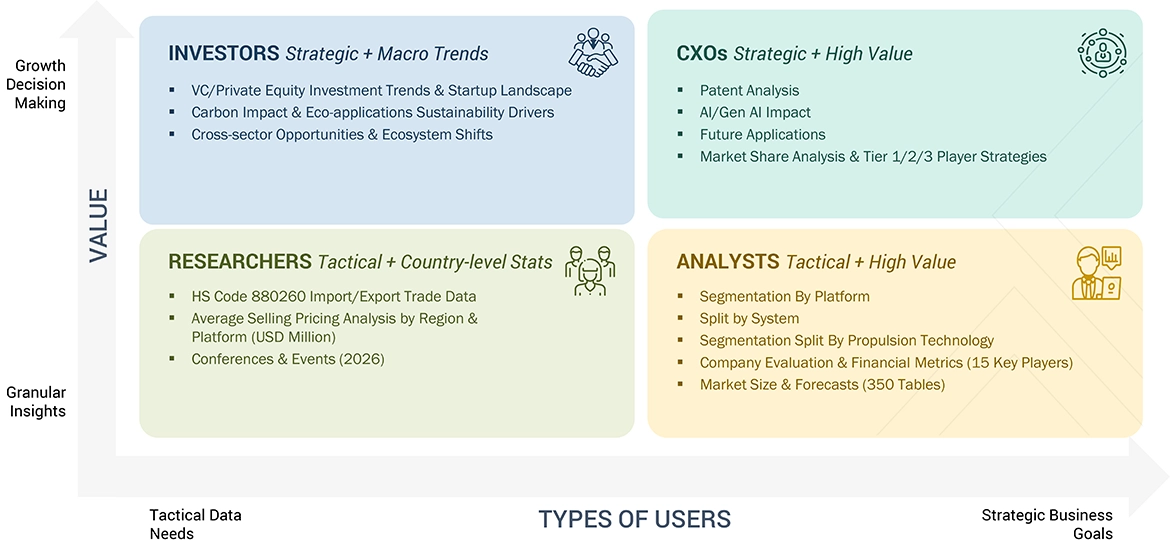
DELIVERED CUSTOMIZATIONS
We have successfully delivered the following deep-dive customizations:
| CLIENT REQUEST | CUSTOMIZATION DELIVERED | VALUE ADDS |
|---|---|---|
| Leading Manufacturer | Additional segment breakdown for countries | Additional country-level market sizing tables for segments/sub-segments covered at the regional/global level to gain an understanding of market potential by each country |
| Emerging Leader | Additional company profiles | Competitive information on targeted players to gain granular insights on direct competition |
| Regional Market Leader | Additional country market estimates | Additional country-level deep dive for a more targeted understanding of the total addressable market |
RECENT DEVELOPMENTS
- December 2025 : Northrop Grumman and IHI Aerospace co., ltd. signed a memorandum of understanding to explore collaborative opportunities in space propulsion technologies. The agreement focuses on leveraging propulsion system design and advanced manufacturing expertise to support future satellite and space platform propulsion requirements for customers in the US and Japan.
- December 2025 : Moog Inc. was awarded a contract by the Air Force Research Laboratory to develop a multimodal satellite propulsion system combining chemical and electric propulsion within a single architecture. The system is designed to use a standard propellant and fuel tank, enabling satellites to alternate between high-thrust chemical propulsion and high-efficiency electric propulsion. The contract supports propulsion capabilities for orbit transfer, station keeping, orbital maneuvering, and dynamic mission operations for national security satellites.
- October 2025 : Northrop Grumman collaborated with Luminary Cloud to apply AI to spacecraft propulsion design. The collaboration focuses on using physics-based AI models to accelerate the design and optimization of spacecraft thruster nozzles, improving performance and reducing development timelines for future satellite propulsion systems.
Table of Contents
 Exclusive indicates content/data unique to MarketsandMarkets and not available with any competitors.
Methodology
The study involved four major activities in estimating the current size of the satellite propulsion market. Extensive secondary research was done to collect information on the market, its adjacent markets, and its parent market. The next step was to validate these findings, assumptions, and sizing with industry experts across the value chain through primary research. Demand-side analysis was conducted to estimate the overall market size. After that, market breakdown and data triangulation procedures were employed to estimate the sizes of various segments and subsegments within the market.
Secondary Research
During the secondary research process, various sources were consulted to identify and collect information for this study. Secondary sources included government sources, such as SIPRI; corporate filings, including annual reports, press releases, and investor presentations from companies; white papers, journals, and certified publications; and articles from recognized authors, directories, and databases.
Primary Research
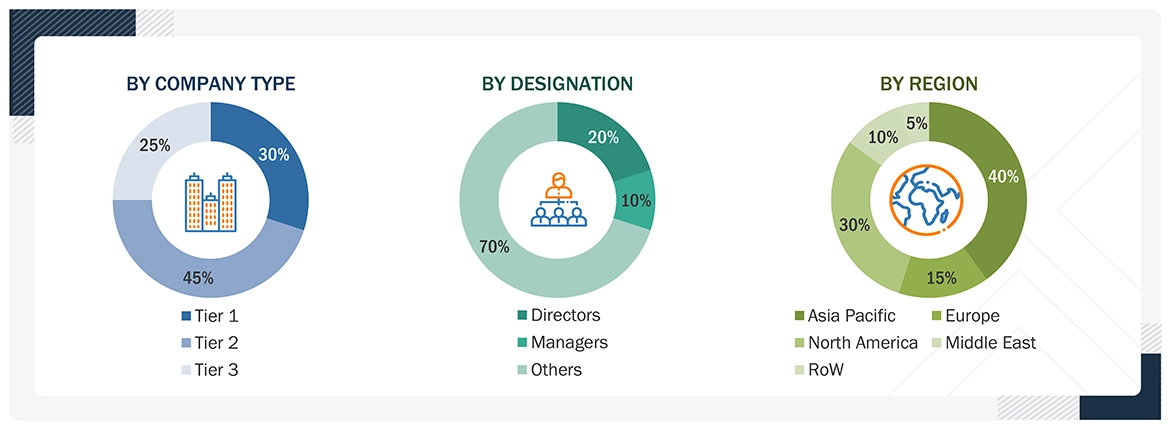
Extensive primary research was conducted after acquiring information regarding the satellite propulsion market scenario through secondary research. Several primary interviews were conducted with market experts from the demand and supply sides across major countries of North America, Europe, Asia Pacific, the Middle East, and the Rest of the World. Primary data was collected through questionnaires, emails, and telephonic interviews.
To know about the assumptions considered for the study, download the pdf brochure
Market Size Estimation
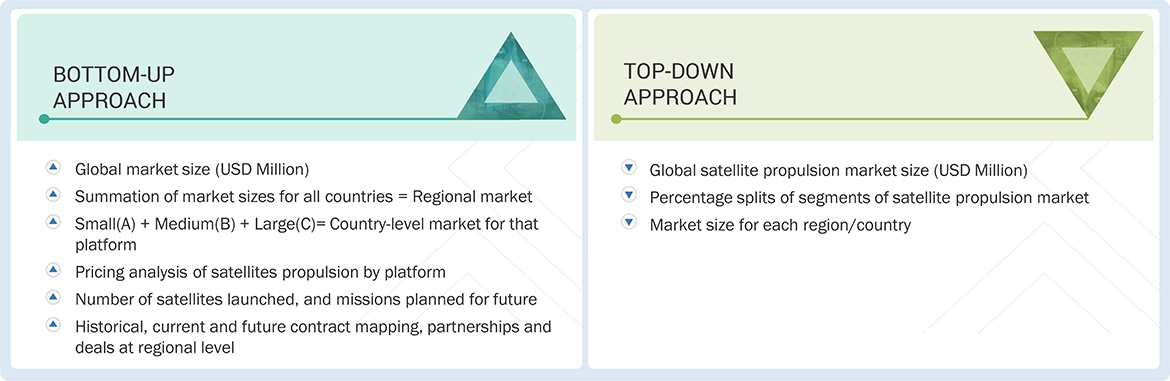
The top-down and bottom-up approaches were used to estimate and validate the size of the satellite propulsion market. The research methodology used to estimate the size of the market included the following details:
- Key players in the satellite propulsion market were identified through secondary research, and their market shares were determined through a combination of primary and secondary research. This included a study of the annual and financial reports of the top market players, as well as extensive interviews with leaders, including directors, engineers, marketing executives, and other key stakeholders of leading companies operating in the market.
- All percentage shares, splits, and breakdowns were determined using secondary sources and verified through primary sources.
- All possible parameters that affect the markets covered in this research study were accounted for, viewed in extensive detail, verified through primary research, and analyzed to obtain the final quantitative and qualitative data on the satellite propulsion market. This data was consolidated, enhanced with detailed inputs, analyzed by MarketsandMarkets, and presented in this report.
Satellite Propulsion Market : Top-Down and Bottom-Up Approach
Data Triangulation
After determining the overall market size, the total market was divided into several segments and subsegments. The data triangulation and market breakdown procedures explained below were implemented, wherever applicable, to complete the overall market engineering process and arrive at the estimated market numbers for the market segments and subsegments. The data was triangulated by studying various factors and trends from the demand and supply sides. Additionally, the market size was validated using top-down and bottom-up approaches.
Market Definition
Satellite propulsion refers to the methods and technologies used to control the trajectory and maintain the orbit of satellites after they are launched into space. This includes maneuvering them to their intended orbits, maintaining those orbits over their operational lifetimes, and deorbiting them at the end of their missions. Propulsion technologies range from traditional chemical-based systems that burn fuel to create thrust to more modern electric propulsion systems that use electric fields to accelerate ions. Efficient satellite propulsion is critical for optimizing mission lifespans across applications such as communication, earth observation, and navigation.
Key Stakeholders
- Propulsion System Manufacturers
- Satellite Operators
- Raw Material Providers
- Component Providers
- National Space Agencies
- Launch Service Providers
- Original Equipment Manufacturers
- Regulatory Bodies
- Department of Defense
- Satellite Propulsion Service Providers
Report Objectives
- To define, describe, segment, and forecast the size of the satellite propulsion market based on platform, system, end user, propulsion technology, and region
- To forecast the size of market segments based on five regions: North America, Europe, Asia Pacific, the Middle East, and the Rest of the World
- To identify and analyze key drivers, restraints, opportunities, and challenges influencing the growth of the market
- To identify industry trends, market trends, and technology trends prevailing in the market
- To analyze micro markets with respect to individual technological trends, prospects, and their contribution to the overall market
- To strategically profile key market players and comprehensively analyze their market ranking and core competencies
- To provide a detailed competitive landscape of the market and analyze competitive growth strategies, such as product developments, contracts, partnerships, agreements, and collaborations adopted by key players in the market
- To identify the detailed financial position of key players, as well as their key products, unique selling points, and key developments
Available customizations:
MarketsandMarkets offers the following customizations for this market report:
- Additional country-level analysis of the satellite propulsion market
- Profiling of other market players (up to five)
Product Analysis
- Product matrix, which provides a detailed comparison of the product portfolio of each company in the satellite propulsion market
Key Questions Addressed by the Report
What is the current size of the Satellite Propulsion Market?
The global Satellite Propulsion Market is valued at USD 2.07 billion in 2026.
What is the expected growth rate of the Satellite Propulsion Market?
The market is expected to grow at a CAGR of 17.6% from 2026 to 2031, driven by increasing satellite deployments and demand for advanced propulsion technologies.
What are the major growth drivers of the Satellite Propulsion Market?
Key growth drivers include the rapid growth of small satellite launches, expansion of LEO constellations, increasing demand for orbit raising and station-keeping capabilities, growth in in-orbit servicing, and rising investments in space exploration missions.
Which propulsion technology segment is expected to grow the fastest?
The electric propulsion segment is projected to register the highest growth, with a CAGR of 18.1% during the forecast period, due to its higher efficiency, lower fuel requirements, and suitability for long-duration missions.
Which end-user segment dominates the Satellite Propulsion Market?
The commercial segment is expected to account for the largest share of the market, driven by increasing deployment of communication, Earth observation, and broadband satellite constellations.
Which region leads the Satellite Propulsion Market?
The United States is estimated to account for 84.6% of the North American market share in 2026, supported by strong government space programs, commercial satellite launches, and private-sector investments.
Which platform category generates significant demand for satellite propulsion systems?
Small satellites (1–1200 kg) are generating substantial demand for propulsion systems due to their widespread use in LEO constellations, Earth observation, communications, and IoT applications.
Who are the leading companies operating in the Satellite Propulsion Market?
Major market participants include Northrop Grumman, Safran SA, Thales Alenia Space, Lockheed Martin Corporation, and Airbus.
What are the key trends shaping the Satellite Propulsion Market?
Major trends include increasing adoption of electric and green propulsion systems, development of Hall-effect thrusters, rising demand for satellite life extension, in-orbit servicing capabilities, and propulsion solutions for mega-constellations.
What opportunities are emerging in the Satellite Propulsion Market through 2031?
Significant opportunities are emerging from satellite constellation deployments, deep-space exploration missions, orbital transfer vehicles, satellite servicing and refueling programs, and growing investments in sustainable propulsion technologies.


Personalize This Research
- Triangulate with your Own Data
- Get Data as per your Format and Definition
- Gain a Deeper Dive on a Specific Application, Geography, Customer or Competitor
- Any level of Personalization
Let Us Help You
- What are the Known and Unknown Adjacencies Impacting the Satellite Propulsion Market
- What will your New Revenue Sources be?
- Who will be your Top Customer; what will make them switch?
- Defend your Market Share or Win Competitors
- Get a Scorecard for Target Partners

Custom Market Research Services
We Will Customise The Research For You, In Case The Report Listed Above Does Not Meet With Your Requirements
Get 10% Free CustomisationTESTIMONIALS
- Canada Satellite Propulsion Market
- US Satellite Propulsion Market
- UK Satellite Propulsion Market
- Germany Satellite Propulsion Market
- France Satellite Propulsion Market
- Italy Satellite Propulsion Market
- Russia Satellite Propulsion Market
- China Satellite Propulsion Market
- India Satellite Propulsion Market
- Japan Satellite Propulsion Market
- South Korea Satellite Propulsion Market
- Australia Satellite Propulsion Market






Growth opportunities and latent adjacency in Satellite Propulsion Market