SCADA in Renewable Energy Market Size, Share and Trends

SCADA in Renewable Energy Market Size, Share & Trends by Hardware (PLCs, Remote Terminal Units, HMIs, Communication Systems), Software (On-premises, Cloud-based), Services (Professional, Managed), Sector Type (Solar, Wind, Hydropower) and Region - Global Forecast to 2030




SCADA IN RENEWABLE ENERGY MARKET SIZE, SHARE & TRENDS
According to Marketsandmarkets, The SCADA in renewable energy market size was valued at USD 1.96 billion in 2025 and is projected to USD 3.56 billion by 2030 , growing at a CAGR of 12.7% from 2025 to 2030. Growth is driven by the increasing deployment of wind, solar, and hydro projects, rising investments in grid modernization, and the need for real-time monitoring and control of renewable energy assets. Advances in SCADA software, AI-driven analytics, and IoT integration are enabling predictive maintenance, efficient energy management, and secure grid operations. Government-supported clean energy initiatives and decarbonization goals are further boosting adoption, positioning SCADA as a key enabler for renewable integration and long-term sustainability.
MARKET SNAPSHOT TABLE
| REPORT METRIC | DETAILS |
|---|---|
| Market Size in 2025 (Value) | USD 1.96 Billion |
| Market Forecast in 2030 (Value) | USD 3.56 Billion |
| Growth Rate | CAGR of 12.7% from 2025-2030 |
| Years Considered | 2023-2030 |
| Base Year | 2024 |
| Forecast Period | 2025-2030 |
| Units Considered | Value (USD Billion) |
| Report Coverage | Revenue forecast, company ranking, competitive landscape, growth factors, and trends |
| Top Companies |
|
| Growth Driver |
|
| Segments Covered |
|
| Regions Covered | North America, Asia Pacific, Europe, RoW |
Market Size & Forecast
KEY TAKEAWAYS
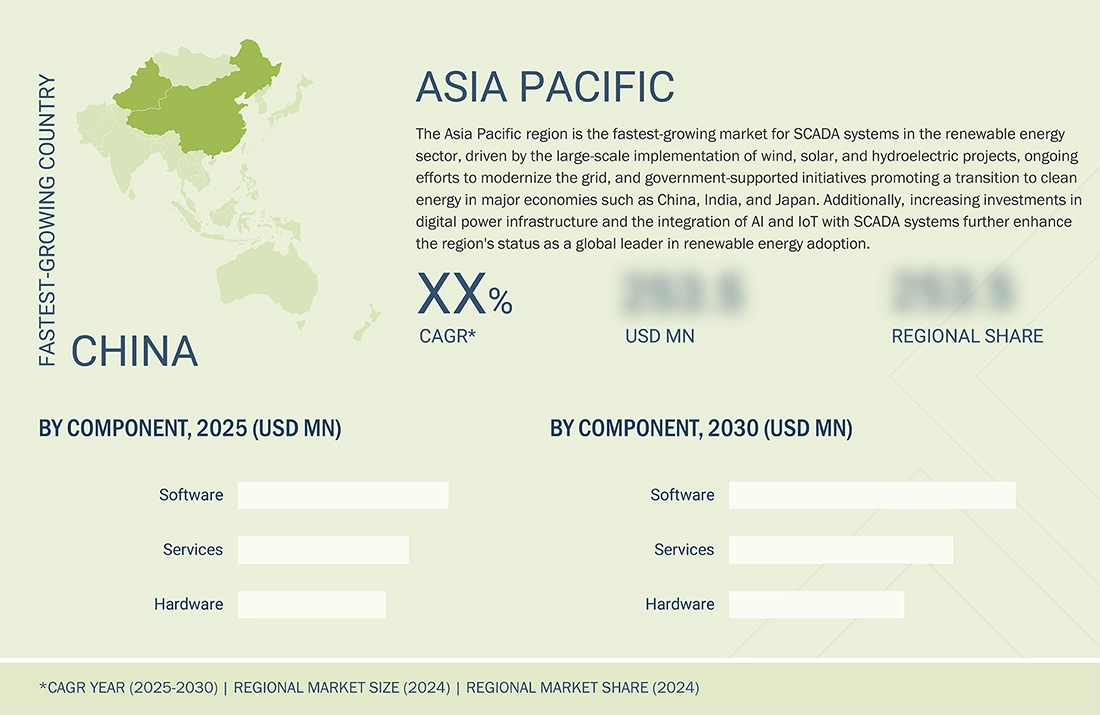
- Asia Pacific is projected to record the highest CAGR of 13.9% during the forecast period
- The software segment held a 40.0% share in 2024.
- The solar segment is expected to hold the largest market share of 62.6% in 2025.
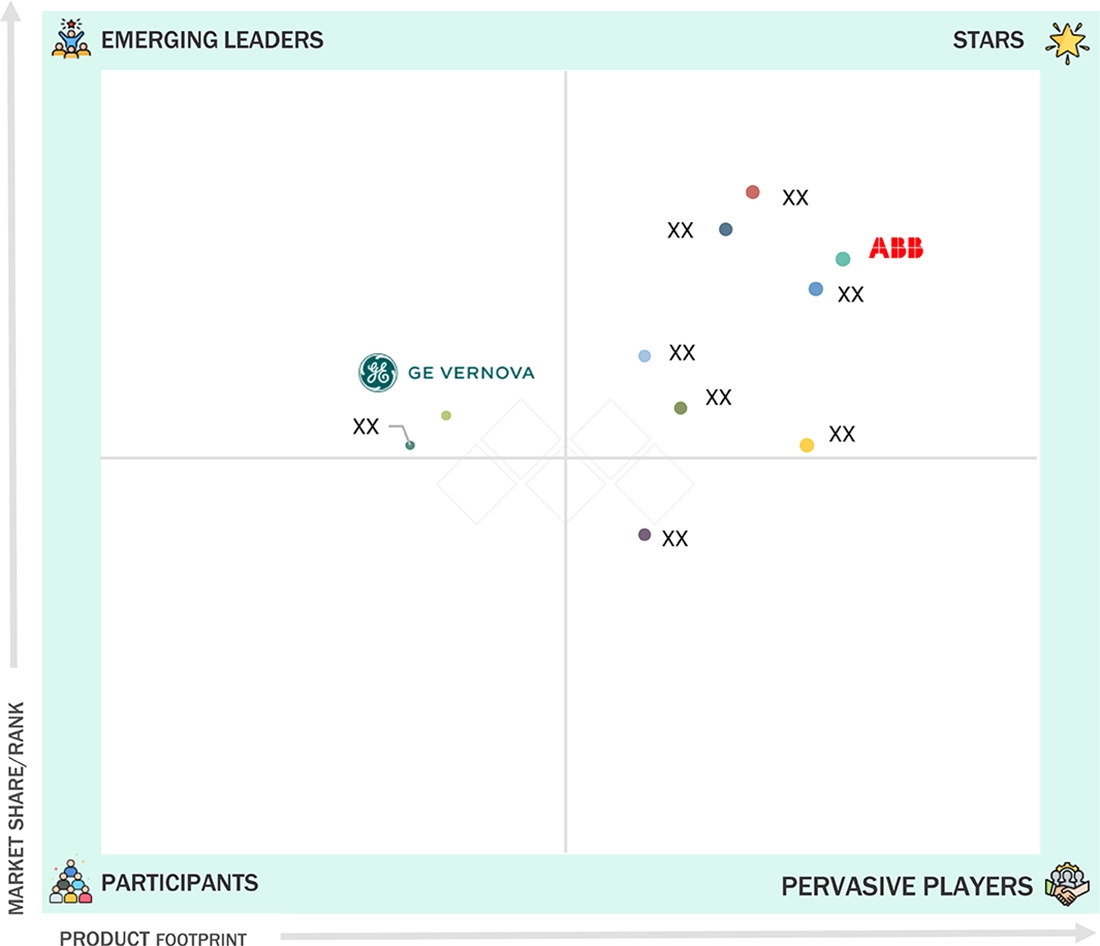
- Siemens, ABB and Honeywell International Inc. were identified as Star players in the SCADA in renewable energy market, supported by their broad automation portfolios, strong integration capabilities, and long-standing partnerships with renewable developers and utilities.
- Ing. Punzenberger COPA-DATA GmbH, Power Factors, and Inductive Automation, LLC, among others, have distinguished themselves among startups and SMEs by securing strong footholds in specialized niche areas, underscoring their potential as emerging market leaders
The SCADA in Renewable Energy industry is projected to expand significantly over the next decade, driven by the rapid growth of wind, solar, and hydro power generation, increasing investments in grid modernization, and rising demand for real-time monitoring and control of renewable assets. Advancements in SCADA software, AI-driven analytics, and IoT integration are enhancing scalability, reliability, and operational efficiency, positioning SCADA systems as a critical enabler for smart grids, predictive maintenance, and global clean energy transition.
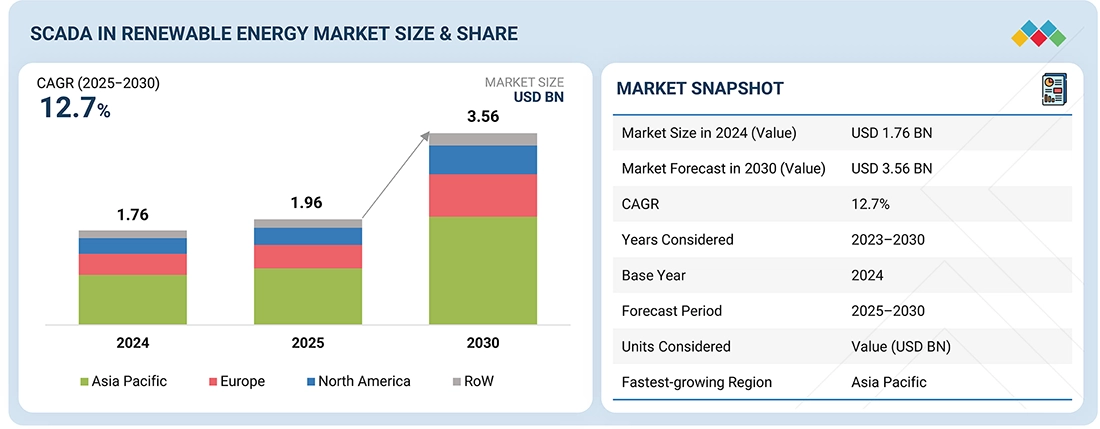
Source: Secondary Research, Interviews with Experts, MarketsandMarkets Analysis
TRENDS & DISRUPTIONS IMPACTING CUSTOMERS' CUSTOMERS
The impact on customers' business in the SCADA in renewable energy market results from the increasing need for real-time monitoring, grid stability, and efficient integration of renewable energy sources. Utilities, independent power producers, and grid operators are more frequently deploying SCADA systems across solar, wind, hydropower, and other renewables, with predictive maintenance, load balancing, and remote operations becoming key focus areas. Shifts toward AI-enabled analytics, IoT integration, and advanced cybersecurity are directly enhancing efficiency, reliability, and scalability for end users. These changes, in turn, boost the demand for advanced SCADA hardware, software, and services, influencing the market’s long-term growth trajectory.
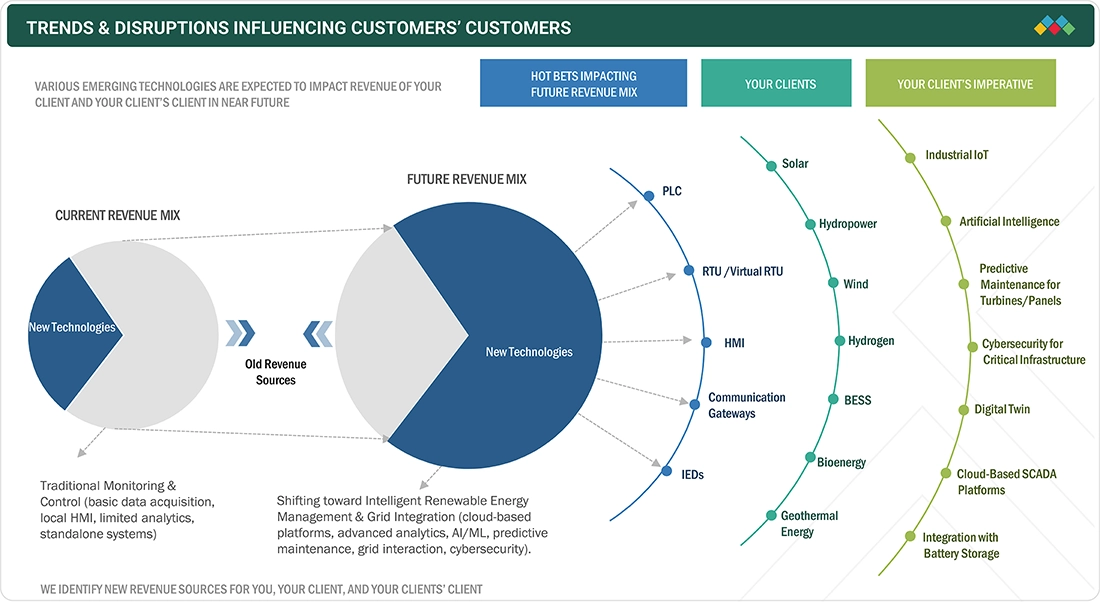
Source: Secondary Research, Interviews with Experts, MarketsandMarkets Analysis
SCADA IN RENEWABLE ENERGY MARKET DYNAMICS

Level
-
Unprecedented Scale of Renewable Deployment

-
Distributed and Remote Nature of Renewable Energy Sources


Level
-
High Initial Investment Costs for SCADA Deployment

-
Complexity and Customization Requirements of SCADA Systems


Level
-
Rising Opportunity in Floating Solar SCADA Solutions

-
Development of Cloud-Based SCADA Systems


Level
-
Cybersecurity Threats

-
Data Latency and Real-Time Communication Limitations in SCADA Systems

Source: Secondary Research, Interviews with Experts, MarketsandMarkets Analysis
Driver: Unprecedented Scale of Renewable Deployment
The rapid deployment of solar parks, wind farms, and hydropower projects worldwide is driving up demand for SCADA systems. These solutions support real-time asset monitoring, predictive maintenance, and grid integration, ensuring efficiency at scale.
Restraint: High Initial Investment Costs for SCADA Deployment
Deploying SCADA demands substantial capital for control hardware, communication networks, and integration services. Smaller renewable operators often face budget constraints, which slow down large-scale adoption.
Opportunity: Rising Opportunity in Floating Solar SCADA Solutions
The expansion of floating solar projects presents new growth opportunities. SCADA helps optimize power generation, monitor environmental factors such as water levels, and maintain stable grid connections, encouraging greater system adoption.
Challenge: Cybersecurity Threats
Growing digitalization of renewable assets exposes SCADA systems to cyber risks such as malware and ransomware attacks. Ensuring compliance with evolving cybersecurity frameworks is essential to safeguard energy assets.
SCADA IN RENEWABLE ENERGY MARKET : COMMERCIAL USE CASES ACROSS INDUSTRIES
| COMPANY | USE CASE DESCRIPTION | BENEFITS |
|---|---|---|
 |
Provides SCADA solutions for wind and solar farms with advanced grid integration, predictive analytics, and remote monitoring capabilities | Enables reliable energy generation, enhances predictive maintenance, and improves asset lifecycle management for renewable plants |
 |
Offers SCADA systems tailored for renewable integration, supporting microgrids, hybrid energy systems, and distributed generation management | Strengthens grid stability, optimizes energy efficiency, and enhances resilience of renewable operations |
 |
Delivers SCADA platforms integrated with ABB Ability for real-time monitoring, automation, and control of wind, solar, and hydro energy assets | Improves operational efficiency, reduces downtime, and ensures secure and scalable renewable energy management |
 |
Provides Ovation SCADA systems for renewable plants, enabling advanced turbine control, substation automation, and remote diagnostics | Enhances performance of wind and solar assets, supports compliance with grid codes, and maximizes renewable output |
 |
Offers FactoryTalk SCADA solutions with renewable energy applications, integrating data analytics and control for wind and solar farms | Enables data-driven decision-making, improves energy forecasting, and supports flexible integration of distributed renewable assets |
Logos and trademarks shown above are the property of their respective owners. Their use here is for informational and illustrative purposes only.
SCADA IN RENEWABLE ENERGY MARKET ECOSYSTEM
The SCADA ecosystem in the renewable energy market share includes hardware providers, software providers, service providers, system integrators, and end users. Together, they enable efficient monitoring, control, and optimization of renewable power assets. Hardware providers supply essential components such as controllers, sensors, PLCs, and communication infrastructure that form the foundation of SCADA systems. Software providers offer advanced platforms for real-time monitoring, predictive analytics, and grid integration, ensuring scalability, interoperability, and secure operations. Service providers and system integrators are crucial in deploying, customizing, and managing SCADA solutions, facilitating seamless integration across solar, wind, hydropower, and other renewable projects. End users, including utilities, independent power producers, and renewable energy developers, adopt these systems to maximize energy output, improve grid stability, and achieve sustainability goals. This interconnected ecosystem collectively drives digital transformation, boosts operational efficiency, and promotes large-scale renewable energy integration worldwide.
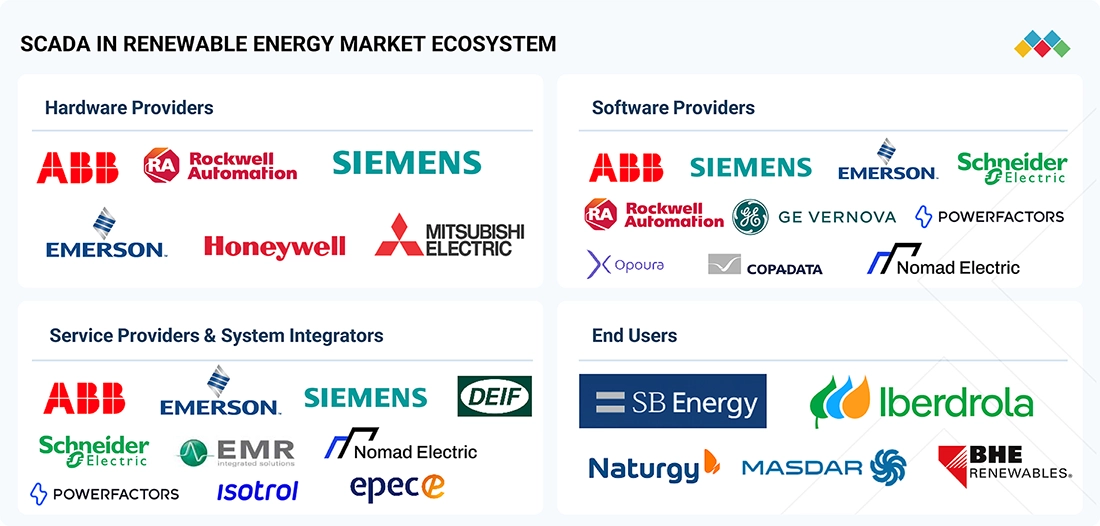
Logos and trademarks shown above are the property of their respective owners. Their use here is for informational and illustrative purposes only.
SCADA IN RENEWABLE ENERGY MARKET SEGMENTS
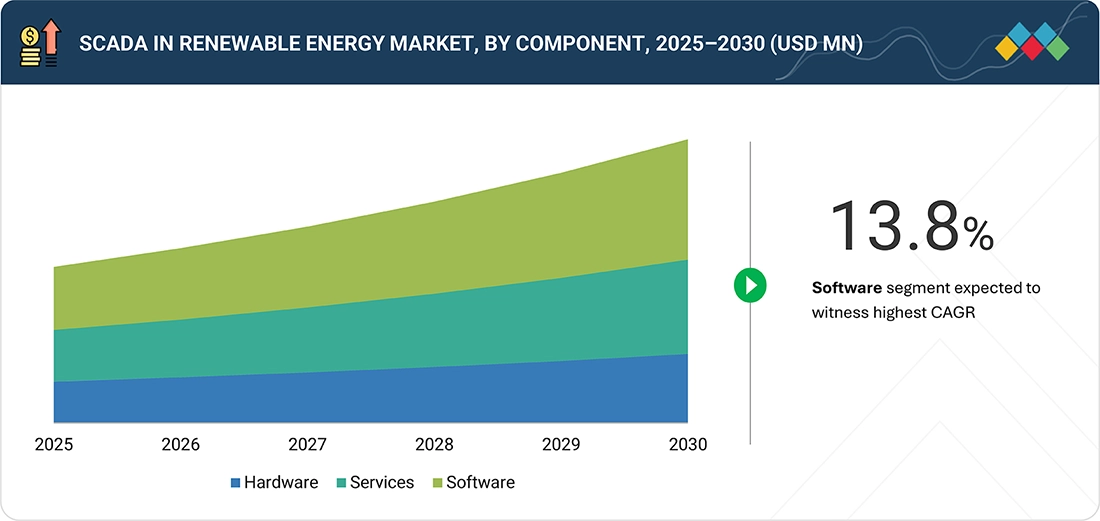
Source: Secondary Research, Interviews with Experts, MarketsandMarkets Analysis
SCADA in Renewable Energy Market, By Component
The software segment is expected to hold the largest share of the SCADA in renewable energy market during the forecast period, supported by its critical role in enabling real-time monitoring, data analytics, and grid integration. SCADA software solutions, including supervisory platforms, visualization dashboards, and predictive maintenance tools, are widely adopted across solar farms, wind parks, and hydropower facilities. Their ability to provide centralized control, optimize energy generation, and ensure secure communication makes them indispensable for renewable operators managing distributed assets. As utilities and independent power producers accelerate digital transformation and smart grid adoption, the software segment will continue to dominate SCADA deployments, serving as the backbone of scalable, intelligent, and resilient renewable energy management systems.
SCADA in Renewable Energy Market, By Sector Type
The solar segment is expected to hold the largest share in this market growth during the forecast period, driven by rapid growth in utility-scale solar farms and distributed solar projects. SCADA systems in solar applications enable real-time performance monitoring, fault detection, and predictive maintenance, ensuring optimal energy output and reliable grid integration. Their ability to manage large numbers of distributed panels, track weather variations, and streamline operations makes them essential for efficient solar power generation. With governments worldwide promoting clean energy adoption and utilities investing heavily in solar infrastructure, the solar segment will continue to dominate SCADA deployments, serving as the cornerstone of renewable energy digitalization and smart grid advancement.
SCADA in Renewable Energy Market, By Activity Type
The generation segment is expected to hold the largest market share during the forecast period, supported by the rapid expansion of solar farms, wind parks, and hydropower plants. SCADA systems in generation provide real-time monitoring, predictive analytics, and automated control to optimize asset performance and ensure safe, efficient operations. Their ability to manage distributed renewable assets, balance variable energy output, and support grid integration makes them indispensable for power producers. As renewable energy capacity continues to grow globally, the generation segment will remain the primary area of SCADA deployment, serving as the backbone of reliable, scalable, and digitally managed clean energy production.
SCADA IN RENEWABLE ENERGY MARKET BY REGION
Asia Pacific to be fastest-growing region in global SCADA in Renewable Energy Market during forecast period
Asia Pacific is expected to experience the highest CAGR during the forecast period, driven by the rapid growth of solar and wind projects, hydropower upgrades, and increasing investments in smart grid infrastructure. Governments in China, India, Japan, and South Korea are actively encouraging renewable energy adoption, digital grid transformation, and 5G-enabled communication networks, creating favorable conditions for SCADA deployment. The region’s robust renewable energy ecosystem, along with growing demand for efficient monitoring, predictive maintenance, and real-time control, further enhances its position. With expanding utility-scale solar, offshore wind, and hydropower projects, Asia Pacific is becoming a global hub for SCADA-enabled renewable energy management and large-scale clean energy adoption.
scada-renewable-energy-market: COMPANY EVALUATION MATRIX
In the SCADA in renewable energy companies , ABB (Star) leads with a strong global presence and a comprehensive SCADA portfolio that includes hardware, software, and grid automation solutions, all integrated with ABB’s expertise in industrial automation and smart grid systems. Its ability to provide scalable, AI-enabled, and cybersecurity-compliant monitoring and control across solar, wind, and hydropower projects has established ABB as a dominant player in the market. Mitsubishi Electric Corporation (Emerging Leader), which specializes in SCADA and automation solutions for renewable plants and smart energy networks, is rapidly expanding its footprint through strong adoption in Asia and global renewable initiatives. With a focus on digital twin capabilities, predictive analytics, and renewable-specific SCADA platforms, Mitsubishi Electric demonstrates robust growth momentum, positioning itself to move into the leaders’ quadrant within the evolving SCADA in renewable energy market.
Source: Secondary Research, Interviews with Experts, MarketsandMarkets Analysis
KEY MARKET PLAYERS
DELIVERED CUSTOMIZATIONS
We have successfully delivered the following deep-dive customizations:
| CLIENT REQUEST | CUSTOMIZATION DELIVERED | VALUE ADDS |
|---|---|---|
| Utility & Power Producer |
|
|
| Renewable Project Developer |
|
|
| Grid Operator / Transmission Company |
|
|
RECENT DEVELOPMENTS
- October 2024 : Rockwell Automation enhanced its FactoryTalk Optix (HMI and Data Platform) with DataReady smart machines, enabling real-time machine-level visualization, seamless data transfer, and edge-to-cloud analytics. The update improves operational efficiency by contextualizing data for enterprise applications, optimizing production, and integrating with Rockwell’s ecosystem, including DataMosaix, Plex Smart Manufacturing Platform, and Fiix maintenance software.
- July 2024 : ABB automated the Al Dhafra PV2 Solar Project, the world’s largest single-site solar plant in Abu Dhabi, using its ABB Ability Symphony Plus system. Partnering with China Machinery Engineering Corporation (CMEC), the project enhances efficiency and reliability, supporting the UAE’s Energy Strategy 2050. The 2 GW plant powers 200,000 homes and reduces CO2 emissions by 2.4 million metric tons annually.
- June 2024 : Yokogawa Electric Corporation acquired BaxEnergy, a provider of renewable energy management solutions (REMS), to expand its capabilities in optimizing renewable power generation.
- May 2024 : Rockwell Automation partnered with the Sri Lankan company Azzurro to promote its industrial automation and digital transformation solutions in Sri Lanka. Azzurro will leverage its local experience to help Rockwell bring smart manufacturing technologies to industries like utilities, mining, and manufacturing.
- May 2023 : Schneider Electric launched the SCADAPack 470i and 474i remote terminal units (RTUs) and controllers, integrating edge computing for enhanced remote asset monitoring and control.
Table of Contents
 Exclusive indicates content/data unique to MarketsandMarkets and not available with any competitors.
Methodology
The research study involved four major steps in estimating the size of the SCADA in renewable energy market. Exhaustive secondary research has been done to collect key information about the market and peer markets. The next step has been to validate these findings and assumptions and size them with the help of primary research with industry experts across the value chain. Both top-down and bottom-up approaches have been used to estimate the market size. After this, the market breakdown and data triangulation approaches have been adopted to estimate the market sizes of segments and subsegments.
Secondary Research
In the secondary research process, various secondary sources were referred to identify and collect information required for this study. The secondary sources include annual reports, press releases, investor presentations of companies, white papers, and articles from recognized authors. Secondary research has been mainly done to obtain key information about the market’s value chain, the pool of key market players, market segmentation according to industry trends, regional outlook, and developments from market and technology perspectives.
In the SCADA in renewable energy market report, the global market size has been estimated using the top-down and bottom-up approaches, along with several other dependent submarkets. Major players in the market were identified using extensive secondary research, and their presence in the market was determined using secondary and primary research. All the percentage splits and breakdowns have been determined using secondary sources and verified through primary sources.
Primary Research
Extensive primary research has been conducted after understanding the SCADA in renewable energy market scenario through secondary research. Several primary interviews have been conducted with key opinion leaders from demand- and supply-side vendors across four major regions—North America, Europe, Asia Pacific, and RoW. Primary sources from the supply side included various industry experts, such as chief experience officers (CXOs), vice presidents (VPs), directors from business development, marketing, product development/innovation teams, and related key executives from companies offering SCADA solutions; industry associations; independent consultants and importers; distributors; and key opinion leaders.
After successful interaction with industry experts, brief sessions were conducted with highly experienced independent consultants to reinforce the findings of our primary research. This, along with the in-house subject matter experts’ opinions, has led us to the findings as described in the report. The breakdown of primary respondents is as follows:
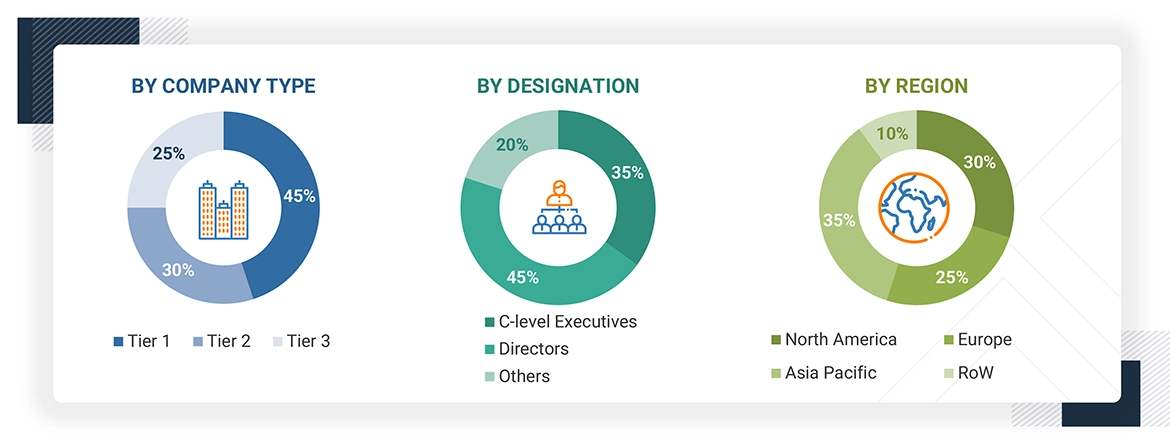
Note: Others include sales, marketing, and product managers.
To know about the assumptions considered for the study, download the pdf brochure
Market Size Estimation
In the complete market engineering process, the top-down and bottom-up approaches and several data triangulation methods have been used to estimate and forecast the market size for the overall market segments and subsegments listed in this report. Extensive qualitative and quantitative analyses have been performed on the complete market engineering process to list the key information/insights throughout the report.
Key players in the SCADA in renewable energy market were identified through secondary research, and their rankings in the respective regions were determined through primary and secondary research. This entire procedure involved the study of the annual and financial reports of top players, and interviews with industry experts, such as chief executive officers, vice presidents, directors, and marketing executives, for quantitative and qualitative key insights. All percentage shares, splits, and breakdowns were determined using secondary sources and verified through primary sources. All parameters that affect the markets covered in this research study were accounted for, viewed in extensive detail, verified through primary research, and analyzed to obtain the final quantitative and qualitative data. This data was consolidated, supplemented with detailed inputs and analysis from MarketsandMarkets, and presented in this report.
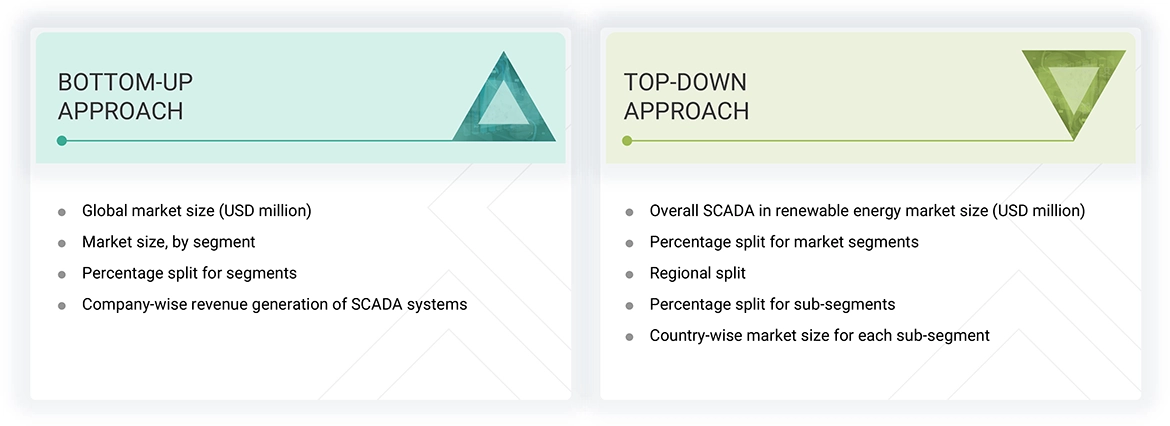
Bottom-Up Approach
- Identifying various sector types using or expected to deploy SCADA solutions
- Analyzing each sector type, along with related major companies and system integrators, for the implementation of SCADA systems
- Estimating the size of the SCADA in renewable energy market based on the demand from these sectors
- Tracking the ongoing and upcoming installation contracts, acquisitions, expansions, and product launches by various companies and forecasting the market based on these developments and other critical parameters
- Conducting multiple discussions with key opinion leaders to understand the implementation of SCADA solutions in various sectors
- Arriving at the market estimates by analyzing the country-wise deployment of SCADA systems in renewable energy projects and aggregating this data to derive regional market estimates
- Verifying and crosschecking the estimates at every level through discussions with key opinion leaders, including CEOs, directors, operations managers, and domain experts at MarketsandMarkets
- Studying various paid and unpaid information sources, such as annual reports, press releases, and white papers
Top-Down Approach
- Information related to the revenue of key manufacturers and providers of SCADA solutions was studied and analyzed to estimate the global size of the SCADA in renewable energy market.
- Multiple discussions were conducted with key opinion leaders to understand the demand for SCADA solutions and analyze the break-up of the scope of work carried out by each significant company.
- Revenues, geographic presence, key industries, and the diverse offerings of all identified players in the SCADA in renewable energy market were studied to estimate and arrive at the percentage split of different market segments.
- All major SCADA players were identified through secondary research and verified through brief discussions with industry experts.
- Geographic splits were estimated using secondary sources based on factors such as the number of players offering SCADA solutions in a specific country or region and the industries for which these players provide.
SCADA in Renewable Energy Market : Top-Down and Bottom-Up Approach
Data Triangulation
After arriving at the overall size of the SCADA in renewable energy from the market size estimation processes explained above, the total market has been split into several segments and subsegments. Where applicable, the market breakdown and data triangulation procedures have been employed to complete the overall market engineering process and arrive at the exact statistics for all segments and subsegments. The data has been triangulated by studying various factors and trends. Additionally, the market size has been validated using top-down and bottom-up approaches.
Market Definition
SCADA is an automation system that monitors and controls complex systems/processes deployed in several industries. This system allows data to be gathered from field devices and processed in real time to send commands that regulate or control industrial equipment or processes. It acts as an interface between plant machinery and input devices such as sensors and actuators, which are part of SCADA system components, such as the human–machine interface (HMI) and programmable logic controller (PLC). SCADA provides plant operators with crucial data regarding industrial processes and helps them make appropriate response and control decisions. The system records and maintains all real-time data.
The SCADA in renewable energy market encompasses advanced automation solutions that facilitate real-time monitoring, control, and data management of wind, solar, and hydroelectric power assets. These systems are critical in maximizing energy output, enhancing operational efficiency, reducing downtime, and enabling seamless integration with the power grid. By leveraging a combination of hardware and software, SCADA solutions provide centralized oversight of distributed energy infrastructure, supporting data-driven decision-making, predictive maintenance, and optimized asset performance.
Key Stakeholders
- End users
- Application providers
- System integrators and automation consultants
- Renewable energy project developers
- SCADA software package vendors
- SCADA component suppliers
- Professional service/solution providers
- Cloud and data infrastructure service providers
- Original equipment manufacturers (OEMs)
- Grid operators and utility companies
- Operators and end users (wind, solar, and hydroelectric sectors)
- Technology standards organizations, forums, alliances, and associations
Report Objectives
- To define, describe, and forecast the global SCADA in renewable energy market, by component, sector type, and region, in terms of value
- To describe and forecast the market size for various segments covering all four regions: North America, Europe, Asia Pacific, and RoW, along with their respective countries
- To provide detailed information regarding the major drivers, restraints, opportunities, and challenges influencing the market growth
- To strategically analyze the micromarkets1 concerning individual growth trends, prospects, and contributions to the total market
- To provide a comprehensive overview of the value chain of the SCADA in renewable energy ecosystem
- To provide case study analysis, technology analysis, value chain analysis, trends/disruptions impacting customer business, impact of AI/Gen AI, key conferences and events, pricing analysis, and Porter’s five forces analysis of the market under study
- To strategically profile the key players and comprehensively analyze their market positions in terms of their ranking and core competencies2, along with detailing the competitive landscape for market leaders
- To analyze the competitive developments, such as contracts, partnerships, and product launches, in SCADA in renewable energy market
- To provide a macroeconomic outlook based on all the regions in the region chapter and the impact of the 2025 US tariff on the market
- To analyze the opportunities in the market for various stakeholders by identifying the high-growth segments of the SCADA market and provide a detailed competitive landscape for the market players
Customization Options
With the given market data, MarketsandMarkets offers customizations according to the specific requirements of companies. The following customization options are available for the report:
- Detailed analysis and profiling of additional market players based on various blocks of the supply chain
Key Questions Addressed by the Report
What is the size of the SCADA in Renewable Energy Market?
The global SCADA in Renewable Energy Market is projected to reach USD 1.96 billion in 2025 and is projected to USD 3.56 billion by 2030 , growing at a CAGR of 12.7% from 2025 to 2030, driven by increasing renewable energy deployment and demand for real-time monitoring solutions.
What is the expected growth rate of the SCADA in Renewable Energy Market?
The market is expected to grow at a CAGR of around 12.7% during the forecast period, supported by smart grid development and renewable power expansion.
What are the major growth drivers of the SCADA in Renewable Energy Market?
Key growth drivers include rapid solar and wind energy deployment, grid integration requirements, predictive maintenance, remote monitoring, and increasing automation in renewable power plants.
Why is SCADA important for renewable energy projects?
SCADA systems enable real-time monitoring, control, data acquisition, fault detection, and performance optimization of renewable energy assets.
What are the key trends shaping the SCADA in Renewable Energy Market?
Major trends include cloud-based SCADA, IoT integration, AI-driven analytics, cybersecurity solutions, and digital transformation of renewable energy infrastructure.
Which renewable energy sectors use SCADA systems?
SCADA systems are widely used in solar power plants, wind farms, hydropower projects, battery energy storage systems, and hybrid renewable energy systems.
Which companies are key players in the SCADA in Renewable Energy Market?
Major companies include Siemens AG, ABB Ltd., Schneider Electric, Emerson Electric, Rockwell Automation, Honeywell International, and Hitachi Energy.
How does SCADA improve renewable energy efficiency?
SCADA improves efficiency through real-time asset monitoring, predictive maintenance, performance analysis, and optimized energy generation management.
Which region is expected to lead the SCADA in Renewable Energy Market?
Asia Pacific is expected to witness strong growth due to rapid renewable energy installations, grid modernization, and clean energy investments.
What does the SCADA in Renewable Energy Market report analyze?
The report analyzes market size, forecast, trends, growth drivers, challenges, components, applications, end users, competitive landscape, and regional opportunities through 2030


Personalize This Research
- Triangulate with your Own Data
- Get Data as per your Format and Definition
- Gain a Deeper Dive on a Specific Application, Geography, Customer or Competitor
- Any level of Personalization
Let Us Help You
- What are the Known and Unknown Adjacencies Impacting the SCADA in Renewable Energy Market
- What will your New Revenue Sources be?
- Who will be your Top Customer; what will make them switch?
- Defend your Market Share or Win Competitors
- Get a Scorecard for Target Partners

Custom Market Research Services
We Will Customise The Research For You, In Case The Report Listed Above Does Not Meet With Your Requirements
Get 10% Free CustomisationTESTIMONIALS

Tetsuya Ohhira
Business Development Manager-Technology Business
Nikon Corporation,
Leading Japanese MNC specializing in optics and imaging productswww.nikon.com
MarketsandMarkets™ response
is quick. Their attitude is flexible and positive. Analyst Insights are globally considered and
significant. Client Services quickly respond to our inquiry and demand. Their wide range of global
surveys help us make our strategic plan.
We hope Knowledge Store will be easier to search
for a report.
VP - Marketing & Business Development
Leading Provider of Process Control Solutions
We engaged with MarketsandMarkets on a study to perform an analysis and recommend a Go-To-Market strategy for metrology and process control in the semiconductor market. The study was tailored to our targets and needs with well-defined milestones. Our overall experience with the MarketsandMarkets team was very good throughout the project in all aspects including the analysis methodologies used, the quality and depth of primary and secondary data sets, the professionalism and flexibility of the team and the ability to meet the target schedule and milestones. We want to thank MarketsandMarkets team for a job well done.
Growth opportunities and latent adjacency in SCADA in Renewable Energy Market






Caleb
Apr, 2026
Does the report include vendor benchmarking, pricing comparisons, and buying criteria to support SCADA system selection.
Blake
Apr, 2026
How deeply does the report analyze emerging innovations such as cloud-based SCADA, virtual RTUs, and AI-driven predictive maintenance .