Silicone Elastomers Market

Silicone Elastomers Market By Type (High-temperature Vulcanized, Room Temperature Vulcanized, Liquid Silicone Rubber), By Process, By End-use Industry (Automotive, Electronics, Healthcare, Consumer Goods, Building & Construction, Foams), and Region - Global Forecast to 2031




OVERVIEW
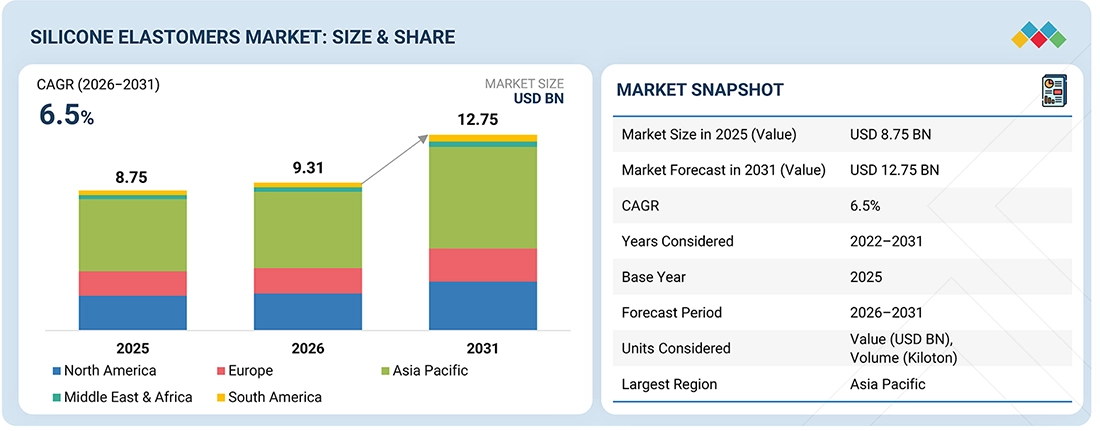
Source: Secondary Research, Interviews with Experts, MarketsandMarkets Analysis
The silicone elastomers market is projected to grow from USD 9.31 billion in 2026 to USD 12.75 billion by 2031, registering a CAGR of 6.5% during this period. There is a growing demand for silicone elastomers because of their excellent heat resistance, flexibility, and durability across automotive, healthcare, construction, and electronics applications
KEY TAKEAWAYS
-
By RegionAsia Pacific accounted for a significant share of 36.9% of the global silicone elastomers market in 2025.
-
By TypeBy type, the high-temperature vulcanized segment is expected to account for the largest share of 60.7% in the overall market in 2025.
-
By End-Use IndustryBy end-use industry, the automotive segment dominated the market in 2025, accounting for a share of 35.2%.
-
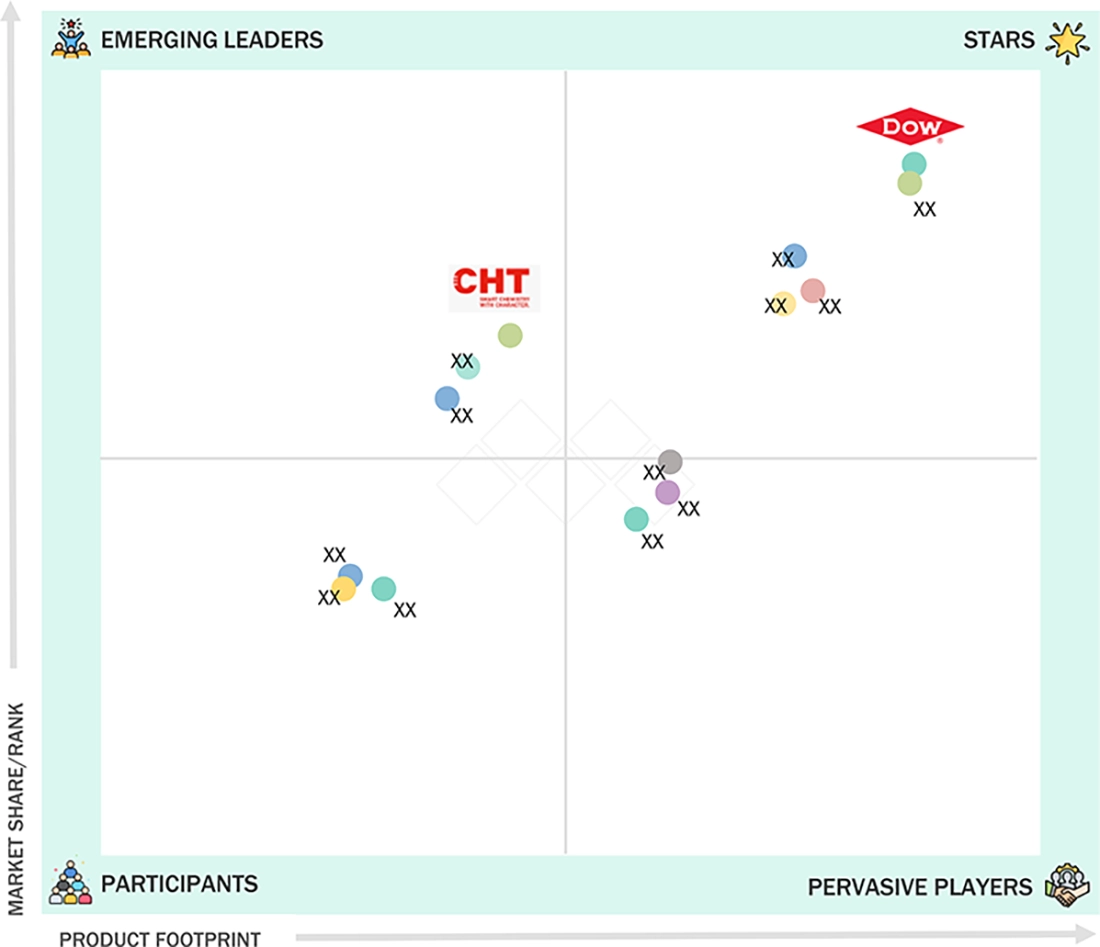
Competitive Landscape - Key PlayersDow Inc. (US), Wacker Chemie AG (Germany), KCC Corporation (South Korea), Shin-Etsu Chemical Co., Ltd. (Japan), and China National Bluestar (Group) Co., Ltd. (China) were identified as star players in the silicone elastomers market (global), given their strong market share and product footprint.
-
Competitive Landscape - Startups/SMEsSilicone Solutions, Inc. (US), Zhejiang Xinan Chemical Industrial Group Co., Ltd. (China), Ravago Petrokimya Uretim A.S. (Turkey), Shenzhen Hong Jie Yi Technology Co., Ltd. (China), and Nano Tech Chemical Brothers Co., Ltd. (India) have distinguished themselves among startups and SMEs by securing strong footholds in specialized niche areas, underscoring their potential as emerging market leaders.
Silicone elastomers are becoming more well-known for their superior mechanical durability, chemical resistance, and long-term reliability in critical applications, making them desirable alternatives to traditional rubber and plastic materials. As a result, there is increasing demand for silicone elastomers across many industries (automotive, electronics, healthcare, energy) and among end users seeking to replace their current rubber/plastic materials with value-added, high-performance elastomers. As silicone elastomers continue to be manufactured with greater precision (through advancements in polymerization technology, cross-linking chemistry, filler dispersion techniques, and precision molding processes), they will provide enhanced thermal resistance, elasticity, and dielectric properties, enabling the creation of newer, higher-performing silicone elastomer components capable of withstanding extreme temperatures, humidity/moisture, chemical exposure, and mechanical loads. All of these improvements are necessary to address the growing complexity of electric vehicles, advanced electronic systems, renewable energy infrastructure, and healthcare devices, and to improve operational reliability and reduce performance failures across industrial applications.
TRENDS & DISRUPTIONS IMPACTING CUSTOMERS' CUSTOMERS
The silicone elastomers industry is experiencing a major shift as manufacturers and users alike rely more heavily than ever on modern, highly engineered silicone elastomers as an alternative to traditional rubber and polymers. Many end-use industries are replacing their current elastomers with modern engineered silicone elastomers, which have superior flexibility, enhanced durability, and greater thermal stability than older conventional elastomers. Examples of these newer silicone elastomers are advanced liquid silicone rubber (LSR), high-consistency rubber (HCR), and special fluorosilicone elastomers that provide enhanced resistance to heat, chemicals, moisture, UV light, and mechanical stress. The enhanced properties of modern silicone elastomers will continue to drive demand for high-performance silicone elastomer components in the automotive, electronics, healthcare, construction, and renewable energy industries. Silicone elastomer manufacturers are also investing in precision molding, advanced cross-linking technologies, improved dispersion technologies for filler materials, and highly automated manufacturing systems, enabling them to produce highly reliable, application-specific products in extremely complex operational environments. As a result of these advancements, silicone elastomer manufacturers can provide lightweight, compact, and energy-efficient systems with longer operating lives and lower maintenance requirements.
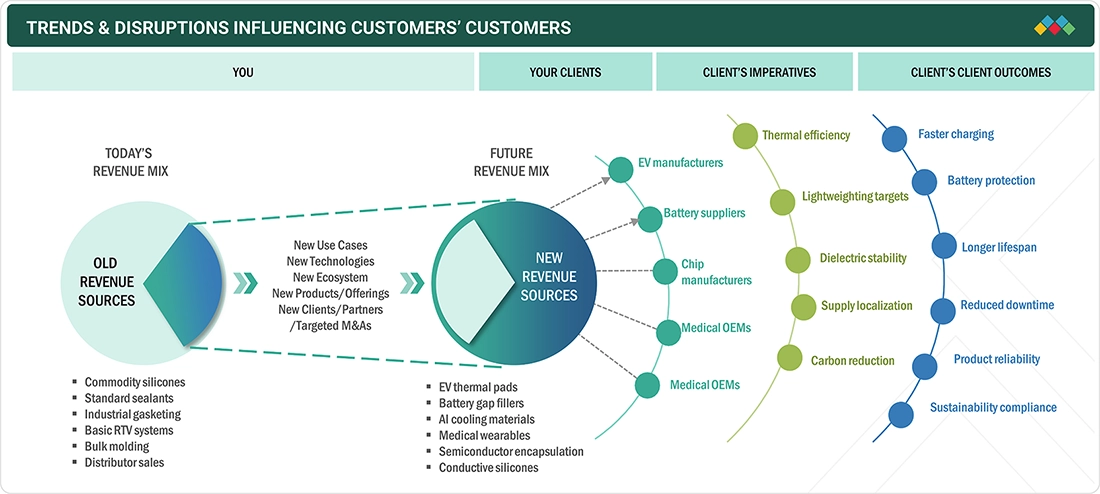
Source: Secondary Research, Interviews with Experts, MarketsandMarkets Analysis
MARKET DYNAMICS

Level
-
Aging population fueling demand from healthcare industry

-
High demand for silicone elastomers in electrical & electronics industry


Level
-
Environmental concerns and sustainability challenges

-
Stagnant growth in developed countries


Level
-
Antimicrobial silicone elastomers for healthcare industry

-
Increasing demand for automobiles


Level
-
Fluctuating raw material prices

Source: Secondary Research, Interviews with Experts, MarketsandMarkets Analysis
Driver: Aging population fueling demand from healthcare industry
The increasing aging population around the world is driving greater demand for new types of healthcare products and equipment, causing growth in the silicone elastomer industry. Biocompatibility, flexibility for sterilization and handling extreme temperatures, and durability are just some reasons silicone elastomers have become the material of choice for many types of healthcare applications. A growing elderly population has created increased incidences of chronic diseases, heart problems, and other age-related illnesses. Therefore, silicone elastomers are now used more than ever to produce healthcare devices such as medical implants, catheters, respiratory masks, prostheses, wearable monitors, and drug delivery devices. Silicone elastomers will continue to be an important material in these applications because they can withstand multiple sterilization cycles, extreme temperatures, and extended contact with the skin without causing adverse reactions in patients. Healthcare manufacturers are also producing more precision-molded silicone devices, as well as minimally invasive procedures using liquid silicone rubber (LSR). Manufacturers of healthcare products are also being encouraged to develop new formulations of silicone elastomers as they become more focused on home-based care, providing patient comfort, and developing new diagnostic techniques.
Restraint: Environmental concerns and sustainability challenges
Sustainability and environmental impact are becoming constraints on the silicone elastomers industry. While silicone elastomers provide outstanding durability, heat resistance, and service life, recycling or disposal can be more complex than using conventional thermoplastics. Creating silicone-based materials requires significant energy and is a chemical process with an associated carbon footprint, which must be carefully controlled to minimize overall environmental impact. Many governments and ecologically focused agencies across regions are also tightening regulations governing industrial emissions, the use of hazardous materials, and the raw materials used in manufacturing, which adds costs for silicone elastomer manufacturers as they meet regulatory requirements. Additionally, end-use industries are placing greater importance on bio-based, recyclable, and low-carbon alternatives to materials, which is driving competition with silicone as we continue to shape the industry with greater emphasis on sustainability. Therefore, there is an influx of investment being made by manufacturers to find environmentally safe silicone technologies, low-emission production processes, and recycling processes so that they will remain strategically competitive long term.
Opportunity: Antimicrobial silicone elastomers for healthcare industry
The ongoing development of antimicrobial silicone elastomers is driving significant opportunities in the silicone elastomer market, particularly in the healthcare sector. Increasing concerns about hospital-acquired infections, patient safety, and hygiene are driving healthcare manufacturers to develop materials that help prevent microbial growth on medical surfaces and devices. Combining the inherent properties of silicone materials (i.e., flexibility, biocompatibility, chemical resistance, sterilization stability) with increased protection against microorganisms (i.e., bacteria, fungi) provides a wide range of applications for antimicrobial silicone elastomers. Some examples of where antimicrobial silicone elastomers are currently being used include catheters, respiratory masks, wound care products, tubing systems, prosthetics, wearable medical devices and surgical instruments, where controlling infection is critical. In addition, the increasing demand for minimally invasive treatments, long-term implantable devices, and home healthcare equipment will continue to drive the demand for durable, sanitary silicone-based products. Manufacturers are also investing in advanced additive technologies and developing new silicone formulations to enhance the antimicrobial properties of medical-grade silicone elastomers while maintaining their mechanical properties, creating new opportunities for innovation and differentiation in the global healthcare market.
Challenge: Fluctuating raw material prices
The price volatility in the raw material supply chain presents significant challenges to the silicone elastomers industry, given its high reliance on silicon metal, methyl chloride, and various other intermediate chemicals derived from petroleum during the manufacturing process. Pricing fluctuations for crude oil, fluctuations in energy costs (i.e., due to changes in production), fluctuations in crude oil mining (supporting the raw material extraction process), and disruptions in global supply chains directly impact the cost to manufacture silicone elastomers, resulting in an unstable price environment for both silicone elastomer manufacturers and the ultimate end consumer of silicone elastomers. Fluctuations associated with geopolitical issues (e.g., conflicts), transportation bottlenecks (i.e., supply chain interruptions), trade restrictions, and varying demand across the automotive, electronics, and construction industries contribute to uncertainty about the availability of raw materials used to manufacture silicone elastomers. Such frequent fluctuations in costs can adversely affect the profit levels of silicone elastomer manufacturing companies and make it difficult for small to medium-sized silicone elastomer manufacturers to establish long-term price agreements with customers. In addition, increased regulatory requirements for mining raw materials for chemical processing and for industrial emissions have increased compliance and operational costs across the entire silicone elastomer supply chain. To remain competitive in a market increasingly seeking more cost-effective and environmentally sustainable materials, manufacturers of silicone elastomers are being required to enhance supply chain efficiency, secure consistent sources of raw materials, and develop alternative production methods.
SILICONE ELASTOMERS MARKET: COMMERCIAL USE CASES ACROSS INDUSTRIES
| COMPANY | USE CASE DESCRIPTION | BENEFITS |
|---|---|---|
 |
Developed advanced SILASTIC™ and DOWSIL™ silicone elastomer solutions tailored for electric vehicles, electronics protection, thermal management, and high-voltage insulation applications | Improved thermal conductivity, enhanced electrical insulation, enabled lightweight EV component designs, and increased durability and reliability of automotive electronic systems under demanding operating conditions |
 |
Engineered high-performance ELASTOSIL® and SEMICOSIL® silicone elastomers for medical devices, automotive sealing systems, EV batteries, and electronic encapsulation applications requiring high thermal and chemical resistance | Reduced material degradation under extreme temperatures and oils, improved processing efficiency, enhanced vibration damping and electronic protection, and supported long-term operational stability in healthcare and automotive environments |
 |
Expanded specialty silicone elastomer offerings for automotive, electronics, construction, and industrial applications with focus on liquid silicone rubber (LSR) and high-performance sealing materials | Enabled improved flexibility, weather resistance, and sealing performance, supported miniaturized electronic component manufacturing, and enhanced durability and energy efficiency across industrial and transportation applications |
Logos and trademarks shown above are the property of their respective owners. Their use here is for informational and illustrative purposes only.
MARKET ECOSYSTEM
The silicone elastomers market ecosystem is characterized by a solid upstream network of raw material suppliers that provide all the materials (silicon metal, siloxanes, fillers, and specialty additives) necessary to manufacture quality silicone elastomer materials. The manufacturers include Dow Inc., Wacker Chemie AG, KCC Corporation, and Shin-Etsu Chemical, which use raw materials to produce advanced liquid silicone rubber (LSR), high-consistency rubber (HCR), and specialty silicone elastomer formulations, offering superior thermal stability, flexibility, chemical resistance, and electrical insulation performance. Distributors allow the distribution of products around the globe and improve overall supply chain efficiency by distributing products to many geographical regions. The end users include automotive, healthcare, electronics, construction, and renewable energy companies, including companies like Siemens AG, Toyota motors, Medtronic plc, and GE L&T, where they use silicone elastomers in electric vehicles, medical devices, wearables, insulation systems, and industrial equipment where the properties of silicone elastomers are critical (i.e. durability, safety, and long-term performance of the components). This reason continues to drive innovation, sustainable material development, and supply chain reliability while supporting demand for more advanced industrial and healthcare technologies across the globe.
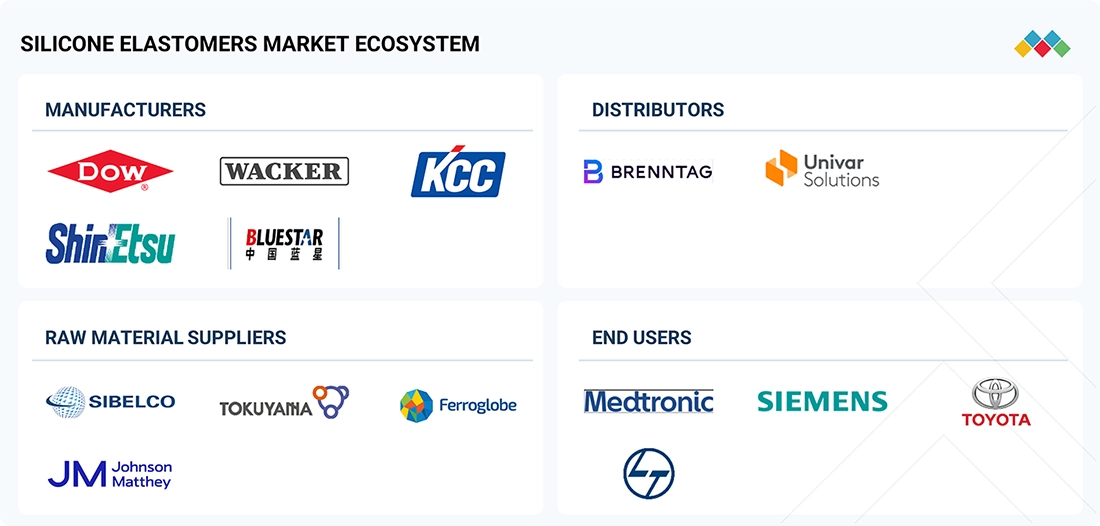
Logos and trademarks shown above are the property of their respective owners. Their use here is for informational and illustrative purposes only.
MARKET SEGMENTS
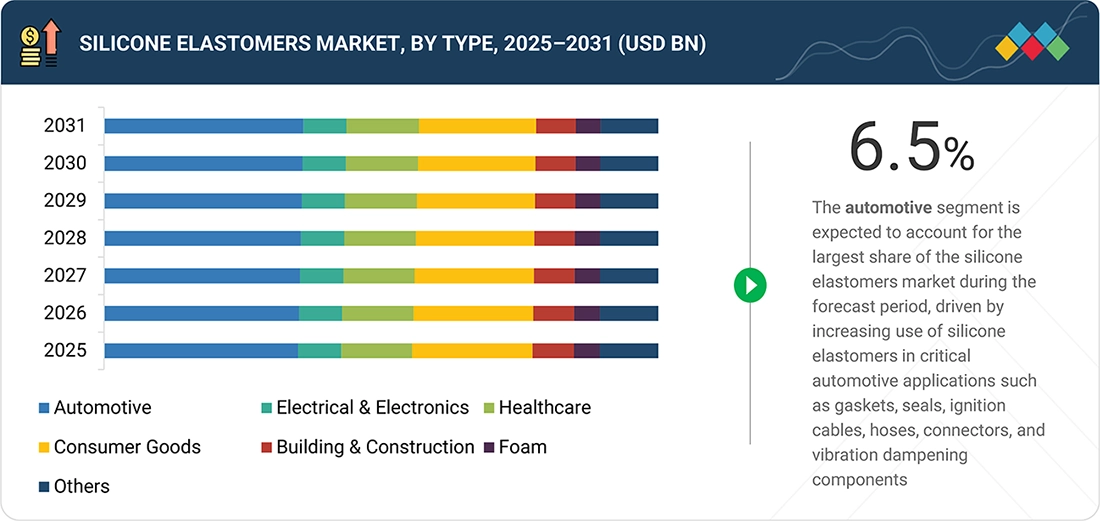
Source: Secondary Research, Interviews with Experts, MarketsandMarkets Analysis
Silicone Elastomers Market, By Type
High-consistency rubbers (HCRs) are projected to dominate the silicone elastomer market throughout the forecast period due to their high mechanical strength, thermal stability, and ability to operate in extreme environmental conditions. Typical applications for HCR silicone elastomers include automotive seals & gaskets, igniters with electrical insulated wires, and industrial components, which all have excellent durability and longevity. Their ability to be produced using compression molds, injection molds, or extrusion methods also facilitates their use for a variety of applications across multiple industries. The growth of vehicle electrification, the advancement of electronic systems, and the demand for technology enhancements in the automotive and electronic sectors positively contribute to the overarching trend of market growth. The properties of HCR enable them to be heat, chemical, and weather resistant. The combinations of versatility and low cost of HCR due to the mass production capabilities continue to solidify HCR's leadership in the global silicone elastomer market. Moreover, advances in processing technologies and the expansion of the applications of HCR within the healthcare & consumer goods markets positively impact the overall segment growth within the global market.
Silicone Elastomers Market, By Process
Liquid injection molding (LIM) is expected to account for the largest share in the silicone elastomers market during the forecast period. This will be driven largely by its efficiency, precision, and suitability for large-volume production of complex, high-performance silicone parts. LIM processes deliver rapid cycle times, minimal material loss and outstanding dimensional accuracy. These processes are extremely popular in the automotive, healthcare, electronics, and consumer products. The use of LIM for producing complex functionality and/or thin-wall parts has been growing as demand for these parts continues to increase, driven by advances in medical devices, wearable electronics, and automotive seals. Additionally, liquid silicone rubber is usually of a very high purity. This improves the compatibility of LIM with sensitive applications such as those found in healthcare or pharmaceuticals. Also, as industries increasingly require lightweight, durable, and heat-resistant parts, demand for LIM technology will grow. The automation benefits of LIM mean lower labor costs and the highest possible consistency in production rates, making it a highly cost-effective process for large production runs. As the industry continues to move toward more advanced manufacturing techniques, the trend toward Liquid Injection Molding as the key method for processing silicone elastomers globally is anticipated.
Silicone Elastomers Market, By End-use Industry
The automotive industry is expected to be the largest end-use market for silicone elastomers during the forecast period. The primary driving force behind this growth is their increasing use in critical automotive applications, such as gaskets, seals, ignition cables, hoses, connectors, and engine mounts, due to their exceptional resistance to extreme temperatures and outstanding performance under high mechanical stress. With the rapid increase in electric vehicle (EV) production, there is a growing demand for silicone elastomers for battery insulation and charging systems, as well as for electronic control units, due to their excellent electrical insulation properties. Additionally, the automotive industry is pushing towards the development of lighter-weight and more durable materials to enhance vehicle fuel efficiency and lower emissions, which in turn supports silicone component use. The long service life of silicone elastomers, combined with their high level of dependability, will also drive down an automotive manufacturer’s maintenance expenses, thereby making this material a popular selection among automotive manufacturers. As advances continue in automotive design and more vehicles move to electricity as a power source, the automotive segment will continue to dominate the silicone elastomers market globally.
REGION
Asia Pacific to be largest region in global silicone elastomers market during forecast period
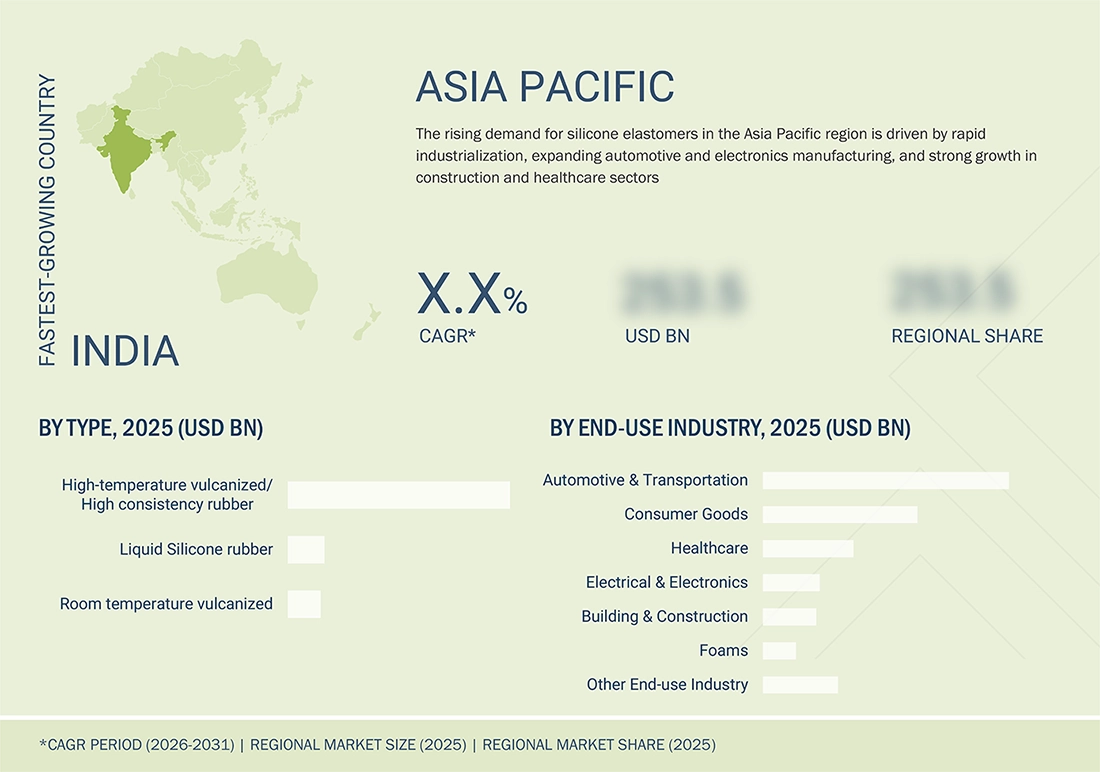
Asia Pacific is expected to account for the largest share of the silicone elastomers market during the forecast period. The projected growth is driven by industrial expansion, rapid urbanization, and rising manufacturing activity across major economies, including China, India, Japan, and South Korea. The automobile and electronic industries in Asia Pacific are well-established, making them two of the largest end-use markets for silicone elastomers and are also being driven by an increase in demand for battery electric vehicles, consumer electronics and advanced healthcare devices, which are driving additional market growth in the region. Additionally, the low cost of labor and raw materials in the Asia Pacific region has encouraged many global manufacturers to establish production sites in the region, thereby strengthening the regional supply chain. Government policies promoting domestic manufacturing and foreign direct investment in the region have further supported the growth of the silicone elastomer market in Asia Pacific. In general, there is an increasing awareness in the marketplace of high-performance materials that have durability, heat resistance and flexibility and are fuelling the adoption of silicone elastomer products across sectors.
SILICONE ELASTOMERS MARKET: COMPANY EVALUATION MATRIX
Dow Inc. (Star) is one of the leading producers in the silicone elastomers market, supported by its strong technological capabilities and broad portfolio of high-performance silicone materials. The company benefits from advanced manufacturing systems and continuous innovation in formulation and processing technologies, enabling the production of liquid silicone rubber (LSR), high-consistency rubber (HCR), and specialty elastomer grades with excellent thermal stability, flexibility, and chemical resistance. Its integrated value chain and strong R&D focus allow Dow to deliver application-specific solutions for high-growth sectors such as automotive, healthcare, electronics, and consumer goods. In particular, the increasing demand from electric vehicles, medical devices, and energy-efficient systems further strengthens its market position. Continuous investment in innovation and sustainable material development helps Dow align with global trends in electrification, lightweighting, and environmental performance. At the same time, CHT Germany (Emerging Player) is strengthening its presence in the silicone elastomers market by offering high-quality silicone elastomer solutions tailored for industrial, healthcare, and personal care applications. The company is focusing on expanding its product portfolio, improving formulation technologies, and enhancing production efficiency. With growing emphasis on specialty silicone solutions and sustainable manufacturing practices, CHT Germany is gradually positioning itself as a competitive player supporting next-generation material demands across global end-use industries
Source: Secondary Research, Interviews with Experts, MarketsandMarkets Analysis
KEY MARKET PLAYERS
- Dow Inc. (US)
- Wacker Chemie AG (Germany)
- KCC Corporation (South Korea)
- Shin-Etsu Chemical Co., Ltd. (Japan)
- China National Bluestar (Group) Co., Ltd. (China)
- Rogers Corporation (US)
- Cabot Corporation (US)
- Reiss Manufacturing Inc. (US)
- Mesgo S.p.A. (Italy)
- CHT Germany GmbH (Germany)
- Bellofram Elastomers (US)
- AB Specialty Silicones LLC (US)
- Specialty Silicone Products Inc. (US)
- Avantor, Inc. (US)
- Silicone Solutions, Inc. (US)
MARKET SCOPE
| REPORT METRIC | DETAILS |
|---|---|
| Market Size in 2025 (Value) | USD 8.75 Billion |
| Market Forecast in 2026 (Value) | USD 9.31 Billion |
| Market Forecast in 2031 (Value) | USD 12.75 Billion |
| Growth Rate | CAGR of 6.5% from 2026–2031 |
| Years Considered | 2022–2031 |
| Base Year | 2025 |
| Forecast Period | 2026–2031 |
| Units Considered | Value (USD Billion), Volume (Kiloton) |
| Report Coverage | Revenue forecast, company ranking, competitive landscape, growth factors, and trends |
| Segments Covered |
|
| Regions Covered | North America, Asia Pacific, Europe, South America, Middle East & Africa |
WHAT IS IN IT FOR YOU: SILICONE ELASTOMERS MARKET REPORT CONTENT GUIDE
DELIVERED CUSTOMIZATIONS
We have successfully delivered the following deep-dive customizations:
| CLIENT REQUEST | CUSTOMIZATION DELIVERED | VALUE ADDS |
|---|---|---|
| Material-grade differentiation analysis | Comparative mapping of HTV/HCR, LSR, and RTV silicone elastomers based on thermal resistance, elasticity, and processing efficiency | Helps identify substitution opportunities and optimize grade selection for cost-performance balance across industries |
| End-use industry application benchmarking | Performance mapping across automotive systems, healthcare devices, electronics, and industrial components | Facilitates alignment of silicone elastomer grades with high-growth applications such as EVs, medical devices, and advanced electronics |
RECENT DEVELOPMENTS
- April 2026 : Dow launched a new high-performance SILASTIC™ silicone elastomer grade engineered specifically for automotive sealing applications, delivering superior heat resistance and enhanced flexibility to meet evolving EV and combustion engine demands.
- October 2025 : Wacker presented ELASTOSIL® silicone elastomer innovations for e-mobility and high-performance applications at the K trade fair, highlighting advanced elastomer solutions for sensors, insulation, and sustainable material systems in the automotive and electronics sectors.
- September 2025 : Dow launched DOWSIL™ EG-4175 Silicone Gel, a highly reliable protective elastomeric encapsulant for next-generation IGBT modules supporting greater reliability and power efficiency in EV batteries and renewable energy inverters, rated to withstand temperatures up to 180°C.
Table of Contents
 Exclusive indicates content/data unique to MarketsandMarkets and not available with any competitors.
Methodology
The study involved four major activities to estimate the current size of the global silicone elastomers market. Exhaustive secondary research was carried out to collect information on the market, the peer product market, and the parent product group market. The next step was to validate these findings, assumptions, and sizes with the industry experts across the value chain of silicone elastomers through primary research. The top-down and bottom-up approaches were employed to estimate the overall size of the silicone elastomers market. After that, market breakdown and data triangulation procedures were used to determine the size of different segments of the market.
Secondary Research
The market for companies offering silicone elastomers was arrived at by studying the secondary data available through paid and unpaid sources, analyzing the product portfolios of the major companies in the ecosystem, and rating the companies by their performance and quality. Various secondary sources, such as Business Standard, Bloomberg, World Bank, and Factiva, were referred to identify and collect information for this study on the silicone elastomers market. In the secondary research process, various secondary sources were referred to identify and collect information related to the study. Secondary sources included annual reports, press releases, investor presentations, silicone elastomers distributors, forums, certified publications, and white papers. The secondary research was used to obtain critical information on the industry’s value chain, the total pool of key players, market classification, and segmentation from the market and technology-oriented perspectives.
Primary Research
In the primary research process, various primary sources from the supply and demand sides were interviewed to obtain qualitative and quantitative information for this report. The primary sources from the supply side included industry experts, such as Chief Executive Officers (CEOs), Vice Presidents (VPs), marketing directors, technology and innovation directors, and related key executives from several key companies and organizations operating in the silicone elastomers market. After the complete market engineering (calculations for market statistics, market breakdown, market size estimations, market forecasting, and data triangulation), extensive primary research was conducted to gather information and verify and validate the critical numbers arrived at. Primary research was also conducted to identify the segmentation types, industry trends, competitive landscape of silicone elastomers offered by various market players, and key market dynamics, such as drivers, restraints, opportunities, challenges, industry trends, and key player strategies. In the complete market engineering process, the top-down and bottom-up approaches and several data triangulation methods were extensively used to perform the market estimation and market forecasting for the overall market segments and subsegments listed in this report. Extensive qualitative and quantitative analysis was performed on the complete market engineering process to list key information/insights throughout the report.
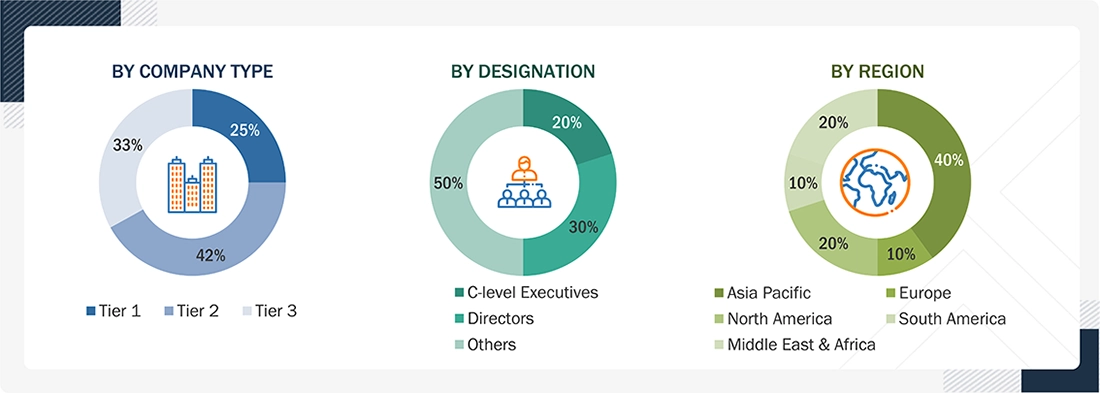
Notes: Others include sales, marketing, and product managers.
Tier 1: > USD 1 billion; Tier 2: USD 500 million–1 billion; and Tier 3: < USD 500 million
To know about the assumptions considered for the study, download the pdf brochure
Market Size Estimation
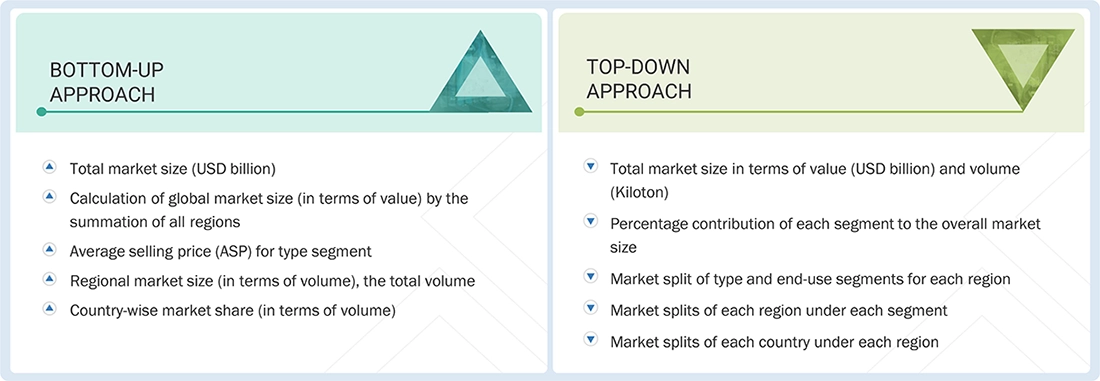
The top-down and bottom-up approaches were used to estimate and validate the size of the global silicone elastomers market. These approaches were also used extensively to estimate the size of various dependent market segments.
The research methodology used to estimate the market size included the following approaches:
Silicone Elastomers Market : Top-Down and Bottom-Up Approach
Data Triangulation
After arriving at the overall market size using the market size estimation processes, the market was split into several segments and subsegments. The data triangulation and market breakup procedures were employed, wherever applicable, to complete the overall market engineering process and arrive at the exact statistics of each market segment and subsegment. The data was triangulated by studying various factors and trends from both the demand and supply sides.
Market Definition
Silicone elastomers are a class of elastomeric materials made from silicone-based polymers that exhibit exceptional flexibility, thermal stability, chemical resistance, and durability. They are composed primarily of silicon, oxygen, carbon, and hydrogen, forming a stable molecular structure that performs reliably under extreme temperatures and harsh environmental conditions. Silicone elastomers are widely used in applications requiring long-term elasticity and performance, including automotive components, healthcare devices, electrical insulation, industrial seals, and consumer products. They are valued for their biocompatibility, weather resistance, and ability to maintain mechanical properties over a wide temperature range. These characteristics make silicone elastomers essential materials for sealing, molding, damping, and protective applications across diverse industrial and medical sectors.
Key Stakeholders
- Raw Material Suppliers
- Regulatory Bodies
- Government and Consulting Firms
- End Users
- Research and Development Organizations
- Silicone Elastomers Manufacturers, Dealers, Traders, and Suppliers
Report Objectives
- To define, describe, and forecast the size of the global silicone elastomers market based on type, process, end-use industry, and region in terms of value and volume
- To provide detailed information on the significant drivers, restraints, opportunities, and challenges influencing the market
- To analyze and forecast the market based on type, process, and end-use industry
- To strategically analyze micro markets concerning individual growth trends, prospects, and their contribution to the market
- To assess the growth opportunities in the market for stakeholders and provide details on the competitive landscape for market leaders
- To forecast the market size of segments for North America, Europe, Asia Pacific, South America, and the Middle East & Africa
- To strategically profile key players and comprehensively analyze their market shares and core competencies
- To analyze competitive developments, such as product launches, expansions, partnerships, and acquisitions in the silicone elastomers market
- To provide the impact of AI on the silicone elastomers market
Available customizations:
With the given market data, MarketsandMarkets offers customizations according to client-specific needs.
The following customization options are available for the silicone elastomers report:
Product Analysis
- A product matrix that gives a detailed comparison of the product portfolio of each company
Regional Analysis
- A further breakdown of the silicone elastomers market for additional countries
Company Information
- Detailed analysis and profiling of additional market players (up to five)


Personalize This Research
- Triangulate with your Own Data
- Get Data as per your Format and Definition
- Gain a Deeper Dive on a Specific Application, Geography, Customer or Competitor
- Any level of Personalization
Let Us Help You
- What are the Known and Unknown Adjacencies Impacting the Silicone Elastomers Market
- What will your New Revenue Sources be?
- Who will be your Top Customer; what will make them switch?
- Defend your Market Share or Win Competitors
- Get a Scorecard for Target Partners

Custom Market Research Services
We Will Customise The Research For You, In Case The Report Listed Above Does Not Meet With Your Requirements
Get 10% Free CustomisationTESTIMONIALS
We at Nissan Chemicals Corporation have been clients of MarketsandMarkets for more than a year now. We recently consulted MarketsandMarkets for a study, the team at MarketsandMarkets was extremely professional and organized. The business insights were very detailed and aligned well with our expectations that really helped us formulate the Business Plans and device new strategies for development themes. MarketsandMarkets offers a unique combination of expertise and dedicated engagement model. Their research findings have helped us in designing our Pricing Strategy which will make it easier for us to predict the future sales and profits for the next ten years. We look forward to working with MarketsandMarkets in the future.
VP of Strategy & New Business Development
Leading Specialty Chemical Company
The MarketsandMarkets Engagement Model, composed of both the Knowledge Store and advisory custom research, has greatly helped us in understanding our markets and making strategic decisions. The Knowledge Store is a fast way to allow everyone in our organization to understand more about most any market they are interested in. The ability to then get custom research done and get answers to specific strategic questions and market insight has been spectacular. The Markets and Markets team feel more like colleagues than vendors and their services have helped us change our culture where statements of things like growth opportunities and competitive position are always backed by industry research.

Rich Gibson,
Director, Corporate Strategy
Milliken & Company,
Leading Industrial Manufacturer of specialty chemical, floor covering, performance and protective textile materials, and healthcaremilliken.com
MarketsandMarkets is a trusted resource that helps us to better understand markets that are near-adjacencies-whether its technology, value chain or geography. Their Knowledge Store platform provides a dashboard of markets and their characteristics which is easy to use and saves us time.
Adam Shaw,
Market Development and Strategy Manager
AdvanSix Inc. USA,
An American Leader in Chemicalswww.advansix.com
The Knowledge Store from MarketsandMarkets is a valuable tool which has helped my team acquire greater insight in to the end markets that our business serves. This has enabled us to help our company build stronger strategies throughout our planning process.
TOSHIO KINOSHITA
Senior Chif Consultion Research & Consulting Division
Mitsubishi Chemical Research Corporation,
Leading Manufacturer of Chemical Productswww.mitsubishichem-res.co.jp/en/

We recently engaged with MarketsandMarkets for a study, the team not only clearly understood our business objectives but was also extremely professional in the way they handled the entire project. The study was efficiently conducted in a phase-wise manner, and the engagement model furnished us with high-quality business insights that far exceeded our expectations at each phase. We were especially happy that MarketsandMarkets could provide us with both, an English as well as a Japanese version of the study. A special thanks to the Analyst Team and Client Services Team, whose fluency in Japanese enhanced our comfort level, as we could converse with them in our preferred language.
Independent entrepreneurs
Arrow Precision
We approached MarketsandMarkets for study on Proppants Market, and their work exceeded our expectations. The study conducted was comprehensive and enabled us to view the market through the various dimensions. In addition, the team was extraordinarily responsive throughout the process and resolved our queries on time. I strongly recommend MarketsandMarkets and will certainly consider them for additional market assessments we will need in the future.
Global engineering company, Japan
Deputy Manager,
Strategic Planning OfficeThe high-quality insights shared by the MarketsandMarkets team helped us understand the pharmaceutical plant designers in a specific geography. It also captured the risks that we may likely face in communicating with our potential partners. The study would enable us identify partners, which would impact our future growth.
- US Silicone Elastomers Market
- Canada Silicone Elastomers Market
- Mexico Silicone Elastomers Market
- Germany Silicone Elastomers Market
- France Silicone Elastomers Market
- UK Silicone Elastomers Market
- Italy Silicone Elastomers Market
- Spain Silicone Elastomers Market
- Turkey Silicone Elastomers Market
- China Silicone Elastomers Market
- India Silicone Elastomers Market
- Japan Silicone Elastomers Market
- South Korea Silicone Elastomers Market
- Indonesia Silicone Elastomers Market
- South Africa Silicone Elastomers Market
- Brazil Silicone Elastomers Market
- Argentina Silicone Elastomers Market
- Rest Of Europe Silicone Elastomers Market
- Rest Of Asia Pacific Silicone Elastomers Market
- GCC Countries Silicone Elastomers Market
- -Rest Of GCC Countries Silicone Elastomers Market
- Rest Of South America Silicone Elastomers Market






Growth opportunities and latent adjacency in Silicone Elastomers Market