Smart Shopping Cart Market

Smart Shopping Cart Market by Cart Type (Fully Integrated Carts, Retrofit Kits), Application Area (Shopping Malls, Supermarkets), Mode of Sale (Direct, Distributor) - Global Forecast to 2032




OVERVIEW
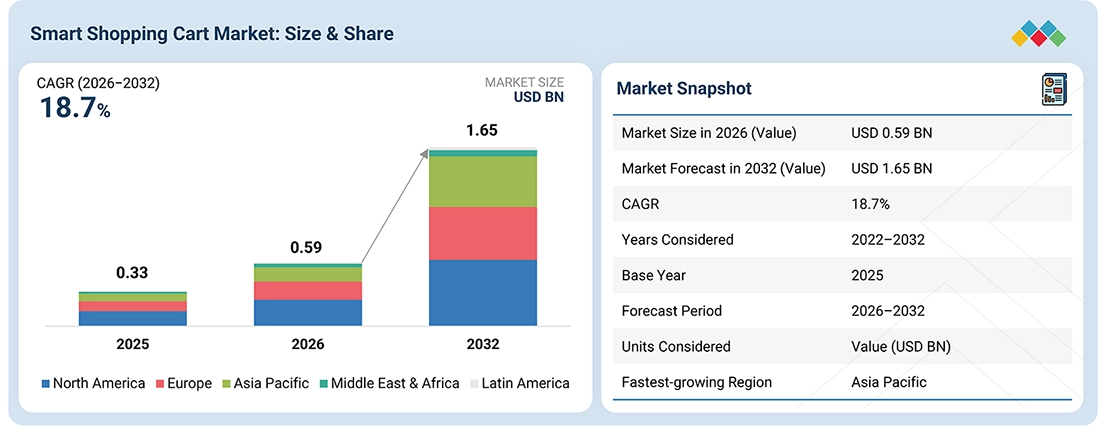
Source: Secondary Research, Interviews with Experts, MarketsandMarkets Analysis
The smart shopping cart market is projected to grow from USD 0.59 billion in 2026 to USD 1.65 billion by 2032, registering a CAGR of 18.7% during the forecast period. The market is gaining traction as retailers increasingly adopt smart carts to automate checkout, improve shopping convenience, and strengthen digital engagement within physical stores. Integration of computer vision, AI modules, sensors, edge computing, and wireless connectivity enables smart carts to support product recognition, basket tracking, self-checkout, and personalized promotions. Growing integration with POS, payment, and loyalty systems is further making smart carts more practical for retailers seeking to modernize existing store operations and deliver connected shopping experiences.
KEY TAKEAWAYS
-
By RegionNorth America accounted for a 42.4% share in 2026.
-
By Application AreaBy application area, the supermarkets segment is expected to register the highest CAGR of 19.4%.
-
By Mode of SaleBy mode of sale, the distributor segment is projected to grow the fastest from 2026 to 2032.
-
Competitive LandscapeCompanies such as Caper (Caper Cart), SuperHii (Smart Cart S700), Amazon (Dash Cart), and Retail AI, Inc. (Skip Cart) were identified as some of the star players in the smart shopping cart market (global), given their strong market share and product footprint.
The global smart shopping cart market is driven primarily by retailers' growing focus on improving in-store convenience and checkout efficiency. Consumers increasingly expect physical stores to offer faster and more seamless experiences similar to digital shopping platforms, including real-time billing, personalized promotions, and convenient payment options. Smart carts meet these needs by letting shoppers identify products, track spending, receive relevant offers, and complete purchases with minimal interaction at traditional checkout counters. For retailers, these capabilities also create opportunities to improve customer engagement and connect physical shopping journeys with loyalty and digital retail programs. As retailers continue to invest in technologies that enhance both operational efficiency and the customer experience, adoption of smart shopping carts is expected to increase.
TRENDS & DISRUPTIONS IMPACTING CUSTOMERS' CUSTOMERS
The impact on customers' businesses in the smart shopping cart market is driven by the evolving demand for faster checkout, improved store flow management, and accurate inventory tracking. Retailers, store operators, and digital transformation teams increasingly depend on AI-enabled smart shopping carts for real-time item recognition, seamless self-checkout, in-cart personalized promotions, and automated billing. Trends such as computer-vision-based real-time item recognition, integrated loyalty programs, and data-driven merchandising planning are reshaping in-store retail strategies. These innovations directly enhance customer experience, reduce shrinkage and operational costs, and promote more enjoyable shopping journeys.
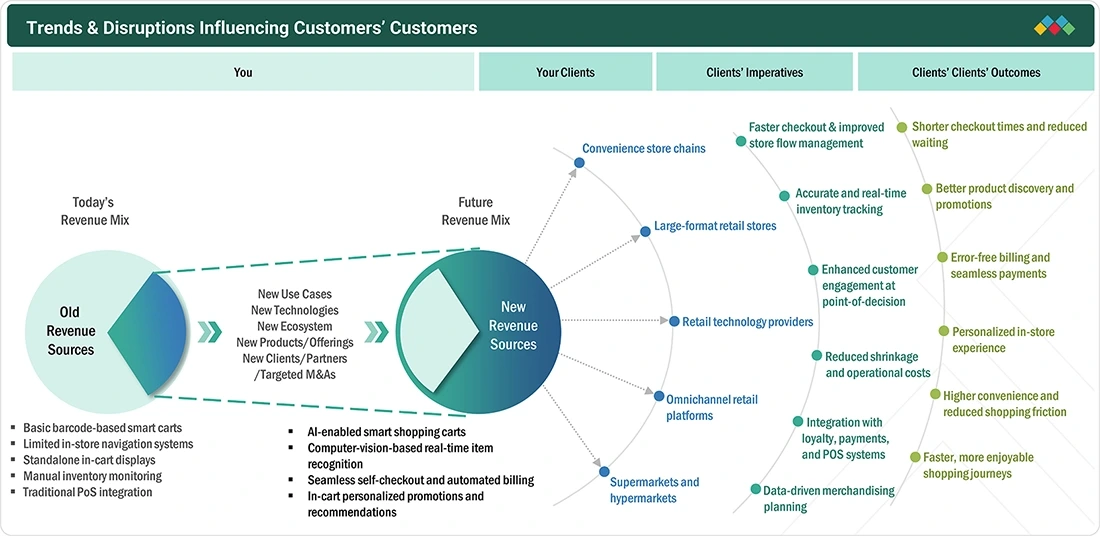
Source: Secondary Research, Interviews with Experts, MarketsandMarkets Analysis
MARKET DYNAMICS

Level
-
Growing need to reduce checkout bottlenecks without expanding store infrastructure

-
Expansion of digital engagement and retail media within physical stores


Level
-
Battery management and ongoing cart maintenance requirements

-
Uncertain return on investment for smaller retailers


Level
-
Integration of smart carts with loyalty and omnichannel platforms

-
Growing use of smart carts as an in-store retail media channel


Level
-
Privacy and data governance for shopper-level interactions

-
Scalability across stores with different layouts and infrastructure

Source: Secondary Research, Interviews with Experts, MarketsandMarkets Analysis
Driver: Growing need to reduce checkout bottlenecks without expanding store infrastructure
The growing need to improve checkout efficiency without undertaking major store redesigns is driving the adoption of smart shopping carts. Traditional checkout expansion requires additional counters, equipment, and staff, which can be difficult to accommodate within existing store footprints. Smart carts shift several checkout activities closer to the shopper by enabling product identification, real-time basket tracking, and payment directly through the cart. This can help retailers manage peak shopping periods while reducing pressure on conventional checkout areas. The technology is particularly relevant to supermarkets, where high transaction volumes and frequent shopping trips can result in checkout congestion. As retailers focus on improving store productivity while maximizing the use of existing infrastructure, smart shopping carts are emerging as a practical approach to streamline front-end operations and enhance the overall shopping experience.
Restraint: Battery management and ongoing cart maintenance requirements
Deploying smart shopping carts adds operational requirements compared with conventional carts. Cameras, displays, computing modules, sensors, payment systems, and connectivity components require regular charging, maintenance, software updates, and replacement of damaged hardware. Retailers operating large fleets across multiple stores need processes to monitor battery levels, identify malfunctioning carts, and ensure that sufficient carts remain available during operating hours. Maintenance requirements can also increase as retailers expand deployments across larger store networks, particularly when carts use multiple electronic components from different suppliers. These activities add to the total cost of operating smart cart fleets and can affect the economics of large-scale deployments. Vendors therefore need to provide reliable hardware, efficient fleet-management capabilities, and responsive maintenance support to help retailers control operating costs and maintain cart availability.
Opportunity: Integration of smart carts with loyalty and omnichannel platforms
Integrating with loyalty programs and omnichannel retail platforms creates an opportunity to expand smart shopping carts beyond checkout automation. When connected to retailer applications and loyalty accounts, smart carts can offer shoppers personalized promotions, digital shopping lists, product recommendations, and relevant discounts during store visits. Retailers can also connect cart interactions with customer profiles and broader digital engagement programs, allowing promotions delivered in physical stores to complement online shopping activities. Such integration can help retailers create a more consistent customer journey across digital and physical channels while increasing the relevance of in-store promotions. For smart cart vendors, compatibility with loyalty, POS, e-commerce, and customer engagement platforms can also strengthen the value proposition of their solutions. As retailers increasingly pursue omnichannel strategies, smart carts can become an additional interface connecting shoppers with the broader retail ecosystem.
Challenge: Privacy and data governance for shopper-level interactions
The growing use of personalized promotions, loyalty integration, and shopper analytics is creating greater requirements for collecting and managing customer data through smart carts. Depending on the solution, information generated during a shopping journey can include product interactions, promotional engagement, shopping patterns, and loyalty-linked activity. Retailers therefore need to establish appropriate processes for data collection, storage, access, and usage while complying with applicable privacy requirements. The issue becomes more relevant as smart carts move beyond basic product recognition and checkout functions toward personalized customer engagement. Vendors also need to provide appropriate controls and transparency around how data is processed and integrated with retailer systems. The ability to balance personalization with responsible data management will influence retailer adoption, particularly among large chains with established customer-data governance frameworks.
SMART SHOPPING CART MARKET: COMMERCIAL USE CASES ACROSS INDUSTRIES
| COMPANY | USE CASE DESCRIPTION | BENEFITS |
|---|---|---|
 |
Schnucks deployed Caper Carts to give customers AI-powered product recognition, running basket totals, digital coupons, and checkout directly in the cart. Caper also enables location-based promotions and advertising as shoppers move through the store. (Instacart) | Improves shopping convenience, supports personalized promotions, and creates opportunities to increase basket sizes and generate retail media revenue. |
 |
Shufersal deployed Shopic's smart cart solution across its stores using Shopic's modular clip-on technology. The solution was designed to provide automated product recognition, personalized engagement, and a faster shopping experience without replacing the retailer's existing cart fleet. Shopic reported an 8% increase in shoppers' monthly spending during the case study and said Shufersal planned deployment across about 200 large branches. (Shopic) | Supports larger basket values, customer engagement, and scalable deployment while reducing the need for retailers to replace existing shopping carts. |
 |
Yochananof, a major Israeli supermarket chain, deployed Cust2Mate smart carts across its stores to address checkout queues and improve store automation. The carts let shoppers scan and pay for products during their shopping trip while providing personalized ads, coupons, and shopping information. Cust2Mate reports that the deployment served thousands of customers daily and eliminated five cashier lines per store. (Cust2Mate) | Reduces checkout congestion and labor requirements while supporting larger basket sizes, personalized promotions, and improved shopper engagement. |
Logos and trademarks shown above are the property of their respective owners. Their use here is for informational and illustrative purposes only.
MARKET ECOSYSTEM
The smart shopping cart ecosystem consists of retrofit kit providers (Shopic, SuperHii, Tracxpoint), fully integrated cart providers (Retail AI, Inc., Caper, SuperHii, Veeve, Cust2Mate, KBST, Shopreme, Swiftforce), and Regulatory Bodies (Consumer Protection, GDPR, CCPA). These vendors collectively support the development and deployment of intelligent carts, real-time item recognition, automated checkout, and secure data handling, while regulatory bodies ensure compliance and consumer trust.
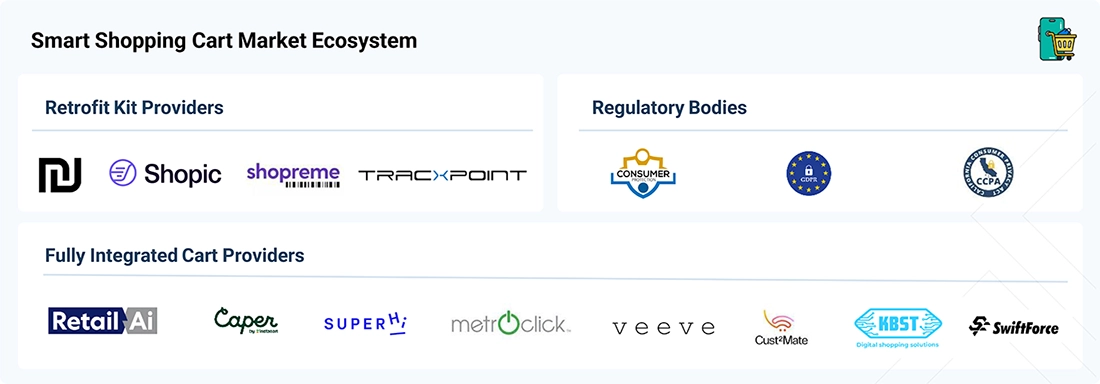
Logos and trademarks shown above are the property of their respective owners. Their use here is for informational and illustrative purposes only.
MARKET SEGMENTS
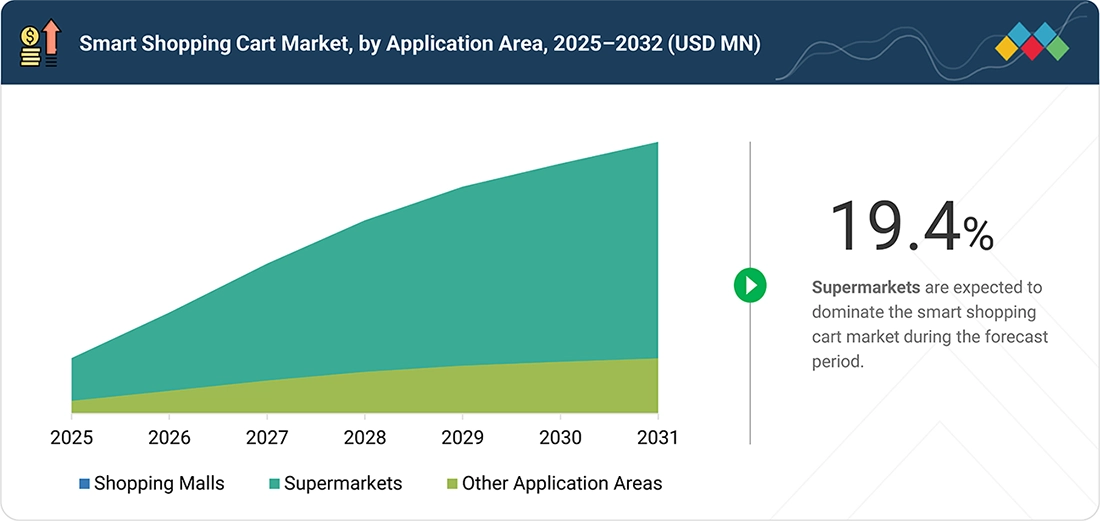
Source: Secondary Research, Interviews with Experts, MarketsandMarkets Analysis
Smart Shopping Cart Market, By Application Area
Supermarkets are expected to account for a significant share of the smart shopping cart market during the forecast period, as retailers increasingly use carts as an extension of their digital store infrastructure rather than only as a checkout tool. Smart carts can connect product discovery, basket management, promotions, loyalty programs, and payment within a single customer journey. This lets supermarkets introduce targeted offers while shoppers are still making purchase decisions and gives retailers additional touchpoints to influence basket composition. The technology also supports store-level objectives such as reducing front-end congestion and improving the productivity of existing checkout infrastructure. In shopping malls and other retail environments, smart carts can support product discovery, wayfinding, promotional engagement, and assisted shopping. As retailers look to generate greater value from each in-store interaction, smart carts are increasingly being positioned as a broader customer-engagement and transaction platform.
Smart Shopping Cart Market, By Mode of Sale
The direct segment is expected to account for the largest market share during the forecast period, supported by large retailers' preference for direct engagement with smart shopping cart providers during deployment. Smart carts typically need to be integrated with existing POS, payment, loyalty, inventory, and store-management systems, requiring coordination between the technology provider and retailer. Direct sales let vendors customize cart hardware and software to store requirements and provide installation, system integration, training, and post-deployment support. This model also gives large retail chains greater control over software updates, system configuration, and data generated through smart cart deployments. In addition, direct engagement allows vendors to work closely with retailers during pilot programs and subsequent multi-store rollouts, helping address technical requirements before expanding deployments. As major supermarket chains increasingly undertake large-scale smart cart deployments and seek deeper integration with their existing retail technology infrastructure, direct sales are expected to remain the dominant mode of sale.
REGION
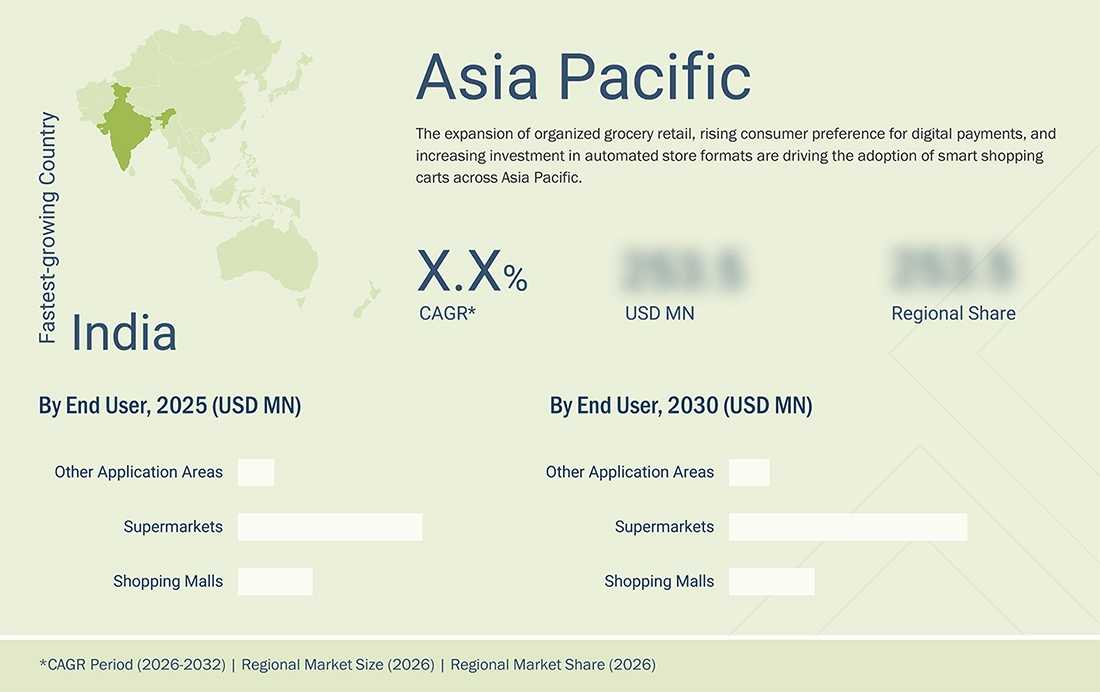
Asia Pacific to be fastest-growing region in global smart shopping cart market during forecast period
The Asia Pacific smart shopping cart market is expected to register the fastest growth during the forecast period, supported by the increasing adoption of AI, automation, and connected retail technologies across the region. Retailers are increasingly seeking technologies that improve store productivity, reduce reliance on manual checkout processes, and enable more digital interactions with shoppers. Japan is witnessing greater interest in smart cart solutions as retailers address labor availability and seek more automated store operations. For instance, Toshiba Tec began selling Retail AI's Skip Cart in January 2025, combining smart cart capabilities with its ELERA retail platform. The region's established electronics manufacturing base and growing retail technology ecosystem also support the development and deployment of smart carts with computer vision, digital displays, payment, and connectivity capabilities. Meanwhile, the expansion of organized grocery retail in China, India, South Korea, and Southeast Asian markets is increasing the potential customer base for smart cart providers. As retailers increasingly combine store automation with digital payments, personalized engagement, and connected retail infrastructure, Asia Pacific is expected to provide significant growth opportunities for smart shopping cart vendors during the forecast period.
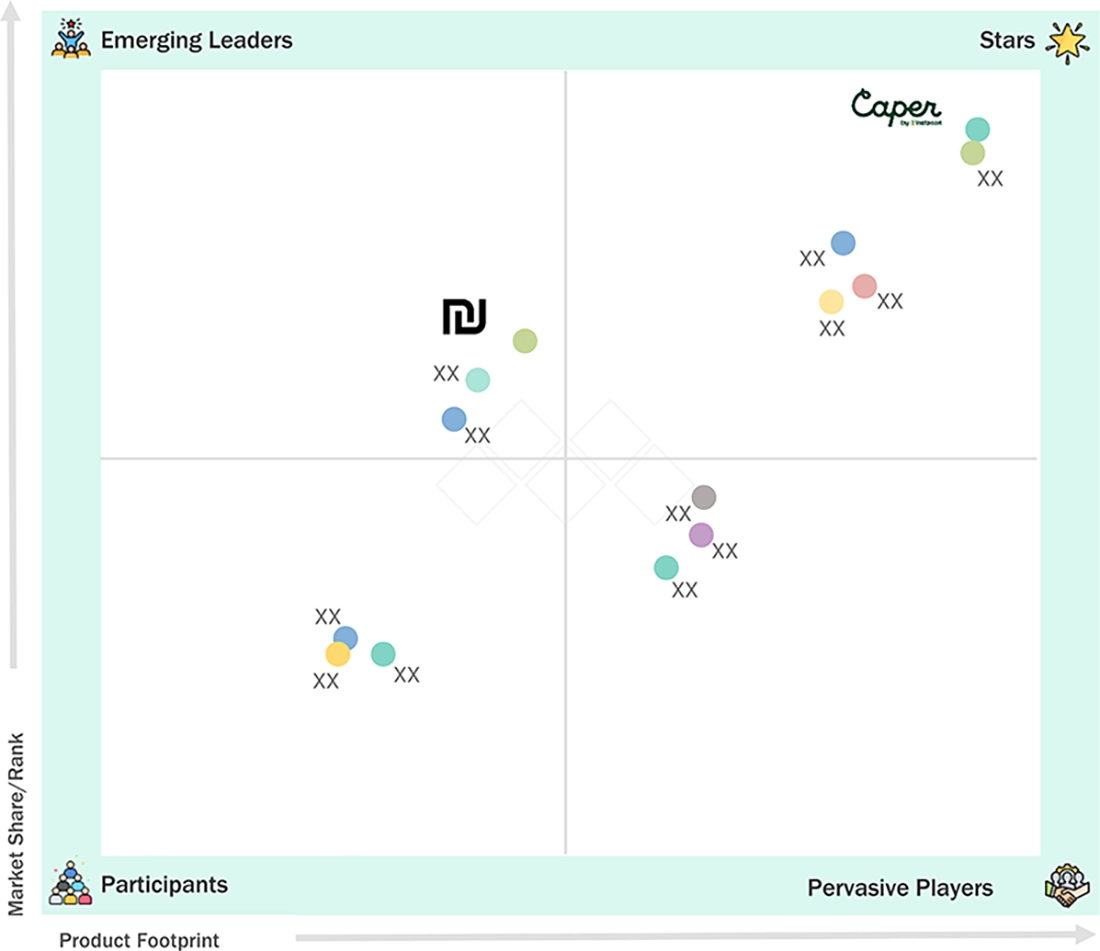
SMART SHOPPING CART MARKET: COMPANY EVALUATION MATRIX
In the smart shopping cart market matrix, Caper (Star) leads with a strong market share and advanced AI-powered carts widely adopted by major retailers for seamless checkout and real-time analytics. Shekel (Emerging Leader) is gaining visibility with its innovative weighing technology and frictionless shopping solutions, strengthening its position through fast, secure, and cost-effective retail integrations. While Caper dominates through large-scale deployments and data-driven features, Shekel shows significant potential to move toward the leaders' quadrant as demand for autonomous shopping and digital retail experiences continues to rise.
Source: Secondary Research, Interviews with Experts, MarketsandMarkets Analysis
KEY MARKET PLAYERS
- Amazon (US)
- Caper (US)
- Retail AI (Japan)
- Shopic (Israel)
- SuperHii (China)
- Tracxpoint (Israel)
- Cust2Mate (Israel)
- Shekel (Israel)
- Faytech (US)
- KBST (Germany)
- MetroClick (US)
- Pentland Firth Software (Germany)
- VasyERP (India)
- Smapca (India)
- SwiftForce (India)
- KwikKart (US)
- ZeroQs (Poland)
- Shopreme (Austria)
- Trollee (Hong Kong)
- Veeve (US)
MARKET SCOPE
| REPORT METRIC | DETAILS |
|---|---|
| Market Size in 2025 (Value) | USD 0.33 Billion |
| Market Size in 2026 (Value) | USD 0.59 Billion |
| Market Forecast in 2032 (Value) | USD 1.65 Billion |
| Growth Rate | 18.70% |
| Years Considered | 2025-2032 |
| Base Year | 2025 |
| Forecast Period | 2026-2032 |
| Units Considered | Value (USD Million) |
| Report Coverage | Revenue forecast, company ranking, competitive landscape, growth factors, and trends |
| Segments Covered |
|
| Regions Covered | North America, Asia Pacific, Europe, Latin America, Middle East & Africa |
WHAT IS IN IT FOR YOU: SMART SHOPPING CART MARKET REPORT CONTENT GUIDE
DELIVERED CUSTOMIZATIONS
We have successfully delivered the following deep-dive customizations:
| CLIENT REQUEST | CUSTOMIZATION DELIVERED | VALUE ADDS |
|---|---|---|
| Leading Service Provider (US) |
|
|
| Company Information | Detailed analysis and profiling of additional market players (up to 5) |
|
RECENT DEVELOPMENTS
- July 2025 : Instacart announced a pilot deployment of its AI-powered smart shopping carts, called Caper Carts, at Wegmans’ Dewitt store in Syracuse, New York, marking the first use of Caper Carts in a Wegmans location.
- March 2025 : Dimar, an Italian supermarket chain, announced a partnership with Shopic and Retex to deploy Shopic’s AI-powered smart carts in its Mercato stores, focusing on improving store efficiency and customer engagement.
- April 2024 : Amazon expanded its smart cart pilot testing, initiated at Price Chopper and McKeever’s Market locations in Kansas and Missouri, to validate third-party technology integration and performance across diverse retail formats. The pilot programs tested integration with different POS systems and store configurations, collecting operational data for refinement before wider rollout.
- January 2024 : Al Meera Consumer Goods Company announced a partnership with Veeve, Inc. to launch the region’s first “smart” shopping carts beginning January 1, 2024, at its Wakrah South branch, followed by Leabaib 1. These carts feature a touchscreen, barcode reader, and cameras that let customers log in, scan items, add them to the cart, and bypass traditional checkout lines; the screen also displays nearby deals linked to the Meera Rewards loyalty program.
- April 2023 : Tracxpoint completed the AI smart cart pilot program and deployed the AI Cart Platform at Conad, introducing AI-powered carts with automatic checkout, in-store navigation, and analytics.
Table of Contents
 Exclusive indicates content/data unique to MarketsandMarkets and not available with any competitors.
Methodology
This research study relied heavily on secondary sources, directories, and databases, including Dun & Bradstreet (D&B), Hoovers, and Bloomberg Businessweek, to identify and collect information relevant to a technical, market-oriented, and commercial study of the smart shopping cart market. The primary sources have consisted primarily of industry experts from core and related industries, as well as preferred suppliers, manufacturers, distributors, service providers, technology developers, alliances, and organizations related to all segments of the value chain of this market. In-depth interviews were conducted with primary respondents, including key industry participants, subject matter experts, C-level executives of key market players, and industry consultants, to obtain and verify critical qualitative and quantitative information.
Secondary Research
The market size of companies offering smart shopping carts worldwide was arrived at based on secondary data available through paid and unpaid sources. It was also determined by analyzing the product portfolio of major companies and rating them based on their performance and quality. In the secondary research process, various secondary sources were referred to identify and collect information for the study. These sources included annual reports, press releases, company investor presentations, white papers, certified publications, and articles from recognized associations and government publishing sources. Several journals and associations, such as The Grocer & Progressive Grocer and the International Journal of Retail & Distribution Management, were also referenced. Secondary research was used to gather key information on industry insights, the market’s value chain, the overall pool of key players, market classification, and segmentation based on industry trends, regional markets, and key developments from both market- and technology-oriented perspectives.
Secondary research was mainly used to obtain key information about the industry’s value chain and supply chain and to identify key players through various solutions and services, market classification and segmentation according to offerings of major players, industry trends related to technologies, applications, and regions, and key developments from both market-oriented and technology-oriented perspectives.
Primary Research
During the primary research process, various primary sources from both the supply and demand sides were interviewed to gather qualitative and quantitative information on the market. The primary sources from the supply side included various industry experts, including Chief Experience Officers (CXOs), Vice Presidents (VPs), directors from business development, marketing, and product development/innovation teams, related key executives from smart shopping cart solution vendors, professional service providers, and industry associations, and key opinion leaders.
Primary interviews gathered insights, including market statistics, revenue data from solutions and services, market segmentation, market size estimates, market forecasts, and data triangulation. Primary research also helped in understanding various trends related to technologies, applications, deployments, and regions. Stakeholders from the demand side, such as Chief Information Officers (CIOs), Chief Technology Officers (CTOs), Chief Strategy Officers (CSOs), and end users using smart shopping cart solutions, were interviewed to understand the buyer’s perspective on suppliers, products, service providers, and their current usage of smart shopping cart solutions, which would impact the overall Smart shopping cart market.
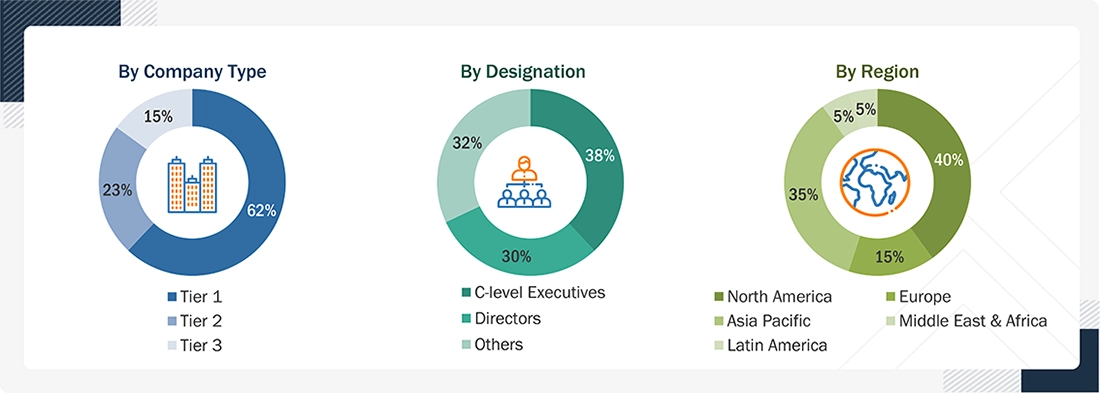
Others include sales managers, marketing managers, and product managers.
Note: Tier 1 companies’ revenue is more than USD 1 billion; Tier 2 companies’ revenue ranges between USD 500 million and USD 1 billion; and Tier 3 companies’ revenue ranges between USD 100 million and USD 500 million
To know about the assumptions considered for the study, download the pdf brochure
Market Size Estimation
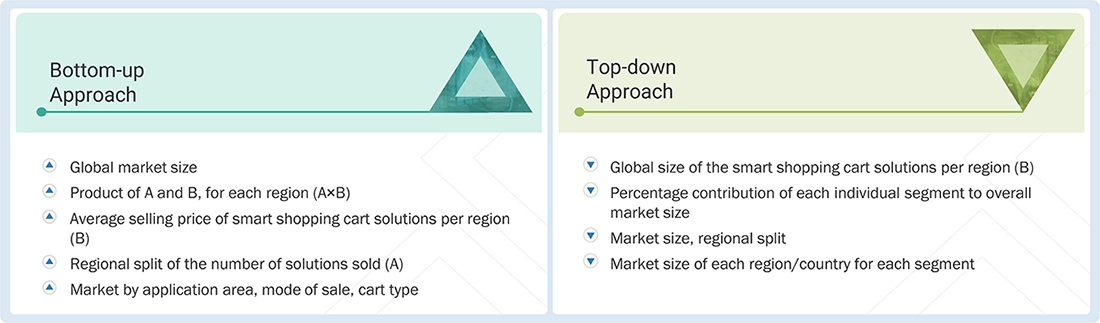
Multiple approaches were adopted to estimate and forecast the size of the smart shopping cart market. The first approach estimates market size by summing up the revenue generated by companies from sales of smart shopping cart solutions.
The report used top-down and bottom-up approaches to estimate and validate the total size of the smart shopping cart market. These methods were also extensively used to estimate the size of various market segments. The research methodology used to evaluate the market size is listed below.
- Key players in the market have been identified through extensive secondary research.
- For value, the industry’s supply chain and market size were determined through a combination of primary and secondary research.
- All percentage shares, splits, and breakups have been determined using secondary sources and verified through primary sources.
Smart Shopping Cart Market : Top-Down and Bottom-Up Approach
Data Triangulation
After determining the overall market size, the smart shopping cart market was segmented into several categories and subcategories. A data triangulation procedure was employed to complete the overall market engineering process and derive the precise statistics for all segments and subsegments, as applicable. The data was triangulated by examining factors and trends from both the demand and supply sides. In addition to data triangulation and market breakdown, the market size was validated using both top-down and bottom-up approaches.
Market Definition
A smart shopping cart is an Internet of Things (IoT) enabled retail device that integrates advanced hardware and software, such as barcode scanners, computer vision cameras, weight sensors, and touchscreens, directly into the physical shopping trolley. This technology lets customers scan, weigh, and pay for items directly at the cart, bypassing traditional checkout lines while giving retailers real-time data on shopping behavior and inventory levels.
Key Stakeholders
- Technology & Hardware Providers
- Retailers
- End Users
- Infrastructure & Enablers
- Regulatory & Governance Organizations
- Software and Connectivity Providers
- Consulting and Advisory Firms
- Investors and Venture Capitalists
- Independent Software Vendors (ISVs)
- Value-added Resellers (VARs) and Distributors
Report Objectives
- To determine and forecast the global smart shopping cart market by application area, mode of sale, cart type, and region
- To forecast the size of the market segments for North America, Europe, Asia Pacific, Latin America, and the Middle East & Africa
- To provide detailed information about the major factors (drivers, restraints, opportunities, and challenges) influencing the growth of the smart shopping cart market
- To analyze each submarket concerning individual growth trends, prospects, and contributions to the overall smart shopping cart market
- To analyze the opportunities in the market for stakeholders by identifying the high-growth segments of the smart shopping cart market
- To profile the key market players, provide a comparative analysis based on business overviews, regional presence, product offerings, business strategies, and key financials, and illustrate the market’s competitive landscape
- Track and analyze competitive developments in the market, such as mergers and acquisitions, product development, partnerships and collaborations, and research and development (R&D) activities
Available customizations:
With the given market data, MarketsandMarkets offers customizations to meet the company’s specific needs. The following customization options are available for the report:
Country-wise information
- Analysis for additional countries (up to five)
Company Information
- Detailed analysis and profiling of additional market players (up to 5)
Key Questions Addressed by the Report
What is the current size of the Smart Shopping Cart Market?
The Smart Shopping Cart Market is projected to grow from USD 326.0 million in 2025 to USD 1,423.1 million by 2030, registering a CAGR of 34.3% during the forecast period. The market is expanding rapidly as retailers adopt AI-powered shopping carts to improve customer experience and streamline store operations.
What is driving the growth of the Smart Shopping Cart Market?
The market is driven by increasing demand for frictionless checkout, growing adoption of AI, computer vision, IoT, and edge computing technologies, and retailers' focus on improving operational efficiency, inventory accuracy, and personalized in-store shopping experiences.
Which application segment is expected to grow the fastest in the Smart Shopping Cart Market?
The supermarkets segment is expected to witness the highest growth, with a CAGR of 35.0% during the forecast period. Large supermarkets are increasingly deploying smart carts to reduce checkout times, enhance customer convenience, and improve inventory management.
Which region leads the Smart Shopping Cart Market?
North America held the largest market share, accounting for 42.1% of global revenue in 2025, driven by early technology adoption and investments by major retail chains. Meanwhile, the Asia Pacific region is expected to record the fastest growth due to rapid retail modernization and increasing adoption of AI-enabled retail technologies.
Who are the key players in the Smart Shopping Cart Market?
Major companies operating in the Smart Shopping Cart Market include Caper (Caper Cart), Amazon (Dash Cart), SuperHii (Smart Cart S700), and Retail AI, Inc. (Skip Cart). These companies are investing in AI-powered shopping cart technologies that enable automatic item recognition, self-checkout, and real-time analytics for retailers.


Personalize This Research
- Triangulate with your Own Data
- Get Data as per your Format and Definition
- Gain a Deeper Dive on a Specific Application, Geography, Customer or Competitor
- Any level of Personalization
Let Us Help You
- What are the Known and Unknown Adjacencies Impacting the Smart Shopping Cart Market
- What will your New Revenue Sources be?
- Who will be your Top Customer; what will make them switch?
- Defend your Market Share or Win Competitors
- Get a Scorecard for Target Partners

Custom Market Research Services
We Will Customise The Research For You, In Case The Report Listed Above Does Not Meet With Your Requirements
Get 10% Free CustomisationTESTIMONIALS
- US Smart Shopping Cart Market
- Canada Smart Shopping Cart Market
- UK Smart Shopping Cart Market
- Germany Smart Shopping Cart Market
- France Smart Shopping Cart Market
- Italy Smart Shopping Cart Market
- China Smart Shopping Cart Market
- India Smart Shopping Cart Market
- Japan Smart Shopping Cart Market
- Israel Smart Shopping Cart Market
- UAE Smart Shopping Cart Market
- South Africa Smart Shopping Cart Market
- Chile Smart Shopping Cart Market
- Mexico Smart Shopping Cart Market
- Rest Of Europe Smart Shopping Cart Market
- Anz Smart Shopping Cart Market
- Rest Of Asia Pacific Smart Shopping Cart Market
- Rest Of Latin America Smart Shopping Cart Market






Growth opportunities and latent adjacency in Smart Shopping Cart Market