Solar Powered Drone Market Size, Share & Trends

Solar Powered Drone Market Size, Share and Trends by Energy Architecture (Fully Solar-Electric UAV, Solar-Assisted Battery UAV), Drone Type (Small, Medium, Large), Operating Altitude, Application, and Region - Global Forecast to 2035


SOLAR-POWERED DRONE MARKET OVERVIEW
According to Marketsandmarkets, The global Solar-Powered Drone Market size was valued at USD 0.03 billion in 2026 and is projected to reach USD 0.16 billion by 2035, growing at a CAGR of 18.4% from 2026 to 2035. The growth in the market is driven by the need for drones that can stay airborne for longer periods to carry out work in remote areas without regular battery charging.
REPORT SCOPE
| REPORT METRIC | DETAILS |
|---|---|
| Market Size in 2025 (Value) | USD 0.01 Billion |
| Market Size in 2026 (Value) | USD 0.03 Billion |
| Market Forecast in 2035 (Value) | USD 0.16 Billion |
| Growth Rate | CAGR of 18.4% From 2026 to 2035 |
| Years Considered | 2021–2035 |
| Base Year | 2025 |
| Forecast Period | 2026–2035 |
| Units Considered | USD Billion/Million |
| Report Coverage | Revenue Forecast, Company Ranking, Competitive Landscape, Growth Factors, and Trends |
| Segments Covered |
|
| Regions Covered | North America, Europe, Asia Pacific, Middle East |
KEY TAKEAWAYS
-
By RegionThe Asia Pacific region is expected to have a CAGR of 23.3% during the forecast period.
-
By Energy ArchitectureBy energy architecture, the fully solar electric UAV segment is set to experience the highest growth rate of 18.9% during the forecast period.
-
By Drone TypeBy drone type, the large (above 150 KG MTOW) segment holds a dominant market position.
-
By Operating AltitudeBy operating altitude, the stratospheric (above 65,000 FT) segment holds the leading market position.
-
Competitive Landscape - Key PlayersAALTO HAPS Ltd. (UK), AeroVironment, Inc. (US), and Skydweller Aero Inc. (US) were identified as some of the star players in the market, given their strong market share and product footprint.
-
Competitive Landscape - Startups/SMEsSunbirds SAS (France) and UAVOS Inc. (US) have identified themselves among SMEs by securing strong footholds in specialized niche areas, underscoring their potential as emerging leaders in the market.
The Solar-Powered Drone Industry growth is driven by the increasing need for long-endurance drones for communication, surveillance, Earth observation, and remote area monitoring, as these applications require drones to operate for longer periods with less dependence on ground charging and battery replacement.

Source: Secondary Research, Interviews with Experts, MarketsandMarkets Analysis
TRENDS & DISRUPTIONS IMPACTING CUSTOMERS' CUSTOMERS
The solar-powered drone market is shifting from basic solar-powered drone platforms, engineering and testing, solar panel and energy system integration, payload integration, and maintenance toward long-endurance communication, persistent Earth observation and remote sensing, autonomous monitoring, disaster response, and fleet-based operations. This shift is supported by developments in high-efficiency solar cells, AI-enabled autonomous flight systems, higher-density batteries and energy management systems, satellite and 5G communication integration, and improved payload and navigation systems. These changes are expanding opportunities for platform integrators, solar cell and energy system suppliers, mission payload suppliers, communication and navigation system providers, and satellite communication companies. Demand is also expected from defense and security organizations, telecommunications operators, environmental monitoring agencies, and other users requiring long-duration aerial operations.

Source: Secondary Research, Interviews with Experts, MarketsandMarkets Analysis
MARKET DYNAMICS

Level
-
Increasing demand for long-endurance aerial operations

-
Growing defense and border surveillance requirements


Level
-
High development and manufacturing costs

-
Limited payload carrying capacity


Level
-
Expansion of precision agriculture

-
High-altitude pseudo-satellite (HAPS) deployment


Level
-
Maintaining continuous energy balance

-
Scaling production while maintaining lightweight design

Source: Secondary Research, Interviews with Experts, MarketsandMarkets Analysis
Driver: Increasing demand for long-endurance aerial operations
Increasing demand for long-endurance UAVs is supporting the market, as users need drones to operate for long durations without frequent battery replacement or ground charging. Solar-electric propulsion, high-efficiency solar cells, and energy management systems support longer persistent surveillance, communication relay, Earth observation, and remote sensing missions.
Restraint: High development and manufacturing costs
High development and manufacturing costs can limit adoption of solar-powered drones, particularly for platforms requiring lightweight structures, high-efficiency solar cells, advanced energy management systems, and reliable solar electric propulsion. These costs can also increase the investment needed for testing and production.
Opportunity: Expansion of precision agriculture
The expansion of precision agriculture creates opportunities for solar-powered drones in crop monitoring, field mapping, remote sensing, and other agricultural activities. Long-endurance drones can cover larger agricultural areas for longer periods, while solar-electric propulsion can reduce the need for frequent battery charging during repeated monitoring missions.
Challenge: Maintaining continuous energy balance
Maintaining a continuous energy balance remains a major challenge because solar power generation changes with sunlight, weather, and operating conditions. Solar-powered UAVs must balance energy used for propulsion, payloads, Communication relay, autonomous flight, and energy management systems while storing enough power for periods of limited solar generation.
SOLAR POWERED DRONE MARKET: COMMERCIAL USE CASES ACROSS INDUSTRIES
| COMPANY | USE CASE DESCRIPTION | BENEFITS |
|---|---|---|
 |
Skydweller Aero and the US Naval Air Warfare Center Aircraft Division completed a multi-day autonomous flight campaign in July 2025. The solar-powered aircraft flew for 74 hours and 3 minutes and accumulated more than 222 flight hours over 20 days, testing autonomous flight, BVLOS communications, weather avoidance, and persistent surveillance for maritime missions. | Supports long-duration maritime surveillance and intelligence missions; enables continuous day-and-night operation using solar energy; reduces dependence on frequent aircraft rotation and conventional refueling |
 |
AALTO HAPS and Telkomsel signed an agreement in March 2026 to develop a stratospheric connectivity program in Indonesia using the Zephyr solar-powered HAPS. The program includes technical, commercial, and regulatory activities, with demonstration flights planned from 2027. | Supports communication relay and connectivity over large geographic areas; provides coverage for remote locations; supports integration of solar-powered aircraft with non-terrestrial communication networks |
 |
KEA Aerospace and Li-S Energy announced a collaboration in March 2025 to integrate lithium-sulfur batteries into KEA Atmos solar-powered stratospheric UAVs. The work focuses on improving onboard energy storage while keeping aircraft weight low for operations at 55,000–65,000 ft. | Supports longer flight duration by combining improved battery storage with solar-electric propulsion; supports Earth Observation, environmental monitoring, maritime awareness, and scientific research requiring persistent surveillance |
Logos and trademarks shown above are the property of their respective owners. Their use here is for informational and illustrative purposes only.
MARKET ECOSYSTEM
The solar-powered drone market ecosystem includes prominent leaders, emerging players, and end users. Key prominent leaders include Skydweller Aero and AALTO, which develop Long-endurance UAVs, solar-powered UAVs, and HAPS for extended operations. Emerging players include KEA Aerospace, XSun, and Mira Aerospace, which are developing solar-powered platforms for long-duration and stratospheric operations. The main end users include defense organizations, environmental monitoring agencies, utility and infrastructure operators, border security agencies, and agriculture and forestry organizations. These users can deploy solar-powered UAVs for persistent surveillance, communication relay, Earth observation, and remote sensing across remote and large geographic areas.

Logos and trademarks shown above are the property of their respective owners. Their use here is for informational and illustrative purposes only.
MARKET SEGMENTS

Source: Secondary Research, Interviews with Experts, MarketsandMarkets Analysis
Solar-Powered Drone Market, By Energy Architecture
The fully solar-electric UAV segment in energy architecture is expected to record the highest growth rate of 18.9% during the forecast period. Growth is supported by demand for solar-electric propulsion, high-efficiency solar cells, and energy management systems that enable longer flight durations with less dependence on ground charging.
Solar-Powered Drone Market, By Drone Type
By drone type, the large (above 150 kg MTOW) segment is expected to hold the dominant market position during the forecast period. Demand is supported by the requirement for larger, long-endurance drones that can carry heavier payloads for persistent surveillance, Earth observation, and remote sensing missions.
Solar-Powered Drone Market, By Operating Altitude
By operating altitude, the stratospheric (above 65,000 ft) segment is expected to hold the dominant market position during the forecast period. Demand is supported by the use of HAPS and stratospheric UAVs for long-duration communication relay, persistent surveillance, Earth observation, and remote sensing applications.
Solar-Powered Drone Market, By Application
By application, the others segment is expected to record a high growth rate of 22.4% during the forecast period. Growth is supported by the use of solar-powered UAV drones for infrastructure and corridor inspection, agriculture, forestry, and other monitoring activities requiring long-duration aerial operations.
REGION
Asia Pacific to be fastest-growing region in solar-powered drone market during forecast period
Asia Pacific is expected to record the fastest growth in the Solar Powered Drone Market during the forecast period, supported by rising demand for Long Endurance UAVs for defense, border surveillance, maritime monitoring, and remote sensing. Countries in the region are also developing HAPS, stratospheric UAVs, communication relays, and Earth observation capabilities. Improvements in high-efficiency solar cells, solar electric propulsion, and energy management systems support longer-duration operations across remote and large geographic areas.

SOLAR POWERED DRONE MARKET: COMPANY EVALUATION MATRIX
In the solar-powered drone market matrix, AALTO HAPS, Skydweller Aero, and AeroVironment are classified as “Star” companies because they have established solar-powered UAV platforms and capabilities across Long Endurance UAV, HAPS, Stratospheric UAV, Communication Relay, Persistent Surveillance, and Earth Observation applications. AALTO operates the solar-powered Zephyr HAPS, which is designed for connectivity and Earth observation and has demonstrated extended stratospheric flight. Skydweller develops large autonomous solar-powered UAVs for maritime surveillance, ISR, non-terrestrial communications, and emergency services. AeroVironment has a broader unmanned systems portfolio and also lists its Solar HAPS – Sunglider among its solutions. Sunbirds SAS and UAVOS are classified as “Emerging Players” because they have a more focused solar-powered UAV presence but a smaller overall market position than the Star companies. Sunbirds develops solar-powered UAV platforms for long-duration operations, while UAVOS has solar-powered platforms such as SAT-i and ApusDuo, supporting applications including Communication Relay, Earth Observation, Remote Sensing, and Persistent Surveillance.

Source: Secondary Research, Interviews with Experts, MarketsandMarkets Analysis
KEY MARKET PLAYERS
List of Top Solar-powered Drone Companies
- Skydweller Aero Inc. (US)
- AALTO HAPS Ltd. (UK)
- Prismatic Ltd. (UK)
- XSun (France)
- AeroVironment, Inc. (US)
- Mira Aerospace (UAE)
- KEA Aerospace (New Zealand)
- Marine Instruments, S.A. (Spain)
- EOS Technologie (France)
- NewSpace Research and Technologies Pvt. Ltd. (India)
- Korea Aerospace Research Institute (South Korea)
- China National Aero-Technology Import & Export Corporation (China)
- Swift Engineering Inc. (US)
- Maraal Aerospace Pvt. Ltd. (India)
- Elecktro Solar GmbH (Germany)
- Sunbirds SAS (France)
- Garuda Aerospace Private Limited (India)
- H3 Dynamics Holdings Pte. Ltd. (Singapore)
- GAO Tek Inc. (United States)
- Vector Robotics S.r.l. (Italy)
- Hytech Imaging-SAS (France)
- Limosaero Limited (UK)
- Radical (US)
- UAVOS (US)
- Sunlight Aerospace (US)
WHAT IS IN IT FOR YOU: SOLAR POWERED DRONE MARKET REPORT CONTENT GUIDE

DELIVERED CUSTOMIZATIONS
We have successfully delivered the following deep-dive customizations:
| CLIENT REQUEST | CUSTOMIZATION DELIVERED | VALUE ADDS |
|---|---|---|
| Leading Manufacturer | Additional segment breakdown for countries | Additional country-level market sizing tables for segments/subsegments covered at the regional/global level to gain an understanding of market potential by each country |
| Emerging Leader | Additional company profiles | Competitive information on targeted players to gain granular insights into direct competition |
| Regional Market Leader | Additional country market estimates | Additional country-level deep dive for a more targeted understanding of the total addressable market |
RECENT DEVELOPMENTS
- March 2026 : AALTO HAPS and Telkomsel signed an MoU to establish a pathway for Zephyr solar-powered HAPS operations in Indonesia starting in 2027. The work covers technical, commercial, and regulatory activities and is focused on communication relay and connectivity across remote areas.
- January 2026 : Skydweller Aero, Nokia Federal Solutions, and Tangram Flex were awarded a U.S. Air Force contract to demonstrate a rapidly deployable airborne private network using Skydweller’s solar-powered aircraft. The project uses the aircraft as an airborne communication hub and supports communication relay, long-endurance UAV, and autonomous operations.
- January 2026 : HPCL and Maraal Aerospace signed an agreement in January 2026 under which HPCL committed ?2 crore (approximately $266,667) to support development, testing, and system validation of Maraal’s solar-powered long-endurance UAV. The UAV is designed for up to 12 hours of endurance and applications including border and maritime surveillance, ISR, infrastructure inspection, and disaster management.
Table of Contents
 Exclusive indicates content/data unique to MarketsandMarkets and not available with any competitors.
Methodology
The study involved four major activities to estimate the current size of the solar-powered drone market. Exhaustive secondary research was conducted to gather information on the solar-powered drone market, its adjacent markets, and its parent market. The next step was to validate these findings, assumptions, and sizing with industry experts across the value chain through primary research. Demand-side analysis was conducted to estimate the overall market size. Thereafter, data triangulation procedures were employed to estimate the sizes of various segments and subsegments within the solar-powered drone market.
Secondary Research
During the secondary research process, various sources were reviewed to collect information for the solar-powered drone market. Sources included government and regulatory organizations such as FAA, NASA, EASA, DGCA, CAA, and national aviation and space agencies; company annual reports, regulatory filings, press releases, investor presentations, official product documents, research papers, technical journals, conference papers, and industry publications. Additional sources were reviewed to track developments in solar-powered UAVs, long-endurance UAVs, HAPS, stratospheric UAVs, communication relay, persistent surveillance, Earth observation, remote sensing, high-efficiency solar cells, and energy management systems.
Primary Research
Extensive primary research was conducted after acquiring information on the solar-powered drone market through secondary research. Several primary interviews were conducted with market experts from the demand and supply sides across major countries in North America, Europe, Asia Pacific, and the Middle East. Primary data was collected through questionnaires, emails, and telephonic interviews.
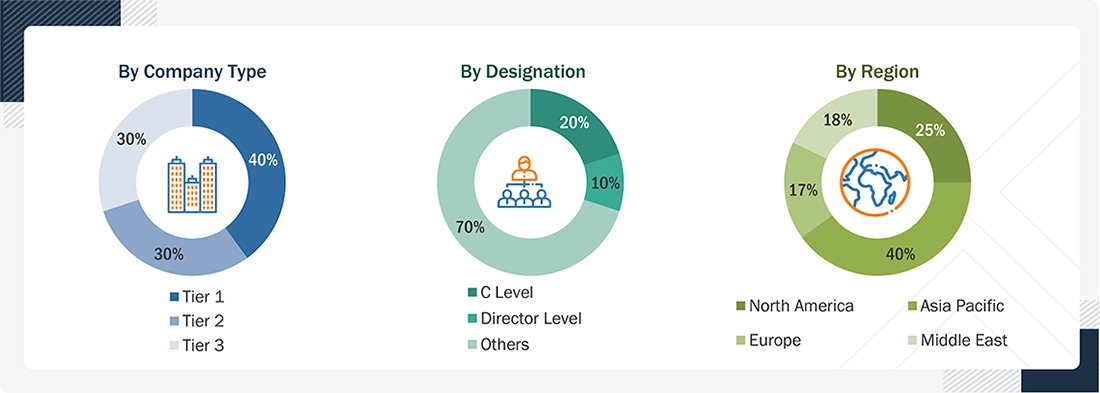
To know about the assumptions considered for the study, download the pdf brochure
Market Size Estimation
Top-down and bottom-up approaches were used to estimate and validate the size of the solar-powered drone market. The research methodology used to estimate the size of the market included the following details:
- Key players in the solar-powered drone market were identified through secondary research, and their market shares were determined through a combination of primary and secondary research. This included reviewing the annual and financial reports of the top market players, as well as conducting extensive interviews with leaders, including directors, engineers, marketing executives, and other key stakeholders at leading companies operating in the market.
- All percentage shares, splits, and breakdowns were determined using secondary sources and verified through primary sources.
- All possible parameters that affect the markets covered in this research study were accounted for, viewed in extensive detail, verified through primary research, and analyzed to obtain the final quantitative and qualitative data on the solar-powered drone market. This data was consolidated, enhanced with detailed input, analyzed by MarketsandMarkets, and presented in this report.
Solar Powered Drone Market : Top-Down and Bottom-Up Approach

Data Triangulation
After determining the overall market size, the total market was classified into several segments and subsegments. The data triangulation and market breakdown procedures explained below were implemented, wherever applicable, to complete the overall market engineering process and arrive at the estimated market numbers for the market segments and subsegments. The data were triangulated by examining various factors and trends on both the demand and supply sides. Additionally, the market size was validated using top-down and bottom-up approaches.
Market Definition
Solar-powered drones (SPDs) are unmanned aerial platforms in which photovoltaic energy is a primary or material in-flight power source used to operate the aircraft, recharge onboard batteries, and extend endurance.
Key Stakeholders
- Solar-powered Drone Manufacturers (OEMs)
- Government & Defense Organizations
- Homeland Security & Border Security Agencies
- Telecommunication Service Providers
- Solar Cell & Photovoltaic Technology Suppliers
- Battery & Energy Storage Manufacturers
Report Objectives
- To define, describe, and forecast the solar-powered drone market based on energy architecture, drone type, operating altitude, application, and region in terms of value
- To forecast the size of various segments of the market across North America, Europe, Asia Pacific, and the Middle East in terms of value
- To identify and analyze the drivers, restraints, opportunities, and challenges influencing the growth of the market
- To identify industry trends, market trends, and technology trends currently prevailing in the market
- To analyze micromarkets with respect to growth trends, prospects, and their contribution to the overall market
- To analyze opportunities in the market for stakeholders by identifying key market trends
- To profile key market players and comprehensively analyze their market share and core competencies
- To evaluate the degree of competition in the market by analyzing recent developments, such as contracts, agreements, and acquisitions adopted by leading market players
- To identify detailed financial positions, key products, and unique selling points of leading companies in the market
- To provide a detailed competitive landscape of the market, along with market share analysis and revenue analysis of key players
Available customizations:
MarketsandMarkets offers the following customizations for this market report:
- Additional country-level analysis of the solar-powered drone market
- Profiling of other market players (up to five)
Product Analysis
- Product matrix, which provides a detailed comparison of the product portfolios of each company in the solar-powered drone market


Personalize This Research
- Triangulate with your Own Data
- Get Data as per your Format and Definition
- Gain a Deeper Dive on a Specific Application, Geography, Customer or Competitor
- Any level of Personalization
Let Us Help You
- What are the Known and Unknown Adjacencies Impacting the Solar Powered Drone Market
- What will your New Revenue Sources be?
- Who will be your Top Customer; what will make them switch?
- Defend your Market Share or Win Competitors
- Get a Scorecard for Target Partners

Custom Market Research Services
We Will Customise The Research For You, In Case The Report Listed Above Does Not Meet With Your Requirements
Get 10% Free CustomisationTESTIMONIALS



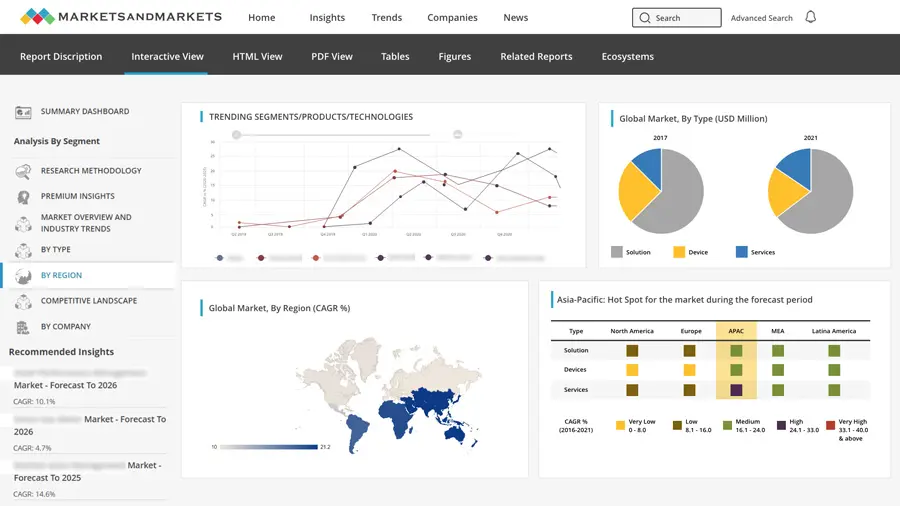
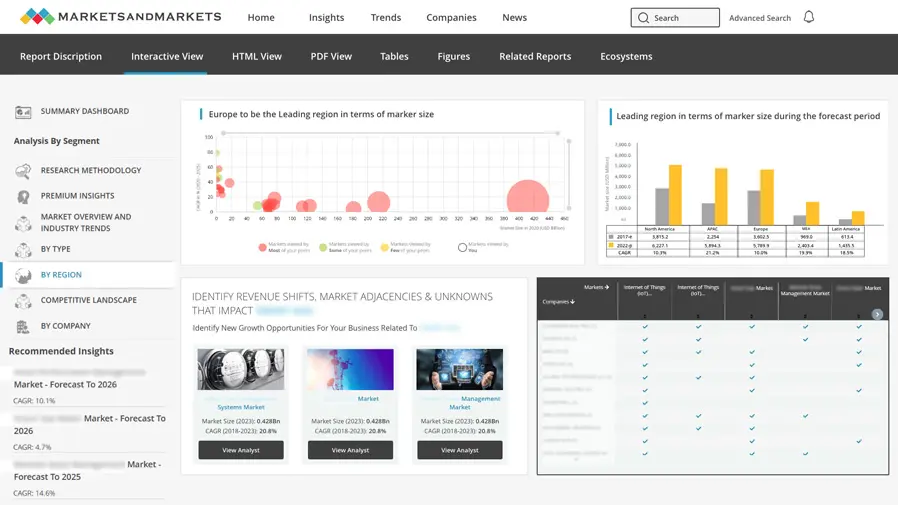
Growth opportunities and latent adjacency in Solar Powered Drone Market