Solar Tracker Market

Solar Tracker Market by Axis Type (Single-axis, Dual-axis), Type (Grid-connected, Off-grid), Application (Utility, Non-utility), Region (Asia Pacific, North America, Europe, Latin America, Middle East & Africa) - Global Forecast to 2029




SOLAR TRACKER MARKET SUMMARY
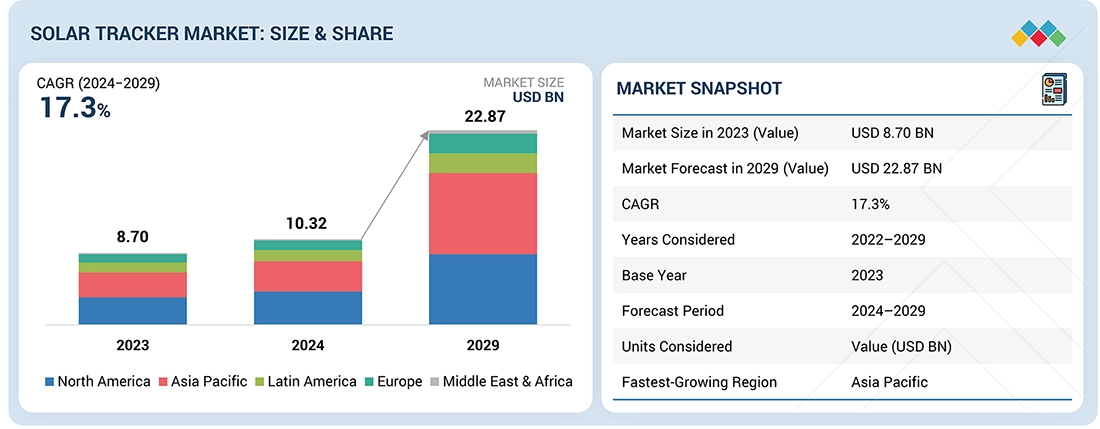
According to Marketsandmarkets, The global solar tracker market was valued at USD 10.32 billion in 2024 and is projected to reach USD 22.87 billion by 2029, expanding at a CAGR of 17.3% during the forecast period. The market for solar trackers is expected to witness a massive surge in the forecast period. Energy conservation through solar energy and rising propensity towards renewable sources instead of non-renewable has been driving demand for solar energy, thereby, the adoption of solar trackers in the planet.
Key Market Trends and Insights
- Market Growth: Driven by the increasing adoption of utility-scale solar power projects, supportive renewable energy policies, and the growing demand for higher energy yield from photovoltaic (PV) installations.
- Growing Trends: Rising deployment of single-axis solar trackers, integration of smart monitoring and AI-based tracking systems, and increasing investments in large-scale solar farms are accelerating market growth.
- Growth Opportunities: Government incentives for clean energy, declining solar module costs, expansion of utility-scale PV projects, and modernization of power infrastructure are creating significant opportunities for the solar tracker market.
- Market Share Analysis: The single-axis segment dominates the market due to its cost-effectiveness and higher energy generation efficiency, while the utility application segment is expected to account for the largest market share. The grid-connected segment is projected to remain the dominant installation type throughout the forecast period.
MARKET SCOPE
| REPORT METRIC | DETAILS |
|---|---|
| Market Size in 2024 (Value) | USD 8.70 Billion |
| Market Forecast in 2029 (Value) | USD 22.87 Billion |
| Growth Rate | CAGR of 17.3% from 2024-2029 |
| Years Considered | 2022-2029 |
| Base Year | 2023 |
| Forecast Period | 2024-2029 |
| Units Considered | Value (USD Billion) |
| Report Coverage | Revenue forecast, company ranking, competitive landscape, growth factors, and trends |
| Segments Covered |
|
| Regions Covered | North America, Europe, Asia Pacific, Latin America, Middle East & Africa |
Source: Secondary Research, Interviews with Experts, MarketsandMarkets Analysis
KEY TAKEAWAYS
-
BY TYPEGrid-connected segment is expected to be the largest market during forecast period. Efficiency and simplicity, in turn, have made grid-connected photovoltaic power systems the most dominant. They produce electricity tied to the utility grid so that there is no need for battery backup. The extra energy produced is fed back into the grid without much hassle while the users benefit from net metering.
-
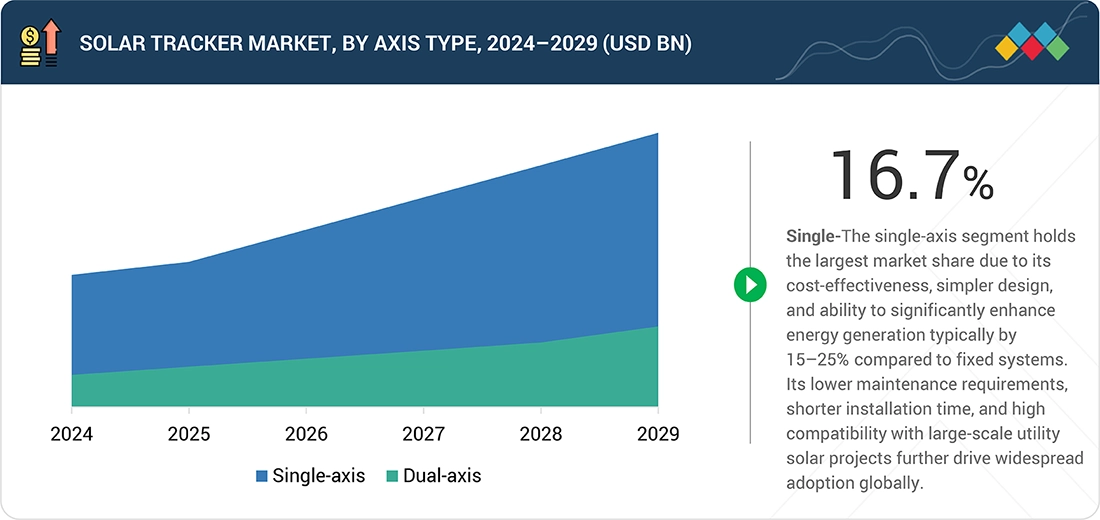
BY AXIS TYPEThe single-axis segment continues to hold a strong position in the solar tracker market due to its cost-effectiveness, ease of installation, and proven efficiency in utility-scale solar projects. It allows solar panels to follow the sun’s path from east to west, significantly improving energy output compared to fixed-tilt systems. Single-axis trackers are especially suitable for large ground-mounted installations, where maximizing land use and power generation is crucial.
-
BY END USERThe utility segment holds the largest share in the solar tracker market due to the increasing deployment of large-scale solar power plants aimed at meeting growing electricity demand and clean energy targets. Utilities are rapidly adopting solar trackers to maximize energy yield and improve project economics, especially in regions with high solar irradiation. Government incentives, power purchase agreements (PPAs), and favorable grid integration policies are further encouraging investments in utility-scale solar projects.
-
BY REGIONNorth America is expected to be the second fastest-growing region in the Solar Tracker Market, driven by a combination of supportive policies, technological advancements, and increasing demand for renewable energy. The United States and Canada are leading this growth through substantial investments in utility-scale solar projects, backed by federal and state-level incentives, tax credits, and renewable energy mandates.
-
COMPETITIVE LANDSCAPEThe major market players have adopted both organic and inorganic strategies, including partnerships and investments. For instance, Nextracker Inc., Array Technologies, Inc. and ArcelorMittal have entered into a number of agreements and partnerships to cater to the growing demand for solar trackers.
Solar trackers utilize various electric components, including motors, actuators, sensors, that position the solar cells by attaining maximum exposure of sunlight and capturing energy. The captured solar radiation is then converted into electricity for various end-user applications.
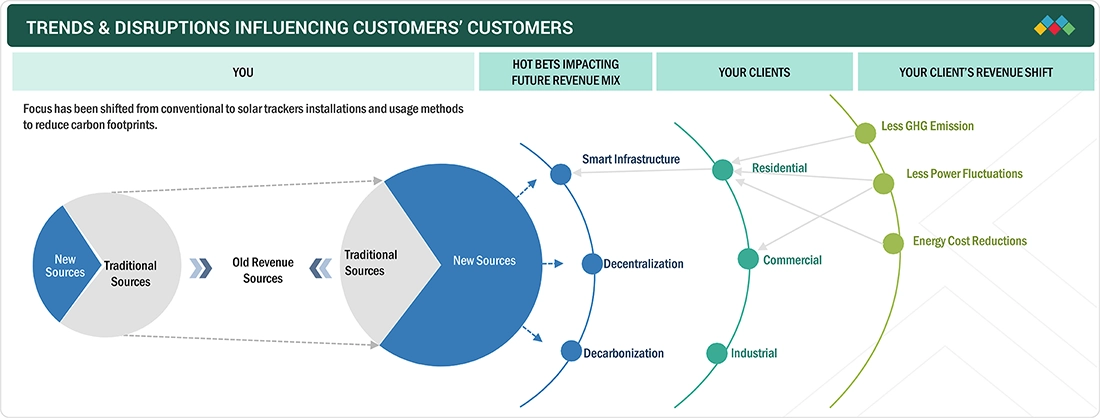
TRENDS & DISRUPTIONS IMPACTING CUSTOMERS' CUSTOMERS
The impact on consumers' business emerges from customer trends or disruptions. Hotbeds are the clients of solar tracker manufacturers, and target applications are the clients of solar tracker manufacturers. Shifts, which are changing trends or disruptions, will impact the revenues of end users. The revenue impact on end users will influence the income of hotbeds, which will subsequently affect the earnings of solar tracker manufacturers.
Source: Secondary Research, Interviews with Experts, MarketsandMarkets Analysis
MARKET DYNAMICS

Level
-
Government incentives and strategic partnership to achieve clean energy targets

-
Efficiency gains and technological evolution in solar tracking


Level
-
High initial cost

-
Complex installation process


Level
-
Increasing focus on enhancing grid stability and dependability

-
Surging use in rooftop and utility-scale projects due to design flexibility


Level
-
High maintenance requirements

-
Significant energy consumption

Source: Secondary Research, Interviews with Experts, MarketsandMarkets Analysis
Driver: Government incentives and strategic partnerships to achieve clean energy targets
The global solar tracker market is experiencing robust growth, driven by the widespread adoption of renewable energy sources and the increasing emphasis on achieving green energy targets. Governments across the world are implementing ambitious policies to transition from fossil fuels and reduce carbon emissions. Notable initiatives include the Federal Climate Change Act of 2021 in the United States, which aims for net-zero emissions by 2045; Dubai's clean energy strategy targeting 2050; and North America's goal of sourcing 50% of electricity from renewable sources by 2025. These targets are encouraging significant trackers. The International Energy Agency's (IEA) 2021 Renewable Energy Market Report projects that renewables will account for nearly 95% of the increase in global power capacity by 2026, with solar PV contributing over half of that growth
Restraint: Higher initial costs
Higher initial cost of solar trackers is a major barrier to the market's expansion because many potential customers, especially in developing countries, have limited funds and are, therefore, unable to invest in cutting-edge solar technology. Compared to permanent solar panel installations, solar trackers require a larger upfront expenditure because they are made to maximize the angle of solar panels for daily sunshine exposure. Given the payback duration and return on investment, this greater initial cost may discourage households and businesses from using solar tracking systems.
Opportunity: Increasing focus on enhancing grid stability and dependability
Enhanced grid integration presents opportunities in optimizing solar energy's compatibility with the solar tracker market, as these systems and grid operators are increasingly looking for solutions that increase energy generation while simultaneously enhancing the grid's stability and dependability as the demand for renewable energy sources rises. To balance variations in energy supply and demand, solar trackers help provide a more steady and predictable energy supply by optimizing energy output throughout the day. Solar trackers can be used in conjunction with energy storage devices to ensure that more solar energy is gathered and stored for use during periods of high demand or at night, improving grid resilience as these technologies continue to progress. This potential is further enhanced by the incorporation of smart grid technologies, which make it possible to monitor and control energy flows from solar trackers in real time.
Challenge: High maintenance requirements
The complexity and moving parts of the solar trackers present a substantial maintenance problem because they require frequent repair to ensure lifespan and good performance. Due to their mechanical components' potential for wear and tear, solar trackers require more frequent inspections and servicing than fixed solar panel installations, which often only require periodic cleaning. Alignment tweaks, moving component lubrication, and mechanical failure risks can make user operations more difficult, especially in isolated or difficult-to-reach areas. Potential adopters may be discouraged by this higher maintenance requirement, particularly small firms and homeowners who might not have the necessary financial or technical skills to adequately handle these needs.
Solar Tracker Market: COMMERCIAL USE CASES ACROSS INDUSTRIES
| COMPANY | USE CASE DESCRIPTION | BENEFITS |
|---|---|---|
 |
To mitigate CO2 emissions across its extensive network of supermarket chains. | The installation of rooftop solar panels at Big C's 16 locations yields multifaceted benefits, starting with substantial environmental gains through significant CO2 emission reductions, aligning with global sustainability imperatives and fostering a greener retail ecosystem in Thailand. Economically, it delivers long-term cost savings on electricity bills via self-generated power, while the net metering system enables revenue generation from surplus energy fed back to the grid, enhancing financial viability and accelerating return on investment. Operationally, the high-performance inverters ensure reliable, efficient energy utilization, minimizing downtime and supporting uninterrupted store operations. |
 |
Implementing solar panels on the rooftop will minimize CO2 emissions, harness clean, renewable energy directly from the sun, reduce reliance on fossil fuels, and contribute to a more sustainable future. | The rooftop solar installation at HP's Toltequilla Office delivers profound benefits, foremost in environmental stewardship by slashing CO2 emissions and curbing fossil fuel dependency, thereby advancing a cleaner, more sustainable energy paradigm in Mexico. Economically, it fosters substantial electricity conservation and cost reductions through self-generated renewable power, with efficient PV and concentrated solar systems minimizing operational expenses over time. Operationally, the integration of battery and thermal storage ensures uninterrupted energy supply, optimizing usage for critical needs and enhancing system resilience. |
Logos and trademarks shown above are the property of their respective owners. Their use here is for informational and illustrative purposes only.
MARKET ECOSYSTEM
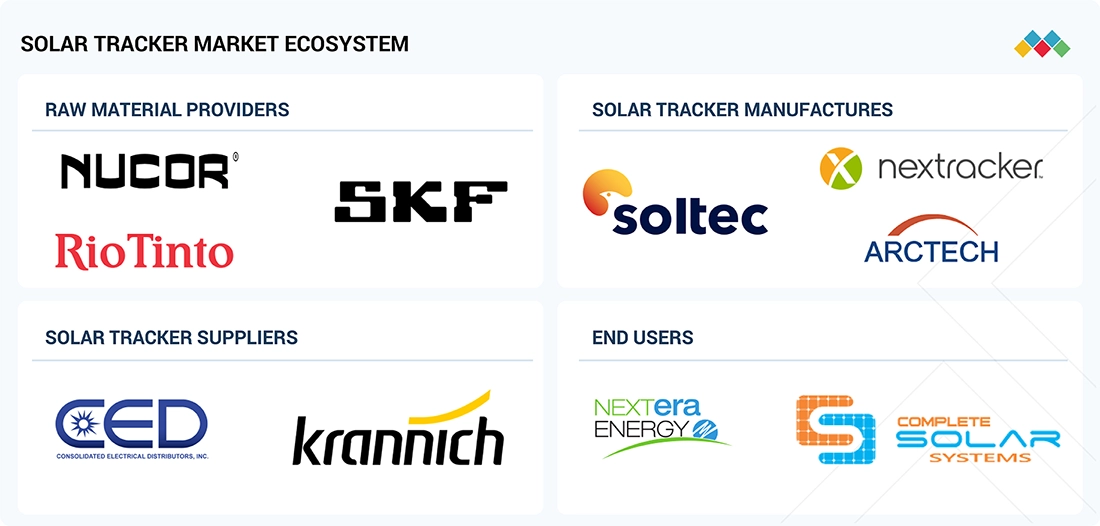
The supply chain analysis is performed for strategic planning in the entire supply chain of an industry. The supply chain analysis of the solar tracker market gives insight into the industry. Highlights of the interconnections between various solar tracker market segments and provides an overview of the industry. The supply chain of the solar tracker market includes participants such as raw material providers, manufacturers, suppliers, and end users. Fluctuations in raw material prices, industrial growth rate, and changes in manufacturing regulations affect the supply chain of solar trackers. In addition to the contribution to the total cost proposition by individual supply chain participants, the trade duties and regional regulation mandates also influence the total value proposition
Logos and trademarks shown above are the property of their respective owners. Their use here is for informational and illustrative purposes only.
MARKET SEGMENTS
Source: Secondary Research, Interviews with Experts, MarketsandMarkets Analysis
Solar Tracker Market, By Type
The grid-connected subsegment of the solar tracker market is propelled by its superior efficiency and simplicity, bypassing costly battery backups through net metering for seamless excess energy feed-in to the utility grid. This enables smaller initial investments and faster ROI, making it ideal for utility-scale and commercial deployments. Key drivers include surging global renewable energy adoption, robust government incentives like the U.S. Climate Action Incentive Fund, plummeting solar PV panel prices, and stringent emissions regulations. Enhanced grid stability via optimized output and smart tech integration further boosts demand.
Solar Tracker Market, By Axis Type
The single-axis solar tracker segment is poised to lead the market due to its cost-effectiveness and straightforward design, outshining more complex dual-axis options. Its affordability lowers barriers for widespread adoption, particularly in large-scale utility projects, while simplifying installation and upkeep. By enabling efficient east-west sun tracking, it significantly enhances energy yield over static panels, accelerating returns on investment. Supportive policies, including subsidies and renewable energy mandates, combined with rising demand for sustainable power solutions, further fuel its dominance, fostering innovation and scalability in the solar industry.
Solar Tracker Market, By Application
The utility application segment is set to dominate the solar tracker market, driven by its scalability for large-scale solar farms that demand maximum energy efficiency and output optimization. Trackers enable precise sun-following, boosting yield by up to 40% over fixed-tilt systems, thus accelerating ROI amid falling panel costs and rising electricity prices. Government subsidies, renewable portfolio standards, and corporate PPAs further incentivize massive deployments, while advancements in single-axis designs reduce complexity and maintenance. This surge aligns with global net-zero goals, positioning utility projects as the cornerstone of solar expansion.
REGION
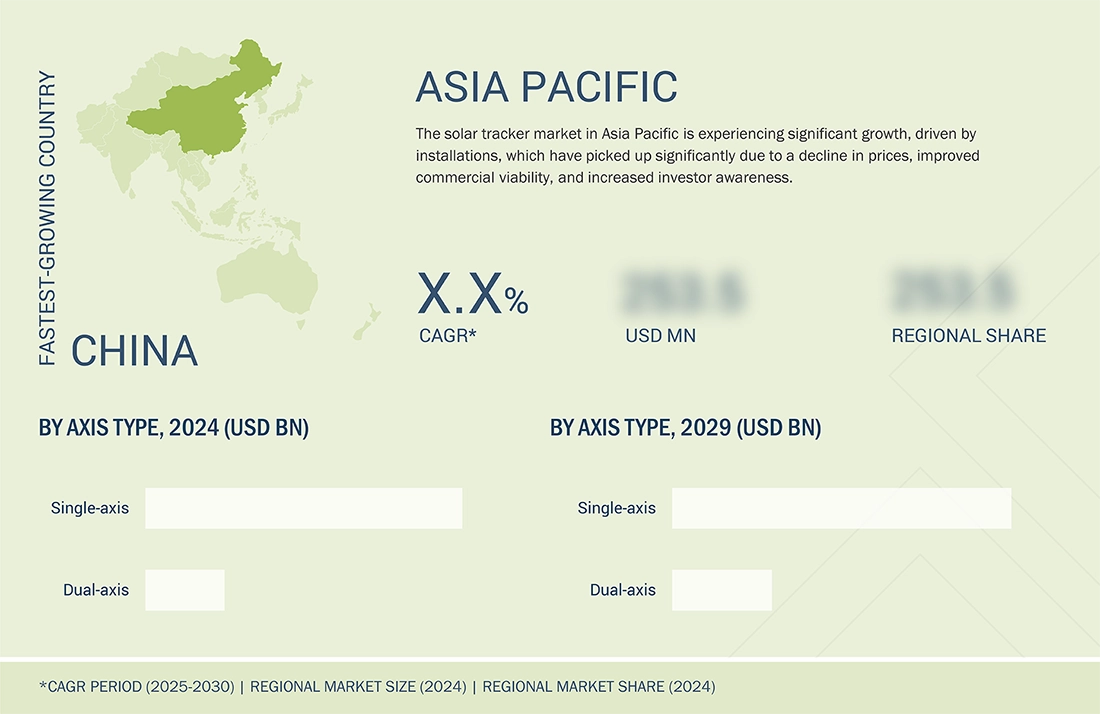
Asia Pacific to be largest-growing region in global Solar Tracker Market during forecast period
The Asia Pacific region is poised to dominate the solar tracker market, propelled by rapid solar PV expansions in key markets like China and India, which lead global installations. Declining module prices, bolstered by improved commercial viability and heightened investor interest, have spurred widespread adoption, enhancing energy yields through precise tracking mechanisms. National commitments to renewable energy targets, backed by robust policy incentives such as subsidies and streamlined land access, fuel massive utility-scale projects amid ongoing grid infrastructure upgrades. Innovations in single-axis trackers further ease deployment challenges, aligning with broader sustainability agendas and positioning the region as a vanguard in the global shift toward clean energy solutions.
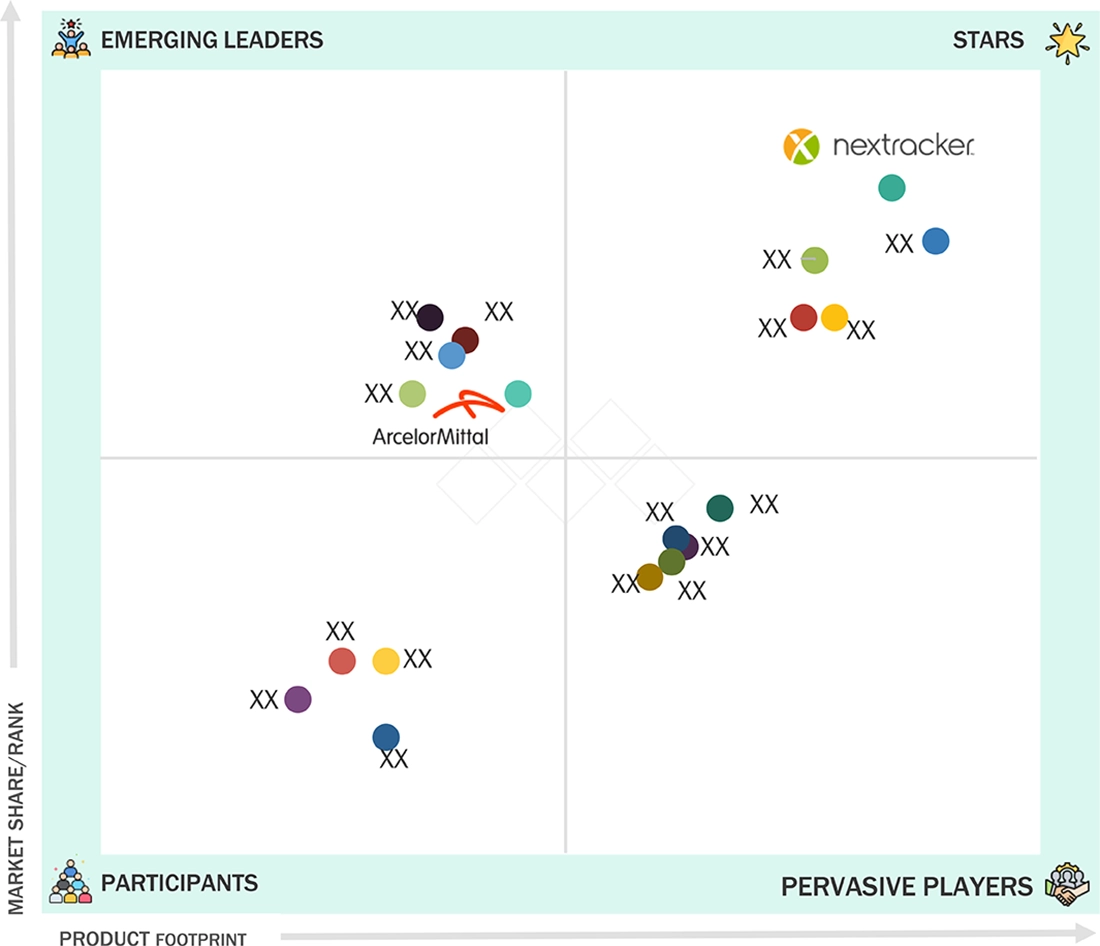
Solar Tracker Market: COMPANY EVALUATION MATRIX
Nextracker Inc. (Star) and ArcelorMittal (Emerging Leader) are key players driving growth in the Solar Tracker market. Nextracker leads with large-scale investments in solar tracker infrastructure, leveraging its global supply chain and advanced tracking technologies to expand solar energy efficiency for utility-scale, commercial, and distributed generation applications. Its strategic focus on sustainability and clean energy transition aligns with global decarbonization goals. Meanwhile, ArcelorMittal is accelerating market development through innovative steel-based tracker designs, recycled material solutions, and renewable-integrated solar systems. The company’s strong international presence and collaborative projects enhance tracker durability and efficiency, collectively strengthening the regional and global solar energy ecosystem
Source: Secondary Research, Interviews with Experts, MarketsandMarkets Analysis
KEY MARKET PLAYERS
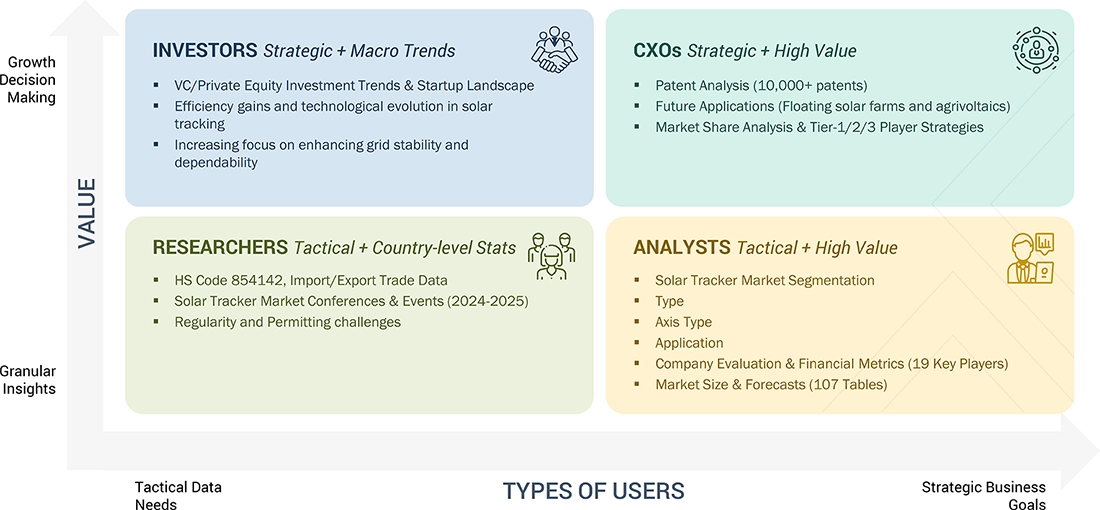
WHAT IS IN IT FOR YOU: Solar Tracker Market REPORT CONTENT GUIDE
RECENT DEVELOPMENTS
- June 2024 : Nextracker Inc. has launched the Industry's First Low Carbon Solar Tracker Solution. This new tracker system has been named as NX Horizon solar tracker system.
- April 2024 : Nextracker Inc.and Jennmar's JM Steel subsidiary finished a major expansion of Nextracker-dedicated manufacturing lines at JM Steel's Leetsdale facility, which will expand capacity to 4 GW.
- November 2022 : Soltec, which is one of the biggest manufacturers of solar trackers in the world, has now entered a strategic agreement with Spanish firm Endesa's renewable energy subsidiary, Enel Green Power España, for the setting up of a new solar tracker production facility in the Spanish region of Aragon.
Table of Contents
 Exclusive indicates content/data unique to MarketsandMarkets and not available with any competitors.
Methodology
The study involved major activities in estimating the current size of the solar tracker market. Exhaustive secondary research was done to collect information on the peer and parent markets. The next step was to validate these findings, assumptions, and sizing with industry experts across the value chain through primary research. Both top-down and bottom-up approaches were employed to estimate the complete market size. Thereafter, market breakdown and data triangulation were used to estimate the market size of the segments and subsegments.
Secondary Research
In the secondary research process, information was sourced from annual reports, press releases & investor presentations of companies, white papers, certified publications, trade directories, articles from recognized authors, gold- and silver-standard websites, and databases. Secondary research was used to obtain critical information about the industry’s value chain, the pool of key players, market classification, and segmentation according to industry trends to the bottom-most level and regional markets. It has also been used to obtain information about key developments from a market-oriented perspective.
Primary Research
The solar tracker market comprises several stakeholders in the supply chain, including raw material suppliers, product manufacturers, vendors or distributors, and end users. Various primary sources from the supply and demand sides of the market were interviewed to obtain qualitative and quantitative information. Primary sources from the demand side included key opinion leaders from various end-use applications.
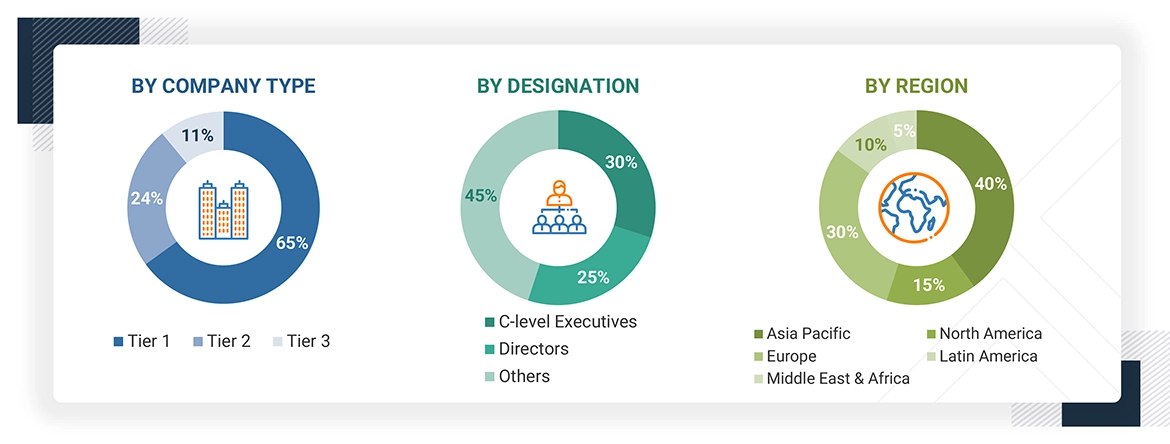
Note 1: Others include sales managers, marketing managers, and product managers.
Note 2: Tier 1 companies’ revenues are more than USD 10 billion; tier 2 companies’ revenues range between USD 1 and 10 billion; and tier 3 companies’ revenues range between USD 500 million and USD 1 billion.
Source: Industry Experts
To know about the assumptions considered for the study, download the pdf brochure
Market Size Estimation
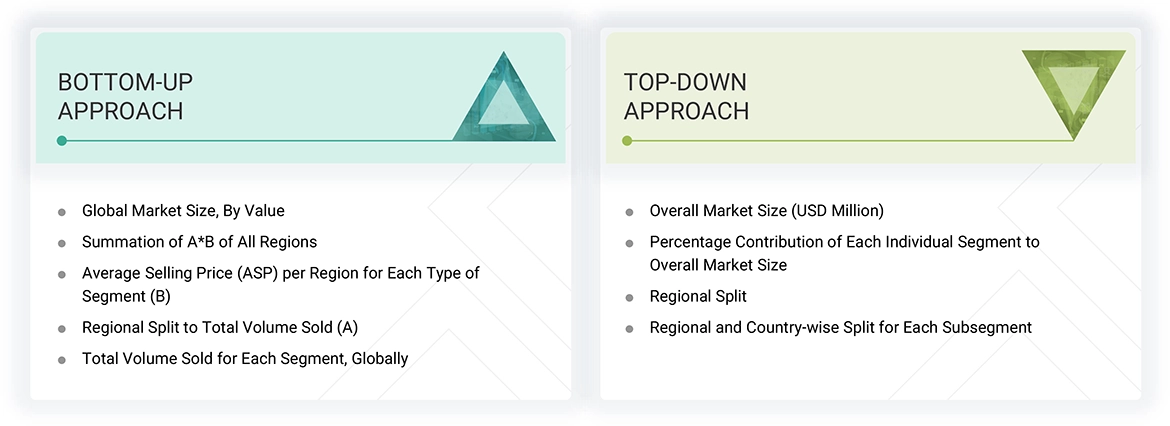
The top-down and bottom-up approaches were used to estimate and validate the size of the global solar tracker market and evaluate the sizes of various dependent submarkets. The key players in the market were identified through secondary research, and their shares in the respective regions were determined through primary and secondary research. This entire procedure included studying annual and financial reports of top market players and extensive interviews for key insights with industry leaders such as CEOs, VPs, directors, and marketing executives. All percentage shares, splits, and breakdowns were determined using secondary sources and verified through primary sources. All possible parameters that affect the markets covered in this research study were accounted for, viewed in extensive detail, verified through primary research, and analyzed to get the final quantitative and qualitative data.
Solar Tracker Market : Top-Down and Bottom-Up Approach
Data Triangulation
After arriving at the total market size, the overall market was split into several segments. The data triangulation procedure was used, wherever applicable, to complete the overall market engineering process and determine the exact statistics for all segments. The data was triangulated by studying various factors and trends from the demand and supply sides. Moreover, the market size was validated using top-down and bottom-up approaches. Hence, there are three sources for each data segment: the top-down approach, the bottom-up approach, and interviews with experts. Only when the values from the three points matched, the data was assumed to be correct.
Market Definition
A solar tracker is an advanced mechanical system designed to optimize solar energy capture by dynamically adjusting the orientation of solar panels or other photovoltaic applications to maintain direct alignment with the sun's trajectory throughout the day. This technology is particularly advantageous in high-latitude regions, where seasonal variations in solar irradiance are significant. Solar trackers can increase electricity generation by approximately 30%, with reported enhancements reaching up to 40% in some locales, thereby improving overall energy yield and efficiency under varying solar conditions. The most popular uses of solar trackers are for orienting space observatories to detect the sun's direction and for positioning photovoltaic (PV) panels, or solar panels, to ensure that they stay perpendicular to the sun's rays. PV solar trackers adjust the direction of solar panels to follow the sun's movement across the sky. By keeping the panels perpendicular to the sun, they receive more sunlight, which reduces reflection and increases energy absorption. This process allows for greater power production from the captured energy.
Stakeholders
- Solar tracker manufacturers
- Universities, governments, and research organizations
- Solar associations and industrial bodies
- Research and consulting firms
- R&D institutions
- Environmental support agencies
- Investment banks and private equity firms
Report Objectives
- To describe and forecast the global solar tracker market, in terms of volume and value
- To provide detailed information about the key factors (drivers, restraints, opportunities, and challenges) influencing market growth
- To analyze the market segmentation and forecast the market size based on axis type, application, and region
- To evaluate and forecast the market size in North America, Europe, Asia Pacific, South America, and the Middle East & Africa, along with their key countries
- To strategically analyze micromarkets1 with respect to individual growth trends, prospects, and contribution of submarkets to the total market
- To assess the market opportunities and competitive landscape for stakeholders and market leaders
- To analyze competitive developments in the market, such as expansions, partnerships, and agreements
- To profile key players and comprehensively analyze their market share and core competencies2
Available Customizations
MarketsandMarkets offers customizations according to the specific needs of the companies using the given market data.
The following customization options are available for the report:
Product Analysis
- Product matrix, which gives a detailed comparison of the product portfolio of each company
Geographic Analysis as per Feasibility
- Further breakdown of the solar tracker market by country for the European region
Company Information
- Detailed analysis and profiling of additional market players (up to five)
Key Questions Addressed by the Report


Personalize This Research
- Triangulate with your Own Data
- Get Data as per your Format and Definition
- Gain a Deeper Dive on a Specific Application, Geography, Customer or Competitor
- Any level of Personalization
Let Us Help You
- What are the Known and Unknown Adjacencies Impacting the Solar Tracker Market
- What will your New Revenue Sources be?
- Who will be your Top Customer; what will make them switch?
- Defend your Market Share or Win Competitors
- Get a Scorecard for Target Partners

Custom Market Research Services
We Will Customise The Research For You, In Case The Report Listed Above Does Not Meet With Your Requirements
Get 10% Free CustomisationTESTIMONIALS

Kimberly Murphy
GLOBAL MARKETING DIRECTOR
Bently Nevada,
Leading Condition Monitoring & Asset Protectionwww.bakerhughesds.com/bently-nevada

MarketsandMarkets™ showed consistent rigor for success and relentlessly worked with Bently Nevada stakeholders to positively impact go-to-market strategy. Their proactiveness and flexibility has been instrumental in achieving the objectives to grow our sales pipeline in key industrial markets.

DARRICK HUEBER
Business Development Leader
Nexus Controls LLC,
Leading Manufacturer of Automation System & Electrical Panelswww.bakerhughesds.com/nexus-controls

We partnered with MarketsandMarkets to expand our business further by tapping into new industrial segments. It was critical for us to gather crucial business insights about specific markets to achieve this goal. MarketsandMarkets engagement model and client services helped us provide those insights, it was really impressive and valuable for my business. The team was extremely flexible and helpful.

Mike Schoff
Global Industrial Commercial Strategy Leader
Nexus Controls LLC
Leading Manufacturer of Automation System & Electrical Panelswww.bakerhughesds.com/nexus-controls
We consulted MarketsandMarkets for potential Partner Identification. Overall, it was a good experience. The insights provided through interviews conducted by the team helped us put together the questionnaire required for discussion with the selected partners. Their ability to provide insights through interviews with customers in a timely manner was quite impressive.
- Canada Solar Tracker Market
- Mexico Solar Tracker Market
- US Solar Tracker Market
- Germany Solar Tracker Market
- Italy Solar Tracker Market
- Spain Solar Tracker Market
- Rest Of Europe Solar Tracker Market
- China Solar Tracker Market
- India Solar Tracker Market
- Japan Solar Tracker Market
- South Korea Solar Tracker Market
- Rest Of Asia Pacific Solar Tracker Market
- Brazil Solar Tracker Market
- Rest Of Latin America Solar Tracker Market
- Saudi Arabia Solar Tracker Market






Growth opportunities and latent adjacency in Solar Tracker Market