System-on-Chip (SoC) Market Share, Size and Trends, 2025

System-on-Chip (SoC) Market by Core Count (Single-core, Dual-core, Quad-core, Hexa-core, Octa-core), Core Architecture (ARM, X86, RISC-V), Device (Smartphone, Tablet, Laptop, Smart TV & STB, Infotainment System, Router, Gateway) - Global Forecast to 2029




OVERVIEW
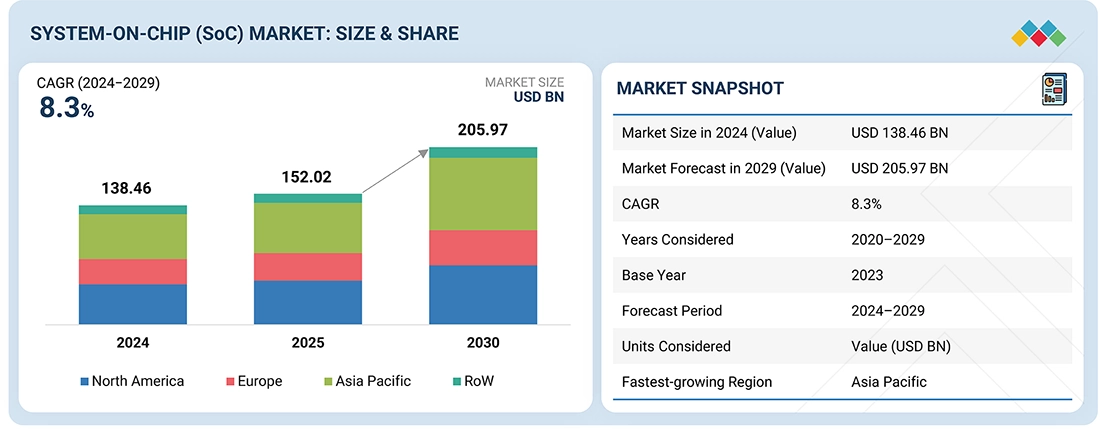
Source: Secondary Research, Interviews with Experts, MarketsandMarkets Analysis
The global system-on-chip (SoC) market is projected to grow from USD 138.46 billion in 2024 to USD 205.97 billion by 2029, at a CAGR of 8.3% from 2024 to 2029. The increasing demand for energy efficiency and compact footprint in mobile, IoT, and wearable devices is fueling the adoption of SoCs in the market. SoCs offer higher processing power in a smaller form, propelling their adoption in wearable and connected devices. With continuous advancements in AI and machine learning algorithms, developments in AI-optimized SoCs are rising, especially for on-device processing in AI PCs and smartphones.
KEY TAKEAWAYS
-
By RegionThe Asia Pacific SoC market accounted for a 37.6% revenue share in 2024.
-
By Core CountBy core count, the Octa-core segment is expected to register the highest CAGR of 9.8%.
-
By Core ArchitectureBy core architecture, the RISC-V segment is projected to grow at the fastest rate from 2024 to 2029.
-
By VerticalBy Vertical, the consumer electronics segment is expected to dominate the market.
-
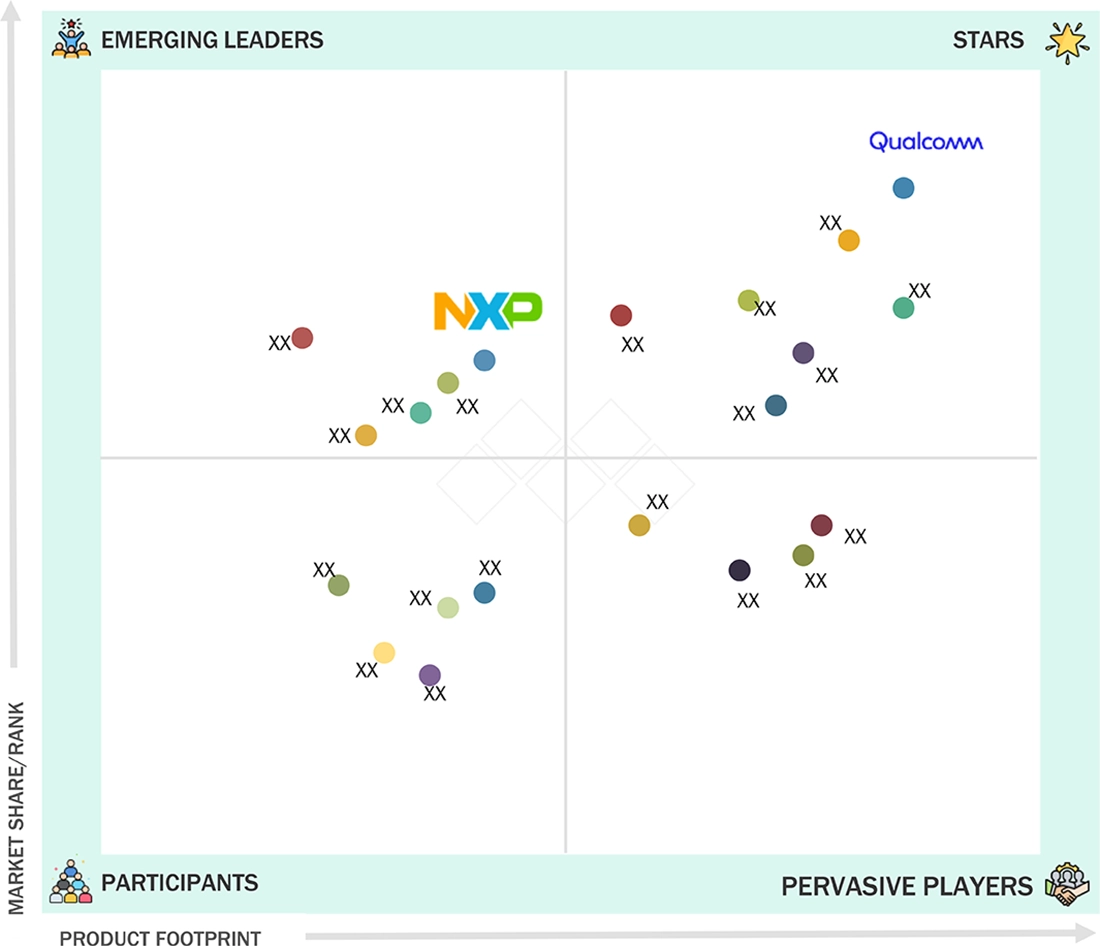
Competitive LandscapeCompany Qualcomm Incorprated, MediaTek, Apple were identified as some of the star players in the SoC market (global), given their strong market share and product footprint.
-
Competitive LandscapeCompanies SiFIve Inc, Ambiq, Kneron, Inc among others, have distinguished themselves among startups and SMEs by securing strong footholds in specialized niche areas, underscoring their potential as emerging market leaders
The SoC market growth is driven by surging adoption of loT and connected devices. These devices depend upon SoCs for the edge computing. Additionally, the move towards autonomous driving has made it necessary for cars to process vast amounts of sensor data in real time. SoCs are suited for real- time processing due to their high performance and scalability for autonomous vehicles.
TRENDS & DISRUPTIONS IMPACTING CUSTOMERS' CUSTOMERS
The System-on-Chip (SoC) market is driven by established revenue sources in consumer electronics, computing, network infrastructure, and automotive sectors. Smartphones, laptops, routers, and automotive infotainment systems remain key revenue generators. However, the future landscape will shift with growth in electric vehicles (EVs), autonomous driving. Al & machine learning, and loT applications. Emerging segments like Al-specialized SoCs and quantum computing chips hold significant potential. Adopting RISC-V architecture and chiplet design could reshape traditional business models by offering greater customization and performance at lower costs. Key verticals such as automotive, healthcare, and industrial automation are poised to benefit from these advancements. In contrast, SoC players' clients-OEMs, tech companies, and healthcare providers-will drive demand through their need for more sophisticated and efficient computing systems. The SoC market will likely see disruption as technology trends evolve, especially from energy-efficient, Al-driven, and open-source architecture innovations.
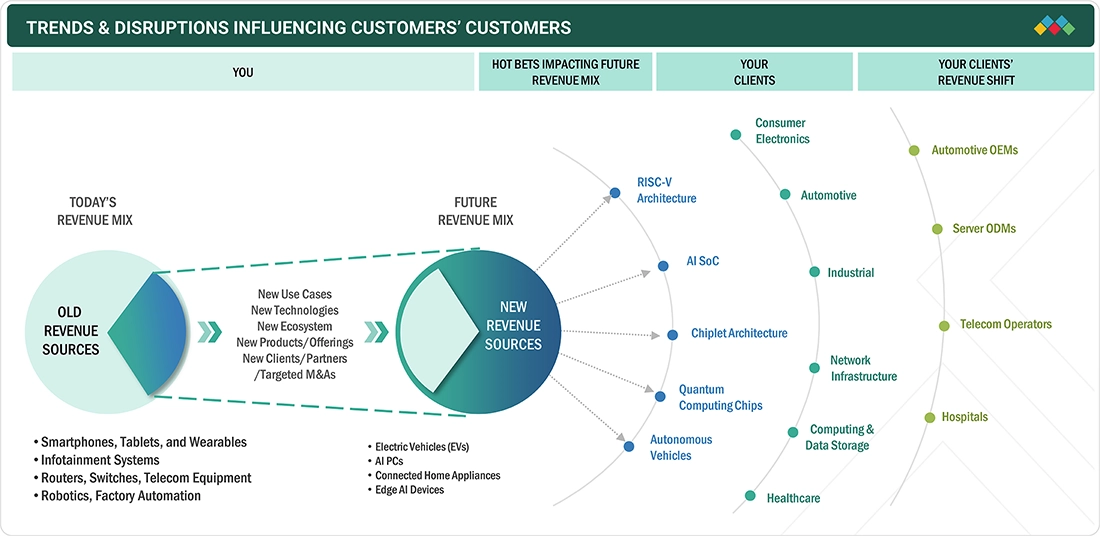
Source: Secondary Research, Interviews with Experts, MarketsandMarkets Analysis
MARKET DYNAMICS

Level
-
Growing trend of SoC in automotive industry

-
Surging adoption of IoT and connected devices


Level
-
High design and manufacturing costs impede SoC market expansion

-
Power consumption issues


Level
-
5G rollout accelerates SoC integration in networking devices

-
Smart home technology adoption propels SoC market expansion


Level
-
Talent shortage hampers SoC innovation and production

-
Rapid technological changes challenge SoC longevity

Source: Secondary Research, Interviews with Experts, MarketsandMarkets Analysis
Driver: Growing trend of SoC in automotive industry
The automotive sector is rapidly adopting SoCs to consolidate infotainment, ADAS, autonomous driving, and connectivity functions onto single chips, reducing system complexity and power consumption. Leading OEMs and Tier-1 suppliers are increasingly relying on high-performance automotive-grade SoCs. For instance, NVIDIA launched its DRIVE Orin automotive SoC platform, which has been adopted by OEMs such as Mercedes-Benz and Volvo through long-term supply and software ecosystem agreements. Similarly, Qualcomm expanded its Snapdragon Digital Chassis portfolio via partnerships with BMW and Stellantis to support next-generation vehicle architectures.
Restraint: High design and manufacturing costs impede SoC market expansion
Advanced SoC development requires significant upfront investment in chip design, IP licensing, advanced EDA tools, and leading-edge fabrication nodes, which raises barriers for smaller vendors. Manufacturing at 5nm, 4nm, and below also involves high wafer costs and long-term capacity commitments. For example, Apple and AMD rely on multi-billion-dollar, long-term foundry agreements with TSMC, highlighting how capital intensity limits broader SoC vendor participation, particularly in cost-sensitive markets.
Opportunity: 5G rollout accelerates SoC integration in networking devices
Global 5G deployment is driving demand for highly integrated SoCs that combine baseband, RF, AI acceleration, and power management into compact designs for networking and edge devices. Telecom equipment providers and device OEMs prefer SoCs to reduce BOM costs and accelerate time-to-market. For instance, MediaTek launched 5G-integrated SoCs for routers and CPE devices, while Samsung Electronics signed multiple supply agreements with telecom operators to deploy its Exynos-based 5G SoC solutions in network infrastructure and consumer devices.
Challenge: Talent shortage hampers SoC innovation and production
The SoC market faces a shortage of skilled engineers in areas such as advanced chip architecture, verification, AI integration, and semiconductor manufacturing, slowing innovation cycles and production scaling. Competition for talent has intensified as AI and automotive SoCs grow in complexity. To address this, companies like Intel have launched strategic university collaboration programs and expanded design centers globally, while Synopsys has entered training partnerships and ecosystem agreements to strengthen SoC design skill development across regions.
SYSTEM-ON-CHIP (SOC) MARKET SHARE, SIZE AND TRENDS, 2025: COMMERCIAL USE CASES ACROSS INDUSTRIES
| COMPANY | USE CASE DESCRIPTION | BENEFITS |
|---|---|---|
 |
AMD’s Zynq UltraScale+ MPSoC is integrated into Lauterbach GmbH’s TRACE32 PowerDebug modules to enable high-performance, adaptable multicore debugging with support for evolving chip architectures and advanced trace requirements. | The solution delivers faster debugging response times, high-bandwidth trace capabilities up to 80 Gb/s, and improved power efficiency, enabling Lauterbach to rapidly support new devices and meet advanced customer debugging needs. |
|
|
AMD’s Zynq UltraScale+ RFSoC is used by SiLC Technologies, Inc. to develop advanced FMCW LiDAR-based vision sensors by integrating RF data converters and processing on a single adaptive SoC. | The solution reduces system complexity and power consumption while enabling sub-millimeter precision, long-range LiDAR performance, and a scalable platform to support future vision-sensor innovations. |
|
|
AMD’s Zynq-7000S SoC is used by Tektronix, Inc. to modernize its entry-level TBS1000 oscilloscope family with enhanced software-defined acquisition and processing capabilities at a competitive cost. | The SoC-enabled design increases record length by 8× and waveform capture rate by 10×, while reducing system cost and time-to-market and ensuring long-term platform reliability. |
Logos and trademarks shown above are the property of their respective owners. Their use here is for informational and illustrative purposes only.
MARKET ECOSYSTEM
The SoC ecosystem comprises manufacturers, component suppliers, and end users working together in a highly competitive market led by companies such as Broadcom, MediaTek Inc., Samsung Electronics, Apple Inc., Qualcomm Technologies, Inc., Advanced Micro Devices, Inc., Intel Corporation, and NVIDIA Corporation, which continuously invest in R&D to launch high-performance, power-efficient processors. Manufacturers drive innovation through advanced architectures, core integration, and leading-edge fabrication, often supported by long-term foundry and technology partnerships. Component suppliers ensure the availability of critical materials such as wafers, chemicals, and packaging solutions, directly influencing cost, yield, and performance. End users across smartphones, automotive, industrial, medical, and communication sectors collaborate closely with SoC vendors through design wins and customization agreements to optimize chips for specific applications, making ecosystem-wide collaboration essential for scalability, reliability, and sustained innovation.
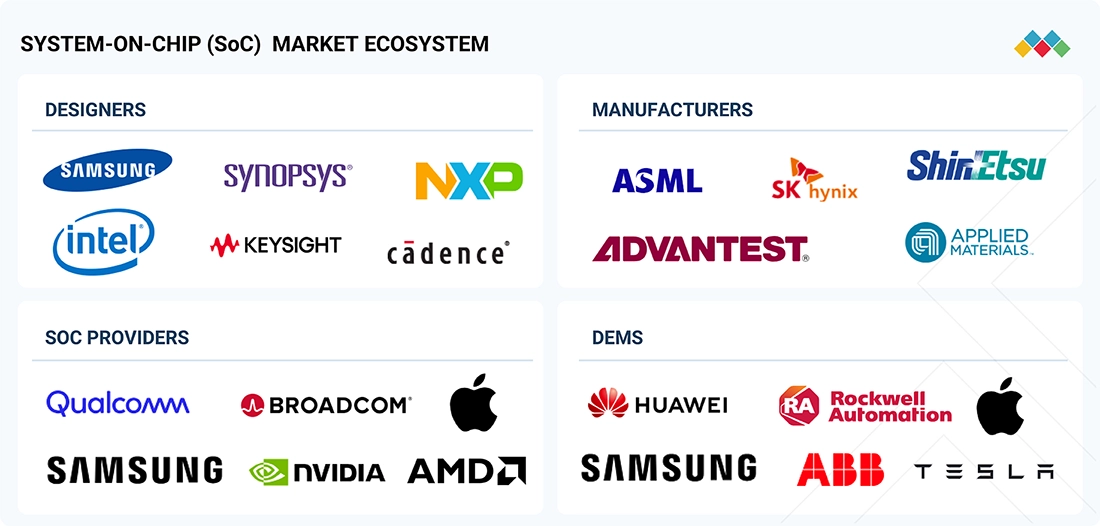
Logos and trademarks shown above are the property of their respective owners. Their use here is for informational and illustrative purposes only.
MARKET SEGMENTS
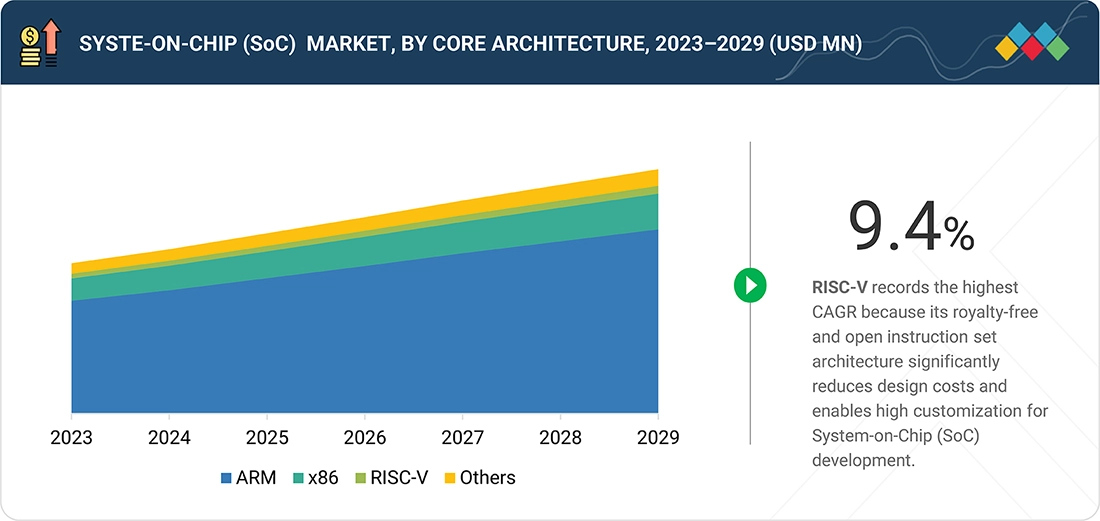
Source: Secondary Research, Interviews with Experts, MarketsandMarkets Analysis
System on Chip Market, By Core Count
The system-on-chip (SoC) market for the octa-core segment held the largest market share and is expected to grow at the highest CAGR during the forecast period. There is a growing demand for high-performance mobile devices, such as smartphones and tablets. They require advanced processing capabilities to handle resource-intensive applications. The growing adoption of AI and ML in consumer electronics and industrial applications demands enhanced computational power provided by octa-core SoCs. Leading semiconductor companies continuously innovate and release new octa-core SoCs with improved energy efficiency, processing power, and integrated AI capabilities
System on Chip Market, By Core Architecture
ARM architecture accounted for the largest share of the total market in 2023, and the trend is anticipated to continue throughout the forecast period. Most industry leaders are shifting toward ARM's efficient and scalable designs to develop SoCs. The flexible licensing model makes it possible for manufacturers to customize ARM-based SoCs according to the specific needs of their customers. Qualcomm Technologies, Inc. (US), Apple Inc. (US), Broadcom (US), and NVIDIA Corporation (US) are major players in developing ARM-based SOCs. ARM architecture is a low-power, high-performance architecture ideal for energy-sensitive applications such as automobiles and mobile devices.
System on Chip Market, By Vertical
The consumer segment will likely hold the highest market share during the forecast period. The consumer market in SoC is influenced by the widespread usage of smart devices, the integration of IoT technologies, and continuous smartphone usage. Among these, smartphones are leading, with companies continuously in search of higher-performance, energy-efficient SoCs that help uplift performance and consume less battery. Tablets and laptops also play a very important role in the market, as now consumers are looking for higher processing performance both for working and entertainment purposes.
REGION
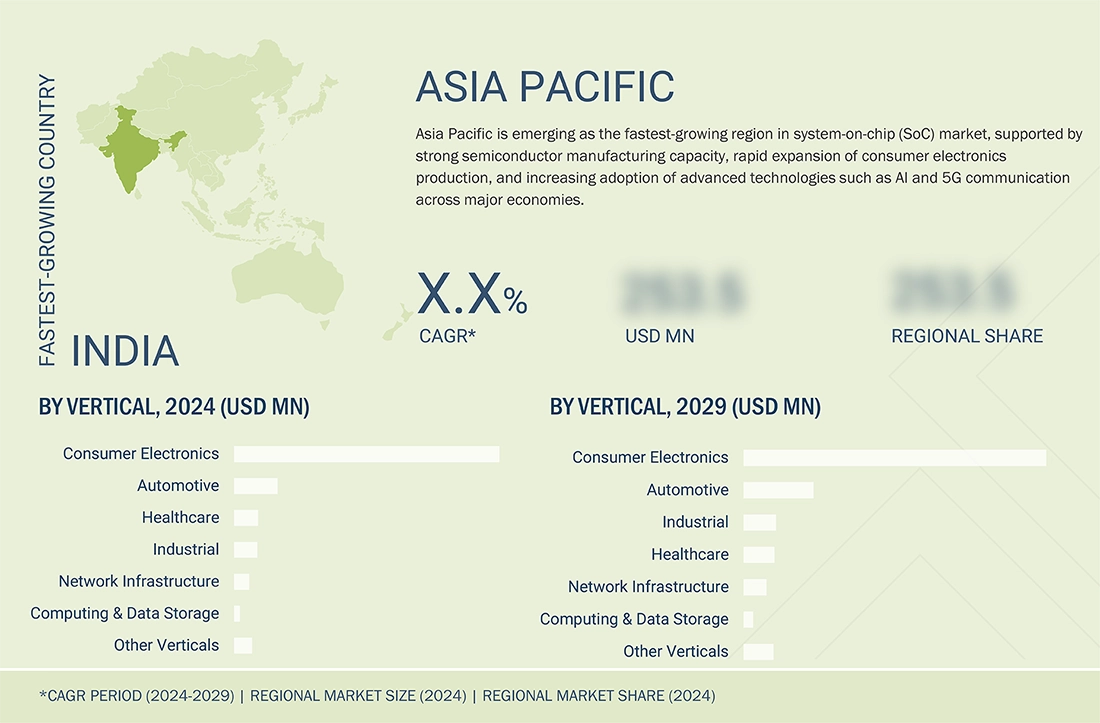
Asia Pacific to be fastest-growing region in global system on chip market during forecast period
The Asia Pacific system-on-chip (SoC) industry will likely grow at a high CAGR during the forecast period. Major electronics manufacturers are present in countries like China, South Korea, and Japan, and they invest heavily in SoC technology to enhance the performance and capabilities of their products. Countries like Taiwan, South Korea, and China have established themselves as global manufacturing hubs for semiconductors and electronics. There are several world-leading foundries and integrated device manufacturers (IDMs) located in the region that boost the manufacturing expertise related to SoCs. A robust supply chain, including raw material suppliers, equipment manufacturers, and packaging and testing facilities, gives Asia Pacific a significant advantage in SoC production.
SYSTEM-ON-CHIP (SOC) MARKET SHARE, SIZE AND TRENDS, 2025: COMPANY EVALUATION MATRIX
In the System-on-Chip (SoC) companies matrix, Qualcomm Incorporated (Star) leads with a strong market share and a broad product footprint, driven by its Snapdragon platforms widely adopted across smartphones, automotive, IoT, and 5G-enabled devices through long-term OEM design wins and ecosystem partnerships. NXP Semiconductors (Emerging Leader) is gaining traction with its automotive- and industrial-focused SoC portfolio, offering secure, high-reliability solutions tailored for ADAS, vehicle networking, and industrial automation. While Qualcomm dominates through scale, integration, and leading-edge wireless technologies, NXP demonstrates strong potential to move toward the leaders’ quadrant as demand for automotive-grade, secure, and edge-compute SoCs continues to grow, supported by increasing OEM collaborations and platform-level design engagements.
Source: Secondary Research, Interviews with Experts, MarketsandMarkets Analysis
KEY MARKET PLAYERS
- Qualcomm Technologies, Inc. (US)
- MediaTek Inc. (Taiwan)
- Samsung (South Korea)
- Apple Inc. (US)
- Broadcom (US)
- Intel Corporation (US)
- Advanced Micro Devices, Inc. (US)
- NVIDIA Corporation (US)
- HiSilicon (China)
- Microchip Technology Inc. (US)
- NXP Semiconductors (Netherlands)
- Infineon Technologies AG (Germany)
- Texas Instruments Incorporated (US)
- Renesas Electronics Corporation (Japan)
- STMicroelectronics (Switzerland)
MARKET SCOPE
| REPORT METRIC | DETAILS |
|---|---|
| Market Size in 2024 (Value) | USD 138.46 Billion |
| Market Forecast in 2030 (Value) | USD 205.97 Billion |
| Growth Rate | CAGR of 8.3% from 2024-2029 |
| Years Considered | 2020-2029 |
| Base Year | 2023 |
| Forecast Period | 2024-2029 |
| Units Considered | Value (USD Million/Billion) |
| Report Coverage | Revenue forecast, company ranking, competitive landscape, growth factors, and trends |
| Segments Covered |
|
| Regions Covered | North America, Asia Pacific, Europe, RoW |
WHAT IS IN IT FOR YOU: SYSTEM-ON-CHIP (SOC) MARKET SHARE, SIZE AND TRENDS, 2025 REPORT CONTENT GUIDE
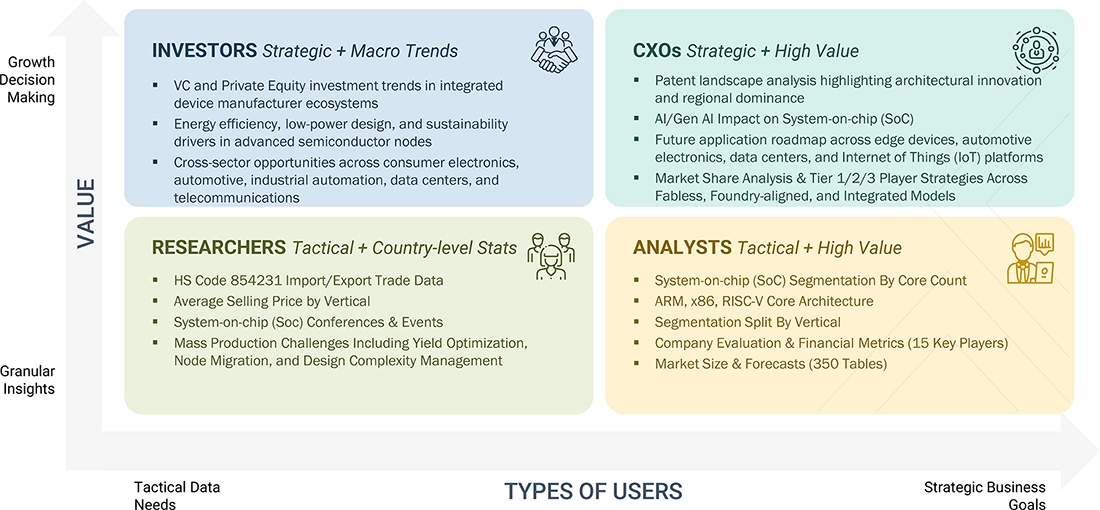
DELIVERED CUSTOMIZATIONS
We have successfully delivered the following deep-dive customizations:
| CLIENT REQUEST | CUSTOMIZATION DELIVERED | VALUE ADDS |
|---|---|---|
| Consumer Electronics OEM |
|
|
| Automotive OEM / Tier-1 Supplier |
|
|
| Telecom & Networking Equipment Provider |
|
|
| SoC Manufacturer / Fabless Company |
|
|
RECENT DEVELOPMENTS
- May 2025 : Qualcomm Incorporated continued expansion of its Snapdragon X Series platforms, with over 60 AI-optimized PC designs announced and >100 expected by 2026 from global OEMs.
- October 2025 : NXP Semiconductors launched the i.MX 952 applications processor, an AI-enabled SoC with integrated Neutron NPU for advanced automotive in-cabin sensing and industrial vision applications, helping OEMs reduce cost and boost scale.
- January 2026 : Qualcomm Incorporated unveiled its Snapdragon X2 Plus SoC family at CES 2026, targeting mainstream Windows laptops with improved AI performance, efficiency, and enhanced security features, with multiple OEM laptop launches planned for early 2026.
Table of Contents
 Exclusive indicates content/data unique to MarketsandMarkets and not available with any competitors.
Methodology
The research study involved the extensive use of secondary sources, directories, and databases (annual reports or presentations of companies, industry association publications, directories, technical handbooks, World Economic Outlook (WEO), trade websites, Hoovers, Bloomberg Businessweek, Factiva, and OneSource) to identify and collect information useful for this technical, market-oriented, and commercial study of the system-on-chip (SoC) market. Primary sources mainly comprise several experts from the core and related industries, along with preferred suppliers, manufacturers, distributors, service providers, system providers, technology developers, alliances, and standards and certification organizations related to various phases of this industry's value chain.
Secondary Research
In the secondary research process, various secondary sources were used to identify and collect information for this study. These include annual reports, press releases, and investor presentations of companies, whitepapers, certified publications, and articles from recognized associations and government publishing sources. Research reports from a few consortiums and councils were also consulted to structure qualitative content. Secondary sources included corporate filings (such as annual reports, investor presentations, and financial statements); trade, business, and professional associations; white papers; Journals and certified publications; articles by recognized authors; gold-standard and silver-standard websites; directories; and databases. Data was also collected from secondary sources, such as the International Trade Centre (ITC) (Switzerland), and the International Monetary Fund (IMF).
Primary Research
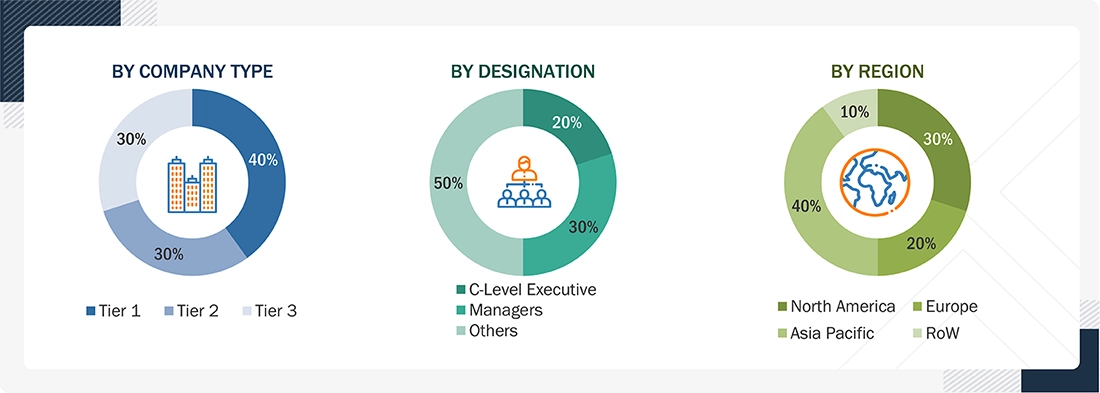
Extensive primary research was accomplished after understanding and analyzing the System-on-Chip (SoC) market scenario through secondary research. Several primary interviews were conducted with key opinion leaders from both demand- and supply-side vendors across four major regions-North America, Europe, Asia Pacific, and RoW. The primary interviews were conducted with the demand side to the extent of 40% and with the supply side to the extent of 60%. Primary data collected through questionnaires, emails, telephonic interviews, through the contact of various departments in organizations, sales, operations, and administration are considered to provide a holistic viewpoint in the report.
Note: The three tiers of companies are based on their total revenue as of 2023: Tier 1 - equal to or more than USD 1,000 million; Tier 2 - between USD 500 million and USD 1,000 million; and Tier 3 - less than or equal to USD 500 million. Other designations include managers and academicians.
About the assumptions considered for the study, To know download the pdf brochure
Market Size Estimation
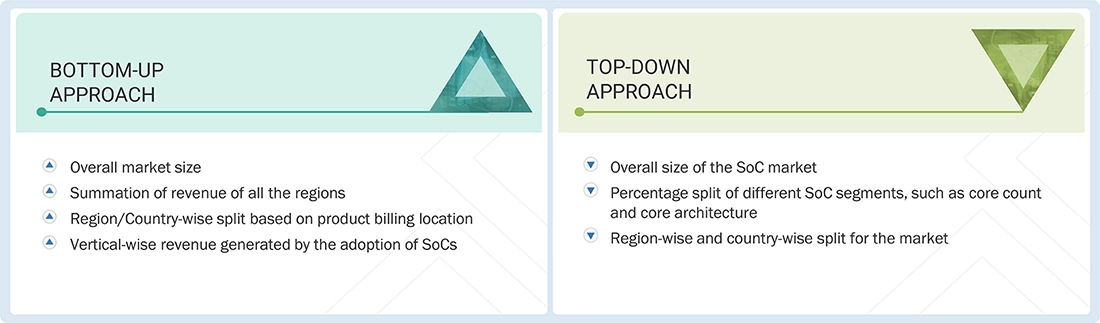
In the complete market engineering process, both top-down and bottom-up approaches were used, along with several data triangulation methods, to estimate and forecast the size of the market and its segments and subsegments listed in the report. Extensive qualitative and quantitative analyses were carried out on the complete market engineering process to list the key information/insights pertaining to System-on-Chip (SoC) market.
The key players in the market were identified through secondary research, and their rankings in the respective regions determined through primary and secondary research. This entire procedure involved the study of the annual and financial reports of top players, and interviews with industry experts such as chief executive officers, vice presidents, directors, and marketing executives for quantitative and qualitative key insights. All percentage shares, splits, and breakdowns were determined using secondary sources and verified through primary sources. All parameters that affect the markets covered in this research study were accounted for, viewed in extensive detail, verified through primary research, and analyzed to obtain the final quantitative and qualitative data. This data was consolidated, supplemented with detailed inputs and analysis from MarketsandMarkets, and presented in this report.
Data Triangulation
After arriving at the overall market size from the market size estimation process explained above, the total market was split into several segments and subsegments. Data triangulation and market breakdown procedures were employed, wherever applicable, to complete the overall market engineering process and arrive at the exact statistics for all segments and subsegments. The data was triangulated by studying various factors and trends from both demand and supply sides. Along with this, the market size was validated using both top-down and bottom-up approaches.
Market Definition
A System-on-Chip is an integrated circuit or an IC that integrates an entire electronic or computer system on a single chip instead of its use with individual components. The typical components usually found within this IC include the central processing unit, memory interfaces, I/O ports, and other specialized functions, like graphics processing units, NPU, and wireless communication modules. Therefore, SoCs are designed for such miniature systems where the design can provide a complete system solution on one chip in a compact form and will result in reduced power consumption, smaller device sizes, and better performance. Thus, they prove to be very practical for major applications in mobile devices, embedded systems, Internet of Things (IoT), and industrial applications.
This market will encompass all types of cargo ships, passenger ships, as well as other commercial vessels that can be turned into a methanol-fueled vessel due to its combustion profile, storage properties, and scalability. Green methanol has the highest potential for long-haul routes because it offers energy density, potentially being significantly more efficient than battery- or hydrogen-based fuel.
Stakeholders
- Government and financial institutions and investment communities
- Analysts and strategic business planners
- Semiconductor product designers and fabricators
- Application providers
- SoC providers
- Business providers
- Professional service/solution providers
- Research organizations
- Technology standard organizations, forums, alliances, and associations
- Technology investors
Report Objectives
- To define, describe, segment, and forecast the size of the System-on-Chip (SoC) market, in terms of value, based on core count, core architecture, vertical, and region
- To forecast the size of the market segments for four major regions—North America, Europe, Asia Pacific, and the Rest of the World (RoW)
- To define, describe, segment, and forecast the size of the System-on-Chip (SoC) market, in terms of volume, based on vertical
- To provide detailed information regarding drivers, restraints, opportunities, and challenges influencing the growth of the market
- To provide an ecosystem analysis, case study analysis, patent analysis, technology analysis, pricing analysis, Porter's five forces analysis, investment and funding scenario, and regulations pertaining to the market
- To provide a detailed overview of the value chain analysis of the system-on-chip ecosystem
- To strategically analyze micromarkets1 with regard to individual growth trends, prospects, and contributions to the total market
- To analyze opportunities for stakeholders by identifying high-growth segments of the market
- To strategically profile the key players, comprehensively analyze their market positions in terms of ranking and core competencies2, and provide a competitive market landscape.
- To analyze strategic approaches such as product launches, acquisitions, agreements, and partnerships in the System-on-Chip (SoC) market
Available Customizations
With the given market data, MarketsandMarkets offers customizations according to the company’s specific needs. The following customization options are available for the report:
Company Information:
- Detailed analysis and profiling of additional market players (up to 7)
Key Questions Addressed by the Report


Personalize This Research
- Triangulate with your Own Data
- Get Data as per your Format and Definition
- Gain a Deeper Dive on a Specific Application, Geography, Customer or Competitor
- Any level of Personalization
Let Us Help You
- What are the Known and Unknown Adjacencies Impacting the System-on-Chip (SoC) Market
- What will your New Revenue Sources be?
- Who will be your Top Customer; what will make them switch?
- Defend your Market Share or Win Competitors
- Get a Scorecard for Target Partners

Custom Market Research Services
We Will Customise The Research For You, In Case The Report Listed Above Does Not Meet With Your Requirements
Get 10% Free CustomisationTESTIMONIALS

Tetsuya Ohhira
Business Development Manager-Technology Business
Nikon Corporation,
Leading Japanese MNC specializing in optics and imaging productswww.nikon.com
MarketsandMarkets™ response
is quick. Their attitude is flexible and positive. Analyst Insights are globally considered and
significant. Client Services quickly respond to our inquiry and demand. Their wide range of global
surveys help us make our strategic plan.
We hope Knowledge Store will be easier to search
for a report.
VP - Marketing & Business Development
Leading Provider of Process Control Solutions
We engaged with MarketsandMarkets on a study to perform an analysis and recommend a Go-To-Market strategy for metrology and process control in the semiconductor market. The study was tailored to our targets and needs with well-defined milestones. Our overall experience with the MarketsandMarkets team was very good throughout the project in all aspects including the analysis methodologies used, the quality and depth of primary and secondary data sets, the professionalism and flexibility of the team and the ability to meet the target schedule and milestones. We want to thank MarketsandMarkets team for a job well done.
- Rest Of Asia Pacific System-on-Chip (SoC) Market
- US System-on-Chip (SoC) Market
- Canada System-on-Chip (SoC) Market
- Mexico System-on-Chip (SoC) Market
- UK System-on-Chip (SoC) Market
- Germany System-on-Chip (SoC) Market
- France System-on-Chip (SoC) Market
- Italy System-on-Chip (SoC) Market
- China System-on-Chip (SoC) Market
- Japan System-on-Chip (SoC) Market
- India System-on-Chip (SoC) Market
- South Korea System-on-Chip (SoC) Market
- Rest Of Europe System-on-Chip (SoC) Market
Growth opportunities and latent adjacency in System-on-Chip (SoC) Market






Clarence
Apr, 2026
Does this report clearly define the System-on-Chip (SoC) market scope and segmentation?.
Jeffrey
Apr, 2026
Does it cover emerging technologies like AI, IoT, 5G, chiplets, and advanced packaging?.