South Korea Humanoid Robot Market Size & Share, 2030

South Korea Humanoid Robot Market by Offering, Type (Biped, Wheel Drive), Application (Personal Assistance, Caregiving, Education, Public Relations, Search and Rescue, Manufacturing) – Forecast to 2030




OVERVIEW
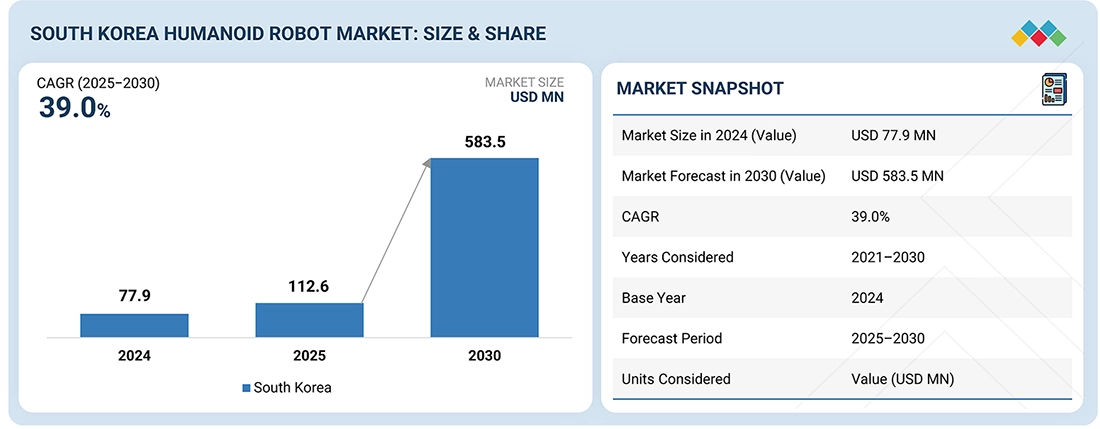
Source: Secondary Research, Interviews with Experts, MarketsandMarkets Analysis
The South Korea humanoid robot market is projected to reach USD 583.5 million by 2030 from USD 112.6 million in 2025, at a CAGR of 39.0% from 2025 to 2030. Humanoid robots are advanced robotic systems designed to replicate human form and behavior, enabling them to interact naturally with human-centric environments. These robots integrate artificial intelligence, machine learning, and sophisticated sensors to perform tasks ranging from personal assistance and caregiving to industrial automation and public relations. The South Korean market is experiencing rapid expansion, driven by the country's robust technological infrastructure, government support for robotics innovation, and the growing integration of automation across service industries and smart manufacturing facilities.
KEY TAKEAWAYS
-
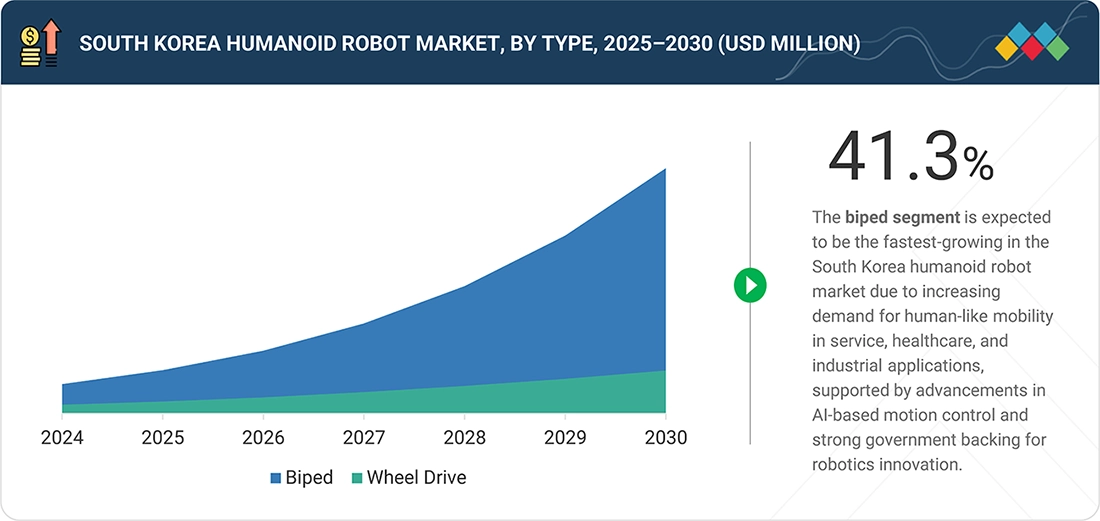
By TypeThe biped segment is projected to maintain the largest market share of around 85% in the South Korea humanoid robot market by 2030 .
-
By ApplicationThe manufacturing segment is projected to register a strong CAGR of approximately 43% in the South Korea humanoid robot market during the forecast period.
-
By ComponentThe service industries segment, encompassing education, public relations, and hospitality applications, is experiencing accelerated adoption of humanoid robots as businesses seek to enhance customer engagement and operational efficiency through advanced robotic solutions.
-
Competitive Landscape - Star PlayersSoftBank Robotics, ROBOTIS, and Samsung were identified as star players in the South Korea humanoid robot market, given their strong market presence, extensive product portfolios, and established deployment networks across multiple application sectors.
-
Competitive Landscape - StartupsEmerging companies and specialized robotics firms have distinguished themselves by securing strong footholds in niche application areas such as rehabilitative care, warehouse logistics, and educational robotics, underscoring their potential as future market leaders in specialized humanoid robot segments.
The South Korea humanoid robot industry is experiencing exceptional growth driven by advancements in artificial intelligence, increasing automation demands across industries, and strong government support for local robotics companies through initiatives led by the Ministry of Trade, Industry, and Energy.
TRENDS & DISRUPTIONS IMPACTING CUSTOMERS' CUSTOMERS
The South Korea humanoid robot market is currently experiencing a phase of rapid innovation and widespread adoption across multiple sectors. Industries including manufacturing, healthcare, education, retail, and logistics are witnessing significant advancements in humanoid robot capabilities and deployment strategies. This progress aligns with emerging trends in artificial intelligence integration, machine learning optimization, and human-robot collaboration frameworks. In South Korea, the adoption of biped humanoid robots with advanced sensory systems and adaptive learning capabilities is increasing among smart factories, hospitals, educational institutions, and service establishments. These robots enhance operational efficiency, improve customer experiences, reduce labor costs for repetitive tasks, and support aging populations requiring personal assistance. The government and industry leaders are encouraging local manufacturing, development of specialized humanoid platforms for specific applications, and public-private research partnerships. These initiatives help accelerate commercialization timelines and promote the adoption of AI-powered, context-aware humanoid robot systems tailored to the needs of South Korean businesses and consumers.
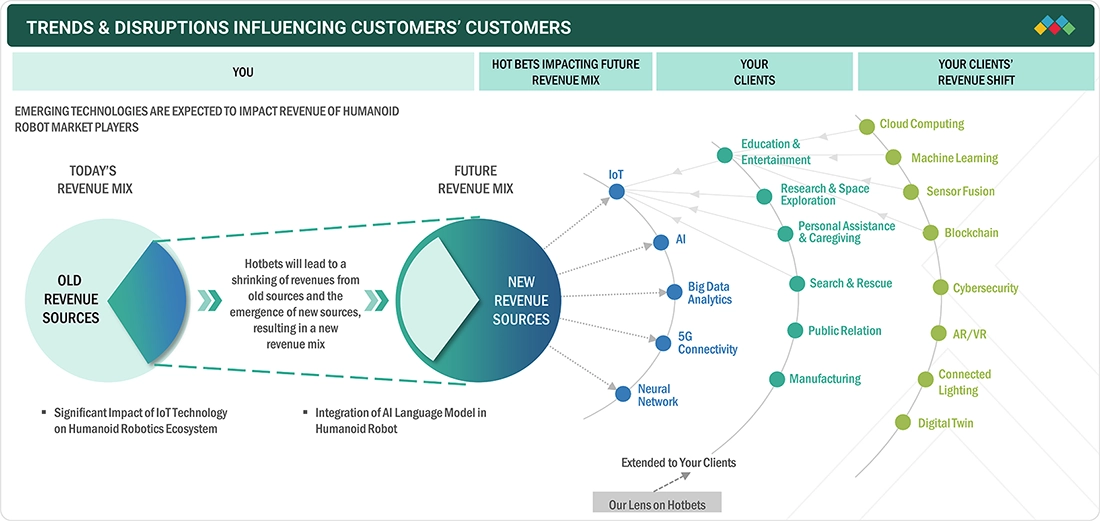
Source: Secondary Research, Interviews with Experts, MarketsandMarkets Analysis
MARKET DYNAMICS

Level
-
Advancements in artificial intelligence and machine learning enhancing robotic capabilities and adaptability

-
Increasing integration of robotics in smart factories and rising deployment in service industries


Level
-
High research and development costs and complexity of developing robots for untested environments


Level
-
Growing demand for humanoid robots in logistics sector and healthcare applications for aging population


Level
-
Ensuring consistent performance and reliability across diverse operational environments and use cases

Source: Secondary Research, Interviews with Experts, MarketsandMarkets Analysis
Driver: Advancements in artificial intelligence and machine learning enhancing robotic capabilities and adaptability
The rapid advancement of artificial intelligence and machine learning technologies is fundamentally transforming the capabilities of humanoid robots in South Korea. These technological improvements enable robots to learn from their environments, adapt to changing conditions, recognize and respond to human emotions and commands, and perform increasingly complex tasks with minimal human intervention. The integration of advanced AI algorithms allows humanoid robots to process visual, auditory, and tactile information in real time, making them more effective in dynamic environments such as hospitals, retail stores, manufacturing facilities, and public spaces. South Korean technology companies and research institutions are at the forefront of developing sophisticated AI frameworks specifically designed for humanoid robotics applications, which is accelerating the deployment of these systems across multiple industries and creating new use cases that were previously impractical or impossible.
Restraint: High research and development costs and complexity of developing robots for untested environments
The development of humanoid robots requires substantial investment in research and development, advanced materials, precision manufacturing, and extensive testing protocols. The complexity of creating robots that can safely and effectively operate in diverse and unpredictable human environments presents significant technical and financial challenges. Companies must invest heavily in developing sophisticated sensor systems, advanced actuators, robust control algorithms, and fail-safe mechanisms to ensure reliable performance. The need to test humanoid robots across numerous scenarios and environments before commercial deployment extends development timelines and increases costs. Additionally, the requirement for specialized expertise in robotics engineering, artificial intelligence, materials science, and human-robot interaction creates talent acquisition challenges and further elevates development expenses, which can limit market entry for smaller players and slow the pace of innovation.
Opportunity: Growing demand for humanoid robots in logistics sector and healthcare applications for aging population
The expanding logistics sector and the rapidly aging population in South Korea present significant growth opportunities for the deployment of humanoid robots. In logistics and warehouse operations, humanoid robots are increasingly valued for their ability to navigate complex environments, manipulate diverse objects, and work alongside human employees in collaborative settings. The aging demographic in South Korea is driving substantial demand for personal assistance and caregiving robots to support elderly individuals with daily activities, medication management, mobility assistance, and companionship. Healthcare facilities are exploring humanoid robots for patient care, rehabilitation therapy, and hospital logistics. These applications align well with South Korea's focus on addressing labor shortages in caregiving professions and improving quality of life for senior citizens through technological innovation, creating a substantial and growing market for humanoid robot solutions specifically designed for these critical applications.
Challenge: Ensuring consistent performance and reliability across diverse operational environments and use cases
Ensuring consistent performance and reliability of humanoid robots across a wide range of operational environments and use cases remains a fundamental challenge for manufacturers and deployers. Humanoid robots must function effectively in settings with varying lighting conditions, floor surfaces, ambient noise levels, temperature ranges, and spatial constraints. They must interact safely with diverse populations, including children, elderly individuals, and people with disabilities. The robots need to handle unexpected situations, equipment failures, and environmental changes without compromising safety or effectiveness. Manufacturers must invest significantly in quality assurance, extensive field testing, continuous software updates, and robust maintenance protocols to maintain reliability standards. The challenge is compounded by the need to customize robot behaviors and capabilities for specific applications while maintaining core system stability, requiring sophisticated software architectures and comprehensive validation processes that can extend development cycles and increase operational complexity.
SOUTH KOREA HUMANOID ROBOT MARKET: COMMERCIAL USE CASES ACROSS INDUSTRIES
| COMPANY | USE CASE DESCRIPTION | BENEFITS |
|---|---|---|
 |
Pepper humanoid robot deployed for healthcare assistance at St. Marien Hospital, providing patient interaction, information delivery, and emotional support services in clinical environments. | Enhances patient experience, reduces staff workload for routine inquiries, provides consistent information delivery, and offers companionship to patients in healthcare settings. |
 |
Digit humanoid robot designed for logistics applications in warehouses and distribution centers, capable of manipulating packages, navigating complex environments, and working collaboratively with human workers. | Improves operational efficiency, reduces physical strain on human workers, enables flexible automation in dynamic warehouse environments, and supports scalable logistics operations. |
Logos and trademarks shown above are the property of their respective owners. Their use here is for informational and illustrative purposes only.
MARKET ECOSYSTEM
The South Korea humanoid robot market is a collaborative ecosystem where robotics manufacturers, artificial intelligence developers, component suppliers, research institutions, system integrators, and end-user industries work together to advance and deploy humanoid robot technologies. Companies in South Korea and international partners supply a variety of components and systems, including advanced sensors, actuators, control systems, AI software platforms, and complete humanoid robot solutions. Research institutions and universities, including KAIST, Seoul National University, and specialized robotics research centers, support fundamental research, algorithm development, and prototype testing. The Ministry of Trade, Industry, and Energy provides policy support, funding programs, and regulatory frameworks that encourage innovation and commercialization. System integrators and solution providers customize humanoid robots for specific applications in manufacturing, healthcare, education, retail, and hospitality sectors. Ultimately, end-user organizations across South Korea's diverse industries deploy these humanoid robots, benefiting from government incentives, technology transfer programs, and collaborative development initiatives that accelerate adoption and create feedback loops for continuous improvement.
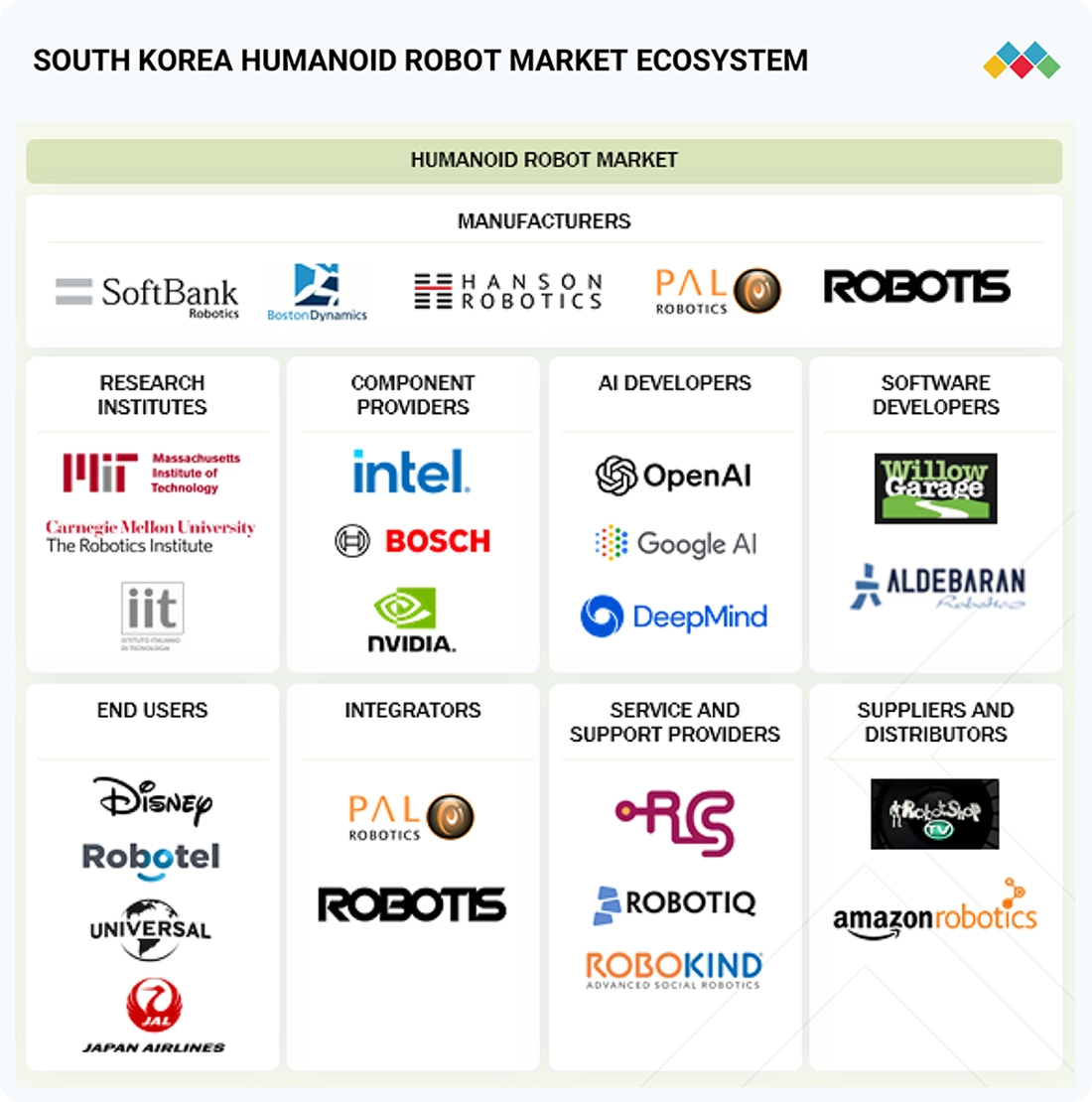
Logos and trademarks shown above are the property of their respective owners. Their use here is for informational and illustrative purposes only.
MARKET SEGMENTS
Source: Secondary Research, Interviews with Experts, MarketsandMarkets Analysis
South Korea Humanoid Robot Market, by Type
Biped humanoid robots dominated the market in 2025, with these two-legged robots demonstrating superior capability to navigate human-centric environments. This dominance is due to their agility, ability to traverse stairs and uneven surfaces, and natural fit within spaces designed for human movement, making them preferred for applications in retail stores, hospitals, educational institutions, and residential settings where wheeled robots face mobility limitations.
South Korea Humanoid Robot Market, by Application
Personal assistance and caregiving represented the largest and fastest-growing segments of the South Korea humanoid robot market. The rapidly aging population has propelled these segments to the forefront in the country. Factors such as an increasing number of elderly citizens requiring daily living support, growing prevalence of chronic conditions requiring monitoring and assistance, shortage of professional caregivers, and cultural preferences for aging in place are driving demand for humanoid robots capable of providing companionship, medication reminders, mobility assistance, and emergency response capabilities in home and healthcare facility environments.
REGION
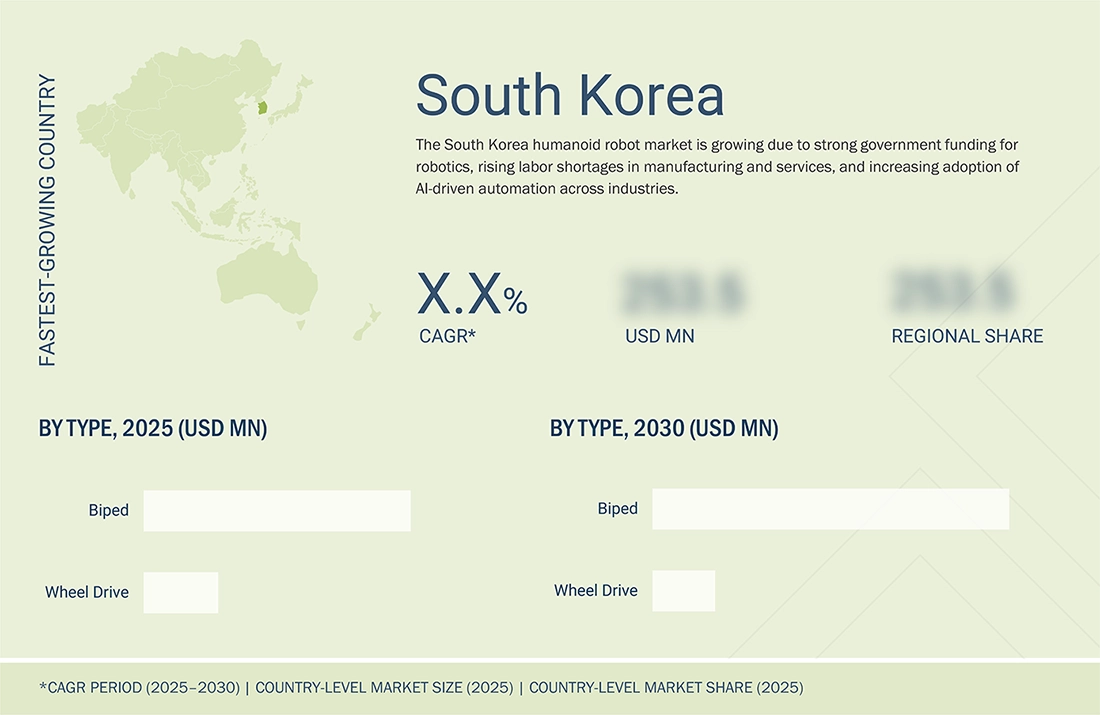
South Korea to be fastest-growing region in South Korea Humanoid Robot Market during forecast period
South Korea is a key growth market in the Asia Pacific humanoid robot market, driven by its advanced technological infrastructure, strong government support for robotics innovation, and a tech-savvy population receptive to robotic solutions. The Ministry of Trade, Industry, and Energy actively supports local robotics companies through funding programs, research grants, and commercialization initiatives. The country's focus on developing smart factories is significantly boosting demand for humanoid robots in industrial applications, while the service sector is rapidly adopting them for customer interaction, education, and hospitality. Additionally, South Korea's rapidly aging demographic is creating urgent demand for personal assistance and caregiving robots, and the country's robust electronics and manufacturing ecosystem provides strong supply chain support for robotics production, facilitating the swift transition of humanoid robot technologies from research and development to commercial deployment across multiple sectors.
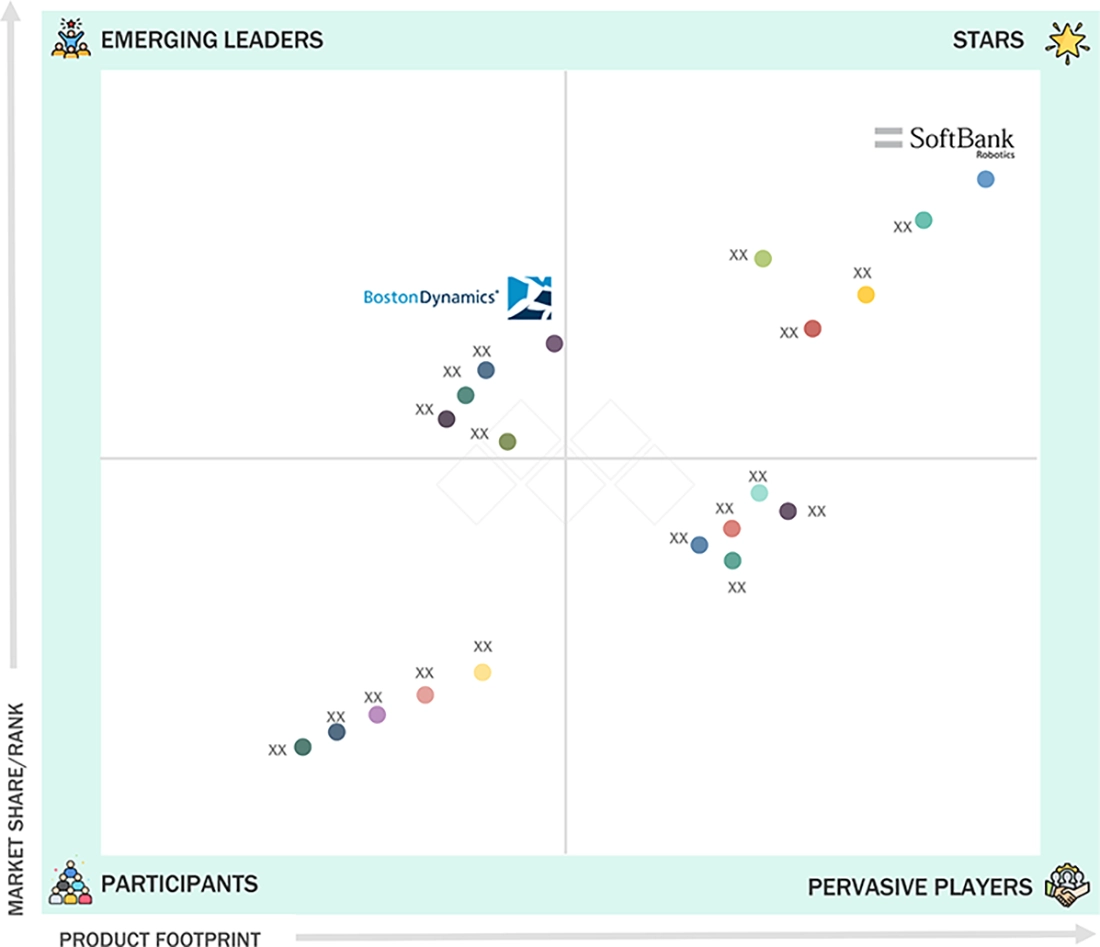
SOUTH KOREA HUMANOID ROBOT MARKET: COMPANY EVALUATION MATRIX
SoftBank Robotics, recognized as a leading player in the South Korea humanoid robot market, offers a diverse portfolio that includes the Pepper and NAO humanoid robots designed for customer engagement, education, healthcare assistance, and research applications. The company boasts strong deployment networks across retail, healthcare, and educational institutions in South Korea and collaborates with local system integrators and solution providers to customize robot capabilities for specific Korean market requirements.
Source: Secondary Research, Interviews with Experts, MarketsandMarkets Analysis
KEY MARKET PLAYERS
- SoftBank Robotics (Japan)
- ROBOTIS (South Korea)
- Agility Robotics (US)
- UBTECH Robotics (China)
- Pal Robotics (Spain)
- Toyota Motor Corporation (Japan)
- Kawada Robotics (Japan)
- Honda Motor Co., Ltd. (Japan)
- Hanson Robotics Ltd. (Hong Kong)
- Samsung (South Korea)
MARKET SCOPE
| REPORT METRIC | DETAILS |
|---|---|
| Market Size in 2024 (Value) | USD 77.9 Million |
| Market Forecast in 2030 (Value) | USD 583.5 Million |
| Growth Rate | CAGR of 39.0% from 2025–2030 |
| Years Considered | 2023–2030 |
| Base Year | 2024 |
| Forecast Period | 2025–2030 |
| Units Considered | Value (USD Million) |
| Report Coverage | Revenue Forecast, Company Ranking, Competitive Landscape, Growth Factors, and Trends |
| Segments Covered |
|
WHAT IS IN IT FOR YOU: SOUTH KOREA HUMANOID ROBOT MARKET REPORT CONTENT GUIDE
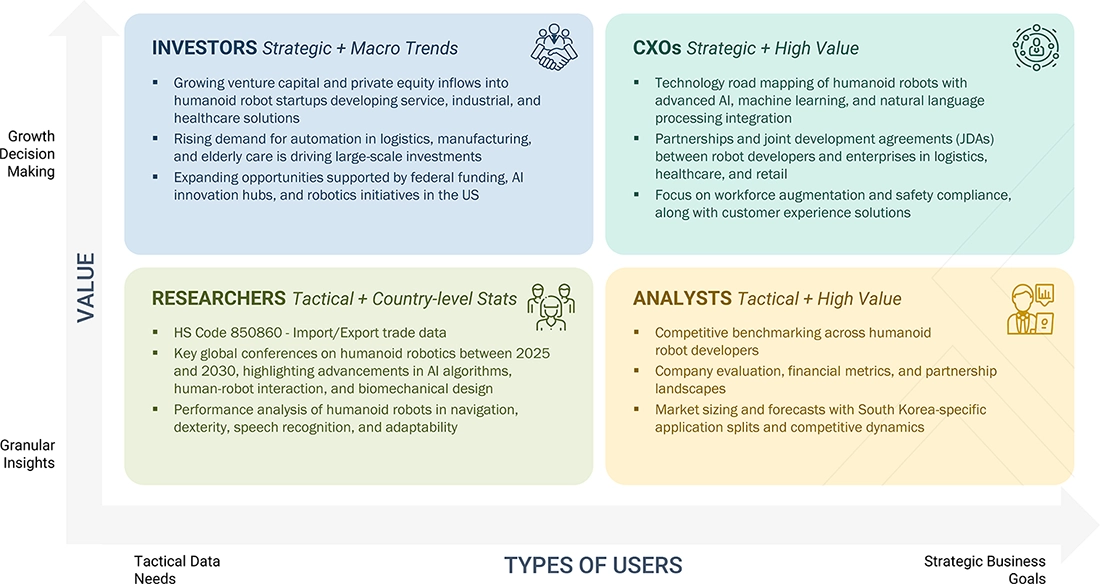
DELIVERED CUSTOMIZATIONS
We have successfully delivered the following deep-dive customizations:
| CLIENT REQUEST | CUSTOMIZATION DELIVERED | VALUE ADDS |
|---|---|---|
| Understanding adoption patterns for humanoid robots across South Korean industries | Assessed humanoid robot deployment trends across key South Korean sectors, including smart manufacturing, healthcare facilities, educational institutions, retail establishments, and logistics operations, highlighting differences in adoption of biped versus wheel drive robots and application-specific customization requirements | Helps clients align product development roadmaps with industry-specific demand drivers, identify high-potential application segments, and understand customization needs for different deployment environments |
| Identifying local partnership and collaboration opportunities | Mapped South Korean robotics ecosystem including component suppliers, AI software developers, system integrators, research institutions, and end-user organizations, with insights into government support programs, technology transfer initiatives, and collaborative development opportunities between domestic and international players | Supports market entry strategies, facilitates partnership identification, enables access to government funding programs, and accelerates commercialization through collaboration with established local players |
RECENT DEVELOPMENTS
- July 2024 : The National Robotarium initiated a collaborative research study with AIT to develop rehabilitative humanoid robots capable of supporting physical therapy and recovery programs for patients with mobility impairments and neurological conditions.
- June 2024 : PAL Robotics announced a strategic partnership with Advanced Navigation to integrate advanced sensor technologies and navigation systems into its humanoid robot platforms, enhancing their ability to operate autonomously in complex and dynamic environments.
- June 2024 : GXO Logistics entered into a collaboration agreement with Apptronik to develop and deploy humanoid robot applications in warehouse environments, focusing on package handling, inventory management, and collaborative workflows with human workers.
Table of Contents
 Exclusive indicates content/data unique to MarketsandMarkets and not available with any competitors.
Methodology
The study involved four major activities in estimating the current size of the south korea humanoid robot market. Exhaustive secondary research has been done to collect information on the market, peer, and parent markets. The next step is to validate these findings, assumptions, and size with industry experts across the value chain through primary research. Both top-down and bottom-up approaches have been employed to estimate the complete market size. After that, market breakdown and data triangulation methods have been used to estimate the market size of segments and subsegments. Two sources of information—secondary and primary—have been used to identify and collect information for an extensive technical and commercial study of the south korea humanoid robot market.
Secondary Research
Various secondary sources have been referred to in the secondary research process to identify and collect information important for this study. The secondary sources include annual reports, press releases, and investor presentations of companies; white papers; journals and certified publications; and articles from recognized authors, websites, directories, and databases. Secondary research has been conducted to obtain key information about the industry’s supply chain, the market’s value chain, the total pool of key players, market segmentation according to the industry trends (to the bottom-most level), regional markets, and key developments from market- and technology-oriented perspectives. The secondary data has been collected and analyzed to determine the overall market size, further validated by primary research.
Primary Research
Extensive primary research was conducted after gaining knowledge about the current scenario of the south korea humanoid robot market through secondary research. Several primary interviews were conducted with experts from the demand and supply sides across four major regions—North America, Europe, Asia Pacific, and RoW. This primary data was collected through questionnaires, emails, and telephonic interviews.
Market Size Estimation
Both top-down and bottom-up approaches have been used to estimate and validate the total size of the south korea humanoid robot market. These methods have also been used extensively to estimate the size of various subsegments in the market. The following research methodology has been used to estimate the market size:
- Major players in the industry and markets have been identified through extensive secondary research.
- The industry’s value chain and market size (in terms of value) have been determined through primary and secondary research processes.
- All percentage shares, splits, and breakdowns have been determined using secondary sources and verified through primary sources.
Data Triangulation
After arriving at the overall size of the south korea humanoid robot market from the market size estimation process explained above, the total market has been split into several segments and subsegments. Data triangulation and market breakdown procedures have been employed, wherever applicable, to complete the overall market engineering process and arrive at the exact statistics for all segments and subsegments of the market. The data has been triangulated by studying various factors and trends from both the demand and supply sides. Along with this, the market size has been validated using both top-down and bottom-up approaches.
Market Definition
A humanoid robot resembles and imitates a human body structure and behavior. It has a torso, a head, two arms, and two legs; however, some humanoid robots may replicate specific parts of the human body. It is a complex machine equipped with hardware, software, and cutting-edge technologies to perform various tasks in different environments, such as deep-ocean exploration, scientific research, complex medical surgeries, and household chores. Their human-like form and behavior allow them to operate in environments designed for humans, making them more adaptable for tasks that require interaction with people or navigation in human-centric spaces.
Key Stakeholders
- Government bodies and policymakers
- Industry organizations, forums, alliances, and associations
- Raw material suppliers and distributors
- Research institutes and organizations
- Original equipment manufacturers (OEMs)
- Technology, service, and solution providers
- Intellectual property (IP) core and licensing providers
- Market research and consulting firms
Report Objectives
- To describe, segment, and forecast the overall south korea humanoid robot market, by offering, type, and application, in terms of value.
- To describe and forecast the market for four key regions: North America, Europe, Asia Pacific, and Rest of the World (RoW), along with their respective countries, in terms of value.
- To provide an overview of the recent trends in the market.
- To provide detailed information regarding the drivers, restraints, opportunities, and challenges influencing the growth of the market.
- To analyze the supply chain, trends/disruptions impacting customers’ business, market/ecosystem map, pricing analysis, and regulatory landscape pertaining to the south korea humanoid robot market.
- To strategically analyze micromarkets with respect to individual growth trends, prospects, and contributions to the overall market size.
- To analyze opportunities in the market for stakeholders and provide a competitive landscape of the market.
- To strategically profile the key players and comprehensively analyze their market positions in terms of their ranking and core competencies, along with detailing the competitive landscape for market leaders,
- To analyze competitive developments, such as product launches, acquisitions, collaborations, agreements, and partnerships, in the south korea humanoid robot market.
- To provide ecosystem analysis, case study analysis, patent analysis, technology analysis, value chain analysis, trends/disruptions impacting customer business, the impact of AI/Gen AI, key conferences and events, pricing analysis, Porter’s five forces analysis, and regulations pertaining to the market under study.
- To provide a macroeconomic outlook based on all the regions in the region chapter.
Available Customizations
With the given market data, MarketsandMarkets offers customizations according to the company’s specific needs. The following customization options are available for the report:
Company Information:
- Detailed analysis and profiling of additional market players (up to 5)
Key Questions Addressed by the Report
What is the projected market size of the South Korea humanoid robot market?
The South Korea humanoid robot market is projected to grow from USD 112.6 million in 2025 to USD 583.5 million by 2030, at a CAGR of 39.0%.
Which region is covered in the South Korea humanoid robot market report?
The report focuses on South Korea as a key market in the Asia Pacific region, driven by strong government support, advanced infrastructure, and rapid adoption of robotics technologies.
How is the South Korea humanoid robot market segmented?
The market is segmented by type (biped and wheel drive robots) and application, including personal assistance, caregiving, education, public relations, search and rescue, and manufacturing.
Which segment dominates the South Korea humanoid robot market?
The biped humanoid robot segment dominates the market, accounting for the largest share due to its ability to operate effectively in human-centric environments.
Who are the key players in the South Korea humanoid robot market?
Key players in the market include SoftBank Robotics, ROBOTIS, Samsung, Agility Robotics, UBTECH Robotics, and PAL Robotics, driving innovation and commercialization.


Personalize This Research
- Triangulate with your Own Data
- Get Data as per your Format and Definition
- Gain a Deeper Dive on a Specific Application, Geography, Customer or Competitor
- Any level of Personalization
Let Us Help You
- What are the Known and Unknown Adjacencies Impacting the South Korea Humanoid Robot Market
- What will your New Revenue Sources be?
- Who will be your Top Customer; what will make them switch?
- Defend your Market Share or Win Competitors
- Get a Scorecard for Target Partners

Custom Market Research Services
We Will Customise The Research For You, In Case The Report Listed Above Does Not Meet With Your Requirements
Get 10% Free CustomisationTESTIMONIALS

Tetsuya Ohhira
Business Development Manager-Technology Business
Nikon Corporation,
Leading Japanese MNC specializing in optics and imaging productswww.nikon.com
MarketsandMarkets™ response
is quick. Their attitude is flexible and positive. Analyst Insights are globally considered and
significant. Client Services quickly respond to our inquiry and demand. Their wide range of global
surveys help us make our strategic plan.
We hope Knowledge Store will be easier to search
for a report.
VP - Marketing & Business Development
Leading Provider of Process Control Solutions
We engaged with MarketsandMarkets on a study to perform an analysis and recommend a Go-To-Market strategy for metrology and process control in the semiconductor market. The study was tailored to our targets and needs with well-defined milestones. Our overall experience with the MarketsandMarkets team was very good throughout the project in all aspects including the analysis methodologies used, the quality and depth of primary and secondary data sets, the professionalism and flexibility of the team and the ability to meet the target schedule and milestones. We want to thank MarketsandMarkets team for a job well done.






Growth opportunities and latent adjacency in South Korea Humanoid Robot Market