Strobilurin Market Share Analysis & Growth Trends

Strobilurin Market by Product Type (Azoxystrobin, Pyraclostrobin, Trifloxystrobin, Kresoxim-Methyl, Picoxystrobin, Fluoxastrobin, Others), Crop Type (Cereals & Grains, Fruits & Vegetables, Oilseeds & Pulses, Turf & Ornamentals, Others), Formulation Type (Liquid, Dry, Granular), Application Method (Foliar Spray, Soil Treatment, Seed Treatment, Others), and Region - Global Forecast to 2030




OVERVIEW
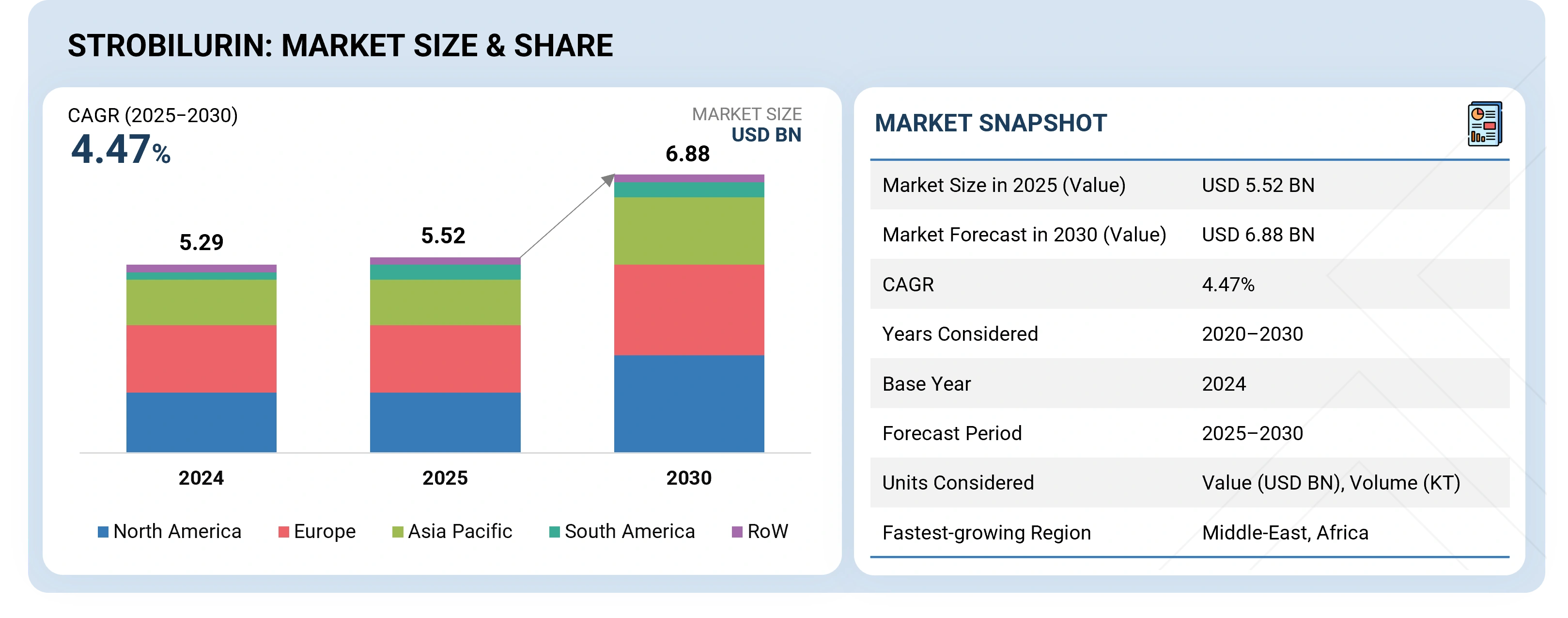
Source: Secondary Research, Interviews with Experts, MarketsandMarkets Analysis
The strobilurin market is projected to expand from USD 5.53 billion in 2025 to USD 6.88 billion by 2030, at a CAGR of 4.47% during the forecast period. The strobilurin market is growing steadily, driven by demand for high-yield crops, increasing incidences of crop diseases, and innovations in agrochemical formulations. The market is expected to grow significantly due to agricultural expansion in developing parts of the world and increasing emphasis on crop protection. The market size is also driven by advancements in technology and product developments of new fungicides by key players, such as Syngenta, BASF, and Corteva. The favorable policies of national governments and the growing trend for sustainable farming practices help to provide a positive outlook for the strobilurin market.
Market Size and Forecast:
- Market Size Value in 2024: USD 5.29 Billion
- Market Size Value in 2025: USD 5.53 Billion
- Revenue Forecast in 2030: USD 6.88 Billion
- Growth Rate: CAGR of 4.47% from 2025 to 2030
- Base year: 2024
- Forecast period: 2025–2030
- Middle East and Africa is estimated to be the fastest-growing market.
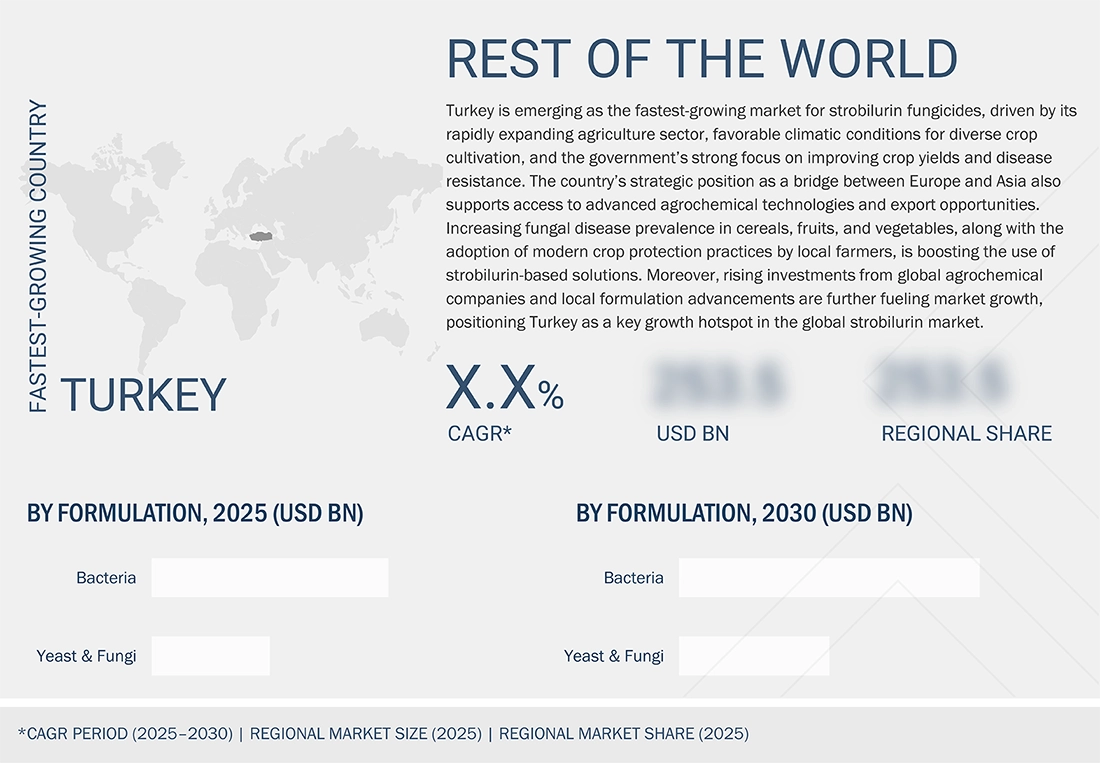
- Liquid formulation is projected to exhibit the highest growth rate in the strobilurin market during the forecast period, registering a CAGR of 5.7%.
Key Market Trends and Insights
- By Type: The Azoxystrobin segment accounts for a significant share of the strobilurin fungicide market, driven by its broad-spectrum disease control capabilities, high efficacy, and extensive use across multiple crop types.
- Industry Outlook:The market is witnessing increased adoption of strobilurin fungicides as growers focus on improving crop protection, maximizing yields, and managing fungal diseases that affect agricultural productivity.
- Growth Engines:Rising demand for high-quality agricultural produce, increasing prevalence of crop diseases, growing awareness of crop protection practices, and the need to enhance farm productivity are driving market expansion.
- Strategic Opportunities:Future growth opportunities are emerging through the development of advanced fungicide formulations, expanding applications in high-value crops, and increasing adoption of integrated disease management strategies.
KEY TAKEAWAYS
-
By TypeAzoxystrobin, Pyraclostrobin, Trifloxystrobin, Kresoxim-methyl, Picoxystrobin, Fluoxastrobin, and Others. Azoxystrobin and Pyraclostrobin dominate due to their broad-spectrum activity, strong systemic properties, and high crop compatibility, while next-gen molecules like Fluoxastrobin are gaining traction for resistance management and sustainability.
-
By Crop TypeCereals & Grains, Fruits & Vegetables, Oilseeds & Pulses, Turf & Ornamentals, and Others. Cereals and grains hold the largest share owing to high demand for disease control in staple crops like wheat, corn, and rice, while fruits & vegetables are expected to grow fastest due to increased focus on quality and shelf-life enhancement.
-
By Formulation TypeLiquid Formulations, Dry Formulations, and Granular Formulations. Liquid formulations lead the market for their superior coverage, ease of application, and compatibility with modern spraying systems, while granular forms are expanding in precision and controlled-release applications.
-
By Application MethodFoliar Spray, Soil Treatment, Seed Treatment, and Others. Foliar spray remains the predominant method due to its effectiveness in providing fast-acting protection and visible results, whereas seed and soil treatments are gaining attention for early-stage disease prevention and reduced residue levels.
-
By RegionThe market is analyzed across North America (U.S., Canada, Mexico), Europe (Germany, UK, France, Italy, Spain, and other European countries), Asia Pacific (China, India, Japan, Australia & New Zealand, and other APAC countries), South America (Brazil, Argentina, and rest of South America), and the Rest of the World (Middle East and Africa).
-
Competitive LandscapeThe strobilurin fungicides market is dominated by major agrochemical companies such as BASF (Germany), Bayer Group (Germany), Corteva (US), Syngenta (Switzerland), FMC Corporation (US), UPL (India), Sumitomo Chemical Co., Ltd. (Japan), Nufarm Limited (Australia), AMVAC Chemical Corporation (US), and Gowan Company, LLC (US). These players are focusing on strengthening their market positions through continuous product innovation, strategic partnerships, and regional expansion. Key players such as BASF and Bayer are investing heavily in next-generation strobilurin formulations with enhanced resistance management and environmental safety. Corteva and Syngenta are emphasizing integrated crop protection solutions, combining fungicides with biologicals and digital tools to support precision farming. Companies like UPL and Nufarm are expanding their portfolios through cost-effective formulations and distribution network growth in emerging markets. Meanwhile, Sumitomo Chemical and FMC are pursuing collaborations and R&D in sustainable chemistry to meet evolving regulatory standards and farmer demand for residue-free solutions. Collectively, these strategies help market leaders maintain competitiveness, ensure compliance, and capture the rising demand for efficient, eco-friendly strobilurin-based crop protection solutions globally.
The strobilurin fungicides market represents a significant segment of the global crop protection industry, driven by the rising need to enhance crop yield, quality, and disease resistance. Strobilurins, known for their broad-spectrum efficacy and preventive action against fungal pathogens, are widely used across cereals & grains, fruits & vegetables, and oilseeds & pulses. The market is experiencing steady growth due to increasing incidences of fungal diseases, growing emphasis on sustainable agriculture, and the adoption of integrated pest management (IPM) practices. Moreover, innovations in formulation technologies—such as combination products, liquid formulations, and resistant strain management—are further supporting market expansion. However, regulatory pressures concerning chemical residues and fungicide resistance are pushing manufacturers to develop next-generation, environmentally safe strobilurins.
TRENDS & DISRUPTIONS IMPACTING CUSTOMERS' CUSTOMERS
The strobilurin fungicides market is undergoing a major transformation driven by rapid regulatory shifts, rising resistance pressure, and a growing push toward sustainable crop protection. While strobilurins remain a cornerstone for broad-spectrum disease control and yield enhancement, increasing pathogen resistance has accelerated demand for advanced co-formulations, hybrid modes of action, and integrated resistance management strategies. At the same time, stricter environmental regulations, especially in Europe, are pushing manufacturers to innovate with greener, more targeted formulations that reduce chemical load and improve plant stress tolerance. This shift toward high-performance, lower-residue solutions—combined with digital farming adoption and expanding food demand—continues to redefine the growth dynamics and future competitiveness of the strobilurin segment globally.
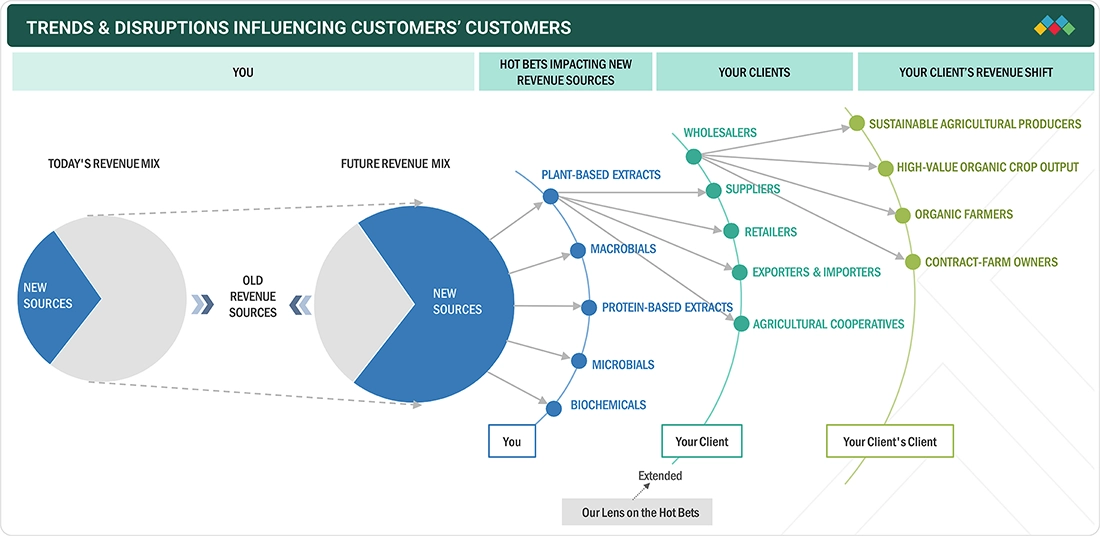
Source: Secondary Research, Interviews with Experts, MarketsandMarkets Analysis
MARKET DYNAMICS

Level
-
Rising demand for high-yield crops

-
Broad-spectrum efficacy and strong preventive performance


Level
-
Development of fungicide resistance

-
Regulatory tightening on chemical residues and environmental impacts


Level
-
Expansion in emerging markets such as Asia and Africa

-
Co-formulations to manage resistance and extend product lifecycle


Level
-
Volatile raw material prices

-
Rapid resistance development in key pathogens

Source: Secondary Research, Interviews with Experts, MarketsandMarkets Analysis
DRIVERS: Rising demand for high-yield crops
Optimal levels of productivity per area of land are required by farmers because of the increased demand for food brought on by a growing global population. Securing higher yields is driving growers to turn to effective plant protection products such as strobilurin fungicides. Strobilurins protect crops against a diverse array of fungal pathogens, allowing growers to prevent or manage fungal diseases that can severely reduce the agricultural productivity of the crop. By managing the pathogens earlier and keeping crops healthier throughout the growing season, strobilurins ensure the quality and quantity of the crops. Therefore, the increase in reliance on high-performance fungicides is encouraging their adoption in high-intensity farming systems around the world to achieve food security.
RESTRAINTS: Development of fungicide resistance
The development of resistance among fungal pathogens is a major limitation on the strobilurin market because there is repeated and excessive application of strobilurins that have caused the loss of long-term efficacy and concerns for sustainable disease management. An important paper published in Nature in June 2024 (Vol. 131, pp. 2243-2245) by Cardozo Téllez et al. in the Journal of Plant Diseases and Protection, outlined the discovery of the G143A point mutation in the cytochrome b gene of Blumeria graminis f.sp. tritici, the pathogen responsible for wheat powdery mildew in Paraguay. This mutation is likely contributing to resistance to QoI fungicides, such as azoxystrobin. The research assayed five field samples by bioassay and molecularly based tests and found both resistant and susceptible alleles. This is a growing resistance issue in critical crop protection markets.
OPPORTUNITIES: Expansion in emerging markets such as Asia and Africa
In emerging agricultural areas in Africa and Asia, the strobilurin market is likely to benefit from significant growth prospects as crop cultivation expands, and demand for crops that are disease-resistant with a high yield increases. An example of this is BASF’s recent introduction of Revycare to the South African market in August 2024 to aid citrus growers in managing the devastating impacts of Citrus Black Spot (CBS). Revycare is premixed with Revysol and F500. Revysol is a new isopropanol-azole fungicide with strong systemic movement, and F500 is a trusted strobilurin product of BASF. Revycare provides complete disease control from planting through post-harvest management. This product release highlights BASF's ongoing commitment to developing a comprehensive set of solutions to respond to needs in new and emerging markets. As there continues to be greater awareness of product options and increasing agricultural investment in developing economies, the prospects for product releases like this create tremendous opportunity, especially in areas where advancements in new-age fungicides are few and responses against emerging pathogens are even less.
CHALLENGES: Volatile raw material prices
Strobilurin fungicide manufacturers are facing a major challenge with the sporadic nature of raw material prices, where the costs of active chemical ingredients, solvents, and packaging are subject to change at any time, to impact production budgets and plans. These changes can be unpredictable and vary based on global supply chains, geopolitical concerns, or crude oil price changes, among other variables, which increase manufacturing costs. For this reason, manufacturers feel the pressure to change the price of their product, which impacts pricing power in more price-sensitive markets. Declining margins are making it increasingly challenging to invest in innovation or expansion due to a reduced ability for manufacturers to be nimble to support long-term survival in a competitive environment.
strobilurin fungicide market: COMMERCIAL USE CASES ACROSS INDUSTRIES
| COMPANY | USE CASE DESCRIPTION | BENEFITS |
|---|---|---|
 |
BASF offers a broad range of strobilurin-based fungicides such as F500® and Pyraclostrobin, integrated into combination formulations to manage resistant fungal strains and improve crop vitality. | Strengthens market leadership through R&D-driven innovation, ensures resistance management, and enhances yield reliability for growers. |
 |
Bayer’s portfolio includes leading strobilurins like Trifloxystrobin, used across cereals, fruits, and vegetables to provide preventive and curative disease control with stress tolerance benefits. | Expands global footprint in crop protection, boosts farmer confidence through proven efficacy, and sustains brand leadership. |
 |
Syngenta’s Azoxystrobin-based fungicides (e.g., Amistar®) deliver long-lasting disease protection and crop enhancement benefits, supported by advanced resistance monitoring programs. | Enhances sustainability through targeted formulations, supports consistent performance across crops, and drives global market share. |
 |
Corteva combines strobilurin chemistry with advanced formulations to optimize application efficiency and spectrum control, particularly in cereals and oilseeds. | Strengthens product differentiation, improves disease resilience in key crops, and increases regional adoption via tailored agronomic solutions. |
 |
FMC integrates strobilurins like Fluoxastrobin into multi-mode fungicide blends for enhanced control of fungal pathogens and extended crop protection duration. | Improves product longevity and field performance, enhances return on investment for growers, and expands market reach through combination innovations. |
Logos and trademarks shown above are the property of their respective owners. Their use here is for informational and illustrative purposes only.
MARKET ECOSYSTEM
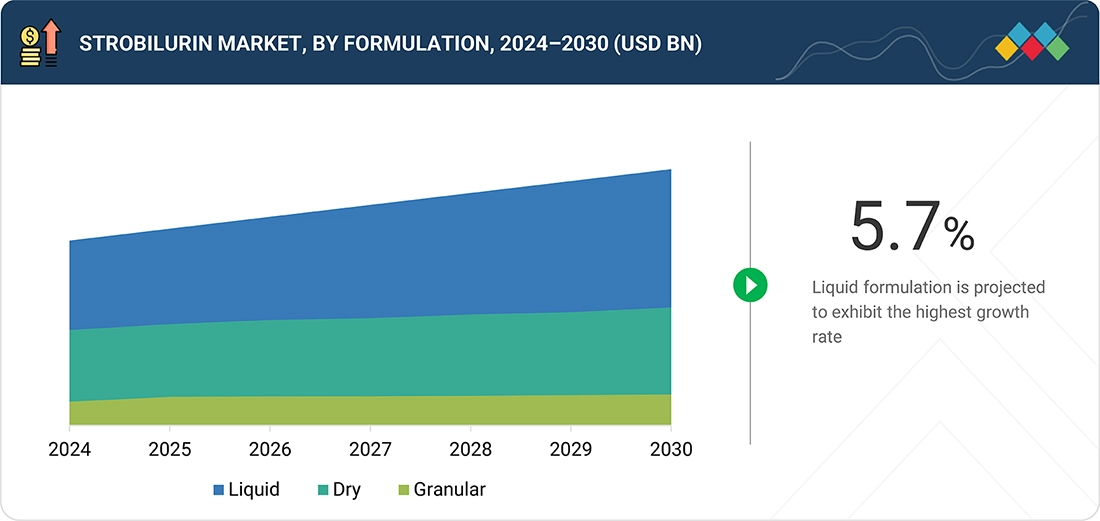
Some of the prominent companies in this market have been operational for more than a decade and have diversified portfolios, the latest technologies, and excellent global sales and marketing networks. These include BASF (Germany), Bayer Group (Germany), Corteva (US), Syngenta (Switzerland), and FMC Corporation (US).
Logos and trademarks shown above are the property of their respective owners. Their use here is for informational and illustrative purposes only.
MARKET SEGMENTS
Source: Secondary Research, Interviews with Experts, MarketsandMarkets Analysis
By formulation type
By formulation type, the liquid segment is estimated to lead the market during the forecast period. Liquid formulation holds the largest share of strobilurin fungicides in the market due to the convenience of application, superior coverage, and modern sprayer compatibility. Farmers prefer using liquid formulation because of the ease of mixing, uniform product placement, and effectiveness in controlling the impact of fungal diseases in a broad spectrum of crops. Some advantages of strobilurin fungicides in liquid formulation are that there is inherent stickiness to plant surfaces, improved efficacy in both protectant and curative fungal disease control, and liquid formulations are easier to handle in large-scale farming operations, and are designed to minimize drift or wastage. Liquid fungicide formulations are being used with greater frequency in integrated pest management programs; as a result, liquid formulations will likely maintain their dominance in the global strobilurin market.
By application method
By application method, the foliar spray segment will hold the largest market share during the forecast period. The foliar spray segment accounts for the largest market size in the strobilurin market because it gives rapid and uniform protection against a wide range of fungal diseases. Foliar spray is popular among farmers because it is easy to spray large areas of crops, can minimize outbreaks of disease during this critical growth stage, and prevents disruptions to the growth of crops. Strobilurin fungicides can be used in spray form because when it is newly applied, they need to remain distributed evenly over the disease, or their protective or curative properties cannot be activated. Modifications in spray equipment and formulations have improved the precision and coverage of foliar application of strobilurins, and this method is now understood and utilized in global and regional farming systems across a range of crops.
REGION
The Rest of the World (Middle East and Africa) is estimated to be the fastest-growing market during the forecast period.
The Middle East & Africa is anticipated to be the fastest-growing regional market for strobilurin fungicides during the forecast period due to the region’s rapid agricultural development, surge in food demand, and growing awareness of crop protection. Governments and private sectors in countries such as South Africa, Egypt, Nigeria, and Saudi Arabia are investing considerably in agricultural growth, modern farming methods, and crop protection products. The increasing threat posed by fungal infections, climate variability, and the requirement for increased levels of crop productivity are driving the demand for effective fungicides such as strobilurins. Enhanced support from international agricultural organizations and increased access to agrochemical products will provide additional penetration into strobilurin fungicides being adopted in this region – it will be one of the hot spots for future growth and investment.
strobilurin fungicide market: COMPANY EVALUATION MATRIX
The strobilurin fungicides market is highly competitive, characterized by the presence of several global agrochemical leaders focusing on innovation, formulation efficiency, and resistance management. Companies such as BASF SE (Germany), Bayer Group (Germany), Syngenta (Switzerland), Corteva Agriscience (US), and FMC Corporation (US) dominate the market with strong portfolios of strobilurin-based products like azoxystrobin, pyraclostrobin, and trifloxystrobin, often used in combination with other fungicide classes for broader and longer-lasting disease control. These players continuously invest in research and development to develop advanced formulations that address evolving fungal resistance and promote sustainable agriculture. Strategic initiatives such as mergers, acquisitions, and partnerships are common, aimed at strengthening distribution networks and regional presence, particularly in emerging markets across Asia-Pacific and Latin America. Additionally, there is a growing emphasis on integrated pest management (IPM) and eco-friendly formulations, driving players to innovate toward more targeted and environment-safe solutions to maintain their competitive edge in the market.

Source: Secondary Research, Interviews with Experts, MarketsandMarkets Analysis
KEY MARKET PLAYERS
- BASF (Germany)
- Bayer Group (Germany)
- Corteva (US)
- Syngenta (Switzerland)
- FMC Corporation (US)
- UPL (India)
- Sumitomo Chemical Co., Ltd. (Japan)
- Nufarm Limited (Australia)
- AMVAC Chemical Corporation (US)
- Gowan Company, LLC (US)
- Albaugh, LLC (US)
- Limin Group Co., Ltd. (China)
- Hailir Pesticides and Chemicals Group (China)
- Coromandel International Limited (India)
- Adama Agricultural Solutions Ltd. (Israel)
- Sipcam Oxon Group (Italy)
- Indofil Industries Limited (India)
- Sikko Industries Ltd. (India)
- IFFCO-MC Crop Science Pvt. Ltd. (India)
- Neo Plant (India)
- GBL Chemical Limited (India)
- Ningbo Sunjoy Agroscience Co., Ltd. (China)
- Arysta LifeScience (Japan)
- Kwizda Agro GmbH (Austria)
- Zhejiang Xinnong Chemical Co., Ltd. (China)
MARKET SCOPE
| REPORT METRIC | DETAILS |
|---|---|
| Market Size Value in 2025 | USD 5.53 Billion |
| Revenue Forecast in 2030 | USD 6.88 Billion |
| Growth Rate | CAGR of 4.47% from 2025-2030 |
| Years Considered | 2020–2030 |
| Base year | 2024 |
| Forecast period | 2025–2030 |
| Units considered | Value (USD Billion), Volume (KT) |
| Report Coverage | Revenue forecast, company ranking, competitive landscape, growth factors, and trends |
| Segments Covered |
|
| Regions covered | North America, Europe, Asia Pacific, South America, and Rest of the World (RoW) |
WHAT IS IN IT FOR YOU: strobilurin fungicide market REPORT CONTENT GUIDE

DELIVERED CUSTOMIZATIONS
We have successfully delivered the following deep-dive customizations:
| CLIENT REQUEST | CUSTOMIZATION DELIVERED | VALUE ADDS |
|---|---|---|
| Agrochemical Manufacturers & Formulators | 1. Active ingredient performance benchmarking across major strobilurins (azoxystrobin, pyraclostrobin, trifloxystrobin) 2. Co-formulation strategy mapping (Strobilurin + Triazole/SDHI) for resistance management 3. Technology insights on improved systemicity and residual action | 1. Strengthened product innovation and portfolio competitiveness 2. Enhanced preventive and curative efficacy against major fungal diseases 3. Extended commercial lifecycle through resistance mitigation |
| Regulatory Bodies & Environmental Safety Authorities | 1. Regional regulatory compliance matrix (EU withdrawal risks, MRL guidelines, eco-tox limits) 2. Active monitoring of pollinator & aquatic impact studies 3. Sustainability-readiness assessments for future approval security | 1. Improved public and environmental safety controls 2. Standardized enforcement of residue and approval criteria 3. Smoother regulatory navigation for market participants |
| Crop Protection Distributors & Retailers | 1. Market opportunity mapping by crop category (cereals, fruits & vegetables, oilseeds) 2. Competitive pricing and margin benchmarking 3. Seasonal demand forecasting for inventory optimization | 1. Higher revenue from targeted product placement 2. Efficient stock management and reduced wastage 3. Stronger distributor–grower engagement |
| Farmers & Growers | 1. ROI calculators comparing disease incidence vs. fungicide cost 2. Guidance on spray intervals based on local disease pressure data 3. Advisory modules on "strobilurin greening effect" benefits | 1. Improved yield per acre & crop quality premiums 2. Lower disease-related losses and more predictable returns 3. Better resistance management adoption at the ground level |
| Research & Technology Organizations | 1. Disease resistance surveillance & sensitivity analysis for fungal strains 2. Trials evaluating application timing & environmental stress interaction 3. Precision application insights aligned with digital farming tools | 1. Data-driven advancements in strobilurin efficacy 2. Increased credibility of field recommendations 3. Accelerated development of next-gen sustainable formulations |
RECENT DEVELOPMENTS
- May 2025 : Syngenta’s new biologicals facility in South Carolina will have the potential to enhance innovation and the company's overall production capabilities. This reinforces Syngenta's crop solutions portfolio and develops its position in the US strobilurins competitive landscape.
- May 2025 : Syngenta’s Strobilurin fungicide, Metcyclofenstrobin, received provisional ISO approval, adding to Syngenta's Strobilurin fungicide portfolio. This innovation not only delivers broad-spectrum activity while extending lasting control, protected by patent until 2040, but it also enhances Syngenta's global Strobilurin position by adding a new advanced system for farmers to manage key fungal diseases in cereals, vegetables, and specialty crops.
- May 2025 : Corteva announced a major USD 27.5 million expansion facility in Midland. It will increase R&D capacity and further enhance its crop protection technology innovation (including strobilurin fungicides) to strengthen market competitiveness and provide agricultural solutions that promote sustainability.
- June 2024 : Sumitomo Chemical achieved provisional ISO certification for the innovative strobilurin fungicide, bifemetstrobin, which delivers broad-spectrum disease control. This innovative fungicide advances Sumitomo's competitive position in the global strobilurin fungicide category, adding another (patented) solution to the portfolio to use against core commodities such as rice, wheat, corn, and canola.
- February 2023 : UPL announced its extended partnership with AgBiTech (through UPL's new NPP business) to increase its biosolutions distribution in the US market, which could support integrated crop management and possibly boost UPL's strobilurin market in the future by adding complementary and sustainable plant protection options.
Table of Contents
 Exclusive indicates content/data unique to MarketsandMarkets and not available with any competitors.
Methodology
The study involved two major approaches in estimating the current size of the strobilurin market. Exhaustive secondary research was done to collect information on the market, peer, and parent markets. The next step was to validate these findings, assumptions, and sizing with industry experts across the value chain through primary research. Both top-down and bottom-up approaches were employed to estimate the complete market size. After that, market breakdown and data triangulation were used to estimate the market size of segments and subsegments.
Secondary Research
This research study involved the extensive use of secondary sources—directories and databases such as Bloomberg Businessweek and Factiva—to identify and collect information useful for a technical, market-oriented, and commercial study of the market.
In the secondary research process, various sources, such as company annual reports, press releases, investor presentations, white papers, food journals, certified publications, articles from recognized authors, directories, and databases, were used to identify and collect information.
Secondary research was mainly used to obtain key information about the industry’s supply chain, the total pool of key players, and market classification and segmentation as per the industry trends to the bottom-most level, regional markets, and key developments from both market- and technology-oriented perspectives.
Primary Research
Extensive primary research was conducted after obtaining information regarding the strobilurin market scenario through secondary research. Several primary interviews were conducted with market experts from both the demand and supply sides across major countries of North America, Europe, Asia Pacific, South America, and the Rest of the World. Primary data was collected through questionnaires, emails, and telephone interviews. The primary sources from the supply side included various industry experts, such as Chief Experience Officers (CXOs), Vice Presidents (VPs), directors from business development, marketing, research, and development teams, and key opinion leaders. Primary interviews were conducted to gather insights such as market statistics, data on revenue collected from the products and services, market breakdowns, market size estimations, market forecasting, and data triangulation. Primary research also helped in understanding the various trends related to strobilurin fungicide type, crop type, formulation, application method, and region. Stakeholders from the demand side, such as research institutions and universities, third-party vendors, were interviewed to understand the buyer’s perspective on the service, and their current usage of strobilurin fungicide and the outlook of their business, which will affect the overall market.
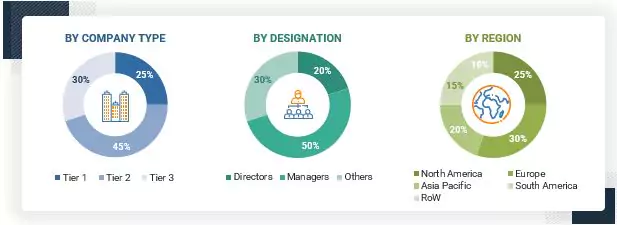
Note: The three tiers of the companies are defined based on their total revenues in 2023 or 2024,
as per the availability of financial data: Tier 1: Revenue > USD 1 billion; Tier 2: USD 100 million = Revenue = USD 1
billion; Tier 3: Revenue < USD 100 million.
To know about the assumptions considered for the study, download the pdf brochure
|
COMPANY NAME |
DESIGNATION |
|
BASF (Germany) |
R&D Expert |
|
UPL (India) |
Sales Manager |
|
Bayer Group (Germany) |
Manager |
|
Neo Plant (India) |
Sales Manager |
|
UPL (India) |
Marketing Manager |
Market Size Estimation
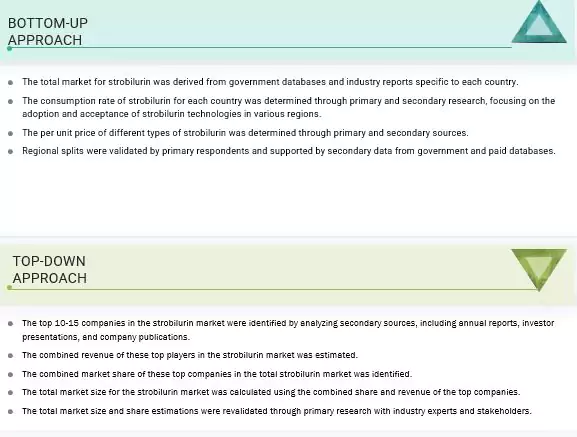
Both the top-down and bottom-up approaches were used to estimate and validate the total size of the strobilurin market. These approaches were also used extensively to determine the size of various subsegments in the market. The research methodology used to estimate the market size includes the following details:
- The key players in the industry and the overall markets were identified through extensive secondary research.
- All shares, splits, and breakdowns were determined using secondary sources and verified through primary sources.
- All possible parameters that affect the market covered in this research study were accounted for, viewed in extensive detail, verified through primary research, and analyzed to obtain final quantitative and qualitative data.
- The research included the study of reports, reviews, and newsletters of top market players, along with extensive interviews for opinions from leaders, such as CEOs, directors, and marketing executives.
Strobilurin Market : Top-Down and Bottom-Up Approach
Data Triangulation
After arriving at the overall market size from the estimation process explained above, the total market was split into several segments and subsegments. The data triangulation and market breakdown procedures were employed, wherever applicable, to estimate the overall strobilurin market and arrive at the exact statistics for all segments and subsegments. The data was triangulated by studying various factors and trends from the demand and supply sides. The market size was also validated using both the top-down and bottom-up approaches.
Market Definition
The strobilurin market refers to the global industry involved in the production, distribution, and use of strobilurin-based fungicides—broad-spectrum agricultural chemicals derived from natural fungal compounds that inhibit mitochondrial respiration in pathogens. Known for their preventive and curative properties, strobilurin fungicides are widely used to protect crops such as cereals, grains, fruits, vegetables, and oilseeds from fungal diseases like rusts, powdery mildew, and blights. These fungicides are available in both liquid and dry formulations and are applied through foliar sprays, soil treatments, or seed coatings. The market includes key active ingredients such as azoxystrobin, pyraclostrobin, trifloxystrobin, kresoxim-methyl, picoxystrobin, fluoxastrobin, and others, often sold either as single-agent products or in combination with other actives.
Stakeholders
- Manufacturers/Chemical Companies
- Distributors & Suppliers
- Retailers & Agro-dealers
- Farmers & Growers
- Contract Research Organizations (CROs) & Testing Labs
- Regulatory Authorities
- Agricultural Extension Services
- Research Institutions & Universities
- Industry Associations & Advocacy Groups
-
Regulatory Bodies such as:
- Environmental Protection Agency (EPA)
- Pest Management Regulatory Agency (PMRA)
- European Food Safety Authority (EFSA)
- European Chemicals Agency (ECHA)
- Institute for the Control of Agrochemicals, Ministry of Agriculture (ICAMA)
- Central Insecticides Board and Registration Committee (CIBRC)
Report Objectives
- To determine and project the size of the strobilurin market with respect to the product type, crop type, formulation, application method, and region in terms of value over five years, ranging from 2025 to 2030
- To identify the attractive opportunities in the market by determining the largest and fastest-growing segments across regions
- To provide detailed information about the key factors influencing market growth (drivers, restraints, opportunities, and challenges)
- To analyze the opportunities in the market for stakeholders and provide details of the competitive landscape for market leaders
- To analyze the micro-markets with respect to individual growth trends, prospects, and their contribution to the total market
- To identify and profile the key players in the strobilurin market
- To understand the competitive landscape and identify the major growth strategies adopted by players across the key regions
Available Customizations
With the given market data, MarketsandMarkets offers customizations according to company-specific scientific needs.
The following customization options are available for the report:
Product Analysis
- Service Matrix, which gives a detailed comparison of the service portfolio of each company.
Geographic Analysis as per Feasibility
With the given market data, MarketsandMarkets offers customizations according to company-specific scientific needs.
- Further breakdown of the Rest of European strobilurin market into key countries
- Further breakdown of the Rest of Asia Pacific strobilurin market into key countries
- Further breakdown of the Rest of South American strobilurin market into key countries
Company Information
- Detailed analyses and profiling of additional market players (up to five)
Key Questions Addressed by the Report
What is the current size of the strobilurin market?
The strobilurin market is estimated to be USD 5.53 billion in 2025 and is projected to reach USD 6.88 billion by 2030, registering a CAGR of 4.47% during the forecast period.
Which are the key players in the market, and how intense is the competition?
BASF (Germany), Bayer Group (Germany), Corteva (US), Syngenta (Switzerland), and FMC Corporation (US) are some of the key market players. The market for strobilurin fungicide is expanding rapidly, with more mergers, acquisitions, and product launches. Companies in this sector are also heavily investing.
Which region is projected to account for the largest share of the strobilurin market?
Europe is the largest market for strobilurin fungicide products due to its modern farming practices, greater awareness of crop protection, stringent quality standards, and high demand for agricultural productivity from the agricultural sector.
What kind of information is provided in the company profiles section?
The provided company profiles deliver crucial details, including a thorough business summary that covers different segments, financial results, geographic presence, revenue distribution, and business revenue breakdown. They also offer insights into product lines, key achievements, and expert analyst opinions to better illustrate the company's potential.
What are the factors driving the strobilurin market?
Rising global food demands, increases in fungal diseases, increased yield expectations, and the demand for cost-effective systems approach to disease control are the forces driving the strobilurin market.


Personalize This Research
- Triangulate with your Own Data
- Get Data as per your Format and Definition
- Gain a Deeper Dive on a Specific Application, Geography, Customer or Competitor
- Any level of Personalization
Let Us Help You
- What are the Known and Unknown Adjacencies Impacting the Strobilurin Market
- What will your New Revenue Sources be?
- Who will be your Top Customer; what will make them switch?
- Defend your Market Share or Win Competitors
- Get a Scorecard for Target Partners

Custom Market Research Services
We Will Customise The Research For You, In Case The Report Listed Above Does Not Meet With Your Requirements
Get 10% Free CustomisationTESTIMONIALS

Business Innovation Director
US Based Leading Agribusiness,
Food and Ingredients ManufacturerI highly appreciate the team's efficiency for a well conducted study that helped us clarify some blind spots in food and agricultural niche markets. Although compiling information for B2B markets is very difficult, the MnM team pulled out the task successfully. The quality of research, level of insights, and responsiveness of team were commendable.
- US Strobilurin Fungicide Market
- Canada Strobilurin Fungicide Market
- Mexico Strobilurin Fungicide Market
- Germany Strobilurin Fungicide Market
- UK Strobilurin Fungicide Market
- France Strobilurin Fungicide Market
- Spain Strobilurin Fungicide Market
- Italy Strobilurin Fungicide Market
- China Strobilurin Fungicide Market
- India Strobilurin Fungicide Market
- Japan Strobilurin Fungicide Market
- Australia Strobilurin Fungicide Market
- South Korea Strobilurin Fungicide Market
- Brazil Strobilurin Fungicide Market
- Argentina Strobilurin Fungicide Market
- Turkey Strobilurin Fungicide Market
- Saudi Arabia Strobilurin Fungicide Market
- South Africa Strobilurin Fungicide Market
- Rest Of Europe Strobilurin Fungicide Market






Growth opportunities and latent adjacency in Strobilurin Market