
Lawful Interception Market

Lawful Interception Market by Network (Fixed Network, Mobile Network), Types of Interception (Active, Passive, Hybrid), End User (Law Enforcement Agencies, Government) - Global Forecast to 2031




OVERVIEW
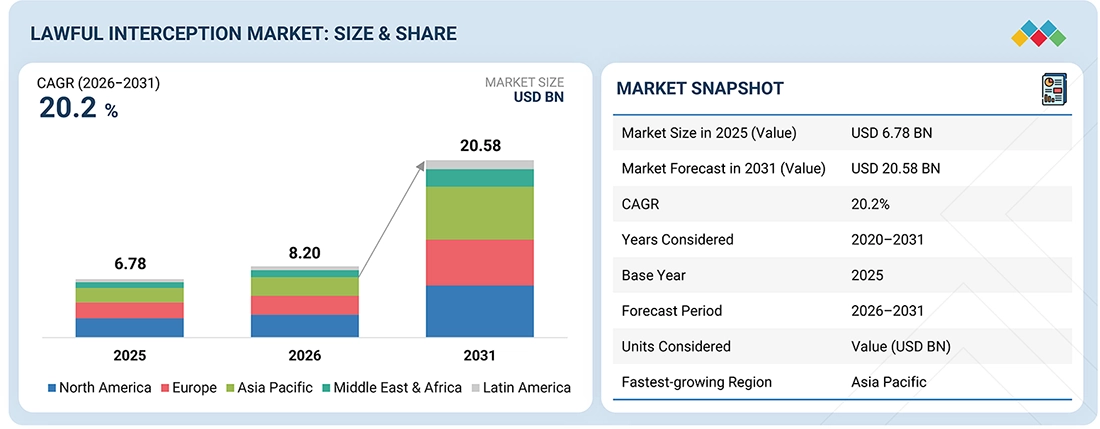
Source: Secondary Research, Interviews with Experts, MarketsandMarkets Analysis
The global lawful interception market is expected to grow from USD 8.20 billion in 2026 to USD 20.58 billion by 2031, at a CAGR of 20.2% over the period. This market is growing steadily as governments and law enforcement agencies strengthen their capabilities to monitor and analyze communication data for national security and public safety. The increasing use of digital communication platforms, including mobile networks, Voice over Internet Protocol (VoIP), and messaging applications, has significantly expanded the scope of interception activities. Telecom operators are required to integrate interception capabilities into their infrastructure to comply with regulatory frameworks. As communication technologies evolve, lawful interception systems are advancing to support real-time data capture, processing, and analysis across multiple network types.
Market Size and Forecast:
- Market Size Value in 2025: USD 6.78 Billion
- Market Size Value in 2026: USD 8.20 Billion
- Revenue Forecast in 2031: USD 20.58 Billion
- Growth Rate: CAGR of 20.2% from 2026 to 2031
- Data available from 2020 to 2031
- Base year: 2025
- Forecast period: 2026-2031
- Largest Growing Region: Asia Pacific
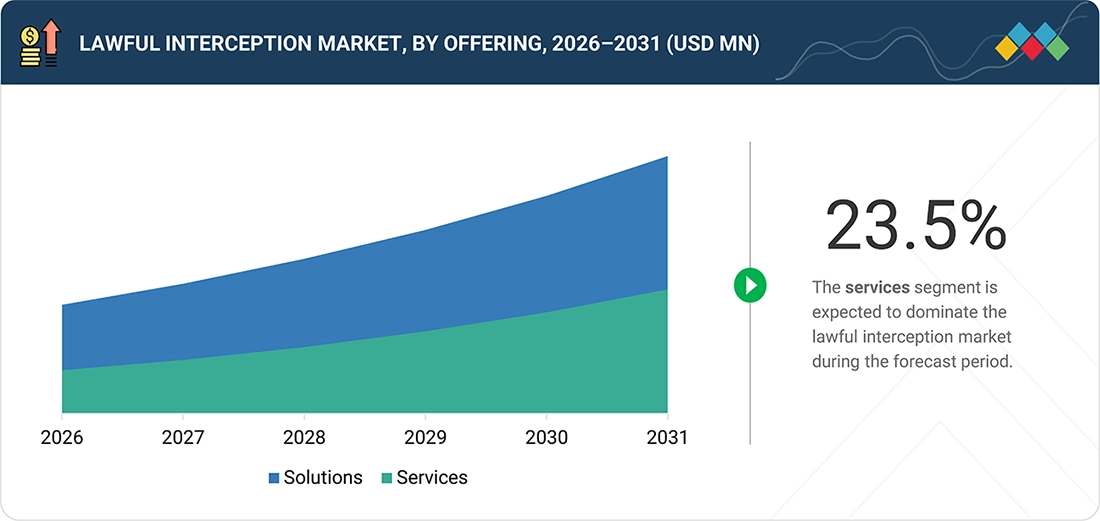
- The lawful interception services segment growing at a CAGR of 23.5 %
KEY TAKEAWAYS
-
By OfferingThe services segment is expected to register the highest CAGR of 23.5%.
-
By End UserThe law enforcement agencies segment is estimated to account for 62.6% of the market in 2026.
-
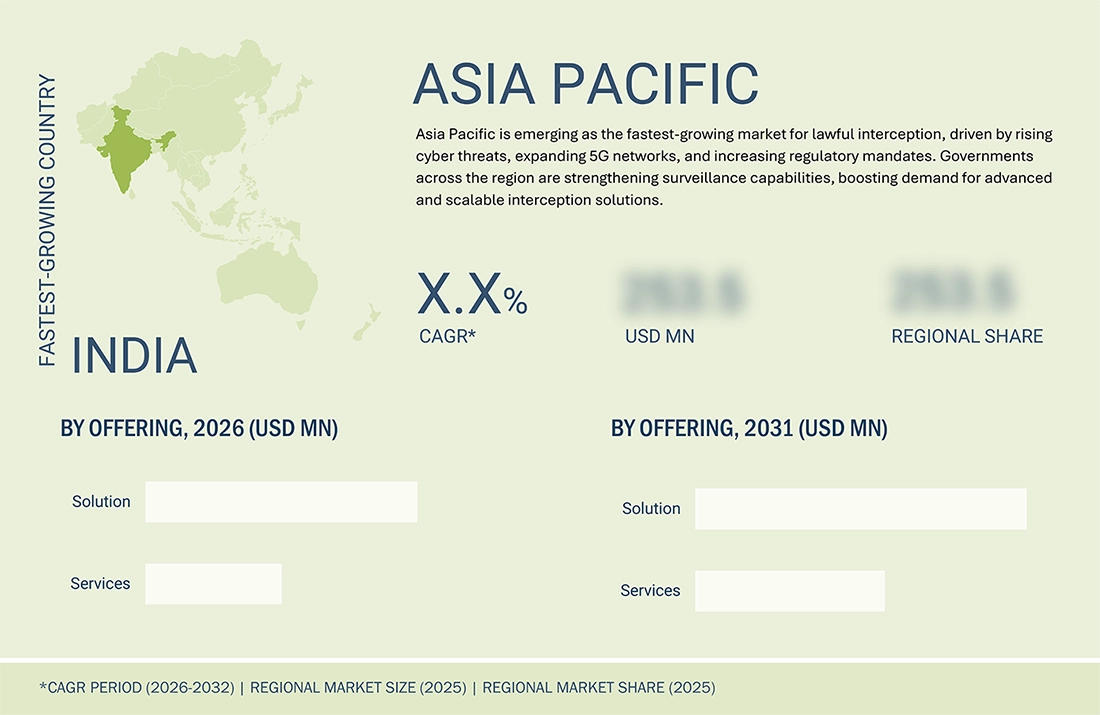
By RegionThe Asia Pacific region is projected to grow the fastest from 2026 to 2031.
-
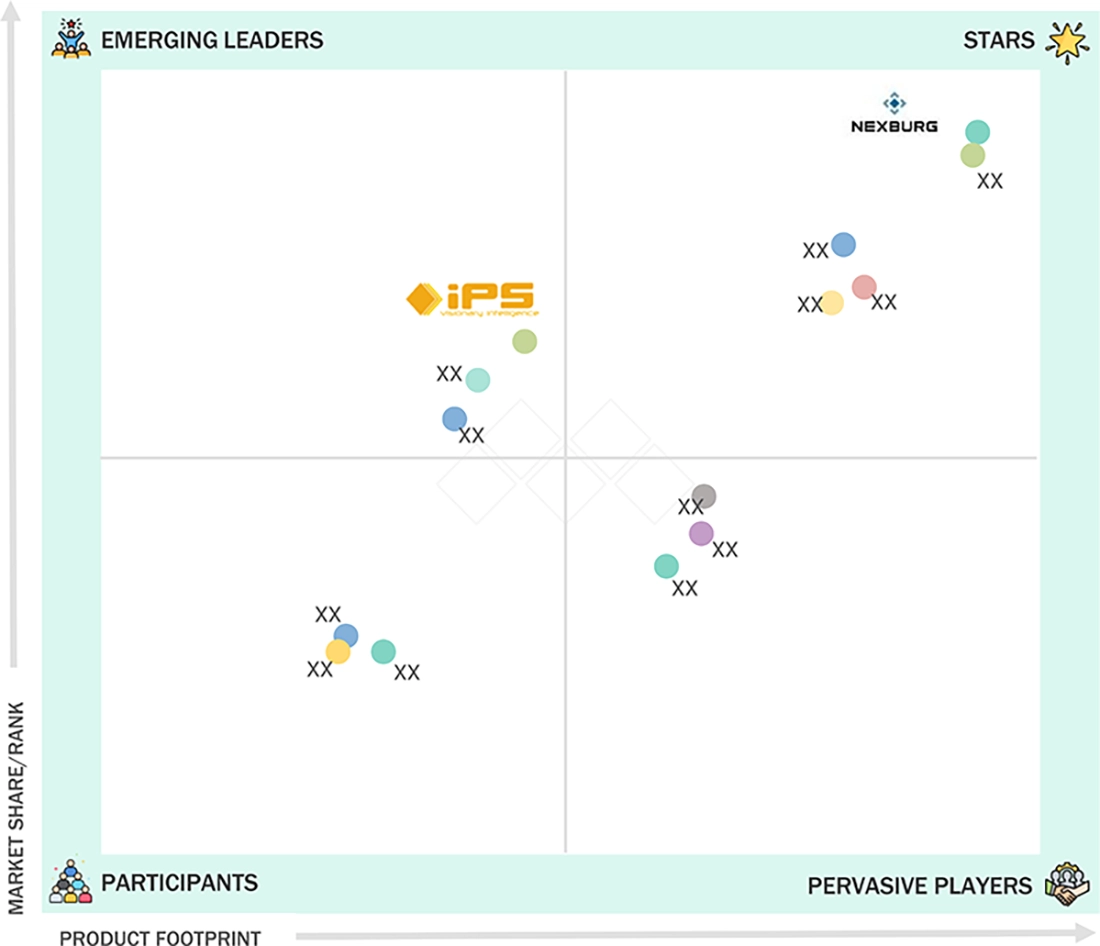
Competitive Landscape - Key PlayersCompanies such as AQSACOM, Vehere, SS8 Networks, and IPS S.p.A were identified as some of the star players in the lawful interception market, given their strong market share and product footprint.
-
Competitive Landscape - Startup/SMECompanies such as Signalogic, EVE Compliancy Solutions, and TraceSpan Communications were identified as key startups in the lawful interception market, given their strong market share and product footprint.
The growing importance of compliance-driven deployments is a key driver in the lawful interception market. Regulatory bodies across regions are enforcing strict guidelines that require telecom and internet service providers to enable lawful interception capabilities within their networks. This is pushing vendors to offer scalable, standards-compliant solutions that can handle high volumes of data while ensuring accuracy and reliability. At the same time, there is increasing pressure to balance surveillance requirements with data privacy and user rights, making transparency and accountability critical aspects of deployment.
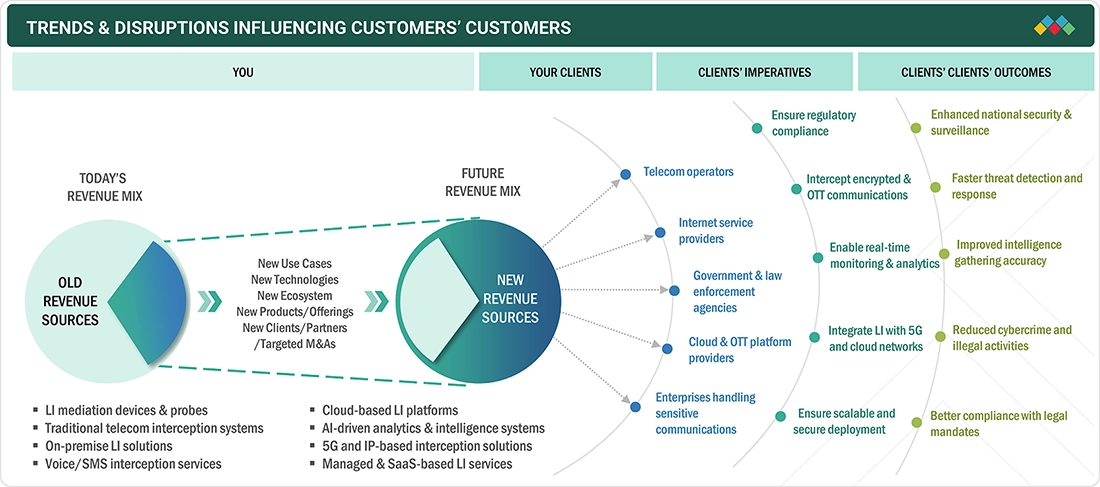
TRENDS & DISRUPTIONS IMPACTING CUSTOMERS' CUSTOMERS
The lawful interception market is evolving rapidly due to advances in communication technologies and stricter regulatory requirements. The rise of 5G, VoIP, and OTT platforms has reduced the effectiveness of traditional interception methods, driving the need for more advanced solutions. Organizations are increasingly adopting cloud-based and virtualized interception systems to enable real-time monitoring and scalability. The integration of AI and analytics is improving the ability to process large volumes of data and enhance threat detection. Growing concerns about encrypted communications and cyber threats are further accelerating demand for secure and compliant systems. As a result, the market is shifting from hardware-centric deployments to software-driven and service-based models.
Source: Secondary Research, Interviews with Experts, MarketsandMarkets Analysis
MARKET DYNAMICS

Level
-
Rising need for real-time monitoring of digital communications

-
Growing reliance on electronic evidence in modern investigations


Level
-
High deployment cost and integration complexity

-
Privacy concerns and stringent data protection regulations


Level
-
Growing scope for 5G-ready lawful interception solutions

-
Rising need for interception support across OTT and messaging platforms


Level
-
Issues in managing interception across multi-vendor and multi-network environments

-
Challenges in handling high traffic at peering and aggregation points

Source: Secondary Research, Interviews with Experts, MarketsandMarkets Analysis
Driver: Rising need for real-time monitoring of digital communications
The rapid growth of digital communications across mobile data, VoIP, broadband, messaging, cloud applications, and IP-based networks has heightened the need for real-time lawful monitoring. Law enforcement agencies now require faster access to legally authorized communication data to support investigations into cybercrime, organized crime, terrorism, fraud, and national security. Between 2023 and 2026, the shift toward 5G, cloud-native telecom infrastructure, and encrypted digital services has made interception more complex yet more critical. Telecom operators are expected to support secure target activation, real-time monitoring, lawful data handover, audit trails, and confidentiality without degrading network performance. The European Commission’s 2025 roadmap on lawful access to data also highlights that law enforcement needs are becoming more urgent as digital technologies and encryption make access to evidence harder. This trend is strengthening demand for scalable, secure, and standards-based lawful interception platforms.
Restraint: High deployment cost and integration complexity
High deployment costs remain a key barrier to lawful interception adoption, particularly for telecom operators managing both legacy and next-generation networks. LI lawful interception systems must integrate with PSTN, GSM, LTE, IMS, VoIP, broadband, IP, cloud, and 5G network environments. This creates complexity across mediation, signaling capture, content delivery, lawful handover interfaces, storage, security controls, and audit management.
Opportunity: Growing scope for 5G-ready lawful interception solutions
The transition to 5G presents a strong opportunity for lawful interception solution providers. 5G networks are more distributed, software-driven, and service-based than earlier telecom generations. They include cloud-native cores, network slicing, edge computing, virtualization, and high-speed data traffic, all of which require more advanced interception capabilities. From 2023 to 2026, telecom operators and regulators have increasingly focused on 5G security, lawful access, and compliance readiness.
Challenge: Issues in managing interception across multi-vendor and multi-network environments
Managing lawful interception across multi-vendor and multi-network environments is a major challenge for telecom operators and solution providers. Operators often run a mix of legacy voice systems, LTE, IMS, VoIP, broadband, IP networks, cloud platforms, and 5G infrastructure from different vendors. Each system may generate different signaling, session, subscriber, and content data formats. From 2023 to 2026, this complexity has increased as operators adopt 5G standalone architecture, virtualized network functions, and cloud-native telecom platforms while continuing to support older networks.
LAWFUL INTERCEPTION MARKET: COMMERCIAL USE CASES ACROSS INDUSTRIES
| COMPANY | USE CASE DESCRIPTION | BENEFITS |
|---|---|---|
 |
NICE deployed a lawful interception and analytics platform for a national telecom operator to enable real-time monitoring of voice, SMS, and IP-based communications. The solution integrates with 4G/5G network infrastructure and provides secure, authorized access for law enforcement agencies while ensuring regulatory compliance. | Improved real-time surveillance capabilities, seamless integration across legacy and next-gen networks, faster response to security threats, and ensured compliance with lawful interception regulations |
 |
Verint implemented a cloud-enabled lawful interception solution for a government intelligence agency to monitor OTT and encrypted communications. The platform leverages AI and analytics to process large volumes of communication data and extract actionable intelligence across digital channels. | Enhanced intelligence accuracy, ability to process high-volume data streams, improved monitoring of encrypted communications, and faster identification of potential threats |
 |
SS8 deployed a virtualized lawful interception platform for a telecom operator transitioning to 5G networks. The solution supports interception of advanced communication services, including VoLTE and messaging applications, through scalable and cloud-native architecture. | Future-ready interception for 5G environments, scalable deployment, reduced infrastructure costs, and improved adaptability to evolving communication technologies |
Logos and trademarks shown above are the property of their respective owners. Their use here is for informational and illustrative purposes only.
MARKET ECOSYSTEM
The lawful interception ecosystem is built on collaboration among solution providers, service providers, and regulatory bodies to enable secure, scalable, and regulation-compliant surveillance operations. Solution providers develop core platforms that support data collection, mediation, and analysis across voice, data, and IP-based communications. Service providers enhance these capabilities with managed services, advanced analytics, and compliance support, ensuring efficient, continuous monitoring.
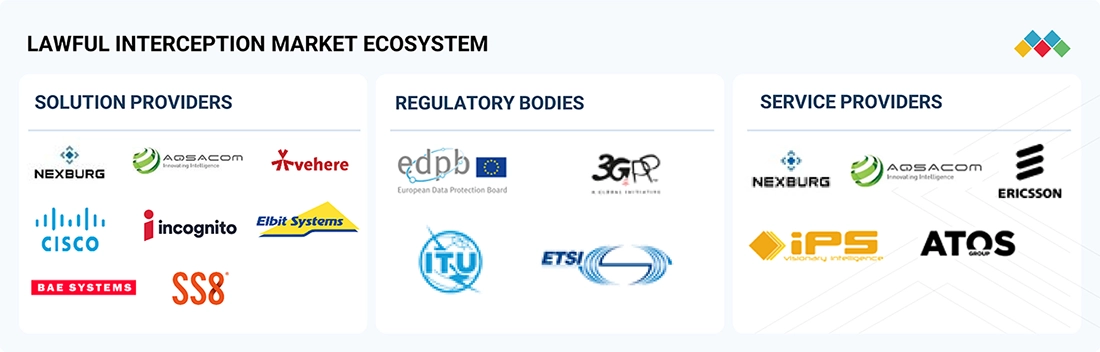
Logos and trademarks shown above are the property of their respective owners. Their use here is for informational and illustrative purposes only.
MARKET SEGMENTS
Source: Secondary Research, Interviews with Experts, MarketsandMarkets Analysis
Lawful Interception Market, By Offering
The solutions segment is expected to grow at a higher rate over the forecast period, driven by rising demand for advanced interception platforms capable of handling diverse communication channels. These solutions include mediation devices, interception management systems, and analytics tools that enable real-time monitoring and data processing. As communication networks become more complex, organizations are investing in scalable, flexible solutions that support multiple protocols and network types. The shift toward software-based and cloud-enabled interception systems is further fueling this segment's growth.
Lawful Interception Market, By Network
The mobile network segment is projected to have the highest CAGR over the forecast period, driven by the widespread use of smartphones and mobile communication services. A significant share of communication traffic now flows over mobile networks, making them a critical focus for interception activities. The deployment of 4G and 5G technologies is increasing the volume and complexity of mobile data, requiring advanced interception capabilities. As mobile communication continues to dominate, demand for solutions that can effectively monitor mobile networks is expected to rise significantly.
Lawful Interception Market, By End User
The government segment is expected to grow at a higher CAGR over the forecast period, supported by rising investments in national security and surveillance infrastructure. Government agencies are the primary users of lawful interception systems, responsible for monitoring communications to prevent threats and ensure public safety. The growing emphasis on cybersecurity, intelligence gathering, and law enforcement modernization is driving adoption of advanced interception technologies in this segment.
REGION
Asia Pacific to be fastest-growing market
Asia Pacific is expected to emerge as the fastest-growing region in the lawful interception market due to rapid expansion in telecom infrastructure and increasing digital adoption. Countries such as China, India, Japan, and South Korea are witnessing significant growth in mobile and internet usage, which is driving the need for effective monitoring systems. Governments in the region are implementing policies and initiatives to strengthen surveillance capabilities and address rising cybersecurity concerns. The growing focus on public safety and digital governance is further supporting market growth in Asia Pacific.
LAWFUL INTERCEPTION MARKET: COMPANY EVALUATION MATRIX
In the lawful interception market matrix, Nexburg (Star Player) leads with a strong market presence, driven by advanced lawful interception and intelligence solutions for telecom operators and law enforcement agencies. The company’s portfolio focuses on real-time interception, data analytics, and compliance with global regulatory standards, enabling efficient monitoring across IP-based and next-generation networks. One of the emerging players is strengthening its position with innovative lawful interception platforms and specialized solutions for secure communication monitoring. Its offerings emphasize scalability, flexibility, and integration with modern telecom infrastructure, supporting enhanced interception capabilities and compliance in an increasingly complex digital communications landscape.
Source: Secondary Research, Interviews with Experts, MarketsandMarkets Analysis
KEY MARKET PLAYERS
- Nexburg (Germany)
- Vocal Technologies (US)
- AQSACOM (US)
- Ericsson (Sweden)
- IPS S.p.A. (Italy)
- SS8 Networks (US)
- Vehere (India)
- ATOS (France)
- BAE Systems (UK)
- Cisco (US)
- Elbit Systems (Israel)
- EVE Compliancy Solutions (Netherlands)
- Matison (Croatia)
- Shoghi Communications (India)
- Signalogic (US)
- Squire Technologies (UK)
- TraceSpan Communications (Israel)
- GL Communications Inc. (US)
- Septier Communication (Israel)
- Incognito Software Systems (Canada)
- Stratign (UAE)
- ICS International Carrier Services (Germany)
- Atis Systems (Germany)
- ClearTrail Technologies (India)
- NetQuest (US)
- PertSol (India)
MARKET SCOPE
| REPORT METRIC | DETAILS |
|---|---|
| Market Size in 2025 (Value) | USD 6.78 Billion |
| Market Forecast in 2026 (Value) | USD 8.20 Billion |
| Market Forecast in 2031 (Value) | USD 20.58 Billion |
| Growth Rate | CAGR of 20.2% during 2026-2031 |
| Years Considered | 2020-2031 |
| Base Year | 2025 |
| Forecast Period | 2026-2031 |
| Units Considered | Value (USD Billion) |
| Report Coverage | Revenue forecast, company ranking, competitive landscape, growth factors, and trends |
| Segments Covered |
|
| Region Covered | North America, Europe, Asia Pacific, Middle East & Africa, Latin America |
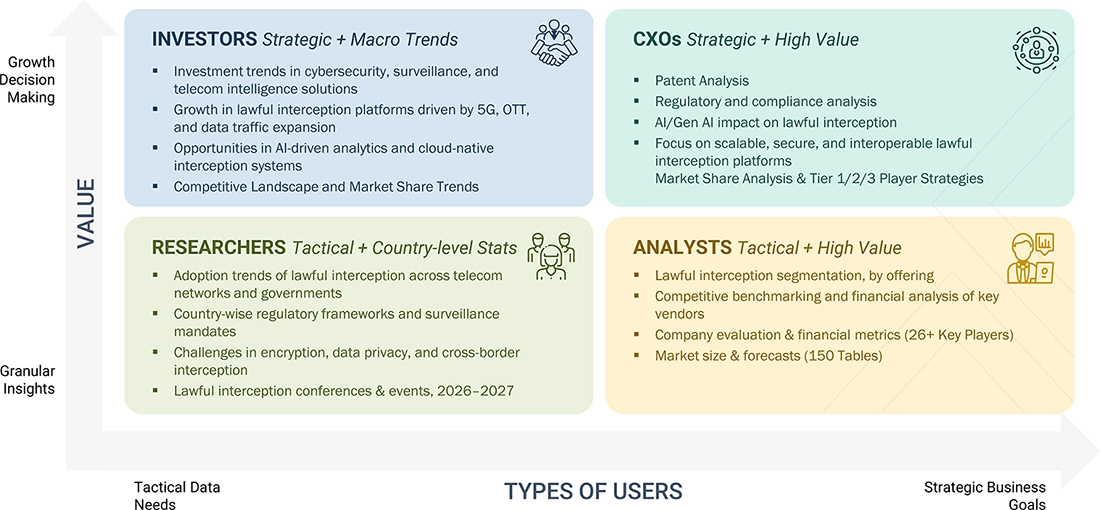
WHAT IS IN IT FOR YOU: LAWFUL INTERCEPTION MARKET REPORT CONTENT GUIDE
DELIVERED CUSTOMIZATIONS
We have successfully delivered the following deep-dive customizations:
| CLIENT REQUEST | CUSTOMIZATION DELIVERED | VALUE ADDS |
|---|---|---|
| Company Information | Detailed analysis and profiling of additional market players (up to 5) |
|
RECENT DEVELOPMENTS
- September 2025 : SS8 Networks launched Discovery, a cloud-native intelligence platform enabling real-time data fusion, analytics, and investigation management for law enforcement agencies.
- April 2024 : SS8 Networks expanded its Acceler8 partnership program to include specialized GovTech partners, aiming to broaden its reach among government and intelligence agencies. The program provides training, go-to-market support, and sales enablement to help partners deliver advanced lawful interception and intelligence solutions and to drive new revenue opportunities.
Table of Contents
 Exclusive indicates content/data unique to MarketsandMarkets and not available with any competitors.
Methodology
The research study involved four major activities to estimate the lawful interception market size. Exhaustive secondary research was conducted to collect key information about the market and peer markets. The next step was to validate these findings and assumptions and size the market with the help of primary research with industry experts across the value chain. Both top-down and bottom-up approaches were used to estimate the market size. Following this, market breakdown and data triangulation were adopted to estimate the market sizes of segments and sub-segments.
Secondary Research
The market size of companies offering lawful interception solutions to various end users was determined using secondary data from paid and unpaid sources, along with analysis of major companies’ product portfolios and ratings of their performance and quality. In the secondary research process, multiple sources were consulted to identify and collect information for the study. Secondary sources included annual reports, press releases, investor presentations, white papers, journals, certified publications, articles by recognized authors, directories, and databases. Secondary research was primarily used to obtain critical information on industry insights, the market’s monetary chain, the overall pool of key players, market classification and segmentation by industry trends down to the most granular level, regional markets, and key developments from both market- and technology-oriented perspectives.
Primary Research
In the primary research process, interviews were conducted with various sources from the supply and demand sides to gather qualitative and quantitative information for the report, including Chief Experience Officers (CXOs), Vice Presidents (VPs), directors from business development, marketing, and product development/innovation teams, and key executives from lawful interception solution vendors, system integrators, professional and managed service providers, industry associations, independent consultants, and key opinion leaders.
Primary interviews were conducted to gather insights, including market statistics, revenue data from software and services, market breakdowns, market size estimates, market forecasts, and data triangulation. Stakeholders on the demand side, such as Chief Information Officers (CIOs), Chief Finance Officers (CFOs), Chief Strategy Officers (CSOs), and the installation teams of end users who use lawful interception, were interviewed to understand buyers’ perspectives on suppliers, products, and service providers, as well as their current use of lawful interception solutions, which is expected to affect overall lawful interception market growth.
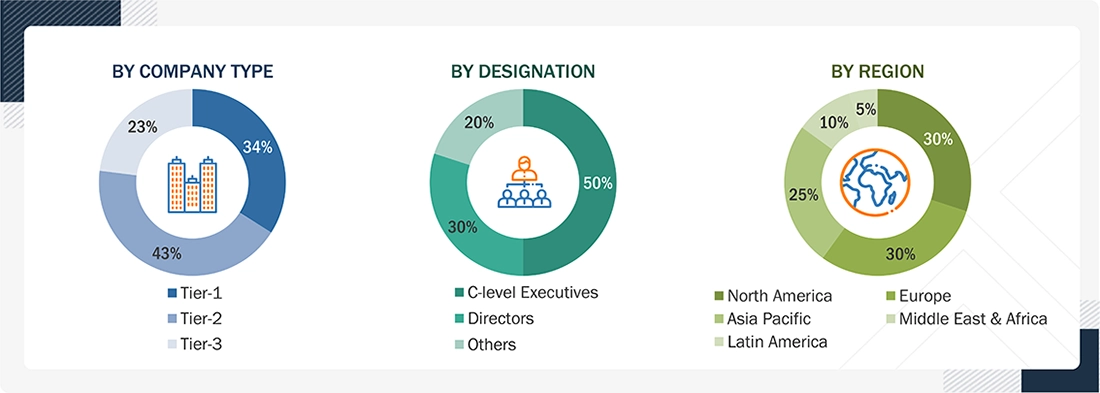
Note 1: Tier 1 companies have revenues of more than USD 10 billion; tier 2 companies’ revenue ranges from USD 1 billion to USD 10 billion; and tier 3 companies’ revenue ranges from USD 500 million to USD 1 billion
To know about the assumptions considered for the study, download the pdf brochure
Market Size Estimation
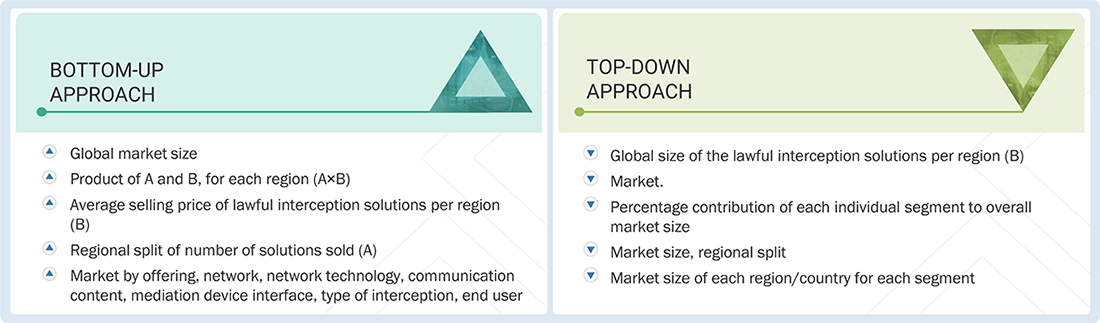
In the market engineering process, the top-down and bottom-up approaches were used, along with multiple data triangulation methods, to estimate and validate the size of the lawful interception market and other dependent submarkets. The research methodology used to estimate market sizes includes the following:
- Initially, MarketsandMarkets focuses on top-line investments and spending in the ecosystems. Further, significant developments in the critical market area have been considered.
- Tracking recent and upcoming developments in the lawful interception market, including investments, R&D activities, product launches, collaborations, mergers & acquisitions, and partnerships, and forecasting market size based on these developments and other critical parameters.
- Conduct multiple discussions with key opinion leaders to learn about the diverse types of authentication and brand protection offerings used, the applications for which they are used, and to analyze the breakdown of the scope of work carried out by major companies.
- Segmenting the market by technology type for applications in which the types are used and determining the size of the global application market.
- Segmenting the overall market into various market segments
- Validating the estimates at every level through discussions with key opinion leaders, such as chief executives (CXOs), directors, and operation managers, and finally with the domain experts at MarketsandMarkets
Data Triangulation
After the overall market size was estimated using the above estimation process, the lawful interception market has been segmented into segments and sub-segments. To complete the overall market engineering process and arrive at the exact statistics for all segments and sub-segments, data triangulation and market breakdown procedures have been used wherever applicable. The data has been triangulated by studying various factors and trends from both the demand and supply sides.
The lawful interception market size has been validated using top-down and bottom-up approaches.
Market Definition
Lawful interception is a process that enables a law enforcement agency (LEA) to conduct electronic surveillance on an individual, as authorized by judicial or administrative orders. It is a security process in which a service provider (SP) or network operator collects and provides intercepted communications, such as telephone calls or email messages, of private individuals or organizations to law enforcement officials.
Key Stakeholders
- Law Enforcement Agencies (LEAs)
- Government and National Security Agencies
- Telecommunication Service Providers (CSPs)
- Internet Service Providers (ISPs)
- Lawful Interception Solution Providers
- Network Equipment Vendors (Telecom OEMs)
- Deep Packet Inspection (DPI) and Network Intelligence Providers
- System Integrators and Managed Service Providers
- Regulatory and Compliance Authorities
- Judicial Bodies and Legal Authorities (Warrants & Authorization)
- Cybersecurity and Intelligence Solution Providers
- Cloud Service Providers and Data Center Operators
Report Objectives
- To define, segment, and forecast the lawful interception market, by offering, service, network, and interception type, in terms of value
- To define and forecast the size of the market segments concerning North America, Europe, Asia Pacific, Latin America, and the Middle East & Africa, in terms of value
- To provide detailed information about the major factors (drivers, restraints, opportunities, and challenges) influencing the market growth
- To strategically analyze the macro and micromarkets with respect to individual growth trends, prospects, and contributions to the total market
- To study the complete value chain and related industry segments, and perform a value chain analysis of the market landscape
- To analyze the industry trends, pricing data, and innovations related to the market
- To analyze opportunities for stakeholders by identifying the high-growth segments of the market
- To profile key players in the market and comprehensively analyze their market share/ranking and core competencies
- To analyze competitive developments, such as mergers & acquisitions, product launches/enhancements, partnerships, agreements, and collaborations
- To analyze each submarket with respect to individual growth trends, prospects, and contributions to the overall lawful interception market
- To analyze the opportunities in the market for stakeholders by identifying the high-growth segments of the lawful interception market
Available customizations:
With the given market data, MarketsandMarkets offers customizations per the company’s specific needs. The following customization options are available for the report:
Geographic Analysis
- Further break-up of the Asia Pacific market into countries contributing 75% to the regional market size
- Further break-up of the North American market into countries contributing 75% to the regional market size
- Further break-up of the Latin American market into countries contributing 75% to the regional market size
- Further break-up of the Middle East African market into countries contributing 75% to the regional market size
- Further break-up of the European market into countries contributing 75% to the regional market size
Company Information
- Detailed analysis and profiling of additional market players (up to 5)
Need a Tailored Report?
Customize this report to your needs
Get 10% FREE Customization
Customize This ReportPersonalize This Research
- Triangulate with your Own Data
- Get Data as per your Format and Definition
- Gain a Deeper Dive on a Specific Application, Geography, Customer or Competitor
- Any level of Personalization
Let Us Help You
- What are the Known and Unknown Adjacencies Impacting the Lawful Interception Market
- What will your New Revenue Sources be?
- Who will be your Top Customer; what will make them switch?
- Defend your Market Share or Win Competitors
- Get a Scorecard for Target Partners

Custom Market Research Services
We Will Customise The Research For You, In Case The Report Listed Above Does Not Meet With Your Requirements
Get 10% Free CustomisationTESTIMONIALS






Growth opportunities and latent adjacency in Lawful Interception Market