Sustainable Adhesives Market

Sustainable Adhesives Market by Type (Recyclable Adhesives, Repulpable Adhesives, Renewable Adhesives, Biodegradable Adhesives, Green Adhesives, Others), Raw Material (Water-Based, Plant-Based, EVA-Based and Acrylic-Based, Others), End-use Industry (Packaging, Automotive, Medical, Woodworking, Consumer Goods, Construction, Others), and Region - Global Forecast to 2030




OVERVIEW
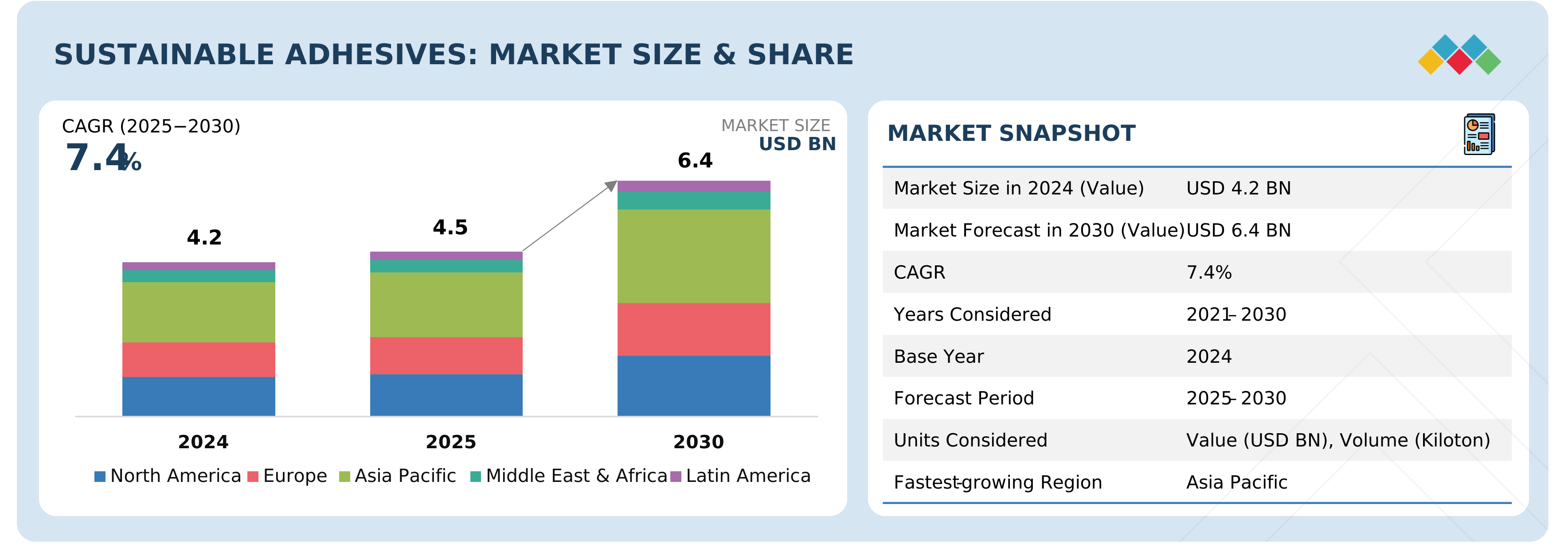
Source: Secondary Research, Interviews with Experts, MarketsandMarkets Analysis
The sustainable adhesives market is projected to reach USD 6.4 billion by 2030 from USD 4.5 billion in 2025, at a CAGR of 7.4% during the forecast period. The sustainable adhesives market is mainly driven by increasing environmental regulations that limit harmful emissions and encourage the use of renewable materials, along with rising consumer demand for eco-friendly products. Growing awareness about the carbon footprint of traditional adhesives, coupled with corporate sustainability goals, is pushing manufacturers toward green formulations.
KEY TAKEAWAYS
-
BY TYPEBy type, the sustainable adhesives market comprises recyclable adhesives, renewable adhesives, repulpable adhesives, biodegradable adhesives, and others (hot melt adhesives, UV-curable adhesives, and solvent-free adhesives). With recyclable adhesives closely aligned with global circular economy goals and regulations to minimize waste, the market for this type of sustainable adhesive is expected to dominate the sustainable adhesives sector.
-
BY RAW MATERIALKey raw materials include water-based, plant-based, EVA-based, acrylic-based, and others (animal-based and bio-based polyurethane). The water-based segment, which is one of the most eco-friendly, is likely to lead the raw material segment of sustainable adhesives due to its environmentally friendly nature, user-friendly characteristics, and compatibility with renewable/bio-based feedstock (such as modified bio-based methods).
-
BY END-USE INDUSTRYKey end-use industries are automotive, packaging, medical, woodworking, consumer goods, construction, and other end-use industries (renewable energy industry, electronics industry, and textile industry). Packaging is the leading end-use segment utilizing sustainable adhesives, primarily due to the unprecedented demand for packaging solutions that are eco-friendly, recyclable, and, in some cases, biodegradable. Sustainable adhesives are being increasingly utilized for paperboard cartons, flexible packaging, corrugated boxes, labels, and other specialty eco-packaging materials where the need for strong bonding performance must balance with recyclability or composability.
-
BY REGIONThe sustainable adhesives market covers Europe, North America, Asia Pacific, South America, the Middle East, and Africa. Asia Pacific is expected to be the largest market for sustainable adhesives, driven by rapid industrialization, expanding manufacturing capacity, and increasing sustainability commitments across major economies such as China, India, Japan, and South Korea. The region’s booming packaging, construction, automotive, and footwear industries create high-volume demand for adhesives, while governments are tightening environmental regulations and promoting eco-friendly materials to reduce carbon footprints.
-
COMPETITIVE LANDSCAPEMajor market players have adopted both organic and inorganic strategies, including acquisitions and product launches. For instance, Henkel AG & Co. KGaA launched Loctite Liofol LA 7837/LA 6265, a new solvent-free adhesive system specifically developed for high-performance packaging needs.
The sustainable adhesives market is primarily influenced by several key factors. These adhesives are increasingly used in various industries, including packaging, construction, automotive, woodworking, and electronics, in line with global sustainability initiatives. Moreover, government incentives for sustainable manufacturing and the trend toward a circular economy are contributing to market growth. Additionally, stricter environmental regulations worldwide are limiting harmful emissions and encouraging the use of renewable materials, further driving the sustainable adhesives market.
TRENDS & DISRUPTIONS IMPACTING CUSTOMERS' CUSTOMERS
The impact on consumers’ business emerges from evolving trends and disruptions across the packaging, construction, automotive, and electronics industries. Key hotbets are end users that rely on sustainable adhesives for recyclability, durability, and compliance with green regulations. Shifts in demand—such as the rise of eco-friendly packaging, lightweight vehicle design, and energy-efficient buildings—directly influence revenue streams across these industries. These requirements cascade back to adhesive suppliers, where sustainability mandates, raw material innovation, and regulatory pressures further amplify the effect on revenues.
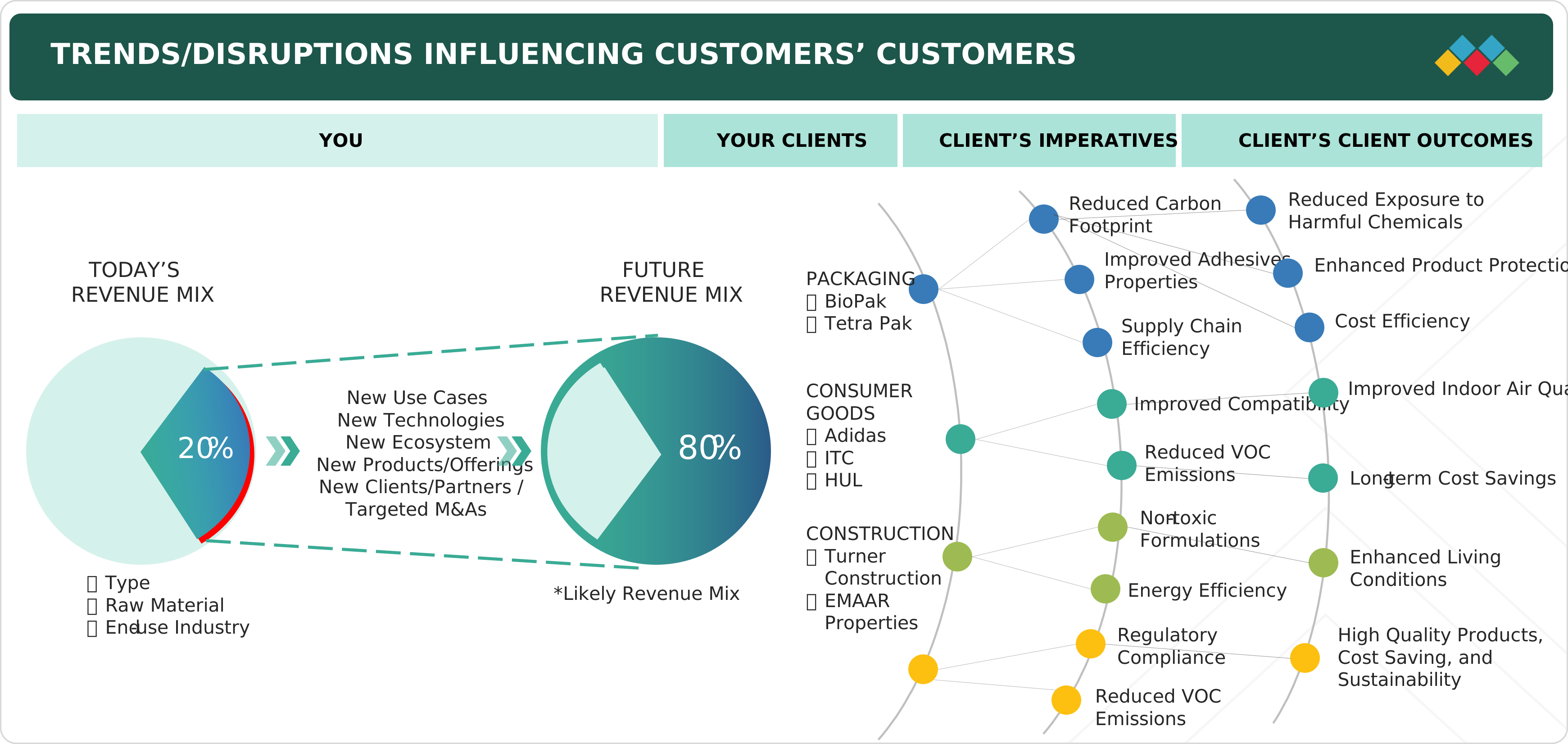
Source: Secondary Research, Interviews with Experts, MarketsandMarkets Analysis
MARKET DYNAMICS

Level
-
Environmental and health concerns over VOCs in traditional adhesives

-
Government push to drive adoption of sustainable adhesives


Level
-
Higher pricing of sustainable adhesives compared to conventional alternatives


Level
-
Increasing green building initiatives in urban areas

-
Rising demand for recyclable packaging and adoption of circular economy principles


Level
-
Performance limitations and volatility in availability of raw materials

Source: Secondary Research, Interviews with Experts, MarketsandMarkets Analysis
Driver: Environmental and health concerns over VOCs in traditional adhesives
The growing awareness of the environmental and health impacts of traditional adhesives is a major driver for the shift toward sustainable alternatives. Conventional solvent-based adhesives often contain high levels of volatile organic compounds (VOCs), which contribute significantly to air pollution and pose serious health risks. The US Environmental Protection Agency (EPA) estimates that industrial adhesives contribute approximately 9% of global VOC emissions. These emissions not only degrade indoor and outdoor air quality but are also linked to respiratory issues, headaches, and long-term health complications for workers and consumers alike. Sustainable adhesives are emerging as a safer, more eco-conscious alternative. These adhesives are formulated using bio-based, recycled, or water-based materials, which significantly reduce or eliminate VOC content.
Restraint: Higher pricing of sustainable adhesives compared to conventional alternatives
Despite growing awareness and regulatory pressure driving the shift toward sustainable adhesives, the high upfront cost associated with these solutions remains a key barrier to widespread adoption. Compared to conventional adhesives, sustainable variants, especially those based on bio-based, water-based, or solvent-free chemistries, often incur higher production and raw material costs. This price premium stems from several factors, including the limited availability of sustainable feedstocks, less mature manufacturing processes, and lower economies of scale.
Opportunity: Rising demand for recyclable packaging and adoption of circular economy principles
The rising demand for recyclable packaging materials and the shift toward a circular economy are interconnected drivers shaping the growth of the sustainable adhesives market. As consumers and industries increasingly prioritize environmental sustainability, there is a growing emphasis on using recyclable packaging materials. This demand extends to adhesives that play a crucial role in enabling easy disassembly and recycling of packaging components. The transition toward a circular economy also amplifies the demand for sustainable adhesives.
Challenge: Performance limitations and volatility in availability of raw materials
The sustainable adhesives market faces notable challenges that can impede its growth and adoption across various industries. Despite advancements that have enhanced the performance of sustainable adhesives, they may still fall short compared to traditional adhesives in certain aspects. Performance limitations include bonding strength, durability under extreme conditions, and resistance to specific chemicals or environments. Sustainable adhesives often rely on bio-based or recycled materials, which can present supply chain uncertainties.
Sustainable Adhesives Market: COMMERCIAL USE CASES ACROSS INDUSTRIES
| COMPANY | USE CASE DESCRIPTION | BENEFITS |
|---|---|---|
 |
Uses bio-based adhesives in paperboards and eco-friendly packaging solutions | Enables recyclable, compostable packaging while reducing carbon footprint |
 |
Applies water-based and bio-based adhesives in beverage cartons | Ensures food-safe sealing, enhances recyclability, and aligns with circular economy goals |
 |
Employs compostable adhesives for biodegradable food packaging | Improves vehicle efficiency, reduces emissions, and enhances cabin air quality |
 |
Uses low-VOC adhesives in lightweight vehicle assembly, interiors, and EV components | Improves vehicle efficiency, reduces emissions, and enhances cabin air quality |
 |
Applies solvent-free adhesives in sustainable footwear and sportswear | Reduces environmental impact, enhances worker safety, and supports brand sustainability targets |
Logos and trademarks shown above are the property of their respective owners. Their use here is for informational and illustrative purposes only.
MARKET ECOSYSTEM
The sustainable adhesives market ecosystem comprises raw material suppliers (BASF SE, Henkel AG & Co. KGaA), adhesive manufacturers (Henkel AG & Co. KGaA, H.B. Fuller, 3M, Sika AG), distributors (BC Adhesives, Interglue Ltd.), and end users (Tetra Pak, ITC Limited). Raw materials are processed into formulations that reduce volatile organic compounds (VOCs), enhance recyclability, and maintain bonding performance. Manufacturers design adhesives tailored to diverse applications—whether for flexible packaging, lightweight vehicle assembly, or green building materials—while distributors ensure availability across global and regional markets. End users drive demand by prioritizing eco-friendly solutions and regulatory compliance. Collaboration across this value chain is essential to deliver innovation, sustainability, and long-term growth in the sustainable adhesives market.
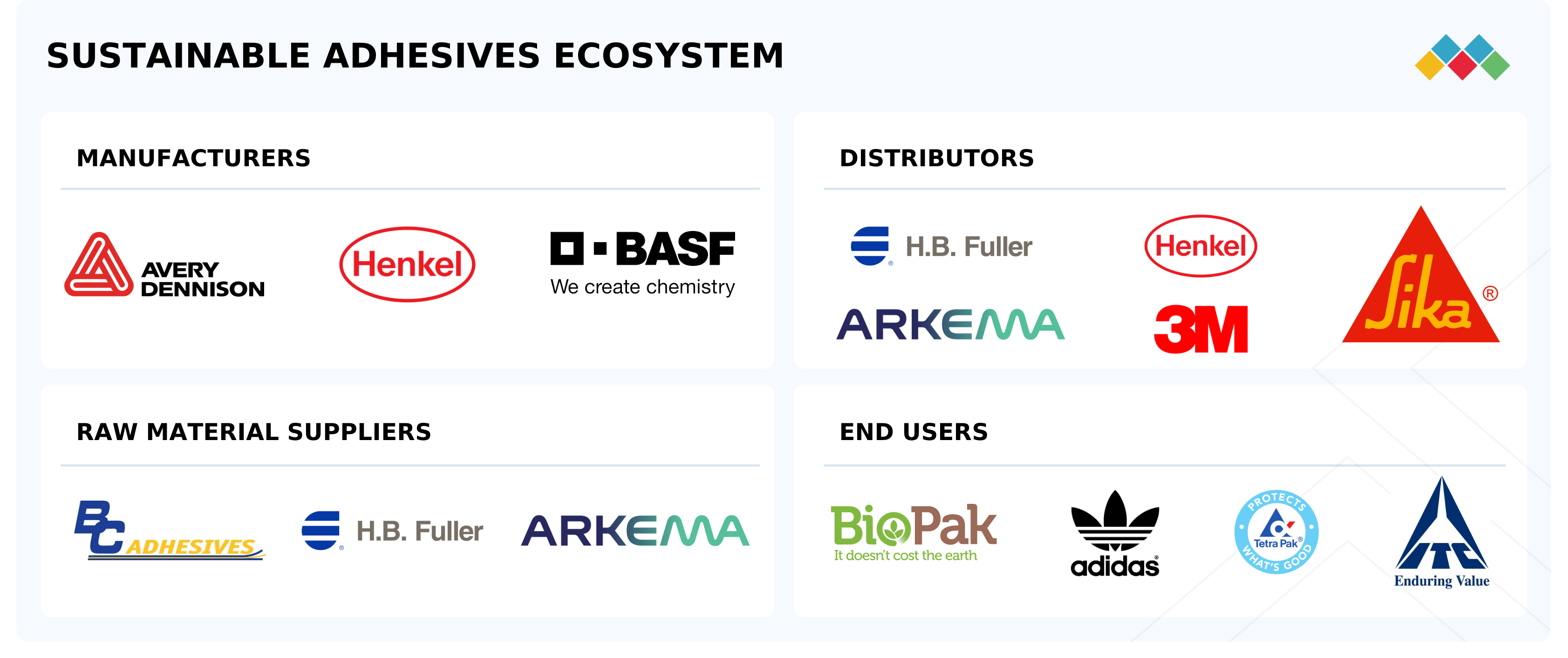
Logos and trademarks shown above are the property of their respective owners. Their use here is for informational and illustrative purposes only.
MARKET SEGMENTS
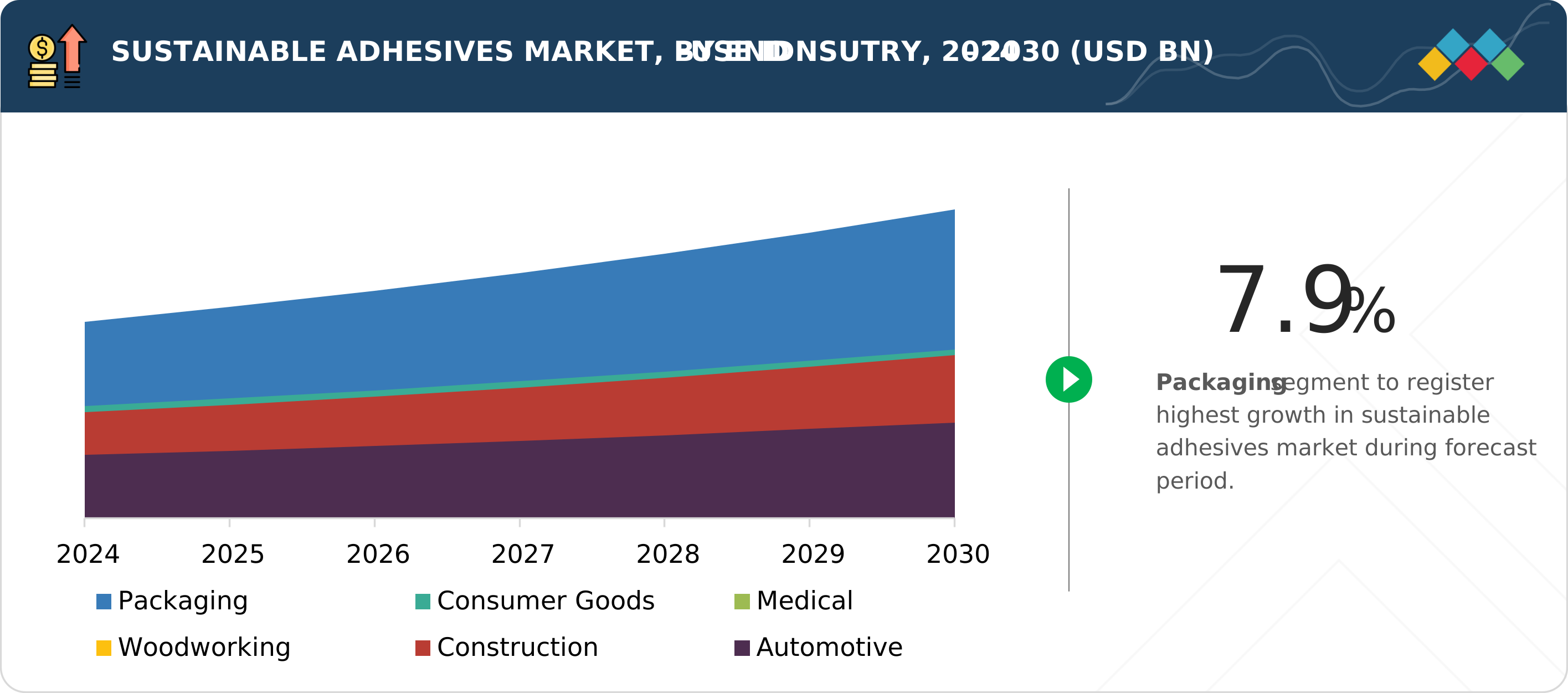
Source: Secondary Research, Interviews with Experts, MarketsandMarkets Analysis
Sustainable Adhesives Market, by Type
As of 2024, recyclable adhesives held the largest share of the sustainable adhesives market because they play a crucial role in facilitating efficient material recovery, especially in industries such as packaging, automotive, and electronics. These adhesives are designed to provide strong bonds during a product’s lifespan while allowing for clean separation during recycling processes. This ability enables the recovery of substrates like plastics, metals, or paper without contamination.
Sustainable Adhesives Market, by Raw Material
In 2024, the water-based adhesives segment dominated the sustainable adhesives market. This is mainly due to their eco-friendliness, versatility, and compliance with strict regulations. Unlike solvent-based alternatives, water-based adhesives emit little to no volatile organic compounds (VOCs), which makes them safer for workers and helps reduce harmful environmental impacts.
Sustainable Adhesives Market, by End-use Industry
In 2024, the packaging segment held the largest share of the global market. The packaging industry is the primary consumer of sustainable and bio-based adhesives due to its high-volume adhesive consumption and swift transition toward eco-friendly solutions. Packaging applications, including food and beverage cartons, flexible packaging, labels, and corrugated boxes, demand reliable bonding solutions that are safe, efficient, and environmentally responsible.
REGION
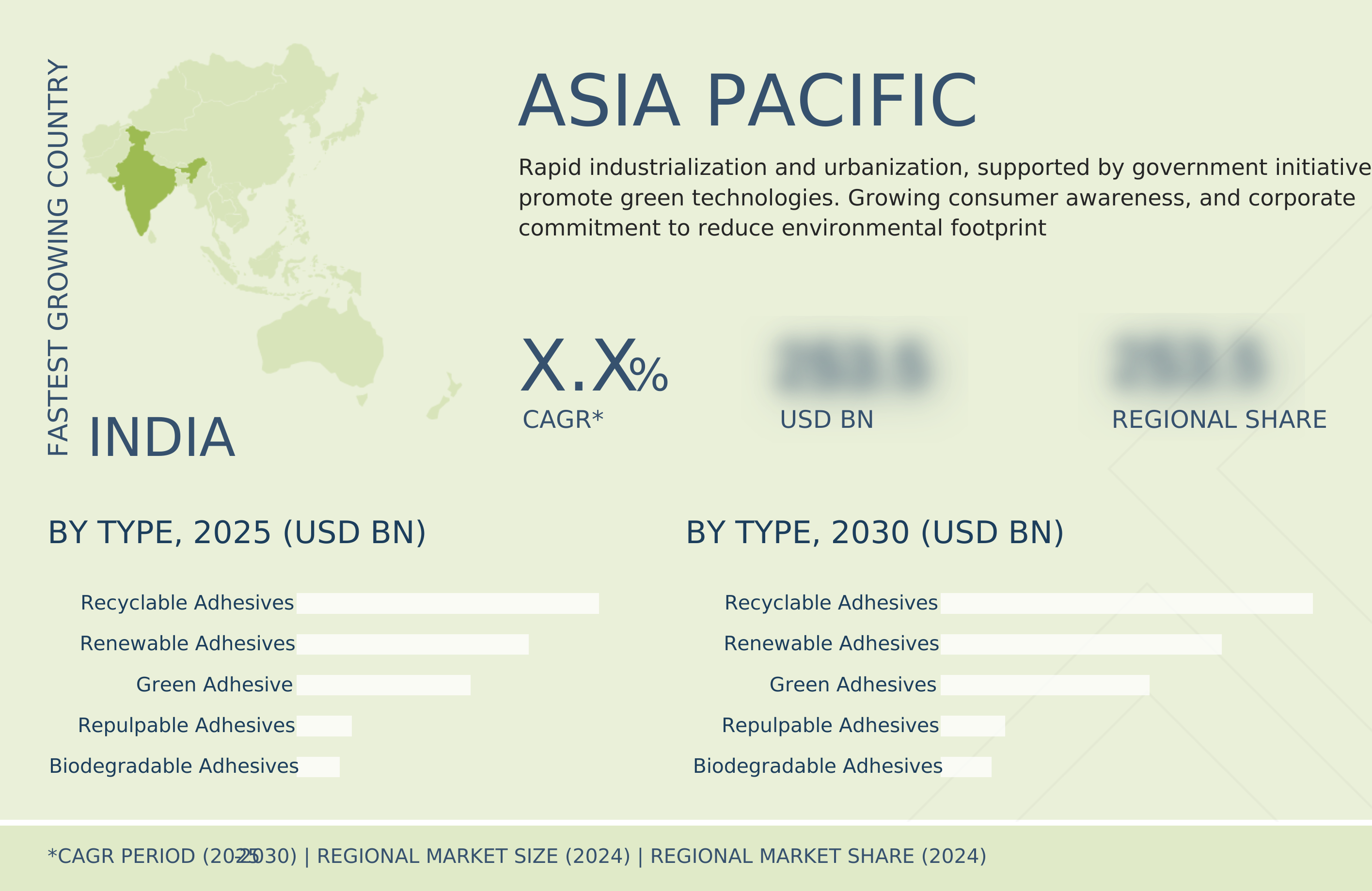
Asia Pacific to be fastest-growing region in global sustainable adhesives market during forecast period
The Asia Pacific market is projected to register the highest CAGR during the forecast period. This growth is fueled by rapid industrialization, increasing manufacturing capacity, and a strong commitment to sustainability among major economies such as China, India, Japan, and South Korea. The region's thriving packaging, construction, automotive, and footwear industries generate significant demand for adhesives. Additionally, governments are implementing stricter environmental regulations and encouraging the use of eco-friendly materials to minimize carbon footprints.
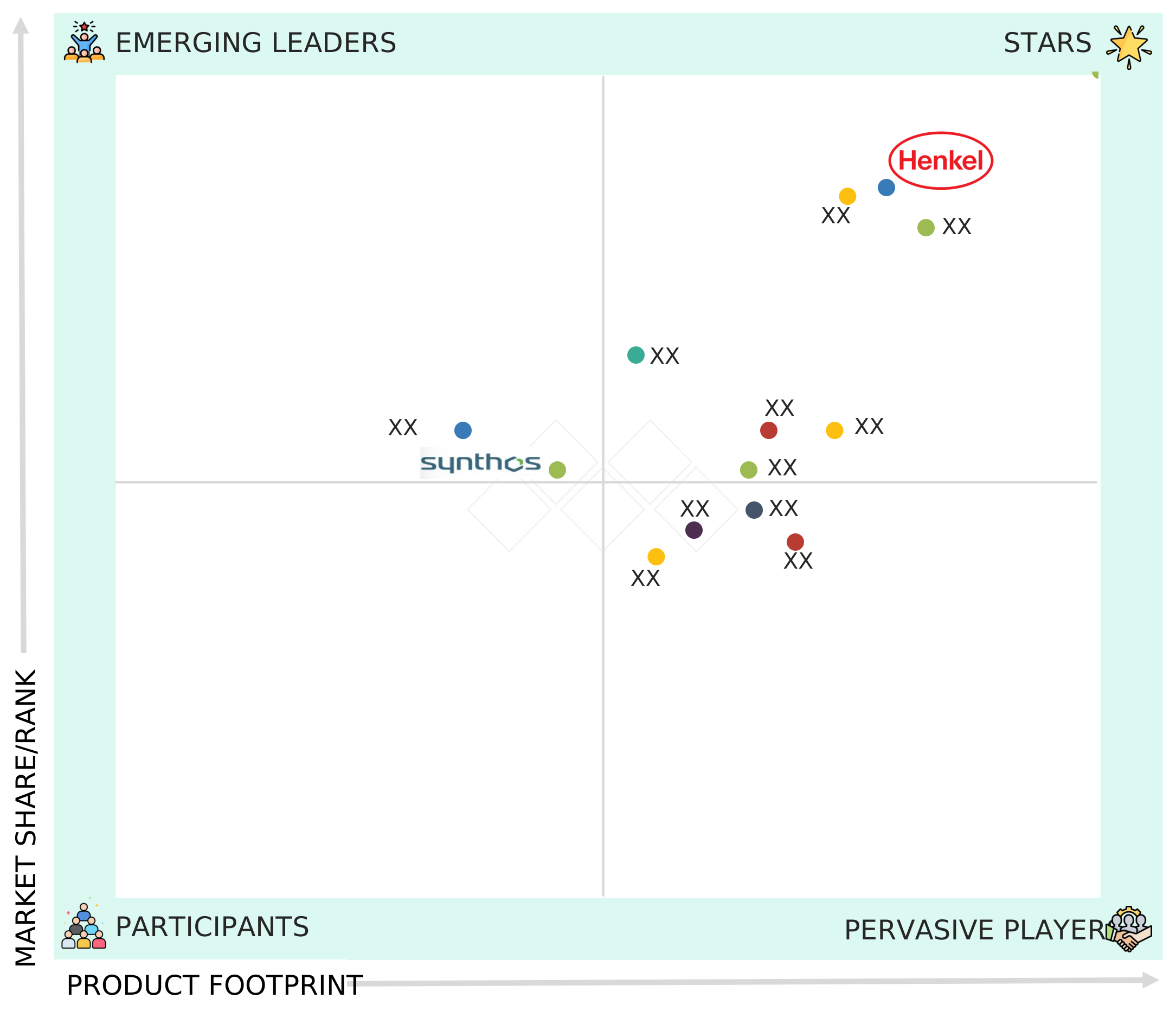
Sustainable Adhesives Market: COMPANY EVALUATION MATRIX
In the sustainable adhesives market matrix, Henkel AG & Co. KGaA (Star) leads because of its global scale, diversified portfolio, and innovation leadership. Synthos (Emerging Leader) has a more limited product portfolio and smaller global footprint compared to the giant adhesive players. However, its agility and innovation allow for rapid growth in sustainable solutions.
Source: Secondary Research, Interviews with Experts, MarketsandMarkets Analysis
KEY MARKET PLAYERS
MARKET SCOPE
| REPORT METRIC | DETAILS |
|---|---|
| Market Size in 2024 (Value) | USD 4.2 Billion |
| Market Forecast in 2030 (Value) | USD 6.4 Billion |
| Growth Rate | CAGR of 7.4% from 2025-2030 |
| Years Considered | 2021-2030 |
| Base Year | 2024 |
| Forecast Period | 2025-2030 |
| Units Considered | Value (USD Million/Billion), Volume (Kiloton) |
| Report Coverage | Revenue forecast, company ranking, competitive landscape, growth factors, and trends |
| Segments Covered |
|
| Regions Covered | North America, Asia Pacific, Europe, South America, and Middle East & Africa |
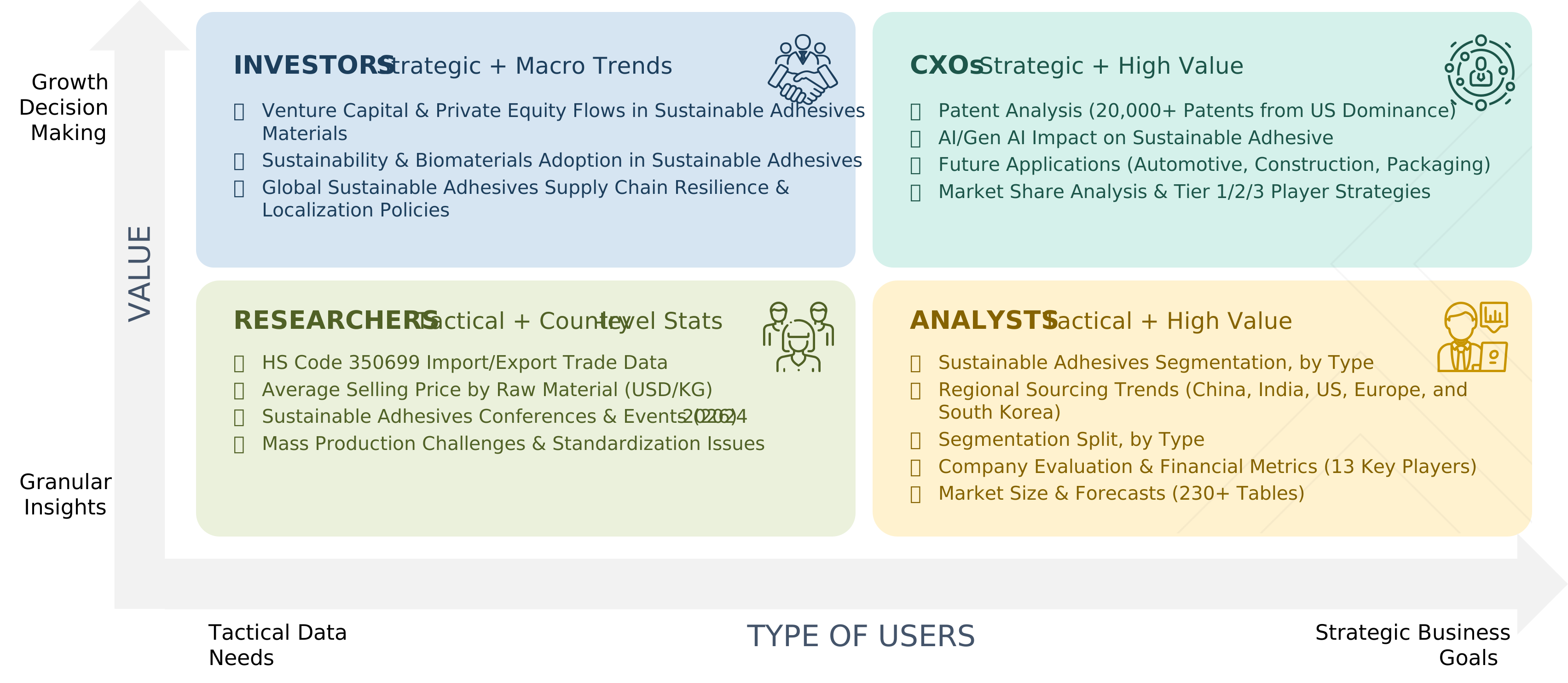
WHAT IS IN IT FOR YOU: Sustainable Adhesives Market REPORT CONTENT GUIDE
DELIVERED CUSTOMIZATIONS
We have successfully delivered the following deep-dive customizations:
| CLIENT REQUEST | CUSTOMIZATION DELIVERED | VALUE ADDS |
|---|---|---|
| Sustainable Adhesives Manufacturer |
|
|
| Packaging Manufacturer |
|
|
RECENT DEVELOPMENTS
- July 2025 : Henkel AG & Co. KGaA launched Loctite Liofol LA 7837/LA 6265, a new solvent-free adhesive system specifically developed for high-performance packaging needs, with a focus on retort packaging for pet food.
- December 2024 : Jowat SE announced the extension of its GROW bio-based hot melt adhesive technology into the textile and product assembly sectors, reinforcing its commitment to sustainability. This innovative adhesive solution significantly reduces reliance on fossil-based raw materials by incorporating a high proportion of renewable resources, offering a more environmentally friendly alternative for industrial applications.
- October 2024 : 3M launched 3M Fastbond Pressure Sensitive Adhesive, formulated with next-generation water-based technology. Its solvent-free and non-flammable design contributes to meeting environmental health and safety (EHS) objectives.
Table of Contents
 Exclusive indicates content/data unique to MarketsandMarkets and not available with any competitors.
Methodology
The study involved four major activities in estimating the market size of the sustainable adhesives market. Exhaustive secondary research was done to collect information on the market, the peer market, and the parent market. The next step was to validate these findings, assumptions, and sizing with industry experts across the value chain through primary research. Both top-down and bottom-up approaches were employed to estimate the complete market size. Thereafter, the market breakdown and data triangulation procedures were used to estimate the market size of the segments and subsegments.
Secondary Research
In the secondary research process, various secondary sources have been referred to for identifying and collecting information for this study. These secondary sources include annual reports, press releases, investor presentations of companies, white papers, certified publications, trade directories, certified publications, articles from recognized authors, gold standard and silver standard websites, and databases.
Secondary research has been used to obtain key information about the value chain of the industry, monetary chain of the market, the total pool of key sustainable adhesives , market classification and segmentation according to industry trends to the bottom-most level, and regional markets. It was also used to obtain information about the key developments from a market-oriented perspective.
Primary Research
The sustainable adhesives market comprises several stakeholders in the value chain, which include raw material suppliers, manufacturers, distributors and suppliers and end users. Various primary sources from the supply and demand sides of the sustainable adhesives market have been interviewed to obtain qualitative and quantitative information. The primary interviewees from the demand side include key opinion leaders in end-use sectors. Primary sources from the supply side include manufacturers, associations, and institutions involved in the sustainable adhesives industry.
Primary interviews were conducted to gather insights such as market statistics, data of revenue collected from the products and services, market breakdowns, market size estimations, market forecasting, and data triangulation. Primary research also helped in understanding the various trends related to chemistry, form, end-use industry, product, and region. Stakeholders from the demand side, such as CIOs, CTOs, and CSOs were interviewed to understand the buyer’s perspective on the suppliers, products, adhesives manufacturers, and their current usage of sustainable adhesives and future outlook of their business which will affect the overall market.
The breakdown of profiles of the primary interviewees is illustrated in the figure below:
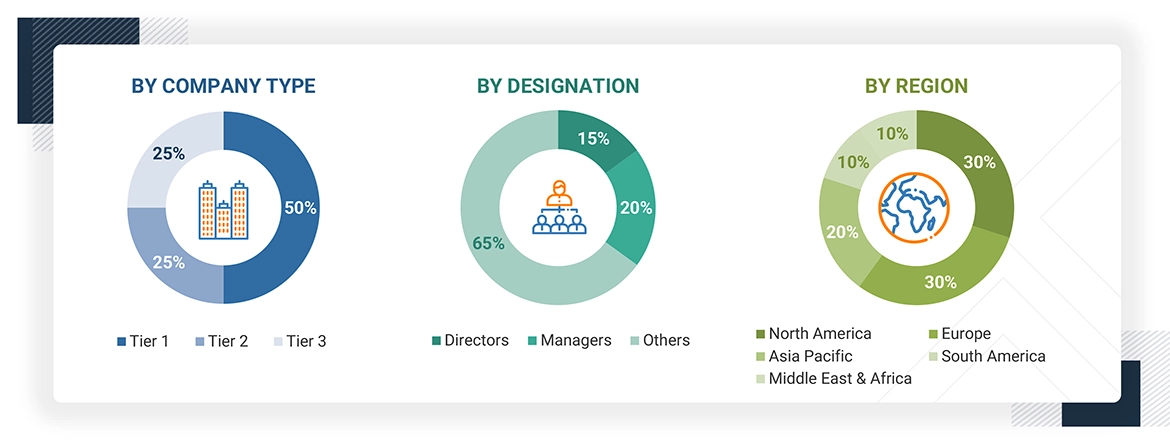
Note: Tier 1, Tier 2, and Tier 3 companies are classified based on their market revenue in 2024, which is available in the public domain, their product portfolios, and their geographical presence.
Other designations include sales representatives, production heads, and technicians.
To know about the assumptions considered for the study, download the pdf brochure
Market Size Estimation
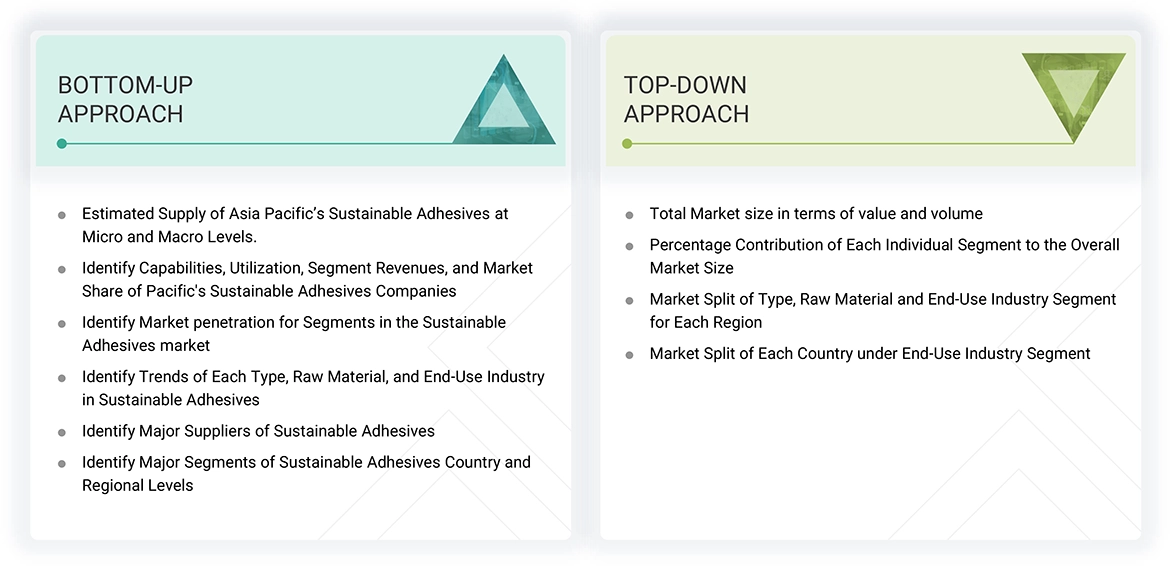
The top-down approach was used to estimate and validate the size of various submarkets for sustainable adhesives for each region. The research methodology used to estimate the market size included the following steps:
- The key players in the industry have been identified through extensive secondary research.
- The supply chain of the industry has been determined through primary and secondary research.
- The global market was then segmented into five major regions and validated by industry experts.
- All percentage shares, splits, and breakdowns based on type, raw material, end-use industry, and regions were determined using secondary sources and verified through primary sources.
- All possible parameters that affect the markets covered in this research study were accounted for, viewed in extensive detail, verified through primary research, and analyzed to get the final quantitative and qualitative data. This data was consolidated and added with detailed inputs and analysis, and presented in this report.
Data Triangulation
After arriving at the total market size from the estimation process mentioned above, the overall market has been split into several segments and sub-segments. To complete the overall market engineering process and arrive at the exact statistics for all the segments and sub-segments, the data triangulation and market breakdown procedures have been employed, wherever applicable. The data has been triangulated by studying various factors and trends from both the demand and supply sides. Along with this, the market size has been validated by using both the top-down and bottom-up approaches and primary interviews. Hence, for every data segment, there have been three sources—top-down approach, bottom-up approach, and expert interviews. The data was assumed correct when the values arrived from the three sources matched.
Market Definition
Sustainable adhesives are created to lessen the environmental footprint during their life cycle, from extracting natural resources until disposal. They are made from renewable and bio-based feedstocks like starch derivatives and other bio-based materials. The objective of sustainable adhesives is to reduce reliance on fossil-based chemicals, and they usually have low or zero VOC emissions to comply with stringent regulations for environmental and human health. Sustainable adhesives can be recyclable, biodegradable, compostable, or water-based systems, offering more usefulness and compatibility with circular economy activities such as recovery and reuse. Sustainable adhesives are utilized in several marketplaces, such as packaging, construction, automotive, electronics, and textiles, where the performance must be balanced with environmental stewardship. The market for sustainable adhesives is driven by many variables, including regulatory pressures, corporate commitments to sustainability, and consumer preferences. As technology continues to deliver performance, improvements, and cost competitiveness, sustainable adhesives are increasingly being utilized in place of traditional adhesives in market segments, both industrial and consumer.
Stakeholders
- Sustainable adhesives manufacturers
- Sustainable adhesives traders, distributors, and suppliers
- End-user participants of the sustainable adhesives market
- Government and research organizations
- Associations and industrial bodies
- Research and consulting firms
- Research & development (R&D) institutions
- Environmental support agencies
Report Objectives
- To define, describe, and forecast the size of the sustainable adhesives market, in terms of value and volume
- To provide detailed information regarding the major factors (drivers, opportunities, restraints, and challenges) influencing the growth of the market
- To estimate and forecast the market size based on raw material, type, end-use industries, and region
- To forecast the size of the market with respect to major regions: Europe, North America, Asia Pacific, Middle East & Africa, and South America, along with their key countries.
- To strategically analyze micromarkets1 with respect to individual growth trends, prospects, and their contribution to the overall market
- To analyze opportunities in the market for stakeholders and provide a competitive landscape of market leaders
- To track and analyze recent developments such as expansions, new product launches, partnerships & agreements, and acquisitions in the market
- To strategically profile key market players and comprehensively analyze their core competencies
Key Questions Addressed by the Report
What are the factors influencing the growth of the sustainable adhesives market?
The market is driven by government regulations promoting eco-friendly materials, rising demand for low-VOC formulations to meet health and environmental standards, and technological advancements enabling high-performance, bio-based, and recyclable adhesives.
Define sustainable adhesives market.
The sustainable adhesives market comprises eco-friendly bonding solutions made from bio-based, recyclable, or low-VOC materials, aiming to reduce environmental impact while supporting circular economy goals and complying with regulations.
Which region is expected to have the largest market share in the sustainable adhesives market?
The Asia-Pacific region is expected to acquire the largest share of the sustainable adhesives market during the forecast period.
What are the major market players covered in the report?
Key players include BASF, Henkel AG & Co. KGaA, H.B. Fuller Company, Jowat SE, Dow, DuPont, Arkema, Avery Dennison Corporation, Paramelt B.V, Synthos, artience Co., Ltd., Sika AG, and 3M.
How big is the global sustainable adhesives market?
The market is projected to reach USD 6.4 billion by 2030 from USD 4.5 billion in 2025, growing at a CAGR of 7.4% during the forecast period.


Personalize This Research
- Triangulate with your Own Data
- Get Data as per your Format and Definition
- Gain a Deeper Dive on a Specific Application, Geography, Customer or Competitor
- Any level of Personalization
Let Us Help You
- What are the Known and Unknown Adjacencies Impacting the Sustainable Adhesives Market
- What will your New Revenue Sources be?
- Who will be your Top Customer; what will make them switch?
- Defend your Market Share or Win Competitors
- Get a Scorecard for Target Partners

Custom Market Research Services
We Will Customise The Research For You, In Case The Report Listed Above Does Not Meet With Your Requirements
Get 10% Free CustomisationTESTIMONIALS
We at Nissan Chemicals Corporation have been clients of MarketsandMarkets for more than a year now. We recently consulted MarketsandMarkets for a study, the team at MarketsandMarkets was extremely professional and organized. The business insights were very detailed and aligned well with our expectations that really helped us formulate the Business Plans and device new strategies for development themes. MarketsandMarkets offers a unique combination of expertise and dedicated engagement model. Their research findings have helped us in designing our Pricing Strategy which will make it easier for us to predict the future sales and profits for the next ten years. We look forward to working with MarketsandMarkets in the future.
VP of Strategy & New Business Development
Leading Specialty Chemical Company
The MarketsandMarkets Engagement Model, composed of both the Knowledge Store and advisory custom research, has greatly helped us in understanding our markets and making strategic decisions. The Knowledge Store is a fast way to allow everyone in our organization to understand more about most any market they are interested in. The ability to then get custom research done and get answers to specific strategic questions and market insight has been spectacular. The Markets and Markets team feel more like colleagues than vendors and their services have helped us change our culture where statements of things like growth opportunities and competitive position are always backed by industry research.

Rich Gibson,
Director, Corporate Strategy
Milliken & Company,
Leading Industrial Manufacturer of specialty chemical, floor covering, performance and protective textile materials, and healthcaremilliken.com
MarketsandMarkets is a trusted resource that helps us to better understand markets that are near-adjacencies-whether its technology, value chain or geography. Their Knowledge Store platform provides a dashboard of markets and their characteristics which is easy to use and saves us time.
Adam Shaw,
Market Development and Strategy Manager
AdvanSix Inc. USA,
An American Leader in Chemicalswww.advansix.com
The Knowledge Store from MarketsandMarkets is a valuable tool which has helped my team acquire greater insight in to the end markets that our business serves. This has enabled us to help our company build stronger strategies throughout our planning process.
TOSHIO KINOSHITA
Senior Chif Consultion Research & Consulting Division
Mitsubishi Chemical Research Corporation,
Leading Manufacturer of Chemical Productswww.mitsubishichem-res.co.jp/en/

We recently engaged with MarketsandMarkets for a study, the team not only clearly understood our business objectives but was also extremely professional in the way they handled the entire project. The study was efficiently conducted in a phase-wise manner, and the engagement model furnished us with high-quality business insights that far exceeded our expectations at each phase. We were especially happy that MarketsandMarkets could provide us with both, an English as well as a Japanese version of the study. A special thanks to the Analyst Team and Client Services Team, whose fluency in Japanese enhanced our comfort level, as we could converse with them in our preferred language.
Independent entrepreneurs
Arrow Precision
We approached MarketsandMarkets for study on Proppants Market, and their work exceeded our expectations. The study conducted was comprehensive and enabled us to view the market through the various dimensions. In addition, the team was extraordinarily responsive throughout the process and resolved our queries on time. I strongly recommend MarketsandMarkets and will certainly consider them for additional market assessments we will need in the future.
Global engineering company, Japan
Deputy Manager,
Strategic Planning OfficeThe high-quality insights shared by the MarketsandMarkets team helped us understand the pharmaceutical plant designers in a specific geography. It also captured the risks that we may likely face in communicating with our potential partners. The study would enable us identify partners, which would impact our future growth.
- China Sustainable Adhesives Market
- Japan Sustainable Adhesives Market
- India Sustainable Adhesives Market
- South Korea Sustainable Adhesives Market
- South Africa Sustainable Adhesives Market
- Brazil Sustainable Adhesives Market
- Argentina Sustainable Adhesives Market
- Rest Of Europe Sustainable Adhesives Market
- Rest Of Asia Pacific Sustainable Adhesives Market
- GCC Countries Sustainable Adhesives Market
- -Other GCC Countries Sustainable Adhesives Market
- Rest Of South America Sustainable Adhesives Market
- US Sustainable Adhesives Market
- Canada Sustainable Adhesives Market
- Mexico Sustainable Adhesives Market
- Germany Sustainable Adhesives Market
- France Sustainable Adhesives Market
- UK Sustainable Adhesives Market
- Italy Sustainable Adhesives Market
- Spain Sustainable Adhesives Market






Growth opportunities and latent adjacency in Sustainable Adhesives Market