Titanium Dioxide Market

Titanium Dioxide Market by Grade (Rutile, Anatase), Process (Sulfate, Chloride), Application (Paints & Coatings, Plastics, Paper, Inks), & Region (North America, Europe, Asia Pacific, MEA, South America) - Global Forecast to 2031




OVERVIEW
Source: Secondary Research, Interviews with Experts, MarketsandMarkets Analysis
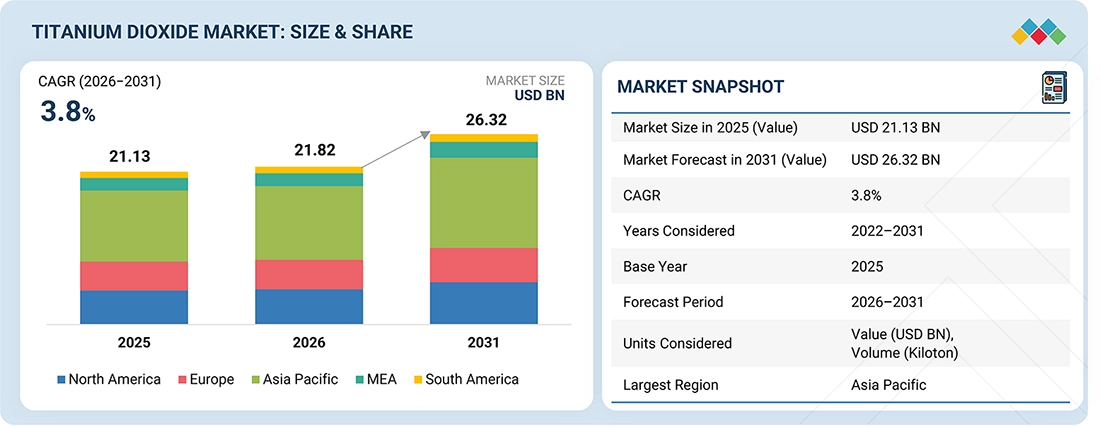
The titanium dioxide market is projected to reach USD 26.32 billion by 2031 from USD 21.82 billion in 2026, at a CAGR of 3.8% from 2026 to 2031. The growth of the global titanium dioxide market is largely driven by the successful construction industry, which increases demand for paints, coatings, and construction materials. Rising consumer preference for do-it-yourself (DIY) paints and coating solutions, along with the growing adoption of lightweight vehicles in the automotive sector, is further supporting market demand. In addition, the expansion of the cosmetics and personal care industry and the increasing use of titanium dioxide in plastics and packaging applications are significantly supporting market growth.
KEY TAKEAWAYS
-
By RegionThe Asia Pacific accounted for a significant share of 46.4% in 2025.
-
By GradeBy grade, the rutile segment is projected to register the highest CAGR of 3.9% during the forecast period.
-
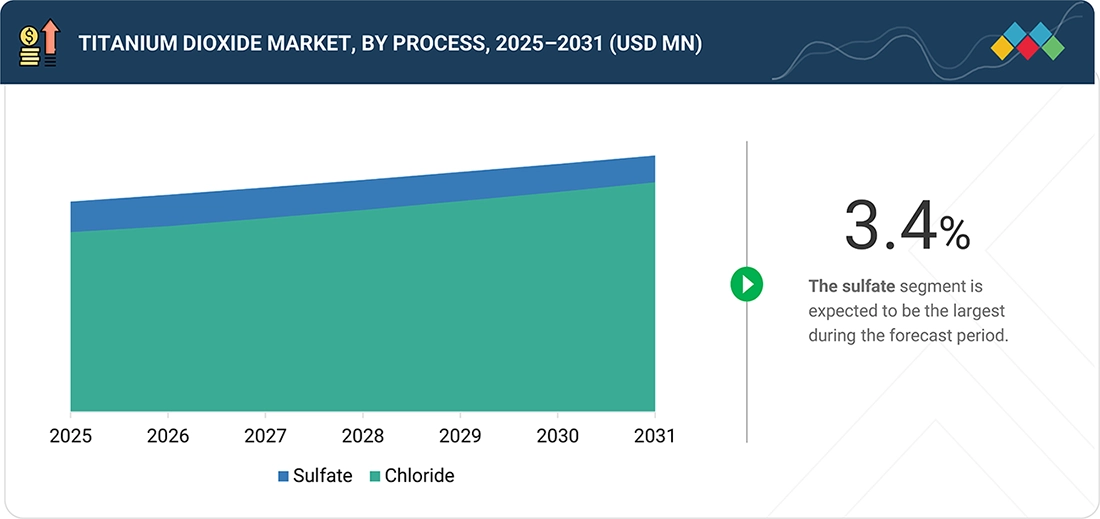
By ProcessBy process, the chloride segment is projected to register the highest CAGR of 4.3% during the period.
-
By ApplicationBy application, the paints & coatings segment dominated the market in 2025, accounting for a share of 58.6%.
-
Competitive Landscape - Key PlayersThe Chemours Company (US), Tronox Holdings Plc (US), LB Group (China), Kronos Worldwide, Inc. (US), and Venator Materials PLC (UK) were identified as star players in the titanium dioxide market (global), given their strong market share and product footprint.
-
Competitive Landscape - Startups/SMEsTitanos Group (China), GreenTidio (Israel), and PRECHEZA (Czech Republic) have distinguished themselves among startups and SMEs by securing strong footholds in specialized niche areas, underscoring their potential as emerging market leaders.
The titanium dioxide market is growing due to paints & coatings, supported by the booming construction industry, the automotive industry, rising demand for cosmetics, and increasing use of the product in plastics.
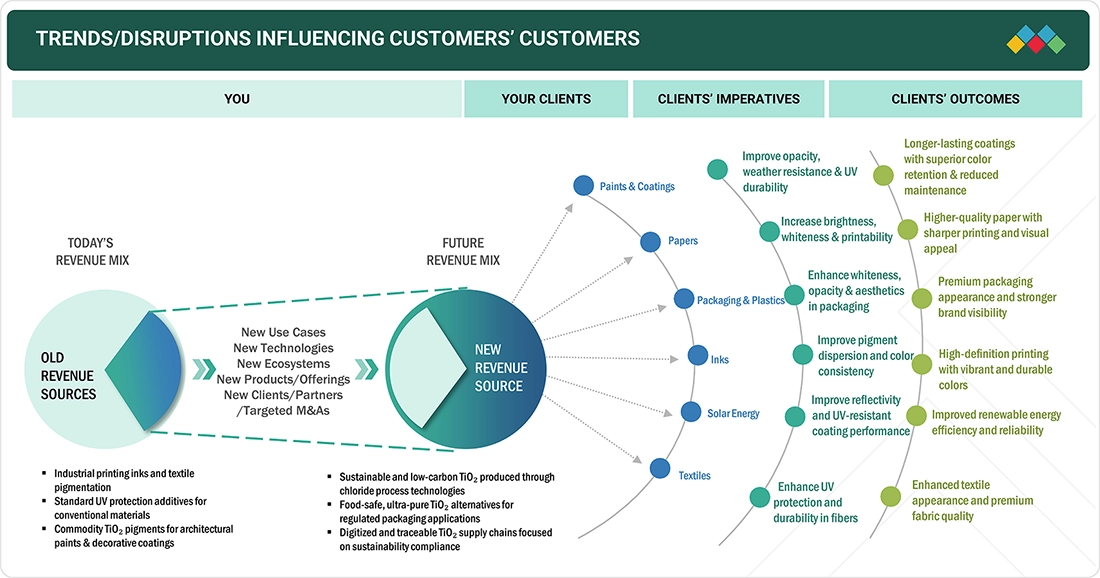
TRENDS & DISRUPTIONS IMPACTING CUSTOMERS' CUSTOMERS
The market is growing due to increasing demand from the paints and coatings, plastics, packaging, and construction industries, especially in the Asia-Pacific region. The major trends are focusing on sustainable and low-carbon titanium dioxide production, energy-efficient sulfate and chloride processes, recycling and waste recovery processes, and the growth of premium chloride-route pigments. In addition, companies are targeting nano-titanium dioxide, smart coatings, photocatalytic uses, and digitalized manufacturing for enhanced performance, efficiency, and environmental compliance. The expansion of the market will be continued by the rise in the level of infrastructure development, car production, and demand for high-performance materials.
Source: Secondary Research, Interviews with Experts, MarketsandMarkets Analysis
MARKET DYNAMICS

Level
-
Thriving construction sector worldwide

-
Growing demand for do-it-yourself paints and coating solutions


Level
-
Stringent environmental policies of governments regarding production of titanium dioxide


Level
-
High adoption of ultrafine particles of titanium dioxide in cosmetics and construction industries

-
Increased use of titanium dioxide as photocatalyst


Level
-
Concerns about safety of titanium dioxide

-
Volatility in cost of titanium dioxide

Source: Secondary Research, Interviews with Experts, MarketsandMarkets Analysis
Driver:Growing demand for do-it-yourself paints and coating solutions
DIY home improvement and renovation are increasing the demand for paints and coatings using titanium dioxide. With urbanization, social media influence, and cost-awareness, consumers prefer DIY solutions for home projects. Titanium dioxide is essential for its opacity, brightness, whiteness, UV resistance, and hiding power, enabling high-quality coatings with fewer coats. The DIY trend gained momentum post-COVID-19 as people invested in home upgrades. Retailers and manufacturers now offer more DIY-focused products, boosting titanium dioxide use in decorative paints. Demand for durable rutile titanium dioxide pigments is rising, especially with waterborne and low-VOC paints favored by eco-conscious buyers. E-commerce expansion makes these products more accessible, particularly in emerging markets. Growth in exterior paints, wood finishes, and protective coatings is driven by the need for durability in homebuilding and remodeling. The market for decorative paints thrives as homeowners seek high-quality, low-maintenance options, supporting long-term growth in the titanium dioxide sector.
Restraint:Stringent environmental policies of governments regarding production of titanium dioxide
A significant challenge facing the global titanium dioxide market is the strict environmental regulations that control its production. Efforts to manage emissions, wastewater, and waste disposal are increasingly a concern for governments and environmental groups, especially in Europe and North America. The traditional sulfate-process for producing titanium dioxide generates substantial acid waste, iron sulfate by-products, and greenhouse gases, leading to environmental issues and higher compliance costs for producers. Regulatory agencies like ECHA have also imposed stricter labels and occupational exposure limits for certain titanium dioxide powders and airborne particles. As a result, manufacturers are required to invest heavily in advanced waste treatment, emissions reductions, cleaner production methods, and sustainability measures. These costs can reduce profit margins, particularly for smaller and medium-sized firms. Additionally, growing interest from ESG investors and consumers’ increasing awareness of sustainability make the chloride-route process more appealing for titanium dioxide producers, despite the higher initial investment. Strict standards in some countries and delays in environmental permitting further slow capacity expansion. Looking ahead, global carbon reduction targets are likely to increase regulatory pressures on production facilities. Overall, environmental compliance remains a key factor shaping the market’s development, costs, and long-term competitiveness.
Opportunity: High adoption of ultrafine particles of titanium dioxide in cosmetics and construction industries
The increasing demand for ultrafine titanium dioxide particles in cosmetics and construction presents promising growth prospects for the global titanium dioxide market. These ultrafine and nano forms of titanium dioxide pigment are more transparent, offer enhanced surface performance, possess photocatalytic properties, and have higher UV absorption compared to traditional pigments. In cosmetics, ultrafine titanium dioxide is commonly used in sunscreens, skincare, face powders, and personal care items, providing both UV protection and a clear, aesthetic appearance. The global shift toward nano-titanium dioxide formulations is driven by more consumers recognizing the importance of skin protection, rising cases of UV-related skin issues, and a growing preference for high-quality cosmetic products. Regulatory approvals of safe levels in sunscreens across various nations further support market growth. In the construction industry, ultrafine titanium dioxide is increasingly utilized in applications like self-cleaning coatings, air-purifying concrete, photocatalytic paints, and energy-efficient building materials. These advanced materials help reduce maintenance needs and pollution while enhancing the durability of structures. Governments around the world are actively promoting sustainable infrastructure and eco-friendly building solutions, which encourages the adoption of titanium dioxide-based construction materials. Additionally, ongoing research into nanotechnology and smart materials is opening new doors for titanium dioxide manufacturers, promising to add significant value to the market. The trend toward specialized and functional titanium dioxide products is poised to boost future opportunities across multiple industries.
Challenge: Concerns about safety of titanium dioxide
Concerns about the safety of titanium dioxide remain a significant hurdle for its use across industries like food, cosmetics, pharmaceuticals, and workplace applications. Many health authorities and regulators are paying closer attention to the potential risks posed by inhaling tiny particles and nano-sized formulations of titanium dioxide. The main worry is the long-term inhalation of airborne dust during manufacturing and processing, which under certain industrial conditions could pose respiratory health risks. Recently, the EU classified titanium dioxide powders as suspected carcinogens when inhaled in high amounts, due to specific particle sizes. While this mostly impacts workplace safety rather than consumer use, it has created uncertainty among manufacturers, users, and consumers alike. Additionally, some food and cosmetics companies are re-examining their reliance on titanium dioxide in response to ongoing regulatory scrutiny and a growing consumer demand for “clean-label” and additive-free products. Public perception and misinformation about nanomaterials add further complications. Several food brands have already phased out titanium dioxide whitening agents due to consumer concerns and regulatory reviews. Meeting safety standards at work also demands investments in advanced dust control, worker protections, and reformulating products. Although debates continue about the actual risks involved, safety concerns influence purchasing decisions, product development, and policies across industries that use titanium dioxide.
TITANIUM DIOXIDE MARKET: COMMERCIAL USE CASES ACROSS INDUSTRIES
| COMPANY | USE CASE DESCRIPTION | BENEFITS |
|---|---|---|
 |
Developed Ti-Pure TS-1510, a sustainability-grade titanium dioxide pigment for plastics masterbatch applications. Engineered with enhanced bulk density and low-dusting characteristics to improve processing efficiency and reduce environmental impact in plastics manufacturing | Reduces net carbon footprint by up to 6%, lowers processing energy consumption, improves compounding productivity, enhances material flowability, minimizes dust generation, reduces packaging waste, and supports more sustainable plastics production |
 |
Developed TiONA 233, a rutile titanium dioxide pigment optimized for highly loaded masterbatches and thin film applications. Produced using advanced chloride-process technology for improved optical efficiency and durability | Enhances dispersion and processing performance, improves UV resistance and color stability, supports durable thin-film production, and enables high-performance masterbatch formulations with consistent quality |
 |
Introduced TMP- and TME-free TIOXIDE TR85 pigment, designed to meet evolving environmental and regulatory requirements for coatings and plastics applications while maintaining high pigment performance | Supports compliance with stricter environmental standards, reduces use of regulated substances, improves the sustainability profile of end products, and maintains high opacity, durability, and processing reliability |
Logos and trademarks shown above are the property of their respective owners. Their use here is for informational and illustrative purposes only.
MARKET ECOSYSTEM
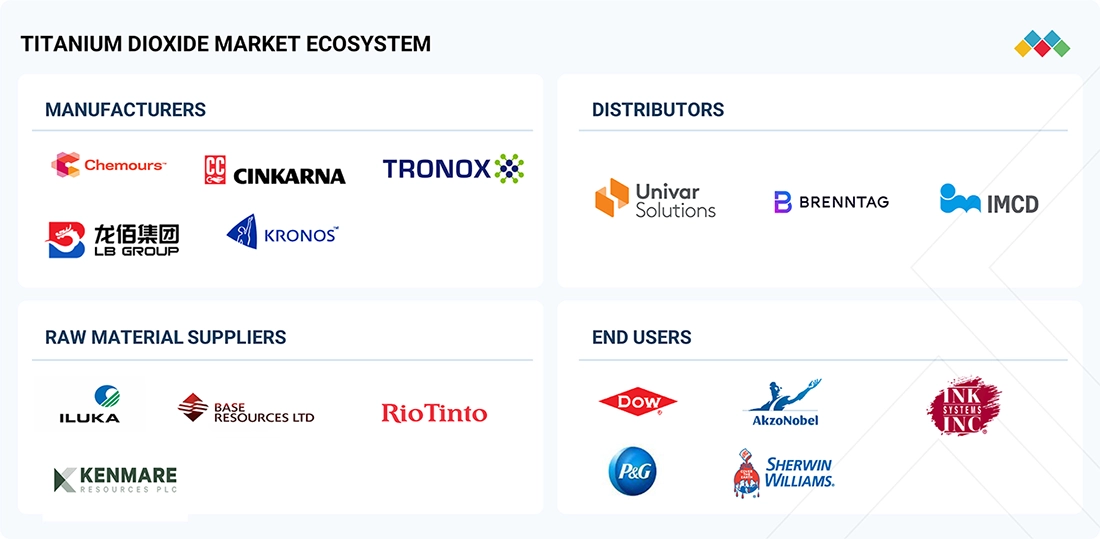
The titanium dioxide market ecosystem includes raw material suppliers, titanium dioxide manufacturers, distributors, and end-use players. The value chain starts with mining companies providing ilmenite, rutile, and titanium slag feedstocks, and then sulfate- and chloride-process titanium dioxide producers turn these minerals into pigment-grade titanium dioxide. Distributors and chemical suppliers allow for access to the global market, and major markets are in paints&coatings, plastics, paper, inks, cosmetics, and construction.
Logos and trademarks shown above are the property of their respective owners. Their use here is for informational and illustrative purposes only.
MARKET SEGMENTS
Source: Secondary Research, Interviews with Experts, MarketsandMarkets Analysis
Titanium Dioxide Market, By Grade
The global market for titanium dioxide is primarily driven by the use of rutile grade, valued for its superior application qualities such as enhanced optical performance, weather resistance, opacity, and durability over anatase grade. Rutile titanium dioxide is a key component in high-performance paints, coatings, plastics, and industrial products, thanks to its high refractive index that ensures brightness, whiteness, and effective hiding power. Its resilience and UV stability make it especially suitable for architectural coatings, automotive finishes, and outdoor construction in challenging environments. Recently, demand has grown markedly, particularly in high-value coatings and durable infrastructure projects.
Titanium Dioxide Market, By Process
The sulfate process remains dominant in the titanium dioxide market, leveraging its longstanding presence, raw material flexibility, and strong foothold in emerging economies. It uses low-grade rutile ores and does not require high-grade feedstock like the chloride process, making it accessible for many regional manufacturers, especially across Asia-Pacific. This adaptability has led to increased production capacity via the sulfate route, particularly in China, which now accounts for a large share of global output. The process produces both rutile and anatase grades, suitable for applications like paper, coatings, inks, textiles, and plastics. While some large manufacturers prefer alternative technologies, many smaller companies rely on the sulfate process due to its lower costs and industry experience. Chinese producers, in particular, have historically used sulfate methods, reinforcing China's leadership. For cost-sensitive markets, sulfate-route titanium dioxide remains highly competitive. Despite environmental concerns, the affordability, available feedstocks, established infrastructure, and expertise ensure the sulfate process still underpins most global production.
Titanium Dioxide Market, By Application
The paints and coatings segment is the largest market for titanium dioxide, recognized for its effectiveness as a white pigment for opacity, brightness, UV protection, and durability. It is extensively used in architectural coatings, industrial paints, automotive finishes, marine coatings, and protective coatings due to its superior light-scattering properties and weathering resistance. This enables manufacturers to achieve excellent hiding, gloss, color stability, and long-lasting protection for both interior and exterior applications. Demand for titanium dioxide-based products is rising in emerging economies, fueled by urbanization, infrastructure growth, and increased residential construction. Governments worldwide are investing significantly in transportation, smart cities, housing projects, and industrial facilities, creating a need for decorative and protective coatings. Additionally, rising disposable incomes and a preference for high-quality finishes drive the demand for durable and aesthetically pleasing paints. In the automotive sector, rutile titanium dioxide is essential for coatings, providing UV resistance, weather durability, and color consistency. The use of advanced formulations is gaining momentum as environmental regulations encourage the development of waterborne and low-VOC coatings. Overall, the paints and coatings industry remains the primary application area for titanium dioxide, significantly influencing its global usage.
REGION
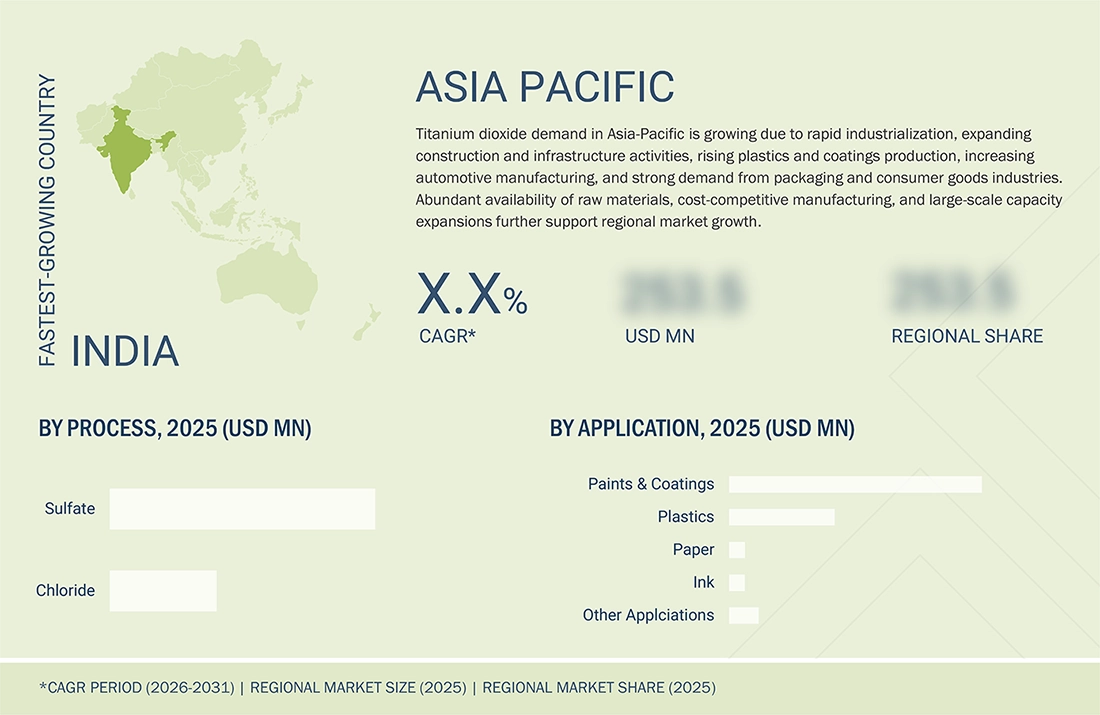
Asia Pacific to be the largest region in global titanium dioxide market during forecast period
The Asia Pacific leads the global titanium dioxide market due to rapid industrialization, manufacturing growth, urbanization, and strong demand from construction, coatings, plastics, and packaging sectors. China dominates the region as the largest producer and consumer, supported by extensive sulfate-route facilities, abundant raw materials, and a robust market for coatings and paper. Continued infrastructure expansion, residential growth, and automotive production fuel demand. India's booming housing, manufacturing, and consumer markets, along with growth in Southeast Asia, further drive the need for titanium dioxide in paints, textiles, and packaging. As middle-class incomes rise and urbanization accelerates, demand for decorative coatings and consumer products increases. Additionally, lower manufacturing costs, expanding chemical facilities, and rising foreign investments bolster the region’s position. With its export strength and cost-effective pigments, Asia-Pacific remains the largest and most dynamic market globally.
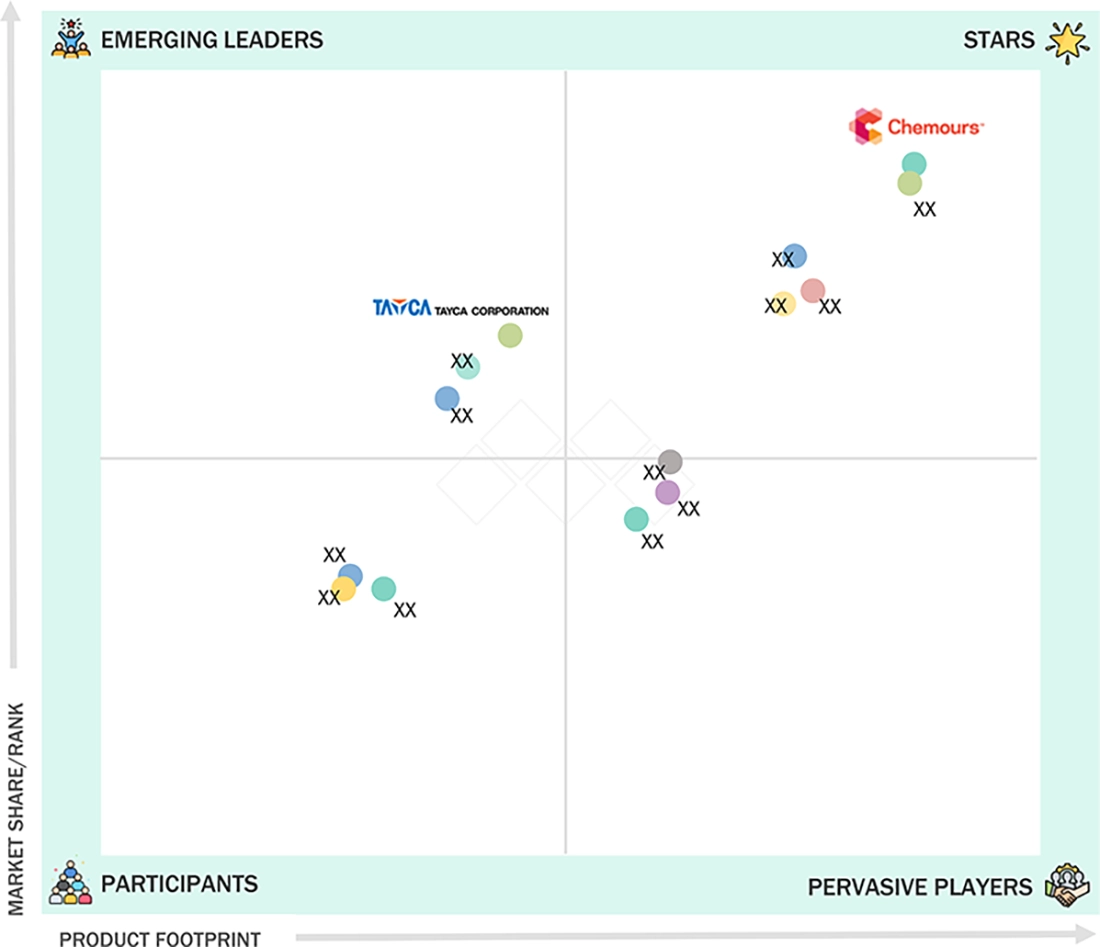
TITANIUM DIOXIDE MARKET: COMPANY EVALUATION MATRIX
The Chemours Company (Star) is a star player in the titanium dioxide market due to its global Ti-Pure brand, chloride-process leadership, sustainability-focused innovations, and strong coatings and plastics portfolio. The company emphasizes premium rutile titanium dioxide, customer collaboration, and low-carbon solutions, strengthening its leadership across high-performance and environmentally compliant applications. Tayca Corporation (emerging leader) is an emerging leader in the titanium dioxide market, driven by its expertise in ultrafine and specialty titanium dioxide products. The company focuses on high-value applications, including cosmetics, photocatalytic coatings, and functional materials, positioning itself strongly in advanced, niche, and sustainability-driven titanium dioxide applications.
Source: Secondary Research, Interviews with Experts, MarketsandMarkets Analysis
KEY MARKET PLAYERS
- The Chemours Company (US)
- Tronox Holdings Plc (US)
- LB Group (China)
- Kronos Worldwide, Inc. (US)
- Venator Materials PLC (UK)
- Tinergy Chemical Co. Ltd. (China)
- Cinkarna Celje d.d. (Slovenia)
- Evonik Industries AG (Germany)
- Tayca Corporation (Japan)
- INEOS Group Limited (UK)
- Titanos Group (China)
- GreenTidio (Israel)
- PRECHEZA (Czech Republic)
- Kumyang Co., Ltd. (South Korea)
- Travancore Titanium Products Ltd. (India)
MARKET SCOPE
| REPORT METRIC | DETAILS |
|---|---|
| Market Size in 2025 (Value) | USD 21.13 Billion |
| Market Forecast in 2026 (Value) | USD 21.82 Billion |
| Market Forecast in 2031 (Value) | USD 26.32 Billion |
| Growth Rate | CAGR of 3.8% from 2026- 2031 |
| Years Considered | 2022–2031 |
| Base Year | 2025 |
| Forecast Period | 2026–2031 |
| Units Considered | Value (USD Billion), Volume (Kiloton) |
| Report Coverage | Revenue forecast, company ranking, competitive landscape, growth factors, and trends |
| Segments Covered |
|
| Regions Covered | North America, Asia Pacific, Europe, South America, Middle East & Africa |
WHAT IS IN IT FOR YOU: TITANIUM DIOXIDE MARKET REPORT CONTENT GUIDE
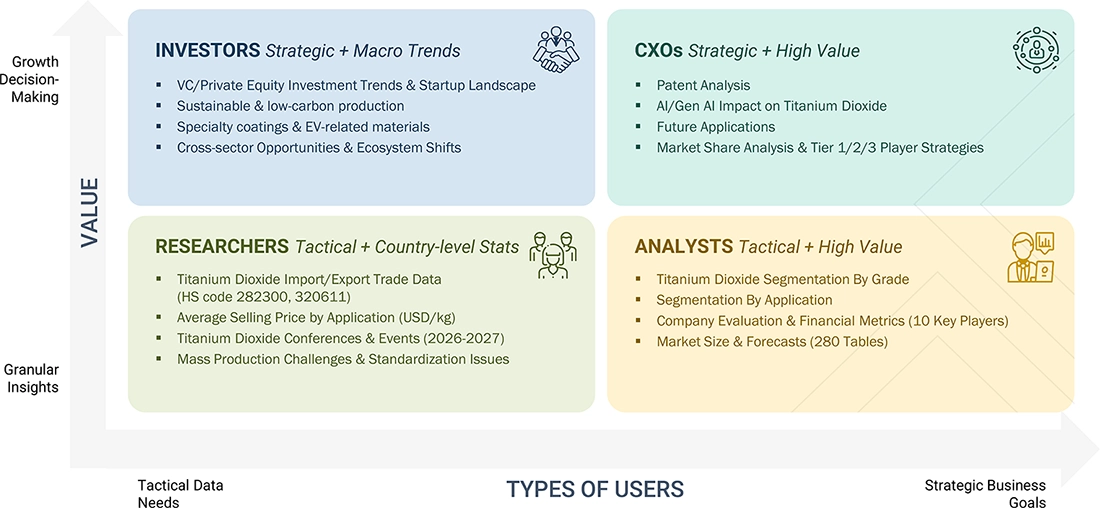
DELIVERED CUSTOMIZATIONS
We have successfully delivered the following deep-dive customizations:
| CLIENT REQUEST | CUSTOMIZATION DELIVERED | VALUE ADDS |
|---|---|---|
| Titanium dioxide market- grades across applications | Detailed analysis of titanium dioxide grades based on the usage for different applications, including Paints & Coatings, Plastics, Paper, Ink, and Other applications |
|
RECENT DEVELOPMENTS
- April 2026 : LB Group completed the acquisition of Venator’s Greatham titanium dioxide plant in the UK, forming a new company, “Tioxide,” with plans to restart production in 2026 and integrate premium chloride-based pigment assets. This acquisition strengthens LB Group’s global footprint and European presence.
- March 2025 : Tronox introduced a blue-toned titanium dioxide pigment, TiONA 233, for plastics, offering enhanced tint strength, processability, color stability, and UV resistance, targeting demanding applications such as packaging, polyolefins, engineering plastics, and agricultural films.
- February 2025 : The Chemours Company launched Ti-Pure TS-6706, a TMP/TME-free version of its flagship titanium dioxide grade R-706, offering a sustainable, regulation-compliant pigment with identical performance and easy drop-in use across coatings applications. This launch strengthens Chemours’ position by addressing regulatory pressures (removal of TMP/TME) while maintaining performance.
Table of Contents
 Exclusive indicates content/data unique to MarketsandMarkets and not available with any competitors.
Methodology
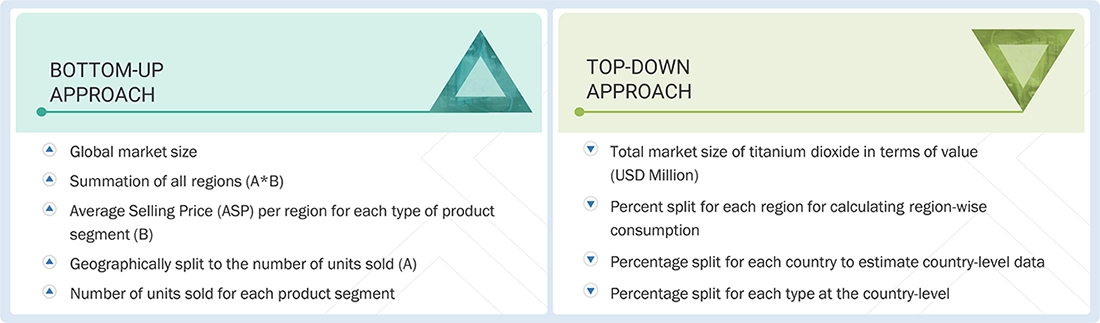
The study involved four major activities to estimate the current size of the global titanium dioxide market. Exhaustive secondary research was conducted to gather information on the market, the peer product market, and the parent product group market. The next step was to validate these findings, assumptions, and sizes with industry experts across the titanium dioxide value chain through primary research. The top-down and bottom-up approaches were employed to estimate the overall size of the titanium dioxide market. After that, market breakdown and data triangulation were used to determine the sizes of different market segments.
Secondary Research
The market for companies offering titanium dioxide was determined by studying secondary data from paid and unpaid sources, analyzing the product portfolios of major companies in the ecosystem, and rating companies based on performance and quality. Various secondary sources, such as Business Standard, Bloomberg, World Bank, and Factiva, were referred to identify and collect information for this study on the titanium dioxide market. In the secondary research process, various sources were consulted to identify and collect information for the study. Secondary sources included annual reports, press releases, investor presentations, titanium dioxide vendors, forums, certified publications, and white papers. The secondary research was used to obtain critical information on the industry’s value chain, the total pool of key players, market classification, and segmentation from the market and technology-oriented perspectives.
Primary Research
In the primary research process, various primary sources from the supply and demand sides were interviewed to obtain qualitative and quantitative information for this report. The primary sources from the supply side included industry experts, such as Chief Executive Officers (CEOs), Vice Presidents (VPs), marketing directors, technology and innovation directors, and related key executives from several key companies and organizations operating in the titanium dioxide market. After completing market engineering (calculations for market statistics, market breakdown, market size estimates, market forecasting, and data triangulation), extensive primary research was conducted to gather information and verify and validate the critical numbers derived. Primary research was also conducted to identify segmentation types, the competitive landscape of titanium dioxide offered by various market players, and key market dynamics, such as drivers, restraints, opportunities, challenges, and key player strategies. In the complete market engineering process, the top-down and bottom-up approaches and several data triangulation methods were extensively used to perform the market estimation and market forecasting for the overall market segments and subsegments listed in this report. Extensive qualitative and quantitative analyses were performed on the complete market engineering process to present key information/insights throughout the report.
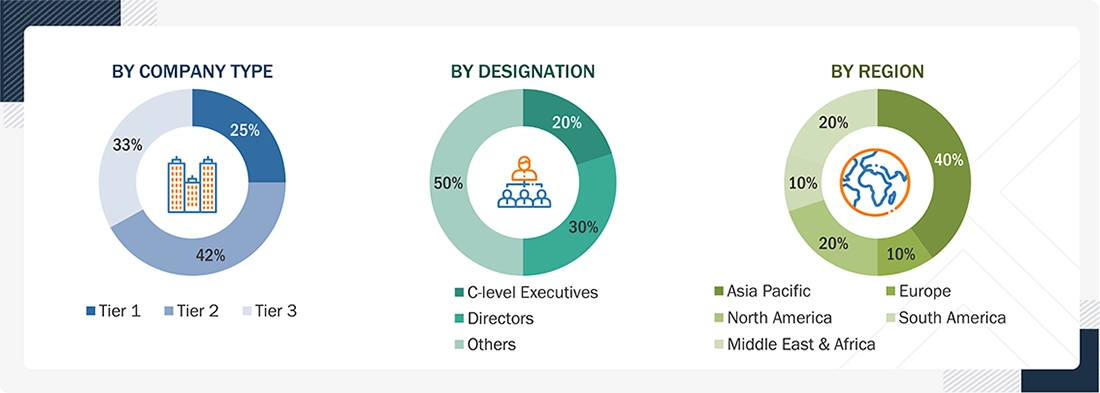
Notes: Others include Sales, Marketing, and Product Managers.
To know about the assumptions considered for the study, download the pdf brochure
Market Size Estimation
The top-down and bottom-up approaches were used to estimate and validate the size of the global titanium dioxide market. These approaches were also used extensively to estimate the size of various dependent market segments.
Data Triangulation
After arriving at the overall market size through market size estimation, the market was split into several segments and subsegments. Data triangulation and market breakup procedures were employed, where applicable, to complete the overall market engineering process and arrive at the exact statistics for each market segment and subsegment. The data was triangulated by studying various factors and trends from both the demand and supply sides.
Market Definition
Titanium dioxide is a naturally occurring oxide of titanium widely used as a white pigment in paints, coatings, plastics, paper, cosmetics, and food products. It is valued for its high brightness, opacity, UV resistance, and durability. Titanium dioxide also has photocatalytic properties, which are used in environmental and energy-related applications.
Key Stakeholders
- Raw Material Suppliers
- Regulatory Bodies
- Government and Consulting Firms
- End Users
- Research and Development Organizations
- Titanium dioxide Manufacturers, Dealers, Traders, and Suppliers
Report Objectives
- To define, describe, and forecast the size of the global titanium dioxide market based on process, grade, application, and region in terms of value and volume
- To provide detailed information on the significant drivers, restraints, opportunities, and challenges influencing the market
- To analyze and forecast the market based on grade, process, and application
- To strategically analyze micromarkets concerning individual growth trends, prospects, and their contribution to the market
- To assess the growth opportunities in the market for stakeholders and provide details on the competitive landscape for market leaders
- To forecast the market size of segments for North America, Europe, Asia Pacific, South America, and the Middle East & Africa
- To strategically profile key players and comprehensively analyze their market shares and core competencies
- To analyze competitive developments, such as expansions, partnerships, and acquisitions, in the titanium dioxide market
- To provide the impact of AI on the titanium dioxide market
Available customizations:
With the given market data, MarketsandMarkets offers customizations according to client-specific needs.
The following customization options are available for the titanium dioxide report:
Product Analysis
- A product matrix that gives a detailed comparison of the product portfolio of each company
Regional Analysis
- A further breakdown of the titanium dioxide market for additional countries
Company Information
- Detailed analysis and profiling of additional market players (up to five)


Personalize This Research
- Triangulate with your Own Data
- Get Data as per your Format and Definition
- Gain a Deeper Dive on a Specific Application, Geography, Customer or Competitor
- Any level of Personalization
Let Us Help You
- What are the Known and Unknown Adjacencies Impacting the Titanium Dioxide Market
- What will your New Revenue Sources be?
- Who will be your Top Customer; what will make them switch?
- Defend your Market Share or Win Competitors
- Get a Scorecard for Target Partners

Custom Market Research Services
We Will Customise The Research For You, In Case The Report Listed Above Does Not Meet With Your Requirements
Get 10% Free CustomisationTESTIMONIALS
We at Nissan Chemicals Corporation have been clients of MarketsandMarkets for more than a year now. We recently consulted MarketsandMarkets for a study, the team at MarketsandMarkets was extremely professional and organized. The business insights were very detailed and aligned well with our expectations that really helped us formulate the Business Plans and device new strategies for development themes. MarketsandMarkets offers a unique combination of expertise and dedicated engagement model. Their research findings have helped us in designing our Pricing Strategy which will make it easier for us to predict the future sales and profits for the next ten years. We look forward to working with MarketsandMarkets in the future.
VP of Strategy & New Business Development
Leading Specialty Chemical Company
The MarketsandMarkets Engagement Model, composed of both the Knowledge Store and advisory custom research, has greatly helped us in understanding our markets and making strategic decisions. The Knowledge Store is a fast way to allow everyone in our organization to understand more about most any market they are interested in. The ability to then get custom research done and get answers to specific strategic questions and market insight has been spectacular. The Markets and Markets team feel more like colleagues than vendors and their services have helped us change our culture where statements of things like growth opportunities and competitive position are always backed by industry research.

Rich Gibson,
Director, Corporate Strategy
Milliken & Company,
Leading Industrial Manufacturer of specialty chemical, floor covering, performance and protective textile materials, and healthcaremilliken.com
MarketsandMarkets is a trusted resource that helps us to better understand markets that are near-adjacencies-whether its technology, value chain or geography. Their Knowledge Store platform provides a dashboard of markets and their characteristics which is easy to use and saves us time.
Adam Shaw,
Market Development and Strategy Manager
AdvanSix Inc. USA,
An American Leader in Chemicalswww.advansix.com
The Knowledge Store from MarketsandMarkets is a valuable tool which has helped my team acquire greater insight in to the end markets that our business serves. This has enabled us to help our company build stronger strategies throughout our planning process.
TOSHIO KINOSHITA
Senior Chif Consultion Research & Consulting Division
Mitsubishi Chemical Research Corporation,
Leading Manufacturer of Chemical Productswww.mitsubishichem-res.co.jp/en/

We recently engaged with MarketsandMarkets for a study, the team not only clearly understood our business objectives but was also extremely professional in the way they handled the entire project. The study was efficiently conducted in a phase-wise manner, and the engagement model furnished us with high-quality business insights that far exceeded our expectations at each phase. We were especially happy that MarketsandMarkets could provide us with both, an English as well as a Japanese version of the study. A special thanks to the Analyst Team and Client Services Team, whose fluency in Japanese enhanced our comfort level, as we could converse with them in our preferred language.
Independent entrepreneurs
Arrow Precision
We approached MarketsandMarkets for study on Proppants Market, and their work exceeded our expectations. The study conducted was comprehensive and enabled us to view the market through the various dimensions. In addition, the team was extraordinarily responsive throughout the process and resolved our queries on time. I strongly recommend MarketsandMarkets and will certainly consider them for additional market assessments we will need in the future.
Global engineering company, Japan
Deputy Manager,
Strategic Planning OfficeThe high-quality insights shared by the MarketsandMarkets team helped us understand the pharmaceutical plant designers in a specific geography. It also captured the risks that we may likely face in communicating with our potential partners. The study would enable us identify partners, which would impact our future growth.
- China Titanium Dioxide Market
- India Titanium Dioxide Market
- Japan Titanium Dioxide Market
- South Korea Titanium Dioxide Market
- Australia Titanium Dioxide Market
- Canada Titanium Dioxide Market
- Mexico Titanium Dioxide Market
- US Titanium Dioxide Market
- Brazil Titanium Dioxide Market
- Argentina Titanium Dioxide Market
- Germany Titanium Dioxide Market
- UK Titanium Dioxide Market
- France Titanium Dioxide Market
- Russia Titanium Dioxide Market
- Italy Titanium Dioxide Market
- South Africa Titanium Dioxide Market
- Rest Of Europe Titanium Dioxide Market
- Rest Of Asia Pacific Titanium Dioxide Market
- GCC Countries Titanium Dioxide Market
- -Rest Of GCC Countries Titanium Dioxide Market
- Rest Of South America Titanium Dioxide Market




Growth opportunities and latent adjacency in Titanium Dioxide Market