US Sleep Apnea Devices Market Size, Growth, Share & Trends Analysis

US Sleep Apnea Devices Market by Product [Therapeutic {PAP (CPAP, APAP, BPAP), Oral Appliances, Masks}, Diagnostic {PSG, Home Sleep Testing, Oximeter}], Age, Gender, End User [Sleep Clinics, Hospitals, Home Care Settings] – Forecast to 2031




OVERVIEW
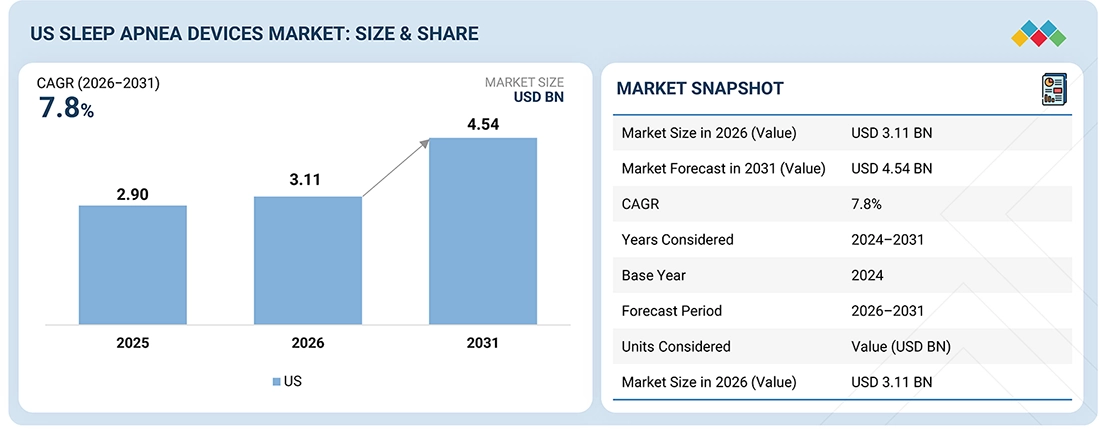
Source: Secondary Research, Interviews with Experts, MarketsandMarkets Analysis
The US sleep apnea devices market, valued at US$2.90 billion in 2025, stood at US$3.11 billion in 2026 and is projected to advance at a resilient CAGR of 7.8% from 2025 to 2031, culminating in a forecasted valuation of US$4.54 billion by the end of the period. The market's growth can be attributed to the rising prevalence of sleep apnea and other lifestyle-related disorders. Additionally, greater awareness of the health risks associated with sleep apnea is expected to further boost demand for these devices. A significant factor driving this growth is the rising need for effective diagnostic and therapeutic solutions. Improvements in healthcare infrastructure, substantial investments in sleep health technology, and an increased adoption of home-based sleep testing devices and CPAP therapy devices are also contributing to market expansion. Furthermore, there is a growing emphasis on early diagnosis, patient-centered treatment strategies, and technological innovations in the diagnosis and therapy of sleep apnea, all of which are driving the remarkable growth of the sleep apnea devices market in the US.
KEY TAKEAWAYS
-
By ProductBy product, the therapeutic devices segment is expected to register the highest CAGR of 11.3% during the forecast period.
-
By End userBy end user, the home care settings & self-testing segment is expected to register the fastest growth rate of 8.5% during the forecast period.
-
By Age GroupBy age group, the 40-60 years segment accounted for the largest market share of 57.5% in 2025.
-
By Sample TypeBy gender, the male segment accounted for the largest market share in 2025.
-
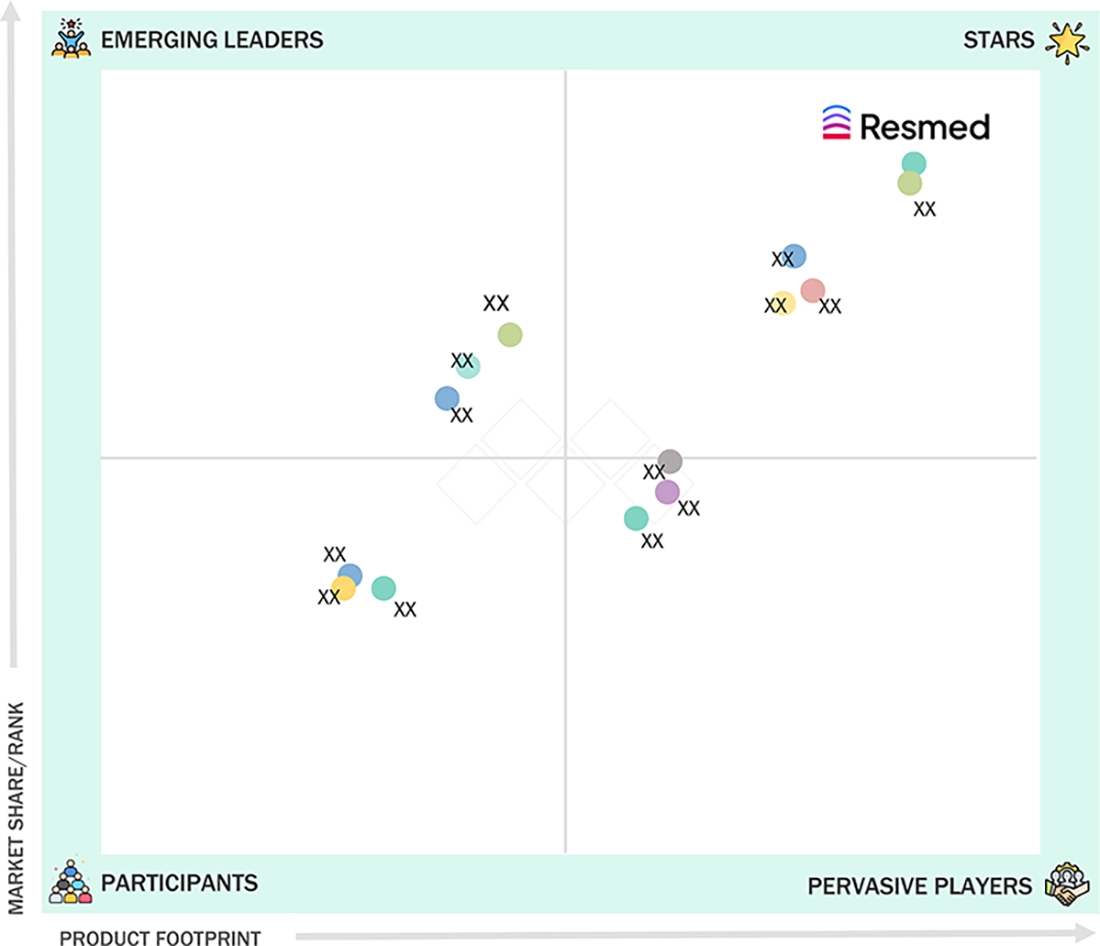
Competitive LandscapeResMed (US), Koninklijke Philips N.V. (Netherlands), Fisher & Paykel Healthcare Limited (New Zealand), Inspire Medical Systems, Inc. (US), and SomnoMed (Australia) were identified in the US sleep apnea devices market as star players, which correspondingly are supported by their strong market presence and extensive product portfolios.
-
Competitive LandscapeOpenairway (Canada), Compumedics Limited (Australia), Löwenstein Medical SE & Co. KG (Germany), Drive DeVilbiss International (US), BMC (China), and BRAEBON Medical Corporation (Canada), among others, have distinguished themselves among startups and SMEs by securing strong footholds in specialized niche areas.
The US sleep apnea devices market is influenced by several key factors, including the growth of home-based or decentralized healthcare and the need for quick and accurate identification of sleep disorders. Increased awareness of the health risks associated with untreated sleep apnea has significantly increased adoption of advanced diagnostic and therapeutic technologies, such as home sleep tests and PAP devices. Additionally, the favorable reimbursement landscape in the US, along with a rise in the number of cases receiving financing for sleep studies and treatment devices, is expected to drive the market for sleep apnea devices in the country. Recent developments in sleep apnea technology, especially improvements in accurate diagnosis, comfort, portability, and device interoperability, have led to a higher adoption rate of diagnostic and treatment solutions in the US. Furthermore, the cost-effective, decentralized nature of these devices is accelerating the growth of the sleep apnea market in the US.
TRENDS & DISRUPTIONS IMPACTING CUSTOMERS' CUSTOMERS
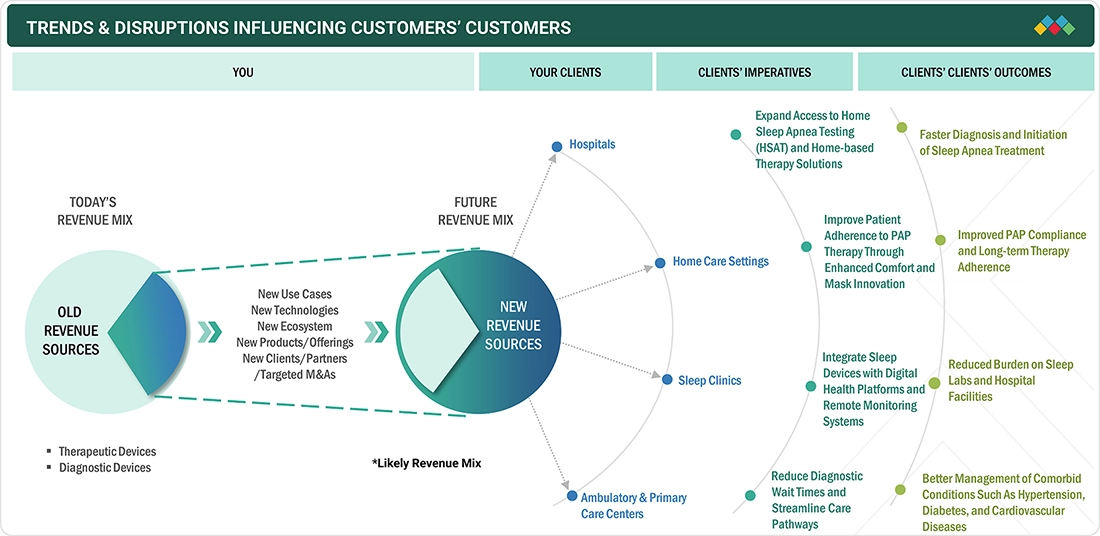
The US sleep apnea devices market is experiencing steady growth, primarily driven by a healthcare system that increasingly focuses on early diagnosis, prompt intervention, and effective treatment options for sleep-related disorders. One notable trend in this industry is the growing integration of sleep apnea diagnosis and therapy devices in hospitals, sleep centers, physicians' offices, and home care services. This integration enables rapid diagnosis and immediate therapy initiation, creating significant growth opportunities for the sleep apnea industry in the US. Furthermore, the rising popularity of home sleep testing solutions, digital PAP devices, and patient monitoring systems is significantly transforming the diagnosis and treatment of sleep apnea nationwide. These advancements are providing new opportunities for industry players. Additionally, the development of miniaturized, portable, easy-to-use, connected sleep apnea devices is enhancing their application in home care settings and physician offices.
Source: Secondary Research, Interviews with Experts, MarketsandMarkets Analysis
MARKET DYNAMICS

Level
-
Favorable reimbursement and financial aid for sleep apnea devices and therapies

-
Large pool of undiagnosed obstructive sleep apnea (OSA) patients


Level
-
Complex referral pathways, long waiting periods, and delayed diagnosis

-
High cost of CPAP devices and minimal insurance access in emerging economies


Level
-
Rising demand for cost-effective home sleep apnea tests

-
Increasing focus on telemedicine, mHealth, and AI


Level
-
Poor patient compliance with CPAP therapy

Source: Secondary Research, Interviews with Experts, MarketsandMarkets Analysis
Driver: Favorable reimbursement and financial aid for sleep apnea devices and therapies
The US sleep apnea devices market is currently undergoing significant changes driven by increased investment and funding from major companies. These investments are leading to the development of more innovative, comfortable, and effective CPAP masks and diagnostic solutions for sleep apnea. Major players in the industry are making substantial investments in research and development to create next-generation devices that offer improved usability, efficiency, data tracking, wireless connectivity, and other advanced features. These enhancements aim to provide better support for managing health conditions and treating sleep apnea. Additionally, manufacturers are now prioritizing patient comfort, which is essential to encouraging sustained treatment compliance.
Restraint: Complex referral pathways, long waiting periods, and delayed diagnosis
One of the major challenges affecting the growth of the US sleep apnea devices market is the low awareness and underdiagnosis of the condition. Many people are unaware that they are suffering from sleep apnea because they do not recognize common symptoms such as chronic snoring, excessive daytime sleepiness, morning headaches, and difficulties concentrating. Furthermore, overall public awareness of the risks associated with untreated sleep apnea is also low. This lack of knowledge places individuals at a higher risk of developing serious health issues, including cardiovascular problems, hypertension, stroke, diabetes, and metabolic disorders, among others. These factors collectively hinder the growth of the sleep apnea device market in the US and impede efforts to raise awareness and effectively manage the condition nationwide.
Opportunity: Rising demand for cost-effective home sleep apnea tests
In the US sleep apnea devices market, there has been a significant trend towards home-based diagnosis and treatment options, largely due to rising out-of-pocket healthcare expenses. In recent years, various factors have contributed to substantial growth in this market. Notably, the shift among patients to pursue home-based diagnosis and treatment options has significantly boosted the home healthcare segment. As a result, devices intended for home use to diagnose and treat sleep apnea have seen considerable growth. This shift is driven by patients opting for PAP therapy and home sleep apnea tests, which are preferred for their convenience and comfort. Additionally, advancements in next-generation sleep monitoring solutions have played a key role in this growth. These solutions typically feature wireless connectivity, smartphone integration, cloud technology, and remote patient monitoring, enhancing the diagnosis and treatment of sleep apnea. Innovations in wearable devices have also improved the accuracy and comfort of these processes. With ongoing technological advancements and increasing patient demand for convenient treatment options, home-based treatment for sleep apnea is expected to grow significantly in the US market.
Challenge: Poor patient compliance with CPAP therapy
In the US sleep apnea devices market, one of the main challenges associated with CPAP treatment is patient compliance. Recent studies indicate that patients often struggle with adhering to this treatment, which poses a significant obstacle in effectively managing obstructive sleep apnea. This issue can directly impact treatment outcomes and the overall growth of the sleep apnea industry. Therefore, there is now a concerted effort to improve patient understanding of CPAP therapy. Enhancing awareness and knowledge about this treatment may lead to higher compliance rates, ultimately benefiting the management of sleep apnea across the US.
US SLEEP APNEA DEVICES MARKET: COMMERCIAL USE CASES ACROSS INDUSTRIES
| COMPANY | USE CASE DESCRIPTION | BENEFITS |
|---|---|---|
 |
Advanced Positive Airway Pressure (PAP) therapy products, cloud-enabled CPAP therapy devices, CPAP therapy masks, and home sleep apnea testing products are distributed to hospitals and homes in the US | Helps improve adherence to therapy, enhances patient comfort, facilitates remote management of patient health conditions, and optimizes long-term treatment outcomes |
 |
Provision of accessories such as humidified PAP systems, innovative mask interfaces, and respiratory support systems needed to manage sleep apnea | Improves patient comfort with advanced humidification technology, increases compliance rates, and effectively supports long-term therapy |
 |
To provide diagnostic and therapeutic solutions for sleep apnea, including CPAP, BiPAP, sleep apnea masks, and sleep monitors in the US | Supports the early diagnosis and management of ongoing therapy, improves the user experience with connected care, and helps clinical decision-making |
 |
The development of precision-engineered oral appliance therapy devices to treat obstructive sleep apnea in dental and specialty clinics | It offers a non-invasive technique for treatment without CPAP, enhances comfort for the patient, and improves compliance for CPAP-intolerant individuals |
 |
Manufacturing and distributing customized appliances for the treatment of mild-to-moderate obstructive sleep apnea through dental channels throughout the US | Expand access to alternative sleep apnea therapies, enhance patient convenience, and improve patient compliance through customized product designs |
Logos and trademarks shown above are the property of their respective owners. Their use here is for informational and illustrative purposes only.
MARKET ECOSYSTEM
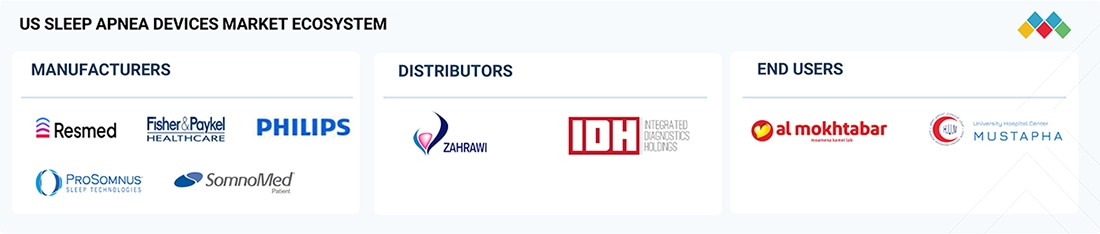
The US sleep apnea devices market features numerous key players that contribute to the entire value chain. These include manufacturers of treatment devices such as CPAP, BiPAP, and APAP devices, as well as oral appliances, sleep apnea masks, and home sleep apnea testing devices. Additionally, the market comprises component providers, distributors, durable medical equipment suppliers, and research and development partners. Moreover, various entities are also playing a significant role in the growth of the sleep apnea devices market in the US. These include sleep laboratories, hospitals, sleep apnea clinics, dental clinics, and home healthcare providers. Collectively, these players contribute to the overall expansion of the market. Recently, home care providers and end users of these devices have also joined the sleep apnea devices market value chain.
Logos and trademarks shown above are the property of their respective owners. Their use here is for informational and illustrative purposes only.
MARKET SEGMENTS
Source: Secondary Research, Interviews with Experts, MarketsandMarkets Analysis
US Sleep Apnea Devices Market, by Product
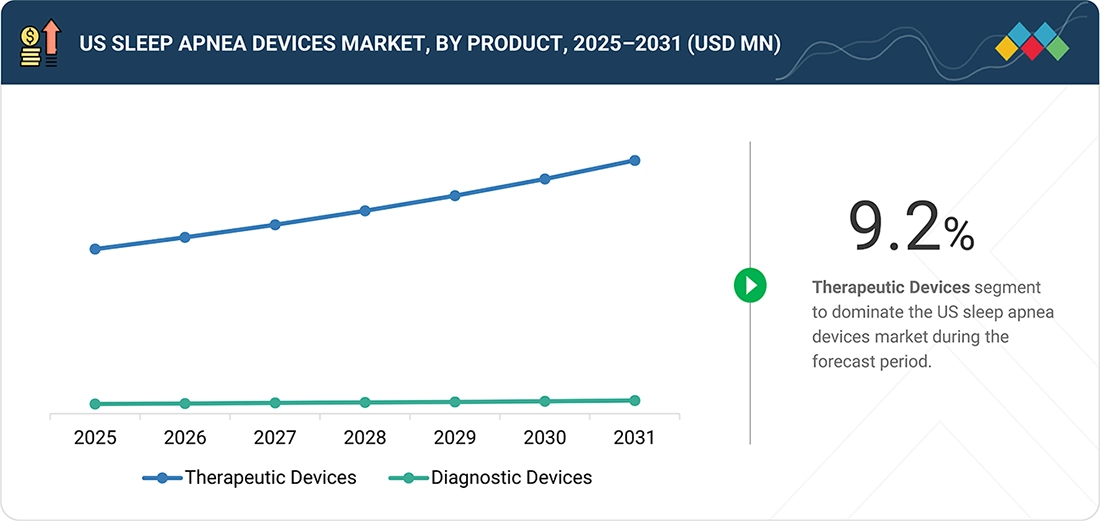
The therapeutic devices segment is expected to be the fastest-growing segment of the US sleep apnea devices market, driven by rising diagnosis rates and increasing adoption of treatments. This segment includes positive airway pressure devices such as CPAP, APAP, and BiPAP systems, as well as masks, humidifiers, tubing, accessories, oral appliances, and advanced hypoglossal nerve stimulation devices. Increased awareness of sleep apnea, greater availability of home sleep apnea diagnostics, and ongoing technological advancements aimed at improving patient comfort, device connectivity, and adherence to therapy are all contributing to growth in this area. As more patients are diagnosed and begin long-term treatment, the demand for innovative, patient-centric therapeutic solutions is expected to rise further, strengthening the US market.
US Sleep Apnea Devices Market, by End User
The home care segment of the US sleep apnea devices market is expected to grow at the fastest rate. The growing acceptance of home-based diagnosis and treatment for obstructive sleep apnea is fundamentally changing how it is treated and managed in the US and beyond. The availability of home sleep apnea testing (HSAT) devices, along with access to positive airway pressure (PAP) therapy, has made it easy and convenient for patients to get diagnosed and treated at home. The comfort and convenience of home-based treatment, coupled with healthcare professionals' ability to remotely monitor patient adherence via telemedicine, will be crucial to the growth and expansion of the sleep apnea devices market in the US.
US Sleep Apnea Devices Market, by Age Group
The 40-60 age group holds the highest market share in the US sleep apnea devices market. This is primarily due to the significant prevalence of obstructive sleep apnea cases within this demographic, which is largely linked to increasing rates of obesity and related health issues. Individuals in this age group are more likely to undergo health checkups, leading to a higher rate of diagnosis than in younger populations. Additionally, people in this group are generally more willing to seek treatment for sleep apnea, leading to increased utilization of positive airway pressure devices, oral appliances, and other home-based therapies. The relatively high number of health-conscious individuals in this age category contributes significantly to the overall market, making the 40–60 year age group the largest segment in the US sleep apnea devices market.
US Sleep Apnea Devices Market, by Gender
The male demographic dominates the sleep apnea devices market in the US. This is primarily due to a higher prevalence of sleep apnea among men compared to women. Physiological factors such as upper airway shape, fat distribution, and hormonal influences contribute to this disparity. Additionally, risk factors like weight gain, smoking, and alcohol consumption are more commonly associated with sleep apnea in men. Consequently, sleep disorders are more prevalent in this population, leading to increased awareness about sleep apnea devices, including positive airway pressure devices, masks, and other appliances. Therefore, the male segment's dominance in the market can be attributed to growing awareness of the cardiovascular problems associated with sleep apnea, as well as increased awareness of sleep disorders among men, both of which boost demand for these devices.
REGION
Rising prevalence of obstructive sleep apnea to drive market for US sleep apnea devices
The US sleep apnea devices market is growing due to the rising prevalence of obstructive sleep apnea, increasing obesity rates, and a growing elderly population. Improved diagnosis rates, higher awareness, and ongoing technological advancements in CPAP and home-based sleep monitoring devices are further driving market growth.
US SLEEP APNEA DEVICES MARKET: COMPANY EVALUATION MATRIX
ResMed is a well-established player in the US sleep apnea devices market, known for its strong portfolio of advanced therapeutic and diagnostic devices and its commitment to innovation in sleep technology. The company offers a wide range of products, including advanced positive airway pressure devices, masks, digital health solutions, and various cloud-based patient management systems. It also provides a variety of accessories that enhance its recurring revenue model. The high number of devices already in use in the US, especially in home care, sleep, and hospital settings, ensures a steady demand for replacement masks and related products. ResMed’s focus on clinical, therapeutic, and regulatory aspects has positioned it as a leader in the US market across different segments of the sleep apnea devices landscape.
Source: Secondary Research, Interviews with Experts, MarketsandMarkets Analysis
KEY MARKET PLAYERS
- Resmed (US)
- Fisher & Paykel Healthcare Limited (New Zealand)
- Koninklijke Philips N.V. (Netherlands)
- ProSomnus Sleep Technologies (US)
- SomnoMed (US)
- Compumedics Limited (Australia)
- Löwenstein Medical SE & Co. KG (Germany)
- Drive DeVilbiss International (US)
- BMC Medical Co. Ltd. (China)
- BRAEBON Medical Corporation (Canada)
- ProSomnus Sleep Technologies (US)
MARKET SCOPE
| REPORT METRIC | DETAILS |
|---|---|
| Market Size in 2025 (Value) | USD 3.11 Billion |
| Market Forecast in 2031 (Value) | USD 4.54 Billion |
| Growth Rate | CAGR of 7.8% from 2026–2031 |
| Years Considered | 2024–2031 |
| Base Year | 2024 |
| Forecast Period | 2026–2031 |
| Units Considered | Value (USD Billion) |
| Report Coverage | Revenue Forecast, Company Ranking, Competitive Landscape, Growth Factors, and Trends |
| Segments Covered |
|
| Countries Covered | US |
| Parent & Related Segment Reports |
Sleep Apnea Devices Market Europe Sleep Apnea Devices Market |
WHAT IS IN IT FOR YOU: US SLEEP APNEA DEVICES MARKET REPORT CONTENT GUIDE
RECENT DEVELOPMENTS
- April 2024 : Fisher & Paykel Healthcare Limited, based in New Zealand, introduced the F&P Solo Mask, featuring AutoFit technology, in the US market. The product is available in both nasal and pillow mask variants and aims to simplify the setup process for both patients and healthcare professionals, enhancing ease of use and the overall therapy experience. This initiative further strengthens the company's position in the US sleep apnea devices market, emphasizing user-friendly design, improved comfort, and better adherence to PAP therapy.
- May 2023 : ResMed (US) has acquired Somnoware (US), a leader in diagnostic software for sleep and respiratory care. This acquisition has enhanced ResMed’s digital health business by broadening its range of cloud-based diagnostic and data management solutions. It is part of ResMed’s strategy to strengthen its presence in the US sleep apnea market by developing technology-enabled solutions that improve efficiency in sleep labs and home care, as part of the overall continuum of sleep therapy.
Table of Contents
 Exclusive indicates content/data unique to MarketsandMarkets and not available with any competitors.
Methodology
The study analyzes key market dynamics, such as drivers, opportunities, restraints, challenges, and key player strategies. To track company developments such as acquisitions, product launches and approvals, expansions, agreements, and partnerships of the leading players, the competitive landscape of the US Sleep Apnea Devices Market is analyzed to evaluate market players on various parameters within the broad categories of business and product strategy. Top-down and bottom-up approaches were used to estimate the market size. The market breakdown and data triangulation were used to estimate the market size of segments and subsegments.
The four steps involved in estimating the market size are
Secondary Research
In the secondary research process, various secondary sources such as annual reports, press releases & investor presentations of companies, white papers, certified publications, articles by recognized authors, gold-standard & silver-standard websites, regulatory bodies, and databases (such as D&B Hoovers, Bloomberg Business, and Factiva) were referred to identify and collect information for this study.
Primary Research
In the primary research process, various supply and demand sources were interviewed to obtain qualitative and quantitative information for this report. Primary sources were mainly industry experts from the core and related industries and preferred suppliers, manufacturers, distributors, service providers, technology developers, researchers, and organizations related to all segments of this industry’s value chain. In-depth interviews were conducted with primary respondents, including key industry participants, subject-matter experts, C-level executives of key market players, and industry consultants, to obtain and verify critical qualitative and quantitative information and assess prospects.
The following is a breakdown of the primary respondents:
| COMPANY NAME | DESIGNATION |
|---|---|
| SOMNOmedcis AG (Germany) | Country Manager |
| ResMed (US) | Regional Sales Manager |
Market Size Estimation
Both top-down and bottom-up approaches were used to estimate and validate the total size of sleep apnea devices in the market. These methods were also used extensively to estimate the size of various subsegments in the market. The research methodology used to estimate the market size includes the following:
- The key players in the industry have been identified through extensive secondary research
- Primary and secondary research has determined the revenues generated by leading players operating in the US Sleep Apnea Devices Market.
- All percentage shares, splits, and breakdowns have been determined using secondary sources and verified through primary sources.
Data Triangulation
After arriving at the overall market size by applying the abovementioned process, the total market was split into several segments and subsegments. To complete the overall market engineering process and arrive at the exact statistics for all segments and subsegments, data triangulation and market breakdown procedures were employed, wherever applicable. The data was triangulated by studying various factors and trends from both the demand and supply sides.
Market Definition
Sleep apnea is a prevalent sleep disorder that is frequently undiagnosed, yet it poses significant health risks. This condition is characterized by intermittent cessation of breathing, which can last from several seconds to minutes, or by irregular breathing patterns. The most predominant form is obstructive sleep apnea (OSA), where anatomical or physiological obstructions impede airflow during sleep. Continuous positive airway pressure (CPAP) devices are commonly used to deliver air at elevated pressure through the nasal passages, effectively counteracting upper airway obstructions and facilitating normal respiration. These interventions are crucial for mitigating the associated morbidities linked with untreated sleep apnea.
Stakeholders
- Senior Management
- Sleep Laboratories, Clinics, & Hospitals
- Home Care Settings
- Academic & research institutes
- Finance/Procurement Department
- R&D Department
Report Objectives
- To define, describe, segment, and forecast the US Sleep Apnea Devices Market by product, age group, gender, end user, and region
- To provide detailed information regarding the major factors influencing the market growth (such as drivers, restraints, opportunities, challenges, and trends)
- To analyze the micromarkets with respect to individual growth trends, prospects, and contributions to the overall US Sleep Apnea Devices Market
- To analyze market opportunities for stakeholders and provide details of the competitive landscape for key players
- To forecast the size of the market segments with respect to five regions—North America, Europe, the Asia Pacific, Latin America, and the Middle East & Africa.
- To profile the key players and comprehensively analyze their product portfolios, market positions, and core competencies
- To benchmark players within the market using the proprietary Company Evaluation Matrix framework, which analyzes market players on various parameters within the broad categories of business and product excellence


Personalize This Research
- Triangulate with your Own Data
- Get Data as per your Format and Definition
- Gain a Deeper Dive on a Specific Application, Geography, Customer or Competitor
- Any level of Personalization
Let Us Help You
- What are the Known and Unknown Adjacencies Impacting the US Sleep Apnea Devices Market
- What will your New Revenue Sources be?
- Who will be your Top Customer; what will make them switch?
- Defend your Market Share or Win Competitors
- Get a Scorecard for Target Partners

Custom Market Research Services
We Will Customise The Research For You, In Case The Report Listed Above Does Not Meet With Your Requirements
Get 10% Free CustomisationTESTIMONIALS

JAYANT RAJPUROHIT
Director of Market Insights, Data and Analytics
SFI Health,
Leading Pharmaceutical Companywww.sfihealth.com/

We at SFI Health approached MarketsandMarkets for an Opportunity Assessment on "Incidence and Prevalence of Focus Indications" as we wanted to know the most attractive HCPs like Physician, Functional MD, Naturopath and Pharmacist. The project was critical for us to ensure our focus on the right target which would enable sustainable growth and profitability for SFI Health. The business insights provided exceeded our expectations and we were extremely impressed. The team at MarketsandMarkets is highly professional and detail oriented and very well understood our business needs. MarketsandMarkets offers a unique combination of expertise and dedicated engagement model. We identified 2 new products to be launched in coming months, based on the research findings provided by MarketsandMarkets. We are happy with the services and would strongly recommend MarketsandMarkets to my peers in the industry.

BEATRIZ DE LA CALLE
Head of Commercial Analytics
Qualicaps,
Leading Pharmaceutical Companywww.qualicaps.com/

We partnered with MarketsandMarkets for an assessment study on hard empty capsules. The team was extremely professional in understanding our business requirements and we received timely responses to all our queries. The market intelligence and the recommendations has met our business requirements. We were extremely impressed to see the final study results; it really exceeded our expectations. The market intelligence offered by MarketsandMarkets, and clarity on next steps will help us achieve our business objective for the Year 2021. We are happy with the services and would strongly recommend MarketsandMarkets to my peers in the industry.

Bob Williams,
Senior Director Business Development & Innovation
Bracco Diagnostics Inc.,
Italian Multinational in life sciences sector and a World Leader in imaging diagnosticsimaging.bracco.com/us-en
We were pleased with targeted insights that MarketsandMarkets identified from a custom study on the 'Radiation Dose Management Solutions Market'. Your team identified and characterized the market participants as well as underlying trends accurately. This study was useful to Bracco in formulating business strategies for our dose monitoring product lines and we thank MarketsandMarkets for the job well done.
Cody Coonradt,
Market Development and Strategy Manager
3M Health Information Systems,
Leader in Health care Coding, Payment & Analytics Solutions.www.3m.com/3M/en_US/health-information-systems-us
The value for our organization comes from three things: depth of research, specificity of segments and being easy to work with. As important as the first two are, the third can't be underestimated. MarketsandMarkets, maybe more than any other research vendor, wants to know what is top of mind for our team and what big questions we are grappling to answer.
Their customer first approach and high value engagement model, have given us great analysis and excellent value for money






Growth opportunities and latent adjacency in US Sleep Apnea Devices Market