US Cryogenic Equipment Market

US Cryogenic Equipment Market by Equipment (Tanks, Valves, Vaporizers, Pumps), Cryogen (Nitrogen, Argon, Oxygen, LNG, Hydrogen), End-use Industry (Energy & Power, Chemicals, Metallurgy, Transportation), and Application - Forecast to 2030




OVERVIEW
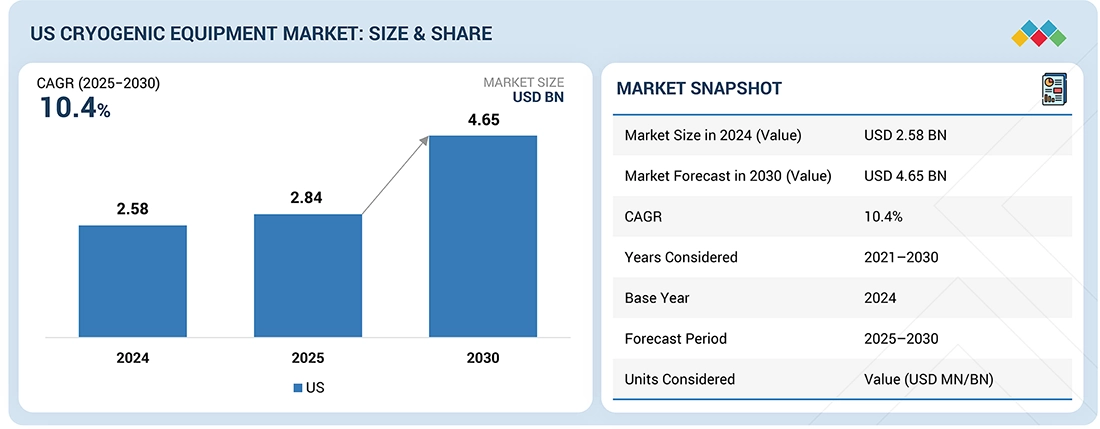
Source: Secondary Research, Interviews with Experts, MarketsandMarkets Analysis
The US cryogenic equipment market is projected to grow from USD 2.84 billion in 2025 to USD 4.65 billion by 2030, at a CAGR of 10.4% during the forecast period. The market is driven by strong demand from the energy, metallurgy, electronics, chemicals, and aerospace industries. Large-scale LNG production, storage, and export infrastructure significantly increases the need for cryogenic tanks, vaporizers, pumps, and valves. Growing investments in hydrogen production, storage, and transportation support the long-term demand for advanced cryogenic systems. In addition, the presence of major industrial gas companies, continuous technological innovation, and a mature manufacturing base strengthen market growth. Strict safety regulations, high operational standards, and ongoing infrastructure upgrades further encourage the adoption of reliable and high-performance cryogenic equipment across industries.
KEY TAKEAWAYS
-
BY EQUIPMENTBy type, the tanks segment is projected to grow at the fastest rate from 2025 to 2030.
-
BY END-USE INDUSTRYBy end-use industry, the electronics segment is estimated to register a CAGR of 12.2% during the forecast period.
-
COMPETITIVE LANDSCAPELinde plc (Ireland), Chart Industries (US), Cryofab Inc. (US), Air Products and Chemicals, Inc. (US), and Taylor-Wharton (US) were identified as some of the star players in the US cryogenic equipment market.
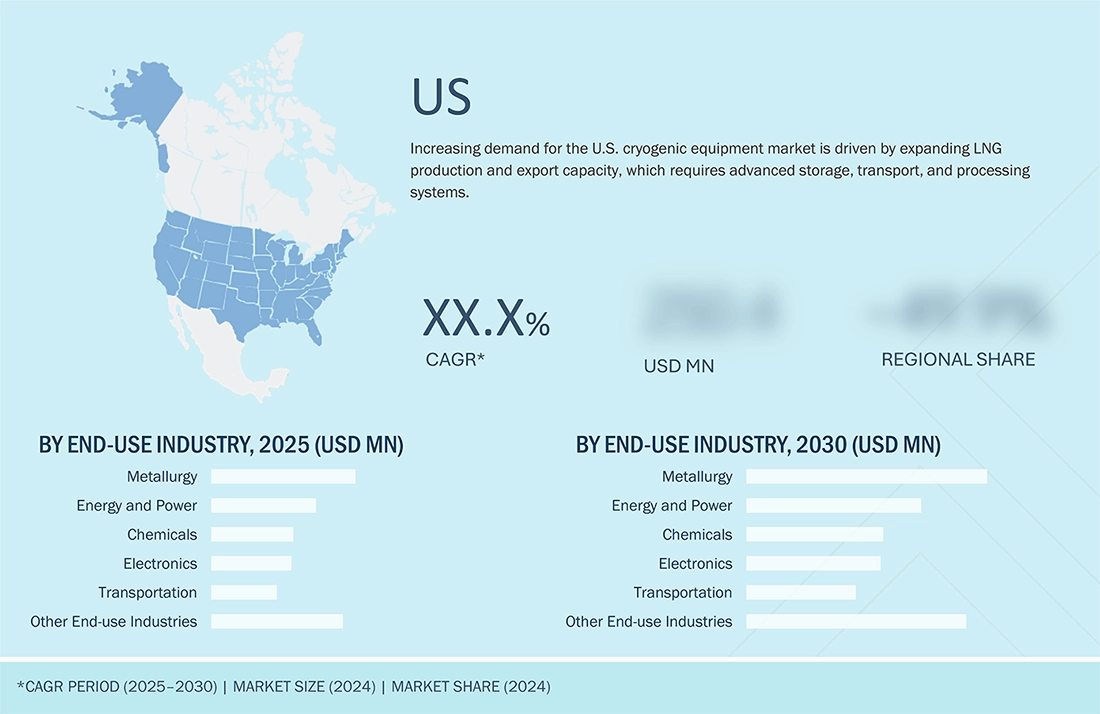
The US cryogenic equipment market is driven by expanding LNG production and export capacity, which requires advanced storage, transport, and processing systems. Rising investments in hydrogen and clean energy projects further boost the demand for cryogenic tanks and handling equipment. Growth in the aerospace, electronics, and metallurgy industries also supports adoption. Additionally, technological advancements, strong domestic manufacturing capabilities, and strict safety and efficiency standards encourage industries to upgrade and deploy modern cryogenic equipment across applications.
TRENDS & DISRUPTIONS IMPACTING CUSTOMERS' CUSTOMERS
Key trends in the US cryogenic equipment market include the shift toward hydrogen and LNG infrastructure expansion, digitalization with IoT-enabled monitoring, and lightweight, energy-efficient system designs. Sustainability and decarbonization priorities drive innovation in low-loss storage and transfer technologies. Disruptions include supply chain constraints for specialized components, evolving safety and environmental regulations, and competitive pressure from overseas manufacturers. Emerging disruptive technologies, such as advanced materials and AI-based predictive maintenance, are reshaping equipment performance and lifecycle management.
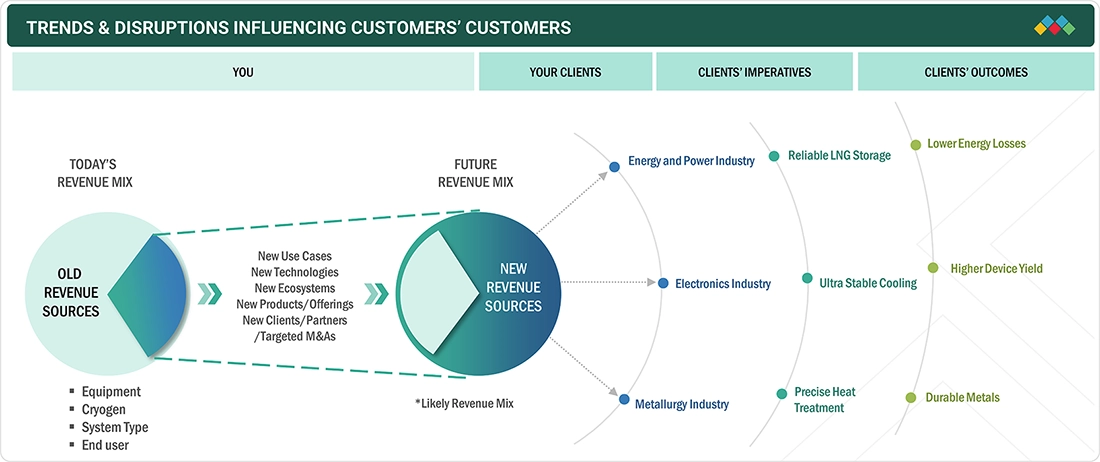
Source: Secondary Research, Interviews with Experts, MarketsandMarkets Analysis
MARKET DYNAMICS

Level
-
Rapid transition toward clean energy

-
Increasing utilization of industrial gases in metallurgy, oil & gas, and energy power industries


Level
-
Volatile raw material and metal prices

-
High CAPEX and OPEX costs associated with cryogenic plants


Level
-
Launch of new space and satellite missions

-
Evolving applications of cryogenic electronics


Level
-
Hazardous and greenhouse emissions resulting from leakage of cryogenic fluids

Source: Secondary Research, Interviews with Experts, MarketsandMarkets Analysis
Driver: Growing popularity of LNG as a source of clean and efficient energy
Liquefied natural gas is gaining prominence in the US as a cleaner transition fuel for power generation, industrial use, and marine and heavy-duty transport. Its high energy density and flexible seaborne trade encourage investments in liquefaction plants, export terminals, regasification facilities, and satellite storage, all of which rely heavily on cryogenic tanks, vaporizers, and transfer lines. Expansion of US LNG exports further multiplies the demand for large-scale, high-reliability cryogenic infrastructure.
Restraint: High CAPEX and OPEX costs associated with cryogenic plants
Cryogenic plants require substantial upfront capital for specialized insulated tanks, plate-fin heat exchangers, refrigeration compressors, and safety systems designed to withstand extremely low temperatures. Operating costs remain high due to intensive power consumption for liquefaction and refrigeration, stringent maintenance, and skilled-labor requirements. These CAPEX- and OPEX-heavy profiles lengthen payback periods, make smaller-scale projects less viable, and can delay final investment decisions for new LNG and industrial-gas facilities in the US.
Opportunity: Development of hydrogen economy
The emerging hydrogen economy in the US, spanning green hydrogen production, liquid hydrogen storage, and distribution for mobility and power, is creating a major new demand pool for advanced cryogenic systems. Liquefied hydrogen requires ultra-low-temperature tanks, piping, and pumps with exceptional insulation and safety performance, driving innovation and capital spending in cryogenic equipment. Federal and state incentives for clean hydrogen hubs, fuel-cell vehicles, and decarbonized industry further accelerate deployment of large-scale hydrogen liquefaction and storage assets.
Challenge: Hazardous and greenhouse emissions resulting from leakage of cryogenic fluids
Uncontrolled leakage or venting of cryogenic liquids can cause oxygen displacement, frostbite, fires or explosions, and structural embrittlement, forcing US operators to invest heavily in safety systems and training. Boil-off and venting of LNG or other hydrocarbon cryogens release methane and other greenhouse gases, drawing regulatory scrutiny and tightening environmental standards for terminals and transport fleets. Meeting stringent OSHA, EPA, and local codes requires redundant containment, monitoring, and recovery systems, raising lifecycle costs and complicating permitting for new cryogenic installations.
US CRYOGENIC EQUIPMENT MARKET: COMMERCIAL USE CASES ACROSS INDUSTRIES
| COMPANY | USE CASE DESCRIPTION | BENEFITS |
|---|---|---|
 |
Designs and manufactures small to mid-scale cryogenic tanks, dewars, hoses, and accessories for laboratories, medical facilities, industrial gas distributors, and OEMs; offers standard CH-series tanks and fully custom vessels for liquid nitrogen, oxygen, argon, and specialty gases | Rapid customization | Low minimum order quantities for niche applications | Versatile, long-life storage, and transfer solutions with local service support, reducing downtime and total cost of ownership |
 |
Manufactures vacuum-insulated transfer lines, flexible hoses, valve boxes, and custom cryogenic systems for research labs, semiconductor plants, and industrial users across the US; focuses on engineered solutions that integrate into OEM machinery and tight-space installations ? | Optimized layouts | Reduced heat leak | Stable cryogenic temperatures, improving process reliability and product quality | Responsive engineering support | Faster design iterations than large multinationals |
 |
Family-owned company that refurbishes, repairs, and sells new or fully refurbished cryogenic liquid cylinders and bulk tanks for medical and industrial gas markets; operates a 60,000-square-foot facility dedicated to cylinder rehabilitation, painting, and testing. | Lower capital outlay while meeting safety and performance standards | Personalized service, route-based pickup and delivery | Technical expertise extends asset life and minimizes downtime for small and regional gas distributors |
Logos and trademarks shown above are the property of their respective owners. Their use here is for informational and illustrative purposes only.
MARKET ECOSYSTEM
The US cryogenic equipment market is growing and trending due to surging LNG production and exports, which require extensive low-temperature storage and transport infrastructure. Rising adoption of cleaner fuels and hydrogen projects further boosts the demand for advanced tanks, vaporizers, and valves. Expanding use of industrial and medical gases, along with growth in space, aerospace, and biotechnology applications, adds additional momentum. Ongoing technology improvements that enhance safety and efficiency also encourage the replacement of legacy systems. Cryogenic equipment manufacturers, industrial gas manufacturers, raw material suppliers, and end users are part of the ecosystem.
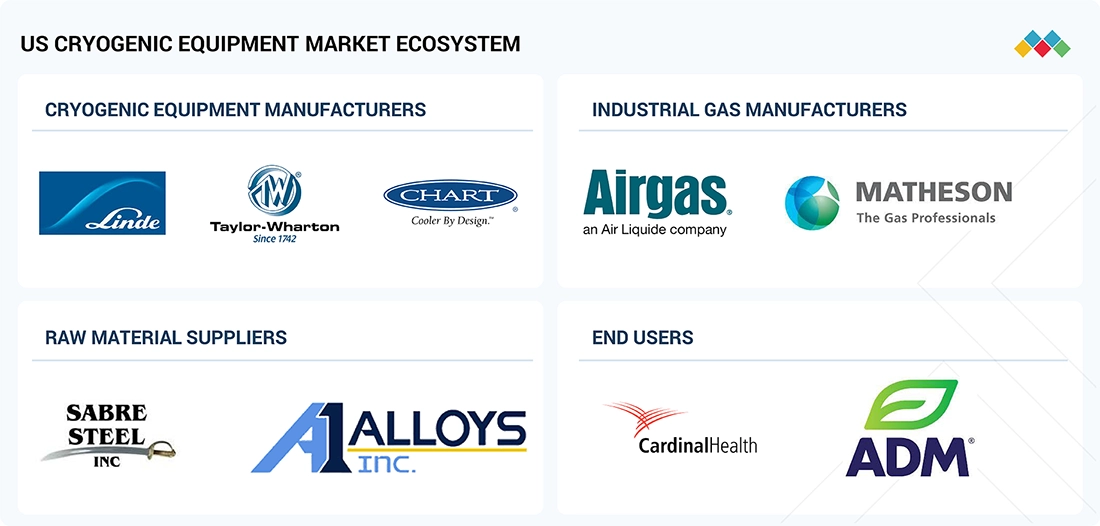
Logos and trademarks shown above are the property of their respective owners. Their use here is for informational and illustrative purposes only.
MARKET SEGMENTS
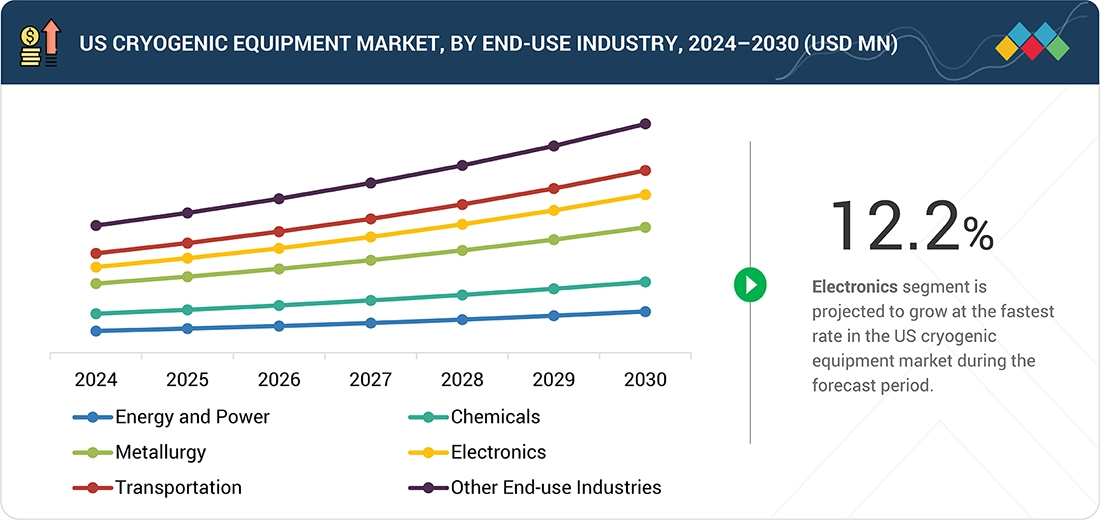
Source: Secondary Research, Interviews with Experts, MarketsandMarkets Analysis
US CRYOGENIC EQUIPMENT MARKET, BY EQUIPMENT
The segment includes tanks, valves, vaporizers, pumps, etc. (pipes, regulators, freezers, dewars, strainers, samplers, and heat exchangers). The tank segment is the fastest-growing equipment category as cryogenic tanks are indispensable for LNG, industrial gas, and hydrogen storage across production, transportation, and end-use facilities. Rising LNG export terminals, satellite storage depots at hospitals and factories, and small-scale fueling stations boost the demand for vacuum-insulated tanks versus other components, such as valves or pumps. Tanks also offer large value per unit and frequent replacement or expansion needs, further accelerating revenue growth within the equipment mix.
US CRYOGENIC EQUIPMENT MARKET, BY END-USE INDUSTRY
End-use industries are the metallurgy, energy and power, chemicals, electronics, transportation (shipping and rail and road transport), and other end-use industries. The electronics industry is the fastest-growing end-user as advanced semiconductors, superconducting devices, and photonics rely on ultra-low-temperature environments for fabrication, testing, and operation. Cryogenic equipment supports processes such as wafer probing, device characterization, and cryogenic cooling of quantum and high-performance computing hardware, where precision and stability are critical. Rapid expansion of US semiconductor capacity and investment in quantum and superconducting technologies are therefore pushing electronics-sector demand ahead of energy, metallurgy, and other industries.
REGION
Metallurgy to be largest segment in US cryogenic equipment market during forecast period
The metallurgy segment is expected to hold the largest share of the US cryogenic equipment market as steel and metal producers consume huge volumes of liquid oxygen, nitrogen, and argon for smelting, refining, heat treatment, and inerting operations, which rely on cryogenic storage and supply systems. Processes such as cryogenic hardening, tempering, and shrink-fitting require precise low-temperature control, driving the demand for specialized tanks, piping, and chambers. Growing use of high-performance alloys and tighter quality requirements further expand cryogenic infrastructure across integrated and mini-mills.
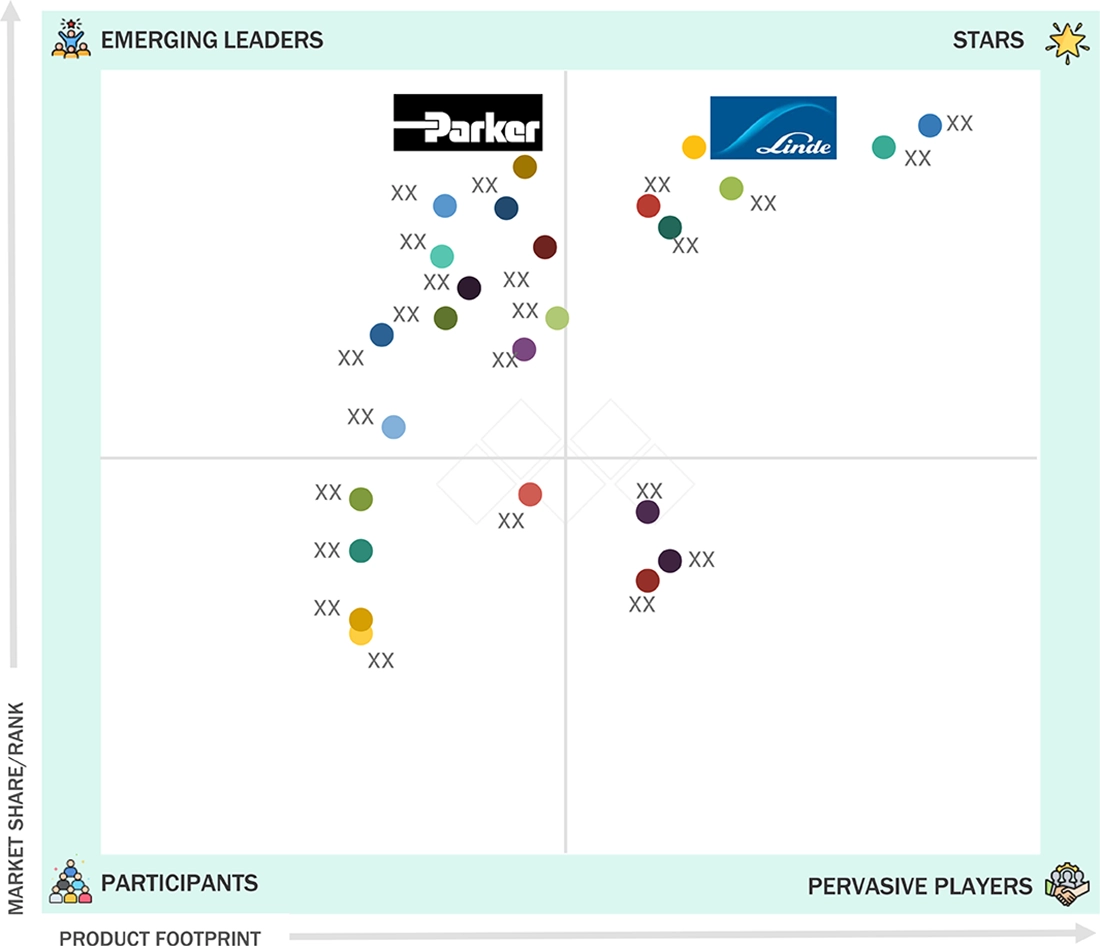
US CRYOGENIC EQUIPMENT MARKET: COMPANY EVALUATION MATRIX
Linde plc and Chart Industries are positioned as stars in the US cryogenic equipment market matrix, reflecting clear leadership in both market share and product breadth. These companies differentiate themselves through an extensive cryogenic equipment portfolio and strong reach across industries such as metallurgy, medical, and electronics. Parker Hannifin Corp. is an emerging leader in the US market.
Source: Secondary Research, Interviews with Experts, MarketsandMarkets Analysis
KEY MARKET PLAYERS
- Linde plc (Ireland)
- Chart Industries (US)
- Taylor-Wharton (US)
- Cryofab (US)
- Air Products Chemicals, Inc. (US)
- Air Liquide (France)
- Parker Hannifin Corp. (US)
- Flowserve Corporation (US)
- Emerson Electric Co. (US)
- PHPK Technologies (US)
MARKET SCOPE
| REPORT METRIC | DETAILS |
|---|---|
| Market Size in 2024 (Value) | USD 2.58 Billion |
| Market Forecast in 2030 (Value) | USD 4.65 Billion |
| Growth Rate | CAGR of 10.4% from 2025-2030 |
| Years Considered | 2021–2030 |
| Base Year | 2024 |
| Forecast Period | 2025–2030 |
| Units Considered | Value (USD Million/Billion) |
| Report Coverage | Revenue forecast, company ranking, competitive landscape, growth factors, and trends |
| Segments Covered |
|
| Country Covered | US |
WHAT IS IN IT FOR YOU: US CRYOGENIC EQUIPMENT MARKET REPORT CONTENT GUIDE
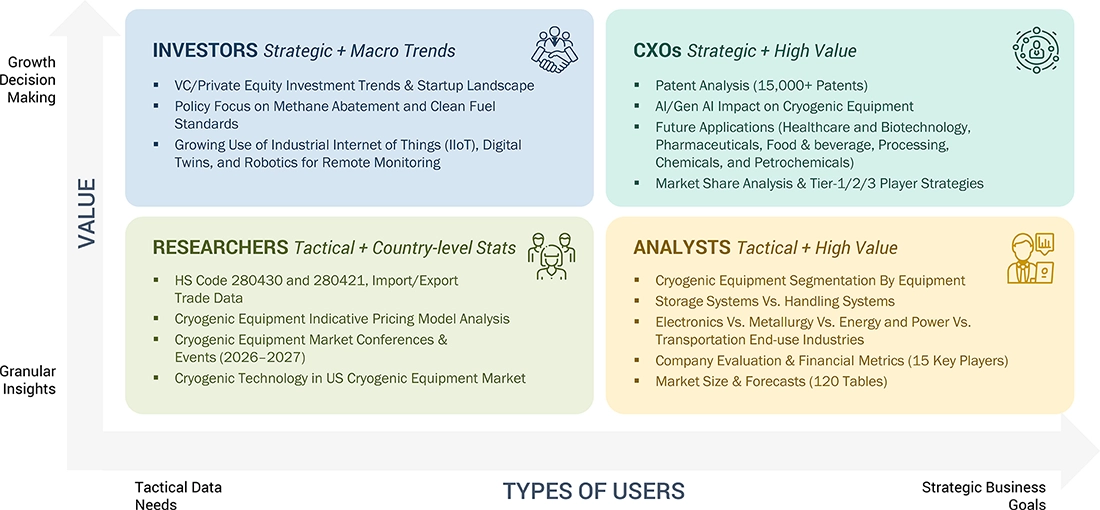
DELIVERED CUSTOMIZATIONS
We have successfully delivered the following deep-dive customizations:
| CLIENT REQUEST | CUSTOMIZATION DELIVERED | VALUE ADDS |
|---|---|---|
| Energy and Power | Maps of cryogenic tanks, pumps, vaporizers, and transfer lines of LNG liquefaction, regasification, and peak-shaving plants; benchmarking of storage and handling technologies; reliability and boil-off performance evaluation. | Maximize LNG storage and fuel-supply availability, minimize product wastage and energy usage, discover upgrades to higher efficiency tanks and pumps, and assist in planning new LNG-to-power or gas-fired plants using cryogenic technology. |
| Metallurgy | Oxygen and other industrial gases cryogenic equipment screening; crystallization, heat-treatment installations screening cryogenic equipment screening; comparison of tank and piping alternatives to supply high-purity gases to furnaces and mills. | Enhance the quality and consistency of metals by use of stable low-temperature processing, increase productivity of furnaces and heat-treatment lines, minimize downtime associated with the disruption of gas supply, and decrease total gas and maintenance expenses. |
| Transportation | Cryogenic network analysis of LNG bunkering, trucking, and rail requirements; sizing of mobile tanks, trailers, and fueling stations; benchmarking of hose and valve technologies for the fast and safe loading and offloading of LNG. | Make safe and efficient fueling with LNG, increase the range and use of LNG-powered ships, reduce the cost of fuel logistics, and aid in decarbonization goals by replacing traditional fuels with cryogenic LNG in marine and road transport. |
RECENT DEVELOPMENTS
- August 2023: Chart Industries collaborated with 8 Rivers Capital, a North Carolina-based clean energy and climate technology company, to grab commercial opportunities for hydrogen technology and solutions. This collaboration includes developing equipment for 8 Rivers technologies backed up by Chart’s decades of experience in designing and manufacturing cryogenic, compression, and process technologies, and helping 8 Rivers deliver reliable and cost-effective solutions to its customers.
- January 2023: Chart Industries and Avina entered a partnership agreement. Avina supports the transition to green hydrogen in the transportation sector by providing infrastructure development and technological collaboration. According to the deal, Chart will supply its Howden compressors for Avina's state-of-the-art green hydrogen facility in Southern California (USA). The gaseous hydrogen will be compressed and used to decarbonize heavy-duty trucks, marking a significant milestone as the region's first green hydrogen plant. This partnership will help Chart Industries to use Avina’s US-based green hydrogen facility.
Table of Contents
 Exclusive indicates content/data unique to MarketsandMarkets and not available with any competitors.
Methodology
The study involved major activities in estimating the current size of the US Cryogenic Equipment Market. Exhaustive secondary research was done to collect information on the peer and parent markets. The next step was to validate these findings, assumptions, and sizing with industry experts across the value chain through primary research. Both top-down and bottom-up approaches were employed to estimate the total market size. Thereafter, market breakdown and data triangulation were used to estimate the market size of the segments and subsegments.
Secondary Research
This research study on the US Cryogenic Equipment Market involved the use of extensive secondary sources, directories, and databases, such as Hoover’s, Bloomberg, Factiva, IRENA, International Energy Agency, and Statista Industry Journal, to collect and identify information useful for a technical, market-oriented, and commercial study of the US Cryogenic Equipment Market. The other secondary sources included annual reports, press releases & investor presentations of companies, white papers, certified publications, articles by recognized authors, manufacturer associations, trade directories, and databases.
Primary Research
The US Cryogenic Equipment Market comprises several stakeholders, such as cryogenic equipment manufacturers, technology providers, and technical support providers in the supply chain. The demand side of this market is characterized by the rising demand for types of cryogenic equipments such as rod lift systems, electric submersible pumps, progressive cavity pumps, and gas lift systems. The supply side is characterized by rising demand for contracts from the industrial sector and mergers & acquisitions among big players. Various primary sources from both the supply and demand sides of the market were interviewed to obtain qualitative and quantitative information. Following is the breakdown of primary respondents:
Market Size Estimation
Both top-down and bottom-up approaches were used to estimate and validate the total size of the US Cryogenic Equipment Market. These methods were also used extensively to estimate the size of various subsegments in the market. The research methodology used to estimate the market size includes the following:
- The key players in the industry and market have been identified through extensive secondary research, and their market share has been determined through primary and secondary research.
- The industry’s value chain and market size, in terms of value, have been determined through both primary and secondary research processes.
- All percentage shares, splits, and breakdowns have been determined using secondary sources and verified through primary sources.
Data Triangulation
After arriving at the overall market size from the above estimation process, the total market has been split into several segments and subsegments. Data triangulation and market breakdown processes have been employed to complete the overall market engineering process and arrive at the exact statistics for all the segments and sub-segments, wherever applicable. The data has been triangulated by studying various factors and trends from both the demand- and supply sides. Along with this, the market has been validated using both the top-down and bottom-up approaches.
Market Definition
Cryogenic equipment comprises specialized machinery designed for use at extremely low temperatures, typically below -150 degrees Celsius. It enables the storage, transport, and handling of materials like gases and biological samples at these ultra-low temperatures. This technology finds application in various fields, from healthcare to aerospace, supporting scientific research and industrial processes.
The market for cryogenic equipment is the sum of revenues generated by global companies through the sales of cryogenic equipment.
Key Stakeholders
- Cryogenic equipment manufacturers and providers
- Industrial gas supplying companies
- Manufacturing industries
- R&D laboratories
- Consulting companies from energy & power sector
- Distributors of cryogenic equipment
- Government and research organizations
- State and national regulatory authorities
Objectives of the Study
- To define, describe, segment, and forecast the US Cryogenic Equipment Market by equipment, cryogen, end-user industry, system type, application, and region, in terms of value
- To provide detailed information regarding key drivers, restraints, opportunities, and challenges influencing market growth
- To strategically analyze the micromarkets with respect to individual growth trends, prospects, and contributions to the overall market size
- To provide supply chain analysis, trends/disruptions impacting customer business, ecosystem/market map, pricing analysis, Porter’s five forces analysis, case study analysis, and regulatory standards pertaining to cryogenic equipment
- To analyze opportunities for stakeholders in the cryogenic equipment and draw a competitive landscape of the market
- To strategically analyze the ecosystem, tariffs and regulations, patents, and trading scenarios pertaining to cryogenic equipment
- To compare key market players based on product specifications and applications
- To strategically profile key players and comprehensively analyze their market rankings and core competencies
- To analyze competitive developments, such as contracts and agreements, investments and expansions, mergers and acquisitions, partnerships, joint ventures and collaborations, in the cryogenic equipment.
Available Customizations:
With the given market data, MarketsandMarkets offers customizations according to the specific requirements of companies. The following customization options are available for the report:
Product Analysis
- Product Matrix, which provides a detailed comparison of the product portfolio of each company
Company Information
- Detailed analyses and profiling of additional market players


Personalize This Research
- Triangulate with your Own Data
- Get Data as per your Format and Definition
- Gain a Deeper Dive on a Specific Application, Geography, Customer or Competitor
- Any level of Personalization
Let Us Help You
- What are the Known and Unknown Adjacencies Impacting the US Cryogenic Equipment Market
- What will your New Revenue Sources be?
- Who will be your Top Customer; what will make them switch?
- Defend your Market Share or Win Competitors
- Get a Scorecard for Target Partners

Custom Market Research Services
We Will Customise The Research For You, In Case The Report Listed Above Does Not Meet With Your Requirements
Get 10% Free CustomisationTESTIMONIALS

Kimberly Murphy
GLOBAL MARKETING DIRECTOR
Bently Nevada,
Leading Condition Monitoring & Asset Protectionwww.bakerhughesds.com/bently-nevada

MarketsandMarkets™ showed consistent rigor for success and relentlessly worked with Bently Nevada stakeholders to positively impact go-to-market strategy. Their proactiveness and flexibility has been instrumental in achieving the objectives to grow our sales pipeline in key industrial markets.

DARRICK HUEBER
Business Development Leader
Nexus Controls LLC,
Leading Manufacturer of Automation System & Electrical Panelswww.bakerhughesds.com/nexus-controls

We partnered with MarketsandMarkets to expand our business further by tapping into new industrial segments. It was critical for us to gather crucial business insights about specific markets to achieve this goal. MarketsandMarkets engagement model and client services helped us provide those insights, it was really impressive and valuable for my business. The team was extremely flexible and helpful.

Mike Schoff
Global Industrial Commercial Strategy Leader
Nexus Controls LLC
Leading Manufacturer of Automation System & Electrical Panelswww.bakerhughesds.com/nexus-controls
We consulted MarketsandMarkets for potential Partner Identification. Overall, it was a good experience. The insights provided through interviews conducted by the team helped us put together the questionnaire required for discussion with the selected partners. Their ability to provide insights through interviews with customers in a timely manner was quite impressive.






Growth opportunities and latent adjacency in US Cryogenic Equipment Market